Segments - by Product Type (Low-slice CT Scanners, Medium-slice CT Scanners, High-slice CT Scanners, Others), by Technology (Conventional CT, Cone Beam CT, Others), by Application (Oncology, Cardiology, Neurology, Musculoskeletal, Others), by End-User (Hospitals, Diagnostic Centers, Ambulatory Surgical Centers, Others)
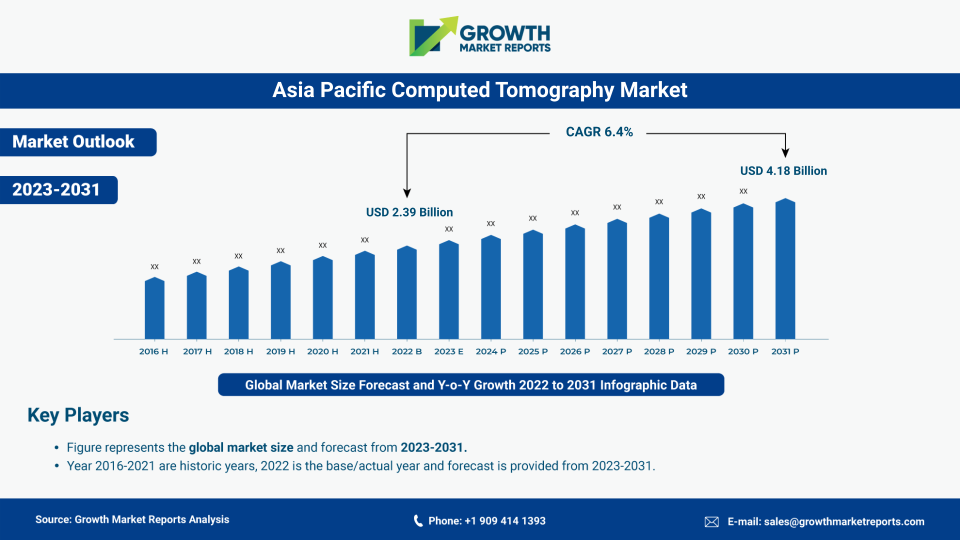
According to our latest research, the global computed tomography (CT) market size reached USD 7.9 billion in 2024, reflecting robust growth driven by technological advancements and increasing adoption in diagnostic imaging. The market is projected to expand at a CAGR of 6.2% from 2025 to 2033, reaching a forecasted value of USD 13.8 billion by 2033. This steady growth trajectory is primarily fueled by the rising prevalence of chronic diseases, the growing demand for advanced imaging modalities, and continuous innovations in CT scanner technology.
One of the primary growth factors propelling the computed tomography market is the increasing incidence of chronic diseases worldwide, including cancer, cardiovascular disorders, and neurological conditions. As the global population ages and lifestyle-related health risks rise, there is a heightened need for early and accurate diagnostic tools. Computed tomography has emerged as a gold standard in non-invasive imaging, enabling physicians to detect and monitor a wide range of medical conditions with high precision. The integration of CT scans into routine diagnostic workflows in hospitals and specialty clinics has significantly improved patient outcomes, fueling further market expansion.
Technological advancements have played a pivotal role in shaping the computed tomography market landscape. Innovations such as high-slice CT scanners, dual-energy CT, and iterative reconstruction algorithms have enhanced image quality while reducing radiation exposure, making CT scans safer and more effective. The advent of artificial intelligence (AI) and machine learning in CT imaging is further revolutionizing the market, enabling automated image analysis, faster scan times, and improved diagnostic accuracy. These advancements are not only attracting healthcare providers but also encouraging manufacturers to invest in research and development, thereby driving competition and market growth.
Another significant growth driver is the expanding application scope of computed tomography across various medical specialties. Beyond traditional uses in oncology and cardiology, CT imaging is increasingly being utilized in neurology, musculoskeletal assessments, and trauma care. The versatility of CT technology, combined with its ability to deliver rapid and detailed cross-sectional images, has made it indispensable in emergency departments and outpatient settings. Additionally, the growing awareness among patients and healthcare professionals about the benefits of early detection and minimally invasive diagnostics is boosting the uptake of CT scans globally.
The role of CT Scan in modern healthcare cannot be overstated. As a cornerstone of diagnostic imaging, CT scans provide detailed cross-sectional images of the body, allowing for precise evaluation of internal organs, bones, soft tissues, and blood vessels. This imaging technique is particularly valuable in emergency medicine, where rapid assessment is critical. The ability to quickly diagnose conditions such as internal injuries, tumors, and infections makes CT scans an indispensable tool in both acute and chronic care settings. Furthermore, the integration of advanced technologies such as 3D imaging and AI-driven analysis is enhancing the diagnostic capabilities of CT scans, ensuring more accurate and timely medical interventions.
From a regional perspective, North America continues to dominate the computed tomography market, owing to its advanced healthcare infrastructure, high healthcare expenditure, and strong presence of leading market players. However, the Asia Pacific region is witnessing the fastest growth, driven by rising healthcare investments, increasing patient awareness, and government initiatives to improve diagnostic capabilities. Europe also maintains a significant market share, supported by favorable reimbursement policies and a well-established medical imaging sector. Collectively, these regional dynamics are shaping the global competitive landscape and influencing strategic decisions among key stakeholders in the computed tomography market.
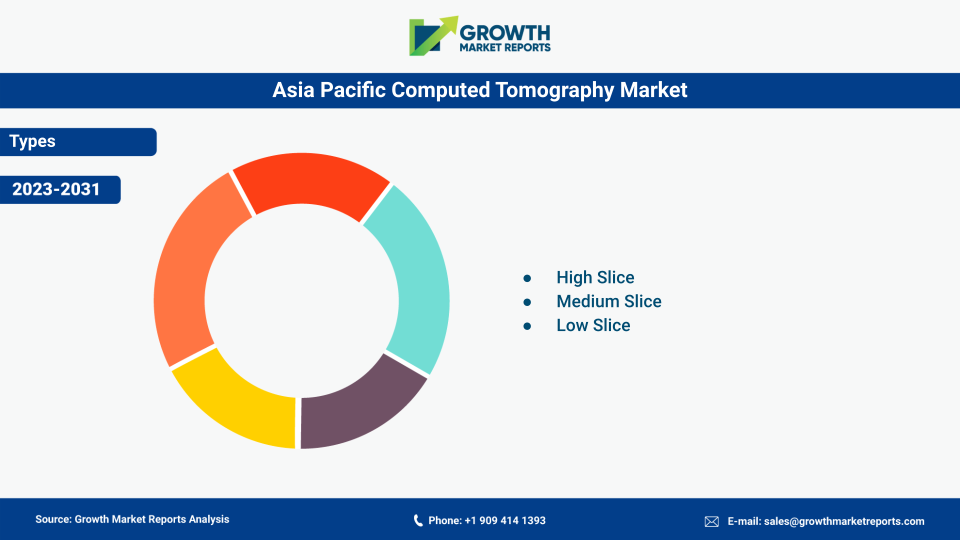
The computed tomography market is segmented by product type into low-slice CT scanners, medium-slice CT scanners, high-slice CT scanners, and others. Low-slice CT scanners, typically ranging from 1 to 16 slices, are widely used in smaller healthcare facilities and for basic imaging needs. These systems are valued for their affordability and compact design, making them suitable for rural hospitals and diagnostic centers with limited budgets. However, their limited imaging capabilities and slower scan times restrict their use in complex diagnostic scenarios, which has led to a gradual shift towards more advanced systems in developed markets.
Medium-slice CT scanners, generally offering 16 to 64 slices, strike a balance between performance and cost, making them a popular choice for mid-sized hospitals and specialty clinics. These scanners provide improved image resolution and faster scan times compared to low-slice models, enabling more accurate diagnosis across a broader range of applications. The adoption of medium-slice CT scanners is particularly strong in emerging economies, where healthcare providers are upgrading their imaging infrastructure to meet growing patient demands and enhance diagnostic capabilities.
High-slice CT scanners, encompassing systems with 64 slices and above, represent the most advanced segment in the computed tomography market. These scanners deliver superior image quality, faster acquisition speeds, and advanced functionalities such as cardiac imaging, perfusion studies, and virtual colonoscopy. High-slice CT scanners are increasingly being adopted by tertiary care hospitals, academic medical centers, and research institutions, where complex and high-volume imaging is required. The growing focus on precision medicine and personalized healthcare is further driving demand for these high-end systems, as they enable detailed anatomical and functional assessments.
The "Others" category includes specialized CT systems such as portable CT scanners and hybrid modalities like PET-CT and SPECT-CT. Portable CT scanners are gaining traction in emergency rooms, intensive care units, and military settings, where rapid and on-site imaging is essential. Hybrid modalities, on the other hand, offer combined anatomical and functional imaging, expanding the clinical utility of CT technology. The diversification of product offerings within the computed tomography market is enabling healthcare providers to select systems tailored to their specific clinical and operational needs, thereby enhancing overall market growth.
Point of Care CT Imaging Systems are revolutionizing the accessibility and convenience of diagnostic imaging. These systems are designed to be compact and mobile, allowing for deployment in a variety of clinical settings, including emergency rooms, intensive care units, and even remote locations. By bringing advanced imaging capabilities directly to the patient, point of care CT systems facilitate immediate diagnosis and treatment, which is crucial in time-sensitive situations. The portability and ease of use of these systems are particularly beneficial in rural or underserved areas, where access to traditional imaging facilities may be limited. As healthcare continues to evolve towards more patient-centric models, the demand for point of care CT imaging solutions is expected to grow significantly.
| Attributes | Details |
| Report Title | Computed Tomography Market Research Report 2033 |
| By Product Type | Low-slice CT Scanners, Medium-slice CT Scanners, High-slice CT Scanners, Others |
| By Technology | Conventional CT, Cone Beam CT, Others |
| By Application | Oncology, Cardiology, Neurology, Musculoskeletal, Others |
| By End-User | Hospitals, Diagnostic Centers, Ambulatory Surgical Centers, Others |
| Regions Covered | North America, Europe, APAC, Latin America, MEA |
| Base Year | 2024 |
| Historic Data | 2018-2023 |
| Forecast Period | 2025-2033 |
| Number of Pages | 266 |
| Number of Tables & Figures | 307 |
| Customization Available | Yes, the report can be customized as per your need. |
The technology segment of the computed tomography market is categorized into conventional CT, cone beam CT, and others. Conventional CT technology, also known as fan-beam CT, has been the mainstay of diagnostic imaging for decades. These systems utilize a rotating X-ray tube and detector array to generate cross-sectional images of the body, providing detailed anatomical information for a wide range of clinical applications. Despite the emergence of newer technologies, conventional CT remains widely used due to its proven reliability, versatility, and continuous technological enhancements such as iterative reconstruction and dose reduction features.
Cone beam CT (CBCT) technology has gained significant traction in recent years, particularly in dental, maxillofacial, and orthopedic applications. CBCT systems use a cone-shaped X-ray beam and a flat-panel detector to capture volumetric data in a single rotation, resulting in high-resolution 3D images with lower radiation doses compared to conventional CT. The compact size, lower cost, and ease of installation of CBCT systems have made them increasingly popular in outpatient settings, dental clinics, and specialty practices. The expanding application scope of CBCT technology is expected to drive substantial growth within this segment over the forecast period.
The "Others" category in the technology segment includes emerging modalities such as spectral CT, dual-energy CT, and photon-counting CT. These advanced technologies offer enhanced tissue characterization, improved contrast resolution, and the ability to differentiate between materials based on their atomic composition. For instance, dual-energy CT enables the separation of different tissue types and the identification of specific pathologies, such as gout or kidney stones, with greater accuracy. The ongoing development and commercialization of these next-generation technologies are expanding the diagnostic capabilities of computed tomography and opening new avenues for clinical research and personalized medicine.
Technological innovation is a key driver of competition in the computed tomography market, with manufacturers continuously striving to introduce systems that offer superior image quality, faster scan times, and reduced radiation exposure. The integration of artificial intelligence, cloud-based data management, and advanced visualization tools is further enhancing the value proposition of CT technology. As healthcare providers seek to optimize workflow efficiency and improve patient outcomes, the adoption of state-of-the-art CT systems is expected to accelerate, contributing to sustained market growth across all technology segments.
The evolution of CT Scan Equipment has been marked by significant technological advancements that have transformed diagnostic imaging. Modern CT equipment offers enhanced image clarity, faster scanning times, and reduced radiation doses, making it safer and more efficient for patients. Innovations such as multi-slice CT scanners and dual-energy systems provide detailed insights into complex anatomical structures, supporting more accurate diagnoses and treatment plans. Additionally, the integration of AI and machine learning into CT equipment is streamlining workflows and improving diagnostic precision. As healthcare providers seek to optimize patient care and operational efficiency, the adoption of state-of-the-art CT scan equipment continues to rise, driving further advancements in the field.
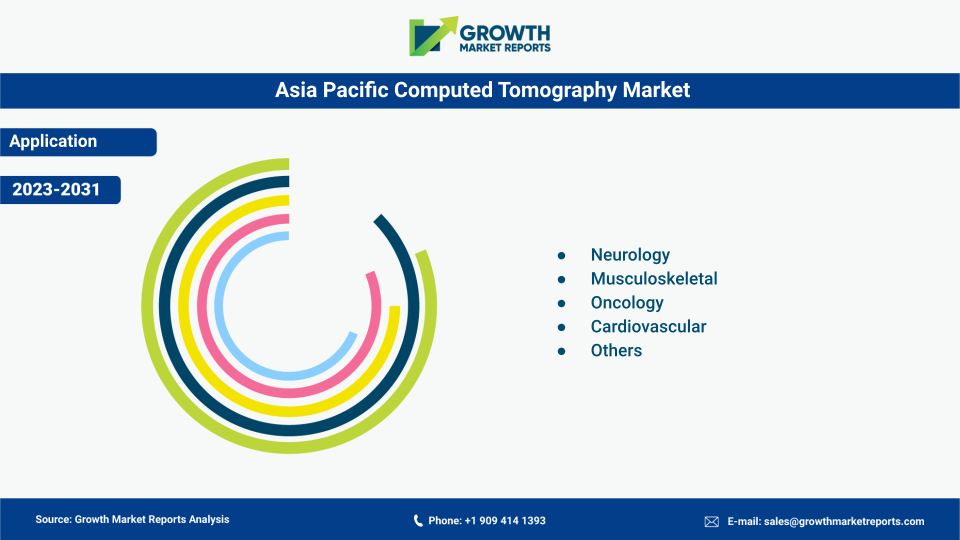
The computed tomography market, when analyzed by application, is segmented into oncology, cardiology, neurology, musculoskeletal, and others. Oncology remains the largest application segment, as CT imaging plays a crucial role in the detection, staging, and monitoring of various cancers. With the global burden of cancer rising, there is an increasing demand for advanced imaging technologies that enable early diagnosis and precise treatment planning. CT scans are extensively used for tumor localization, biopsy guidance, and assessment of treatment response, making them indispensable tools in modern oncology care.
Cardiology is another key application area for computed tomography, particularly with the advent of high-slice and dual-source CT scanners. These systems enable non-invasive coronary angiography, cardiac calcium scoring, and evaluation of structural heart diseases with exceptional accuracy and speed. The rising prevalence of cardiovascular diseases, coupled with the growing emphasis on preventive healthcare, is driving the adoption of CT imaging in cardiac diagnostics. Additionally, recent advancements in motion correction algorithms and low-dose protocols have further enhanced the clinical utility of CT in cardiology.
Neurology applications of computed tomography are witnessing steady growth, driven by the need for rapid and accurate assessment of neurological conditions such as stroke, traumatic brain injury, and brain tumors. CT scans are often the first-line imaging modality in emergency settings due to their speed and accessibility, enabling timely diagnosis and intervention. The integration of advanced imaging techniques such as perfusion CT and CT angiography has expanded the role of CT in neuroimaging, facilitating detailed evaluation of cerebral blood flow and vascular anatomy.
Musculoskeletal imaging represents another important application segment, with CT scans being used for the evaluation of complex fractures, joint disorders, and bone tumors. The high spatial resolution and three-dimensional capabilities of CT technology make it ideal for preoperative planning, post-surgical assessment, and image-guided interventions. The increasing adoption of CT imaging in sports medicine, orthopedics, and rheumatology is contributing to the growth of this segment. Other emerging applications include pulmonary imaging, urology, and trauma care, reflecting the versatility and expanding clinical utility of computed tomography across diverse medical specialties.
The computed tomography market is segmented by end-user into hospitals, diagnostic centers, ambulatory surgical centers, and others. Hospitals account for the largest share of the market, driven by their comprehensive diagnostic capabilities, high patient volumes, and access to advanced imaging infrastructure. The integration of CT scanners into hospital radiology departments and emergency rooms has become standard practice, enabling rapid diagnosis and treatment of a wide range of medical conditions. The growing trend towards hospital consolidation and the establishment of multi-specialty healthcare networks are further boosting the demand for high-performance CT systems in this segment.
Diagnostic centers represent a significant and rapidly growing end-user segment, particularly in urban and suburban areas where outpatient imaging services are in high demand. These centers offer specialized diagnostic services, including CT imaging, to a broad patient base, often with shorter wait times and lower costs compared to hospitals. The proliferation of standalone diagnostic centers, fueled by rising healthcare awareness and increasing insurance coverage, is contributing to the expansion of the computed tomography market. The adoption of medium-slice and high-slice CT scanners in these settings is enabling providers to offer advanced imaging services and attract a diverse patient population.
Ambulatory surgical centers (ASCs) are emerging as important end-users of computed tomography, driven by the shift towards minimally invasive procedures and same-day surgeries. ASCs require efficient and accurate diagnostic tools to support preoperative planning, intraoperative guidance, and postoperative assessment. The compact design and versatility of modern CT scanners make them well-suited for integration into ambulatory care settings. The growing focus on enhancing patient experience and optimizing workflow efficiency is prompting ASCs to invest in state-of-the-art CT technology, thereby creating new growth opportunities for market players.
The "Others" end-user category includes research institutions, academic medical centers, and government health agencies. These entities play a crucial role in advancing CT technology through clinical research, education, and public health initiatives. Research institutions are at the forefront of developing and validating new imaging protocols, while academic centers serve as training grounds for the next generation of radiologists and imaging specialists. Government agencies, on the other hand, are involved in population health screening programs and disaster response efforts, where portable and mobile CT scanners are increasingly being deployed. The diverse end-user landscape underscores the broad applicability and strategic importance of computed tomography in modern healthcare systems.
The computed tomography market presents significant opportunities for growth, driven by ongoing technological advancements and the expanding application scope of CT imaging. The integration of artificial intelligence and machine learning into CT systems is poised to revolutionize diagnostic workflows by enabling automated image analysis, predictive analytics, and personalized treatment planning. These innovations have the potential to enhance diagnostic accuracy, reduce interpretation times, and improve patient outcomes, thereby creating substantial value for healthcare providers and patients alike. Furthermore, the increasing adoption of low-dose and spectral CT technologies is addressing concerns related to radiation exposure, making CT imaging safer and more accessible to a broader patient population.
Another major opportunity lies in the untapped markets of emerging economies, where rising healthcare investments, growing awareness, and government initiatives are driving demand for advanced diagnostic technologies. Countries in Asia Pacific, Latin America, and the Middle East are witnessing rapid expansion of their healthcare infrastructure, creating a favorable environment for the deployment of modern CT scanners. Strategic collaborations between global manufacturers and local healthcare providers are facilitating market entry and accelerating technology adoption in these regions. Additionally, the trend towards point-of-care and portable CT solutions is opening new avenues for market growth, particularly in emergency medicine, military healthcare, and remote settings.
Despite the favorable growth outlook, the computed tomography market faces several restraining factors, chief among them being the high cost of CT systems and associated maintenance expenses. The capital-intensive nature of CT scanner procurement, coupled with the need for skilled personnel and infrastructure upgrades, poses a significant barrier to adoption, especially in resource-constrained settings. Reimbursement challenges and regulatory complexities further add to the financial burden on healthcare providers. Moreover, concerns regarding radiation exposure, although mitigated by recent technological advancements, continue to influence patient and provider decision-making. Addressing these challenges will require concerted efforts from industry stakeholders, policymakers, and healthcare organizations to ensure equitable access to advanced diagnostic imaging.
North America remains the largest regional market for computed tomography, accounting for approximately USD 3.1 billion in 2024, driven by its advanced healthcare infrastructure, high per capita healthcare spending, and strong presence of leading market players. The United States is the primary contributor to regional revenue, supported by widespread adoption of advanced imaging technologies, favorable reimbursement policies, and ongoing investments in research and development. The region's focus on early disease detection, precision medicine, and value-based care is further fueling demand for high-performance CT systems across hospitals, diagnostic centers, and ambulatory care settings.
Europe holds a significant share of the computed tomography market, with total revenues reaching USD 2.1 billion in 2024. The region benefits from a well-established medical imaging sector, robust regulatory frameworks, and comprehensive healthcare coverage. Key markets such as Germany, the United Kingdom, and France are at the forefront of CT technology adoption, driven by government initiatives to enhance diagnostic capabilities and improve patient outcomes. The increasing prevalence of chronic diseases, aging population, and rising demand for minimally invasive diagnostics are contributing to the sustained growth of the CT market in Europe, with a projected CAGR of 5.8% through 2033.
The Asia Pacific region is experiencing the fastest growth in the computed tomography market, with revenues estimated at USD 1.7 billion in 2024. Rapid urbanization, expanding healthcare infrastructure, and increasing government investments in healthcare are key drivers of market expansion in countries such as China, India, and Japan. The rising burden of chronic diseases, coupled with growing awareness about the benefits of early diagnosis, is fueling demand for advanced CT imaging solutions. Strategic partnerships between global and local market players, along with supportive regulatory policies, are accelerating technology adoption in the region. Collectively, these regional trends are shaping the global competitive landscape and influencing market dynamics across all segments.
The computed tomography market is highly competitive, characterized by the presence of several global and regional players striving to innovate and expand their market share. The competitive landscape is shaped by continuous technological advancements, strategic collaborations, and a strong focus on research and development. Leading manufacturers are investing heavily in the development of next-generation CT systems that offer superior image quality, reduced radiation doses, and enhanced workflow efficiency. The integration of artificial intelligence, cloud-based data management, and advanced visualization tools is further intensifying competition, as companies seek to differentiate their offerings and capture new growth opportunities.
Strategic partnerships and mergers and acquisitions are common strategies employed by market players to strengthen their product portfolios, expand geographic reach, and enhance technological capabilities. Companies are increasingly collaborating with healthcare providers, research institutions, and technology firms to co-develop innovative solutions and address evolving clinical needs. The growing demand for customized and application-specific CT systems is prompting manufacturers to offer a diverse range of products tailored to different end-users and clinical scenarios. Additionally, the emphasis on after-sales service, training, and technical support is becoming a key differentiator in the competitive landscape, as healthcare providers seek comprehensive solutions that ensure optimal system performance and patient safety.
The market is also witnessing the entry of new players, particularly in the portable and low-cost CT segments, driven by the growing demand for point-of-care and mobile imaging solutions. These entrants are leveraging advancements in miniaturization, wireless connectivity, and cloud computing to offer innovative products that cater to underserved markets and niche applications. However, established players continue to maintain a competitive edge through their extensive distribution networks, strong brand recognition, and deep expertise in medical imaging technology. The ability to adapt to changing market dynamics, regulatory requirements, and customer preferences will be critical for sustained success in this rapidly evolving market.
Major companies operating in the global computed tomography market include Siemens Healthineers, GE Healthcare, Philips Healthcare, Canon Medical Systems Corporation, and Hitachi Medical Systems. Siemens Healthineers is renowned for its extensive portfolio of high-slice and dual-source CT scanners, as well as its pioneering work in integrating AI and digital health solutions. GE Healthcare is a leader in developing innovative CT technologies, including low-dose and spectral imaging systems, and has a strong global presence across both developed and emerging markets. Philips Healthcare offers a comprehensive range of CT scanners with a focus on patient-centric design, workflow optimization, and advanced clinical applications. Canon Medical Systems Corporation is recognized for its high-performance CT systems and commitment to sustainability and radiation dose reduction. Hitachi Medical Systems is known for its expertise in hybrid imaging and portable CT solutions, catering to a diverse range of clinical needs.
Other notable players include Fujifilm Holdings Corporation, Neusoft Medical Systems, and Carestream Health, each contributing to the dynamic and competitive nature of the computed tomography market. These companies are actively engaged in product innovation, strategic partnerships, and market expansion initiatives to strengthen their positions and capitalize on emerging growth opportunities. The ongoing commitment to advancing CT technology and improving patient care is expected to drive further consolidation and innovation in the global computed tomography market over the coming years.
The Computed Tomography market has been segmented on the basis of
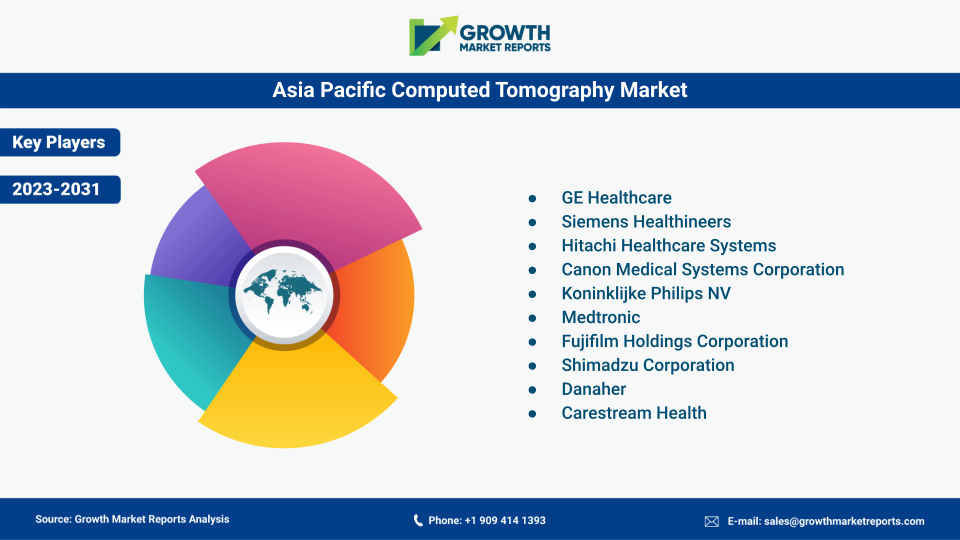
Key players competing in the Asia Pacific computed tomography market include GE Healthcare; Siemens Healthineers; Hitachi Healthcare Systems; Canon Medical Systems Corporation; Koninklijke Philips NV; Medtronic; Fujifilm Holdings Corporation; Shimadzu Corporation; Danaher; and Carestream Health. Some of these players are engaged in several market strategies such as mergers, acquisitions, partnerships, collaborations, capacity expansion, and product launches to enhance their market shares.
Major companies include Siemens Healthineers, GE Healthcare, Philips Healthcare, Canon Medical Systems Corporation, Hitachi Medical Systems, Samsung Medison, Neusoft Medical Systems, Carestream Health, Fujifilm Holdings Corporation, and others.
Key challenges include the high cost of CT systems and maintenance, reimbursement and regulatory complexities, the need for skilled personnel, infrastructure upgrades, and ongoing concerns about radiation exposure.
Recent advancements include high-slice and dual-energy CT, cone beam CT (CBCT), spectral CT, photon-counting CT, iterative reconstruction algorithms, and the integration of AI, cloud-based data management, and advanced visualization tools.
Major end-users include hospitals, diagnostic centers, ambulatory surgical centers, research institutions, academic medical centers, and government health agencies.
CT imaging is widely used in oncology (cancer detection and monitoring), cardiology (heart disease diagnosis), neurology (stroke and brain injury assessment), musculoskeletal imaging (fractures and joint disorders), and other emerging fields like trauma care and pulmonary imaging.
North America dominates the CT market due to advanced healthcare infrastructure and high expenditure, while Asia Pacific is experiencing the fastest growth driven by rising healthcare investments and government initiatives. Europe also holds a significant market share.
The computed tomography market is segmented into low-slice CT scanners (1-16 slices), medium-slice CT scanners (16-64 slices), high-slice CT scanners (64 slices and above), and others, including portable and hybrid modalities like PET-CT and SPECT-CT.
AI and machine learning are revolutionizing CT imaging by enabling automated image analysis, faster scan times, improved diagnostic accuracy, and enhanced workflow efficiency, which are attracting both healthcare providers and manufacturers.
Key growth drivers include the rising prevalence of chronic diseases, technological advancements in CT scanner technology, increasing demand for advanced imaging modalities, and expanding applications in various medical specialties.
The global computed tomography (CT) market reached USD 7.9 billion in 2024 and is projected to grow at a CAGR of 6.2% from 2025 to 2033, reaching an estimated value of USD 13.8 billion by 2033.