Cast Polypropylene (CPP) Packaging Films Market Research Report 2033

Cast Polypropylene (CPP) Packaging Films Market Research Report 2033

Segments - by Product Type (General CPP Films, Metalized CPP Films, Retort CPP Films, Others), by Thickness (Up to 18 Microns, 18-50 Microns, Above 50 Microns), by Application (Food Packaging, Pharmaceuticals, Tobacco Packaging, Textile Packaging, Others), by End-Use Industry (Food & Beverage, Pharmaceuticals, Personal Care & Cosmetics, Others)

https://growthmarketreports.com/Raksha
Author : Raksha Sharma
https://growthmarketreports.com/Vaibhav
Fact-checked by : V. Chandola
https://growthmarketreports.com/Shruti
Editor : Shruti Bhat

Upcoming | Report ID :MC-6016 | 5.0 Rating | 68 Reviews | 278 Pages | Format : Docx PDF

Report Description


Cast Polypropylene (CPP) Packaging Films Market Outlook

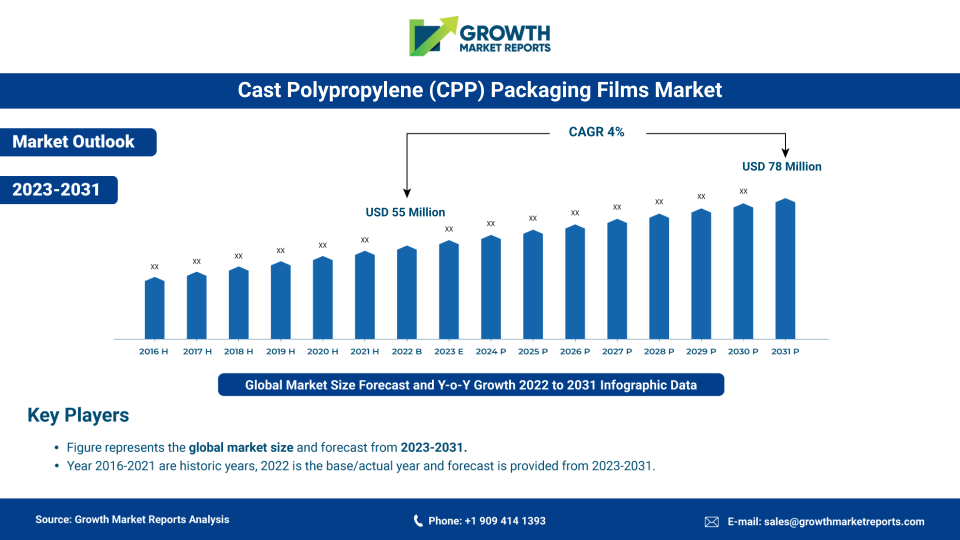
According to our latest research, the global Cast Polypropylene (CPP) Packaging Films market size reached USD 6.4 billion in 2024, reflecting robust expansion driven by diverse end-use industries. The market is expected to grow at a CAGR of 5.8% from 2025 to 2033, reaching a forecasted value of USD 10.7 billion by 2033. This growth trajectory is primarily attributed to the increasing demand for flexible, cost-effective, and sustainable packaging solutions across sectors such as food and beverage, pharmaceuticals, and personal care. As per the latest research, technological advancements and the rising trend of convenient packaging formats are further propelling the adoption of CPP packaging films globally.

One of the key growth factors for the Cast Polypropylene (CPP) Packaging Films market is the surging demand for flexible packaging in the food and beverage industry. CPP films are favored for their excellent heat-seal strength, clarity, and moisture barrier properties, making them ideal for packaging snacks, bakery products, and frozen foods. The shift in consumer preferences toward ready-to-eat and on-the-go food products has amplified the need for innovative packaging solutions that extend shelf life while maintaining product freshness. Moreover, the growing emphasis on reducing food wastage and enhancing food safety standards globally is encouraging manufacturers to invest in advanced CPP film technologies, further fueling market growth.

Another significant driver is the expanding application of CPP packaging films in the pharmaceutical and personal care sectors. CPP films are increasingly being used for packaging medicines, medical devices, and personal care products due to their non-toxic nature, high chemical resistance, and compatibility with various sterilization processes. The rising healthcare awareness, coupled with stringent regulatory requirements for safe and secure packaging, has led pharmaceutical companies to adopt CPP films for primary and secondary packaging. Additionally, the cosmetics and personal care industry’s focus on aesthetically appealing and functional packaging is boosting the demand for specialty CPP films, such as metalized and retort variants, which offer superior barrier properties and visual appeal.

Sustainability trends are also shaping the CPP packaging films market, with manufacturers increasingly focusing on recyclable and eco-friendly materials. The growing global concern over plastic waste and stringent environmental regulations are prompting companies to develop CPP films that are either recyclable or biodegradable. This has led to increased research and development activities aimed at enhancing the environmental profile of CPP films without compromising on performance. Furthermore, the adoption of lightweight packaging solutions to reduce transportation costs and carbon footprint is supporting the market’s positive outlook. As sustainability becomes a key purchasing criterion, the CPP packaging films industry is expected to witness a steady influx of investments in green technologies.

From a regional perspective, Asia Pacific continues to dominate the global CPP packaging films market, accounting for the largest revenue share in 2024. The region’s rapid industrialization, expanding middle-class population, and evolving retail landscape are driving the demand for advanced packaging materials. North America and Europe are also significant contributors, benefiting from technological innovation and a strong focus on sustainable packaging. Meanwhile, Latin America and the Middle East & Africa are emerging as high-potential markets, supported by growing urbanization and increasing investments in the food processing and pharmaceutical industries. The regional outlook for the CPP packaging films market remains highly promising, with Asia Pacific expected to maintain its leadership position throughout the forecast period.

Global Cast Polypropylene (CPP) Packaging Films Industry Outlook

Product Type Analysis

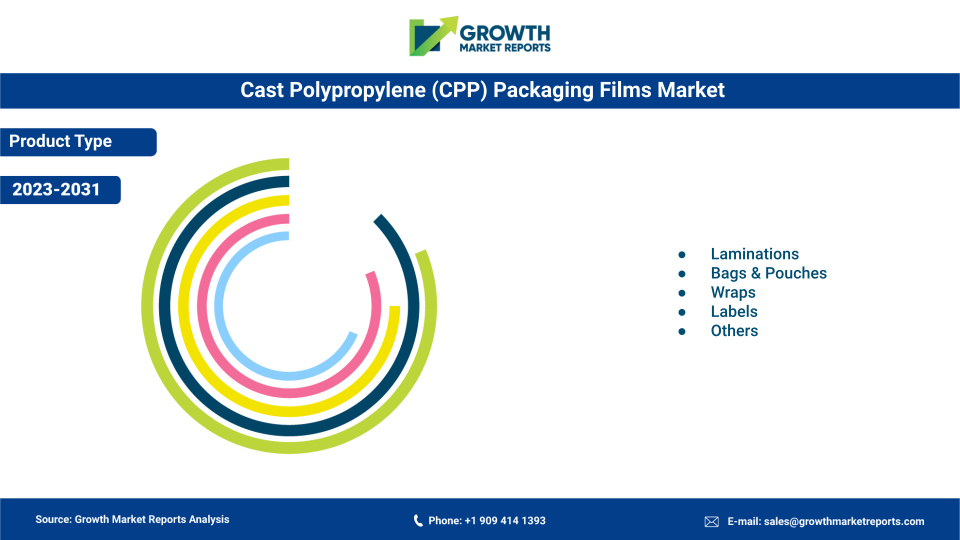
The product type segment of the Cast Polypropylene (CPP) Packaging Films market is categorized into General CPP Films, Metalized CPP Films, Retort CPP Films, and Others. General CPP films represent the most widely used category due to their versatility and cost-effectiveness. These films are extensively utilized in food packaging, textile packaging, and lamination applications, owing to their excellent optical properties, high transparency, and superior heat-sealability. The adaptability of general CPP films to various printing and lamination processes makes them a preferred choice for converters and packaging manufacturers. As the demand for flexible packaging continues to rise, the adoption of general CPP films is expected to remain strong, especially in developing economies where cost considerations play a significant role.

Metalized CPP films are gaining traction in applications that require enhanced barrier properties against moisture, oxygen, and light. These films are produced by depositing a thin layer of metal, typically aluminum, onto the surface of the CPP film, thereby improving its barrier performance while maintaining flexibility. Metalized CPP films are extensively used in snack food packaging, confectionery, and tobacco packaging, where product freshness and shelf life are critical. The growing popularity of visually appealing packaging designs has further fueled the demand for metalized films, as they offer a premium metallic finish that enhances product appeal. With the increasing focus on extending the shelf life of perishable goods, the metalized CPP films segment is poised for robust growth.

Retort CPP films, designed to withstand high-temperature sterilization processes, are essential for packaging ready-to-eat meals and retort pouches. These films possess excellent thermal stability, high seal strength, and resistance to chemical degradation, making them suitable for applications that require heat processing. The rising consumption of convenience foods and the growing demand for microwaveable packaging solutions are driving the adoption of retort CPP films. Moreover, advancements in multilayer film technology have enabled the development of retort CPP films with improved barrier properties and extended shelf life, further expanding their application scope. As convenience foods gain popularity across the globe, the retort CPP films segment is expected to witness significant expansion.

Other product types in the CPP packaging films market include specialty films tailored for specific applications, such as anti-fog, anti-static, and UV-resistant films. These niche products cater to unique packaging requirements in sectors like pharmaceuticals, electronics, and agriculture. The increasing demand for customized packaging solutions, coupled with the need for enhanced product protection, is driving innovation in specialty CPP films. Manufacturers are investing in research and development to introduce new product variants that address evolving market needs, such as improved barrier performance, printability, and environmental sustainability. As end-users seek differentiated packaging solutions, the market for specialty CPP films is expected to grow steadily.

Report Scope

Attributes Details
Report Title Cast Polypropylene (CPP) Packaging Films Market Research Report 2033
By Product Type General CPP Films, Metalized CPP Films, Retort CPP Films, Others
By Thickness Up to 18 Microns, 18-50 Microns, Above 50 Microns
By Application Food Packaging, Pharmaceuticals, Tobacco Packaging, Textile Packaging, Others
By End-Use Industry Food & Beverage, Pharmaceuticals, Personal Care & Cosmetics, Others
Regions Covered North America, Europe, APAC, Latin America, MEA
Base Year 2024
Historic Data 2018-2023
Forecast Period 2025-2033
Number of Pages 278
Number of Tables & Figures 361
Customization Available Yes, the report can be customized as per your need.

Thickness Analysis

The thickness segment of the Cast Polypropylene (CPP) Packaging Films market is divided into Up to 18 Microns, 18-50 Microns, and Above 50 Microns. Films with a thickness of up to 18 microns are primarily used in lightweight packaging applications where flexibility and cost-effectiveness are paramount. These thin films are favored for wrapping bakery products, fresh produce, and textiles, offering adequate protection while minimizing material usage. The growing trend toward source reduction and lightweight packaging has spurred the adoption of films in this thickness range, particularly in regions where cost sensitivity and environmental regulations are prominent. Manufacturers are increasingly optimizing film formulations to achieve the desired performance at minimal thickness, thereby reducing costs and environmental impact.

The 18-50 microns segment represents the largest share in the CPP packaging films market, as films in this thickness range offer an optimal balance between mechanical strength, barrier properties, and processability. These films are widely used in food packaging, pharmaceutical blister packs, and personal care product wraps, where both protection and visual appeal are essential. The versatility of 18-50 micron films enables their use in a variety of packaging formats, including pouches, sachets, and wraps. As consumer demand for convenience and extended shelf life increases, the preference for mid-range thickness films is expected to grow. Furthermore, advancements in co-extrusion and multilayer film technologies are enabling manufacturers to enhance the performance of films within this thickness range without increasing material usage.

Films with a thickness above 50 microns are primarily utilized in heavy-duty packaging applications that require superior puncture resistance, durability, and protection against external factors. These thicker films are commonly used for industrial packaging, bulk food packaging, and applications where enhanced mechanical strength is critical. The demand for above 50 micron films is driven by the need to safeguard products during transportation and storage, especially in the export and logistics sectors. Additionally, the increasing adoption of reusable and returnable packaging solutions in the industrial sector is supporting the growth of this segment. As industries continue to prioritize product safety and minimize damage during transit, the market for thicker CPP films is expected to expand steadily.

Manufacturers are continuously innovating to optimize film thickness while maintaining or enhancing performance attributes. The development of advanced resin formulations and improved extrusion technologies has enabled the production of thinner films with comparable or superior properties to thicker alternatives. This trend aligns with the broader industry focus on sustainability, as reducing film thickness helps minimize resource consumption and waste generation. As regulatory pressures and consumer awareness regarding environmental impact intensify, the market is witnessing a shift toward thinner, high-performance films that offer both economic and ecological benefits.

Application Analysis

The application segment of the Cast Polypropylene (CPP) Packaging Films market encompasses Food Packaging, Pharmaceuticals, Tobacco Packaging, Textile Packaging, and Others. Food packaging remains the dominant application, accounting for the largest share of market demand. CPP films are widely used for packaging snacks, bakery items, dairy products, and fresh produce due to their excellent clarity, moisture resistance, and heat-sealability. The ongoing shift toward convenient, ready-to-eat, and single-serve food products has intensified the need for flexible packaging solutions that preserve freshness and extend shelf life. Moreover, the increasing adoption of sustainable packaging practices in the food industry is driving the use of recyclable and lightweight CPP films.

The pharmaceutical sector represents a rapidly growing application area for CPP packaging films. The films’ non-toxic nature, chemical resistance, and compatibility with sterilization processes make them ideal for packaging tablets, capsules, medical devices, and diagnostic kits. With the global healthcare industry experiencing robust growth, particularly in emerging economies, the demand for secure and tamper-evident pharmaceutical packaging is on the rise. Regulatory requirements for product safety, traceability, and anti-counterfeiting measures are further encouraging pharmaceutical companies to adopt advanced CPP film solutions. As healthcare access expands and the prevalence of chronic diseases increases, the pharmaceutical application segment is expected to witness sustained growth.

Tobacco packaging is another significant application of CPP films, driven by the need for moisture and aroma barrier properties. The films are used for overwrapping cigarette boxes, pouches, and other tobacco products, ensuring product integrity and shelf appeal. The rising demand for premium and visually distinctive packaging in the tobacco industry has led to increased adoption of metalized and specialty CPP films. Despite regulatory challenges and declining smoking rates in some regions, the tobacco packaging segment continues to contribute to the overall growth of the CPP packaging films market, particularly in developing countries where tobacco consumption remains high.

Textile packaging is an emerging application area, with CPP films being used for wrapping garments, fabrics, and accessories. The films provide protection against dust, moisture, and contamination during storage and transportation, ensuring the quality and appearance of textile products. The growth of the global textile and apparel industry, coupled with the increasing focus on branded and attractive packaging, is supporting the demand for CPP films in this segment. Additionally, the versatility of CPP films in accommodating various printing and lamination techniques allows textile manufacturers to enhance brand visibility and consumer engagement through customized packaging solutions.

End-Use Industry Analysis

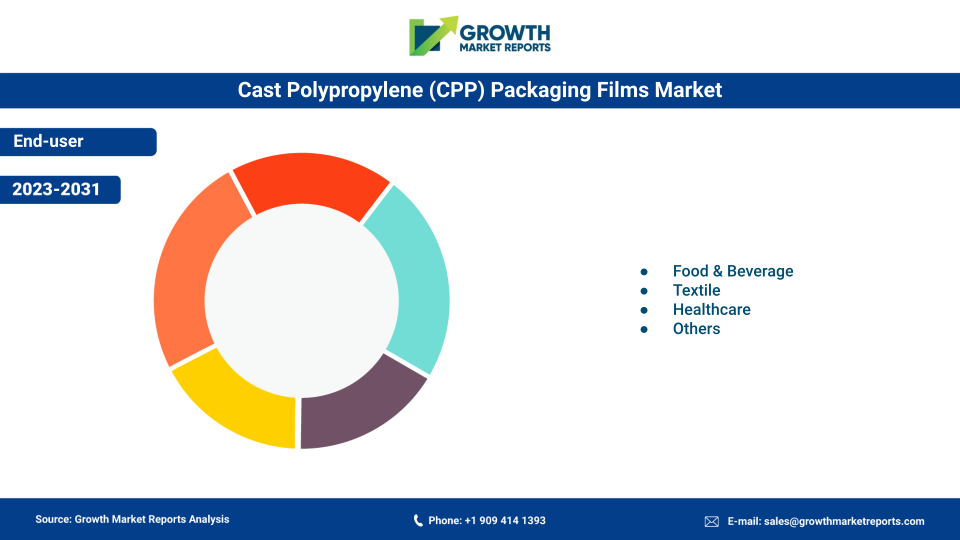
The end-use industry segment of the Cast Polypropylene (CPP) Packaging Films market includes Food & Beverage, Pharmaceuticals, Personal Care & Cosmetics, and Others. The food and beverage industry is the largest end-user, accounting for a substantial portion of global CPP film consumption. The increasing demand for packaged and processed foods, driven by urbanization, changing lifestyles, and rising disposable incomes, is fueling the adoption of flexible packaging materials. CPP films offer the necessary barrier properties, printability, and cost advantages required by food manufacturers to meet evolving consumer preferences. The growth of organized retail and e-commerce channels is further amplifying the need for efficient and attractive packaging solutions in the food and beverage sector.

The pharmaceutical industry is another major end-user, leveraging the unique properties of CPP films for packaging medicines, medical devices, and healthcare products. The stringent regulatory landscape governing pharmaceutical packaging, coupled with the need for product safety, tamper evidence, and extended shelf life, is driving the adoption of advanced CPP film solutions. The increasing prevalence of chronic diseases, expanding healthcare infrastructure, and growing demand for over-the-counter (OTC) medications are contributing to the steady growth of CPP film usage in the pharmaceutical sector. As pharmaceutical companies continue to prioritize patient safety and regulatory compliance, the demand for high-performance CPP films is expected to rise.

Personal care and cosmetics represent a high-growth end-use segment, as manufacturers seek packaging materials that combine functionality, aesthetics, and sustainability. CPP films are used for wrapping soaps, shampoos, lotions, and other personal care products, offering excellent printability and visual appeal. The increasing consumer focus on hygiene, convenience, and premium packaging is driving innovation in the personal care sector, with companies adopting specialty CPP films to differentiate their products on the shelf. Additionally, the growing popularity of single-use and travel-sized personal care items is supporting the demand for flexible and lightweight packaging solutions.

Other end-use industries, such as textiles, electronics, and agriculture, are also contributing to the growth of the CPP packaging films market. The versatility of CPP films in accommodating diverse packaging requirements and their compatibility with various processing techniques make them suitable for a wide range of industrial applications. As manufacturers across different sectors seek to enhance product protection, reduce packaging costs, and improve sustainability, the adoption of CPP films is expected to expand beyond traditional end-use industries.

Opportunities & Threats

The Cast Polypropylene (CPP) Packaging Films market presents significant opportunities for innovation and growth, particularly in the realm of sustainable and eco-friendly packaging solutions. As environmental regulations become increasingly stringent and consumers demand greener alternatives, manufacturers are investing in the development of recyclable, biodegradable, and compostable CPP films. The integration of advanced resin formulations and novel processing technologies is enabling the production of high-performance films that meet both functional and environmental requirements. Additionally, the rise of e-commerce and online retail is driving demand for lightweight and durable packaging materials that can withstand the rigors of shipping and handling. Companies that can offer innovative, sustainable, and cost-effective CPP film solutions are well-positioned to capitalize on emerging market opportunities.

Another opportunity lies in the expansion of CPP film applications across new and emerging industries. The growing adoption of flexible packaging in sectors such as electronics, agriculture, and automotive presents untapped potential for market participants. For example, CPP films with enhanced barrier, anti-static, or UV-resistant properties can address the specific packaging needs of electronic components, agricultural products, and automotive parts. Furthermore, the increasing focus on digital printing and customized packaging is creating demand for CPP films that offer superior printability and compatibility with advanced printing technologies. By diversifying their product portfolios and targeting niche applications, manufacturers can unlock new revenue streams and strengthen their market position.

Despite the positive outlook, the CPP packaging films market faces several restraining factors, the most notable being the competition from alternative packaging materials such as polyethylene (PE), biaxially oriented polypropylene (BOPP), and polyethylene terephthalate (PET). These materials offer comparable or superior barrier properties, mechanical strength, and cost advantages in certain applications, posing a threat to the market share of CPP films. Additionally, fluctuations in raw material prices, particularly polypropylene resin, can impact profit margins and pricing strategies for manufacturers. To mitigate these challenges, market players need to focus on product differentiation, cost optimization, and the development of value-added solutions that address specific customer needs.

Regional Outlook

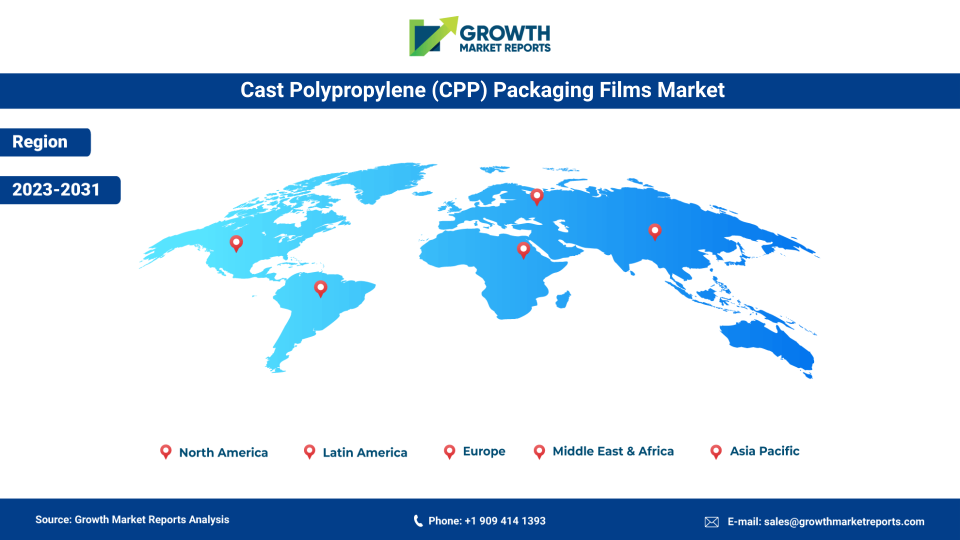
The regional analysis of the Cast Polypropylene (CPP) Packaging Films market reveals that Asia Pacific remains the dominant player, accounting for approximately 45% of the global market revenue in 2024. The region’s leadership can be attributed to rapid industrialization, a burgeoning middle-class population, and the expansion of the food processing and pharmaceutical industries. China and India are at the forefront, driven by large-scale manufacturing capabilities, favorable government policies, and rising consumer demand for packaged goods. The Asia Pacific market is expected to grow at a robust CAGR of 6.2% during the forecast period, outpacing other regions due to its dynamic economic environment and ongoing investments in packaging infrastructure.

North America represents the second-largest market for CPP packaging films, with the United States and Canada leading the way. The region’s advanced packaging industry, high consumer awareness, and strong focus on sustainability are driving the adoption of innovative CPP film solutions. North America accounted for approximately 22% of global market revenue in 2024, with steady growth expected over the forecast period. The increasing demand for convenient, lightweight, and recyclable packaging in the food, pharmaceutical, and personal care sectors is supporting market expansion. Additionally, the presence of major packaging manufacturers and ongoing research and development activities are contributing to the region’s competitive edge.

Europe holds a significant share of the global CPP packaging films market, driven by stringent environmental regulations, a mature food processing industry, and a strong emphasis on product safety and quality. The region accounted for about 19% of the global market revenue in 2024, with Germany, France, and the United Kingdom being the key contributors. The European market is characterized by a high level of innovation and a strong focus on sustainable packaging solutions. Meanwhile, Latin America and the Middle East & Africa are emerging as high-growth regions, collectively accounting for the remaining 14% of market revenue. These regions are benefiting from rising urbanization, increasing disposable incomes, and expanding retail networks, which are driving the demand for advanced packaging materials.

Cast Polypropylene (CPP) Packaging Films Market Statistics

Competitor Outlook

The Cast Polypropylene (CPP) Packaging Films market is highly competitive, with a mix of global and regional players vying for market share. The competitive landscape is characterized by a strong focus on product innovation, quality assurance, and sustainability. Leading companies are investing heavily in research and development to introduce new film formulations, enhance barrier properties, and improve recyclability. Strategic partnerships, mergers and acquisitions, and capacity expansions are common strategies employed by major players to strengthen their market presence and expand their product portfolios. The ability to offer customized solutions that address specific customer requirements is a key differentiator in this competitive market.

Technological advancements are playing a pivotal role in shaping the competitive dynamics of the CPP packaging films market. Companies are leveraging state-of-the-art extrusion and lamination technologies to develop high-performance films with superior mechanical, optical, and barrier properties. The integration of digital printing techniques and smart packaging features is enabling manufacturers to offer value-added solutions that enhance brand visibility and consumer engagement. Furthermore, the growing emphasis on sustainability is prompting companies to invest in eco-friendly materials and manufacturing processes, positioning themselves as responsible and forward-thinking market leaders.

The competitive landscape also features a significant presence of regional and local players, particularly in emerging markets such as Asia Pacific and Latin America. These companies often compete on price and offer tailored solutions to meet the unique needs of local customers. However, global players maintain their dominance through economies of scale, advanced technology, and extensive distribution networks. The increasing trend of industry consolidation is expected to intensify competition, as larger players seek to expand their geographic footprint and diversify their product offerings through strategic acquisitions.

Some of the major companies operating in the global CPP packaging films market include Taghleef Industries, Jindal Poly Films, Uflex Ltd., Polyplex Corporation Ltd., Oben Holding Group, Innovia Films, and Profol GmbH. Taghleef Industries is recognized for its extensive product portfolio and global manufacturing footprint, serving a wide range of end-use industries. Jindal Poly Films and Uflex Ltd. are prominent players in the Asia Pacific region, known for their innovation and commitment to sustainability. Polyplex Corporation and Oben Holding Group are leading suppliers of high-performance CPP films, with a focus on quality and customer service. Innovia Films and Profol GmbH are renowned for their technological expertise and ability to deliver customized solutions for diverse packaging applications. These companies are continuously investing in research, technology, and sustainability initiatives to maintain their competitive edge and meet the evolving needs of the global packaging industry.

Key Players

  • Taghleef Industries
  • Oben Holding Group
  • Jindal Poly Films Ltd.
  • Polinas
  • Profol Kunststoffe GmbH
  • Uflex Ltd.
  • Zhejiang Yuanda Film Co., Ltd.
  • Mitsui Chemicals Tohcello, Inc.
  • LC Packaging International BV
  • Manuli Stretch S.p.A.
  • Cosmo Films Ltd.
  • Toray Plastics (America), Inc.
  • Kopafilm Elektrofolien GmbH
  • Vibac Group S.p.A.
  • Guangdong Decro Film New Materials Co., Ltd.
  • Innovia Films
  • Dunmore Corporation
  • Alpha Marathon Film Extrusion Technologies Inc.
  • Shanxi Yingtai Industry Co., Ltd.
  • Bhineka Tatamulya Industri PT
Cast Polypropylene (CPP) Packaging Films Market Overview

Segments

The Cast Polypropylene (CPP) Packaging Films market has been segmented on the basis of

Product Type

  • General CPP Films
  • Metalized CPP Films
  • Retort CPP Films
  • Others

Thickness

  • Up to 18 Microns
  • 18-50 Microns
  • Above 50 Microns

Application

  • Food Packaging
  • Pharmaceuticals
  • Tobacco Packaging
  • Textile Packaging
  • Others

End-Use Industry

  • Food & Beverage
  • Pharmaceuticals
  • Personal Care & Cosmetics
  • Others

Competitive Landscape

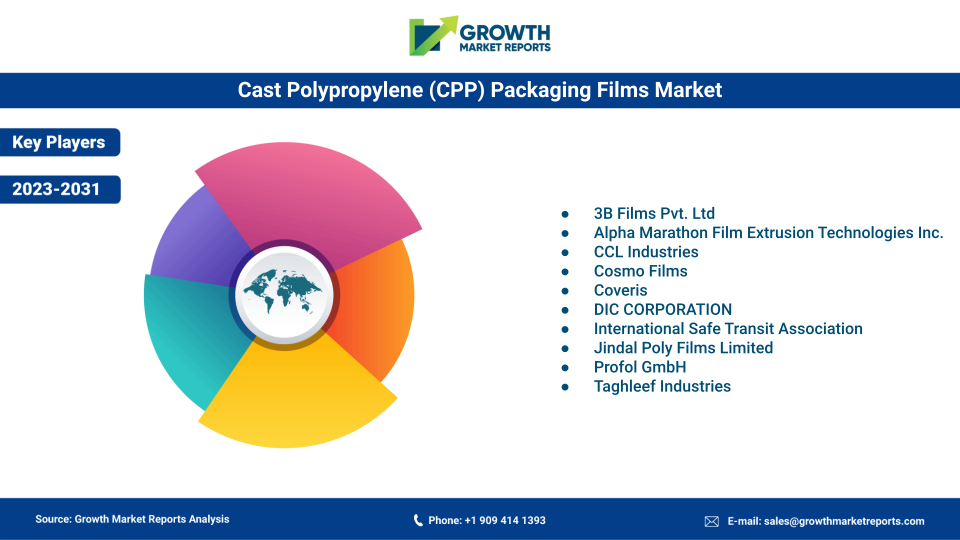
Key players operating in the global cast polypropylene (CPP) packaging films market include 3B Films Pvt. Ltd; Alpha Marathon Film Extrusion Technologies Inc.; CCL Industries; Cosmo Films; Coveris; DIC CORPORATION; International Safe Transit Association; Jindal Poly Films Limited; Profol GmbH; and Taghleef Industries.

These companies adopt strategies such as acquisitions, partnerships, collaboration, mergers, R&D investments, and product launches to boost their market share. For instance,

  • On March 2, 2022, Cosmo Films launched a white cast polypropylene film that has a high coefficient of friction. The film offers uniform sealing over the area of the product and promotes anti-interlayer slippage.

    Cast Polypropylene Packaging Films Market Key Players

Frequently Asked Questions

Yes, the report offers customization options to address specific client requirements.

Major challenges include competition from alternative materials like PE, BOPP, and PET, as well as fluctuations in raw material prices and the need for continuous product innovation.

Key players include Taghleef Industries, Jindal Poly Films, Uflex Ltd., Polyplex Corporation Ltd., Oben Holding Group, Innovia Films, and Profol GmbH, among others.

CPP films are available in thicknesses up to 18 microns (lightweight packaging), 18-50 microns (food, pharmaceuticals, personal care), and above 50 microns (heavy-duty and industrial packaging).

Asia Pacific is the leading region, accounting for about 45% of global market revenue in 2024, driven by rapid industrialization, a growing middle class, and expanding food processing and pharmaceutical industries.

Sustainability is a major trend, with manufacturers focusing on recyclable, biodegradable, and lightweight CPP films to meet environmental regulations and consumer demand for eco-friendly packaging.

CPP packaging films are categorized into General CPP Films, Metalized CPP Films, Retort CPP Films, and specialty films such as anti-fog, anti-static, and UV-resistant variants.

The largest end-users are the food & beverage, pharmaceuticals, and personal care & cosmetics industries, with additional applications in textiles, electronics, and agriculture.

Key growth drivers include increasing demand for flexible and sustainable packaging in food & beverage, pharmaceuticals, and personal care industries, as well as technological advancements and the trend toward convenient packaging formats.

As of 2024, the global Cast Polypropylene (CPP) Packaging Films market size reached USD 6.4 billion, with expectations to grow to USD 10.7 billion by 2033.

Table Of Content

Chapter 1 Executive Summary
Chapter 2 Assumptions and Acronyms Used
Chapter 3 Research Methodology
Chapter 4 Cast Polypropylene (CPP) Packaging Films Market Overview
   4.1 Introduction
      4.1.1 Market Taxonomy
      4.1.2 Market Definition
      4.1.3 Macro-Economic Factors Impacting the Market Growth
   4.2 Cast Polypropylene (CPP) Packaging Films Market Dynamics
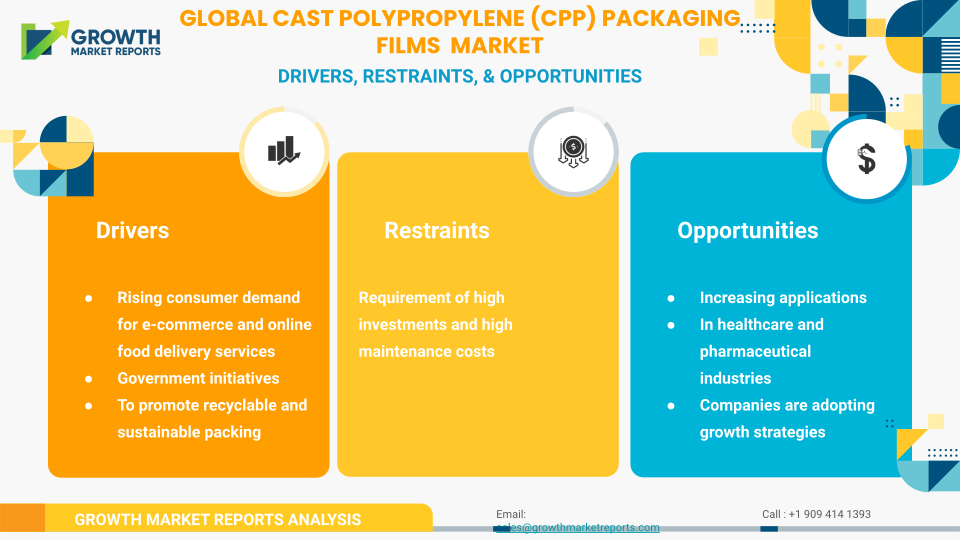
      4.2.1 Market Drivers
      4.2.2 Market Restraints
      4.2.3 Market Opportunity
   4.3 Cast Polypropylene (CPP) Packaging Films Market - Supply Chain Analysis
      4.3.1 List of Key Suppliers
      4.3.2 List of Key Distributors
      4.3.3 List of Key Consumers
   4.4 Key Forces Shaping the Cast Polypropylene (CPP) Packaging Films Market
      4.4.1 Bargaining Power of Suppliers
      4.4.2 Bargaining Power of Buyers
      4.4.3 Threat of Substitution
      4.4.4 Threat of New Entrants
      4.4.5 Competitive Rivalry
   4.5 Global Cast Polypropylene (CPP) Packaging Films Market Size & Forecast, 2023-2032
      4.5.1 Cast Polypropylene (CPP) Packaging Films Market Size and Y-o-Y Growth
      4.5.2 Cast Polypropylene (CPP) Packaging Films Market Absolute $ Opportunity

Chapter 5 Global Cast Polypropylene (CPP) Packaging Films Market Analysis and Forecast By Product Type
   5.1 Introduction
      5.1.1 Key Market Trends & Growth Opportunities By Product Type
      5.1.2 Basis Point Share (BPS) Analysis By Product Type
      5.1.3 Absolute $ Opportunity Assessment By Product Type
   5.2 Cast Polypropylene (CPP) Packaging Films Market Size Forecast By Product Type
      5.2.1 General CPP Films
      5.2.2 Metalized CPP Films
      5.2.3 Retort CPP Films
      5.2.4 Others
   5.3 Market Attractiveness Analysis By Product Type

Chapter 6 Global Cast Polypropylene (CPP) Packaging Films Market Analysis and Forecast By Thickness
   6.1 Introduction
      6.1.1 Key Market Trends & Growth Opportunities By Thickness
      6.1.2 Basis Point Share (BPS) Analysis By Thickness
      6.1.3 Absolute $ Opportunity Assessment By Thickness
   6.2 Cast Polypropylene (CPP) Packaging Films Market Size Forecast By Thickness
      6.2.1 Up to 18 Microns
      6.2.2 18-50 Microns
      6.2.3 Above 50 Microns
   6.3 Market Attractiveness Analysis By Thickness

Chapter 7 Global Cast Polypropylene (CPP) Packaging Films Market Analysis and Forecast By Application
   7.1 Introduction
      7.1.1 Key Market Trends & Growth Opportunities By Application
      7.1.2 Basis Point Share (BPS) Analysis By Application
      7.1.3 Absolute $ Opportunity Assessment By Application
   7.2 Cast Polypropylene (CPP) Packaging Films Market Size Forecast By Application
      7.2.1 Food Packaging
      7.2.2 Pharmaceuticals
      7.2.3 Tobacco Packaging
      7.2.4 Textile Packaging
      7.2.5 Others
   7.3 Market Attractiveness Analysis By Application

Chapter 8 Global Cast Polypropylene (CPP) Packaging Films Market Analysis and Forecast By End-Use Industry
   8.1 Introduction
      8.1.1 Key Market Trends & Growth Opportunities By End-Use Industry
      8.1.2 Basis Point Share (BPS) Analysis By End-Use Industry
      8.1.3 Absolute $ Opportunity Assessment By End-Use Industry
   8.2 Cast Polypropylene (CPP) Packaging Films Market Size Forecast By End-Use Industry
      8.2.1 Food & Beverage
      8.2.2 Pharmaceuticals
      8.2.3 Personal Care & Cosmetics
      8.2.4 Others
   8.3 Market Attractiveness Analysis By End-Use Industry

Chapter 9 Global Cast Polypropylene (CPP) Packaging Films Market Analysis and Forecast by Region
   9.1 Introduction
      9.1.1 Key Market Trends & Growth Opportunities By Region
      9.1.2 Basis Point Share (BPS) Analysis By Region
      9.1.3 Absolute $ Opportunity Assessment By Region
   9.2 Cast Polypropylene (CPP) Packaging Films Market Size Forecast By Region
      9.2.1 North America
      9.2.2 Europe
      9.2.3 Asia Pacific
      9.2.4 Latin America
      9.2.5 Middle East & Africa (MEA)
   9.3 Market Attractiveness Analysis By Region

Chapter 10 Coronavirus Disease (COVID-19) Impact 
   10.1 Introduction 
   10.2 Current & Future Impact Analysis 
   10.3 Economic Impact Analysis 
   10.4 Government Policies 
   10.5 Investment Scenario

Chapter 11 North America Cast Polypropylene (CPP) Packaging Films Analysis and Forecast
   11.1 Introduction
   11.2 North America Cast Polypropylene (CPP) Packaging Films Market Size Forecast by Country
      11.2.1 U.S.
      11.2.2 Canada
   11.3 Basis Point Share (BPS) Analysis by Country
   11.4 Absolute $ Opportunity Assessment by Country
   11.5 Market Attractiveness Analysis by Country
   11.6 North America Cast Polypropylene (CPP) Packaging Films Market Size Forecast By Product Type
      11.6.1 General CPP Films
      11.6.2 Metalized CPP Films
      11.6.3 Retort CPP Films
      11.6.4 Others
   11.7 Basis Point Share (BPS) Analysis By Product Type 
   11.8 Absolute $ Opportunity Assessment By Product Type 
   11.9 Market Attractiveness Analysis By Product Type
   11.10 North America Cast Polypropylene (CPP) Packaging Films Market Size Forecast By Thickness
      11.10.1 Up to 18 Microns
      11.10.2 18-50 Microns
      11.10.3 Above 50 Microns
   11.11 Basis Point Share (BPS) Analysis By Thickness 
   11.12 Absolute $ Opportunity Assessment By Thickness 
   11.13 Market Attractiveness Analysis By Thickness
   11.14 North America Cast Polypropylene (CPP) Packaging Films Market Size Forecast By Application
      11.14.1 Food Packaging
      11.14.2 Pharmaceuticals
      11.14.3 Tobacco Packaging
      11.14.4 Textile Packaging
      11.14.5 Others
   11.15 Basis Point Share (BPS) Analysis By Application 
   11.16 Absolute $ Opportunity Assessment By Application 
   11.17 Market Attractiveness Analysis By Application
   11.18 North America Cast Polypropylene (CPP) Packaging Films Market Size Forecast By End-Use Industry
      11.18.1 Food & Beverage
      11.18.2 Pharmaceuticals
      11.18.3 Personal Care & Cosmetics
      11.18.4 Others
   11.19 Basis Point Share (BPS) Analysis By End-Use Industry 
   11.20 Absolute $ Opportunity Assessment By End-Use Industry 
   11.21 Market Attractiveness Analysis By End-Use Industry

Chapter 12 Europe Cast Polypropylene (CPP) Packaging Films Analysis and Forecast
   12.1 Introduction
   12.2 Europe Cast Polypropylene (CPP) Packaging Films Market Size Forecast by Country
      12.2.1 Germany
      12.2.2 France
      12.2.3 Italy
      12.2.4 U.K.
      12.2.5 Spain
      12.2.6 Russia
      12.2.7 Rest of Europe
   12.3 Basis Point Share (BPS) Analysis by Country
   12.4 Absolute $ Opportunity Assessment by Country
   12.5 Market Attractiveness Analysis by Country
   12.6 Europe Cast Polypropylene (CPP) Packaging Films Market Size Forecast By Product Type
      12.6.1 General CPP Films
      12.6.2 Metalized CPP Films
      12.6.3 Retort CPP Films
      12.6.4 Others
   12.7 Basis Point Share (BPS) Analysis By Product Type 
   12.8 Absolute $ Opportunity Assessment By Product Type 
   12.9 Market Attractiveness Analysis By Product Type
   12.10 Europe Cast Polypropylene (CPP) Packaging Films Market Size Forecast By Thickness
      12.10.1 Up to 18 Microns
      12.10.2 18-50 Microns
      12.10.3 Above 50 Microns
   12.11 Basis Point Share (BPS) Analysis By Thickness 
   12.12 Absolute $ Opportunity Assessment By Thickness 
   12.13 Market Attractiveness Analysis By Thickness
   12.14 Europe Cast Polypropylene (CPP) Packaging Films Market Size Forecast By Application
      12.14.1 Food Packaging
      12.14.2 Pharmaceuticals
      12.14.3 Tobacco Packaging
      12.14.4 Textile Packaging
      12.14.5 Others
   12.15 Basis Point Share (BPS) Analysis By Application 
   12.16 Absolute $ Opportunity Assessment By Application 
   12.17 Market Attractiveness Analysis By Application
   12.18 Europe Cast Polypropylene (CPP) Packaging Films Market Size Forecast By End-Use Industry
      12.18.1 Food & Beverage
      12.18.2 Pharmaceuticals
      12.18.3 Personal Care & Cosmetics
      12.18.4 Others
   12.19 Basis Point Share (BPS) Analysis By End-Use Industry 
   12.20 Absolute $ Opportunity Assessment By End-Use Industry 
   12.21 Market Attractiveness Analysis By End-Use Industry

Chapter 13 Asia Pacific Cast Polypropylene (CPP) Packaging Films Analysis and Forecast
   13.1 Introduction
   13.2 Asia Pacific Cast Polypropylene (CPP) Packaging Films Market Size Forecast by Country
      13.2.1 China
      13.2.2 Japan
      13.2.3 South Korea
      13.2.4 India
      13.2.5 Australia
      13.2.6 South East Asia (SEA)
      13.2.7 Rest of Asia Pacific (APAC)
   13.3 Basis Point Share (BPS) Analysis by Country
   13.4 Absolute $ Opportunity Assessment by Country
   13.5 Market Attractiveness Analysis by Country
   13.6 Asia Pacific Cast Polypropylene (CPP) Packaging Films Market Size Forecast By Product Type
      13.6.1 General CPP Films
      13.6.2 Metalized CPP Films
      13.6.3 Retort CPP Films
      13.6.4 Others
   13.7 Basis Point Share (BPS) Analysis By Product Type 
   13.8 Absolute $ Opportunity Assessment By Product Type 
   13.9 Market Attractiveness Analysis By Product Type
   13.10 Asia Pacific Cast Polypropylene (CPP) Packaging Films Market Size Forecast By Thickness
      13.10.1 Up to 18 Microns
      13.10.2 18-50 Microns
      13.10.3 Above 50 Microns
   13.11 Basis Point Share (BPS) Analysis By Thickness 
   13.12 Absolute $ Opportunity Assessment By Thickness 
   13.13 Market Attractiveness Analysis By Thickness
   13.14 Asia Pacific Cast Polypropylene (CPP) Packaging Films Market Size Forecast By Application
      13.14.1 Food Packaging
      13.14.2 Pharmaceuticals
      13.14.3 Tobacco Packaging
      13.14.4 Textile Packaging
      13.14.5 Others
   13.15 Basis Point Share (BPS) Analysis By Application 
   13.16 Absolute $ Opportunity Assessment By Application 
   13.17 Market Attractiveness Analysis By Application
   13.18 Asia Pacific Cast Polypropylene (CPP) Packaging Films Market Size Forecast By End-Use Industry
      13.18.1 Food & Beverage
      13.18.2 Pharmaceuticals
      13.18.3 Personal Care & Cosmetics
      13.18.4 Others
   13.19 Basis Point Share (BPS) Analysis By End-Use Industry 
   13.20 Absolute $ Opportunity Assessment By End-Use Industry 
   13.21 Market Attractiveness Analysis By End-Use Industry

Chapter 14 Latin America Cast Polypropylene (CPP) Packaging Films Analysis and Forecast
   14.1 Introduction
   14.2 Latin America Cast Polypropylene (CPP) Packaging Films Market Size Forecast by Country
      14.2.1 Brazil
      14.2.2 Mexico
      14.2.3 Rest of Latin America (LATAM)
   14.3 Basis Point Share (BPS) Analysis by Country
   14.4 Absolute $ Opportunity Assessment by Country
   14.5 Market Attractiveness Analysis by Country
   14.6 Latin America Cast Polypropylene (CPP) Packaging Films Market Size Forecast By Product Type
      14.6.1 General CPP Films
      14.6.2 Metalized CPP Films
      14.6.3 Retort CPP Films
      14.6.4 Others
   14.7 Basis Point Share (BPS) Analysis By Product Type 
   14.8 Absolute $ Opportunity Assessment By Product Type 
   14.9 Market Attractiveness Analysis By Product Type
   14.10 Latin America Cast Polypropylene (CPP) Packaging Films Market Size Forecast By Thickness
      14.10.1 Up to 18 Microns
      14.10.2 18-50 Microns
      14.10.3 Above 50 Microns
   14.11 Basis Point Share (BPS) Analysis By Thickness 
   14.12 Absolute $ Opportunity Assessment By Thickness 
   14.13 Market Attractiveness Analysis By Thickness
   14.14 Latin America Cast Polypropylene (CPP) Packaging Films Market Size Forecast By Application
      14.14.1 Food Packaging
      14.14.2 Pharmaceuticals
      14.14.3 Tobacco Packaging
      14.14.4 Textile Packaging
      14.14.5 Others
   14.15 Basis Point Share (BPS) Analysis By Application 
   14.16 Absolute $ Opportunity Assessment By Application 
   14.17 Market Attractiveness Analysis By Application
   14.18 Latin America Cast Polypropylene (CPP) Packaging Films Market Size Forecast By End-Use Industry
      14.18.1 Food & Beverage
      14.18.2 Pharmaceuticals
      14.18.3 Personal Care & Cosmetics
      14.18.4 Others
   14.19 Basis Point Share (BPS) Analysis By End-Use Industry 
   14.20 Absolute $ Opportunity Assessment By End-Use Industry 
   14.21 Market Attractiveness Analysis By End-Use Industry

Chapter 15 Middle East & Africa (MEA) Cast Polypropylene (CPP) Packaging Films Analysis and Forecast
   15.1 Introduction
   15.2 Middle East & Africa (MEA) Cast Polypropylene (CPP) Packaging Films Market Size Forecast by Country
      15.2.1 Saudi Arabia
      15.2.2 South Africa
      15.2.3 UAE
      15.2.4 Rest of Middle East & Africa (MEA)
   15.3 Basis Point Share (BPS) Analysis by Country
   15.4 Absolute $ Opportunity Assessment by Country
   15.5 Market Attractiveness Analysis by Country
   15.6 Middle East & Africa (MEA) Cast Polypropylene (CPP) Packaging Films Market Size Forecast By Product Type
      15.6.1 General CPP Films
      15.6.2 Metalized CPP Films
      15.6.3 Retort CPP Films
      15.6.4 Others
   15.7 Basis Point Share (BPS) Analysis By Product Type 
   15.8 Absolute $ Opportunity Assessment By Product Type 
   15.9 Market Attractiveness Analysis By Product Type
   15.10 Middle East & Africa (MEA) Cast Polypropylene (CPP) Packaging Films Market Size Forecast By Thickness
      15.10.1 Up to 18 Microns
      15.10.2 18-50 Microns
      15.10.3 Above 50 Microns
   15.11 Basis Point Share (BPS) Analysis By Thickness 
   15.12 Absolute $ Opportunity Assessment By Thickness 
   15.13 Market Attractiveness Analysis By Thickness
   15.14 Middle East & Africa (MEA) Cast Polypropylene (CPP) Packaging Films Market Size Forecast By Application
      15.14.1 Food Packaging
      15.14.2 Pharmaceuticals
      15.14.3 Tobacco Packaging
      15.14.4 Textile Packaging
      15.14.5 Others
   15.15 Basis Point Share (BPS) Analysis By Application 
   15.16 Absolute $ Opportunity Assessment By Application 
   15.17 Market Attractiveness Analysis By Application
   15.18 Middle East & Africa (MEA) Cast Polypropylene (CPP) Packaging Films Market Size Forecast By End-Use Industry
      15.18.1 Food & Beverage
      15.18.2 Pharmaceuticals
      15.18.3 Personal Care & Cosmetics
      15.18.4 Others
   15.19 Basis Point Share (BPS) Analysis By End-Use Industry 
   15.20 Absolute $ Opportunity Assessment By End-Use Industry 
   15.21 Market Attractiveness Analysis By End-Use Industry

Chapter 16 Competition Landscape 
   16.1 Cast Polypropylene (CPP) Packaging Films Market: Competitive Dashboard
   16.2 Global Cast Polypropylene (CPP) Packaging Films Market: Market Share Analysis, 2023
   16.3 Company Profiles (Details – Overview, Financials, Developments, Strategy) 
      16.3.1 Taghleef Industries
Oben Holding Group
Jindal Poly Films Ltd.
Polinas
Profol Kunststoffe GmbH
Uflex Ltd.
Zhejiang Yuanda Film Co., Ltd.
Mitsui Chemicals Tohcello, Inc.
LC Packaging International BV
Manuli Stretch S.p.A.
Cosmo Films Ltd.
Toray Plastics (America), Inc.
Kopafilm Elektrofolien GmbH
Vibac Group S.p.A.
Guangdong Decro Film New Materials Co., Ltd.
Innovia Films
Dunmore Corporation
Alpha Marathon Film Extrusion Technologies Inc.
Shanxi Yingtai Industry Co., Ltd.
Bhineka Tatamulya Industri PT

Methodology

Our Clients

Pfizer
Dassault Aviation
FedEx Logistics
sinopec
General Mills
Deloitte
The John Holland Group
Nestle SA