Bubble Wrap Packaging Market Report 2034

Bubble Wrap Packaging Market Report 2034

Segments - by Product Type (General Bubble Wrap, Multi-layered Bubble Wrap, Anti-static Bubble Wrap, Others), by Material (Polyethylene, Polyamide, Others), by Application (E-commerce, Electronics, Automotive, Pharmaceuticals, Food & Beverage, Others), by Distribution Channel (Online, Offline), by End-User (Retail, Industrial, Commercial, Others)

https://growthmarketreports.com/Raksha
Author : Raksha Sharma
https://growthmarketreports.com/Vaibhav
Fact-checked by : V. Chandola
https://growthmarketreports.com/Shruti
Editor : Shruti Bhat

Last Updated : Jun, 2026 | Report ID :MC-4787 | 4.2 Rating | 34 Reviews | 274 Pages | Format : Docx PDF

Report Description

This report is updated with the latest market data and insights as of June 2026. Base year: 2025  |  Forecast period: 2026-2034


Bubble Wrap Packaging Market Outlook

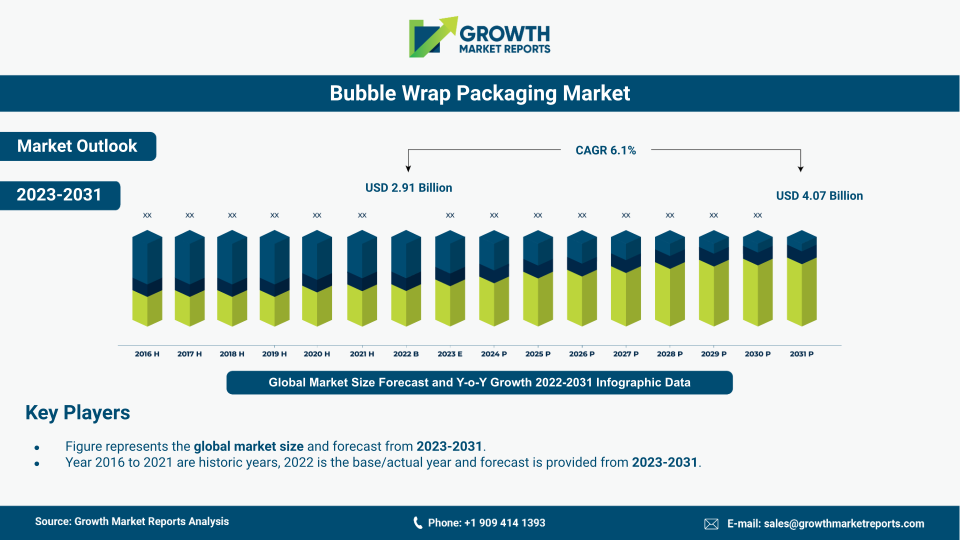
According to our latest research, the global bubble wrap packaging market size reached USD 3.8 billion in 2025, with a robust compound annual growth rate (CAGR) of 4.8% expected during the forecast period. The market is projected to attain a value of USD 5.8 billion by 2034, driven by the rapid expansion of e-commerce, increasing demand for protective packaging solutions, and the proliferation of fragile goods being shipped worldwide. The surge in online retail and the growing emphasis on product safety during transit are primary growth factors propelling the bubble wrap packaging market globally.

Global Bubble Wrap Packaging Market Size Forecast 2025-2034, USD Billion

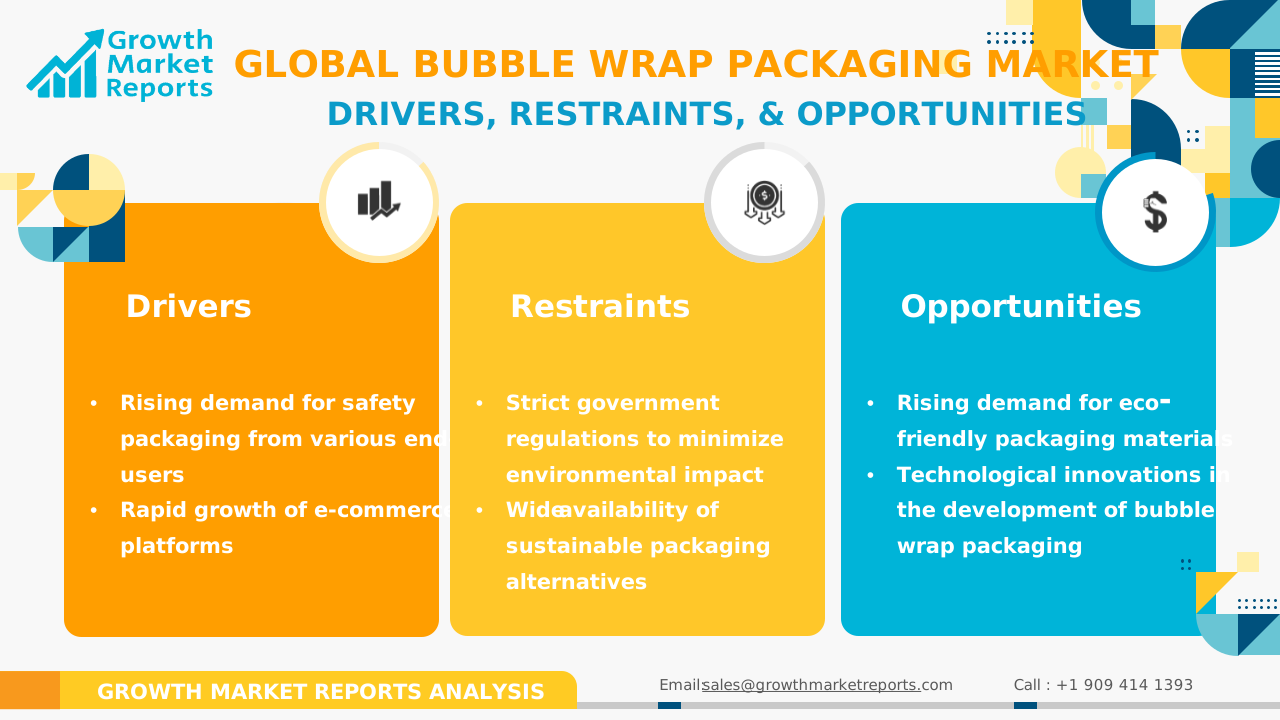
One of the most significant growth drivers for the bubble wrap packaging market is the exponential rise in e-commerce activities across the globe. As online shopping becomes an integral part of consumer lifestyles, the need for reliable, lightweight, and cost-effective packaging solutions has soared. Bubble wrap, with its superior cushioning properties and adaptability to various product shapes and sizes, has become indispensable for e-commerce retailers aiming to minimize product damage during transit. Major e-commerce giants are investing heavily in advanced packaging materials to enhance customer satisfaction and reduce return rates. The increased frequency of small parcel shipments, coupled with the necessity for sustainable and efficient packaging, continues to bolster demand for bubble wrap packaging solutions in this sector.

Another key factor fueling the expansion of the bubble wrap packaging market is the heightened awareness around product safety in industries such as electronics, automotive, pharmaceuticals, and food and beverage. Electronics manufacturers, in particular, are increasingly relying on bubble wrap to safeguard delicate components and finished products from shocks, vibrations, and static electricity during storage and transportation. The automotive and pharmaceutical sectors also leverage bubble wrap for its ability to protect high-value and sensitive items, ensuring compliance with stringent safety and quality standards. Furthermore, the ongoing innovations in bubble wrap materials, such as the development of anti-static and multi-layered variants, are catering to the specialized needs of these industries, thereby widening the application scope of bubble wrap packaging.

Sustainability trends and environmental regulations are further shaping the growth trajectory of the bubble wrap packaging market. With growing concerns about plastic waste and carbon footprints, manufacturers are increasingly adopting recyclable and biodegradable materials in bubble wrap production. Polyethylene-based bubble wraps are being replaced or supplemented with eco-friendly alternatives, aligning with global sustainability goals and regulatory mandates. Companies are investing in research and development to create bubble wraps that offer the same level of protection while minimizing environmental impact. This shift towards green packaging solutions is attracting environmentally conscious businesses and consumers, thereby fostering additional market growth.

In addition to traditional bubble wrap, the use of Barrier Films for Industrial Packaging is gaining traction as industries seek more robust solutions for protecting goods during transit. These films offer enhanced protection against moisture, oxygen, and other environmental factors, making them ideal for industrial applications where product integrity is paramount. The demand for barrier films is particularly strong in sectors such as food and pharmaceuticals, where maintaining product quality and safety is critical. As manufacturers continue to innovate, barrier films are being developed with advanced materials that provide superior strength and flexibility, catering to the diverse needs of industrial packaging. This trend is expected to complement the growth of the bubble wrap market, offering businesses a comprehensive range of protective packaging options.

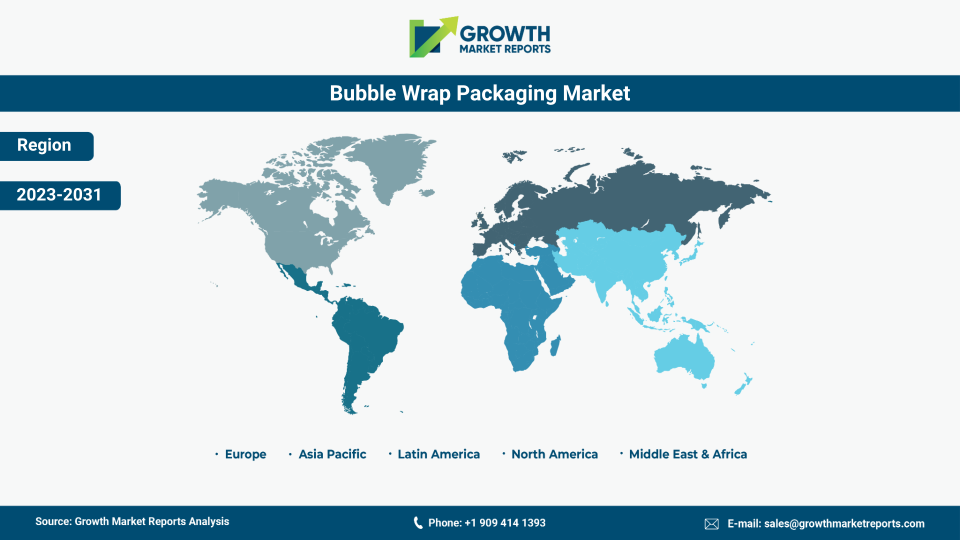
From a regional perspective, the Asia Pacific region is the dominant player in the bubble wrap packaging market, accounting for the largest share in 2025. This growth is attributed to the thriving e-commerce sector, rapid industrialization, and increasing manufacturing activities in countries like China, India, and Japan. North America and Europe also represent significant markets, driven by technological advancements in packaging materials and stringent product safety regulations. Meanwhile, Latin America and the Middle East and Africa are witnessing steady growth, supported by expanding retail sectors and rising consumer awareness regarding product protection. The regional dynamics of the bubble wrap packaging market are influenced by economic development, regulatory frameworks, and evolving consumer preferences across the globe.

Product Type Analysis

The bubble wrap packaging market is segmented by product type into general bubble wrap, multi-layered bubble wrap, anti-static bubble wrap, and others. General bubble wrap remains the most widely used variant, holding approximately 45% of the market in 2025, favored for its versatility and cost-effectiveness in protecting a broad range of products. Its lightweight nature and ease of customization make it the go-to choice for e-commerce shipments, retail packaging, and household applications. The increasing volume of online purchases and the need for affordable packaging solutions continue to drive demand for general bubble wrap, especially among small and medium enterprises seeking to minimize shipping costs without compromising on product safety.

Bubble Wrap Packaging Market Share by Product Type 2025

Multi-layered bubble wrap is gaining traction in industries that require enhanced cushioning and durability, such as electronics, automotive, and heavy machinery. This variant features multiple layers of air-filled bubbles, providing superior shock absorption and resistance to punctures. As the value and fragility of shipped goods increase, manufacturers and distributors are opting for multi-layered bubble wrap to ensure maximum protection during long-distance transportation. The growing preference for premium packaging solutions in high-value sectors is expected to fuel the adoption of multi-layered bubble wrap over the forecast period. Customers shipping precision instruments, optical equipment, and complex electronic assemblies increasingly specify this variant as the standard for their outbound logistics.

Anti-static bubble wrap is a specialized product designed to protect sensitive electronic components from electrostatic discharge (ESD) during handling and transit. With the proliferation of consumer electronics, semiconductors, and telecommunications equipment, the demand for this product type has surged significantly through 2025. Engineered with unique materials that dissipate static electricity, it prevents damage to microchips, circuit boards, and other sensitive devices. The increasing adoption of anti-static bubble wrap in the electronics and IT sectors is a testament to the growing emphasis on product integrity and compliance with international safety standards. This segment commands a meaningful premium over general variants and is expected to grow at an above-average rate through 2034.

Other product types, including eco-friendly and biodegradable bubble wraps, are steadily entering the market as sustainability becomes a top priority for businesses and consumers alike. These innovative solutions are made from recycled materials or plant-based polymers, offering comparable protection while reducing environmental impact. Alongside traditional formats, bubble pouches are gaining popularity as a convenient pre-formed alternative that combines cushioning with ease of use for small product categories. As regulatory pressures mount and consumer demand for green packaging rises, the market for alternative bubble wrap products is expected to expand, providing new growth avenues for manufacturers and suppliers through 2034.

Report Scope

Attributes Details
Report Title Bubble Wrap Packaging Market Research Report 2034
By Product Type General Bubble Wrap, Multi-layered Bubble Wrap, Anti-static Bubble Wrap, Others
By Material Polyethylene, Polyamide, Others
By Application E-commerce, Electronics, Automotive, Pharmaceuticals, Food & Beverage, Others
By Distribution Channel Online, Offline
By End-User Retail, Industrial, Commercial, Others
Regions Covered North America, Europe, APAC, Latin America, MEA
Base Year 2025
Historic Data 2019-2024
Forecast Period 2026-2034
Number of Pages 274
Number of Tables & Figures 252
Customization Available Yes, the report can be customized as per your need.

Material Analysis

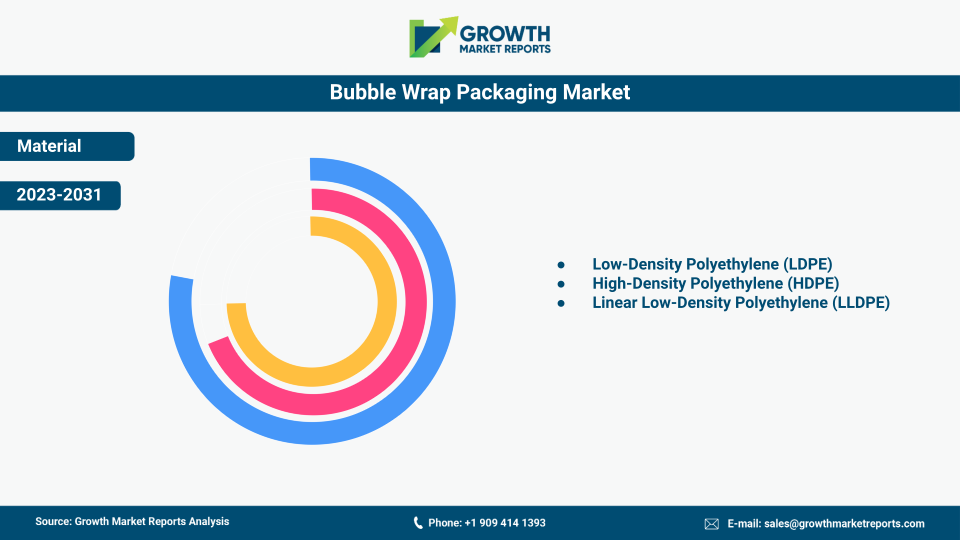
The material segment of the bubble wrap packaging market is primarily dominated by polyethylene, which is known for its flexibility, durability, and cost efficiency. Polyethylene-based bubble wrap offers excellent cushioning and resistance to moisture, making it ideal for a wide array of applications across different industries. The widespread availability and low production costs of polyethylene have contributed to its dominance in the bubble wrap market through 2025 and beyond. However, concerns regarding plastic waste and environmental sustainability are prompting manufacturers to explore alternative materials that are both effective and eco-friendly, particularly as the European Union and other regulatory bodies tighten restrictions on single-use plastics.

Polyamide is another material gaining prominence in the bubble wrap packaging market, particularly in high-performance applications. Polyamide bubble wrap is valued for its superior strength, chemical resistance, and ability to withstand extreme temperatures. These attributes make it suitable for packaging sensitive electronics, automotive components, and pharmaceutical products that require additional protection. As industries continue to demand higher standards of safety and reliability in packaging, the adoption of polyamide bubble wrap is expected to rise through 2034, particularly in regions with advanced manufacturing capabilities such as Germany, Japan, and the United States.

In addition to polyethylene and polyamide, other materials such as biodegradable polymers, recycled plastics, and hybrid composites are being introduced to address the growing need for sustainable packaging solutions. These materials are designed to reduce environmental impact without compromising on protective qualities. Biodegradable bubble wraps, for instance, decompose naturally over time, aligning with global efforts to minimize plastic pollution. The increasing investment in research and development of alternative materials is expected to reshape the material landscape of the bubble wrap packaging market through 2034, offering new opportunities for innovation and differentiation.

The shift towards sustainable materials is further reinforced by regulatory initiatives and consumer preferences for eco-friendly products. Governments across North America, Europe, and Asia Pacific are implementing stringent regulations on single-use plastics and encouraging the adoption of recyclable and biodegradable packaging materials. As a result, companies that prioritize sustainability in their material choices are likely to gain a competitive edge. The material segment is thus poised for significant transformation, driven by technological advancements and evolving environmental standards, and this shift is already visible in the strategic roadmaps of the market's leading players as of 2025.

Application Analysis

The application segment of the bubble wrap packaging market encompasses e-commerce, electronics, automotive, pharmaceuticals, food and beverage, and others. The e-commerce sector is the largest contributor to market demand in 2025, fueled by the continued surge in online shopping and the need for reliable protective packaging. Bubble wrap is extensively used by e-commerce retailers to safeguard products ranging from electronics to cosmetics and apparel during transit. The increasing frequency of cross-border shipments and the rise of direct-to-consumer business models are further amplifying the demand for bubble wrap packaging in this segment. The global e-commerce sector is expected to sustain double-digit growth through the late 2020s, translating directly into sustained demand for cushioning materials.

In the electronics industry, bubble wrap plays a critical role in protecting sensitive devices and components from mechanical shocks, vibrations, and static electricity. The rapid innovation in consumer electronics, coupled with the global expansion of semiconductor manufacturing, has led to a significant uptick in the use of specialized bubble wraps, such as anti-static and multi-layered variants. Electronics manufacturers are increasingly prioritizing packaging solutions that ensure product integrity and compliance with international safety standards, thereby driving growth in this application segment well into the 2026-2034 forecast period.

The automotive sector also represents a substantial market for bubble wrap packaging, particularly for the protection of delicate parts, assemblies, and aftermarket components. As automotive supply chains become more complex and globalized, the need for robust and lightweight packaging solutions has intensified. Bubble wrap is favored for its ability to cushion high-value and precision-engineered parts against impact and abrasion during transportation. The rapid expansion of electric vehicle production platforms and the associated growth in precision electronics within vehicles are expected to further boost demand for bubble wrap packaging in the automotive industry through 2034.

Pharmaceutical and food and beverage applications are witnessing growing adoption of bubble wrap packaging, driven by the need to maintain product safety, hygiene, and compliance with regulatory standards. In the pharmaceutical sector, bubble wrap is used to protect vials, bottles, and medical devices from breakage and contamination. The food and beverage industry leverages bubble wrap for packaging fragile items such as glass bottles, jars, and specialty products. The increasing focus on health, safety, and quality assurance across these critical sectors is expected to remain a steady growth driver through the forecast period. Alongside traditional foam packaging alternatives, bubble wrap continues to gain share due to its lighter weight and lower shipping cost profile.

Distribution Channel Analysis

The distribution channel segment for bubble wrap packaging is divided into online and offline channels. Offline channels, including direct sales, wholesalers, and distributors, have traditionally dominated the market, particularly in industrial and commercial applications. These channels offer the advantage of bulk purchasing, personalized service, and immediate product availability. Industrial clients and large-scale retailers often prefer offline channels for their established relationships, reliability, and the ability to negotiate customized solutions tailored to specific needs. As of 2025, offline channels still account for a majority of total market revenue in regions such as Latin America and the Middle East and Africa.

However, the online distribution channel is experiencing rapid growth, fueled by the digitalization of procurement processes and the increasing preference for convenience and transparency. E-commerce platforms and specialized packaging websites are making it easier for businesses and individual consumers to access a wide range of bubble wrap products, compare prices, and place orders with minimal effort. The online channel is particularly popular among small and medium enterprises, startups, and home-based businesses that require flexible quantities and quick delivery times. This trend accelerated significantly between 2020 and 2025 and is expected to continue through 2034.

The proliferation of digital marketplaces and the integration of advanced supply chain technologies are further enhancing the efficiency and reach of online distribution channels. Features such as real-time inventory tracking, automated order processing, and doorstep delivery are streamlining the purchasing experience for customers. Alongside bubble mailers and other pre-made packaging formats sold predominantly online, standard bubble wrap rolls and sheets continue to see strong e-commerce channel traction. The ongoing shift towards online procurement is expected to accelerate as businesses seek to optimize their supply chains and reduce operational costs through 2034.

Despite the rapid growth of online channels, offline distribution remains vital for large-scale industrial clients and businesses with complex packaging requirements. The ability to offer tailored solutions, technical support, and after-sales service gives offline distributors a competitive edge in certain market segments. As the bubble wrap packaging market continues to evolve, a hybrid distribution model that leverages the strengths of both online and offline channels is likely to emerge as the dominant commercial approach, catering to the diverse needs of customers across industries.

End-User Analysis

The end-user segment of the bubble wrap packaging market includes retail, industrial, commercial, and others. The retail sector is a major driver of demand, as retailers increasingly rely on bubble wrap to protect a wide range of consumer goods, from electronics and cosmetics to toys and household items. The rise of omnichannel retailing and the growing emphasis on customer experience are prompting retailers to invest in high-quality packaging materials that minimize product damage and enhance brand reputation. In 2025, retail end-users are estimated to account for the largest share of overall bubble wrap consumption by volume.

Industrial end-users, such as manufacturers and distributors, constitute a significant portion of the bubble wrap packaging market. These users require bulk quantities of bubble wrap for packaging and shipping raw materials, components, and finished products. The industrial sector values bubble wrap for its versatility, cost-effectiveness, and ability to protect goods during long-distance transportation and storage. As global supply chains become more interconnected and complex heading through 2034, the demand for reliable packaging solutions in the industrial segment is expected to remain strong, particularly in Asia Pacific and North America.

The commercial segment encompasses businesses in sectors such as logistics, warehousing, and third-party fulfillment services. These organizations rely on bubble wrap to ensure the safe handling and delivery of goods to end customers. The increasing adoption of automation and digital technologies in commercial operations is driving the need for standardized and efficient packaging solutions. Bubble wrap's adaptability to various product types and shipping methods makes it a preferred choice for commercial end-users seeking to optimize operational efficiency and reduce costs through the 2026-2034 period.

Other end-users, including educational institutions, government agencies, and healthcare providers, also contribute to the demand for bubble wrap packaging. These users typically require specialized bubble wrap products for unique applications, such as the protection of laboratory equipment, archival materials, and sensitive documents. The diverse range of end-users underscores the versatility and widespread appeal of bubble wrap packaging across different sectors and use cases, providing a resilient demand base that supports consistent market growth even during periods of macroeconomic uncertainty.

Opportunities & Threats

The bubble wrap packaging market presents a multitude of opportunities for innovation and growth. One of the most promising opportunities lies in the development of sustainable and eco-friendly bubble wrap materials. As environmental concerns and regulatory pressures intensify through the late 2020s, manufacturers have the chance to differentiate themselves by offering biodegradable, recyclable, and compostable bubble wrap solutions. Companies that invest in research and development to create high-performance, sustainable packaging materials are likely to capture a larger share of the market and appeal to environmentally conscious customers. Additionally, the integration of smart packaging technologies, such as QR codes and sensors, can enhance product tracking, authentication, and customer engagement, creating new value propositions for bubble wrap packaging.

Another significant opportunity arises from the ongoing digital transformation of the supply chain and distribution channels. The adoption of e-commerce platforms, digital marketplaces, and automated procurement systems is revolutionizing the way bubble wrap packaging products are sourced and delivered. Companies that leverage digital tools to streamline operations, improve customer service, and expand their global reach are well-positioned to capitalize on the growing demand for bubble wrap packaging. Furthermore, the expansion of emerging markets, particularly in Asia Pacific and Latin America, offers untapped potential for market growth. As these regions experience rapid urbanization, industrialization, and growth in e-commerce through 2034, the demand for protective packaging solutions is expected to surge, creating new business opportunities for manufacturers and distributors.

Despite the numerous opportunities, the bubble wrap packaging market faces certain threats and restrainers. One of the primary challenges is the increasing scrutiny of plastic packaging and the associated environmental impact. Regulatory restrictions on single-use plastics, coupled with shifting consumer preferences towards sustainable alternatives, are compelling manufacturers to rethink their material choices and production processes. Companies that fail to adapt to these changes risk losing market share and facing reputational damage. Additionally, fluctuations in raw material prices, particularly for polyethylene and other polymers, can impact profit margins and create supply chain uncertainties. The market is also subject to competitive pressures from alternative protective packaging solutions, such as foam, paper-based cushioning, and molded pulp, which may offer comparable protection with lower environmental impact.

Regional Outlook

The Asia Pacific region leads the bubble wrap packaging market, accounting for approximately 42% of the global market share in 2025, with a market value of approximately USD 1.6 billion. The region's dominance is driven by the rapid growth of e-commerce, robust manufacturing activity, and expanding consumer markets in countries such as China, India, Japan, and South Korea. The increasing adoption of online shopping, coupled with the presence of major electronics and automotive manufacturing hubs, is fueling demand for advanced protective packaging solutions. The Asia Pacific market is expected to grow at a CAGR of 5.7% through 2034, outpacing other regions due to its favorable economic and demographic trends.

Bubble Wrap Packaging Market Regional Share 2025

North America represents the second-largest market for bubble wrap packaging, with a market size of approximately USD 1.1 billion in 2025. The region benefits from a mature e-commerce sector, high consumer awareness, and stringent regulatory standards for product safety and packaging sustainability. The United States and Canada are key contributors to market growth, supported by technological advancements in packaging materials and the presence of leading packaging manufacturers. The demand for anti-static and multi-layered bubble wraps is particularly strong in the electronics and healthcare sectors, where product integrity and compliance with safety standards are paramount. North America is projected to register a CAGR of approximately 4.2% over the 2026-2034 forecast period.

Europe holds a significant share of the global bubble wrap packaging market, valued at approximately USD 0.7 billion in 2025. The region is characterized by a strong focus on sustainability, circular economy initiatives, and innovative packaging solutions. European countries are at the forefront of adopting eco-friendly materials and implementing regulations to reduce plastic waste. The market is further supported by the presence of established automotive, pharmaceutical, and food and beverage industries. Meanwhile, Latin America and the Middle East and Africa are experiencing steady growth, driven by expanding retail sectors and increasing awareness of the benefits of protective packaging. Collectively, these two regions account for approximately USD 0.4 billion of the global market in 2025, with prospects for accelerated growth as economic conditions improve and e-commerce penetration increases through 2034.

Competitor Outlook

The bubble wrap packaging market is highly competitive, with a diverse mix of global, regional, and local players vying for market share. The competitive landscape is shaped by factors such as product innovation, pricing strategies, distribution networks, and customer service. Leading companies are investing in research and development to create advanced bubble wrap products that offer superior protection, sustainability, and cost efficiency. The shift towards eco-friendly materials and digital distribution channels is creating new opportunities for differentiation and market expansion. Companies are also focusing on strategic partnerships, mergers, and acquisitions to strengthen their market position and expand their product portfolios as the market moves through 2025 and into the forecast period.

Innovation remains a key driver of competitiveness in the bubble wrap packaging market. Major players are introducing new product variants, such as anti-static, multi-layered, and biodegradable bubble wraps, to meet the evolving needs of customers across different industries. The integration of smart packaging technologies, such as RFID tags and QR codes, is enabling companies to offer value-added services such as real-time tracking, authentication, and enhanced customer engagement. These innovations are not only improving product performance but also helping companies comply with regulatory requirements and sustainability goals that are becoming increasingly non-negotiable in key markets.

The market is also characterized by intense price competition, particularly in commoditized segments such as general bubble wrap. Companies are leveraging economies of scale, automation, and efficient supply chain management to reduce production costs and offer competitive pricing. However, differentiation through quality, customization, and sustainability is increasingly becoming a critical success factor. Customers are willing to pay a premium for bubble wrap products that offer enhanced protection, environmental benefits, and tailored solutions for specific applications. This dynamic is expected to intensify through 2034 as environmental legislation raises the cost baseline for non-compliant conventional materials.

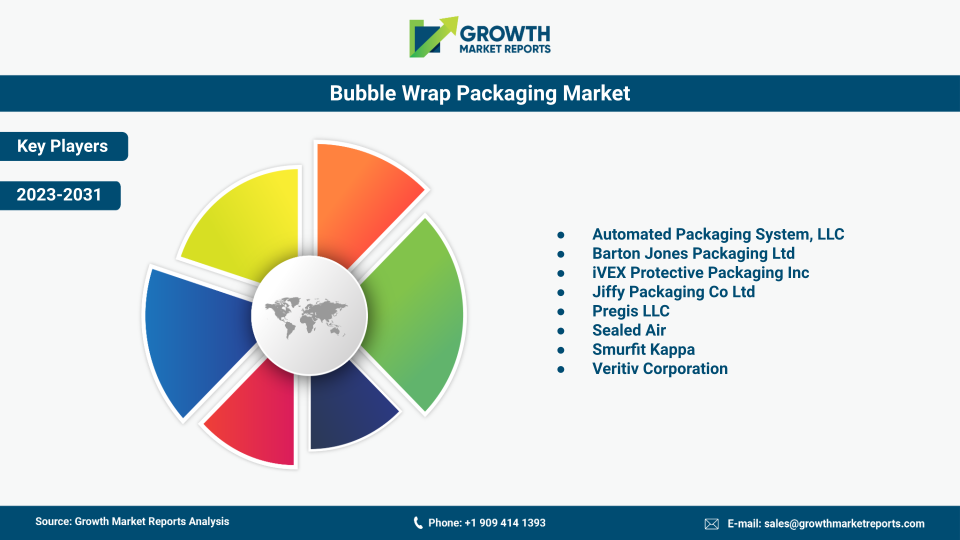
Some of the major companies operating in the bubble wrap packaging market include Sealed Air Corporation, Pregis LLC, Smurfit Kappa Group, Storopack Hans Reichenecker GmbH, and Veritiv Corporation. Sealed Air Corporation is a global leader known for its extensive product portfolio, innovative solutions, and commitment to sustainability. Pregis LLC specializes in protective packaging and offers a wide range of bubble wrap products tailored to different industry needs. Smurfit Kappa Group is renowned for its focus on sustainable packaging and circular economy initiatives, while Storopack Hans Reichenecker GmbH is recognized for its high-performance protective packaging solutions. Veritiv Corporation provides integrated packaging solutions and leverages its strong distribution network to serve customers across North America and beyond.

These companies are continuously enhancing their product offerings and expanding their global footprint through strategic investments, partnerships, and acquisitions. Sealed Air has made significant investments in sustainable packaging technologies and digital solutions, while Pregis has expanded its manufacturing capabilities in key growth markets. Smurfit Kappa and Storopack are leading the way in eco-friendly packaging, introducing biodegradable and recyclable bubble wrap products to meet the demands of environmentally conscious customers. Amcor plc and Intertape Polymer Group Inc. are also notable participants, each bringing strong material science capabilities and broad geographic reach to the competitive landscape. The competitive environment is expected to remain dynamic through 2034, with ongoing innovation, consolidation, and the emergence of new entrants shaping the future of the bubble wrap packaging market.

Key Players

  • Sealed Air Corporation
  • Pregis LLC
  • Smurfit Kappa Group
  • Storopack Hans Reichenecker GmbH
  • Automated Packaging Systems LLC
  • Veritiv Corporation
  • Intertape Polymer Group Inc.
  • Amcor plc
  • Cortec Corporation
  • Free-Flow Packaging International Inc.
  • Inflatable Packaging Inc.
  • Universal Protective Packaging Inc.
  • Polycell International Ltd.
  • Jiffy Packaging Co. Ltd.
  • Rajapack Ltd.

Segments

The Bubble Wrap Packaging market has been segmented on the basis of

Product Type

  • General Bubble Wrap
  • Multi-layered Bubble Wrap
  • Anti-static Bubble Wrap
  • Others

Material

  • Polyethylene
  • Polyamide
  • Others

Application

  • E-commerce
  • Electronics
  • Automotive
  • Pharmaceuticals
  • Food & Beverage
  • Others

Distribution Channel

  • Online
  • Offline

End-User

  • Retail
  • Industrial
  • Commercial
  • Others

Frequently Asked Questions

The global bubble wrap packaging market is anticipated to register a CAGR of 4.8% during the forecast period from 2026 to 2034. Among regions, Asia Pacific is expected to record the highest CAGR of approximately 5.7%, driven by rapid e-commerce growth and expanding manufacturing activity. North America and Europe are projected to grow at moderate CAGRs of around 4.2% and 3.9% respectively, supported by innovation in sustainable packaging materials and strong demand from electronics and pharmaceutical sectors. Latin America and the Middle East and Africa are forecast to grow at CAGRs of approximately 5.1% and 4.6% respectively, reflecting rising retail activity and improving logistics infrastructure.

Several key factors are driving the global bubble wrap packaging market. The explosive growth of e-commerce and cross-border shipments is the most prominent driver, as online retailers require reliable and lightweight cushioning solutions to reduce product damage and return rates. Rising demand from the electronics, automotive, and pharmaceutical industries for specialized bubble wrap products is another critical driver. Ongoing innovation in anti-static and multi-layered variants, growing awareness of product safety standards, and increasing investment in sustainable and recyclable packaging materials are further propelling market expansion. Regional growth in Asia Pacific, Latin America, and the Middle East and Africa is also contributing to rising global demand.

The global bubble wrap packaging market report provides a comprehensive segmentation across five dimensions. By product type, the market covers General Bubble Wrap, Multi-layered Bubble Wrap, Anti-static Bubble Wrap, and Others. By material, it covers Polyethylene, Polyamide, and Others. By application, the report analyzes E-commerce, Electronics, Automotive, Pharmaceuticals, Food and Beverage, and Others. By distribution channel, the report addresses Online and Offline segments. By end-user, it covers Retail, Industrial, Commercial, and Others. All segments are analyzed across five key regions: Asia Pacific, North America, Europe, Latin America, and the Middle East and Africa.

The global bubble wrap packaging market is projected to reach USD 5.8 billion by 2034, expanding at a CAGR of 4.8% over the 2026-2034 forecast period. This growth will be underpinned by the continued global expansion of e-commerce, rising demand for protective packaging in electronics and pharmaceuticals, increasing adoption of anti-static and multi-layered variants, and an accelerating shift toward recyclable and biodegradable bubble wrap materials driven by tightening environmental regulations worldwide.

According to our latest research, the global bubble wrap packaging market reached USD 3.8 billion in 2025. This valuation reflects strong demand across e-commerce, electronics, automotive, pharmaceutical, and food and beverage applications. Asia Pacific accounts for the largest regional share at roughly USD 1.6 billion, followed by North America at approximately USD 1.1 billion, and Europe at around USD 0.7 billion. The remaining market value is shared between Latin America and the Middle East and Africa.

Asia Pacific is expected to dominate the global bubble wrap packaging market throughout the 2026-2034 forecast period, holding approximately 42% of global market share. The region benefits from rapid e-commerce expansion, robust manufacturing ecosystems in China, India, Japan, and South Korea, and strong growth in consumer electronics and automotive production. Asia Pacific is projected to grow at a CAGR of approximately 5.7% through 2034, outpacing all other regions. North America holds the second-largest share, followed by Europe, Latin America, and the Middle East & Africa.

The global bubble wrap packaging market is served by a mix of large multinational corporations and specialized regional suppliers. Leading players include Sealed Air Corporation, Pregis LLC, Smurfit Kappa Group, Storopack Hans Reichenecker GmbH, Automated Packaging Systems LLC, Veritiv Corporation, Intertape Polymer Group Inc., Amcor plc, Cortec Corporation, Free-Flow Packaging International Inc., Inflatable Packaging Inc., Universal Protective Packaging Inc., Polycell International Ltd., Jiffy Packaging Co. Ltd., and Rajapack Ltd. These companies compete on the basis of product innovation, sustainability credentials, pricing, and global distribution reach.

Table Of Content

Chapter 1 Executive Summary
Chapter 2 Assumptions and Acronyms Used
Chapter 3 Research Methodology
Chapter 4 Bubble Wrap Packaging Market Overview
   4.1 Introduction
      4.1.1 Market Taxonomy
      4.1.2 Market Definition
      4.1.3 Macro-Economic Factors Impacting the Market Growth
   4.2 Bubble Wrap Packaging Market Dynamics
      4.2.1 Market Drivers
      4.2.2 Market Restraints
      4.2.3 Market Opportunity
   4.3 Bubble Wrap Packaging Market - Supply Chain Analysis
      4.3.1 List of Key Suppliers
      4.3.2 List of Key Distributors
      4.3.3 List of Key Consumers
   4.4 Key Forces Shaping the Bubble Wrap Packaging Market
      4.4.1 Bargaining Power of Suppliers
      4.4.2 Bargaining Power of Buyers
      4.4.3 Threat of Substitution
      4.4.4 Threat of New Entrants
      4.4.5 Competitive Rivalry
   4.5 Global Bubble Wrap Packaging Market Size & Forecast, 2023-2032
      4.5.1 Bubble Wrap Packaging Market Size and Y-o-Y Growth
      4.5.2 Bubble Wrap Packaging Market Absolute $ Opportunity

Chapter 5 Global Bubble Wrap Packaging Market Analysis and Forecast By Product Type
   5.1 Introduction
      5.1.1 Key Market Trends & Growth Opportunities By Product Type
      5.1.2 Basis Point Share (BPS) Analysis By Product Type
      5.1.3 Absolute $ Opportunity Assessment By Product Type
   5.2 Bubble Wrap Packaging Market Size Forecast By Product Type
      5.2.1 General Bubble Wrap
      5.2.2 Multi-layered Bubble Wrap
      5.2.3 Anti-static Bubble Wrap
      5.2.4 Others
   5.3 Market Attractiveness Analysis By Product Type

Chapter 6 Global Bubble Wrap Packaging Market Analysis and Forecast By Material
   6.1 Introduction
      6.1.1 Key Market Trends & Growth Opportunities By Material
      6.1.2 Basis Point Share (BPS) Analysis By Material
      6.1.3 Absolute $ Opportunity Assessment By Material
   6.2 Bubble Wrap Packaging Market Size Forecast By Material
      6.2.1 Polyethylene
      6.2.2 Polyamide
      6.2.3 Others
   6.3 Market Attractiveness Analysis By Material

Chapter 7 Global Bubble Wrap Packaging Market Analysis and Forecast By Application
   7.1 Introduction
      7.1.1 Key Market Trends & Growth Opportunities By Application
      7.1.2 Basis Point Share (BPS) Analysis By Application
      7.1.3 Absolute $ Opportunity Assessment By Application
   7.2 Bubble Wrap Packaging Market Size Forecast By Application
      7.2.1 E-commerce
      7.2.2 Electronics
      7.2.3 Automotive
      7.2.4 Pharmaceuticals
      7.2.5 Food & Beverage
      7.2.6 Others
   7.3 Market Attractiveness Analysis By Application

Chapter 8 Global Bubble Wrap Packaging Market Analysis and Forecast By Distribution Channel
   8.1 Introduction
      8.1.1 Key Market Trends & Growth Opportunities By Distribution Channel
      8.1.2 Basis Point Share (BPS) Analysis By Distribution Channel
      8.1.3 Absolute $ Opportunity Assessment By Distribution Channel
   8.2 Bubble Wrap Packaging Market Size Forecast By Distribution Channel
      8.2.1 Online
      8.2.2 Offline
   8.3 Market Attractiveness Analysis By Distribution Channel

Chapter 9 Global Bubble Wrap Packaging Market Analysis and Forecast By End-User
   9.1 Introduction
      9.1.1 Key Market Trends & Growth Opportunities By End-User
      9.1.2 Basis Point Share (BPS) Analysis By End-User
      9.1.3 Absolute $ Opportunity Assessment By End-User
   9.2 Bubble Wrap Packaging Market Size Forecast By End-User
      9.2.1 Retail
      9.2.2 Industrial
      9.2.3 Commercial
      9.2.4 Others
   9.3 Market Attractiveness Analysis By End-User

Chapter 10 Global Bubble Wrap Packaging Market Analysis and Forecast by Region
   10.1 Introduction
      10.1.1 Key Market Trends & Growth Opportunities By Region
      10.1.2 Basis Point Share (BPS) Analysis By Region
      10.1.3 Absolute $ Opportunity Assessment By Region
   10.2 Bubble Wrap Packaging Market Size Forecast By Region
      10.2.1 North America
      10.2.2 Europe
      10.2.3 Asia Pacific
      10.2.4 Latin America
      10.2.5 Middle East & Africa (MEA)
   10.3 Market Attractiveness Analysis By Region

Chapter 11 Coronavirus Disease (COVID-19) Impact 
   11.1 Introduction 
   11.2 Current & Future Impact Analysis 
   11.3 Economic Impact Analysis 
   11.4 Government Policies 
   11.5 Investment Scenario

Chapter 12 North America Bubble Wrap Packaging Analysis and Forecast
   12.1 Introduction
   12.2 North America Bubble Wrap Packaging Market Size Forecast by Country
      12.2.1 U.S.
      12.2.2 Canada
   12.3 Basis Point Share (BPS) Analysis by Country
   12.4 Absolute $ Opportunity Assessment by Country
   12.5 Market Attractiveness Analysis by Country
   12.6 North America Bubble Wrap Packaging Market Size Forecast By Product Type
      12.6.1 General Bubble Wrap
      12.6.2 Multi-layered Bubble Wrap
      12.6.3 Anti-static Bubble Wrap
      12.6.4 Others
   12.7 Basis Point Share (BPS) Analysis By Product Type 
   12.8 Absolute $ Opportunity Assessment By Product Type 
   12.9 Market Attractiveness Analysis By Product Type
   12.10 North America Bubble Wrap Packaging Market Size Forecast By Material
      12.10.1 Polyethylene
      12.10.2 Polyamide
      12.10.3 Others
   12.11 Basis Point Share (BPS) Analysis By Material 
   12.12 Absolute $ Opportunity Assessment By Material 
   12.13 Market Attractiveness Analysis By Material
   12.14 North America Bubble Wrap Packaging Market Size Forecast By Application
      12.14.1 E-commerce
      12.14.2 Electronics
      12.14.3 Automotive
      12.14.4 Pharmaceuticals
      12.14.5 Food & Beverage
      12.14.6 Others
   12.15 Basis Point Share (BPS) Analysis By Application 
   12.16 Absolute $ Opportunity Assessment By Application 
   12.17 Market Attractiveness Analysis By Application
   12.18 North America Bubble Wrap Packaging Market Size Forecast By Distribution Channel
      12.18.1 Online
      12.18.2 Offline
   12.19 Basis Point Share (BPS) Analysis By Distribution Channel 
   12.20 Absolute $ Opportunity Assessment By Distribution Channel 
   12.21 Market Attractiveness Analysis By Distribution Channel
   12.22 North America Bubble Wrap Packaging Market Size Forecast By End-User
      12.22.1 Retail
      12.22.2 Industrial
      12.22.3 Commercial
      12.22.4 Others
   12.23 Basis Point Share (BPS) Analysis By End-User 
   12.24 Absolute $ Opportunity Assessment By End-User 
   12.25 Market Attractiveness Analysis By End-User

Chapter 13 Europe Bubble Wrap Packaging Analysis and Forecast
   13.1 Introduction
   13.2 Europe Bubble Wrap Packaging Market Size Forecast by Country
      13.2.1 Germany
      13.2.2 France
      13.2.3 Italy
      13.2.4 U.K.
      13.2.5 Spain
      13.2.6 Russia
      13.2.7 Rest of Europe
   13.3 Basis Point Share (BPS) Analysis by Country
   13.4 Absolute $ Opportunity Assessment by Country
   13.5 Market Attractiveness Analysis by Country
   13.6 Europe Bubble Wrap Packaging Market Size Forecast By Product Type
      13.6.1 General Bubble Wrap
      13.6.2 Multi-layered Bubble Wrap
      13.6.3 Anti-static Bubble Wrap
      13.6.4 Others
   13.7 Basis Point Share (BPS) Analysis By Product Type 
   13.8 Absolute $ Opportunity Assessment By Product Type 
   13.9 Market Attractiveness Analysis By Product Type
   13.10 Europe Bubble Wrap Packaging Market Size Forecast By Material
      13.10.1 Polyethylene
      13.10.2 Polyamide
      13.10.3 Others
   13.11 Basis Point Share (BPS) Analysis By Material 
   13.12 Absolute $ Opportunity Assessment By Material 
   13.13 Market Attractiveness Analysis By Material
   13.14 Europe Bubble Wrap Packaging Market Size Forecast By Application
      13.14.1 E-commerce
      13.14.2 Electronics
      13.14.3 Automotive
      13.14.4 Pharmaceuticals
      13.14.5 Food & Beverage
      13.14.6 Others
   13.15 Basis Point Share (BPS) Analysis By Application 
   13.16 Absolute $ Opportunity Assessment By Application 
   13.17 Market Attractiveness Analysis By Application
   13.18 Europe Bubble Wrap Packaging Market Size Forecast By Distribution Channel
      13.18.1 Online
      13.18.2 Offline
   13.19 Basis Point Share (BPS) Analysis By Distribution Channel 
   13.20 Absolute $ Opportunity Assessment By Distribution Channel 
   13.21 Market Attractiveness Analysis By Distribution Channel
   13.22 Europe Bubble Wrap Packaging Market Size Forecast By End-User
      13.22.1 Retail
      13.22.2 Industrial
      13.22.3 Commercial
      13.22.4 Others
   13.23 Basis Point Share (BPS) Analysis By End-User 
   13.24 Absolute $ Opportunity Assessment By End-User 
   13.25 Market Attractiveness Analysis By End-User

Chapter 14 Asia Pacific Bubble Wrap Packaging Analysis and Forecast
   14.1 Introduction
   14.2 Asia Pacific Bubble Wrap Packaging Market Size Forecast by Country
      14.2.1 China
      14.2.2 Japan
      14.2.3 South Korea
      14.2.4 India
      14.2.5 Australia
      14.2.6 South East Asia (SEA)
      14.2.7 Rest of Asia Pacific (APAC)
   14.3 Basis Point Share (BPS) Analysis by Country
   14.4 Absolute $ Opportunity Assessment by Country
   14.5 Market Attractiveness Analysis by Country
   14.6 Asia Pacific Bubble Wrap Packaging Market Size Forecast By Product Type
      14.6.1 General Bubble Wrap
      14.6.2 Multi-layered Bubble Wrap
      14.6.3 Anti-static Bubble Wrap
      14.6.4 Others
   14.7 Basis Point Share (BPS) Analysis By Product Type 
   14.8 Absolute $ Opportunity Assessment By Product Type 
   14.9 Market Attractiveness Analysis By Product Type
   14.10 Asia Pacific Bubble Wrap Packaging Market Size Forecast By Material
      14.10.1 Polyethylene
      14.10.2 Polyamide
      14.10.3 Others
   14.11 Basis Point Share (BPS) Analysis By Material 
   14.12 Absolute $ Opportunity Assessment By Material 
   14.13 Market Attractiveness Analysis By Material
   14.14 Asia Pacific Bubble Wrap Packaging Market Size Forecast By Application
      14.14.1 E-commerce
      14.14.2 Electronics
      14.14.3 Automotive
      14.14.4 Pharmaceuticals
      14.14.5 Food & Beverage
      14.14.6 Others
   14.15 Basis Point Share (BPS) Analysis By Application 
   14.16 Absolute $ Opportunity Assessment By Application 
   14.17 Market Attractiveness Analysis By Application
   14.18 Asia Pacific Bubble Wrap Packaging Market Size Forecast By Distribution Channel
      14.18.1 Online
      14.18.2 Offline
   14.19 Basis Point Share (BPS) Analysis By Distribution Channel 
   14.20 Absolute $ Opportunity Assessment By Distribution Channel 
   14.21 Market Attractiveness Analysis By Distribution Channel
   14.22 Asia Pacific Bubble Wrap Packaging Market Size Forecast By End-User
      14.22.1 Retail
      14.22.2 Industrial
      14.22.3 Commercial
      14.22.4 Others
   14.23 Basis Point Share (BPS) Analysis By End-User 
   14.24 Absolute $ Opportunity Assessment By End-User 
   14.25 Market Attractiveness Analysis By End-User

Chapter 15 Latin America Bubble Wrap Packaging Analysis and Forecast
   15.1 Introduction
   15.2 Latin America Bubble Wrap Packaging Market Size Forecast by Country
      15.2.1 Brazil
      15.2.2 Mexico
      15.2.3 Rest of Latin America (LATAM)
   15.3 Basis Point Share (BPS) Analysis by Country
   15.4 Absolute $ Opportunity Assessment by Country
   15.5 Market Attractiveness Analysis by Country
   15.6 Latin America Bubble Wrap Packaging Market Size Forecast By Product Type
      15.6.1 General Bubble Wrap
      15.6.2 Multi-layered Bubble Wrap
      15.6.3 Anti-static Bubble Wrap
      15.6.4 Others
   15.7 Basis Point Share (BPS) Analysis By Product Type 
   15.8 Absolute $ Opportunity Assessment By Product Type 
   15.9 Market Attractiveness Analysis By Product Type
   15.10 Latin America Bubble Wrap Packaging Market Size Forecast By Material
      15.10.1 Polyethylene
      15.10.2 Polyamide
      15.10.3 Others
   15.11 Basis Point Share (BPS) Analysis By Material 
   15.12 Absolute $ Opportunity Assessment By Material 
   15.13 Market Attractiveness Analysis By Material
   15.14 Latin America Bubble Wrap Packaging Market Size Forecast By Application
      15.14.1 E-commerce
      15.14.2 Electronics
      15.14.3 Automotive
      15.14.4 Pharmaceuticals
      15.14.5 Food & Beverage
      15.14.6 Others
   15.15 Basis Point Share (BPS) Analysis By Application 
   15.16 Absolute $ Opportunity Assessment By Application 
   15.17 Market Attractiveness Analysis By Application
   15.18 Latin America Bubble Wrap Packaging Market Size Forecast By Distribution Channel
      15.18.1 Online
      15.18.2 Offline
   15.19 Basis Point Share (BPS) Analysis By Distribution Channel 
   15.20 Absolute $ Opportunity Assessment By Distribution Channel 
   15.21 Market Attractiveness Analysis By Distribution Channel
   15.22 Latin America Bubble Wrap Packaging Market Size Forecast By End-User
      15.22.1 Retail
      15.22.2 Industrial
      15.22.3 Commercial
      15.22.4 Others
   15.23 Basis Point Share (BPS) Analysis By End-User 
   15.24 Absolute $ Opportunity Assessment By End-User 
   15.25 Market Attractiveness Analysis By End-User

Chapter 16 Middle East & Africa (MEA) Bubble Wrap Packaging Analysis and Forecast
   16.1 Introduction
   16.2 Middle East & Africa (MEA) Bubble Wrap Packaging Market Size Forecast by Country
      16.2.1 Saudi Arabia
      16.2.2 South Africa
      16.2.3 UAE
      16.2.4 Rest of Middle East & Africa (MEA)
   16.3 Basis Point Share (BPS) Analysis by Country
   16.4 Absolute $ Opportunity Assessment by Country
   16.5 Market Attractiveness Analysis by Country
   16.6 Middle East & Africa (MEA) Bubble Wrap Packaging Market Size Forecast By Product Type
      16.6.1 General Bubble Wrap
      16.6.2 Multi-layered Bubble Wrap
      16.6.3 Anti-static Bubble Wrap
      16.6.4 Others
   16.7 Basis Point Share (BPS) Analysis By Product Type 
   16.8 Absolute $ Opportunity Assessment By Product Type 
   16.9 Market Attractiveness Analysis By Product Type
   16.10 Middle East & Africa (MEA) Bubble Wrap Packaging Market Size Forecast By Material
      16.10.1 Polyethylene
      16.10.2 Polyamide
      16.10.3 Others
   16.11 Basis Point Share (BPS) Analysis By Material 
   16.12 Absolute $ Opportunity Assessment By Material 
   16.13 Market Attractiveness Analysis By Material
   16.14 Middle East & Africa (MEA) Bubble Wrap Packaging Market Size Forecast By Application
      16.14.1 E-commerce
      16.14.2 Electronics
      16.14.3 Automotive
      16.14.4 Pharmaceuticals
      16.14.5 Food & Beverage
      16.14.6 Others
   16.15 Basis Point Share (BPS) Analysis By Application 
   16.16 Absolute $ Opportunity Assessment By Application 
   16.17 Market Attractiveness Analysis By Application
   16.18 Middle East & Africa (MEA) Bubble Wrap Packaging Market Size Forecast By Distribution Channel
      16.18.1 Online
      16.18.2 Offline
   16.19 Basis Point Share (BPS) Analysis By Distribution Channel 
   16.20 Absolute $ Opportunity Assessment By Distribution Channel 
   16.21 Market Attractiveness Analysis By Distribution Channel
   16.22 Middle East & Africa (MEA) Bubble Wrap Packaging Market Size Forecast By End-User
      16.22.1 Retail
      16.22.2 Industrial
      16.22.3 Commercial
      16.22.4 Others
   16.23 Basis Point Share (BPS) Analysis By End-User 
   16.24 Absolute $ Opportunity Assessment By End-User 
   16.25 Market Attractiveness Analysis By End-User

Chapter 17 Competition Landscape 
   17.1 Bubble Wrap Packaging Market: Competitive Dashboard
   17.2 Global Bubble Wrap Packaging Market: Market Share Analysis, 2023
   17.3 Company Profiles (Details – Overview, Financials, Developments, Strategy) 
      17.3.1 Sealed Air Corporation
      17.3.2 Pregis LLC
      17.3.3 Smurfit Kappa Group
      17.3.4 Storopack Hans Reichenecker GmbH
      17.3.5 Automated Packaging Systems LLC
      17.3.6 Veritiv Corporation
      17.3.7 Intertape Polymer Group Inc.
      17.3.8 Amcor plc
      17.3.9 Cortec Corporation
      17.3.10 Free-Flow Packaging International Inc.
      17.3.11 Inflatable Packaging Inc.
      17.3.12 Universal Protective Packaging Inc.
      17.3.13 Polycell International Ltd.
      17.3.14 Jiffy Packaging Co. Ltd.
      17.3.15 Rajapack Ltd.

Methodology

Our Clients

Microsoft
General Mills
Nestle SA
Deloitte
Siemens Healthcare
FedEx Logistics
General Electric
Honda Motor Co. Ltd.