Segments - by Material Type (Foam Plastics, Paper & Paperboard, Plastics, Others), by Product Type (Flexible, Rigid, Foam), by Function (Cushioning, Blocking & Bracing, Void Fill, Insulation, Wrapping), by End-Use Industry (Food & Beverage, Electronics, Pharmaceuticals, Automotive, Consumer Goods, Industrial Goods, Others), by Distribution Channel (Online, Offline)
This report is updated with the latest market data and insights as of June 2026. Base year: 2025 | Forecast period: 2026-2034
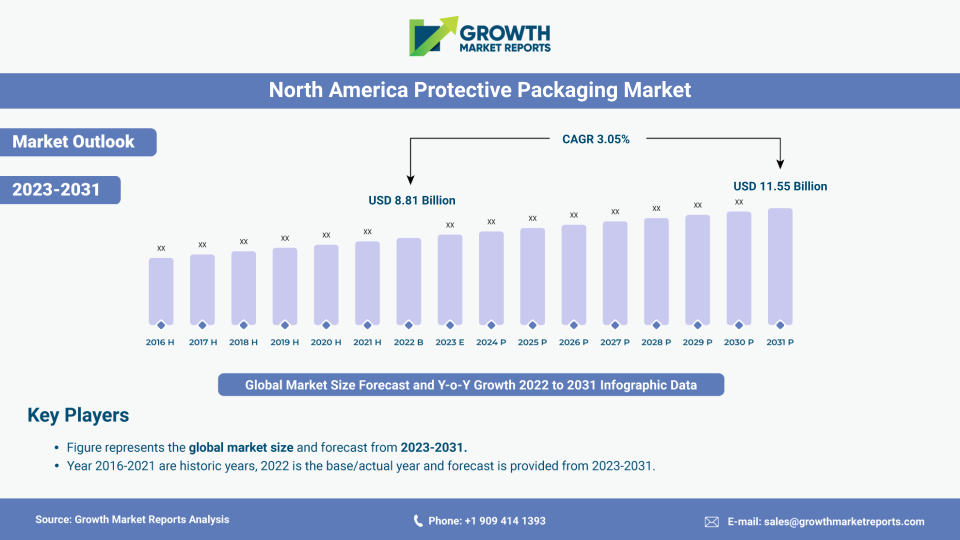
According to our latest research, the global protective packaging market size reached USD 39.5 billion in 2025, reflecting robust and broad-based demand across diverse industries. The market is projected to grow at a CAGR of 5.2% between 2026 and 2034, positioning it to attain a value of approximately USD 61.8 billion by 2034. This growth is primarily driven by the exponential rise in e-commerce, increasing demand for sustainable packaging solutions, and the expanding need for efficient logistics and supply chain management. As per our latest research, the market's trajectory underscores its critical role in safeguarding products during storage, transit, and distribution across every major global economy.
One of the primary growth factors for the protective packaging market is the rapid expansion of the global e-commerce sector. The surge in online retail has necessitated advanced packaging solutions that ensure product integrity from warehouse to doorstep. Consumers increasingly expect timely deliveries with products arriving in pristine condition, leading to heightened requirements for cushioning, void fill, and impact-resistant materials. Companies are investing in innovative packaging technologies, such as smart packaging and biodegradable materials, to meet both functional and environmental demands. The need for customization in packaging to accommodate a wide range of products, from fragile electronics to perishable foods, further stimulates market growth, compelling manufacturers to develop versatile and cost-effective protective packaging solutions. The growing segment of protective shipping mailers is a direct beneficiary of this trend, as lightweight, damage-resistant solutions for last-mile delivery continue to see double-digit adoption growth.
Another significant driver is the growing emphasis on sustainability and environmental stewardship. Governments worldwide are implementing stringent regulations on single-use plastics and promoting eco-friendly alternatives. This has led to a surge in demand for recyclable, biodegradable, and reusable materials in protective packaging. Major brands and manufacturers are aligning their packaging strategies with corporate social responsibility goals, opting for paper-based and compostable solutions without compromising on performance. The shift towards a circular economy, where packaging materials are designed for reuse and recycling, is fostering innovation and opening new avenues for growth. Consumer awareness regarding the environmental impact of packaging waste continues to influence purchasing decisions, thereby accelerating the adoption of sustainable protective packaging. Parallel developments in active packaging technologies are also influencing design strategies, as brands seek integrated solutions that combine protection with freshness preservation and smart indicators.
Technological advancements are reshaping the protective packaging landscape at an accelerating pace. Automation, digital printing, and the integration of smart sensors are enhancing the efficiency and functionality of packaging systems. Advanced manufacturing processes enable the production of lightweight, high-strength materials that offer superior protection while reducing shipping costs. The adoption of Industry 4.0 principles, such as IoT-enabled tracking and real-time monitoring, is improving supply chain visibility and reducing product damage rates. These innovations are particularly valuable in sectors like electronics, pharmaceuticals, and automotive, where product safety and compliance with regulatory standards are paramount. As technology continues to evolve, the protective packaging market is expected to witness further differentiation and value addition across every application segment.
Regionally, Asia Pacific dominates the protective packaging market, accounting for over 37% of global revenue in 2025, driven by its thriving manufacturing sector, rapid urbanization, and burgeoning e-commerce activity. North America and Europe follow closely, benefiting from advanced logistics infrastructure and high consumer awareness regarding sustainable packaging. Emerging economies in Latin America and the Middle East and Africa are also experiencing steady growth, fueled by increasing industrialization and rising disposable incomes. The regional outlook remains positive, with Asia Pacific expected to maintain its leadership position, supported by ongoing investments in technology and infrastructure throughout the 2026-2034 forecast period.
The material type segment of the protective packaging market is categorized into foam plastics, paper and paperboard, plastics, and others. Foam plastics, including expanded polystyrene (EPS), polyurethane, and polyethylene foams, account for approximately 31.2% of the market in 2025 and are extensively used due to their lightweight properties, excellent cushioning, and shock absorption capabilities. These materials are especially favored in the electronics, automotive, and appliances sectors, where the risk of damage during transportation is significant. However, environmental concerns regarding the disposal of foam plastics have prompted manufacturers to explore alternatives, such as biodegradable foams and recycled-content solutions. The transition towards eco-friendly materials is particularly evident in regions with strict regulatory frameworks, such as Europe and North America, where companies are investing in research and development to create sustainable foam variants.
Paper and paperboard materials hold approximately 29.8% of the market in 2025 and are gaining further traction, driven by their recyclability, biodegradability, and strong consumer preference for sustainable packaging. These materials are widely used in the food and beverage and consumer goods sectors, where direct contact with products and ease of disposal are critical considerations. Innovations in paper-based protective packaging, such as molded pulp and honeycomb structures, are enhancing performance while reducing environmental impact. The adoption of advanced coating technologies has further improved the moisture resistance and durability of paper-based packaging, expanding its applicability across various end-use industries. As the demand for sustainable solutions accelerates, paper and paperboard are expected to capture a progressively larger market share through 2034.
Plastics, including polyethylene, polypropylene, and PET, represent around 28.5% of the market and remain integral to the protective packaging landscape due to their versatility, cost-effectiveness, and superior barrier properties. These materials are commonly used for flexible and rigid packaging applications, providing protection against moisture, dust, and contaminants. Despite ongoing debates about plastic waste, advancements in recycling technologies and the introduction of bio-based plastics are mitigating some of the environmental concerns. Manufacturers are increasingly focusing on closed-loop systems and post-consumer recycled content to align with circular economy principles. The plastics segment continues to evolve, balancing performance requirements with sustainability goals. The rise of specialized formats such as bubble wrap and air-cellular packaging reflects ongoing innovation within this segment, delivering cost-efficient cushioning for high-volume e-commerce applications.
Other materials, such as textiles, rubber, and specialty composites, account for around 10.5% of the market and are used in niche applications where specific performance attributes are required. Anti-static materials are essential for packaging sensitive electronic components, while thermal insulation materials are critical for temperature-sensitive pharmaceuticals and fresh foods. The development of hybrid materials that combine the strengths of different substrates is gaining momentum, offering enhanced protection and cost efficiency. As customer requirements become more sophisticated, the material type segment is poised for continuous innovation and diversification, ensuring that protective packaging solutions remain effective and relevant across all industries well into the 2030s.
| Attributes | Details |
| Report Title | Protective Packaging Market Research Report 2025-2034 |
| By Material Type | Foam Plastics, Paper & Paperboard, Plastics, Others |
| By Product Type | Flexible, Rigid, Foam |
| By Function | Cushioning, Blocking & Bracing, Void Fill, Insulation, Wrapping |
| By End-Use Industry | Food & Beverage, Electronics, Pharmaceuticals, Automotive, Consumer Goods, Industrial Goods, Others |
| By Distribution Channel | Online, Offline |
| Regions Covered | North America, Europe, APAC, Latin America, MEA |
| Base Year | 2025 |
| Historic Data | 2019-2024 |
| Forecast Period | 2026-2034 |
| Number of Pages | 287 |
| Number of Tables & Figures | 291 |
| Customization Available | Yes, the report can be customized as per your need. |
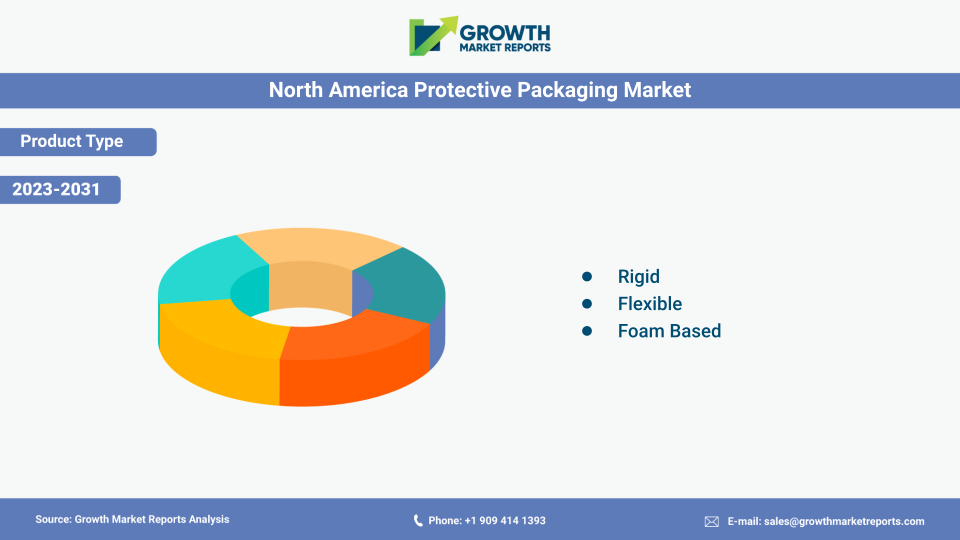
The product type segment of the protective packaging market is divided into flexible, rigid, and foam packaging. Flexible packaging, which includes bubble wraps, air pillows, and padded mailers, is highly favored for its adaptability, lightweight nature, and cost-effectiveness. Its ability to conform to the shape of various products makes it ideal for e-commerce and retail applications, where diverse product sizes and shapes require customized protection. Flexible packaging also offers significant advantages in terms of storage and transportation efficiency, as it occupies less space and reduces shipping costs. The increasing adoption of recyclable and biodegradable flexible materials is further enhancing its appeal, particularly among environmentally conscious brands and consumers navigating tighter sustainability regulations in 2025 and beyond.
Rigid protective packaging, such as corrugated boxes, molded pulp trays, and plastic containers, is essential for providing structural integrity and stackability during storage and transit. This segment is particularly important in the food and beverage, electronics, and industrial goods sectors, where product safety and compliance with regulatory standards are paramount. Rigid packaging solutions are designed to withstand external pressures, prevent crushing, and protect against environmental factors such as moisture and temperature fluctuations. Advances in material science have led to the development of lightweight yet robust rigid packaging, reducing material usage without compromising on performance. The integration of smart features, such as tamper-evident seals and QR codes for traceability, is further driving innovation in this segment throughout the forecast period.
Foam packaging remains a cornerstone of protective packaging, offering superior cushioning and impact resistance for fragile and high-value items. This product type is widely used in the electronics, automotive, and healthcare industries, where product integrity during transit is critical. Foam inserts, sheets, and blocks can be custom-molded to fit specific product dimensions, providing tailored protection against shocks, vibrations, and accidental drops. Environmental concerns regarding traditional foam materials have accelerated the development of biodegradable and recyclable foam options, aligning with global sustainability trends. The foam segment continues to evolve, with manufacturers focusing on enhancing performance while minimizing environmental impact through the use of bio-based feedstocks and closed-loop recycling programs.
The interplay between flexible, rigid, and foam packaging is shaping the future of the protective packaging market. Companies are increasingly adopting hybrid solutions that combine the strengths of different product types to meet complex packaging requirements. For example, a combination of rigid outer boxes and flexible inner cushioning can provide optimal protection for sensitive electronics or medical devices. The product type segment is characterized by continuous innovation, driven by evolving consumer preferences, regulatory pressures, and technological advancements. As the market matures through 2034, the focus will remain on delivering high-performance, sustainable, and cost-effective protective packaging solutions across all end-use industries.
The function segment categorizes protective packaging based on its primary roles, including cushioning, blocking and bracing, void fill, insulation, and wrapping. Cushioning is the most prominent function, addressing the need to absorb shocks and vibrations during handling and transportation. Materials such as foam, bubble wrap, and air pillows are extensively used to prevent product damage, especially for fragile and sensitive items. The demand for advanced cushioning solutions is rising in 2025, driven by the proliferation of e-commerce and the increasing shipment of delicate electronics, glassware, and medical devices. Manufacturers are developing innovative materials that offer enhanced shock absorption while being lightweight and environmentally friendly, catering to both performance and sustainability requirements.
Blocking and bracing functions are critical for securing products within shipping containers, preventing movement and potential damage during transit. This function is particularly important for heavy or irregularly shaped items, such as automotive components and industrial machinery. Corrugated inserts, molded pulp, and custom foam blocks are commonly used to immobilize products and provide structural support. The trend towards automation in packaging operations is driving the adoption of pre-engineered blocking and bracing solutions, which streamline packing processes and reduce labor costs. As supply chains become more complex and globalized throughout the 2026-2034 forecast period, the need for reliable blocking and bracing solutions is expected to grow, ensuring product safety across diverse transportation modes.
Void fill solutions address the challenge of empty spaces within packaging, which can lead to product shifting and damage. Materials such as air pillows, paper fillers, and biodegradable peanuts are used to fill gaps and provide additional cushioning. The rise of automated packaging lines in e-commerce and fulfillment centers has accelerated the demand for efficient and scalable void fill systems. Innovations in sustainable void fill materials, such as starch-based and recycled paper options, are gaining traction as companies seek to minimize their environmental footprint. The void fill segment is characterized by a focus on speed, efficiency, and sustainability, with manufacturers striving to deliver solutions that meet the evolving needs of modern logistics operations.
Insulation and wrapping are specialized functions that cater to specific industry requirements. Thermal insulation packaging, including reflective films and advanced foam composites, is essential for temperature-sensitive products such as pharmaceuticals, fresh foods, and specialty chemicals. The growing demand for cold chain logistics is driving innovation in insulation technologies, with a focus on maintaining product integrity throughout the supply chain. Wrapping solutions, such as stretch films and shrink wraps, provide an additional layer of protection against dust, moisture, and tampering. The integration of anti-static and moisture-resistant properties is enhancing the performance of wrapping materials, making them suitable for a wide range of applications. The function segment remains dynamic, with continuous advancements aimed at addressing emerging challenges in product protection and sustainability.
The end-use industry segment of the protective packaging market is highly diverse, encompassing food and beverage, electronics, pharmaceuticals, automotive, consumer goods, industrial goods, and others. The food and beverage industry is a major consumer of protective packaging, driven by the need to ensure product freshness, safety, and compliance with regulatory standards. Packaging solutions such as insulated containers, moisture-resistant wraps, and tamper-evident seals are widely used to protect perishable and sensitive products during storage and transportation. The growing demand for convenience foods, ready-to-eat meals, and online grocery delivery is further boosting the adoption of advanced protective packaging in this sector throughout 2025 and the broader forecast window.
The electronics industry relies heavily on protective packaging to safeguard delicate components and finished products from shocks, electrostatic discharge, and environmental factors. Anti-static foams, molded trays, and custom-fit inserts are commonly used to prevent damage during shipping and handling. The increasing complexity and miniaturization of electronic devices have heightened the need for precision-engineered packaging solutions that offer both protection and efficient space utilization. As the global demand for consumer electronics, smartphones, and wearables continues to rise in 2025 and beyond, the electronics segment is expected to remain a key growth driver for the protective packaging market.
Pharmaceuticals represent another critical end-use industry, where product integrity and compliance with stringent regulatory requirements are paramount. Protective packaging solutions for pharmaceuticals include insulated shippers, tamper-evident seals, and moisture-barrier films. The rapid growth of the global pharmaceutical industry, fueled by increasing healthcare expenditure and the expansion of cold chain logistics, is driving demand for specialized packaging that ensures the safety and efficacy of drugs and vaccines. Innovations in medical and pharmaceutical packaging are accelerating, with new material formulations and smart tracking capabilities ensuring product integrity from manufacturing through final dispensing. These trends are creating sustained opportunities for protective packaging suppliers with specialized regulatory expertise.
Automotive, consumer goods, and industrial goods are also significant contributors to the protective packaging market. The automotive industry requires robust packaging for heavy and irregularly shaped components, while the consumer goods sector demands versatile solutions for a wide range of products, from household appliances to personal care items. Industrial goods, including machinery and equipment, necessitate custom-engineered packaging that can withstand harsh handling and long-distance transportation. As these industries continue to expand and diversify through 2034, the demand for tailored protective packaging solutions is expected to grow, driving further innovation and market development across all major geographies.
The distribution channel segment of the protective packaging market is divided into online and offline channels. The offline channel, which includes direct sales, distributors, and retail outlets, has traditionally dominated the market, accounting for a significant share of total sales. This channel is particularly important for bulk purchases and industrial clients who require customized solutions and technical support. Offline distribution allows manufacturers to build strong relationships with customers, provide on-site consultations, and offer value-added services such as packaging design and testing. Despite the growth of digital platforms, the offline channel remains indispensable for complex and large-scale packaging projects that demand face-to-face engagement and physical sampling.
The online distribution channel is witnessing rapid growth in 2025, driven by the digital transformation of the packaging industry and changing buyer preferences. E-commerce platforms and company websites offer a convenient and efficient way for customers to browse, compare, and purchase protective packaging products. The online channel is particularly attractive to small and medium-sized enterprises (SMEs) and individual consumers who seek standardized packaging solutions for shipping and storage. The integration of advanced technologies, such as AI-driven recommendation engines and virtual packaging design tools, is enhancing the online buying experience and expanding market reach to previously underserved geographies and customer segments.
The legacy effects of supply chain disruptions experienced between 2020 and 2023 have accelerated the structural shift towards online distribution, as businesses have permanently adopted digital procurement channels for speed and resilience. Manufacturers and distributors are investing in user-friendly websites, online catalogs, and e-commerce platforms to capture a larger share of the growing online market. Real-time inventory visibility, instant quotation tools, and doorstep delivery capabilities have become key differentiators in the competitive landscape. The online channel also enables companies to collect valuable customer data, enabling personalized marketing and improved customer service over the full 2026-2034 forecast period.
The interplay between online and offline distribution channels is shaping the future of the protective packaging market. Companies are adopting omnichannel strategies to provide a seamless and integrated customer experience across all touchpoints. The combination of digital convenience and personalized offline support is driving customer loyalty and expanding market opportunities. As the market continues to evolve, the distribution channel segment will play a crucial role in determining the accessibility, affordability, and adoption of protective packaging solutions worldwide.
The protective packaging market presents substantial opportunities for growth in 2025 and beyond, particularly in the realm of sustainable and eco-friendly solutions. With increasing regulatory pressure and consumer demand for environmentally responsible packaging, companies that invest in biodegradable, recyclable, and compostable materials are well-positioned to capture new market segments. The development of advanced materials, such as mushroom-based foams, plant-derived plastics, and water-soluble films, is opening up new possibilities for innovation and differentiation. Additionally, the integration of smart technologies, such as RFID tags and IoT-enabled sensors, offers opportunities to enhance product traceability, security, and supply chain visibility. As global supply chains become more complex and interconnected, the demand for intelligent and sustainable protective packaging solutions is expected to rise, creating new avenues for revenue generation and competitive advantage through 2034.
Another significant opportunity lies in the expansion of the e-commerce and direct-to-consumer (D2C) business models. The surge in online shopping has created a need for packaging solutions that are not only protective but also visually appealing and brand-enhancing. Companies that can offer customizable, branded, and user-friendly packaging are likely to gain a competitive edge in the fast-growing e-commerce sector. The rise of subscription boxes, meal kits, and home delivery services further underscores the importance of innovative protective packaging that enhances the unboxing experience while ensuring product safety. By leveraging digital technologies and data analytics, packaging manufacturers can develop tailored solutions that address the unique needs of online retailers and end consumers in an increasingly fragmented global marketplace.
Despite the numerous opportunities, the protective packaging market faces several restraining factors, with raw material price volatility being a primary concern heading into 2025. Fluctuations in the prices of key materials, such as plastics, paper, and foams, can significantly impact production costs and profit margins. Supply chain disruptions, geopolitical tensions, and changing trade policies further exacerbate the risk of material shortages and price hikes. These challenges are particularly acute for small and medium-sized manufacturers, who may have limited bargaining power and financial flexibility. To mitigate these risks, companies are increasingly focusing on supply chain diversification, strategic sourcing, and the development of alternative materials. The ability to manage raw material costs effectively remains a critical success factor in the highly competitive protective packaging market throughout the forecast period.
Asia Pacific remains the largest and fastest-growing region in the protective packaging market, accounting for approximately USD 14.8 billion in 2025. The region's dominance is underpinned by its expansive manufacturing base, rapid urbanization, and burgeoning e-commerce sector. China, India, and Southeast Asian countries are witnessing significant investments in logistics infrastructure, warehousing, and cold chain facilities, driving demand for advanced protective packaging solutions. The proliferation of online retail platforms and the rising middle-class population are further fueling market growth, with Asia Pacific expected to maintain a CAGR of approximately 5.8% through 2034. The region's focus on sustainability and innovation is also attracting global packaging players, who are establishing local production and R&D centers to capitalize on emerging opportunities in high-growth markets such as Vietnam, Indonesia, and India.
North America is the second-largest market, valued at approximately USD 10.2 billion in 2025, with strong demand from the food and beverage, electronics, and pharmaceuticals sectors. The region benefits from a well-established logistics network, high consumer awareness regarding product safety, and stringent regulatory standards for packaging materials. The trend towards sustainable packaging is particularly pronounced in the United States and Canada, where companies are investing in recycling infrastructure and eco-friendly materials. The growth of the e-commerce sector, coupled with increasing investments in automation and smart packaging technologies, is expected to drive steady market expansion in North America over the 2026-2034 forecast period.
Europe holds a significant share of the global protective packaging market, with a value of approximately USD 8.7 billion in 2025. The region is characterized by a strong emphasis on sustainability, circular economy principles, and compliance with environmental regulations. Countries such as Germany, France, and the United Kingdom are leading the adoption of recyclable and biodegradable packaging materials, supported by government initiatives and active consumer advocacy. The European market is also witnessing increased demand for high-performance protective packaging in the automotive, electronics, and healthcare sectors. Latin America and the Middle East and Africa are emerging as promising markets, with combined revenues of approximately USD 5.8 billion in 2025, driven by rising industrialization, urbanization, and disposable incomes. While these regions face challenges related to infrastructure and regulatory frameworks, ongoing investments and international collaborations are expected to unlock new growth opportunities through 2034.
The protective packaging market is highly competitive, characterized by the presence of multinational corporations, regional players, and a growing number of specialized startups. The competitive landscape is shaped by factors such as product innovation, pricing strategies, sustainability initiatives, and customer service excellence. Leading companies are investing heavily in research and development to introduce new materials, improve packaging performance, and enhance environmental credentials in line with 2025 sustainability expectations. Mergers, acquisitions, and strategic partnerships are common strategies employed to expand market presence, access new technologies, and diversify product portfolios. The ability to offer customized and value-added solutions is a key differentiator in the market, enabling companies to cater to the unique needs of diverse industries and applications.
Sustainability has emerged as a central theme in the competitive dynamics of the protective packaging market. Companies are racing to develop eco-friendly alternatives to traditional plastics and foams, leveraging renewable resources, recycled content, and biodegradable polymers. The adoption of closed-loop systems and circular economy models is gaining traction, with leading players partnering with recyclers, material suppliers, and brand owners to drive sustainability across the value chain. The integration of digital technologies, such as IoT-enabled packaging and smart labeling, is also enhancing product traceability, security, and supply chain efficiency. As regulatory pressures and consumer expectations continue to evolve through 2034, the ability to demonstrate genuine environmental stewardship is becoming a critical factor in securing long-term customer loyalty and market leadership.
The market is also witnessing the entry of innovative startups and niche players, who are disrupting traditional business models with agile, technology-driven solutions. These companies are leveraging digital platforms, data analytics, and advanced manufacturing techniques to deliver highly customized and scalable protective packaging solutions. The rise of direct-to-consumer (D2C) brands and e-commerce platforms is creating new opportunities for collaboration and co-creation, enabling smaller players to compete effectively with established incumbents. The competitive landscape is thus characterized by a dynamic interplay between scale, innovation, and customer-centricity, with success hinging on the ability to anticipate and respond to changing market trends across all regions and end-use sectors.
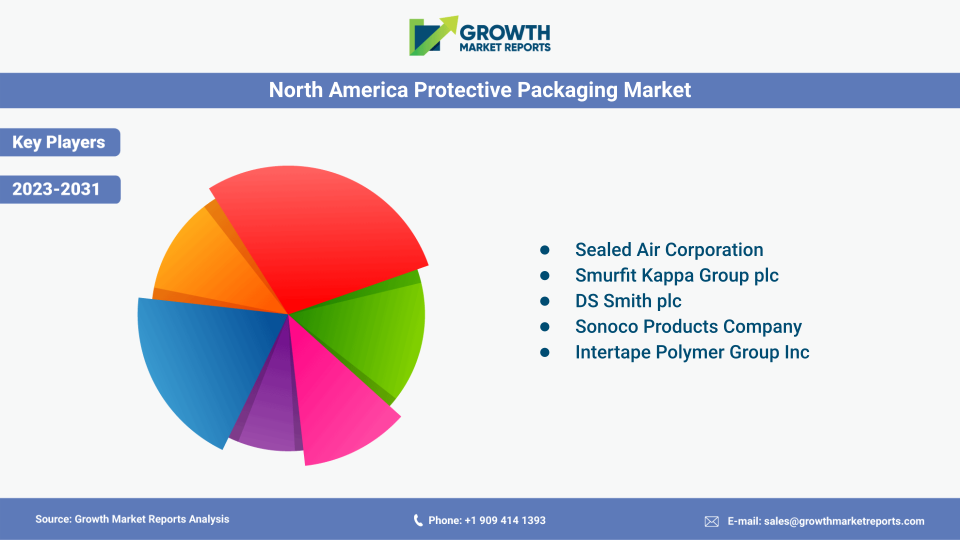
Major companies operating in the global protective packaging market include Sealed Air Corporation, Smurfit WestRock, Sonoco Products Company, DS Smith Plc, and Pregis LLC. Sealed Air Corporation is renowned for its innovative Bubble Wrap and Cryovac brands, offering a wide range of protective packaging solutions for food, healthcare, and industrial applications. Smurfit WestRock, formed through the landmark 2024 merger of Smurfit Kappa and WestRock, is now one of the world's largest paper-based packaging companies, with a strong focus on sustainability and circular economy principles. Sonoco Products Company offers diversified packaging solutions, including protective packaging, consumer packaging, and industrial products, with a global footprint spanning over 30 countries. DS Smith Plc specializes in sustainable packaging solutions, leveraging its expertise in paper and recycling to deliver high-performance, environmentally friendly products across Europe and North America. Pregis LLC is a key player in flexible and foam packaging, known for its commitment to innovation, customer service, and sustainability through its EverTec and AirSpeed product lines.
These companies are continuously expanding their product portfolios, investing in advanced manufacturing technologies, and forging strategic partnerships to strengthen their market positions. Sealed Air has made significant investments in digital printing and automation to serve high-volume e-commerce customers more efficiently, while Smurfit WestRock has focused on expanding its recycling and paper production capabilities to serve its global client base. Sonoco has pursued a strategy of targeted acquisitions to enhance its product offerings and geographic reach. DS Smith has prioritized the development of closed-loop packaging solutions, working closely with customers to achieve their sustainability goals. Ranpak Holdings Corp. has positioned itself as a leader in fiber-based protective packaging alternatives to plastics, capitalizing on accelerating regulatory tailwinds. Collectively, these efforts are driving the evolution of the protective packaging market, ensuring that it remains responsive to the changing needs of customers, regulators, and society at large through the full 2026-2034 forecast horizon.
The Protective Packaging market has been segmented on the basis of
Leading companies in the global protective packaging market include Sealed Air Corporation, Sonoco Products Company, Smurfit WestRock, Pregis LLC, DS Smith Plc, Storopack Hans Reichenecker GmbH, Ranpak Holdings Corp., Mondi Group, Berry Global Inc., Huhtamaki Oyj, Cascades Inc., and 3M Company, among others. These players compete on the basis of product innovation, sustainability credentials, geographic reach, and customization capabilities.
The food and beverage industry is among the largest consumers, followed closely by electronics, pharmaceuticals, automotive, and consumer goods sectors. The electronics segment demands highly specialized solutions such as anti-static foams and precision-molded inserts, while the pharmaceutical sector requires temperature-controlled and tamper-evident packaging to comply with strict regulatory standards.
Protective packaging serves five core functions: cushioning (absorbing shock and vibration to prevent breakage), blocking and bracing (securing products inside shipping containers to prevent movement), void fill (filling empty spaces to reduce product shifting), insulation (maintaining temperature integrity for perishable or sensitive goods), and wrapping (protecting surfaces from dust, moisture, and tampering during transit and storage).
The primary product types in the protective packaging market are flexible packaging (such as bubble wrap, air pillows, and padded mailers), rigid packaging (such as corrugated boxes, molded pulp trays, and plastic containers), and foam packaging (including custom-molded inserts, sheets, and blocks). Hybrid solutions combining two or more product types are increasingly popular for complex or high-value shipments.
Asia Pacific is the dominant region, accounting for approximately 37.5% of global revenue in 2025, supported by its vast manufacturing base, rapid urbanization, and thriving e-commerce sector. North America holds the second-largest share at around 25.8%, followed by Europe at 22.1%. Latin America and the Middle East and Africa collectively contribute the remaining share and are identified as the fastest-emerging regions for new investment.
Sustainability is reshaping the protective packaging market significantly. Stricter global regulations on single-use plastics, corporate net-zero commitments, and growing consumer preference for eco-friendly products are accelerating the adoption of biodegradable, compostable, and recycled-content materials. Innovations such as mushroom-based foams, water-soluble films, and plant-derived plastics are gaining commercial traction, while circular economy models are driving manufacturers to design packaging for reuse and end-of-life recyclability.
The most commonly used materials in protective packaging are foam plastics (including expanded polystyrene and polyurethane foam), paper and paperboard (including molded pulp and honeycomb structures), and plastics (including polyethylene, polypropylene, and PET). Other specialty materials such as anti-static composites, rubber, and thermal insulation films are used in niche applications.
Key growth drivers include the rapid expansion of global e-commerce and direct-to-consumer logistics, rising regulatory pressure to adopt sustainable and recyclable packaging materials, advancements in smart and automated packaging technologies, and increasing demand from high-growth end-use sectors such as pharmaceuticals, electronics, and food delivery services.
The global protective packaging market is projected to grow at a CAGR of 5.2% over the forecast period from 2026 to 2034, reaching approximately USD 61.8 billion by 2034, driven by expanding e-commerce, sustainability mandates, and technological innovation.
According to our latest research, the global protective packaging market reached USD 39.5 billion in 2025, reflecting robust demand across e-commerce, electronics, pharmaceuticals, food and beverage, and automotive industries worldwide.