Boiler Water Treatment Chemicals Market Research Report 2033

Boiler Water Treatment Chemicals Market Research Report 2033

Segments - by Product Type (Oxygen Scavengers, Corrosion Inhibitors, Scale Inhibitors, pH Adjusters, Others), by Application (Power Generation, Oil & Gas, Chemical & Petrochemical, Food & Beverage, Pulp & Paper, Others), by End-User (Industrial, Commercial, Institutional)

https://growthmarketreports.com/Raksha
Author : Raksha Sharma
https://growthmarketreports.com/Vaibhav
Fact-checked by : V. Chandola
https://growthmarketreports.com/Shruti
Editor : Shruti Bhat

Upcoming | Report ID :MC-1732 | 4.7 Rating | 91 Reviews | 282 Pages | Format : Docx PDF

Report Description


Boiler Water Treatment Chemicals Market Outlook

According to our latest research, the global boiler water treatment chemicals market size in 2024 stood at USD 4.5 billion, reflecting robust activity across key industrial sectors. The market is anticipated to expand at a CAGR of 7.1% from 2025 to 2033, reaching a forecasted value of USD 8.4 billion by 2033. This growth is primarily driven by the increasing demand for efficient steam generation, stricter regulations regarding water quality, and the rising need for operational efficiency in power generation, oil & gas, and chemical industries.

One of the principal growth factors for the boiler water treatment chemicals market is the intensifying focus on enhancing boiler efficiency and lifespan. Industrial boilers are critical assets in power generation, manufacturing, and processing sectors, where uninterrupted operation is essential. The accumulation of scale, corrosion, and sludge can significantly impair boiler performance, leading to increased energy consumption and costly downtime. Consequently, industries are investing heavily in advanced water treatment chemicals such as oxygen scavengers, corrosion inhibitors, and scale inhibitors to maintain optimal boiler performance. The growing awareness of the economic impact of boiler failures and the subsequent emphasis on preventive maintenance are further fueling the adoption of these chemicals globally.

Another significant driver is the tightening of environmental and safety regulations across regions. Governments and regulatory bodies are increasingly mandating stringent water quality standards, particularly concerning the discharge of effluents and the permissible levels of contaminants in boiler feedwater. Such regulations are compelling end-users to invest in high-performance water treatment chemicals that not only ensure compliance but also minimize environmental impact. The shift towards sustainable and eco-friendly formulations is also gaining traction, with manufacturers introducing green alternatives that reduce toxicity and enhance biodegradability. This regulatory push, coupled with the growing corporate focus on sustainability, is expected to sustain strong demand for boiler water treatment chemicals over the forecast period.

Technological advancements and innovation in water treatment solutions are also shaping the market landscape. The integration of digital monitoring systems, real-time analytics, and automation in water treatment processes enables precise dosing and continuous monitoring of chemical parameters. This ensures optimal utilization of boiler water treatment chemicals, reduces wastage, and enhances operational efficiency. The adoption of smart water management solutions is particularly prominent in developed markets, where industries are leveraging data-driven insights to optimize chemical consumption and reduce operational costs. These technological trends are expected to drive further adoption of advanced water treatment chemicals, especially among large-scale industrial users.

The integration of Boiler Feedwater Treatment Skid systems is becoming increasingly vital in modern industrial operations. These skids are designed to efficiently manage and treat the feedwater entering boilers, ensuring that impurities and contaminants are removed before they can cause damage. By incorporating advanced filtration and chemical dosing technologies, these systems help in maintaining the optimal quality of feedwater, which is crucial for preventing scale formation and corrosion within the boiler. As industries strive to enhance operational efficiency and reduce maintenance costs, the demand for these compact and automated treatment solutions is on the rise. The versatility and adaptability of Boiler Feedwater Treatment Skids make them suitable for a wide range of applications, from small-scale operations to large industrial plants, further driving their adoption across various sectors.

From a regional perspective, Asia Pacific continues to dominate the boiler water treatment chemicals market, accounting for the largest share in 2024, followed by North America and Europe. The rapid industrialization, expansion of power generation capacity, and increasing investments in manufacturing infrastructure across countries such as China, India, and Southeast Asian nations are the primary contributors to regional growth. North America and Europe, while relatively mature markets, are witnessing steady demand driven by regulatory compliance and technological upgrades. Meanwhile, the Middle East & Africa and Latin America are emerging as high-potential markets, supported by ongoing investments in oil & gas and petrochemical sectors. This regional diversification is expected to provide ample growth opportunities for market participants over the next decade.

Global Boiler Water Treatment Chemicals Industry Outlook

Product Type Analysis

The product landscape of the boiler water treatment chemicals market is segmented into oxygen scavengers, corrosion inhibitors, scale inhibitors, pH adjusters, and others. Oxygen scavengers represent a vital segment, as they play a critical role in removing dissolved oxygen from boiler feedwater, thereby preventing corrosion and extending boiler life. With growing awareness about the detrimental effects of oxygen-induced corrosion, industries are increasingly adopting advanced oxygen scavenger formulations, including both inorganic and organic variants. The demand for these chemicals is particularly strong in power generation and heavy manufacturing sectors, where boiler reliability is paramount. Recent innovations have also focused on developing eco-friendly oxygen scavengers that offer high efficacy with minimal environmental impact, aligning with the global sustainability agenda.

Corrosion inhibitors constitute another essential segment, designed to protect boiler metal surfaces from corrosive attack caused by dissolved gases, acids, and other impurities. The adoption of multi-functional corrosion inhibitors has gained momentum, offering protection against both general and localized corrosion. Industries are favoring formulations that provide long-term protection, compatibility with other treatment chemicals, and ease of application. The push for regulatory compliance, especially regarding the use of heavy metals and toxic substances, is driving the development of safer, more environmentally benign corrosion inhibitors. The segmentÂ’s growth is further supported by the increasing use of high-pressure boilers across various industries, which require robust corrosion prevention strategies.

Scale inhibitors are indispensable in preventing the formation of mineral deposits on boiler surfaces, which can drastically reduce heat transfer efficiency and increase operational costs. The market for scale inhibitors is witnessing strong growth as industries seek to minimize maintenance costs and prolong boiler lifespan. Innovations in this segment are centered around the development of polymer-based and biodegradable scale inhibitors, which offer superior performance and meet stringent environmental regulations. The rising adoption of these advanced products, particularly in water-scarce regions where feedwater quality is a concern, is expected to drive segment expansion through 2033.

pH adjusters are critical for maintaining the optimal pH range in boiler water, preventing both acidic and alkaline corrosion. The demand for precise and reliable pH control solutions is growing, especially in industries with sensitive process requirements. Manufacturers are focusing on offering high-purity, easy-to-dose pH adjusters that ensure consistent water chemistry and compatibility with other treatment chemicals. The integration of automated dosing systems and real-time monitoring technologies is further enhancing the effectiveness of pH adjusters, enabling industries to maintain tight control over boiler water parameters and reduce the risk of unplanned shutdowns.

Other product types, including sludge conditioners, dispersants, and anti-foaming agents, also play a significant role in comprehensive boiler water treatment programs. These chemicals are often used in combination with primary treatment agents to address specific challenges such as suspended solids, organic contamination, and foaming. The growing complexity of industrial processes and the increasing adoption of high-efficiency boilers are driving demand for specialized treatment solutions tailored to unique operational requirements. As industries continue to prioritize reliability and efficiency, the market for these auxiliary chemicals is expected to witness steady growth.

Report Scope

Attributes Details
Report Title Boiler Water Treatment Chemicals Market Research Report 2033
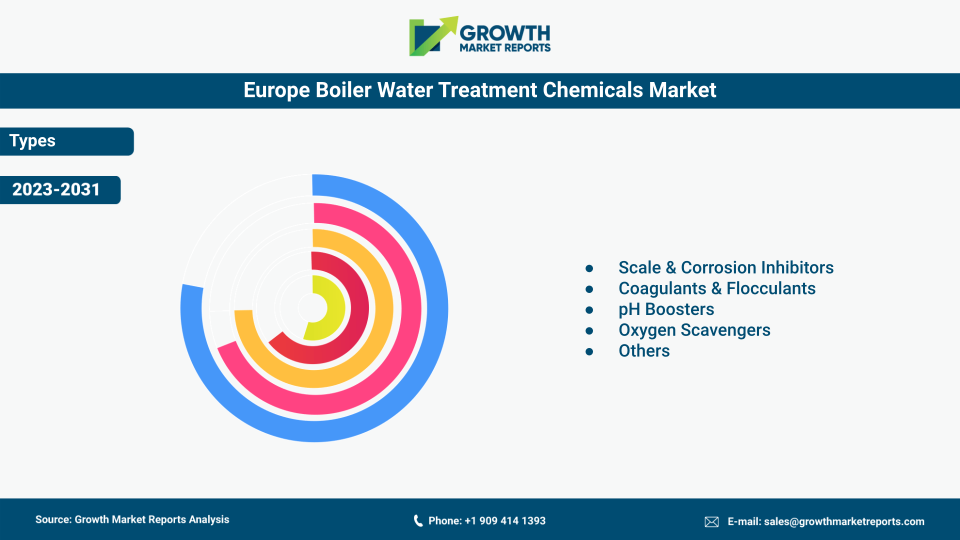
By Product Type Oxygen Scavengers, Corrosion Inhibitors, Scale Inhibitors, pH Adjusters, Others
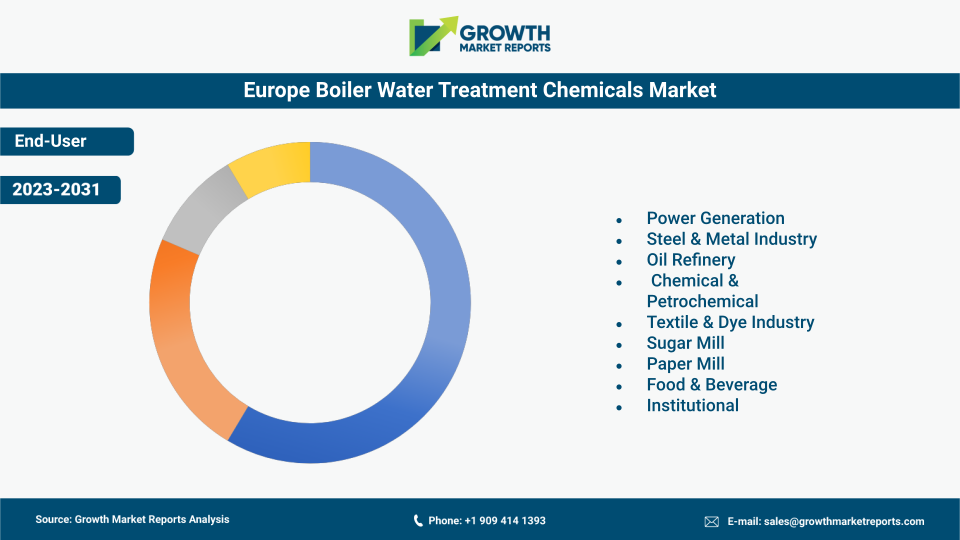
By Application Power Generation, Oil & Gas, Chemical & Petrochemical, Food & Beverage, Pulp & Paper, Others
By End-User Industrial, Commercial, Institutional
Regions Covered North America, Europe, APAC, Latin America, MEA
Base Year 2024
Historic Data 2018-2023
Forecast Period 2025-2033
Number of Pages 282
Number of Tables & Figures 330
Customization Available Yes, the report can be customized as per your need.

Application Analysis

The application landscape of the boiler water treatment chemicals market is diverse, encompassing power generation, oil & gas, chemical & petrochemical, food & beverage, pulp & paper, and other sectors. Power generation remains the largest application segment, accounting for a significant share of global demand in 2024. The reliance on high-pressure and supercritical boilers in thermal and nuclear power plants necessitates stringent water treatment protocols to prevent scaling, corrosion, and fouling. The growing global energy demand, coupled with ongoing investments in power infrastructure, is expected to sustain strong demand for boiler water treatment chemicals in this segment. Innovations in water treatment technologies, such as zero liquid discharge and advanced monitoring systems, are further enhancing the efficiency and reliability of power generation operations.

The oil & gas sector represents another key application area, where steam generation is integral to processes such as enhanced oil recovery, refining, and petrochemical production. The harsh operating conditions in this sector, including high temperatures, pressures, and the presence of aggressive contaminants, necessitate the use of specialized boiler water treatment chemicals. The increasing complexity of oil & gas operations, particularly in offshore and remote locations, is driving demand for robust, easy-to-apply treatment solutions that ensure operational continuity and minimize downtime. The ongoing expansion of oil & gas infrastructure in regions such as the Middle East and North America is expected to further boost market growth in this segment.

The chemical & petrochemical industry is a major consumer of boiler water treatment chemicals, driven by the need for reliable steam supply and strict process control. The use of high-purity steam in chemical synthesis, distillation, and other critical operations requires precise water treatment to prevent contamination and equipment failure. The sectorÂ’s focus on process optimization, energy efficiency, and environmental compliance is fueling the adoption of advanced treatment chemicals and integrated water management solutions. The trend towards digitalization and automation in chemical plants is also supporting the uptake of smart dosing systems and real-time monitoring technologies, enhancing the effectiveness of water treatment programs.

The food & beverage industry relies on boiler-generated steam for various applications, including cooking, sterilization, and cleaning. The stringent hygiene standards and regulatory requirements in this sector necessitate the use of food-grade, non-toxic water treatment chemicals that ensure product safety and compliance. The increasing adoption of automated water treatment systems and the growing emphasis on sustainability are driving demand for innovative, eco-friendly formulations tailored to the unique needs of food & beverage processing. The sectorÂ’s steady growth, particularly in emerging markets, is expected to provide new opportunities for market participants.

The pulp & paper industry, characterized by intensive water usage and challenging process conditions, is another important application area for boiler water treatment chemicals. The need to prevent scaling, corrosion, and microbial contamination in boilers is critical to maintaining product quality and operational efficiency. The industryÂ’s ongoing efforts to reduce water consumption and minimize environmental impact are driving the adoption of closed-loop water systems and advanced chemical treatment solutions. Other applications, including textiles, pharmaceuticals, and institutional facilities, also contribute to market growth, reflecting the broad utility of boiler water treatment chemicals across diverse end-use sectors.

End-User Analysis

The boiler water treatment chemicals market is segmented by end-user into industrial, commercial, and institutional sectors, each with distinct requirements and growth dynamics. The industrial sector dominates the market, accounting for the largest share in 2024. This is attributable to the widespread use of boilers in manufacturing, power generation, oil & gas, chemical processing, and other heavy industries. The critical importance of boiler reliability, operational efficiency, and regulatory compliance drives significant investment in advanced water treatment solutions. Industrial end-users are increasingly adopting integrated water management systems, automation, and digital monitoring technologies to optimize chemical dosing, reduce costs, and ensure continuous operation.

The commercial sector, encompassing facilities such as office buildings, hotels, hospitals, and shopping centers, represents a growing market for boiler water treatment chemicals. The rising demand for centralized heating, hot water supply, and climate control in commercial buildings is driving the adoption of efficient boiler systems and associated water treatment solutions. Facility managers are prioritizing preventive maintenance and energy efficiency, leading to increased uptake of corrosion inhibitors, scale inhibitors, and pH adjusters. The trend towards green building certifications and sustainable facility management is further supporting the use of eco-friendly water treatment chemicals in this sector.

Institutional end-users, including educational institutions, government buildings, and healthcare facilities, also contribute to market growth. These facilities often operate large-scale boiler systems for heating, hot water, and sterilization purposes. The need to ensure occupant safety, maintain indoor air quality, and comply with health and safety regulations drives the adoption of reliable water treatment chemicals. Institutional end-users are increasingly seeking cost-effective, easy-to-use solutions that minimize manual intervention and ensure consistent boiler performance. The growing emphasis on public health and safety, particularly in the wake of recent global health challenges, is expected to sustain demand for high-quality boiler water treatment chemicals in this segment.

Across all end-user segments, the trend towards outsourcing water treatment services and the rise of third-party water management providers is reshaping the market landscape. Many organizations are leveraging the expertise of specialized service providers to manage their boiler water treatment programs, ensuring compliance, efficiency, and risk mitigation. This shift is creating new opportunities for chemical manufacturers to partner with service providers and expand their market reach, particularly among small and medium-sized enterprises that lack in-house expertise.

The increasing adoption of digital and automated water treatment solutions by industrial, commercial, and institutional end-users is expected to drive further market growth. These technologies enable real-time monitoring, predictive maintenance, and data-driven decision-making, enhancing the effectiveness of boiler water treatment programs. As end-users continue to prioritize operational excellence and sustainability, the demand for innovative, integrated water treatment solutions is set to rise across all segments.

Opportunities & Threats

The boiler water treatment chemicals market presents significant opportunities for growth, particularly in emerging economies experiencing rapid industrialization and infrastructure development. The expansion of power generation capacity, the proliferation of manufacturing facilities, and the modernization of oil & gas infrastructure in regions such as Asia Pacific, Latin America, and the Middle East are creating substantial demand for advanced water treatment solutions. Additionally, the increasing focus on sustainability and environmental stewardship is driving the development of green, biodegradable, and non-toxic chemical formulations. Manufacturers that invest in research and development to create innovative, eco-friendly products are well-positioned to capitalize on this trend and differentiate themselves in a competitive market.

Another major opportunity lies in the integration of digital technologies and smart water management solutions. The adoption of IoT-enabled sensors, real-time analytics, and automated dosing systems is transforming the way industries manage boiler water treatment. These technologies enable precise control, reduce chemical wastage, and provide actionable insights for preventive maintenance and process optimization. As industries increasingly embrace digital transformation, there is significant potential for chemical manufacturers to offer value-added solutions that enhance operational efficiency and reduce total cost of ownership. Strategic partnerships with technology providers and service companies can further expand market reach and drive long-term growth.

Despite the positive outlook, the market faces certain challenges that could restrain growth. One of the primary threats is the volatility in raw material prices, which can impact the cost structure and profitability of chemical manufacturers. Fluctuations in the prices of key inputs such as phosphates, amines, and polymers can lead to supply chain disruptions and margin pressures. Additionally, the increasing regulatory scrutiny on chemical usage, particularly concerning environmental and health impacts, poses compliance challenges for manufacturers. Companies must continuously invest in research and innovation to develop safer, more sustainable products that meet evolving regulatory standards. Failure to adapt to these changing requirements could limit market access and hinder growth prospects.

Regional Outlook

The Asia Pacific region dominated the global boiler water treatment chemicals market in 2024, accounting for a market size of approximately USD 1.8 billion. The regionÂ’s rapid industrialization, expansion of power generation capacity, and burgeoning manufacturing sector are key drivers of demand. Countries such as China, India, Japan, and South Korea are investing heavily in infrastructure development and energy projects, fueling the need for efficient boiler water treatment solutions. The increasing adoption of advanced water treatment technologies and the growing emphasis on environmental compliance are further supporting market growth in Asia Pacific. The region is expected to maintain its leadership position, with a projected CAGR of 8.2% through 2033.

North America is the second-largest market, with a 2024 market size of around USD 1.1 billion. The regionÂ’s mature industrial base, stringent regulatory environment, and high adoption of digital and automated water treatment solutions contribute to steady demand. The United States and Canada are leading markets, driven by ongoing investments in power generation, oil & gas, and chemical manufacturing. The trend towards sustainability and energy efficiency is also promoting the use of eco-friendly and high-performance boiler water treatment chemicals. While growth rates in North America are moderate compared to Asia Pacific, the region remains a critical market for advanced and specialty chemical formulations.

Europe follows closely, with a market size of approximately USD 900 million in 2024. The region's focus on environmental protection, strict regulatory standards, and commitment to sustainable industrial practices underpin demand for boiler water treatment chemicals. Germany, the United Kingdom, France, and Italy are key contributors, supported by robust manufacturing and energy sectors. The adoption of green technologies and circular economy principles is driving innovation in water treatment solutions across Europe. Meanwhile, the Middle East & Africa and Latin America, with market sizes of USD 400 million and USD 300 million respectively in 2024, are emerging as high-potential regions. These markets are benefiting from ongoing investments in oil & gas, petrochemicals, and infrastructure development, providing new growth avenues for market participants.

Boiler Water Treatment Chemicals Market Statistics

Competitor Outlook

The global boiler water treatment chemicals market is characterized by intense competition, with a mix of large multinational corporations and regional players vying for market share. The competitive landscape is shaped by factors such as product innovation, pricing strategies, distribution networks, and customer service. Leading companies are investing heavily in research and development to create advanced, eco-friendly formulations that address evolving regulatory requirements and customer preferences. Strategic collaborations, mergers and acquisitions, and geographic expansion are common strategies employed by market leaders to strengthen their positions and access new growth opportunities.

Product differentiation is a key focus area for market participants, with companies offering a wide range of boiler water treatment chemicals tailored to specific applications and end-user requirements. The ability to provide integrated water management solutions, technical support, and value-added services is increasingly important in attracting and retaining customers. Many leading players are also leveraging digital technologies and smart monitoring systems to enhance the effectiveness of their products and provide real-time insights to customers. This trend towards digitalization is expected to further intensify competition and drive innovation in the market.

Sustainability and environmental stewardship are becoming central themes in the competitive landscape, with customers and regulators demanding safer, greener, and more sustainable chemical solutions. Companies that can demonstrate a strong commitment to environmental responsibility, through the development of biodegradable and non-toxic products, are gaining a competitive edge. The growing emphasis on corporate social responsibility and sustainable supply chains is also influencing purchasing decisions, prompting manufacturers to adopt transparent and ethical business practices.

Some of the major companies operating in the global boiler water treatment chemicals market include SUEZ Water Technologies & Solutions, Ecolab Inc., Solenis LLC, Kemira Oyj, Kurita Water Industries Ltd., Veolia Water Technologies, ChemTreat Inc. (a Danaher company), BASF SE, Thermax Limited, and Accepta Ltd. These companies are recognized for their extensive product portfolios, global reach, and strong technical expertise. For instance, Ecolab Inc. and SUEZ Water Technologies & Solutions are known for their comprehensive water treatment solutions and innovative digital platforms that enable real-time monitoring and optimization of chemical dosing. Solenis LLC and Kemira Oyj are prominent players in the pulp & paper and chemical processing sectors, offering specialized treatment chemicals and technical services.

Kurita Water Industries Ltd. and Veolia Water Technologies have established strong positions in the Asia Pacific and European markets, respectively, with a focus on sustainable water management and resource recovery. ChemTreat Inc., a subsidiary of Danaher Corporation, is a leading provider of industrial water treatment solutions in North America, known for its customer-centric approach and advanced chemical formulations. BASF SE and Thermax Limited offer a wide range of boiler water treatment chemicals, with a strong emphasis on research, innovation, and sustainability. Accepta Ltd. is recognized for its high-quality, environmentally friendly water treatment products, catering to a diverse customer base across industrial, commercial, and institutional sectors.

Key Players

  • Suez Water Technologies & Solutions
  • Ecolab Inc.
  • Kemira Oyj
  • Solenis LLC
  • Kurita Water Industries Ltd.
  • BASF SE
  • Veolia Water Technologies
  • Accepta Ltd.
  • ChemTreat, Inc.
  • Dow Chemical Company
  • Lonza Group AG
  • Chemtreat, Inc.
  • Buckman Laboratories International, Inc.
  • Thermax Limited
  • Eastman Chemical Company
  • Avista Technologies, Inc.
  • GE Water & Process Technologies
  • Akzo Nobel N.V.
  • Ion Exchange (India) Ltd.
  • Feedwater Ltd.
Boiler Water Treatment Chemicals Market Overview

Segments

The Boiler Water Treatment Chemicals market has been segmented on the basis of

Product Type

  • Oxygen Scavengers
  • Corrosion Inhibitors
  • Scale Inhibitors
  • pH Adjusters
  • Others

Application

  • Power Generation
  • Oil & Gas
  • Chemical & Petrochemical
  • Food & Beverage
  • Pulp & Paper
  • Others

End-User

  • Industrial
  • Commercial
  • Institutional

Competitive Landscape

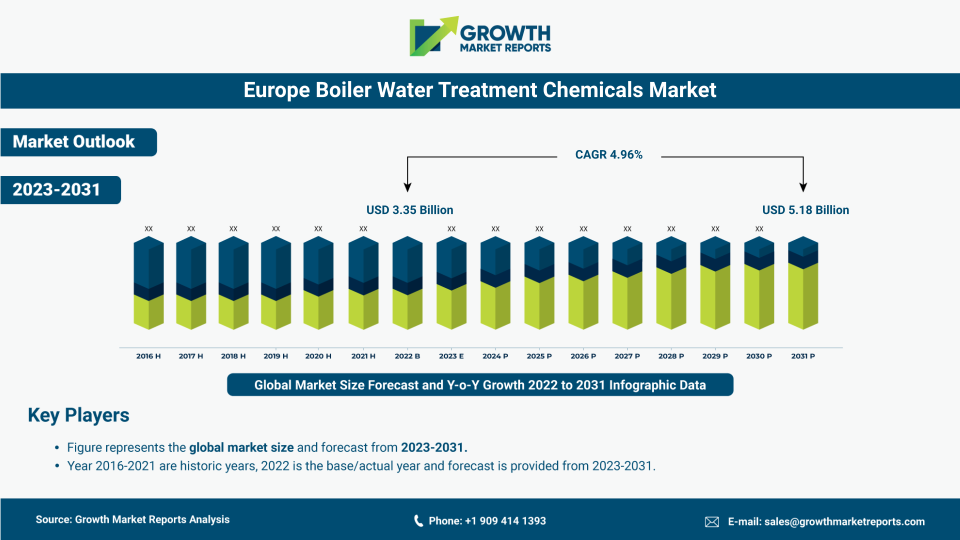
Key players competing in the Europe boiler water treatment chemicals market include Ecolab, Suez, Kurita Water Industries Ltd., Solenis, and Kemira.

Europe Boiler Water Treatment Chemicals Market Key Players

Frequently Asked Questions

Key challenges include volatility in raw material prices, increasing regulatory scrutiny on chemical usage, and the need for continuous innovation to develop safer and more sustainable products.

Major companies include SUEZ Water Technologies & Solutions, Ecolab Inc., Solenis LLC, Kemira Oyj, Kurita Water Industries Ltd., Veolia Water Technologies, ChemTreat Inc., BASF SE, Thermax Limited, and Accepta Ltd.

The adoption of digital monitoring systems, real-time analytics, automation, and smart water management solutions is enhancing chemical dosing accuracy, reducing wastage, and improving operational efficiency.

Tightening environmental and safety regulations are driving demand for high-performance, eco-friendly, and biodegradable water treatment chemicals to ensure compliance and minimize environmental impact.

Power generation, oil & gas, chemical & petrochemical, food & beverage, and pulp & paper industries are the primary users of boiler water treatment chemicals.

The main product types are oxygen scavengers, corrosion inhibitors, scale inhibitors, pH adjusters, and other chemicals such as sludge conditioners and dispersants.

Asia Pacific leads the market, followed by North America and Europe. Rapid industrialization and infrastructure expansion in countries like China and India drive growth in Asia Pacific.

Key growth drivers include increasing demand for efficient steam generation, stricter water quality regulations, rising operational efficiency needs in industries, and technological advancements in water treatment solutions.

The market is expected to grow at a CAGR of 7.1% from 2025 to 2033, reaching USD 8.4 billion by 2033.

As of 2024, the global boiler water treatment chemicals market is valued at USD 4.5 billion.

Table Of Content

Chapter 1 Executive Summary
Chapter 2 Assumptions and Acronyms Used
Chapter 3 Research Methodology
Chapter 4 Boiler Water Treatment Chemicals Market Overview
   4.1 Introduction
      4.1.1 Market Taxonomy
      4.1.2 Market Definition
      4.1.3 Macro-Economic Factors Impacting the Market Growth
   4.2 Boiler Water Treatment Chemicals Market Dynamics
      4.2.1 Market Drivers
      4.2.2 Market Restraints
      4.2.3 Market Opportunity
   4.3 Boiler Water Treatment Chemicals Market - Supply Chain Analysis
      4.3.1 List of Key Suppliers
      4.3.2 List of Key Distributors
      4.3.3 List of Key Consumers
   4.4 Key Forces Shaping the Boiler Water Treatment Chemicals Market
      4.4.1 Bargaining Power of Suppliers
      4.4.2 Bargaining Power of Buyers
      4.4.3 Threat of Substitution
      4.4.4 Threat of New Entrants
      4.4.5 Competitive Rivalry
   4.5 Global Boiler Water Treatment Chemicals Market Size & Forecast, 2023-2032
      4.5.1 Boiler Water Treatment Chemicals Market Size and Y-o-Y Growth
      4.5.2 Boiler Water Treatment Chemicals Market Absolute $ Opportunity

Chapter 5 Global Boiler Water Treatment Chemicals Market Analysis and Forecast By Product Type
   5.1 Introduction
      5.1.1 Key Market Trends & Growth Opportunities By Product Type
      5.1.2 Basis Point Share (BPS) Analysis By Product Type
      5.1.3 Absolute $ Opportunity Assessment By Product Type
   5.2 Boiler Water Treatment Chemicals Market Size Forecast By Product Type
      5.2.1 Oxygen Scavengers
      5.2.2 Corrosion Inhibitors
      5.2.3 Scale Inhibitors
      5.2.4 pH Adjusters
      5.2.5 Others
   5.3 Market Attractiveness Analysis By Product Type

Chapter 6 Global Boiler Water Treatment Chemicals Market Analysis and Forecast By Application
   6.1 Introduction
      6.1.1 Key Market Trends & Growth Opportunities By Application
      6.1.2 Basis Point Share (BPS) Analysis By Application
      6.1.3 Absolute $ Opportunity Assessment By Application
   6.2 Boiler Water Treatment Chemicals Market Size Forecast By Application
      6.2.1 Power Generation
      6.2.2 Oil & Gas
      6.2.3 Chemical & Petrochemical
      6.2.4 Food & Beverage
      6.2.5 Pulp & Paper
      6.2.6 Others
   6.3 Market Attractiveness Analysis By Application

Chapter 7 Global Boiler Water Treatment Chemicals Market Analysis and Forecast By End-User
   7.1 Introduction
      7.1.1 Key Market Trends & Growth Opportunities By End-User
      7.1.2 Basis Point Share (BPS) Analysis By End-User
      7.1.3 Absolute $ Opportunity Assessment By End-User
   7.2 Boiler Water Treatment Chemicals Market Size Forecast By End-User
      7.2.1 Industrial
      7.2.2 Commercial
      7.2.3 Institutional
   7.3 Market Attractiveness Analysis By End-User

Chapter 8 Global Boiler Water Treatment Chemicals Market Analysis and Forecast by Region
   8.1 Introduction
      8.1.1 Key Market Trends & Growth Opportunities By Region
      8.1.2 Basis Point Share (BPS) Analysis By Region
      8.1.3 Absolute $ Opportunity Assessment By Region
   8.2 Boiler Water Treatment Chemicals Market Size Forecast By Region
      8.2.1 North America
      8.2.2 Europe
      8.2.3 Asia Pacific
      8.2.4 Latin America
      8.2.5 Middle East & Africa (MEA)
   8.3 Market Attractiveness Analysis By Region

Chapter 9 Coronavirus Disease (COVID-19) Impact 
   9.1 Introduction 
   9.2 Current & Future Impact Analysis 
   9.3 Economic Impact Analysis 
   9.4 Government Policies 
   9.5 Investment Scenario

Chapter 10 North America Boiler Water Treatment Chemicals Analysis and Forecast
   10.1 Introduction
   10.2 North America Boiler Water Treatment Chemicals Market Size Forecast by Country
      10.2.1 U.S.
      10.2.2 Canada
   10.3 Basis Point Share (BPS) Analysis by Country
   10.4 Absolute $ Opportunity Assessment by Country
   10.5 Market Attractiveness Analysis by Country
   10.6 North America Boiler Water Treatment Chemicals Market Size Forecast By Product Type
      10.6.1 Oxygen Scavengers
      10.6.2 Corrosion Inhibitors
      10.6.3 Scale Inhibitors
      10.6.4 pH Adjusters
      10.6.5 Others
   10.7 Basis Point Share (BPS) Analysis By Product Type 
   10.8 Absolute $ Opportunity Assessment By Product Type 
   10.9 Market Attractiveness Analysis By Product Type
   10.10 North America Boiler Water Treatment Chemicals Market Size Forecast By Application
      10.10.1 Power Generation
      10.10.2 Oil & Gas
      10.10.3 Chemical & Petrochemical
      10.10.4 Food & Beverage
      10.10.5 Pulp & Paper
      10.10.6 Others
   10.11 Basis Point Share (BPS) Analysis By Application 
   10.12 Absolute $ Opportunity Assessment By Application 
   10.13 Market Attractiveness Analysis By Application
   10.14 North America Boiler Water Treatment Chemicals Market Size Forecast By End-User
      10.14.1 Industrial
      10.14.2 Commercial
      10.14.3 Institutional
   10.15 Basis Point Share (BPS) Analysis By End-User 
   10.16 Absolute $ Opportunity Assessment By End-User 
   10.17 Market Attractiveness Analysis By End-User

Chapter 11 Europe Boiler Water Treatment Chemicals Analysis and Forecast
   11.1 Introduction
   11.2 Europe Boiler Water Treatment Chemicals Market Size Forecast by Country
      11.2.1 Germany
      11.2.2 France
      11.2.3 Italy
      11.2.4 U.K.
      11.2.5 Spain
      11.2.6 Russia
      11.2.7 Rest of Europe
   11.3 Basis Point Share (BPS) Analysis by Country
   11.4 Absolute $ Opportunity Assessment by Country
   11.5 Market Attractiveness Analysis by Country
   11.6 Europe Boiler Water Treatment Chemicals Market Size Forecast By Product Type
      11.6.1 Oxygen Scavengers
      11.6.2 Corrosion Inhibitors
      11.6.3 Scale Inhibitors
      11.6.4 pH Adjusters
      11.6.5 Others
   11.7 Basis Point Share (BPS) Analysis By Product Type 
   11.8 Absolute $ Opportunity Assessment By Product Type 
   11.9 Market Attractiveness Analysis By Product Type
   11.10 Europe Boiler Water Treatment Chemicals Market Size Forecast By Application
      11.10.1 Power Generation
      11.10.2 Oil & Gas
      11.10.3 Chemical & Petrochemical
      11.10.4 Food & Beverage
      11.10.5 Pulp & Paper
      11.10.6 Others
   11.11 Basis Point Share (BPS) Analysis By Application 
   11.12 Absolute $ Opportunity Assessment By Application 
   11.13 Market Attractiveness Analysis By Application
   11.14 Europe Boiler Water Treatment Chemicals Market Size Forecast By End-User
      11.14.1 Industrial
      11.14.2 Commercial
      11.14.3 Institutional
   11.15 Basis Point Share (BPS) Analysis By End-User 
   11.16 Absolute $ Opportunity Assessment By End-User 
   11.17 Market Attractiveness Analysis By End-User

Chapter 12 Asia Pacific Boiler Water Treatment Chemicals Analysis and Forecast
   12.1 Introduction
   12.2 Asia Pacific Boiler Water Treatment Chemicals Market Size Forecast by Country
      12.2.1 China
      12.2.2 Japan
      12.2.3 South Korea
      12.2.4 India
      12.2.5 Australia
      12.2.6 South East Asia (SEA)
      12.2.7 Rest of Asia Pacific (APAC)
   12.3 Basis Point Share (BPS) Analysis by Country
   12.4 Absolute $ Opportunity Assessment by Country
   12.5 Market Attractiveness Analysis by Country
   12.6 Asia Pacific Boiler Water Treatment Chemicals Market Size Forecast By Product Type
      12.6.1 Oxygen Scavengers
      12.6.2 Corrosion Inhibitors
      12.6.3 Scale Inhibitors
      12.6.4 pH Adjusters
      12.6.5 Others
   12.7 Basis Point Share (BPS) Analysis By Product Type 
   12.8 Absolute $ Opportunity Assessment By Product Type 
   12.9 Market Attractiveness Analysis By Product Type
   12.10 Asia Pacific Boiler Water Treatment Chemicals Market Size Forecast By Application
      12.10.1 Power Generation
      12.10.2 Oil & Gas
      12.10.3 Chemical & Petrochemical
      12.10.4 Food & Beverage
      12.10.5 Pulp & Paper
      12.10.6 Others
   12.11 Basis Point Share (BPS) Analysis By Application 
   12.12 Absolute $ Opportunity Assessment By Application 
   12.13 Market Attractiveness Analysis By Application
   12.14 Asia Pacific Boiler Water Treatment Chemicals Market Size Forecast By End-User
      12.14.1 Industrial
      12.14.2 Commercial
      12.14.3 Institutional
   12.15 Basis Point Share (BPS) Analysis By End-User 
   12.16 Absolute $ Opportunity Assessment By End-User 
   12.17 Market Attractiveness Analysis By End-User

Chapter 13 Latin America Boiler Water Treatment Chemicals Analysis and Forecast
   13.1 Introduction
   13.2 Latin America Boiler Water Treatment Chemicals Market Size Forecast by Country
      13.2.1 Brazil
      13.2.2 Mexico
      13.2.3 Rest of Latin America (LATAM)
   13.3 Basis Point Share (BPS) Analysis by Country
   13.4 Absolute $ Opportunity Assessment by Country
   13.5 Market Attractiveness Analysis by Country
   13.6 Latin America Boiler Water Treatment Chemicals Market Size Forecast By Product Type
      13.6.1 Oxygen Scavengers
      13.6.2 Corrosion Inhibitors
      13.6.3 Scale Inhibitors
      13.6.4 pH Adjusters
      13.6.5 Others
   13.7 Basis Point Share (BPS) Analysis By Product Type 
   13.8 Absolute $ Opportunity Assessment By Product Type 
   13.9 Market Attractiveness Analysis By Product Type
   13.10 Latin America Boiler Water Treatment Chemicals Market Size Forecast By Application
      13.10.1 Power Generation
      13.10.2 Oil & Gas
      13.10.3 Chemical & Petrochemical
      13.10.4 Food & Beverage
      13.10.5 Pulp & Paper
      13.10.6 Others
   13.11 Basis Point Share (BPS) Analysis By Application 
   13.12 Absolute $ Opportunity Assessment By Application 
   13.13 Market Attractiveness Analysis By Application
   13.14 Latin America Boiler Water Treatment Chemicals Market Size Forecast By End-User
      13.14.1 Industrial
      13.14.2 Commercial
      13.14.3 Institutional
   13.15 Basis Point Share (BPS) Analysis By End-User 
   13.16 Absolute $ Opportunity Assessment By End-User 
   13.17 Market Attractiveness Analysis By End-User

Chapter 14 Middle East & Africa (MEA) Boiler Water Treatment Chemicals Analysis and Forecast
   14.1 Introduction
   14.2 Middle East & Africa (MEA) Boiler Water Treatment Chemicals Market Size Forecast by Country
      14.2.1 Saudi Arabia
      14.2.2 South Africa
      14.2.3 UAE
      14.2.4 Rest of Middle East & Africa (MEA)
   14.3 Basis Point Share (BPS) Analysis by Country
   14.4 Absolute $ Opportunity Assessment by Country
   14.5 Market Attractiveness Analysis by Country
   14.6 Middle East & Africa (MEA) Boiler Water Treatment Chemicals Market Size Forecast By Product Type
      14.6.1 Oxygen Scavengers
      14.6.2 Corrosion Inhibitors
      14.6.3 Scale Inhibitors
      14.6.4 pH Adjusters
      14.6.5 Others
   14.7 Basis Point Share (BPS) Analysis By Product Type 
   14.8 Absolute $ Opportunity Assessment By Product Type 
   14.9 Market Attractiveness Analysis By Product Type
   14.10 Middle East & Africa (MEA) Boiler Water Treatment Chemicals Market Size Forecast By Application
      14.10.1 Power Generation
      14.10.2 Oil & Gas
      14.10.3 Chemical & Petrochemical
      14.10.4 Food & Beverage
      14.10.5 Pulp & Paper
      14.10.6 Others
   14.11 Basis Point Share (BPS) Analysis By Application 
   14.12 Absolute $ Opportunity Assessment By Application 
   14.13 Market Attractiveness Analysis By Application
   14.14 Middle East & Africa (MEA) Boiler Water Treatment Chemicals Market Size Forecast By End-User
      14.14.1 Industrial
      14.14.2 Commercial
      14.14.3 Institutional
   14.15 Basis Point Share (BPS) Analysis By End-User 
   14.16 Absolute $ Opportunity Assessment By End-User 
   14.17 Market Attractiveness Analysis By End-User

Chapter 15 Competition Landscape 
   15.1 Boiler Water Treatment Chemicals Market: Competitive Dashboard
   15.2 Global Boiler Water Treatment Chemicals Market: Market Share Analysis, 2023
   15.3 Company Profiles (Details – Overview, Financials, Developments, Strategy) 
      15.3.1 Suez Water Technologies & Solutions
Ecolab Inc.
Kemira Oyj
Solenis LLC
Kurita Water Industries Ltd.
BASF SE
Veolia Water Technologies
Accepta Ltd.
ChemTreat, Inc.
Dow Chemical Company
Lonza Group AG
Chemtreat, Inc.
Buckman Laboratories International, Inc.
Thermax Limited
Eastman Chemical Company
Avista Technologies, Inc.
GE Water & Process Technologies
Akzo Nobel N.V.
Ion Exchange (India) Ltd.
Feedwater Ltd.

Methodology

Our Clients

Pfizer
Honda Motor Co. Ltd.
Nestle SA
sinopec
The John Holland Group
FedEx Logistics
Deloitte
Siemens Healthcare