Specialty Chemicals Market Research Report 2033

Specialty Chemicals Market Research Report 2033

Segments - by Product Type (Agrochemicals, Construction Chemicals, Specialty Polymers, Electronic Chemicals, Cleaning Chemicals, Food Additives, Others), by Application (Agriculture, Construction, Automotive, Electronics, Personal Care, Food & Beverage, Others), by End-User (Industrial, Commercial, Residential)

https://growthmarketreports.com/Raksha
Author : Raksha Sharma
https://growthmarketreports.com/Vaibhav
Fact-checked by : V. Chandola
https://growthmarketreports.com/Shruti
Editor : Shruti Bhat

Upcoming | Report ID :MC-2440 | 4.8 Rating | 73 Reviews | 254 Pages | Format : Docx PDF

Report Description


Specialty Chemicals Market Outlook

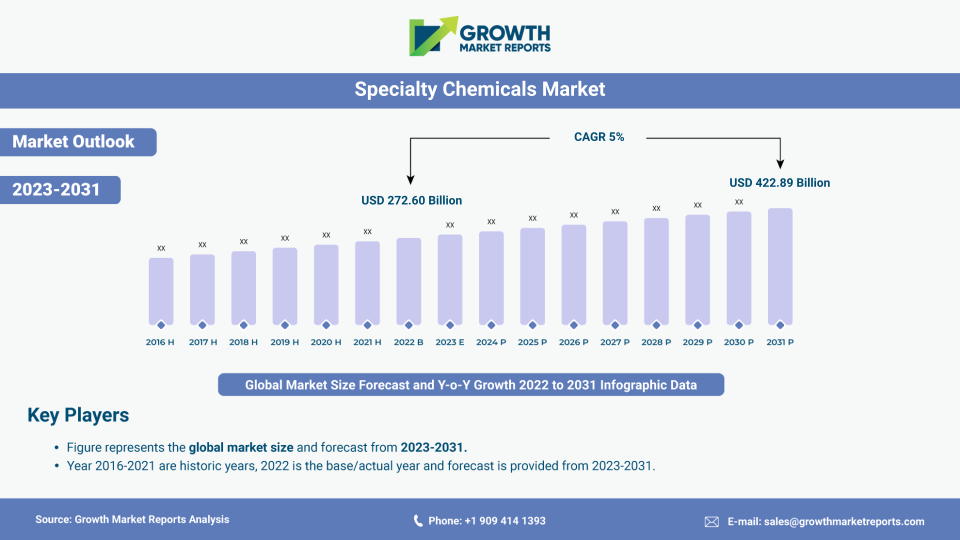
According to our latest research, the global specialty chemicals market size reached USD 890.2 billion in 2024, reflecting robust demand across key end-use sectors. The market is expected to expand at a CAGR of 5.8% from 2025 to 2033, driven by technological advancements and increasing application diversity. By 2033, the specialty chemicals market is forecasted to attain a value of USD 1,495.7 billion. Major growth factors include rapid industrialization, rising demand for high-performance materials, and stringent environmental regulations pushing innovation in chemical formulations.

One of the primary growth drivers for the specialty chemicals market is the escalating demand from the agrochemical and construction sectors. As global population growth accelerates, agricultural productivity needs to improve, necessitating the use of advanced agrochemicals such as fertilizers, pesticides, and herbicides. Similarly, the global construction industry is witnessing a surge in infrastructure projects, particularly in emerging economies, which is increasing the consumption of construction chemicals like concrete admixtures, sealants, and adhesives. These segments not only contribute to the overall expansion of the specialty chemicals market but also foster innovation in product development to meet evolving regulatory and performance standards.

Technological innovation is another pivotal factor fueling the specialty chemicals market. The development of specialty polymers, electronic chemicals, and food additives is being propelled by advancements in material science and nanotechnology. For instance, the electronics industry’s shift toward miniaturization and high-performance devices has led to a surge in demand for high-purity specialty chemicals. Similarly, the food and beverage industry is increasingly relying on specialty additives to enhance shelf life, flavor, and nutritional value. These innovations are supported by significant investments in research and development, as manufacturers strive to create differentiated products that address specific customer needs and regulatory requirements.

Sustainability and regulatory compliance are becoming central to the specialty chemicals market’s growth trajectory. With governments around the world implementing stricter environmental regulations, chemical manufacturers are compelled to develop eco-friendly and sustainable products. This shift is particularly evident in the cleaning chemicals and personal care segments, where bio-based and biodegradable chemicals are gaining traction. Companies are also focusing on reducing their carbon footprint and enhancing supply chain transparency, which has led to the adoption of green chemistry practices and circular economy models. These trends not only enhance brand reputation but also open new avenues for market expansion.

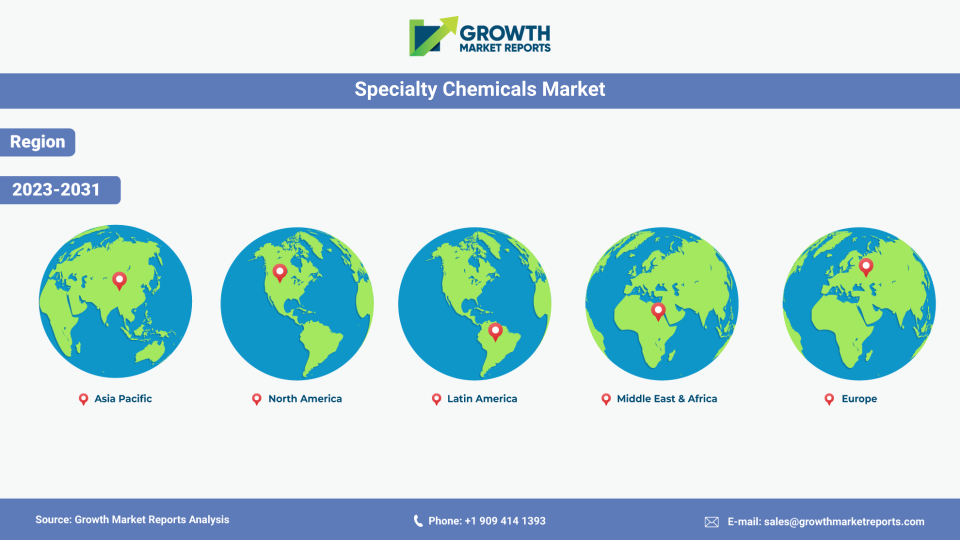
From a regional perspective, the Asia Pacific region stands out as the dominant force in the global specialty chemicals market. The region’s rapid industrialization, expanding middle class, and robust manufacturing base have positioned it as a key consumer and producer of specialty chemicals. China, India, and Southeast Asian countries are witnessing significant investments in infrastructure, electronics, and automotive manufacturing, which are major application areas for specialty chemicals. North America and Europe also hold substantial market shares, driven by technological advancements and a strong focus on sustainability. Meanwhile, Latin America and the Middle East & Africa are emerging as promising markets, supported by growing industrial activities and rising investments in agriculture and construction.

Global Specialty Chemicals Industry Outlook

Product Type Analysis

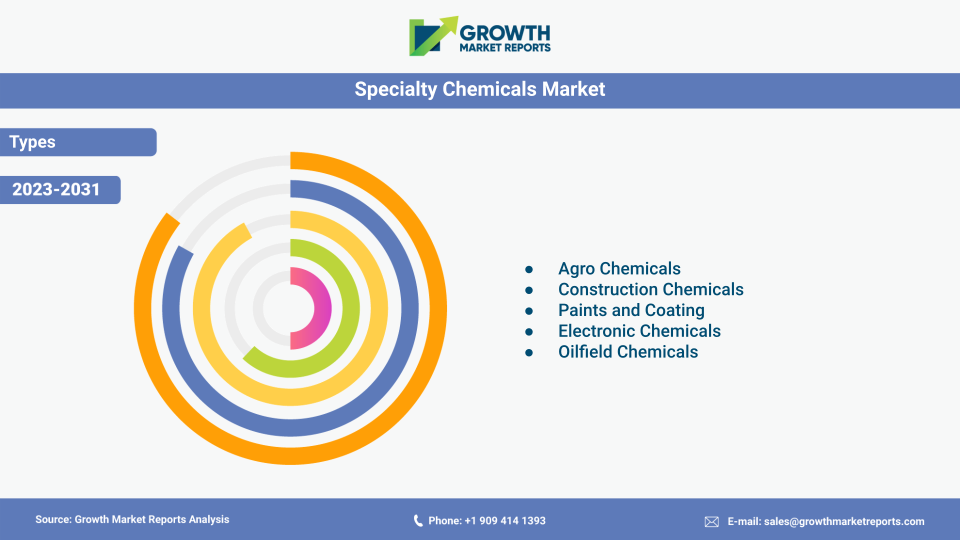
The product type segment in the specialty chemicals market encompasses a diverse range of categories, each catering to specific industrial needs. Agrochemicals remain a cornerstone of the market, driven by the agricultural sector's need to enhance crop yield and combat pests and diseases. The continuous evolution in crop protection chemicals, fertilizers, and plant growth regulators has significantly contributed to improved agricultural productivity worldwide. As food security becomes a global priority, agrochemicals are expected to witness sustained demand, particularly in developing regions with expanding arable land and government initiatives supporting modern farming practices.

Construction chemicals represent another vital segment, with the global construction boom fueling the need for advanced materials that enhance the durability and sustainability of buildings and infrastructure. Products such as waterproofing agents, concrete admixtures, adhesives, and sealants are increasingly being adopted to meet stringent quality standards and regulatory requirements. The emphasis on green building practices and energy-efficient construction is further amplifying the demand for innovative construction chemicals. As urbanization intensifies, particularly in Asia Pacific and the Middle East, the construction chemicals segment is poised for robust growth, supported by infrastructural development and smart city projects.

Specialty polymers are gaining momentum due to their superior performance characteristics and versatility across multiple applications. These polymers offer enhanced chemical resistance, thermal stability, and mechanical strength, making them indispensable in automotive, electronics, and medical devices manufacturing. The trend towards lightweight vehicles and miniaturized electronic components is driving the adoption of specialty polymers, as they enable manufacturers to achieve higher efficiency and product differentiation. Additionally, the development of bio-based and recyclable polymers aligns with the industry’s sustainability goals, attracting environmentally conscious consumers and businesses.

The electronic chemicals segment is experiencing rapid expansion, propelled by the proliferation of consumer electronics, semiconductors, and advanced computing devices. High-purity chemicals are essential for manufacturing integrated circuits, displays, and photovoltaic cells, where even minor impurities can compromise product performance. The ongoing digital transformation and the advent of technologies such as 5G, artificial intelligence, and the Internet of Things (IoT) are creating new opportunities for electronic chemicals. Manufacturers are investing heavily in R&D to develop ultra-high-purity products that meet the stringent requirements of the electronics industry, thereby driving segment growth.

Other notable product types include cleaning chemicals and food additives. The cleaning chemicals market is benefiting from heightened awareness of hygiene and safety, especially in the wake of the COVID-19 pandemic. Demand for disinfectants, sanitizers, and specialty cleaning agents is rising across residential, commercial, and industrial sectors. Meanwhile, the food additives segment is evolving in response to consumer preferences for healthier, safer, and more convenient food products. Innovations in natural preservatives, flavors, and functional additives are enabling food manufacturers to cater to diverse dietary needs and regulatory standards, further bolstering the specialty chemicals market.

Report Scope

Attributes Details
Report Title Specialty Chemicals Market Research Report 2033
By Product Type Agrochemicals, Construction Chemicals, Specialty Polymers, Electronic Chemicals, Cleaning Chemicals, Food Additives, Others
By Application Agriculture, Construction, Automotive, Electronics, Personal Care, Food & Beverage, Others
By End-User Industrial, Commercial, Residential
Regions Covered North America, Europe, APAC, Latin America, MEA
Base Year 2024
Historic Data 2018-2023
Forecast Period 2025-2033
Number of Pages 254
Number of Tables & Figures 349
Customization Available Yes, the report can be customized as per your need.

Application Analysis

The specialty chemicals market’s application landscape is broad and dynamic, with each end-use sector presenting unique growth drivers and challenges. Agriculture remains a primary application area, leveraging specialty chemicals to enhance crop yield, soil fertility, and pest resistance. The adoption of precision farming techniques and integrated pest management solutions is increasing the reliance on advanced agrochemicals, biostimulants, and micronutrients. As the global population continues to rise, ensuring food security through sustainable agricultural practices is becoming imperative, thereby sustaining the demand for specialty chemicals tailored for agricultural applications.

In the construction sector, specialty chemicals play a pivotal role in improving the performance, lifespan, and sustainability of structures. Products such as admixtures, waterproofing agents, and surface treatments are essential for modern construction practices, which prioritize energy efficiency and environmental responsibility. The growing trend of green buildings and smart infrastructure is driving the adoption of specialty chemicals that offer superior bonding, insulation, and protective properties. Moreover, government initiatives promoting affordable housing and urban development in emerging economies are further boosting the market for construction-related specialty chemicals.

The automotive industry is another significant application segment, utilizing specialty chemicals for manufacturing lightweight components, enhancing fuel efficiency, and improving vehicle aesthetics and safety. Specialty polymers, coatings, adhesives, and lubricants are increasingly being used to replace traditional materials, enabling automakers to meet stringent emission norms and consumer expectations for high-performance vehicles. The shift towards electric and hybrid vehicles is also creating new opportunities for specialty chemicals, particularly in battery technology and thermal management systems. This segment is expected to witness steady growth as the automotive industry embraces innovation and sustainability.

The electronics sector continues to be a major consumer of specialty chemicals, driven by the relentless pace of technological advancement and the miniaturization of electronic devices. Chemicals used in semiconductor fabrication, display manufacturing, and printed circuit board production must meet exacting purity and performance standards. As demand for smartphones, tablets, wearables, and smart appliances grows, so does the need for specialty chemicals that enable higher device reliability and functionality. The integration of AI, IoT, and 5G technology is further expanding the scope of specialty chemicals in electronics manufacturing.

Other important application areas include personal care and food & beverage. In personal care, specialty chemicals are used in the formulation of cosmetics, skincare, and hygiene products, with a growing emphasis on natural and sustainable ingredients. The food and beverage industry relies on specialty additives to enhance product quality, safety, and shelf life, responding to evolving consumer preferences and regulatory standards. As lifestyles change and health consciousness rises, these application areas are expected to contribute significantly to the specialty chemicals market’s ongoing expansion.

End-User Analysis

The specialty chemicals market serves a diverse array of end-users, each with specific requirements and growth trajectories. The industrial segment is the largest end-user, accounting for a substantial share of overall demand. Industries such as manufacturing, automotive, electronics, and energy rely heavily on specialty chemicals for processes ranging from metal treatment and water purification to lubrication and corrosion protection. The ongoing trend of industrial automation and digitalization is further increasing the need for high-performance specialty chemicals that can withstand extreme operating conditions and enhance process efficiency. As industries strive to improve productivity and reduce environmental impact, the demand for innovative specialty chemicals is expected to rise.

The commercial end-user segment encompasses sectors such as hospitality, healthcare, retail, and institutional services. Specialty chemicals are integral to maintaining hygiene, safety, and operational efficiency in these environments. For instance, the hospitality industry utilizes specialty cleaning agents and sanitizers to ensure guest safety, while healthcare facilities depend on advanced disinfectants and sterilization chemicals. The retail sector, particularly food retail and supermarkets, relies on food-safe cleaning agents and preservatives to maintain product quality and comply with health regulations. As commercial establishments prioritize customer experience and regulatory compliance, the adoption of specialty chemicals is set to increase.

The residential end-user segment, although smaller compared to industrial and commercial segments, is witnessing notable growth. The rising awareness of health, wellness, and environmental sustainability is driving demand for specialty chemicals in household cleaning products, personal care items, and home improvement materials. Consumers are increasingly seeking products that are safe, effective, and environmentally friendly, pushing manufacturers to develop bio-based and non-toxic specialty chemicals. The COVID-19 pandemic has further heightened the focus on hygiene and sanitation in residential settings, leading to increased consumption of specialty cleaning chemicals and disinfectants.

Cross-segment collaboration is also becoming more prominent, with specialty chemical manufacturers working closely with end-users to develop customized solutions that address specific operational challenges. This trend is particularly evident in industries such as automotive and electronics, where close partnerships enable the co-development of high-performance materials and process chemicals. The ability to offer tailored solutions not only enhances customer satisfaction but also creates long-term business opportunities for specialty chemical suppliers.

Overall, the end-user landscape of the specialty chemicals market is characterized by diversity and dynamism. As industries and consumers alike demand higher performance, safety, and sustainability, specialty chemical manufacturers are responding with innovative products and services. This ongoing evolution is expected to drive sustained growth across all major end-user segments, reinforcing the market’s critical role in supporting global economic development.

Opportunities & Threats

The specialty chemicals market is brimming with opportunities, particularly in the realm of sustainability and green chemistry. As environmental regulations tighten and consumer preferences shift toward eco-friendly products, there is a significant opportunity for manufacturers to innovate and develop bio-based, biodegradable, and non-toxic specialty chemicals. The transition to a circular economy, where waste is minimized, and resources are reused, is opening new avenues for product development and market expansion. Companies that invest in research and development to create sustainable solutions are well-positioned to capture emerging market segments and build long-term competitive advantages.

Another major opportunity lies in digitalization and the integration of advanced technologies such as artificial intelligence, machine learning, and the Internet of Things (IoT) into specialty chemical manufacturing and supply chain management. These technologies enable real-time monitoring, predictive maintenance, and process optimization, leading to improved efficiency, reduced costs, and enhanced product quality. The adoption of digital platforms for customer engagement and product customization is also enhancing market reach and customer satisfaction. As industries embrace Industry 4.0, specialty chemical manufacturers can leverage these technologies to differentiate themselves and tap into new growth opportunities.

Despite the positive outlook, the specialty chemicals market faces several restraining factors, the most prominent being volatility in raw material prices. Many specialty chemicals are derived from petrochemical feedstocks, which are subject to fluctuations in global oil and gas prices. This volatility can impact production costs and profit margins, making it challenging for manufacturers to maintain price stability and long-term contracts. Additionally, supply chain disruptions, geopolitical tensions, and trade barriers can further exacerbate the situation, leading to uncertainty and risk in the market. To mitigate these challenges, companies are increasingly focusing on diversifying their raw material sources, investing in alternative feedstocks, and enhancing supply chain resilience.

Regional Outlook

The Asia Pacific region dominates the global specialty chemicals market, accounting for approximately 43% of the total market value in 2024, or USD 382.8 billion. This dominance is primarily attributed to rapid industrialization, robust economic growth, and expanding manufacturing activities in countries such as China, India, Japan, and South Korea. The region’s thriving construction, automotive, and electronics industries are major consumers of specialty chemicals. Furthermore, government initiatives supporting infrastructure development, smart cities, and sustainable agriculture are fueling demand for construction chemicals, agrochemicals, and specialty polymers. The Asia Pacific market is projected to grow at a CAGR of 6.5% through 2033, outpacing other regions due to its dynamic economic landscape and rising investments in R&D.

North America holds a significant share of the specialty chemicals market, with a market value of USD 220.1 billion in 2024. The region benefits from a well-established industrial base, advanced technological capabilities, and a strong focus on sustainability and regulatory compliance. The United States and Canada are leading contributors, particularly in the production of specialty polymers, electronic chemicals, and cleaning agents. The North American market is characterized by high levels of innovation, with companies investing heavily in the development of eco-friendly and high-performance specialty chemicals. The region is expected to maintain steady growth, supported by ongoing advancements in material science and increasing demand from end-use industries such as healthcare, electronics, and automotive.

Europe is another key market, valued at USD 180.6 billion in 2024, and is renowned for its stringent environmental regulations and commitment to sustainability. The European specialty chemicals market is driven by strong demand from the automotive, construction, and personal care sectors. Countries such as Germany, France, and the United Kingdom are at the forefront of innovation, particularly in the development of bio-based and recyclable specialty chemicals. The European Union’s Green Deal and circular economy initiatives are encouraging manufacturers to adopt greener production processes and develop sustainable products. While growth in Europe is moderate compared to Asia Pacific, the region’s emphasis on quality, safety, and environmental responsibility ensures a stable and resilient market outlook.

Specialty Chemicals Market Statistics

Competitor Outlook

The specialty chemicals market is highly competitive and characterized by the presence of both global giants and regional players. The competitive landscape is shaped by factors such as product innovation, technological advancement, mergers and acquisitions, and strategic partnerships. Leading companies are continuously investing in research and development to create differentiated products that meet evolving customer needs and regulatory requirements. The ability to offer customized solutions and value-added services is a key differentiator in this market, enabling companies to build long-term relationships with clients and maintain a competitive edge.

Mergers and acquisitions are a common strategy among major players, aimed at expanding product portfolios, entering new markets, and achieving economies of scale. Companies are also focusing on sustainability initiatives, such as reducing carbon emissions, adopting green chemistry practices, and developing bio-based specialty chemicals. These efforts not only enhance brand reputation but also align with the growing demand for environmentally friendly products. The competitive intensity is further heightened by the entry of new players, particularly in emerging markets, where local companies leverage their understanding of regional needs to gain market share.

Strategic collaborations and partnerships with end-users, research institutions, and technology providers are becoming increasingly important in the specialty chemicals market. By working closely with stakeholders across the value chain, companies can accelerate product development, improve supply chain efficiency, and respond more effectively to market trends. Digital transformation is also playing a significant role in shaping the competitive landscape, with companies leveraging data analytics, automation, and digital platforms to enhance operational efficiency and customer engagement.

Some of the major companies operating in the global specialty chemicals market include BASF SE, Dow Inc., Evonik Industries AG, Clariant AG, Akzo Nobel N.V., Huntsman Corporation, Solvay S.A., Lanxess AG, Croda International Plc, and Albemarle Corporation. BASF SE is renowned for its extensive product portfolio and strong focus on sustainability, while Dow Inc. excels in innovation and customer-centric solutions. Evonik Industries and Clariant AG are recognized for their expertise in specialty polymers and additives, respectively. Akzo Nobel N.V. is a leader in coatings and construction chemicals, and Huntsman Corporation stands out for its advanced materials and performance products. Solvay S.A. and Lanxess AG are known for their commitment to green chemistry and circular economy principles, while Croda International Plc and Albemarle Corporation specialize in high-value specialty chemicals for personal care, agriculture, and energy storage applications.

These companies are continuously enhancing their market position through capacity expansions, technological upgrades, and sustainability initiatives. For instance, BASF SE has invested heavily in digitalization and circular economy projects, while Dow Inc. is developing new bio-based polymers and specialty additives. Evonik Industries is expanding its global footprint through strategic acquisitions, and Clariant AG is focusing on high-growth segments such as healthcare and agriculture. The competitive landscape is expected to remain dynamic, with innovation, sustainability, and customer collaboration serving as key pillars of success in the specialty chemicals market.

Key Players

  • BASF SE
  • Dow Inc.
  • Evonik Industries AG
  • Clariant AG
  • Akzo Nobel N.V.
  • Solvay S.A.
  • Huntsman Corporation
  • LANXESS AG
  • Croda International Plc
  • Albemarle Corporation
  • Ashland Global Holdings Inc.
  • W.R. Grace & Co.
  • Eastman Chemical Company
  • Arkema S.A.
  • Sumitomo Chemical Co., Ltd.
  • Syngenta AG
  • SABIC (Saudi Basic Industries Corporation)
  • INEOS Group Holdings S.A.
  • DuPont de Nemours, Inc.
  • Mitsui Chemicals, Inc.
Specialty Chemicals Market Overview

Segments

The Specialty Chemicals market has been segmented on the basis of

Product Type

  • Agrochemicals
  • Construction Chemicals
  • Specialty Polymers
  • Electronic Chemicals
  • Cleaning Chemicals
  • Food Additives
  • Others

Application

  • Agriculture
  • Construction
  • Automotive
  • Electronics
  • Personal Care
  • Food & Beverage
  • Others

End-User

  • Industrial
  • Commercial
  • Residential

Competitive Landscape

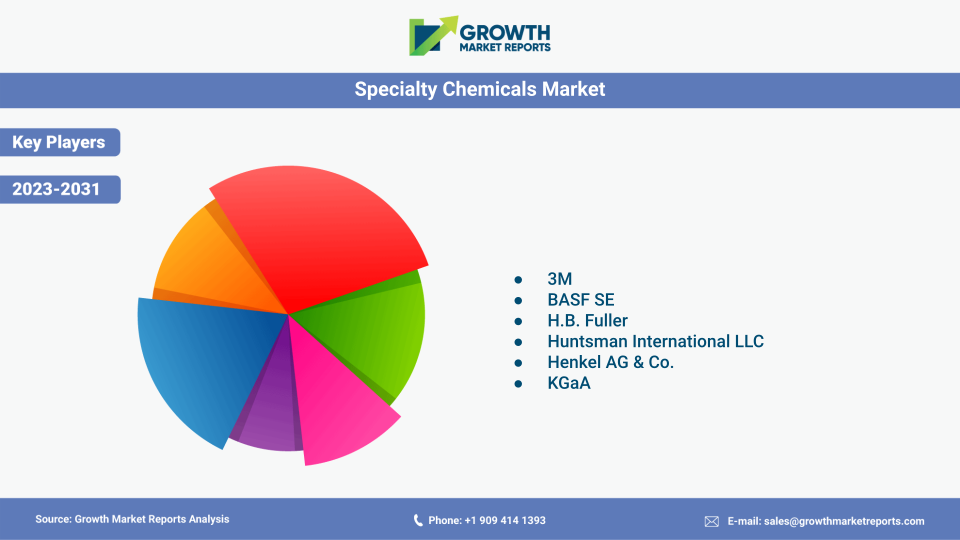
Major players competing in the specialty chemicals market include 3M, BASF SE, H.B. Fuller, Huntsman International LLC, and Henkel AG & Co. KGaA.

Some of these players are using several market strategies such as acquisitions, merger, collaborations, partnerships, capacity expansion, and product launches to enhance their market shares and to generate revenue and raise their production line of the business in the coming years.

Specialty Chemicals Market Key Players

Frequently Asked Questions

Specialty chemicals are widely used in agriculture (crop protection, fertilizers), construction (admixtures, sealants), automotive (lightweight materials, coatings), electronics (semiconductor fabrication), personal care (cosmetics, hygiene), and food & beverage (additives, preservatives).

Technological advancements in material science, nanotechnology, and digitalization are driving the development of specialty polymers, electronic chemicals, and food additives, leading to more efficient and high-performance products.

Major companies include BASF SE, Dow Inc., Evonik Industries AG, Clariant AG, Akzo Nobel N.V., Huntsman Corporation, Solvay S.A., Lanxess AG, Croda International Plc, and Albemarle Corporation.

Opportunities include innovation in green chemistry, digitalization, and the adoption of advanced technologies. Threats include raw material price volatility, supply chain disruptions, and geopolitical tensions.

The Asia Pacific region is the largest market, accounting for about 43% of the global value in 2024, driven by rapid industrialization and robust manufacturing in countries like China, India, and Southeast Asia.

Sustainability is increasingly important, with manufacturers focusing on eco-friendly, bio-based, and biodegradable chemicals to meet stricter environmental regulations and consumer demand for green products.

The main product types are agrochemicals, construction chemicals, specialty polymers, electronic chemicals, cleaning chemicals, food additives, and others.

Major end-use sectors include agriculture (agrochemicals), construction, automotive, electronics, personal care, and food & beverage industries.

Key growth drivers include rapid industrialization, rising demand for high-performance materials, technological advancements, and stringent environmental regulations that encourage innovation in chemical formulations.

The global specialty chemicals market reached USD 890.2 billion in 2024 and is projected to grow at a CAGR of 5.8% from 2025 to 2033, reaching USD 1,495.7 billion by 2033.

Table Of Content

Chapter 1 Executive Summary
Chapter 2 Assumptions and Acronyms Used
Chapter 3 Research Methodology
Chapter 4 Specialty Chemicals Market Overview
   4.1 Introduction
      4.1.1 Market Taxonomy
      4.1.2 Market Definition
      4.1.3 Macro-Economic Factors Impacting the Market Growth
   4.2 Specialty Chemicals Market Dynamics
      4.2.1 Market Drivers
      4.2.2 Market Restraints
      4.2.3 Market Opportunity
   4.3 Specialty Chemicals Market - Supply Chain Analysis
      4.3.1 List of Key Suppliers
      4.3.2 List of Key Distributors
      4.3.3 List of Key Consumers
   4.4 Key Forces Shaping the Specialty Chemicals Market
      4.4.1 Bargaining Power of Suppliers
      4.4.2 Bargaining Power of Buyers
      4.4.3 Threat of Substitution
      4.4.4 Threat of New Entrants
      4.4.5 Competitive Rivalry
   4.5 Global Specialty Chemicals Market Size & Forecast, 2023-2032
      4.5.1 Specialty Chemicals Market Size and Y-o-Y Growth
      4.5.2 Specialty Chemicals Market Absolute $ Opportunity

Chapter 5 Global Specialty Chemicals Market Analysis and Forecast By Product Type
   5.1 Introduction
      5.1.1 Key Market Trends & Growth Opportunities By Product Type
      5.1.2 Basis Point Share (BPS) Analysis By Product Type
      5.1.3 Absolute $ Opportunity Assessment By Product Type
   5.2 Specialty Chemicals Market Size Forecast By Product Type
      5.2.1 Agrochemicals
      5.2.2 Construction Chemicals
      5.2.3 Specialty Polymers
      5.2.4 Electronic Chemicals
      5.2.5 Cleaning Chemicals
      5.2.6 Food Additives
      5.2.7 Others
   5.3 Market Attractiveness Analysis By Product Type

Chapter 6 Global Specialty Chemicals Market Analysis and Forecast By Application
   6.1 Introduction
      6.1.1 Key Market Trends & Growth Opportunities By Application
      6.1.2 Basis Point Share (BPS) Analysis By Application
      6.1.3 Absolute $ Opportunity Assessment By Application
   6.2 Specialty Chemicals Market Size Forecast By Application
      6.2.1 Agriculture
      6.2.2 Construction
      6.2.3 Automotive
      6.2.4 Electronics
      6.2.5 Personal Care
      6.2.6 Food & Beverage
      6.2.7 Others
   6.3 Market Attractiveness Analysis By Application

Chapter 7 Global Specialty Chemicals Market Analysis and Forecast By End-User
   7.1 Introduction
      7.1.1 Key Market Trends & Growth Opportunities By End-User
      7.1.2 Basis Point Share (BPS) Analysis By End-User
      7.1.3 Absolute $ Opportunity Assessment By End-User
   7.2 Specialty Chemicals Market Size Forecast By End-User
      7.2.1 Industrial
      7.2.2 Commercial
      7.2.3 Residential
   7.3 Market Attractiveness Analysis By End-User

Chapter 8 Global Specialty Chemicals Market Analysis and Forecast by Region
   8.1 Introduction
      8.1.1 Key Market Trends & Growth Opportunities By Region
      8.1.2 Basis Point Share (BPS) Analysis By Region
      8.1.3 Absolute $ Opportunity Assessment By Region
   8.2 Specialty Chemicals Market Size Forecast By Region
      8.2.1 North America
      8.2.2 Europe
      8.2.3 Asia Pacific
      8.2.4 Latin America
      8.2.5 Middle East & Africa (MEA)
   8.3 Market Attractiveness Analysis By Region

Chapter 9 Coronavirus Disease (COVID-19) Impact 
   9.1 Introduction 
   9.2 Current & Future Impact Analysis 
   9.3 Economic Impact Analysis 
   9.4 Government Policies 
   9.5 Investment Scenario

Chapter 10 North America Specialty Chemicals Analysis and Forecast
   10.1 Introduction
   10.2 North America Specialty Chemicals Market Size Forecast by Country
      10.2.1 U.S.
      10.2.2 Canada
   10.3 Basis Point Share (BPS) Analysis by Country
   10.4 Absolute $ Opportunity Assessment by Country
   10.5 Market Attractiveness Analysis by Country
   10.6 North America Specialty Chemicals Market Size Forecast By Product Type
      10.6.1 Agrochemicals
      10.6.2 Construction Chemicals
      10.6.3 Specialty Polymers
      10.6.4 Electronic Chemicals
      10.6.5 Cleaning Chemicals
      10.6.6 Food Additives
      10.6.7 Others
   10.7 Basis Point Share (BPS) Analysis By Product Type 
   10.8 Absolute $ Opportunity Assessment By Product Type 
   10.9 Market Attractiveness Analysis By Product Type
   10.10 North America Specialty Chemicals Market Size Forecast By Application
      10.10.1 Agriculture
      10.10.2 Construction
      10.10.3 Automotive
      10.10.4 Electronics
      10.10.5 Personal Care
      10.10.6 Food & Beverage
      10.10.7 Others
   10.11 Basis Point Share (BPS) Analysis By Application 
   10.12 Absolute $ Opportunity Assessment By Application 
   10.13 Market Attractiveness Analysis By Application
   10.14 North America Specialty Chemicals Market Size Forecast By End-User
      10.14.1 Industrial
      10.14.2 Commercial
      10.14.3 Residential
   10.15 Basis Point Share (BPS) Analysis By End-User 
   10.16 Absolute $ Opportunity Assessment By End-User 
   10.17 Market Attractiveness Analysis By End-User

Chapter 11 Europe Specialty Chemicals Analysis and Forecast
   11.1 Introduction
   11.2 Europe Specialty Chemicals Market Size Forecast by Country
      11.2.1 Germany
      11.2.2 France
      11.2.3 Italy
      11.2.4 U.K.
      11.2.5 Spain
      11.2.6 Russia
      11.2.7 Rest of Europe
   11.3 Basis Point Share (BPS) Analysis by Country
   11.4 Absolute $ Opportunity Assessment by Country
   11.5 Market Attractiveness Analysis by Country
   11.6 Europe Specialty Chemicals Market Size Forecast By Product Type
      11.6.1 Agrochemicals
      11.6.2 Construction Chemicals
      11.6.3 Specialty Polymers
      11.6.4 Electronic Chemicals
      11.6.5 Cleaning Chemicals
      11.6.6 Food Additives
      11.6.7 Others
   11.7 Basis Point Share (BPS) Analysis By Product Type 
   11.8 Absolute $ Opportunity Assessment By Product Type 
   11.9 Market Attractiveness Analysis By Product Type
   11.10 Europe Specialty Chemicals Market Size Forecast By Application
      11.10.1 Agriculture
      11.10.2 Construction
      11.10.3 Automotive
      11.10.4 Electronics
      11.10.5 Personal Care
      11.10.6 Food & Beverage
      11.10.7 Others
   11.11 Basis Point Share (BPS) Analysis By Application 
   11.12 Absolute $ Opportunity Assessment By Application 
   11.13 Market Attractiveness Analysis By Application
   11.14 Europe Specialty Chemicals Market Size Forecast By End-User
      11.14.1 Industrial
      11.14.2 Commercial
      11.14.3 Residential
   11.15 Basis Point Share (BPS) Analysis By End-User 
   11.16 Absolute $ Opportunity Assessment By End-User 
   11.17 Market Attractiveness Analysis By End-User

Chapter 12 Asia Pacific Specialty Chemicals Analysis and Forecast
   12.1 Introduction
   12.2 Asia Pacific Specialty Chemicals Market Size Forecast by Country
      12.2.1 China
      12.2.2 Japan
      12.2.3 South Korea
      12.2.4 India
      12.2.5 Australia
      12.2.6 South East Asia (SEA)
      12.2.7 Rest of Asia Pacific (APAC)
   12.3 Basis Point Share (BPS) Analysis by Country
   12.4 Absolute $ Opportunity Assessment by Country
   12.5 Market Attractiveness Analysis by Country
   12.6 Asia Pacific Specialty Chemicals Market Size Forecast By Product Type
      12.6.1 Agrochemicals
      12.6.2 Construction Chemicals
      12.6.3 Specialty Polymers
      12.6.4 Electronic Chemicals
      12.6.5 Cleaning Chemicals
      12.6.6 Food Additives
      12.6.7 Others
   12.7 Basis Point Share (BPS) Analysis By Product Type 
   12.8 Absolute $ Opportunity Assessment By Product Type 
   12.9 Market Attractiveness Analysis By Product Type
   12.10 Asia Pacific Specialty Chemicals Market Size Forecast By Application
      12.10.1 Agriculture
      12.10.2 Construction
      12.10.3 Automotive
      12.10.4 Electronics
      12.10.5 Personal Care
      12.10.6 Food & Beverage
      12.10.7 Others
   12.11 Basis Point Share (BPS) Analysis By Application 
   12.12 Absolute $ Opportunity Assessment By Application 
   12.13 Market Attractiveness Analysis By Application
   12.14 Asia Pacific Specialty Chemicals Market Size Forecast By End-User
      12.14.1 Industrial
      12.14.2 Commercial
      12.14.3 Residential
   12.15 Basis Point Share (BPS) Analysis By End-User 
   12.16 Absolute $ Opportunity Assessment By End-User 
   12.17 Market Attractiveness Analysis By End-User

Chapter 13 Latin America Specialty Chemicals Analysis and Forecast
   13.1 Introduction
   13.2 Latin America Specialty Chemicals Market Size Forecast by Country
      13.2.1 Brazil
      13.2.2 Mexico
      13.2.3 Rest of Latin America (LATAM)
   13.3 Basis Point Share (BPS) Analysis by Country
   13.4 Absolute $ Opportunity Assessment by Country
   13.5 Market Attractiveness Analysis by Country
   13.6 Latin America Specialty Chemicals Market Size Forecast By Product Type
      13.6.1 Agrochemicals
      13.6.2 Construction Chemicals
      13.6.3 Specialty Polymers
      13.6.4 Electronic Chemicals
      13.6.5 Cleaning Chemicals
      13.6.6 Food Additives
      13.6.7 Others
   13.7 Basis Point Share (BPS) Analysis By Product Type 
   13.8 Absolute $ Opportunity Assessment By Product Type 
   13.9 Market Attractiveness Analysis By Product Type
   13.10 Latin America Specialty Chemicals Market Size Forecast By Application
      13.10.1 Agriculture
      13.10.2 Construction
      13.10.3 Automotive
      13.10.4 Electronics
      13.10.5 Personal Care
      13.10.6 Food & Beverage
      13.10.7 Others
   13.11 Basis Point Share (BPS) Analysis By Application 
   13.12 Absolute $ Opportunity Assessment By Application 
   13.13 Market Attractiveness Analysis By Application
   13.14 Latin America Specialty Chemicals Market Size Forecast By End-User
      13.14.1 Industrial
      13.14.2 Commercial
      13.14.3 Residential
   13.15 Basis Point Share (BPS) Analysis By End-User 
   13.16 Absolute $ Opportunity Assessment By End-User 
   13.17 Market Attractiveness Analysis By End-User

Chapter 14 Middle East & Africa (MEA) Specialty Chemicals Analysis and Forecast
   14.1 Introduction
   14.2 Middle East & Africa (MEA) Specialty Chemicals Market Size Forecast by Country
      14.2.1 Saudi Arabia
      14.2.2 South Africa
      14.2.3 UAE
      14.2.4 Rest of Middle East & Africa (MEA)
   14.3 Basis Point Share (BPS) Analysis by Country
   14.4 Absolute $ Opportunity Assessment by Country
   14.5 Market Attractiveness Analysis by Country
   14.6 Middle East & Africa (MEA) Specialty Chemicals Market Size Forecast By Product Type
      14.6.1 Agrochemicals
      14.6.2 Construction Chemicals
      14.6.3 Specialty Polymers
      14.6.4 Electronic Chemicals
      14.6.5 Cleaning Chemicals
      14.6.6 Food Additives
      14.6.7 Others
   14.7 Basis Point Share (BPS) Analysis By Product Type 
   14.8 Absolute $ Opportunity Assessment By Product Type 
   14.9 Market Attractiveness Analysis By Product Type
   14.10 Middle East & Africa (MEA) Specialty Chemicals Market Size Forecast By Application
      14.10.1 Agriculture
      14.10.2 Construction
      14.10.3 Automotive
      14.10.4 Electronics
      14.10.5 Personal Care
      14.10.6 Food & Beverage
      14.10.7 Others
   14.11 Basis Point Share (BPS) Analysis By Application 
   14.12 Absolute $ Opportunity Assessment By Application 
   14.13 Market Attractiveness Analysis By Application
   14.14 Middle East & Africa (MEA) Specialty Chemicals Market Size Forecast By End-User
      14.14.1 Industrial
      14.14.2 Commercial
      14.14.3 Residential
   14.15 Basis Point Share (BPS) Analysis By End-User 
   14.16 Absolute $ Opportunity Assessment By End-User 
   14.17 Market Attractiveness Analysis By End-User

Chapter 15 Competition Landscape 
   15.1 Specialty Chemicals Market: Competitive Dashboard
   15.2 Global Specialty Chemicals Market: Market Share Analysis, 2023
   15.3 Company Profiles (Details – Overview, Financials, Developments, Strategy) 
      15.3.1 BASF SE
Dow Inc.
Evonik Industries AG
Clariant AG
Akzo Nobel N.V.
Solvay S.A.
Huntsman Corporation
LANXESS AG
Croda International Plc
Albemarle Corporation
Ashland Global Holdings Inc.
W.R. Grace & Co.
Eastman Chemical Company
Arkema S.A.
Sumitomo Chemical Co., Ltd.
Syngenta AG
SABIC (Saudi Basic Industries Corporation)
INEOS Group Holdings S.A.
DuPont de Nemours, Inc.
Mitsui Chemicals, Inc.

Methodology

Our Clients

Microsoft
sinopec
Honda Motor Co. Ltd.
Deloitte
FedEx Logistics
General Mills
Siemens Healthcare
Dassault Aviation