Antiseptics and Disinfectants Market Research Report 2033

Antiseptics and Disinfectants Market Research Report 2033

Segments - by Product Type (Quaternary Ammonium Compounds, Chlorine Compounds, Alcohols & Aldehydes, Phenolic Compounds, Hydrogen Peroxide, Iodine Compounds, Others), by Application (Surface Disinfection, Instrument Disinfection, Skin and Hand Disinfection, Others), by End-User (Hospitals & Clinics, Households, Food & Beverage Industry, Pharmaceutical Industry, Others), by Distribution Channel (Online, Offline)

https://growthmarketreports.com/raksha
Author : Raksha Sharma
https://growthmarketreports.com/Vaibhav
Fact-checked by : V. Chandola
https://growthmarketreports.com/Shruti
Editor : Shruti Bhat

Upcoming | Report ID :HC-11 | 4.7 Rating | 82 Reviews | 250 Pages | Format : Docx PDF

Report Description


Antiseptics and Disinfectants Market Outlook

According to our latest research, the global antiseptics and disinfectants market size reached USD 9.7 billion in 2024, reflecting robust demand across healthcare, household, and industrial sectors. The market is projected to grow at a CAGR of 6.1% from 2025 to 2033, reaching a forecasted value of USD 16.5 billion by 2033. This growth is underpinned by increasing infection control awareness, stringent hygiene protocols, and the persistent threat of healthcare-associated infections (HAIs) worldwide. Rising investments in healthcare infrastructure and continuous innovation in product formulations are further driving the expansion of the antiseptics and disinfectants market.

One of the primary growth factors for the antiseptics and disinfectants market is the escalating prevalence of HAIs, which has prompted governments and healthcare institutions to adopt stricter disinfection protocols. The growing number of surgical procedures and hospital admissions globally has intensified the need for effective antiseptics and disinfectants, particularly in emerging economies where healthcare infrastructure is rapidly developing. Additionally, the emergence of new pathogens and the resurgence of infectious diseases have compelled both public and private sectors to invest heavily in infection prevention measures, thereby fueling market growth. The increasing aging population, which is more susceptible to infections, further amplifies the demand for advanced disinfection products.

Another significant driver is the expansion of the food and beverage and pharmaceutical industries, both of which require stringent hygiene standards to ensure product safety and regulatory compliance. The adoption of advanced manufacturing practices and automation in these industries necessitates the use of specialized disinfectants and antiseptics, particularly for surface and instrument disinfection. The rising consumer awareness regarding personal hygiene, especially post-pandemic, has also led to a surge in demand for skin and hand disinfectants in both household and commercial settings. This trend is further supported by the proliferation of e-commerce platforms, which have made antiseptic and disinfectant products more accessible to a broader consumer base.

Technological advancements and product innovations are also playing a pivotal role in shaping the antiseptics and disinfectants market landscape. Manufacturers are increasingly focusing on developing eco-friendly and non-toxic formulations to address growing environmental concerns and regulatory pressures. The integration of smart packaging and automated dispensing systems is enhancing user convenience and compliance in both clinical and non-clinical environments. Moreover, strategic collaborations between key players and research institutions are accelerating the introduction of novel products with improved efficacy and safety profiles, further bolstering market growth.

From a regional perspective, North America currently dominates the antiseptics and disinfectants market, accounting for the largest revenue share in 2024, followed by Europe and Asia Pacific. The high adoption rate of advanced healthcare practices, robust regulatory frameworks, and significant investments in research and development are key factors driving market growth in these regions. Asia Pacific, however, is anticipated to witness the fastest growth during the forecast period, propelled by rapid urbanization, increasing healthcare expenditure, and rising awareness among consumers and healthcare providers regarding infection control. The Middle East & Africa and Latin America are also experiencing steady growth, supported by improving healthcare infrastructure and rising demand for hygiene products.

Global Antiseptics and Disinfectants Industry Outlook

Product Type Analysis

The antiseptics and disinfectants market by product type is segmented into quaternary ammonium compounds, chlorine compounds, alcohols & aldehydes, phenolic compounds, hydrogen peroxide, iodine compounds, and others. Among these, quaternary ammonium compounds held the largest market share in 2024, owing to their broad-spectrum antimicrobial activity and extensive use in surface and instrument disinfection across hospitals and industrial settings. These compounds are favored for their efficacy against bacteria, viruses, and fungi, as well as their compatibility with a wide range of surfaces and materials. The increasing incidence of infections in healthcare facilities and the rising demand for effective cleaning agents in commercial environments are expected to sustain the dominance of this segment over the forecast period.

Chlorine compounds are another significant segment, widely utilized for water disinfection and surface cleaning due to their potent oxidizing properties. The cost-effectiveness and ease of availability of chlorine-based disinfectants have led to their widespread adoption in both developed and developing regions. However, concerns regarding toxicity and potential environmental hazards associated with chlorine compounds are prompting manufacturers to invest in safer and more sustainable alternatives. Alcohols & aldehydes, particularly ethanol and isopropanol, are extensively used for skin and hand disinfection, especially in healthcare and household settings. The growing consumer preference for alcohol-based sanitizers, driven by heightened awareness of hand hygiene, is expected to boost the growth of this segment in the coming years.

Phenolic compounds and hydrogen peroxide are gaining traction due to their effectiveness against a broad spectrum of pathogens and their relatively lower environmental impact compared to traditional disinfectants. Hydrogen peroxide, in particular, is being increasingly adopted in healthcare and food processing industries for its strong oxidizing properties and minimal residue. Iodine compounds, although used less frequently, remain a staple in surgical and wound care applications due to their proven antimicrobial efficacy and safety profile. The "others" category includes a range of specialized disinfectants tailored for niche applications, such as peracetic acid and silver-based compounds, which are seeing rising demand in high-risk environments.

Overall, the product type segment is witnessing continuous innovation, with manufacturers focusing on developing formulations that combine high efficacy, safety, and environmental sustainability. The introduction of multi-purpose disinfectants and antiseptics, as well as the growing trend towards natural and plant-based ingredients, is expected to further diversify the product landscape. Regulatory agencies are also playing a crucial role by setting stringent standards for product safety and efficacy, thereby encouraging the adoption of high-quality antiseptics and disinfectants across various end-user industries.

Report Scope

Attributes Details
Report Title Antiseptics and Disinfectants Market Research Report 2033
By Product Type Quaternary Ammonium Compounds, Chlorine Compounds, Alcohols & Aldehydes, Phenolic Compounds, Hydrogen Peroxide, Iodine Compounds, Others
By Application Surface Disinfection, Instrument Disinfection, Skin and Hand Disinfection, Others
By End-User Hospitals & Clinics, Households, Food & Beverage Industry, Pharmaceutical Industry, Others
By Distribution Channel Online, Offline
Regions Covered North America, Europe, APAC, Latin America, MEA
Base Year 2024
Historic Data 2018-2023
Forecast Period 2025-2033
Number of Pages 250
Number of Tables & Figures 399
Customization Available Yes, the report can be customized as per your need.

Application Analysis

The application segment of the antiseptics and disinfectants market encompasses surface disinfection, instrument disinfection, skin and hand disinfection, and others. Surface disinfection remains the largest application area, driven by the critical need to prevent cross-contamination and the spread of infectious agents in healthcare, food processing, and public facilities. The implementation of rigorous cleaning protocols in hospitals, clinics, and other healthcare settings has significantly increased the demand for effective surface disinfectants. Additionally, the ongoing emphasis on maintaining hygiene in public spaces, schools, and transportation systems is further propelling the growth of this segment.

Instrument disinfection is another vital application, particularly in surgical centers, dental clinics, and laboratories where the risk of infection transmission is high. The increasing number of minimally invasive procedures and the growing adoption of reusable medical instruments have necessitated the use of advanced disinfectants that can effectively eliminate pathogens without damaging delicate equipment. Innovations in instrument disinfectants, such as the development of rapid-acting and residue-free formulations, are enhancing compliance with infection control standards and improving operational efficiency in healthcare facilities.

Skin and hand disinfection has witnessed unprecedented growth, especially in the wake of the COVID-19 pandemic, which underscored the importance of personal hygiene in preventing disease transmission. The widespread use of alcohol-based hand sanitizers and antiseptic soaps among consumers and healthcare professionals has significantly boosted this segment. Rising awareness campaigns and government initiatives promoting hand hygiene are expected to sustain the momentum for skin and hand disinfection products in the foreseeable future. Furthermore, the increasing prevalence of chronic wounds and surgical procedures is driving demand for topical antiseptics in wound care management.

The "others" category includes applications such as air disinfection, textile disinfection, and veterinary uses, which are gaining importance in specialized settings. For instance, the use of disinfectants in HVAC systems and air purifiers is becoming more prevalent in commercial buildings and healthcare facilities to minimize airborne transmission of pathogens. Textile disinfection is also emerging as a critical application in hospitals and hospitality sectors, where the risk of contamination through linens and uniforms is significant. Overall, the application segment is characterized by increasing diversification and customization of products to address specific infection control challenges across various industries.

End-User Analysis

The end-user segment of the antiseptics and disinfectants market is broadly categorized into hospitals & clinics, households, food & beverage industry, pharmaceutical industry, and others. Hospitals and clinics represent the largest end-user group, accounting for a significant share of the market in 2024. The high incidence of HAIs, coupled with stringent regulatory requirements for infection prevention, has made antiseptics and disinfectants indispensable in healthcare settings. Hospitals and clinics rely on a wide array of products for surface, instrument, and hand disinfection to ensure patient safety and compliance with accreditation standards. The continuous expansion of healthcare infrastructure, particularly in emerging economies, is expected to drive further growth in this segment.

The household segment has experienced remarkable growth in recent years, fueled by increasing consumer awareness of hygiene and the proliferation of easy-to-use disinfectant products. The COVID-19 pandemic acted as a catalyst, leading to a surge in demand for household disinfectants, hand sanitizers, and surface cleaners. Consumers are now more conscious of the importance of maintaining clean living environments, which has led to the integration of antiseptic and disinfectant products into daily routines. The trend towards multi-functional and eco-friendly products is particularly pronounced in this segment, as consumers seek effective solutions that are safe for both their families and the environment.

The food & beverage industry is another key end-user, driven by the need to adhere to strict hygiene standards to prevent foodborne illnesses and ensure product quality. Disinfectants are widely used for cleaning equipment, surfaces, and packaging materials in food processing plants, restaurants, and catering services. Regulatory agencies worldwide mandate the use of approved disinfectants in food handling and preparation areas, which has led to the development of specialized products tailored for this industry. The increasing demand for processed and ready-to-eat foods is further boosting the adoption of antiseptics and disinfectants in the food & beverage sector.

The pharmaceutical industry relies heavily on antiseptics and disinfectants to maintain sterile environments during the manufacturing, packaging, and storage of drugs and medical devices. Compliance with Good Manufacturing Practices (GMP) and other regulatory standards necessitates the use of high-efficacy disinfectants capable of eliminating a broad spectrum of contaminants. The growing complexity of pharmaceutical products and the rise of biologics have heightened the need for advanced disinfection solutions. The "others" category includes end-users such as veterinary clinics, laboratories, and educational institutions, all of which are increasingly adopting antiseptics and disinfectants to safeguard health and ensure regulatory compliance.

Distribution Channel Analysis

The distribution channel segment of the antiseptics and disinfectants market is divided into online and offline channels. Traditionally, offline channels, including pharmacies, supermarkets, specialty stores, and direct sales, have dominated the market, accounting for the majority of sales in 2024. These channels offer the advantage of immediate product availability, personalized customer service, and the ability to physically inspect products before purchase. Hospitals, clinics, and industrial buyers often prefer offline procurement due to the need for bulk purchases and the assurance of product authenticity and quality. The presence of established distribution networks and partnerships with healthcare institutions further strengthens the position of offline channels in the market.

However, the online distribution channel has witnessed exponential growth in recent years, driven by the increasing penetration of e-commerce platforms and changing consumer preferences. The convenience of online shopping, coupled with a wide range of product options and competitive pricing, has attracted a growing number of individual and institutional buyers. The COVID-19 pandemic accelerated the shift towards online purchasing, as consumers and businesses sought to minimize physical contact and ensure uninterrupted access to essential hygiene products. Leading manufacturers and retailers are increasingly investing in digital platforms and direct-to-consumer (D2C) strategies to expand their reach and enhance customer engagement.

The integration of advanced technologies such as artificial intelligence and data analytics is transforming the online distribution landscape, enabling personalized recommendations, automated inventory management, and efficient order fulfillment. Subscription-based models and auto-replenishment services are also gaining popularity, particularly among households and small businesses seeking regular supplies of disinfectants and antiseptics. The growing emphasis on contactless delivery and secure payment options is further enhancing the appeal of online channels. Despite these advantages, challenges such as counterfeit products and concerns regarding product authenticity remain, necessitating stringent quality control measures and collaborations with trusted e-commerce platforms.

Overall, the distribution channel segment is characterized by increasing convergence, with manufacturers and distributors adopting an omnichannel approach to cater to diverse customer preferences. The seamless integration of online and offline channels, supported by robust logistics and customer support infrastructure, is expected to drive sustained growth in the antiseptics and disinfectants market. The rise of specialty online stores focusing exclusively on hygiene and infection control products is also contributing to market expansion, offering consumers greater choice and convenience.

Opportunities & Threats

The antiseptics and disinfectants market presents a wealth of opportunities for growth and innovation. One of the most promising opportunities lies in the development of eco-friendly and sustainable products, as environmental concerns and regulatory pressures continue to mount. Manufacturers that can deliver high-efficacy disinfectants with minimal environmental impact are likely to gain a competitive edge, particularly in regions with stringent environmental regulations. The growing trend towards natural and plant-based ingredients is also opening up new avenues for product differentiation and market expansion. Additionally, the increasing adoption of automated disinfection technologies, such as UV-C and electrostatic sprayers, is creating opportunities for integration with traditional disinfectant products, offering enhanced efficacy and operational efficiency.

Another key opportunity is the rising demand for antiseptics and disinfectants in emerging markets, where rapid urbanization, improving healthcare infrastructure, and growing awareness of infection control are driving market growth. Strategic partnerships with local distributors, healthcare institutions, and government agencies can facilitate market entry and expansion in these regions. The ongoing digital transformation of the distribution landscape, including the proliferation of e-commerce platforms and the adoption of data-driven marketing strategies, offers manufacturers the opportunity to reach a broader customer base and enhance brand visibility. Investment in research and development to create innovative formulations and delivery systems, such as long-lasting antimicrobial coatings and smart dispensing devices, can further strengthen market position and drive long-term growth.

Despite these opportunities, the antiseptics and disinfectants market faces several restraining factors, the most significant of which is regulatory compliance. The industry is subject to stringent regulations governing product safety, efficacy, labeling, and environmental impact, which can increase development costs and lengthen time-to-market for new products. Variability in regulatory standards across different regions can pose challenges for manufacturers seeking to expand internationally. Additionally, concerns regarding the potential development of antimicrobial resistance and the adverse effects of certain chemical disinfectants on human health and the environment may limit market growth. Addressing these challenges requires ongoing investment in research, quality control, and regulatory affairs to ensure compliance and maintain consumer trust.

Regional Outlook

North America remains the leading region in the global antiseptics and disinfectants market, accounting for approximately USD 3.5 billion in revenue in 2024. The region’s dominance is attributed to well-established healthcare infrastructure, high awareness of infection control, and robust regulatory frameworks that mandate the use of high-quality disinfectants in medical and public settings. The presence of major market players and continuous investment in research and development further bolster market growth in the United States and Canada. The market in North America is expected to maintain steady growth, supported by ongoing innovation and the increasing prevalence of chronic diseases that necessitate stringent hygiene practices.

Europe follows closely, with a market size of around USD 2.8 billion in 2024, driven by stringent regulations governing hygiene and infection prevention in healthcare, food processing, and public facilities. Countries such as Germany, the United Kingdom, and France are at the forefront of adopting advanced disinfection technologies and sustainable product formulations. The European market is characterized by a high degree of regulatory oversight, which ensures the quality and safety of antiseptics and disinfectants. The region is expected to grow at a CAGR of 5.8% during the forecast period, supported by increasing investments in healthcare infrastructure and rising demand for eco-friendly products.

The Asia Pacific region is emerging as the fastest-growing market, with a value of USD 2.1 billion in 2024. Rapid urbanization, expanding healthcare infrastructure, and rising awareness of hygiene and infection control are key drivers of market growth in countries such as China, India, and Japan. Government initiatives to improve public health, coupled with increasing investments by multinational companies, are further accelerating market expansion in the region. The Asia Pacific market is anticipated to outpace other regions in terms of growth rate, with a projected CAGR of 7.2% from 2025 to 2033. Latin America and the Middle East & Africa, while smaller in terms of market size, are also experiencing steady growth, supported by improving healthcare systems and increasing demand for hygiene products.

Antiseptics and Disinfectants Market Statistics

Competitor Outlook

The antiseptics and disinfectants market is highly competitive, characterized by the presence of several global and regional players vying for market share through product innovation, strategic partnerships, and mergers and acquisitions. The competitive landscape is shaped by continuous investment in research and development to introduce new and improved formulations that address emerging infection control challenges. Companies are increasingly focusing on developing products that combine high efficacy, safety, and environmental sustainability to meet evolving regulatory requirements and consumer preferences. The adoption of advanced manufacturing technologies and automation is enabling manufacturers to enhance production efficiency, reduce costs, and improve product quality.

Strategic collaborations and partnerships with healthcare institutions, research organizations, and government agencies are playing a crucial role in expanding market reach and accelerating product development. Major players are also investing in digital transformation initiatives, including the development of e-commerce platforms and data-driven marketing strategies, to enhance customer engagement and streamline distribution. The growing emphasis on sustainability and corporate social responsibility is prompting companies to invest in eco-friendly product lines and adopt green manufacturing practices. The competitive environment is further intensified by the entry of new players and the proliferation of private label brands, particularly in the online channel.

In addition to product innovation, companies are focusing on expanding their geographic footprint through acquisitions and joint ventures, particularly in emerging markets with high growth potential. The ability to navigate complex regulatory environments and adapt to local market dynamics is a key differentiator for success in the global antiseptics and disinfectants market. Customer-centric strategies, such as the development of tailored solutions for specific end-user segments and the provision of value-added services, are also gaining importance in building long-term customer loyalty and sustaining competitive advantage.

Some of the major companies operating in the antiseptics and disinfectants market include 3M Company, Ecolab Inc., Reckitt Benckiser Group plc, Procter & Gamble, Johnson & Johnson, Kimberly-Clark Corporation, Steris plc, Cantel Medical Corporation, The Clorox Company, and Diversey Holdings, Ltd. These companies are recognized for their extensive product portfolios, strong brand presence, and global distribution networks. For instance, 3M Company and Ecolab Inc. are known for their innovative solutions for healthcare and industrial applications, while Reckitt Benckiser and Procter & Gamble have a strong foothold in the consumer segment with popular brands such as Lysol and Dettol. Johnson & Johnson and Kimberly-Clark focus on medical and personal care products, leveraging their expertise in infection prevention and wound care.

Steris plc and Cantel Medical Corporation are leading providers of sterilization and infection prevention solutions for healthcare facilities, offering a wide range of disinfectants, sterilants, and automated reprocessing systems. The Clorox Company and Diversey Holdings, Ltd. are prominent players in the commercial and institutional segments, providing comprehensive cleaning and disinfection solutions for various industries. These companies are continually investing in research and development, sustainability initiatives, and digital transformation to maintain their competitive edge and drive future growth in the global antiseptics and disinfectants market.

Key Players

  • 3M
  • Reckitt Benckiser Group plc
  • The Procter & Gamble Company
  • Johnson & Johnson
  • Ecolab Inc.
  • SteriGenics International LLC
  • Kimberly-Clark Corporation
  • Becton, Dickinson and Company
  • S.C. Johnson & Son, Inc.
  • The Clorox Company
  • GOJO Industries, Inc.
  • Cardinal Health, Inc.
  • Metrex Research, LLC
  • Whiteley Corporation
  • Novartis AG
  • DuPont de Nemours, Inc.
  • B. Braun Melsungen AG
  • PAUL HARTMANN AG
  • Cantel Medical Corporation
  • Contec, Inc.
Antiseptics and Disinfectants Market Overview

Segments

The Antiseptics and Disinfectants market has been segmented on the basis of

Product Type

  • Quaternary Ammonium Compounds
  • Chlorine Compounds
  • Alcohols & Aldehydes
  • Phenolic Compounds
  • Hydrogen Peroxide
  • Iodine Compounds
  • Others

Application

  • Surface Disinfection
  • Instrument Disinfection
  • Skin and Hand Disinfection
  • Others

End-User

  • Hospitals & Clinics
  • Households
  • Food & Beverage Industry
  • Pharmaceutical Industry
  • Others

Distribution Channel

  • Online
  • Offline

Competitive Landscape

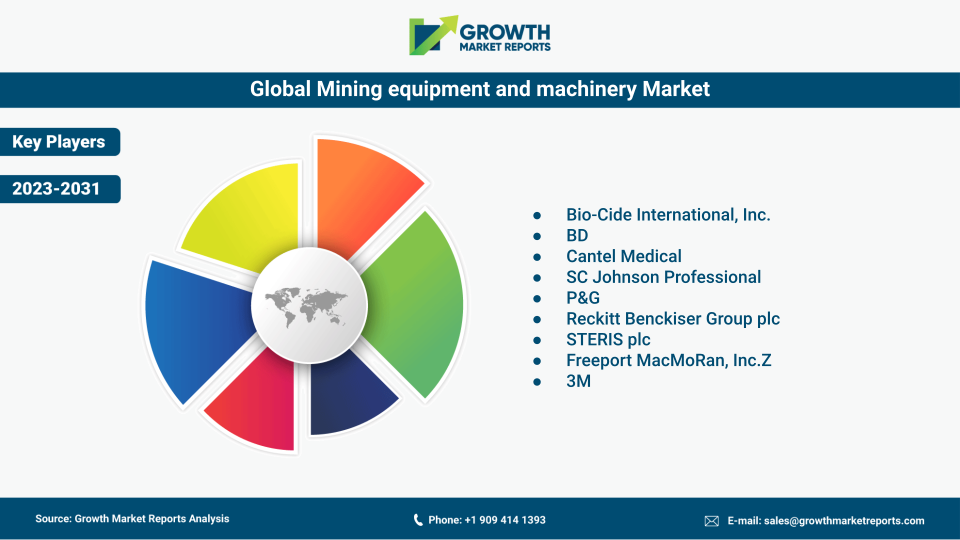
Key players in the Antiseptics and Disinfectants Market include Bio-Cide International, Inc., SC Johnson Professional, P&G, Reckitt Benckiser Group plc, The Clorox Company, 3M and others. These companies are considered as key manufacturers of antiseptics and disinfectants based on their revenue, research development (R&D) activities, regional presence, and supply chain management system.

The players are adopting key strategies such as acquisition, and geographical expansion where potential opportunity for the antiseptics and disinfectants extraction is added in the company’s capacity. For Instance -

  • In December 2019, P&G completed the acquisition of the over-the-counter (OTC) healthcare business of Merck KGaA to increase product portfolios. 
  • In October 2019, Cantel Medical announced the completion of the acquisition of Hu-Friedy Mfg. Co LLC which is a global leading manufacturer of instruments and instrument reprocessing workflow systems catering the dental industry. This acquisition helped the company increase its product portfolios
  • In October 2019, 3M announced that it completed the acquisition of Acelity, Inc. and its KCI subsidiaries. This helped 3M increase its market share
  • In February 2019, Cantel Medical completed the acquisition of Omnia S.p.A. (Omnia), dental surgical consumables solutions company
  • In March 2018, The Clorox Company acquired Nutranext, a dietary supplement provided. This helped the former to increase its product portfolio.

Antiseptics and Disinfectants Market Key Players

Frequently Asked Questions

Major manufactures include, P&G, Reckitt Benckiser Group plc, BD, The Clorox Company etc.

The base year considered for the global antiseptics and disinfectants market report is 2019. The complete analysis period is 2017 to 2027, wherein, 2017 & 2018 are the historic years and the forecast is provided from 2020 to 2027.

Quaternary Ammonium Compounds, and Alcohols & Aldehyde Products are considered as the primary driver for the global antiseptics and disinfectants market.

The market is expected to grow around 3% in-between 2019 and 2020 owing to the increasing hygiene product purchase during COVID 19 pandemic. Growing unmet demand for antiseptics and disinfectants products have also forced other industry manufacturers for temporary shift into antiseptics and disinfectants production which is resulting to increased market value for antiseptics and disinfectants across the globe.

Factors such as competitive strength and market positioning are key areas considered while selecting top companies to be profiled.

Growth in Prevalence of Hospital-acquired Infections, and Increase in prevalence of the different pandemics such as SARS, swine flu, ZIKA, and coronavirus over the last few years has increased the usage of antiseptics and disinfectants across the globe. Moreover, rising healthcare expenditure of consumers also push the antiseptics and disinfectants market for further growth.

In addition to market size (in US$ Million), Market Volume (in Million Kgs), and Company Market Share (in % for base year 2019), other data such as pricing analysis for year 2017 to 2027 (estimated pricing analysis) is provided, global patent analysis is provided, short term and long term outlook for antiseptics and disinfectants market is available in final report.

According to this Growth Market Reports report, the market from antiseptics and disinfectants is likely to register a CAGR of 8.2% during forecast period 2020-2027, with an anticipated valuation of US$ 17.8 billion by the end of the 2027.

Yes, the report provides pricing analysis from 2017-2027 on weighted average for each product.

Additional company profiles can be provided on request.

Table Of Content

Chapter 1 Executive Summary
Chapter 2 Assumptions and Acronyms Used
Chapter 3 Research Methodology
Chapter 4 Antiseptics and Disinfectants Market Overview
   4.1 Introduction
      4.1.1 Market Taxonomy
      4.1.2 Market Definition
      4.1.3 Macro-Economic Factors Impacting the Market Growth
   4.2 Antiseptics and Disinfectants Market Dynamics
      4.2.1 Market Drivers
      4.2.2 Market Restraints
      4.2.3 Market Opportunity
   4.3 Antiseptics and Disinfectants Market - Supply Chain Analysis
      4.3.1 List of Key Suppliers
      4.3.2 List of Key Distributors
      4.3.3 List of Key Consumers
   4.4 Key Forces Shaping the Antiseptics and Disinfectants Market
      4.4.1 Bargaining Power of Suppliers
      4.4.2 Bargaining Power of Buyers
      4.4.3 Threat of Substitution
      4.4.4 Threat of New Entrants
      4.4.5 Competitive Rivalry
   4.5 Global Antiseptics and Disinfectants Market Size & Forecast, 2023-2032
      4.5.1 Antiseptics and Disinfectants Market Size and Y-o-Y Growth
      4.5.2 Antiseptics and Disinfectants Market Absolute $ Opportunity

Chapter 5 Global Antiseptics and Disinfectants Market Analysis and Forecast By Product Type
   5.1 Introduction
      5.1.1 Key Market Trends & Growth Opportunities By Product Type
      5.1.2 Basis Point Share (BPS) Analysis By Product Type
      5.1.3 Absolute $ Opportunity Assessment By Product Type
   5.2 Antiseptics and Disinfectants Market Size Forecast By Product Type
      5.2.1 Quaternary Ammonium Compounds
      5.2.2 Chlorine Compounds
      5.2.3 Alcohols & Aldehydes
      5.2.4 Phenolic Compounds
      5.2.5 Hydrogen Peroxide
      5.2.6 Iodine Compounds
      5.2.7 Others
   5.3 Market Attractiveness Analysis By Product Type

Chapter 6 Global Antiseptics and Disinfectants Market Analysis and Forecast By Application
   6.1 Introduction
      6.1.1 Key Market Trends & Growth Opportunities By Application
      6.1.2 Basis Point Share (BPS) Analysis By Application
      6.1.3 Absolute $ Opportunity Assessment By Application
   6.2 Antiseptics and Disinfectants Market Size Forecast By Application
      6.2.1 Surface Disinfection
      6.2.2 Instrument Disinfection
      6.2.3 Skin and Hand Disinfection
      6.2.4 Others
   6.3 Market Attractiveness Analysis By Application

Chapter 7 Global Antiseptics and Disinfectants Market Analysis and Forecast By End-User
   7.1 Introduction
      7.1.1 Key Market Trends & Growth Opportunities By End-User
      7.1.2 Basis Point Share (BPS) Analysis By End-User
      7.1.3 Absolute $ Opportunity Assessment By End-User
   7.2 Antiseptics and Disinfectants Market Size Forecast By End-User
      7.2.1 Hospitals & Clinics
      7.2.2 Households
      7.2.3 Food & Beverage Industry
      7.2.4 Pharmaceutical Industry
      7.2.5 Others
   7.3 Market Attractiveness Analysis By End-User

Chapter 8 Global Antiseptics and Disinfectants Market Analysis and Forecast By Distribution Channel
   8.1 Introduction
      8.1.1 Key Market Trends & Growth Opportunities By Distribution Channel
      8.1.2 Basis Point Share (BPS) Analysis By Distribution Channel
      8.1.3 Absolute $ Opportunity Assessment By Distribution Channel
   8.2 Antiseptics and Disinfectants Market Size Forecast By Distribution Channel
      8.2.1 Online
      8.2.2 Offline
   8.3 Market Attractiveness Analysis By Distribution Channel

Chapter 9 Global Antiseptics and Disinfectants Market Analysis and Forecast by Region
   9.1 Introduction
      9.1.1 Key Market Trends & Growth Opportunities By Region
      9.1.2 Basis Point Share (BPS) Analysis By Region
      9.1.3 Absolute $ Opportunity Assessment By Region
   9.2 Antiseptics and Disinfectants Market Size Forecast By Region
      9.2.1 North America
      9.2.2 Europe
      9.2.3 Asia Pacific
      9.2.4 Latin America
      9.2.5 Middle East & Africa (MEA)
   9.3 Market Attractiveness Analysis By Region

Chapter 10 Coronavirus Disease (COVID-19) Impact 
   10.1 Introduction 
   10.2 Current & Future Impact Analysis 
   10.3 Economic Impact Analysis 
   10.4 Government Policies 
   10.5 Investment Scenario

Chapter 11 North America Antiseptics and Disinfectants Analysis and Forecast
   11.1 Introduction
   11.2 North America Antiseptics and Disinfectants Market Size Forecast by Country
      11.2.1 U.S.
      11.2.2 Canada
   11.3 Basis Point Share (BPS) Analysis by Country
   11.4 Absolute $ Opportunity Assessment by Country
   11.5 Market Attractiveness Analysis by Country
   11.6 North America Antiseptics and Disinfectants Market Size Forecast By Product Type
      11.6.1 Quaternary Ammonium Compounds
      11.6.2 Chlorine Compounds
      11.6.3 Alcohols & Aldehydes
      11.6.4 Phenolic Compounds
      11.6.5 Hydrogen Peroxide
      11.6.6 Iodine Compounds
      11.6.7 Others
   11.7 Basis Point Share (BPS) Analysis By Product Type 
   11.8 Absolute $ Opportunity Assessment By Product Type 
   11.9 Market Attractiveness Analysis By Product Type
   11.10 North America Antiseptics and Disinfectants Market Size Forecast By Application
      11.10.1 Surface Disinfection
      11.10.2 Instrument Disinfection
      11.10.3 Skin and Hand Disinfection
      11.10.4 Others
   11.11 Basis Point Share (BPS) Analysis By Application 
   11.12 Absolute $ Opportunity Assessment By Application 
   11.13 Market Attractiveness Analysis By Application
   11.14 North America Antiseptics and Disinfectants Market Size Forecast By End-User
      11.14.1 Hospitals & Clinics
      11.14.2 Households
      11.14.3 Food & Beverage Industry
      11.14.4 Pharmaceutical Industry
      11.14.5 Others
   11.15 Basis Point Share (BPS) Analysis By End-User 
   11.16 Absolute $ Opportunity Assessment By End-User 
   11.17 Market Attractiveness Analysis By End-User
   11.18 North America Antiseptics and Disinfectants Market Size Forecast By Distribution Channel
      11.18.1 Online
      11.18.2 Offline
   11.19 Basis Point Share (BPS) Analysis By Distribution Channel 
   11.20 Absolute $ Opportunity Assessment By Distribution Channel 
   11.21 Market Attractiveness Analysis By Distribution Channel

Chapter 12 Europe Antiseptics and Disinfectants Analysis and Forecast
   12.1 Introduction
   12.2 Europe Antiseptics and Disinfectants Market Size Forecast by Country
      12.2.1 Germany
      12.2.2 France
      12.2.3 Italy
      12.2.4 U.K.
      12.2.5 Spain
      12.2.6 Russia
      12.2.7 Rest of Europe
   12.3 Basis Point Share (BPS) Analysis by Country
   12.4 Absolute $ Opportunity Assessment by Country
   12.5 Market Attractiveness Analysis by Country
   12.6 Europe Antiseptics and Disinfectants Market Size Forecast By Product Type
      12.6.1 Quaternary Ammonium Compounds
      12.6.2 Chlorine Compounds
      12.6.3 Alcohols & Aldehydes
      12.6.4 Phenolic Compounds
      12.6.5 Hydrogen Peroxide
      12.6.6 Iodine Compounds
      12.6.7 Others
   12.7 Basis Point Share (BPS) Analysis By Product Type 
   12.8 Absolute $ Opportunity Assessment By Product Type 
   12.9 Market Attractiveness Analysis By Product Type
   12.10 Europe Antiseptics and Disinfectants Market Size Forecast By Application
      12.10.1 Surface Disinfection
      12.10.2 Instrument Disinfection
      12.10.3 Skin and Hand Disinfection
      12.10.4 Others
   12.11 Basis Point Share (BPS) Analysis By Application 
   12.12 Absolute $ Opportunity Assessment By Application 
   12.13 Market Attractiveness Analysis By Application
   12.14 Europe Antiseptics and Disinfectants Market Size Forecast By End-User
      12.14.1 Hospitals & Clinics
      12.14.2 Households
      12.14.3 Food & Beverage Industry
      12.14.4 Pharmaceutical Industry
      12.14.5 Others
   12.15 Basis Point Share (BPS) Analysis By End-User 
   12.16 Absolute $ Opportunity Assessment By End-User 
   12.17 Market Attractiveness Analysis By End-User
   12.18 Europe Antiseptics and Disinfectants Market Size Forecast By Distribution Channel
      12.18.1 Online
      12.18.2 Offline
   12.19 Basis Point Share (BPS) Analysis By Distribution Channel 
   12.20 Absolute $ Opportunity Assessment By Distribution Channel 
   12.21 Market Attractiveness Analysis By Distribution Channel

Chapter 13 Asia Pacific Antiseptics and Disinfectants Analysis and Forecast
   13.1 Introduction
   13.2 Asia Pacific Antiseptics and Disinfectants Market Size Forecast by Country
      13.2.1 China
      13.2.2 Japan
      13.2.3 South Korea
      13.2.4 India
      13.2.5 Australia
      13.2.6 South East Asia (SEA)
      13.2.7 Rest of Asia Pacific (APAC)
   13.3 Basis Point Share (BPS) Analysis by Country
   13.4 Absolute $ Opportunity Assessment by Country
   13.5 Market Attractiveness Analysis by Country
   13.6 Asia Pacific Antiseptics and Disinfectants Market Size Forecast By Product Type
      13.6.1 Quaternary Ammonium Compounds
      13.6.2 Chlorine Compounds
      13.6.3 Alcohols & Aldehydes
      13.6.4 Phenolic Compounds
      13.6.5 Hydrogen Peroxide
      13.6.6 Iodine Compounds
      13.6.7 Others
   13.7 Basis Point Share (BPS) Analysis By Product Type 
   13.8 Absolute $ Opportunity Assessment By Product Type 
   13.9 Market Attractiveness Analysis By Product Type
   13.10 Asia Pacific Antiseptics and Disinfectants Market Size Forecast By Application
      13.10.1 Surface Disinfection
      13.10.2 Instrument Disinfection
      13.10.3 Skin and Hand Disinfection
      13.10.4 Others
   13.11 Basis Point Share (BPS) Analysis By Application 
   13.12 Absolute $ Opportunity Assessment By Application 
   13.13 Market Attractiveness Analysis By Application
   13.14 Asia Pacific Antiseptics and Disinfectants Market Size Forecast By End-User
      13.14.1 Hospitals & Clinics
      13.14.2 Households
      13.14.3 Food & Beverage Industry
      13.14.4 Pharmaceutical Industry
      13.14.5 Others
   13.15 Basis Point Share (BPS) Analysis By End-User 
   13.16 Absolute $ Opportunity Assessment By End-User 
   13.17 Market Attractiveness Analysis By End-User
   13.18 Asia Pacific Antiseptics and Disinfectants Market Size Forecast By Distribution Channel
      13.18.1 Online
      13.18.2 Offline
   13.19 Basis Point Share (BPS) Analysis By Distribution Channel 
   13.20 Absolute $ Opportunity Assessment By Distribution Channel 
   13.21 Market Attractiveness Analysis By Distribution Channel

Chapter 14 Latin America Antiseptics and Disinfectants Analysis and Forecast
   14.1 Introduction
   14.2 Latin America Antiseptics and Disinfectants Market Size Forecast by Country
      14.2.1 Brazil
      14.2.2 Mexico
      14.2.3 Rest of Latin America (LATAM)
   14.3 Basis Point Share (BPS) Analysis by Country
   14.4 Absolute $ Opportunity Assessment by Country
   14.5 Market Attractiveness Analysis by Country
   14.6 Latin America Antiseptics and Disinfectants Market Size Forecast By Product Type
      14.6.1 Quaternary Ammonium Compounds
      14.6.2 Chlorine Compounds
      14.6.3 Alcohols & Aldehydes
      14.6.4 Phenolic Compounds
      14.6.5 Hydrogen Peroxide
      14.6.6 Iodine Compounds
      14.6.7 Others
   14.7 Basis Point Share (BPS) Analysis By Product Type 
   14.8 Absolute $ Opportunity Assessment By Product Type 
   14.9 Market Attractiveness Analysis By Product Type
   14.10 Latin America Antiseptics and Disinfectants Market Size Forecast By Application
      14.10.1 Surface Disinfection
      14.10.2 Instrument Disinfection
      14.10.3 Skin and Hand Disinfection
      14.10.4 Others
   14.11 Basis Point Share (BPS) Analysis By Application 
   14.12 Absolute $ Opportunity Assessment By Application 
   14.13 Market Attractiveness Analysis By Application
   14.14 Latin America Antiseptics and Disinfectants Market Size Forecast By End-User
      14.14.1 Hospitals & Clinics
      14.14.2 Households
      14.14.3 Food & Beverage Industry
      14.14.4 Pharmaceutical Industry
      14.14.5 Others
   14.15 Basis Point Share (BPS) Analysis By End-User 
   14.16 Absolute $ Opportunity Assessment By End-User 
   14.17 Market Attractiveness Analysis By End-User
   14.18 Latin America Antiseptics and Disinfectants Market Size Forecast By Distribution Channel
      14.18.1 Online
      14.18.2 Offline
   14.19 Basis Point Share (BPS) Analysis By Distribution Channel 
   14.20 Absolute $ Opportunity Assessment By Distribution Channel 
   14.21 Market Attractiveness Analysis By Distribution Channel

Chapter 15 Middle East & Africa (MEA) Antiseptics and Disinfectants Analysis and Forecast
   15.1 Introduction
   15.2 Middle East & Africa (MEA) Antiseptics and Disinfectants Market Size Forecast by Country
      15.2.1 Saudi Arabia
      15.2.2 South Africa
      15.2.3 UAE
      15.2.4 Rest of Middle East & Africa (MEA)
   15.3 Basis Point Share (BPS) Analysis by Country
   15.4 Absolute $ Opportunity Assessment by Country
   15.5 Market Attractiveness Analysis by Country
   15.6 Middle East & Africa (MEA) Antiseptics and Disinfectants Market Size Forecast By Product Type
      15.6.1 Quaternary Ammonium Compounds
      15.6.2 Chlorine Compounds
      15.6.3 Alcohols & Aldehydes
      15.6.4 Phenolic Compounds
      15.6.5 Hydrogen Peroxide
      15.6.6 Iodine Compounds
      15.6.7 Others
   15.7 Basis Point Share (BPS) Analysis By Product Type 
   15.8 Absolute $ Opportunity Assessment By Product Type 
   15.9 Market Attractiveness Analysis By Product Type
   15.10 Middle East & Africa (MEA) Antiseptics and Disinfectants Market Size Forecast By Application
      15.10.1 Surface Disinfection
      15.10.2 Instrument Disinfection
      15.10.3 Skin and Hand Disinfection
      15.10.4 Others
   15.11 Basis Point Share (BPS) Analysis By Application 
   15.12 Absolute $ Opportunity Assessment By Application 
   15.13 Market Attractiveness Analysis By Application
   15.14 Middle East & Africa (MEA) Antiseptics and Disinfectants Market Size Forecast By End-User
      15.14.1 Hospitals & Clinics
      15.14.2 Households
      15.14.3 Food & Beverage Industry
      15.14.4 Pharmaceutical Industry
      15.14.5 Others
   15.15 Basis Point Share (BPS) Analysis By End-User 
   15.16 Absolute $ Opportunity Assessment By End-User 
   15.17 Market Attractiveness Analysis By End-User
   15.18 Middle East & Africa (MEA) Antiseptics and Disinfectants Market Size Forecast By Distribution Channel
      15.18.1 Online
      15.18.2 Offline
   15.19 Basis Point Share (BPS) Analysis By Distribution Channel 
   15.20 Absolute $ Opportunity Assessment By Distribution Channel 
   15.21 Market Attractiveness Analysis By Distribution Channel

Chapter 16 Competition Landscape 
   16.1 Antiseptics and Disinfectants Market: Competitive Dashboard
   16.2 Global Antiseptics and Disinfectants Market: Market Share Analysis, 2023
   16.3 Company Profiles (Details – Overview, Financials, Developments, Strategy) 
      16.3.1 3M
Reckitt Benckiser Group plc
The Procter & Gamble Company
Johnson & Johnson
Ecolab Inc.
SteriGenics International LLC
Kimberly-Clark Corporation
Becton, Dickinson and Company
S.C. Johnson & Son, Inc.
The Clorox Company
GOJO Industries, Inc.
Cardinal Health, Inc.
Metrex Research, LLC
Whiteley Corporation
Novartis AG
DuPont de Nemours, Inc.
B. Braun Melsungen AG
PAUL HARTMANN AG
Cantel Medical Corporation
Contec, Inc.

Methodology

Our Clients

Honda Motor Co. Ltd.
Microsoft
Dassault Aviation
Pfizer
The John Holland Group
Deloitte
FedEx Logistics
Siemens Healthcare