Blueberry Flavor Market Research Report 2033

Blueberry Flavor Market Research Report 2033

Segments - by Product Type (Natural Blueberry Flavor, Artificial Blueberry Flavor), by Application (Beverages, Bakery & Confectionery, Dairy Products, Pharmaceuticals, Nutritional Supplements, Others), by Form (Liquid, Powder, Others), by Distribution Channel (Online Stores, Supermarkets/Hypermarkets, Specialty Stores, Others)

https://growthmarketreports.com/Anuradha
Author : Anuradha B. More
https://growthmarketreports.com/Vaibhav
Fact-checked by : Vaibhav Chandola
https://growthmarketreports.com/Shruti
Editor : Shruti Bhat

Upcoming | Report ID :FB-5236 | 4.4 Rating | 20 Reviews | 270 Pages | Format : Docx PDF

Report Description


Blueberry Flavor Market Outlook

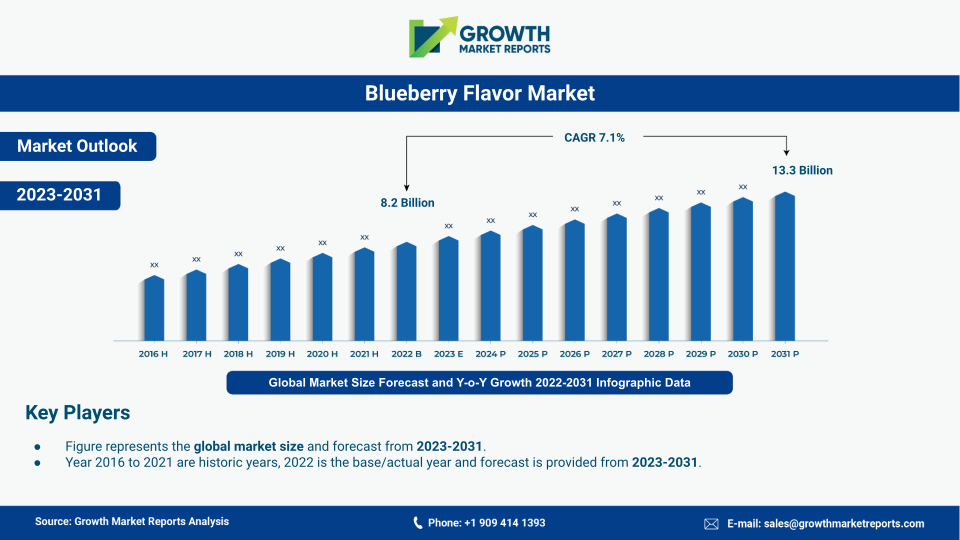
According to our latest research, the global blueberry flavor market size reached USD 1.47 billion in 2024, demonstrating robust expansion driven by rising demand for natural flavors and increasing health consciousness among consumers worldwide. The market is projected to grow at a CAGR of 6.1% from 2025 to 2033, reaching a forecasted value of USD 2.50 billion by 2033. This growth is primarily attributed to the surging popularity of blueberry-flavored products across various food and beverage segments, as well as the expanding application of blueberry flavor in pharmaceuticals and nutritional supplements. As per our latest research, the market is witnessing dynamic changes in consumer preferences, with a significant shift toward clean-label and natural ingredient-based products, further propelling the adoption of blueberry flavor globally.

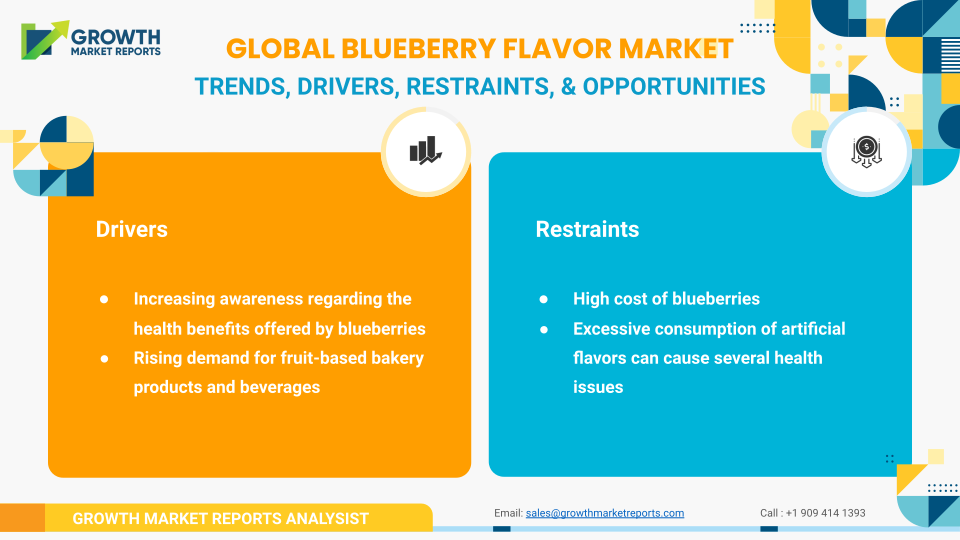
One of the primary growth factors driving the blueberry flavor market is the increasing consumer inclination toward healthier and more natural food and beverage options. Blueberries are renowned for their rich antioxidant content, vitamins, and potential health benefits, including improved cardiovascular health and enhanced cognitive function. This reputation has led manufacturers to incorporate blueberry flavor into a diverse range of products, from yogurts and smoothies to bakery items and dietary supplements. Additionally, the global trend toward reducing synthetic additives and artificial ingredients in processed foods has further accelerated the demand for natural blueberry flavor, as consumers seek products that align with their wellness goals and lifestyle choices. The growing prevalence of lifestyle-related diseases and the rising awareness of the importance of functional foods have also contributed to the marketÂ’s upward trajectory.

Another significant driver of the blueberry flavor market is the innovation and diversification in product applications. Food and beverage manufacturers are consistently exploring new ways to leverage the appealing taste and aroma of blueberry flavor to create unique and differentiated offerings. This includes the introduction of blueberry-flavored beverages, such as flavored water, energy drinks, and craft cocktails, as well as the expansion of blueberry flavor into bakery and confectionery products like muffins, cakes, candies, and chocolates. The dairy industry has also witnessed an uptick in the incorporation of blueberry flavor into yogurts, ice creams, and milk-based beverages. Furthermore, the pharmaceutical and nutraceutical sectors are increasingly utilizing blueberry flavor to enhance the palatability of health supplements, chewable tablets, and syrups, thereby broadening the marketÂ’s scope and fueling sustained growth.

The blueberry flavor market is also benefiting from advancements in flavor extraction technologies and the development of clean-label formulations. Manufacturers are investing in research and development to create authentic and high-quality blueberry flavors that maintain the fruitÂ’s natural profile while ensuring stability and consistency in different product matrices. The adoption of advanced encapsulation and spray-drying techniques has enabled the production of blueberry flavor in various forms, such as liquid, powder, and granules, catering to the diverse requirements of food processors and end-users. Additionally, the emergence of organic and non-GMO blueberry flavors has resonated strongly with health-conscious consumers, further boosting market demand. The growing emphasis on sustainable sourcing and ethical production practices has also prompted companies to establish transparent supply chains and promote traceability, enhancing consumer trust and brand loyalty in the blueberry flavor market.

The concept of Food Flavor plays a pivotal role in the blueberry flavor market, as it encompasses the sensory characteristics that make blueberry-flavored products appealing to consumers. The intricate balance of taste and aroma in food flavoring is crucial for manufacturers aiming to create products that resonate with consumer preferences. In the case of blueberry flavor, the emphasis is on capturing the authentic taste of fresh blueberries while ensuring consistency and stability across various applications. This requires sophisticated flavor extraction techniques and a deep understanding of consumer taste profiles, which are continually evolving with trends toward natural and clean-label products. As such, the development of food flavor is a dynamic process that involves both scientific innovation and creative artistry to deliver a memorable and enjoyable sensory experience.

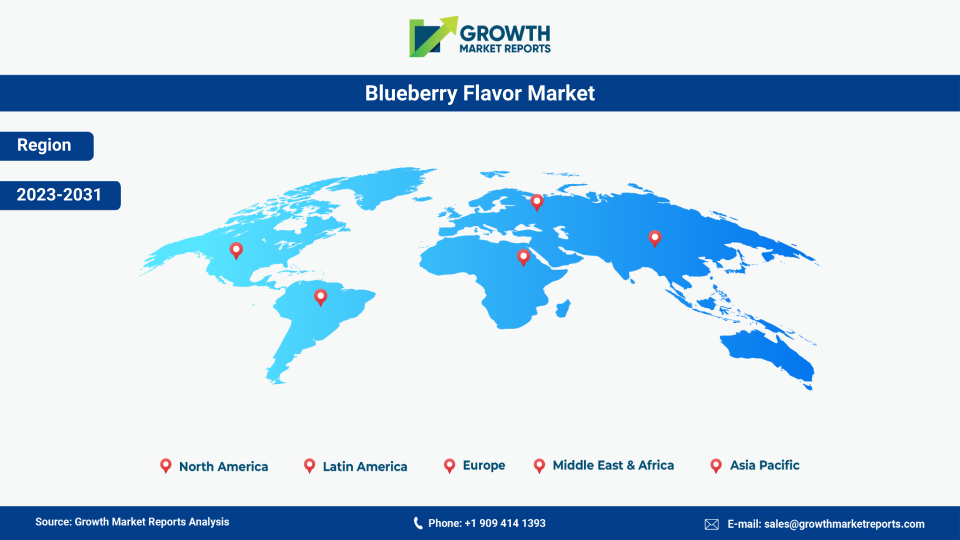
Regionally, North America continues to dominate the blueberry flavor market, accounting for the largest share in 2024, followed closely by Europe and Asia Pacific. The high consumption of blueberry-flavored products in the United States and Canada, coupled with the presence of leading food and beverage manufacturers, has solidified North AmericaÂ’s leadership position. Europe is experiencing steady growth due to increasing demand for natural flavors and the popularity of functional foods, while Asia Pacific is emerging as a lucrative market driven by rapid urbanization, rising disposable incomes, and growing health awareness among consumers. Latin America and the Middle East & Africa are also witnessing gradual adoption of blueberry flavor, supported by changing dietary patterns and the expansion of modern retail channels. The regional outlook for the blueberry flavor market remains positive, with significant growth opportunities anticipated across both developed and emerging economies.

Global Blueberry Flavor Industry Outlook

Product Type Analysis

The blueberry flavor market is segmented by product type into Natural Blueberry Flavor and Artificial Blueberry Flavor. The natural blueberry flavor segment has gained significant traction in recent years, owing to the escalating demand for clean-label and health-oriented products. Consumers are increasingly scrutinizing ingredient lists and gravitating towards products that use real fruit extracts and natural flavoring agents, which are perceived as safer and healthier alternatives to synthetic counterparts. This trend is particularly pronounced in developed markets such as North America and Europe, where regulatory frameworks and consumer advocacy have driven manufacturers to reformulate products with natural flavors. The growing prevalence of food allergies and sensitivities has also contributed to the shift toward natural blueberry flavor, as it is less likely to contain allergenic or controversial additives.

On the other hand, artificial blueberry flavor continues to hold a notable share in the market, primarily due to its cost-effectiveness and versatility in large-scale food processing. Artificial flavors offer consistent taste profiles, longer shelf life, and stability under various processing conditions, making them a preferred choice for manufacturers targeting mass-market products. In emerging economies, where price sensitivity remains high, artificial blueberry flavor is widely used in beverages, candies, and baked goods to cater to a broad consumer base. However, the segment faces challenges from the growing consumer backlash against artificial ingredients, as well as tightening regulatory standards aimed at reducing the use of synthetic additives in food and beverage products.

As the market evolves, the role of Food Flavor becomes increasingly significant in differentiating products and enhancing consumer satisfaction. In the competitive landscape of blueberry-flavored offerings, food flavor is not just about replicating the taste of blueberries but also about creating a multi-sensory experience that aligns with consumer expectations for quality and authenticity. This involves a meticulous selection of raw materials, precise formulation, and innovative processing techniques to achieve the desired flavor profile. Moreover, the integration of food flavor with other functional ingredients, such as probiotics and vitamins, presents opportunities for manufacturers to create value-added products that cater to health-conscious consumers. The ability to innovate in food flavor development is thus a key driver of market success, enabling companies to capture consumer interest and foster brand loyalty.

The competitive landscape within the product type segment is marked by continuous innovation, with companies investing in the development of advanced natural flavor extraction techniques to enhance flavor authenticity and intensity. The introduction of organic, non-GMO, and allergen-free blueberry flavors has further expanded the natural segmentÂ’s appeal, attracting health-conscious consumers and specialty food manufacturers. Meanwhile, artificial flavor producers are focusing on improving the taste and aroma profiles of their products to mimic the complexity of real blueberries more closely, as well as ensuring compliance with evolving food safety and labeling regulations. The interplay between these two segments is expected to shape the future trajectory of the blueberry flavor market, with natural flavors poised for faster growth amid changing consumer preferences.

Looking ahead, the natural blueberry flavor segment is projected to outpace artificial flavors in terms of growth, driven by increasing awareness of the health and environmental benefits associated with natural ingredients. Manufacturers are likely to continue investing in sustainable sourcing and environmentally friendly production practices to meet the rising demand for ethical and transparent products. The artificial segment, while facing headwinds, is expected to retain relevance in cost-sensitive markets and applications where flavor stability and longevity are paramount. Overall, the product type analysis underscores the importance of aligning product development strategies with evolving consumer values and regulatory requirements to capture growth opportunities in the blueberry flavor market.

Report Scope

Attributes Details
Report Title Blueberry Flavor Market Research Report 2033
By Product Type Natural Blueberry Flavor, Artificial Blueberry Flavor
By Application Beverages, Bakery & Confectionery, Dairy Products, Pharmaceuticals, Nutritional Supplements, Others
By Form Liquid, Powder, Others
By Distribution Channel Online Stores, Supermarkets/Hypermarkets, Specialty Stores, Others
Regions Covered North America, Europe, APAC, Latin America, MEA
Base Year 2024
Historic Data 2018-2023
Forecast Period 2025-2033
Number of Pages 270
Number of Tables & Figures 359
Customization Available Yes, the report can be customized as per your need.

Application Analysis

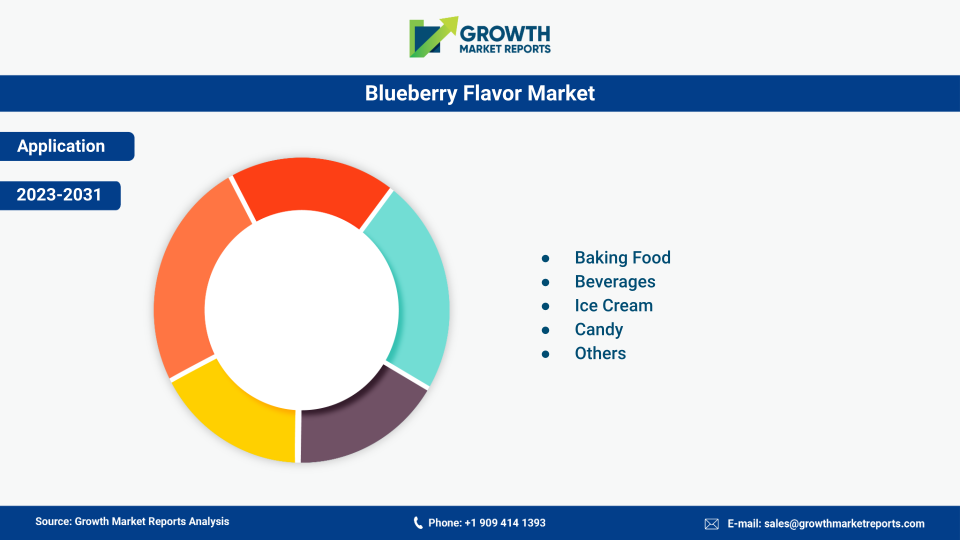
The application segment of the blueberry flavor market encompasses a diverse array of end uses, including Beverages, Bakery & Confectionery, Dairy Products, Pharmaceuticals, Nutritional Supplements, and Others. Among these, the beverages segment commands the largest share, propelled by the popularity of blueberry-flavored juices, smoothies, energy drinks, and flavored water. The refreshing taste and perceived health benefits of blueberries have made them a favored ingredient in both alcoholic and non-alcoholic beverages, with manufacturers introducing innovative formulations to cater to changing consumer preferences. The rising trend of functional beverages, which combine flavor with added health benefits, has further fueled the demand for blueberry flavor in this segment.

In the context of the blueberry flavor market, Food Flavor is essential in meeting the diverse preferences of global consumers. With the increasing demand for personalized nutrition and unique flavor experiences, manufacturers are leveraging food flavor to tailor products to specific regional tastes and cultural preferences. This requires a nuanced approach to flavor development, where local ingredients and culinary traditions are considered alongside global trends. The versatility of food flavor allows for the creation of innovative products that blend blueberry flavor with other exotic or traditional flavors, offering consumers a novel taste experience. As such, food flavor serves as a bridge between consumer desires and product innovation, driving the expansion of the blueberry flavor market into new territories and demographics.

Bakery and confectionery represent another significant application area for blueberry flavor, with widespread use in muffins, cakes, pastries, candies, and chocolates. The versatility of blueberry flavor allows it to complement a range of sweet and savory products, enhancing their sensory appeal and marketability. In the bakery sector, blueberry flavor is often paired with whole fruit pieces or fillings to create indulgent and visually appealing products, while in confectionery, it is used to impart a fruity twist to gummies, hard candies, and chocolates. The growing popularity of artisanal and premium baked goods has also contributed to the expansion of this segment, as consumers seek unique and high-quality flavor experiences.

The dairy products segment is witnessing robust growth, driven by the increasing consumption of blueberry-flavored yogurts, ice creams, milkshakes, and cheese spreads. The combination of creamy textures and the tangy-sweet taste of blueberry flavor has proven to be a winning formula for both traditional and plant-based dairy alternatives. Manufacturers are leveraging blueberry flavor to differentiate their offerings and cater to consumers seeking healthier snacking options. The trend toward high-protein, low-sugar, and probiotic-rich dairy products has further expanded the application of blueberry flavor, as it aligns with the nutritional and sensory expectations of modern consumers.

In the pharmaceuticals and nutritional supplements segment, blueberry flavor is increasingly being used to improve the palatability of health products, such as chewable tablets, syrups, gummies, and effervescent powders. The natural association of blueberries with health and wellness makes blueberry flavor a popular choice for products targeting immunity, cognitive health, and antioxidant support. The segment is benefiting from the growing demand for functional foods and dietary supplements, as well as the trend toward personalized nutrition and preventive healthcare. Other applications, including sauces, dressings, and pet foods, are also emerging as growth areas for blueberry flavor, reflecting its broad versatility and appeal across different product categories.

Form Analysis

The blueberry flavor market is segmented by form into Liquid, Powder, and Others, each offering unique advantages and catering to specific application needs. Liquid blueberry flavor is widely used in beverages, dairy products, and processed foods, owing to its ease of incorporation and ability to deliver a rich, authentic taste profile. Liquid forms are particularly favored in applications where immediate solubility and uniform distribution are critical, such as in flavored syrups, yogurts, and ready-to-drink beverages. The development of concentrated liquid flavors and emulsions has further enhanced the versatility of this segment, enabling manufacturers to achieve desired flavor intensities with minimal usage levels.

Powdered blueberry flavor has gained significant popularity in recent years, especially in the bakery, confectionery, and nutraceutical sectors. Powdered forms offer advantages such as extended shelf life, ease of storage and transportation, and compatibility with dry mixes and instant products. The ability to withstand high-temperature processing makes powdered blueberry flavor an ideal choice for baked goods, snack bars, and powdered drink mixes. Moreover, advancements in spray-drying and encapsulation technologies have improved the flavor retention and stability of powdered blueberry flavors, ensuring consistent quality and performance across different product matrices.

The “Others” category includes forms such as granules, pastes, and encapsulated flavors, which are designed to meet specific formulation requirements or processing constraints. Encapsulated blueberry flavors, for instance, are increasingly being used in applications that require controlled release or protection from moisture, heat, or oxidation. These specialized forms are gaining traction in functional foods, dietary supplements, and pharmaceutical products, where maintaining flavor integrity and bioactivity is paramount. The growing demand for customized flavor solutions and the need to cater to diverse processing environments are expected to drive innovation and growth in this segment.

The choice of flavor form is often dictated by factors such as the intended application, processing conditions, cost considerations, and desired sensory attributes. Manufacturers are increasingly collaborating with flavor houses and technology providers to develop tailored solutions that address specific challenges related to solubility, stability, and flavor delivery. The ongoing shift toward clean-label and natural formulations has also prompted the development of minimally processed and additive-free flavor forms, aligning with consumer expectations for transparency and authenticity. As the blueberry flavor market continues to evolve, the form segment is expected to witness further diversification and technological advancement, enabling manufacturers to meet the evolving needs of the food, beverage, and pharmaceutical industries.

Distribution Channel Analysis

The blueberry flavor market is distributed through a variety of channels, including Online Stores, Supermarkets/Hypermarkets, Specialty Stores, and Others. Supermarkets and hypermarkets remain the dominant distribution channel, accounting for the largest share of market sales in 2024. These retail outlets offer consumers the convenience of one-stop shopping and access to a wide assortment of blueberry-flavored products, ranging from beverages and snacks to dairy and bakery items. The presence of established brands, attractive in-store promotions, and the ability to physically inspect products before purchase have contributed to the sustained popularity of this channel, particularly in urban and suburban areas.

Online stores have emerged as a rapidly growing distribution channel, fueled by the proliferation of e-commerce platforms and changing consumer shopping habits. The convenience of home delivery, access to a broader product selection, and the availability of detailed product information and reviews have made online stores an attractive option for consumers seeking blueberry-flavored products. The COVID-19 pandemic further accelerated the shift toward online shopping, prompting manufacturers and retailers to invest in digital marketing, direct-to-consumer sales models, and enhanced online customer experiences. The online channel is particularly effective in reaching younger, tech-savvy consumers and those residing in remote or underserved regions.

Specialty stores, including health food stores, gourmet shops, and organic markets, play a pivotal role in the distribution of premium and niche blueberry-flavored products. These outlets cater to discerning consumers who prioritize quality, authenticity, and unique flavor experiences. Specialty stores are often the first to introduce innovative products, such as organic, non-GMO, or artisan blueberry flavors, and serve as important hubs for product sampling, education, and brand building. The growing trend toward experiential retail and the increasing demand for personalized nutrition and wellness products are expected to bolster the importance of specialty stores in the blueberry flavor market.

The “Others” category comprises distribution channels such as convenience stores, foodservice outlets, and institutional sales. Convenience stores offer quick access to on-the-go blueberry-flavored snacks and beverages, while foodservice channels, including cafes, restaurants, and catering services, leverage blueberry flavor to create signature dishes and beverages. Institutional sales to schools, hospitals, and corporate cafeterias represent a growing opportunity, particularly as these institutions seek to offer healthier and more appealing menu options. The diversity and adaptability of distribution channels are critical to ensuring broad market reach and meeting the evolving needs of different consumer segments in the blueberry flavor market.

Opportunities & Threats

The blueberry flavor market presents numerous opportunities for growth and innovation, driven by evolving consumer preferences and the expanding application of blueberry flavor across diverse product categories. One of the most significant opportunities lies in the development of clean-label and organic blueberry flavors, which cater to the rising demand for natural, minimally processed, and transparently sourced ingredients. Manufacturers who invest in sustainable sourcing, traceability, and environmentally friendly production practices are well positioned to capture market share and build long-term brand loyalty. The increasing popularity of functional foods, dietary supplements, and plant-based alternatives also offers lucrative opportunities for blueberry flavor producers, as these segments seek novel and health-promoting flavor solutions to meet the needs of health-conscious consumers.

Another major opportunity in the blueberry flavor market is the potential for product diversification and geographic expansion. The growing interest in exotic and fusion flavors, combined with the global appeal of blueberries, provides fertile ground for the introduction of innovative products that blend blueberry flavor with other fruits, botanicals, or superfoods. Emerging markets, particularly in Asia Pacific and Latin America, present untapped potential for market expansion, supported by rising disposable incomes, urbanization, and increasing health awareness. Manufacturers who tailor their product offerings and marketing strategies to local tastes and cultural preferences can gain a competitive edge in these high-growth regions. Collaborations with foodservice providers, retailers, and digital platforms can further enhance market penetration and brand visibility.

Despite the positive outlook, the blueberry flavor market faces several restraining factors that could impede growth. One of the primary challenges is the volatility in the supply and pricing of natural blueberries, which can impact the cost and availability of natural blueberry flavor. Climate change, crop diseases, and fluctuations in agricultural yields pose risks to the stability of the supply chain, leading to potential disruptions and price spikes. Additionally, stringent regulatory requirements governing food safety, labeling, and the use of flavoring agents can increase compliance costs and limit the introduction of new products, particularly in highly regulated markets. The ongoing debate over the health and safety of artificial flavors also presents reputational risks for manufacturers relying on synthetic ingredients. Addressing these challenges will require proactive supply chain management, investment in research and development, and a commitment to transparency and quality assurance.

Regional Outlook

North America leads the global blueberry flavor market, accounting for approximately 37% of total market revenue in 2024, with a market value of USD 540 million. The regionÂ’s dominance is attributed to the high consumption of blueberry-flavored products, a well-established food processing industry, and the presence of leading manufacturers and flavor houses. The United States, in particular, is a major producer and consumer of blueberries, which has fostered a robust supply chain and facilitated the development of innovative blueberry-flavored offerings. The market in North America is expected to grow at a steady CAGR of 5.8% through 2033, driven by ongoing product innovation, rising health awareness, and the increasing popularity of clean-label and functional foods.

Europe is the second-largest market for blueberry flavor, with a market size of USD 400 million in 2024, representing 27% of global revenue. The regionÂ’s growth is supported by strong demand for natural flavors, the popularity of premium and artisanal bakery and dairy products, and the increasing adoption of blueberry flavor in functional foods and beverages. Key markets such as Germany, the United Kingdom, and France are witnessing a surge in product launches featuring blueberry flavor, as consumers prioritize health, wellness, and sustainability. The European market is anticipated to expand at a CAGR of 6.3% during the forecast period, outpacing the global average and reflecting the regionÂ’s dynamic food and beverage landscape.

Asia Pacific is emerging as a high-growth region, with a market value of USD 350 million in 2024 and a projected CAGR of 7.2% through 2033. Rapid urbanization, rising disposable incomes, and the growing influence of Western dietary trends are driving the adoption of blueberry-flavored products in countries such as China, Japan, South Korea, and India. The expanding middle class and increasing health consciousness among consumers are fueling demand for functional beverages, dairy alternatives, and nutritional supplements featuring blueberry flavor. The market in Asia Pacific is characterized by a strong focus on innovation, localization, and digital marketing, as manufacturers seek to capture the attention of diverse and rapidly evolving consumer segments. Latin America and the Middle East & Africa, with market sizes of USD 110 million and USD 70 million respectively, are also experiencing steady growth, supported by changing dietary patterns and the expansion of modern retail infrastructure.

Blueberry Flavor Market Statistics

Competitor Outlook

The global blueberry flavor market is highly competitive, characterized by the presence of numerous multinational corporations, regional players, and specialized flavor houses. The competitive landscape is shaped by continuous innovation, strategic partnerships, and a strong focus on research and development to create high-quality, authentic, and differentiated blueberry flavor solutions. Companies are investing in advanced extraction and formulation technologies to enhance flavor intensity, stability, and versatility, while also addressing the growing demand for natural, organic, and clean-label products. The ability to offer customized flavor solutions, respond quickly to market trends, and maintain robust supply chain capabilities are key determinants of competitive success in this dynamic market.

Major players in the blueberry flavor market are also pursuing mergers, acquisitions, and collaborations to expand their product portfolios, strengthen their market presence, and access new geographic markets. Strategic alliances with food and beverage manufacturers, retailers, and digital platforms enable companies to accelerate product development, enhance market reach, and capitalize on emerging consumer trends. The increasing emphasis on sustainability, transparency, and ethical sourcing has prompted leading companies to adopt responsible business practices and invest in traceability initiatives, further differentiating their brands and building consumer trust.

Innovation remains at the forefront of competitive strategy, with companies launching new blueberry flavor variants, including organic, non-GMO, allergen-free, and reduced-sugar formulations. The integration of blueberry flavor with other functional ingredients, such as probiotics, vitamins, and botanicals, has resulted in the creation of value-added products that cater to the evolving needs of health-conscious consumers. Digital marketing, influencer partnerships, and experiential marketing campaigns are increasingly being used to build brand awareness, engage consumers, and drive product trial and adoption. The ability to anticipate and respond to changing consumer preferences, regulatory developments, and technological advancements will be critical to maintaining a competitive edge in the blueberry flavor market.

Some of the major companies operating in the blueberry flavor market include Givaudan, Firmenich, Symrise, International Flavors & Fragrances (IFF), Sensient Technologies, Takasago International Corporation, Kerry Group, Archer Daniels Midland Company (ADM), Frutarom, and Treatt. These companies are recognized for their extensive flavor expertise, global reach, and commitment to quality and innovation. Givaudan and Firmenich, for instance, have established themselves as leaders in natural flavor development, leveraging advanced extraction techniques and sustainable sourcing practices. Symrise and IFF are known for their diverse product portfolios and ability to deliver customized flavor solutions tailored to specific applications and regional preferences. Sensient Technologies and Kerry Group are at the forefront of clean-label and organic flavor innovation, while ADM and Frutarom offer a wide range of blueberry flavor ingredients for food, beverage, and nutraceutical applications.

In addition to these global players, the market features a vibrant ecosystem of regional and specialty flavor companies that cater to local tastes and niche segments. These companies often focus on artisanal, small-batch, or specialty blueberry flavors, leveraging unique sourcing relationships and proprietary technologies to differentiate their offerings. The presence of a diverse and competitive supplier base contributes to the overall dynamism and resilience of the blueberry flavor market, ensuring a steady stream of innovation and product development to meet the evolving needs of consumers and industry stakeholders.

Key Players

  • Kerry Group
  • Givaudan
  • Symrise AG
  • International Flavors & Fragrances Inc. (IFF)
  • Firmenich SA
  • Sensient Technologies Corporation
  • Takasago International Corporation
  • Dohler Group
  • Tate & Lyle PLC
  • Frutarom Industries Ltd.
  • Wild Flavors (ADM)
  • McCormick & Company, Inc.
  • Flavorchem Corporation
  • Blue Pacific Flavors
  • Prova SAS
  • Robertet Group
  • Huabao International Holdings Limited
  • Aromatech SAS
  • Hasegawa Co., Ltd.
  • Synergy Flavors
Blueberry Flavor Market Overview

Segments

The Blueberry Flavor market has been segmented on the basis of

Product Type

  • Natural Blueberry Flavor
  • Artificial Blueberry Flavor

Application

  • Beverages
  • Bakery & Confectionery
  • Dairy Products
  • Pharmaceuticals
  • Nutritional Supplements
  • Others

Form

  • Liquid
  • Powder
  • Others

Distribution Channel

  • Online Stores
  • Supermarkets/Hypermarkets
  • Specialty Stores
  • Others

Competitive Landscape

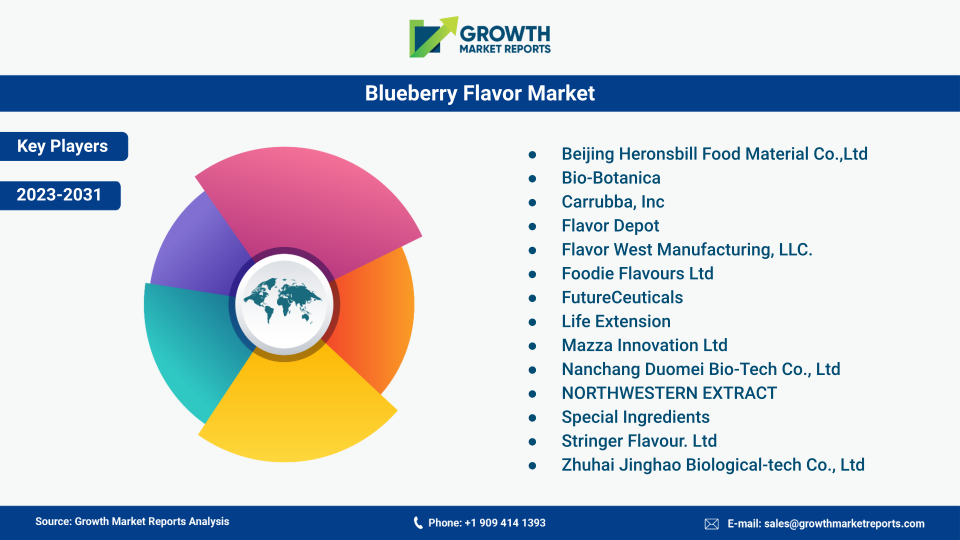
Key players competing in the global blueberry flavor market are Beijing Heronsbill Food Material Co.,Ltd; Bio-Botanica; Carrubba, Inc; Flavor Depot; Flavor West Manufacturing, LLC.; Foodie Flavours Ltd; FutureCeuticals; Life Extension; Mazza Innovation Ltd; Nanchang Duomei Bio-Tech Co., Ltd; NORTHWESTERN EXTRACT; Special Ingredients; Stringer Flavour. Ltd; and Zhuhai Jinghao Biological-tech Co., Ltd.

Some of these companies adopted several development strategies including product launches and production expansion to cater to customers worldwide. For instance,

  • On March 30, 2022, Robinsons ‘Ready to Drink’ launched the blueberry flavor soft drinks with no added sugar.

Blueberry Flavor Market Key Players

Frequently Asked Questions

Emerging trends include the demand for clean-label, organic, and non-GMO blueberry flavors, product innovation, sustainable sourcing, and expansion into emerging markets like Asia Pacific and Latin America.

Major players include Givaudan, Firmenich, Symrise, International Flavors & Fragrances (IFF), Sensient Technologies, Kerry Group, ADM, Frutarom, and Treatt, among others.

Key distribution channels include supermarkets/hypermarkets, online stores, specialty stores, and others such as convenience stores and foodservice outlets.

Blueberry flavor is available in liquid, powder, granules, pastes, and encapsulated forms, each catering to specific application and processing needs.

North America leads the market, followed by Europe and Asia Pacific. North America accounts for the largest share due to high consumption and established food processing industries.

Blueberry flavor is widely used in beverages, bakery and confectionery, dairy products, pharmaceuticals, nutritional supplements, and other segments such as sauces and pet foods.

The market is segmented into Natural Blueberry Flavor and Artificial Blueberry Flavor. Natural flavors are gaining traction due to health and clean-label trends, while artificial flavors remain popular for their cost-effectiveness and stability.

Key growth drivers include rising consumer preference for natural and clean-label products, health benefits associated with blueberries, and expanding applications in food, beverages, pharmaceuticals, and nutritional supplements.

The blueberry flavor market is expected to grow at a CAGR of 6.1% from 2025 to 2033, reaching a forecasted value of USD 2.50 billion by 2033.

As of 2024, the global blueberry flavor market size reached USD 1.47 billion, driven by increasing demand for natural flavors and health-conscious consumer trends.

Table Of Content

Chapter 1 Executive Summary
Chapter 2 Assumptions and Acronyms Used
Chapter 3 Research Methodology
Chapter 4 Blueberry Flavor Market Overview
   4.1 Introduction
      4.1.1 Market Taxonomy
      4.1.2 Market Definition
      4.1.3 Macro-Economic Factors Impacting the Market Growth
   4.2 Blueberry Flavor Market Dynamics
      4.2.1 Market Drivers
      4.2.2 Market Restraints
      4.2.3 Market Opportunity
   4.3 Blueberry Flavor Market - Supply Chain Analysis
      4.3.1 List of Key Suppliers
      4.3.2 List of Key Distributors
      4.3.3 List of Key Consumers
   4.4 Key Forces Shaping the Blueberry Flavor Market
      4.4.1 Bargaining Power of Suppliers
      4.4.2 Bargaining Power of Buyers
      4.4.3 Threat of Substitution
      4.4.4 Threat of New Entrants
      4.4.5 Competitive Rivalry
   4.5 Global Blueberry Flavor Market Size & Forecast, 2023-2032
      4.5.1 Blueberry Flavor Market Size and Y-o-Y Growth
      4.5.2 Blueberry Flavor Market Absolute $ Opportunity

Chapter 5 Global Blueberry Flavor Market Analysis and Forecast By Product Type
   5.1 Introduction
      5.1.1 Key Market Trends & Growth Opportunities By Product Type
      5.1.2 Basis Point Share (BPS) Analysis By Product Type
      5.1.3 Absolute $ Opportunity Assessment By Product Type
   5.2 Blueberry Flavor Market Size Forecast By Product Type
      5.2.1 Natural Blueberry Flavor
      5.2.2 Artificial Blueberry Flavor
   5.3 Market Attractiveness Analysis By Product Type

Chapter 6 Global Blueberry Flavor Market Analysis and Forecast By Application
   6.1 Introduction
      6.1.1 Key Market Trends & Growth Opportunities By Application
      6.1.2 Basis Point Share (BPS) Analysis By Application
      6.1.3 Absolute $ Opportunity Assessment By Application
   6.2 Blueberry Flavor Market Size Forecast By Application
      6.2.1 Beverages
      6.2.2 Bakery & Confectionery
      6.2.3 Dairy Products
      6.2.4 Pharmaceuticals
      6.2.5 Nutritional Supplements
      6.2.6 Others
   6.3 Market Attractiveness Analysis By Application

Chapter 7 Global Blueberry Flavor Market Analysis and Forecast By Form
   7.1 Introduction
      7.1.1 Key Market Trends & Growth Opportunities By Form
      7.1.2 Basis Point Share (BPS) Analysis By Form
      7.1.3 Absolute $ Opportunity Assessment By Form
   7.2 Blueberry Flavor Market Size Forecast By Form
      7.2.1 Liquid
      7.2.2 Powder
      7.2.3 Others
   7.3 Market Attractiveness Analysis By Form

Chapter 8 Global Blueberry Flavor Market Analysis and Forecast By Distribution Channel
   8.1 Introduction
      8.1.1 Key Market Trends & Growth Opportunities By Distribution Channel
      8.1.2 Basis Point Share (BPS) Analysis By Distribution Channel
      8.1.3 Absolute $ Opportunity Assessment By Distribution Channel
   8.2 Blueberry Flavor Market Size Forecast By Distribution Channel
      8.2.1 Online Stores
      8.2.2 Supermarkets/Hypermarkets
      8.2.3 Specialty Stores
      8.2.4 Others
   8.3 Market Attractiveness Analysis By Distribution Channel

Chapter 9 Global Blueberry Flavor Market Analysis and Forecast by Region
   9.1 Introduction
      9.1.1 Key Market Trends & Growth Opportunities By Region
      9.1.2 Basis Point Share (BPS) Analysis By Region
      9.1.3 Absolute $ Opportunity Assessment By Region
   9.2 Blueberry Flavor Market Size Forecast By Region
      9.2.1 North America
      9.2.2 Europe
      9.2.3 Asia Pacific
      9.2.4 Latin America
      9.2.5 Middle East & Africa (MEA)
   9.3 Market Attractiveness Analysis By Region

Chapter 10 Coronavirus Disease (COVID-19) Impact 
   10.1 Introduction 
   10.2 Current & Future Impact Analysis 
   10.3 Economic Impact Analysis 
   10.4 Government Policies 
   10.5 Investment Scenario

Chapter 11 North America Blueberry Flavor Analysis and Forecast
   11.1 Introduction
   11.2 North America Blueberry Flavor Market Size Forecast by Country
      11.2.1 U.S.
      11.2.2 Canada
   11.3 Basis Point Share (BPS) Analysis by Country
   11.4 Absolute $ Opportunity Assessment by Country
   11.5 Market Attractiveness Analysis by Country
   11.6 North America Blueberry Flavor Market Size Forecast By Product Type
      11.6.1 Natural Blueberry Flavor
      11.6.2 Artificial Blueberry Flavor
   11.7 Basis Point Share (BPS) Analysis By Product Type 
   11.8 Absolute $ Opportunity Assessment By Product Type 
   11.9 Market Attractiveness Analysis By Product Type
   11.10 North America Blueberry Flavor Market Size Forecast By Application
      11.10.1 Beverages
      11.10.2 Bakery & Confectionery
      11.10.3 Dairy Products
      11.10.4 Pharmaceuticals
      11.10.5 Nutritional Supplements
      11.10.6 Others
   11.11 Basis Point Share (BPS) Analysis By Application 
   11.12 Absolute $ Opportunity Assessment By Application 
   11.13 Market Attractiveness Analysis By Application
   11.14 North America Blueberry Flavor Market Size Forecast By Form
      11.14.1 Liquid
      11.14.2 Powder
      11.14.3 Others
   11.15 Basis Point Share (BPS) Analysis By Form 
   11.16 Absolute $ Opportunity Assessment By Form 
   11.17 Market Attractiveness Analysis By Form
   11.18 North America Blueberry Flavor Market Size Forecast By Distribution Channel
      11.18.1 Online Stores
      11.18.2 Supermarkets/Hypermarkets
      11.18.3 Specialty Stores
      11.18.4 Others
   11.19 Basis Point Share (BPS) Analysis By Distribution Channel 
   11.20 Absolute $ Opportunity Assessment By Distribution Channel 
   11.21 Market Attractiveness Analysis By Distribution Channel

Chapter 12 Europe Blueberry Flavor Analysis and Forecast
   12.1 Introduction
   12.2 Europe Blueberry Flavor Market Size Forecast by Country
      12.2.1 Germany
      12.2.2 France
      12.2.3 Italy
      12.2.4 U.K.
      12.2.5 Spain
      12.2.6 Russia
      12.2.7 Rest of Europe
   12.3 Basis Point Share (BPS) Analysis by Country
   12.4 Absolute $ Opportunity Assessment by Country
   12.5 Market Attractiveness Analysis by Country
   12.6 Europe Blueberry Flavor Market Size Forecast By Product Type
      12.6.1 Natural Blueberry Flavor
      12.6.2 Artificial Blueberry Flavor
   12.7 Basis Point Share (BPS) Analysis By Product Type 
   12.8 Absolute $ Opportunity Assessment By Product Type 
   12.9 Market Attractiveness Analysis By Product Type
   12.10 Europe Blueberry Flavor Market Size Forecast By Application
      12.10.1 Beverages
      12.10.2 Bakery & Confectionery
      12.10.3 Dairy Products
      12.10.4 Pharmaceuticals
      12.10.5 Nutritional Supplements
      12.10.6 Others
   12.11 Basis Point Share (BPS) Analysis By Application 
   12.12 Absolute $ Opportunity Assessment By Application 
   12.13 Market Attractiveness Analysis By Application
   12.14 Europe Blueberry Flavor Market Size Forecast By Form
      12.14.1 Liquid
      12.14.2 Powder
      12.14.3 Others
   12.15 Basis Point Share (BPS) Analysis By Form 
   12.16 Absolute $ Opportunity Assessment By Form 
   12.17 Market Attractiveness Analysis By Form
   12.18 Europe Blueberry Flavor Market Size Forecast By Distribution Channel
      12.18.1 Online Stores
      12.18.2 Supermarkets/Hypermarkets
      12.18.3 Specialty Stores
      12.18.4 Others
   12.19 Basis Point Share (BPS) Analysis By Distribution Channel 
   12.20 Absolute $ Opportunity Assessment By Distribution Channel 
   12.21 Market Attractiveness Analysis By Distribution Channel

Chapter 13 Asia Pacific Blueberry Flavor Analysis and Forecast
   13.1 Introduction
   13.2 Asia Pacific Blueberry Flavor Market Size Forecast by Country
      13.2.1 China
      13.2.2 Japan
      13.2.3 South Korea
      13.2.4 India
      13.2.5 Australia
      13.2.6 South East Asia (SEA)
      13.2.7 Rest of Asia Pacific (APAC)
   13.3 Basis Point Share (BPS) Analysis by Country
   13.4 Absolute $ Opportunity Assessment by Country
   13.5 Market Attractiveness Analysis by Country
   13.6 Asia Pacific Blueberry Flavor Market Size Forecast By Product Type
      13.6.1 Natural Blueberry Flavor
      13.6.2 Artificial Blueberry Flavor
   13.7 Basis Point Share (BPS) Analysis By Product Type 
   13.8 Absolute $ Opportunity Assessment By Product Type 
   13.9 Market Attractiveness Analysis By Product Type
   13.10 Asia Pacific Blueberry Flavor Market Size Forecast By Application
      13.10.1 Beverages
      13.10.2 Bakery & Confectionery
      13.10.3 Dairy Products
      13.10.4 Pharmaceuticals
      13.10.5 Nutritional Supplements
      13.10.6 Others
   13.11 Basis Point Share (BPS) Analysis By Application 
   13.12 Absolute $ Opportunity Assessment By Application 
   13.13 Market Attractiveness Analysis By Application
   13.14 Asia Pacific Blueberry Flavor Market Size Forecast By Form
      13.14.1 Liquid
      13.14.2 Powder
      13.14.3 Others
   13.15 Basis Point Share (BPS) Analysis By Form 
   13.16 Absolute $ Opportunity Assessment By Form 
   13.17 Market Attractiveness Analysis By Form
   13.18 Asia Pacific Blueberry Flavor Market Size Forecast By Distribution Channel
      13.18.1 Online Stores
      13.18.2 Supermarkets/Hypermarkets
      13.18.3 Specialty Stores
      13.18.4 Others
   13.19 Basis Point Share (BPS) Analysis By Distribution Channel 
   13.20 Absolute $ Opportunity Assessment By Distribution Channel 
   13.21 Market Attractiveness Analysis By Distribution Channel

Chapter 14 Latin America Blueberry Flavor Analysis and Forecast
   14.1 Introduction
   14.2 Latin America Blueberry Flavor Market Size Forecast by Country
      14.2.1 Brazil
      14.2.2 Mexico
      14.2.3 Rest of Latin America (LATAM)
   14.3 Basis Point Share (BPS) Analysis by Country
   14.4 Absolute $ Opportunity Assessment by Country
   14.5 Market Attractiveness Analysis by Country
   14.6 Latin America Blueberry Flavor Market Size Forecast By Product Type
      14.6.1 Natural Blueberry Flavor
      14.6.2 Artificial Blueberry Flavor
   14.7 Basis Point Share (BPS) Analysis By Product Type 
   14.8 Absolute $ Opportunity Assessment By Product Type 
   14.9 Market Attractiveness Analysis By Product Type
   14.10 Latin America Blueberry Flavor Market Size Forecast By Application
      14.10.1 Beverages
      14.10.2 Bakery & Confectionery
      14.10.3 Dairy Products
      14.10.4 Pharmaceuticals
      14.10.5 Nutritional Supplements
      14.10.6 Others
   14.11 Basis Point Share (BPS) Analysis By Application 
   14.12 Absolute $ Opportunity Assessment By Application 
   14.13 Market Attractiveness Analysis By Application
   14.14 Latin America Blueberry Flavor Market Size Forecast By Form
      14.14.1 Liquid
      14.14.2 Powder
      14.14.3 Others
   14.15 Basis Point Share (BPS) Analysis By Form 
   14.16 Absolute $ Opportunity Assessment By Form 
   14.17 Market Attractiveness Analysis By Form
   14.18 Latin America Blueberry Flavor Market Size Forecast By Distribution Channel
      14.18.1 Online Stores
      14.18.2 Supermarkets/Hypermarkets
      14.18.3 Specialty Stores
      14.18.4 Others
   14.19 Basis Point Share (BPS) Analysis By Distribution Channel 
   14.20 Absolute $ Opportunity Assessment By Distribution Channel 
   14.21 Market Attractiveness Analysis By Distribution Channel

Chapter 15 Middle East & Africa (MEA) Blueberry Flavor Analysis and Forecast
   15.1 Introduction
   15.2 Middle East & Africa (MEA) Blueberry Flavor Market Size Forecast by Country
      15.2.1 Saudi Arabia
      15.2.2 South Africa
      15.2.3 UAE
      15.2.4 Rest of Middle East & Africa (MEA)
   15.3 Basis Point Share (BPS) Analysis by Country
   15.4 Absolute $ Opportunity Assessment by Country
   15.5 Market Attractiveness Analysis by Country
   15.6 Middle East & Africa (MEA) Blueberry Flavor Market Size Forecast By Product Type
      15.6.1 Natural Blueberry Flavor
      15.6.2 Artificial Blueberry Flavor
   15.7 Basis Point Share (BPS) Analysis By Product Type 
   15.8 Absolute $ Opportunity Assessment By Product Type 
   15.9 Market Attractiveness Analysis By Product Type
   15.10 Middle East & Africa (MEA) Blueberry Flavor Market Size Forecast By Application
      15.10.1 Beverages
      15.10.2 Bakery & Confectionery
      15.10.3 Dairy Products
      15.10.4 Pharmaceuticals
      15.10.5 Nutritional Supplements
      15.10.6 Others
   15.11 Basis Point Share (BPS) Analysis By Application 
   15.12 Absolute $ Opportunity Assessment By Application 
   15.13 Market Attractiveness Analysis By Application
   15.14 Middle East & Africa (MEA) Blueberry Flavor Market Size Forecast By Form
      15.14.1 Liquid
      15.14.2 Powder
      15.14.3 Others
   15.15 Basis Point Share (BPS) Analysis By Form 
   15.16 Absolute $ Opportunity Assessment By Form 
   15.17 Market Attractiveness Analysis By Form
   15.18 Middle East & Africa (MEA) Blueberry Flavor Market Size Forecast By Distribution Channel
      15.18.1 Online Stores
      15.18.2 Supermarkets/Hypermarkets
      15.18.3 Specialty Stores
      15.18.4 Others
   15.19 Basis Point Share (BPS) Analysis By Distribution Channel 
   15.20 Absolute $ Opportunity Assessment By Distribution Channel 
   15.21 Market Attractiveness Analysis By Distribution Channel

Chapter 16 Competition Landscape 
   16.1 Blueberry Flavor Market: Competitive Dashboard
   16.2 Global Blueberry Flavor Market: Market Share Analysis, 2023
   16.3 Company Profiles (Details – Overview, Financials, Developments, Strategy) 
      16.3.1 Kerry Group
Givaudan
Symrise AG
International Flavors & Fragrances Inc. (IFF)
Firmenich SA
Sensient Technologies Corporation
Takasago International Corporation
Dohler Group
Tate & Lyle PLC
Frutarom Industries Ltd.
Wild Flavors (ADM)
McCormick & Company, Inc.
Flavorchem Corporation
Blue Pacific Flavors
Prova SAS
Robertet Group
Huabao International Holdings Limited
Aromatech SAS
Hasegawa Co., Ltd.
Synergy Flavors

Methodology

Our Clients

Siemens Healthcare
FedEx Logistics
Nestle SA
Honda Motor Co. Ltd.
sinopec
Dassault Aviation
Pfizer
Microsoft