Bioceramics Market Research Report 2033

Bioceramics Market Research Report 2033

Segments - by Material Type (Alumina, Zirconia, Hydroxyapatite, Calcium Phosphate, Bioactive Glass, Others), by Application (Dental, Orthopedic, Cardiovascular, Tissue Engineering, Others), by Form (Powder, Coating, Bulk), by End-User (Hospitals, Research Laboratories, Specialty Clinics, Others)

https://growthmarketreports.com/raksha
Author : Raksha Sharma
https://growthmarketreports.com/Vaibhav
Fact-checked by : V. Chandola
https://growthmarketreports.com/Shruti
Editor : Shruti Bhat

Upcoming | Report ID :HC-3412 | 4.9 Rating | 66 Reviews | 291 Pages | Format : Docx PDF

Report Description


Bioceramics Market Outlook

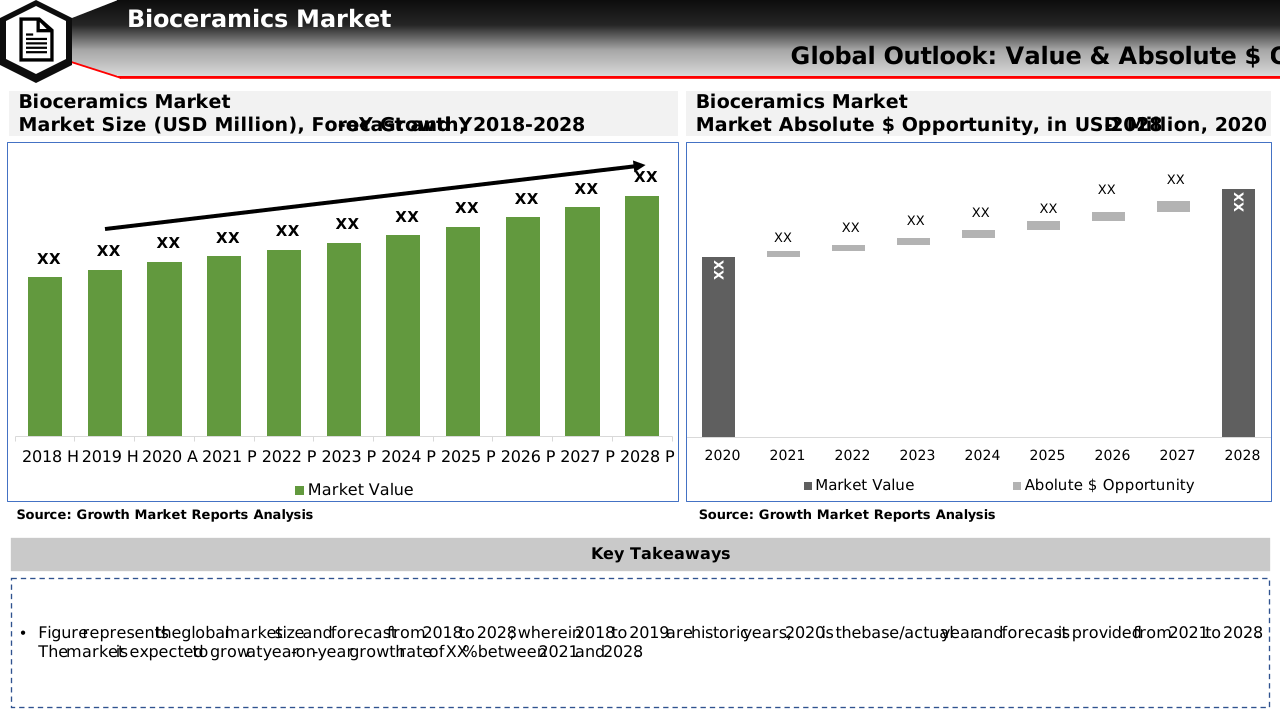
According to our latest research, the global bioceramics market size reached USD 5.16 billion in 2024, with robust growth driven by rising demand in medical implants and regenerative medicine. The market is expected to expand at a CAGR of 7.8% from 2025 to 2033, projecting a value of USD 10.26 billion by the end of the forecast period. The primary growth factors include technological advancements in biomaterials, increasing prevalence of chronic diseases, and a surge in orthopedic and dental procedures globally.

The growth trajectory of the bioceramics market is significantly influenced by the increasing geriatric population worldwide, which is more susceptible to degenerative bone diseases, dental disorders, and cardiovascular ailments. As life expectancy rises, the demand for advanced medical treatments and implantable devices also escalates, propelling the adoption of bioceramics in various healthcare applications. Bioceramics offer excellent biocompatibility, superior mechanical strength, and the ability to integrate seamlessly with natural tissues, making them the preferred choice for orthopedic implants, dental restorations, and bone graft substitutes. The growing focus of healthcare providers on minimally invasive surgeries and personalized medicine further amplifies the demand for innovative bioceramic materials, fostering market expansion.

Another critical growth driver for the bioceramics market is the rapid pace of technological innovation and research in the field of biomaterials. Continuous investments in R&D by leading manufacturers and academic institutions have resulted in the development of next-generation bioceramics with enhanced properties such as bioactivity, antibacterial functionality, and tailored degradation rates. These advancements have broadened the application scope of bioceramics beyond traditional uses, enabling their integration into cutting-edge fields like tissue engineering, drug delivery, and regenerative therapies. Additionally, the emergence of 3D printing technology has revolutionized the manufacturing of patient-specific bioceramic implants, reducing production costs and improving clinical outcomes, which in turn is accelerating market growth.

Favorable regulatory frameworks and supportive government initiatives across various regions are also catalyzing the growth of the bioceramics market. Regulatory agencies such as the U.S. FDA and the European Medicines Agency have established clear guidelines for the approval and commercialization of bioceramic-based medical devices, ensuring patient safety and product efficacy. Moreover, increased funding for healthcare infrastructure development, especially in emerging economies, has facilitated the adoption of advanced biomaterials in public and private healthcare settings. These factors, combined with the rising awareness regarding the benefits of bioceramics among healthcare professionals and patients, are driving the sustained expansion of the market.

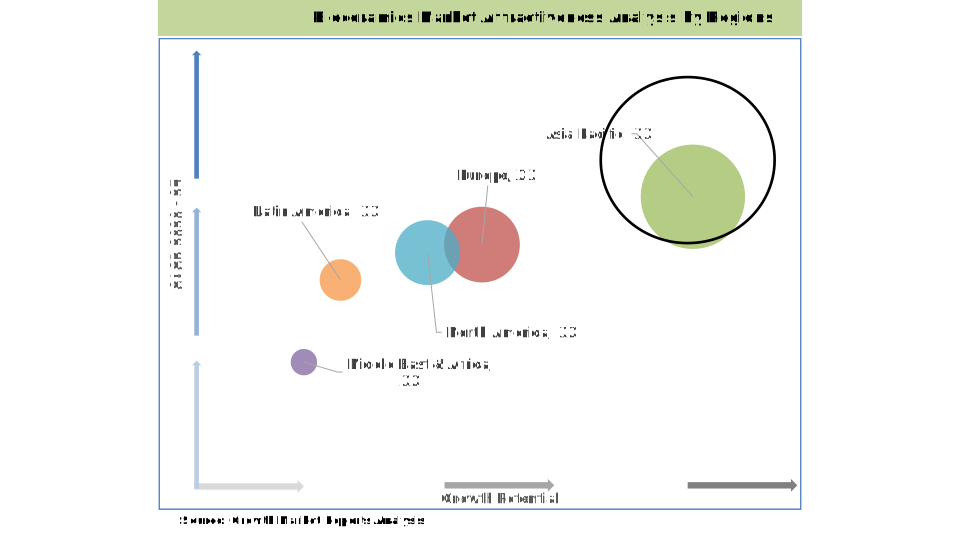
Regionally, North America continues to dominate the global bioceramics market, accounting for the largest revenue share in 2024, followed closely by Europe and the Asia Pacific. The high adoption rate of advanced medical technologies, presence of leading bioceramic manufacturers, and significant healthcare expenditure contribute to North America's leadership position. Meanwhile, the Asia Pacific region is poised for the fastest growth during the forecast period, fueled by increasing healthcare investments, expanding patient population, and rapid urbanization. Latin America and the Middle East & Africa are also witnessing steady growth, supported by improving healthcare infrastructure and rising demand for dental and orthopedic procedures.

Global Bioceramics Industry Outlook

Material Type Analysis

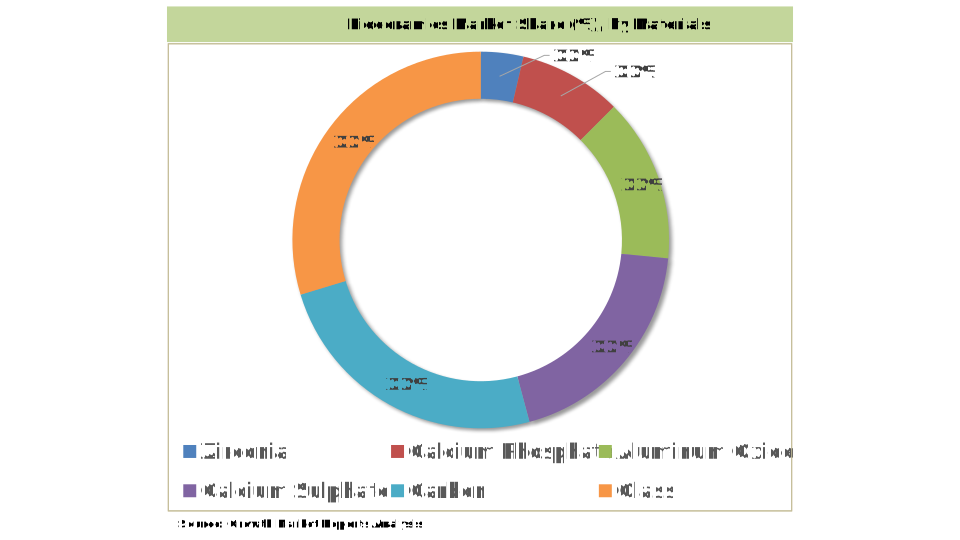
The bioceramics market is segmented by material type into alumina, zirconia, hydroxyapatite, calcium phosphate, bioactive glass, and others. Among these, alumina and zirconia have established themselves as the most widely used materials owing to their exceptional mechanical properties, wear resistance, and biocompatibility. Alumina is extensively utilized in orthopedic implants, particularly in hip and knee replacements, due to its high hardness and low friction coefficient. Zirconia, on the other hand, is gaining traction in dental applications for crowns and bridges, as well as in femoral heads for hip implants, attributed to its superior fracture toughness and aesthetic appeal. These materials have become the gold standard for load-bearing applications, ensuring long-term durability and patient safety.

Hydroxyapatite and calcium phosphate-based bioceramics are witnessing increasing adoption in bone grafting and tissue engineering applications. These materials closely mimic the mineral composition of natural bone, promoting osteoconductivity and facilitating bone regeneration. Hydroxyapatite coatings are commonly applied to metallic implants to enhance their integration with surrounding bone tissue, reducing the risk of implant failure. Calcium phosphate cements are also used for filling bone defects and as carriers for drug delivery systems. The growing emphasis on regenerative medicine and the development of bioactive materials have spurred significant research and commercialization efforts in this segment, driving steady market growth.

Bioactive glass represents another promising material type within the bioceramics market, characterized by its ability to bond with both hard and soft tissues. Bioactive glass is increasingly used in dental and orthopedic applications, including bone graft substitutes, periodontal treatments, and wound healing. Its unique composition enables the release of therapeutic ions that stimulate cellular activity and tissue regeneration. Ongoing advancements in the formulation and manufacturing of bioactive glass have led to the introduction of products with tailored degradation rates and enhanced bioactivity, expanding their clinical utility and market penetration.

The "others" segment encompasses emerging bioceramic materials such as silicon nitride, tricalcium phosphate, and composite ceramics, which are being explored for specialized applications. These materials offer unique properties such as antibacterial activity, controlled resorption, and improved mechanical performance, making them suitable for next-generation medical devices and implants. As research in biomaterials continues to evolve, the material type segment of the bioceramics market is expected to witness ongoing diversification and innovation, catering to a broad spectrum of clinical needs.

Report Scope

Attributes Details
Report Title Bioceramics Market Research Report 2033
By Material Type Alumina, Zirconia, Hydroxyapatite, Calcium Phosphate, Bioactive Glass, Others
By Application Dental, Orthopedic, Cardiovascular, Tissue Engineering, Others
By Form Powder, Coating, Bulk
By End-User Hospitals, Research Laboratories, Specialty Clinics, Others
Regions Covered North America, Europe, APAC, Latin America, MEA
Base Year 2024
Historic Data 2018-2023
Forecast Period 2025-2033
Number of Pages 291
Number of Tables & Figures 396
Customization Available Yes, the report can be customized as per your need.

Application Analysis

The application landscape of the bioceramics market is diverse, encompassing dental, orthopedic, cardiovascular, tissue engineering, and other medical fields. Dental applications represent a significant share of the market, driven by the increasing prevalence of dental caries, tooth loss, and the growing demand for cosmetic dentistry. Bioceramics are extensively used in dental implants, crowns, bridges, and bone grafts due to their biocompatibility, aesthetic properties, and ability to support osseointegration. The rapid adoption of digital dentistry and CAD/CAM technologies has further enhanced the precision and efficiency of bioceramic-based dental restorations, contributing to market growth.

Orthopedic applications constitute another major segment, fueled by the rising incidence of musculoskeletal disorders, sports injuries, and age-related bone degeneration. Bioceramics play a pivotal role in joint replacement surgeries, fracture fixation, spinal fusion, and bone defect repairs. Their excellent mechanical strength and bioactivity make them ideal candidates for load-bearing implants and bone substitutes. The increasing adoption of minimally invasive surgical techniques and the shift towards personalized orthopedics have created new opportunities for the development of custom-designed bioceramic implants, further propelling market expansion.

In the cardiovascular domain, bioceramics are utilized in heart valve replacements, vascular grafts, and stents, where their hemocompatibility and resistance to thrombosis are critical. The growing burden of cardiovascular diseases globally has spurred the demand for advanced biomaterials that can improve patient outcomes and reduce complications. Recent innovations in bioactive coatings and drug-eluting bioceramic devices are enhancing the performance and longevity of cardiovascular implants, driving growth in this application segment.

Tissue engineering is an emerging and rapidly growing application area for bioceramics, leveraging their ability to support cell attachment, proliferation, and differentiation. Bioceramic scaffolds are used to create three-dimensional structures that facilitate the regeneration of bone, cartilage, and soft tissues. The integration of bioceramics with stem cell therapies and growth factors is opening new frontiers in regenerative medicine, offering hope for the treatment of complex tissue defects and chronic wounds. As research in this field advances, the application scope of bioceramics is expected to expand significantly, driving long-term market growth.

Form Analysis

The bioceramics market is segmented by form into powder, coating, and bulk, each catering to distinct medical and dental applications. Bioceramic powders are widely used in bone grafting, tissue engineering, and as raw materials for the fabrication of custom implants. The fine particle size and high surface area of powders facilitate rapid integration with biological tissues and enable their use in injectable formulations. Advances in powder processing technologies have improved the purity, homogeneity, and bioactivity of bioceramic powders, making them suitable for a broad range of clinical applications.

Coating forms of bioceramics are primarily employed to enhance the surface properties of metallic implants, such as titanium and stainless steel. These coatings improve the biocompatibility, corrosion resistance, and osteointegration of implants, reducing the risk of adverse reactions and implant failure. Plasma-sprayed hydroxyapatite coatings are commonly used in orthopedic and dental implants to promote bone bonding and accelerate healing. The development of multifunctional coatings with antibacterial and drug-eluting properties is an area of active research, offering new possibilities for infection control and targeted therapy in implantology.

Bulk bioceramics are utilized in the manufacturing of standalone medical devices and implants, such as dental crowns, artificial joints, and bone plates. The inherent strength, hardness, and wear resistance of bulk bioceramics make them ideal for load-bearing applications where long-term durability is essential. The ability to machine and shape bulk ceramics into complex geometries has facilitated the production of patient-specific implants and prosthetics, improving clinical outcomes and patient satisfaction. Ongoing innovations in bulk ceramic processing, including additive manufacturing and computer-aided design, are driving the adoption of bulk bioceramics in advanced medical applications.

The choice of bioceramic form is dictated by the specific clinical requirements, desired mechanical properties, and intended application. Manufacturers are increasingly focusing on the development of hybrid and composite forms that combine the advantages of powders, coatings, and bulk materials. These innovations are enabling the creation of multifunctional medical devices with enhanced performance, safety, and therapeutic efficacy. As the demand for personalized and minimally invasive treatments grows, the form segment of the bioceramics market is expected to witness continued evolution and diversification.

End-User Analysis

The end-user landscape of the bioceramics market is dominated by hospitals, research laboratories, specialty clinics, and other healthcare facilities. Hospitals represent the largest end-user segment, accounting for a significant share of bioceramic consumption due to the high volume of surgical procedures, implantations, and trauma care performed in these settings. The adoption of bioceramic-based medical devices and implants in hospitals is driven by their proven clinical efficacy, safety profile, and ability to reduce postoperative complications. The increasing focus on evidence-based medicine and quality outcomes is further reinforcing the use of bioceramics in hospital settings.

Research laboratories play a crucial role in the development, testing, and validation of new bioceramic materials and applications. Academic and industrial research institutions are at the forefront of innovation in biomaterials science, conducting preclinical studies, clinical trials, and translational research to advance the field. The collaboration between research laboratories, universities, and medical device manufacturers has led to the commercialization of novel bioceramic products with improved properties and expanded clinical indications. The growing emphasis on interdisciplinary research and public-private partnerships is expected to drive continued investment in bioceramics research, supporting market growth.

Specialty clinics, including dental and orthopedic clinics, are key end-users of bioceramics, particularly for elective and outpatient procedures. The increasing demand for minimally invasive and same-day surgeries has accelerated the adoption of bioceramic implants and devices in these settings. Specialty clinics benefit from the rapid recovery times, reduced infection rates, and superior clinical outcomes associated with bioceramic-based treatments. The proliferation of specialized healthcare providers and the rise of medical tourism in emerging economies are further contributing to the growth of this end-user segment.

Other end-users of bioceramics include ambulatory surgical centers, rehabilitation centers, and home healthcare providers. The expansion of healthcare delivery models beyond traditional hospital settings is creating new opportunities for the use of bioceramic materials in diverse clinical environments. As the healthcare industry continues to evolve towards patient-centric and value-based care, the end-user segment of the bioceramics market is expected to witness ongoing transformation and growth.

Opportunities & Threats

The bioceramics market is brimming with opportunities, particularly in the realm of regenerative medicine, personalized healthcare, and minimally invasive procedures. The increasing focus on tissue engineering and stem cell therapies presents significant potential for the integration of bioceramics as scaffolds and carriers for cell delivery. The development of smart bioceramics with controlled drug release, antibacterial properties, and bioactive functionalities is opening new avenues for targeted therapy and infection control. Additionally, the adoption of advanced manufacturing technologies such as 3D printing and computer-aided design is enabling the production of patient-specific implants and prosthetics, enhancing clinical outcomes and patient satisfaction. The growing demand for aesthetic and functional dental restorations, coupled with the rising prevalence of chronic diseases, is expected to drive sustained market growth in the coming years.

Another major opportunity lies in the expansion of bioceramics applications beyond traditional orthopedic and dental uses. The emergence of bioceramic-based devices for cardiovascular, neurological, and soft tissue repair is creating new growth prospects for manufacturers and healthcare providers. The increasing investment in healthcare infrastructure development, especially in emerging economies, is facilitating the adoption of advanced biomaterials in public and private healthcare settings. Strategic collaborations between industry players, research institutions, and regulatory agencies are accelerating the commercialization of innovative bioceramic products, fostering market expansion. The rising awareness among healthcare professionals and patients regarding the benefits of bioceramics is also contributing to the growing acceptance and utilization of these materials across diverse medical fields.

Despite the promising outlook, the bioceramics market faces certain restraining factors, including the high cost of advanced bioceramic materials and the complexity of manufacturing processes. The stringent regulatory requirements for the approval and commercialization of bioceramic-based medical devices can pose challenges for market entry, particularly for small and medium-sized enterprises. Additionally, the limited availability of skilled professionals with expertise in biomaterials science and medical device engineering may hinder the pace of innovation and adoption. Addressing these challenges through cost-effective manufacturing, streamlined regulatory pathways, and workforce development initiatives will be critical for unlocking the full potential of the bioceramics market.

Regional Outlook

North America leads the global bioceramics market, accounting for approximately USD 1.92 billion in revenue in 2024. The region's dominance is attributed to the high adoption rate of advanced medical technologies, significant healthcare expenditure, and a strong presence of leading bioceramic manufacturers. The United States, in particular, is a major contributor to market growth, driven by the increasing prevalence of chronic diseases, rising geriatric population, and robust R&D activities. Favorable reimbursement policies and a well-established regulatory framework further support the commercialization and adoption of bioceramic-based medical devices in the region. The North American market is expected to maintain steady growth, with a projected CAGR of 7.2% during the forecast period.

Europe is the second-largest regional market for bioceramics, with a market size of USD 1.45 billion in 2024. The region benefits from a strong tradition of innovation in biomaterials science, well-developed healthcare infrastructure, and increasing demand for orthopedic and dental procedures. Countries such as Germany, France, and the United Kingdom are at the forefront of bioceramics research and commercialization, supported by collaborative efforts between academic institutions, industry players, and government agencies. The European market is characterized by a high level of regulatory compliance and patient safety standards, ensuring the quality and efficacy of bioceramic products.

The Asia Pacific region is poised for the fastest growth in the bioceramics market, with a market value of USD 1.22 billion in 2024 and an impressive projected CAGR of 9.4% through 2033. Rapid urbanization, increasing healthcare investments, and the expanding middle-class population are driving the demand for advanced medical treatments and implantable devices in countries such as China, India, and Japan. The rising prevalence of dental and orthopedic disorders, coupled with improving healthcare infrastructure, is fueling the adoption of bioceramics in the region. Strategic partnerships between local manufacturers and global players are facilitating technology transfer and market expansion, positioning Asia Pacific as a key growth engine for the global bioceramics market.

Bioceramics Market Statistics

Competitor Outlook

The global bioceramics market is characterized by intense competition, with a mix of established multinational corporations and emerging players vying for market share. The competitive landscape is shaped by continuous innovation, strategic collaborations, and a strong focus on product quality and regulatory compliance. Leading companies are investing heavily in research and development to introduce next-generation bioceramic materials with enhanced properties and expanded clinical applications. The adoption of advanced manufacturing technologies, such as 3D printing and computer-aided design, is enabling the production of customized and high-performance medical devices, further intensifying competition in the market.

Strategic partnerships and mergers & acquisitions are common strategies employed by key players to strengthen their market position and expand their product portfolios. Collaborations with academic institutions, research organizations, and healthcare providers are facilitating the development and commercialization of innovative bioceramic products. Companies are also focusing on expanding their geographic footprint through the establishment of manufacturing facilities, distribution networks, and sales offices in emerging markets. The emphasis on sustainability, cost-effectiveness, and patient-centric solutions is driving the evolution of the competitive landscape, with a growing number of players entering the market to capitalize on the rising demand for bioceramics.

Regulatory compliance and quality assurance are critical factors influencing the competitive dynamics of the bioceramics market. Leading manufacturers adhere to stringent international standards and regulatory requirements to ensure the safety and efficacy of their products. The ability to navigate complex regulatory pathways and obtain timely approvals is a key differentiator for companies seeking to gain a competitive edge. Additionally, the focus on customer education, training, and support services is enhancing brand loyalty and fostering long-term relationships with healthcare providers and end-users.

Major companies operating in the global bioceramics market include CoorsTek Inc., Kyocera Corporation, 3M Company, Carpenter Technology Corporation, Morgan Advanced Materials, Royal DSM, CeramTec GmbH, Stryker Corporation, Institut Straumann AG, and Zimmer Biomet Holdings Inc. CoorsTek Inc. is renowned for its extensive portfolio of advanced ceramic materials and components, serving diverse medical and industrial applications. Kyocera Corporation leverages its expertise in fine ceramics to deliver high-performance bioceramic products for dental and orthopedic markets. 3M Company is a global leader in dental materials, offering innovative solutions for restorative and preventive dentistry.

Carpenter Technology Corporation and Morgan Advanced Materials are recognized for their cutting-edge research and development capabilities, driving innovation in bioceramic materials and applications. CeramTec GmbH is a prominent player in the orthopedic and dental implant markets, known for its high-quality ceramic components and commitment to patient safety. Stryker Corporation and Zimmer Biomet Holdings Inc. are leading medical device manufacturers with a strong focus on joint replacement and trauma care, leveraging bioceramics to enhance implant performance and longevity. Institut Straumann AG specializes in dental implantology, offering a comprehensive range of bioceramic-based products for tooth replacement and oral rehabilitation.

These companies are continually investing in product development, regulatory compliance, and market expansion to sustain their competitive advantage. The ongoing collaboration between industry leaders, research institutions, and healthcare providers is expected to drive further innovation and growth in the bioceramics market, ensuring the delivery of safe, effective, and patient-centric solutions for a wide range of medical applications.

Key Players

  • CeramTec GmbH
  • CoorsTek Inc.
  • Kyocera Corporation
  • Morgan Advanced Materials plc
  • 3M Company
  • Stryker Corporation
  • Zimmer Biomet Holdings, Inc.
  • Royal DSM N.V.
  • Straumann Group
  • Dentsply Sirona Inc.
  • BASF SE
  • DePuy Synthes (Johnson & Johnson)
  • Amedica Corporation (now SINTX Technologies)
  • Cam Bioceramics B.V.
  • Berkeley Advanced Biomaterials Inc.
  • Carborundum Universal Limited (CUMI)
  • NGK Spark Plug Co., Ltd.
  • Tosoh Corporation
  • Saint-Gobain S.A.
  • Kuraray Co., Ltd.
Bioceramics Market Overview

Segments

The Bioceramics market has been segmented on the basis of

Material Type

  • Alumina
  • Zirconia
  • Hydroxyapatite
  • Calcium Phosphate
  • Bioactive Glass
  • Others

Application

  • Dental
  • Orthopedic
  • Cardiovascular
  • Tissue Engineering
  • Others

Form

  • Powder
  • Coating
  • Bulk

End-User

  • Hospitals
  • Research Laboratories
  • Specialty Clinics
  • Others

Competitive Landscape

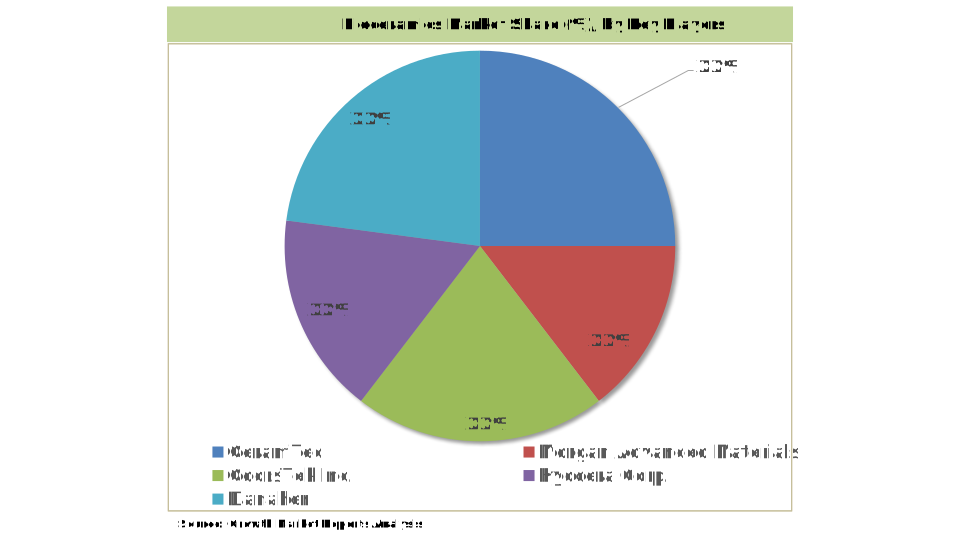
Key players competing in the global bio ceramics market are CeramTec; Morgan Advanced Materials; CoorsTek Inc.; Kyocera Corp.; and Danaher.

Companies are engaging in partnerships with hospitals and clinics to expand their market share. Moreover, they’re investing in R&D activities to leverage their market position.

Bioceramics Market

Frequently Asked Questions

Emerging trends include the development of smart bioceramics with drug release and antibacterial properties, expansion into cardiovascular and soft tissue applications, and increased adoption of regenerative medicine and personalized healthcare solutions.

Major companies include CeramTec GmbH, CoorsTek Inc., Kyocera Corporation, Morgan Advanced Materials, 3M Company, Stryker Corporation, Zimmer Biomet Holdings Inc., Royal DSM, Straumann Group, and Dentsply Sirona Inc.

Challenges include high costs of advanced bioceramic materials, complex manufacturing processes, stringent regulatory requirements, and a shortage of skilled professionals in biomaterials science.

Hospitals are the largest end-users, followed by research laboratories and specialty clinics such as dental and orthopedic centers. Other end-users include ambulatory surgical centers and rehabilitation facilities.

3D printing is revolutionizing the manufacturing of patient-specific bioceramic implants, reducing production costs, improving clinical outcomes, and enabling the creation of complex, customized medical devices.

Bioceramics are used in dental implants, crowns, bridges, orthopedic implants, bone grafts, cardiovascular devices, and tissue engineering scaffolds.

Alumina and zirconia are the most widely used bioceramic materials due to their mechanical strength and biocompatibility. Hydroxyapatite, calcium phosphate, and bioactive glass are also significant, especially in bone grafting and tissue engineering.

North America dominates the bioceramics market, followed by Europe and Asia Pacific. Asia Pacific is expected to experience the fastest growth due to increasing healthcare investments and expanding patient populations.

Key growth drivers include technological advancements in biomaterials, rising prevalence of chronic diseases, increasing demand for orthopedic and dental procedures, and a growing geriatric population.

The global bioceramics market reached USD 5.16 billion in 2024 and is projected to grow at a CAGR of 7.8% from 2025 to 2033, reaching USD 10.26 billion by the end of the forecast period.

Table Of Content

Chapter 1 Executive Summary
Chapter 2 Assumptions and Acronyms Used
Chapter 3 Research Methodology
Chapter 4 Bioceramics Market Overview
   4.1 Introduction
      4.1.1 Market Taxonomy
      4.1.2 Market Definition
      4.1.3 Macro-Economic Factors Impacting the Market Growth
   4.2 Bioceramics Market Dynamics
      4.2.1 Market Drivers
      4.2.2 Market Restraints
      4.2.3 Market Opportunity
   4.3 Bioceramics Market - Supply Chain Analysis
      4.3.1 List of Key Suppliers
      4.3.2 List of Key Distributors
      4.3.3 List of Key Consumers
   4.4 Key Forces Shaping the Bioceramics Market
      4.4.1 Bargaining Power of Suppliers
      4.4.2 Bargaining Power of Buyers
      4.4.3 Threat of Substitution
      4.4.4 Threat of New Entrants
      4.4.5 Competitive Rivalry
   4.5 Global Bioceramics Market Size & Forecast, 2023-2032
      4.5.1 Bioceramics Market Size and Y-o-Y Growth
      4.5.2 Bioceramics Market Absolute $ Opportunity

Chapter 5 Global Bioceramics Market Analysis and Forecast By Material Type
   5.1 Introduction
      5.1.1 Key Market Trends & Growth Opportunities By Material Type
      5.1.2 Basis Point Share (BPS) Analysis By Material Type
      5.1.3 Absolute $ Opportunity Assessment By Material Type
   5.2 Bioceramics Market Size Forecast By Material Type
      5.2.1 Alumina
      5.2.2 Zirconia
      5.2.3 Hydroxyapatite
      5.2.4 Calcium Phosphate
      5.2.5 Bioactive Glass
      5.2.6 Others
   5.3 Market Attractiveness Analysis By Material Type

Chapter 6 Global Bioceramics Market Analysis and Forecast By Application
   6.1 Introduction
      6.1.1 Key Market Trends & Growth Opportunities By Application
      6.1.2 Basis Point Share (BPS) Analysis By Application
      6.1.3 Absolute $ Opportunity Assessment By Application
   6.2 Bioceramics Market Size Forecast By Application
      6.2.1 Dental
      6.2.2 Orthopedic
      6.2.3 Cardiovascular
      6.2.4 Tissue Engineering
      6.2.5 Others
   6.3 Market Attractiveness Analysis By Application

Chapter 7 Global Bioceramics Market Analysis and Forecast By Form
   7.1 Introduction
      7.1.1 Key Market Trends & Growth Opportunities By Form
      7.1.2 Basis Point Share (BPS) Analysis By Form
      7.1.3 Absolute $ Opportunity Assessment By Form
   7.2 Bioceramics Market Size Forecast By Form
      7.2.1 Powder
      7.2.2 Coating
      7.2.3 Bulk
   7.3 Market Attractiveness Analysis By Form

Chapter 8 Global Bioceramics Market Analysis and Forecast By End-User
   8.1 Introduction
      8.1.1 Key Market Trends & Growth Opportunities By End-User
      8.1.2 Basis Point Share (BPS) Analysis By End-User
      8.1.3 Absolute $ Opportunity Assessment By End-User
   8.2 Bioceramics Market Size Forecast By End-User
      8.2.1 Hospitals
      8.2.2 Research Laboratories
      8.2.3 Specialty Clinics
      8.2.4 Others
   8.3 Market Attractiveness Analysis By End-User

Chapter 9 Global Bioceramics Market Analysis and Forecast by Region
   9.1 Introduction
      9.1.1 Key Market Trends & Growth Opportunities By Region
      9.1.2 Basis Point Share (BPS) Analysis By Region
      9.1.3 Absolute $ Opportunity Assessment By Region
   9.2 Bioceramics Market Size Forecast By Region
      9.2.1 North America
      9.2.2 Europe
      9.2.3 Asia Pacific
      9.2.4 Latin America
      9.2.5 Middle East & Africa (MEA)
   9.3 Market Attractiveness Analysis By Region

Chapter 10 Coronavirus Disease (COVID-19) Impact 
   10.1 Introduction 
   10.2 Current & Future Impact Analysis 
   10.3 Economic Impact Analysis 
   10.4 Government Policies 
   10.5 Investment Scenario

Chapter 11 North America Bioceramics Analysis and Forecast
   11.1 Introduction
   11.2 North America Bioceramics Market Size Forecast by Country
      11.2.1 U.S.
      11.2.2 Canada
   11.3 Basis Point Share (BPS) Analysis by Country
   11.4 Absolute $ Opportunity Assessment by Country
   11.5 Market Attractiveness Analysis by Country
   11.6 North America Bioceramics Market Size Forecast By Material Type
      11.6.1 Alumina
      11.6.2 Zirconia
      11.6.3 Hydroxyapatite
      11.6.4 Calcium Phosphate
      11.6.5 Bioactive Glass
      11.6.6 Others
   11.7 Basis Point Share (BPS) Analysis By Material Type 
   11.8 Absolute $ Opportunity Assessment By Material Type 
   11.9 Market Attractiveness Analysis By Material Type
   11.10 North America Bioceramics Market Size Forecast By Application
      11.10.1 Dental
      11.10.2 Orthopedic
      11.10.3 Cardiovascular
      11.10.4 Tissue Engineering
      11.10.5 Others
   11.11 Basis Point Share (BPS) Analysis By Application 
   11.12 Absolute $ Opportunity Assessment By Application 
   11.13 Market Attractiveness Analysis By Application
   11.14 North America Bioceramics Market Size Forecast By Form
      11.14.1 Powder
      11.14.2 Coating
      11.14.3 Bulk
   11.15 Basis Point Share (BPS) Analysis By Form 
   11.16 Absolute $ Opportunity Assessment By Form 
   11.17 Market Attractiveness Analysis By Form
   11.18 North America Bioceramics Market Size Forecast By End-User
      11.18.1 Hospitals
      11.18.2 Research Laboratories
      11.18.3 Specialty Clinics
      11.18.4 Others
   11.19 Basis Point Share (BPS) Analysis By End-User 
   11.20 Absolute $ Opportunity Assessment By End-User 
   11.21 Market Attractiveness Analysis By End-User

Chapter 12 Europe Bioceramics Analysis and Forecast
   12.1 Introduction
   12.2 Europe Bioceramics Market Size Forecast by Country
      12.2.1 Germany
      12.2.2 France
      12.2.3 Italy
      12.2.4 U.K.
      12.2.5 Spain
      12.2.6 Russia
      12.2.7 Rest of Europe
   12.3 Basis Point Share (BPS) Analysis by Country
   12.4 Absolute $ Opportunity Assessment by Country
   12.5 Market Attractiveness Analysis by Country
   12.6 Europe Bioceramics Market Size Forecast By Material Type
      12.6.1 Alumina
      12.6.2 Zirconia
      12.6.3 Hydroxyapatite
      12.6.4 Calcium Phosphate
      12.6.5 Bioactive Glass
      12.6.6 Others
   12.7 Basis Point Share (BPS) Analysis By Material Type 
   12.8 Absolute $ Opportunity Assessment By Material Type 
   12.9 Market Attractiveness Analysis By Material Type
   12.10 Europe Bioceramics Market Size Forecast By Application
      12.10.1 Dental
      12.10.2 Orthopedic
      12.10.3 Cardiovascular
      12.10.4 Tissue Engineering
      12.10.5 Others
   12.11 Basis Point Share (BPS) Analysis By Application 
   12.12 Absolute $ Opportunity Assessment By Application 
   12.13 Market Attractiveness Analysis By Application
   12.14 Europe Bioceramics Market Size Forecast By Form
      12.14.1 Powder
      12.14.2 Coating
      12.14.3 Bulk
   12.15 Basis Point Share (BPS) Analysis By Form 
   12.16 Absolute $ Opportunity Assessment By Form 
   12.17 Market Attractiveness Analysis By Form
   12.18 Europe Bioceramics Market Size Forecast By End-User
      12.18.1 Hospitals
      12.18.2 Research Laboratories
      12.18.3 Specialty Clinics
      12.18.4 Others
   12.19 Basis Point Share (BPS) Analysis By End-User 
   12.20 Absolute $ Opportunity Assessment By End-User 
   12.21 Market Attractiveness Analysis By End-User

Chapter 13 Asia Pacific Bioceramics Analysis and Forecast
   13.1 Introduction
   13.2 Asia Pacific Bioceramics Market Size Forecast by Country
      13.2.1 China
      13.2.2 Japan
      13.2.3 South Korea
      13.2.4 India
      13.2.5 Australia
      13.2.6 South East Asia (SEA)
      13.2.7 Rest of Asia Pacific (APAC)
   13.3 Basis Point Share (BPS) Analysis by Country
   13.4 Absolute $ Opportunity Assessment by Country
   13.5 Market Attractiveness Analysis by Country
   13.6 Asia Pacific Bioceramics Market Size Forecast By Material Type
      13.6.1 Alumina
      13.6.2 Zirconia
      13.6.3 Hydroxyapatite
      13.6.4 Calcium Phosphate
      13.6.5 Bioactive Glass
      13.6.6 Others
   13.7 Basis Point Share (BPS) Analysis By Material Type 
   13.8 Absolute $ Opportunity Assessment By Material Type 
   13.9 Market Attractiveness Analysis By Material Type
   13.10 Asia Pacific Bioceramics Market Size Forecast By Application
      13.10.1 Dental
      13.10.2 Orthopedic
      13.10.3 Cardiovascular
      13.10.4 Tissue Engineering
      13.10.5 Others
   13.11 Basis Point Share (BPS) Analysis By Application 
   13.12 Absolute $ Opportunity Assessment By Application 
   13.13 Market Attractiveness Analysis By Application
   13.14 Asia Pacific Bioceramics Market Size Forecast By Form
      13.14.1 Powder
      13.14.2 Coating
      13.14.3 Bulk
   13.15 Basis Point Share (BPS) Analysis By Form 
   13.16 Absolute $ Opportunity Assessment By Form 
   13.17 Market Attractiveness Analysis By Form
   13.18 Asia Pacific Bioceramics Market Size Forecast By End-User
      13.18.1 Hospitals
      13.18.2 Research Laboratories
      13.18.3 Specialty Clinics
      13.18.4 Others
   13.19 Basis Point Share (BPS) Analysis By End-User 
   13.20 Absolute $ Opportunity Assessment By End-User 
   13.21 Market Attractiveness Analysis By End-User

Chapter 14 Latin America Bioceramics Analysis and Forecast
   14.1 Introduction
   14.2 Latin America Bioceramics Market Size Forecast by Country
      14.2.1 Brazil
      14.2.2 Mexico
      14.2.3 Rest of Latin America (LATAM)
   14.3 Basis Point Share (BPS) Analysis by Country
   14.4 Absolute $ Opportunity Assessment by Country
   14.5 Market Attractiveness Analysis by Country
   14.6 Latin America Bioceramics Market Size Forecast By Material Type
      14.6.1 Alumina
      14.6.2 Zirconia
      14.6.3 Hydroxyapatite
      14.6.4 Calcium Phosphate
      14.6.5 Bioactive Glass
      14.6.6 Others
   14.7 Basis Point Share (BPS) Analysis By Material Type 
   14.8 Absolute $ Opportunity Assessment By Material Type 
   14.9 Market Attractiveness Analysis By Material Type
   14.10 Latin America Bioceramics Market Size Forecast By Application
      14.10.1 Dental
      14.10.2 Orthopedic
      14.10.3 Cardiovascular
      14.10.4 Tissue Engineering
      14.10.5 Others
   14.11 Basis Point Share (BPS) Analysis By Application 
   14.12 Absolute $ Opportunity Assessment By Application 
   14.13 Market Attractiveness Analysis By Application
   14.14 Latin America Bioceramics Market Size Forecast By Form
      14.14.1 Powder
      14.14.2 Coating
      14.14.3 Bulk
   14.15 Basis Point Share (BPS) Analysis By Form 
   14.16 Absolute $ Opportunity Assessment By Form 
   14.17 Market Attractiveness Analysis By Form
   14.18 Latin America Bioceramics Market Size Forecast By End-User
      14.18.1 Hospitals
      14.18.2 Research Laboratories
      14.18.3 Specialty Clinics
      14.18.4 Others
   14.19 Basis Point Share (BPS) Analysis By End-User 
   14.20 Absolute $ Opportunity Assessment By End-User 
   14.21 Market Attractiveness Analysis By End-User

Chapter 15 Middle East & Africa (MEA) Bioceramics Analysis and Forecast
   15.1 Introduction
   15.2 Middle East & Africa (MEA) Bioceramics Market Size Forecast by Country
      15.2.1 Saudi Arabia
      15.2.2 South Africa
      15.2.3 UAE
      15.2.4 Rest of Middle East & Africa (MEA)
   15.3 Basis Point Share (BPS) Analysis by Country
   15.4 Absolute $ Opportunity Assessment by Country
   15.5 Market Attractiveness Analysis by Country
   15.6 Middle East & Africa (MEA) Bioceramics Market Size Forecast By Material Type
      15.6.1 Alumina
      15.6.2 Zirconia
      15.6.3 Hydroxyapatite
      15.6.4 Calcium Phosphate
      15.6.5 Bioactive Glass
      15.6.6 Others
   15.7 Basis Point Share (BPS) Analysis By Material Type 
   15.8 Absolute $ Opportunity Assessment By Material Type 
   15.9 Market Attractiveness Analysis By Material Type
   15.10 Middle East & Africa (MEA) Bioceramics Market Size Forecast By Application
      15.10.1 Dental
      15.10.2 Orthopedic
      15.10.3 Cardiovascular
      15.10.4 Tissue Engineering
      15.10.5 Others
   15.11 Basis Point Share (BPS) Analysis By Application 
   15.12 Absolute $ Opportunity Assessment By Application 
   15.13 Market Attractiveness Analysis By Application
   15.14 Middle East & Africa (MEA) Bioceramics Market Size Forecast By Form
      15.14.1 Powder
      15.14.2 Coating
      15.14.3 Bulk
   15.15 Basis Point Share (BPS) Analysis By Form 
   15.16 Absolute $ Opportunity Assessment By Form 
   15.17 Market Attractiveness Analysis By Form
   15.18 Middle East & Africa (MEA) Bioceramics Market Size Forecast By End-User
      15.18.1 Hospitals
      15.18.2 Research Laboratories
      15.18.3 Specialty Clinics
      15.18.4 Others
   15.19 Basis Point Share (BPS) Analysis By End-User 
   15.20 Absolute $ Opportunity Assessment By End-User 
   15.21 Market Attractiveness Analysis By End-User

Chapter 16 Competition Landscape 
   16.1 Bioceramics Market: Competitive Dashboard
   16.2 Global Bioceramics Market: Market Share Analysis, 2023
   16.3 Company Profiles (Details – Overview, Financials, Developments, Strategy) 
      16.3.1 CeramTec GmbH
CoorsTek Inc.
Kyocera Corporation
Morgan Advanced Materials plc
3M Company
Stryker Corporation
Zimmer Biomet Holdings, Inc.
Royal DSM N.V.
Straumann Group
Dentsply Sirona Inc.
BASF SE
DePuy Synthes (Johnson & Johnson)
Amedica Corporation (now SINTX Technologies)
Cam Bioceramics B.V.
Berkeley Advanced Biomaterials Inc.
Carborundum Universal Limited (CUMI)
NGK Spark Plug Co., Ltd.
Tosoh Corporation
Saint-Gobain S.A.
Kuraray Co., Ltd.

Methodology

Our Clients

Dassault Aviation
Siemens Healthcare
Pfizer
sinopec
The John Holland Group
General Electric
General Mills
FedEx Logistics