Segments - by Product Type (Lane Departure Warning Systems, Lane Keeping Assist Systems, Lane Centering Assist Systems), by Technology (Vision-Based, Infrared Sensors, Ultrasonic Sensors, Others), by Vehicle Type (Passenger Cars, Commercial Vehicles, Electric Vehicles), by Sales Channel (OEM, Aftermarket), by End-User (Individual, Fleet Operators, Others)
This report is updated with the latest market data and insights as of June 2026. Base year: 2025 | Forecast period: 2026-2034
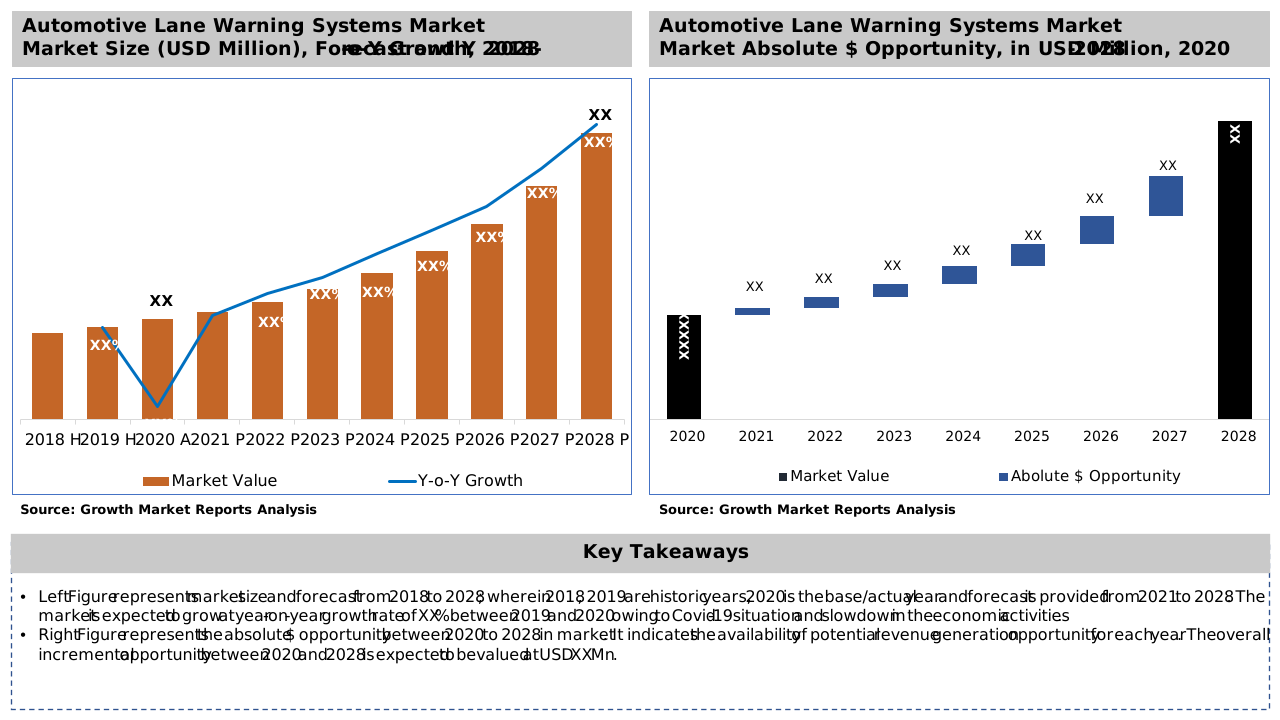
According to our latest research, the global automotive lane warning systems market size reached USD 7.6 billion in 2025, propelled by heightened regulatory mandates for vehicle safety and increasing consumer awareness regarding accident prevention technologies. The market is set to grow at a robust CAGR of 13.2% from 2026 to 2034, projecting a value of approximately USD 23.4 billion by 2034. This growth trajectory is underpinned by technological advancements and the proliferation of advanced driver assistance systems (ADAS) across both passenger and commercial vehicles. As per our in-depth analysis, the key growth factor is the integration of lane warning systems as a standard safety feature, driven by stringent safety norms and the automotive industry's shift towards semi-autonomous and autonomous vehicles.
The growth of the automotive lane warning systems market is significantly influenced by the increasing stringency of vehicle safety regulations across major economies. Regulatory bodies such as the National Highway Traffic Safety Administration (NHTSA) in the United States and the European New Car Assessment Programme (Euro NCAP) have mandated the inclusion of advanced safety features, including lane departure warning and lane keeping assist systems, in new vehicles. These regulations are compelling automakers to integrate sophisticated lane warning technologies as standard offerings, thus fueling market expansion. Furthermore, the rising emphasis on reducing road fatalities and injuries due to unintentional lane departures is catalyzing the adoption of these systems, particularly in developed markets where consumer awareness regarding vehicular safety is high. Complementary innovations in lane change warning technology are reinforcing the overall ADAS ecosystem, encouraging broader integration across new vehicle programs.
Another pivotal growth driver for the automotive lane warning systems market is the rapid advancement in sensor technologies and artificial intelligence. Vision-based, infrared, and ultrasonic sensors are becoming increasingly accurate and cost-effective, enabling automakers to offer reliable lane detection and warning functionalities even in challenging driving conditions. The integration of AI-powered algorithms further enhances the performance of these systems, allowing for real-time lane monitoring and proactive alerts to drivers. This technological evolution is making lane warning systems more accessible across various vehicle segments, including entry-level passenger cars and commercial vehicles, thereby broadening the market's consumer base and accelerating its growth trajectory.
The proliferation of electric vehicles (EVs) and the growing trend towards vehicle electrification are also contributing to the expansion of the automotive lane warning systems market. As automakers strive to differentiate their EV offerings through enhanced safety and connectivity features, the integration of advanced lane warning and lane keeping assist technologies has become a key selling point. Additionally, the rise of shared mobility and fleet operations is prompting fleet operators to prioritize vehicles equipped with comprehensive safety systems, including lane warning solutions, to ensure passenger safety and reduce liability risks. This shift is expected to further amplify market demand, particularly in regions witnessing rapid adoption of EVs and shared mobility services. The parallel growth of emergency lane keeping solutions reflects how the broader safety landscape is evolving to address increasingly diverse driving scenarios.
From a regional perspective, Asia Pacific is emerging as a dominant force in the automotive lane warning systems market, driven by the burgeoning automotive industry in countries like China, Japan, and South Korea. The region's strong manufacturing base, coupled with increasing investments in automotive innovation and safety, is fostering significant market growth. North America and Europe continue to be mature markets, benefiting from early adoption of ADAS technologies and robust regulatory frameworks. Meanwhile, Latin America and the Middle East and Africa are gradually embracing lane warning systems, supported by rising vehicle ownership and growing awareness of road safety. Overall, regional dynamics are shaped by a combination of regulatory mandates, technological readiness, and consumer acceptance, with Asia Pacific poised for the fastest growth over the forecast period.
The product type segment of the automotive lane warning systems market is categorized into Lane Departure Warning Systems (LDWS), Lane Keeping Assist Systems (LKAS), and Lane Centering Assist Systems (LCAS). Lane Departure Warning Systems have historically been the most widely adopted, owing to their effectiveness in alerting drivers when their vehicle unintentionally drifts out of its lane. These systems typically utilize cameras and sensors to detect lane markings and provide audio, visual, or haptic alerts to the driver. As regulatory bodies increasingly mandate the inclusion of basic lane warning features in new vehicles, LDWS remains a foundational technology, particularly in entry-level and mid-range vehicles. The widespread adoption of LDWS, which accounted for approximately 42.5% of the total market in 2025, is further supported by its relatively low cost and ease of integration into existing vehicle platforms. Consumers seeking to add these capabilities to older vehicles are also driving interest in retrofit kits for lane departure warning, which are gaining traction in the aftermarket channel.
Lane Keeping Assist Systems represent the next evolution in lane warning technology, offering not only alerts but also active intervention to steer the vehicle back into its lane. LKAS leverages advanced sensor fusion and real-time data processing to provide corrective steering inputs, thereby reducing the likelihood of lane departure-related accidents. This functionality is gaining traction among automakers seeking to enhance the safety credentials of their vehicles and comply with stringent regulatory requirements. The growing consumer demand for semi-autonomous driving features is also driving the adoption of LKAS, particularly in premium and luxury vehicle segments. Holding approximately 35% of the 2025 market, LKAS is expected to become increasingly prevalent across a broader spectrum of vehicles as technology matures and unit costs decline through the 2026-2034 forecast period.
Lane Centering Assist Systems represent the most advanced tier within the product type segment, providing continuous steering support to keep the vehicle centered within its lane. LCAS is a critical component of higher-level autonomous driving systems, enabling hands-free driving under certain conditions. The adoption of LCAS, which accounted for around 22.5% of the market in 2025, is currently concentrated in high-end vehicles and select commercial fleets, given its reliance on sophisticated hardware and software integration. However, as the automotive industry progresses towards higher levels of vehicle automation, the demand for LCAS is expected to surge, making it the fastest-growing sub-segment through 2034. Automakers are investing heavily in research and development to enhance the reliability and accessibility of LCAS, positioning it as a key differentiator in the competitive ADAS landscape. The growing sophistication of nearby road-safety technologies, including intersection-ahead warning solutions, is further validating the market's appetite for comprehensive, integrated driver assistance packages.
The interplay between these product types is shaping the competitive dynamics of the automotive lane warning systems market. While LDWS serves as an entry point for vehicle safety enhancement, LKAS and LCAS are driving the market towards higher levels of automation and driver assistance. The transition from basic warning systems to active intervention and lane centering functionalities reflects the industry's commitment to reducing human error and improving road safety outcomes. As consumer expectations evolve and regulatory standards become more stringent, the product type segment is poised for continuous innovation and expansion, with each sub-segment playing a distinct yet complementary role in the market's growth through 2034.
| Attributes | Details |
| Report Title | Automotive Lane Warning Systems Market Research Report 2034 |
| By Product Type | Lane Departure Warning Systems, Lane Keeping Assist Systems, Lane Centering Assist Systems |
| By Technology | Vision-Based, Infrared Sensors, Ultrasonic Sensors, Others |
| By Vehicle Type | Passenger Cars, Commercial Vehicles, Electric Vehicles |
| By Sales Channel | OEM, Aftermarket |
| By End-User | Individual, Fleet Operators, Others |
| Regions Covered | North America, Europe, APAC, Latin America, MEA |
| Base Year | 2025 |
| Historic Data | 2019-2024 |
| Forecast Period | 2026-2034 |
| Number of Pages | 262 |
| Number of Tables & Figures | 381 |
| Customization Available | Yes, the report can be customized as per your need. |
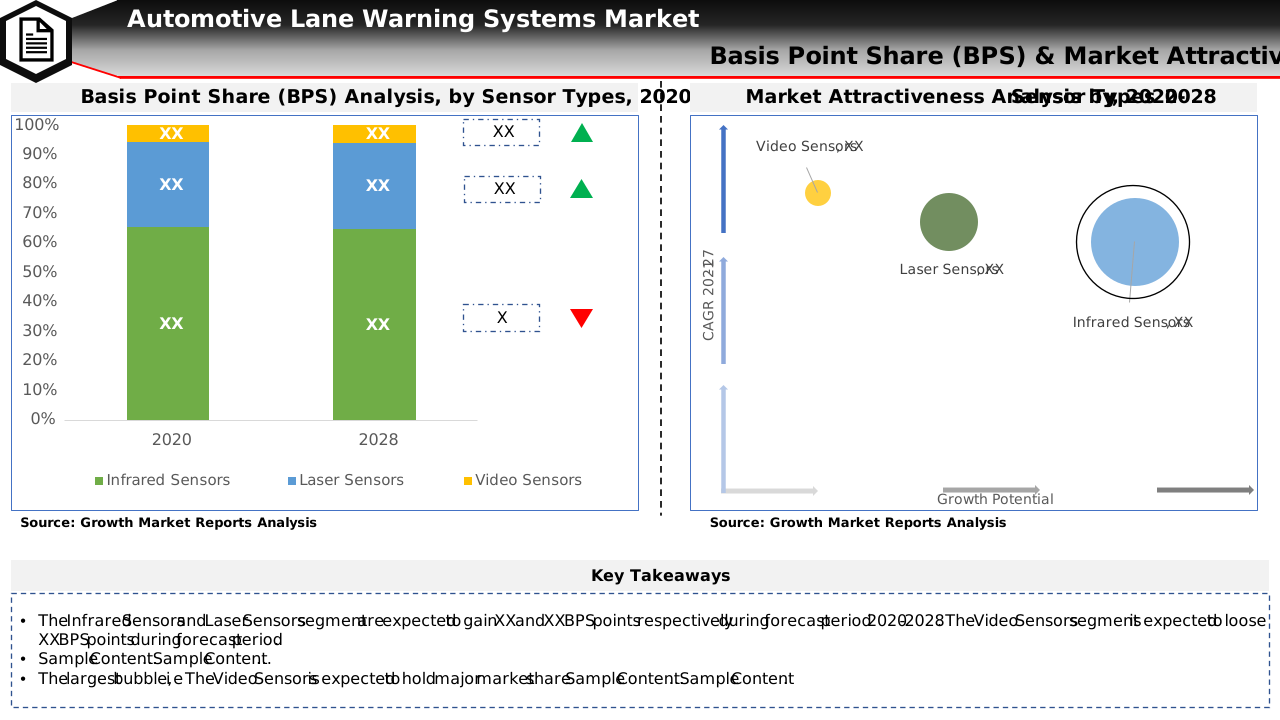
The technology segment of the automotive lane warning systems market encompasses Vision-Based, Infrared Sensors, Ultrasonic Sensors, and other emerging technologies. Vision-based systems dominate the market in 2025, leveraging high-resolution cameras and advanced image processing algorithms to detect lane markings and monitor vehicle position. The widespread adoption of vision-based technology is attributed to its accuracy, versatility, and ability to function effectively under diverse driving conditions. Automakers are increasingly integrating vision-based systems as part of their ADAS suites, capitalizing on advancements in camera technology and machine learning to enhance system performance. These systems are particularly effective in urban environments, where clear lane markings and well-maintained roads are prevalent.
Infrared sensor-based lane warning systems offer distinct advantages in low-visibility conditions, such as nighttime driving or inclement weather. By detecting thermal signatures and contrasting road surfaces, infrared sensors can provide reliable lane detection when traditional vision-based systems may be compromised. This technology is gaining traction in regions with challenging weather patterns and is often used in conjunction with vision-based systems to provide redundant safety layers. Automakers are exploring hybrid approaches that combine infrared and vision-based technologies, aiming to deliver robust lane warning capabilities under all operating conditions. The integration of infrared sensors is also being facilitated by continued advancements in sensor miniaturization and cost reduction as of 2025.
Ultrasonic sensors, while traditionally associated with parking assistance and obstacle detection, are finding niche applications in lane warning systems. These sensors are particularly useful for detecting road edges, curbs, and other physical boundaries that may not be clearly marked. In scenarios where lane markings are faded or absent, ultrasonic sensors can provide supplementary data to enhance system reliability. The adoption of ultrasonic technology is primarily observed in commercial vehicles and specialized applications, where comprehensive situational awareness is critical for safe operation. As sensor fusion becomes more prevalent heading into the 2026-2034 forecast period, the role of ultrasonic sensors in lane warning systems is expected to expand, contributing to the overall robustness of ADAS solutions.
Emerging technologies, including LiDAR and radar-based solutions, are making meaningful inroads into the automotive lane warning systems market by 2025. These technologies offer high-precision mapping and object detection capabilities, enabling more sophisticated lane tracking and environmental perception. While currently still constrained by cost and integration complexity in volume applications, ongoing research and development efforts are expected to drive down barriers to adoption through the forecast period. The convergence of multiple sensing modalities is paving the way for next-generation lane warning systems that deliver unparalleled accuracy and reliability. As the automotive industry accelerates its transition towards autonomous driving, the technology segment is poised for continuous innovation, with a growing emphasis on sensor fusion and artificial intelligence.
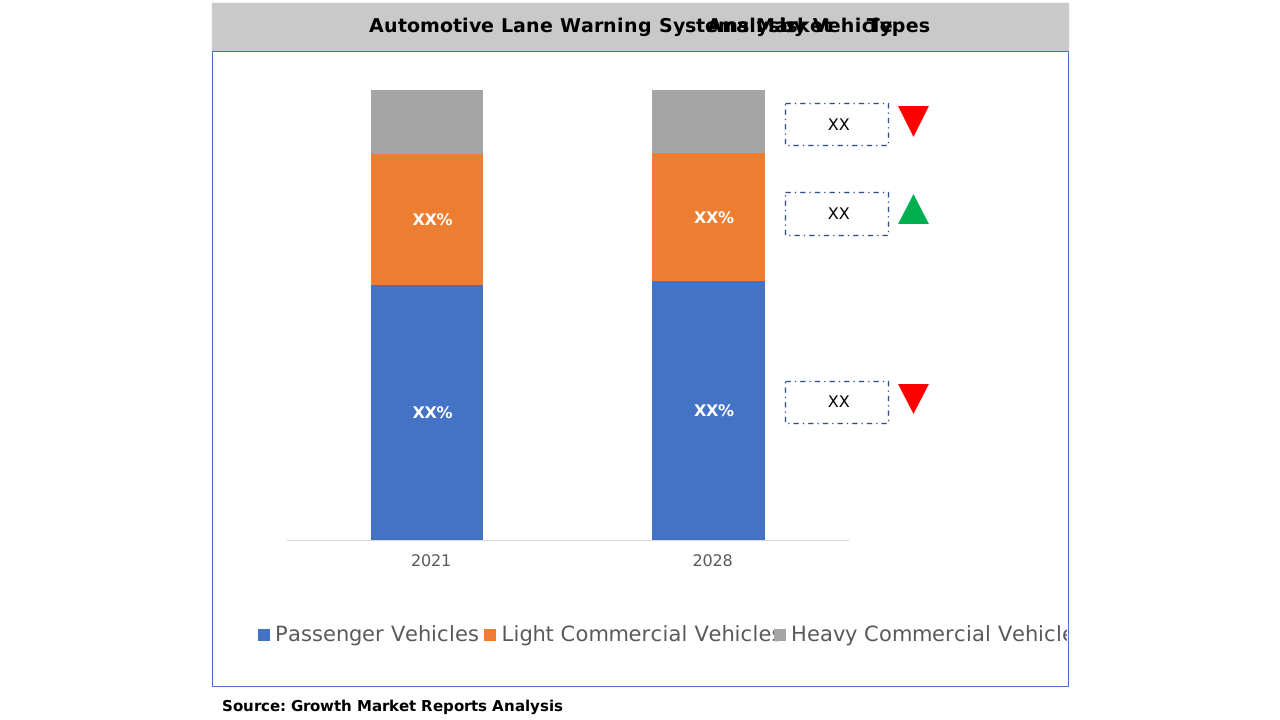
The vehicle type segment of the automotive lane warning systems market is segmented into Passenger Cars, Commercial Vehicles, and Electric Vehicles. Passenger cars constitute the largest share of the market in 2025, driven by high production volumes and the increasing integration of ADAS features across all vehicle classes. Automakers are capitalizing on consumer demand for enhanced safety and convenience by equipping new passenger cars with advanced lane warning systems as standard or optional features. The proliferation of compact and mid-sized vehicles in urban centers is further fueling market growth, as city dwellers prioritize safety technologies that mitigate the risks associated with dense traffic and frequent lane changes. Regulatory mandates requiring the inclusion of basic lane departure warning systems in new passenger vehicles are also playing a pivotal role in driving adoption.
Commercial vehicles, including trucks, buses, and delivery vans, represent a rapidly growing segment within the automotive lane warning systems market. Fleet operators are increasingly recognizing the value of lane warning technologies in reducing accident rates, minimizing downtime, and enhancing overall fleet safety. The integration of lane keeping assist and lane centering functionalities is particularly beneficial for long-haul and heavy-duty vehicles, where driver fatigue and distraction are significant risk factors. Governments and regulatory agencies are also introducing incentives and mandates to encourage the adoption of ADAS features in commercial fleets, further accelerating market penetration through 2034. As the logistics and transportation industries continue to expand, the demand for advanced lane warning systems in commercial vehicles is expected to rise steadily.
Electric vehicles are emerging as the fastest-growing vehicle type within the automotive lane warning systems market, as automakers seek to differentiate their EV offerings through advanced safety and driver assistance features. The integration of lane warning systems in EVs aligns with the broader industry trend towards vehicle electrification and digitalization. EV manufacturers are leveraging the latest advancements in sensor technology and over-the-air software update platforms to deliver seamless and continuously improving lane warning functionalities. The growing consumer preference for environmentally friendly and technologically advanced vehicles is further boosting the adoption of lane warning systems in the EV segment. As the global EV market continues to expand, driven by supportive government policies and increasing investments in charging infrastructure, the contribution of EVs to the overall lane warning systems market is set to grow significantly through 2034.
The interplay between different vehicle types is shaping the competitive landscape of the automotive lane warning systems market. While passenger cars remain the primary driver of market volume, commercial vehicles and EVs are emerging as high-growth segments with distinct requirements and opportunities. Automakers and technology providers are tailoring their lane warning solutions to address the unique challenges and operational contexts of each vehicle type. This segmentation strategy is enabling market players to capture a broader customer base and capitalize on the diverse growth trajectories across the automotive industry.
The sales channel segment of the automotive lane warning systems market is bifurcated into Original Equipment Manufacturer (OEM) and Aftermarket. The OEM channel dominates the market in 2025, accounting for the majority of lane warning system installations in new vehicles. Automakers are increasingly integrating lane warning technologies as standard or optional features across their vehicle lineups, driven by regulatory mandates and consumer demand for advanced safety solutions. OEMs benefit from economies of scale, streamlined integration processes, and the ability to offer comprehensive ADAS packages to customers. The growing prevalence of factory-fitted lane warning systems is contributing to the overall standardization of safety features in new vehicles, enhancing consumer trust and market penetration.
The aftermarket segment, while smaller in comparison to OEM installations, represents a significant growth opportunity for the automotive lane warning systems market through 2034. Aftermarket solutions cater to vehicle owners seeking to retrofit their existing vehicles with advanced safety technologies. This segment is particularly relevant in regions with a large population of older vehicles and where regulatory requirements for lane warning systems are less stringent. Aftermarket providers are leveraging advancements in sensor miniaturization and wireless connectivity to offer cost-effective and easy-to-install solutions. The rise of do-it-yourself (DIY) installation kits and professional retrofit services is further expanding the reach of aftermarket lane warning systems, enabling a broader swath of consumers to access enhanced safety features.
The competitive dynamics between OEM and aftermarket channels are shaping the evolution of the automotive lane warning systems market. OEMs are focusing on technological innovation, seamless integration, and compliance with regulatory standards, while aftermarket providers are emphasizing affordability, flexibility, and accessibility. The coexistence of these channels is fostering healthy competition and driving continuous improvement in product quality and performance. As consumer awareness of lane warning technologies grows and regulatory frameworks evolve, both OEM and aftermarket channels are expected to play complementary roles in expanding market reach and accelerating adoption.
The sales channel segmentation also reflects regional variations in market dynamics. In mature markets such as North America and Europe, OEM installations dominate due to stringent safety regulations and high consumer expectations. In contrast, emerging markets in Asia Pacific and Latin America are witnessing rapid growth in the aftermarket segment, driven by increasing vehicle ownership and the need to upgrade older vehicles with modern safety features. This regional diversity underscores the importance of tailored sales strategies and localized product offerings in capturing market share and sustaining long-term growth through the 2026-2034 forecast period.
The end-user segment of the automotive lane warning systems market is divided into Individual, Fleet Operators, and Others. Individual consumers represent the largest end-user group in 2025, driven by growing awareness of vehicle safety and the desire to protect themselves and their families on the road. The increasing affordability and availability of lane warning systems in mainstream vehicles are making these technologies accessible to a wider range of consumers. Automakers are targeting individual buyers with marketing campaigns that highlight the life-saving potential of lane warning systems, leveraging safety ratings and endorsements from regulatory bodies to build consumer trust. As personal vehicle ownership continues to rise, particularly in emerging economies, the individual end-user segment is expected to maintain its dominance in the market through 2034.
Fleet operators constitute a rapidly expanding end-user group within the automotive lane warning systems market. Logistics companies, ride-sharing services, and public transportation providers are increasingly prioritizing the safety of their drivers and passengers by investing in advanced lane warning technologies. Fleet operators benefit from the ability to monitor and manage driver behavior, reduce accident rates, and lower insurance costs through the deployment of ADAS-equipped vehicles. The integration of telematics and fleet management platforms with lane warning systems is enabling real-time monitoring and data-driven decision-making, further enhancing the value proposition for fleet operators. As the global transportation and logistics sectors continue to grow, the demand for lane warning systems among fleet operators is set to rise substantially across the 2026-2034 period.
The "Others" category encompasses government agencies, driving schools, and specialized vehicle operators who utilize lane warning systems for training, compliance, and operational safety. Government fleets and public sector organizations are adopting lane warning technologies to improve road safety outcomes and set an example for private sector adoption. Driving schools are leveraging these systems to educate new drivers about the importance of lane discipline and safe driving practices. Specialized vehicle operators, such as emergency services and construction companies, are integrating lane warning systems to mitigate risks associated with high-stress and complex driving environments. The diverse applications within the "Others" category highlight the versatility and broad appeal of lane warning technologies across different user groups.
The end-user segmentation of the automotive lane warning systems market underscores the importance of tailored product offerings and targeted marketing strategies. Market players are developing customized solutions to address the unique needs and preferences of each end-user group, from individual consumers seeking peace of mind to fleet operators focused on operational efficiency and safety compliance. This customer-centric approach is driving innovation and fostering deeper market penetration, positioning lane warning systems as an essential component of modern vehicle safety.
The automotive lane warning systems market presents significant opportunities for growth and innovation, particularly as the automotive industry transitions towards higher levels of vehicle automation. The integration of lane warning systems with other ADAS technologies, such as adaptive cruise control and automatic emergency braking, is creating new avenues for product development and differentiation. Market players have the opportunity to leverage advancements in artificial intelligence, machine learning, and sensor fusion to deliver more accurate, reliable, and user-friendly lane warning solutions. The growing consumer demand for connected and autonomous vehicles is also opening up opportunities for collaboration between automakers, technology providers, and software developers. By investing in research and development and forging strategic partnerships, market participants can capitalize on the evolving landscape of vehicle safety and automation heading into the 2026-2034 forecast window.
Expanding into emerging markets represents another significant opportunity for the automotive lane warning systems market. Rapid urbanization, increasing vehicle ownership, and rising awareness of road safety are driving demand for advanced safety technologies in regions such as Asia Pacific, Latin America, and the Middle East and Africa. Market players can tap into these high-growth regions by offering affordable and adaptable lane warning solutions tailored to local market conditions. Collaborating with local OEMs, aftermarket providers, and government agencies can facilitate market entry and accelerate adoption. Additionally, the ongoing electrification of the automotive industry presents opportunities to integrate lane warning systems into electric and hybrid vehicles, further expanding the market's reach and relevance. Cross-sector awareness of complementary technologies, from systems that warn of lane changes to those covering complex urban intersections, is building a stronger case for comprehensive ADAS investment across global markets.
Despite the numerous opportunities, the automotive lane warning systems market faces certain restraints that may hinder its growth trajectory. High costs associated with advanced sensor technologies, complex integration processes, and the need for frequent calibration and maintenance can pose challenges, particularly for price-sensitive markets and older vehicle fleets. Additionally, variability in road infrastructure, such as poorly maintained or absent lane markings, can impact the effectiveness of lane warning systems and limit their adoption in certain regions. Cybersecurity vulnerabilities in connected ADAS platforms are also drawing increasing scrutiny from regulators and consumers alike. Addressing these challenges requires ongoing investment in research and development, collaboration with infrastructure stakeholders, and the development of cost-effective solutions that can deliver reliable performance under diverse operating conditions through 2034.
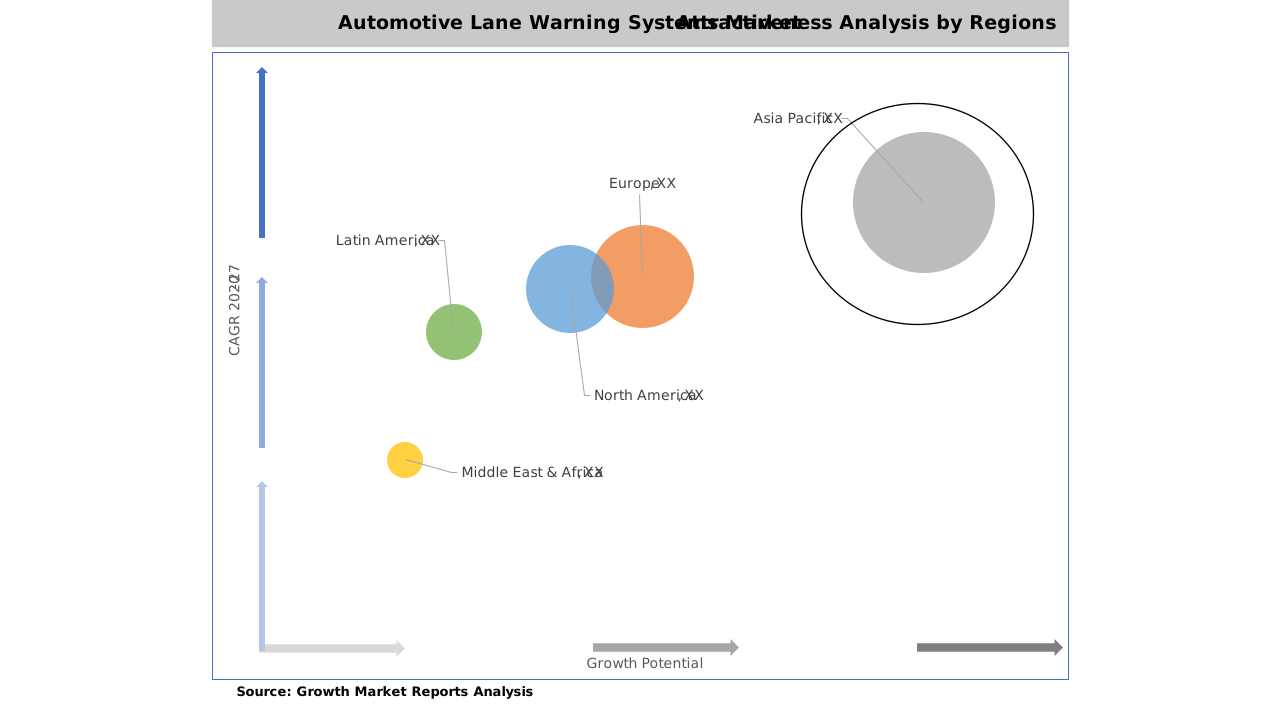
The regional analysis of the automotive lane warning systems market reveals distinct growth patterns and opportunities across major geographies. Asia Pacific leads the market, with a market size of approximately USD 2.7 billion in 2025, driven by the rapid expansion of the automotive industry in China, Japan, South Korea, and India. The region is characterized by a strong manufacturing base, increasing investments in automotive innovation, and rising consumer awareness of vehicle safety. Government initiatives aimed at improving road safety and reducing traffic fatalities are further propelling the adoption of lane warning systems. With a projected CAGR of 15.4% through 2034, Asia Pacific is expected to maintain its leadership position, representing roughly 35.2% of the global market in 2025, and contribute significantly to overall global market growth.
North America represents a mature and technologically advanced market for automotive lane warning systems, with a market size of approximately USD 2.1 billion in 2025, accounting for around 27.1% of global revenues. The region benefits from early adoption of ADAS technologies, robust regulatory frameworks, and high consumer expectations regarding vehicle safety. Automakers in the United States and Canada are at the forefront of integrating advanced lane warning systems into their vehicle offerings, supported by stringent safety standards set by the NHTSA and other regulatory bodies. The presence of leading technology providers and a strong aftermarket ecosystem further bolsters market growth in North America. As the region continues to prioritize vehicle safety and automation, the adoption of lane warning systems is expected to remain strong through 2034.
Europe is another key market for automotive lane warning systems, with a market size of approximately USD 1.7 billion in 2025, representing around 22.4% of the global total. The region is characterized by comprehensive safety regulations, high vehicle penetration rates, and a strong emphasis on sustainable mobility. The European Union's focus on Vision Zero and the widespread adoption of Euro NCAP safety ratings are driving the integration of lane warning technologies across new vehicles. Automakers in Germany, France, and the United Kingdom are leading the charge, supported by a well-developed research and development ecosystem. Latin America and the Middle East and Africa together account for the remaining approximately 15.3% of the 2025 market but are projected to grow at above-average rates through 2034, as rising vehicle ownership, infrastructure investment, and growing road safety awareness drive incremental adoption of lane warning systems across these regions.
The competitive landscape of the automotive lane warning systems market in 2025 is characterized by intense rivalry among leading automotive OEMs, technology providers, and tier-1 suppliers. The market is witnessing a surge in strategic collaborations, mergers and acquisitions, and partnerships aimed at accelerating product development and expanding market reach. Key players are investing heavily in research and development to enhance the performance, reliability, and affordability of lane warning systems. The focus is on leveraging artificial intelligence, sensor fusion, and advanced data analytics to deliver next-generation solutions that meet evolving regulatory standards and consumer expectations. As the market matures, differentiation is increasingly driven by technological innovation, system integration capabilities, and the ability to offer comprehensive ADAS packages.
Market leaders are also prioritizing the development of scalable and modular lane warning systems that can be easily integrated into a wide range of vehicle platforms. This approach enables automakers to address the diverse needs of different customer segments, from entry-level passenger cars to high-end luxury vehicles and commercial fleets. The ability to offer customizable solutions that cater to specific regional requirements and regulatory frameworks is emerging as a key competitive advantage heading into the 2026-2034 forecast period. Additionally, companies are focusing on enhancing the user experience through intuitive interfaces, seamless connectivity, and real-time data processing, positioning lane warning systems as an integral component of the connected and autonomous vehicle ecosystem.
The competitive dynamics are further shaped by the entry of new players and startups specializing in niche technologies such as AI-powered vision systems, advanced sensors, and cloud-based analytics. These entrants are challenging established players by offering innovative and cost-effective solutions that address specific market gaps. The growing importance of software-driven innovation is prompting traditional automotive suppliers to forge alliances with technology companies, fostering a culture of cross-industry collaboration and knowledge sharing. As the market continues to evolve, the ability to anticipate and respond to emerging trends, such as vehicle electrification and autonomous driving, will be critical for sustaining competitive advantage and driving long-term growth.
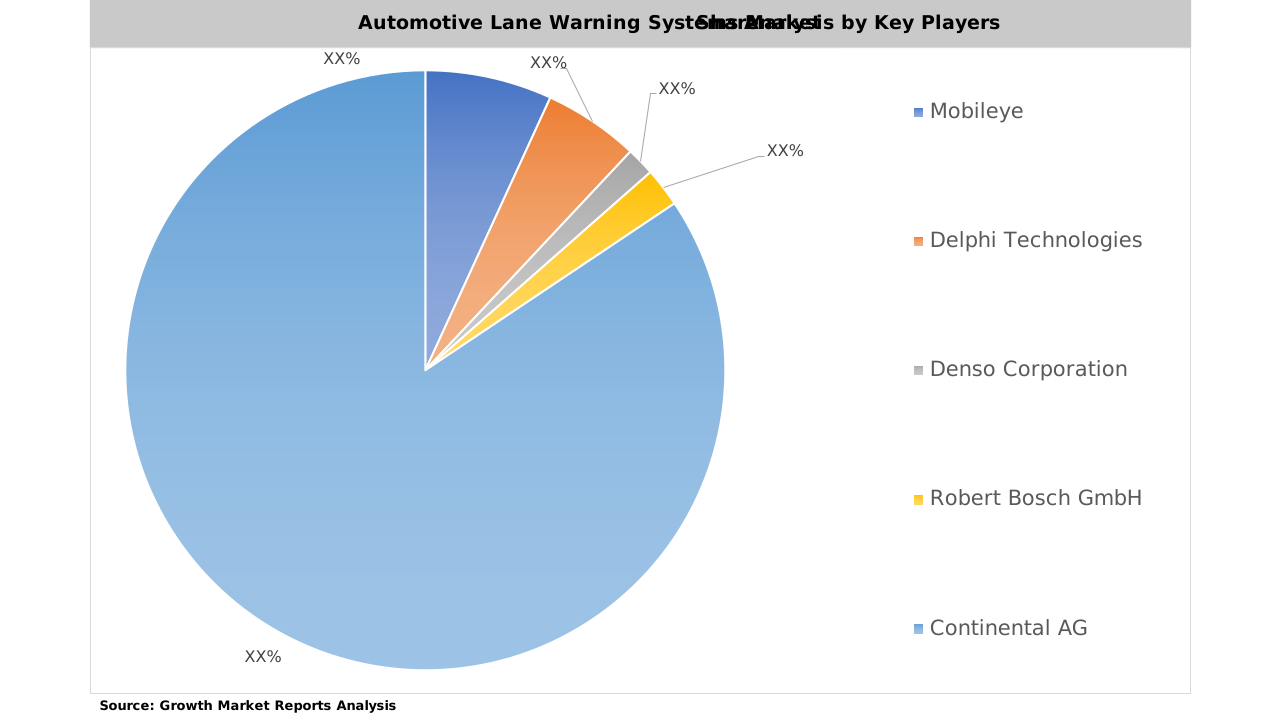
Major companies operating in the automotive lane warning systems market include Robert Bosch GmbH, Continental AG, Denso Corporation, Aptiv PLC, Valeo S.A., Magna International Inc., ZF Friedrichshafen AG, Mobileye (an Intel Company), Hyundai Mobis Co., Ltd., Autoliv Inc., Panasonic Corporation, Gentex Corporation, Mando Corporation, FORVIA HELLA GmbH and Co. KGaA, Texas Instruments Incorporated, and Renesas Electronics Corporation. Bosch is renowned for its comprehensive portfolio of ADAS solutions, including advanced lane departure warning and lane keeping assist systems, supported by a global manufacturing and distribution network. Continental AG is a leading innovator in sensor technologies and system integration, offering scalable and customizable lane warning solutions for both passenger and commercial vehicles. Denso Corporation and Aptiv PLC are at the forefront of AI-driven vision systems and sensor fusion, enabling real-time lane detection and proactive driver alerts. Magna International and Valeo are leveraging their expertise in sensor miniaturization and system integration to deliver cost-effective and reliable lane warning systems tailored to diverse vehicle platforms. ZF Friedrichshafen is focused on advancing autonomous driving capabilities through the integration of lane centering and adaptive steering technologies. Mobileye, a subsidiary of Intel, is a pioneer in computer vision and machine learning, offering market-leading solutions for lane detection, object recognition, and autonomous driving. Autoliv Inc. is renowned for its commitment to road safety and innovation, delivering a wide range of ADAS solutions to automakers worldwide. These companies are shaping the future of the automotive lane warning systems market through continuous innovation, strategic partnerships, and a relentless focus on enhancing vehicle safety and driver experience through the 2026-2034 forecast period.
The Automotive Lane Warning Systems market has been segmented on the basis of
Lane warning systems serve as a foundational layer within the broader ADAS stack that underpins autonomous driving. Lane Centering Assist Systems in particular are a prerequisite for SAE Level 2 and Level 3 automation, enabling hands-free highway driving in vehicles like those equipped with Tesla Autopilot or GM Super Cruise. In electric vehicles, automakers routinely bundle advanced lane warning capabilities with over-the-air software update platforms, allowing continuous performance improvements post-purchase. The convergence of lane warning technology with adaptive cruise control, automatic emergency braking, and AI-based perception systems is accelerating the pathway to fully autonomous mobility.
Key challenges include the high cost of sophisticated sensors and processing hardware, performance limitations in regions with poorly maintained or absent lane markings, variability in global regulatory requirements that complicates product standardization, cybersecurity risks associated with connected ADAS platforms, and consumer over-reliance on or mistrust of automated safety systems. Addressing these barriers requires sustained R&D investment, cross-industry collaboration with infrastructure bodies, and clearer public education on system capabilities and limitations.
Leading companies include Robert Bosch GmbH, Continental AG, Denso Corporation, Aptiv PLC, Valeo S.A., Magna International Inc., ZF Friedrichshafen AG, Mobileye (an Intel Company), Hyundai Mobis Co., Ltd., Autoliv Inc., Panasonic Corporation, Gentex Corporation, Mando Corporation, FORVIA HELLA GmbH and Co. KGaA, Texas Instruments Incorporated, and Renesas Electronics Corporation. These players compete on the basis of technology depth, system integration capability, regulatory compliance, and global manufacturing scale.
Asia Pacific leads the global market with a share of approximately 35.2% in 2025, driven by the large automotive industries in China, Japan, South Korea, and India, combined with aggressive road safety programs. North America follows with around 27.1% share, supported by NHTSA regulations and high consumer willingness to pay for safety features. Europe holds approximately 22.4%, underpinned by Euro NCAP standards and the EU's Vision Zero road safety targets. Latin America and the Middle East and Africa together account for the remaining share but are projected to grow at above-average rates through 2034 as vehicle ownership rises.
OEM lane warning systems are factory-installed by automakers and integrated seamlessly with the vehicle's onboard electronics, benefiting from full calibration, warranty coverage, and compliance with original safety standards. Aftermarket systems are retrofit solutions installed on existing vehicles, offering greater affordability and accessibility for older fleets or regions with less stringent new-vehicle mandates. The OEM channel dominates in North America and Europe, while the aftermarket channel is growing rapidly in Asia Pacific and Latin America where large populations of older vehicles are still in service.
Electric vehicles are the fastest-growing segment, as EV manufacturers leverage lane warning and ADAS features as key differentiators in a competitive market. Commercial vehicles, including long-haul trucks and urban delivery fleets, are also adopting these systems rapidly due to regulatory incentives and the operational and insurance cost savings associated with reduced accident rates. Passenger cars remain the highest-volume segment overall, underpinned by increasing factory-fit mandates.
The market encompasses three primary product types. Lane Departure Warning Systems (LDWS) provide audio, visual, or haptic alerts when a vehicle unintentionally drifts from its lane and hold the largest market share at approximately 42.5% in 2025. Lane Keeping Assist Systems (LKAS) offer active corrective steering input in addition to alerts, representing around 35% of the market. Lane Centering Assist Systems (LCAS), the most advanced tier providing continuous hands-free lane-centering support, account for roughly 22.5% and are the fastest-growing sub-segment heading into the 2026-2034 forecast period.
Vision-based systems using high-resolution cameras and AI-powered image processing algorithms dominate the technology landscape, accounting for the largest share of deployments as of 2025. Infrared sensors are increasingly used for low-visibility and nighttime driving scenarios, while ultrasonic sensors address edge detection in the absence of clear lane markings. Emerging sensor fusion approaches combining LiDAR, radar, and camera inputs are gaining traction as automakers advance toward higher levels of vehicle automation.
The primary growth drivers include tightening government safety regulations in North America, Europe, and Asia Pacific that mandate lane warning features in new vehicles, rising consumer awareness of accident prevention technologies, rapid advancements in camera and sensor hardware, increasing EV adoption, and the broader industry shift toward semi-autonomous and autonomous vehicles. Fleet operators' demand for comprehensive safety systems also contributes substantially to market expansion.
The global automotive lane warning systems market reached USD 7.6 billion in 2025 and is projected to grow at a CAGR of 13.2% from 2026 to 2034, reaching approximately USD 23.4 billion by 2034. This robust growth is driven by expanding regulatory mandates, rapid ADAS integration across vehicle classes, and surging demand from both passenger car and commercial vehicle segments.