Airbag System Market Research Report 2033

Airbag System Market Research Report 2033

Segments - by Component (Airbag Module, Crash Sensors, Diagnostic Sensors, Steering Wheel, Others), by Airbag Type (Front Airbags, Side Airbags, Curtain Airbags, Knee Airbags, Others), by Vehicle Type (Passenger Cars, Light Commercial Vehicles, Heavy Commercial Vehicles), by Sales Channel (OEM, Aftermarket)

https://growthmarketreports.com/Raksha
Author : Raksha Sharma
https://growthmarketreports.com/Vaibhav
Fact-checked by : V. Chandola
https://growthmarketreports.com/Shruti
Editor : Shruti Bhat

Upcoming | Report ID :AL-1632 | 5.0 Rating | 7 Reviews | 269 Pages | Format : Docx PDF

Report Description


Airbag System Market Outlook

Based on our latest research, the global airbag system market size reached USD 26.4 billion in 2024, reflecting a robust demand driven by increasing automotive safety regulations and heightened consumer awareness. The market is projected to grow at a CAGR of 7.1% during the forecast period, positioning the industry to achieve a value of approximately USD 49.1 billion by 2033. This growth trajectory is primarily fueled by technological advancements in sensor systems, rising vehicle production, and a surge in the adoption of advanced driver-assistance systems (ADAS) worldwide. As per our latest research, the marketÂ’s expansion is underpinned by a combination of regulatory mandates and evolving consumer preferences for enhanced vehicle safety features.

One of the key growth drivers for the airbag system market is the stringent implementation of automotive safety standards across major economies. Regulatory bodies such as the National Highway Traffic Safety Administration (NHTSA) in the United States and the European New Car Assessment Programme (Euro NCAP) have mandated the integration of advanced airbag systems in both passenger and commercial vehicles. This regulatory push has significantly accelerated the adoption of comprehensive airbag solutions, including side, curtain, and knee airbags, beyond the traditional front airbag modules. Moreover, the increasing focus on reducing road fatalities and injuries has compelled automotive manufacturers to prioritize safety innovations, further propelling market expansion.

Technological innovation has emerged as a pivotal factor influencing the airbag system marketÂ’s growth. The integration of sophisticated sensors, such as crash and diagnostic sensors, has enabled the development of smarter and more responsive airbag deployment mechanisms. These advancements have not only elevated the efficacy of airbag systems but also broadened their applicability across diverse vehicle segments, from compact passenger cars to heavy commercial vehicles. Manufacturers are investing heavily in R&D to create lightweight, compact, and cost-effective airbag modules that can be seamlessly incorporated into modern vehicle architectures. This technological evolution is expected to sustain the marketÂ’s upward momentum over the coming years.

Another significant growth factor is the rising consumer demand for vehicles equipped with advanced safety features. With increasing disposable incomes and greater awareness of road safety, consumers are now prioritizing vehicles that offer comprehensive occupant protection. This trend is particularly pronounced in emerging economies, where rapid urbanization and expanding middle-class populations are driving vehicle sales. Automotive OEMs are responding by integrating multi-stage airbag systems and supplementary restraint systems (SRS) as standard or optional features across various vehicle models. The aftermarket segment is also witnessing growth, as vehicle owners seek to retrofit older models with advanced airbag solutions, thereby expanding the marketÂ’s reach.

The evolution of airbag modules has been pivotal in enhancing vehicle safety standards. These modules are designed to deploy in milliseconds during a collision, providing a cushion that absorbs impact forces and reduces the risk of injury. Recent advancements have focused on creating more compact and lightweight airbag modules, which can be integrated into a variety of vehicle designs without compromising safety. The development of multi-chamber airbag modules, which can adjust their deployment based on the severity of a crash, represents a significant leap forward in occupant protection. As automotive manufacturers continue to innovate, the demand for versatile and efficient airbag modules is expected to rise, further driving market growth.

From a regional perspective, Asia Pacific continues to dominate the global airbag system market, accounting for the largest revenue share in 2024. This leadership is attributed to the regionÂ’s burgeoning automotive industry, particularly in China, India, and Japan, where vehicle production and sales have witnessed exponential growth. North America and Europe also represent significant markets, driven by mature automotive sectors and rigorous safety regulations. Meanwhile, Latin America and the Middle East & Africa are emerging as high-potential markets, buoyed by improving economic conditions and rising vehicle ownership rates. The regional landscape is characterized by varying regulatory frameworks and consumer preferences, necessitating tailored strategies by market participants to capitalize on growth opportunities.

Global  Airbag System Industry Outlook

Component Analysis

The airbag system market is segmented by component into airbag modules, crash sensors, diagnostic sensors, steering wheels, and others, each playing a vital role in ensuring occupant safety during collisions. The airbag module segment holds the largest share, as it constitutes the primary protective mechanism in the event of a crash. Technological advancements have led to the development of multi-chamber and adaptive airbag modules, which offer enhanced protection by adjusting deployment based on the severity of impact. Manufacturers are focusing on reducing the weight and size of airbag modules without compromising safety, enabling easier integration into modern vehicle designs. The growing trend of modular vehicle platforms is also driving demand for versatile airbag modules that can be customized for different vehicle models and configurations.

The crash sensor segment is witnessing significant growth due to the increasing adoption of electronic and smart sensors in airbag systems. These sensors are critical for detecting collision events and triggering timely airbag deployment. Innovations in sensor technology, such as the incorporation of accelerometers, gyroscopes, and pressure sensors, have improved the accuracy and reliability of crash detection. This has led to a reduction in false deployments and enhanced occupant protection, especially in complex crash scenarios. The integration of crash sensors with vehicle electronic control units (ECUs) and ADAS platforms is further expanding their functionality, making them indispensable components in modern airbag systems.

Diagnostic sensors are essential for monitoring the health and functionality of airbag systems. These sensors continuously assess the status of airbag modules, wiring, and control units, alerting drivers to any faults or malfunctions through warning indicators. The increasing complexity of airbag systems, with multiple airbags and sensors distributed throughout the vehicle, has heightened the need for robust diagnostic capabilities. Automotive OEMs are leveraging advanced diagnostic algorithms and real-time monitoring solutions to ensure system reliability and compliance with safety standards. The aftermarket segment is also experiencing growth in diagnostic sensor sales, as vehicle owners seek to maintain and upgrade their safety systems.

The steering wheel segment is integral to the airbag system market, as it often houses the driver-side airbag module. Innovations in steering wheel design, such as the integration of multifunction controls and heating elements, have necessitated the development of compact and adaptable airbag modules. Manufacturers are also exploring the use of advanced materials and ergonomic designs to enhance both safety and driver comfort. The trend towards autonomous and electric vehicles is expected to drive further innovation in steering wheel and airbag integration, as new vehicle architectures require novel safety solutions.

Other components, including inflators, wiring harnesses, and control units, also contribute to the overall performance and reliability of airbag systems. The growing emphasis on system integration and modularity is prompting manufacturers to develop standardized components that can be easily adapted to different vehicle platforms. This approach not only streamlines production processes but also reduces costs and accelerates time-to-market for new vehicle models. As the automotive industry continues to evolve, the demand for high-performance, reliable, and cost-effective airbag system components is expected to remain strong.

Report Scope

Attributes Details
Report Title Airbag System Market Research Report 2033
By Component Airbag Module, Crash Sensors, Diagnostic Sensors, Steering Wheel, Others
By Airbag Type Front Airbags, Side Airbags, Curtain Airbags, Knee Airbags, Others
By Vehicle Type Passenger Cars, Light Commercial Vehicles, Heavy Commercial Vehicles
By Sales Channel OEM, Aftermarket
Regions Covered North America, Europe, APAC, Latin America, MEA
Base Year 2024
Historic Data 2018-2023
Forecast Period 2025-2033
Number of Pages 269
Number of Tables & Figures 285
Customization Available Yes, the report can be customized as per your need.

Airbag Type Analysis

The airbag system market is segmented by airbag type into front airbags, side airbags, curtain airbags, knee airbags, and others. Front airbags have traditionally dominated the market, as they are mandated in most passenger vehicles to protect occupants during head-on collisions. Advances in deployment technology, such as dual-stage and adaptive front airbags, have improved their effectiveness by adjusting inflation based on occupant size and crash severity. The widespread adoption of front airbags across both OEM and aftermarket channels underscores their critical role in vehicle safety, with manufacturers continuously enhancing design and materials to meet evolving regulatory requirements.

Side airbags have gained prominence in recent years, driven by an increase in side-impact collisions and the need for enhanced occupant protection. These airbags are typically installed in the seat or door panels and are designed to protect the torso and pelvis during side crashes. The integration of side airbags has become a standard feature in many mid-range and premium vehicles, reflecting growing consumer demand for comprehensive safety solutions. Regulatory agencies in Europe and North America have also introduced side-impact crash test requirements, further accelerating the adoption of side airbags in new vehicle models.

Curtain airbags represent a rapidly growing segment, as they provide head protection for occupants in both front and rear seats during side-impact and rollover events. These airbags deploy from the roof lining and cover the side windows, reducing the risk of head injuries and ejection. The increasing focus on occupant safety in multi-row vehicles, such as SUVs and minivans, has driven the integration of curtain airbags as standard equipment. Manufacturers are also developing extended curtain airbags that offer protection in three-row vehicles, addressing the needs of larger families and commercial fleets.

Knee airbags are designed to protect the lower extremities of drivers and front passengers during frontal collisions. Although knee airbags represent a smaller share of the market, their adoption is rising, particularly in premium and luxury vehicles. Automakers are incorporating knee airbags to achieve higher safety ratings and differentiate their offerings in a competitive market. The development of compact and lightweight knee airbag modules is enabling their integration into vehicles with limited dashboard space, expanding their applicability across diverse vehicle segments.

Other airbag types, such as rear-seat airbags and pedestrian airbags, are emerging as innovative solutions to address evolving safety challenges. Rear-seat airbags are designed to protect occupants in the back seats, particularly in vehicles equipped with three-row seating. Pedestrian airbags, which deploy from the hood or bumper, aim to reduce injuries to pedestrians in the event of a collision. As automotive safety standards continue to evolve, the demand for specialized airbag solutions is expected to grow, fostering innovation and diversification within the market.

Vehicle Type Analysis

The airbag system market is segmented by vehicle type into passenger cars, light commercial vehicles (LCVs), and heavy commercial vehicles (HCVs). Passenger cars account for the largest share of the market, driven by high production volumes and the widespread adoption of advanced safety features. The integration of multi-stage and multi-position airbag systems has become standard practice in passenger cars, reflecting both regulatory mandates and consumer expectations. Automakers are increasingly offering comprehensive airbag packages, including front, side, curtain, and knee airbags, even in entry-level and mid-range models. This trend is expected to continue as vehicle safety remains a top priority for both manufacturers and consumers.

Light commercial vehicles (LCVs), such as vans and pickup trucks, represent a growing segment of the airbag system market. The rise of e-commerce and last-mile delivery services has fueled demand for LCVs, prompting manufacturers to enhance occupant safety features in these vehicles. Regulatory bodies are extending safety requirements to include LCVs, driving the adoption of advanced airbag systems. Fleet operators are also prioritizing vehicle safety to protect drivers and reduce liability, contributing to increased demand for both OEM and aftermarket airbag solutions in this segment.

Heavy commercial vehicles (HCVs), including trucks and buses, are gradually incorporating advanced airbag systems as safety regulations become more stringent. While the adoption rate in HCVs has historically lagged behind passenger cars and LCVs, recent advancements in airbag technology and growing awareness of driver and passenger safety are bridging the gap. Manufacturers are developing specialized airbag solutions tailored to the unique needs of HCVs, such as larger cabin spaces and higher seating positions. The integration of airbag systems in HCVs is expected to gain momentum as regulatory frameworks evolve and fleet operators seek to enhance safety standards.

The market dynamics within each vehicle type segment are influenced by factors such as vehicle production trends, regulatory requirements, and consumer preferences. For instance, the increasing popularity of SUVs and crossover vehicles has driven demand for multi-row airbag systems, including curtain and rear-seat airbags. In contrast, the commercial vehicle segment is witnessing a shift towards modular and scalable airbag solutions that can be customized for different vehicle configurations and applications. As the automotive industry continues to diversify, the airbag system market is poised to benefit from sustained demand across all vehicle types.

Furthermore, the electrification of vehicles and the emergence of autonomous driving technologies are reshaping the landscape of vehicle safety. Electric vehicles (EVs) and autonomous vehicles require innovative airbag solutions that account for new cabin layouts and occupant positions. Manufacturers are investing in research and development to create airbag systems that can adapt to these evolving requirements, ensuring continued relevance and growth in the market. The convergence of traditional and emerging vehicle types presents both challenges and opportunities for airbag system suppliers, driving ongoing innovation and market expansion.

Sales Channel Analysis

The airbag system market is segmented by sales channel into OEM (original equipment manufacturer) and aftermarket. OEM sales dominate the market, as most new vehicles are equipped with factory-installed airbag systems to comply with safety regulations and meet consumer expectations. Automotive manufacturers collaborate closely with airbag system suppliers to integrate advanced safety features during the design and production stages. OEMs prioritize the use of high-quality, reliable components to ensure compliance with regulatory standards and maintain brand reputation. The growing trend of platform sharing and modular vehicle architectures is driving demand for standardized airbag solutions that can be easily adapted across multiple vehicle models.

The aftermarket segment is experiencing steady growth, driven by the need to maintain and upgrade existing vehicles with advanced airbag systems. As vehicle lifespans increase and owners seek to enhance safety features, the demand for aftermarket airbag modules, sensors, and diagnostic tools is rising. The aftermarket channel also caters to the replacement of damaged or deployed airbags following accidents, providing a critical service for vehicle owners and repair shops. Regulatory requirements for airbag system maintenance and periodic inspections are further supporting the growth of the aftermarket segment, particularly in regions with older vehicle fleets.

OEMs are leveraging technological advancements to differentiate their offerings and enhance the value proposition of new vehicles. The integration of smart airbag systems, which utilize advanced sensors and algorithms to optimize deployment, is becoming a key selling point for automotive brands. OEMs are also investing in digital platforms and connected vehicle technologies to enable remote diagnostics and over-the-air updates for airbag systems. These innovations are expected to strengthen the OEM segmentÂ’s leadership in the market, as consumers increasingly prioritize vehicles equipped with the latest safety features.

The aftermarket segment faces unique challenges, including the need to ensure compatibility between replacement components and existing vehicle systems. Suppliers are addressing these challenges by offering a wide range of standardized and customizable airbag solutions that cater to diverse vehicle models and configurations. The growing popularity of certified pre-owned vehicles and vehicle refurbishment programs is also contributing to aftermarket demand, as buyers seek to upgrade safety features in used vehicles. The emergence of e-commerce platforms and digital marketplaces is making it easier for consumers and repair shops to access high-quality aftermarket airbag components, further expanding the segmentÂ’s reach.

Both OEM and aftermarket channels are expected to play complementary roles in the airbag system marketÂ’s growth. While OEM sales will continue to drive the adoption of advanced airbag technologies in new vehicles, the aftermarket segment will provide critical support for the maintenance, repair, and upgrading of existing vehicle fleets. The interplay between these channels will shape the marketÂ’s competitive dynamics and influence the strategies of key players in the coming years.

Opportunities & Threats

The airbag system market is poised for significant opportunities as automotive safety continues to gain prominence worldwide. The increasing adoption of electric and autonomous vehicles presents a substantial growth avenue for airbag system suppliers. These vehicles require innovative safety solutions to accommodate new cabin layouts and occupant positions, creating demand for adaptive and modular airbag systems. Additionally, the expansion of automotive production in emerging markets, particularly in Asia Pacific and Latin America, offers lucrative opportunities for market players to tap into new customer segments. Collaborations between automotive OEMs and technology providers are also fostering the development of next-generation airbag systems with enhanced connectivity and diagnostic capabilities.

Another key opportunity lies in the integration of airbag systems with advanced driver-assistance systems (ADAS) and connected vehicle platforms. The convergence of safety technologies is enabling the creation of holistic occupant protection solutions that leverage real-time data and predictive analytics. Manufacturers are exploring the use of artificial intelligence and machine learning to optimize airbag deployment strategies based on dynamic driving conditions and occupant profiles. The growing emphasis on vehicle-to-everything (V2X) communication and smart infrastructure is expected to further enhance the functionality and effectiveness of airbag systems. As regulatory frameworks evolve to accommodate these technological advancements, market participants have the opportunity to differentiate their offerings and capture a larger share of the global market.

Despite these opportunities, the airbag system market faces several restraining factors that could impede growth. One of the primary challenges is the high cost associated with the development and integration of advanced airbag systems, particularly for small and mid-sized automotive manufacturers. The need to comply with diverse regulatory standards across different regions adds complexity and increases development costs. Additionally, the risk of product recalls and liability issues related to airbag malfunctions or deployment failures poses a significant threat to market participants. Ensuring the reliability and durability of airbag systems over the vehicleÂ’s lifespan requires substantial investment in testing and quality assurance, which can strain the resources of smaller players. Addressing these challenges will be critical for sustaining long-term growth in the airbag system market.

Regional Outlook

The Asia Pacific region dominated the airbag system market in 2024, accounting for approximately USD 11.2 billion of the global market size. This leadership is driven by the regionÂ’s robust automotive manufacturing base, particularly in China, India, Japan, and South Korea. The rapid urbanization, rising disposable incomes, and expanding middle-class population in these countries have fueled demand for passenger vehicles equipped with advanced safety features. Regulatory initiatives aimed at improving road safety and reducing traffic fatalities have further accelerated the adoption of airbag systems. The Asia Pacific market is expected to maintain a strong growth trajectory, with a projected CAGR of 8.3% through 2033, outpacing other regions.

North America represents the second-largest market for airbag systems, with a market size of USD 7.1 billion in 2024. The regionÂ’s mature automotive industry, coupled with stringent safety regulations enforced by agencies such as the NHTSA, has driven widespread adoption of advanced airbag technologies. The presence of leading automotive OEMs and a well-established aftermarket ecosystem further supports market growth. Consumer demand for vehicles with comprehensive safety features, including multi-stage and smart airbag systems, remains high. The North American market is expected to continue its steady growth, supported by ongoing innovation and regulatory compliance efforts.

Europe accounted for a market size of USD 5.6 billion in 2024, reflecting the regionÂ’s strong emphasis on vehicle safety and environmental sustainability. The implementation of Euro NCAP safety ratings and the adoption of advanced crash test protocols have driven the integration of sophisticated airbag systems in both passenger and commercial vehicles. European automotive manufacturers are at the forefront of safety innovation, investing in R&D to develop next-generation airbag solutions. The regionÂ’s focus on electric and autonomous vehicles is also creating new opportunities for airbag system suppliers. Meanwhile, Latin America and the Middle East & Africa regions are emerging as high-potential markets, with a combined market size of USD 2.5 billion in 2024. These regions are benefiting from improving economic conditions, rising vehicle ownership rates, and increasing awareness of road safety. As regulatory frameworks evolve and automotive production expands, these markets are expected to contribute significantly to the global airbag system marketÂ’s growth.

 Airbag System Market Statistics

Competitor Outlook

The airbag system market is characterized by intense competition, with a mix of global giants and regional players vying for market share. Leading companies are focusing on technological innovation, strategic partnerships, and geographic expansion to strengthen their competitive positions. The marketÂ’s competitive landscape is shaped by the need to comply with diverse regulatory standards and the growing demand for advanced, customizable airbag solutions. Key players are investing heavily in research and development to create next-generation airbag systems that offer enhanced safety, reliability, and cost-effectiveness. The ability to deliver integrated safety solutions that combine airbag systems with other occupant protection technologies is emerging as a critical differentiator in the market.

Strategic collaborations between automotive OEMs and airbag system suppliers are becoming increasingly common, as manufacturers seek to leverage each otherÂ’s expertise and resources. These partnerships enable the development of tailored solutions that address the unique safety requirements of different vehicle models and markets. Mergers and acquisitions are also shaping the competitive landscape, with companies seeking to expand their product portfolios and geographic reach. The trend towards platform sharing and modular vehicle architectures is prompting suppliers to develop standardized airbag solutions that can be easily adapted across multiple vehicle platforms, further intensifying competition.

The competitive dynamics of the airbag system market are also influenced by the emergence of new entrants and the growing importance of the aftermarket segment. Smaller players and startups are introducing innovative technologies, such as smart sensors and connected airbag systems, challenging established players to stay ahead of the curve. The aftermarket segment offers opportunities for differentiation through the development of high-quality replacement components and value-added services, such as remote diagnostics and predictive maintenance. As consumer expectations evolve and regulatory requirements become more stringent, the ability to deliver reliable, high-performance airbag systems will be crucial for maintaining a competitive edge.

Some of the major companies operating in the airbag system market include Autoliv Inc., ZF Friedrichshafen AG, Joyson Safety Systems, Hyundai Mobis Co., Ltd., Denso Corporation, and Toyoda Gosei Co., Ltd. These companies are recognized for their extensive product portfolios, global manufacturing capabilities, and strong relationships with leading automotive OEMs. Autoliv Inc. is a global leader in automotive safety systems, with a focus on advanced airbag modules and sensor technologies. ZF Friedrichshafen AG is known for its innovative occupant safety solutions and strong presence in both OEM and aftermarket segments. Joyson Safety Systems specializes in integrated safety systems, including airbags, seat belts, and steering wheels, serving a diverse customer base worldwide. Hyundai Mobis Co., Ltd. and Denso Corporation are prominent players in the Asia Pacific region, leveraging their expertise in electronics and automotive components to develop cutting-edge airbag solutions. Toyoda Gosei Co., Ltd. is renowned for its high-quality airbag modules and commitment to sustainability and environmental responsibility.

These companies are continuously investing in research and development to stay ahead of emerging trends and regulatory changes. They are also expanding their manufacturing footprints in key growth markets, such as Asia Pacific and Latin America, to better serve local customers and capitalize on rising vehicle production. The competitive landscape is expected to remain dynamic, with ongoing innovation, strategic partnerships, and market consolidation shaping the future of the airbag system market. As the industry evolves, the ability to deliver safe, reliable, and cost-effective airbag solutions will be paramount for success in this highly competitive market.

Key Players

  • Autoliv, Inc.
  • ZF Friedrichshafen AG
  • Joyson Safety Systems
  • Hyundai Mobis Co., Ltd.
  • Denso Corporation
  • Toyoda Gosei Co., Ltd.
  • Nihon Plast Co., Ltd.
  • Ashimori Industry Co., Ltd.
  • Takata Corporation
  • Continental AG
  • Robert Bosch GmbH
  • TRW Automotive Holdings Corp.
  • Key Safety Systems
  • Toray Industries, Inc.
  • Daicel Corporation
  • Kolon Industries, Inc.
  • Hyosung Corporation
  • U-Shin Ltd.
  • East Joy Long Motor Airbag Co., Ltd.
  • Wuhu Resh Safety System Co., Ltd.
 Airbag System Market Overview

Segments

The Airbag System market has been segmented on the basis of

Component

  • Airbag Module
  • Crash Sensors
  • Diagnostic Sensors
  • Steering Wheel
  • Others

Airbag Type

  • Front Airbags
  • Side Airbags
  • Curtain Airbags
  • Knee Airbags
  • Others

Vehicle Type

  • Passenger Cars
  • Light Commercial Vehicles
  • Heavy Commercial Vehicles

Sales Channel

  • OEM
  • Aftermarket

Competitive Landscape

The major players in the Brazil airbag system market include Hyundai Mobis, ZF Friedrichshafen, Autoliv, DENSO Corporation, Toshiba Corporation, Key Safety Systems, and Continental AG.
Companies are engaging in mergers, acquisitions, and partnerships to expand their market share. Moreover, they’re investing in R&D activities to leverage their market position.
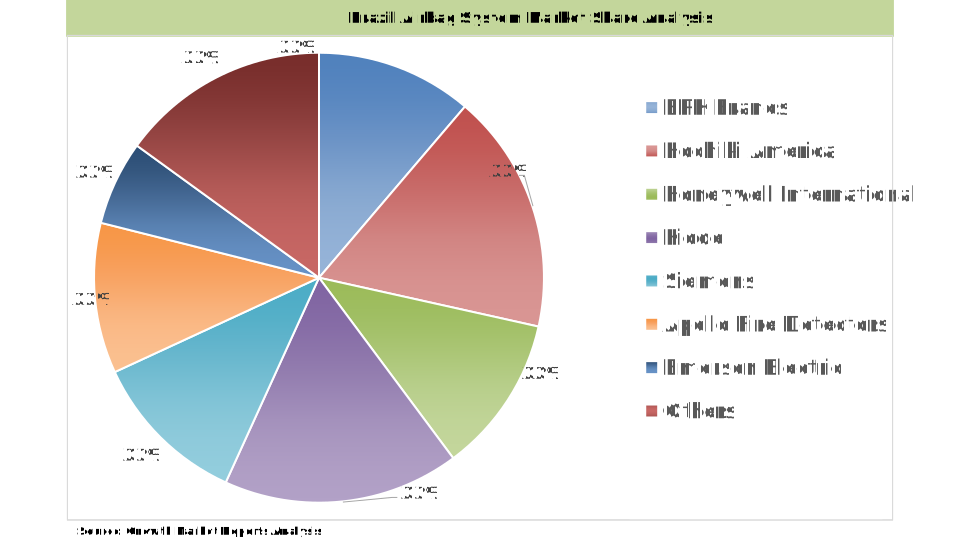

Brazil Airbag System Market Key Players

Frequently Asked Questions

Challenges include high development and integration costs, diverse regulatory requirements, risk of product recalls, and the need for continuous innovation to address new vehicle architectures and safety standards.

Key companies include Autoliv Inc., ZF Friedrichshafen AG, Joyson Safety Systems, Hyundai Mobis Co., Ltd., Denso Corporation, and Toyoda Gosei Co., Ltd.

Passenger cars account for the largest share, but demand is also rising in light commercial vehicles (LCVs) and heavy commercial vehicles (HCVs) due to regulatory changes and increased safety awareness.

OEM airbag systems are factory-installed in new vehicles, ensuring compliance with safety standards, while aftermarket systems are used for maintenance, upgrades, or replacement in existing vehicles.

Technological advancements, such as smart sensors, adaptive deployment mechanisms, and integration with ADAS, are making airbag systems more effective, reliable, and suitable for a wider range of vehicles.

Common airbag types include front airbags, side airbags, curtain airbags, knee airbags, rear-seat airbags, and pedestrian airbags.

Key components include airbag modules, crash sensors, diagnostic sensors, steering wheels, inflators, wiring harnesses, and control units.

Asia Pacific dominates the airbag system market, particularly China, India, and Japan, followed by North America and Europe. Latin America and the Middle East & Africa are emerging as high-potential markets.

The airbag system market is expected to grow at a CAGR of 7.1% from 2025 to 2033, reaching approximately USD 49.1 billion by 2033.

As of 2024, the global airbag system market size reached USD 26.4 billion, driven by increasing automotive safety regulations and consumer demand for advanced safety features.

Table Of Content

Chapter 1 Executive Summary
Chapter 2 Assumptions and Acronyms Used
Chapter 3 Research Methodology
Chapter 4  Airbag System Market Overview
   4.1 Introduction
      4.1.1 Market Taxonomy
      4.1.2 Market Definition
      4.1.3 Macro-Economic Factors Impacting the Market Growth
   4.2  Airbag System Market Dynamics
      4.2.1 Market Drivers
      4.2.2 Market Restraints
      4.2.3 Market Opportunity
   4.3  Airbag System Market - Supply Chain Analysis
      4.3.1 List of Key Suppliers
      4.3.2 List of Key Distributors
      4.3.3 List of Key Consumers
   4.4 Key Forces Shaping the  Airbag System Market
      4.4.1 Bargaining Power of Suppliers
      4.4.2 Bargaining Power of Buyers
      4.4.3 Threat of Substitution
      4.4.4 Threat of New Entrants
      4.4.5 Competitive Rivalry
   4.5 Global  Airbag System Market Size & Forecast, 2023-2032
      4.5.1  Airbag System Market Size and Y-o-Y Growth
      4.5.2  Airbag System Market Absolute $ Opportunity

Chapter 5 Global  Airbag System Market Analysis and Forecast By Component
   5.1 Introduction
      5.1.1 Key Market Trends & Growth Opportunities By Component
      5.1.2 Basis Point Share (BPS) Analysis By Component
      5.1.3 Absolute $ Opportunity Assessment By Component
   5.2  Airbag System Market Size Forecast By Component
      5.2.1 Airbag Module
      5.2.2 Crash Sensors
      5.2.3 Diagnostic Sensors
      5.2.4 Steering Wheel
      5.2.5 Others
   5.3 Market Attractiveness Analysis By Component

Chapter 6 Global  Airbag System Market Analysis and Forecast By Airbag Type
   6.1 Introduction
      6.1.1 Key Market Trends & Growth Opportunities By Airbag Type
      6.1.2 Basis Point Share (BPS) Analysis By Airbag Type
      6.1.3 Absolute $ Opportunity Assessment By Airbag Type
   6.2  Airbag System Market Size Forecast By Airbag Type
      6.2.1 Front Airbags
      6.2.2 Side Airbags
      6.2.3 Curtain Airbags
      6.2.4 Knee Airbags
      6.2.5 Others
   6.3 Market Attractiveness Analysis By Airbag Type

Chapter 7 Global  Airbag System Market Analysis and Forecast By Vehicle Type
   7.1 Introduction
      7.1.1 Key Market Trends & Growth Opportunities By Vehicle Type
      7.1.2 Basis Point Share (BPS) Analysis By Vehicle Type
      7.1.3 Absolute $ Opportunity Assessment By Vehicle Type
   7.2  Airbag System Market Size Forecast By Vehicle Type
      7.2.1 Passenger Cars
      7.2.2 Light Commercial Vehicles
      7.2.3 Heavy Commercial Vehicles
   7.3 Market Attractiveness Analysis By Vehicle Type

Chapter 8 Global  Airbag System Market Analysis and Forecast By Sales Channel
   8.1 Introduction
      8.1.1 Key Market Trends & Growth Opportunities By Sales Channel
      8.1.2 Basis Point Share (BPS) Analysis By Sales Channel
      8.1.3 Absolute $ Opportunity Assessment By Sales Channel
   8.2  Airbag System Market Size Forecast By Sales Channel
      8.2.1 OEM
      8.2.2 Aftermarket
   8.3 Market Attractiveness Analysis By Sales Channel

Chapter 9 Global  Airbag System Market Analysis and Forecast by Region
   9.1 Introduction
      9.1.1 Key Market Trends & Growth Opportunities By Region
      9.1.2 Basis Point Share (BPS) Analysis By Region
      9.1.3 Absolute $ Opportunity Assessment By Region
   9.2  Airbag System Market Size Forecast By Region
      9.2.1 North America
      9.2.2 Europe
      9.2.3 Asia Pacific
      9.2.4 Latin America
      9.2.5 Middle East & Africa (MEA)
   9.3 Market Attractiveness Analysis By Region

Chapter 10 Coronavirus Disease (COVID-19) Impact 
   10.1 Introduction 
   10.2 Current & Future Impact Analysis 
   10.3 Economic Impact Analysis 
   10.4 Government Policies 
   10.5 Investment Scenario

Chapter 11 North America  Airbag System Analysis and Forecast
   11.1 Introduction
   11.2 North America  Airbag System Market Size Forecast by Country
      11.2.1 U.S.
      11.2.2 Canada
   11.3 Basis Point Share (BPS) Analysis by Country
   11.4 Absolute $ Opportunity Assessment by Country
   11.5 Market Attractiveness Analysis by Country
   11.6 North America  Airbag System Market Size Forecast By Component
      11.6.1 Airbag Module
      11.6.2 Crash Sensors
      11.6.3 Diagnostic Sensors
      11.6.4 Steering Wheel
      11.6.5 Others
   11.7 Basis Point Share (BPS) Analysis By Component 
   11.8 Absolute $ Opportunity Assessment By Component 
   11.9 Market Attractiveness Analysis By Component
   11.10 North America  Airbag System Market Size Forecast By Airbag Type
      11.10.1 Front Airbags
      11.10.2 Side Airbags
      11.10.3 Curtain Airbags
      11.10.4 Knee Airbags
      11.10.5 Others
   11.11 Basis Point Share (BPS) Analysis By Airbag Type 
   11.12 Absolute $ Opportunity Assessment By Airbag Type 
   11.13 Market Attractiveness Analysis By Airbag Type
   11.14 North America  Airbag System Market Size Forecast By Vehicle Type
      11.14.1 Passenger Cars
      11.14.2 Light Commercial Vehicles
      11.14.3 Heavy Commercial Vehicles
   11.15 Basis Point Share (BPS) Analysis By Vehicle Type 
   11.16 Absolute $ Opportunity Assessment By Vehicle Type 
   11.17 Market Attractiveness Analysis By Vehicle Type
   11.18 North America  Airbag System Market Size Forecast By Sales Channel
      11.18.1 OEM
      11.18.2 Aftermarket
   11.19 Basis Point Share (BPS) Analysis By Sales Channel 
   11.20 Absolute $ Opportunity Assessment By Sales Channel 
   11.21 Market Attractiveness Analysis By Sales Channel

Chapter 12 Europe  Airbag System Analysis and Forecast
   12.1 Introduction
   12.2 Europe  Airbag System Market Size Forecast by Country
      12.2.1 Germany
      12.2.2 France
      12.2.3 Italy
      12.2.4 U.K.
      12.2.5 Spain
      12.2.6 Russia
      12.2.7 Rest of Europe
   12.3 Basis Point Share (BPS) Analysis by Country
   12.4 Absolute $ Opportunity Assessment by Country
   12.5 Market Attractiveness Analysis by Country
   12.6 Europe  Airbag System Market Size Forecast By Component
      12.6.1 Airbag Module
      12.6.2 Crash Sensors
      12.6.3 Diagnostic Sensors
      12.6.4 Steering Wheel
      12.6.5 Others
   12.7 Basis Point Share (BPS) Analysis By Component 
   12.8 Absolute $ Opportunity Assessment By Component 
   12.9 Market Attractiveness Analysis By Component
   12.10 Europe  Airbag System Market Size Forecast By Airbag Type
      12.10.1 Front Airbags
      12.10.2 Side Airbags
      12.10.3 Curtain Airbags
      12.10.4 Knee Airbags
      12.10.5 Others
   12.11 Basis Point Share (BPS) Analysis By Airbag Type 
   12.12 Absolute $ Opportunity Assessment By Airbag Type 
   12.13 Market Attractiveness Analysis By Airbag Type
   12.14 Europe  Airbag System Market Size Forecast By Vehicle Type
      12.14.1 Passenger Cars
      12.14.2 Light Commercial Vehicles
      12.14.3 Heavy Commercial Vehicles
   12.15 Basis Point Share (BPS) Analysis By Vehicle Type 
   12.16 Absolute $ Opportunity Assessment By Vehicle Type 
   12.17 Market Attractiveness Analysis By Vehicle Type
   12.18 Europe  Airbag System Market Size Forecast By Sales Channel
      12.18.1 OEM
      12.18.2 Aftermarket
   12.19 Basis Point Share (BPS) Analysis By Sales Channel 
   12.20 Absolute $ Opportunity Assessment By Sales Channel 
   12.21 Market Attractiveness Analysis By Sales Channel

Chapter 13 Asia Pacific  Airbag System Analysis and Forecast
   13.1 Introduction
   13.2 Asia Pacific  Airbag System Market Size Forecast by Country
      13.2.1 China
      13.2.2 Japan
      13.2.3 South Korea
      13.2.4 India
      13.2.5 Australia
      13.2.6 South East Asia (SEA)
      13.2.7 Rest of Asia Pacific (APAC)
   13.3 Basis Point Share (BPS) Analysis by Country
   13.4 Absolute $ Opportunity Assessment by Country
   13.5 Market Attractiveness Analysis by Country
   13.6 Asia Pacific  Airbag System Market Size Forecast By Component
      13.6.1 Airbag Module
      13.6.2 Crash Sensors
      13.6.3 Diagnostic Sensors
      13.6.4 Steering Wheel
      13.6.5 Others
   13.7 Basis Point Share (BPS) Analysis By Component 
   13.8 Absolute $ Opportunity Assessment By Component 
   13.9 Market Attractiveness Analysis By Component
   13.10 Asia Pacific  Airbag System Market Size Forecast By Airbag Type
      13.10.1 Front Airbags
      13.10.2 Side Airbags
      13.10.3 Curtain Airbags
      13.10.4 Knee Airbags
      13.10.5 Others
   13.11 Basis Point Share (BPS) Analysis By Airbag Type 
   13.12 Absolute $ Opportunity Assessment By Airbag Type 
   13.13 Market Attractiveness Analysis By Airbag Type
   13.14 Asia Pacific  Airbag System Market Size Forecast By Vehicle Type
      13.14.1 Passenger Cars
      13.14.2 Light Commercial Vehicles
      13.14.3 Heavy Commercial Vehicles
   13.15 Basis Point Share (BPS) Analysis By Vehicle Type 
   13.16 Absolute $ Opportunity Assessment By Vehicle Type 
   13.17 Market Attractiveness Analysis By Vehicle Type
   13.18 Asia Pacific  Airbag System Market Size Forecast By Sales Channel
      13.18.1 OEM
      13.18.2 Aftermarket
   13.19 Basis Point Share (BPS) Analysis By Sales Channel 
   13.20 Absolute $ Opportunity Assessment By Sales Channel 
   13.21 Market Attractiveness Analysis By Sales Channel

Chapter 14 Latin America  Airbag System Analysis and Forecast
   14.1 Introduction
   14.2 Latin America  Airbag System Market Size Forecast by Country
      14.2.1 Brazil
      14.2.2 Mexico
      14.2.3 Rest of Latin America (LATAM)
   14.3 Basis Point Share (BPS) Analysis by Country
   14.4 Absolute $ Opportunity Assessment by Country
   14.5 Market Attractiveness Analysis by Country
   14.6 Latin America  Airbag System Market Size Forecast By Component
      14.6.1 Airbag Module
      14.6.2 Crash Sensors
      14.6.3 Diagnostic Sensors
      14.6.4 Steering Wheel
      14.6.5 Others
   14.7 Basis Point Share (BPS) Analysis By Component 
   14.8 Absolute $ Opportunity Assessment By Component 
   14.9 Market Attractiveness Analysis By Component
   14.10 Latin America  Airbag System Market Size Forecast By Airbag Type
      14.10.1 Front Airbags
      14.10.2 Side Airbags
      14.10.3 Curtain Airbags
      14.10.4 Knee Airbags
      14.10.5 Others
   14.11 Basis Point Share (BPS) Analysis By Airbag Type 
   14.12 Absolute $ Opportunity Assessment By Airbag Type 
   14.13 Market Attractiveness Analysis By Airbag Type
   14.14 Latin America  Airbag System Market Size Forecast By Vehicle Type
      14.14.1 Passenger Cars
      14.14.2 Light Commercial Vehicles
      14.14.3 Heavy Commercial Vehicles
   14.15 Basis Point Share (BPS) Analysis By Vehicle Type 
   14.16 Absolute $ Opportunity Assessment By Vehicle Type 
   14.17 Market Attractiveness Analysis By Vehicle Type
   14.18 Latin America  Airbag System Market Size Forecast By Sales Channel
      14.18.1 OEM
      14.18.2 Aftermarket
   14.19 Basis Point Share (BPS) Analysis By Sales Channel 
   14.20 Absolute $ Opportunity Assessment By Sales Channel 
   14.21 Market Attractiveness Analysis By Sales Channel

Chapter 15 Middle East & Africa (MEA)  Airbag System Analysis and Forecast
   15.1 Introduction
   15.2 Middle East & Africa (MEA)  Airbag System Market Size Forecast by Country
      15.2.1 Saudi Arabia
      15.2.2 South Africa
      15.2.3 UAE
      15.2.4 Rest of Middle East & Africa (MEA)
   15.3 Basis Point Share (BPS) Analysis by Country
   15.4 Absolute $ Opportunity Assessment by Country
   15.5 Market Attractiveness Analysis by Country
   15.6 Middle East & Africa (MEA)  Airbag System Market Size Forecast By Component
      15.6.1 Airbag Module
      15.6.2 Crash Sensors
      15.6.3 Diagnostic Sensors
      15.6.4 Steering Wheel
      15.6.5 Others
   15.7 Basis Point Share (BPS) Analysis By Component 
   15.8 Absolute $ Opportunity Assessment By Component 
   15.9 Market Attractiveness Analysis By Component
   15.10 Middle East & Africa (MEA)  Airbag System Market Size Forecast By Airbag Type
      15.10.1 Front Airbags
      15.10.2 Side Airbags
      15.10.3 Curtain Airbags
      15.10.4 Knee Airbags
      15.10.5 Others
   15.11 Basis Point Share (BPS) Analysis By Airbag Type 
   15.12 Absolute $ Opportunity Assessment By Airbag Type 
   15.13 Market Attractiveness Analysis By Airbag Type
   15.14 Middle East & Africa (MEA)  Airbag System Market Size Forecast By Vehicle Type
      15.14.1 Passenger Cars
      15.14.2 Light Commercial Vehicles
      15.14.3 Heavy Commercial Vehicles
   15.15 Basis Point Share (BPS) Analysis By Vehicle Type 
   15.16 Absolute $ Opportunity Assessment By Vehicle Type 
   15.17 Market Attractiveness Analysis By Vehicle Type
   15.18 Middle East & Africa (MEA)  Airbag System Market Size Forecast By Sales Channel
      15.18.1 OEM
      15.18.2 Aftermarket
   15.19 Basis Point Share (BPS) Analysis By Sales Channel 
   15.20 Absolute $ Opportunity Assessment By Sales Channel 
   15.21 Market Attractiveness Analysis By Sales Channel

Chapter 16 Competition Landscape 
   16.1  Airbag System Market: Competitive Dashboard
   16.2 Global  Airbag System Market: Market Share Analysis, 2023
   16.3 Company Profiles (Details – Overview, Financials, Developments, Strategy) 
      16.3.1 Autoliv, Inc.
ZF Friedrichshafen AG
Joyson Safety Systems
Hyundai Mobis Co., Ltd.
Denso Corporation
Toyoda Gosei Co., Ltd.
Nihon Plast Co., Ltd.
Ashimori Industry Co., Ltd.
Takata Corporation
Continental AG
Robert Bosch GmbH
TRW Automotive Holdings Corp.
Key Safety Systems
Toray Industries, Inc.
Daicel Corporation
Kolon Industries, Inc.
Hyosung Corporation
U-Shin Ltd.
East Joy Long Motor Airbag Co., Ltd.
Wuhu Resh Safety System Co., Ltd.

Methodology

Our Clients

General Electric
Deloitte
Pfizer
FedEx Logistics
The John Holland Group
Microsoft
sinopec
Nestle SA