Bicycle Brake Components Market Research Report 2033

Bicycle Brake Components Market Research Report 2033

Segments - by Product Type (Disc Brakes, Rim Brakes, Drum Brakes, Coaster Brakes, Others), by Material (Aluminum, Steel, Carbon Fiber, Others), by Application (Mountain Bikes, Road Bikes, Hybrid Bikes, Electric Bikes, Others), by Sales Channel (OEM, Aftermarket, Online Retail, Specialty Stores, Others)

https://growthmarketreports.com/Raksha
Author : Raksha Sharma
https://growthmarketreports.com/Vaibhav
Fact-checked by : V. Chandola
https://growthmarketreports.com/Shruti
Editor : Shruti Bhat

Upcoming | Report ID :AL-108 | 4.3 Rating | 66 Reviews | 277 Pages | Format : Docx PDF

Report Description


Bicycle Brake Components Market Outlook

According to our latest research, the global Bicycle Brake Components market size reached USD 9.84 billion in 2024. Driven by ongoing advancements in cycling technology, urban mobility trends, and rising safety concerns, the market is projected to grow at a CAGR of 5.7% during the forecast period. By 2033, the Bicycle Brake Components market is expected to attain a value of USD 16.25 billion. This robust growth is primarily attributed to increased bicycle adoption across both developed and emerging economies, as well as a rising emphasis on high-performance and durable braking systems.

One of the key growth factors propelling the Bicycle Brake Components market is the global shift towards eco-friendly transportation solutions. As urban congestion and environmental concerns mount, bicycles are increasingly being viewed as a viable alternative to motor vehicles for daily commutes and recreational purposes. This trend is amplified by government initiatives promoting cycling infrastructure and incentives for sustainable mobility, which directly fuel demand for advanced braking systems. Additionally, the surge in cycling sports and fitness activities has led consumers to prioritize safety and performance, further boosting the market for high-quality brake components. The integration of electric bikes (e-bikes) into mainstream mobility is also driving innovation, as these vehicles require specialized braking solutions to handle higher speeds and weights.

Another significant driver for the Bicycle Brake Components market is technological innovation in materials and design. Manufacturers are investing heavily in research and development to produce lightweight, durable, and high-efficiency brake systems. The adoption of disc brakes, for instance, has surged due to their superior stopping power and reliability under diverse weather conditions. Carbon fiber and advanced aluminum alloys are being increasingly used to reduce weight and enhance performance, attracting both professional cyclists and casual riders. Moreover, the proliferation of smart technologies, such as electronic braking systems and integrated sensors, is expected to create new avenues for growth, catering to the evolving needs of tech-savvy consumers.

The market is also benefiting from the expansion of aftermarket and online retail channels, which have made it easier for consumers to access a wide range of bicycle brake components. The rise of do-it-yourself (DIY) culture among cycling enthusiasts has led to increased sales of individual components, as users seek to upgrade or customize their bikes. This trend is particularly pronounced in regions with strong cycling communities and established e-commerce ecosystems. Furthermore, collaborations between leading manufacturers and specialty stores are enhancing product visibility and consumer trust, thereby accelerating market penetration. As the market matures, strategic partnerships and mergers are likely to play a pivotal role in shaping the competitive landscape.

Brake Pads play a crucial role in the overall performance and safety of bicycle braking systems. As the direct point of contact with the wheel, brake pads are essential for ensuring effective stopping power and control. The choice of material for brake pads can significantly influence their durability, heat dissipation, and noise reduction capabilities. With the increasing demand for high-performance bicycles, manufacturers are focusing on developing advanced brake pad materials that offer superior friction and longevity. Organic, semi-metallic, and sintered pads are among the popular choices, each offering distinct advantages depending on the cycling conditions and rider preferences. As cycling technology continues to evolve, the innovation in brake pad materials and designs is expected to enhance the overall efficiency and reliability of bicycle braking systems.

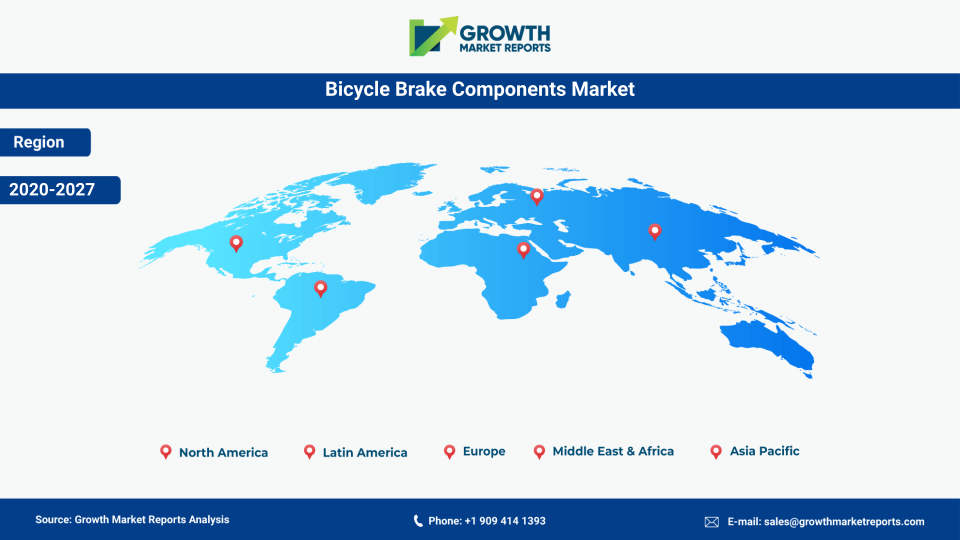
Regionally, Asia Pacific dominates the Bicycle Brake Components market, accounting for the largest share in 2024, driven by high bicycle production, a vast consumer base, and rapid urbanization. North America and Europe follow closely, with strong demand stemming from recreational cycling, fitness trends, and government-backed cycling infrastructure projects. Emerging economies in Latin America and the Middle East & Africa are also witnessing increased adoption, although market growth in these regions is somewhat constrained by limited infrastructure and lower consumer awareness. Nonetheless, ongoing investments in urban mobility and public health campaigns are expected to gradually unlock new opportunities in these markets.

Global Bicycle Brake Components Industry Outlook

Product Type Analysis

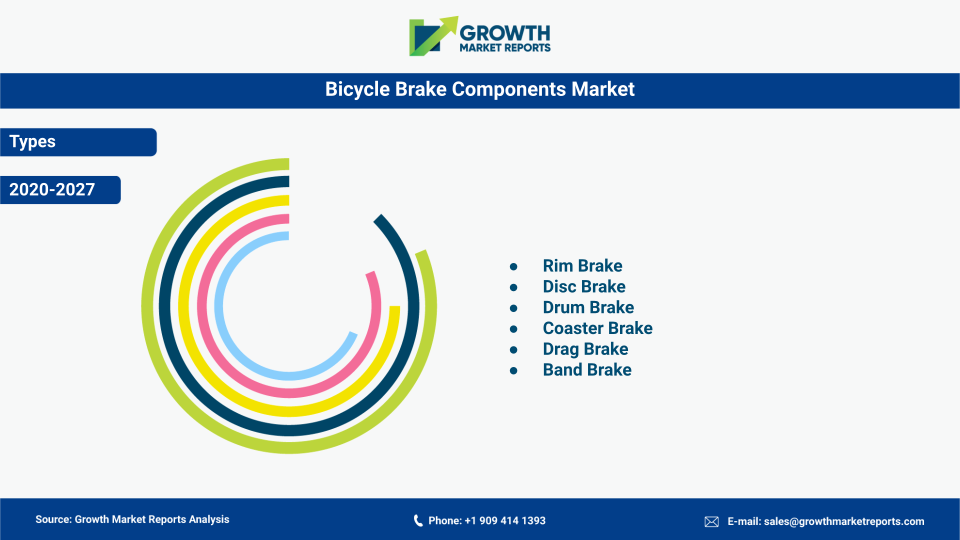
The Product Type segment of the Bicycle Brake Components market encompasses a diverse array of braking systems, including disc brakes, rim brakes, drum brakes, coaster brakes, and others. Among these, disc brakes have emerged as the fastest-growing and most popular category, particularly in high-performance and off-road cycling applications. Their superior stopping power, consistent performance in various weather conditions, and reduced wear on rims make them the preferred choice for mountain bikes and increasingly for road bikes. The transition from traditional rim brakes to disc brakes has been accelerated by advancements in hydraulic and mechanical disc brake technologies, which offer enhanced modulation and reliability. As a result, leading bicycle manufacturers are integrating disc brakes across a broader range of models, further driving market growth.

Rim brakes, while gradually losing market share to disc brakes, continue to hold significant relevance, especially in entry-level and lightweight road bikes. Their simple design, ease of maintenance, and cost-effectiveness make them a popular choice among casual cyclists and budget-conscious consumers. However, rim brakes are less effective in wet or muddy conditions, which limits their adoption in certain terrains and climates. Manufacturers are responding by improving the materials and designs of rim brake pads and calipers, aiming to extend their lifecycle and performance. Despite the growing dominance of disc brakes, rim brakes are expected to retain a substantial foothold in the market, particularly in regions where cost sensitivity remains high.

Drum brakes and coaster brakes cater to specific segments of the Bicycle Brake Components market, such as commuter bikes, childrenÂ’s bicycles, and utility cycles. Drum brakes are valued for their durability, low maintenance requirements, and enclosed design, which protects them from dirt and moisture. Coaster brakes, which engage when the rider pedals backward, are highly favored for their simplicity and safety, particularly in childrenÂ’s bikes and urban commuter models. Although these braking systems occupy a smaller market share compared to disc and rim brakes, they play a crucial role in addressing the unique needs of niche segments. Manufacturers continue to innovate within these categories, focusing on improving efficiency and reducing weight.

The “Others” category within the product type segment includes emerging and hybrid braking technologies, such as electronic braking systems and regenerative braking mechanisms for electric bikes. As the market for e-bikes expands, demand for specialized braking solutions that can handle higher speeds and greater loads is increasing. Electronic braking systems, which offer precise control and integration with onboard electronics, are gaining traction among premium and performance-oriented models. Additionally, regenerative braking technology, which recovers kinetic energy during braking, is being explored as a means to enhance battery efficiency in electric bikes. These innovations are expected to drive future growth and diversification within the product type segment.

Overall, the product type segment reflects the dynamic and evolving nature of the Bicycle Brake Components market. The shift towards advanced braking systems, coupled with ongoing improvements in traditional technologies, ensures that manufacturers must remain agile and responsive to changing consumer preferences. As competition intensifies, the ability to offer a comprehensive portfolio of braking solutions tailored to diverse applications will be a key differentiator in the market.

Report Scope

Attributes Details
Report Title Bicycle Brake Components Market Research Report 2033
By Product Type Disc Brakes, Rim Brakes, Drum Brakes, Coaster Brakes, Others
By Material Aluminum, Steel, Carbon Fiber, Others
By Application Mountain Bikes, Road Bikes, Hybrid Bikes, Electric Bikes, Others
By Sales Channel OEM, Aftermarket, Online Retail, Specialty Stores, Others
Regions Covered North America, Europe, APAC, Latin America, MEA
Base Year 2024
Historic Data 2018-2023
Forecast Period 2025-2033
Number of Pages 277
Number of Tables & Figures 362
Customization Available Yes, the report can be customized as per your need.

Material Analysis

The Material segment in the Bicycle Brake Components market plays a pivotal role in determining the performance, durability, and cost of braking systems. Aluminum remains the most widely used material, thanks to its excellent balance of strength, lightweight properties, and corrosion resistance. Aluminum-based brake components are favored by both manufacturers and consumers for their affordability and versatility, making them a staple in mass-market bicycles. The widespread availability and ease of fabrication further contribute to the dominance of aluminum in the market. However, as consumer preferences shift towards high-performance cycling, there is a growing demand for advanced materials that offer superior characteristics.

Steel is another important material in the Bicycle Brake Components market, particularly valued for its robustness and longevity. Steel brake components are commonly found in heavy-duty and utility bicycles, where durability and load-bearing capacity are paramount. While steel is heavier than aluminum, its ability to withstand extreme conditions and repeated stress makes it an ideal choice for commuter bikes and those used in rugged environments. Manufacturers are continually refining steel alloys to enhance their strength-to-weight ratio, aiming to bridge the gap between performance and durability. Despite the trend towards lighter materials, steel remains indispensable in certain market segments due to its cost-effectiveness and reliability.

Carbon fiber has emerged as the material of choice for high-end and performance-oriented bicycle brake components. Its exceptional strength-to-weight ratio, stiffness, and resistance to fatigue make it ideal for competitive cycling and premium models. Carbon fiber brake levers, calipers, and rotors are increasingly being adopted by professional cyclists and enthusiasts seeking to optimize speed and handling. However, the high cost of carbon fiber production has limited its penetration to the upper echelons of the market. Ongoing advancements in manufacturing processes and economies of scale are expected to gradually reduce costs, paving the way for broader adoption of carbon fiber components in the coming years.

The “Others” category within the material segment includes emerging materials such as titanium, magnesium alloys, and composite polymers. These materials are being explored for their unique properties, such as enhanced corrosion resistance, reduced weight, and improved thermal management. Titanium, in particular, is gaining attention for its combination of strength, lightness, and biocompatibility, making it suitable for custom and high-performance applications. Composite polymers, on the other hand, offer the potential for cost-effective mass production while maintaining desirable mechanical properties. As the Bicycle Brake Components market continues to evolve, the development and integration of new materials will be crucial in meeting the diverse needs of consumers and applications.

Material selection is a critical factor influencing the overall performance and marketability of bicycle brake components. Manufacturers must carefully balance cost, weight, durability, and performance to cater to different market segments. The ongoing quest for innovation in materials science is expected to drive significant advancements in braking technology, offering consumers a wider array of choices tailored to their specific requirements. As environmental sustainability becomes increasingly important, the adoption of recyclable and eco-friendly materials is also likely to gain traction, further shaping the future landscape of the market.

Application Analysis

The Application segment of the Bicycle Brake Components market encompasses a wide range of bicycle types, each with distinct requirements and consumer preferences. Mountain bikes represent one of the largest and most dynamic segments, driven by the popularity of off-road cycling and adventure sports. These bikes demand robust and high-performance braking systems capable of handling steep descents, rough terrains, and variable weather conditions. Disc brakes, particularly hydraulic variants, have become the standard in mountain biking due to their superior modulation and stopping power. Manufacturers are continuously innovating to enhance the reliability and durability of brake components for this segment, catering to both amateur enthusiasts and professional athletes.

Road bikes constitute another significant application area within the Bicycle Brake Components market. The emphasis in this segment is on lightweight construction, aerodynamics, and precise braking control. While rim brakes have traditionally dominated road biking, there is a noticeable shift towards disc brakes, especially in high-end and competitive models. This transition is fueled by advancements in disc brake technology, which now offers comparable weight and improved performance under diverse conditions. Manufacturers are also focusing on developing integrated braking systems that seamlessly blend with the bikeÂ’s overall design, enhancing both aesthetics and functionality. The growing popularity of road cycling events and endurance races is expected to sustain demand for advanced brake components in this segment.

Hybrid bikes, designed for versatility and everyday use, occupy a unique position in the Bicycle Brake Components market. These bikes blend features from both road and mountain bikes, requiring braking systems that offer a balance of performance, durability, and ease of maintenance. Both disc and rim brakes are commonly used in hybrid bikes, with manufacturers offering a range of options to cater to different user preferences. The rising trend of urban commuting and recreational cycling is driving growth in this segment, as consumers seek reliable and efficient braking solutions for diverse riding conditions. Innovations in modular and adjustable brake systems are particularly well-received in the hybrid bike market, providing users with greater flexibility and control.

Electric bikes (e-bikes) represent the fastest-growing application segment in the Bicycle Brake Components market. The integration of electric propulsion systems introduces new challenges and opportunities for brake component manufacturers. E-bikes typically operate at higher speeds and carry greater loads than traditional bicycles, necessitating more powerful and responsive braking systems. Disc brakes, often with enhanced heat dissipation and regenerative capabilities, are increasingly being specified for e-bikes. Manufacturers are also exploring the integration of electronic braking systems and sensors to optimize performance and safety. The rapid adoption of e-bikes in urban centers and among older demographics is expected to drive significant demand for specialized brake components tailored to this segment.

The “Others” category within the application segment includes niche bicycle types such as folding bikes, cargo bikes, and children’s bicycles. Each of these applications presents unique requirements in terms of size, weight, and safety features. For instance, cargo bikes, which are designed to transport heavy loads, require robust and reliable braking systems to ensure safe operation. Children’s bikes prioritize simplicity and safety, often utilizing coaster or drum brakes. Manufacturers are responding to these diverse needs by offering customized solutions and modular components that can be adapted to different bicycle types. As urban mobility trends continue to evolve, the application segment is expected to witness further diversification, creating new opportunities for innovation and market expansion.

Sales Channel Analysis

The Sales Channel segment in the Bicycle Brake Components market is characterized by a diverse and evolving distribution landscape. Original Equipment Manufacturer (OEM) sales represent a significant portion of the market, as leading bicycle brands source brake components directly from specialized suppliers. OEM partnerships are crucial for ensuring product quality, compatibility, and timely delivery, particularly for high-volume production. The increasing trend towards integrated supply chains and strategic alliances between bicycle manufacturers and brake component suppliers is enhancing efficiency and driving innovation. OEM sales are particularly dominant in the mass-market and premium bicycle segments, where brand reputation and performance are paramount.

The aftermarket segment is experiencing robust growth, fueled by the rising popularity of DIY bike maintenance and customization among cycling enthusiasts. Consumers are increasingly seeking to upgrade or replace brake components to enhance performance, safety, or aesthetics. The availability of a wide range of aftermarket products, including high-performance disc brakes, lightweight levers, and specialized pads, has made it easier for users to tailor their bikes to specific needs. Manufacturers and retailers are responding by expanding their product portfolios and offering comprehensive support services, such as installation guides and technical assistance. The aftermarket channel is particularly strong in regions with established cycling cultures and high rates of bicycle ownership.

Online retail has emerged as a transformative force in the Bicycle Brake Components market, offering consumers unparalleled convenience, product variety, and competitive pricing. E-commerce platforms and specialized online stores provide access to a global marketplace, enabling users to compare products, read reviews, and make informed purchasing decisions. The growth of online retail is being driven by increasing internet penetration, mobile device usage, and digital payment solutions. Manufacturers are leveraging online channels to reach new customer segments, launch exclusive products, and gather valuable consumer insights. The shift towards online retail is expected to continue, with digital marketing and direct-to-consumer strategies playing an increasingly important role in market expansion.

Specialty stores remain a vital sales channel, particularly for high-end and performance-oriented brake components. These stores offer expert advice, personalized service, and hands-on product demonstrations, which are highly valued by serious cyclists and enthusiasts. The ability to physically inspect and test products before purchase is a key advantage of specialty stores, fostering trust and customer loyalty. Many specialty retailers are also embracing omnichannel strategies, integrating online and offline sales to provide a seamless shopping experience. Collaborations between manufacturers and specialty stores are enhancing brand visibility and driving sales of premium brake components.

The “Others” category within the sales channel segment includes emerging distribution models such as direct-to-consumer (DTC) brands, pop-up stores, and subscription services. DTC brands are leveraging digital platforms to bypass traditional intermediaries, offering high-quality brake components at competitive prices. Pop-up stores and experiential retail formats are being used to engage consumers and showcase new products in high-traffic locations. Subscription services, which provide regular maintenance kits and component replacements, are gaining traction among urban commuters and fleet operators. As the Bicycle Brake Components market continues to evolve, the ability to adapt to changing consumer preferences and leverage multiple sales channels will be critical for sustained growth and competitiveness.

Opportunities & Threats

The Bicycle Brake Components market presents a wealth of opportunities for growth and innovation, driven by evolving consumer preferences, technological advancements, and expanding application areas. One of the most promising opportunities lies in the rapid adoption of electric bikes (e-bikes), which require specialized braking systems to accommodate higher speeds and heavier loads. Manufacturers that can develop advanced, lightweight, and energy-efficient brake components tailored to e-bikes are well-positioned to capture significant market share. Additionally, the integration of smart technologies, such as electronic braking systems and IoT-enabled sensors, offers the potential to enhance safety, performance, and user experience. These innovations are expected to create new revenue streams and differentiate products in an increasingly competitive market.

Another major opportunity in the Bicycle Brake Components market is the growing emphasis on sustainability and environmental responsibility. As consumers become more conscious of the environmental impact of their purchasing decisions, there is increasing demand for eco-friendly materials, recyclable components, and sustainable manufacturing practices. Companies that prioritize sustainability in their product development and supply chain management can enhance their brand reputation and appeal to a broader customer base. Furthermore, government initiatives promoting cycling infrastructure and active transportation are expected to drive long-term demand for bicycles and related components. Strategic collaborations with urban planners, public health organizations, and mobility service providers can help manufacturers tap into new markets and accelerate adoption.

Despite the positive outlook, the Bicycle Brake Components market faces several restraining factors that could impede growth. One of the primary challenges is the high cost associated with advanced materials and technologies, such as carbon fiber and electronic braking systems. These costs can limit adoption among price-sensitive consumers and in emerging markets where affordability remains a key concern. Additionally, the market is subject to fluctuations in raw material prices, supply chain disruptions, and regulatory changes, which can impact profitability and operational efficiency. Manufacturers must navigate these challenges by optimizing production processes, diversifying their supplier base, and investing in research and development to achieve cost-effective innovation.

Regional Outlook

Regionally, the Asia Pacific region leads the Bicycle Brake Components market, accounting for the largest market share with a value of USD 4.1 billion in 2024. This dominance is driven by the regionÂ’s strong bicycle manufacturing base, particularly in countries such as China, Japan, and Taiwan, which are major exporters of both bicycles and components. The rapid pace of urbanization, growing middle-class population, and government initiatives promoting cycling as a sustainable mode of transportation have further fueled demand. The region is also witnessing a surge in e-bike adoption, particularly in urban centers, creating new opportunities for brake component manufacturers. With a projected CAGR of 6.2% through 2033, Asia Pacific is expected to maintain its leadership position, driven by continued investments in infrastructure and technological innovation.

Europe represents the second-largest market for bicycle brake components, with a market size of USD 2.85 billion in 2024. The region is characterized by a strong cycling culture, well-developed infrastructure, and supportive regulatory frameworks that encourage active transportation. Countries such as Germany, the Netherlands, and Denmark have high rates of bicycle ownership and usage, driving consistent demand for high-quality brake components. The growing popularity of e-bikes and cargo bikes in urban areas is further boosting market growth. European consumers are particularly discerning, placing a premium on safety, performance, and sustainability. Manufacturers are responding by offering innovative and eco-friendly products tailored to regional preferences. The market is expected to grow steadily, supported by ongoing investments in cycling infrastructure and public health initiatives.

In North America, the Bicycle Brake Components market was valued at USD 1.95 billion in 2024. The region is experiencing a resurgence in cycling, driven by increased health consciousness, environmental awareness, and urban mobility trends. The United States and Canada are witnessing significant investments in cycling infrastructure, bike-sharing programs, and public awareness campaigns. The aftermarket segment is particularly strong in North America, as consumers seek to upgrade and customize their bicycles. While the market faces challenges related to seasonality and weather conditions, the growing popularity of recreational cycling and e-bikes is expected to drive sustained demand. The North American market is projected to grow at a steady pace, with a focus on innovation and premium product offerings.

Bicycle Brake Components Market Statistics

Competitor Outlook

The Bicycle Brake Components market is highly competitive, characterized by a mix of established global players and emerging regional manufacturers. The competitive landscape is shaped by continuous innovation, strategic partnerships, and a relentless focus on quality and performance. Leading companies invest heavily in research and development to introduce cutting-edge technologies, such as hydraulic disc brakes, carbon fiber components, and electronic braking systems. Brand reputation, product reliability, and after-sales support are critical differentiators in this market, especially among discerning consumers and professional cyclists. Companies are also leveraging digital platforms and data analytics to enhance customer engagement, optimize supply chains, and identify new growth opportunities.

Mergers, acquisitions, and strategic alliances are common strategies employed by key players to expand their product portfolios, enter new markets, and achieve economies of scale. Collaborative efforts between bicycle manufacturers and brake component suppliers are driving the development of integrated and customized solutions tailored to specific applications and consumer preferences. The rise of direct-to-consumer brands and online retail is intensifying competition, as new entrants challenge traditional distribution models and offer innovative value propositions. To maintain their competitive edge, companies must balance the need for technological innovation with cost management, sustainability, and regulatory compliance.

The market is also witnessing increased focus on sustainability and environmental responsibility, with leading players adopting eco-friendly materials, energy-efficient manufacturing processes, and circular economy principles. Companies are investing in the development of recyclable components, reducing packaging waste, and minimizing their carbon footprint. These initiatives not only enhance brand reputation but also align with evolving consumer expectations and regulatory requirements. As the market continues to evolve, the ability to anticipate and respond to changing trends will be crucial for long-term success.

Among the major companies operating in the Bicycle Brake Components market are Shimano Inc., SRAM LLC, Tektro Technology Corporation, Magura, Campagnolo S.r.l., and Hayes Performance Systems. Shimano Inc. is recognized as a global leader, known for its extensive product portfolio, innovative technologies, and strong OEM partnerships. SRAM LLC has established itself as a key player in high-performance and premium segments, with a focus on advanced disc brake systems and electronic components. Tektro Technology Corporation is renowned for its affordable and reliable brake solutions, catering to both OEM and aftermarket channels. Magura and Campagnolo S.r.l. are prominent in the European market, offering specialized products for road and mountain bikes. Hayes Performance Systems is known for its expertise in hydraulic braking systems and strong presence in the North American market.

These companies are continuously expanding their product offerings, investing in R&D, and exploring new markets to maintain their leadership positions. Strategic collaborations with bicycle manufacturers, specialty stores, and online retailers are enhancing market reach and consumer engagement. The competitive dynamics of the Bicycle Brake Components market are expected to remain intense, with ongoing innovation, sustainability initiatives, and digital transformation shaping the future landscape. As consumer preferences and regulatory requirements continue to evolve, companies that can adapt quickly and deliver value-added solutions will be best positioned for sustained growth and success.

Key Players

  • SRAM
  • Shimano
  • Tektro
  • Magura
  • Hayes Performance Systems
  • Campagnolo
  • TRP (Tektro Racing Products)
  • Formula
  • Hope Technology
  • Avid
  • Promax
  • Clarks Cycle Systems
  • Dia-Compe
  • Paul Component Engineering
  • Jagwire
  • SunRace
  • Box Components
  • Zoom (HL Corp)
  • SwissStop
  • Kool-Stop
Bicycle Brake Components Market Overview

Segments

The Bicycle Brake Components market has been segmented on the basis of

Product Type

  • Disc Brakes
  • Rim Brakes
  • Drum Brakes
  • Coaster Brakes
  • Others

Material

  • Aluminum
  • Steel
  • Carbon Fiber
  • Others

Application

  • Mountain Bikes
  • Road Bikes
  • Hybrid Bikes
  • Electric Bikes
  • Others

Sales Channel

  • OEM
  • Aftermarket
  • Online Retail
  • Specialty Stores
  • Others

Competitive Landscape

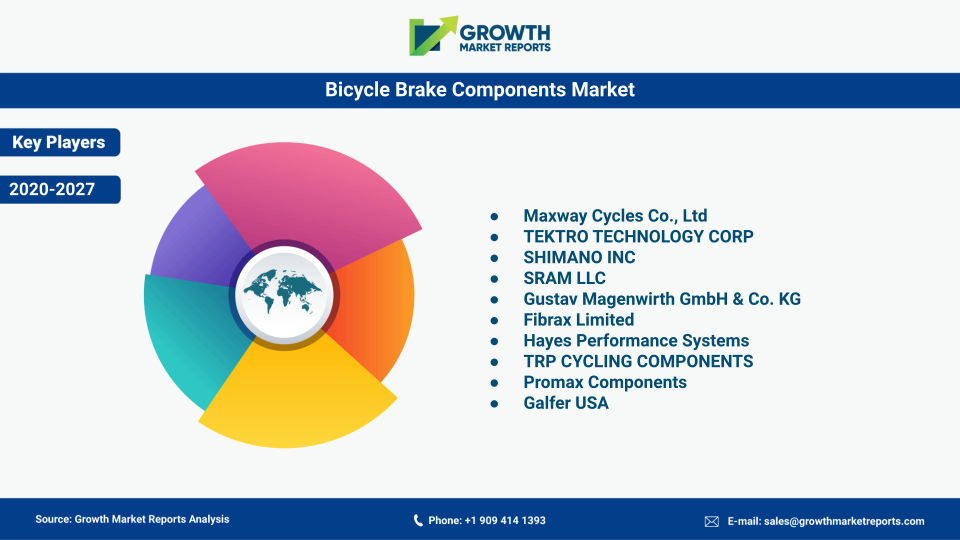
  • Key players in the market include Maxway Cycles Co., Ltd, TEKTRO TECHNOLOGY CORP, SHIMANO INC, SRAM LLC, Gustav Magenwirth GmbH & Co. KG, Fibrax Limited, Hayes Performance Systems, TRP CYCLING COMPONENTS, Promax Components, and Galfer USA. These companies are considered as key manufacturers of bicycle brake based on their revenue, research development (R&D) activities, regional presence, and supply chain management system.
  • The players are adopting key strategies such as acquisition and geographical expansion where potential opportunity for the bicycle brake extraction is added in the company’s capacity.
  • Active involvement of major players in R&D, increasing usage of bicycle brake in refrigeration are the key trends in the market.

Bicycle Brake Components Market Key Players

Video Summary for Bicycle Brake Components Market

Frequently Asked Questions

Major Manufactures include, Maxway Cycles Co., Ltd., TEKTRO TECHNOLOGY CORP, SHIMANO INC, SRAM LLC., and others.

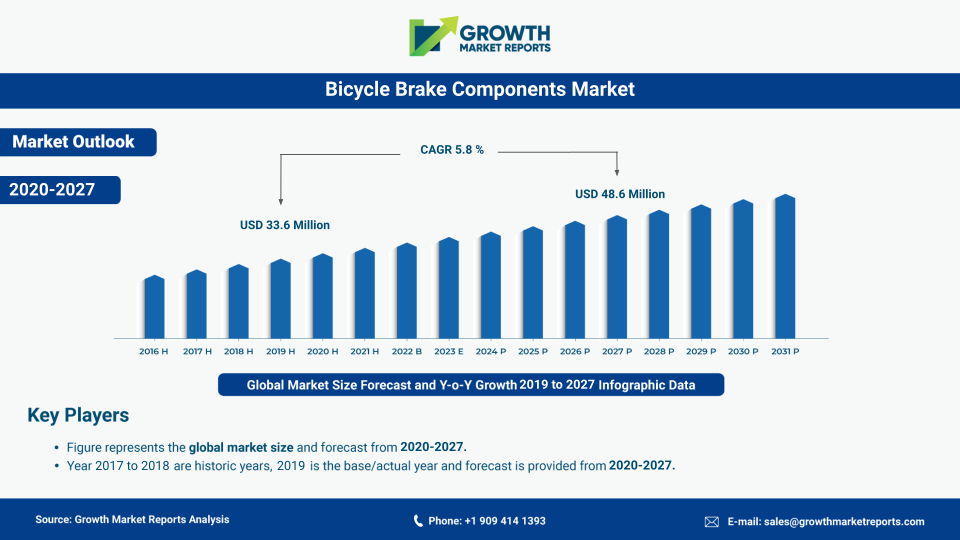
The base year considered for the global bicycle brake components market report is 2019. The complete analysis period is 2017 to 2027, wherein, 2017 & 2018 are the historic years and the forecast is provided from 2020 to 2027.

The market is expected to show significant decline between 2019 and 2020 owing to the negative impact of COVID 19 pandemic on the bicycle brake market. The shutdown of production activities, restrictions on transportation activities, and temporary decline in demand for bicycle brake are some of the prime reasons responsible for this market trend.

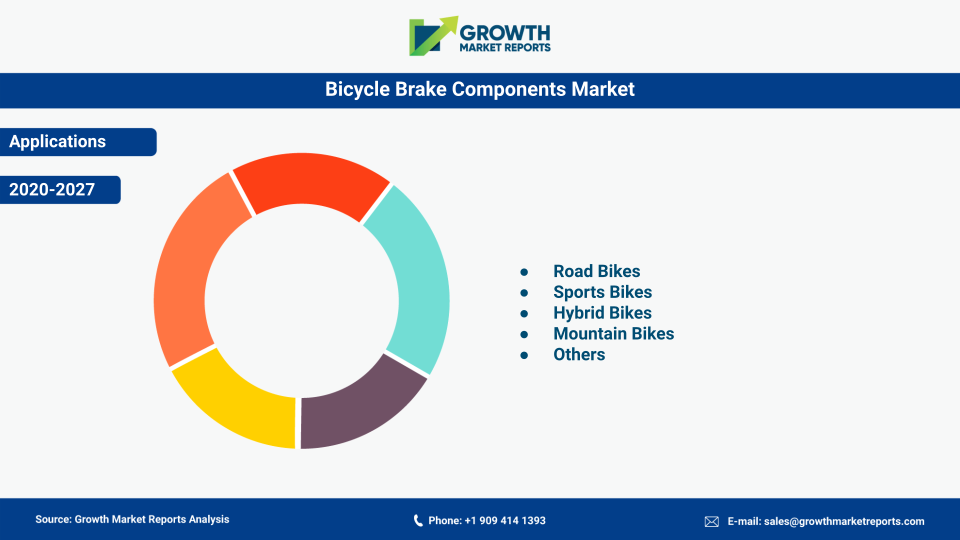
Major applications are in road bikes, sports bikes, hybrid bikes, and mountain bikes.

Increasing preference of people towards bicycle, growing health concerns, rising awareness about pollution, growing population, and increasing prices of fuel are some of the major factors expected to drive the market growth during forecast period. Moreover, high availability of bicycles, spare parts and increasing number of events also boost the sales of bicycles which in return increases demand for bicycle parts such as bicycle brake components.

Factors such as competitive strength and market positioning are key areas considered while selecting top companies to be profiled.

In addition to market size (in USD Million), Volume (‘000 units), and Company Market Share (in % for base year 2019), short term and long-term outlook for bicycle brake components market is available in final report.

According to this Growth Market Reports report, the bicycle brake components market is likely to register a CAGR of 5.8% during forecast period 2020-2027, with an anticipated valuation of USD 48.6 million by the end of the 2027.

Yes, the global bicycle brake components market sales data in the final report.

Additional company profiles can be provided on request.

Table Of Content

Chapter 1 Executive Summary
Chapter 2 Assumptions and Acronyms Used
Chapter 3 Research Methodology
Chapter 4 Bicycle Brake Components Market Overview
   4.1 Introduction
      4.1.1 Market Taxonomy
      4.1.2 Market Definition
      4.1.3 Macro-Economic Factors Impacting the Market Growth
   4.2 Bicycle Brake Components Market Dynamics
      4.2.1 Market Drivers
      4.2.2 Market Restraints
      4.2.3 Market Opportunity
   4.3 Bicycle Brake Components Market - Supply Chain Analysis
      4.3.1 List of Key Suppliers
      4.3.2 List of Key Distributors
      4.3.3 List of Key Consumers
   4.4 Key Forces Shaping the Bicycle Brake Components Market
      4.4.1 Bargaining Power of Suppliers
      4.4.2 Bargaining Power of Buyers
      4.4.3 Threat of Substitution
      4.4.4 Threat of New Entrants
      4.4.5 Competitive Rivalry
   4.5 Global Bicycle Brake Components Market Size & Forecast, 2023-2032
      4.5.1 Bicycle Brake Components Market Size and Y-o-Y Growth
      4.5.2 Bicycle Brake Components Market Absolute $ Opportunity

Chapter 5 Global Bicycle Brake Components Market Analysis and Forecast By Product Type
   5.1 Introduction
      5.1.1 Key Market Trends & Growth Opportunities By Product Type
      5.1.2 Basis Point Share (BPS) Analysis By Product Type
      5.1.3 Absolute $ Opportunity Assessment By Product Type
   5.2 Bicycle Brake Components Market Size Forecast By Product Type
      5.2.1 Disc Brakes
      5.2.2 Rim Brakes
      5.2.3 Drum Brakes
      5.2.4 Coaster Brakes
      5.2.5 Others
   5.3 Market Attractiveness Analysis By Product Type

Chapter 6 Global Bicycle Brake Components Market Analysis and Forecast By Material
   6.1 Introduction
      6.1.1 Key Market Trends & Growth Opportunities By Material
      6.1.2 Basis Point Share (BPS) Analysis By Material
      6.1.3 Absolute $ Opportunity Assessment By Material
   6.2 Bicycle Brake Components Market Size Forecast By Material
      6.2.1 Aluminum
      6.2.2 Steel
      6.2.3 Carbon Fiber
      6.2.4 Others
   6.3 Market Attractiveness Analysis By Material

Chapter 7 Global Bicycle Brake Components Market Analysis and Forecast By Application
   7.1 Introduction
      7.1.1 Key Market Trends & Growth Opportunities By Application
      7.1.2 Basis Point Share (BPS) Analysis By Application
      7.1.3 Absolute $ Opportunity Assessment By Application
   7.2 Bicycle Brake Components Market Size Forecast By Application
      7.2.1 Mountain Bikes
      7.2.2 Road Bikes
      7.2.3 Hybrid Bikes
      7.2.4 Electric Bikes
      7.2.5 Others
   7.3 Market Attractiveness Analysis By Application

Chapter 8 Global Bicycle Brake Components Market Analysis and Forecast By Sales Channel
   8.1 Introduction
      8.1.1 Key Market Trends & Growth Opportunities By Sales Channel
      8.1.2 Basis Point Share (BPS) Analysis By Sales Channel
      8.1.3 Absolute $ Opportunity Assessment By Sales Channel
   8.2 Bicycle Brake Components Market Size Forecast By Sales Channel
      8.2.1 OEM
      8.2.2 Aftermarket
      8.2.3 Online Retail
      8.2.4 Specialty Stores
      8.2.5 Others
   8.3 Market Attractiveness Analysis By Sales Channel

Chapter 9 Global Bicycle Brake Components Market Analysis and Forecast by Region
   9.1 Introduction
      9.1.1 Key Market Trends & Growth Opportunities By Region
      9.1.2 Basis Point Share (BPS) Analysis By Region
      9.1.3 Absolute $ Opportunity Assessment By Region
   9.2 Bicycle Brake Components Market Size Forecast By Region
      9.2.1 North America
      9.2.2 Europe
      9.2.3 Asia Pacific
      9.2.4 Latin America
      9.2.5 Middle East & Africa (MEA)
   9.3 Market Attractiveness Analysis By Region

Chapter 10 Coronavirus Disease (COVID-19) Impact 
   10.1 Introduction 
   10.2 Current & Future Impact Analysis 
   10.3 Economic Impact Analysis 
   10.4 Government Policies 
   10.5 Investment Scenario

Chapter 11 North America Bicycle Brake Components Analysis and Forecast
   11.1 Introduction
   11.2 North America Bicycle Brake Components Market Size Forecast by Country
      11.2.1 U.S.
      11.2.2 Canada
   11.3 Basis Point Share (BPS) Analysis by Country
   11.4 Absolute $ Opportunity Assessment by Country
   11.5 Market Attractiveness Analysis by Country
   11.6 North America Bicycle Brake Components Market Size Forecast By Product Type
      11.6.1 Disc Brakes
      11.6.2 Rim Brakes
      11.6.3 Drum Brakes
      11.6.4 Coaster Brakes
      11.6.5 Others
   11.7 Basis Point Share (BPS) Analysis By Product Type 
   11.8 Absolute $ Opportunity Assessment By Product Type 
   11.9 Market Attractiveness Analysis By Product Type
   11.10 North America Bicycle Brake Components Market Size Forecast By Material
      11.10.1 Aluminum
      11.10.2 Steel
      11.10.3 Carbon Fiber
      11.10.4 Others
   11.11 Basis Point Share (BPS) Analysis By Material 
   11.12 Absolute $ Opportunity Assessment By Material 
   11.13 Market Attractiveness Analysis By Material
   11.14 North America Bicycle Brake Components Market Size Forecast By Application
      11.14.1 Mountain Bikes
      11.14.2 Road Bikes
      11.14.3 Hybrid Bikes
      11.14.4 Electric Bikes
      11.14.5 Others
   11.15 Basis Point Share (BPS) Analysis By Application 
   11.16 Absolute $ Opportunity Assessment By Application 
   11.17 Market Attractiveness Analysis By Application
   11.18 North America Bicycle Brake Components Market Size Forecast By Sales Channel
      11.18.1 OEM
      11.18.2 Aftermarket
      11.18.3 Online Retail
      11.18.4 Specialty Stores
      11.18.5 Others
   11.19 Basis Point Share (BPS) Analysis By Sales Channel 
   11.20 Absolute $ Opportunity Assessment By Sales Channel 
   11.21 Market Attractiveness Analysis By Sales Channel

Chapter 12 Europe Bicycle Brake Components Analysis and Forecast
   12.1 Introduction
   12.2 Europe Bicycle Brake Components Market Size Forecast by Country
      12.2.1 Germany
      12.2.2 France
      12.2.3 Italy
      12.2.4 U.K.
      12.2.5 Spain
      12.2.6 Russia
      12.2.7 Rest of Europe
   12.3 Basis Point Share (BPS) Analysis by Country
   12.4 Absolute $ Opportunity Assessment by Country
   12.5 Market Attractiveness Analysis by Country
   12.6 Europe Bicycle Brake Components Market Size Forecast By Product Type
      12.6.1 Disc Brakes
      12.6.2 Rim Brakes
      12.6.3 Drum Brakes
      12.6.4 Coaster Brakes
      12.6.5 Others
   12.7 Basis Point Share (BPS) Analysis By Product Type 
   12.8 Absolute $ Opportunity Assessment By Product Type 
   12.9 Market Attractiveness Analysis By Product Type
   12.10 Europe Bicycle Brake Components Market Size Forecast By Material
      12.10.1 Aluminum
      12.10.2 Steel
      12.10.3 Carbon Fiber
      12.10.4 Others
   12.11 Basis Point Share (BPS) Analysis By Material 
   12.12 Absolute $ Opportunity Assessment By Material 
   12.13 Market Attractiveness Analysis By Material
   12.14 Europe Bicycle Brake Components Market Size Forecast By Application
      12.14.1 Mountain Bikes
      12.14.2 Road Bikes
      12.14.3 Hybrid Bikes
      12.14.4 Electric Bikes
      12.14.5 Others
   12.15 Basis Point Share (BPS) Analysis By Application 
   12.16 Absolute $ Opportunity Assessment By Application 
   12.17 Market Attractiveness Analysis By Application
   12.18 Europe Bicycle Brake Components Market Size Forecast By Sales Channel
      12.18.1 OEM
      12.18.2 Aftermarket
      12.18.3 Online Retail
      12.18.4 Specialty Stores
      12.18.5 Others
   12.19 Basis Point Share (BPS) Analysis By Sales Channel 
   12.20 Absolute $ Opportunity Assessment By Sales Channel 
   12.21 Market Attractiveness Analysis By Sales Channel

Chapter 13 Asia Pacific Bicycle Brake Components Analysis and Forecast
   13.1 Introduction
   13.2 Asia Pacific Bicycle Brake Components Market Size Forecast by Country
      13.2.1 China
      13.2.2 Japan
      13.2.3 South Korea
      13.2.4 India
      13.2.5 Australia
      13.2.6 South East Asia (SEA)
      13.2.7 Rest of Asia Pacific (APAC)
   13.3 Basis Point Share (BPS) Analysis by Country
   13.4 Absolute $ Opportunity Assessment by Country
   13.5 Market Attractiveness Analysis by Country
   13.6 Asia Pacific Bicycle Brake Components Market Size Forecast By Product Type
      13.6.1 Disc Brakes
      13.6.2 Rim Brakes
      13.6.3 Drum Brakes
      13.6.4 Coaster Brakes
      13.6.5 Others
   13.7 Basis Point Share (BPS) Analysis By Product Type 
   13.8 Absolute $ Opportunity Assessment By Product Type 
   13.9 Market Attractiveness Analysis By Product Type
   13.10 Asia Pacific Bicycle Brake Components Market Size Forecast By Material
      13.10.1 Aluminum
      13.10.2 Steel
      13.10.3 Carbon Fiber
      13.10.4 Others
   13.11 Basis Point Share (BPS) Analysis By Material 
   13.12 Absolute $ Opportunity Assessment By Material 
   13.13 Market Attractiveness Analysis By Material
   13.14 Asia Pacific Bicycle Brake Components Market Size Forecast By Application
      13.14.1 Mountain Bikes
      13.14.2 Road Bikes
      13.14.3 Hybrid Bikes
      13.14.4 Electric Bikes
      13.14.5 Others
   13.15 Basis Point Share (BPS) Analysis By Application 
   13.16 Absolute $ Opportunity Assessment By Application 
   13.17 Market Attractiveness Analysis By Application
   13.18 Asia Pacific Bicycle Brake Components Market Size Forecast By Sales Channel
      13.18.1 OEM
      13.18.2 Aftermarket
      13.18.3 Online Retail
      13.18.4 Specialty Stores
      13.18.5 Others
   13.19 Basis Point Share (BPS) Analysis By Sales Channel 
   13.20 Absolute $ Opportunity Assessment By Sales Channel 
   13.21 Market Attractiveness Analysis By Sales Channel

Chapter 14 Latin America Bicycle Brake Components Analysis and Forecast
   14.1 Introduction
   14.2 Latin America Bicycle Brake Components Market Size Forecast by Country
      14.2.1 Brazil
      14.2.2 Mexico
      14.2.3 Rest of Latin America (LATAM)
   14.3 Basis Point Share (BPS) Analysis by Country
   14.4 Absolute $ Opportunity Assessment by Country
   14.5 Market Attractiveness Analysis by Country
   14.6 Latin America Bicycle Brake Components Market Size Forecast By Product Type
      14.6.1 Disc Brakes
      14.6.2 Rim Brakes
      14.6.3 Drum Brakes
      14.6.4 Coaster Brakes
      14.6.5 Others
   14.7 Basis Point Share (BPS) Analysis By Product Type 
   14.8 Absolute $ Opportunity Assessment By Product Type 
   14.9 Market Attractiveness Analysis By Product Type
   14.10 Latin America Bicycle Brake Components Market Size Forecast By Material
      14.10.1 Aluminum
      14.10.2 Steel
      14.10.3 Carbon Fiber
      14.10.4 Others
   14.11 Basis Point Share (BPS) Analysis By Material 
   14.12 Absolute $ Opportunity Assessment By Material 
   14.13 Market Attractiveness Analysis By Material
   14.14 Latin America Bicycle Brake Components Market Size Forecast By Application
      14.14.1 Mountain Bikes
      14.14.2 Road Bikes
      14.14.3 Hybrid Bikes
      14.14.4 Electric Bikes
      14.14.5 Others
   14.15 Basis Point Share (BPS) Analysis By Application 
   14.16 Absolute $ Opportunity Assessment By Application 
   14.17 Market Attractiveness Analysis By Application
   14.18 Latin America Bicycle Brake Components Market Size Forecast By Sales Channel
      14.18.1 OEM
      14.18.2 Aftermarket
      14.18.3 Online Retail
      14.18.4 Specialty Stores
      14.18.5 Others
   14.19 Basis Point Share (BPS) Analysis By Sales Channel 
   14.20 Absolute $ Opportunity Assessment By Sales Channel 
   14.21 Market Attractiveness Analysis By Sales Channel

Chapter 15 Middle East & Africa (MEA) Bicycle Brake Components Analysis and Forecast
   15.1 Introduction
   15.2 Middle East & Africa (MEA) Bicycle Brake Components Market Size Forecast by Country
      15.2.1 Saudi Arabia
      15.2.2 South Africa
      15.2.3 UAE
      15.2.4 Rest of Middle East & Africa (MEA)
   15.3 Basis Point Share (BPS) Analysis by Country
   15.4 Absolute $ Opportunity Assessment by Country
   15.5 Market Attractiveness Analysis by Country
   15.6 Middle East & Africa (MEA) Bicycle Brake Components Market Size Forecast By Product Type
      15.6.1 Disc Brakes
      15.6.2 Rim Brakes
      15.6.3 Drum Brakes
      15.6.4 Coaster Brakes
      15.6.5 Others
   15.7 Basis Point Share (BPS) Analysis By Product Type 
   15.8 Absolute $ Opportunity Assessment By Product Type 
   15.9 Market Attractiveness Analysis By Product Type
   15.10 Middle East & Africa (MEA) Bicycle Brake Components Market Size Forecast By Material
      15.10.1 Aluminum
      15.10.2 Steel
      15.10.3 Carbon Fiber
      15.10.4 Others
   15.11 Basis Point Share (BPS) Analysis By Material 
   15.12 Absolute $ Opportunity Assessment By Material 
   15.13 Market Attractiveness Analysis By Material
   15.14 Middle East & Africa (MEA) Bicycle Brake Components Market Size Forecast By Application
      15.14.1 Mountain Bikes
      15.14.2 Road Bikes
      15.14.3 Hybrid Bikes
      15.14.4 Electric Bikes
      15.14.5 Others
   15.15 Basis Point Share (BPS) Analysis By Application 
   15.16 Absolute $ Opportunity Assessment By Application 
   15.17 Market Attractiveness Analysis By Application
   15.18 Middle East & Africa (MEA) Bicycle Brake Components Market Size Forecast By Sales Channel
      15.18.1 OEM
      15.18.2 Aftermarket
      15.18.3 Online Retail
      15.18.4 Specialty Stores
      15.18.5 Others
   15.19 Basis Point Share (BPS) Analysis By Sales Channel 
   15.20 Absolute $ Opportunity Assessment By Sales Channel 
   15.21 Market Attractiveness Analysis By Sales Channel

Chapter 16 Competition Landscape 
   16.1 Bicycle Brake Components Market: Competitive Dashboard
   16.2 Global Bicycle Brake Components Market: Market Share Analysis, 2023
   16.3 Company Profiles (Details – Overview, Financials, Developments, Strategy) 
      16.3.1 SRAM
Shimano
Tektro
Magura
Hayes Performance Systems
Campagnolo
TRP (Tektro Racing Products)
Formula
Hope Technology
Avid
Promax
Clarks Cycle Systems
Dia-Compe
Paul Component Engineering
Jagwire
SunRace
Box Components
Zoom (HL Corp)
SwissStop
Kool-Stop

Methodology

Our Clients

The John Holland Group
Honda Motor Co. Ltd.
General Mills
Microsoft
Deloitte
Siemens Healthcare
FedEx Logistics
Pfizer