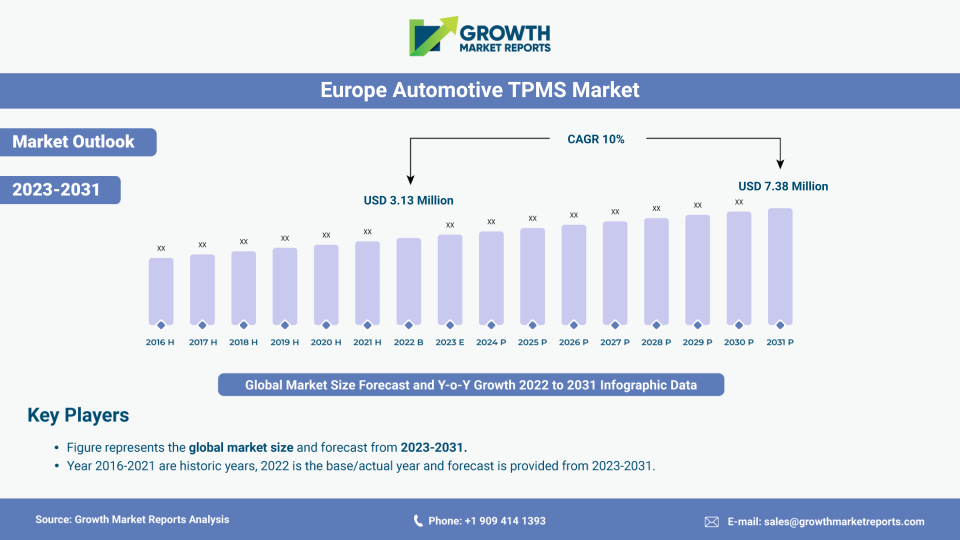
Segments - by Type (Direct TPMS, Indirect TPMS), by Vehicle Type (Passenger Cars, Commercial Vehicles, Electric Vehicles), by Sales Channel (OEM, Aftermarket), by Technology (Sensor-Based, Battery-Less), by And Country (Germany, UK, France, Italy, Spain, Rest of Europe)
According to our latest research, the global automotive TPMS (Tire Pressure Monitoring System) market size reached USD 8.2 billion in 2024, with Europe accounting for a significant share of this value. The global market is expected to reach USD 15.9 billion by 2033, growing at a robust CAGR of 7.5% during the forecast period. This growth is primarily driven by stringent vehicle safety regulations, technological advancements, and increasing consumer awareness regarding road safety and fuel efficiency.
The growth of the Europe Automotive TPMS Market is fueled by a combination of regulatory mandates and consumer demand for enhanced safety features. The European Union has been at the forefront in implementing strict regulations that require all new passenger cars to be equipped with TPMS, which has significantly contributed to the adoption rate across the region. Additionally, growing concerns over vehicle emissions and the push towards sustainable mobility solutions have encouraged automakers to integrate advanced TPMS technologies, which help optimize tire performance and reduce carbon footprint. The rise in vehicle production and the expansion of the automotive aftermarket further amplify the market’s growth trajectory, making Europe a pivotal region in the global landscape.
Another key growth factor is the increasing penetration of electric vehicles (EVs) and commercial vehicles in Europe. As the region accelerates its transition towards electrification, the demand for specialized TPMS solutions tailored for EVs and commercial fleets is on the rise. These vehicles often require more sophisticated monitoring systems due to their unique weight distribution and usage patterns. Furthermore, advancements in sensor-based and battery-less TPMS technologies are enabling manufacturers to offer more reliable and maintenance-free solutions, appealing to both OEMs and aftermarket players. The integration of TPMS with vehicle telematics and IoT platforms is also enhancing real-time monitoring capabilities, thereby improving overall vehicle safety and operational efficiency.
The Europe Automotive TPMS Market also benefits from increasing consumer awareness regarding the importance of tire maintenance for safety and cost savings. Public campaigns and educational initiatives by government bodies and industry associations are making drivers more conscious of the risks associated with under-inflated or over-inflated tires, such as increased accident rates and premature tire wear. This heightened awareness is translating into higher adoption rates of TPMS, not only in new vehicles but also through retrofit solutions in the aftermarket. As a result, both OEM and aftermarket channels are witnessing robust growth, further solidifying the market’s expansion prospects across Europe.
Regionally, Western Europe dominates the market, with countries like Germany, the UK, France, and Italy leading in TPMS adoption due to their advanced automotive industries and strong regulatory frameworks. Central and Eastern European countries are also experiencing steady growth, driven by rising vehicle ownership rates and increasing investments in automotive manufacturing. The diverse market landscape across Europe ensures a dynamic competitive environment, with both established players and emerging entrants striving to capitalize on evolving consumer preferences and technological advancements.
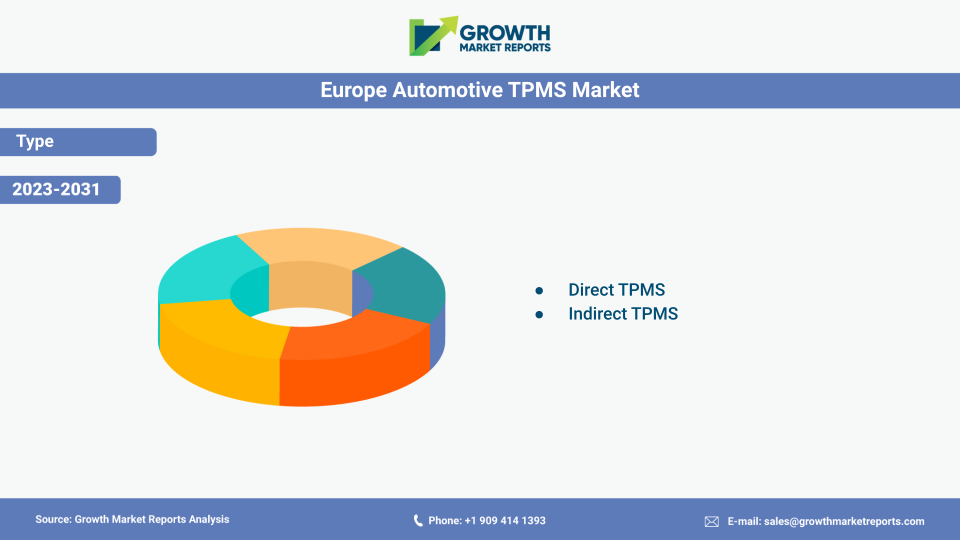
The Europe Automotive TPMS Market by type is categorized into direct TPMS and indirect TPMS. Direct TPMS systems are gaining significant traction across the region due to their high accuracy and reliability in providing real-time tire pressure data. These systems utilize dedicated pressure sensors mounted inside each tire, offering precise readings and immediate alerts to the driver in case of pressure deviations. The widespread adoption of direct TPMS is largely attributed to stringent safety regulations imposed by the European Union, which mandate the installation of reliable TPMS solutions in all new passenger vehicles. As a result, direct TPMS continues to capture a larger market share, especially in premium and mid-range vehicle segments.
Indirect TPMS, on the other hand, relies on existing vehicle sensors such as wheel speed sensors to estimate tire pressure based on rotational differences. While indirect TPMS is generally more cost-effective and easier to integrate, it is less accurate compared to direct systems and may not provide real-time alerts. Despite these limitations, indirect TPMS remains popular among certain vehicle categories, particularly in entry-level and budget-friendly models where cost considerations are paramount. The ongoing advancements in sensor technology and algorithm development are gradually improving the performance of indirect TPMS, making them a viable option for manufacturers targeting price-sensitive markets.
The growing emphasis on vehicle safety and the increasing complexity of modern automotive platforms are prompting OEMs to prioritize direct TPMS solutions. These systems not only enhance safety but also contribute to improved fuel efficiency and reduced emissions by ensuring optimal tire pressure. Furthermore, direct TPMS can be seamlessly integrated with advanced driver assistance systems (ADAS) and telematics platforms, enabling more comprehensive vehicle monitoring and predictive maintenance capabilities. This integration is particularly appealing to fleet operators and commercial vehicle owners who seek to minimize downtime and operational costs.
As the Europe Automotive TPMS Market continues to evolve, the competition between direct and indirect TPMS technologies is likely to intensify. Manufacturers are investing in research and development to enhance the performance, reliability, and affordability of both types. The emergence of hybrid TPMS solutions that combine the strengths of direct and indirect systems is also gaining attention, offering a balanced approach to meet diverse market needs. Ultimately, the choice between direct and indirect TPMS will depend on factors such as regulatory requirements, vehicle segment, and end-user preferences, ensuring a dynamic and competitive market landscape.
| Attributes | Details |
| Report Title | The Europe Automotive TPMS Market Research Report 2033 |
| By Type | Direct TPMS, Indirect TPMS |
| By Vehicle Type | Passenger Cars, Commercial Vehicles, Electric Vehicles |
| By Sales Channel | OEM, Aftermarket |
| By Technology | Sensor-Based, Battery-Less |
| By And Country | Germany, UK, France, Italy, Spain, Rest of Europe |
| Regions Covered | North America, Europe, APAC, Latin America, MEA |
| Base Year | 2024 |
| Historic Data | 2018-2023 |
| Forecast Period | 2025-2033 |
| Number of Pages | 250 |
| Number of Tables & Figures | 352 |
| Customization Available | Yes, the report can be customized as per your need. |
The Europe Automotive TPMS Market is segmented by vehicle type into passenger cars, commercial vehicles, and electric vehicles. Passenger cars represent the largest segment, driven by high vehicle production volumes and the mandatory implementation of TPMS in new vehicles across the European Union. The increasing consumer demand for advanced safety features and the proliferation of connected car technologies are further boosting the adoption of TPMS in this segment. Automakers are continuously enhancing their TPMS offerings to cater to the evolving expectations of passenger car owners, focusing on features such as real-time alerts, integration with infotainment systems, and predictive maintenance.
Commercial vehicles, including trucks, buses, and vans, constitute a significant and rapidly growing segment within the Europe Automotive TPMS Market. The need for efficient fleet management, coupled with stringent safety regulations governing commercial transportation, is driving the adoption of advanced TPMS solutions in this segment. Fleet operators are increasingly recognizing the benefits of TPMS in reducing tire-related breakdowns, minimizing operational costs, and ensuring compliance with safety standards. The integration of TPMS with telematics and fleet management systems is enabling real-time monitoring and data analytics, empowering fleet managers to make informed decisions and optimize vehicle performance.
The electric vehicles (EVs) segment is emerging as a key growth driver for the Europe Automotive TPMS Market. As Europe accelerates its transition towards sustainable mobility, the demand for specialized TPMS solutions tailored to the unique requirements of EVs is on the rise. EVs typically have different weight distribution and tire wear patterns compared to conventional vehicles, necessitating more sophisticated monitoring systems. TPMS solutions for EVs are designed to provide accurate and real-time data, ensuring optimal tire performance and extending the lifespan of high-value tires. The increasing investments in EV infrastructure and the growing popularity of electric mobility are expected to further propel the adoption of TPMS in this segment.
The diverse vehicle landscape in Europe presents both opportunities and challenges for TPMS manufacturers. While passenger cars and commercial vehicles continue to dominate the market, the rapid growth of the EV segment is prompting manufacturers to innovate and develop next-generation TPMS solutions. The focus is on enhancing system compatibility, reducing maintenance requirements, and delivering value-added features that cater to the specific needs of each vehicle type. As the market matures, collaboration between automakers, technology providers, and regulatory bodies will play a crucial role in shaping the future of TPMS adoption across all vehicle segments.
The Europe Automotive TPMS Market is segmented by sales channel into OEM (Original Equipment Manufacturer) and aftermarket. The OEM segment holds a dominant position, driven by regulatory mandates that require the installation of TPMS in all new vehicles sold in the European Union. Automakers are prioritizing the integration of advanced TPMS solutions during the manufacturing process to ensure compliance with safety standards and enhance the overall value proposition of their vehicles. The growing consumer preference for factory-fitted safety features and the increasing complexity of modern automotive platforms are further reinforcing the dominance of the OEM segment.
The aftermarket segment is also witnessing robust growth, fueled by the rising demand for retrofit TPMS solutions among existing vehicle owners. As consumer awareness regarding the importance of tire maintenance continues to grow, more drivers are opting to install TPMS in older vehicles that were not originally equipped with these systems. The aftermarket offers a wide range of TPMS products, including sensor-based and battery-less solutions, catering to diverse customer needs and budget considerations. The proliferation of e-commerce platforms and the expansion of automotive service networks are making it easier for consumers to access and install aftermarket TPMS products.
OEMs are increasingly focusing on the development of integrated TPMS solutions that offer seamless connectivity with other in-vehicle systems. These solutions are designed to provide real-time data, predictive maintenance alerts, and enhanced user interfaces, delivering a superior driving experience. The trend towards connected and autonomous vehicles is further driving the adoption of advanced TPMS technologies in the OEM segment. Manufacturers are also exploring partnerships with technology providers to leverage IoT and telematics capabilities, enabling more comprehensive vehicle monitoring and data analytics.
In the aftermarket segment, competition is intensifying as both established players and new entrants strive to capture market share. Product innovation, pricing strategies, and distribution networks are key differentiators in this segment. Manufacturers are investing in the development of user-friendly and cost-effective TPMS solutions that can be easily installed and maintained by consumers. The growing emphasis on sustainability is also prompting the introduction of battery-less and recyclable TPMS products in the aftermarket, aligning with the broader environmental goals of the automotive industry.
The Europe Automotive TPMS Market by technology is segmented into sensor-based and battery-less TPMS solutions. Sensor-based TPMS is the most widely adopted technology, offering high accuracy and real-time monitoring capabilities. These systems use dedicated pressure sensors installed inside each tire to continuously monitor and transmit tire pressure data to the vehicle’s onboard computer. The reliability and precision of sensor-based TPMS make them the preferred choice for both OEM and aftermarket applications, particularly in regions with stringent safety regulations like Europe. Ongoing advancements in sensor technology are further enhancing the performance and durability of these systems, driving their widespread adoption.
Battery-less TPMS is an emerging technology that addresses some of the limitations associated with traditional sensor-based systems, such as battery replacement and environmental impact. These systems utilize energy-harvesting mechanisms, such as piezoelectric or electromagnetic technologies, to power the sensors without the need for batteries. Battery-less TPMS offers several advantages, including reduced maintenance requirements, longer lifespan, and greater environmental sustainability. As the automotive industry increasingly focuses on sustainability and lifecycle management, battery-less TPMS is gaining traction among both OEMs and aftermarket players.
The integration of TPMS with advanced vehicle telematics and IoT platforms is transforming the way tire pressure data is collected, analyzed, and utilized. Sensor-based TPMS can now communicate with cloud-based platforms, enabling remote monitoring and predictive analytics. This integration is particularly valuable for fleet operators and commercial vehicle owners, who can leverage real-time data to optimize tire performance, reduce downtime, and enhance overall fleet efficiency. The growing adoption of connected vehicle technologies is expected to further accelerate the demand for advanced TPMS solutions in Europe.
Manufacturers are investing in research and development to enhance the reliability, accuracy, and cost-effectiveness of both sensor-based and battery-less TPMS technologies. The focus is on developing systems that can withstand harsh operating conditions, deliver consistent performance, and integrate seamlessly with other in-vehicle systems. The emergence of hybrid TPMS solutions that combine the strengths of sensor-based and battery-less technologies is also gaining attention, offering a balanced approach to meet diverse market needs. As technology continues to evolve, the Europe Automotive TPMS Market is poised for significant innovation and growth in the coming years.
Significant opportunities abound in the Europe Automotive TPMS Market as the region continues to prioritize road safety and environmental sustainability. The ongoing shift towards electrification and connected vehicles is creating new avenues for TPMS manufacturers to innovate and expand their product portfolios. The increasing adoption of electric vehicles and the growing emphasis on fleet management are driving demand for advanced TPMS solutions that offer real-time monitoring, predictive maintenance, and seamless integration with telematics platforms. Furthermore, the rising consumer awareness regarding the benefits of proper tire maintenance is fueling the demand for retrofit TPMS solutions in the aftermarket, presenting lucrative growth opportunities for both established players and new entrants.
The integration of TPMS with emerging technologies such as IoT, artificial intelligence, and big data analytics is opening up new possibilities for value-added services and business models. Manufacturers can leverage real-time tire pressure data to offer predictive maintenance solutions, enhance vehicle safety, and improve overall operational efficiency. The growing focus on sustainability is also prompting the development of battery-less and recyclable TPMS products, aligning with the broader environmental goals of the automotive industry. As regulatory frameworks continue to evolve and consumer preferences shift towards advanced safety features, the Europe Automotive TPMS Market is well-positioned to capitalize on these emerging opportunities and drive long-term growth.
Despite the promising growth prospects, the Europe Automotive TPMS Market faces certain challenges that could restrain its expansion. One of the key restraining factors is the high cost associated with advanced TPMS solutions, particularly for sensor-based and battery-less systems. The initial investment required for integrating TPMS into vehicles can be a barrier for price-sensitive consumers and manufacturers, especially in the entry-level and budget segments. Additionally, the complexity of TPMS installation and maintenance may deter some vehicle owners from adopting these systems, particularly in the aftermarket. Addressing these challenges will require ongoing innovation, cost optimization, and consumer education to ensure widespread adoption and sustained market growth.
The Europe Automotive TPMS Market is characterized by a diverse regional landscape, with Western Europe leading the way in terms of market size and adoption rates. In 2024, Western Europe accounted for approximately USD 2.8 billion of the total European market, driven by strong regulatory frameworks, advanced automotive industries, and high consumer awareness regarding vehicle safety. Countries such as Germany, the UK, France, and Italy are at the forefront of TPMS adoption, benefiting from robust vehicle production volumes and a well-established automotive supply chain. The presence of leading OEMs and technology providers further reinforces the region’s dominance in the European market.
Central and Eastern Europe are also witnessing steady growth in the Automotive TPMS Market, with a market size of approximately USD 1.1 billion in 2024. The increasing vehicle ownership rates, rising investments in automotive manufacturing, and gradual alignment with EU safety regulations are driving TPMS adoption in these regions. While the market is still in the early stages of development compared to Western Europe, the growth potential is significant, particularly as governments and industry stakeholders intensify their focus on road safety and environmental sustainability. The CAGR for Central and Eastern Europe is projected to be around 8.2% during the forecast period, outpacing the overall European average.
The Rest of Europe, including smaller markets and emerging economies, is gradually catching up with the leading regions in terms of TPMS adoption. The market size for the Rest of Europe was estimated at USD 0.7 billion in 2024, with growth driven by increasing consumer awareness, expanding automotive aftermarket, and the gradual implementation of safety regulations. As the region continues to develop its automotive infrastructure and align with EU standards, the adoption of TPMS is expected to accelerate, contributing to the overall growth of the European market. The diverse regional landscape ensures a dynamic and competitive environment, with opportunities for both established players and new entrants to capture market share.
The competitive landscape of the Europe Automotive TPMS Market is characterized by the presence of both global industry leaders and regional players, each striving to enhance their market position through innovation, strategic partnerships, and product differentiation. Major companies are investing heavily in research and development to introduce advanced TPMS solutions that offer superior accuracy, reliability, and integration capabilities. The focus is on developing systems that can seamlessly connect with other in-vehicle technologies, such as telematics and ADAS, to deliver comprehensive safety and maintenance solutions. The intensifying competition is driving continuous innovation and pushing manufacturers to explore new business models, such as subscription-based services and predictive maintenance offerings.
Strategic collaborations and partnerships are becoming increasingly common in the Europe Automotive TPMS Market, as companies seek to leverage each other’s strengths and expand their reach. OEMs are partnering with technology providers to integrate advanced TPMS solutions into new vehicle models, while aftermarket players are collaborating with distribution networks and service providers to enhance product accessibility and customer support. The growing emphasis on sustainability is also prompting companies to invest in the development of battery-less and recyclable TPMS products, aligning with the broader environmental goals of the automotive industry. The competitive landscape is further shaped by the entry of new players, particularly in the aftermarket segment, who are introducing innovative and cost-effective solutions to capture market share.
Product differentiation and customer-centric strategies are key to success in the Europe Automotive TPMS Market. Leading companies are focusing on delivering value-added features, such as real-time alerts, predictive maintenance, and seamless integration with connected vehicle platforms. The ability to offer customized solutions that cater to the specific needs of different vehicle types and customer segments is a critical differentiator in this dynamic market. Companies are also investing in marketing and educational initiatives to raise consumer awareness regarding the benefits of TPMS and drive adoption across both OEM and aftermarket channels.
Some of the major companies operating in the Europe Automotive TPMS Market include Continental AG, Schrader Electronics (Sensata Technologies), Huf Hülsbeck & Fürst GmbH & Co. KG, Denso Corporation, Robert Bosch GmbH, and Pacific Industrial Co., Ltd. Continental AG is a leading player, known for its innovative TPMS solutions and strong presence in both OEM and aftermarket segments. Schrader Electronics, a subsidiary of Sensata Technologies, is recognized for its advanced sensor technologies and global reach. Huf Hülsbeck & Fürst specializes in high-precision TPMS products and has a strong foothold in the European market. Denso Corporation and Robert Bosch GmbH are renowned for their technological expertise and comprehensive automotive solutions, while Pacific Industrial Co., Ltd. is a key supplier of TPMS components to major automakers worldwide. These companies are continuously expanding their product portfolios, investing in R&D, and exploring strategic collaborations to strengthen their market position and drive long-term growth.
The The Europe Automotive TPMS market has been segmented on the basis of
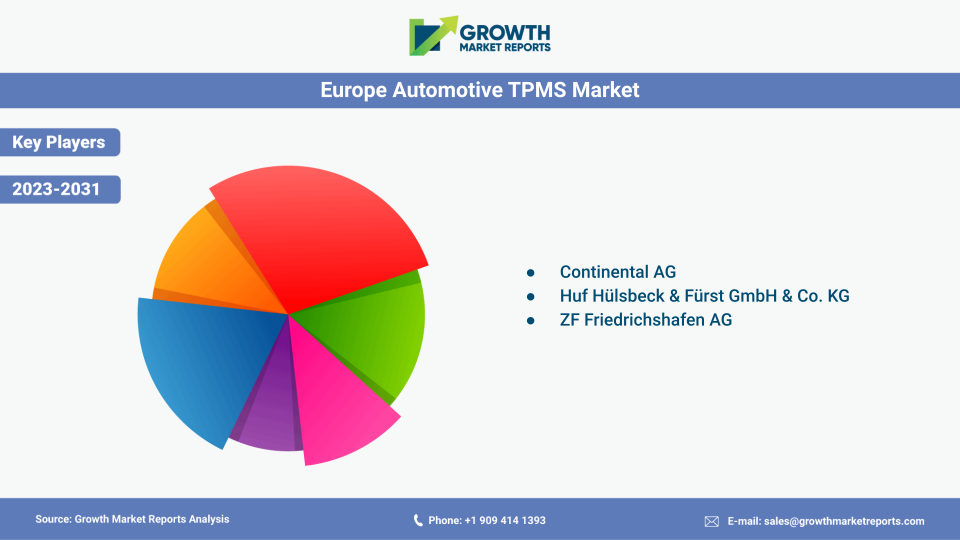
Key players in the Europe automotive TPMS market include Continental AG, Huf Hülsbeck & Fürst GmbH & Co. KG, and ZF Friedrichshafen AG.
Some of these players are using several market strategies such as acquisitions, merger, collaborations, partnerships, capacity expansion, and product launches to enhance their market shares and to generate revenue and raise their production line of the business in the coming years.
Western Europe, particularly Germany, the UK, France, and Italy, leads in TPMS adoption due to advanced automotive industries and strong regulatory frameworks. Central and Eastern Europe and the Rest of Europe are experiencing steady growth.
Key challenges include the high initial cost of advanced TPMS solutions, complexity of installation and maintenance, and price sensitivity in entry-level vehicle segments. Ongoing innovation and consumer education are needed to overcome these barriers.
The aftermarket segment is growing due to rising consumer awareness of tire safety and the need to retrofit older vehicles. E-commerce and expanded service networks are making aftermarket TPMS more accessible.
Sensor-based TPMS remains dominant due to its accuracy, but battery-less TPMS is emerging as a sustainable, low-maintenance alternative. Integration with IoT and telematics platforms is enhancing real-time monitoring and predictive maintenance.
Key players include Continental AG, Schrader Electronics (Sensata Technologies), Huf Hülsbeck & Fürst GmbH & Co. KG, Denso Corporation, Robert Bosch GmbH, Pacific Industrial Co., Ltd., Valeo SA, ZF Friedrichshafen AG, and others.
The global automotive TPMS market is expected to grow at a CAGR of 7.5% from 2024 to 2033, reaching USD 15.9 billion by 2033. Central and Eastern Europe is projected to grow at a slightly higher CAGR of 8.2%.
Passenger cars represent the largest segment due to mandatory TPMS implementation in new vehicles. Commercial vehicles and electric vehicles are also rapidly adopting advanced TPMS solutions for safety and operational efficiency.
The main types are direct TPMS, which uses dedicated pressure sensors for real-time data, and indirect TPMS, which estimates tire pressure using existing vehicle sensors. Direct TPMS is favored for its accuracy and compliance with EU regulations.
Growth is primarily driven by stringent EU vehicle safety regulations, increasing consumer awareness of road safety and fuel efficiency, technological advancements, and the rising adoption of electric and commercial vehicles.
As of 2024, the global automotive TPMS (Tire Pressure Monitoring System) market reached USD 8.2 billion, with Europe accounting for a significant share. Western Europe alone contributed approximately USD 2.8 billion to the total European market.