Automotive Disc Brake Market Research Report 2033

Automotive Disc Brake Market Research Report 2033

Segments - by Product Type (Fixed Caliper, Floating Caliper, Sliding Caliper), by Material (Cast Iron, Aluminum, Stainless Steel, Others), by Vehicle Type (Passenger Cars, Light Commercial Vehicles, Heavy Commercial Vehicles, Two-Wheelers, Others), by Sales Channel (OEM, Aftermarket)

https://growthmarketreports.com/Raksha
Author : Raksha Sharma
https://growthmarketreports.com/Vaibhav
Fact-checked by : V. Chandola
https://growthmarketreports.com/Shruti
Editor : Shruti Bhat

Upcoming | Report ID :AL-101 | 4.2 Rating | 70 Reviews | 276 Pages | Format : Docx PDF

Report Description


Automotive Disc Brake Market Outlook

According to our latest research, the global automotive disc brake market size reached USD 16.8 billion in 2024, reflecting robust demand across automotive manufacturing sectors. The market is projected to expand at a CAGR of 4.9% from 2025 to 2033, reaching an estimated value of USD 25.7 billion by 2033. This growth is primarily driven by increasing vehicle production, rising safety standards, and technological advancements in braking systems worldwide.

One of the primary growth factors of the automotive disc brake market is the global emphasis on vehicular safety and regulatory mandates. Governments across major economies have introduced stringent safety norms that require the incorporation of advanced braking systems in both passenger and commercial vehicles. The implementation of regulations such as the UN ECE R13 and FMVSS 135 has accelerated the adoption of disc brakes, particularly in developed markets like North America and Europe. Furthermore, the growing consumer awareness regarding the benefits of disc brakes—such as better heat dissipation, improved stopping power, and enhanced driving stability—has significantly influenced OEMs to integrate these systems as standard equipment in new vehicle models. The continuous evolution of safety standards is expected to sustain the market’s upward trajectory in the foreseeable future.

Technological advancements represent another crucial growth driver in the automotive disc brake market. The integration of electronic braking systems, anti-lock braking systems (ABS), and electronic stability control (ESC) has become increasingly common, especially in premium and mid-segment vehicles. These technologies require highly efficient disc brake systems capable of rapid response and consistent performance under varying conditions. Additionally, the shift towards electric and hybrid vehicles has created new opportunities for disc brake manufacturers, as these vehicles often require regenerative braking systems that work in tandem with traditional disc brakes. Innovations in materials, such as the adoption of lightweight aluminum and advanced composites, have further enhanced the performance and durability of disc brakes, making them suitable for a wider range of applications and vehicle types.

The expansion of the automotive aftermarket and rising vehicle parc also contribute significantly to market growth. As the average age of vehicles on the road increases, the demand for replacement parts, including disc brakes, is on the rise. The aftermarket segment benefits from a growing population of vehicle owners who prioritize safety and performance upgrades. Additionally, the proliferation of e-commerce platforms has made it easier for consumers and repair shops to access a wide variety of disc brake components, driving up aftermarket sales. This trend is particularly pronounced in emerging markets, where the penetration of advanced braking systems is still growing, and there is a substantial opportunity for aftermarket suppliers to capture market share.

In recent years, the introduction of Carbon Brake Disc technology has further revolutionized the automotive disc brake market. These discs are known for their exceptional heat resistance and lightweight properties, making them ideal for high-performance and racing vehicles. The use of carbon materials not only enhances braking efficiency but also contributes to significant weight reduction, which is crucial for improving vehicle dynamics and fuel efficiency. As the demand for high-performance vehicles continues to rise, the adoption of Carbon Brake Discs is expected to grow, particularly in the premium and sports car segments. Manufacturers are investing in research and development to optimize the cost and performance of carbon-based braking systems, aiming to make them more accessible to a broader range of vehicles. This technological advancement aligns with the industry's shift towards more sustainable and efficient automotive solutions.

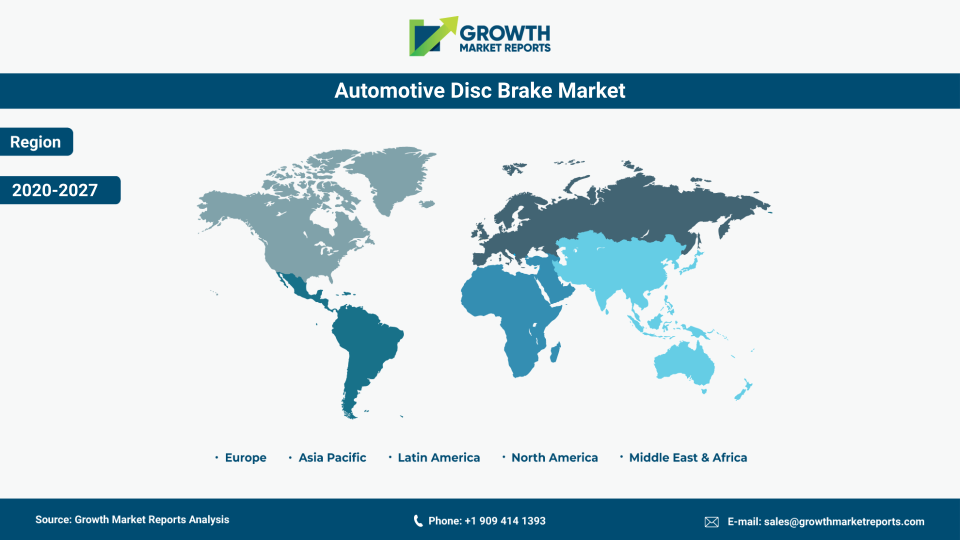
From a regional perspective, the Asia Pacific region dominates the automotive disc brake market, accounting for the largest share in 2024. This dominance is attributed to the high volume of vehicle production in countries such as China, Japan, and India, coupled with increasing investments in automotive manufacturing infrastructure. North America and Europe follow closely, driven by mature automotive markets, advanced technology adoption, and stringent safety regulations. In contrast, Latin America and the Middle East & Africa are experiencing gradual growth, supported by rising vehicle ownership and increasing focus on road safety. The regional distribution of the market is expected to remain relatively stable, with Asia Pacific maintaining its lead due to sustained growth in vehicle production and sales.

Global Automotive Disc Brake Industry Outlook

Product Type Analysis

The automotive disc brake market is segmented by product type into fixed caliper, floating caliper, and sliding caliper disc brakes. Fixed caliper disc brakes are widely recognized for their superior performance, particularly in high-performance and luxury vehicles. These calipers provide consistent braking force and are less prone to flexing under heavy loads, making them ideal for vehicles that demand precise and reliable braking. The adoption of fixed caliper systems is especially prevalent in markets where performance and safety are paramount considerations. However, the higher cost and complexity of fixed caliper designs can limit their penetration in mass-market vehicles, where cost efficiency remains a critical factor for OEMs and consumers alike.

Floating caliper disc brakes, on the other hand, offer a more cost-effective solution and are extensively used in passenger cars and light commercial vehicles. These calipers operate by sliding laterally to apply pressure to both sides of the brake rotor, delivering effective braking performance with fewer components and reduced weight. The simplicity and lower manufacturing cost of floating calipers make them an attractive option for automakers targeting the mid-range and economy segments. In recent years, advancements in materials and manufacturing processes have improved the durability and efficiency of floating caliper systems, further driving their adoption across a broad spectrum of vehicle types.

Sliding caliper disc brakes represent another significant product type within the market. Similar to floating calipers, sliding calipers are valued for their straightforward design and ease of maintenance. These systems are commonly found in compact cars and two-wheelers, where space and weight constraints are critical considerations. The sliding caliper segment is expected to witness steady growth, particularly in developing regions where cost-sensitive consumers prioritize affordability and low maintenance costs. Despite their widespread use, sliding calipers are often perceived as less robust compared to fixed caliper systems, especially in high-performance applications.

The ongoing evolution of disc brake technology is blurring the lines between these product types, with manufacturers focusing on hybrid designs that combine the benefits of fixed, floating, and sliding calipers. For instance, some modern disc brake systems incorporate elements from multiple caliper types to optimize performance, weight, and cost. As automotive manufacturers continue to seek the ideal balance between safety, performance, and affordability, the product type landscape within the automotive disc brake market is expected to become increasingly diverse and dynamic.

Report Scope

Attributes Details
Report Title Automotive Disc Brake Market Research Report 2033
By Product Type Fixed Caliper, Floating Caliper, Sliding Caliper
By Material Cast Iron, Aluminum, Stainless Steel, Others
By Vehicle Type Passenger Cars, Light Commercial Vehicles, Heavy Commercial Vehicles, Two-Wheelers, Others
By Sales Channel OEM, Aftermarket
Regions Covered North America, Europe, APAC, Latin America, MEA
Base Year 2024
Historic Data 2018-2023
Forecast Period 2025-2033
Number of Pages 276
Number of Tables & Figures 398
Customization Available Yes, the report can be customized as per your need.

Material Analysis

Material selection plays a pivotal role in the performance, durability, and cost of automotive disc brakes. Cast iron remains the most widely used material for disc brake rotors, owing to its excellent thermal conductivity, wear resistance, and cost-effectiveness. Cast iron disc brakes are particularly favored in passenger cars and light commercial vehicles, where the balance between performance and affordability is paramount. However, the relatively high weight of cast iron components can negatively impact fuel efficiency and handling, prompting manufacturers to explore alternative materials that offer improved performance characteristics.

Aluminum has emerged as a popular alternative to cast iron, especially in high-performance and electric vehicles. Aluminum disc brakes are significantly lighter, which contributes to reduced unsprung mass and improved vehicle dynamics. The superior corrosion resistance of aluminum also enhances the longevity of brake components, making them ideal for vehicles operating in harsh environments. However, aluminumÂ’s lower thermal capacity compared to cast iron can limit its use in applications that require sustained high-temperature performance. To address this limitation, manufacturers are developing composite materials that combine aluminum with advanced ceramics or carbon fibers, resulting in disc brakes that offer the best of both worlds: lightweight construction and exceptional heat management.

Stainless steel is another material gaining traction in the automotive disc brake market, particularly for applications that demand high corrosion resistance and durability. Stainless steel disc brakes are commonly used in performance vehicles, motorcycles, and specialty vehicles where exposure to moisture, salt, and other corrosive elements is a concern. While stainless steel offers superior resistance to rust and deformation, its higher cost and manufacturing complexity can be prohibitive for mass-market adoption. Nevertheless, ongoing advancements in metallurgical processes are gradually reducing the cost differential, making stainless steel a viable option for a broader range of vehicles.

Other materials, such as carbon-ceramic composites and advanced polymers, are also making inroads into the automotive disc brake market. These materials are primarily used in high-end sports cars, racing vehicles, and luxury automobiles, where the emphasis is on maximum performance, weight reduction, and superior heat dissipation. Although the adoption of these advanced materials is currently limited by high production costs, continued innovation and economies of scale are expected to drive down prices and expand their application in mainstream vehicles over the coming years.

Vehicle Type Analysis

The automotive disc brake market is segmented by vehicle type into passenger cars, light commercial vehicles, heavy commercial vehicles, two-wheelers, and others. Passenger cars represent the largest segment, accounting for a significant share of global disc brake demand in 2024. The widespread adoption of disc brakes in passenger vehicles is driven by consumer preferences for enhanced safety, comfort, and driving performance. Automakers are increasingly equipping even entry-level models with disc brakes on all wheels, a trend that is particularly pronounced in developed markets with stringent safety regulations.

Light commercial vehicles (LCVs) also constitute a substantial portion of the automotive disc brake market. The growth of e-commerce, urban logistics, and last-mile delivery services has fueled demand for LCVs equipped with advanced braking systems that ensure safety and reliability under varying load conditions. Disc brakes offer superior performance compared to drum brakes, particularly in scenarios that require frequent stops and starts, making them the preferred choice for fleet operators and commercial vehicle manufacturers.

Heavy commercial vehicles (HCVs), including trucks and buses, are increasingly adopting disc brakes as well, although drum brakes still dominate this segment in certain regions. The transition to disc brakes in HCVs is being driven by regulatory mandates, the need for improved braking efficiency, and the desire to reduce maintenance costs. Disc brakes provide better heat dissipation and shorter stopping distances, which are critical for the safe operation of heavy vehicles, especially on long-haul routes and in challenging terrains.

Two-wheelers represent another important segment within the automotive disc brake market. The rising popularity of motorcycles and scooters, particularly in Asia Pacific and Latin America, has led to increased adoption of disc brakes in this segment. Consumers are increasingly prioritizing safety and performance, prompting manufacturers to equip even entry-level two-wheelers with front and rear disc brakes. The trend is further supported by government initiatives aimed at improving road safety and reducing traffic fatalities.

Other vehicle types, such as off-road vehicles, specialty vehicles, and electric mobility solutions, are also contributing to the growth of the automotive disc brake market. As the diversity of vehicle types continues to expand, manufacturers are developing customized disc brake solutions tailored to the unique requirements of each segment, further broadening the marketÂ’s scope and potential.

Sales Channel Analysis

The automotive disc brake market is segmented by sales channel into OEM (Original Equipment Manufacturer) and aftermarket. The OEM segment commands the largest share of the market, driven by the high volume of new vehicle production and the increasing trend of factory-installed advanced braking systems. Automakers are partnering with leading disc brake manufacturers to ensure that their vehicles meet or exceed regulatory safety standards and consumer expectations. The OEM channel benefits from long-term supply agreements, stringent quality control processes, and the ability to incorporate the latest technological advancements in braking systems.

The aftermarket segment is experiencing robust growth, fueled by the expanding global vehicle parc and the increasing average age of vehicles on the road. As vehicles age, the need for replacement parts, including disc brakes, rises correspondingly. The aftermarket channel is characterized by a wide variety of products catering to different vehicle makes, models, and performance requirements. Independent repair shops, authorized service centers, and online retailers all play a significant role in the distribution of aftermarket disc brakes, providing consumers with convenient access to a broad range of options.

E-commerce has emerged as a transformative force within the aftermarket segment, enabling consumers and repair professionals to compare products, read reviews, and make informed purchasing decisions. Leading aftermarket suppliers are leveraging digital platforms to expand their reach, streamline logistics, and enhance customer service. This shift towards online sales is particularly pronounced in developed markets, where consumers are increasingly comfortable with digital transactions and value the convenience of doorstep delivery.

The relationship between OEM and aftermarket channels is symbiotic, with each segment influencing the otherÂ’s growth trajectory. OEMs set the standard for quality and performance, while the aftermarket responds to evolving consumer preferences and market trends. As vehicle technologies continue to advance, the aftermarket segment is expected to play a crucial role in retrofitting older vehicles with modern disc brake systems, thereby extending the lifespan and safety of the existing vehicle fleet.

Opportunities & Threats

The automotive disc brake market presents a wealth of opportunities for industry participants, particularly in the areas of technological innovation and product differentiation. The growing adoption of electric and hybrid vehicles is creating new demand for advanced braking systems that can seamlessly integrate with regenerative braking technologies. Manufacturers that invest in research and development to create lightweight, high-performance disc brakes using advanced materials stand to gain a competitive edge. Additionally, the increasing focus on sustainability and environmental performance is opening up opportunities for the development of eco-friendly disc brake components that reduce emissions, noise, and particulate matter. Companies that prioritize sustainability in their product offerings are likely to attract environmentally conscious consumers and strengthen their market position.

Another significant opportunity lies in the expansion of the aftermarket segment, particularly in emerging markets where vehicle ownership is on the rise. As the vehicle parc grows and ages, the need for replacement disc brakes will continue to increase. Aftermarket suppliers that can offer high-quality, affordable, and easily accessible products are well-positioned to capture market share. The proliferation of e-commerce platforms and digital marketplaces further enhances the growth potential of the aftermarket segment, enabling suppliers to reach a broader customer base and streamline distribution channels. Strategic partnerships and collaborations with local distributors, repair shops, and e-commerce players can help manufacturers tap into new markets and drive sustained growth.

Despite the numerous opportunities, the automotive disc brake market faces several restraining factors that could impede growth. The high cost of advanced disc brake systems, particularly those made from premium materials such as carbon-ceramic composites, can limit adoption in cost-sensitive segments. Additionally, the complexity of integrating new braking technologies with existing vehicle architectures can pose technical challenges for OEMs and aftermarket suppliers alike. Economic uncertainties, fluctuating raw material prices, and supply chain disruptions also represent potential threats to market stability. Companies must navigate these challenges by focusing on cost optimization, supply chain resilience, and continuous innovation to maintain their competitive advantage in an increasingly dynamic market environment.

Regional Outlook

The Asia Pacific region leads the global automotive disc brake market, accounting for approximately 42% of the total market value in 2024, or around USD 7.1 billion. This dominance is driven by the sheer volume of vehicle production in countries such as China, Japan, South Korea, and India. The region benefits from a robust automotive manufacturing ecosystem, favorable government policies, and rising consumer demand for safer and more reliable vehicles. The increasing adoption of advanced braking systems in both passenger and commercial vehicles further strengthens Asia PacificÂ’s position as the largest regional market for automotive disc brakes. The region is expected to maintain a strong CAGR of 5.3% through 2033, outpacing the global average and reinforcing its leadership in the market.

North America represents the second-largest market, with a market size of approximately USD 4.2 billion in 2024. The regionÂ’s growth is underpinned by a mature automotive industry, high levels of technology adoption, and stringent safety regulations that mandate the use of advanced braking systems. The presence of major automotive OEMs and leading disc brake manufacturers further contributes to North AmericaÂ’s strong market position. Consumer preferences for high-performance vehicles, coupled with the growing popularity of electric and hybrid models, are expected to drive continued demand for innovative disc brake solutions in the region.

Europe holds a significant share of the global automotive disc brake market, estimated at USD 3.8 billion in 2024. The region is renowned for its focus on vehicle safety, environmental sustainability, and technological innovation. European automakers are at the forefront of integrating advanced braking systems into their vehicles, supported by a well-established regulatory framework and a strong culture of safety-conscious driving. The market in Europe is characterized by a high degree of product differentiation, with manufacturers competing on the basis of performance, durability, and environmental impact. The Middle East & Africa and Latin America, while smaller in terms of market size (collectively accounting for less than USD 1.7 billion), are experiencing gradual growth as vehicle ownership rises and road safety initiatives gain traction.

Automotive Disc Brake Market Statistics

Competitor Outlook

The competitive landscape of the automotive disc brake market is characterized by the presence of numerous global and regional players vying for market share through product innovation, strategic partnerships, and expansion into new markets. Leading companies are investing heavily in research and development to create high-performance, lightweight, and durable disc brake systems that meet the evolving needs of OEMs and consumers. The market is marked by intense competition, with players differentiating themselves through proprietary technologies, advanced materials, and comprehensive service offerings. Mergers and acquisitions, as well as collaborations with automotive OEMs, are common strategies employed to strengthen market positioning and accelerate growth.

Innovation remains a key focus area for market leaders, with companies striving to develop disc brake systems that offer superior performance, reduced weight, and enhanced environmental sustainability. The shift towards electric and hybrid vehicles has prompted manufacturers to design braking systems that are compatible with regenerative braking technologies and meet the unique requirements of electrified powertrains. Additionally, the increasing importance of digitalization and connectivity in the automotive sector is driving the development of smart braking systems that can be integrated with advanced driver assistance systems (ADAS) and vehicle-to-everything (V2X) communication platforms.

The aftermarket segment presents unique challenges and opportunities for competitors, as the proliferation of e-commerce platforms and digital marketplaces has intensified competition and lowered barriers to entry. Leading aftermarket suppliers are focusing on expanding their product portfolios, improving distribution networks, and enhancing customer service to capture a larger share of the growing replacement parts market. The ability to offer high-quality, affordable, and easily accessible disc brake components is a critical success factor in the aftermarket segment, particularly in emerging markets where price sensitivity is high.

Major companies operating in the global automotive disc brake market include Robert Bosch GmbH, ZF Friedrichshafen AG, Akebono Brake Industry Co., Ltd., Brembo S.p.A., Continental AG, ADVICS Co., Ltd., Aisin Seiki Co., Ltd., and Nissin Kogyo Co., Ltd. These industry leaders are recognized for their extensive product portfolios, global manufacturing footprints, and longstanding relationships with automotive OEMs. Bosch and Continental, for example, are at the forefront of developing electronic braking systems and integrated safety solutions, while Brembo is renowned for its high-performance disc brakes used in sports and luxury vehicles. Akebono and ADVICS are leading suppliers in the Asia Pacific region, leveraging their expertise in both OEM and aftermarket channels. The competitive landscape is further enriched by the presence of regional players and specialized manufacturers that cater to niche segments and custom applications, ensuring a dynamic and continuously evolving market environment.

Key Players

  • ZF Friedrichshafen AG
  • Continental AG
  • Brembo S.p.A.
  • Aisin Seiki Co., Ltd.
  • Akebono Brake Industry Co., Ltd.
  • Robert Bosch GmbH
  • Mando Corporation
  • Nissin Kogyo Co., Ltd.
  • ADVICS Co., Ltd.
  • TRW Automotive Holdings Corp. (ZF TRW)
  • Hitachi Automotive Systems, Ltd.
  • Haldex AB
  • Wabco Holdings Inc.
  • Knorr-Bremse AG
  • BorgWarner Inc.
  • Tenneco Inc. (Federal-Mogul Motorparts)
  • SGL Carbon SE
  • Sicom S.p.A.
  • AP Racing Ltd.
  • Carlisle Companies Inc.
Automotive Disc Brake Market Overview

Segments

The Automotive Disc Brake market has been segmented on the basis of

Product Type

  • Fixed Caliper
  • Floating Caliper
  • Sliding Caliper

Material

  • Cast Iron
  • Aluminum
  • Stainless Steel
  • Others

Vehicle Type

  • Passenger Cars
  • Light Commercial Vehicles
  • Heavy Commercial Vehicles
  • Two-Wheelers
  • Others

Sales Channel

  • OEM
  • Aftermarket

Competitive Landscape

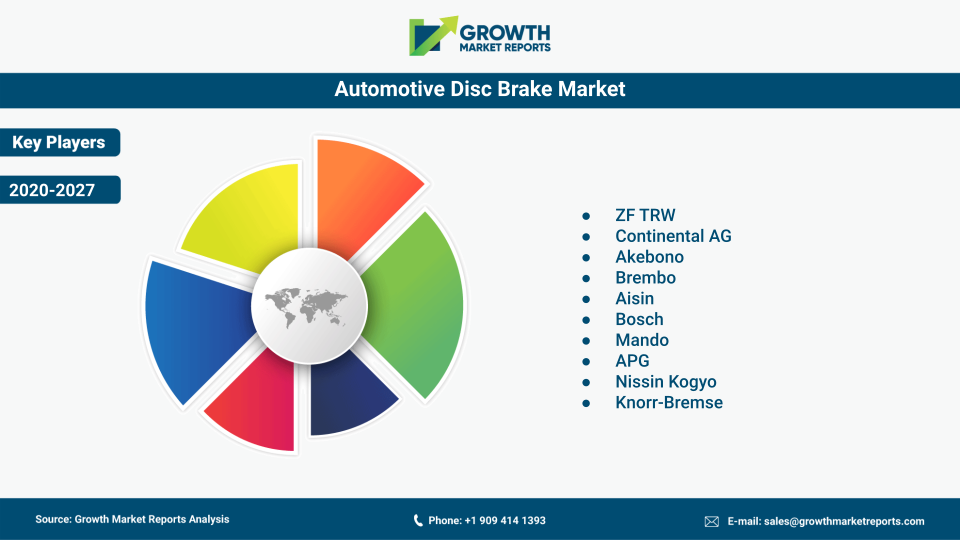
  • Key players in the market include ZF TRW, Continental AG, Akebono, Brembo, Aisin, Bosch, Mando, APG, Nissin Kogyo, Knorr-Bremse, and Others. They are considered as key manufacturers of the market based on different varieties of product availability, regional presence, supply chain management system, and the increasing demand for the products.
  • The players are adopting key strategies such as product development, geographical expansion, mergers and acquisitions, and many other strategies to increase the demand for their respective products.
                            Automotive Disc Brake Market Key Players

Video Summary for Automotive Disc Brake Market

Frequently Asked Questions

Major Manufacturers include ZF TRW, Continental AG, Akebono, Brembo, Aisin, Bosch, Mando, APG, Nissin Kogyo, Knorr-Bremse, and Others.

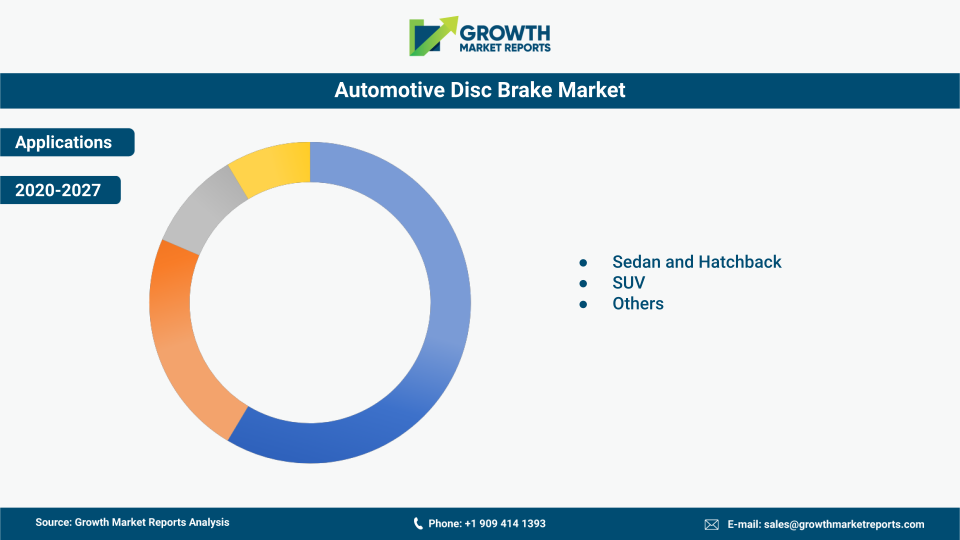
Sedan and Hatchback, SUV, and others are the key applications that are driving the Automotive Disc Brake market.

The base year considered for the global Automotive Disc Brake Market report is 2019. The complete analysis period is 2017 to 2027, wherein, 2017 & 2018 are the historic years and the forecast is provided from 2020 to 2027.

The market is expected to witness a downtrend during 2019-2020 owing to the negative impact of the COVID-19 pandemic on the Automotive Disc Brake market.

The market is driven by constant advancements in disc brakes, increasing automobile production, and other factors.

Factors such as competitive strength and market positioning are key areas considered while selecting top companies to be profiled.

In addition to market size (in USD Million) and Market Volume (Units) Company Market Share (in % for the base year 2019), other data such as Macro-economic factors, COVID-19 Impact on the Disc Brake is available in the final report.

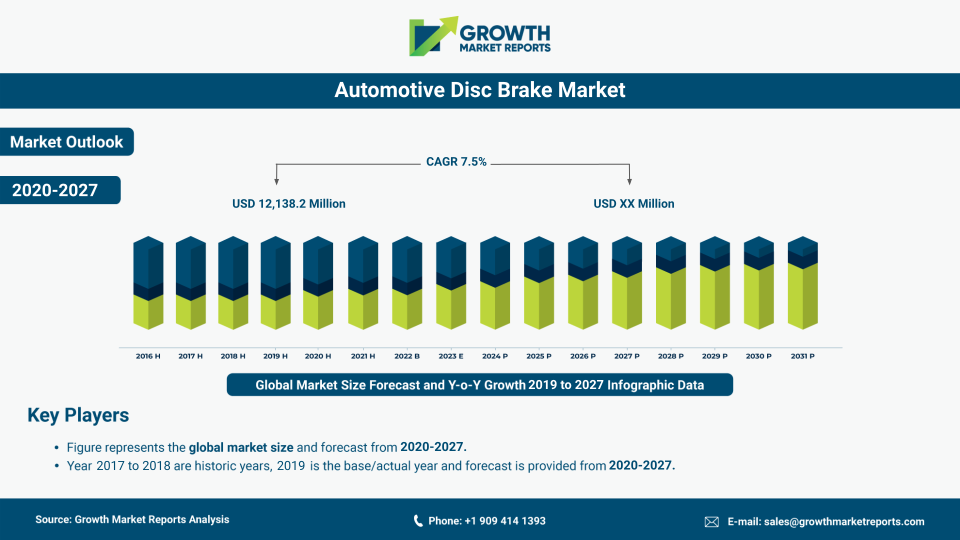
According to this report by Growth Market Reports, the market from Disc Brake is likely to register a CAGR of 7.5% during the forecast period 2020-2027, with an anticipated valuation of USD 21,249.8 million by the end of 2027.

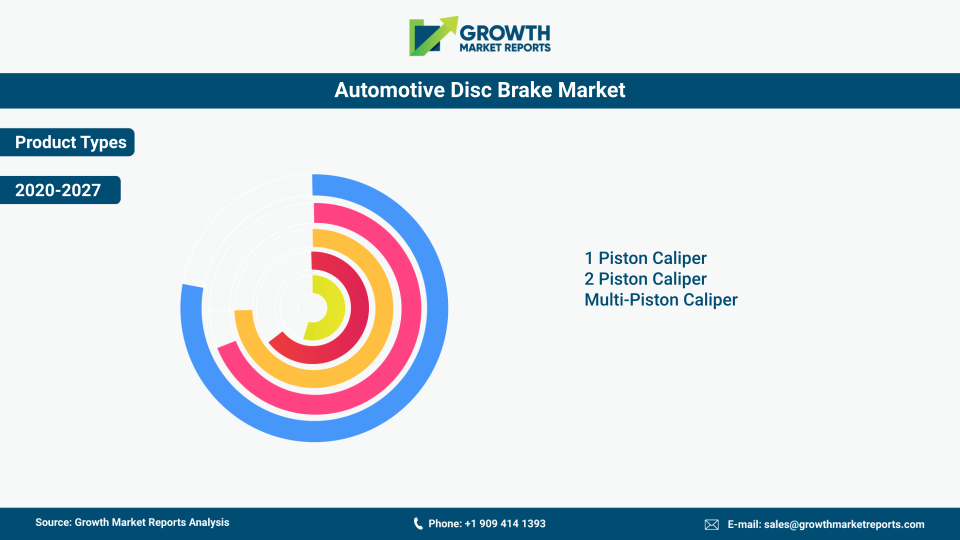
Yes, the report covers types of Disc Brake such as 1 piston caliper, 2 piston caliper, and multi-piston caliper Disc Brake.

Additional company profiles can be provided on request.

Table Of Content

Chapter 1 Executive Summary
Chapter 2 Assumptions and Acronyms Used
Chapter 3 Research Methodology
Chapter 4 Automotive Disc Brake Market Overview
   4.1 Introduction
      4.1.1 Market Taxonomy
      4.1.2 Market Definition
      4.1.3 Macro-Economic Factors Impacting the Market Growth
   4.2 Automotive Disc Brake Market Dynamics
      4.2.1 Market Drivers
      4.2.2 Market Restraints
      4.2.3 Market Opportunity
   4.3 Automotive Disc Brake Market - Supply Chain Analysis
      4.3.1 List of Key Suppliers
      4.3.2 List of Key Distributors
      4.3.3 List of Key Consumers
   4.4 Key Forces Shaping the Automotive Disc Brake Market
      4.4.1 Bargaining Power of Suppliers
      4.4.2 Bargaining Power of Buyers
      4.4.3 Threat of Substitution
      4.4.4 Threat of New Entrants
      4.4.5 Competitive Rivalry
   4.5 Global Automotive Disc Brake Market Size & Forecast, 2023-2032
      4.5.1 Automotive Disc Brake Market Size and Y-o-Y Growth
      4.5.2 Automotive Disc Brake Market Absolute $ Opportunity

Chapter 5 Global Automotive Disc Brake Market Analysis and Forecast By Product Type
   5.1 Introduction
      5.1.1 Key Market Trends & Growth Opportunities By Product Type
      5.1.2 Basis Point Share (BPS) Analysis By Product Type
      5.1.3 Absolute $ Opportunity Assessment By Product Type
   5.2 Automotive Disc Brake Market Size Forecast By Product Type
      5.2.1 Fixed Caliper
      5.2.2 Floating Caliper
      5.2.3 Sliding Caliper
   5.3 Market Attractiveness Analysis By Product Type

Chapter 6 Global Automotive Disc Brake Market Analysis and Forecast By Material
   6.1 Introduction
      6.1.1 Key Market Trends & Growth Opportunities By Material
      6.1.2 Basis Point Share (BPS) Analysis By Material
      6.1.3 Absolute $ Opportunity Assessment By Material
   6.2 Automotive Disc Brake Market Size Forecast By Material
      6.2.1 Cast Iron
      6.2.2 Aluminum
      6.2.3 Stainless Steel
      6.2.4 Others
   6.3 Market Attractiveness Analysis By Material

Chapter 7 Global Automotive Disc Brake Market Analysis and Forecast By Vehicle Type
   7.1 Introduction
      7.1.1 Key Market Trends & Growth Opportunities By Vehicle Type
      7.1.2 Basis Point Share (BPS) Analysis By Vehicle Type
      7.1.3 Absolute $ Opportunity Assessment By Vehicle Type
   7.2 Automotive Disc Brake Market Size Forecast By Vehicle Type
      7.2.1 Passenger Cars
      7.2.2 Light Commercial Vehicles
      7.2.3 Heavy Commercial Vehicles
      7.2.4 Two-Wheelers
      7.2.5 Others
   7.3 Market Attractiveness Analysis By Vehicle Type

Chapter 8 Global Automotive Disc Brake Market Analysis and Forecast By Sales Channel
   8.1 Introduction
      8.1.1 Key Market Trends & Growth Opportunities By Sales Channel
      8.1.2 Basis Point Share (BPS) Analysis By Sales Channel
      8.1.3 Absolute $ Opportunity Assessment By Sales Channel
   8.2 Automotive Disc Brake Market Size Forecast By Sales Channel
      8.2.1 OEM
      8.2.2 Aftermarket
   8.3 Market Attractiveness Analysis By Sales Channel

Chapter 9 Global Automotive Disc Brake Market Analysis and Forecast by Region
   9.1 Introduction
      9.1.1 Key Market Trends & Growth Opportunities By Region
      9.1.2 Basis Point Share (BPS) Analysis By Region
      9.1.3 Absolute $ Opportunity Assessment By Region
   9.2 Automotive Disc Brake Market Size Forecast By Region
      9.2.1 North America
      9.2.2 Europe
      9.2.3 Asia Pacific
      9.2.4 Latin America
      9.2.5 Middle East & Africa (MEA)
   9.3 Market Attractiveness Analysis By Region

Chapter 10 Coronavirus Disease (COVID-19) Impact 
   10.1 Introduction 
   10.2 Current & Future Impact Analysis 
   10.3 Economic Impact Analysis 
   10.4 Government Policies 
   10.5 Investment Scenario

Chapter 11 North America Automotive Disc Brake Analysis and Forecast
   11.1 Introduction
   11.2 North America Automotive Disc Brake Market Size Forecast by Country
      11.2.1 U.S.
      11.2.2 Canada
   11.3 Basis Point Share (BPS) Analysis by Country
   11.4 Absolute $ Opportunity Assessment by Country
   11.5 Market Attractiveness Analysis by Country
   11.6 North America Automotive Disc Brake Market Size Forecast By Product Type
      11.6.1 Fixed Caliper
      11.6.2 Floating Caliper
      11.6.3 Sliding Caliper
   11.7 Basis Point Share (BPS) Analysis By Product Type 
   11.8 Absolute $ Opportunity Assessment By Product Type 
   11.9 Market Attractiveness Analysis By Product Type
   11.10 North America Automotive Disc Brake Market Size Forecast By Material
      11.10.1 Cast Iron
      11.10.2 Aluminum
      11.10.3 Stainless Steel
      11.10.4 Others
   11.11 Basis Point Share (BPS) Analysis By Material 
   11.12 Absolute $ Opportunity Assessment By Material 
   11.13 Market Attractiveness Analysis By Material
   11.14 North America Automotive Disc Brake Market Size Forecast By Vehicle Type
      11.14.1 Passenger Cars
      11.14.2 Light Commercial Vehicles
      11.14.3 Heavy Commercial Vehicles
      11.14.4 Two-Wheelers
      11.14.5 Others
   11.15 Basis Point Share (BPS) Analysis By Vehicle Type 
   11.16 Absolute $ Opportunity Assessment By Vehicle Type 
   11.17 Market Attractiveness Analysis By Vehicle Type
   11.18 North America Automotive Disc Brake Market Size Forecast By Sales Channel
      11.18.1 OEM
      11.18.2 Aftermarket
   11.19 Basis Point Share (BPS) Analysis By Sales Channel 
   11.20 Absolute $ Opportunity Assessment By Sales Channel 
   11.21 Market Attractiveness Analysis By Sales Channel

Chapter 12 Europe Automotive Disc Brake Analysis and Forecast
   12.1 Introduction
   12.2 Europe Automotive Disc Brake Market Size Forecast by Country
      12.2.1 Germany
      12.2.2 France
      12.2.3 Italy
      12.2.4 U.K.
      12.2.5 Spain
      12.2.6 Russia
      12.2.7 Rest of Europe
   12.3 Basis Point Share (BPS) Analysis by Country
   12.4 Absolute $ Opportunity Assessment by Country
   12.5 Market Attractiveness Analysis by Country
   12.6 Europe Automotive Disc Brake Market Size Forecast By Product Type
      12.6.1 Fixed Caliper
      12.6.2 Floating Caliper
      12.6.3 Sliding Caliper
   12.7 Basis Point Share (BPS) Analysis By Product Type 
   12.8 Absolute $ Opportunity Assessment By Product Type 
   12.9 Market Attractiveness Analysis By Product Type
   12.10 Europe Automotive Disc Brake Market Size Forecast By Material
      12.10.1 Cast Iron
      12.10.2 Aluminum
      12.10.3 Stainless Steel
      12.10.4 Others
   12.11 Basis Point Share (BPS) Analysis By Material 
   12.12 Absolute $ Opportunity Assessment By Material 
   12.13 Market Attractiveness Analysis By Material
   12.14 Europe Automotive Disc Brake Market Size Forecast By Vehicle Type
      12.14.1 Passenger Cars
      12.14.2 Light Commercial Vehicles
      12.14.3 Heavy Commercial Vehicles
      12.14.4 Two-Wheelers
      12.14.5 Others
   12.15 Basis Point Share (BPS) Analysis By Vehicle Type 
   12.16 Absolute $ Opportunity Assessment By Vehicle Type 
   12.17 Market Attractiveness Analysis By Vehicle Type
   12.18 Europe Automotive Disc Brake Market Size Forecast By Sales Channel
      12.18.1 OEM
      12.18.2 Aftermarket
   12.19 Basis Point Share (BPS) Analysis By Sales Channel 
   12.20 Absolute $ Opportunity Assessment By Sales Channel 
   12.21 Market Attractiveness Analysis By Sales Channel

Chapter 13 Asia Pacific Automotive Disc Brake Analysis and Forecast
   13.1 Introduction
   13.2 Asia Pacific Automotive Disc Brake Market Size Forecast by Country
      13.2.1 China
      13.2.2 Japan
      13.2.3 South Korea
      13.2.4 India
      13.2.5 Australia
      13.2.6 South East Asia (SEA)
      13.2.7 Rest of Asia Pacific (APAC)
   13.3 Basis Point Share (BPS) Analysis by Country
   13.4 Absolute $ Opportunity Assessment by Country
   13.5 Market Attractiveness Analysis by Country
   13.6 Asia Pacific Automotive Disc Brake Market Size Forecast By Product Type
      13.6.1 Fixed Caliper
      13.6.2 Floating Caliper
      13.6.3 Sliding Caliper
   13.7 Basis Point Share (BPS) Analysis By Product Type 
   13.8 Absolute $ Opportunity Assessment By Product Type 
   13.9 Market Attractiveness Analysis By Product Type
   13.10 Asia Pacific Automotive Disc Brake Market Size Forecast By Material
      13.10.1 Cast Iron
      13.10.2 Aluminum
      13.10.3 Stainless Steel
      13.10.4 Others
   13.11 Basis Point Share (BPS) Analysis By Material 
   13.12 Absolute $ Opportunity Assessment By Material 
   13.13 Market Attractiveness Analysis By Material
   13.14 Asia Pacific Automotive Disc Brake Market Size Forecast By Vehicle Type
      13.14.1 Passenger Cars
      13.14.2 Light Commercial Vehicles
      13.14.3 Heavy Commercial Vehicles
      13.14.4 Two-Wheelers
      13.14.5 Others
   13.15 Basis Point Share (BPS) Analysis By Vehicle Type 
   13.16 Absolute $ Opportunity Assessment By Vehicle Type 
   13.17 Market Attractiveness Analysis By Vehicle Type
   13.18 Asia Pacific Automotive Disc Brake Market Size Forecast By Sales Channel
      13.18.1 OEM
      13.18.2 Aftermarket
   13.19 Basis Point Share (BPS) Analysis By Sales Channel 
   13.20 Absolute $ Opportunity Assessment By Sales Channel 
   13.21 Market Attractiveness Analysis By Sales Channel

Chapter 14 Latin America Automotive Disc Brake Analysis and Forecast
   14.1 Introduction
   14.2 Latin America Automotive Disc Brake Market Size Forecast by Country
      14.2.1 Brazil
      14.2.2 Mexico
      14.2.3 Rest of Latin America (LATAM)
   14.3 Basis Point Share (BPS) Analysis by Country
   14.4 Absolute $ Opportunity Assessment by Country
   14.5 Market Attractiveness Analysis by Country
   14.6 Latin America Automotive Disc Brake Market Size Forecast By Product Type
      14.6.1 Fixed Caliper
      14.6.2 Floating Caliper
      14.6.3 Sliding Caliper
   14.7 Basis Point Share (BPS) Analysis By Product Type 
   14.8 Absolute $ Opportunity Assessment By Product Type 
   14.9 Market Attractiveness Analysis By Product Type
   14.10 Latin America Automotive Disc Brake Market Size Forecast By Material
      14.10.1 Cast Iron
      14.10.2 Aluminum
      14.10.3 Stainless Steel
      14.10.4 Others
   14.11 Basis Point Share (BPS) Analysis By Material 
   14.12 Absolute $ Opportunity Assessment By Material 
   14.13 Market Attractiveness Analysis By Material
   14.14 Latin America Automotive Disc Brake Market Size Forecast By Vehicle Type
      14.14.1 Passenger Cars
      14.14.2 Light Commercial Vehicles
      14.14.3 Heavy Commercial Vehicles
      14.14.4 Two-Wheelers
      14.14.5 Others
   14.15 Basis Point Share (BPS) Analysis By Vehicle Type 
   14.16 Absolute $ Opportunity Assessment By Vehicle Type 
   14.17 Market Attractiveness Analysis By Vehicle Type
   14.18 Latin America Automotive Disc Brake Market Size Forecast By Sales Channel
      14.18.1 OEM
      14.18.2 Aftermarket
   14.19 Basis Point Share (BPS) Analysis By Sales Channel 
   14.20 Absolute $ Opportunity Assessment By Sales Channel 
   14.21 Market Attractiveness Analysis By Sales Channel

Chapter 15 Middle East & Africa (MEA) Automotive Disc Brake Analysis and Forecast
   15.1 Introduction
   15.2 Middle East & Africa (MEA) Automotive Disc Brake Market Size Forecast by Country
      15.2.1 Saudi Arabia
      15.2.2 South Africa
      15.2.3 UAE
      15.2.4 Rest of Middle East & Africa (MEA)
   15.3 Basis Point Share (BPS) Analysis by Country
   15.4 Absolute $ Opportunity Assessment by Country
   15.5 Market Attractiveness Analysis by Country
   15.6 Middle East & Africa (MEA) Automotive Disc Brake Market Size Forecast By Product Type
      15.6.1 Fixed Caliper
      15.6.2 Floating Caliper
      15.6.3 Sliding Caliper
   15.7 Basis Point Share (BPS) Analysis By Product Type 
   15.8 Absolute $ Opportunity Assessment By Product Type 
   15.9 Market Attractiveness Analysis By Product Type
   15.10 Middle East & Africa (MEA) Automotive Disc Brake Market Size Forecast By Material
      15.10.1 Cast Iron
      15.10.2 Aluminum
      15.10.3 Stainless Steel
      15.10.4 Others
   15.11 Basis Point Share (BPS) Analysis By Material 
   15.12 Absolute $ Opportunity Assessment By Material 
   15.13 Market Attractiveness Analysis By Material
   15.14 Middle East & Africa (MEA) Automotive Disc Brake Market Size Forecast By Vehicle Type
      15.14.1 Passenger Cars
      15.14.2 Light Commercial Vehicles
      15.14.3 Heavy Commercial Vehicles
      15.14.4 Two-Wheelers
      15.14.5 Others
   15.15 Basis Point Share (BPS) Analysis By Vehicle Type 
   15.16 Absolute $ Opportunity Assessment By Vehicle Type 
   15.17 Market Attractiveness Analysis By Vehicle Type
   15.18 Middle East & Africa (MEA) Automotive Disc Brake Market Size Forecast By Sales Channel
      15.18.1 OEM
      15.18.2 Aftermarket
   15.19 Basis Point Share (BPS) Analysis By Sales Channel 
   15.20 Absolute $ Opportunity Assessment By Sales Channel 
   15.21 Market Attractiveness Analysis By Sales Channel

Chapter 16 Competition Landscape 
   16.1 Automotive Disc Brake Market: Competitive Dashboard
   16.2 Global Automotive Disc Brake Market: Market Share Analysis, 2023
   16.3 Company Profiles (Details – Overview, Financials, Developments, Strategy) 
      16.3.1 ZF Friedrichshafen AG
Continental AG
Brembo S.p.A.
Aisin Seiki Co., Ltd.
Akebono Brake Industry Co., Ltd.
Robert Bosch GmbH
Mando Corporation
Nissin Kogyo Co., Ltd.
ADVICS Co., Ltd.
TRW Automotive Holdings Corp. (ZF TRW)
Hitachi Automotive Systems, Ltd.
Haldex AB
Wabco Holdings Inc.
Knorr-Bremse AG
BorgWarner Inc.
Tenneco Inc. (Federal-Mogul Motorparts)
SGL Carbon SE
Sicom S.p.A.
AP Racing Ltd.
Carlisle Companies Inc.

Methodology

Our Clients

Dassault Aviation
Nestle SA
Honda Motor Co. Ltd.
General Electric
Pfizer
Deloitte
Siemens Healthcare
The John Holland Group