Segments - by Product Type (Windshield HUD, Combiner HUD), by Technology (Conventional HUD, Augmented Reality HUD), by Vehicle Type (Passenger Cars, Commercial Vehicles), by Sales Channel (OEM, Aftermarket), by Application (Navigation, Speedometer, Tachometer, Others)
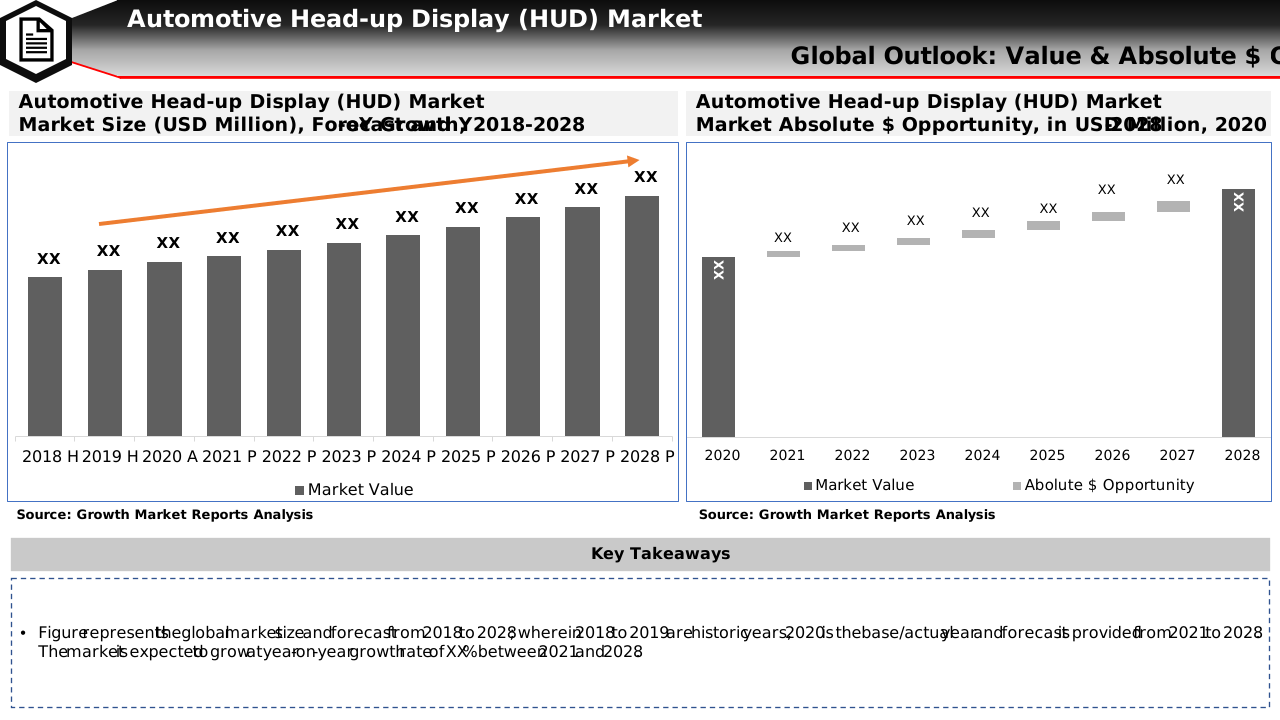
According to our latest research, the global Automotive Head-up Display (HUD) market size reached USD 1.87 billion in 2024, demonstrating a robust trajectory driven by technological innovations and rising consumer demand for advanced safety features. The market is expected to expand at a CAGR of 22.4% from 2025 to 2033, with the forecasted market value projected to reach USD 13.1 billion by 2033. This dynamic growth is primarily attributed to the increasing integration of HUDs in both passenger and commercial vehicles, as automakers prioritize enhanced driving experiences and regulatory agencies emphasize road safety.
A key growth factor propelling the Automotive Head-up Display (HUD) market is the escalating demand for advanced driver assistance systems (ADAS) and in-vehicle infotainment. As consumers become more aware of the safety and convenience benefits associated with HUDs, automakers are accelerating the adoption of these systems across various vehicle segments. HUDs provide drivers with critical information such as navigation, speed, and warning signals directly within their line of sight, thereby minimizing distractions and improving situational awareness. The proliferation of connected vehicles and the push towards semi-autonomous and autonomous driving technologies further amplify the need for intuitive, real-time data visualization solutions, cementing HUDs as a core component in next-generation automotive design.
Technological advancements are another significant driver for the Automotive Head-up Display (HUD) market. The transition from conventional HUDs to augmented reality HUDs (AR-HUDs) has revolutionized the user experience by overlaying contextual information onto the real-world environment. Innovations in projection technology, such as laser-based and microelectromechanical systems (MEMS) displays, have enhanced the clarity, brightness, and field of view of HUDs, making them more adaptable to various lighting conditions and vehicle types. Additionally, the integration of artificial intelligence and machine learning algorithms enables more personalized and predictive HUD functionalities, including gesture recognition and adaptive content display, which further stimulate market growth.
The introduction of Micro-Mirror HUD technology is a notable advancement in the automotive display sector. This technology utilizes tiny mirrors to project images onto the windshield, offering a clearer and more precise display of critical driving information. The Micro-Mirror HUD is particularly beneficial in enhancing visibility under varying lighting conditions, thereby improving the overall driving experience. As automakers continue to innovate, the integration of Micro-Mirror HUDs is expected to become more prevalent, providing drivers with an intuitive interface that seamlessly blends with the vehicle's interior design. This advancement not only supports safer driving practices but also aligns with the industry's move towards more sophisticated and user-friendly in-car technologies.
The Automotive Head-up Display (HUD) market also benefits from favorable regulatory frameworks and industry standards aimed at improving road safety. Many governments worldwide are mandating the inclusion of advanced safety features in new vehicles, particularly in developed regions like North America and Europe. These regulations, coupled with rising consumer expectations for premium in-car experiences, are compelling original equipment manufacturers (OEMs) and aftermarket suppliers to invest in HUD technology. As a result, the market is witnessing increased collaboration between automakers, technology providers, and display manufacturers to develop cost-effective, scalable HUD solutions that cater to both mass-market and luxury vehicle segments.
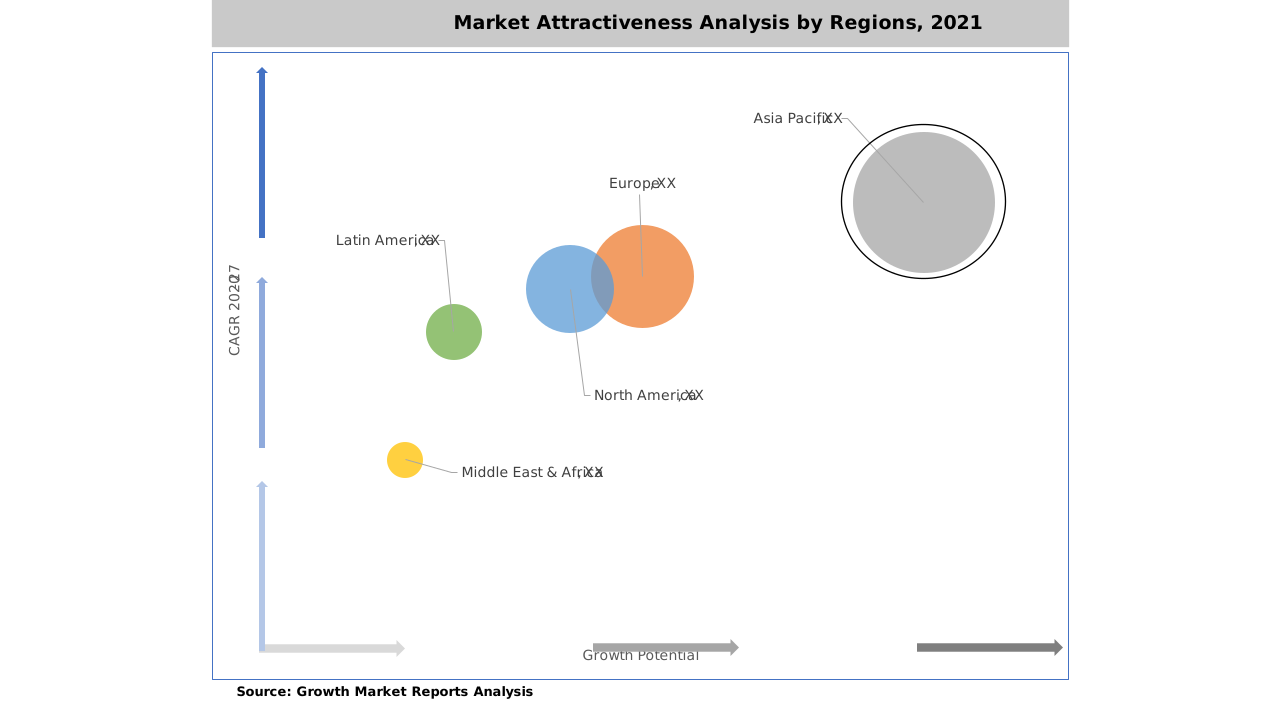
Regionally, Asia Pacific has emerged as the dominant market for Automotive Head-up Displays, supported by the rapid expansion of the automotive industry in countries such as China, Japan, and South Korea. The presence of leading automotive OEMs, coupled with a growing middle-class population and increasing disposable income, is fueling the adoption of HUDs in passenger cars and commercial vehicles alike. North America and Europe also represent significant markets, driven by stringent safety regulations, high consumer awareness, and a strong focus on technological innovation. Meanwhile, Latin America and the Middle East & Africa are gradually catching up, with rising vehicle sales and infrastructure development creating new opportunities for HUD adoption.
In the realm of advanced HUD technologies, the MEMS Laser HUD Windshield stands out as a cutting-edge solution. This technology employs microelectromechanical systems (MEMS) to control laser beams, projecting high-resolution images directly onto the windshield. The precision and adaptability of MEMS Laser HUD Windshields make them ideal for delivering dynamic and interactive content, such as augmented reality navigation and real-time traffic updates. As the automotive industry embraces digital transformation, the adoption of MEMS Laser HUD Windshields is anticipated to grow, offering a more immersive and engaging driving experience. This innovation not only enhances driver safety by providing clear and immediate information but also supports the trend towards connected and autonomous vehicles.
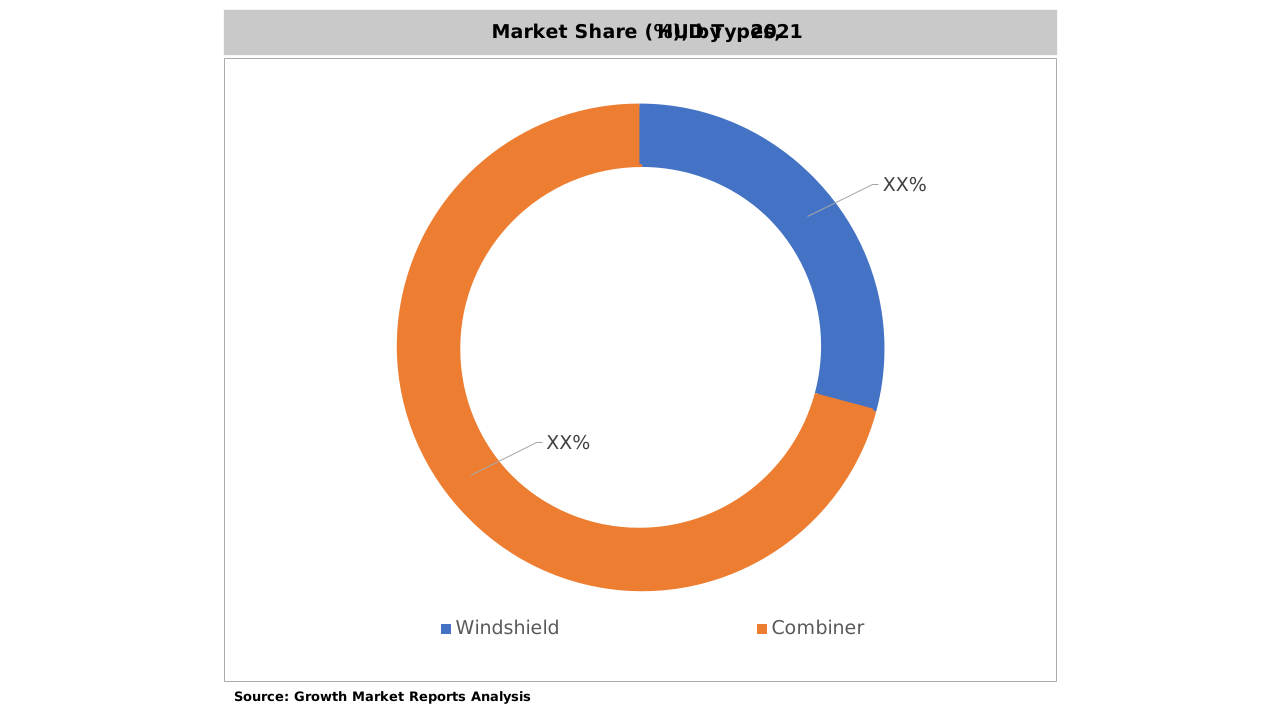
The Automotive Head-up Display (HUD) market by product type can be segmented into Windshield HUDs and Combiner HUDs. Windshield HUDs, which project information directly onto the vehicleÂ’s windshield, are gaining significant traction due to their seamless integration and ability to display a larger field of view. This technology is particularly favored in premium and luxury vehicles, where consumer expectations for high-end features are pronounced. The clarity and unobtrusive design of windshield HUDs enhance the driving experience by allowing drivers to access critical information without diverting their attention from the road. As display technology advances, the cost of windshield HUDs is gradually decreasing, enabling broader adoption across mid-range vehicle segments.
Combiner HUDs, on the other hand, utilize a small transparent screen (combiner) situated between the dashboard and the windshield to display information. These systems are generally more cost-effective and easier to retrofit in existing vehicles, making them popular in the aftermarket segment and among budget-conscious consumers. While the field of view and display area are typically smaller compared to windshield HUDs, combiner HUDs still provide essential information such as speed, navigation, and warning signals. Their modular design and lower price point make them a viable option for automakers looking to offer HUD features in entry-level and compact vehicles.
The emergence of Automotive AR HUD Waveguide technology marks a significant leap forward in head-up display systems. Utilizing waveguide optics, this technology enables the projection of augmented reality content directly into the driver's field of view, overlaying digital information onto the real-world environment. Automotive AR HUD Waveguides offer a wide field of view and superior image quality, making them an attractive option for next-generation vehicles. As the automotive industry moves towards greater integration of digital interfaces, the role of AR HUD Waveguides is set to expand, providing drivers with an enhanced level of situational awareness and interaction. This technology not only supports the shift towards semi-autonomous driving but also aligns with consumer demand for more interactive and personalized in-car experiences.
The competitive dynamics between windshield and combiner HUDs are influenced by factors such as vehicle segment, consumer preferences, and regulatory requirements. Premium automakers are increasingly standardizing windshield HUDs in their latest models, while mass-market brands are exploring combiner HUDs as an affordable alternative. The ongoing evolution of display materials, such as OLED and advanced glass substrates, is expected to further blur the lines between these two product types, enabling greater customization and enhanced performance.
Market trends indicate a gradual shift towards windshield HUDs as the technology becomes more accessible and cost-effective. However, combiner HUDs are expected to maintain a significant market share, particularly in regions where price sensitivity is high and aftermarket demand is robust. The coexistence of both product types ensures that a wide range of consumer needs and vehicle applications are addressed, supporting the overall growth and diversification of the Automotive Head-up Display (HUD) market.
| Attributes | Details |
| Report Title | Automotive Head-up Display (HUD) Market Research Report 2033 |
| By Product Type | Windshield HUD, Combiner HUD |
| By Technology | Conventional HUD, Augmented Reality HUD |
| By Vehicle Type | Passenger Cars, Commercial Vehicles |
| By Sales Channel | OEM, Aftermarket |
| By Application | Navigation, Speedometer, Tachometer, Others |
| Regions Covered | North America, Europe, APAC, Latin America, MEA |
| Base Year | 2024 |
| Historic Data | 2018-2023 |
| Forecast Period | 2025-2033 |
| Number of Pages | 294 |
| Number of Tables & Figures | 310 |
| Customization Available | Yes, the report can be customized as per your need. |
The Automotive Head-up Display (HUD) market is categorized by technology into Conventional HUDs and Augmented Reality HUDs (AR-HUDs). Conventional HUDs, which project basic information such as speed, navigation, and warning indicators, have been widely adopted in both passenger and commercial vehicles. These systems rely on established projection technologies and are valued for their reliability, ease of use, and affordability. As automakers strive to enhance vehicle safety and driver convenience, conventional HUDs continue to serve as an entry point for HUD adoption, especially in mid-range and budget vehicles.
Augmented Reality HUDs represent the next frontier in automotive display technology. AR-HUDs leverage advanced sensors, cameras, and software algorithms to overlay contextual information directly onto the driverÂ’s view of the road. This includes real-time navigation guidance, hazard detection, lane departure warnings, and even pedestrian recognition, all seamlessly integrated with the external environment. The immersive experience provided by AR-HUDs significantly enhances situational awareness and reduces cognitive load, positioning these systems as a key enabler of semi-autonomous and autonomous driving.
The adoption of AR-HUDs is accelerating, particularly among premium automakers and technology-driven brands. The integration of artificial intelligence, machine learning, and connectivity features allows AR-HUDs to deliver personalized and adaptive content based on driving conditions, user preferences, and vehicle status. As the automotive industry transitions towards electrification and smart mobility, AR-HUDs are expected to play a pivotal role in shaping the future of human-machine interaction within vehicles.
Despite their transformative potential, AR-HUDs face challenges related to cost, complexity, and standardization. The high price point and intricate integration requirements have limited their adoption to high-end vehicles, although ongoing advancements in projection technology and economies of scale are expected to drive down costs over time. Conventional HUDs, meanwhile, remain a staple in the market, offering a practical and cost-effective solution for a broad spectrum of vehicles. The coexistence of conventional and AR-HUDs ensures that the Automotive Head-up Display (HUD) market can cater to diverse consumer needs and evolving technological trends.
The Automotive Head-up Display (HUD) market is segmented by vehicle type into Passenger Cars and Commercial Vehicles. Passenger cars represent the largest and fastest-growing segment, driven by rising consumer expectations for advanced safety and infotainment features. The integration of HUDs in passenger vehicles is increasingly seen as a differentiator by automakers, particularly in the premium and luxury segments. As display technology becomes more affordable, HUDs are gradually making their way into mid-range and compact cars, broadening their appeal and market reach.
Commercial vehicles, including trucks, buses, and delivery vans, are also witnessing increased adoption of HUDs, albeit at a slower pace. Fleet operators and commercial vehicle manufacturers are recognizing the safety and operational benefits of HUDs, particularly in reducing driver fatigue and improving situational awareness during long-haul journeys. The ability to display critical information such as speed, navigation, and vehicle diagnostics directly within the driverÂ’s line of sight enhances efficiency and reduces the risk of accidents, making HUDs an attractive investment for commercial fleets.
The dynamics of HUD adoption vary significantly between passenger cars and commercial vehicles, influenced by factors such as regulatory requirements, cost considerations, and operational priorities. In passenger cars, HUDs are often marketed as a premium feature, bundled with other advanced driver assistance systems (ADAS) and infotainment options. In commercial vehicles, the focus is primarily on safety, compliance, and productivity, with HUDs positioned as a tool to support professional drivers and fleet managers.
Looking ahead, the convergence of passenger and commercial vehicle technologies is expected to drive further innovation in HUD design and functionality. The rise of shared mobility, electrification, and autonomous driving will create new opportunities for HUD integration across diverse vehicle types. As the total cost of ownership decreases and regulatory pressures intensify, both passenger and commercial vehicle segments are poised to contribute significantly to the sustained growth of the Automotive Head-up Display (HUD) market.
The Automotive Head-up Display (HUD) market is segmented by sales channel into Original Equipment Manufacturer (OEM) and Aftermarket. OEM sales dominate the market, as automakers increasingly integrate HUDs into new vehicle models to meet consumer demand and regulatory requirements. The OEM channel benefits from seamless integration, higher reliability, and the ability to leverage advanced manufacturing processes. Partnerships between automakers and technology providers are driving the development of customized HUD solutions tailored to specific vehicle platforms, further strengthening the OEM segmentÂ’s position in the market.
The aftermarket segment, while smaller in comparison, is experiencing steady growth as consumers seek to retrofit their existing vehicles with HUD technology. Aftermarket HUDs offer a cost-effective and accessible way for vehicle owners to enhance safety and driving convenience without purchasing a new car. The availability of plug-and-play HUD kits, coupled with easy installation procedures, has made aftermarket solutions increasingly popular among tech-savvy consumers and fleet operators.
The competitive landscape within the sales channel segment is shaped by factors such as product quality, pricing, distribution networks, and brand reputation. OEMs have a distinct advantage in terms of integration and long-term support, while aftermarket suppliers compete on the basis of affordability, versatility, and ease of installation. The growing trend towards vehicle personalization and customization is expected to fuel demand for aftermarket HUDs, particularly in regions with a large base of older vehicles and high consumer interest in automotive upgrades.
As the Automotive Head-up Display (HUD) market matures, the distinction between OEM and aftermarket channels is likely to blur, with increasing collaboration and cross-segment partnerships. Technology providers are developing modular HUD platforms that can be easily adapted for both OEM integration and aftermarket installation, enabling greater flexibility and scalability. This convergence is expected to accelerate market growth and expand the reach of HUD technology across diverse vehicle types and consumer segments.
The Automotive Head-up Display (HUD) market is segmented by application into Navigation, Speedometer, Tachometer, and Others. Navigation is the leading application, as HUDs provide real-time route guidance and turn-by-turn directions directly within the driverÂ’s line of sight. This minimizes distractions and enhances situational awareness, particularly in complex urban environments and unfamiliar territories. The integration of GPS, real-time traffic data, and augmented reality features further enriches the navigation experience, making it a key driver of HUD adoption.
Speedometer and tachometer displays are also critical applications for HUDs, enabling drivers to monitor vehicle speed and engine performance without taking their eyes off the road. These features are particularly valued in performance-oriented vehicles and among safety-conscious consumers, as they support compliance with speed limits and help prevent engine over-revving. The ability to customize display settings and prioritize specific information enhances the usability and appeal of HUDs across different driving scenarios.
Other applications of HUDs include the display of warning signals, lane departure alerts, adaptive cruise control status, and infotainment information. As HUD technology evolves, the range of supported applications is expanding to include advanced driver assistance system (ADAS) alerts, real-time diagnostics, and even entertainment content for passengers. The modular and software-driven nature of modern HUDs allows for continuous updates and feature enhancements, ensuring that users benefit from the latest innovations and safety improvements.
The growing demand for multifunctional and customizable HUDs is driving innovation in application development. Automakers and technology providers are investing in user experience research, human-machine interface design, and software integration to deliver HUD solutions that cater to diverse consumer needs and preferences. As the Automotive Head-up Display (HUD) market continues to evolve, the breadth and depth of supported applications will play a critical role in shaping adoption trends and competitive differentiation.
The Automotive Head-up Display (HUD) market presents significant opportunities for growth, particularly in the areas of technological innovation and market expansion. The ongoing development of augmented reality HUDs, artificial intelligence-driven content delivery, and advanced projection technologies is opening new avenues for value creation and differentiation. As vehicle connectivity and autonomous driving capabilities advance, HUDs are poised to become an integral component of the automotive human-machine interface, supporting safer and more intuitive driving experiences. The rise of electric vehicles, shared mobility, and smart city initiatives further enhances the relevance of HUDs, as they enable seamless integration with digital ecosystems and real-time data sources.
Another major opportunity lies in the untapped potential of emerging markets and the aftermarket segment. As vehicle ownership rates rise in regions such as Asia Pacific, Latin America, and the Middle East & Africa, the demand for affordable and customizable HUD solutions is expected to surge. Aftermarket suppliers have a unique opportunity to address the needs of older vehicles and budget-conscious consumers by offering plug-and-play HUD kits and retrofit solutions. Strategic partnerships between automakers, technology providers, and aftermarket players can accelerate market penetration and drive sustained growth across diverse geographies and customer segments.
Despite these opportunities, the Automotive Head-up Display (HUD) market faces several restraining factors. High development and integration costs, particularly for advanced AR-HUDs, remain a significant barrier to widespread adoption. The complexity of HUD installation, calibration, and maintenance can also deter both automakers and consumers, especially in price-sensitive markets. Additionally, the lack of industry-wide standards and interoperability challenges may hinder the seamless integration of HUDs with other in-vehicle systems and external data sources. Addressing these challenges will require concerted efforts from industry stakeholders, including investments in research and development, supply chain optimization, and regulatory harmonization.
The Asia Pacific region leads the global Automotive Head-up Display (HUD) market, accounting for approximately 41% of the total market size in 2024, with a value of around USD 0.77 billion. The dominance of Asia Pacific is driven by the rapid growth of the automotive industry in countries such as China, Japan, and South Korea, where leading OEMs are investing heavily in advanced safety and infotainment technologies. The regionÂ’s expanding middle class, rising disposable incomes, and increasing consumer awareness of in-car safety features are further fueling demand for HUDs in both passenger and commercial vehicles. With a projected CAGR of 24.1% from 2025 to 2033, Asia Pacific is expected to remain the fastest-growing market for automotive HUDs.
North America is the second-largest market for Automotive Head-up Displays, with a market size of approximately USD 0.47 billion in 2024, representing 25% of the global market. The regionÂ’s growth is underpinned by stringent safety regulations, high consumer expectations for premium features, and a strong focus on technological innovation. Major automakers and technology companies in the United States and Canada are at the forefront of HUD development, driving adoption across a wide range of vehicle segments. The presence of a large and technologically sophisticated aftermarket also supports the proliferation of retrofit HUD solutions in North America.
Europe holds a significant share of the Automotive Head-up Display (HUD) market, with a market value of approximately USD 0.41 billion in 2024, or 22% of the global total. The regionÂ’s emphasis on road safety, environmental sustainability, and innovation has spurred the adoption of advanced HUD technologies in both passenger cars and commercial vehicles. Leading European automakers are integrating HUDs as standard or optional features in their latest models, while regulatory initiatives aimed at reducing traffic accidents and enhancing driver awareness further support market growth. Meanwhile, Latin America and the Middle East & Africa collectively account for the remaining 12% of the market, with a combined value of USD 0.22 billion in 2024. These regions are experiencing gradual growth, driven by rising vehicle sales, infrastructure development, and increasing investments in automotive safety and technology.
The competitive landscape of the Automotive Head-up Display (HUD) market is characterized by intense rivalry among established global players and innovative technology startups. Leading companies are investing heavily in research and development to enhance HUD performance, reduce costs, and expand their product portfolios. Strategic partnerships, mergers, and acquisitions are common as players seek to strengthen their market positions and gain access to new technologies and customer segments. The market is also witnessing increased collaboration between automakers, display manufacturers, and software providers to deliver integrated and customized HUD solutions tailored to specific vehicle platforms and consumer preferences.
Innovation is a key differentiator in the Automotive Head-up Display (HUD) market, with companies focusing on the development of augmented reality HUDs, advanced projection technologies, and artificial intelligence-driven content delivery. The ability to deliver high-resolution, wide field-of-view displays that adapt to changing lighting conditions and user preferences is becoming a critical success factor. Companies are also exploring new business models, such as subscription-based software updates and connected services, to generate recurring revenue streams and enhance customer loyalty.
The market is highly fragmented, with a mix of global giants, regional players, and niche specialists competing across different segments and geographies. Leading OEMs are leveraging their scale, brand reputation, and distribution networks to capture a larger share of the market, while aftermarket suppliers are targeting price-sensitive consumers and older vehicles with affordable retrofit solutions. The entry of technology companies and startups is intensifying competition and driving innovation, as these players bring new perspectives and capabilities to HUD design, software integration, and user experience.
Major companies operating in the global Automotive Head-up Display (HUD) market include Continental AG, Panasonic Corporation, Visteon Corporation, Yazaki Corporation, Garmin Ltd., Robert Bosch GmbH, Denso Corporation, HUDWAY LLC, WayRay AG, and Pioneer Corporation. Continental AG is renowned for its advanced AR-HUD solutions and strong partnerships with leading automakers worldwide. Panasonic Corporation and Visteon Corporation are recognized for their innovations in projection technology and human-machine interface design. Yazaki Corporation and Denso Corporation have a strong presence in the OEM segment, supplying HUD systems to major Japanese and international automakers.
Garmin Ltd. and HUDWAY LLC are prominent players in the aftermarket segment, offering a range of plug-and-play HUD solutions for existing vehicles. WayRay AG is at the forefront of holographic AR-HUD technology, collaborating with global OEMs to develop next-generation display systems. Pioneer Corporation and Robert Bosch GmbH are leveraging their expertise in automotive electronics and infotainment to expand their HUD product offerings and capture new market opportunities. Collectively, these companies are shaping the future of the Automotive Head-up Display (HUD) market through continuous innovation, strategic partnerships, and a relentless focus on customer needs.
The Automotive Head-up Display (HUD) market has been segmented on the basis of
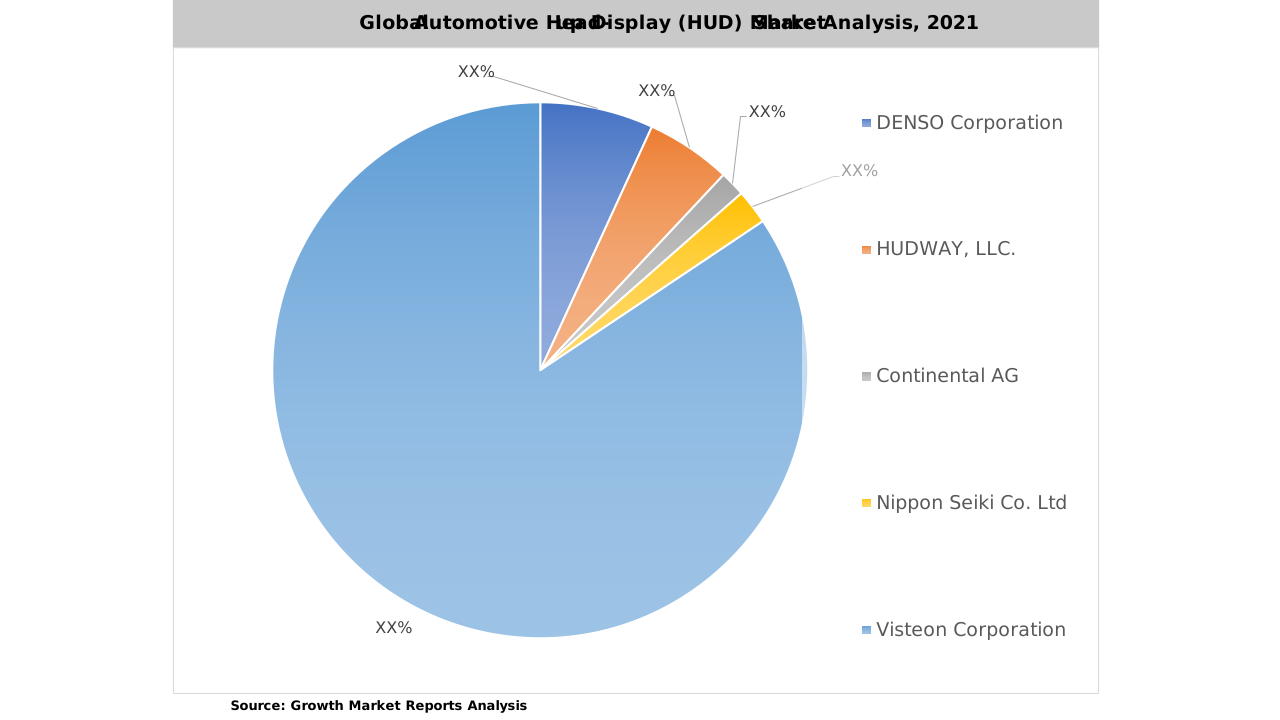
Key players competing in the global automotive head-up display market are DENSO Corporation; HUDWAY, LLC.; Continental AG; Nippon Seiki Co. Ltd; and Visteon Corporation. These companies have been able to obtain an advantage by managing their product portfolios, developing new product line, and growing their reach across multiple countries around the world.
Yes, the report can be customized as per specific requirements.
The aftermarket segment is growing as consumers retrofit existing vehicles with HUD technology, offering cost-effective and accessible solutions, especially in regions with older vehicles and high demand for upgrades.
Key challenges include high development and integration costs, complexity of installation and calibration, lack of industry-wide standards, and interoperability issues with other in-vehicle systems.
Growth is driven by technological innovations, rising consumer demand for advanced safety features, increasing integration of HUDs in vehicles, regulatory emphasis on road safety, and the proliferation of connected and autonomous vehicles.
Major companies include Continental AG, Panasonic Corporation, Visteon Corporation, Yazaki Corporation, Garmin Ltd., Robert Bosch GmbH, Denso Corporation, HUDWAY LLC, WayRay AG, and Pioneer Corporation.
Key applications include navigation, speedometer, tachometer, warning signals, lane departure alerts, adaptive cruise control status, and infotainment information.
Asia Pacific is the dominant region, accounting for 41% of the market in 2024, followed by North America and Europe. Latin America and the Middle East & Africa are also experiencing gradual growth.
Augmented reality HUDs overlay contextual information directly onto the driver’s view of the road using advanced sensors and software, while conventional HUDs display basic information like speed and navigation using established projection technologies.
The two main types of automotive HUDs are Windshield HUDs, which project information directly onto the windshield, and Combiner HUDs, which use a small transparent screen between the dashboard and windshield.
The global Automotive Head-up Display (HUD) market is expected to reach USD 13.1 billion by 2033, growing at a CAGR of 22.4% from 2025 to 2033.