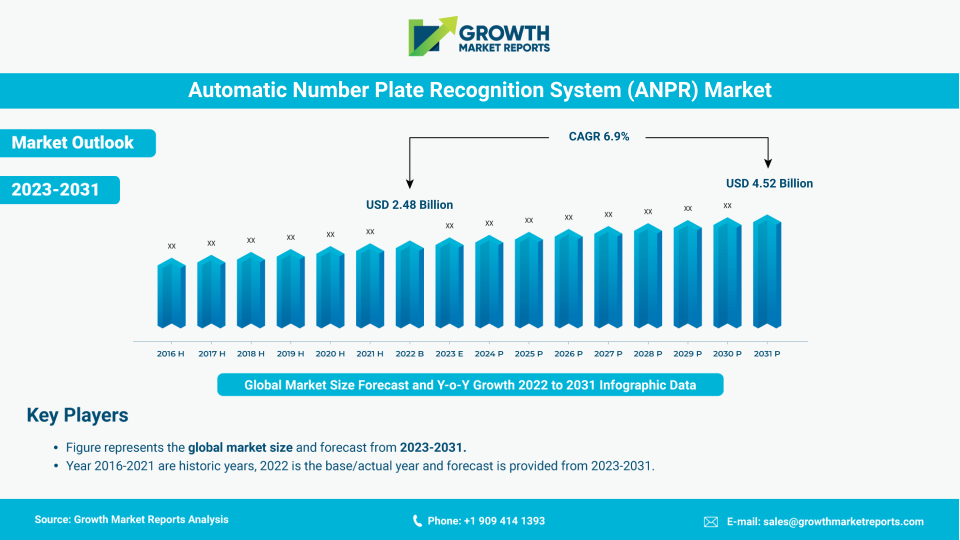
The global automatic number plate recognition system (ANPR) market size was USD 2.48 Billion in 2022 and is likely to reach USD 4.52 Billion by 2031, expanding at a CAGR of 6.9% during, 2023–2031. The market growth is attributed to the growing adoption of ASPR technology for traffic and parking management by governments and private companies.
Automated Number Plate Recognition (ANPR) is a technology used to identify the vehicle license plate and save this info into computer processing to create an ANPR application. The demand for this technology is rapidly increasing as governments across the globe are taking new initiatives to integrate ANPR technology. It provides assistance to law enforcement to track down criminal behavior.
Moreover, ANPR-enabled devices such as ANPR cameras are highly used by governments to manage traffic, tolls, and intelligent transport systems. ANPR uses real-time camera footage to precisely identify any license plate. It has a fundamental technology named Optical Character Recognition (OCR) which is used on the images taken by cameras.
OCR has the capability to store and sort the data thus, it is used for specialized ANPR software or applications. With the growing demand for ANPR systems, manufacturers are focusing on innovating ANPR cameras with fast shutters and variable-intensity infrared (IR) lamps for easy deployment on unlimited registration of vehicle plates.
IR offers the best results in capturing the images of vehicle number plates and it has zero visibility lights that eliminate the possibility of distracting the driver. Infrared-enabled ANPR cameras are ideal for traffic and toll management.
The research report finds that the COVID-19 pandemic, negatively affected the automated number plate recognition system market. Governments across the globe imposed strict lockdowns to curb the spread of coronavirus. This results in a decrease in usage and demand for ANPR systems as these systems are commonly used for traffic and tool management purposes.
Although the global market was hampered, ANPR technology was highly used in the UK during COVID-19 for surveillance purposes to recognize suspects violating lockdown norms.
Impact of Artificial Intelligence on Automatic Number Plate Recognition System (ANPR) Market
Integration of Artificial Intelligence in ANPR devices is expected to boost the market revenue in the coming years. Advanced technologies such as AI and deep learning are changing the course of the ANPR system by automating the process of vehicle number plate identification. By using AI in ANPR technology, conventional cameras provide a clear image of the number plate.
The integration of AI in ANPR system enhances their ability, to accurately and efficiently recognize license plates, making them valuable tools for various applications like traffic management, parking system, and law enforcements.
Moreover, deep learning technology reduces expenditure and increase the identification quality through fully automated systems. Furthermore, the high-performance deep-learning algorithms read multiple vehicle number plates easily, which helps to increase the efficiency of the system. For instance,
Automatic Number Plate Recognition System (ANPR) Market Dynamics
Drivers
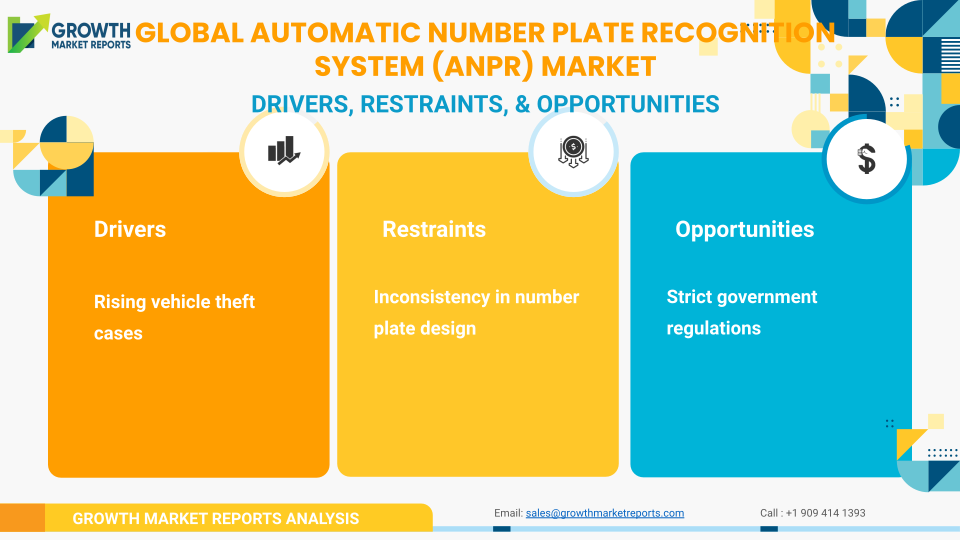
Rising vehicle theft cases are expected to boost the market. ANPR system offers vehicle owners Optical Character Recognition (OCR) technology to identify the license plate in case the vehicle is stolen. The OCR algorithm technology is widely used to detect individual characters, verify the sequence of the characters, and then convert the number plate into the text. This output is stored in databases for further processes. For instance,
-
According to the National Insurance Crime Bureau (NICB), over 1 million vehicles were stolen in the US in 2022. As the vehicle theft rate has increased by 7% in 2022, the demand for ANPR systems is expected to grow, resulting in driving the market.
Restraints
Inconsistency in number plate design hinders the market. Vehicle number plate designs differ from country to country and this puts constraints on the adoption of ANPR technology. The difference in number plate designs creates difficulties in constructing an algorithm that easily reads all the fonts for better outcomes.
In the case of vehicle theft, misread in number plate recognition led to major issues in security and surveillance activities. Lack of number plate design and font uniformity hamper the potential market opportunities for the ANPR technology.
Opportunities
Strict government regulations regarding the adoption of ANPR technology for various purposes are expected to create lucrative opportunities for the market in the coming years. Government initiatives to use ANPR for toll management, traffic management, and highway surveillance for high-speed limits on speeding cars, which is likely to propel the market.
According to the World Health Organization (WHO), approximately 1.3 million people die each year as a result of road traffic crashes. This creates a need for ANPR technology for security & surveillance purposes in car speeding cases. Moreover, companies competing in this space are partnering with toll services companies to provide advanced technology for automated and efficient toll management. For instance,
-
In September 2023, a global provider of transport solutions company, Kapsch TrafficCom (KTC) announced a contract with the Danish EETS toll service provider, Brobizz. In this contract, KTC will supply its GNNS-based tolling solutions which includes satellite platform solution and TUV-certified OBUs.
Scope of Automatic Number Plate Recognition System (ANPR) Market Report
The market report includes an assessment of the market, trends, segments, and regional markets. Overview and dynamics have also been included in the report.
|
Attributes
|
Details
|
|
Report Title
|
Automatic Number Plate Recognition System (ANPR) Market - Global Industry Analysis, Growth, Share, Size, Trends, and Forecast
|
|
Base Year
|
2022
|
|
Historic Data
|
2016–2021
|
|
Forecast Period
|
2023–2031
|
|
Segmentation
|
Component (Hardware [Frame Grabbers, ANPR Cameras, Relay Cards, and Others], Software [Standalone Make & Model Recognition Software, Standalone ANPR Software, Integrated Software, and Others], and Service [Training & Consulting, Testing Service, and Installation & Deployment]), Type (Fixed ANPR and Portable ANPR), and Application (Parking Management, Toll Management, Security & Surveillance, Traffic Management, and Others)
|
|
Regional Scope
|
Asia Pacific, North America, Latin America, Europe, and Middle East & Africa
|
|
Report Coverage
|
Company Share, Market Analysis and Size, Competitive Landscape, Growth Factors, Market Trends, and Revenue Forecast
|
|
Key Players Covered in the Report
|
Q-Free ASA; Honeywell International Inc.; Siemens AG; Conduent, Inc.; Kapsch TrafficCom AG; Hangzhou Hikvision Digital Technology Co., Ltd.; Axis Communications AB; Bosch Sicherheitssysteme GmbH; Digital Recognition Systems Ltd.; Nedap N.V.; and Tattile S.r.l.
|
Automatic Number Plate Recognition System (ANPR) Market Segment Insights
Component Segment Analysis
Based on component, the Automatic Number Plate Recognition System (ANPR) market is divided into hardware, software, and service. The hardware segment is expected to expand at a significant growth rate during the projection period. The growing integration of the Internet of Things coupled with cloud-based solutions in ANPR hardware such as cameras, frame grabbers, and relay cards creates advanced hardware solutions.
ANPR technology requires high-performance workstations as it is a constructive, computationally intensive task, and works under real-time constraint. With recent developments in Digital Signal Processors (DSP) and Frame Programmable Gate Arrays (FPGAs) to deliver low power-high performance in image processing.
The rising integration of these advanced processors in ANPR hardware to increase image accuracy and reduce errors is opening new pathways for the key players offering ANPR hardware services.
Type Segment Analysis
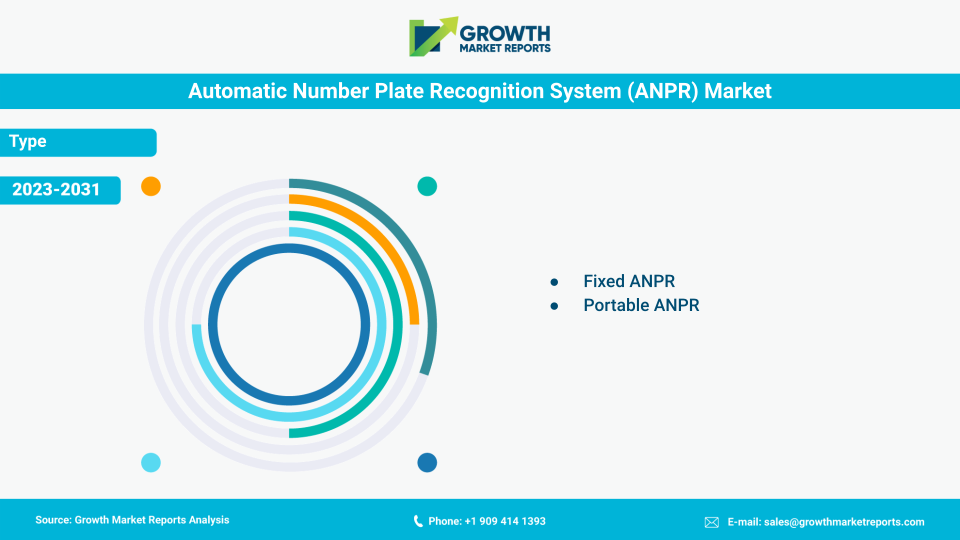
On the basis of type, the global market is divided into fixed ANPR and portable ANPR. The fixed ANPR segment dominates the market owing to the wide use of ANPR for traffic management and automated tolling solutions. Governments across the globe are focusing on expanding roadway infrastructure and with this initiative, the need for automated tolling solutions and improvisation for vehicle monitoring solutions is expected to grow in the coming years.
Fixed ANPRs are commonly used in traffic management owing to their capability of capturing images in heavy traffic areas with high accuracy. It captures images of high-speed vehicles and with the growing demand for automated parking solutions, it is used for parking management purposes.
Application Segment Analysis
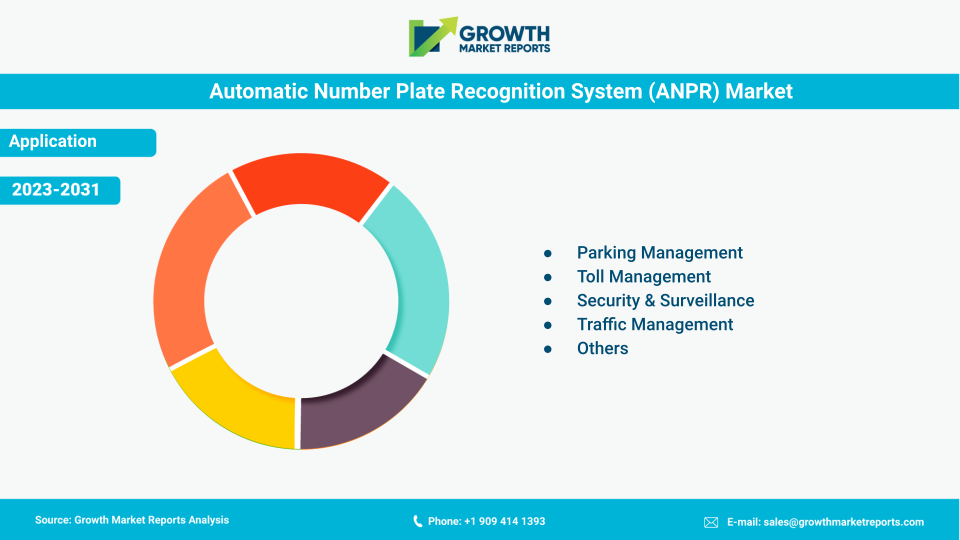
On the basis of application, the market is segmented into parking management, toll management, security & surveillance, traffic management, and others. The parking management segment is expected to register a robust growth rate during the forecast period. ANPR technology transforming parking management by giving real-time data on parking occupancy.
This technology helps in managing and automating the parking spaces by counting the occupied and vacant parking spaces. ANPR reduces the hassle of parking garage users by keeping track of time spent, managing tickets, and the risk of penalties for incorrect ticket payments.
The traffic management segment is anticipated to register a considerable CAGR during the forecast period, due to the growing adoption of ANPR devices for traffic management. ANPR technology is rapidly gaining traction as it helps in detecting reckless driving, speeding vehicles, or any other incidents. Moreover, any blacklisted vehicle is automatically recognized with the help of ANPR tools. This is coupled with real-time alerts for further action on those vehicles.
Regional Analysis
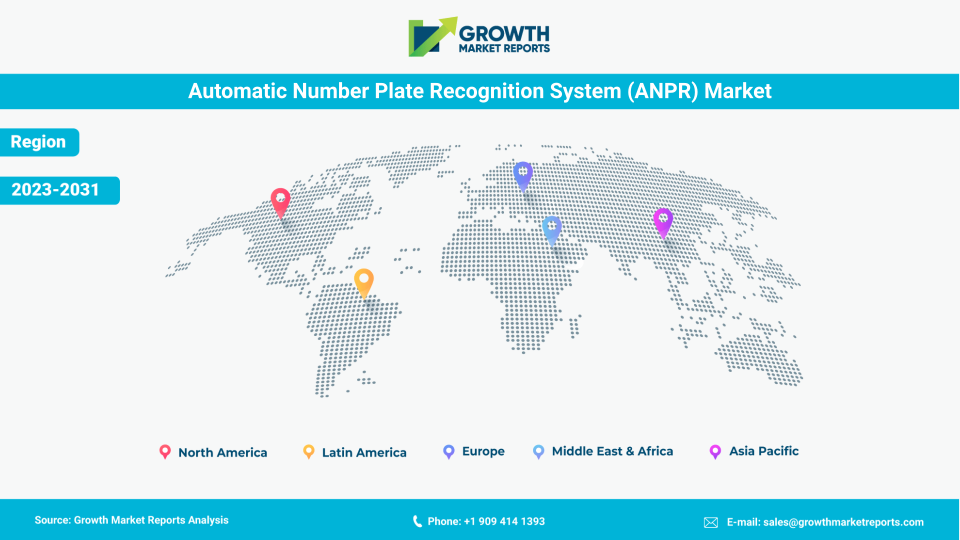
In terms of region, the global Automatic Number Plate Recognition System (ANPR) market is classified as Asia Pacific, North America, Latin America, Europe, and Middle East & Africa.
North America is expected to dominate the market during the projection period, owing to the increasing digitalization of traffic surveillance systems. These systems are coupled with increasing government initiatives on manufacturing integrated unmanned aerial vehicles (UAVs), which are expected to boost the market in the region.
Governments present in the region are increasingly focusing on using IoT-enabled automatic number plate recognition systems for traffic monitoring devices. The use of ANPR technology in intelligent traffic management systems is rapidly growing as traffic fatality cases are increasing in the region, especially in the US.
-
As per the National Highway Traffic Safety Administration (NHTSA), in the US, there were an estimated 42,915 traffic fatalities in 2021, a 10.5 % increase compared to 2020.
With the help of ANPR and intelligent traffic management systems, these fatality cases are reduced, which is expected to boost the adoption rate of ANPR in the region.
The market in Asia Pacific is anticipated to register a considerable CAGR during the forecast period. The growth is attributed to the increasing usage of ANPR technology to improve security and electronic bills on vehicles.
In India, the government is using ANPR technology-enabled products that help them with surveillance, toll management, and other purposes. With the help of ANPR-enabled products, toll gate authorities directly send the e-challan to the respective vehicle owner.
Growing smart city initiatives by governments in the region are creating demand for advanced technology-enabled products, which is creating new market opportunities for the market. Moreover, the demand for ANPR-enabled products is growing in government as well as private sectors. Big tech and blue-chip companies are adopting advanced devices for surveillance purposes is driving the market in the region.
Segments
The automatic number plate recognition system (ANPR) market has been segmented on the basis of
Component
- Hardware
- Frame Grabbers
- ANPR Cameras
- Relay Cards
- Others
- Software
- Standalone Make & Model Recognition Software
- Standalone ANPR Software
- Integrated Software
- Others
- Service
- Training & Consulting
- Testing Service
- Installation & Deployment
Type
Application
- Parking Management
- Toll Management
- Security & Surveillance
- Traffic Management
- Others
Region
- Asia Pacific
- North America
- Latin America
- Europe
- Middle East & Africa
Key Players
- Q-Free ASA
- Honeywell International Inc.
- Siemens AG
- Conduent, Inc
- Kapsch TrafficCom AG
- Hangzhou Hikvision Digital Technology Co., Ltd
- Axis Communications AB
- Bosch Sicherheitssysteme GmbH
- Digital Recognition Systems Ltd
- Nedap N.V.
- Tattile S.r.l.
Competitive Landscape
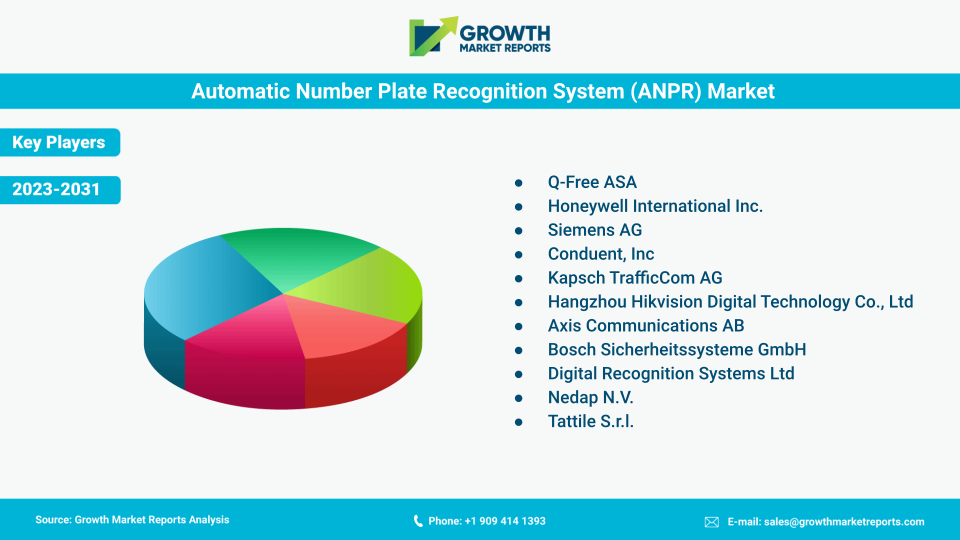
Key players competing in the global automatic number plate recognition system (ANPR) market are Q-Free ASA; Honeywell International Inc.; Siemens AG; Conduent, Inc.; Kapsch TrafficCom AG; Hangzhou Hikvision Digital Technology Co., Ltd.; Axis Communications AB; Bosch Sicherheitssysteme GmbH; Digital Recognition Systems Ltd.; Nedap N.V.; and Tattile S.r.l.
These companies adopted development strategies including mergers, acquisitions, partnerships, collaboration, product launches, and production expansion to expand their consumer base worldwide. For instance,
- On September 2023, a global leader in mobility solutions for smart city infrastructure, Q-Free ASA announced that it has joined the Infrastructure Automotive Technology Laboratory (iATL) Alliance. This collaboration aimed to improve traffic and reduce the environmental impact of transportation.











 Request For Customization
 Enquiry Before Buying
 Speak With Analyst