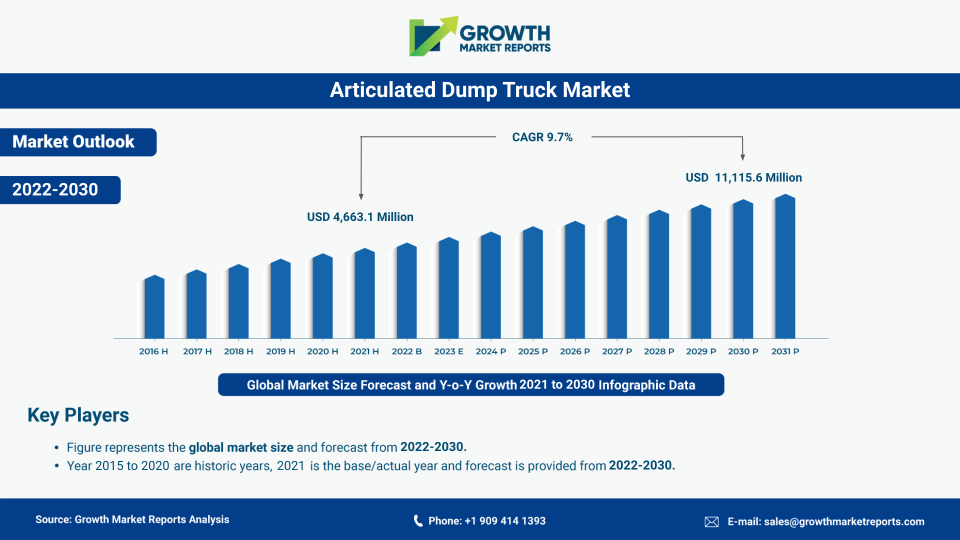
The global articulated dump truck market size was valued at USD 4,663.1 Million in 2021 and is expected to reach USD 11,115.6 Million in 2030, expanding at a CAGR of 9.7% during the forecast period, 2022 - 2030. The overall incremental opportunity is estimated to be USD 5,796.9 Million from 2022 to 2030. The market growth is attributed to the rising need for articulated dump trucks in the construction industries as well as in large landscaping and mining projects.
An articulated dump truck (ADT) is a heavy-duty vehicle that is commonly used in construction, and for transporting large volumes of material over rough terrain. Many articulated dump trucks are also equipped with advanced technology, such as GPS systems and onboard diagnostics, which help improve operational efficiency and reduce downtime. Growing demand for quarrying activities coupled with the increasing trends in rental equipment for construction activities are influencing industries to manufacture advanced heavy-duty trucks.
The dump body is typically made of steel and can be configured with different capacities, ranging from 15 to 50 cubic yards. The smallest dump truck models can carry up to 15-20 tons of material, while the larger models can carry up to 60 tons or more. Additionally, articulated dump trucks are powered by large diesel engines that range in size from 200-600 horsepower, making them ideal for heavy-duty applications.
- For instance, on September 7, 2022, Komatsu Ltd. rebuild its largest Rigid-Frame Dump Truck, the HD1500-8E0 which offers 1,580 gross horsepower and weighs 550,229 pounds, making it the largest of the company’s rigid haulers. It is designed for various mining operations with a payload of 153 tons. It further maneuvers job sites with a turning radius of 36 feet 9 inches.
Articulated Dump Truck Market Dynamics
Major Drivers
The construction industry is a major end-user of articulated dump trucks, they extensively employ these vehicles. Articulated dump trucks are commonly used in construction projects to transport large volumes of material over rough terrains, such as gravel, sand, rocks, and soil. These vehicles are particularly well-suited for construction sites that are located in remote or difficult-to-access areas, where other types of vehicles may not be able to operate. For instance, in 2020, the construction industry was valued at USD 6.4 trillion and is projected to reach around USD 14.4 trillion by 2030. These factors fuel the demand for articulated dump trucks.
Articulated dump trucks are widely used in the mining and quarrying industries to transport heavy materials, such as ore, rock, and gravel, from mines and quarries to processing plants or other locations. The increasing global population is driving the demand for natural resources, such as minerals, metals, and fossil fuels. These resources are often found in remote or difficult-to-access locations, which require the use of heavy equipment, including articulated dump trucks. Growing focus on safety in the mining and quarrying industries. Articulated dump trucks are generally considered to be safer than other types of mining equipment.
The rise in technological advancements drives the articulated dump truck market. There have been numerous advancements in dump truck technology over the years that have improved their performance, efficiency, and safety. The trend of hybrid and electric powertrains is rising in the market. These powertrains offer several benefits, including improved fuel efficiency, reduced emissions, and low operating costs. Several advancements have been made to improve the safety features of articulated dump trucks, including advanced braking systems, stability control, and obstacle detection systems. These features improve safety for operators and workers.
For instance, In April 2023, XCMG Machinery the Chinese construction manufacturer reveals the XDR80TE-AT autonomous electric dump truck. The XDR80TE-AT electric mining truck has completely removed the operating cab and supports two modes – remote control and fully autonomous artificial intelligence (AI) control. Under the fully autonomous mode, AI technology can automatically set the destination and plan the routes.
- Growth in Trend Toward Equipment Rental
The trend of renting equipment is growing in the construction industry. Many contractors prefer to rent equipment rather than purchase them outright, as it gives them access to the latest technology without making a large capital investment. In 2020, United Rentals, one of the largest equipment rental companies in the US, that reported the rentals segment (which includes articulated dump trucks and other construction equipment) generated USD 5.5 billion in revenue in that year, which is an increase from USD 5.3 billion generated in 2019. The company noted that the demand for rental equipment remained high despite the challenges posed by the COVID-19 pandemic.
Existing Restraint
The high initial cost is a major restraint of the articulated dump truck market. The purchase price of an articulated dump truck can be high, which is a significant barrier to entry for small contractors or companies with limited financial resources. The cost of an articulated dump truck can vary depending on factors, such as its size, capacity, and features.
Typically, large trucks with high hauling capacity and advanced features have a high price tag. Additionally, apart from the purchase price, other associated costs can add to the overall cost of ownership, including financing costs, insurance, and taxes. These factors are hampering the market.
Articulated dump trucks are heavy-duty vehicles and work in tough environments, thus they require regular maintenance and repair to keep them operating smoothly. Maintenance costs include routine tasks such as oil changes, filter replacements, and brake inspections. The costs associated with maintenance, especially if the truck operates in harsh conditions such as extreme temperatures or abrasive environments. In addition to the direct costs of maintenance and repair, there can also be indirect costs associated with downtime. If an articulated dump truck is out of commission for an extended period, it can impact the productivity of a construction or mining operation.
Emerging Opportunity
The shift toward environmentally friendly equipment is a growing trend in the construction and mining industries, and it presents an opportunity for manufacturers of articulated dump trucks to develop and market sustainable and energy-efficient vehicles. Manufacturers are working on creating environmentally friendly equipment. One approach is to design fuel-efficient vehicles, which can help reduce emissions and operating costs. This can be achieved through the use of advanced engine technologies, such as turbocharging and direct injection, and through aerodynamic design and lightweight materials.
In April 2023, XCMG Machinery, the Chinese construction and mining equipment manufacturing major, released new mining machinery products, the XE690DK mining excavator is one of them. The XE690DK mining excavator is a safe, environmentally friendly, and energy-saving design that can meet the construction needs of various working conditions and creates value for the customers.
- Growing Demand for Infrastructure Development
The construction industry is anticipated to grow significantly due to increasing urbanization, growing population, and rising need for better infrastructure and services, creating opportunities in the market. Moreover, governments and private organizations are investing heavily in infrastructure development, leading to a high demand for construction equipment, including articulated dump trucks.
For instance, the global infrastructure investments required by 2040 are estimated to be USD 94 trillion. Governments around the world are launching initiatives to support infrastructure development, such as China's Belt and Road Initiative, which aims to improve infrastructure connectivity.
Scope of Articulated Dump Truck Market Report
The market report includes an assessment of the market, trends, segments, and regional markets. Overview and dynamics have also been included in the report.
|
Attributes
|
Details
|
|
Report Title
|
Articulated Dump Truck Market – Global Industry Analysis, Size, Share, Growth, Trends, and Forecast
|
|
Base Year
|
2021
|
|
Historic Data
|
2015–2020
|
|
Forecast Period
|
2022–2030
|
|
Segmentation
|
Type (Under 30 Ton, 30 to 40 Ton, Above 40 Ton), Power Output (Less than 250 HP, 251 – 400 HP, More than 400 HP), and Application (Construction, Mining, Agriculture & Forestry, Others)
|
|
Regional Scope
|
Asia Pacific, North America, Latin America, Europe, and Middle East & Africa
|
|
Report Coverage
|
Company Share, Market Analysis and Size, Competitive Landscape, Growth Factors, and Trends, and Revenue Forecast
|
|
Key Players Covered
|
AB Volvo; BELL Equipment; Caterpillar; Deere & Company; Doosan Bobcat; HYDREMA; Komatsu Ltd.; Liebherr; SANY Group; and XCMG Group.
|
Articulated Dump Truck Market Segment Insights
The global articulated dump truck market is segmented on the basis of type, power output, application, and region.
Type Segment Analysis
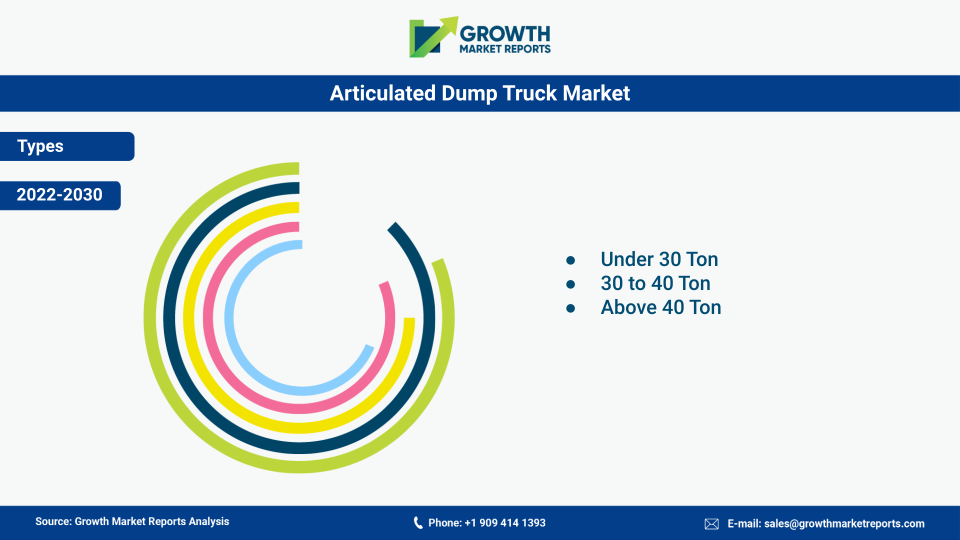
Based on type, the global articulated dump truck market is segmented into Under 30 Ton, 30 to 40 Ton, and Above 40 Ton. Articulated dump trucks with a payload capacity of 30 to 40 tons are in steady demand and holding a market share of XX% in 2021. They are ideal for medium-sized construction and mining projects and can handle various materials. These trucks are also more maneuverable than larger trucks and can be operated in smaller job sites.
Articulated dump trucks with payload capacity above 40 tons are in strong demand with a significant CAGR of XX% for forecasted years, due to their ability to transport large quantities of material quickly and efficiently. They are essential for large construction or mining projects and are built to withstand harsh conditions.
Power Output Segment Analysis
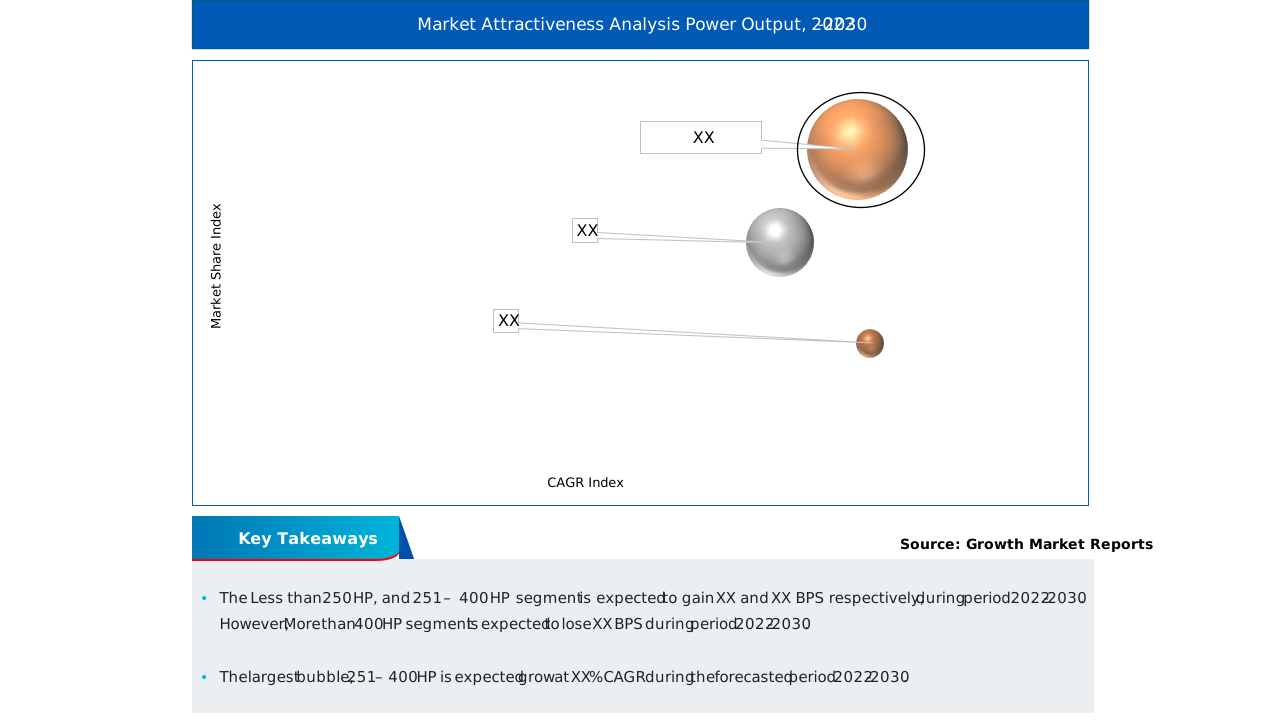
On the basis of power output, the global articulated dump Truck Market is segmented into Less than 250 HP, 251 – 400 HP, and More than 400 HP. There has been a growing demand for articulated dump trucks with power output between 251 to 400 HP, particularly in the construction and mining industries. The 251 to 400 HP segment is expected to have XX% market share in 2030.
This is due to the need for these vehicles to be able to carry larger payloads over longer distances, as well as the need for increased productivity and efficiency. Many manufacturers are now offering articulated dump trucks with a power output of more than 400 HP, which is significantly higher than the power outputs of older models. There is also a trend toward greater fuel efficiency in the global articulated dump truck market.
Application Segment Analysis
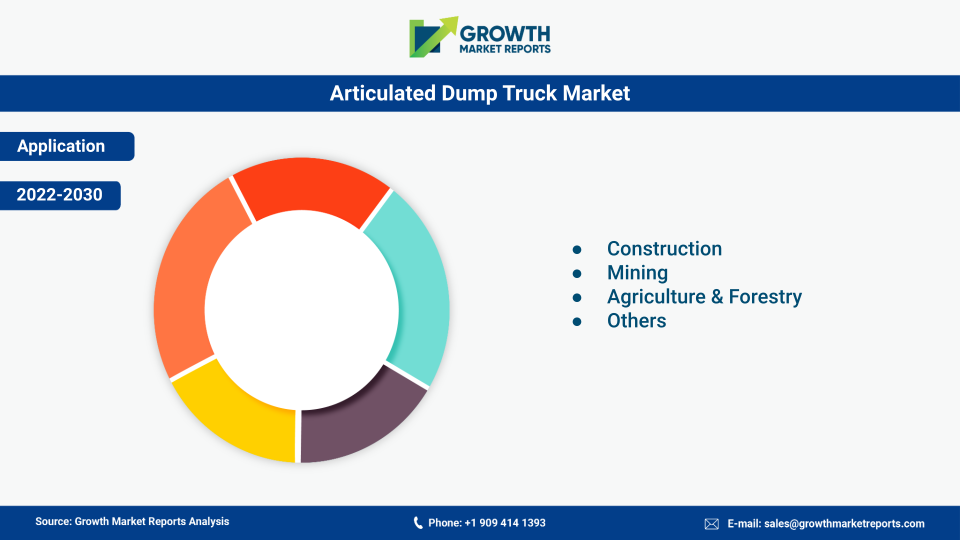
In terms of application, the global articulated dump truck market is segregated into construction, mining, agriculture & forestry, and others. The construction industry is the largest end-user of articulated dump trucks. These trucks are used for earthmoving, hauling, and material handling activities on construction sites. Increasing demand for residential and commercial construction in emerging economies is expected to drive the growth of the articulated dump truck market. Articulated dump trucks are commonly used in mining operations to transport ore and other materials. The demand for these trucks is influenced by factors such as the price of commodities, the development of new mines, and government regulations related to environmental impact and worker safety.
Regional Analysis
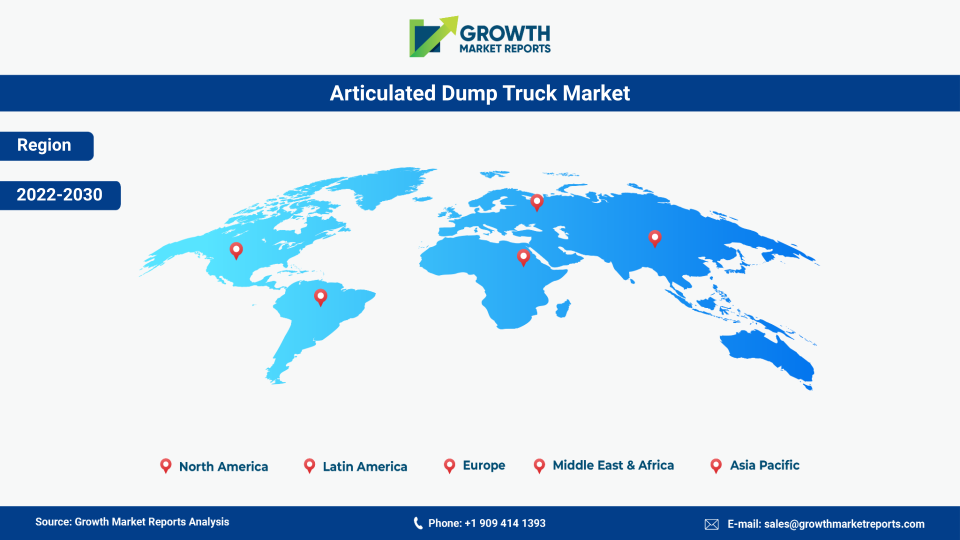
Based on region, the global articulated dump truck market is segmented into North America, Europe, Asia Pacific, Latin America, and Middle East & Africa. Asia Pacific region is a growing market for articulated dump trucks, driven by infrastructure development and increasing mining activities. Asia Pacific region has a CAGR of XX% for the forecasted years. Countries such as China, and India have large construction and mining sectors that require heavy-duty equipment. Articulated dump trucks are commonly used in construction, mining, and quarrying applications.
North America holds a significant share of the market during the projection period. Government regulations such as the Clean Air Act have led to the development of more fuel-efficient and environmentally friendly models that are fueling the market in the region. Moreover, strategic partnerships between industries further boost articulated dump trucks' revenue.
- For instance, In February 2022, Bell Trucks America, Inc. signed a deal with Pronto AI as its provider of autonomous technology for articulated dump trucks (ADTs) in the U.S. This comes after months of work on the project to deliver autonomous drive technology to Bell ADTs. Under the partnership, Pronto is expected to make its advanced autonomous driving and driver safety technologies available to all Bell customers in North America.
In Europe, there is a growing trend towards the electrification of construction equipment, including dump trucks, to reduce emissions and noise pollution. Articulated dump trucks are popular in industries such as mining, construction, and agriculture.
Key Benefits for Industry Participants & Stakeholders
- In-depth Analysis of the Global Articulated Dump Truck Market
- Historical, Current, and Projected Market Size in Terms of Value and Volume
- Potential & Niche Segments and Regions Exhibiting Promising Growth Covered
- Industry Drivers, Restraints, and Opportunities Covered in the Study
- Recent Industry Trends and Developments
- Competitive Landscape & Strategies of Key Players
- Neutral Perspective on Global Articulated Dump Truck Market Performance
Segments
Type
- Under 30 Ton
- 30 to 40 Ton
- Above 40 Ton
Power Output
- Less than 250 HP
- 251 – 400 HP
- More than 400 HP
Application
- Construction
- Mining
- Agriculture & Forestry
- Others
Key Players
- AB Volvo
- BELL Equipment
- Caterpillar
- Deere & Company
- Doosan Bobcat
- HYDREMA
- Komatsu Ltd.
- Liebherr
- SANY Group
- XCMG Group
Competitive Landscape
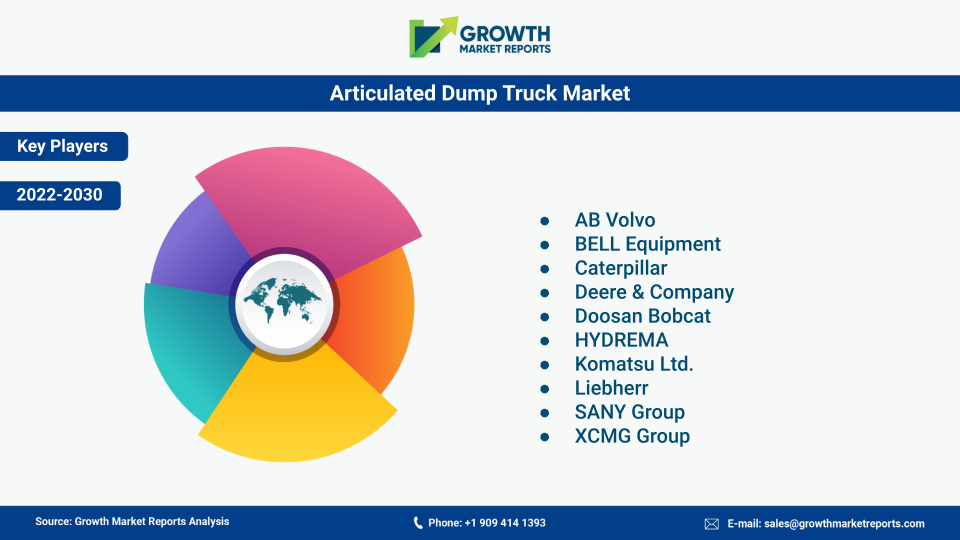
Key players operating in the market are AB Volvo; BELL Equipment; Caterpillar; Deere & Company; Doosan Bobcat; HYDREMA; Komatsu Ltd.; Liebherr; SANY Group; and XCMG Group. These companies are considered key manufacturers of Articulated Dump Trucks based on their revenue, research development (R&D) activities, product offerings, regional presence, and supply chain management system.
The players are adopting key strategies such as acquisition, collaborations, and geographical expansion where potential opportunities for the Articulated Dump Truck market.
- In June 2023, SANY announced that the SANY New Energy Engineering Vehicle Testing Center (“the Center”) based in Changsha City, the capital of central China’s Hunan province, has commenced operation. With a total investment exceeding RMB 100 million, the Center is a world first, equipped with a range of cutting-edge facilities, making it China's most comprehensive testing base focusing on the development of battery-powered engineering vehicles.
- In September 2022, Doosan announced launching of a new 4x4 articulated dump truck (ADT) at Bauma 2022. The new machine is said to compete with rigid dump trucks (RDTs) in the 40-tonne class. The machine features a ZF EP8-420 transmission, the 4x4 DA45-7 is a two-axle ADT with twin wheels at the rear, and a dumper section similar to that on RDTs in the 40-tonne class.










 Request For Customization
 Enquiry Before Buying
 Speak With Analyst