Segments - by Product Type (Calcium Compounds, Sodium Compounds, Magnesium Compounds, Silicon Dioxide, Others), by Application (Food & Beverages, Feed, Fertilizers, Pharmaceuticals, Others), by Source (Synthetic, Natural), by Form (Powder, Granules, Liquid)
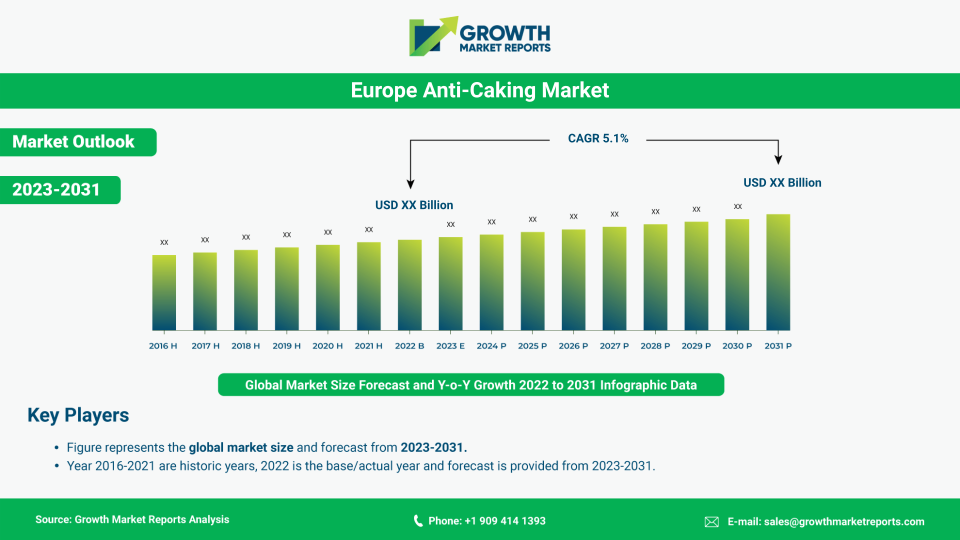
As per our latest research, the global anti-caking agents market size reached USD 1.12 billion in 2024, reflecting the growing demand for these additives across various end-use industries. The market is experiencing a healthy growth momentum, registering a Compound Annual Growth Rate (CAGR) of 5.1% from 2025 to 2033. By the end of 2033, the anti-caking agents market size is forecasted to reach USD 1.73 billion. This robust expansion is primarily driven by the escalating need for improved product quality, extended shelf life, and enhanced flow properties in food, feed, fertilizer, and pharmaceutical applications worldwide.
The primary growth factor for the anti-caking agents market is the increasing demand for processed and convenience foods globally. As urbanization accelerates and consumers' lifestyles become more hectic, the consumption of ready-to-eat and packaged foods has surged, necessitating the use of anti-caking agents to maintain product integrity and prevent clumping. These agents play a crucial role in ensuring the free-flowing nature of powdered and granulated products, thereby supporting large-scale manufacturing and distribution. Additionally, the growing awareness about food safety and quality among consumers has prompted food manufacturers to adopt advanced anti-caking solutions that comply with stringent regulatory standards, further fueling market growth.
Another significant driver propelling the anti-caking agents market is the expansion of the animal feed and fertilizer industries. The need to prevent aggregation and maintain consistent nutrient distribution in animal feed has led to the widespread adoption of anti-caking agents. Similarly, the agriculture sectorÂ’s focus on enhancing fertilizer efficiency and ease of application has increased the use of these additives. Furthermore, the pharmaceutical industry is increasingly relying on anti-caking agents to improve the manufacturability and stability of powdered drugs and supplements. This cross-industry utilization is creating a diversified demand landscape, prompting manufacturers to innovate and develop customized anti-caking solutions tailored to specific applications.
The regional outlook for the anti-caking agents market reveals that Asia Pacific is emerging as the most dynamic and fastest-growing region, supported by its expanding food processing sector and burgeoning population. North America and Europe continue to dominate in terms of market share, owing to their mature food and beverage industries, advanced agricultural practices, and well-established regulatory frameworks. Latin America and the Middle East & Africa are also witnessing steady growth, driven by increasing investments in food production and agricultural modernization. The interplay of regional economic development, evolving consumer preferences, and regulatory changes is shaping the competitive landscape and growth trajectory of the global anti-caking agents market.
In addition to the traditional applications, the use of Anti Accretion Chemicals is gaining traction in industries where the prevention of material build-up is crucial. These chemicals are designed to inhibit the formation of unwanted deposits on surfaces, which can otherwise lead to operational inefficiencies and increased maintenance costs. Their application is particularly relevant in sectors such as mining, where the accumulation of materials can hinder equipment performance and productivity. By integrating anti-accretion solutions, companies can enhance operational efficiency, reduce downtime, and extend the lifespan of their equipment. The growing awareness of these benefits is driving the adoption of Anti Accretion Chemicals across various industrial sectors, contributing to the broader market growth.
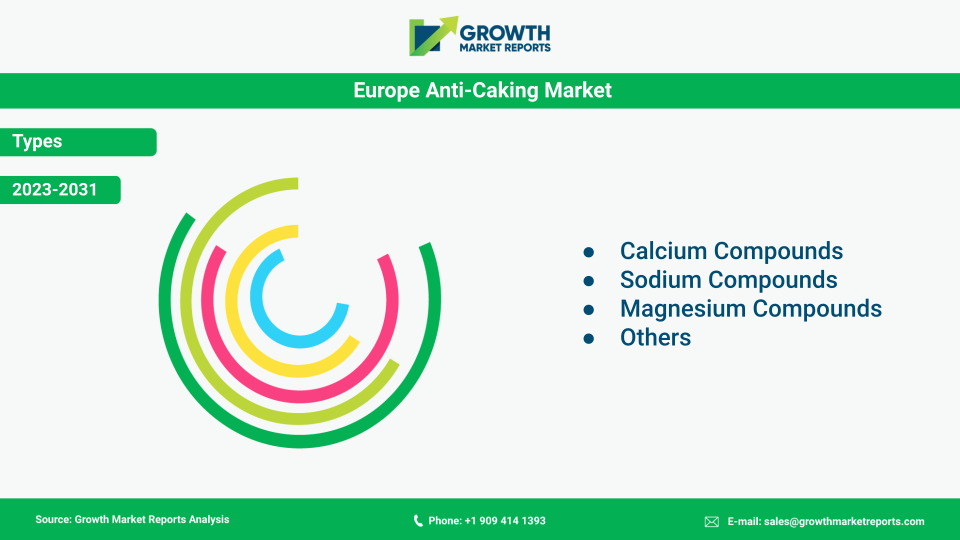
The anti-caking agents market is segmented by product type into calcium compounds, sodium compounds, magnesium compounds, silicon dioxide, and others. Among these, silicon dioxide holds a dominant position due to its superior effectiveness, high compatibility with a wide range of applications, and approval by major regulatory agencies. Silicon dioxide is extensively used in the food and beverage sector to maintain the flowability of powdered products such as spices, coffee creamers, and baking powders. Its inert nature and minimal impact on taste and texture make it a preferred choice for manufacturers aiming to preserve product quality. Additionally, the rising adoption of silicon dioxide in pharmaceuticals and nutraceuticals further bolsters its market share.
Calcium compounds, including calcium silicate and calcium carbonate, are widely utilized in both food and non-food applications. Their ability to absorb moisture and enhance the stability of products makes them indispensable in the production of table salt, flour, and dry mixes. The growing emphasis on clean-label and natural ingredients has also led to increased demand for calcium-based anti-caking agents, as they are perceived to be safer and more environmentally friendly. The versatility of calcium compounds extends to fertilizers and animal feed, where they prevent clumping and improve handling efficiency during storage and transportation.
Sodium compounds, such as sodium aluminosilicate and sodium ferrocyanide, are valued for their high moisture absorption capacity and cost-effectiveness. These agents are predominantly used in the manufacturing of powdered foods, seasonings, and salt. However, regulatory scrutiny over the use of certain sodium compounds in food applications, especially in Europe and North America, has led to a gradual shift towards alternative anti-caking agents that offer similar performance with enhanced safety profiles. Nevertheless, sodium compounds continue to play a significant role in industrial applications, particularly in the chemical and fertilizer sectors.
Magnesium compounds, including magnesium carbonate and magnesium stearate, have established themselves in the pharmaceutical and food industries due to their excellent anti-caking properties and compatibility with a variety of formulations. Magnesium stearate, for example, is commonly used as a flow agent in tablet manufacturing, ensuring consistent dosage and product quality. The "others" segment encompasses a range of specialty anti-caking agents, such as microcrystalline cellulose and tricalcium phosphate, which cater to niche applications and customized requirements. The ongoing innovation in product development and the introduction of multifunctional agents are expected to further diversify the product landscape in the coming years.
The introduction of Solar Thermal Salt Anti-Caking Additive represents a significant advancement in the management of solar thermal energy systems. These additives are specifically formulated to prevent the agglomeration of salts used in thermal storage, ensuring optimal heat transfer and storage efficiency. As the demand for renewable energy sources continues to rise, the role of solar thermal systems becomes increasingly important. By incorporating anti-caking additives, operators can maintain the fluidity and performance of thermal salts, thereby enhancing the overall efficiency and reliability of solar energy plants. This innovation not only supports the transition to sustainable energy but also underscores the importance of specialized additives in advancing renewable technologies.
| Attributes | Details |
| Report Title | Anti-Caking Market Research Report 2033 |
| By Product Type | Calcium Compounds, Sodium Compounds, Magnesium Compounds, Silicon Dioxide, Others |
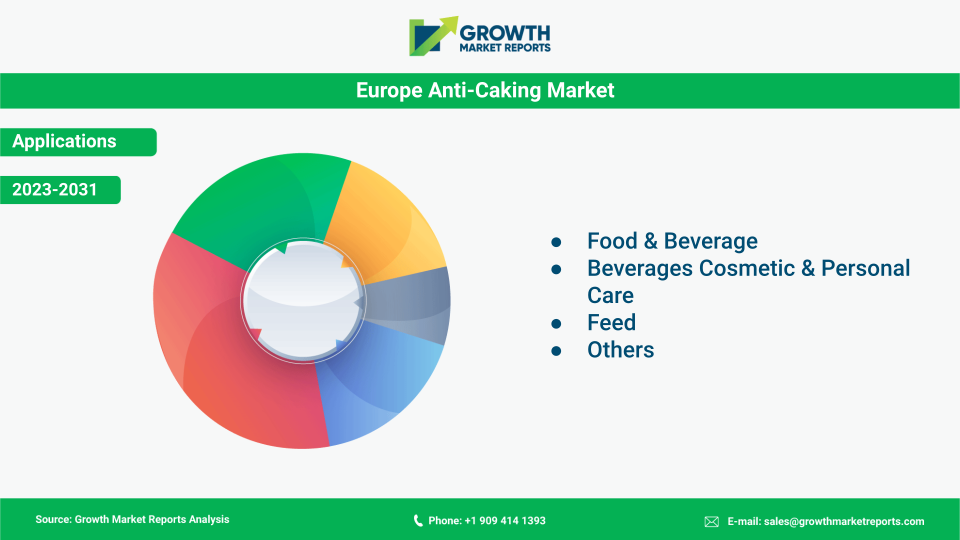
| By Application | Food & Beverages, Feed, Fertilizers, Pharmaceuticals, Others |
| By Source | Synthetic, Natural |
| By Form | Powder, Granules, Liquid |
| Regions Covered | North America, Europe, APAC, Latin America, MEA |
| Base Year | 2024 |
| Historic Data | 2018-2023 |
| Forecast Period | 2025-2033 |
| Number of Pages | 265 |
| Number of Tables & Figures | 268 |
| Customization Available | Yes, the report can be customized as per your need. |
The application landscape of the anti-caking agents market is broad, encompassing food & beverages, feed, fertilizers, pharmaceuticals, and others. The food & beverages segment accounts for the largest share, driven by the rising consumption of packaged and processed foods worldwide. Anti-caking agents are integral to the production of powdered ingredients, seasonings, dairy creamers, and bakery mixes, where they prevent moisture-induced clumping and extend product shelf life. The increasing demand for premium quality and convenience foods has compelled manufacturers to invest in advanced anti-caking technologies, ensuring that their products remain free-flowing and visually appealing throughout the supply chain.
The animal feed segment is another major contributor to the anti-caking agents market, as these additives are essential for maintaining the homogeneity and nutritional consistency of feed formulations. With the global livestock industry expanding to meet the growing demand for meat and dairy products, the need for efficient and reliable feed additives has become more pronounced. Anti-caking agents enable feed producers to deliver high-quality products that are easy to handle, store, and transport, thereby supporting the operational efficiency of farms and feed mills.
In the fertilizer sector, anti-caking agents play a pivotal role in enhancing the usability and effectiveness of granular fertilizers. The tendency of fertilizers to absorb moisture and form lumps during storage and transportation can significantly impede their application and reduce nutrient availability to crops. By incorporating anti-caking agents, manufacturers can ensure that fertilizers remain free-flowing and easy to apply, ultimately contributing to improved crop yields and agricultural productivity. The ongoing advancements in fertilizer formulations and the adoption of precision farming practices are expected to drive further demand for anti-caking solutions in this segment.
The pharmaceutical industry represents a high-value application area for anti-caking agents, particularly in the manufacturing of tablets, capsules, and powdered supplements. These agents facilitate the smooth processing of active pharmaceutical ingredients and excipients, ensuring consistent product quality and dosage accuracy. With the global pharmaceutical market experiencing robust growth, especially in emerging economies, the demand for specialized anti-caking agents that meet stringent regulatory and quality standards is on the rise. The "others" segment includes applications in cosmetics, detergents, and industrial chemicals, where anti-caking agents are employed to improve product performance and user experience.
The anti-caking agents market is segmented by source into synthetic and natural categories. Synthetic anti-caking agents have traditionally dominated the market due to their high efficacy, cost-effectiveness, and widespread availability. These agents, such as silicon dioxide and sodium aluminosilicate, are engineered to deliver consistent performance across a range of applications. Their ability to absorb significant amounts of moisture and prevent agglomeration makes them indispensable in large-scale manufacturing environments. However, growing concerns about food safety, health, and environmental impact have prompted regulatory agencies and consumers to scrutinize the use of synthetic additives, leading to a gradual but noticeable shift in market dynamics.
Natural anti-caking agents are gaining traction as consumers and manufacturers increasingly prioritize clean-label and sustainable ingredients. Derived from naturally occurring minerals and plant-based sources, these agents are perceived as safer and more environmentally friendly alternatives to their synthetic counterparts. Examples include calcium carbonate, magnesium stearate, and microcrystalline cellulose. The adoption of natural anti-caking agents is particularly pronounced in the food, beverage, and nutraceutical sectors, where transparency and traceability are becoming key differentiators. Regulatory support for natural additives and the rising popularity of organic and minimally processed products are expected to accelerate the growth of this segment in the coming years.
The transition from synthetic to natural anti-caking agents presents both opportunities and challenges for market participants. While natural agents offer significant marketing advantages and align with evolving consumer preferences, they may not always match the performance characteristics of synthetic agents in terms of moisture absorption and compatibility. As a result, manufacturers are investing in research and development to enhance the functionality of natural anti-caking agents and expand their application scope. Collaborative efforts between ingredient suppliers, food manufacturers, and research institutions are fostering innovation and driving the commercialization of next-generation natural anti-caking solutions.
Despite the growing appeal of natural anti-caking agents, synthetic agents are expected to maintain a significant presence in the market, particularly in industrial and non-food applications where performance and cost considerations outweigh consumer preferences. The coexistence of synthetic and natural agents is likely to persist, with market segmentation based on application requirements, regulatory frameworks, and regional consumer trends. The ongoing evolution of the anti-caking agents market underscores the need for flexibility, adaptability, and continuous innovation among market participants.
The anti-caking agents market is further segmented by form into powder, granules, and liquid. Powdered anti-caking agents represent the largest segment, owing to their ease of handling, uniform dispersion, and compatibility with a wide range of powdered and granulated products. These agents are extensively used in the food, feed, fertilizer, and pharmaceutical industries to maintain the free-flowing nature of bulk materials. The fine particle size of powdered anti-caking agents allows for efficient moisture absorption and prevents the formation of lumps, ensuring product quality and process efficiency.
Granular anti-caking agents are gaining popularity in applications where dust generation and handling efficiency are key concerns. The larger particle size of granular agents reduces the risk of airborne particulates and facilitates easier mixing with bulk materials. This form is particularly advantageous in the fertilizer and animal feed industries, where large-scale production and distribution require robust and reliable anti-caking solutions. The growing adoption of granular agents is also driven by advancements in granulation technologies and the increasing demand for customized product formulations.
Liquid anti-caking agents represent a niche but rapidly growing segment, especially in applications where uniform coating and precise dosing are critical. Liquid agents are often used in the production of specialty food ingredients, pharmaceuticals, and high-value chemicals, where they provide targeted protection against moisture and clumping. The ability to apply liquid anti-caking agents through spraying or mixing processes offers significant operational advantages, including reduced waste, improved product consistency, and enhanced process control. The ongoing development of innovative liquid formulations and application technologies is expected to drive further growth in this segment.
The choice of anti-caking agent form is largely dictated by the specific requirements of the end-use application, including product characteristics, processing conditions, and regulatory constraints. Manufacturers are increasingly offering a diverse portfolio of anti-caking agents in multiple forms to cater to the evolving needs of their customers. The trend towards customized solutions and value-added services is reshaping the competitive landscape, with leading players focusing on product differentiation and technical support to gain a competitive edge in the global anti-caking agents market.
The anti-caking agents market presents a multitude of opportunities for growth, particularly in the context of rising global food demand and the ongoing expansion of the agriculture and pharmaceutical sectors. The increasing adoption of anti-caking agents in emerging markets, driven by rapid urbanization, rising incomes, and changing dietary patterns, offers significant untapped potential for market participants. Additionally, the shift towards clean-label and natural ingredients is creating new avenues for innovation and product differentiation. Companies that invest in the development of sustainable, high-performance anti-caking agents are well-positioned to capture a larger share of the market and establish themselves as leaders in the evolving regulatory and consumer landscape.
Technological advancements and the integration of digital solutions in manufacturing and supply chain management are also opening up new opportunities for the anti-caking agents market. The use of advanced analytics, real-time monitoring, and process automation enables manufacturers to optimize the use of anti-caking agents, reduce waste, and improve product quality. Furthermore, the growing emphasis on food safety, traceability, and regulatory compliance is prompting companies to adopt innovative testing and certification methods, enhancing their competitive position and market credibility. Strategic partnerships, mergers and acquisitions, and collaborative R&D initiatives are expected to accelerate the pace of innovation and market expansion in the coming years.
Despite the positive outlook, the anti-caking agents market faces certain restraining factors that could impede its growth trajectory. Regulatory restrictions and safety concerns related to the use of specific synthetic anti-caking agents, particularly in food and pharmaceutical applications, pose a significant challenge for manufacturers. The increasing complexity of global regulatory frameworks and the need to comply with multiple standards across different regions can lead to higher compliance costs and operational complexities. Additionally, the availability of low-cost alternatives and the volatility of raw material prices can impact profit margins and market competitiveness. Addressing these challenges requires a proactive approach to regulatory compliance, supply chain management, and continuous innovation.
The regional distribution of the anti-caking agents market reveals distinct trends and growth dynamics across major geographies. Asia Pacific is the fastest-growing region, with a market size of USD 310 million in 2024 and a projected CAGR of 6.2% through 2033. The regionÂ’s rapid population growth, urbanization, and expansion of the food processing and agricultural sectors are driving robust demand for anti-caking agents. China and India are leading contributors, supported by large-scale investments in food production infrastructure and increasing consumer awareness about food quality and safety. The proliferation of modern retail formats and the adoption of advanced manufacturing technologies are further propelling market growth in this region.
North America remains a key market for anti-caking agents, with a 2024 market size of USD 340 million. The regionÂ’s well-established food and beverage industry, coupled with stringent regulatory standards and a strong focus on product quality, underpins steady demand for anti-caking agents. The United States is the dominant market, accounting for the majority of regional sales, followed by Canada and Mexico. The presence of leading multinational food manufacturers and a mature agricultural sector contribute to the regionÂ’s sustained growth. Ongoing innovation in product formulations and the increasing adoption of natural and organic anti-caking agents are shaping the competitive landscape in North America.
Europe holds a significant share of the global anti-caking agents market, with a 2024 market size of USD 270 million. The region is characterized by high regulatory standards, a strong emphasis on food safety, and a mature consumer base that values product quality and transparency. Germany, France, and the United Kingdom are the leading markets, driven by advanced food processing industries and a growing preference for clean-label ingredients. The trend towards sustainable and natural anti-caking solutions is gaining traction in Europe, supported by regulatory incentives and consumer demand for healthier food options. Latin America and the Middle East & Africa, with market sizes of USD 110 million and USD 90 million respectively in 2024, are witnessing steady growth, fueled by investments in agricultural modernization and food production infrastructure. These regions offer promising opportunities for market expansion, particularly in the context of rising food security concerns and the increasing adoption of advanced farming practices.
The competitive landscape of the anti-caking agents market is characterized by the presence of several multinational corporations, regional players, and specialized ingredient suppliers. The market is moderately consolidated, with leading companies leveraging their extensive product portfolios, global distribution networks, and technical expertise to maintain a competitive edge. Key players are focusing on product innovation, strategic partnerships, and mergers and acquisitions to strengthen their market position and expand their footprint in high-growth regions. The emphasis on sustainability, regulatory compliance, and customer-centric solutions is reshaping the competitive dynamics, prompting companies to invest in research and development and enhance their value proposition.
Product differentiation and customization are emerging as critical success factors in the anti-caking agents market. Leading manufacturers are developing tailored solutions that address the specific needs of different end-use industries, such as food, feed, fertilizer, and pharmaceuticals. The integration of advanced technologies, such as microencapsulation and nanotechnology, is enabling the development of next-generation anti-caking agents with improved performance characteristics and multifunctional benefits. Companies are also investing in digital platforms and data analytics to enhance customer engagement, streamline supply chain operations, and optimize product offerings.
The shift towards natural and clean-label ingredients is driving innovation and competitive differentiation in the market. Companies that can offer natural, sustainable, and high-performance anti-caking agents are gaining a competitive advantage, particularly in regions with stringent regulatory standards and discerning consumer preferences. Strategic collaborations with research institutions, ingredient suppliers, and end-use manufacturers are facilitating the development and commercialization of novel anti-caking solutions that meet evolving market demands. The ability to navigate regulatory complexities and deliver consistent product quality is essential for long-term success in the global anti-caking agents market.
Some of the major companies operating in the anti-caking agents market include Evonik Industries AG, BASF SE, Solvay S.A., PQ Corporation, PPG Industries, Inc., Brenntag AG, Huber Engineered Materials, Kao Corporation, Sweetener Supply Corp., and Chemipol S.A. These companies have established themselves as industry leaders through continuous investment in research and development, strategic acquisitions, and a focus on sustainability. For instance, Evonik Industries AG is renowned for its innovative silica-based anti-caking agents, while BASF SE offers a comprehensive portfolio of synthetic and natural solutions for diverse applications. Solvay S.A. and PQ Corporation are recognized for their expertise in specialty chemicals and advanced material science, enabling them to deliver high-performance anti-caking agents tailored to specific industry requirements.
PPG Industries, Inc. and Brenntag AG leverage their global distribution networks and technical support capabilities to serve a broad customer base, while Huber Engineered Materials and Kao Corporation focus on the development of sustainable and environmentally friendly anti-caking solutions. Sweetener Supply Corp. and Chemipol S.A. are known for their customer-centric approach and ability to deliver customized products that address unique application challenges. The competitive landscape is expected to evolve further as new entrants and startups introduce innovative technologies and business models, intensifying competition and driving market growth. Companies that can effectively balance innovation, regulatory compliance, and customer value are poised to succeed in the dynamic and rapidly evolving anti-caking agents market.
The Anti-Caking market has been segmented on the basis of
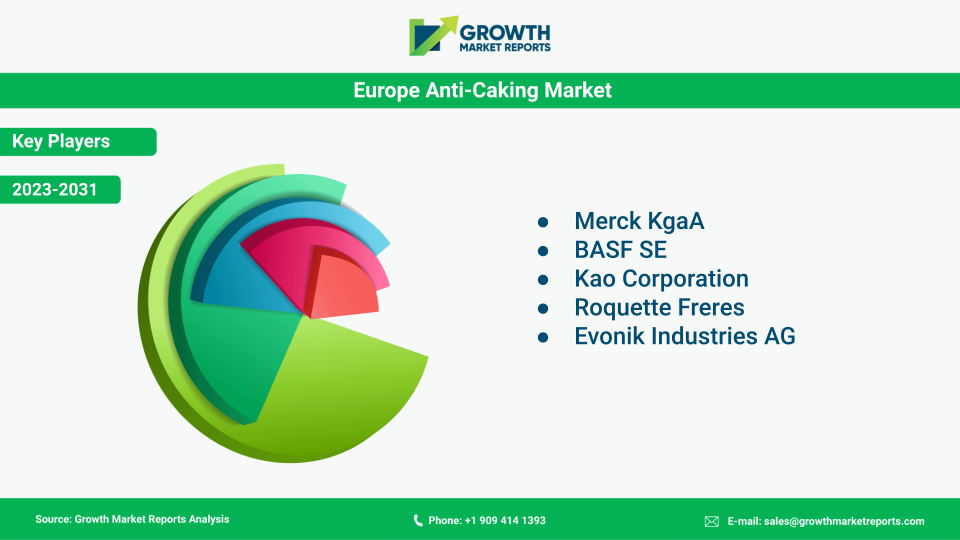
Some of the key market players competing in the Europe anti-caking market are Merck KgaA; BASF SE; Kao Corporation; Roquette Freres; Evonik Industries AG. These key players are constantly implementing several marketing strategies such as merger & acquisitions, capital investments, partnerships, and new product development to sustain industry position in the market. The German company JELU-WERK launch a JELUCEL cellulose anti-caking agent.
Major companies include Evonik Industries AG, BASF SE, Solvay S.A., PQ Corporation, PPG Industries, Inc., Brenntag AG, Huber Engineered Materials, Kao Corporation, Sweetener Supply Corp., and Chemipol S.A.
Challenges include regulatory restrictions on certain synthetic agents, compliance with diverse global standards, raw material price volatility, and competition from low-cost alternatives.
Key trends include the shift towards natural and clean-label ingredients, technological advancements in manufacturing, and increased demand from emerging markets. Opportunities exist in developing sustainable and high-performance anti-caking solutions.
Anti-caking agents are available in powder, granules, and liquid forms. Powdered agents are the most popular due to their ease of handling and compatibility with a wide range of applications.
Asia Pacific is the fastest-growing region, driven by rapid urbanization, population growth, and expansion of the food processing and agricultural sectors. North America and Europe remain dominant in terms of market share.
Synthetic anti-caking agents, such as silicon dioxide and sodium aluminosilicate, offer high efficacy and cost-effectiveness, while natural agents like calcium carbonate and microcrystalline cellulose are preferred for clean-label and sustainable applications.
The market is segmented by product type into silicon dioxide, calcium compounds, sodium compounds, magnesium compounds, and others. Silicon dioxide is the most widely used due to its effectiveness and regulatory approval.
Key industries driving demand include food & beverages, animal feed, fertilizers, and pharmaceuticals, with the food sector accounting for the largest market share due to the popularity of processed and convenience foods.
Anti-caking agents are additives used to prevent the formation of lumps or clumps in powdered or granulated materials, ensuring free-flowing properties in products such as food, animal feed, fertilizers, and pharmaceuticals.
The global anti-caking agents market reached USD 1.12 billion in 2024 and is projected to grow at a CAGR of 5.1% from 2025 to 2033, reaching USD 1.73 billion by 2033.