Segments - by Service Type (Self-Service, Counter Service, Table Service, Drive-Through), by Cuisine Type (Fast Food, Bakery & Café, Ethnic Cuisine, Healthy Food, Others), by Location (Pre-Security, Post-Security), by Ownership (Franchise, Independent)
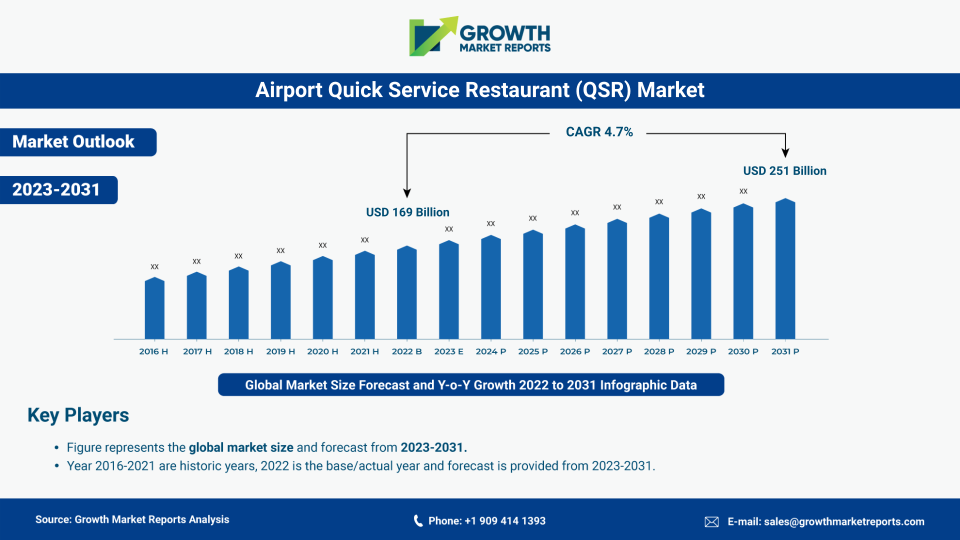
According to our latest research, the global Airport Quick Service Restaurant (QSR) market size in 2024 stands at USD 5.8 billion, exhibiting robust momentum driven by the increasing demand for convenient and efficient food options among air travelers. The market is projected to expand at a CAGR of 6.9% from 2025 to 2033, reaching an estimated USD 10.8 billion by the end of the forecast period. This significant growth is primarily fueled by the surge in global air passenger traffic, evolving consumer preferences for fast and high-quality food, and the continuous modernization of airport infrastructure worldwide.
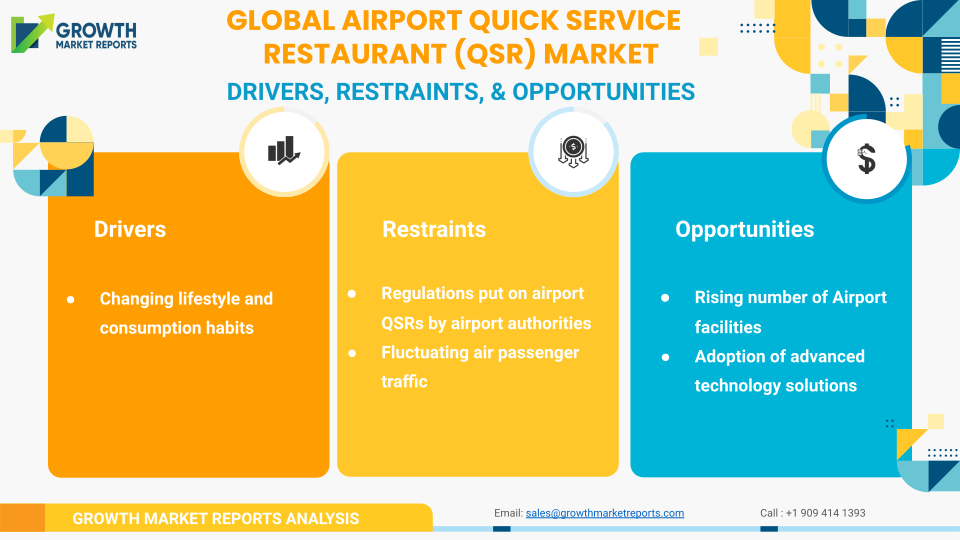
One of the primary growth factors for the Airport QSR market is the relentless rise in global air travel, particularly post-pandemic, as both business and leisure travel rebound. Airports are experiencing higher passenger volumes, leading to increased dwell times and a greater need for food and beverage services that are both quick and accessible. The growing tendency of travelers to seek out familiar, branded food options while in transit has prompted airport authorities and concessionaires to prioritize the integration of established QSR chains. This, in turn, has resulted in higher foot traffic and revenue generation for QSR operators within airport premises. Additionally, the increasing adoption of digital ordering platforms and contactless payment technologies is enhancing the overall customer experience, further propelling market growth.
Another significant driver is the evolving consumer preference for diverse and healthier dining options, even in fast-paced airport environments. Modern travelers are increasingly health-conscious and demand a wider array of menu choices, including organic, vegan, gluten-free, and ethnic cuisines. In response, many QSR brands are diversifying their offerings and incorporating healthier menu items to cater to this demographic shift. The integration of technology, such as self-service kiosks and mobile ordering apps, enables QSRs to streamline operations, reduce wait times, and deliver personalized experiences, thereby increasing customer satisfaction and loyalty. This technological transformation is not only improving operational efficiency but also expanding the marketÂ’s reach across various customer segments.
Strategic partnerships between airport authorities and QSR operators are also playing a pivotal role in market expansion. Airports are increasingly viewing food and beverage services as a critical component of the overall passenger experience and a lucrative revenue stream. By granting exclusive contracts to renowned QSR brands and encouraging the presence of local and international cuisines, airports are able to differentiate themselves and enhance their competitive edge. Moreover, the focus on sustainability—through eco-friendly packaging, waste reduction initiatives, and sourcing local ingredients—is resonating with environmentally conscious travelers and further bolstering the reputation of QSRs operating in airports. These collaborative efforts are fostering innovation and setting new standards for food service in the aviation sector.
In recent years, the concept of Airport Food Pre-Order has gained traction as a convenient solution for travelers seeking to optimize their time at airports. This service allows passengers to browse menus and place orders in advance through mobile apps or online platforms, ensuring that their meals are ready for pickup upon arrival at the airport. The ability to pre-order food not only reduces wait times but also offers travelers the opportunity to customize their meals according to dietary preferences and restrictions. As airports continue to embrace digital transformation, the integration of pre-ordering systems is becoming increasingly prevalent, enhancing the overall passenger experience and contributing to the growth of the Airport QSR market.
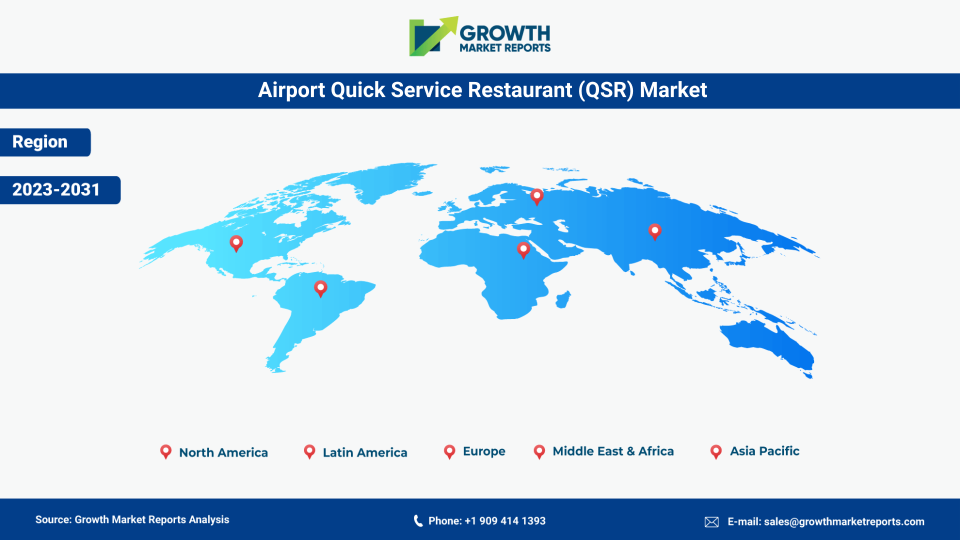
From a regional perspective, North America continues to dominate the Airport QSR market, accounting for the largest share in 2024, followed closely by Europe and the Asia Pacific. The high concentration of major international airports, coupled with a mature fast-food culture and advanced technological infrastructure, positions North America as the leader in this space. However, rapid airport infrastructure development and rising disposable incomes in Asia Pacific are expected to drive the highest growth rate in the coming years. Meanwhile, airports in Europe are emphasizing premiumization and local culinary experiences, while Latin America and the Middle East & Africa are gradually emerging as lucrative markets due to increasing air connectivity and tourism activities.
The Airport QSR market is segmented by service type into Self-Service, Counter Service, Table Service, and Drive-Through, each catering to distinct traveler needs and operational models. Self-Service QSRs have gained significant traction in recent years, as travelers increasingly value speed and convenience. The implementation of self-service kiosks and digital ordering platforms allows passengers to customize their meals and reduce wait times, which is particularly appealing during short layovers or tight connecting flights. This segment is expected to witness the fastest growth, as airports and QSR operators invest in technology-driven solutions to enhance throughput and minimize human contact, reflecting post-pandemic consumer preferences.
Counter Service remains the most prevalent format in airport environments, primarily due to its efficiency and ability to handle high passenger volumes. Counter Service QSRs typically offer standardized menus and quick turnaround times, making them ideal for travelers with limited time to spare before boarding. The emphasis on operational efficiency, coupled with the integration of digital menu boards and mobile payment options, has enabled this segment to maintain a strong foothold in the market. Furthermore, leading QSR brands are continuously innovating their counter service models by introducing limited-time offers, meal deals, and loyalty programs to attract repeat customers and boost sales.
Table Service, while less common in airport settings compared to other segments, is gaining popularity in premium lounges and international terminals catering to long-haul travelers. This segment offers a more relaxed and upscale dining experience, often featuring a broader menu selection and enhanced customer service. Table Service QSRs are particularly appealing to business travelers and families seeking comfort and convenience during extended layovers. The integration of mobile ordering and table-side payment solutions is further enhancing the appeal of this segment, allowing for a seamless and efficient dining experience even in busy airport environments.
Drive-Through QSRs, though traditionally associated with roadside locations, are being explored in select airport environments, particularly in regions with large airport campuses and high volumes of local traffic. This service type offers unparalleled convenience for travelers and airport staff alike, enabling quick meal pickups without the need to enter the terminal. While still a niche segment, the potential for growth is significant as airports seek to diversify their food and beverage offerings and cater to a wider range of customer preferences. The success of Drive-Through QSRs in airports will largely depend on strategic location planning and the ability to integrate with airport traffic flow and security protocols.
| Attributes | Details |
| Report Title | Airport Quick Service Restaurant (QSR) Market Research Report 2033 |
| By Service Type | Self-Service, Counter Service, Table Service, Drive-Through |
| By Cuisine Type | Fast Food, Bakery & Café, Ethnic Cuisine, Healthy Food, Others |
| By Location | Pre-Security, Post-Security |
| By Ownership | Franchise, Independent |
| Regions Covered | North America, Europe, APAC, Latin America, MEA |
| Base Year | 2024 |
| Historic Data | 2018-2023 |
| Forecast Period | 2025-2033 |
| Number of Pages | 287 |
| Number of Tables & Figures | 292 |
| Customization Available | Yes, the report can be customized as per your need. |
The Airport QSR market encompasses a diverse range of cuisine types, including Fast Food, Bakery & Café, Ethnic Cuisine, Healthy Food, and Others, each reflecting the evolving tastes and preferences of global travelers. Fast Food remains the dominant segment, driven by the universal appeal of quick, affordable, and familiar meals. Major international QSR brands such as McDonald’s, Burger King, and KFC have established a strong presence in airports worldwide, capitalizing on brand recognition and standardized offerings. The Fast Food segment continues to innovate by introducing limited-time menu items, value meals, and localized flavors to cater to regional tastes and preferences.
Bakery & Café concepts are gaining momentum in airport settings, offering a more relaxed and upscale alternative to traditional fast food. These outlets typically feature a wide selection of pastries, sandwiches, coffee, and beverages, making them popular choices for breakfast, snacks, and light meals. The growing demand for premium coffee and artisanal bakery products is driving the expansion of international café chains such as Starbucks and Costa Coffee, as well as local bakery brands. The integration of digital ordering, loyalty programs, and sustainable packaging is further enhancing the appeal of Bakery & Café QSRs in airports.
Ethnic Cuisine QSRs are increasingly being introduced in airports to cater to the diverse and multicultural nature of air travel. Travelers are seeking authentic and unique dining experiences, prompting airport authorities to partner with renowned ethnic food brands and local restaurateurs. This segment includes a wide variety of offerings, such as Asian, Middle Eastern, Mediterranean, and Latin American cuisines, reflecting the global nature of airport demographics. The emphasis on authenticity, quality ingredients, and quick service is enabling Ethnic Cuisine QSRs to carve out a niche in the highly competitive airport foodservice market.
Healthy Food QSRs represent a rapidly growing segment, driven by the rising awareness of health and wellness among travelers. These outlets offer nutritious and balanced meal options, including salads, wraps, smoothies, and plant-based dishes, catering to health-conscious individuals and those with dietary restrictions. The adoption of transparent labeling, calorie information, and allergen-friendly menus is further boosting the popularity of Healthy Food QSRs in airports. As travelers increasingly prioritize health and wellness, this segment is expected to witness robust growth throughout the forecast period.
The “Others” category encompasses a variety of emerging cuisine types and innovative food concepts, such as fusion cuisine, gourmet burgers, and specialty dessert bars. These outlets are often characterized by unique branding, creative menu offerings, and experiential dining formats. The continuous experimentation and introduction of new food concepts in airports are contributing to the vibrancy and dynamism of the Airport QSR market. As consumer preferences evolve, QSR operators are expected to further diversify their cuisine offerings to capture emerging trends and differentiate themselves in a crowded marketplace.
The location of QSR outlets within airports plays a critical role in determining their visibility, accessibility, and overall performance. The Airport QSR market is segmented by location into Pre-Security and Post-Security areas. Pre-Security QSRs are typically located in public areas accessible to both travelers and airport visitors, making them ideal for capturing a broader customer base, including airport staff, meeters and greeters, and local residents. These outlets benefit from high foot traffic and longer operating hours, often serving as convenient dining options for individuals not necessarily traveling but visiting the airport for other purposes.
Post-Security QSRs, situated within the secure zones of airport terminals, cater exclusively to ticketed passengers. This segment represents the largest share of the Airport QSR market, as travelers often have extended dwell times after clearing security and before boarding their flights. Post-Security QSRs are strategically positioned near boarding gates, lounges, and duty-free areas, maximizing their exposure to high passenger volumes. The emphasis on speed, efficiency, and menu variety is paramount in this segment, as travelers seek quick and satisfying meal options without risking delays to their travel schedules.
The design and layout of QSR outlets in both Pre-Security and Post-Security areas are evolving to enhance the overall passenger experience. Airports are increasingly incorporating open-concept dining areas, digital menu boards, and mobile ordering stations to streamline service and reduce congestion. The integration of seating areas, charging stations, and free Wi-Fi is further enhancing the appeal of QSRs, encouraging travelers to relax and dine comfortably while waiting for their flights. These innovations are contributing to higher customer satisfaction and increased revenue per passenger.
Location-based marketing and targeted promotions are also playing a crucial role in driving foot traffic to QSR outlets within airports. By leveraging digital signage, mobile apps, and personalized offers, QSR operators are able to attract travelers at key touchpoints throughout their airport journey. The use of data analytics and passenger flow analysis is enabling airports and QSR brands to optimize outlet placement, menu offerings, and staffing levels, ensuring maximum operational efficiency and profitability. As airports continue to modernize and expand, the strategic placement of QSR outlets will remain a key factor in market success.
Ownership structure is a critical determinant of operational strategy and brand proliferation in the Airport QSR market. The market is segmented into Franchise and Independent QSRs, each with distinct advantages and challenges. Franchise QSRs, represented by globally recognized brands, dominate airport environments due to their established operational models, standardized menus, and strong brand equity. Franchise operators benefit from centralized support, marketing expertise, and economies of scale, enabling them to maintain consistent quality and service standards across multiple airport locations. The presence of franchise QSRs also instills confidence among travelers, who often seek familiar food options while navigating unfamiliar airport environments.
Independent QSRs, on the other hand, offer unique and localized dining experiences that differentiate airports from one another. These outlets are often operated by local entrepreneurs or regional foodservice companies, showcasing regional cuisines, artisanal products, and innovative food concepts. Independent QSRs contribute to the cultural and culinary diversity of airport foodservice offerings, appealing to travelers seeking authentic and memorable dining experiences. The flexibility and agility of independent operators allow them to quickly adapt to changing consumer trends and experiment with new menu items, positioning them as key drivers of innovation in the market.
The balance between franchise and independent QSRs varies by region and airport size. Major international hubs tend to favor franchise QSRs due to their ability to handle high passenger volumes and deliver consistent service. However, there is a growing trend toward incorporating more independent and local brands, particularly in airports seeking to enhance their sense of place and appeal to global travelers seeking unique experiences. This shift is being driven by passenger demand for variety, authenticity, and support for local businesses.
Ownership models also impact the financial performance and operational flexibility of QSR outlets in airports. Franchise agreements typically involve revenue-sharing arrangements, marketing fees, and strict adherence to brand standards, while independent operators may have greater autonomy but face higher operational risks. Airport authorities are increasingly adopting flexible concession models that accommodate both franchise and independent QSRs, fostering a diverse and dynamic foodservice environment. The ongoing evolution of ownership structures will continue to shape the competitive landscape of the Airport QSR market in the years to come.
The Airport QSR market presents numerous opportunities for growth and innovation, driven by evolving traveler expectations and technological advancements. One of the most significant opportunities lies in the adoption of digital and contactless technologies, such as self-service kiosks, mobile ordering, and digital payment platforms. These technologies not only enhance operational efficiency but also improve the overall customer experience by reducing wait times and enabling greater customization. QSR operators that invest in technology-driven solutions are well-positioned to capture a larger share of the market and differentiate themselves from competitors. Additionally, the integration of data analytics and customer relationship management tools enables QSRs to personalize offerings, optimize inventory, and drive repeat business.
Another major opportunity is the growing demand for healthy, sustainable, and locally sourced food options among travelers. QSR operators that prioritize sustainability initiatives, such as eco-friendly packaging, waste reduction programs, and partnerships with local suppliers, are likely to resonate with environmentally conscious consumers. The introduction of plant-based, organic, and allergen-friendly menu items can help QSRs attract health-conscious travelers and those with specific dietary requirements. Furthermore, the expansion of QSR outlets into emerging markets, particularly in Asia Pacific and Latin America, offers significant growth potential as air travel continues to increase and airport infrastructure is modernized.
Despite these opportunities, the Airport QSR market faces several restraining factors, the most notable of which is the high operational costs associated with airport locations. Rent, utilities, and labor expenses are typically higher in airports than in other commercial settings, placing pressure on profit margins. Additionally, stringent security regulations, limited space, and complex concession agreements can pose challenges for QSR operators seeking to expand or innovate within airport environments. The ongoing volatility of air travel demand, influenced by global economic conditions, geopolitical events, and public health crises, also introduces a degree of uncertainty into the market. QSR operators must remain agile and adaptable to navigate these challenges and sustain long-term growth.
North America continues to lead the global Airport QSR market, accounting for approximately USD 2.1 billion of the total market size in 2024. The regionÂ’s dominance is attributed to its high concentration of major international airports, advanced technological infrastructure, and a well-established fast-food culture. The United States, in particular, is home to many of the worldÂ’s busiest airports, where leading QSR brands have a strong presence and continue to innovate through the adoption of digital ordering, loyalty programs, and menu diversification. Canada and Mexico also contribute to regional growth, with airports increasingly prioritizing passenger experience and foodservice modernization.
Europe represents the second-largest market, with a 2024 value of USD 1.6 billion. European airports are known for their emphasis on premiumization, local culinary experiences, and sustainability initiatives. The region is characterized by a diverse mix of international QSR chains and independent operators, offering travelers a wide array of dining options. The expansion of low-cost carriers and the growth of intra-European travel are driving increased passenger volumes and demand for efficient foodservice solutions. Key markets such as the United Kingdom, Germany, France, and the Netherlands are at the forefront of innovation, integrating technology and sustainability into their airport QSR offerings.
The Asia Pacific region is poised for the fastest growth, with a projected CAGR of 8.1% from 2025 to 2033. The market size for Asia Pacific in 2024 is estimated at USD 1.1 billion, with significant upside potential as air travel demand surges and airport infrastructure investments accelerate. Countries such as China, India, Japan, and South Korea are witnessing rapid expansion of both domestic and international air traffic, creating new opportunities for QSR operators. The regionÂ’s diverse culinary landscape, rising disposable incomes, and increasing adoption of digital technologies are further fueling market growth. Meanwhile, Latin America and the Middle East & Africa, with market sizes of USD 0.6 billion and USD 0.4 billion respectively, are emerging as attractive markets, driven by improving air connectivity, tourism growth, and airport modernization initiatives.
The competitive landscape of the Airport QSR market is characterized by the presence of both global QSR giants and innovative regional players, each vying for a share of the lucrative airport foodservice segment. Major international brands leverage their strong brand equity, standardized operations, and extensive marketing resources to secure prime locations in high-traffic airports. These companies benefit from established supply chains, robust quality control systems, and the ability to rapidly scale operations across multiple airport locations. The presence of well-known QSR brands instills confidence among travelers, who often prefer familiar food options while navigating the complexities of air travel.
At the same time, regional and independent operators are making significant inroads by offering unique and localized dining experiences that set airports apart from one another. These players are often able to respond more quickly to changing consumer trends and experiment with innovative menu offerings, catering to the growing demand for authenticity and variety. The increasing emphasis on sustainability, health-conscious dining, and digital innovation is driving competition and encouraging both global and local QSR operators to continuously enhance their value propositions. Strategic partnerships with airport authorities and concessionaires are also playing a critical role in securing favorable locations and expanding market reach.
The market is witnessing a wave of consolidation and collaboration, as QSR brands seek to strengthen their competitive positions through mergers, acquisitions, and strategic alliances. This trend is particularly evident among franchise operators, who are leveraging their scale to negotiate more favorable terms with airport authorities and streamline operations. The adoption of advanced technologies, such as AI-driven analytics, mobile ordering platforms, and contactless payment solutions, is further intensifying competition, as QSR operators strive to deliver superior customer experiences and operational efficiency.
Some of the leading companies in the Airport QSR market include McDonaldÂ’s Corporation, Yum! Brands (KFC, Pizza Hut, Taco Bell), Starbucks Corporation, HMSHost Corporation (a subsidiary of Autogrill), SSP Group plc, Subway, Burger King, and Costa Coffee. These companies have established a strong presence in major international airports and continue to expand their footprints through strategic partnerships and franchising agreements. HMSHost and SSP Group, in particular, are renowned for their expertise in airport foodservice management, operating a diverse portfolio of QSR brands and local concepts across multiple regions.
McDonald’s Corporation remains a dominant force in the market, leveraging its global brand recognition and standardized operations to secure prime airport locations. Yum! Brands, with its portfolio of popular fast-food chains, continues to innovate through menu diversification and digital integration. Starbucks Corporation is a leader in the Bakery & Café segment, capitalizing on the growing demand for premium coffee and artisanal bakery products. HMSHost and SSP Group are key players in airport foodservice management, offering a wide range of QSR and full-service dining options tailored to local and international traveler preferences. These companies are at the forefront of industry trends, driving innovation and setting new standards for quality, convenience, and customer experience in the Airport QSR market.
The Airport Quick Service Restaurant (QSR) market has been segmented on the basis of
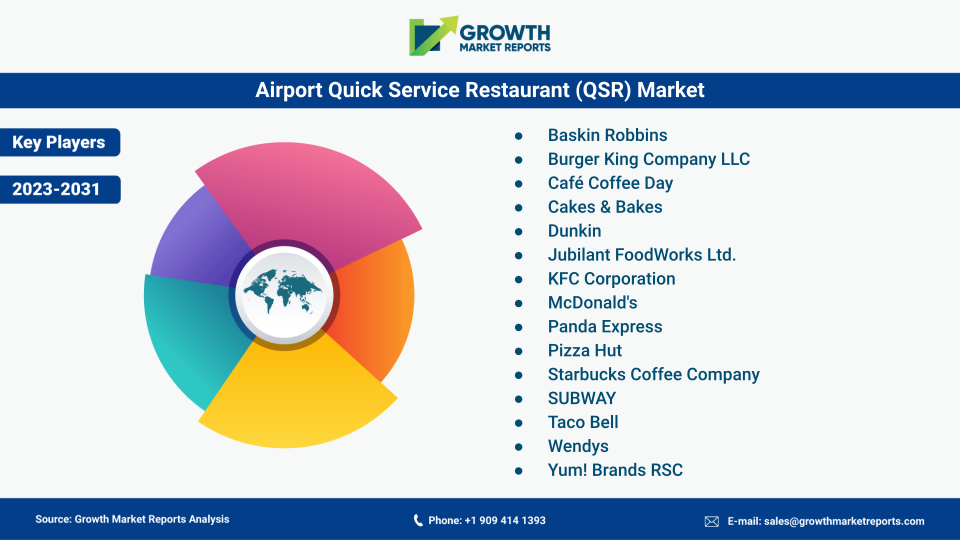
Key players competing in the Airport Quick Service Restaurant (QSR) Market are Baskin Robbins; Burger King Company LLC; Café Coffee Day; Cakes & Bakes; Dunkin; Jubilant FoodWorks Ltd.; KFC Corporation; McDonald's; Panda Express; Pizza Hut; Starbucks Coffee Company; SUBWAY; Taco Bell; Wendys; and Yum! Brands RSC.
These companies adopted development strategies, including mergers, acquisitions, partnerships, collaboration, product launches, and production expansion, to expand their consumer base globally. The competitive landscape covers key insights into growth strategies adopted by major market players.
Opportunities for QSR operators include adopting digital and contactless technologies, offering healthy and sustainable menu options, expanding into emerging markets, and leveraging data analytics for personalized customer experiences.
Major challenges include high operational costs, stringent security regulations, limited space, complex concession agreements, and the volatility of air travel demand due to economic or geopolitical factors.
Leading companies in the Airport QSR market include McDonald’s Corporation, Yum! Brands (KFC, Pizza Hut, Taco Bell), Starbucks Corporation, HMSHost Corporation, SSP Group plc, Subway, Burger King, and Costa Coffee.
Key trends include rising global air passenger traffic, evolving consumer preferences for healthier and diverse food options, increased digitalization, sustainability initiatives, and strategic partnerships between airports and QSR operators.
Technology is playing a significant role in the Airport QSR market through the adoption of self-service kiosks, digital ordering platforms, contactless payments, and mobile apps, all of which enhance operational efficiency and customer experience.
Popular cuisine types in airport QSRs include Fast Food, Bakery & Café, Ethnic Cuisine, Healthy Food, and other emerging food concepts such as fusion cuisine and specialty dessert bars.
The main service types in the Airport QSR market are Self-Service, Counter Service, Table Service, and Drive-Through, each catering to different traveler needs and operational models.
North America leads the Airport QSR market, followed by Europe and the Asia Pacific region. North America benefits from a high concentration of major international airports and advanced technological infrastructure.
The Airport QSR market is expected to grow at a CAGR of 6.9% from 2025 to 2033, reaching approximately USD 10.8 billion by the end of the forecast period.
As of 2024, the global Airport Quick Service Restaurant (QSR) market size is valued at USD 5.8 billion.