Commercial Paper Towel Dispensers Market Size, Trends [2030]
Global Commercial Paper Towel Dispensers Market
Segments - by Material Type (Plastics, Stainless Steel, Others), By Installation Type (Wall-Mounted, Countertop), By Function (Sensor/Automatic, Lever/Crank, Centerfold, Folded, Others), By Distribution Channel (Online Channels, Offline Channels), By Application (Quick Service Restaurants (QSR), Convenience Stores, Hospitality, Education, Long-Term Care, Hypermarkets/Supermarkets, Processing Industry, Entertainment and Catering,) and Region (North America, Latin America, Europe, Asia Pacific and Middle East & Africa) - Global Industry Analysis, Growth, Share, Size, Trends, and Forecast 2020 – 2027
Segments - by Material Type (Plastics, Stainless Steel, Others), By Installation Type (Wall-Mounted, Countertop), By Function (Sensor/Automatic, Lever/Crank, Centerfold, Folded, Others), By Distribution Channel (Online Channels, Offline Channels), By Application (Quick Service Restaurants (QSR), Convenience Stores, Hospitality, Education, Long-Term Care, Hypermarkets/Supermarkets, Processing Industry, Entertainment and Catering,) and Region (North America, Latin America, Europe, Asia Pacific and Middle East & Africa) - Global Industry Analysis, Growth, Share, Size, Trends, and Forecast 2020 – 2027
Commercial Paper Towel Dispensers MarketMarket Outlook:
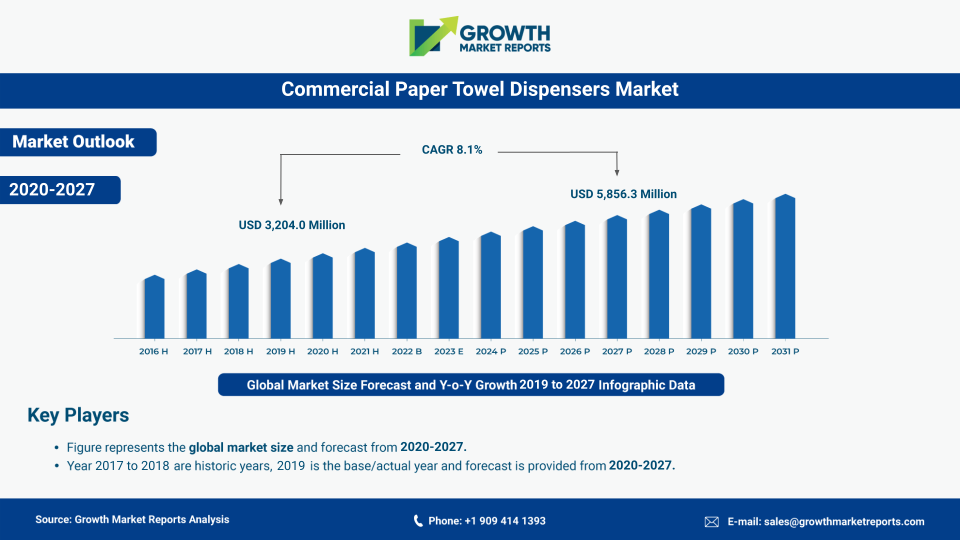
The global commercial paper towel dispenser market was valued at USD 3,204.0 Million in 2019 and is likely reach to USD 5,856.3 Million by 2027, expanding at a CAGR of 8.1% during the forecast period 2020-2027. The use of paper towels for drying hands is convenient, especially in restrooms in commercial establishments such as malls, hospitals, and offices.
A commercial paper towel dispenser is a machine that dispenses paper towels. These dispensers are mounted on the walls or used as countertops in restrooms, which dispenses paper towels. Wall mounted paper towel dispensers save space, are easily accessible, and easy to use and refill. Paper towels absorb moisture and are ideal for cleaning surface and kitchen tools.
These towels are used for cleaning hands, which is an important application. Paper towels are dispensed one at a time, which reduces wastage of the towels. The demand for automatic paper towel dispensers has been increasing in the past few years. The sensors present in the automatic paper towel dispensers detect the presence of hands and paper is dispensed.
This reduces the contact with the machine, which drives the demand for the commercial paper towel dispenser market. Increase in awareness among consumers for the conservation of water has led to the adoption of commercial paper towel dispensers in restrooms in the past few years.
Additionally, increased awareness for the conservation of water also contributes for the increased adoption of the commercial paper towel dispensers.
The paper towel dispensers are more hygienic than the hand dryers. Bacteria accumulate on the surface of the hands. This is one of the disadvantages of hand dryers; however, bacteria are wiped off from the surface of hands by using the paper towels.
This property of paper towels has gained popularity among consumers, which in turn, is fuelling the adoption of commercial paper towel dispensers.
Increase in construction of offices, hospitals, and airports has led to the installation of commercial paper towel dispensers, thereby driving the growth of the market. The automatic commercial dispensers can be connected with the devices, using wireless technology. The automated systems disperse, a limited number of paper towels.
Commercial Paper Towel Dispensers MarketMarket Dynamics
The growth of the global commercial paper towel dispenser market is attributed to factors such as rising use of paper towel dispensers in households, office restrooms, and hotels. Paper towels are used for wiping of hands, cleaning surfaces, and dusting, among other cleaning activities. These towels are used as substitutes for hand dryers in restrooms, as these are considered more hygienic.
The paper towels absorb moisture and reduce the accumulation of the bacteria on the surface of hands, which are major factors that are boosting the adoption of commercial paper towel dispensers. Paper towels help in cleaning kitchen platforms and keeping the platforms hygienic, which contributes to the growth of the market. The paper towels dispensers are easy to use, thus driving their demand. Integration of technologies propels the commercial paper towel market.
The software used in these dispensers are connected through wireless sensors to the application present in a smartphone. These applications are used for monitoring the usage of the paper towels, and determines, the amount of paper dispensed.
Additionally, the use of Internet of Things (IoT), helps analyze the functioning and working of these dispensers in real-time, which is a major advantage of using IoT. These are some of the factors, which contributes for the growth of the segment.
Commercial Paper Towel Dispensers MarketSegmental Outlook
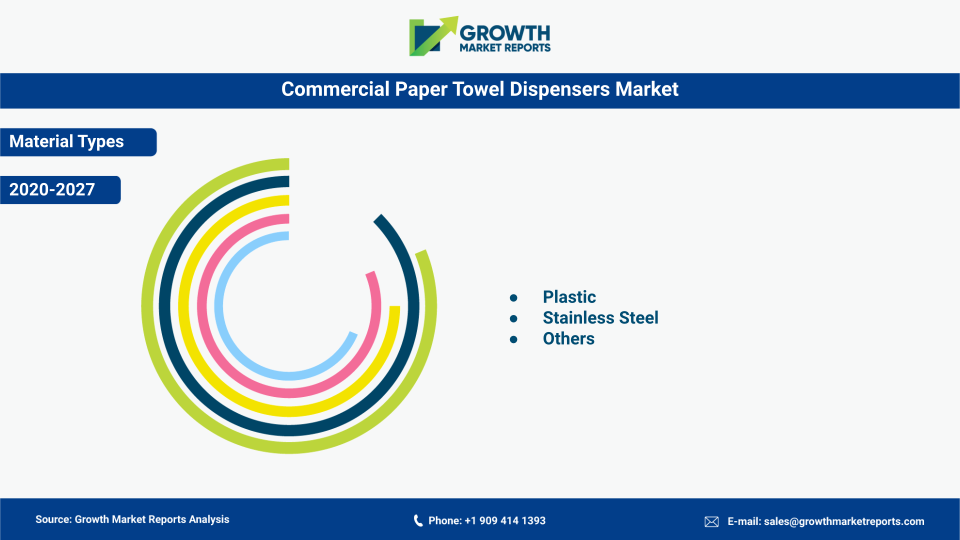
On the basis of material types, the market is segmented into plastic, stainless steel, and others. The plastic segment accounted for 63.1% share of the market in 2019. The rapid growth of this segment is attributed to the increasing adoption of plastics in the manufacturing of the commercial paper towel dispensers.
The commercial paper towel dispensers made from plastics are light in weight, which is one of the major advantages of using plastics, thereby boosting the growth of the segment. The availability of the plastics is one of the major factors, which has led to the rise in the adoption of plastics, thereby boosting the growth of the segment.
In terms of installation type, the commercial paper towel dispenser market is segregated into wall mounted and counter-top. Wall- mounted segment is anticipated to expand at a CAGR of 8.2% during the forecast period. Rising demand for the wall mounted paper towel dispenser is expected to boost the growth of the manufacturing segment.
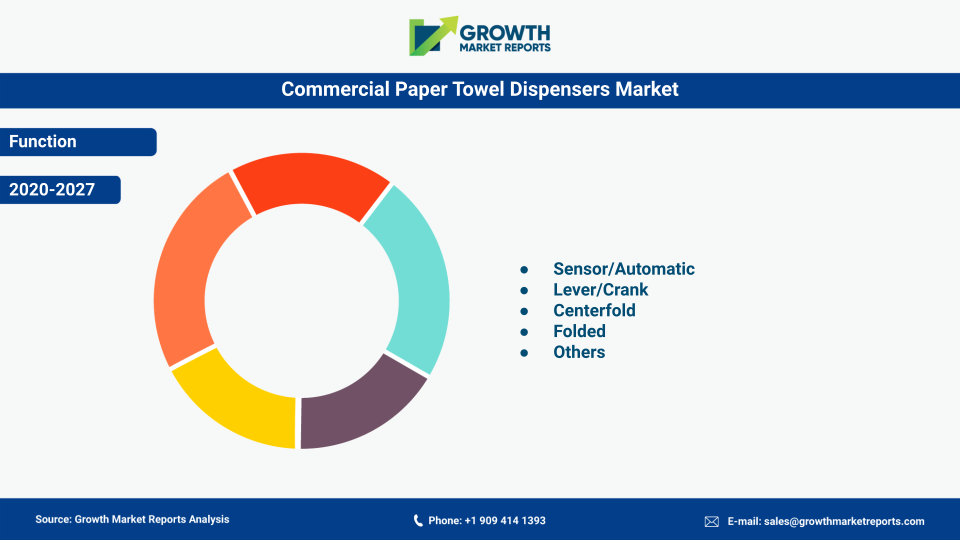
In terms of function, the commercial paper towel dispenser market is segregated into sensor/automatic, lever/crank, centerfold, folded, and others. The centerfold segment is expected to have a significant share in the market. In terms of distribution channel, the market is segmented into online channels and offline channels.
The online segmented is expected to have a significant CAGR during the forecast period. The rise in the adoption of the internet has, led to the rise in the demand for the online channels, thereby boosting the growth of the segment.
On the basis of applications, the commercial paper towel dispenser market is fragmented into quick service restaurants (QSR), convenience stores, hospitality, education, acute care, long term care, hypermarkets/supermarkets, processing industry, entertainment & catering, and others.
The hospitality industry segment accounts for a significant share of the market and is anticipated to expand at a significant CAGR during the forecast period, owing to increasing demand for commercial paper towel dispensers for maintaining hygiene.
Commercial Paper Towel Dispensers MarketRegional Outlook
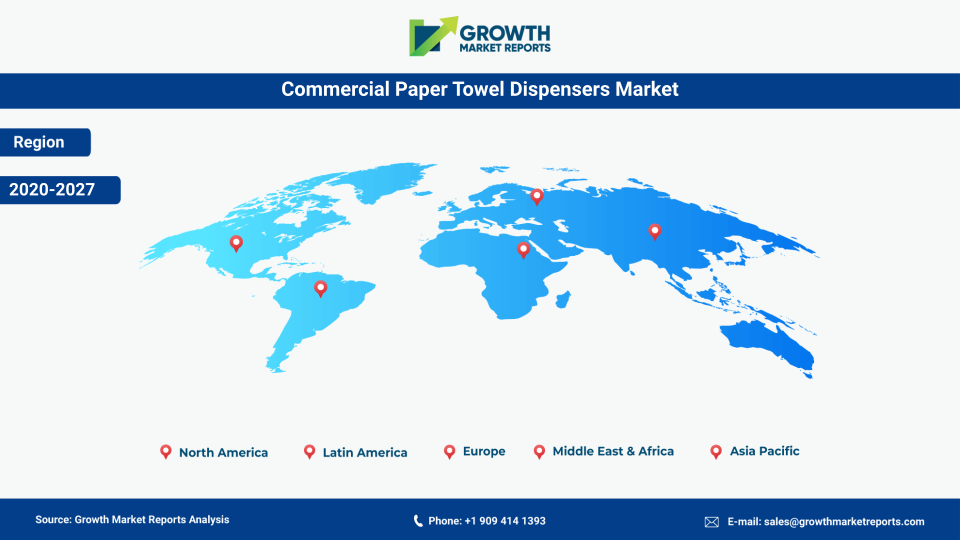
In terms of regions, the global commercial paper towel dispenser market is fragmented into North America, Europe, Asia Pacific, Latin America, and Middle East & Africa. North America constituted market share of one third share in 2020.
Increasing adoption of new technology and increasing awareness among the consumers for the hygiene and rise in presence of several manufacturers, is thereby boosting the growth of the commercial paper towel dispenser market in North America.
Key Benefits for Industry Participants & Stakeholders
In-depth Analysis of the Global Commercial Paper Towel Dispenser Market
Historical, Current and Projected Market Size in terms of Value
Potential & Niche Segments and Regions Exhibiting Promising Growth Covered
Industry Drivers, Restraints and Opportunities Covered in the Study
Recent Industry Trends and Developments
Competitive Landscape & Strategies of Key Players
Neutral Perspective on Global Commercial Paper Towel Dispenser Market Performance
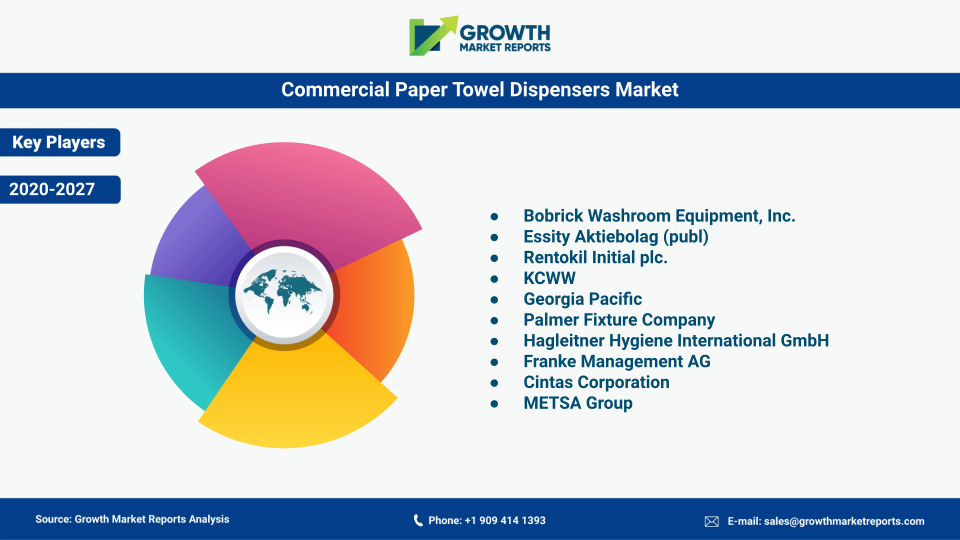
Key players in the market include Essity Aktiebolag (publ), Bobrick Washroom Equipment, Inc., Rentokil Initial plc., KCWW, Georgia Pacific, Palmer Fixture Company, Hagleitner Hygiene International GmbH, Franke Management AG,Cintas Corporation, Metsa Group, Dolphin Solutions, ASI American Specialties Inc,Bradley Corporation,SYSPAL Ltd, and Jaguar.
These companies are considered manufacturers of commercial paper towel dispenser based on their revenue, research development (R&D) activities, regional presence, and supply chain management system.
The players are adopting key strategies such as acquisition, and geographical expansion where potential opportunity for the Commercial Paper Towel Dispenser is added in the company’s capacity.
For instance, On November 2017, Bobrick Washroom Equipment, Inc. introduced its B-7125 Insta Dry, which is a self-mounted automatic hand dryer. The B-1275 InstaDry functions at a mere 200Watts and is one of the lowest wattage jet dryer in the commercial restroom industry.
In April 2020, Essity Aktiebolag (publ) acquired the Netherlands-based company Novioscan to strengthen its offering in incontinence products. Novioscan developed wearable ultrasound technology that monitors the bladder and enables continence control.
In April 2020, Essity Aktiebolag (publ) acquired the Netherlands-based company Novioscan to strengthen its offering in incontinence products. Novioscan developed wearable ultrasound technology that monitors the bladder and enables continence control.
Video Summary for Commercial Paper Towel Dispensers Market
Chapter 1 Executive Summary Chapter 2 Assumptions and Acronyms Used Chapter 3 Research Methodology Chapter 4 Commercial Paper Towel Dispenser Market Overview 4.1 Introduction 4.1.1 Market Taxonomy 4.1.2 Market Definition 4.1.3 Macro-Economic Factors Impacting the Market Growth 4.2 Commercial Paper Towel Dispenser Market Dynamics 4.2.1 Market Drivers 4.2.2 Market Restraints 4.2.3 Market Opportunity 4.3 Commercial Paper Towel Dispenser Market - Supply Chain Analysis 4.3.1 List of Key Suppliers 4.3.2 List of Key Distributors 4.3.3 List of Key Consumers 4.4 Key Forces Shaping the Commercial Paper Towel Dispenser Market 4.4.1 Bargaining Power of Suppliers 4.4.2 Bargaining Power of Buyers 4.4.3 Threat of Substitution 4.4.4 Threat of New Entrants 4.4.5 Competitive Rivalry 4.5 Global Commercial Paper Towel Dispenser Market Size & Forecast, 2017-2027 4.5.1 Commercial Paper Towel Dispenser Market Size and Y-o-Y Growth 4.5.2 Commercial Paper Towel Dispenser Market Absolute $ Opportunity 4.6 Pricing Analysis & Forecast, By Material Type, 2017-2027 Chapter 5 Global Commercial Paper Towel Dispenser Market Analysis and Forecast By Material Type 5.1 Introduction 5.1.1 Key Market Trends & Growth Opportunities By Material Type 5.1.2 Basis Point Share (BPS) Analysis By Material Type 5.1.3 Absolute $ Opportunity Assessment By Material Type 5.2 Commercial Paper Towel Dispenser Market Size Forecast By Material Type 5.2.1 Plastic 5.2.2 Stainless Steel 5.2.3 Others 5.3 Market Attractiveness Analysis By Material Type Chapter 6 Global Commercial Paper Towel Dispenser Market Analysis and Forecast By Installation Type 6.1 Introduction 6.1.1 Key Market Trends & Growth Opportunities By Installation Type 6.1.2 Basis Point Share (BPS) Analysis By Installation Type 6.1.3 Absolute $ Opportunity Assessment By Installation Type 6.2 Commercial Paper Towel Dispenser Market Size Forecast By Installation Type 6.2.1 Wall-Mounted 6.2.2 Countertop 6.3 Market Attractiveness Analysis By Installation Type Chapter 7 Global Commercial Paper Towel Dispenser Market Analysis and Forecast By Function 7.1 Introduction 7.1.1 Key Market Trends & Growth Opportunities By Function 7.1.2 Basis Point Share (BPS) Analysis By Function 7.1.3 Absolute $ Opportunity Assessment By Function 7.2 Commercial Paper Towel Dispenser Market Size Forecast By Function 7.2.1 Sensor/Automatic 7.2.2 Lever/Crank 7.2.3 Centerfold 7.2.4 Folded 7.2.5 Others 7.3 Market Attractiveness Analysis By Function Chapter 8 Global Commercial Paper Towel Dispenser Market Analysis and Forecast By Distribution Channel 8.1 Introduction 8.1.1 Key Market Trends & Growth Opportunities By Distribution Channel 8.1.2 Basis Point Share (BPS) Analysis By Distribution Channel 8.1.3 Absolute $ Opportunity Assessment By Distribution Channel 8.2 Commercial Paper Towel Dispenser Market Size Forecast By Distribution Channel 8.2.1 Online Channels 8.2.2 Offline Channels 8.3 Market Attractiveness Analysis By Distribution Channel Chapter 9 Global Commercial Paper Towel Dispenser Market Analysis and Forecast By Application 9.1 Introduction 9.1.1 Key Market Trends & Growth Opportunities By Application 9.1.2 Basis Point Share (BPS) Analysis By Application 9.1.3 Absolute $ Opportunity Assessment By Application 9.2 Commercial Paper Towel Dispenser Market Size Forecast By Application 9.2.1 Quick Service Restaurants (QSR) 9.2.2 Convenience Stores 9.2.3 Hospitality 9.2.4 Education 9.2.5 Acute Care 9.2.6 Long Term Care 9.2.7 Hypermarekts/Supermarkets 9.2.8 Processing Industry 9.2.9 Entertainement and Catering 9.2.10 Others 9.3 Market Attractiveness Analysis By Application Chapter 10 Global Commercial Paper Towel Dispenser Market Analysis and Forecast by Region 10.1 Introduction 10.1.1 Key Market Trends & Growth Opportunities by Region 10.1.2 Basis Point Share (BPS) Analysis by Region 10.1.3 Absolute $ Opportunity Assessment by Region 10.2 Commercial Paper Towel Dispenser Market Size Forecast by Region 10.2.1 North America 10.2.2 Europe 10.2.3 Asia Pacific 10.2.4 Latin America 10.2.5 Middle East & Africa (MEA) 10.3 Market Attractiveness Analysis by Region Chapter 11 Coronavirus Disease (COVID-19) Impact 11.1 Introduction 11.2 Current & Future Impact Analysis 11.3 Economic Impact Analysis 11.4 Government Policies 11.5 Investment Scenario Chapter 12 North America Commercial Paper Towel Dispenser Analysis and Forecast 12.1 Introduction 12.2 North America Commercial Paper Towel Dispenser Market Size Forecast by Country 12.2.1 U.S. 12.2.2 Canada 12.3 Basis Point Share (BPS) Analysis by Country 12.4 Absolute $ Opportunity Assessment by Country 12.5 Market Attractiveness Analysis by Country 12.6 North America Commercial Paper Towel Dispenser Market Size Forecast By Material Type 12.6.1 Plastic 12.6.2 Stainless Steel 12.6.3 Others 12.7 Basis Point Share (BPS) Analysis By Material Type 12.8 Absolute $ Opportunity Assessment By Material Type 12.9 Market Attractiveness Analysis By Material Type 12.10 North America Commercial Paper Towel Dispenser Market Size Forecast By Installation Type 12.10.1 Wall-Mounted 12.10.2 Countertop 12.11 Basis Point Share (BPS) Analysis By Installation Type 12.12 Absolute $ Opportunity Assessment By Installation Type 12.13 Market Attractiveness Analysis By Installation Type 12.14 North America Commercial Paper Towel Dispenser Market Size Forecast By Function 12.14.1 Sensor/Automatic 12.14.2 Lever/Crank 12.14.3 Centerfold 12.14.4 Folded 12.14.5 Others 12.15 Basis Point Share (BPS) Analysis By Function 12.16 Absolute $ Opportunity Assessment By Function 12.17 Market Attractiveness Analysis By Function 12.18 North America Commercial Paper Towel Dispenser Market Size Forecast By Distribution Channel 12.18.1 Online Channels 12.18.2 Offline Channels 12.19 Basis Point Share (BPS) Analysis By Distribution Channel 12.20 Absolute $ Opportunity Assessment By Distribution Channel 12.21 Market Attractiveness Analysis By Distribution Channel 12.22 North America Commercial Paper Towel Dispenser Market Size Forecast By Application 12.22.1 Quick Service Restaurants (QSR) 12.22.2 Convenience Stores 12.22.3 Hospitality 12.22.4 Education 12.22.5 Acute Care 12.22.6 Long Term Care 12.22.7 Hypermarekts/Supermarkets 12.22.8 Processing Industry 12.22.9 Entertainement and Catering 12.22.10 Others 12.23 Basis Point Share (BPS) Analysis By Application 12.24 Absolute $ Opportunity Assessment By Application 12.25 Market Attractiveness Analysis By Application Chapter 13 Europe Commercial Paper Towel Dispenser Analysis and Forecast 13.1 Introduction 13.2 Europe Commercial Paper Towel Dispenser Market Size Forecast by Country 13.2.1 Germany 13.2.2 France 13.2.3 Italy 13.2.4 U.K. 13.2.5 Spain 13.2.6 Russia 13.2.7 Rest of Europe 13.3 Basis Point Share (BPS) Analysis by Country 13.4 Absolute $ Opportunity Assessment by Country 13.5 Market Attractiveness Analysis by Country 13.6 Europe Commercial Paper Towel Dispenser Market Size Forecast By Material Type 13.6.1 Plastic 13.6.2 Stainless Steel 13.6.3 Others 13.7 Basis Point Share (BPS) Analysis By Material Type 13.8 Absolute $ Opportunity Assessment By Material Type 13.9 Market Attractiveness Analysis By Material Type 13.10 Europe Commercial Paper Towel Dispenser Market Size Forecast By Installation Type 13.10.1 Wall-Mounted 13.10.2 Countertop 13.11 Basis Point Share (BPS) Analysis By Installation Type 13.12 Absolute $ Opportunity Assessment By Installation Type 13.13 Market Attractiveness Analysis By Installation Type 13.14 Europe Commercial Paper Towel Dispenser Market Size Forecast By Function 13.14.1 Sensor/Automatic 13.14.2 Lever/Crank 13.14.3 Centerfold 13.14.4 Folded 13.14.5 Others 13.15 Basis Point Share (BPS) Analysis By Function 13.16 Absolute $ Opportunity Assessment By Function 13.17 Market Attractiveness Analysis By Function 13.18 Europe Commercial Paper Towel Dispenser Market Size Forecast By Distribution Channel 13.18.1 Online Channels 13.18.2 Offline Channels 13.19 Basis Point Share (BPS) Analysis By Distribution Channel 13.20 Absolute $ Opportunity Assessment By Distribution Channel 13.21 Market Attractiveness Analysis By Distribution Channel 13.22 Europe Commercial Paper Towel Dispenser Market Size Forecast By Application 13.22.1 Quick Service Restaurants (QSR) 13.22.2 Convenience Stores 13.22.3 Hospitality 13.22.4 Education 13.22.5 Acute Care 13.22.6 Long Term Care 13.22.7 Hypermarekts/Supermarkets 13.22.8 Processing Industry 13.22.9 Entertainement and Catering 13.22.10 Others 13.23 Basis Point Share (BPS) Analysis By Application 13.24 Absolute $ Opportunity Assessment By Application 13.25 Market Attractiveness Analysis By Application Chapter 14 Asia Pacific Commercial Paper Towel Dispenser Analysis and Forecast 14.1 Introduction 14.2 Asia Pacific Commercial Paper Towel Dispenser Market Size Forecast by Country 14.2.1 Indonesia 14.2.2 India 14.2.3 China 14.2.4 Malaysia 14.2.5 Pakistan 14.2.6 Thailand 14.2.7 Rest of Asia Pacific 14.3 Basis Point Share (BPS) Analysis by Country 14.4 Absolute $ Opportunity Assessment by Country 14.5 Market Attractiveness Analysis by Country 14.6 Asia Pacific Commercial Paper Towel Dispenser Market Size Forecast By Material Type 14.6.1 Plastic 14.6.2 Stainless Steel 14.6.3 Others 14.7 Basis Point Share (BPS) Analysis By Material Type 14.8 Absolute $ Opportunity Assessment By Material Type 14.9 Market Attractiveness Analysis By Material Type 14.10 Asia Pacific Commercial Paper Towel Dispenser Market Size Forecast By Installation Type 14.10.1 Wall-Mounted 14.10.2 Countertop 14.11 Basis Point Share (BPS) Analysis By Installation Type 14.12 Absolute $ Opportunity Assessment By Installation Type 14.13 Market Attractiveness Analysis By Installation Type 14.14 Asia Pacific Commercial Paper Towel Dispenser Market Size Forecast By Function 14.14.1 Sensor/Automatic 14.14.2 Lever/Crank 14.14.3 Centerfold 14.14.4 Folded 14.14.5 Others 14.15 Basis Point Share (BPS) Analysis By Function 14.16 Absolute $ Opportunity Assessment By Function 14.17 Market Attractiveness Analysis By Function 14.18 Asia Pacific Commercial Paper Towel Dispenser Market Size Forecast By Distribution Channel 14.18.1 Online Channels 14.18.2 Offline Channels 14.19 Basis Point Share (BPS) Analysis By Distribution Channel 14.20 Absolute $ Opportunity Assessment By Distribution Channel 14.21 Market Attractiveness Analysis By Distribution Channel 14.22 Asia Pacific Commercial Paper Towel Dispenser Market Size Forecast By Application 14.22.1 Quick Service Restaurants (QSR) 14.22.2 Convenience Stores 14.22.3 Hospitality 14.22.4 Education 14.22.5 Acute Care 14.22.6 Long Term Care 14.22.7 Hypermarekts/Supermarkets 14.22.8 Processing Industry 14.22.9 Entertainement and Catering 14.22.10 Others 14.23 Basis Point Share (BPS) Analysis By Application 14.24 Absolute $ Opportunity Assessment By Application 14.25 Market Attractiveness Analysis By Application Chapter 15 Latin America Commercial Paper Towel Dispenser Analysis and Forecast 15.1 Introduction 15.2 Latin America Commercial Paper Towel Dispenser Market Size Forecast by Country 15.2.1 Colombia 15.2.2 Mexico 15.2.3 Brazil 15.2.4 Rest of Latin America (LATAM) 15.3 Basis Point Share (BPS) Analysis by Country 15.4 Absolute $ Opportunity Assessment by Country 15.5 Market Attractiveness Analysis by Country 15.6 Latin America Commercial Paper Towel Dispenser Market Size Forecast By Material Type 15.6.1 Plastic 15.6.2 Stainless Steel 15.6.3 Others 15.7 Basis Point Share (BPS) Analysis By Material Type 15.8 Absolute $ Opportunity Assessment By Material Type 15.9 Market Attractiveness Analysis By Material Type 15.10 Latin America Commercial Paper Towel Dispenser Market Size Forecast By Installation Type 15.10.1 Wall-Mounted 15.10.2 Countertop 15.11 Basis Point Share (BPS) Analysis By Installation Type 15.12 Absolute $ Opportunity Assessment By Installation Type 15.13 Market Attractiveness Analysis By Installation Type 15.14 Latin America Commercial Paper Towel Dispenser Market Size Forecast By Function 15.14.1 Sensor/Automatic 15.14.2 Lever/Crank 15.14.3 Centerfold 15.14.4 Folded 15.14.5 Others 15.15 Basis Point Share (BPS) Analysis By Function 15.16 Absolute $ Opportunity Assessment By Function 15.17 Market Attractiveness Analysis By Function 15.18 Latin America Commercial Paper Towel Dispenser Market Size Forecast By Distribution Channel 15.18.1 Online Channels 15.18.2 Offline Channels 15.19 Basis Point Share (BPS) Analysis By Distribution Channel 15.20 Absolute $ Opportunity Assessment By Distribution Channel 15.21 Market Attractiveness Analysis By Distribution Channel 15.22 Latin America Commercial Paper Towel Dispenser Market Size Forecast By Application 15.22.1 Quick Service Restaurants (QSR) 15.22.2 Convenience Stores 15.22.3 Hospitality 15.22.4 Education 15.22.5 Acute Care 15.22.6 Long Term Care 15.22.7 Hypermarekts/Supermarkets 15.22.8 Processing Industry 15.22.9 Entertainement and Catering 15.22.10 Others 15.23 Basis Point Share (BPS) Analysis By Application 15.24 Absolute $ Opportunity Assessment By Application 15.25 Market Attractiveness Analysis By Application Chapter 16 Middle East & Africa (MEA) Commercial Paper Towel Dispenser Analysis and Forecast 16.1 Introduction 16.2 Middle East & Africa (MEA) Commercial Paper Towel Dispenser Market Size Forecast by Country 16.2.1 Nigeria 16.2.2 Egypt 16.2.3 Kenya 16.2.4 Ghana 16.2.5 Rest of Middle East and Africa 16.3 Basis Point Share (BPS) Analysis by Country 16.4 Absolute $ Opportunity Assessment by Country 16.5 Market Attractiveness Analysis by Country 16.6 Middle East & Africa (MEA) Commercial Paper Towel Dispenser Market Size Forecast By Material Type 16.6.1 Plastic 16.6.2 Stainless Steel 16.6.3 Others 16.7 Basis Point Share (BPS) Analysis By Material Type 16.8 Absolute $ Opportunity Assessment By Material Type 16.9 Market Attractiveness Analysis By Material Type 16.10 Middle East & Africa (MEA) Commercial Paper Towel Dispenser Market Size Forecast By Installation Type 16.10.1 Wall-Mounted 16.10.2 Countertop 16.11 Basis Point Share (BPS) Analysis By Installation Type 16.12 Absolute $ Opportunity Assessment By Installation Type 16.13 Market Attractiveness Analysis By Installation Type 16.14 Middle East & Africa (MEA) Commercial Paper Towel Dispenser Market Size Forecast By Function 16.14.1 Sensor/Automatic 16.14.2 Lever/Crank 16.14.3 Centerfold 16.14.4 Folded 16.14.5 Others 16.15 Basis Point Share (BPS) Analysis By Function 16.16 Absolute $ Opportunity Assessment By Function 16.17 Market Attractiveness Analysis By Function 16.18 Middle East & Africa (MEA) Commercial Paper Towel Dispenser Market Size Forecast By Distribution Channel 16.18.1 Online Channels 16.18.2 Offline Channels 16.19 Basis Point Share (BPS) Analysis By Distribution Channel 16.20 Absolute $ Opportunity Assessment By Distribution Channel 16.21 Market Attractiveness Analysis By Distribution Channel 16.22 Middle East & Africa (MEA) Commercial Paper Towel Dispenser Market Size Forecast By Application 16.22.1 Quick Service Restaurants (QSR) 16.22.2 Convenience Stores 16.22.3 Hospitality 16.22.4 Education 16.22.5 Acute Care 16.22.6 Long Term Care 16.22.7 Hypermarekts/Supermarkets 16.22.8 Processing Industry 16.22.9 Entertainement and Catering 16.22.10 Others 16.23 Basis Point Share (BPS) Analysis By Application 16.24 Absolute $ Opportunity Assessment By Application 16.25 Market Attractiveness Analysis By Application Chapter 17 Competition Landscape 17.1 Commercial Paper Towel Dispenser Market: Competitive Dashboard 17.2 Global Commercial Paper Towel Dispenser Market: Market Share Analysis, 2019 17.3 Company Profiles (Details – Overview, Financials, Developments, Strategy) 17.3.1 Bobrick 17.3.2 ASI 17.3.3 Bradley 17.3.4 Essity 17.3.5 Dolphin Solutions 17.3.6 Rentokil Initials
Ask for Research To Be Focused On Specific Regions or Segments
Receive Data As Per Your Format and Definition
Companies Profiled based on Your Requirements
Breaking Down Competitive Landscape as per Your Requirements
Any Level of Customization
Our Clients
Client Testinomials
We needed a highly accurate and precise report, which Growth Market Reports delivered promptly. The company compiled information from a wide array of reliable agencies and sourcess.It is extremely satisfactory to be working with you. Strategy Head of Major Tech Company
We were very pleased to contact Growth Market Reports as they tailored reports precisely as per our requirements. As we are dealing with the aerospace and defense industry, we need reports of high accuracy and substantial quality. Major Player in Defense Industry
Extremely delighted to have a well-crafted report on “Global Packaging Solutions Market Research Report” from your team. Thank you for providing me with all our requirements and for incorporating our suggestions. CMO of Leading Packaging Company from USA
I had a good experience working with Growth Market Reports as they were very open to all constructive changes in the report. I found that the report had its charm embedded with ample of data. Founder and Managing Partner of Major Korean Company
Our company has been working with Growth Market Reports for some years now and we are very happy with the quality of the reports provided by the company.I, on behalf of my organization, would like to thank you for offering professional reports. Global Consulting Firm
Major Manufactures include, Essity Aktiebolag (publ), KCWW, Georgia Pacific, Rentokil Initial plc., Cintas Corporation, METSA Group, Palmer Fixture,Hagleither Hygiene International GmbH,Bobrick Washroom Equipment,Inc., and Franke Management AG are the key players operating in the market.
The base year considered for the global commercial paper towel dispenser market report is 2019. The complete analysis period is 2017 to 2027, wherein, 2017 & 2018 are the historic years and the forecast is provided from 2020 to 2027.
The market is expected to decline in growth of over 5.8% between 2019 and 2020 owing to the negative impact of COVID-19 pandemic on the commercial paper towel dispenser market. The rising awareness among the consumers for the hygiene are some of the factors, which boost the growth of the segment.
According to this Growth Market Reports report, the market from commercial paper towel dispenser market shall probably to register a CAGR of 8.1% during forecast period 2020-2027, with an anticipated valuation of USD 5,856.3 million by the end of the 2027.











 Request For Customization
 Enquiry Before Buying
 Speak With Analyst