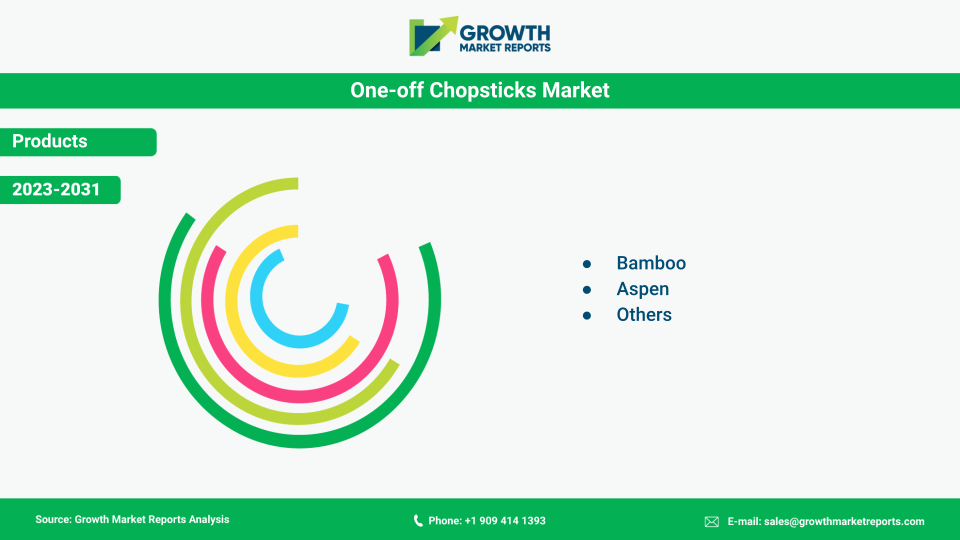
Segments - by Material Type (Wood, Bamboo, Plastic, Metal, Others), by Application (Household, Commercial, Others), by Distribution Channel (Online Stores, Supermarkets/Hypermarkets, Specialty Stores, Others), by End-User (Restaurants, Hotels, Catering Services, Others)
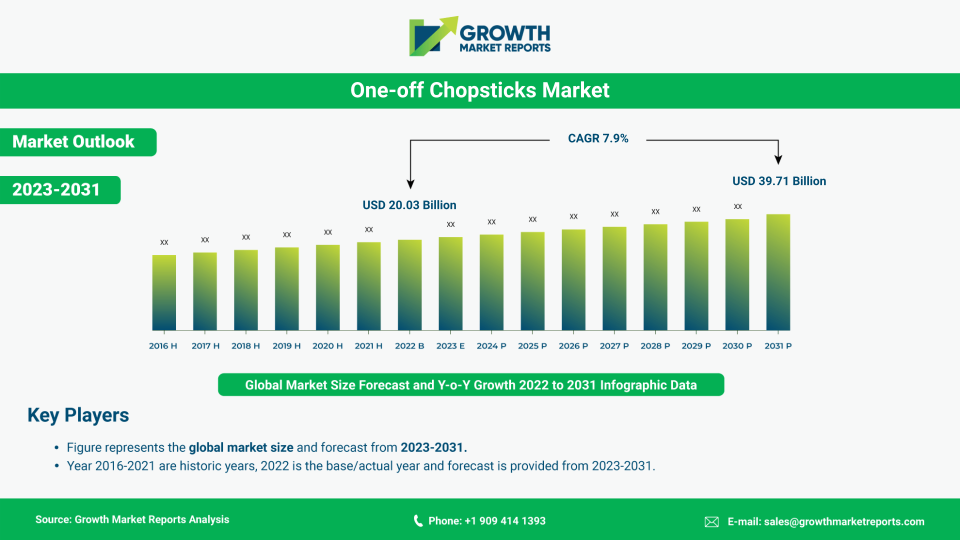
According to our latest research, the global one-off chopsticks market size reached USD 19.4 billion in 2024, with a steady growth rate supported by a CAGR of 5.2% over the forecast period. By 2033, the market is projected to attain a value of USD 30.6 billion. The primary growth driver for the one-off chopsticks market is the increasing demand for convenient and hygienic dining solutions, especially in the foodservice industry and among consumers who prioritize single-use products for on-the-go consumption and food safety. This research highlights the market’s robust expansion, underpinned by shifting consumer preferences, urbanization, and the proliferation of Asian cuisine globally.
The growth of the one-off chopsticks market is significantly influenced by the rising popularity of Asian cuisine worldwide. As globalization bridges culinary cultures, sushi, ramen, dim sum, and other Asian dishes have become staples in restaurants and households across North America, Europe, and other regions. This surge in demand for Asian food directly translates to increased consumption of disposable chopsticks, particularly in commercial settings such as restaurants, catering services, and food trucks. Additionally, the convenience offered by one-off chopsticks appeals to consumers seeking quick meal solutions, further fueling market expansion. The trend is amplified by the growing number of quick-service restaurants and takeout services, which rely heavily on disposable utensils to meet hygiene standards and customer expectations.
Another critical growth factor is the heightened awareness of hygiene and food safety, especially in the wake of global health concerns such as the COVID-19 pandemic. Disposable chopsticks provide a sanitary alternative to reusable utensils, reducing the risk of cross-contamination in both household and commercial applications. This shift in consumer mindset has prompted foodservice providers to prioritize single-use products, bolstering demand for one-off chopsticks. Furthermore, the market benefits from ongoing innovations in materials and manufacturing processes, with manufacturers introducing eco-friendly options such as bamboo and biodegradable plastics to address environmental concerns while maintaining product functionality and cost-effectiveness.
Urbanization and the fast-paced lifestyle prevalent in major cities have also contributed to the growth of the one-off chopsticks market. As more people migrate to urban areas, the demand for convenient, ready-to-eat meals increases, driving the need for disposable utensils. The proliferation of online food delivery platforms and the expanding network of supermarkets and hypermarkets have made one-off chopsticks more accessible to a broader consumer base. These distribution channels not only enhance product availability but also offer a wide range of choices in terms of material, packaging, and price, catering to diverse consumer preferences and budgets.
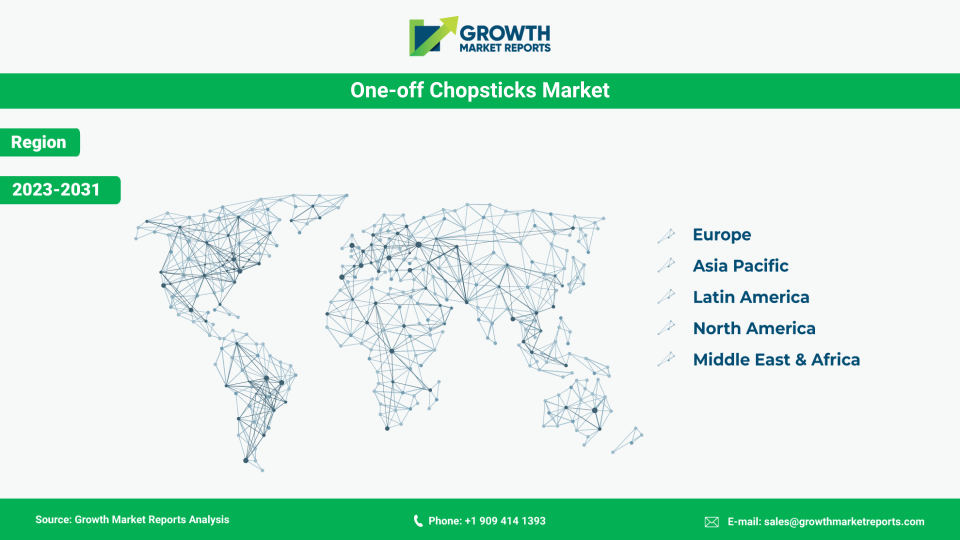
From a regional perspective, the Asia Pacific region continues to dominate the global one-off chopsticks market, accounting for the largest share due to its cultural affinity for chopstick use and the sheer volume of foodservice establishments. However, North America and Europe are emerging as high-growth markets, driven by the increasing adoption of Asian cuisine and the rising emphasis on convenience and hygiene. The Middle East & Africa and Latin America are also witnessing gradual market penetration, supported by expanding foodservice sectors and changing consumer lifestyles. The regional outlook underscores the market’s global reach and the diverse factors influencing its trajectory across different geographies.
The one-off chopsticks market is segmented by material type into wood, bamboo, plastic, metal, and others. Wooden chopsticks remain the most widely used material, especially in traditional markets such as China and Japan. Wood offers an ideal balance of cost, strength, and ease of manufacturing, making it the preferred choice for high-volume commercial applications. The abundance of raw materials and established supply chains further support the dominance of wooden chopsticks. However, concerns over deforestation and sustainability have prompted some regions to reconsider their reliance on wooden disposable utensils, driving the search for more eco-friendly alternatives.
Bamboo chopsticks have gained considerable traction in recent years, particularly among environmentally conscious consumers and businesses. Bamboo is a rapidly renewable resource, offering a sustainable alternative to wood without compromising on strength or usability. The natural antibacterial properties of bamboo also enhance its appeal for single-use applications, addressing hygiene concerns. Manufacturers have responded to this trend by investing in bamboo plantations and refining production techniques to ensure consistent quality and supply. As a result, bamboo chopsticks are increasingly found in premium restaurants, hotels, and specialty stores that prioritize sustainability.
The use of plastic chopsticks in the one-off segment is primarily driven by cost considerations and the ability to produce utensils in various colors and designs. Plastic chopsticks are lightweight, durable, and suitable for mass production, making them popular in fast-food outlets and events where large quantities are required. However, the environmental impact of single-use plastics has led to regulatory scrutiny and shifting consumer preferences. Many countries have introduced bans or restrictions on disposable plastics, prompting manufacturers to explore biodegradable or compostable alternatives. Despite these challenges, plastic chopsticks continue to hold a significant share in markets where cost and convenience outweigh environmental concerns.
While metal chopsticks are generally associated with reusable utensils, there is a niche market for disposable metal chopsticks in high-end catering and luxury events. These products cater to customers seeking a unique dining experience or enhanced aesthetics. Metal chopsticks offer superior strength and a premium feel but are less common due to higher production costs and environmental considerations. The “others” category includes emerging materials such as cornstarch-based bioplastics and recycled paper, reflecting ongoing innovation in the market. These alternatives are gaining attention as manufacturers and consumers alike seek to minimize the ecological footprint of disposable utensils.
Overall, the material type segment of the one-off chopsticks market is characterized by a dynamic interplay between cost, functionality, and sustainability. The shift towards eco-friendly materials, particularly bamboo and biodegradable plastics, is expected to accelerate as regulatory pressures mount and consumers become more environmentally conscious. Manufacturers that can balance product performance with sustainability will be well-positioned to capture market share in the evolving landscape of single-use chopsticks.
| Attributes | Details |
| Report Title | One-off Chopsticks Market Research Report 2033 |
| By Material Type | Wood, Bamboo, Plastic, Metal, Others |
| By Application | Household, Commercial, Others |
| By Distribution Channel | Online Stores, Supermarkets/Hypermarkets, Specialty Stores, Others |
| By End-User | Restaurants, Hotels, Catering Services, Others |
| Regions Covered | North America, Europe, APAC, Latin America, MEA |
| Base Year | 2024 |
| Historic Data | 2018-2023 |
| Forecast Period | 2025-2033 |
| Number of Pages | 263 |
| Number of Tables & Figures | 303 |
| Customization Available | Yes, the report can be customized as per your need. |
The application segment of the one-off chopsticks market is divided into household, commercial, and others. Commercial applications dominate the market, accounting for the majority of demand due to the extensive use of disposable chopsticks in restaurants, hotels, catering services, and street food vendors. The fast-paced nature of commercial foodservice operations necessitates the use of single-use utensils to ensure hygiene, minimize labor costs, and streamline operations. As the foodservice industry continues to expand globally, particularly in emerging markets, the demand for one-off chopsticks in commercial settings is expected to remain robust.
In the household segment, disposable chopsticks are gaining popularity among consumers seeking convenience and hygiene for home dining, parties, and gatherings. The rise of online food delivery and takeout services has contributed to this trend, as meals are often accompanied by single-use utensils for customer convenience. Additionally, household use is supported by the growing availability of one-off chopsticks in supermarkets and online stores, enabling consumers to purchase them in bulk for everyday use or special occasions. While the household segment is smaller compared to commercial applications, it represents a significant growth opportunity as lifestyles become busier and urbanization accelerates.
The “others” application category encompasses a range of niche uses, including disposable chopsticks for travel, outdoor activities, and institutional settings such as hospitals and schools. In these environments, the emphasis on hygiene and convenience drives the adoption of single-use utensils. For example, hospitals often prefer disposable chopsticks to minimize the risk of cross-contamination among patients, while schools and canteens use them to simplify meal service logistics. The versatility of one-off chopsticks makes them suitable for a wide array of applications beyond traditional dining, further expanding their market potential.
The application segment is also influenced by cultural and regional factors. In countries where chopsticks are an integral part of the dining experience, such as China, Japan, and Korea, commercial and household demand is particularly strong. Conversely, in Western markets, the adoption of disposable chopsticks is closely linked to the popularity of Asian cuisine and the growth of food delivery services. This cultural variability underscores the importance of targeted marketing and product customization to meet the unique needs of different application segments.
Looking ahead, the application segment is expected to witness continued growth, driven by the expansion of the foodservice industry, the rise of convenience-oriented lifestyles, and the increasing awareness of hygiene. Manufacturers and distributors that can effectively address the specific requirements of commercial, household, and niche applications will be well-positioned to capitalize on emerging opportunities in the one-off chopsticks market.
The distribution channel segment of the one-off chopsticks market includes online stores, supermarkets/hypermarkets, specialty stores, and others. Supermarkets and hypermarkets remain the leading distribution channels, offering consumers the convenience of purchasing disposable chopsticks alongside other household and grocery items. These retail outlets provide a wide selection of brands, materials, and price points, making it easy for consumers to find products that meet their specific needs. The strong presence of supermarkets and hypermarkets in urban and suburban areas ensures broad market coverage and accessibility.
Online stores have emerged as a rapidly growing distribution channel, fueled by the global shift towards e-commerce and digital shopping. The convenience of online purchasing, coupled with the ability to compare prices and read product reviews, has made e-commerce platforms increasingly popular among both individual consumers and bulk buyers such as restaurants and catering services. Online stores also enable manufacturers to reach a wider audience, including customers in remote or underserved regions. The COVID-19 pandemic further accelerated the adoption of online shopping, solidifying its role as a key distribution channel in the one-off chopsticks market.
Specialty stores, including kitchenware shops and Asian grocery stores, cater to niche markets and customers seeking premium or unique disposable chopsticks. These outlets often offer a curated selection of products, including eco-friendly options, designer chopsticks, and items tailored to specific culinary traditions. Specialty stores play a crucial role in educating consumers about the benefits of different materials and designs, helping to drive demand for higher-value products. While their market share is smaller compared to supermarkets and online stores, specialty retailers contribute to product differentiation and brand building.
The “others” category encompasses alternative distribution channels such as convenience stores, wholesalers, and direct sales to institutional buyers. These channels are particularly important in regions with fragmented retail networks or where bulk purchasing is common. For example, wholesalers supply large quantities of disposable chopsticks to restaurants, hotels, and catering companies, often at discounted prices. Direct sales to institutional buyers enable manufacturers to establish long-term relationships with key customers, ensuring steady demand and repeat business.
Overall, the distribution channel segment is characterized by a blend of traditional and modern retail formats, each catering to different customer segments and purchasing behaviors. The continued growth of e-commerce, combined with the enduring popularity of supermarkets and specialty stores, will shape the future of product distribution in the one-off chopsticks market. Companies that can effectively leverage multiple channels and adapt to changing consumer preferences will be best positioned for success in this competitive landscape.
The end-user segment of the one-off chopsticks market is categorized into restaurants, hotels, catering services, and others. Restaurants represent the largest end-user group, accounting for a substantial share of total demand. The fast turnover of customers in restaurants, especially those specializing in Asian cuisine, necessitates the use of disposable chopsticks to maintain hygiene and operational efficiency. As the number of restaurants continues to grow globally, particularly in urban centers and tourist destinations, the demand for one-off chopsticks is expected to remain strong. Restaurants also drive innovation in product design and packaging, as they seek to enhance the dining experience and reinforce brand identity.
Hotels constitute another significant end-user segment, particularly in regions with a vibrant hospitality industry and a high influx of international tourists. Hotels often provide disposable chopsticks as part of in-room dining services, banquets, and events. The emphasis on hygiene and convenience, coupled with the need to cater to diverse culinary preferences, makes one-off chopsticks an essential item in hotel operations. Premium hotels may opt for higher-quality materials such as bamboo or designer chopsticks to align with their brand image and sustainability goals.
Catering services are a key driver of demand for disposable chopsticks, particularly in the context of corporate events, weddings, festivals, and large-scale gatherings. The logistical challenges associated with serving large numbers of guests make single-use utensils a practical solution for catering companies. Disposable chopsticks help streamline meal service, minimize cleanup, and ensure consistent hygiene standards. As the catering industry continues to expand, fueled by rising disposable incomes and a growing preference for professionally organized events, the demand for one-off chopsticks from this end-user segment is poised for steady growth.
The “others” category includes a diverse range of end-users such as food trucks, street vendors, institutional cafeterias, and educational facilities. These segments often operate in environments where convenience and cost-effectiveness are paramount, making disposable chopsticks an attractive option. For example, food trucks and street vendors rely on single-use utensils to serve customers quickly and efficiently, while institutional cafeterias prioritize hygiene and ease of distribution. The versatility of one-off chopsticks enables them to meet the unique requirements of various end-users, further expanding their market reach.
In summary, the end-user segment of the one-off chopsticks market is shaped by the interplay of hygiene, convenience, and operational efficiency. The continued expansion of the restaurant, hotel, and catering industries, combined with the growing popularity of food delivery and takeout services, will drive sustained demand for disposable chopsticks across diverse end-user groups. Manufacturers and suppliers that can tailor their products to the specific needs of different end-users will be well-positioned to capture market share and foster long-term customer loyalty.
The one-off chopsticks market presents a range of opportunities for manufacturers, distributors, and investors. One of the most significant opportunities lies in the development and commercialization of eco-friendly disposable chopsticks. As consumers and regulatory bodies increasingly prioritize sustainability, there is growing demand for products made from renewable, biodegradable, or compostable materials such as bamboo, cornstarch-based bioplastics, and recycled paper. Companies that can innovate in this space and offer environmentally responsible alternatives will not only capture a larger share of the market but also enhance their brand reputation and comply with evolving regulations. Additionally, the expansion of e-commerce and digital marketing provides new avenues for reaching customers, building brand awareness, and driving sales growth.
Another key opportunity is the rising internationalization of Asian cuisine, which continues to fuel demand for one-off chopsticks in non-traditional markets. The proliferation of Asian restaurants, fusion cuisine, and food delivery services in North America, Europe, and the Middle East presents significant growth potential for manufacturers willing to tailor their products to local tastes and preferences. Strategic partnerships with restaurant chains, hotels, and catering companies can help secure long-term contracts and ensure steady demand. Moreover, investments in product differentiation, such as customized packaging, designer chopsticks, and value-added features, can help companies stand out in a crowded market and appeal to premium segments.
Despite these opportunities, the one-off chopsticks market faces notable restraints, the most prominent of which is the growing scrutiny of single-use plastics and disposable products. Environmental concerns have led to stricter regulations, bans, and consumer pushback against disposable utensils, particularly those made from non-biodegradable materials. Manufacturers must adapt by investing in sustainable alternatives and ensuring compliance with local and international environmental standards. Additionally, fluctuations in raw material prices, supply chain disruptions, and competition from reusable utensils pose ongoing challenges. Companies that fail to innovate or address environmental concerns risk losing market share and facing reputational damage in an increasingly eco-conscious marketplace.
The Asia Pacific region dominates the global one-off chopsticks market, accounting for approximately 70% of total sales in 2024, equivalent to a market value of USD 13.6 billion. This dominance is largely attributed to the cultural ubiquity of chopstick use in countries such as China, Japan, South Korea, and Vietnam, as well as the region’s large population and thriving foodservice industry. The rapid urbanization and expansion of quick-service restaurants further bolster demand for disposable chopsticks. China remains the largest individual market, both as a producer and consumer, while Japan and South Korea contribute significantly due to their high per capita consumption and emphasis on product quality.
North America represents the second-largest regional market, with a market size of USD 2.8 billion in 2024 and a projected CAGR of 6.1% through 2033. The region’s growth is driven by the rising popularity of Asian cuisine, the proliferation of sushi bars and Asian-themed restaurants, and the increasing adoption of convenient, single-use dining solutions. The United States leads the North American market, supported by a robust foodservice sector and a strong culture of takeout and food delivery. Regulatory pressures regarding plastic waste and sustainability are influencing product innovation, with growing demand for bamboo and biodegradable chopsticks.
Europe and the Middle East & Africa collectively account for approximately USD 2.1 billion in market value, with Europe showing steady growth due to the widespread acceptance of Asian cuisine and the presence of multicultural urban centers. The Middle East & Africa is an emerging market, with increasing demand stemming from the hospitality sector and the popularity of international cuisine. Latin America, with a market size of USD 900 million, is gradually embracing disposable chopsticks, particularly in countries with vibrant tourism industries and expanding foodservice sectors. While these regions represent smaller shares of the global market, they offer significant growth potential as consumer preferences evolve and the adoption of Asian culinary traditions spreads.
The competitive landscape of the one-off chopsticks market is characterized by a mix of large multinational corporations, regional players, and specialized manufacturers. The market is moderately fragmented, with leading companies leveraging economies of scale, extensive distribution networks, and strong brand recognition to maintain their competitive edge. Intense competition has prompted manufacturers to focus on product innovation, sustainability, and customization to differentiate their offerings and capture market share. Strategic partnerships, mergers and acquisitions, and investments in research and development are common strategies employed by key players to expand their global footprint and enhance their product portfolios.
Sustainability has emerged as a critical battleground in the competitive landscape, with companies racing to develop eco-friendly and biodegradable disposable chopsticks. Firms that can demonstrate a commitment to environmental responsibility and regulatory compliance are increasingly favored by both consumers and corporate clients. Additionally, the ability to offer customized solutions, such as branded or designer chopsticks, has become a key differentiator, particularly in the premium and hospitality segments. Companies are also investing in advanced manufacturing technologies to improve efficiency, reduce costs, and ensure consistent product quality.
The rise of e-commerce and digital marketing has transformed the way companies engage with customers and distribute their products. Manufacturers are leveraging online platforms to reach new markets, gather customer feedback, and build brand loyalty. The ability to adapt quickly to changing consumer preferences and market trends is crucial for sustained success in this dynamic industry. Companies that can effectively balance cost, quality, and sustainability will be best positioned to thrive in the evolving one-off chopsticks market.
Major companies operating in the global one-off chopsticks market include Nanchang Sanyou Industrial Co., Ltd., Dom Agri Products, Pacific East Company, Ngoc Chau Enterprise Pte Ltd., and Besta Bamboo Machine Co., Ltd. Nanchang Sanyou Industrial is a leading producer of disposable bamboo and wooden chopsticks, with a strong presence in both domestic and export markets. Dom Agri Products specializes in eco-friendly chopsticks made from sustainable materials, catering to environmentally conscious consumers and businesses. Pacific East Company is known for its wide range of disposable chopsticks and related foodservice products, serving clients across North America and Europe. Ngoc Chau Enterprise focuses on high-quality bamboo chopsticks, leveraging advanced manufacturing processes to ensure product consistency and reliability. Besta Bamboo Machine Co., Ltd. is a key supplier of bamboo processing equipment, enabling other manufacturers to scale their production of disposable chopsticks efficiently.
These leading companies are continuously investing in product development, supply chain optimization, and market expansion to stay ahead of the competition. Their ability to anticipate and respond to emerging trends, such as the shift towards sustainability and the rise of digital commerce, will be instrumental in shaping the future of the one-off chopsticks market. As the industry continues to evolve, collaboration between manufacturers, distributors, and end-users will be essential to drive innovation, enhance product value, and meet the growing demands of a global customer base.
The One-off Chopsticks market has been segmented on the basis of
Key players competing in the global one-off chopsticks market are Ngoc Chau Enterprise Pte; Nanchang Sanyou Industrial Co., Ltd; and Pacific East Company. The presence of highly unorganized local manufactures especially in Asia is likely to boost the market competition between the existing players and local vendors.
However, a few key players are able to grasp a sizeable market share presently and the competition is anticipated to become intense in the near future.
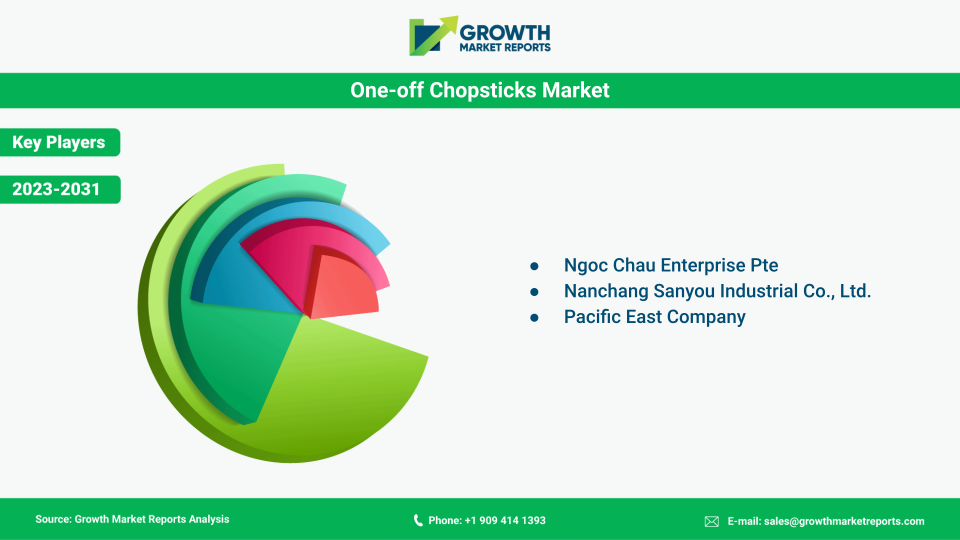
Key players include Nanchang Sanyou Industrial Co., Ltd., Ngoc Chau Enterprise Pte Ltd., Dom Agri Products, Pacific East Company, and Besta Bamboo Machine Co., Ltd., among others.
Major trends include the shift towards eco-friendly and biodegradable materials, the rise of e-commerce, product customization, and the internationalization of Asian cuisine.
They are sold through supermarkets/hypermarkets, online stores, specialty shops, convenience stores, wholesalers, and direct sales to institutional buyers.
Disposable chopsticks are primarily used in commercial settings such as restaurants, hotels, and catering services, with growing household and niche uses in travel, hospitals, and schools.
The Asia Pacific region leads the market, accounting for about 70% of global sales, followed by North America and Europe, with emerging growth in Latin America and the Middle East & Africa.
Bamboo chopsticks are favored for their sustainability, rapid renewability, natural antibacterial properties, and growing consumer preference for eco-friendly products.
Common materials include wood, bamboo, plastic, metal, and emerging eco-friendly options such as cornstarch-based bioplastics and recycled paper.
Key growth drivers include rising demand for convenient and hygienic dining solutions, the global popularity of Asian cuisine, urbanization, and the expansion of foodservice and delivery sectors.
The market is expected to grow at a CAGR of 5.2% from 2025 to 2033, reaching USD 30.6 billion by 2033.
As of 2024, the global one-off chopsticks market reached a value of USD 19.4 billion.