Segments - by Product Type (Silica Aerogel, Polymer Aerogel, Carbon Aerogel, Others), by Form (Blanket, Particle, Panel, Monolith, Others), by Application (Oil & Gas, Construction, Transportation, Aerospace & Defense, Healthcare, Others), by Processing (Virgin Aerogel, Composites, Additives)
This report is updated with the latest market data and insights as of June 2026. Base year: 2025 | Forecast period: 2026-2034
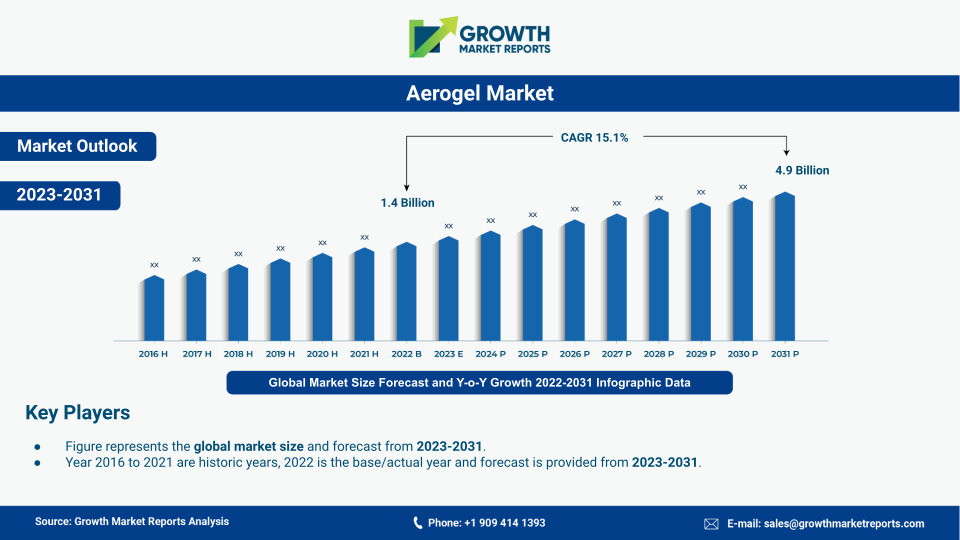
According to our latest research, the global aerogel market size in 2025 stands at USD 1.52 billion, reflecting robust growth in advanced material adoption across various industries. The market is poised to expand at a CAGR of 11.7% from 2026 to 2034, driven by increasing demand for lightweight and highly efficient insulation materials. By the end of 2034, the aerogel market is forecasted to reach USD 4.14 billion. This growth trajectory is underpinned by rising investments in energy-efficient solutions and the proliferation of aerogel applications in sectors such as oil and gas, construction, and transportation.
One of the primary growth factors for the aerogel market is its unmatched thermal insulation properties, making it an ideal material in industries where energy efficiency and lightweight characteristics are paramount. Aerogels, especially silica-based variants, possess extremely low thermal conductivity, enabling significant energy savings in building insulation, industrial pipelines, and refrigeration. The increasing global emphasis on sustainability and carbon footprint reduction is accelerating the adoption of aerogel-based products. Stringent energy codes and green building standards across North America, Europe, and Asia Pacific are propelling the demand for advanced insulation materials, further fueling the aerogel market's expansion.
Another significant driver is the technological advancement in aerogel manufacturing and processing techniques. Innovations in composite aerogels and the emergence of polymer and carbon aerogels have diversified the application landscape, allowing for tailored solutions that meet specific industry requirements. For instance, polymer aerogels are gaining traction in aerospace and automotive sectors due to their flexibility and mechanical strength, while carbon aerogels are being explored for energy storage and environmental remediation. The scalability of production processes and the reduction in manufacturing costs are making aerogels more accessible, thereby broadening their commercial viability across new end markets. Emerging materials such as graphene-enhanced aerogel composites are also attracting significant R&D investment, promising step-change improvements in both thermal and electrical performance.
The growing focus on lightweight materials in transportation and aerospace sectors is also a crucial factor contributing to the aerogel market's growth. As regulatory bodies impose stricter emission standards and fuel efficiency targets, manufacturers are increasingly integrating aerogels into vehicles, aircraft, and spacecraft to achieve weight reduction without compromising safety or performance. The oil and gas industry's need for advanced pipeline and subsea insulation for deepwater operations and LNG storage further amplifies demand for aerogel blankets and panels. These multifaceted growth drivers collectively underscore the aerogel market's strong outlook over the coming decade.
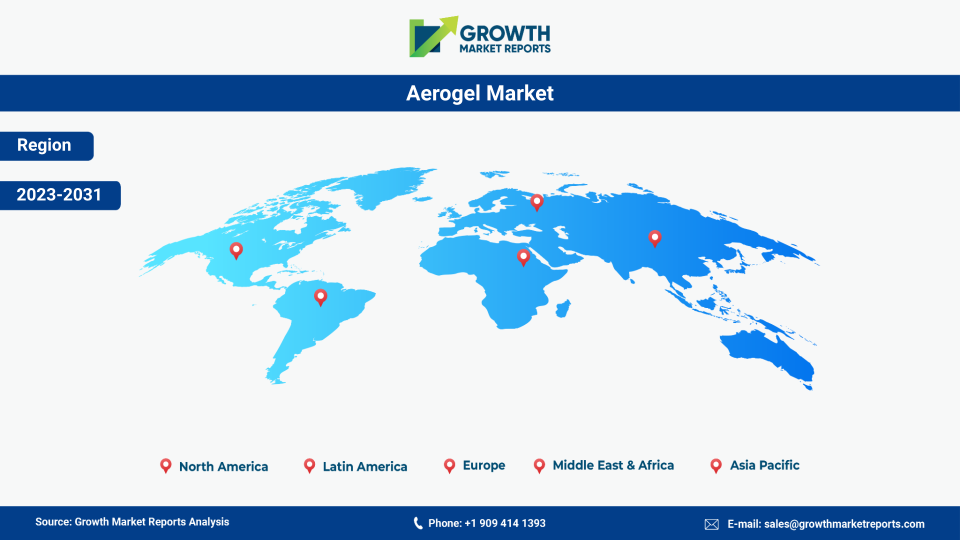
Regionally, Asia Pacific is emerging as the fastest-growing market for aerogels, supported by rapid industrialization, urbanization, and infrastructure development. Countries such as China, Japan, and South Korea are investing heavily in energy-efficient construction and transportation projects, creating substantial opportunities for aerogel manufacturers. North America continues to lead in technological innovation and adoption, particularly in the oil and gas and aerospace sectors. Meanwhile, Europe's stringent energy regulations and sustainability initiatives are fostering significant demand for aerogel-based insulation solutions. The Middle East & Africa and Latin America are also witnessing steady growth, albeit from a smaller base, as awareness and investments in advanced materials increase.
Aluminum oxide aerogel, a relatively new entrant in the aerogel market, is gaining attention for its unique properties and potential applications. Known for its excellent thermal stability and mechanical strength, this material is being explored for use in high-temperature insulation and catalyst support. Its ability to withstand extreme conditions makes it an attractive option for industries such as aerospace and chemical processing. As research into this material progresses, it may offer a viable alternative to traditional aerogels, particularly in applications where enhanced durability and performance are required. The development of alumina-based aerogels highlights the ongoing innovation within the sector, as manufacturers seek to expand the range of materials available to meet diverse industrial needs.
The aerogel market, segmented by product type, comprises silica aerogel, polymer aerogel, carbon aerogel, and others. Silica aerogel remains the most widely used type, accounting for more than 61% of the total market share in 2025. Its dominance is attributed to its superior thermal insulation, low density, and chemical stability, making it the material of choice for building insulation, oil and gas pipelines, and industrial applications. The widespread commercial availability and continuous R&D in silica aerogel composites are further consolidating its market position, with manufacturers focusing on enhancing mechanical strength and flexibility to expand utility across new sectors. Specialty formats such as the silica-based aerogel panel are gaining momentum in construction and transportation, offering rigidity and ease of installation alongside exceptional thermal performance.
Polymer aerogels are gaining significant momentum, particularly in industries where flexibility, mechanical robustness, and low thermal conductivity are required. These aerogels are increasingly being adopted in aerospace, automotive, and electronics applications where traditional silica aerogels may fall short due to brittleness. The development of high-performance polymer aerogels, such as polyimide and polyurethane-based variants, is opening new avenues for lightweight insulation and impact protection. The ongoing innovation in polymer chemistry and nanotechnology is expected to drive the segment's growth at a CAGR exceeding 13% through 2034.
Carbon aerogels represent a niche but rapidly expanding segment within the aerogel market. Known for their exceptional electrical conductivity and surface area, carbon aerogels are finding increasing use in energy storage devices such as supercapacitors and batteries, as well as in environmental applications like water purification and air filtration. The unique properties of carbon aerogels, including their ability to adsorb pollutants and facilitate rapid charge-discharge cycles, are attracting significant interest from research institutions and commercial enterprises alike. Related innovations, including carbon nanotube aerogel structures, are pushing the performance envelope further in both energy and filtration applications. As production scalability improves and costs decline, adoption of carbon aerogels is expected to accelerate, particularly in the renewable energy and environmental sectors.
The "others" category includes inorganic aerogels such as alumina and metal oxide aerogels, which are primarily used in specialized applications like catalysis, sensors, and fire protection. Although these types currently occupy a smaller share of the market, ongoing research into their unique properties and potential industrial uses could unlock new growth opportunities. As the demand for advanced materials with tailored functionalities increases, the product type segmentation in the aerogel market is likely to become even more diverse, supporting the overall expansion of the industry.
| Attributes | Details |
| Report Title | Aerogel Market Research Report 2034 |
| By Product Type | Silica Aerogel, Polymer Aerogel, Carbon Aerogel, Others |
| By Form | Blanket, Particle, Panel, Monolith, Others |
| By Application | Oil & Gas, Construction, Transportation, Aerospace & Defense, Healthcare, Others |
| By Processing | Virgin Aerogel, Composites, Additives |
| Regions Covered | North America, Europe, APAC, Latin America, MEA |
| Base Year | 2025 |
| Historic Data | 2019-2024 |
| Forecast Period | 2026-2034 |
| Number of Pages | 279 |
| Number of Tables & Figures | 321 |
| Customization Available | Yes, the report can be customized as per your need. |
The aerogel market is also segmented by form, including blanket, particle, panel, monolith, and others. Blanket aerogels are the most prevalent form, capturing approximately 45% of the market in 2025. Their flexible, rollable nature and ease of installation make them highly sought after for insulation in oil and gas pipelines, building envelopes, and industrial equipment. Blanket aerogels offer a unique combination of thermal performance and mechanical durability, enabling retrofitting in existing infrastructure and new construction alike. Manufacturers are continually enhancing blanket aerogel formulations to improve hydrophobicity, durability, and fire resistance, further expanding their market potential.
Particle aerogels are primarily used as additives in coatings, paints, and composites to impart thermal insulation, lightweight properties, and flame retardancy. Their fine, powdery consistency allows for easy integration into various matrices, making them suitable for applications in automotive, aerospace, and consumer electronics. The growing trend towards multifunctional materials is fueling demand for particle aerogels, as manufacturers seek to enhance product performance while minimizing weight and energy consumption. Ongoing research into nano-engineered aerogel particles, including developments in high-temperature aerogel powder formulations, is expected to yield new functionalities such as improved moisture resistance and antimicrobial properties.
Panel aerogels are gaining traction in the construction and transportation sectors, where rigid, pre-formed insulation solutions are required. Aerogel panels offer superior thermal and acoustic insulation, making them ideal for use in building facades, curtain walls, and vehicle interiors. The ability to customize panel size and thickness according to project specifications is driving their adoption in both commercial and residential construction. As building codes become more stringent and energy efficiency targets rise, the demand for high-performance insulation panels incorporating aerogel technology is expected to increase significantly through 2034.
Monolith aerogels, characterized by their solid, bulk form, are utilized in specialized applications such as scientific instrumentation, aerospace, and defense. Monoliths offer exceptional structural integrity and can be engineered for specific thermal, optical, or mechanical properties. While their production is more complex and costly compared to other forms, advances in molding and drying techniques are making monolith aerogels more accessible for commercial use. The "others" segment includes aerogel films, sheets, and custom-shaped components, catering to niche markets with unique performance requirements.
The application landscape of the aerogel market is extensive, with key sectors including oil and gas, construction, transportation, aerospace and defense, healthcare, and others. The oil and gas segment remains the largest application area, accounting for over 30% of the total market in 2025. Aerogel blankets and panels are widely used for pipeline insulation, LNG storage, and subsea applications, where their superior thermal performance and resistance to harsh environments are critical. The growing focus on operational efficiency and safety in the oil and gas industry is driving continuous investment in advanced aerogel solutions.
The construction sector is witnessing rapid growth in aerogel adoption, driven by the need for energy-efficient building materials that comply with stringent environmental regulations. Aerogel-based insulation products are increasingly being specified for use in walls, roofs, windows, and facades, where they deliver significant energy savings and enhance occupant comfort. The trend towards green building certifications and sustainable construction practices is expected to propel the demand for aerogels in both new builds and retrofitting projects. Architects and builders are leveraging aerogel's unique properties to achieve ultra-thin insulation profiles without sacrificing performance.
In the transportation industry, aerogels are being integrated into automotive, rail, marine, and aerospace vehicles to achieve weight reduction, improve fuel efficiency, and enhance thermal management. Lightweight aerogel composites are used for thermal and acoustic insulation in vehicle cabins, engine compartments, and battery enclosures in electric vehicles. The accelerating electrification of transport systems is further expanding the scope of aerogel applications, as manufacturers seek to optimize energy consumption, battery safety, and passenger comfort. The aerospace and defense sectors are leveraging aerogels for spacecraft insulation, missile guidance systems, and protective gear, benefiting from their low density and high-performance characteristics.
The healthcare sector represents a growing application area for aerogels, particularly in wound care, medical devices, and pharmaceutical packaging. Aerogels' biocompatibility, high porosity, and moisture management capabilities make them suitable for advanced dressings and drug delivery systems. Researchers are exploring the use of aerogel-based scaffolds for tissue engineering and regenerative medicine, highlighting the material's potential to revolutionize medical applications. The "others" category includes electronics, environmental remediation, and sports equipment, where aerogels are valued for their insulation, lightweight, and protective properties.
Processing methods play a pivotal role in determining the performance characteristics and cost-effectiveness of aerogel products. The aerogel market is segmented into virgin aerogel, composites, and additives. Virgin aerogels refer to pure aerogel materials, typically used in high-performance applications where maximum insulation and low density are required. These products are favored in scientific research, aerospace, and critical industrial installations. The challenge with virgin aerogels lies in their brittleness and handling complexity, prompting ongoing R&D to enhance their mechanical properties and scalability.
Composites represent the fastest-growing processing segment, as they combine aerogels with other materials to improve durability, flexibility, and functionality. Composite aerogels are engineered to address the limitations of virgin aerogels, enabling their use in demanding environments such as transportation, construction, and oil and gas. By incorporating reinforcing fibers, polymers, or other additives, manufacturers can tailor composite aerogels for specific applications, balancing performance with cost. The versatility and adaptability of composite processing are expected to drive substantial growth in this segment throughout the 2026-2034 forecast period.
Additives are another important processing category, where aerogel particles or powders are integrated into various matrices to impart thermal insulation, flame retardancy, or lightweight properties. This approach enables manufacturers to enhance the performance of paints, coatings, plastics, and building materials without the need for standalone aerogel products. The additive segment is particularly attractive for industries seeking incremental improvements in product performance while maintaining existing manufacturing processes. As the demand for multifunctional and high-performance materials grows, the use of aerogel additives is set to expand across diverse applications through 2034.
The continuous evolution of aerogel processing technologies is a key enabler for market growth, as it allows for the development of customized solutions that meet the unique requirements of different industries. Innovations in supercritical drying, ambient pressure drying, and freeze-drying are improving yield, reducing costs, and expanding the range of achievable aerogel properties. The interplay between processing methods and end-use applications will remain a critical factor in shaping the future trajectory of the aerogel market.
The aerogel market is brimming with opportunities, particularly as industries worldwide intensify their focus on energy efficiency and sustainability. The construction sector presents a substantial growth avenue as governments and regulatory bodies mandate stricter building codes and energy standards. Aerogels' ability to deliver superior insulation in ultra-thin profiles enables architects and builders to meet these requirements while maximizing usable space. Additionally, the increasing adoption of aerogels in electric vehicles, batteries, and renewable energy systems is opening new frontiers for market expansion. As research advances, novel aerogel formulations with enhanced mechanical strength, flexibility, and multifunctionality are expected to unlock further applications in healthcare, environmental remediation, and consumer electronics.
Another major opportunity lies in the ongoing reduction of aerogel production costs through process optimization and economies of scale. As manufacturers refine their techniques and scale up operations, the cost barrier that has historically limited aerogel adoption is gradually being dismantled. This trend is particularly significant for emerging markets in Asia Pacific and Latin America, where cost sensitivity is high but the demand for advanced materials is rising. Furthermore, the development of next-generation materials such as ultra-low-density ceramic aerogels is creating entirely new performance tiers that can address applications beyond the reach of conventional silica products. Strategic collaborations between research institutions, industry players, and government agencies are accelerating the commercialization of these technologies, fostering a vibrant ecosystem for innovation and growth.
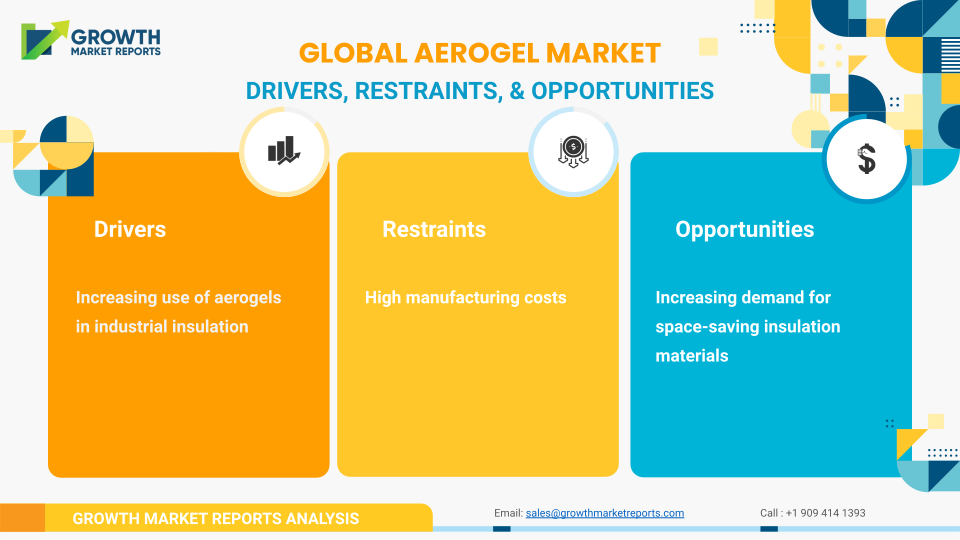
Despite these opportunities, the aerogel market faces certain restraints that could temper its growth trajectory. The primary challenge remains the high production cost compared to conventional insulation materials, which can limit widespread adoption, especially in price-sensitive industries and regions. Furthermore, the brittleness and handling complexity of certain aerogel types, particularly virgin silica aerogels, pose challenges in manufacturing and application. Addressing these issues through material innovation, composite development, and improved processing techniques will be essential for unlocking the full potential of the aerogel market through 2034.
Regionally, Asia Pacific is emerging as the fastest-growing aerogel market, with a projected CAGR of 13.5% from 2026 to 2034. The region accounted for approximately USD 449 million in 2025, and is expected to exceed USD 1.5 billion by 2034. This growth is driven by rapid industrialization, urbanization, and significant investments in infrastructure and energy-efficient technologies. China, Japan, and South Korea are leading the charge, with government policies supporting green construction, sustainable transportation, and advanced manufacturing. The proliferation of local aerogel manufacturers and increased R&D activity are further propelling market expansion in this region.
North America remains a key market for aerogels, valued at USD 494 million in 2025, underpinned by technological innovation and early adoption across major industries such as oil and gas, aerospace, and construction. The United States, in particular, is at the forefront of aerogel research and commercialization, with strong support from both public and private sectors. The region's focus on energy efficiency, coupled with stringent building codes and environmental regulations, is driving continuous demand for advanced insulation materials. As the push for net-zero emissions intensifies, North America is expected to maintain its leadership position in aerogel adoption and innovation through 2034.
Europe is another significant market, accounting for USD 342 million in 2025, with growth fueled by ambitious sustainability targets, energy efficiency mandates, and a thriving construction sector. Countries such as Germany, France, and the United Kingdom are spearheading the integration of aerogel technologies into building retrofits, transportation, and industrial applications. The European Union's focus on circular economy principles and green building certifications is creating favorable conditions for aerogel market growth. Meanwhile, the Middle East & Africa and Latin America are witnessing steady, albeit slower, adoption rates, collectively accounting for approximately USD 236 million in 2025. As awareness of aerogel benefits increases and local production capabilities expand, these regions are expected to contribute more significantly to global market growth over the 2026-2034 period.
The competitive landscape of the aerogel market is characterized by a mix of established global players and innovative startups, all vying to capture a share of this rapidly expanding market. Leading companies are focusing on strategic collaborations, mergers and acquisitions, and continuous R&D investments to strengthen their market positions and broaden their product portfolios. The race to develop cost-effective, high-performance aerogel products is driving intense competition, with firms leveraging proprietary technologies and process innovations to differentiate themselves. Intellectual property protection, process scalability, and the ability to cater to diverse end-use applications are key factors shaping competitive dynamics in the aerogel industry as of 2025.
Market leaders are also prioritizing sustainability and environmental stewardship, developing eco-friendly aerogel formulations and production methods to align with global trends towards greener materials. Companies are investing in advanced manufacturing facilities and automation to enhance efficiency, reduce costs, and meet growing market demand. Strategic partnerships with construction firms, automotive manufacturers, and energy companies are enabling aerogel producers to integrate their solutions into large-scale projects and emerging applications. The emphasis on customer-centric solutions and technical support is further enhancing brand loyalty and market penetration.
Startups and smaller firms are playing a pivotal role in driving innovation within the aerogel market. These companies are often at the forefront of developing novel aerogel compositions, such as bio-based or hybrid aerogels, and pioneering new applications in fields like healthcare, electronics, and environmental remediation. By collaborating with academic and research institutions, these innovators are accelerating the commercialization of next-generation aerogel technologies. The influx of venture capital and government funding is providing the necessary resources for startups to scale operations and compete with established players.
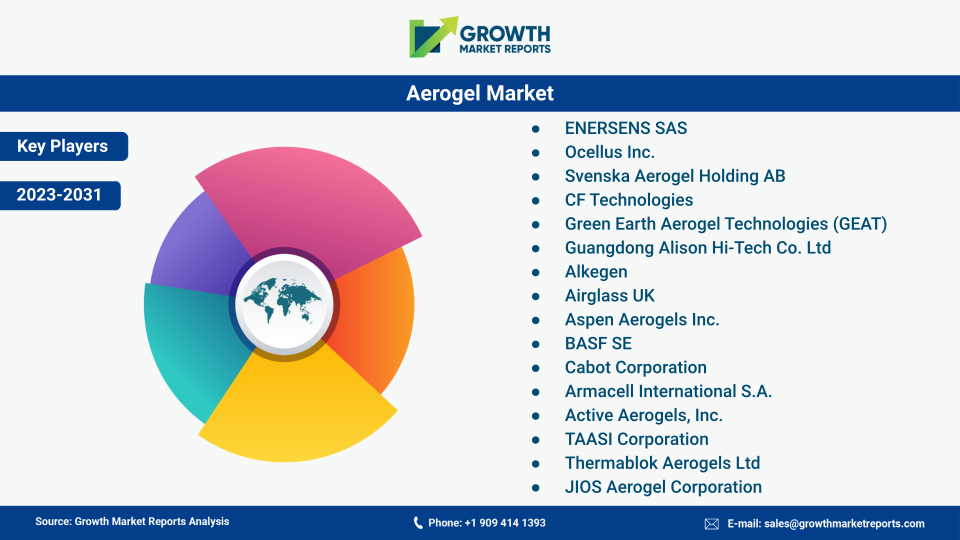
Some of the major companies in the global aerogel market include Aspen Aerogels, Inc., Cabot Corporation, Armacell International S.A., JIOS Aerogel Limited, Enersens SAS, Guangdong Alison Hi-Tech Co., Ltd., and BASF SE. Aspen Aerogels, Inc. is renowned for its advanced insulation solutions, particularly in the oil and gas and construction sectors, leveraging proprietary technology to deliver high-performance products. Cabot Corporation is a leader in silica aerogel manufacturing, with a strong focus on sustainability and innovation. Armacell International S.A. has made significant strides in composite aerogel development, catering to the automotive and transportation industries. JIOS Aerogel Limited and Enersens SAS are notable for their focus on cost-effective production and customized solutions, while Guangdong Alison Hi-Tech Co., Ltd. is expanding its footprint in Asia Pacific with a diverse product portfolio. BASF SE, a global chemical giant, is leveraging its extensive R&D capabilities and global reach to develop and commercialize cutting-edge aerogel technologies for various industrial applications.
These companies are continuously investing in R&D to enhance product performance, reduce costs, and expand the range of aerogel applications. Strategic partnerships, acquisitions, and capacity expansions remain central to their growth strategies, enabling them to stay ahead in a highly competitive market. As the demand for advanced insulation materials continues to rise through 2034, the competitive landscape of the aerogel market is expected to evolve rapidly, with innovation, sustainability, and customer-centricity at the core of future success.
The Aerogel market has been segmented on the basis of
The global aerogel market is projected to expand from USD 1.52 billion in 2025 to approximately USD 4.14 billion by 2034, reflecting a compound annual growth rate of 11.7% over the 2026-2034 forecast period. This trajectory is underpinned by sustained demand across oil and gas, construction, electric vehicles, and aerospace sectors, alongside a continued decline in manufacturing costs, proliferation of composite aerogel solutions, and intensifying regulatory pressure worldwide to adopt energy-efficient materials.
The foremost challenge remains the comparatively high production cost of aerogels relative to conventional insulation materials such as fiberglass or mineral wool, which constrains adoption in highly price-sensitive markets. The inherent brittleness and handling complexity of virgin silica aerogels present manufacturing and installation hurdles. Supply chain constraints for specialty precursors, limited awareness among smaller construction contractors, and the need for standardized test methods and regulatory acceptance in newer application areas also represent meaningful headwinds that market participants must address through continued innovation.
The global aerogel market features a competitive mix of established multinationals and specialized producers. Key players include Aspen Aerogels, Inc., Cabot Corporation, BASF SE, Armacell International S.A., Dow Inc., JIOS Aerogel Limited, Guangdong Alison Hi-Tech Co., Ltd., Enersens SAS, Svenska Aerogel AB, Nano Tech Co., Ltd., Aerogel Technologies LLC, Active Aerogels, Green Earth Aerogel Technologies, Thermablok, Inc., and Xiamen Meiyu New Material Co., Ltd. These companies compete on the basis of technology, cost efficiency, product breadth, and strategic partnerships.
In the construction sector, aerogels are primarily used as high-performance insulation in walls, roofs, window glazing units, and building facades. Their exceptionally low thermal conductivity allows architects to achieve ultra-thin insulation profiles that comply with stringent energy codes without sacrificing interior space. Aerogel blankets and panels are increasingly specified in retrofit projects to improve existing building envelopes, while aerogel-enhanced render and plaster systems are gaining adoption for both residential and commercial applications. Growing green building certification requirements globally are accelerating uptake.
Aerogel products are commercially available in five primary forms. Blankets are the most prevalent, capturing roughly 45% of 2025 market value, and are widely used for pipe and building insulation. Particles or granules serve as additives in coatings, paints, and composite matrices. Panels provide rigid, pre-formed insulation for construction facades and vehicle interiors. Monoliths are solid bulk forms engineered for scientific, aerospace, and defense applications. Additional forms include films, sheets, and custom-shaped components for niche performance requirements.
Asia Pacific is projected to register the fastest regional CAGR of approximately 13.5% between 2026 and 2034. The region held around USD 449 million in 2025 and is forecast to exceed USD 1.5 billion by 2034. China, Japan, and South Korea are leading contributors, fueled by aggressive government investments in green construction, sustainable transportation infrastructure, and a rapidly expanding base of domestic aerogel manufacturers increasing both capacity and innovation.
The aerogel market is broadly categorized into four product types. Silica aerogel dominates with roughly 61% market share in 2025, prized for ultra-low thermal conductivity and chemical stability. Polymer aerogels, including polyimide and polyurethane variants, offer superior flexibility and mechanical strength. Carbon aerogels are valued for exceptional electrical conductivity and large surface area, particularly in energy storage. The "others" category covers alumina, metal oxide, and specialty inorganic aerogels used in catalysis, sensors, and fire protection.
Oil and gas remains the single largest end-use industry, accounting for over 30% of total aerogel demand in 2025, primarily for pipeline insulation, LNG storage, and subsea applications. Construction is the second-largest sector, driven by energy-efficient building regulations worldwide. Transportation and aerospace and defense are also major consumers, leveraging aerogels for weight reduction and thermal management, while healthcare is an emerging growth area for wound care and drug delivery applications.
The principal growth drivers include rising global emphasis on energy efficiency and carbon footprint reduction, stringent building codes and green construction mandates, rapid expansion of electric vehicles and battery thermal management needs, and increasing investment in oil and gas infrastructure requiring advanced insulation. Continuous reductions in aerogel production costs and breakthroughs in composite and polymer aerogel manufacturing are also accelerating adoption across a broader range of sectors through 2034.
According to our latest research, the global aerogel market size in 2025 stands at USD 1.52 billion. The market is forecast to grow at a CAGR of 11.7% from 2026 to 2034, reaching approximately USD 4.14 billion by the end of 2034, driven by surging demand for high-performance insulation and lightweight advanced materials across multiple industries.