Segments - by Product Type (Rigid Aerogel Pipe Supports, Flexible Aerogel Pipe Supports, Composite Aerogel Pipe Supports), by Application (LNG Plants, Petrochemical Industry, Oil & Gas, Chemical Processing, Power Generation, Others), by End-User (Industrial, Commercial, Others), by Distribution Channel (Direct Sales, Distributors, Online Sales, Others)
As per our latest research, the global Aerogel-based Cryogenic Pipe Supports market size reached USD 1.28 billion in 2024, reflecting a robust demand for advanced insulation solutions in cryogenic and low-temperature applications. The market is set to expand at a CAGR of 8.2% from 2025 to 2033, with the forecasted market size expected to touch USD 2.47 billion by 2033. This growth is primarily driven by the increasing adoption of LNG (liquefied natural gas) infrastructure, stringent energy efficiency regulations, and the need for high-performance insulation materials in critical industrial sectors.
The surging demand for LNG and the rapid expansion of petrochemical and oil & gas industries are pivotal growth drivers for the Aerogel-based Cryogenic Pipe Supports market. As energy consumption patterns shift toward cleaner fuels, LNG infrastructure projects have witnessed significant investments, particularly in Asia Pacific and North America. Aerogel-based supports are preferred in these settings due to their superior thermal insulation, ultra-low thermal conductivity, and resistance to extreme temperatures. These properties minimize energy losses and prevent condensation and frost heave, ensuring operational reliability and safety in cryogenic environments. Additionally, the growing prevalence of complex industrial processes requiring precise temperature control is further fueling market growth, as traditional insulation materials are increasingly being replaced by aerogel-based products.
Another critical factor contributing to market expansion is the ongoing innovation in aerogel manufacturing technology. Advances in composite aerogel formulations and fabrication techniques have resulted in products with enhanced mechanical strength, flexibility, and environmental resistance. This has broadened the range of applications for aerogel-based cryogenic pipe supports, making them suitable for not only LNG and petrochemical plants but also for chemical processing, power generation, and emerging sectors such as hydrogen production and carbon capture. Furthermore, the increasing focus on sustainability and lifecycle cost reduction has prompted end-users to invest in durable, high-performance insulation materials, further reinforcing the market's upward trajectory.
Regulatory standards and energy efficiency mandates across developed and developing economies have also played a significant role in shaping the Aerogel-based Cryogenic Pipe Supports market. Governments and industry bodies are enforcing stricter guidelines for thermal insulation and environmental safety, particularly in sectors with high energy consumption and emission footprints. Compliance with these regulations necessitates the adoption of advanced insulation solutions, with aerogel-based supports emerging as a preferred choice due to their proven performance and compliance with international safety and energy standards. As a result, the market is poised for sustained growth, supported by both regulatory frameworks and industry-led initiatives aimed at enhancing operational efficiency and reducing environmental impact.
From a regional perspective, Asia Pacific has emerged as the dominant market, accounting for over 38% of the global revenue in 2024. This leadership is attributed to the region’s aggressive investments in LNG infrastructure, burgeoning industrialization, and favorable government policies supporting energy-efficient technologies. North America follows closely, with significant demand emanating from the United States and Canada, driven by shale gas development and modernization of existing petrochemical facilities. Europe, too, is witnessing steady growth, propelled by the transition to cleaner fuels and stringent environmental regulations. Meanwhile, Latin America and the Middle East & Africa are gradually increasing their market share, buoyed by infrastructural development and rising industrial activity. These regional trends underscore the global nature of the Aerogel-based Cryogenic Pipe Supports market and highlight the diverse growth opportunities across different geographies.
The Aerogel-based Cryogenic Pipe Supports market is segmented by product type into Rigid Aerogel Pipe Supports, Flexible Aerogel Pipe Supports, and Composite Aerogel Pipe Supports. Rigid aerogel pipe supports dominate the market, owing to their exceptional load-bearing capacity and structural integrity, which are critical in heavy-duty industrial applications such as LNG plants and petrochemical facilities. These supports are engineered to withstand high mechanical stresses while maintaining their superior thermal insulation properties, making them an ideal choice for environments where both strength and insulation are paramount. The market for rigid supports continues to expand as end-users increasingly prioritize operational reliability and safety in cryogenic systems.
Flexible aerogel pipe supports, on the other hand, are gaining traction due to their adaptability and ease of installation. These products are particularly well-suited for applications with complex piping geometries or where frequent maintenance is required. The flexibility of these supports allows for efficient accommodation of thermal expansion and contraction, reducing the risk of mechanical failure or insulation gaps. As industrial facilities modernize and demand more versatile insulation solutions, the flexible segment is expected to witness accelerated growth, especially in regions with aging infrastructure and retrofit projects.
Composite aerogel pipe supports represent a significant innovation in the market, combining the best attributes of aerogels with other high-performance materials such as reinforced polymers or metals. These hybrid solutions offer enhanced mechanical strength, improved durability, and tailored insulation performance, addressing the limitations of traditional aerogel products. The adoption of composite supports is particularly notable in applications where both high thermal efficiency and structural robustness are required, such as offshore oil & gas installations and chemical processing plants. The growing emphasis on lifecycle cost optimization and performance reliability is expected to drive further advancements and adoption in this segment.
The competitive landscape within the product type segment is characterized by continuous R&D investments aimed at improving product performance, cost-effectiveness, and environmental sustainability. Leading manufacturers are focusing on developing proprietary aerogel formulations and scalable manufacturing processes to cater to the diverse requirements of end-users. As a result, the market is witnessing a steady influx of new product launches and technological upgrades, further intensifying competition and fostering innovation. The interplay between customer demands, regulatory requirements, and technological advancements is expected to shape the product type landscape over the forecast period.
| Attributes | Details |
| Report Title | Aerogel-based Cryogenic Pipe Supports Market Research Report 2033 |
| By Product Type | Rigid Aerogel Pipe Supports, Flexible Aerogel Pipe Supports, Composite Aerogel Pipe Supports |
| By Application | LNG Plants, Petrochemical Industry, Oil & Gas, Chemical Processing, Power Generation, Others |
| By End-User | Industrial, Commercial, Others |
| By Distribution Channel | Direct Sales, Distributors, Online Sales, Others |
| Regions Covered | North America, Europe, APAC, Latin America, MEA |
| Base Year | 2024 |
| Historic Data | 2018-2023 |
| Forecast Period | 2025-2033 |
| Number of Pages | 266 |
| Number of Tables & Figures | 369 |
| Customization Available | Yes, the report can be customized as per your need. |
In terms of application, the Aerogel-based Cryogenic Pipe Supports market is segmented into LNG Plants, Petrochemical Industry, Oil & Gas, Chemical Processing, Power Generation, and Others. The LNG plants segment holds the largest market share, driven by the exponential growth in global LNG trade and the proliferation of new liquefaction and regasification terminals. Aerogel-based supports are indispensable in these facilities due to their ability to maintain thermal integrity at extremely low temperatures, minimize boil-off losses, and ensure the safe transport of cryogenic fluids. The expansion of LNG infrastructure, particularly in Asia Pacific and North America, continues to be a key growth driver for this application segment.
The petrochemical industry is another major consumer of aerogel-based cryogenic pipe supports, leveraging their superior insulation and mechanical properties to enhance process efficiency and safety. Petrochemical plants often operate under harsh conditions, with exposure to corrosive chemicals and temperature extremes. Aerogel-based supports offer a compelling value proposition by reducing energy consumption, preventing condensation, and extending the service life of piping systems. As the global demand for petrochemicals rises and plants seek to optimize operational costs, the adoption of advanced insulation materials is expected to accelerate.
Oil & gas applications also represent a significant share of the market, particularly in upstream and midstream operations where pipelines and processing equipment are exposed to cryogenic or sub-zero temperatures. Aerogel-based supports are increasingly being deployed in both onshore and offshore projects to mitigate heat transfer, prevent frost heave, and ensure structural stability. The ongoing shift toward more challenging extraction environments, such as deepwater and Arctic regions, is further amplifying the need for high-performance insulation solutions, positioning aerogel-based supports as a preferred choice among industry stakeholders.
Chemical processing and power generation are emerging as promising application segments for aerogel-based cryogenic pipe supports. In chemical plants, precise temperature control is critical for process optimization and product quality, making advanced insulation indispensable. Similarly, in power generation facilities, particularly those utilizing natural gas or renewable energy sources, aerogel-based supports help improve thermal efficiency and reduce operational costs. As these industries continue to evolve and prioritize energy efficiency, the demand for innovative insulation solutions is set to grow, expanding the application landscape for aerogel-based supports.
The end-user segment of the Aerogel-based Cryogenic Pipe Supports market is categorized into Industrial, Commercial, and Others. Industrial end-users constitute the bulk of the market demand, encompassing sectors such as oil & gas, petrochemicals, chemicals, and power generation. These industries require robust and reliable insulation materials to ensure operational safety, energy efficiency, and regulatory compliance. The adoption of aerogel-based supports in industrial settings is driven by their proven performance in extreme environments, ability to reduce maintenance costs, and contribution to overall process optimization. As industrial infrastructure continues to expand and modernize, this segment is expected to maintain its dominant position.
The commercial segment, while smaller in comparison, is exhibiting notable growth, particularly in specialized applications such as cold storage, food processing, and pharmaceutical manufacturing. These sectors are increasingly recognizing the benefits of advanced insulation materials for maintaining precise temperature control, reducing energy consumption, and ensuring product quality. The ongoing trend toward green building practices and energy-efficient infrastructure is also contributing to the rising adoption of aerogel-based supports in commercial projects. As awareness of these benefits grows, the commercial segment is poised for steady expansion over the forecast period.
The 'Others' category includes niche applications in research laboratories, transportation, and emerging industries such as hydrogen production and carbon capture. These sectors, though currently representing a smaller share of the market, offer significant growth potential as technological advancements and regulatory mandates drive the adoption of high-performance insulation solutions. The versatility and adaptability of aerogel-based supports make them well-suited for these specialized environments, where traditional materials may fall short in terms of performance or durability.
Across all end-user segments, the emphasis on lifecycle cost reduction, environmental sustainability, and operational efficiency is shaping procurement decisions and driving the shift toward advanced insulation materials. Manufacturers are responding by offering customized solutions tailored to the unique requirements of different end-users, further enhancing the market's growth prospects. As industries continue to prioritize energy efficiency and sustainability, the demand for aerogel-based cryogenic pipe supports is expected to remain robust across a diverse range of end-user segments.
The distribution channel landscape for Aerogel-based Cryogenic Pipe Supports includes Direct Sales, Distributors, Online Sales, and Others. Direct sales remain the most prominent channel, especially for large-scale industrial projects where customized solutions and technical support are critical. Major manufacturers often establish direct relationships with end-users, offering tailored products, installation services, and after-sales support. This approach ensures product quality, fosters long-term partnerships, and facilitates the integration of aerogel-based supports into complex industrial systems. As a result, direct sales account for a significant share of the market revenue.
Distributors play a vital role in expanding market reach, particularly in regions with fragmented industrial sectors or where local expertise is required. By partnering with established distributors, manufacturers can tap into diverse customer bases, streamline logistics, and provide localized support. Distributors also facilitate market entry for new products, enabling manufacturers to scale their operations and respond quickly to changing market dynamics. The distributor channel is particularly important in emerging markets, where access to technical expertise and reliable supply chains is essential for market penetration.
Online sales are emerging as a promising distribution channel, driven by the digitalization of procurement processes and the growing preference for convenient, transparent, and efficient purchasing options. Online platforms enable end-users to compare products, access technical specifications, and place orders with minimal friction. While online sales currently represent a smaller share of the market, their importance is expected to grow as digital adoption accelerates and manufacturers invest in e-commerce capabilities. This channel is especially attractive for small and medium-sized enterprises (SMEs) and niche applications, where quick turnaround times and flexible ordering processes are valued.
The 'Others' category encompasses specialized channels such as engineering, procurement, and construction (EPC) contractors, system integrators, and value-added resellers. These stakeholders play a crucial role in large-scale infrastructure projects, where integrated solutions and project management expertise are required. By collaborating with EPCs and system integrators, manufacturers can ensure seamless product integration, compliance with project specifications, and timely delivery. The distribution channel landscape is thus characterized by a blend of direct engagement, strategic partnerships, and digital innovation, all aimed at meeting the diverse needs of end-users and maximizing market reach.
The Aerogel-based Cryogenic Pipe Supports market presents a wealth of opportunities for industry participants, driven by the relentless pursuit of energy efficiency and the transition toward cleaner fuels. The expansion of LNG infrastructure, particularly in Asia Pacific and North America, offers significant growth potential, as governments and private players invest in new terminals, pipelines, and storage facilities. The ongoing modernization of petrochemical and chemical processing plants, coupled with the rise of emerging sectors such as hydrogen production and carbon capture, is further broadening the application landscape for aerogel-based supports. Technological advancements in aerogel manufacturing, including the development of composite and flexible products, are unlocking new use cases and addressing historical limitations related to mechanical strength and environmental durability. These trends, combined with favorable regulatory frameworks and increasing awareness of lifecycle cost savings, create a fertile environment for innovation and market expansion.
Another major opportunity lies in the growing emphasis on sustainability and environmental stewardship. As industries seek to minimize their carbon footprint and comply with stringent energy efficiency standards, the demand for high-performance insulation materials is set to rise. Aerogel-based supports, with their ultra-low thermal conductivity and long service life, offer a compelling value proposition for end-users looking to reduce energy consumption, lower emissions, and enhance operational safety. The increasing adoption of green building practices and the integration of advanced insulation solutions into commercial and industrial projects further amplify this opportunity. Manufacturers that prioritize sustainability, invest in R&D, and develop eco-friendly products are well-positioned to capitalize on this trend and capture a larger share of the market.
Despite these opportunities, the market faces certain restraining factors, chief among them being the high initial cost of aerogel-based products compared to traditional insulation materials. While the total cost of ownership often favors aerogel-based supports due to their superior performance and longevity, the upfront investment can be a barrier for cost-sensitive end-users, particularly in price-competitive markets. Additionally, the specialized nature of aerogel manufacturing and the need for skilled installation can limit market penetration in regions with limited technical expertise or infrastructure. Addressing these challenges requires ongoing efforts to reduce production costs, enhance product accessibility, and educate end-users about the long-term benefits of advanced insulation solutions.
The regional analysis of the Aerogel-based Cryogenic Pipe Supports market reveals a dynamic and evolving landscape, with Asia Pacific leading the charge in both market size and growth rate. In 2024, Asia Pacific accounted for USD 487 million of the global market, representing over 38% of total revenue. This dominance is fueled by rapid industrialization, aggressive investments in LNG infrastructure, and supportive government policies promoting energy efficiency. Countries such as China, Japan, South Korea, and India are at the forefront of LNG terminal construction and petrochemical plant expansion, driving robust demand for advanced insulation materials. The region is also witnessing the highest CAGR, projected at 9.1% from 2025 to 2033, underscoring its status as a key growth engine for the global market.
North America is another significant market, with the United States and Canada accounting for the majority of regional demand. In 2024, North America contributed approximately USD 384 million to the global market, buoyed by the shale gas revolution, modernization of petrochemical facilities, and a strong focus on energy efficiency. The region benefits from a mature industrial base, advanced technological capabilities, and a well-established regulatory framework that encourages the adoption of high-performance insulation materials. The ongoing development of LNG export terminals and the retrofitting of existing infrastructure further support market growth in North America, making it a critical player in the global landscape.
Europe follows closely, with a market size of USD 256 million in 2024, driven by the transition to cleaner fuels, stringent environmental regulations, and the modernization of energy infrastructure. The region's commitment to sustainability and energy efficiency is reflected in the widespread adoption of advanced insulation solutions across industrial and commercial sectors. While Latin America and the Middle East & Africa currently represent smaller shares of the global market, they are poised for steady growth as investments in industrial infrastructure and energy projects gain momentum. Together, these regional trends highlight the global reach and diverse growth opportunities within the Aerogel-based Cryogenic Pipe Supports market.
The competitive landscape of the Aerogel-based Cryogenic Pipe Supports market is characterized by the presence of several leading players, each striving to enhance their market position through product innovation, strategic partnerships, and geographic expansion. The market is moderately consolidated, with a mix of multinational corporations and specialized insulation manufacturers competing for market share. Companies are investing heavily in research and development to improve the performance, durability, and cost-effectiveness of their products, while also focusing on sustainability and compliance with evolving regulatory standards. The ability to offer customized solutions, technical support, and comprehensive service packages is increasingly becoming a key differentiator in the market.
Strategic collaborations and partnerships are common, as manufacturers seek to leverage complementary strengths and expand their reach into new markets. For instance, partnerships with EPC contractors, system integrators, and distributors enable companies to tap into large-scale infrastructure projects and provide end-to-end solutions to customers. Mergers and acquisitions are also shaping the competitive landscape, with companies seeking to consolidate their market presence, gain access to new technologies, and diversify their product portfolios. The emphasis on digitalization and e-commerce is further transforming the way companies engage with customers and deliver value-added services.
Innovation remains at the heart of the competitive strategy, with leading players continuously developing new product formulations, composite materials, and advanced manufacturing processes. The focus is on enhancing the mechanical strength, flexibility, and environmental resistance of aerogel-based supports, while also reducing production costs and improving scalability. Companies are also investing in sustainability initiatives, such as the development of eco-friendly materials and the adoption of circular economy principles, to align with the evolving expectations of customers and regulators.
Some of the major companies operating in the Aerogel-based Cryogenic Pipe Supports market include Cabot Corporation, Aspen Aerogels, Inc., Armacell International S.A., Aerogel Technologies, LLC, and BASF SE. Cabot Corporation is renowned for its advanced aerogel solutions and global distribution network, while Aspen Aerogels, Inc. is a pioneer in the development of flexible and composite aerogel products for industrial applications. Armacell International S.A. specializes in high-performance insulation materials, offering a diverse range of products tailored to different end-user needs. Aerogel Technologies, LLC is known for its innovative manufacturing processes and focus on sustainability, while BASF SE leverages its extensive chemical expertise to develop cutting-edge aerogel formulations. These companies, along with a host of regional and niche players, are driving the evolution of the market through continuous innovation, customer-centric strategies, and a relentless focus on quality and performance.
The Aerogel-based Cryogenic Pipe Supports market has been segmented on the basis of
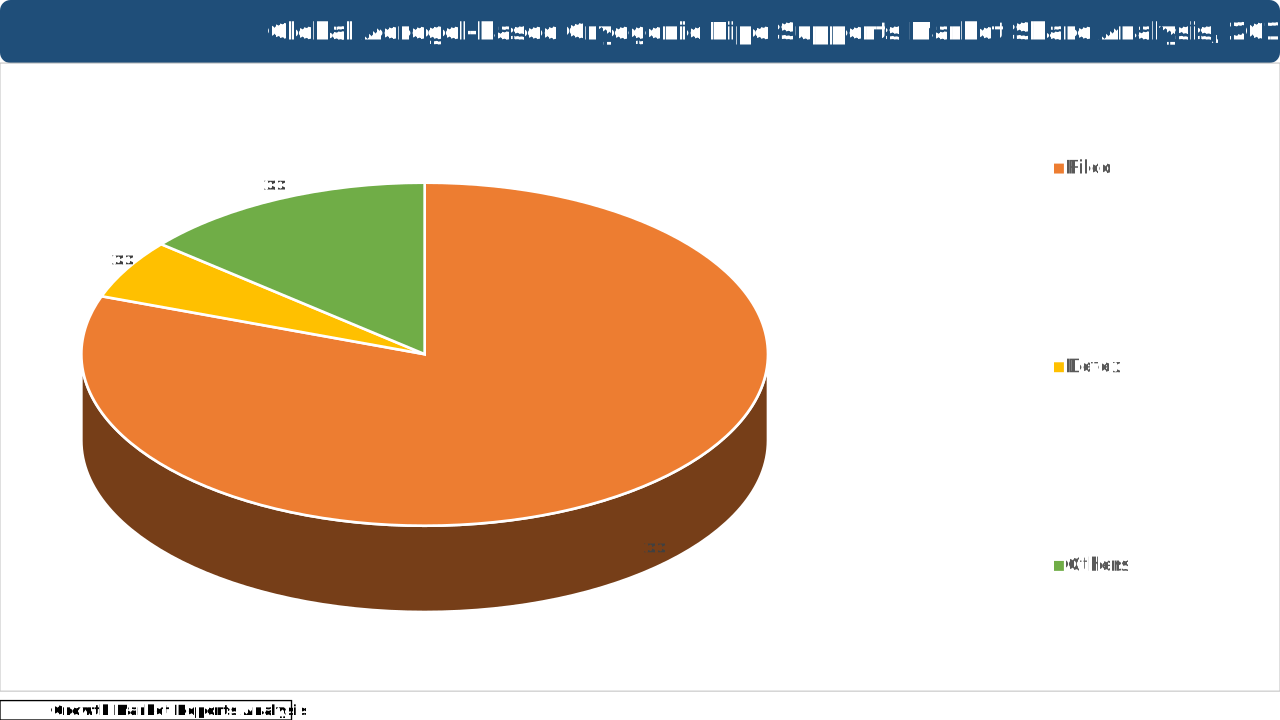
Major Manufactures include, Rilco Manufacturing Inc and Defex New Materials Pvt. Ltd.
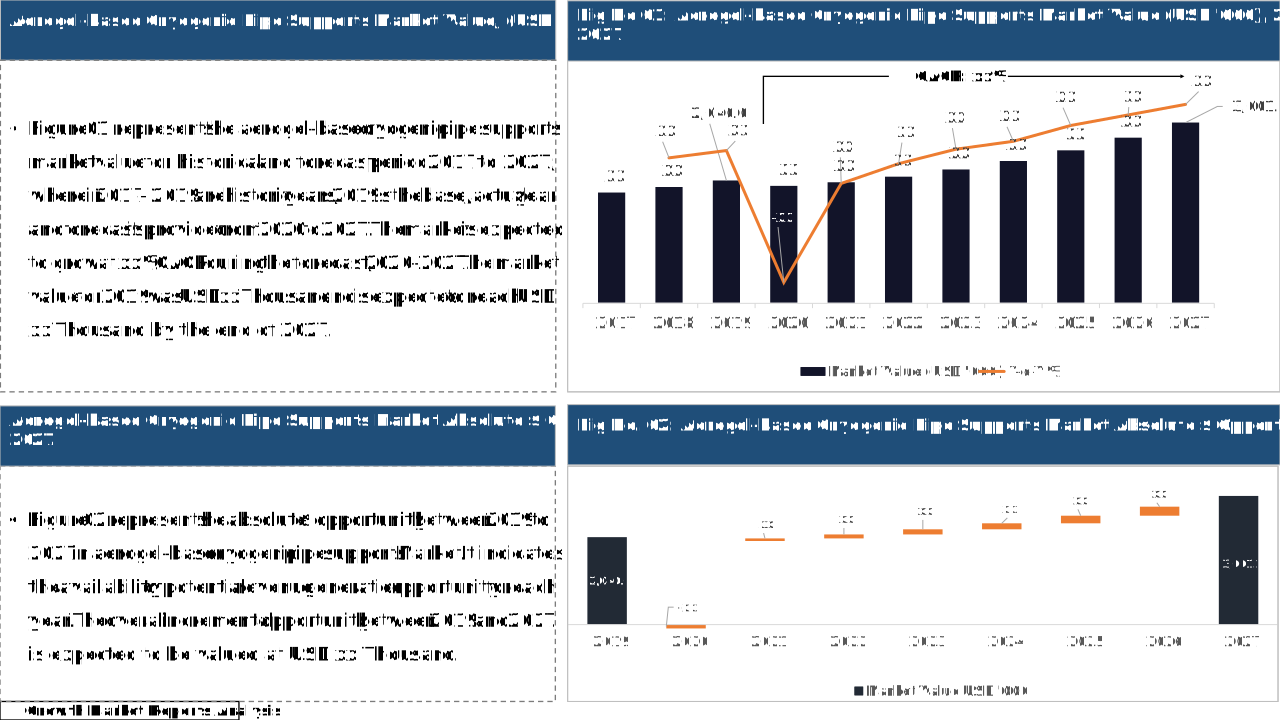
The base year considered for the global aerogel-based cryogenic pipe supports market report is 2019. The complete analysis period is 2017 to 2027, wherein, 2017 & 2018 are the historic years and the forecast is provided from 2021 to 2027.
The market is expected to witness declining of over 4.4 % between 2019 and 2020 owing to the slight impact of COVID-19 pandemic on the aerogel-based cryogenic pipe supports market.
Factors such as competitive strength and market positioning are key areas considered while selecting top companies to be profiled.
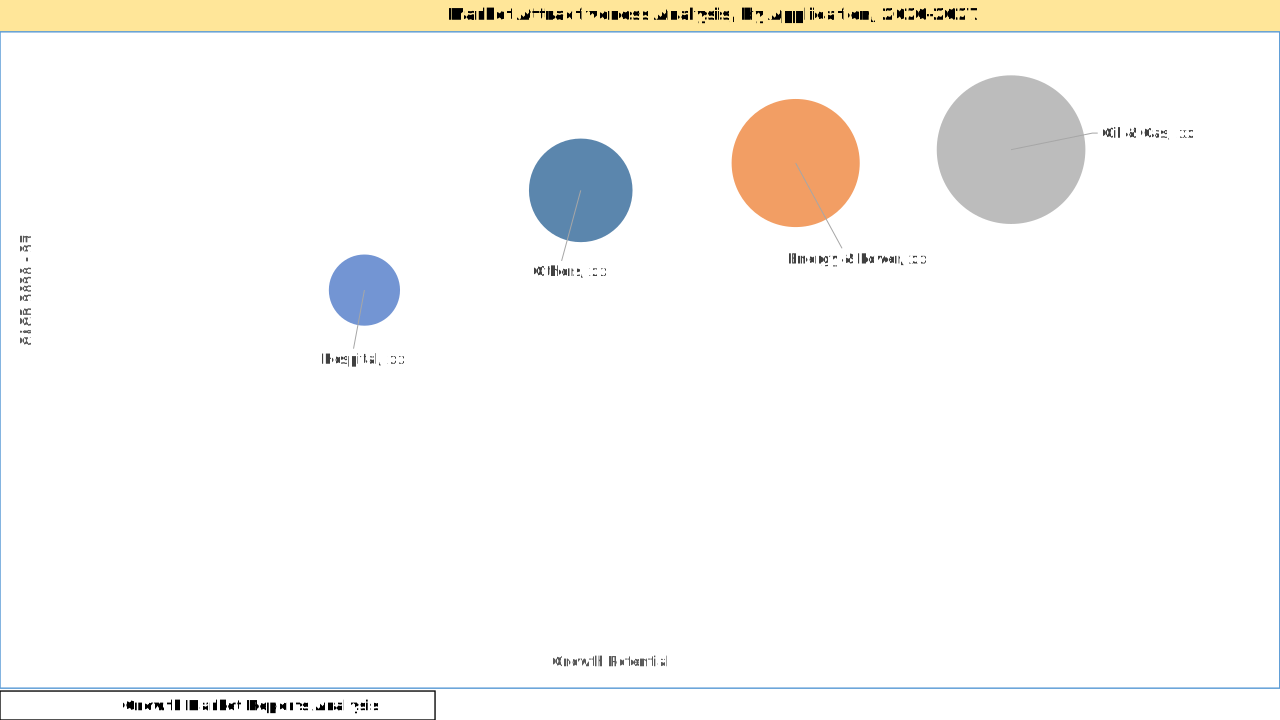
Oil & Gas is the key application area that are driving the Aerogel-based Cryogenic Pipe Supports Market.
Rising Industrial activities in emerging economies and growing production of oil driving the growth of aerogel-based cryogenic pipe supports is expected to drive the market growth during forecast period.
In addition to market size (in US$ Thousand) and Company Market Share (in % for base year 2019), other data such as Pricing analysis for year 2017 to 2027 (estimated pricing analysis) is provided, Patent Analysis of manufacturer, is available in final report.
According to this Growth Market Reports, the market from Aerogel-based Cryogenic Pipe Supports is likely to register a CAGR of 6.4% during forecast period 2020-2027, with an anticipated valuation of US$ 3,001.2 thousand by the end of the 2027.

Yes, the report covers patent analysis of manufacture.
Additional company profiles can be provided on request.