wearable medical devices Market Research Report 2033

wearable medical devices Market Research Report 2033

Segments - by Product Type (Diagnostic Devices, Therapeutic Devices, Vital Sign Monitoring Devices, Glucose Monitoring Devices, Sleep Monitoring Devices, Others), by Application (Remote Patient Monitoring, Home Healthcare, Sports and Fitness, Others), by Distribution Channel (Pharmacies, Online Channels, Hypermarkets, Others), by End-User (Hospitals & Clinics, Ambulatory Surgical Centers, Home Care Settings, Others)

https://growthmarketreports.com/raksha
Author : Raksha Sharma
https://growthmarketreports.com/Vaibhav
Fact-checked by : V. Chandola
https://growthmarketreports.com/Shruti
Editor : Shruti Bhat

Upcoming | Report ID :HC-1675 | 4.0 Rating | 48 Reviews | 265 Pages | Format : Docx PDF

Report Description


Wearable Medical Devices Market Outlook

According to our latest research, the global wearable medical devices market size reached USD 32.6 billion in 2024, with robust expansion driven by the convergence of healthcare and consumer electronics. The market is projected to grow at a CAGR of 20.7% from 2025 to 2033, leading to a forecasted market size of USD 209.6 billion by 2033. This remarkable growth trajectory is attributed to the rising adoption of digital health technologies, increasing prevalence of chronic diseases, and a growing emphasis on remote patient monitoring and personalized healthcare. The wearable medical devices market is experiencing a paradigm shift as healthcare delivery models evolve globally, integrating technology to improve patient outcomes and reduce overall healthcare costs.

A key growth factor for the wearable medical devices market is the escalating demand for continuous health monitoring and the proactive management of chronic conditions such as diabetes, hypertension, and cardiovascular diseases. Modern lifestyles and aging populations have contributed to the surge in chronic disease incidence, fueling the need for convenient and non-invasive monitoring solutions. Wearable medical devices such as glucose monitors, ECG patches, and blood pressure monitors empower patients to track their health metrics in real time, enabling timely intervention and reducing hospital admissions. The integration of advanced sensors, artificial intelligence, and data analytics within these devices further enhances their diagnostic and therapeutic capabilities, making them indispensable tools for both patients and healthcare providers.

Another significant driver is the technological evolution in sensor miniaturization, wireless connectivity, and battery life, which has made wearable medical devices more user-friendly and reliable. The proliferation of smartphones and the widespread use of mobile health applications have created a seamless ecosystem for data collection, sharing, and analysis. As a result, healthcare professionals can access accurate and continuous patient data, facilitating remote consultations and personalized treatment plans. Additionally, the COVID-19 pandemic accelerated the adoption of remote patient monitoring solutions, highlighting the critical role of wearable medical devices in maintaining healthcare continuity and minimizing exposure risks in clinical settings.

The emergence of Wearable Trial-Monitoring Devices is revolutionizing the way clinical trials are conducted, offering a new dimension of data collection and patient engagement. These devices enable real-time monitoring of participants' health metrics, ensuring accurate and timely data capture that enhances the reliability of trial outcomes. By integrating wearable technology into clinical trials, researchers can gain deeper insights into patient responses, adherence to protocols, and potential side effects, thereby improving the overall efficacy and safety of new medical interventions. This innovative approach not only streamlines the trial process but also reduces the burden on participants, making it easier for them to contribute valuable data from the comfort of their homes. As the demand for more efficient and patient-centric trials grows, the adoption of wearable trial-monitoring devices is expected to increase, paving the way for more personalized and effective healthcare solutions.

Consumer awareness and acceptance of wearable medical devices have also surged, driven by the growing popularity of fitness trackers, smartwatches, and other health-focused wearables. These devices are increasingly being equipped with medical-grade sensors, blurring the lines between consumer electronics and regulated medical devices. Partnerships between technology giants and healthcare organizations are fostering innovation, expanding the range of applications, and ensuring regulatory compliance. The market is also witnessing increased investment from venture capitalists and strategic acquisitions, further accelerating product development and market penetration.

From a regional perspective, North America continues to dominate the wearable medical devices market, accounting for the largest revenue share in 2024. This dominance is supported by advanced healthcare infrastructure, high healthcare expenditure, and early adoption of digital health technologies. Europe follows closely, with significant growth in telemedicine and home healthcare services. The Asia Pacific region is emerging as the fastest-growing market, fueled by rising healthcare awareness, increasing disposable incomes, and government initiatives promoting digital health. Latin America and the Middle East & Africa are also showing steady growth, albeit at a slower pace, as healthcare systems in these regions gradually embrace wearable medical technology.

Global  wearable medical devices  Industry Outlook

Product Type Analysis

The wearable medical devices market is segmented by product type into diagnostic devices, therapeutic devices, vital sign monitoring devices, glucose monitoring devices, sleep monitoring devices, and others. Diagnostic devices, including ECG monitors and activity trackers, have seen significant uptake due to their ability to provide real-time health insights and early disease detection. These devices are particularly valuable for patients at risk of cardiac events or those requiring continuous health surveillance. The integration of advanced biosensors and wireless connectivity has made diagnostic wearables more accurate and accessible, enabling healthcare providers to make informed decisions based on comprehensive patient data. As the demand for preventive healthcare grows, diagnostic wearable devices are expected to maintain a strong growth trajectory throughout the forecast period.

Therapeutic wearable devices, such as insulin pumps and pain management devices, are gaining traction as they offer targeted interventions and improve patient compliance. These devices are designed to deliver precise doses of medication or therapy, reducing the risk of complications and enhancing patient outcomes. The adoption of therapeutic wearables is particularly high among patients with chronic conditions who require ongoing management and intervention. Technological advancements, such as closed-loop insulin delivery systems and neuromodulation devices, are further expanding the applications of therapeutic wearables, making them integral to personalized medicine.

Connected Healthcare Wearables are playing a pivotal role in transforming the healthcare landscape by bridging the gap between patients and healthcare providers. These devices, equipped with advanced connectivity features, facilitate seamless data exchange and remote monitoring, empowering patients to take charge of their health while staying connected with their care teams. The integration of connected wearables into healthcare systems enhances the ability to deliver personalized care, as healthcare professionals can access real-time patient data and make informed decisions promptly. This connectivity not only improves patient outcomes but also optimizes healthcare resources by reducing the need for frequent in-person visits. As the healthcare industry continues to embrace digital transformation, the proliferation of connected healthcare wearables is set to redefine patient care, making it more accessible, efficient, and tailored to individual needs.

Vital sign monitoring devices, including heart rate monitors, blood pressure monitors, and pulse oximeters, represent a significant segment of the wearable medical devices market. These devices are widely used in both clinical and home settings to monitor key health parameters and detect early signs of deterioration. The ability to continuously track vital signs and transmit data to healthcare professionals has revolutionized patient care, enabling timely intervention and reducing hospital readmissions. The growing popularity of fitness trackers and smartwatches equipped with medical-grade sensors has also contributed to the expansion of this segment, bridging the gap between wellness and medical monitoring.

Glucose monitoring devices have witnessed remarkable growth, driven by the rising prevalence of diabetes worldwide. Continuous glucose monitors (CGMs) and flash glucose monitoring systems are enabling patients to manage their condition more effectively, reducing the risk of hypoglycemic events and improving quality of life. The integration of smartphone apps and cloud-based platforms allows for seamless data sharing and remote monitoring, empowering both patients and healthcare providers. Sleep monitoring devices, on the other hand, are gaining popularity as awareness of sleep disorders and their impact on overall health increases. These devices use advanced sensors to track sleep patterns, detect abnormalities, and provide actionable insights for improving sleep quality.

Other wearable medical devices, such as respiratory monitors and temperature sensors, are also finding their place in the market, particularly in specialized applications such as pediatric care and elderly monitoring. As the range of wearable medical devices continues to expand, manufacturers are focusing on enhancing device accuracy, comfort, and interoperability to meet the evolving needs of patients and healthcare providers. The product type segment is expected to remain highly dynamic, with ongoing innovation driving the development of new and improved wearable medical solutions.

Report Scope

Attributes Details
Report Title wearable medical devices Market Research Report 2033
By Product Type Diagnostic Devices, Therapeutic Devices, Vital Sign Monitoring Devices, Glucose Monitoring Devices, Sleep Monitoring Devices, Others
By Application Remote Patient Monitoring, Home Healthcare, Sports and Fitness, Others
By Distribution Channel Pharmacies, Online Channels, Hypermarkets, Others
By End-User Hospitals & Clinics, Ambulatory Surgical Centers, Home Care Settings, Others
Regions Covered North America, Europe, APAC, Latin America, MEA
Base Year 2024
Historic Data 2018-2023
Forecast Period 2025-2033
Number of Pages 265
Number of Tables & Figures 252
Customization Available Yes, the report can be customized as per your need.

Application Analysis

The application segment of the wearable medical devices market encompasses remote patient monitoring, home healthcare, sports and fitness, and other specialized uses. Remote patient monitoring (RPM) is one of the most significant applications, as it enables healthcare professionals to track patient health metrics outside of traditional clinical settings. RPM solutions are particularly valuable for managing chronic diseases, post-operative care, and elderly patients who require continuous supervision. The integration of wearable medical devices with telehealth platforms has streamlined data collection and analysis, allowing for timely interventions and reducing the burden on healthcare facilities. As healthcare systems worldwide shift towards value-based care, the adoption of RPM solutions is expected to accelerate, driving market growth.

Home healthcare is another key application area, as wearable medical devices empower patients to manage their health from the comfort of their homes. Devices such as blood pressure monitors, glucose meters, and sleep trackers are commonly used for self-monitoring, enabling early detection of health issues and reducing the need for frequent hospital visits. The convenience and accessibility of wearable medical devices have made them particularly popular among elderly patients and those with mobility challenges. Home healthcare providers are increasingly incorporating wearable devices into their care models to enhance patient engagement, improve outcomes, and optimize resource utilization.

The sports and fitness segment represents a rapidly growing application area for wearable medical devices. Athletes and fitness enthusiasts are leveraging advanced wearables to monitor vital signs, track physical activity, and optimize performance. Devices such as heart rate monitors, activity trackers, and smartwatches are equipped with sophisticated sensors that provide real-time feedback and personalized recommendations. The convergence of sports science and wearable technology is driving innovation in this segment, with new devices being developed to monitor hydration levels, muscle activity, and recovery metrics. As the focus on preventive health and wellness intensifies, the sports and fitness application is expected to witness sustained growth.

Other applications of wearable medical devices include their use in clinical trials, occupational health, and pediatric care. In clinical trials, wearables are being used to collect real-world data, monitor patient adherence, and improve study outcomes. Occupational health programs are leveraging wearable devices to monitor employee health, reduce workplace injuries, and promote wellness initiatives. In pediatric care, wearable devices are being designed to monitor vital signs, detect early signs of illness, and provide peace of mind to parents and caregivers. The versatility of wearable medical devices across diverse applications underscores their potential to transform healthcare delivery and improve patient outcomes.

Distribution Channel Analysis

The distribution channel segment of the wearable medical devices market comprises pharmacies, online channels, hypermarkets, and other retail outlets. Pharmacies remain a primary distribution channel for wearable medical devices, particularly for regulated medical-grade products such as glucose monitors and blood pressure cuffs. Pharmacies offer the advantage of professional guidance, product demonstration, and after-sales support, making them a trusted source for patients and caregivers. As healthcare providers increasingly recommend wearable devices as part of disease management plans, pharmacies are expanding their product offerings and investing in staff training to meet growing demand.

Online channels have emerged as a significant distribution avenue for wearable medical devices, driven by the convenience, wide product selection, and competitive pricing they offer. E-commerce platforms enable consumers to compare products, read reviews, and make informed purchasing decisions from the comfort of their homes. The COVID-19 pandemic further accelerated the shift towards online shopping, as consumers sought contactless purchasing options and home delivery services. Manufacturers are partnering with leading e-commerce platforms to expand their reach, offer exclusive products, and provide virtual customer support. The online channel is expected to witness robust growth, particularly among tech-savvy consumers and younger demographics.

Hypermarkets and large retail chains are also playing an increasingly important role in the distribution of wearable medical devices, particularly in urban areas and developed markets. These outlets offer a wide range of consumer health products, including fitness trackers, smartwatches, and entry-level medical devices. The presence of dedicated health and wellness sections, in-store promotions, and product bundling strategies are driving sales through this channel. Hypermarkets are leveraging their extensive distribution networks and strong brand reputation to attract health-conscious consumers and expand their share of the wearable medical devices market.

Other distribution channels, such as specialty medical stores, direct sales, and institutional procurement, cater to specific customer segments and niche markets. Specialty medical stores offer a curated selection of advanced wearable devices, along with expert advice and personalized service. Direct sales models, including business-to-business (B2B) partnerships with hospitals and clinics, are gaining traction for high-value products and bulk purchases. Institutional procurement, particularly by government agencies and large healthcare organizations, is driving demand for wearable devices in public health initiatives and population health management programs. As the distribution landscape evolves, manufacturers are adopting omnichannel strategies to maximize market penetration and enhance customer experience.

End-User Analysis

The end-user segment of the wearable medical devices market includes hospitals and clinics, ambulatory surgical centers (ASCs), home care settings, and other healthcare facilities. Hospitals and clinics are major adopters of wearable medical devices, leveraging them for continuous patient monitoring, post-operative care, and chronic disease management. The integration of wearable devices with hospital information systems and electronic health records (EHRs) enables healthcare professionals to access real-time patient data, improve diagnostic accuracy, and enhance care coordination. Hospitals are also using wearable devices to monitor patients in intensive care units (ICUs), detect early signs of deterioration, and reduce the risk of adverse events.

Ambulatory surgical centers are increasingly incorporating wearable medical devices into their care protocols, particularly for pre-operative assessments, intraoperative monitoring, and post-operative recovery. Wearable devices provide valuable data on patient vital signs, mobility, and pain levels, enabling ASCs to deliver personalized care and optimize resource allocation. The adoption of wearable devices in ASCs is driven by the shift towards minimally invasive procedures, shorter hospital stays, and the growing emphasis on patient safety and satisfaction. As the number of ASCs continues to rise, this end-user segment is expected to contribute significantly to market growth.

Home care settings represent a rapidly expanding end-user segment for wearable medical devices, as patients seek to manage their health independently and avoid unnecessary hospital visits. Wearable devices are empowering patients to monitor their health conditions, adhere to treatment plans, and communicate with healthcare providers remotely. Home care agencies are integrating wearable devices into their service offerings to enhance patient engagement, improve outcomes, and reduce costs. The aging population, increasing prevalence of chronic diseases, and advancements in remote monitoring technology are driving the adoption of wearable medical devices in home care settings.

Other end-users, such as rehabilitation centers, long-term care facilities, and occupational health programs, are also leveraging wearable medical devices to monitor patient progress, prevent complications, and promote wellness. Rehabilitation centers are using wearables to track patient mobility, assess recovery, and provide real-time feedback during therapy sessions. Long-term care facilities are adopting wearable devices to monitor residents' vital signs, detect falls, and ensure timely intervention. Occupational health programs are using wearables to monitor employee health, reduce workplace injuries, and promote preventive health measures. The diverse range of end-users highlights the versatility and impact of wearable medical devices across the healthcare continuum.

Opportunities & Threats

The wearable medical devices market presents a wealth of opportunities for innovation, expansion, and improved healthcare outcomes. One of the most promising opportunities lies in the integration of artificial intelligence (AI) and machine learning (ML) technologies with wearable devices. AI-powered analytics can transform raw health data into actionable insights, enabling early disease detection, personalized treatment recommendations, and predictive risk assessment. This capability is particularly valuable for managing chronic diseases, optimizing medication adherence, and reducing healthcare costs. Additionally, the increasing adoption of Internet of Things (IoT) platforms is facilitating seamless data exchange between wearable devices and healthcare systems, enhancing interoperability and enabling the development of comprehensive digital health ecosystems.

Another significant opportunity is the expansion of wearable medical devices into emerging markets, where rising healthcare awareness, increasing disposable incomes, and government initiatives are driving demand for digital health solutions. Manufacturers are developing cost-effective, user-friendly wearable devices tailored to the needs of diverse populations, including rural and underserved communities. The growing popularity of telemedicine and remote patient monitoring in these regions is creating new avenues for market growth. Strategic partnerships between technology companies, healthcare providers, and policymakers are fostering innovation, ensuring regulatory compliance, and accelerating market penetration. As healthcare systems worldwide embrace digital transformation, the wearable medical devices market is poised for sustained growth.

Despite the numerous opportunities, the wearable medical devices market faces several restraints and threats. Data privacy and security concerns remain a major challenge, as wearable devices collect and transmit sensitive health information. Ensuring compliance with data protection regulations, such as HIPAA and GDPR, is critical to maintaining patient trust and avoiding legal liabilities. Additionally, the lack of standardized protocols for data interoperability and device integration can hinder seamless communication between wearable devices and healthcare systems. Regulatory hurdles, reimbursement challenges, and the risk of device malfunction or inaccuracy are also potential threats that manufacturers and stakeholders must address to ensure the long-term success of the market.

Regional Outlook

North America continues to lead the global wearable medical devices market, with a market size of USD 12.8 billion in 2024, driven by advanced healthcare infrastructure, high healthcare expenditure, and early adoption of digital health technologies. The United States accounts for the largest share within the region, supported by a strong presence of leading technology companies, robust research and development activities, and favorable reimbursement policies. Canada is also witnessing steady growth, with increasing investment in telemedicine and remote patient monitoring solutions. The region's proactive approach to healthcare innovation and strong regulatory framework are expected to sustain its leadership position in the coming years.

Europe holds the second-largest share of the wearable medical devices market, with a market size of USD 8.3 billion in 2024. The region's growth is driven by the widespread adoption of telehealth services, increasing prevalence of chronic diseases, and supportive government initiatives promoting digital health. Key markets such as Germany, the United Kingdom, and France are at the forefront of wearable device adoption, leveraging advanced healthcare systems and strong public-private partnerships. The European Union's focus on data privacy and patient safety is fostering innovation while ensuring regulatory compliance. The region is expected to grow at a CAGR of 19.8% from 2025 to 2033, reflecting the increasing integration of wearable technology into mainstream healthcare.

The Asia Pacific region is emerging as the fastest-growing market for wearable medical devices, with a market size of USD 6.7 billion in 2024. Rapid urbanization, rising healthcare awareness, and increasing disposable incomes are fueling demand for digital health solutions across countries such as China, Japan, India, and South Korea. Government initiatives aimed at expanding healthcare access and promoting telemedicine are further accelerating market growth. The region's large and diverse population presents significant opportunities for manufacturers to develop tailored solutions that address local healthcare needs. Latin America and the Middle East & Africa are also witnessing steady growth, with market sizes of USD 2.7 billion and USD 2.1 billion respectively in 2024, as healthcare systems in these regions gradually embrace wearable medical technology.

 wearable medical devices  Market Statistics

Competitor Outlook

The competitive landscape of the wearable medical devices market is characterized by intense rivalry, rapid technological innovation, and a strong focus on research and development. Leading companies are investing heavily in the development of advanced wearable devices that offer improved accuracy, comfort, and connectivity. Strategic collaborations, mergers and acquisitions, and partnerships with healthcare providers and technology firms are common strategies employed by market players to expand their product portfolios and strengthen their market presence. The entry of technology giants into the healthcare sector has further intensified competition, driving innovation and accelerating the adoption of wearable medical devices.

Product differentiation and brand reputation are critical factors influencing the competitive dynamics of the market. Companies are focusing on developing user-friendly devices with intuitive interfaces, long battery life, and seamless integration with mobile health applications. The ability to offer comprehensive health monitoring solutions that combine multiple functionalities, such as vital sign monitoring, sleep tracking, and activity tracking, is a key differentiator. Manufacturers are also prioritizing regulatory compliance and data security to build trust among healthcare providers and consumers. The growing emphasis on personalized medicine and patient-centric care is driving the development of wearable devices that cater to specific patient populations and medical conditions.

The market is witnessing increased investment from venture capitalists and private equity firms, fueling the growth of startups and emerging players. These companies are leveraging innovative technologies, such as artificial intelligence, machine learning, and advanced biosensors, to develop next-generation wearable medical devices. The ability to offer cost-effective solutions that address unmet healthcare needs is enabling startups to capture market share and challenge established players. Strategic partnerships with healthcare organizations, insurance providers, and telemedicine platforms are facilitating market entry and accelerating product adoption.

Major companies operating in the wearable medical devices market include Medtronic plc, Koninklijke Philips N.V., Abbott Laboratories, Dexcom, Inc., Fitbit, Inc. (now part of Google), Garmin Ltd., Omron Healthcare, Inc., Apple Inc., and Huawei Technologies Co., Ltd.. Medtronic is a global leader in medical technology, offering a wide range of wearable devices for chronic disease management and remote monitoring. Philips is renowned for its innovative health solutions, including wearable biosensors and telehealth platforms. Abbott and Dexcom are pioneers in continuous glucose monitoring systems, enabling effective diabetes management. Fitbit and Garmin are leading providers of fitness trackers and smartwatches, with a strong focus on health and wellness applications. Omron Healthcare specializes in blood pressure monitors and other vital sign monitoring devices, while Apple and Huawei are leveraging their expertise in consumer electronics to develop advanced health-focused wearables.

These companies are continuously expanding their product portfolios through research and development, strategic acquisitions, and partnerships. For instance, Abbott's FreeStyle Libre system and Dexcom's G6 CGM are setting new standards in glucose monitoring, while Apple's integration of ECG and blood oxygen monitoring features in its smartwatches is redefining consumer health monitoring. Partnerships between technology companies and healthcare providers are enabling the development of integrated digital health ecosystems, enhancing the value proposition of wearable medical devices. As the market continues to evolve, companies that prioritize innovation, regulatory compliance, and patient-centric solutions are expected to maintain a competitive edge.

In summary, the wearable medical devices market is poised for exponential growth, driven by technological advancements, increasing healthcare awareness, and the shift towards personalized and remote healthcare. The competitive landscape is dynamic and evolving, with established players and emerging startups vying for market leadership through innovation, strategic partnerships, and a relentless focus on improving patient outcomes.

Key Players

  • Medtronic
  • Philips Healthcare
  • GE Healthcare
  • Abbott Laboratories
  • Siemens Healthineers
  • Dexcom
  • Fitbit (now part of Google)
  • Garmin Ltd.
  • Apple Inc.
  • Samsung Electronics
  • Omron Healthcare
  • Masimo Corporation
  • BioTelemetry (now part of Philips)
  • iRhythm Technologies
  • ResMed
  • AliveCor
  • Withings
  • Polar Electro
  • Senseonics Holdings
  • Insulet Corporation
 wearable medical devices  Market Overview

Segments

The wearable medical devices market has been segmented on the basis of

Product Type

  • Diagnostic Devices
  • Therapeutic Devices
  • Vital Sign Monitoring Devices
  • Glucose Monitoring Devices
  • Sleep Monitoring Devices
  • Others

Application

  • Remote Patient Monitoring
  • Home Healthcare
  • Sports and Fitness
  • Others

Distribution Channel

  • Pharmacies
  • Online Channels
  • Hypermarkets
  • Others

End-User

  • Hospitals & Clinics
  • Ambulatory Surgical Centers
  • Home Care Settings
  • Others

Competitive Landscape

Many players in this market are trying to expand their product portfolio in order to top the market. Few companies adopted product innovation and new product launches as its key business strategy to ensure its dominance in this market. Some of the key players in the market are Garmin Ltd, Apple Inc., Fitbit, Samsung, and Everist Genomics, Inc.
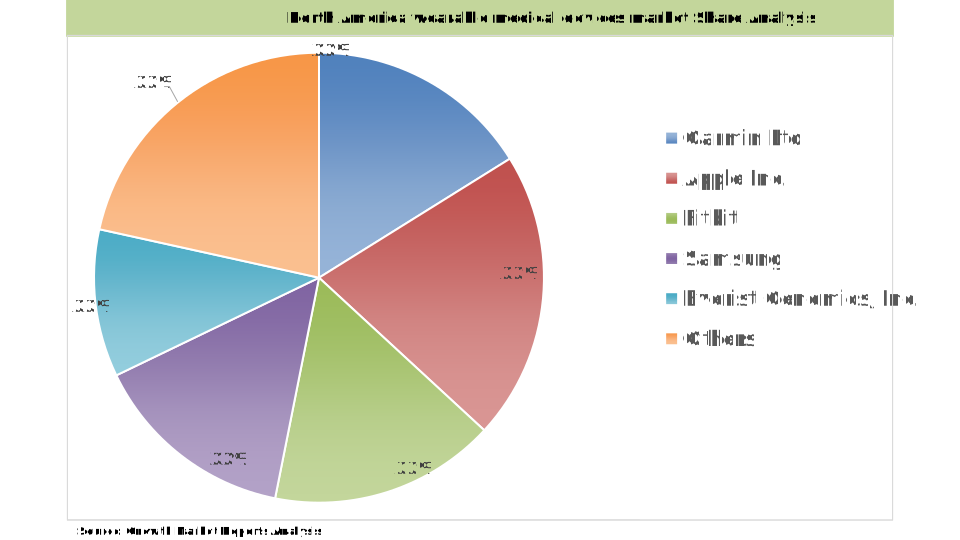

North America wearable medical devices market keyplayers

Frequently Asked Questions

Technological advancements such as sensor miniaturization, wireless connectivity, improved battery life, artificial intelligence, and data analytics have made wearable medical devices more accurate, user-friendly, and essential for both patients and healthcare providers.

Major players include Medtronic, Philips Healthcare, Abbott Laboratories, Dexcom, Fitbit (Google), Garmin, Omron Healthcare, Apple, Huawei, GE Healthcare, Siemens Healthineers, Samsung Electronics, Masimo, BioTelemetry, iRhythm Technologies, ResMed, AliveCor, Withings, Polar Electro, Senseonics Holdings, and Insulet Corporation.

Opportunities include AI and IoT integration, expansion into emerging markets, and telemedicine growth. Challenges include data privacy and security concerns, regulatory hurdles, device interoperability issues, and reimbursement challenges.

Primary end-users include hospitals and clinics, ambulatory surgical centers, home care settings, rehabilitation centers, long-term care facilities, and occupational health programs.

Wearable medical devices are distributed through pharmacies, online channels, hypermarkets, specialty medical stores, direct sales, and institutional procurement.

Wearable medical devices are used for remote patient monitoring, home healthcare, sports and fitness tracking, clinical trials, occupational health, and pediatric care, enabling continuous health monitoring and personalized interventions.

Major product types include diagnostic devices (such as ECG monitors and activity trackers), therapeutic devices (like insulin pumps), vital sign monitoring devices, glucose monitoring devices, sleep monitoring devices, and others such as respiratory monitors.

North America dominates the market, followed by Europe. The Asia Pacific region is the fastest-growing market, while Latin America and the Middle East & Africa are also experiencing steady growth.

Key growth drivers include the rising adoption of digital health technologies, increasing prevalence of chronic diseases, growing demand for remote patient monitoring, technological advancements, and greater consumer awareness of health and wellness.

The global wearable medical devices market reached USD 32.6 billion in 2024 and is projected to grow at a CAGR of 20.7% from 2025 to 2033, reaching an estimated USD 209.6 billion by 2033.

Table Of Content

Chapter 1 Executive Summary
Chapter 2 Assumptions and Acronyms Used
Chapter 3 Research Methodology
Chapter 4  wearable medical devices  Market Overview
   4.1 Introduction
      4.1.1 Market Taxonomy
      4.1.2 Market Definition
      4.1.3 Macro-Economic Factors Impacting the Market Growth
   4.2  wearable medical devices  Market Dynamics
      4.2.1 Market Drivers
      4.2.2 Market Restraints
      4.2.3 Market Opportunity
   4.3  wearable medical devices  Market - Supply Chain Analysis
      4.3.1 List of Key Suppliers
      4.3.2 List of Key Distributors
      4.3.3 List of Key Consumers
   4.4 Key Forces Shaping the  wearable medical devices  Market
      4.4.1 Bargaining Power of Suppliers
      4.4.2 Bargaining Power of Buyers
      4.4.3 Threat of Substitution
      4.4.4 Threat of New Entrants
      4.4.5 Competitive Rivalry
   4.5 Global  wearable medical devices  Market Size & Forecast, 2023-2032
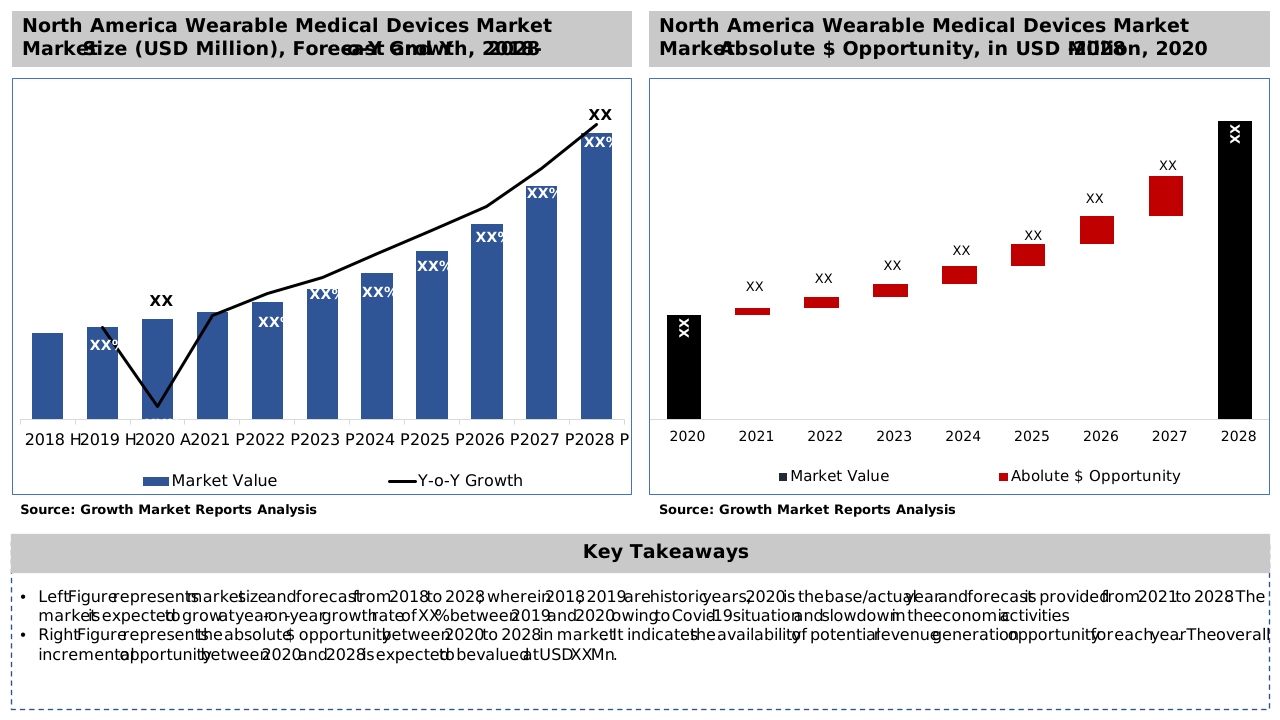
      4.5.1  wearable medical devices  Market Size and Y-o-Y Growth
      4.5.2  wearable medical devices  Market Absolute $ Opportunity

Chapter 5 Global  wearable medical devices  Market Analysis and Forecast By Product Type
   5.1 Introduction
      5.1.1 Key Market Trends & Growth Opportunities By Product Type
      5.1.2 Basis Point Share (BPS) Analysis By Product Type
      5.1.3 Absolute $ Opportunity Assessment By Product Type
   5.2  wearable medical devices  Market Size Forecast By Product Type
      5.2.1 Diagnostic Devices
      5.2.2 Therapeutic Devices
      5.2.3 Vital Sign Monitoring Devices
      5.2.4 Glucose Monitoring Devices
      5.2.5 Sleep Monitoring Devices
      5.2.6 Others
   5.3 Market Attractiveness Analysis By Product Type

Chapter 6 Global  wearable medical devices  Market Analysis and Forecast By Application
   6.1 Introduction
      6.1.1 Key Market Trends & Growth Opportunities By Application
      6.1.2 Basis Point Share (BPS) Analysis By Application
      6.1.3 Absolute $ Opportunity Assessment By Application
   6.2  wearable medical devices  Market Size Forecast By Application
      6.2.1 Remote Patient Monitoring
      6.2.2 Home Healthcare
      6.2.3 Sports and Fitness
      6.2.4 Others
   6.3 Market Attractiveness Analysis By Application

Chapter 7 Global  wearable medical devices  Market Analysis and Forecast By Distribution Channel
   7.1 Introduction
      7.1.1 Key Market Trends & Growth Opportunities By Distribution Channel
      7.1.2 Basis Point Share (BPS) Analysis By Distribution Channel
      7.1.3 Absolute $ Opportunity Assessment By Distribution Channel
   7.2  wearable medical devices  Market Size Forecast By Distribution Channel
      7.2.1 Pharmacies
      7.2.2 Online Channels
      7.2.3 Hypermarkets
      7.2.4 Others
   7.3 Market Attractiveness Analysis By Distribution Channel

Chapter 8 Global  wearable medical devices  Market Analysis and Forecast By End-User
   8.1 Introduction
      8.1.1 Key Market Trends & Growth Opportunities By End-User
      8.1.2 Basis Point Share (BPS) Analysis By End-User
      8.1.3 Absolute $ Opportunity Assessment By End-User
   8.2  wearable medical devices  Market Size Forecast By End-User
      8.2.1 Hospitals & Clinics
      8.2.2 Ambulatory Surgical Centers
      8.2.3 Home Care Settings
      8.2.4 Others
   8.3 Market Attractiveness Analysis By End-User

Chapter 9 Global  wearable medical devices  Market Analysis and Forecast by Region
   9.1 Introduction
      9.1.1 Key Market Trends & Growth Opportunities By Region
      9.1.2 Basis Point Share (BPS) Analysis By Region
      9.1.3 Absolute $ Opportunity Assessment By Region
   9.2  wearable medical devices  Market Size Forecast By Region
      9.2.1 North America
      9.2.2 Europe
      9.2.3 Asia Pacific
      9.2.4 Latin America
      9.2.5 Middle East & Africa (MEA)
   9.3 Market Attractiveness Analysis By Region

Chapter 10 Coronavirus Disease (COVID-19) Impact 
   10.1 Introduction 
   10.2 Current & Future Impact Analysis 
   10.3 Economic Impact Analysis 
   10.4 Government Policies 
   10.5 Investment Scenario

Chapter 11 North America  wearable medical devices  Analysis and Forecast
   11.1 Introduction
   11.2 North America  wearable medical devices  Market Size Forecast by Country
      11.2.1 U.S.
      11.2.2 Canada
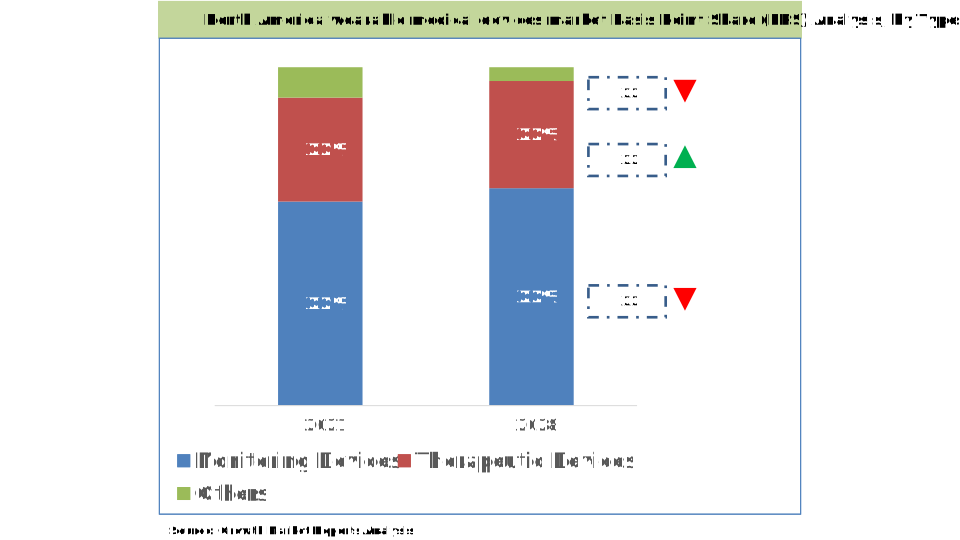
   11.3 Basis Point Share (BPS) Analysis by Country
   11.4 Absolute $ Opportunity Assessment by Country
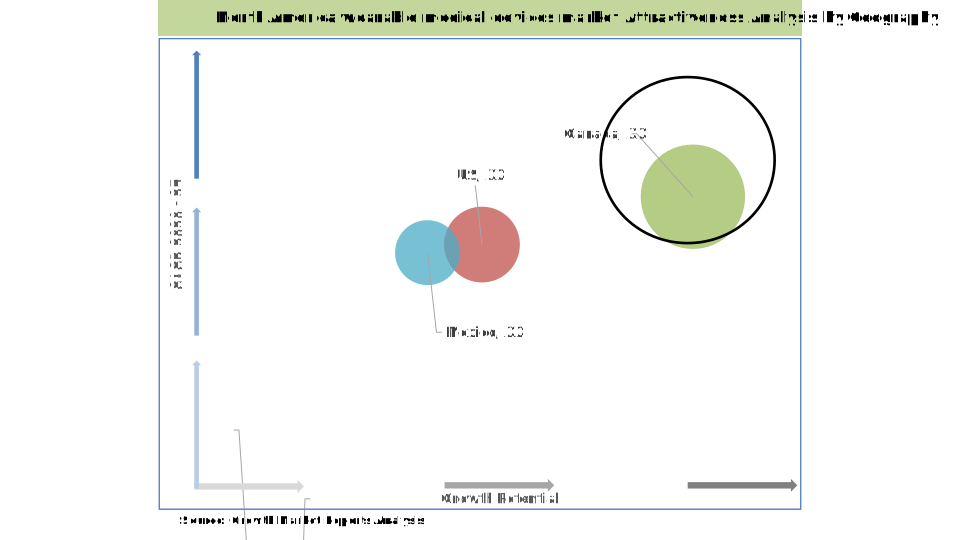
   11.5 Market Attractiveness Analysis by Country
   11.6 North America  wearable medical devices  Market Size Forecast By Product Type
      11.6.1 Diagnostic Devices
      11.6.2 Therapeutic Devices
      11.6.3 Vital Sign Monitoring Devices
      11.6.4 Glucose Monitoring Devices
      11.6.5 Sleep Monitoring Devices
      11.6.6 Others
   11.7 Basis Point Share (BPS) Analysis By Product Type 
   11.8 Absolute $ Opportunity Assessment By Product Type 
   11.9 Market Attractiveness Analysis By Product Type
   11.10 North America  wearable medical devices  Market Size Forecast By Application
      11.10.1 Remote Patient Monitoring
      11.10.2 Home Healthcare
      11.10.3 Sports and Fitness
      11.10.4 Others
   11.11 Basis Point Share (BPS) Analysis By Application 
   11.12 Absolute $ Opportunity Assessment By Application 
   11.13 Market Attractiveness Analysis By Application
   11.14 North America  wearable medical devices  Market Size Forecast By Distribution Channel
      11.14.1 Pharmacies
      11.14.2 Online Channels
      11.14.3 Hypermarkets
      11.14.4 Others
   11.15 Basis Point Share (BPS) Analysis By Distribution Channel 
   11.16 Absolute $ Opportunity Assessment By Distribution Channel 
   11.17 Market Attractiveness Analysis By Distribution Channel
   11.18 North America  wearable medical devices  Market Size Forecast By End-User
      11.18.1 Hospitals & Clinics
      11.18.2 Ambulatory Surgical Centers
      11.18.3 Home Care Settings
      11.18.4 Others
   11.19 Basis Point Share (BPS) Analysis By End-User 
   11.20 Absolute $ Opportunity Assessment By End-User 
   11.21 Market Attractiveness Analysis By End-User

Chapter 12 Europe  wearable medical devices  Analysis and Forecast
   12.1 Introduction
   12.2 Europe  wearable medical devices  Market Size Forecast by Country
      12.2.1 Germany
      12.2.2 France
      12.2.3 Italy
      12.2.4 U.K.
      12.2.5 Spain
      12.2.6 Russia
      12.2.7 Rest of Europe
   12.3 Basis Point Share (BPS) Analysis by Country
   12.4 Absolute $ Opportunity Assessment by Country
   12.5 Market Attractiveness Analysis by Country
   12.6 Europe  wearable medical devices  Market Size Forecast By Product Type
      12.6.1 Diagnostic Devices
      12.6.2 Therapeutic Devices
      12.6.3 Vital Sign Monitoring Devices
      12.6.4 Glucose Monitoring Devices
      12.6.5 Sleep Monitoring Devices
      12.6.6 Others
   12.7 Basis Point Share (BPS) Analysis By Product Type 
   12.8 Absolute $ Opportunity Assessment By Product Type 
   12.9 Market Attractiveness Analysis By Product Type
   12.10 Europe  wearable medical devices  Market Size Forecast By Application
      12.10.1 Remote Patient Monitoring
      12.10.2 Home Healthcare
      12.10.3 Sports and Fitness
      12.10.4 Others
   12.11 Basis Point Share (BPS) Analysis By Application 
   12.12 Absolute $ Opportunity Assessment By Application 
   12.13 Market Attractiveness Analysis By Application
   12.14 Europe  wearable medical devices  Market Size Forecast By Distribution Channel
      12.14.1 Pharmacies
      12.14.2 Online Channels
      12.14.3 Hypermarkets
      12.14.4 Others
   12.15 Basis Point Share (BPS) Analysis By Distribution Channel 
   12.16 Absolute $ Opportunity Assessment By Distribution Channel 
   12.17 Market Attractiveness Analysis By Distribution Channel
   12.18 Europe  wearable medical devices  Market Size Forecast By End-User
      12.18.1 Hospitals & Clinics
      12.18.2 Ambulatory Surgical Centers
      12.18.3 Home Care Settings
      12.18.4 Others
   12.19 Basis Point Share (BPS) Analysis By End-User 
   12.20 Absolute $ Opportunity Assessment By End-User 
   12.21 Market Attractiveness Analysis By End-User

Chapter 13 Asia Pacific  wearable medical devices  Analysis and Forecast
   13.1 Introduction
   13.2 Asia Pacific  wearable medical devices  Market Size Forecast by Country
      13.2.1 China
      13.2.2 Japan
      13.2.3 South Korea
      13.2.4 India
      13.2.5 Australia
      13.2.6 South East Asia (SEA)
      13.2.7 Rest of Asia Pacific (APAC)
   13.3 Basis Point Share (BPS) Analysis by Country
   13.4 Absolute $ Opportunity Assessment by Country
   13.5 Market Attractiveness Analysis by Country
   13.6 Asia Pacific  wearable medical devices  Market Size Forecast By Product Type
      13.6.1 Diagnostic Devices
      13.6.2 Therapeutic Devices
      13.6.3 Vital Sign Monitoring Devices
      13.6.4 Glucose Monitoring Devices
      13.6.5 Sleep Monitoring Devices
      13.6.6 Others
   13.7 Basis Point Share (BPS) Analysis By Product Type 
   13.8 Absolute $ Opportunity Assessment By Product Type 
   13.9 Market Attractiveness Analysis By Product Type
   13.10 Asia Pacific  wearable medical devices  Market Size Forecast By Application
      13.10.1 Remote Patient Monitoring
      13.10.2 Home Healthcare
      13.10.3 Sports and Fitness
      13.10.4 Others
   13.11 Basis Point Share (BPS) Analysis By Application 
   13.12 Absolute $ Opportunity Assessment By Application 
   13.13 Market Attractiveness Analysis By Application
   13.14 Asia Pacific  wearable medical devices  Market Size Forecast By Distribution Channel
      13.14.1 Pharmacies
      13.14.2 Online Channels
      13.14.3 Hypermarkets
      13.14.4 Others
   13.15 Basis Point Share (BPS) Analysis By Distribution Channel 
   13.16 Absolute $ Opportunity Assessment By Distribution Channel 
   13.17 Market Attractiveness Analysis By Distribution Channel
   13.18 Asia Pacific  wearable medical devices  Market Size Forecast By End-User
      13.18.1 Hospitals & Clinics
      13.18.2 Ambulatory Surgical Centers
      13.18.3 Home Care Settings
      13.18.4 Others
   13.19 Basis Point Share (BPS) Analysis By End-User 
   13.20 Absolute $ Opportunity Assessment By End-User 
   13.21 Market Attractiveness Analysis By End-User

Chapter 14 Latin America  wearable medical devices  Analysis and Forecast
   14.1 Introduction
   14.2 Latin America  wearable medical devices  Market Size Forecast by Country
      14.2.1 Brazil
      14.2.2 Mexico
      14.2.3 Rest of Latin America (LATAM)
   14.3 Basis Point Share (BPS) Analysis by Country
   14.4 Absolute $ Opportunity Assessment by Country
   14.5 Market Attractiveness Analysis by Country
   14.6 Latin America  wearable medical devices  Market Size Forecast By Product Type
      14.6.1 Diagnostic Devices
      14.6.2 Therapeutic Devices
      14.6.3 Vital Sign Monitoring Devices
      14.6.4 Glucose Monitoring Devices
      14.6.5 Sleep Monitoring Devices
      14.6.6 Others
   14.7 Basis Point Share (BPS) Analysis By Product Type 
   14.8 Absolute $ Opportunity Assessment By Product Type 
   14.9 Market Attractiveness Analysis By Product Type
   14.10 Latin America  wearable medical devices  Market Size Forecast By Application
      14.10.1 Remote Patient Monitoring
      14.10.2 Home Healthcare
      14.10.3 Sports and Fitness
      14.10.4 Others
   14.11 Basis Point Share (BPS) Analysis By Application 
   14.12 Absolute $ Opportunity Assessment By Application 
   14.13 Market Attractiveness Analysis By Application
   14.14 Latin America  wearable medical devices  Market Size Forecast By Distribution Channel
      14.14.1 Pharmacies
      14.14.2 Online Channels
      14.14.3 Hypermarkets
      14.14.4 Others
   14.15 Basis Point Share (BPS) Analysis By Distribution Channel 
   14.16 Absolute $ Opportunity Assessment By Distribution Channel 
   14.17 Market Attractiveness Analysis By Distribution Channel
   14.18 Latin America  wearable medical devices  Market Size Forecast By End-User
      14.18.1 Hospitals & Clinics
      14.18.2 Ambulatory Surgical Centers
      14.18.3 Home Care Settings
      14.18.4 Others
   14.19 Basis Point Share (BPS) Analysis By End-User 
   14.20 Absolute $ Opportunity Assessment By End-User 
   14.21 Market Attractiveness Analysis By End-User

Chapter 15 Middle East & Africa (MEA)  wearable medical devices  Analysis and Forecast
   15.1 Introduction
   15.2 Middle East & Africa (MEA)  wearable medical devices  Market Size Forecast by Country
      15.2.1 Saudi Arabia
      15.2.2 South Africa
      15.2.3 UAE
      15.2.4 Rest of Middle East & Africa (MEA)
   15.3 Basis Point Share (BPS) Analysis by Country
   15.4 Absolute $ Opportunity Assessment by Country
   15.5 Market Attractiveness Analysis by Country
   15.6 Middle East & Africa (MEA)  wearable medical devices  Market Size Forecast By Product Type
      15.6.1 Diagnostic Devices
      15.6.2 Therapeutic Devices
      15.6.3 Vital Sign Monitoring Devices
      15.6.4 Glucose Monitoring Devices
      15.6.5 Sleep Monitoring Devices
      15.6.6 Others
   15.7 Basis Point Share (BPS) Analysis By Product Type 
   15.8 Absolute $ Opportunity Assessment By Product Type 
   15.9 Market Attractiveness Analysis By Product Type
   15.10 Middle East & Africa (MEA)  wearable medical devices  Market Size Forecast By Application
      15.10.1 Remote Patient Monitoring
      15.10.2 Home Healthcare
      15.10.3 Sports and Fitness
      15.10.4 Others
   15.11 Basis Point Share (BPS) Analysis By Application 
   15.12 Absolute $ Opportunity Assessment By Application 
   15.13 Market Attractiveness Analysis By Application
   15.14 Middle East & Africa (MEA)  wearable medical devices  Market Size Forecast By Distribution Channel
      15.14.1 Pharmacies
      15.14.2 Online Channels
      15.14.3 Hypermarkets
      15.14.4 Others
   15.15 Basis Point Share (BPS) Analysis By Distribution Channel 
   15.16 Absolute $ Opportunity Assessment By Distribution Channel 
   15.17 Market Attractiveness Analysis By Distribution Channel
   15.18 Middle East & Africa (MEA)  wearable medical devices  Market Size Forecast By End-User
      15.18.1 Hospitals & Clinics
      15.18.2 Ambulatory Surgical Centers
      15.18.3 Home Care Settings
      15.18.4 Others
   15.19 Basis Point Share (BPS) Analysis By End-User 
   15.20 Absolute $ Opportunity Assessment By End-User 
   15.21 Market Attractiveness Analysis By End-User

Chapter 16 Competition Landscape 
   16.1  wearable medical devices  Market: Competitive Dashboard
   16.2 Global  wearable medical devices  Market: Market Share Analysis, 2023
   16.3 Company Profiles (Details – Overview, Financials, Developments, Strategy) 
      16.3.1 Medtronic
Philips Healthcare
GE Healthcare
Abbott Laboratories
Siemens Healthineers
Dexcom
Fitbit (now part of Google)
Garmin Ltd.
Apple Inc.
Samsung Electronics
Omron Healthcare
Masimo Corporation
BioTelemetry (now part of Philips)
iRhythm Technologies
ResMed
AliveCor
Withings
Polar Electro
Senseonics Holdings
Insulet Corporation

Methodology

Our Clients

The John Holland Group
Honda Motor Co. Ltd.
General Mills
Pfizer
FedEx Logistics
Dassault Aviation
Siemens Healthcare
sinopec