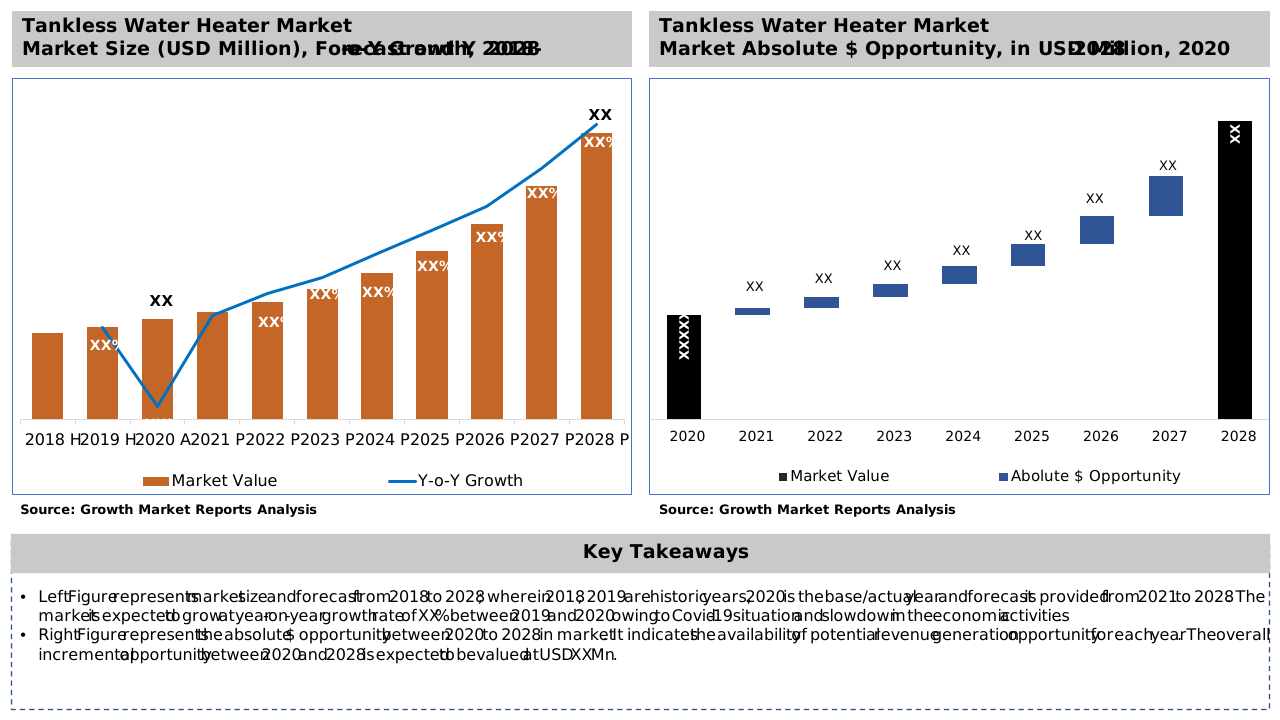
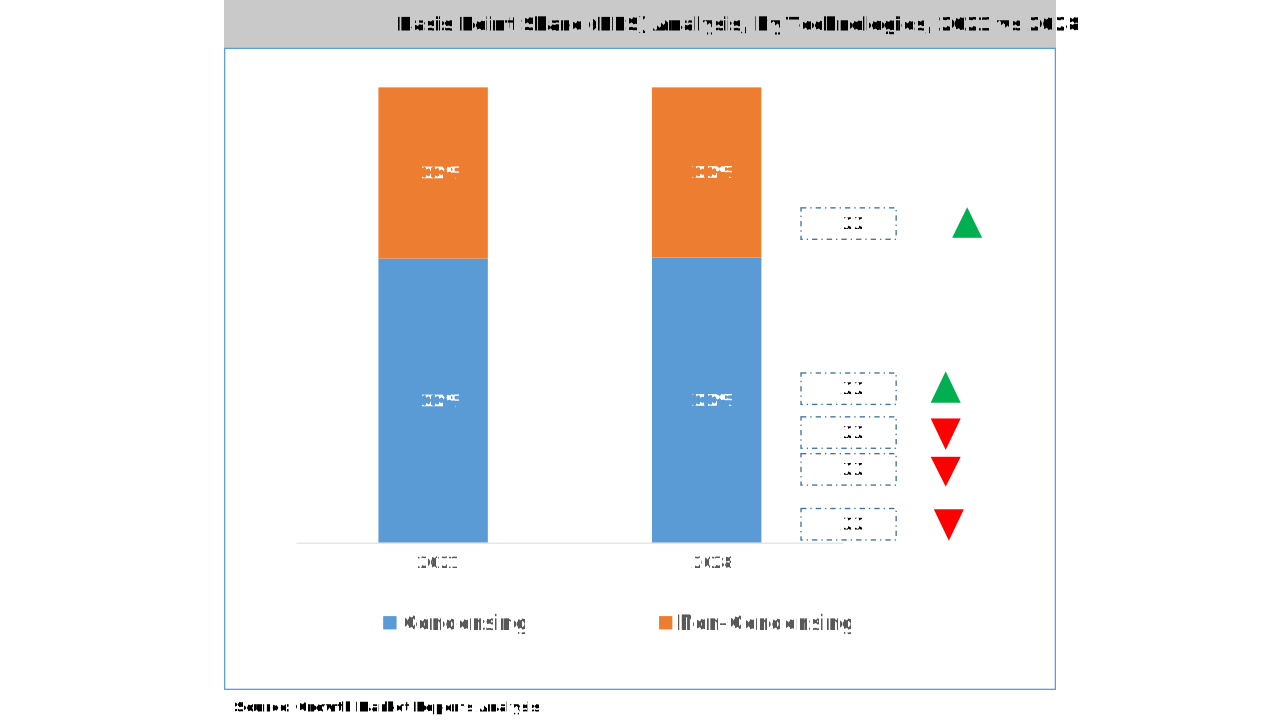
Tankless water heater Market Research Report 2033

Tankless water heater Market Research Report 2033

Segments - by Product Type (Electric Tankless Water Heaters, Gas Tankless Water Heaters), by Application (Residential, Commercial, Industrial), by Installation Type (Indoor, Outdoor), by Distribution Channel (Online, Offline)

https://growthmarketreports.com/Raksha
Author : Raksha Sharma
https://growthmarketreports.com/Vaibhav
Fact-checked by : V. Chandola
https://growthmarketreports.com/Shruti
Editor : Shruti Bhat

Upcoming | Report ID :CM-340 | 4.4 Rating | 32 Reviews | 250 Pages | Format : Docx PDF

Report Description


Tankless Water Heater Market Outlook

As per our latest research, the global tankless water heater market size reached USD 7.8 billion in 2024, demonstrating robust momentum driven by the increasing demand for energy-efficient appliances and a shift toward sustainable home solutions. The market is projected to grow at a CAGR of 8.2% from 2025 to 2033, reaching a forecasted value of USD 15.3 billion by 2033. This growth is fueled by technological advancements, heightened consumer awareness regarding energy savings, and supportive regulatory frameworks that encourage the adoption of eco-friendly water heating systems.

One of the primary growth factors for the tankless water heater market is the increasing global emphasis on energy efficiency and carbon footprint reduction. Traditional water heaters, which rely on storing and continuously heating water, are being phased out in favor of tankless systems that heat water on demand, significantly reducing energy consumption. This shift is not only driven by consumer preferences but also by government regulations and incentives promoting the use of energy-efficient appliances. The adoption of tankless water heaters helps households and businesses lower their utility bills, making them a cost-effective solution in the long term. Additionally, the rising cost of energy and the push for green building certifications have made tankless systems an attractive choice for new construction and retrofit projects alike.

Another significant driver is the rapid pace of technological innovation within the tankless water heater industry. Manufacturers are investing heavily in research and development to enhance product performance, durability, and user experience. Advanced features such as Wi-Fi connectivity, smart thermostats, and self-diagnostic capabilities have elevated the convenience and functionality of tankless water heaters. These innovations cater to the growing demand for smart home integration and remote monitoring, further boosting market adoption. Moreover, improvements in heat exchanger technology and materials have increased the lifespan and reliability of tankless units, reducing maintenance requirements and total cost of ownership for end users.

The expansion of the construction industry, particularly in emerging economies, also plays a crucial role in the market’s growth trajectory. Rapid urbanization, rising disposable incomes, and a surge in residential and commercial infrastructure development have created a substantial demand for modern water heating solutions. In regions such as Asia Pacific and Latin America, the proliferation of new housing projects and commercial spaces has accelerated the uptake of tankless water heaters. Additionally, the trend toward smaller living spaces, such as apartments and condominiums, favors tankless systems due to their compact design and space-saving benefits. This market dynamic is further amplified by the increasing penetration of e-commerce platforms, making tankless water heaters more accessible to a broader consumer base.

Regionally, Asia Pacific leads the market, accounting for a significant share of global demand, followed by North America and Europe. The Asia Pacific region is experiencing rapid urbanization and infrastructure development, particularly in countries like China, Japan, and India, where the adoption of energy-efficient appliances is gaining momentum. North America’s market is characterized by early adoption of innovative technologies and strong regulatory support, while Europe benefits from stringent energy efficiency directives and a mature construction sector. Latin America and the Middle East & Africa are emerging as promising markets, driven by rising awareness and increasing investments in residential and commercial construction.

Global Tankless water heater Industry Outlook

Product Type Analysis

The product type segment of the tankless water heater market is bifurcated into electric tankless water heaters and gas tankless water heaters. Electric tankless water heaters have gained substantial traction in recent years, primarily due to their ease of installation, lower upfront costs, and suitability for residential applications. These units are highly favored in regions with reliable electricity supply and are often chosen for smaller households or point-of-use installations. The growing adoption of renewable energy sources, such as solar power, further supports the demand for electric tankless water heaters, as consumers seek to minimize their reliance on fossil fuels.

On the other hand, gas tankless water heaters are renowned for their high flow rates and ability to meet the hot water demands of larger households and commercial establishments. These systems are typically more energy-efficient than their electric counterparts, especially in areas where natural gas is readily available and affordable. Gas tankless heaters are commonly used in commercial settings such as hotels, restaurants, and hospitals, where continuous and large-scale hot water supply is essential. The segment’s growth is further propelled by advancements in burner technology and improved safety features, which have addressed historical concerns regarding emissions and operational risks.

The choice between electric and gas tankless water heaters is often influenced by regional energy infrastructure, fuel availability, and regulatory standards. For instance, in North America and parts of Europe, stringent emission regulations and the availability of natural gas networks have boosted the adoption of gas tankless systems. Meanwhile, in regions where electricity is more accessible and affordable, electric tankless water heaters dominate the market. The ongoing transition toward cleaner energy sources and the integration of smart grid technologies are expected to further shape the competitive landscape between these two product types.

Manufacturers are increasingly focusing on product differentiation and customization to cater to diverse consumer needs. Innovations such as hybrid tankless water heaters, which combine the benefits of both electric and gas systems, are gaining popularity among environmentally conscious consumers. Additionally, the development of compact and modular designs has expanded the application scope of tankless water heaters, enabling their installation in space-constrained environments. As consumer preferences continue to evolve, the product type segment is expected to witness dynamic growth, driven by technological advancements and changing regulatory landscapes.

Report Scope

Attributes Details
Report Title Tankless water heater Market Research Report 2033
By Product Type Electric Tankless Water Heaters, Gas Tankless Water Heaters
By Application Residential, Commercial, Industrial
By Installation Type Indoor, Outdoor
By Distribution Channel Online, Offline
Regions Covered North America, Europe, APAC, Latin America, MEA
Base Year 2024
Historic Data 2018-2023
Forecast Period 2025-2033
Number of Pages 250
Number of Tables & Figures 397
Customization Available Yes, the report can be customized as per your need.

Application Analysis

The application segment of the tankless water heater market encompasses residential, commercial, and industrial sectors, each with distinct requirements and growth drivers. The residential segment holds the largest market share, fueled by the rising demand for energy-efficient and space-saving water heating solutions in homes and apartments. Homeowners are increasingly opting for tankless water heaters to reduce energy bills, enhance convenience, and comply with green building standards. The growing trend of smart homes and the integration of connected devices have further accelerated the adoption of tankless systems in the residential sector, as consumers seek seamless control and monitoring of their water heating appliances.

The commercial segment is experiencing robust growth, driven by the hospitality, healthcare, and educational sectors, where the need for reliable and continuous hot water supply is paramount. Hotels, restaurants, hospitals, and schools are investing in high-capacity tankless water heaters to ensure uninterrupted service and minimize operational costs. The ability of tankless systems to deliver hot water on demand, coupled with their lower maintenance requirements, makes them an attractive choice for commercial establishments. Additionally, the rise of green building certifications and sustainability initiatives in the commercial sector is propelling the demand for energy-efficient water heating solutions.

In the industrial segment, tankless water heaters are used in applications such as manufacturing, food processing, and chemical production, where precise temperature control and high-volume hot water supply are critical. Industrial users benefit from the scalability and flexibility of tankless systems, which can be tailored to meet specific process requirements. The adoption of tankless water heaters in industrial settings is also driven by the need to comply with stringent environmental regulations and reduce energy consumption. As industries increasingly prioritize sustainability and operational efficiency, the demand for advanced tankless water heating solutions is expected to grow steadily.

The application landscape is further shaped by regional and economic factors, such as urbanization, infrastructure development, and government policies. In emerging markets, the expansion of residential and commercial construction activities is creating new opportunities for tankless water heater manufacturers. Meanwhile, in developed regions, the focus is on retrofitting existing buildings with modern, energy-efficient water heating systems. The diverse application spectrum of tankless water heaters underscores their versatility and adaptability, positioning the market for sustained growth across multiple end-user segments.

Installation Type Analysis

The installation type segment of the tankless water heater market is divided into indoor and outdoor installations, each catering to specific user preferences and regulatory requirements. Indoor tankless water heaters are predominantly used in residential and commercial settings where protection from weather elements is essential. These units are typically installed in utility rooms, basements, or closets, ensuring easy access for maintenance and servicing. The demand for indoor installations is driven by the need for consistent performance, safety, and integration with existing plumbing infrastructure. Manufacturers are focusing on developing compact and aesthetically pleasing designs that blend seamlessly with modern interiors, further boosting the adoption of indoor tankless water heaters.

Outdoor tankless water heaters, on the other hand, are gaining popularity in regions with mild climates and limited indoor space. These units are designed to withstand harsh weather conditions and are often installed on exterior walls or in dedicated enclosures. Outdoor installations offer several advantages, including simplified venting requirements, reduced risk of indoor gas leaks, and increased flexibility in placement. They are particularly favored in multi-family housing complexes, vacation homes, and commercial properties where indoor space is at a premium. The growing trend of outdoor living spaces and pool heating applications has also contributed to the rising demand for outdoor tankless water heaters.

The choice between indoor and outdoor installations is influenced by factors such as building codes, climate, and user preferences. In regions with stringent safety regulations and extreme weather conditions, indoor installations are preferred to ensure optimal performance and longevity. Conversely, in areas with moderate climates and relaxed building codes, outdoor installations offer a cost-effective and space-saving solution. Manufacturers are responding to these market dynamics by offering a wide range of models with varying capacities, safety features, and installation options to cater to diverse customer needs.

Technological advancements have further enhanced the reliability and efficiency of both indoor and outdoor tankless water heaters. Features such as freeze protection, corrosion-resistant materials, and advanced venting systems have improved the durability and safety of outdoor units, making them suitable for a broader range of applications. Meanwhile, indoor models are benefiting from innovations in noise reduction, compact design, and smart controls, enhancing user experience and convenience. As consumer awareness and preferences continue to evolve, the installation type segment is expected to witness sustained growth, driven by ongoing product development and customization.

Distribution Channel Analysis

The distribution channel segment of the tankless water heater market is segmented into online and offline channels, each playing a pivotal role in shaping market dynamics and consumer access. Offline channels, including specialty stores, home improvement retailers, and authorized dealers, have traditionally dominated the market, offering personalized customer service, product demonstrations, and professional installation services. These channels are particularly important for high-value purchases, as consumers often seek expert advice and hands-on experience before making a decision. The strong presence of offline channels in both urban and rural areas ensures widespread availability and support for tankless water heater products.

However, the online distribution channel has witnessed exponential growth in recent years, driven by the proliferation of e-commerce platforms and changing consumer shopping habits. Online retailers offer a wide selection of tankless water heaters, competitive pricing, and the convenience of home delivery, making them an attractive option for tech-savvy consumers. The availability of detailed product information, customer reviews, and comparison tools has empowered buyers to make informed decisions and explore a broader range of options. Additionally, online channels enable manufacturers to reach new markets and demographics, expanding their customer base and driving overall market growth.

The shift toward online sales has been further accelerated by the COVID-19 pandemic, which prompted consumers to embrace digital channels for essential and non-essential purchases alike. As a result, manufacturers and distributors have invested heavily in enhancing their online presence, optimizing websites, and offering virtual consultations to replicate the in-store experience. The integration of augmented reality (AR) and virtual reality (VR) technologies in online platforms has also improved the product visualization and selection process, reducing the barriers to purchase for tankless water heaters.

Despite the growing prominence of online channels, offline distribution remains critical for complex installations and after-sales support. Many consumers still prefer to consult with professionals and rely on established retailers for installation, maintenance, and warranty services. The coexistence of online and offline channels has created a hybrid distribution model, enabling manufacturers to leverage the strengths of both approaches and enhance customer satisfaction. As the market continues to evolve, the distribution channel segment will play a key role in shaping the competitive landscape and driving the adoption of tankless water heaters worldwide.

Opportunities & Threats

The tankless water heater market is brimming with opportunities, particularly in the realm of technological innovation and product differentiation. The increasing integration of smart home technologies presents a significant growth avenue, as consumers seek connected appliances that offer remote control, real-time monitoring, and energy optimization. Manufacturers who invest in developing smart tankless water heaters with IoT capabilities, mobile app integration, and predictive maintenance features are well-positioned to capture a larger share of the market. Additionally, the rising adoption of renewable energy sources, such as solar and wind power, opens up new possibilities for hybrid systems that combine tankless water heaters with alternative energy solutions, further enhancing their appeal to environmentally conscious consumers.

Another major opportunity lies in the expansion of the market in emerging economies, where rapid urbanization, rising disposable incomes, and government initiatives to promote energy efficiency are driving demand for modern water heating solutions. Countries in Asia Pacific, Latin America, and the Middle East & Africa are witnessing a surge in residential and commercial construction activities, creating a fertile ground for the adoption of tankless water heaters. Manufacturers who tailor their products to meet the specific needs and preferences of these markets, such as compact designs, affordable pricing, and robust performance, stand to benefit from the growing demand. Strategic partnerships with local distributors, installers, and e-commerce platforms can further enhance market penetration and brand visibility in these regions.

Despite the promising growth prospects, the tankless water heater market faces several restraining factors, the most notable being the relatively high initial cost compared to traditional storage water heaters. While tankless systems offer long-term savings through reduced energy consumption and lower maintenance costs, the upfront investment can be a deterrent for price-sensitive consumers, particularly in developing markets. Additionally, the installation of tankless water heaters often requires upgrades to existing plumbing and electrical systems, further increasing the overall cost. Addressing these challenges through innovative financing options, government incentives, and consumer education will be crucial to overcoming adoption barriers and sustaining market growth.

Regional Outlook

The Asia Pacific region leads the global tankless water heater market, accounting for approximately 34% of total market revenue in 2024, equivalent to USD 2.65 billion. This dominance is attributed to rapid urbanization, robust infrastructure development, and increasing consumer awareness of energy efficiency in countries such as China, Japan, and India. The market in Asia Pacific is characterized by a high adoption rate of advanced home appliances, supportive government policies, and a burgeoning middle class with rising disposable incomes. The region is expected to maintain its leadership position, growing at a CAGR of 9.1% through 2033, driven by ongoing investments in residential and commercial construction projects.

North America holds the second-largest market share, with revenues reaching USD 2.21 billion in 2024, representing 28% of the global market. The region’s growth is underpinned by early adoption of innovative technologies, stringent energy efficiency regulations, and a strong emphasis on sustainability. The United States and Canada are key contributors, benefiting from well-established natural gas infrastructure and a mature construction sector. The market in North America is expected to witness steady growth, supported by the increasing popularity of smart home solutions and government incentives for energy-efficient appliances. The presence of leading manufacturers and a well-developed distribution network further bolster the region’s competitive advantage.

Europe accounts for approximately 22% of the global tankless water heater market, with revenues totaling USD 1.72 billion in 2024. The region’s market dynamics are shaped by stringent energy efficiency directives, a focus on reducing carbon emissions, and a mature residential and commercial construction industry. Countries such as Germany, the United Kingdom, and France are at the forefront of adopting tankless water heaters, driven by consumer demand for eco-friendly and cost-effective solutions. The European market is expected to grow at a moderate pace, supported by ongoing innovation, regulatory support, and increasing consumer awareness. Latin America and the Middle East & Africa collectively account for the remaining market share, with growth prospects fueled by rising urbanization, infrastructure investments, and government initiatives to promote energy-efficient technologies.

Tankless water heater Market Statistics

Competitor Outlook

The competitive landscape of the tankless water heater market is characterized by intense rivalry among established players and a growing influx of new entrants seeking to capitalize on the market’s robust growth potential. Leading manufacturers are focused on product innovation, technological advancements, and strategic collaborations to strengthen their market position and expand their customer base. The market is marked by frequent product launches, mergers and acquisitions, and investments in research and development aimed at enhancing product performance, energy efficiency, and user experience. Companies are also prioritizing sustainability and environmental responsibility, incorporating eco-friendly materials and manufacturing processes into their operations.

Market leaders are leveraging their extensive distribution networks, brand reputation, and customer loyalty to maintain a competitive edge. They are investing in marketing and promotional activities to increase brand visibility and educate consumers about the benefits of tankless water heaters. Additionally, companies are expanding their presence in emerging markets through partnerships with local distributors, e-commerce platforms, and service providers. The ability to offer comprehensive after-sales support, installation services, and warranty coverage is a key differentiator, as consumers increasingly seek reliable and hassle-free solutions for their water heating needs.

The market is also witnessing the entry of niche players and startups specializing in smart and connected tankless water heaters. These companies are targeting tech-savvy consumers and early adopters with innovative features such as Wi-Fi connectivity, mobile app integration, and predictive maintenance capabilities. The rise of digital platforms and direct-to-consumer sales models has lowered entry barriers and enabled smaller players to compete effectively with established brands. As the market continues to evolve, collaboration and partnerships between manufacturers, technology providers, and energy companies are expected to drive further innovation and market expansion.

Some of the major companies operating in the global tankless water heater market include Rheem Manufacturing Company, A. O. Smith Corporation, Rinnai Corporation, Noritz Corporation, Stiebel Eltron, Bosch Thermotechnology, Navien Inc., Bradford White Corporation, and EcoSmart Green Energy Products, Inc. These companies are at the forefront of innovation, offering a wide range of products tailored to different market segments and customer preferences. Rheem Manufacturing Company is known for its extensive product portfolio and commitment to sustainability, while A. O. Smith Corporation focuses on advanced technology and energy-efficient solutions. Rinnai Corporation and Noritz Corporation are leading players in the gas tankless water heater segment, renowned for their high-performance products and robust distribution networks. Stiebel Eltron and Bosch Thermotechnology are recognized for their expertise in electric tankless water heaters and commitment to quality and reliability. Navien Inc. and Bradford White Corporation are expanding their market presence through strategic partnerships and product innovation, while EcoSmart Green Energy Products, Inc. specializes in affordable and eco-friendly solutions for residential and commercial applications. Collectively, these companies are shaping the future of the tankless water heater market through continuous innovation, customer-centric strategies, and a strong focus on sustainability.

Key Players

  • Rinnai Corporation
  • A. O. Smith Corporation
  • Rheem Manufacturing Company
  • Noritz Corporation
  • Bosch Thermotechnology
  • Stiebel Eltron
  • Navien Inc.
  • Bradford White Corporation
  • Eemax Inc.
  • EcoSmart Green Energy Products
  • Haier Group Corporation
  • Ariston Thermo Group
  • Takagi Industrial Co., Ltd.
  • Kenmore (Sears Holdings)
  • State Water Heaters
  • Marey Heater Corp.
  • Hubbell Water Heaters
  • Thermex Corporation
  • Ferroli S.p.A.
  • Atmor Heating Ltd.
Tankless water heater Market Overview

Segments

The Tankless water heater market has been segmented on the basis of

Product Type

  • Electric Tankless Water Heaters
  • Gas Tankless Water Heaters

Application

  • Residential
  • Commercial
  • Industrial

Installation Type

  • Indoor
  • Outdoor

Distribution Channel

  • Online
  • Offline

Competitive Landscape

Some of the key manufacturers in the tankless water heater market are A. O. Smith, Rheem Manufacturing Company, Rinnai Corporation, Bradford White Corporation, Robert Bosch LLC, EcoSmart Green Energy Products, Inc., Stiebel Eltron Inc., Takagi, Noritz America, Navien Inc., and Intellihot Inc.

Companies are indulging in mergers and acquisitions to improve their market share, in terms of revenue. They are focusing on product innovations to increase their product offering. For instance, Rinnai Corporation offered Amazon’s Alexa integration with its products. This allows users to ask Alexa to start circulation, thus enabling tankless water heater to turn into action.
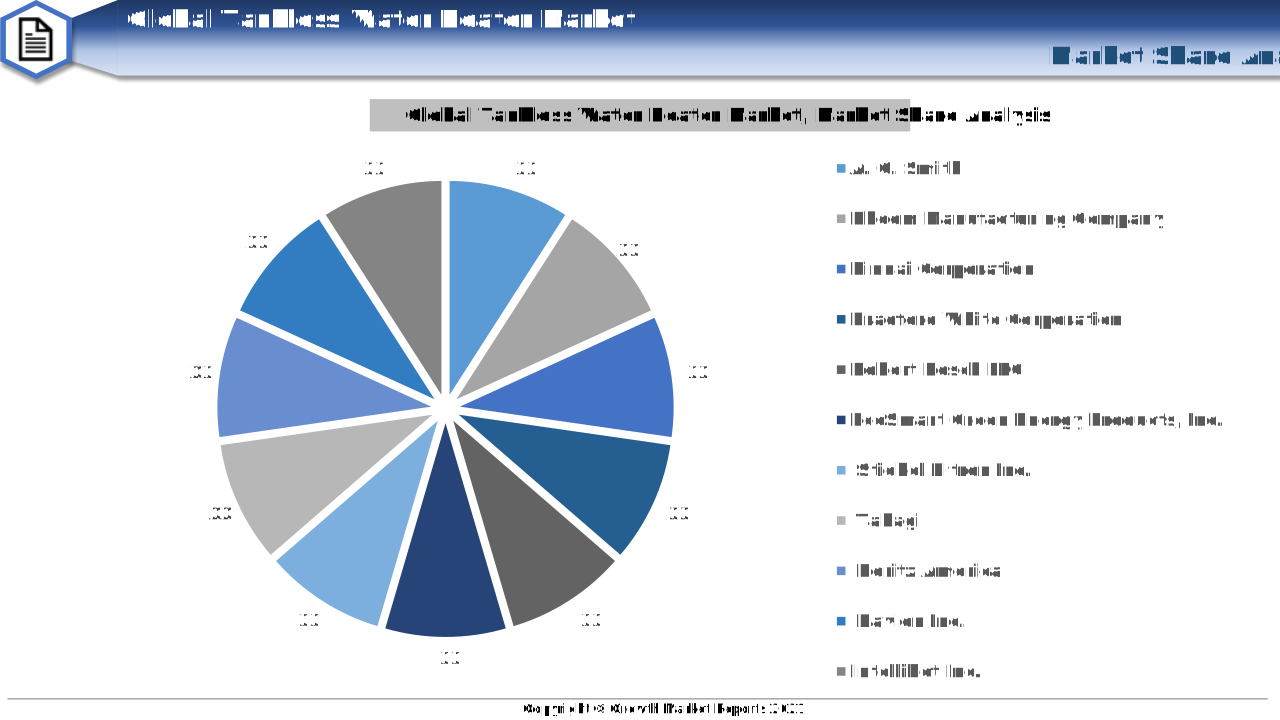

Tankless Water Heater Market By Key Players

Frequently Asked Questions

Major players include Rinnai Corporation, A. O. Smith Corporation, Rheem Manufacturing Company, Noritz Corporation, Bosch Thermotechnology, Stiebel Eltron, Navien Inc., Bradford White Corporation, and EcoSmart Green Energy Products, Inc.

The main challenges include the relatively high initial cost compared to traditional water heaters and the need for upgrades to existing plumbing or electrical systems during installation.

They are sold through both offline channels (specialty stores, home improvement retailers, authorized dealers) and online channels (e-commerce platforms), with online sales growing rapidly due to convenience and broader selection.

Tankless water heaters can be installed indoors or outdoors. Indoor units are common in homes and commercial buildings for protection from weather, while outdoor units are popular in mild climates and where indoor space is limited.

Tankless water heaters are used in residential, commercial, and industrial sectors. The residential segment holds the largest share, but there is robust growth in commercial (hotels, hospitals, schools) and industrial (manufacturing, food processing) applications.

Asia Pacific leads the market, followed by North America and Europe. Asia Pacific's growth is driven by rapid urbanization and infrastructure development, while North America and Europe benefit from early technology adoption and strong regulatory support.

Electric tankless water heaters are favored for their ease of installation, lower upfront costs, and suitability for residential use, especially in areas with reliable electricity. Gas tankless water heaters offer higher flow rates and are preferred for larger households and commercial applications, particularly where natural gas is available.

Key growth drivers include increasing demand for energy-efficient appliances, technological advancements, heightened consumer awareness of energy savings, and supportive regulatory frameworks promoting eco-friendly water heating systems.

The tankless water heater market is expected to grow at a CAGR of 8.2% from 2025 to 2033, reaching USD 15.3 billion by 2033.

As of 2024, the global tankless water heater market size reached USD 7.8 billion.

Table Of Content

Chapter 1 Executive Summary
Chapter 2 Assumptions and Acronyms Used
Chapter 3 Research Methodology
Chapter 4 Tankless water heater Market Overview
   4.1 Introduction
      4.1.1 Market Taxonomy
      4.1.2 Market Definition
      4.1.3 Macro-Economic Factors Impacting the Market Growth
   4.2 Tankless water heater Market Dynamics
      4.2.1 Market Drivers
      4.2.2 Market Restraints
      4.2.3 Market Opportunity
   4.3 Tankless water heater Market - Supply Chain Analysis
      4.3.1 List of Key Suppliers
      4.3.2 List of Key Distributors
      4.3.3 List of Key Consumers
   4.4 Key Forces Shaping the Tankless water heater Market
      4.4.1 Bargaining Power of Suppliers
      4.4.2 Bargaining Power of Buyers
      4.4.3 Threat of Substitution
      4.4.4 Threat of New Entrants
      4.4.5 Competitive Rivalry
   4.5 Global Tankless water heater Market Size & Forecast, 2023-2032
      4.5.1 Tankless water heater Market Size and Y-o-Y Growth
      4.5.2 Tankless water heater Market Absolute $ Opportunity

Chapter 5 Global Tankless water heater Market Analysis and Forecast By Product Type
   5.1 Introduction
      5.1.1 Key Market Trends & Growth Opportunities By Product Type
      5.1.2 Basis Point Share (BPS) Analysis By Product Type
      5.1.3 Absolute $ Opportunity Assessment By Product Type
   5.2 Tankless water heater Market Size Forecast By Product Type
      5.2.1 Electric Tankless Water Heaters
      5.2.2 Gas Tankless Water Heaters
   5.3 Market Attractiveness Analysis By Product Type

Chapter 6 Global Tankless water heater Market Analysis and Forecast By Application
   6.1 Introduction
      6.1.1 Key Market Trends & Growth Opportunities By Application
      6.1.2 Basis Point Share (BPS) Analysis By Application
      6.1.3 Absolute $ Opportunity Assessment By Application
   6.2 Tankless water heater Market Size Forecast By Application
      6.2.1 Residential
      6.2.2 Commercial
      6.2.3 Industrial
   6.3 Market Attractiveness Analysis By Application

Chapter 7 Global Tankless water heater Market Analysis and Forecast By Installation Type
   7.1 Introduction
      7.1.1 Key Market Trends & Growth Opportunities By Installation Type
      7.1.2 Basis Point Share (BPS) Analysis By Installation Type
      7.1.3 Absolute $ Opportunity Assessment By Installation Type
   7.2 Tankless water heater Market Size Forecast By Installation Type
      7.2.1 Indoor
      7.2.2 Outdoor
   7.3 Market Attractiveness Analysis By Installation Type

Chapter 8 Global Tankless water heater Market Analysis and Forecast By Distribution Channel
   8.1 Introduction
      8.1.1 Key Market Trends & Growth Opportunities By Distribution Channel
      8.1.2 Basis Point Share (BPS) Analysis By Distribution Channel
      8.1.3 Absolute $ Opportunity Assessment By Distribution Channel
   8.2 Tankless water heater Market Size Forecast By Distribution Channel
      8.2.1 Online
      8.2.2 Offline
   8.3 Market Attractiveness Analysis By Distribution Channel

Chapter 9 Global Tankless water heater Market Analysis and Forecast by Region
   9.1 Introduction
      9.1.1 Key Market Trends & Growth Opportunities By Region
      9.1.2 Basis Point Share (BPS) Analysis By Region
      9.1.3 Absolute $ Opportunity Assessment By Region
   9.2 Tankless water heater Market Size Forecast By Region
      9.2.1 North America
      9.2.2 Europe
      9.2.3 Asia Pacific
      9.2.4 Latin America
      9.2.5 Middle East & Africa (MEA)
   9.3 Market Attractiveness Analysis By Region

Chapter 10 Coronavirus Disease (COVID-19) Impact 
   10.1 Introduction 
   10.2 Current & Future Impact Analysis 
   10.3 Economic Impact Analysis 
   10.4 Government Policies 
   10.5 Investment Scenario

Chapter 11 North America Tankless water heater Analysis and Forecast
   11.1 Introduction
   11.2 North America Tankless water heater Market Size Forecast by Country
      11.2.1 U.S.
      11.2.2 Canada
   11.3 Basis Point Share (BPS) Analysis by Country
   11.4 Absolute $ Opportunity Assessment by Country
   11.5 Market Attractiveness Analysis by Country
   11.6 North America Tankless water heater Market Size Forecast By Product Type
      11.6.1 Electric Tankless Water Heaters
      11.6.2 Gas Tankless Water Heaters
   11.7 Basis Point Share (BPS) Analysis By Product Type 
   11.8 Absolute $ Opportunity Assessment By Product Type 
   11.9 Market Attractiveness Analysis By Product Type
   11.10 North America Tankless water heater Market Size Forecast By Application
      11.10.1 Residential
      11.10.2 Commercial
      11.10.3 Industrial
   11.11 Basis Point Share (BPS) Analysis By Application 
   11.12 Absolute $ Opportunity Assessment By Application 
   11.13 Market Attractiveness Analysis By Application
   11.14 North America Tankless water heater Market Size Forecast By Installation Type
      11.14.1 Indoor
      11.14.2 Outdoor
   11.15 Basis Point Share (BPS) Analysis By Installation Type 
   11.16 Absolute $ Opportunity Assessment By Installation Type 
   11.17 Market Attractiveness Analysis By Installation Type
   11.18 North America Tankless water heater Market Size Forecast By Distribution Channel
      11.18.1 Online
      11.18.2 Offline
   11.19 Basis Point Share (BPS) Analysis By Distribution Channel 
   11.20 Absolute $ Opportunity Assessment By Distribution Channel 
   11.21 Market Attractiveness Analysis By Distribution Channel

Chapter 12 Europe Tankless water heater Analysis and Forecast
   12.1 Introduction
   12.2 Europe Tankless water heater Market Size Forecast by Country
      12.2.1 Germany
      12.2.2 France
      12.2.3 Italy
      12.2.4 U.K.
      12.2.5 Spain
      12.2.6 Russia
      12.2.7 Rest of Europe
   12.3 Basis Point Share (BPS) Analysis by Country
   12.4 Absolute $ Opportunity Assessment by Country
   12.5 Market Attractiveness Analysis by Country
   12.6 Europe Tankless water heater Market Size Forecast By Product Type
      12.6.1 Electric Tankless Water Heaters
      12.6.2 Gas Tankless Water Heaters
   12.7 Basis Point Share (BPS) Analysis By Product Type 
   12.8 Absolute $ Opportunity Assessment By Product Type 
   12.9 Market Attractiveness Analysis By Product Type
   12.10 Europe Tankless water heater Market Size Forecast By Application
      12.10.1 Residential
      12.10.2 Commercial
      12.10.3 Industrial
   12.11 Basis Point Share (BPS) Analysis By Application 
   12.12 Absolute $ Opportunity Assessment By Application 
   12.13 Market Attractiveness Analysis By Application
   12.14 Europe Tankless water heater Market Size Forecast By Installation Type
      12.14.1 Indoor
      12.14.2 Outdoor
   12.15 Basis Point Share (BPS) Analysis By Installation Type 
   12.16 Absolute $ Opportunity Assessment By Installation Type 
   12.17 Market Attractiveness Analysis By Installation Type
   12.18 Europe Tankless water heater Market Size Forecast By Distribution Channel
      12.18.1 Online
      12.18.2 Offline
   12.19 Basis Point Share (BPS) Analysis By Distribution Channel 
   12.20 Absolute $ Opportunity Assessment By Distribution Channel 
   12.21 Market Attractiveness Analysis By Distribution Channel

Chapter 13 Asia Pacific Tankless water heater Analysis and Forecast
   13.1 Introduction
   13.2 Asia Pacific Tankless water heater Market Size Forecast by Country
      13.2.1 China
      13.2.2 Japan
      13.2.3 South Korea
      13.2.4 India
      13.2.5 Australia
      13.2.6 South East Asia (SEA)
      13.2.7 Rest of Asia Pacific (APAC)
   13.3 Basis Point Share (BPS) Analysis by Country
   13.4 Absolute $ Opportunity Assessment by Country
   13.5 Market Attractiveness Analysis by Country
   13.6 Asia Pacific Tankless water heater Market Size Forecast By Product Type
      13.6.1 Electric Tankless Water Heaters
      13.6.2 Gas Tankless Water Heaters
   13.7 Basis Point Share (BPS) Analysis By Product Type 
   13.8 Absolute $ Opportunity Assessment By Product Type 
   13.9 Market Attractiveness Analysis By Product Type
   13.10 Asia Pacific Tankless water heater Market Size Forecast By Application
      13.10.1 Residential
      13.10.2 Commercial
      13.10.3 Industrial
   13.11 Basis Point Share (BPS) Analysis By Application 
   13.12 Absolute $ Opportunity Assessment By Application 
   13.13 Market Attractiveness Analysis By Application
   13.14 Asia Pacific Tankless water heater Market Size Forecast By Installation Type
      13.14.1 Indoor
      13.14.2 Outdoor
   13.15 Basis Point Share (BPS) Analysis By Installation Type 
   13.16 Absolute $ Opportunity Assessment By Installation Type 
   13.17 Market Attractiveness Analysis By Installation Type
   13.18 Asia Pacific Tankless water heater Market Size Forecast By Distribution Channel
      13.18.1 Online
      13.18.2 Offline
   13.19 Basis Point Share (BPS) Analysis By Distribution Channel 
   13.20 Absolute $ Opportunity Assessment By Distribution Channel 
   13.21 Market Attractiveness Analysis By Distribution Channel

Chapter 14 Latin America Tankless water heater Analysis and Forecast
   14.1 Introduction
   14.2 Latin America Tankless water heater Market Size Forecast by Country
      14.2.1 Brazil
      14.2.2 Mexico
      14.2.3 Rest of Latin America (LATAM)
   14.3 Basis Point Share (BPS) Analysis by Country
   14.4 Absolute $ Opportunity Assessment by Country
   14.5 Market Attractiveness Analysis by Country
   14.6 Latin America Tankless water heater Market Size Forecast By Product Type
      14.6.1 Electric Tankless Water Heaters
      14.6.2 Gas Tankless Water Heaters
   14.7 Basis Point Share (BPS) Analysis By Product Type 
   14.8 Absolute $ Opportunity Assessment By Product Type 
   14.9 Market Attractiveness Analysis By Product Type
   14.10 Latin America Tankless water heater Market Size Forecast By Application
      14.10.1 Residential
      14.10.2 Commercial
      14.10.3 Industrial
   14.11 Basis Point Share (BPS) Analysis By Application 
   14.12 Absolute $ Opportunity Assessment By Application 
   14.13 Market Attractiveness Analysis By Application
   14.14 Latin America Tankless water heater Market Size Forecast By Installation Type
      14.14.1 Indoor
      14.14.2 Outdoor
   14.15 Basis Point Share (BPS) Analysis By Installation Type 
   14.16 Absolute $ Opportunity Assessment By Installation Type 
   14.17 Market Attractiveness Analysis By Installation Type
   14.18 Latin America Tankless water heater Market Size Forecast By Distribution Channel
      14.18.1 Online
      14.18.2 Offline
   14.19 Basis Point Share (BPS) Analysis By Distribution Channel 
   14.20 Absolute $ Opportunity Assessment By Distribution Channel 
   14.21 Market Attractiveness Analysis By Distribution Channel

Chapter 15 Middle East & Africa (MEA) Tankless water heater Analysis and Forecast
   15.1 Introduction
   15.2 Middle East & Africa (MEA) Tankless water heater Market Size Forecast by Country
      15.2.1 Saudi Arabia
      15.2.2 South Africa
      15.2.3 UAE
      15.2.4 Rest of Middle East & Africa (MEA)
   15.3 Basis Point Share (BPS) Analysis by Country
   15.4 Absolute $ Opportunity Assessment by Country
   15.5 Market Attractiveness Analysis by Country
   15.6 Middle East & Africa (MEA) Tankless water heater Market Size Forecast By Product Type
      15.6.1 Electric Tankless Water Heaters
      15.6.2 Gas Tankless Water Heaters
   15.7 Basis Point Share (BPS) Analysis By Product Type 
   15.8 Absolute $ Opportunity Assessment By Product Type 
   15.9 Market Attractiveness Analysis By Product Type
   15.10 Middle East & Africa (MEA) Tankless water heater Market Size Forecast By Application
      15.10.1 Residential
      15.10.2 Commercial
      15.10.3 Industrial
   15.11 Basis Point Share (BPS) Analysis By Application 
   15.12 Absolute $ Opportunity Assessment By Application 
   15.13 Market Attractiveness Analysis By Application
   15.14 Middle East & Africa (MEA) Tankless water heater Market Size Forecast By Installation Type
      15.14.1 Indoor
      15.14.2 Outdoor
   15.15 Basis Point Share (BPS) Analysis By Installation Type 
   15.16 Absolute $ Opportunity Assessment By Installation Type 
   15.17 Market Attractiveness Analysis By Installation Type
   15.18 Middle East & Africa (MEA) Tankless water heater Market Size Forecast By Distribution Channel
      15.18.1 Online
      15.18.2 Offline
   15.19 Basis Point Share (BPS) Analysis By Distribution Channel 
   15.20 Absolute $ Opportunity Assessment By Distribution Channel 
   15.21 Market Attractiveness Analysis By Distribution Channel

Chapter 16 Competition Landscape 
   16.1 Tankless water heater Market: Competitive Dashboard
   16.2 Global Tankless water heater Market: Market Share Analysis, 2023
   16.3 Company Profiles (Details – Overview, Financials, Developments, Strategy) 
      16.3.1 Rinnai Corporation
A. O. Smith Corporation
Rheem Manufacturing Company
Noritz Corporation
Bosch Thermotechnology
Stiebel Eltron
Navien Inc.
Bradford White Corporation
Eemax Inc.
EcoSmart Green Energy Products
Haier Group Corporation
Ariston Thermo Group
Takagi Industrial Co., Ltd.
Kenmore (Sears Holdings)
State Water Heaters
Marey Heater Corp.
Hubbell Water Heaters
Thermex Corporation
Ferroli S.p.A.
Atmor Heating Ltd.

Methodology

Our Clients

Honda Motor Co. Ltd.
Deloitte
Siemens Healthcare
General Electric
The John Holland Group
Microsoft
Nestle SA
FedEx Logistics