Segments - by Type (Vessel-Based Well Access Systems, Rig-Based Well Access Systems, Blowout Preventer (BOP) Systems), by Application (Shallow Water, Deepwater, Ultra-Deepwater), by Component (Hydraulic, Mechanical, Electrical), by End-User (Oil & Gas, Offshore Drilling Contractors, Service Providers)
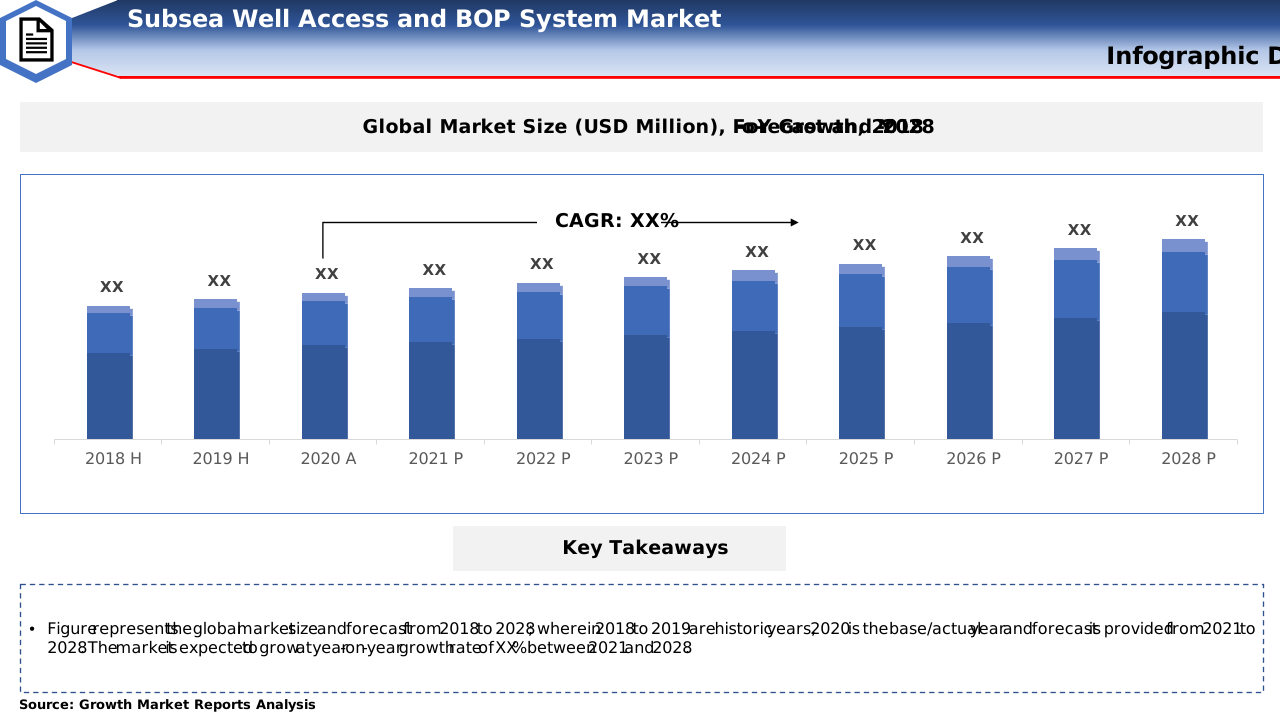
According to our latest research, the global subsea well access and BOP system market size reached USD 4.25 billion in 2024, with robust advancements in offshore oil and gas exploration driving the sector. The market is projected to expand at a CAGR of 5.8% from 2025 to 2033, reaching an estimated USD 7.10 billion by 2033. The primary growth factor for this market is the increasing demand for deepwater and ultra-deepwater drilling operations, which require advanced well access and blowout preventer systems to ensure operational safety and efficiency.
A significant driver behind the growth of the subsea well access and BOP system market is the ongoing surge in offshore oil and gas exploration activities. As easily accessible onshore oil reserves dwindle, energy companies are compelled to invest in technologically advanced offshore projects, particularly in deepwater and ultra-deepwater environments. These challenging environments necessitate reliable and efficient well access and blowout preventer systems to mitigate risks associated with high-pressure and high-temperature conditions. The increased focus on maximizing oil recovery rates from mature offshore fields has also fueled the adoption of sophisticated well intervention systems, further propelling market growth. Moreover, the rising global energy demand, coupled with the volatility in oil prices, is encouraging oil and gas operators to optimize their offshore assets, thereby boosting the market for subsea well access and BOP systems.
Another critical factor contributing to market expansion is the rapid technological advancements in subsea equipment. Innovations such as enhanced hydraulic and electrical control systems, real-time monitoring, and remote operation capabilities have significantly improved the reliability and safety of subsea well access and BOP systems. These advancements have enabled operators to access wells in increasingly complex and harsh environments while minimizing the risk of blowouts and other catastrophic failures. Additionally, the integration of digital technologies such as artificial intelligence and predictive analytics is allowing for proactive maintenance and operational optimization, reducing downtime and operational costs. The ongoing focus on sustainability and environmental protection in the oil and gas industry is also pushing manufacturers to develop more robust and environmentally friendly subsea systems, further supporting market growth.
The market is also benefiting from increased regulatory scrutiny and stringent safety standards imposed by governments and industry bodies worldwide. Following high-profile offshore incidents, regulatory authorities have mandated the use of advanced blowout preventer systems and well access technologies to ensure the safety of personnel, assets, and the environment. Compliance with these regulations often requires significant investments in state-of-the-art subsea equipment, creating substantial opportunities for market players. Moreover, the trend toward decommissioning aging offshore wells and infrastructure is generating demand for specialized well access and intervention services, further expanding the marketÂ’s potential.
In the realm of offshore drilling operations, the role of Drilling Rig Bop Storage is becoming increasingly pivotal. As the industry moves towards deeper and more challenging waters, the need for efficient storage solutions for blowout preventers (BOPs) on drilling rigs is critical. These storage systems ensure that BOPs are readily accessible and maintained in optimal condition, reducing downtime and enhancing safety. The ability to quickly deploy BOPs in response to well control incidents is crucial, and efficient storage solutions play a vital role in this process. Furthermore, advancements in storage technology are enabling more compact and modular designs, which are particularly beneficial for space-constrained offshore platforms. The integration of digital monitoring systems within these storage solutions is also enhancing maintenance practices, ensuring that BOPs are always ready for deployment.
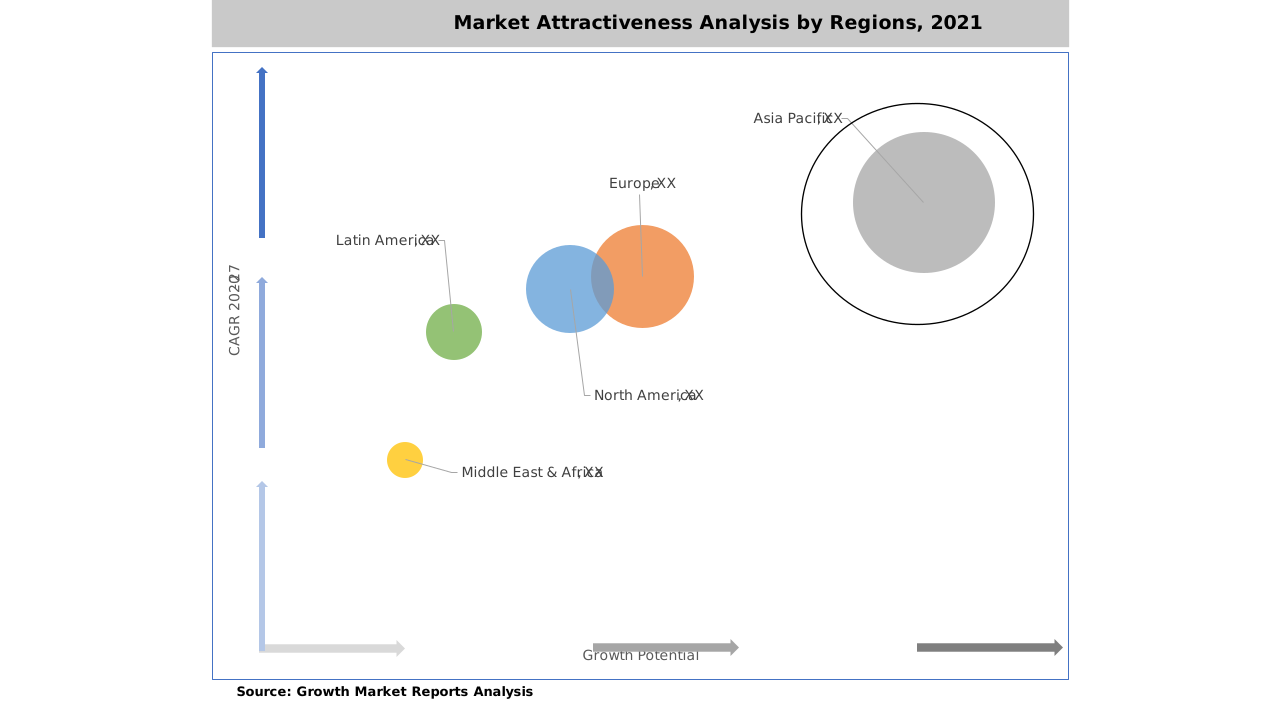
From a regional perspective, the subsea well access and BOP system market is witnessing robust growth in key offshore oil and gas hubs such as North America, Europe, and Asia Pacific. North America remains a dominant player, driven by extensive deepwater exploration activities in the Gulf of Mexico. Europe, particularly the North Sea, continues to invest in advanced subsea technologies to revitalize mature fields, while Asia Pacific is emerging as a lucrative market due to significant investments in offshore projects in countries like China, Australia, and Malaysia. The Middle East & Africa and Latin America are also showing promising growth trajectories, supported by new offshore discoveries and increasing investments in subsea infrastructure. These regional dynamics are expected to shape the competitive landscape and growth opportunities in the coming years.
The type segment of the subsea well access and BOP system market is categorized into vessel-based well access systems, rig-based well access systems, and blowout preventer (BOP) systems. Vessel-based well access systems are gaining traction due to their flexibility and cost-effectiveness, especially for intervention and maintenance operations on existing wells. These systems allow for rapid deployment and are particularly suited for light well intervention activities, which are becoming increasingly common as operators seek to optimize production from mature offshore assets. The adoption of vessel-based systems is further supported by advancements in dynamic positioning and remote operation technologies, which enhance operational efficiency and safety in challenging offshore conditions.
Rig-based well access systems, on the other hand, are traditionally used for heavy intervention and drilling operations that require more robust infrastructure and equipment. These systems offer higher operational capabilities and are essential for complex well construction, completion, and abandonment activities. The demand for rig-based systems is closely linked to the scale and complexity of offshore projects, particularly in deepwater and ultra-deepwater environments where operational risks are higher. Despite their higher operational costs, rig-based systems remain indispensable for high-stakes projects that demand maximum control and safety. The market for these systems is expected to remain steady, driven by ongoing investments in large-scale offshore developments and the need for comprehensive well integrity management.
Blowout preventer (BOP) systems represent a critical component of the subsea well access market, providing essential safety mechanisms to prevent uncontrolled hydrocarbon releases during drilling and intervention operations. The growing emphasis on safety and regulatory compliance has led to increased investment in advanced BOP systems equipped with real-time monitoring, remote activation, and fail-safe mechanisms. These systems are designed to withstand extreme pressure and temperature conditions, making them indispensable for deepwater and ultra-deepwater drilling. Innovations in BOP technology, such as shear ram enhancements and dual-activity capabilities, are further enhancing the reliability and effectiveness of these systems, driving their adoption across the global offshore industry.
Subsea Well Intervention is a critical aspect of maintaining and enhancing the productivity of offshore wells. As the industry faces the challenge of extracting hydrocarbons from increasingly complex reservoirs, the demand for advanced well intervention techniques is on the rise. Subsea interventions allow operators to perform necessary maintenance and enhancements without the need for costly and time-consuming rig-based operations. This capability is particularly valuable in mature fields where maximizing recovery is essential. The development of new intervention technologies, such as remotely operated vehicles (ROVs) and advanced coiled tubing systems, is enabling more efficient and effective interventions. These technologies not only reduce operational costs but also minimize environmental impact, aligning with the industry's sustainability goals. As a result, subsea well intervention is becoming an indispensable tool for offshore operators looking to optimize their assets and extend the life of their wells.
The interplay between these three types is shaping the competitive dynamics of the market. As operators strive to balance cost, efficiency, and safety, the choice between vessel-based, rig-based, and advanced BOP systems often depends on the specific requirements of each offshore project. Market players are increasingly offering integrated solutions that combine the strengths of different system types, enabling operators to optimize their well access and intervention strategies. This trend toward integrated and customizable solutions is expected to drive further innovation and competition in the type segment over the forecast period.
| Attributes | Details |
| Report Title | Subsea Well Access and BOP System Market Research Report 2033 |
| By Type | Vessel-Based Well Access Systems, Rig-Based Well Access Systems, Blowout Preventer (BOP) Systems |
| By Application | Shallow Water, Deepwater, Ultra-Deepwater |
| By Component | Hydraulic, Mechanical, Electrical |
| By End-User | Oil & Gas, Offshore Drilling Contractors, Service Providers |
| Regions Covered | North America, Europe, APAC, Latin America, MEA |
| Base Year | 2024 |
| Historic Data | 2018-2023 |
| Forecast Period | 2025-2033 |
| Number of Pages | 279 |
| Number of Tables & Figures | 255 |
| Customization Available | Yes, the report can be customized as per your need. |
The application segment of the subsea well access and BOP system market is divided into shallow water, deepwater, and ultra-deepwater operations. Shallow water applications have traditionally dominated the market, given the relative ease of access and lower operational risks compared to deeper environments. However, as shallow reserves are gradually depleted, the market is witnessing a strategic shift toward deeper and more challenging offshore locations. Despite this shift, shallow water projects continue to generate steady demand for well access and BOP systems, particularly in regions with mature offshore fields and ongoing redevelopment activities.
Deepwater applications are emerging as a major growth driver for the market, fueled by the discovery of significant hydrocarbon reserves in deepwater basins around the world. These projects require advanced subsea systems capable of operating at depths of 1,000 meters or more, often under high-pressure and high-temperature conditions. The complexity and risks associated with deepwater drilling necessitate the use of state-of-the-art well access and BOP technologies to ensure operational safety and efficiency. As global energy demand rises and onshore reserves decline, investments in deepwater exploration and production are expected to accelerate, driving robust growth in this application segment.
Ultra-deepwater applications, involving operations at depths exceeding 1,500 meters, represent the frontier of offshore oil and gas exploration. These projects pose unique technical and operational challenges, requiring the most advanced well access and BOP systems available. The market for ultra-deepwater applications is characterized by high capital investment, stringent safety requirements, and a strong focus on technological innovation. The increasing number of ultra-deepwater discoveries, particularly in regions such as the Gulf of Mexico, Brazil, and West Africa, is creating substantial opportunities for market players specializing in high-performance subsea systems. The adoption of digital technologies and remote monitoring capabilities is further enhancing the operational feasibility of ultra-deepwater projects, supporting market growth in this segment.
The evolving application landscape is driving market participants to invest in research and development, aiming to deliver customized solutions that address the specific needs of each operational environment. The integration of real-time data analytics, predictive maintenance, and automated control systems is transforming the way subsea well access and BOP systems are deployed and managed across different application segments. As offshore operators continue to push the boundaries of exploration and production, the demand for versatile and reliable subsea systems is expected to remain strong, shaping the future trajectory of the market.
The component segment of the subsea well access and BOP system market comprises hydraulic, mechanical, and electrical systems. Hydraulic components play a crucial role in the operation of subsea well access and BOP systems, providing the necessary power and control for various functions such as valve actuation, pressure regulation, and emergency shutdowns. The reliability and responsiveness of hydraulic systems are critical for ensuring the safety and efficiency of offshore operations, particularly in high-pressure and high-temperature environments. Recent advancements in hydraulic technology, including the development of high-performance fluids and corrosion-resistant materials, are enhancing the durability and operational lifespan of these components.
Mechanical components form the backbone of subsea well access and BOP systems, encompassing a wide range of devices such as rams, seals, connectors, and locking mechanisms. The performance of mechanical components is directly linked to the overall integrity and safety of subsea operations. Manufacturers are continuously innovating to improve the strength, reliability, and ease of maintenance of mechanical components, leveraging advanced materials and precision engineering techniques. The increasing complexity of offshore projects, particularly in deepwater and ultra-deepwater environments, is driving demand for robust and high-performance mechanical systems that can withstand extreme operational conditions.
Electrical components are becoming increasingly important in the subsea well access and BOP system market, driven by the growing adoption of digital technologies and remote operation capabilities. Electrical systems enable real-time monitoring, data acquisition, and automated control of subsea equipment, enhancing operational visibility and decision-making. The integration of sensors, communication networks, and intelligent control units is transforming the way subsea systems are managed, allowing operators to detect issues proactively and optimize maintenance schedules. The shift toward electrification is also supporting the industryÂ’s sustainability goals by enabling more energy-efficient operations and reducing the environmental footprint of offshore projects.
The interplay between hydraulic, mechanical, and electrical components is shaping the evolution of subsea well access and BOP systems. Market players are increasingly focusing on developing integrated solutions that combine the strengths of each component type, delivering enhanced performance, reliability, and operational flexibility. The trend toward modular and scalable system architectures is enabling operators to tailor their subsea equipment to the specific requirements of each project, optimizing cost and performance. As the industry continues to embrace digitalization and automation, the demand for advanced electrical and hybrid systems is expected to grow, driving innovation and competition in the component segment.
The end-user segment of the subsea well access and BOP system market is segmented into oil and gas companies, offshore drilling contractors, and service providers. Oil and gas companies represent the largest end-user group, accounting for a significant share of market demand. These companies are responsible for the exploration, development, and production of offshore oil and gas resources, necessitating the use of advanced well access and BOP systems to ensure safe and efficient operations. The increasing complexity of offshore projects, coupled with stringent safety and environmental regulations, is driving oil and gas companies to invest in state-of-the-art subsea technologies.
Offshore drilling contractors play a pivotal role in the deployment and operation of subsea well access and BOP systems. These contractors are responsible for executing drilling and intervention activities on behalf of oil and gas operators, often under challenging and high-risk conditions. The demand for reliable and high-performance subsea systems is particularly strong among drilling contractors, who must adhere to strict safety standards and operational protocols. The trend toward outsourcing drilling activities to specialized contractors is further boosting demand for advanced well access and BOP solutions in this end-user segment.
Service providers, including well intervention and maintenance companies, are also significant end-users of subsea well access and BOP systems. These companies offer specialized services such as well integrity management, plug and abandonment, and decommissioning, which require the use of sophisticated subsea equipment. The growing focus on maximizing the productive lifespan of offshore wells and optimizing asset performance is driving demand for well intervention services, supporting market growth in this segment. Service providers are increasingly leveraging digital technologies and remote operation capabilities to enhance the efficiency and safety of their operations.
The end-user landscape is characterized by a high degree of collaboration and partnership between oil and gas companies, drilling contractors, and service providers. Market players are increasingly offering integrated solutions and turnkey services that address the full spectrum of offshore well access and intervention needs. This collaborative approach is enabling end-users to optimize project outcomes, reduce operational risks, and achieve greater cost efficiency. As the offshore industry continues to evolve, the demand for flexible, reliable, and technologically advanced subsea well access and BOP systems is expected to remain robust across all end-user segments.
The subsea well access and BOP system market presents significant opportunities for growth and innovation, particularly in the context of expanding offshore exploration and production activities. The ongoing shift toward deepwater and ultra-deepwater projects is creating substantial demand for advanced subsea systems capable of operating under extreme conditions. Market players that invest in research and development to deliver cutting-edge technologies, such as real-time monitoring, predictive analytics, and remote operation capabilities, are well-positioned to capitalize on these opportunities. The growing emphasis on sustainability and environmental protection is also driving demand for more energy-efficient and environmentally friendly subsea solutions, opening up new avenues for product development and differentiation.
Another key opportunity lies in the increasing adoption of digitalization and automation in the offshore oil and gas industry. The integration of intelligent sensors, data analytics, and automated control systems is transforming the way subsea well access and BOP systems are managed, enabling operators to optimize performance, reduce downtime, and minimize operational risks. The trend toward modular and scalable system architectures is also creating opportunities for market players to offer customizable solutions that address the specific needs of each project. As the industry continues to embrace digital transformation, companies that can deliver integrated, data-driven solutions are likely to gain a competitive edge in the market.
Despite these opportunities, the market faces several challenges and restrainers that could impact growth prospects. One of the primary threats is the high capital and operational costs associated with offshore projects, particularly in deepwater and ultra-deepwater environments. Fluctuations in oil prices and economic uncertainty can lead to project delays or cancellations, affecting demand for subsea well access and BOP systems. Additionally, the complex and rapidly evolving regulatory landscape poses compliance challenges for market players, requiring continuous investment in safety and environmental protection measures. The competitive pressure from alternative energy sources, such as renewables, also presents a long-term threat to the growth of the offshore oil and gas industry and, by extension, the subsea well access and BOP system market.
North America holds a dominant position in the subsea well access and BOP system market, with a market size of USD 1.35 billion in 2024. The region is characterized by extensive offshore exploration and production activities in the Gulf of Mexico, which remains a key hub for deepwater and ultra-deepwater projects. The adoption of advanced subsea technologies is driven by stringent regulatory requirements and the need to maximize recovery rates from mature fields. North America is expected to maintain its leadership position over the forecast period, supported by ongoing investments in offshore infrastructure and the development of new deepwater reserves. The region is projected to grow at a CAGR of 5.6% through 2033, reaching approximately USD 2.15 billion.
Europe is another significant market, with a market size of USD 1.10 billion in 2024. The regionÂ’s offshore industry is centered around the North Sea, where operators are investing in advanced well access and BOP systems to revitalize aging assets and extend the productive lifespan of existing fields. The focus on sustainability and environmental protection is driving the adoption of innovative subsea technologies in Europe, with a particular emphasis on reducing the environmental footprint of offshore operations. The region is expected to witness steady growth over the forecast period, supported by ongoing redevelopment projects and the integration of digital technologies in offshore operations.
Asia Pacific is emerging as a high-growth region, with a market size of USD 0.85 billion in 2024. The region is witnessing increased investment in offshore exploration and production, particularly in countries such as China, Australia, and Malaysia. The growing demand for energy, coupled with the discovery of new offshore reserves, is driving the adoption of advanced subsea well access and BOP systems in Asia Pacific. The region is expected to experience the fastest growth among all regions, with a projected CAGR of 6.4% through 2033, reaching a market size of USD 1.50 billion. Latin America and the Middle East & Africa are also showing promising growth trajectories, supported by new offshore discoveries and increasing investments in subsea infrastructure.
The subsea well access and BOP system market is highly competitive, with a mix of established multinational corporations and specialized equipment providers vying for market share. The competitive landscape is characterized by a strong focus on technological innovation, operational reliability, and compliance with stringent safety and environmental regulations. Major players are investing heavily in research and development to deliver next-generation subsea systems that address the evolving needs of offshore operators. The market is also witnessing increased collaboration and partnership between equipment manufacturers, service providers, and oil and gas companies, aimed at delivering integrated solutions and turnkey services.
Strategic mergers and acquisitions are a common feature of the competitive landscape, as companies seek to expand their product portfolios, enhance technological capabilities, and strengthen their global presence. Leading market players are leveraging their extensive experience and technical expertise to develop customized solutions that cater to the specific requirements of each offshore project. The ability to offer end-to-end solutions, from system design and engineering to installation and maintenance, is emerging as a key differentiator in the market. Companies are also focusing on digitalization and automation, integrating intelligent sensors, data analytics, and remote operation capabilities into their subsea systems to enhance operational efficiency and safety.
The market is witnessing the entry of new players, particularly in the Asia Pacific and Middle East & Africa regions, where increasing investment in offshore projects is creating opportunities for local and regional equipment providers. However, the high capital requirements and stringent regulatory standards pose significant barriers to entry, favoring established players with proven track records and robust financial resources. The competitive intensity is further heightened by the need to comply with evolving safety and environmental regulations, which require continuous investment in product development and certification.
Some of the major companies operating in the global subsea well access and BOP system market include Schlumberger, Halliburton, Baker Hughes, TechnipFMC, Aker Solutions, National Oilwell Varco, Cameron (a Schlumberger company), GE Oil & Gas, and Oceaneering International. Schlumberger and Halliburton are recognized for their comprehensive portfolios of well access and intervention solutions, backed by extensive research and development capabilities. Baker Hughes and TechnipFMC are known for their expertise in advanced BOP systems and integrated subsea solutions, while Aker Solutions and National Oilwell Varco offer a wide range of equipment and services for offshore drilling and production.
Cameron, now a part of Schlumberger, is a leading provider of blowout preventer systems and wellhead equipment, with a strong focus on innovation and reliability. GE Oil & Gas (now part of Baker Hughes) is renowned for its advanced subsea production systems and digital solutions, enabling operators to optimize performance and reduce operational risks. Oceaneering International specializes in remotely operated vehicles (ROVs) and subsea intervention services, supporting the deployment and maintenance of well access and BOP systems in challenging offshore environments. These companies are continuously investing in technology and expanding their global footprint to address the growing demand for advanced subsea well access and BOP systems.
The Subsea Well Access and BOP System market has been segmented on the basis of
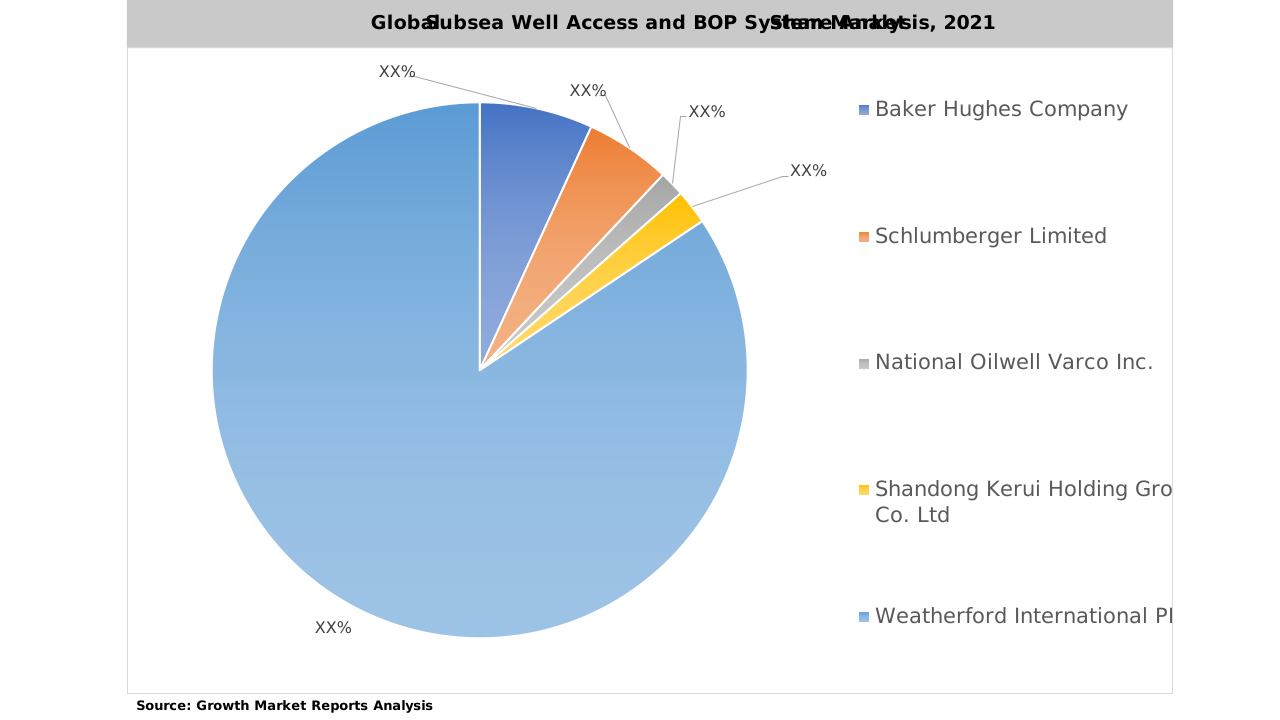
Key players operating in the Global subsea well access and BOP system Market includes Baker Hughes Company, Schlumberger Limited, National Oilwell Varco Inc., Shandong Kerui Holding Group Co. Ltd, and Weatherford International PLC.
Digitalization and automation are enabling real-time data analytics, predictive maintenance, and remote operations, which help optimize performance, reduce downtime, and enhance safety and sustainability in offshore projects.
Primary applications are in shallow water, deepwater, and ultra-deepwater operations, with deepwater and ultra-deepwater segments experiencing the fastest growth due to new discoveries and technological advancements.
Leading companies include Schlumberger, Halliburton, Baker Hughes, TechnipFMC, Aker Solutions, National Oilwell Varco, Cameron (a Schlumberger company), GE Oil & Gas, and Oceaneering International.
Key challenges include high capital and operational costs, fluctuating oil prices, complex regulatory requirements, and competition from alternative energy sources like renewables.
Major end-users include oil and gas companies, offshore drilling contractors, and service providers specializing in well intervention, maintenance, and decommissioning.
Technological advancements such as real-time monitoring, remote operation, AI, predictive analytics, and enhanced hydraulic and electrical systems are improving reliability, safety, and operational efficiency in subsea operations.
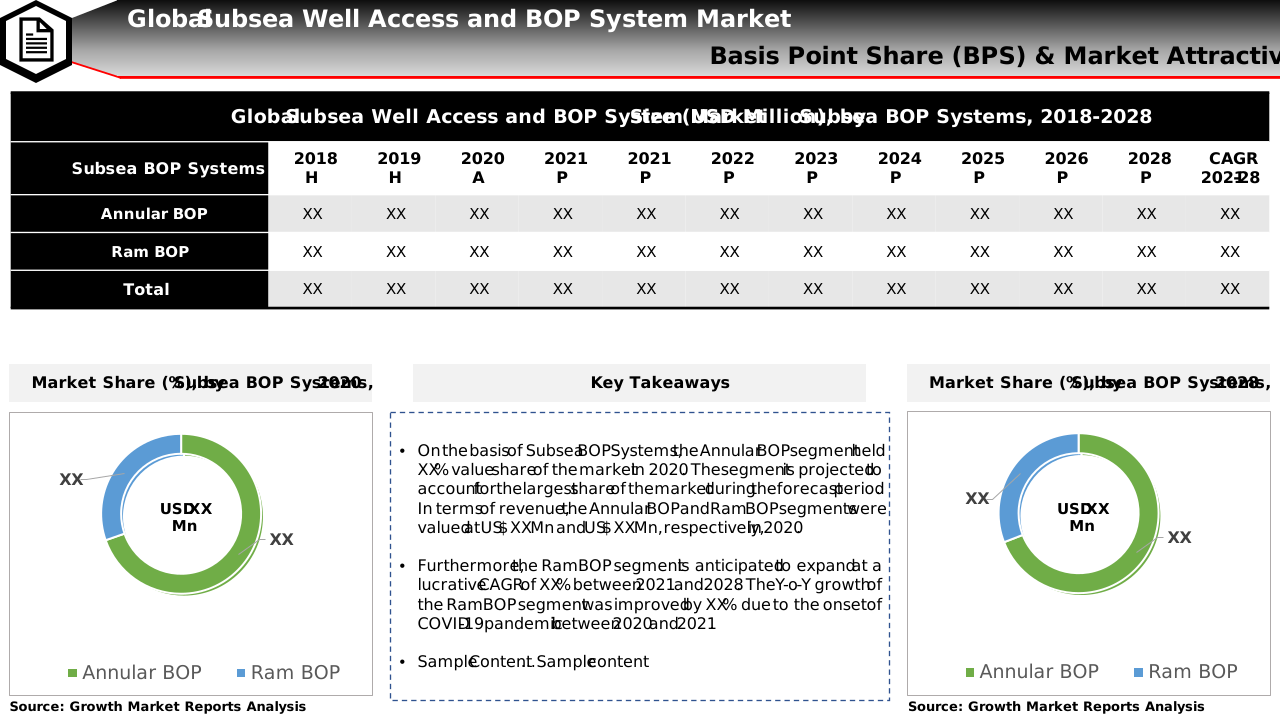
The market is segmented into vessel-based well access systems, rig-based well access systems, and blowout preventer (BOP) systems. Each type serves different operational needs, from light intervention to heavy drilling and safety control.
North America, Europe, and Asia Pacific are the leading regions. North America, especially the Gulf of Mexico, is dominant, with Europe focusing on the North Sea and Asia Pacific experiencing rapid growth due to investments in countries like China, Australia, and Malaysia.
Key growth drivers include increasing demand for deepwater and ultra-deepwater drilling, technological advancements in subsea equipment, rising global energy demand, and stricter safety and environmental regulations.
The global subsea well access and BOP system market reached USD 4.25 billion in 2024 and is projected to grow at a CAGR of 5.8% from 2025 to 2033, reaching approximately USD 7.10 billion by 2033.