Segments - by Type (Planar, Tubular, Others), by Application (Stationary, Portable, Transport), by End-User (Residential, Commercial, Industrial, Utilities)
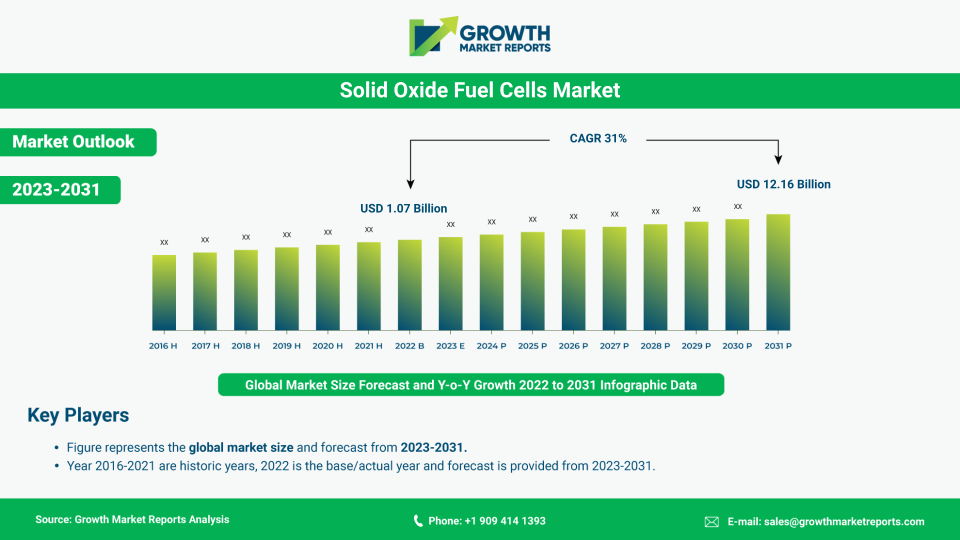
According to our latest research, the global Solid Oxide Fuel Cells (SOFC) market size reached USD 1.62 billion in 2024, driven by increasing demand for clean and efficient energy solutions. The market is projected to grow at a robust CAGR of 31.7% during the forecast period, with the market size expected to reach USD 19.43 billion by 2033. This remarkable growth is primarily fueled by rising investments in renewable energy infrastructure, government initiatives supporting low-emission technologies, and the expanding application base of SOFCs across various sectors.
One of the primary growth factors for the Solid Oxide Fuel Cells market is the global push toward decarbonization and the reduction of greenhouse gas emissions. Governments and regulatory bodies across the world are implementing stringent emission standards, which is accelerating the adoption of SOFCs as a viable alternative to conventional combustion-based power generation methods. SOFCs, with their high fuel-to-electricity conversion efficiency and ability to utilize a variety of fuels including hydrogen, biogas, and natural gas, are increasingly being integrated into stationary power generation systems for both commercial and industrial applications. Furthermore, the growing recognition of SOFCs' role in supporting distributed energy generation and microgrid development is expected to further propel market expansion in the coming years.
Another significant driver of growth in the Solid Oxide Fuel Cells market is technological advancements and ongoing research and development activities. Innovations in cell materials, stack design, and system integration are leading to improved performance, reduced costs, and enhanced durability of SOFC systems. These advancements are making SOFC technology more accessible and economically viable for a broader range of applications, from large-scale utility power plants to small-scale residential energy systems. In addition, collaborations between industry players, research institutions, and government agencies are fostering the development of next-generation SOFC products with superior operational characteristics, further stimulating market growth.
The increasing adoption of SOFCs in emerging applications such as combined heat and power (CHP) systems, auxiliary power units, and transportation is also contributing to the market's robust growth trajectory. With the global energy landscape shifting towards distributed generation and energy resilience, SOFCs are being recognized for their ability to provide reliable, flexible, and environmentally friendly power solutions. The integration of SOFCs with renewable energy sources and energy storage systems is opening new avenues for market expansion, particularly in regions with ambitious clean energy targets. As industries and utilities seek to enhance energy security and reduce their carbon footprint, the demand for advanced SOFC solutions is expected to witness sustained growth throughout the forecast period.
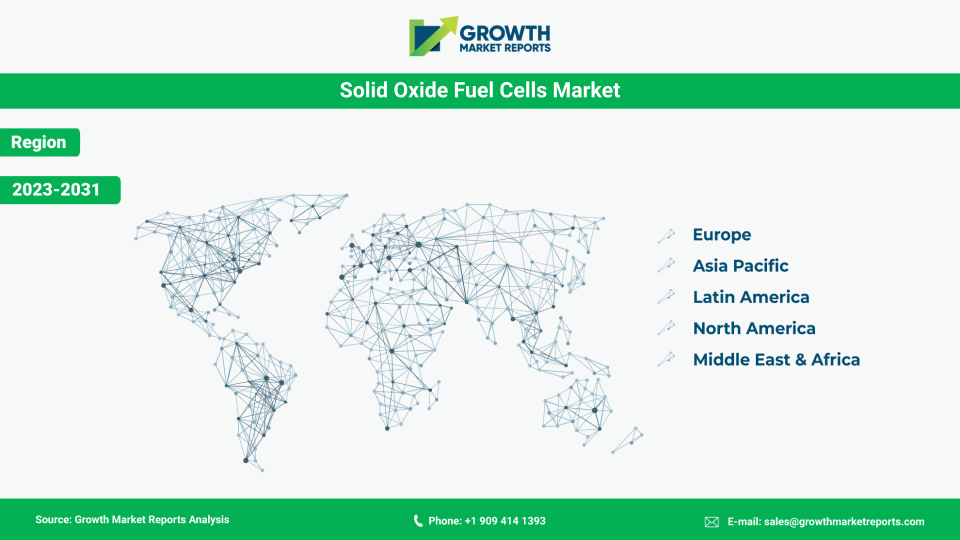
From a regional perspective, Asia Pacific dominates the Solid Oxide Fuel Cells market, accounting for the largest market share in 2024, followed closely by North America and Europe. The rapid industrialization, growing urban population, and increasing investments in clean energy infrastructure in countries such as China, Japan, and South Korea are key factors driving the market in the Asia Pacific region. North America is expected to maintain a strong growth momentum, supported by favorable government policies, significant R&D investments, and the presence of leading SOFC manufacturers. Europe, with its ambitious climate targets and robust support for hydrogen and fuel cell technologies, is also emerging as a key market for SOFC deployment. Meanwhile, regions like Latin America and the Middle East & Africa are gradually witnessing increased interest in SOFC technology, primarily driven by the need to diversify energy sources and enhance energy security.
The Solid Oxide Fuel Cells market is segmented by type into planar, tubular, and other configurations, each with distinct advantages and application areas. The planar SOFC segment holds the largest market share in 2024, owing to its compact design, high power density, and suitability for large-scale stationary power generation. Planar SOFCs are widely adopted in commercial and industrial settings where space efficiency and system integration are critical. The ongoing advancements in planar cell materials and stack designs are further enhancing their operational efficiency and lifespan, making them the preferred choice for utility-scale projects and distributed energy systems.
Tubular SOFCs, while representing a smaller share of the market compared to planar types, are gaining traction due to their robust mechanical stability and tolerance to thermal cycling. These characteristics make tubular SOFCs particularly suitable for applications requiring high reliability and long operational lifespans, such as backup power systems and remote power generation. The unique design of tubular cells allows for easier sealing and reduced risk of gas leakage, which is a significant advantage in environments with stringent safety requirements. As research continues to optimize manufacturing processes and reduce costs, the adoption of tubular SOFCs is expected to increase steadily over the forecast period.
In the realm of distributed energy systems, the Solid Oxide Fuel Cell Micro-Inverter is emerging as a transformative technology. By integrating micro-inverters with SOFCs, these systems can efficiently convert DC power generated by fuel cells into AC power, suitable for grid integration or local consumption. This innovation not only enhances the energy conversion efficiency but also facilitates the seamless integration of SOFCs into existing electrical infrastructure. As demand for decentralized and flexible energy solutions grows, the adoption of SOFC micro-inverters is expected to accelerate, offering a scalable and efficient pathway to harness clean energy at the local level.
Other SOFC configurations, including micro-tubular and monolithic designs, are also emerging as promising alternatives for niche applications. Micro-tubular SOFCs, for example, offer rapid start-up times and enhanced thermal management, making them ideal for portable and auxiliary power units. Monolithic designs, on the other hand, aim to combine the benefits of planar and tubular configurations, offering high power density and mechanical strength. While these alternative types currently account for a smaller portion of the market, ongoing innovation and commercialization efforts are expected to expand their presence, particularly in specialized and high-performance applications.
The choice of SOFC type is often dictated by the specific requirements of the end-user and the intended application. Factors such as power output, operational environment, system integration, and cost considerations play a crucial role in determining the most suitable SOFC configuration. As the market matures and technology continues to evolve, it is anticipated that the boundaries between different SOFC types will become increasingly blurred, with hybrid and customized solutions emerging to meet the diverse needs of various industries. This trend is expected to foster greater flexibility and innovation within the SOFC market, driving further adoption and market growth.
| Attributes | Details |
| Report Title | Solid Oxide Fuel Cells Market Research Report 2033 |
| By Type | Planar, Tubular, Others |
| By Application | Stationary, Portable, Transport |
| By End-User | Residential, Commercial, Industrial, Utilities |
| Regions Covered | North America, Europe, APAC, Latin America, MEA |
| Base Year | 2024 |
| Historic Data | 2018-2023 |
| Forecast Period | 2025-2033 |
| Number of Pages | 251 |
| Number of Tables & Figures | 360 |
| Customization Available | Yes, the report can be customized as per your need. |
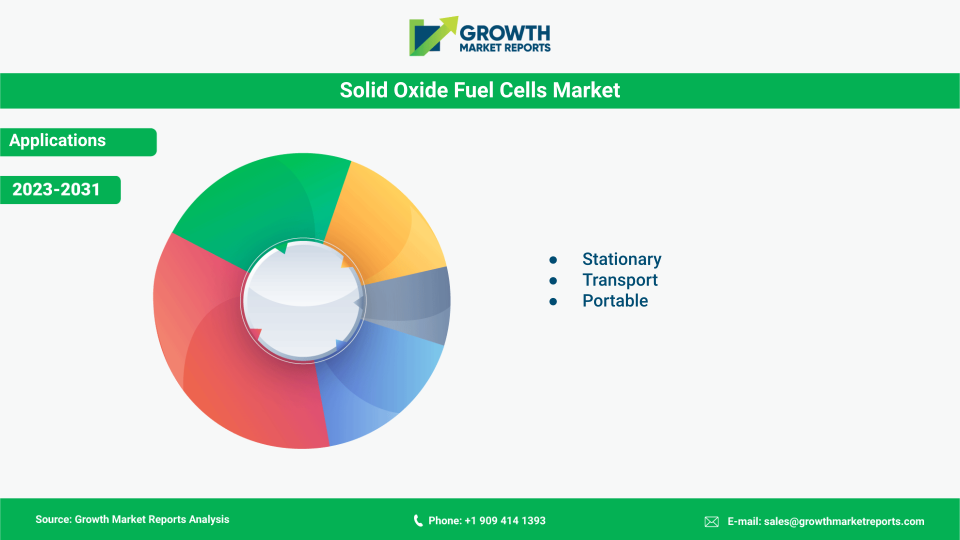
The Solid Oxide Fuel Cells market by application is segmented into stationary, portable, and transport sectors, each contributing uniquely to overall market dynamics. Stationary applications dominate the market, accounting for the largest share in 2024, owing to the widespread deployment of SOFCs in power generation, combined heat and power (CHP) systems, and distributed energy resources. The high efficiency, fuel flexibility, and low emissions of SOFCs make them particularly attractive for stationary installations in commercial, industrial, and utility settings. The ability to provide reliable, on-site power with minimal environmental impact is driving the adoption of SOFCs in regions with stringent emission regulations and growing demand for clean energy.
Portable applications of SOFCs, though currently representing a smaller market segment, are witnessing rapid growth due to the increasing need for lightweight, high-efficiency power sources in military, emergency, and off-grid scenarios. The development of compact and lightweight SOFC systems is enabling their use in portable generators, backup power units, and remote sensing devices. The inherent advantages of SOFCs, such as silent operation, high energy density, and the ability to operate on various fuels, are making them an attractive alternative to traditional battery and combustion-based solutions for portable power needs.
The transport sector is an emerging application area for SOFC technology, with growing interest in its use for auxiliary power units (APUs) in vehicles, ships, and aircraft. SOFCs offer the potential to provide clean, efficient, and reliable power for electric propulsion systems, onboard electronics, and climate control in transportation applications. The transition towards low-emission and zero-emission vehicles is creating new opportunities for SOFC integration, particularly in heavy-duty and long-haul transport segments where energy density and operational flexibility are critical. While the adoption of SOFCs in transport is still in its nascent stage, ongoing research and pilot projects are expected to pave the way for broader commercialization in the coming years.
The versatility of SOFC technology across multiple application domains is a key factor driving its market growth. As energy systems become increasingly decentralized and diversified, the demand for flexible and scalable power solutions is expected to rise. SOFCs, with their ability to operate efficiently across a wide range of power outputs and fuel types, are well-positioned to address this evolving demand landscape. The continued expansion of SOFC applications is anticipated to create new growth avenues and enhance the overall resilience and sustainability of global energy systems.
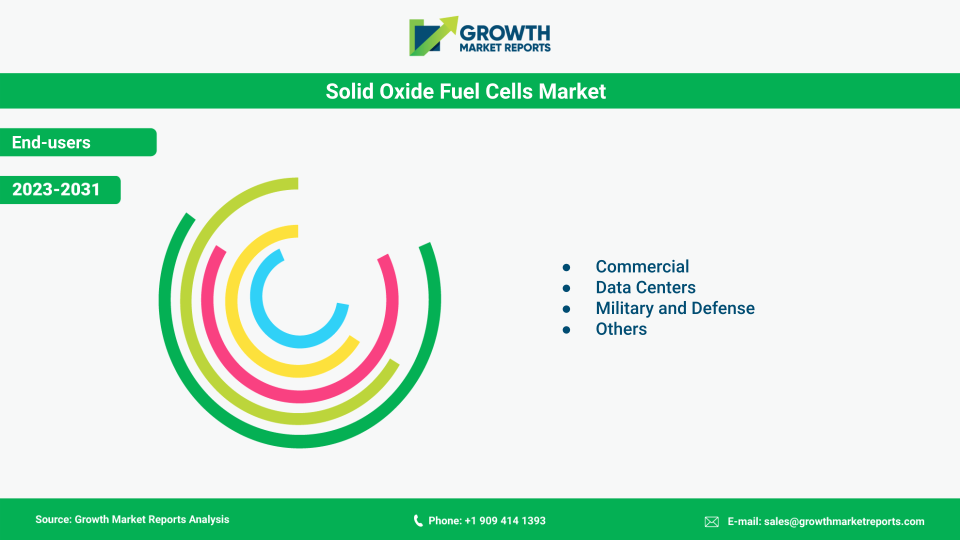
The Solid Oxide Fuel Cells market is segmented by end-user into residential, commercial, industrial, and utilities, each with distinct adoption drivers and market dynamics. The commercial sector leads the market in 2024, driven by the increasing deployment of SOFC-based CHP systems in office buildings, hotels, hospitals, and data centers. The ability of SOFCs to provide both electricity and heat with high efficiency makes them an ideal solution for commercial facilities seeking to reduce energy costs, enhance reliability, and meet sustainability goals. The growing emphasis on green building standards and energy efficiency regulations is further accelerating the adoption of SOFCs in the commercial sector.
The industrial sector is another significant end-user segment, with SOFCs being increasingly integrated into manufacturing plants, chemical processing facilities, and other energy-intensive operations. The high power output, fuel flexibility, and low emissions of SOFCs are particularly valuable in industrial settings where uninterrupted power supply and environmental compliance are critical. The ability to utilize waste heat and integrate with existing energy infrastructure is driving the adoption of SOFCs for process heating, cogeneration, and backup power applications in the industrial sector.
Residential applications of SOFCs, while currently representing a smaller share of the market, are gaining momentum, particularly in regions with supportive government policies and incentives. The development of compact, user-friendly SOFC systems is enabling their deployment in single-family homes and multi-unit residential buildings for on-site power and heating. The potential for energy cost savings, reduced carbon footprint, and increased energy independence is making SOFCs an attractive option for environmentally conscious homeowners. As technology advances and costs continue to decline, the residential segment is expected to witness significant growth over the forecast period.
Utilities are also emerging as a key end-user segment for SOFC technology, particularly in the context of grid modernization and the integration of distributed energy resources. Utilities are leveraging SOFCs for distributed generation, grid support, and peak shaving applications, benefiting from their high efficiency, fast response times, and ability to operate on multiple fuels. The deployment of SOFCs in microgrids and virtual power plants is enhancing grid resilience and supporting the transition towards a more decentralized and sustainable energy system. As utilities continue to invest in clean energy infrastructure, the demand for advanced SOFC solutions is expected to increase substantially.
The Solid Oxide Fuel Cells market presents substantial opportunities for stakeholders across the value chain, driven by the global transition towards clean and sustainable energy solutions. One of the most significant opportunities lies in the integration of SOFCs with renewable energy sources such as solar and wind, enabling the creation of hybrid energy systems that offer enhanced reliability, flexibility, and grid stability. The ability of SOFCs to utilize a wide range of fuels, including hydrogen produced from renewable sources, positions them as a key enabler of the hydrogen economy. Additionally, the growing adoption of distributed energy resources and microgrids is creating new market opportunities for SOFCs in both developed and emerging economies. As governments and industries seek to decarbonize their energy systems, the demand for advanced SOFC solutions is expected to rise, creating lucrative growth prospects for manufacturers, suppliers, and service providers.
Another significant opportunity in the Solid Oxide Fuel Cells market is the expansion into emerging application areas such as transportation, marine, and aerospace sectors. The unique advantages of SOFCs, including high energy density, fuel flexibility, and low emissions, make them well-suited for use in electric vehicles, ships, and aircraft. The ongoing electrification of the transport sector and the push towards zero-emission mobility are expected to drive the adoption of SOFCs for auxiliary power units and range extenders. Furthermore, advancements in materials science and manufacturing processes are opening up new possibilities for the development of lightweight, compact, and cost-effective SOFC systems, enabling their integration into a broader range of applications. As the technology matures and commercialization accelerates, these emerging sectors are poised to become significant contributors to overall market growth.
Despite the promising growth outlook, the Solid Oxide Fuel Cells market faces several challenges that could restrain its expansion. High initial capital costs and the complexity of SOFC systems remain significant barriers to widespread adoption, particularly in price-sensitive markets and applications. The durability and longevity of SOFC stacks, especially under real-world operating conditions, continue to be areas of concern, requiring ongoing research and development to enhance performance and reduce maintenance requirements. Additionally, the availability of affordable and high-quality materials, as well as the need for robust supply chains, are critical factors that could impact the scalability and commercialization of SOFC technology. Addressing these challenges through innovation, standardization, and collaboration will be essential to unlocking the full potential of the SOFC market.
The Asia Pacific region leads the global Solid Oxide Fuel Cells market, accounting for approximately USD 670 million in revenue in 2024. This dominance is attributed to rapid industrialization, significant investments in clean energy infrastructure, and supportive government policies in countries such as China, Japan, and South Korea. Japan, in particular, has been at the forefront of SOFC deployment, driven by its commitment to hydrogen economy development and energy security. The region's robust manufacturing capabilities, coupled with strong public and private sector collaboration, are fostering innovation and accelerating the commercialization of SOFC technology. With a projected CAGR of 33.1% through 2033, Asia Pacific is expected to maintain its leadership position in the global market.
North America is the second-largest market for SOFCs, with a market size of approximately USD 510 million in 2024. The United States is the primary contributor to regional growth, supported by favorable regulatory frameworks, substantial R&D investments, and the presence of leading SOFC manufacturers. The increasing adoption of distributed energy resources, combined with strong demand from commercial, industrial, and utility sectors, is driving market expansion in North America. The region also benefits from a well-established infrastructure for hydrogen production and distribution, further enhancing the prospects for SOFC integration. As the focus on decarbonization and energy resilience intensifies, North America is expected to witness sustained growth in SOFC adoption over the forecast period.
Europe holds a significant share of the global SOFC market, with a market size of roughly USD 320 million in 2024. The region's ambitious climate targets, strong policy support for hydrogen and fuel cell technologies, and active participation in international clean energy initiatives are key drivers of market growth. Countries such as Germany, the United Kingdom, and France are leading the way in SOFC research, demonstration projects, and commercialization efforts. The European Union's focus on green recovery and sustainable energy transition is expected to create new opportunities for SOFC deployment across various sectors. Meanwhile, Latin America and the Middle East & Africa regions, with combined market sizes of less than USD 120 million in 2024, are gradually increasing their adoption of SOFC technology, primarily driven by the need to diversify energy sources and enhance energy security. While these regions currently represent a smaller share of the global market, they are expected to experience moderate growth as awareness and investment in clean energy solutions increase.
The Solid Oxide Fuel Cells market is characterized by a highly competitive landscape, with a mix of established multinational corporations and innovative startups vying for market share. The industry is marked by intense research and development activity, as companies strive to improve the performance, durability, and cost-effectiveness of SOFC systems. Strategic collaborations, joint ventures, and partnerships with research institutions and government agencies are common, enabling market players to leverage complementary strengths and accelerate the commercialization of advanced SOFC technologies. The competitive landscape is also shaped by the ongoing trend of vertical integration, with companies seeking to control key aspects of the value chain, from materials sourcing to system integration and after-sales service.
Major players in the SOFC market are investing heavily in the development of next-generation products and manufacturing processes. These investments are aimed at enhancing cell efficiency, reducing degradation rates, and extending system lifespans, thereby improving the overall value proposition of SOFC solutions. Companies are also focusing on scaling up production capacities to meet the growing demand from diverse end-user segments and expanding their geographic footprint through new sales and service networks. The ability to offer customized and turnkey solutions, backed by strong technical support and maintenance services, is emerging as a key differentiator in the competitive landscape.
The market is witnessing a steady influx of new entrants, particularly in niche application areas such as portable and transport SOFC systems. These companies are leveraging advancements in materials science, digitalization, and modular design to develop innovative products tailored to specific customer needs. The growing emphasis on sustainability and circular economy principles is also driving companies to explore eco-friendly materials and recycling solutions for SOFC components. As competition intensifies, market players are increasingly focusing on building strong brand recognition, securing intellectual property rights, and establishing long-term customer relationships to maintain and enhance their market position.
Some of the key companies operating in the global Solid Oxide Fuel Cells market include Bloom Energy, Siemens Energy, Ceres Power Holdings plc, Aisin Seiki Co., Ltd., Convion Ltd., FuelCell Energy, Inc., and Sunfire GmbH. Bloom Energy is a leading provider of SOFC-based power generation systems, with a strong presence in the commercial and industrial sectors. Siemens Energy is actively involved in the development and deployment of large-scale SOFC solutions for utility and grid applications. Ceres Power is renowned for its innovative SteelCell technology and strategic partnerships with global OEMs. Aisin Seiki and Convion are prominent players in the residential and commercial SOFC markets, respectively, while FuelCell Energy and Sunfire are at the forefront of R&D and commercialization efforts in North America and Europe. These companies are distinguished by their focus on innovation, customer-centric solutions, and commitment to sustainability, positioning them as key contributors to the ongoing growth and evolution of the SOFC market.
The Solid Oxide Fuel Cells market has been segmented on the basis of
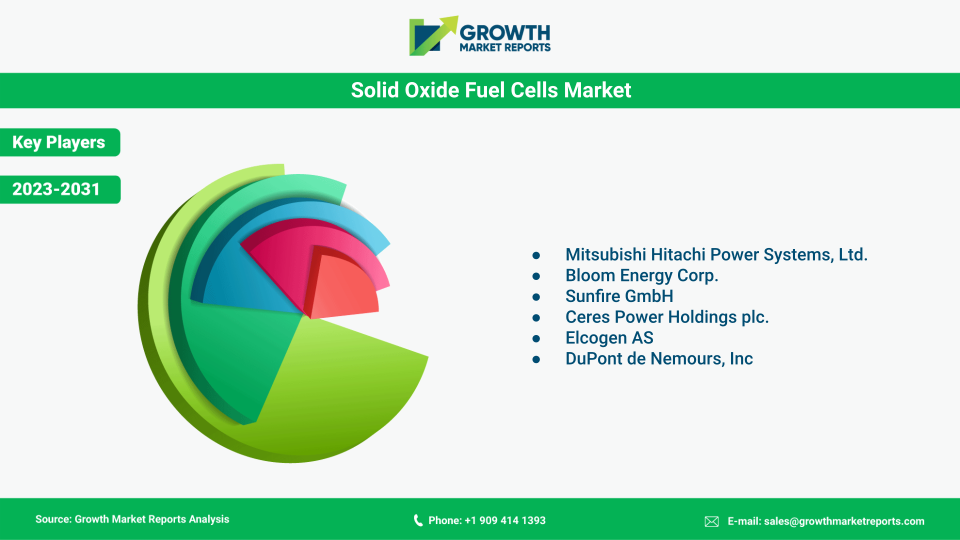
The major players of the market are Mitsubishi Hitachi Power Systems Ltd., DuPont de Nemours Inc., Bloom Energy Corp., Sunfire GmbH, Ceres Power Holdings plc, Elcogen AS.
Companies are engaging in mergers, expansions, acquisitions, and partnerships to expand their market share.
Yes, the Solid Oxide Fuel Cells Market Research Report 2033 offers customization options to meet specific client requirements.
Advancements in cell materials, stack design, and system integration are improving SOFC performance, reducing costs, and enhancing durability, making the technology more accessible and economically viable for a wider range of applications.
Key players include Bloom Energy, Siemens Energy, Ceres Power Holdings plc, Aisin Seiki Co., Ltd., Convion Ltd., FuelCell Energy, Inc., Sunfire GmbH, and others. These companies focus on innovation, R&D, and strategic partnerships to maintain competitiveness.
Opportunities include integration with renewables, expansion into transport and marine sectors, and development of hybrid energy systems. Challenges involve high initial costs, durability concerns, and the need for robust supply chains and affordable materials.
Major end-users include commercial, industrial, residential, and utility sectors. The commercial sector leads due to the deployment of SOFC-based CHP systems, while industrial and utility sectors are also significant adopters. Residential use is growing, especially in regions with supportive policies.
SOFCs are used in stationary power generation, portable power sources, and transport sectors. Stationary applications dominate, including combined heat and power (CHP) systems and distributed energy resources. Portable and transport applications are emerging and growing rapidly.
The SOFC market is segmented into planar, tubular, and other configurations such as micro-tubular and monolithic designs. Planar SOFCs dominate due to their compact design and high power density, while tubular SOFCs are valued for mechanical stability and thermal cycling tolerance.
Asia Pacific leads the SOFC market due to rapid industrialization, significant investments in clean energy, and supportive government policies, especially in China, Japan, and South Korea. North America and Europe also hold significant shares, driven by favorable regulations and strong R&D.
Key growth drivers include increasing demand for clean and efficient energy, government initiatives for low-emission technologies, rising investments in renewable energy infrastructure, and expanding applications across sectors.
The global Solid Oxide Fuel Cells (SOFC) market reached USD 1.62 billion in 2024 and is projected to grow at a CAGR of 31.7%, reaching USD 19.43 billion by 2033.