Segments - by Reactor Type (Pressurized Water Reactor, Boiling Water Reactor, Pressurized Heavy Water Reactor, Gas Cooled Reactor, Others), by Equipment Type (Island Equipment, Auxiliary Equipment, Others), by Application (Energy Generation, Research, Others), by End-User (Utilities, Government, Private Companies, Others)
This report is updated with the latest market data and insights as of June 2026. Base year: 2025 | Forecast period: 2026-2034
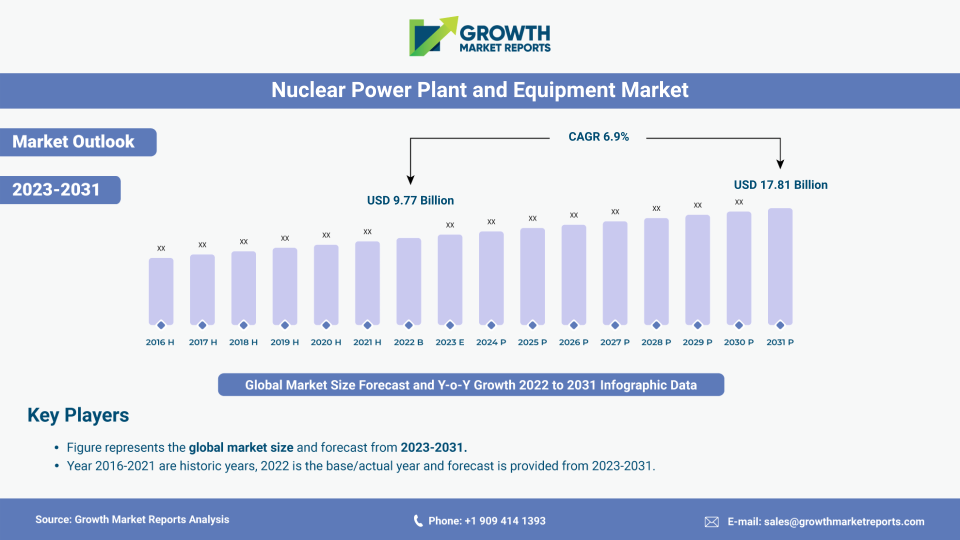
According to our latest research, the global nuclear power plant and equipment market size reached USD 52.1 billion in 2025, demonstrating a robust foundation for continued expansion. The market is forecasted to grow at a CAGR of 4.7% from 2026 to 2034, with the total market size projected to reach USD 79.2 billion by 2034. Key growth drivers include increasing global energy demand, the urgent need for low-carbon power generation, and technological advancements in nuclear reactor and equipment design. The sector is also benefiting from a broad wave of government recommitments to nuclear energy, with several nations reversing earlier phase-out policies and launching ambitious new build programs in response to energy security pressures and climate obligations.
One of the primary growth factors propelling the nuclear power plant and equipment market is the intensifying global focus on decarbonization and sustainable energy solutions. As nations strive to meet their net-zero emissions targets and reduce reliance on fossil fuels, nuclear energy has gained renewed attention as a reliable, large-scale, and low-carbon power source. Governments across both developed and emerging economies are actively investing in nuclear infrastructure, modernizing aging reactors, and commissioning new projects to ensure energy security and grid stability. This renewed policy support, combined with the rising integration of renewables that creates baseload gaps, is fostering an environment conducive to sustained market growth. Stakeholders seeking a comprehensive view of associated service ecosystems can explore the broader landscape of nuclear power plant services to understand how operational support and lifecycle management contribute to overall market dynamics.
Technological innovation represents another significant driver for the nuclear power plant and equipment market. Advances in reactor designs, such as Generation III+ and Generation IV reactors, small modular reactors (SMRs), and enhanced passive safety systems, have improved the operational efficiency, safety, and economic viability of nuclear power plants. These innovations are reducing construction times, minimizing operational risks, and lowering overall lifecycle costs, making nuclear projects more attractive to investors and utilities. Furthermore, the digitalization of plant operations, predictive maintenance tools, and remote monitoring capabilities are streamlining plant management and reducing downtime, further accelerating market adoption. The growing significance of advanced instrumentation and control systems in modern reactor designs is a key area of investment, as real-time diagnostics and automated response platforms become standard requirements for both new builds and life-extension projects.
The global surge in electricity consumption, particularly in rapidly industrializing regions such as Asia Pacific, is also fueling demand for nuclear power plant and equipment. As urbanization accelerates and energy-intensive industries expand, countries are seeking stable and scalable energy sources to support economic growth. Nuclear power, with its high-capacity factor and ability to provide baseload electricity, is increasingly being integrated into national energy strategies. Additionally, the need to diversify energy portfolios and enhance energy independence is prompting investments in both new nuclear projects and the refurbishment of existing reactors, thereby driving sustained demand for advanced nuclear equipment and technologies. The critical role of thermal management components, including nuclear-grade heat exchangers, in maintaining plant efficiency underscores the breadth of the equipment ecosystem supporting this growth.
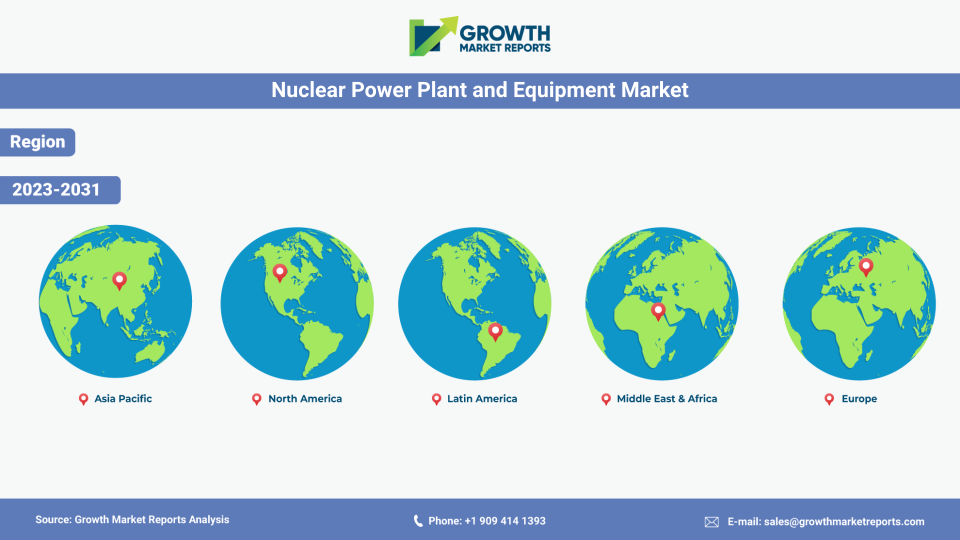
Regionally, Asia Pacific dominates the nuclear power plant and equipment market, accounting for approximately 42% of total market revenue in 2025, driven by aggressive nuclear expansion programs in China, India, and South Korea. Europe remains a significant market, with countries such as France and the UK investing in reactor upgrades, new builds, and SMR development. North America, led by the United States, continues to modernize its aging nuclear fleet while exploring next-generation reactor technologies and pursuing SMR commercialization. Meanwhile, the Middle East and Africa and Latin America are emerging as promising markets, with several nations exploring nuclear energy to diversify their energy mix and support long-term economic development. This regional diversification underscores the global relevance and growth potential of the nuclear power plant and equipment market through the forecast period to 2034.
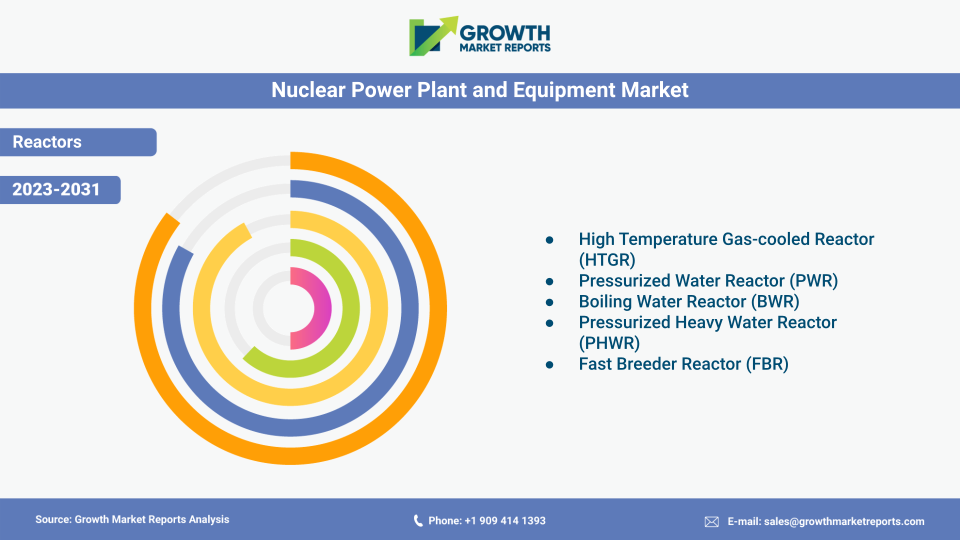
The nuclear power plant and equipment market is segmented by reactor type, including Pressurized Water Reactor (PWR), Boiling Water Reactor (BWR), Pressurized Heavy Water Reactor (PHWR), Gas Cooled Reactor (GCR), and others. Pressurized Water Reactors (PWRs) remain the most widely deployed reactor type globally, accounting for approximately 61.5% of the installed nuclear capacity in 2025. The dominance of PWRs is attributed to their proven operational safety, robust design, and widespread adoption in both new installations and upgrades of existing plants. Utilities and governments prefer PWRs due to their familiarity, established regulatory frameworks, and the availability of a skilled workforce, all of which contribute to reduced project risks and streamlined licensing processes. Westinghouse's AP1000 and Framatome's EPR designs continue to anchor the global PWR pipeline, with multiple units under construction across Asia, Europe, and emerging markets.
Boiling Water Reactors (BWRs) represent the second-largest segment, with notable installations in the United States, Japan, and select European countries. BWRs offer certain operational efficiencies, such as direct steam generation, which can simplify plant design and reduce overall system costs. Recent advancements in BWR technology, including the BWRX-300 SMR design being developed by GE Hitachi Nuclear Energy, are expected to bolster their appeal considerably, particularly in markets aiming to deploy compact, cost-competitive advanced reactor solutions. The BWRX-300 has advanced licensing discussions in Canada, the United States, and Poland, reflecting renewed commercial momentum for this reactor family through the forecast horizon.
Pressurized Heavy Water Reactors (PHWRs), primarily adopted in countries such as Canada and India, offer unique advantages including the use of natural uranium as fuel and heavy water as a moderator. This design enhances fuel flexibility and reduces dependence on enriched uranium supplies, making PHWRs attractive for markets with limited access to enrichment infrastructure. The ongoing expansion of nuclear capacity in India, with plans for additional 700-MWe PHWR units and the advanced AHWR design under development, is expected to drive steady demand for this reactor type and associated equipment over the forecast period to 2034.
Gas Cooled Reactors (GCRs) and other advanced reactor types, including fast breeder reactors and small modular reactors (SMRs), are gaining traction as next-generation solutions for safe, efficient, and flexible nuclear power generation. GCRs, with their high thermal efficiency and inherent safety features, are being revisited in light of renewed interest in high-temperature industrial applications and large-scale hydrogen production. Meanwhile, the global race to commercialize SMRs is opening new opportunities for equipment manufacturers, as these compact reactors promise lower upfront capital costs, modular factory fabrication, and enhanced passive safety profiles, making them ideal for remote locations, smaller grid systems, and industrial co-generation. The competitive SMR landscape now includes more than 80 designs at various stages of development globally as of 2025, signaling a structural shift in the reactor type mix expected over the coming decade.
| Attributes | Details |
| Report Title | Nuclear Power Plant and Equipment Market Research Report 2034 |
| By Reactor Type | Pressurized Water Reactor, Boiling Water Reactor, Pressurized Heavy Water Reactor, Gas Cooled Reactor, Others |
| By Equipment Type | Island Equipment, Auxiliary Equipment, Others |
| By Application | Energy Generation, Research, Others |
| By End-User | Utilities, Government, Private Companies, Others |
| Regions Covered | North America, Europe, APAC, Latin America, MEA |
| Base Year | 2025 |
| Historic Data | 2019-2024 |
| Forecast Period | 2026-2034 |
| Number of Pages | 262 |
| Number of Tables and Figures | 379 |
| Customization Available | Yes, the report can be customized as per your need. |
The equipment type segment of the nuclear power plant and equipment market is categorized into Island Equipment, Auxiliary Equipment, and Others. Island Equipment encompasses critical components such as reactor vessels, steam generators, pressurizers, and containment structures, which form the core of a nuclear power plant. Demand for island equipment is closely linked to new plant construction and major refurbishment projects, as these components are essential for ensuring plant safety, efficiency, and regulatory compliance. The increasing adoption of advanced reactor designs and the replacement of aging infrastructure are driving sustained investment in state-of-the-art island equipment. Key among these systems are the steam turbines that convert thermal energy to electricity, and the broader market for nuclear steam turbine systems is experiencing renewed momentum as new build projects advance globally.
Auxiliary Equipment includes a wide array of supporting systems such as heat exchangers, cooling towers, pumps, valves, instrumentation, and control systems. These components are vital for the safe and efficient operation of nuclear power plants, supporting functions ranging from thermal management to real-time monitoring and emergency response. The growing emphasis on plant digitalization, predictive maintenance, and automation is fueling demand for advanced auxiliary equipment that integrates seamlessly with modern control architectures. Equipment suppliers are investing in R&D to develop smart, connected solutions that enable real-time diagnostics, remote operation, and proactive risk management, thereby enhancing overall plant performance and safety across both new and operating facilities.
The Others category comprises specialized equipment such as spent fuel management systems, radiation shielding, and decommissioning tools. As the global nuclear fleet ages, the need for equipment that supports safe fuel handling, waste management, and eventual plant decommissioning is becoming increasingly important. The scope of nuclear plant decommissioning engineering is expanding rapidly as dozens of reactors approach end-of-life across Europe and North America, creating a substantial and growing demand for specialized equipment and services. Regulatory mandates for enhanced safety and environmental stewardship are prompting utilities to invest in innovative solutions for spent fuel storage, transportation, and long-term disposal.
Across all equipment types, the trend toward modularization, standardization, and digital integration is reshaping the competitive landscape. Manufacturers are collaborating with utilities, EPC contractors, and technology providers to develop integrated solutions that streamline plant construction, reduce project timelines, and improve lifecycle economics. The convergence of nuclear engineering with advanced materials science, the Internet of Things (IoT), and data analytics is enabling the development of next-generation equipment that meets the evolving needs of a dynamic and increasingly complex market.
The application segment of the nuclear power plant and equipment market is broadly classified into Energy Generation, Research, and Others. Energy Generation remains the dominant application, accounting for over 85% of total market revenue in 2025. Nuclear power plants serve as critical infrastructure for baseload electricity generation, providing stable, low-carbon energy to national grids. The ongoing transition to cleaner energy sources, coupled with the need to maintain grid reliability amid rising renewable penetration, is reinforcing the strategic importance of nuclear energy. Utilities are investing in new builds, life extension projects, and capacity upgrades to ensure that nuclear energy continues to play a central role in meeting future electricity demand through 2034 and beyond.
Research applications represent a specialized but growing segment of the market, encompassing nuclear research reactors, experimental facilities, and isotope production centers. These facilities are essential for advancing nuclear science, developing new reactor technologies, and supporting applications in medicine, industry, and agriculture. The global push for innovation in nuclear fuel cycles, waste management, and advanced reactor designs is driving investments in research infrastructure and specialized equipment. Governments, academic institutions, and private sector players are collaborating to establish cutting-edge research facilities that underpin the long-term sustainability and competitiveness of the nuclear industry, with notable new research reactor projects announced in the United States, Canada, and South Korea as of 2025.
The Others category includes diverse applications such as district heating, desalination, and hydrogen production. As the world seeks integrated solutions for energy, water, and industrial challenges, nuclear power is being leveraged for non-electric applications that require high-temperature heat, process steam, or reliable continuous power. Several countries are actively advancing engineering designs for nuclear-assisted hydrogen production as of 2025, with the aim of decarbonizing hard-to-abate sectors including transportation, steel manufacturing, and chemical processing. Equipment manufacturers are responding by developing specialized components and systems tailored to these emerging process-heat and co-generation applications, opening new avenues for market growth and diversification.
The convergence of energy generation, research, and non-electric applications is creating a dynamic and multifaceted market landscape. Stakeholders are increasingly adopting a holistic approach to nuclear infrastructure planning, integrating multiple applications to maximize the value and return on investments. This trend is expected to drive cross-segment collaboration, foster innovation, and accelerate the deployment of advanced nuclear technologies in the coming decade.
The end-user segment of the nuclear power plant and equipment market includes Utilities, Government, Private Companies, and Others. Utilities are the primary end-users, accounting for the majority of nuclear plant ownership and operation worldwide. These entities are responsible for delivering reliable electricity to consumers, managing plant operations, and ensuring compliance with stringent safety and environmental regulations. Utilities are at the forefront of new build projects, life extension initiatives, and modernization programs, driving sustained demand for advanced nuclear equipment and technologies. Their long-term investment horizons and focus on operational excellence position them as key drivers of market growth and innovation. The importance of nuclear plant life extension services is particularly acute for utilities operating aging fleets in North America and Europe, where extending the licensed operating period of existing reactors provides the most cost-effective pathway to maintaining low-carbon baseload capacity.
Governments play a critical role as both end-users and enablers of nuclear power plant and equipment markets. In many countries, state-owned enterprises, regulatory agencies, and research institutions are directly involved in the planning, construction, and operation of nuclear facilities. Government support is essential for securing project financing, establishing regulatory frameworks, and fostering public acceptance of nuclear energy. Strategic partnerships between governments and private sector players are increasingly common, particularly in emerging markets across the Middle East, Eastern Europe, and Southeast Asia where nuclear programs are in the early stages of development. These collaborations are vital for building local capacity, transferring technology, and ensuring the long-term sustainability of nuclear infrastructure.
Private companies, including independent power producers, engineering, procurement, and construction (EPC) firms, and technology providers, are playing an expanding role in the nuclear power plant and equipment market. As the industry evolves, private sector participation is increasing in areas such as project development, equipment supply, and plant operation. These companies bring specialized expertise, innovative business models, and access to global supply chains, enhancing the competitiveness and resilience of the nuclear sector. The growing involvement of private capital, particularly in SMR development ventures and advanced reactor startups, is expected to accelerate the commercialization of next-generation technologies and create new opportunities for equipment manufacturers and service providers through 2034.
The Others category encompasses a diverse range of stakeholders, including research organizations, academic institutions, and non-governmental entities. These groups contribute to the advancement of nuclear science, technology development, and workforce training, supporting the broader ecosystem that underpins the nuclear power plant and equipment market. Their involvement in research, education, and advocacy is essential for driving innovation, disseminating best practices, and fostering public understanding of nuclear energy's role in a sustainable and secure energy future.
The nuclear power plant and equipment market is poised for significant opportunities in the coming years, driven by the global shift toward decarbonization and the growing need for reliable, large-scale clean energy. The emergence of small modular reactors (SMRs) and advanced reactor designs is opening new avenues for market expansion, enabling the deployment of nuclear power in regions and applications previously considered unviable due to grid size or capital constraints. The integration of digital technologies, predictive maintenance, and remote monitoring is enhancing operational efficiency and safety, creating opportunities for equipment manufacturers to deliver high-value, differentiated solutions. Additionally, the increasing adoption of nuclear energy for non-electric applications such as hydrogen production, district heating, and desalination is broadening the addressable market and fostering cross-sector collaboration with industrial and utility partners.
Strategic partnerships, international collaborations, and technology transfer agreements present further opportunities for growth. As countries seek to build local capacity and develop indigenous nuclear industries, there is strong demand for expertise, equipment, and training from established market leaders. The development of robust supply chains, standardized components, and modular construction techniques is reducing project risks and costs, making nuclear projects more accessible to a wider range of stakeholders. Nations in the Middle East, Southeast Asia, and Eastern Europe are particularly active in evaluating nuclear programs, with multiple countries reaching intergovernmental cooperation agreements for nuclear energy development as of 2025. Governments and private sector players that can effectively navigate regulatory complexities, secure financing, and build public trust are well positioned to capitalize on the expanding market landscape.
Despite these opportunities, the nuclear power plant and equipment market faces several restraining factors. High upfront capital costs, lengthy project timelines, and complex regulatory requirements can pose significant barriers to entry, particularly in markets with limited experience or infrastructure. Public concerns regarding nuclear safety, waste management, and potential environmental impacts remain persistent challenges, requiring ongoing investment in communication, transparency, and stakeholder engagement. Additionally, competition from rapidly advancing and cost-declining renewable energy technologies, combined with evolving energy market structures, may affect the pace and scale of new nuclear deployments in certain regions. Supply chain constraints for nuclear-grade components, specialized materials, and skilled engineering workforces also present operational risks that the industry must proactively address to sustain growth through the forecast period.
Asia Pacific remains the largest and most dynamic region in the global nuclear power plant and equipment market, accounting for approximately 42% of total market revenue in 2025. China leads the region with the world's most ambitious nuclear expansion program, consistently commissioning new reactors while investing heavily in domestic equipment manufacturing capabilities and advanced reactor research. India and South Korea are also notable contributors, with ongoing projects aimed at expanding nuclear capacity and modernizing existing plants. The region's rapid industrialization, rising electricity demand, and strong government policy support are driving sustained investment in nuclear infrastructure, with the Asia Pacific market projected to grow at a CAGR of 6.3% through 2034.
Europe holds approximately 22% of the global nuclear power plant and equipment market in 2025, driven by established nuclear fleets in countries such as France, the United Kingdom, Finland, and several Eastern European nations. The region is characterized by a mix of new build projects, life extension initiatives, and decommissioning activities. France continues to lead in terms of installed capacity and technological expertise, with EDF advancing a pipeline of new EPR2 reactors approved by the government. The United Kingdom is investing in the Hinkley Point C project and advancing SMR procurement, while countries including Hungary, the Czech Republic, Poland, and the Netherlands are pursuing new nuclear builds to enhance energy security and meet carbon reduction commitments. The European market is expected to see moderate but steady growth supported by ongoing modernization, new construction, and the expanding scope of power plant decommissioning activities for older units reaching end of life.
North America, led by the United States and Canada, is a mature but actively evolving market for nuclear power plant and equipment, accounting for approximately 26.5% of total market revenue in 2025. The United States remains the world's largest producer of nuclear electricity, with a well-established fleet of reactors and a robust domestic supply chain. Ongoing efforts to extend the operational life of existing plants, coupled with substantial federal investment in advanced reactor technologies and SMR commercialization through the Department of Energy's programs, are creating significant new opportunities for equipment suppliers and technology providers. Canada is leveraging its expertise in CANDU reactor technology and pursuing new SMR projects, particularly the BWRX-300 deployment at Darlington, Ontario. The region's focus on innovation, safety, and regulatory excellence ensures its continued relevance and a projected stable growth trajectory through 2034.
The competitive landscape of the nuclear power plant and equipment market is characterized by the presence of a mix of global industry leaders, regional champions, and specialized technology providers. Major players compete on the basis of technological innovation, project execution capabilities, integrated service offerings, and long-term maintenance and support agreements. The market is marked by high barriers to entry, given the complexity of nuclear projects, stringent regulatory requirements, and the need for extensive experience and technical expertise. Companies that can offer integrated solutions spanning reactor design, equipment supply, plant operation, and lifecycle management are particularly well positioned to capture market share and secure durable long-term contracts.
Strategic partnerships, joint ventures, and international collaborations are common strategies employed by leading companies to expand their geographic footprint, access new markets, and leverage complementary capabilities. The increasing focus on small modular reactors (SMRs), digitalization, advanced manufacturing, and next-generation materials is driving significant R&D investments and fostering alliances between utilities, equipment manufacturers, and technology firms. Market leaders are also investing in workforce development, supply chain resilience, and customer support services to differentiate themselves and build lasting relationships with key stakeholders in an increasingly competitive global environment.
The nuclear power plant and equipment market is also witnessing the entry of new participants, particularly in the areas of digital plant solutions, predictive maintenance platforms, and specialized equipment for advanced and modular reactor designs. These entrants are leveraging expertise in data analytics, automation, artificial intelligence, and IoT connectivity to deliver innovative products and services that enhance plant performance, reduce costs, and improve safety outcomes. The growing importance of sustainability, environmental stewardship, and transparent stakeholder communication is prompting established and emerging companies alike to adopt responsible business practices and prioritize environmentally sound solutions.
Some of the major companies operating in the nuclear power plant and equipment market include Westinghouse Electric Company LLC, General Electric Company (GE Hitachi Nuclear Energy), Framatome SAS, Mitsubishi Heavy Industries Ltd., Hitachi-GE Nuclear Energy Ltd., China National Nuclear Corporation (CNNC), Korea Electric Power Corporation (KEPCO), Rosatom State Atomic Energy Corporation, EDF SA, Doosan Enerbility Co. Ltd., BWX Technologies Inc., and Rolls-Royce Holdings plc. Westinghouse is renowned for its AP1000 PWR technology and a broad global project portfolio spanning four continents. GE Hitachi Nuclear Energy leads in BWR technology and is advancing the BWRX-300 SMR design through licensing in multiple countries. Framatome and Mitsubishi Heavy Industries offer comprehensive nuclear equipment, engineering, and maintenance services, with strong presences in Europe and Asia respectively. CNNC and KEPCO are driving nuclear expansion in China and South Korea, leveraging domestic expertise and government backing to pursue both regional and international opportunities. Rosatom maintains a dominant position in Russia and is the world's leading exporter of nuclear power plant technology, with projects under construction or in development across Asia, Africa, the Middle East, and Europe. EDF SA anchors the French nuclear industry and is a key technology partner for new European builds, while BWX Technologies and Rolls-Royce lead in advanced component manufacturing and the emerging SMR sector in North America and the United Kingdom, respectively.
These companies are actively investing in R&D, digital transformation, global partnerships, and supply chain resilience to maintain their competitive edge and address the evolving needs of a rapidly changing global energy landscape. Their sustained commitment to innovation, operational safety, and environmental responsibility will be critical for supporting the industry's growth trajectory through 2034 and enabling the broader transition to a cleaner, more resilient, and energy-secure global power system.
The Nuclear Power Plant and Equipment market has been segmented on the basis of
Technology innovation is transforming the market across multiple dimensions. SMR development is progressing rapidly, with multiple designs reaching licensing and early deployment stages by 2025. Generation IV reactor concepts including molten salt, high-temperature gas-cooled, and fast neutron designs are advancing from research to pilot stages. Digitalization, encompassing AI-driven predictive maintenance, digital twins, advanced simulation tools, and remote monitoring platforms, is improving safety and operational efficiency. Advanced manufacturing techniques including modular construction and 3D printing of components are also reducing costs and project timelines significantly.
Leading companies include Westinghouse Electric Company LLC, General Electric Company (GE Hitachi Nuclear Energy), Framatome SAS, Rosatom State Atomic Energy Corporation, China National Nuclear Corporation (CNNC), Korea Electric Power Corporation (KEPCO), Mitsubishi Heavy Industries Ltd., Doosan Enerbility Co. Ltd., BWX Technologies Inc., Rolls-Royce Holdings plc, Hitachi-GE Nuclear Energy Ltd., and EDF SA, among others. These firms compete on the basis of reactor design capabilities, global project portfolios, integrated service offerings, and R&D investment in advanced reactor technologies.
Key opportunities include the commercial deployment of SMRs, non-electric nuclear applications such as hydrogen production, and the digital transformation of plant operations. Strategic international partnerships and technology transfer agreements are unlocking new markets in the Middle East, Africa, and Southeast Asia. Major challenges include high upfront capital costs, complex and lengthy regulatory processes, public perception concerns around safety and waste management, and competition from rapidly scaling renewable energy technologies.
Utilities are the largest end-user group, responsible for the operation and ownership of most commercial nuclear plants globally. Governments and state-owned enterprises are major stakeholders in planning, financing, and regulating nuclear programs, particularly in emerging markets. Private companies including independent power producers, EPC contractors, and specialized technology firms are playing a growing role, while research organizations and academic institutions support technology development and workforce training.
Energy Generation is the dominant application, accounting for over 85% of total market revenue in 2025, as nuclear plants provide stable, low-carbon baseload electricity to national grids. Research applications, including experimental reactors and isotope production facilities, represent a growing niche. Emerging non-electric applications such as industrial hydrogen production, district heating, and desalination are expanding the market's addressable scope and driving new equipment demand.
The market covers Island Equipment (reactor vessels, steam generators, pressurizers, and containment structures), Auxiliary Equipment (heat exchangers, cooling towers, pumps, valves, and instrumentation and control systems), and a third category of specialized equipment encompassing spent fuel management systems, radiation shielding, decommissioning tools, and advanced digital plant management solutions.
The market is segmented by reactor type into Pressurized Water Reactors (PWRs), which dominate with about 61.5% of the installed base, Boiling Water Reactors (BWRs) at roughly 17%, Pressurized Heavy Water Reactors (PHWRs) at around 10.5%, Gas Cooled Reactors (GCRs) at approximately 5.5%, and other advanced reactor types including fast breeder reactors, molten salt reactors, and small modular reactors (SMRs) collectively at 5.5%.
Asia Pacific leads the global market with roughly 42% of total revenue in 2025, driven by China's massive reactor construction pipeline, India's PHWR expansion, and South Korea's ambitious nuclear program. North America holds approximately 26.5% share, supported by the United States' life-extension initiatives and SMR development. Europe accounts for around 22% share, led by France, the United Kingdom, and Eastern European countries pursuing new builds and upgrades to support energy security goals.
Key growth drivers include the global push for net-zero emissions and low-carbon baseload power, renewed government policy support for nuclear energy, and rapid advances in reactor technology such as Generation III+ designs, small modular reactors (SMRs), and Generation IV concepts. Rising electricity consumption in Asia Pacific, increasing energy security concerns, and the digitalization of plant operations are further amplifying demand for advanced nuclear equipment and services through the forecast period.
The global nuclear power plant and equipment market reached USD 52.1 billion in 2025 and is projected to expand at a CAGR of 4.7% from 2026 to 2034, reaching approximately USD 79.2 billion by 2034. This growth is underpinned by rising energy demand, decarbonization commitments, and accelerating investments in both new reactor construction and the modernization of existing nuclear fleets worldwide.