Zirconium Market Research Report 2033

Zirconium Market Research Report 2033

Segments - by Product Type (Zirconium Metal, Zirconium Compounds, Zirconium Alloys, Others), by Application (Ceramics, Chemicals, Foundry, Refractories, Nuclear, Medical, Others), by End-Use Industry (Automotive, Aerospace, Healthcare, Energy & Power, Construction, Others)

https://growthmarketreports.com/Raksha
Author : Raksha Sharma
https://growthmarketreports.com/Vaibhav
Fact-checked by : V. Chandola
https://growthmarketreports.com/Shruti
Editor : Shruti Bhat

Upcoming | Report ID :MC-990 | 4.7 Rating | 90 Reviews | 251 Pages | Format : Docx PDF

Report Description


Zirconium Market Outlook

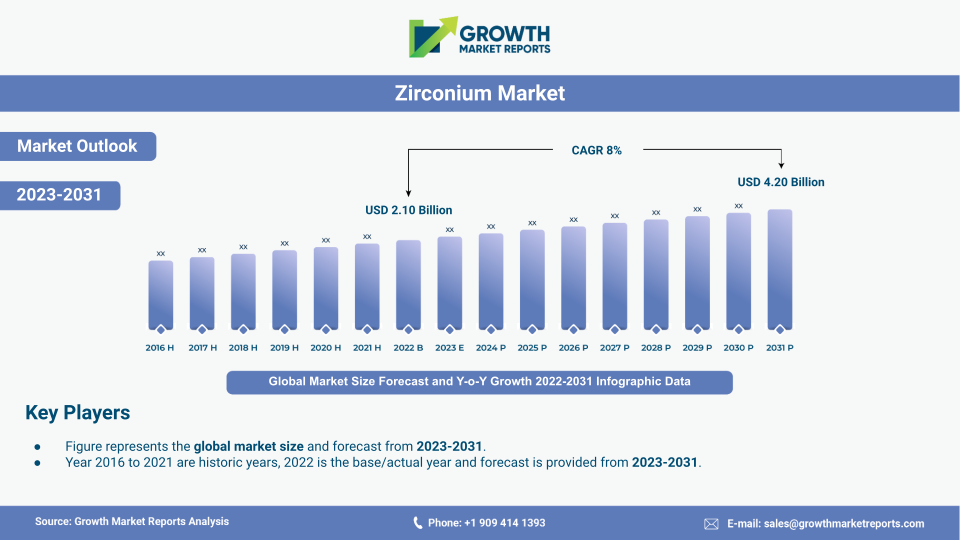
According to our latest research, the global zirconium market size reached USD 2.3 billion in 2024, demonstrating robust growth driven by expanding applications in ceramics, nuclear energy, and advanced manufacturing. The market is expected to grow at a CAGR of 5.8% from 2025 to 2033, reaching a forecasted value of USD 3.9 billion by 2033. This growth is primarily attributed to the increasing demand for zirconium-based products in high-performance industries such as nuclear power generation, aerospace, and healthcare, as well as the ongoing technological advancements in material science.

One of the primary growth factors propelling the zirconium market is the surging demand for zirconium ceramics in various industrial applications. Zirconium ceramics are highly valued for their superior thermal stability, corrosion resistance, and mechanical strength, making them indispensable in sectors such as electronics, automotive, and refractories. The proliferation of advanced electronic devices and the rising need for durable, high-performance materials in manufacturing processes have significantly contributed to the expansion of zirconium ceramics usage. Additionally, the growing adoption of zirconium-based materials in 3D printing and additive manufacturing has unlocked new avenues for market growth, as these materials enable the production of complex, high-precision components for critical applications.

Another key driver of the zirconium market is the increasing utilization of zirconium alloys in the nuclear energy sector. Zirconium alloys are essential for the fabrication of fuel cladding and structural components in nuclear reactors due to their exceptional resistance to neutron absorption and corrosion. As countries worldwide intensify their efforts to decarbonize energy production and invest in next-generation nuclear technologies, the demand for zirconium alloys is expected to rise steadily. Furthermore, the global shift towards cleaner energy sources and the growing emphasis on energy security are prompting governments and private enterprises to expand nuclear power generation capacities, thereby bolstering the market for zirconium products.

The healthcare and medical industry also plays a pivotal role in the growth of the zirconium market. Zirconium compounds, particularly zirconia, are extensively used in dental implants, prosthetics, and surgical instruments due to their biocompatibility, strength, and resistance to wear. The increasing prevalence of dental and orthopedic procedures, coupled with advancements in medical technology, has led to a surge in demand for zirconium-based medical devices. Moreover, the ongoing research and development in the field of biomaterials are expected to further enhance the adoption of zirconium in innovative medical applications, driving sustained market expansion over the forecast period.

In addition to its applications in nuclear energy and ceramics, Zirconium Acetate is gaining attention as a versatile compound in the chemical industry. Known for its ability to act as a catalyst and stabilizer, Zirconium Acetate is increasingly being utilized in the production of polymers and coatings. Its unique chemical properties make it an ideal choice for processes that require high thermal stability and resistance to corrosion. As industries continue to seek out materials that enhance product performance while maintaining environmental standards, the demand for Zirconium Acetate is expected to grow, offering new opportunities for innovation and application in various chemical processes.

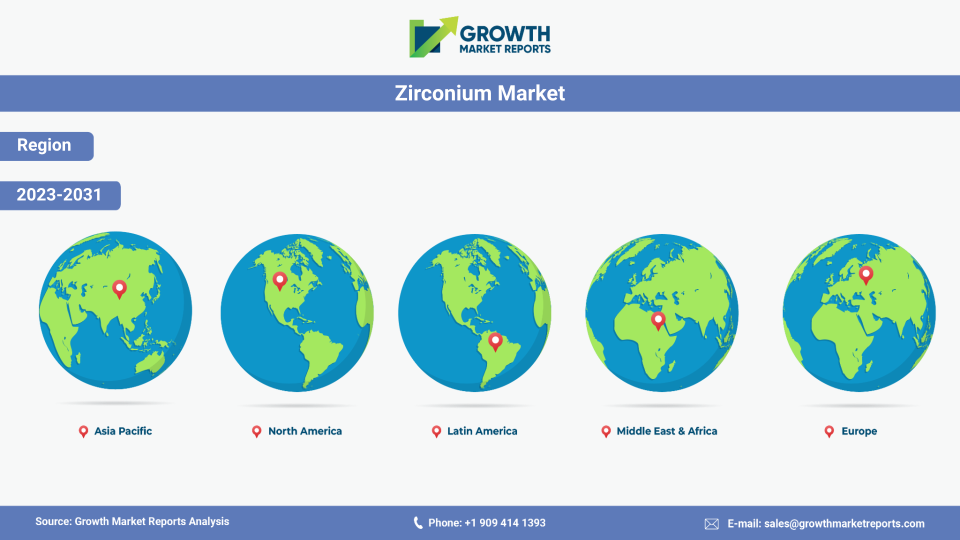
From a regional perspective, Asia Pacific remains the dominant market for zirconium, accounting for the largest share of global consumption. This can be attributed to the rapid industrialization, robust growth in the construction and manufacturing sectors, and significant investments in nuclear energy infrastructure across countries such as China, India, and Japan. North America and Europe also represent substantial markets, driven by technological advancements, stringent regulatory standards, and strong demand from the aerospace, automotive, and healthcare industries. Meanwhile, the Middle East & Africa and Latin America are emerging as promising markets, supported by infrastructural development and increasing adoption of advanced materials in various end-use sectors.

Global Zirconium Industry Outlook

Product Type Analysis

The zirconium market is segmented by product type into zirconium metal, zirconium compounds, zirconium alloys, and others. Zirconium metal occupies a significant share of the market, primarily due to its extensive use in nuclear reactors, chemical processing equipment, and specialty alloys. The unique properties of zirconium metal, such as low neutron-capture cross-section and high corrosion resistance, make it a material of choice for critical applications in energy and aerospace sectors. The rising investments in nuclear power generation and the ongoing modernization of chemical processing facilities are expected to sustain the demand for zirconium metal over the coming years.

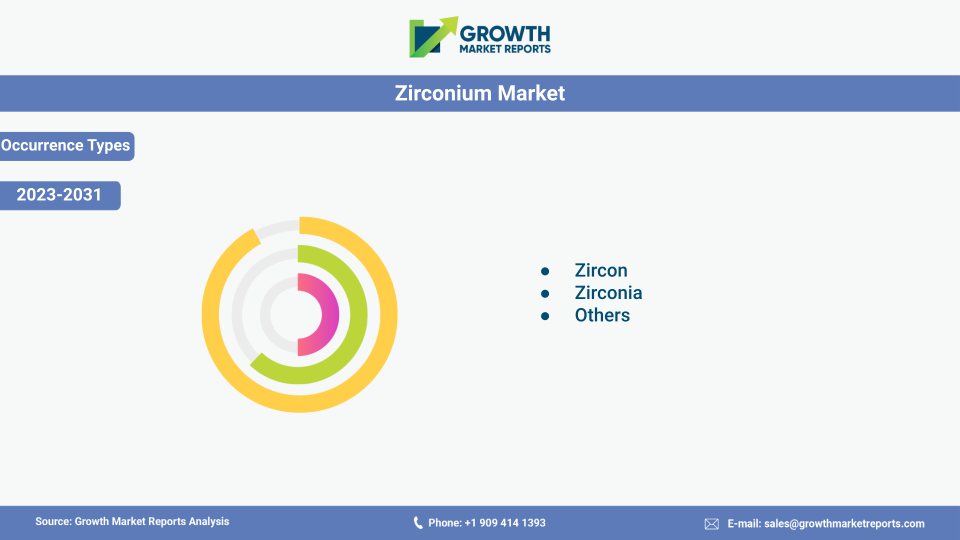
Zirconium compounds, including zirconium dioxide (zirconia) and zirconium silicate, represent another vital segment of the market. These compounds are widely used in ceramics, refractories, and pigments, owing to their excellent thermal stability, mechanical strength, and chemical inertness. The ceramics industry, in particular, relies heavily on zirconium compounds for the production of high-performance tiles, sanitaryware, and advanced technical ceramics. The increasing adoption of zirconia in dental and medical applications further underscores the importance of this segment, as it offers superior biocompatibility and durability compared to traditional materials.

Zirconium alloys form a crucial segment, particularly in the context of nuclear energy and aerospace applications. These alloys, often composed of zirconium combined with tin, niobium, or iron, exhibit outstanding resistance to corrosion and high temperatures, making them ideal for use in fuel cladding, heat exchangers, and other critical components. The growing emphasis on safety, efficiency, and longevity in nuclear reactors has led to continuous innovation in zirconium alloy formulations, fostering long-term growth in this segment. Additionally, the aerospace industryÂ’s demand for lightweight, high-strength materials further contributes to the expansion of zirconium alloys.

Other zirconium-based products, such as zirconium chemicals and specialty compounds, cater to niche applications in catalysis, water treatment, and electronics. These products, while representing a smaller share of the overall market, are experiencing increasing demand due to the expanding scope of advanced manufacturing and environmental technologies. As research and development efforts intensify, it is anticipated that new zirconium-based materials will emerge, offering enhanced performance characteristics and opening up new market opportunities across diverse industries.

Report Scope

Attributes Details
Report Title Zirconium Market Research Report 2033
By Product Type Zirconium Metal, Zirconium Compounds, Zirconium Alloys, Others
By Application Ceramics, Chemicals, Foundry, Refractories, Nuclear, Medical, Others
By End-Use Industry Automotive, Aerospace, Healthcare, Energy & Power, Construction, Others
Regions Covered North America, Europe, APAC, Latin America, MEA
Base Year 2024
Historic Data 2018-2023
Forecast Period 2025-2033
Number of Pages 251
Number of Tables & Figures 347
Customization Available Yes, the report can be customized as per your need.

Application Analysis

Within the zirconium market, the application segment encompasses ceramics, chemicals, foundry, refractories, nuclear, medical, and others. Ceramics hold a dominant position, leveraging zirconiumÂ’s exceptional properties to produce high-performance products for both industrial and consumer use. The ceramics industry utilizes zirconium compounds to manufacture tiles, sanitaryware, and electrical insulators, benefiting from the materialÂ’s heat resistance and mechanical strength. The increasing demand for advanced ceramics in electronics, automotive, and aerospace applications further amplifies the significance of this segment, as manufacturers seek materials that can withstand extreme conditions and deliver superior performance.

The chemicals segment is another major application area, where zirconium compounds are used as catalysts, stabilizers, and additives in various chemical processes. The unique reactivity and stability of zirconium-based chemicals make them indispensable in the production of specialty chemicals, polymers, and coatings. As the global chemical industry continues to evolve, driven by the demand for high-performance materials and sustainable solutions, the role of zirconium in enabling innovative chemical processes is expected to grow. This trend is particularly evident in the development of green chemistry initiatives and the increasing adoption of zirconium-based catalysts in environmental and energy applications.

Foundry and refractories represent critical segments for zirconium applications, as the materialÂ’s high melting point and resistance to thermal shock make it ideal for use in molds, linings, and crucibles. The foundry industry relies on zirconium-based refractories to ensure the integrity and longevity of equipment used in metal casting and processing. As global manufacturing activity intensifies, especially in emerging economies, the demand for durable and reliable refractory materials is set to increase, driving growth in this segment. Furthermore, ongoing advancements in metallurgical processes and the need for higher efficiency and productivity are expected to fuel the adoption of zirconium-based solutions in foundry and refractory applications.

The nuclear application segment is particularly noteworthy, given the strategic importance of zirconium alloys in the construction of nuclear reactors. ZirconiumÂ’s low neutron absorption and high corrosion resistance are critical for maintaining reactor safety and efficiency, making it a preferred material for fuel cladding and other reactor components. As countries expand their nuclear power capacities to meet growing energy demands and achieve carbon reduction targets, the demand for zirconium in nuclear applications is projected to rise substantially. Additionally, the medical segment is witnessing increased adoption of zirconium-based materials in dental implants, prosthetics, and surgical instruments, driven by the need for biocompatible and durable solutions in healthcare.

End-Use Industry Analysis

The zirconium market serves a diverse range of end-use industries, including automotive, aerospace, healthcare, energy and power, construction, and others. The automotive industry is a significant consumer of zirconium-based products, utilizing them in components such as exhaust systems, sensors, and catalytic converters. The materialÂ’s resistance to heat and corrosion, coupled with its ability to enhance fuel efficiency and reduce emissions, aligns with the industryÂ’s ongoing focus on sustainability and regulatory compliance. As automotive manufacturers continue to innovate and adopt advanced materials, the role of zirconium in enabling next-generation vehicle technologies is expected to expand.

The aerospace industry represents another key end-use segment, where the demand for lightweight, high-strength, and heat-resistant materials is paramount. Zirconium alloys are increasingly being used in the manufacture of aircraft components, turbine blades, and structural parts, owing to their superior mechanical properties and ability to withstand extreme operating conditions. The ongoing growth in global air travel, coupled with investments in advanced aerospace technologies, is anticipated to drive sustained demand for zirconium-based materials in this sector. Moreover, the industryÂ’s emphasis on safety, reliability, and performance further underscores the importance of zirconium in critical aerospace applications.

In the healthcare sector, zirconium compounds are widely used in dental and orthopedic implants, prosthetics, and surgical instruments. The biocompatibility, strength, and wear resistance of zirconium-based materials make them ideal for medical applications, where patient safety and long-term performance are critical considerations. The rising prevalence of dental and orthopedic procedures, along with advancements in medical device technology, has led to increased adoption of zirconium in healthcare. Furthermore, ongoing research into new biomaterials and regenerative medicine is expected to unlock additional opportunities for zirconium-based products in the medical field.

The energy and power industry is a major driver of the zirconium market, particularly in the context of nuclear power generation. Zirconium alloys are essential for the safe and efficient operation of nuclear reactors, serving as fuel cladding and structural materials. As governments and utilities invest in expanding nuclear capacity to meet growing energy needs and address climate change, the demand for zirconium in the energy sector is poised to increase. Additionally, the construction industry utilizes zirconium-based materials in ceramics, refractory linings, and specialty coatings, benefiting from the materialÂ’s durability and resistance to harsh environments. Other end-use industries, such as electronics and environmental technologies, also contribute to the growing demand for zirconium, reflecting the materialÂ’s versatility and broad applicability.

Opportunities & Threats

The zirconium market presents numerous opportunities driven by the ongoing advancements in material science and the expanding scope of high-performance applications. One of the most promising opportunities lies in the increasing adoption of zirconium-based materials in additive manufacturing and 3D printing. As industries seek to produce complex, high-precision components with enhanced mechanical properties, zirconiumÂ’s unique characteristics make it an attractive choice for innovative manufacturing processes. The development of new zirconium alloys and composites tailored for specific applications is expected to unlock additional value, enabling manufacturers to meet the evolving demands of aerospace, automotive, and medical sectors.

Another significant opportunity for the zirconium market is the growing emphasis on clean energy and sustainability. The strategic role of zirconium alloys in nuclear power generation positions the material as a key enabler of low-carbon energy solutions. As countries worldwide prioritize the transition to renewable and nuclear energy sources, the demand for zirconium in fuel cladding and reactor components is projected to increase. Furthermore, the development of zirconium-based catalysts and advanced ceramics for environmental applications, such as water treatment and emissions control, offers additional growth potential. The ongoing research into new applications and the increasing focus on circular economy principles are likely to drive innovation and market expansion in the coming years.

Despite the numerous opportunities, the zirconium market faces certain restraints that could hinder its growth trajectory. One of the primary challenges is the volatility in raw material prices and the potential supply chain disruptions associated with zirconium ore (zircon) mining. Geopolitical tensions, regulatory changes, and environmental concerns related to mining activities can impact the availability and cost of zirconium raw materials, affecting the overall market dynamics. Additionally, the high cost of zirconium-based products and the presence of alternative materials in some applications may pose challenges to market penetration, particularly in price-sensitive industries. Addressing these challenges will require strategic investments in supply chain resilience, sustainable sourcing practices, and ongoing research to enhance the cost-effectiveness of zirconium-based solutions.

Regional Outlook

Regionally, the Asia Pacific dominates the global zirconium market, with a market size of approximately USD 1.1 billion in 2024, accounting for nearly half of the global demand. This dominance is fueled by rapid industrialization, robust growth in the ceramics and construction sectors, and significant investments in nuclear energy infrastructure across major economies such as China, India, and Japan. The region also benefits from a strong manufacturing base and the availability of raw materials, which support the production and consumption of zirconium-based products. As the Asia Pacific continues to urbanize and industrialize, the demand for high-performance materials like zirconium is expected to remain strong, driving sustained market growth.

North America represents a substantial share of the global zirconium market, with an estimated market size of USD 520 million in 2024. The regionÂ’s growth is underpinned by technological advancements, stringent regulatory standards, and strong demand from the aerospace, automotive, and healthcare industries. The United States, in particular, is a major consumer of zirconium alloys for nuclear power generation, as well as zirconium compounds for advanced ceramics and medical applications. With a projected CAGR of 5.2% from 2025 to 2033, North America is expected to maintain its position as a key market for zirconium, supported by ongoing investments in research and development and the adoption of innovative manufacturing technologies.

Europe holds a notable position in the zirconium market, with a market size of USD 430 million in 2024, driven by the presence of leading aerospace, automotive, and energy companies. The regionÂ’s focus on sustainability, energy efficiency, and advanced materials has spurred the adoption of zirconium-based solutions across various industries. Additionally, the European UnionÂ’s commitment to expanding nuclear power capacity and promoting green technologies provides a favorable environment for zirconium market growth. The Middle East & Africa and Latin America, while currently smaller markets, are witnessing increasing demand for zirconium in construction, energy, and manufacturing sectors, reflecting the gradual shift towards advanced materials and infrastructural development in these regions.

Zirconium Market Statistics

Competitor Outlook

The global zirconium market is characterized by a competitive landscape featuring a mix of established players and emerging companies, each striving to enhance their market position through product innovation, strategic partnerships, and capacity expansions. Major companies in the zirconium market are focused on developing high-purity zirconium products, advanced alloys, and specialty compounds to cater to the evolving needs of end-use industries. Technological advancements, particularly in the areas of material processing, recycling, and additive manufacturing, are enabling market participants to differentiate their offerings and capture new growth opportunities.

Mergers, acquisitions, and collaborations are common strategies employed by leading zirconium market players to strengthen their global footprint and access new markets. Companies are increasingly investing in research and development to create value-added products with enhanced performance characteristics, such as improved corrosion resistance, higher strength, and greater biocompatibility. Additionally, sustainability initiatives, including the adoption of environmentally friendly production processes and the development of circular economy solutions, are gaining prominence as companies seek to align with global environmental goals and regulatory requirements.

The competitive dynamics of the zirconium market are also influenced by the availability and control of raw material resources. Companies with integrated operations, spanning mining, processing, and manufacturing, enjoy a competitive advantage in terms of cost efficiency and supply chain reliability. The ability to secure a stable supply of zirconium ore and maintain high production standards is critical for sustaining long-term growth and meeting the stringent quality requirements of key industries such as nuclear energy and healthcare. As the market continues to evolve, companies that can adapt to changing customer needs and regulatory landscapes are likely to emerge as leaders in the zirconium industry.

Some of the major companies operating in the global zirconium market include Iluka Resources Limited, Tronox Holdings plc, Kenmare Resources plc, Alkane Resources Ltd., Exxaro Resources Limited, Saint-Gobain ZirPro, ATI Inc., and Western Zirconium (a subsidiary of Westinghouse Electric Company LLC). Iluka Resources is a leading producer of zircon and rutile, with integrated mining and processing operations in Australia and a strong presence in global markets. Tronox Holdings is known for its extensive portfolio of zirconium products and its focus on sustainability and innovation. Kenmare Resources specializes in the extraction and processing of heavy mineral sands, supplying high-quality zircon to various industries. Alkane Resources and Exxaro Resources are also prominent players, with diversified operations and a commitment to responsible mining practices.

Saint-Gobain ZirPro is recognized for its advanced zirconium-based materials and solutions, catering to the ceramics, electronics, and healthcare sectors. ATI Inc. is a major supplier of specialty alloys, including zirconium alloys for aerospace and nuclear applications. Western Zirconium, a subsidiary of Westinghouse Electric Company, is a key supplier of zirconium alloys for the nuclear energy industry, with a focus on quality and reliability. These companies, along with other regional and niche players, are actively engaged in expanding their product portfolios, enhancing operational efficiencies, and exploring new markets to capitalize on the growing demand for zirconium-based materials worldwide.

Key Players

  • Iluka Resources Limited
  • Alkane Resources Ltd
  • Tronox Holdings plc
  • Kenmare Resources plc
  • Rio Tinto Group
  • Indústrias Nucleares do Brasil (INB)
  • Base Resources Limited
  • Mosaic Company
  • Saint-Gobain Group
  • Tosoh Corporation
  • American Elements
  • ATI Inc. (Allegheny Technologies Incorporated)
  • Zircomet Limited
  • China National Nuclear Corporation (CNNC)
  • Guangdong Orient Zirconic Ind Sci & Tech Co., Ltd.
  • Doral Mineral Sands Pty Ltd
  • Astron Corporation Limited
  • Zircoa, Inc.
  • Norsk Hydro ASA
  • Sino Dragon New Energy Holdings Limited
Zirconium Market Overview

Segments

The Zirconium market has been segmented on the basis of

Product Type

  • Zirconium Metal
  • Zirconium Compounds
  • Zirconium Alloys
  • Others

Application

  • Ceramics
  • Chemicals
  • Foundry
  • Refractories
  • Nuclear
  • Medical
  • Others

End-Use Industry

  • Automotive
  • Aerospace
  • Healthcare
  • Energy & Power
  • Construction
  • Others

Competitive Landscape

Major players of the market are Iluka Resources Limited, Rio Tinto, Tronox Holdings PLC, and Eramet.
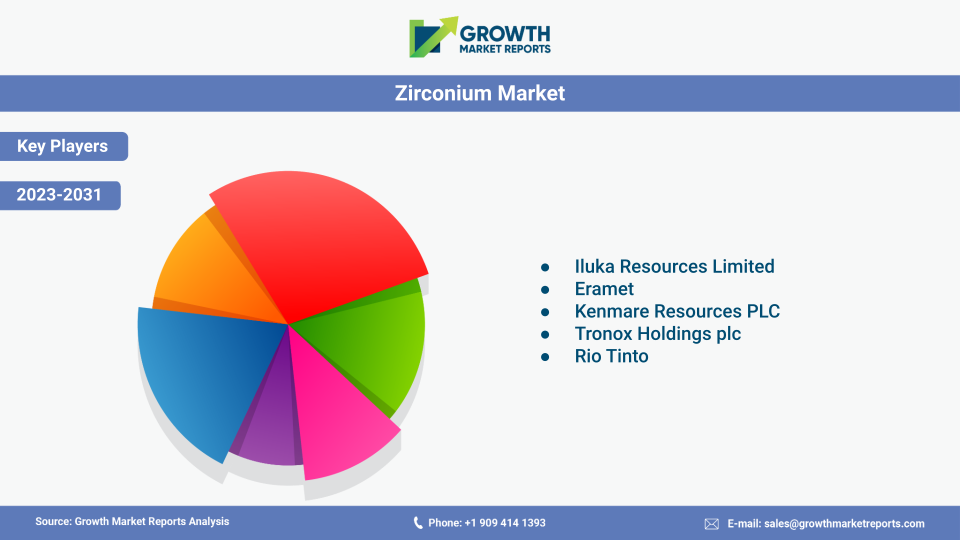

Zirconium Market Key Players

Frequently Asked Questions

Zirconium alloys play a strategic role in nuclear power generation, supporting low-carbon energy solutions. Zirconium-based catalysts and ceramics are also used in environmental applications like water treatment and emissions control.

Key companies include Iluka Resources Limited, Tronox Holdings plc, Kenmare Resources plc, Alkane Resources Ltd., Exxaro Resources Limited, Saint-Gobain ZirPro, ATI Inc., and Western Zirconium (Westinghouse Electric Company LLC).

Opportunities include the adoption of zirconium in additive manufacturing, clean energy, and environmental applications. Challenges include raw material price volatility, supply chain disruptions, and competition from alternative materials.

The market is segmented into zirconium metal, zirconium compounds (such as zirconia and zirconium silicate), zirconium alloys, and other specialty zirconium-based products.

Asia Pacific leads the global zirconium market, followed by North America and Europe. The Middle East & Africa and Latin America are emerging as promising markets.

Zirconium compounds, especially zirconia, are widely used in dental implants, prosthetics, and surgical instruments due to their biocompatibility, strength, and wear resistance.

Zirconium alloys are essential in nuclear reactors for fuel cladding and structural components due to their low neutron absorption and high corrosion resistance.

Major end-use industries for zirconium include ceramics, nuclear energy, automotive, aerospace, healthcare, energy & power, and construction.

Key growth drivers include expanding applications in ceramics, nuclear energy, and advanced manufacturing, as well as increasing demand from high-performance industries like aerospace, healthcare, and automotive.

The global zirconium market reached USD 2.3 billion in 2024 and is expected to grow at a CAGR of 5.8% from 2025 to 2033, reaching approximately USD 3.9 billion by 2033.

Table Of Content

Chapter 1 Executive Summary
Chapter 2 Assumptions and Acronyms Used
Chapter 3 Research Methodology
Chapter 4 Zirconium Market Overview
   4.1 Introduction
      4.1.1 Market Taxonomy
      4.1.2 Market Definition
      4.1.3 Macro-Economic Factors Impacting the Market Growth
   4.2 Zirconium Market Dynamics
      4.2.1 Market Drivers
      4.2.2 Market Restraints
      4.2.3 Market Opportunity
   4.3 Zirconium Market - Supply Chain Analysis
      4.3.1 List of Key Suppliers
      4.3.2 List of Key Distributors
      4.3.3 List of Key Consumers
   4.4 Key Forces Shaping the Zirconium Market
      4.4.1 Bargaining Power of Suppliers
      4.4.2 Bargaining Power of Buyers
      4.4.3 Threat of Substitution
      4.4.4 Threat of New Entrants
      4.4.5 Competitive Rivalry
   4.5 Global Zirconium Market Size & Forecast, 2023-2032
      4.5.1 Zirconium Market Size and Y-o-Y Growth
      4.5.2 Zirconium Market Absolute $ Opportunity

Chapter 5 Global Zirconium Market Analysis and Forecast By Product Type
   5.1 Introduction
      5.1.1 Key Market Trends & Growth Opportunities By Product Type
      5.1.2 Basis Point Share (BPS) Analysis By Product Type
      5.1.3 Absolute $ Opportunity Assessment By Product Type
   5.2 Zirconium Market Size Forecast By Product Type
      5.2.1 Zirconium Metal
      5.2.2 Zirconium Compounds
      5.2.3 Zirconium Alloys
      5.2.4 Others
   5.3 Market Attractiveness Analysis By Product Type

Chapter 6 Global Zirconium Market Analysis and Forecast By Application
   6.1 Introduction
      6.1.1 Key Market Trends & Growth Opportunities By Application
      6.1.2 Basis Point Share (BPS) Analysis By Application
      6.1.3 Absolute $ Opportunity Assessment By Application
   6.2 Zirconium Market Size Forecast By Application
      6.2.1 Ceramics
      6.2.2 Chemicals
      6.2.3 Foundry
      6.2.4 Refractories
      6.2.5 Nuclear
      6.2.6 Medical
      6.2.7 Others
   6.3 Market Attractiveness Analysis By Application

Chapter 7 Global Zirconium Market Analysis and Forecast By End-Use Industry
   7.1 Introduction
      7.1.1 Key Market Trends & Growth Opportunities By End-Use Industry
      7.1.2 Basis Point Share (BPS) Analysis By End-Use Industry
      7.1.3 Absolute $ Opportunity Assessment By End-Use Industry
   7.2 Zirconium Market Size Forecast By End-Use Industry
      7.2.1 Automotive
      7.2.2 Aerospace
      7.2.3 Healthcare
      7.2.4 Energy & Power
      7.2.5 Construction
      7.2.6 Others
   7.3 Market Attractiveness Analysis By End-Use Industry

Chapter 8 Global Zirconium Market Analysis and Forecast by Region
   8.1 Introduction
      8.1.1 Key Market Trends & Growth Opportunities By Region
      8.1.2 Basis Point Share (BPS) Analysis By Region
      8.1.3 Absolute $ Opportunity Assessment By Region
   8.2 Zirconium Market Size Forecast By Region
      8.2.1 North America
      8.2.2 Europe
      8.2.3 Asia Pacific
      8.2.4 Latin America
      8.2.5 Middle East & Africa (MEA)
   8.3 Market Attractiveness Analysis By Region

Chapter 9 Coronavirus Disease (COVID-19) Impact 
   9.1 Introduction 
   9.2 Current & Future Impact Analysis 
   9.3 Economic Impact Analysis 
   9.4 Government Policies 
   9.5 Investment Scenario

Chapter 10 North America Zirconium Analysis and Forecast
   10.1 Introduction
   10.2 North America Zirconium Market Size Forecast by Country
      10.2.1 U.S.
      10.2.2 Canada
   10.3 Basis Point Share (BPS) Analysis by Country
   10.4 Absolute $ Opportunity Assessment by Country
   10.5 Market Attractiveness Analysis by Country
   10.6 North America Zirconium Market Size Forecast By Product Type
      10.6.1 Zirconium Metal
      10.6.2 Zirconium Compounds
      10.6.3 Zirconium Alloys
      10.6.4 Others
   10.7 Basis Point Share (BPS) Analysis By Product Type 
   10.8 Absolute $ Opportunity Assessment By Product Type 
   10.9 Market Attractiveness Analysis By Product Type
   10.10 North America Zirconium Market Size Forecast By Application
      10.10.1 Ceramics
      10.10.2 Chemicals
      10.10.3 Foundry
      10.10.4 Refractories
      10.10.5 Nuclear
      10.10.6 Medical
      10.10.7 Others
   10.11 Basis Point Share (BPS) Analysis By Application 
   10.12 Absolute $ Opportunity Assessment By Application 
   10.13 Market Attractiveness Analysis By Application
   10.14 North America Zirconium Market Size Forecast By End-Use Industry
      10.14.1 Automotive
      10.14.2 Aerospace
      10.14.3 Healthcare
      10.14.4 Energy & Power
      10.14.5 Construction
      10.14.6 Others
   10.15 Basis Point Share (BPS) Analysis By End-Use Industry 
   10.16 Absolute $ Opportunity Assessment By End-Use Industry 
   10.17 Market Attractiveness Analysis By End-Use Industry

Chapter 11 Europe Zirconium Analysis and Forecast
   11.1 Introduction
   11.2 Europe Zirconium Market Size Forecast by Country
      11.2.1 Germany
      11.2.2 France
      11.2.3 Italy
      11.2.4 U.K.
      11.2.5 Spain
      11.2.6 Russia
      11.2.7 Rest of Europe
   11.3 Basis Point Share (BPS) Analysis by Country
   11.4 Absolute $ Opportunity Assessment by Country
   11.5 Market Attractiveness Analysis by Country
   11.6 Europe Zirconium Market Size Forecast By Product Type
      11.6.1 Zirconium Metal
      11.6.2 Zirconium Compounds
      11.6.3 Zirconium Alloys
      11.6.4 Others
   11.7 Basis Point Share (BPS) Analysis By Product Type 
   11.8 Absolute $ Opportunity Assessment By Product Type 
   11.9 Market Attractiveness Analysis By Product Type
   11.10 Europe Zirconium Market Size Forecast By Application
      11.10.1 Ceramics
      11.10.2 Chemicals
      11.10.3 Foundry
      11.10.4 Refractories
      11.10.5 Nuclear
      11.10.6 Medical
      11.10.7 Others
   11.11 Basis Point Share (BPS) Analysis By Application 
   11.12 Absolute $ Opportunity Assessment By Application 
   11.13 Market Attractiveness Analysis By Application
   11.14 Europe Zirconium Market Size Forecast By End-Use Industry
      11.14.1 Automotive
      11.14.2 Aerospace
      11.14.3 Healthcare
      11.14.4 Energy & Power
      11.14.5 Construction
      11.14.6 Others
   11.15 Basis Point Share (BPS) Analysis By End-Use Industry 
   11.16 Absolute $ Opportunity Assessment By End-Use Industry 
   11.17 Market Attractiveness Analysis By End-Use Industry

Chapter 12 Asia Pacific Zirconium Analysis and Forecast
   12.1 Introduction
   12.2 Asia Pacific Zirconium Market Size Forecast by Country
      12.2.1 China
      12.2.2 Japan
      12.2.3 South Korea
      12.2.4 India
      12.2.5 Australia
      12.2.6 South East Asia (SEA)
      12.2.7 Rest of Asia Pacific (APAC)
   12.3 Basis Point Share (BPS) Analysis by Country
   12.4 Absolute $ Opportunity Assessment by Country
   12.5 Market Attractiveness Analysis by Country
   12.6 Asia Pacific Zirconium Market Size Forecast By Product Type
      12.6.1 Zirconium Metal
      12.6.2 Zirconium Compounds
      12.6.3 Zirconium Alloys
      12.6.4 Others
   12.7 Basis Point Share (BPS) Analysis By Product Type 
   12.8 Absolute $ Opportunity Assessment By Product Type 
   12.9 Market Attractiveness Analysis By Product Type
   12.10 Asia Pacific Zirconium Market Size Forecast By Application
      12.10.1 Ceramics
      12.10.2 Chemicals
      12.10.3 Foundry
      12.10.4 Refractories
      12.10.5 Nuclear
      12.10.6 Medical
      12.10.7 Others
   12.11 Basis Point Share (BPS) Analysis By Application 
   12.12 Absolute $ Opportunity Assessment By Application 
   12.13 Market Attractiveness Analysis By Application
   12.14 Asia Pacific Zirconium Market Size Forecast By End-Use Industry
      12.14.1 Automotive
      12.14.2 Aerospace
      12.14.3 Healthcare
      12.14.4 Energy & Power
      12.14.5 Construction
      12.14.6 Others
   12.15 Basis Point Share (BPS) Analysis By End-Use Industry 
   12.16 Absolute $ Opportunity Assessment By End-Use Industry 
   12.17 Market Attractiveness Analysis By End-Use Industry

Chapter 13 Latin America Zirconium Analysis and Forecast
   13.1 Introduction
   13.2 Latin America Zirconium Market Size Forecast by Country
      13.2.1 Brazil
      13.2.2 Mexico
      13.2.3 Rest of Latin America (LATAM)
   13.3 Basis Point Share (BPS) Analysis by Country
   13.4 Absolute $ Opportunity Assessment by Country
   13.5 Market Attractiveness Analysis by Country
   13.6 Latin America Zirconium Market Size Forecast By Product Type
      13.6.1 Zirconium Metal
      13.6.2 Zirconium Compounds
      13.6.3 Zirconium Alloys
      13.6.4 Others
   13.7 Basis Point Share (BPS) Analysis By Product Type 
   13.8 Absolute $ Opportunity Assessment By Product Type 
   13.9 Market Attractiveness Analysis By Product Type
   13.10 Latin America Zirconium Market Size Forecast By Application
      13.10.1 Ceramics
      13.10.2 Chemicals
      13.10.3 Foundry
      13.10.4 Refractories
      13.10.5 Nuclear
      13.10.6 Medical
      13.10.7 Others
   13.11 Basis Point Share (BPS) Analysis By Application 
   13.12 Absolute $ Opportunity Assessment By Application 
   13.13 Market Attractiveness Analysis By Application
   13.14 Latin America Zirconium Market Size Forecast By End-Use Industry
      13.14.1 Automotive
      13.14.2 Aerospace
      13.14.3 Healthcare
      13.14.4 Energy & Power
      13.14.5 Construction
      13.14.6 Others
   13.15 Basis Point Share (BPS) Analysis By End-Use Industry 
   13.16 Absolute $ Opportunity Assessment By End-Use Industry 
   13.17 Market Attractiveness Analysis By End-Use Industry

Chapter 14 Middle East & Africa (MEA) Zirconium Analysis and Forecast
   14.1 Introduction
   14.2 Middle East & Africa (MEA) Zirconium Market Size Forecast by Country
      14.2.1 Saudi Arabia
      14.2.2 South Africa
      14.2.3 UAE
      14.2.4 Rest of Middle East & Africa (MEA)
   14.3 Basis Point Share (BPS) Analysis by Country
   14.4 Absolute $ Opportunity Assessment by Country
   14.5 Market Attractiveness Analysis by Country
   14.6 Middle East & Africa (MEA) Zirconium Market Size Forecast By Product Type
      14.6.1 Zirconium Metal
      14.6.2 Zirconium Compounds
      14.6.3 Zirconium Alloys
      14.6.4 Others
   14.7 Basis Point Share (BPS) Analysis By Product Type 
   14.8 Absolute $ Opportunity Assessment By Product Type 
   14.9 Market Attractiveness Analysis By Product Type
   14.10 Middle East & Africa (MEA) Zirconium Market Size Forecast By Application
      14.10.1 Ceramics
      14.10.2 Chemicals
      14.10.3 Foundry
      14.10.4 Refractories
      14.10.5 Nuclear
      14.10.6 Medical
      14.10.7 Others
   14.11 Basis Point Share (BPS) Analysis By Application 
   14.12 Absolute $ Opportunity Assessment By Application 
   14.13 Market Attractiveness Analysis By Application
   14.14 Middle East & Africa (MEA) Zirconium Market Size Forecast By End-Use Industry
      14.14.1 Automotive
      14.14.2 Aerospace
      14.14.3 Healthcare
      14.14.4 Energy & Power
      14.14.5 Construction
      14.14.6 Others
   14.15 Basis Point Share (BPS) Analysis By End-Use Industry 
   14.16 Absolute $ Opportunity Assessment By End-Use Industry 
   14.17 Market Attractiveness Analysis By End-Use Industry

Chapter 15 Competition Landscape 
   15.1 Zirconium Market: Competitive Dashboard
   15.2 Global Zirconium Market: Market Share Analysis, 2023
   15.3 Company Profiles (Details – Overview, Financials, Developments, Strategy) 
      15.3.1 Iluka Resources Limited
Alkane Resources Ltd
Tronox Holdings plc
Kenmare Resources plc
Rio Tinto Group
Indústrias Nucleares do Brasil (INB)
Base Resources Limited
Mosaic Company
Saint-Gobain Group
Tosoh Corporation
American Elements
ATI Inc. (Allegheny Technologies Incorporated)
Zircomet Limited
China National Nuclear Corporation (CNNC)
Guangdong Orient Zirconic Ind Sci & Tech Co., Ltd.
Doral Mineral Sands Pty Ltd
Astron Corporation Limited
Zircoa, Inc.
Norsk Hydro ASA
Sino Dragon New Energy Holdings Limited

Methodology

Our Clients

Pfizer
Siemens Healthcare
General Mills
Deloitte
Dassault Aviation
FedEx Logistics
General Electric
Honda Motor Co. Ltd.