Segments - by Reactor Type (Light-water Reactors, Heavy-water Reactors, Fast-neutron Reactors, Others), by Application (Power Generation, Desalination, Process Heat, Others), by Deployment (Single Module, Multi-Module), by End-User (Utilities, Government, Industrial, Others)
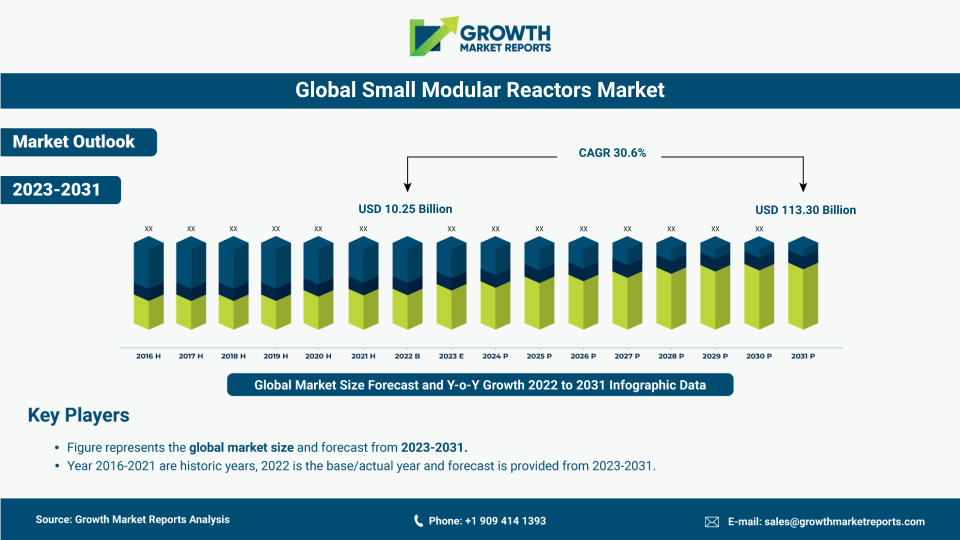
According to our latest research, the global Small Modular Reactors (SMR) market size reached USD 6.8 billion in 2024, with a robust year-on-year growth driven by increasing energy demands and the need for clean power solutions. The market is expected to expand at a CAGR of 13.7% from 2025 to 2033, projecting a value of USD 21.7 billion by 2033. This upward trajectory is primarily fueled by the rising adoption of SMRs as a flexible, scalable, and cost-effective solution for low-carbon electricity generation, especially in regions with limited grid infrastructure or remote locations.
One of the primary growth factors for the Small Modular Reactors market is the global shift toward decarbonization and sustainable energy sources. As governments and regulatory bodies intensify their commitments to reduce greenhouse gas emissions, SMRs have emerged as a viable alternative to traditional large-scale nuclear power plants. Their smaller size and modular nature allow for faster deployment, reduced upfront capital costs, and minimized environmental impact. Additionally, the ability of SMRs to integrate with renewable energy sources and provide reliable baseload power makes them an attractive option for countries aiming to diversify their energy portfolios and enhance grid stability. The flexibility to install SMRs in remote or off-grid locations further broadens their application scope, particularly for regions with limited access to conventional power infrastructure.
Another significant driver is the ongoing technological advancements in SMR design and safety features. Recent innovations have led to the development of advanced reactor types, such as light-water and fast-neutron reactors, which offer improved operational efficiency and enhanced safety profiles. These advancements have not only reduced the perceived risks associated with nuclear energy but have also attracted increased investments from both public and private sectors. Strategic collaborations between governments, research institutions, and industry players are accelerating the commercialization of SMR technologies, thereby fostering a more competitive and dynamic market landscape. Moreover, the standardization of regulatory frameworks across different regions is streamlining the approval process for new SMR projects, further stimulating market growth.
The growing demand for decentralized and resilient energy solutions in the wake of natural disasters and geopolitical uncertainties is also propelling the adoption of SMRs. Unlike traditional nuclear plants, SMRs can be deployed incrementally as demand grows, allowing for greater operational flexibility and reduced financial risk. Their inherent safety features, such as passive cooling systems and underground containment, make them suitable for deployment in densely populated or environmentally sensitive areas. Furthermore, the potential for SMRs to support non-electric applications, such as desalination and industrial process heat, is opening up new avenues for market expansion. As the global energy landscape continues to evolve, SMRs are poised to play a pivotal role in meeting the dual challenges of energy security and environmental sustainability.
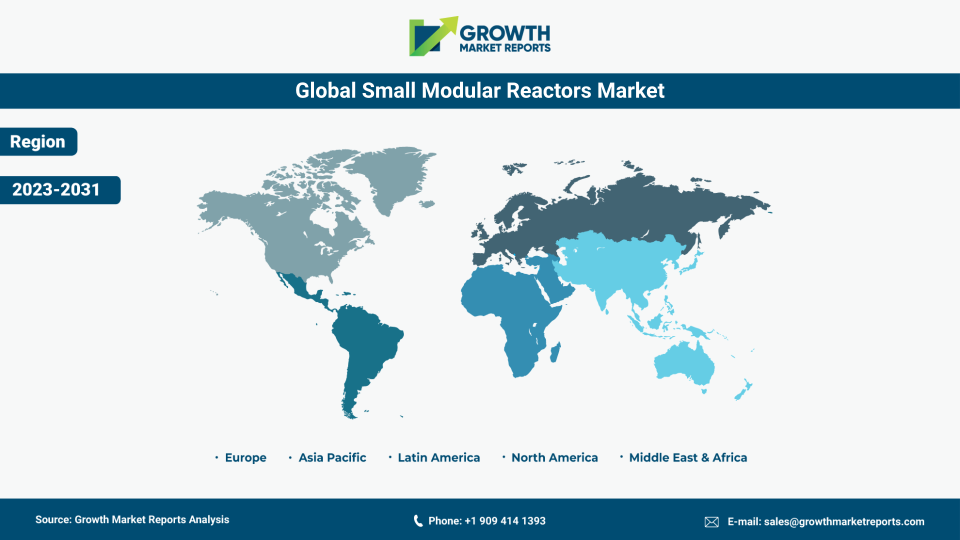
From a regional perspective, the Asia Pacific region is leading the global Small Modular Reactors market, accounting for a significant share of overall installations and project pipelines. This dominance is attributed to the rapid industrialization, urbanization, and increasing energy consumption in countries such as China, India, and South Korea. North America and Europe are also witnessing substantial growth, driven by favorable government policies, strong research and development capabilities, and a growing emphasis on energy transition. In contrast, the Middle East & Africa and Latin America are gradually emerging as promising markets, supported by investments in energy infrastructure and a rising focus on sustainable development. The regional dynamics are further influenced by factors such as regulatory frameworks, public acceptance, and availability of skilled workforce, which collectively shape the pace and scale of SMR adoption across different geographies.
The reactor type segment is a critical determinant of the Small Modular Reactors market, encompassing light-water reactors, heavy-water reactors, fast-neutron reactors, and other advanced designs. Light-water reactors currently dominate the market, owing to their proven technology, established safety record, and widespread acceptance among regulators and utilities. These reactors utilize ordinary water as both coolant and moderator, making them compatible with existing nuclear fuel cycles and infrastructure. Their modular design enables efficient mass production and streamlined deployment, which significantly reduces construction timelines and costs. As a result, light-water SMRs are increasingly being adopted for both grid-connected and off-grid applications, particularly in regions with stringent safety and regulatory requirements.
Heavy-water reactors represent another important segment, particularly in countries with abundant natural uranium resources and limited enrichment capabilities. These reactors use deuterium oxide (heavy water) as a moderator, allowing them to operate on natural uranium fuel. The inherent flexibility of heavy-water SMRs makes them well-suited for deployment in remote or resource-constrained environments, where fuel supply logistics can be challenging. Furthermore, heavy-water reactors offer enhanced fuel efficiency and reduced waste generation, which are key considerations for countries seeking to optimize their nuclear energy strategies. Ongoing research and development efforts are focused on further improving the safety, reliability, and economic viability of heavy-water SMR designs.
Fast-neutron reactors are gaining traction as a next-generation solution for the Small Modular Reactors market, driven by their potential to utilize a broader range of fuel types, including recycled nuclear waste and thorium. These reactors operate at higher neutron energies, enabling more efficient fuel utilization and reduced long-term waste liabilities. Fast-neutron SMRs are particularly attractive for countries with advanced nuclear research capabilities and a strong focus on sustainability. Their ability to close the nuclear fuel cycle and minimize proliferation risks is garnering interest from both policymakers and industry stakeholders. However, the commercialization of fast-neutron SMRs is still in the early stages, with several pilot projects and demonstration plants currently under development.
The Others category includes innovative reactor designs such as molten salt reactors, gas-cooled reactors, and microreactors, which are being explored for specialized applications and niche markets. These advanced SMR concepts offer unique advantages in terms of safety, operational flexibility, and scalability, making them suitable for a wide range of end-user requirements. For instance, microreactors are being developed for use in remote military bases, disaster recovery operations, and space exploration missions. As technological advancements continue to drive down costs and improve performance, the diversity of reactor types is expected to expand, providing end-users with a broader array of options to meet their specific energy needs.
| Attributes | Details |
| Report Title | Small Modular Reactors Market Research Report 2033 |
| By Reactor Type | Light-water Reactors, Heavy-water Reactors, Fast-neutron Reactors, Others |
| By Application | Power Generation, Desalination, Process Heat, Others |
| By Deployment | Single Module, Multi-Module |
| By End-User | Utilities, Government, Industrial, Others |
| Regions Covered | North America, Europe, APAC, Latin America, MEA |
| Base Year | 2024 |
| Historic Data | 2018-2023 |
| Forecast Period | 2025-2033 |
| Number of Pages | 279 |
| Number of Tables & Figures | 375 |
| Customization Available | Yes, the report can be customized as per your need. |
The application segment of the Small Modular Reactors market is highly diverse, encompassing power generation, desalination, process heat, and other emerging uses. Power generation remains the primary application, accounting for the largest share of the overall market. SMRs are increasingly being deployed to provide reliable, low-carbon electricity to both grid-connected and isolated communities. Their modular design enables utilities to scale capacity incrementally, aligning with changing demand patterns and minimizing financial risk. In addition, SMRs are well-suited for integration with renewable energy sources, such as wind and solar, providing a stable baseload supply that enhances grid resilience and supports the transition to a low-carbon energy mix.
Desalination is an emerging application for SMRs, particularly in regions facing acute water scarcity and limited access to freshwater resources. The high thermal efficiency and compact footprint of SMRs make them ideal for coupling with desalination plants, enabling the production of clean water alongside electricity. This dual-use capability is attracting interest from governments and utilities in arid regions, such as the Middle East and parts of Africa, where the demand for both power and water is expected to rise significantly in the coming years. Ongoing pilot projects and feasibility studies are demonstrating the technical and economic viability of SMR-powered desalination, paving the way for broader adoption.
Process heat represents another significant growth area for the Small Modular Reactors market, particularly in industries with high thermal energy requirements, such as chemicals, refining, and manufacturing. SMRs can supply process heat at various temperature ranges, enabling industrial users to reduce their reliance on fossil fuels and lower their carbon footprint. The ability to co-locate SMRs with industrial facilities offers operational efficiencies and cost savings, while also supporting broader decarbonization efforts. As more industries seek to transition to clean energy sources, the demand for SMR-based process heat solutions is expected to increase, driving further market expansion.
The Others application segment includes specialized uses such as district heating, hydrogen production, and backup power for critical infrastructure. These niche applications are gaining traction as the versatility and scalability of SMRs become more widely recognized. For example, SMRs can be deployed to provide district heating in urban centers, reducing emissions and improving energy efficiency. Similarly, their ability to produce high-temperature steam makes them suitable for hydrogen generation, supporting the growth of the green hydrogen economy. As the range of SMR applications continues to expand, the market is poised for sustained long-term growth.
The deployment segment of the Small Modular Reactors market is bifurcated into single module and multi-module configurations, each offering distinct advantages and addressing different end-user needs. Single module deployment is characterized by the installation of a standalone SMR unit, typically in remote or off-grid locations where energy demand is limited or variable. This approach offers a cost-effective and scalable solution for communities or industrial sites that require reliable power but lack access to centralized grid infrastructure. The compact size and modularity of single-module SMRs facilitate rapid deployment and ease of transportation, making them ideal for challenging environments such as islands, mining operations, or disaster recovery zones.
Multi-module deployment involves the installation of multiple SMR units at a single site, enabling end-users to scale capacity incrementally as demand grows. This approach is particularly well-suited for utilities and large industrial users seeking to balance operational flexibility with long-term energy security. By leveraging economies of scale, multi-module deployments can achieve lower levelized costs of electricity and enhanced system reliability. The modular nature of SMRs allows for phased construction, reducing financial risk and enabling a more efficient allocation of capital. Additionally, multi-module sites can offer redundancy and backup capabilities, ensuring continuous power supply even during maintenance or unforeseen outages.
The choice between single and multi-module deployment is influenced by several factors, including site-specific requirements, regulatory considerations, and available financing options. In regions with established nuclear infrastructure and strong regulatory frameworks, multi-module SMR installations are gaining momentum as a means to replace aging coal or nuclear plants and support grid modernization efforts. Conversely, single-module deployments are increasingly being adopted in emerging markets and remote areas, where the need for flexible, decentralized power solutions is most acute. As the market matures, hybrid deployment models that combine both approaches are also being explored, offering greater adaptability to diverse end-user needs.
Technological advancements and standardization efforts are further enhancing the viability of both single and multi-module SMR deployments. Innovations in reactor design, modular construction techniques, and digital monitoring systems are reducing installation times and operational costs, making SMRs a more attractive option for a wide range of applications. Collaborative initiatives between governments, industry players, and research institutions are accelerating the development of standardized deployment protocols, which are expected to streamline regulatory approvals and facilitate broader market adoption. As deployment models continue to evolve, the flexibility and scalability of SMRs will remain key drivers of market growth.
The end-user segment of the Small Modular Reactors market is highly diverse, encompassing utilities, government entities, industrial users, and other specialized stakeholders. Utilities represent the largest end-user group, driven by the need to modernize aging power infrastructure, enhance grid reliability, and meet growing electricity demand. SMRs offer utilities a flexible, scalable, and cost-effective solution for expanding generation capacity while reducing carbon emissions. The ability to deploy SMRs in both grid-connected and remote locations makes them an attractive option for utilities operating in diverse geographies and regulatory environments. Ongoing investments in grid modernization and renewable energy integration are further boosting the adoption of SMRs among utility companies.
Government entities play a critical role in the development and deployment of SMR technologies, particularly in the areas of research, funding, and regulatory oversight. National and regional governments are increasingly investing in SMR demonstration projects, pilot plants, and collaborative research initiatives to accelerate the commercialization of advanced nuclear technologies. In addition, government agencies are leveraging SMRs to support critical infrastructure, such as military bases, disaster recovery operations, and remote communities. The strategic importance of energy security and resilience is driving government interest in SMRs as a means to diversify energy sources and reduce dependence on imported fuels.
Industrial users are emerging as a significant end-user group for Small Modular Reactors, particularly in sectors with high thermal energy requirements and a strong focus on sustainability. Industries such as chemicals, refining, mining, and manufacturing are increasingly adopting SMRs to supply process heat and electricity, reduce greenhouse gas emissions, and enhance operational efficiency. The ability to co-locate SMRs with industrial facilities offers significant cost savings and logistical advantages, while also supporting broader decarbonization efforts. As more industries seek to transition to clean energy sources, the demand for SMR-based solutions is expected to rise, driving further market expansion.
The Others end-user category includes specialized stakeholders such as research institutions, non-governmental organizations, and private developers. These entities are playing a pivotal role in advancing SMR technologies, conducting feasibility studies, and exploring innovative applications. For example, research institutions are developing microreactors for use in space exploration, while private developers are exploring SMR-powered desalination and district heating projects. As the Small Modular Reactors market continues to evolve, the diversity of end-user requirements will drive innovation and foster the development of tailored solutions to meet a wide range of energy needs.
The Small Modular Reactors market presents a wealth of opportunities for stakeholders across the energy value chain. One of the most significant opportunities lies in the ability of SMRs to address the growing demand for clean, reliable, and decentralized power solutions. As countries around the world set ambitious targets for carbon neutrality and renewable energy integration, SMRs offer a flexible and scalable alternative to traditional fossil fuel-based generation. Their modular design and advanced safety features make them suitable for deployment in a wide range of environments, from urban centers to remote communities. In addition, the potential for SMRs to support non-electric applications, such as desalination and process heat, is opening up new markets and revenue streams for technology providers and project developers. The ongoing standardization of regulatory frameworks and the emergence of innovative financing models are further enhancing the commercial viability of SMR projects, attracting increased investment and accelerating market growth.
Another key opportunity for the Small Modular Reactors market is the potential for international collaboration and knowledge sharing. As countries and organizations work together to develop and deploy SMR technologies, there is significant scope for cross-border partnerships, joint ventures, and technology transfer agreements. These collaborations can help to streamline regulatory approvals, reduce development costs, and accelerate the commercialization of advanced reactor designs. Furthermore, the global nature of the SMR market creates opportunities for export-oriented growth, enabling technology providers to tap into new markets and expand their international footprint. As the demand for clean energy continues to rise, the ability to leverage global expertise and best practices will be a critical success factor for stakeholders in the SMR ecosystem.
Despite the many opportunities, the Small Modular Reactors market also faces several significant challenges and threats. One of the primary restrainers is the complex and evolving regulatory landscape, which can create uncertainty and delay project timelines. The approval process for new nuclear technologies is often lengthy and resource-intensive, requiring extensive safety assessments, public consultations, and compliance with stringent environmental standards. In addition, public perception and acceptance of nuclear energy remain mixed, with concerns about safety, waste management, and proliferation risks. These factors can hinder the pace of SMR adoption and limit market growth, particularly in regions with strong anti-nuclear sentiment or limited regulatory capacity. Overcoming these challenges will require sustained efforts to educate stakeholders, build public trust, and streamline regulatory processes to support the safe and responsible deployment of SMRs.
The regional analysis of the Small Modular Reactors market reveals significant variations in market size, growth rates, and adoption patterns across different geographies. Asia Pacific is the largest and fastest-growing region, accounting for approximately USD 2.7 billion of the global market in 2024. This dominance is driven by the rapid industrialization, urbanization, and increasing energy demand in countries such as China, India, and South Korea. Governments in the region are investing heavily in nuclear energy as part of their broader energy transition strategies, with a strong focus on enhancing energy security and reducing carbon emissions. The Asia Pacific SMR market is expected to grow at a CAGR of 15.2% through 2033, outpacing other regions and solidifying its position as a global leader in SMR deployment.
North America is another major market for Small Modular Reactors, with a market size of USD 1.9 billion in 2024. The region benefits from a well-established nuclear industry, strong research and development capabilities, and supportive government policies. The United States and Canada are at the forefront of SMR innovation, with several demonstration projects, pilot plants, and commercial deployments underway. The North American market is characterized by a strong emphasis on grid modernization, renewable energy integration, and the replacement of aging coal and nuclear plants. As regulatory frameworks become more standardized and public acceptance increases, the region is expected to maintain steady growth, with a projected market value of USD 5.6 billion by 2033.
Europe represents a significant growth opportunity for the Small Modular Reactors market, with a market size of USD 1.3 billion in 2024. The region is characterized by a strong commitment to decarbonization, energy security, and technological innovation. Countries such as the United Kingdom, France, and Russia are investing in SMR research, development, and demonstration projects, with a focus on supporting the transition to a low-carbon energy system. The European SMR market is also benefiting from cross-border collaboration and knowledge sharing, as well as the emergence of innovative financing models. While the adoption of SMRs in Europe is subject to regulatory and public acceptance challenges, the region is expected to achieve a CAGR of 12.3% over the forecast period, reaching a market value of USD 3.9 billion by 2033. The Middle East & Africa and Latin America are smaller but emerging markets, with combined market sizes of USD 0.9 billion in 2024, driven by investments in energy infrastructure and a growing focus on sustainable development.
The competitive landscape of the Small Modular Reactors market is characterized by a dynamic mix of established nuclear industry leaders, emerging technology startups, and collaborative research consortia. Major players are leveraging their extensive experience in nuclear engineering, project management, and regulatory compliance to develop and commercialize advanced SMR technologies. The market is witnessing a surge in strategic partnerships, joint ventures, and public-private collaborations aimed at accelerating the deployment of SMR projects and expanding market reach. Companies are investing heavily in research and development to enhance reactor safety, efficiency, and scalability, while also exploring innovative business models to address diverse end-user requirements.
Intense competition is driving continuous innovation in reactor design, modular construction techniques, and digital monitoring systems. Established players are focusing on standardizing SMR platforms to streamline regulatory approvals and reduce costs, while new entrants are bringing disruptive technologies and novel applications to the market. The ability to offer integrated solutions, including financing, project management, and operational support, is emerging as a key differentiator for leading SMR providers. In addition, companies are actively engaging with governments, utilities, and industrial users to secure long-term contracts and build robust project pipelines.
Intellectual property and regulatory expertise are critical assets in the Small Modular Reactors market, enabling companies to navigate complex approval processes and protect their technological innovations. The competitive landscape is further shaped by the emergence of regional champions, particularly in Asia Pacific and Europe, where local players are leveraging government support and market-specific insights to gain a competitive edge. As the market continues to evolve, the ability to adapt to changing regulatory environments, address public concerns, and deliver cost-effective solutions will be essential for sustained success.
Some of the major companies operating in the Small Modular Reactors market include NuScale Power, Rolls-Royce, TerraPower, GE Hitachi Nuclear Energy, Rosatom, China National Nuclear Corporation (CNNC), and Westinghouse Electric Company. NuScale Power is a pioneer in SMR technology, with its scalable light-water reactor design receiving regulatory approval in the United States and multiple projects in the pipeline. Rolls-Royce is leading the development of SMRs in the United Kingdom, leveraging its expertise in engineering and manufacturing to deliver cost-competitive solutions. TerraPower, backed by Bill Gates, is focused on advanced reactor designs, including fast-neutron and molten salt reactors, with a strong emphasis on safety and sustainability.
GE Hitachi Nuclear Energy is a global leader in nuclear technology, offering a portfolio of SMR solutions tailored to diverse end-user needs. Rosatom, the Russian state nuclear corporation, is actively developing and deploying SMRs both domestically and internationally, with a focus on remote and off-grid applications. China National Nuclear Corporation (CNNC) is driving SMR innovation in Asia, with several demonstration projects and commercial deployments underway. Westinghouse Electric Company is leveraging its extensive experience in nuclear power to develop advanced SMR designs and support global market expansion. These companies are at the forefront of the SMR market, setting industry standards and shaping the future of clean, reliable, and scalable nuclear energy solutions.
The Small Modular Reactors market has been segmented on the basis of
Key players in the market include Rolls-Royce Holdings plc, KOREA ELECTRIC POWER CORPORATION (KEPCO),X-Energy, LLC,GENERAL, ELECTRIC COMPANY, Holtec International, INVAP, NuScale Power, LLC, Nuclear Power Corporation of India Limited, General Atomics, Terrestrial Energy Inc., Toshiba Energy Systems & Solutions Corporation, KAERI, Moltex Energy Ltd, AFRIKANTOV OKBM, OKB "GIDROPRESS”. These players are considered as key players of the market based on their availability of SMR research and development programs, regional presence, better supply chain management system, and the increasing contract for the SMR products.
The players are adopting key strategies such as constant R&D activities for developing sustainable designing. Moreover, Investment and collaboration with companies and government for establishment of the public private partnership for better nuclear power plant designing.
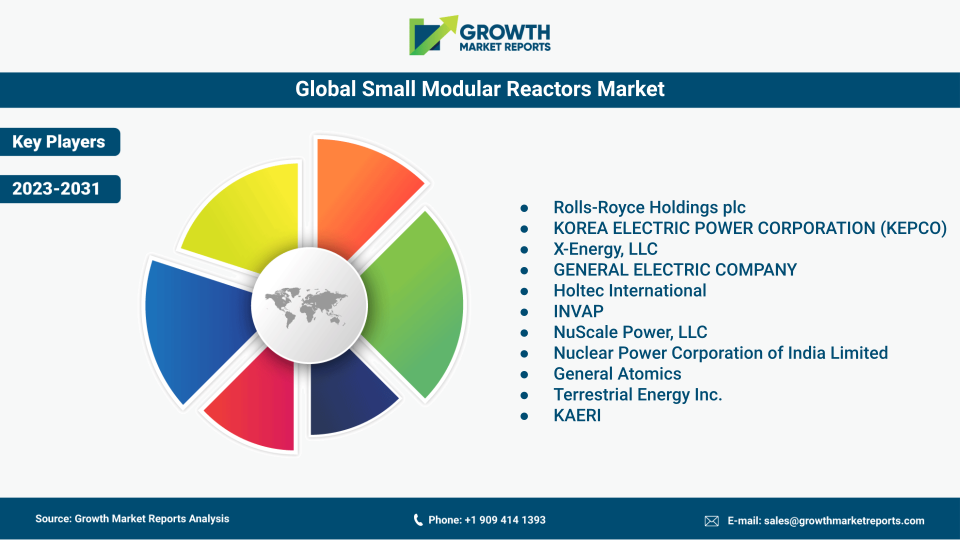
Major Manufactures include Rolls-Royce Holdings plc, KOREA ELECTRIC POWER CORPORATION (KEPCO),X-Energy, LLC,GENERAL, ELECTRIC COMPANY, Holtec International, INVAP, NuScale Power, LLC, Nuclear Power Corporation of India Limited, General Atomics, Terrestrial Energy Inc., Toshiba Energy Systems & Solutions Corporation, KAERI, Moltex Energy Ltd, AFRIKANTOV OKBM, OKB
The base year considered for the global Small Modular Reactors market report is 2019. The forecast analysis is provided for year 2035 with two scenarios – High growth and conservative scenario.
The market is expected to witness moderate impact of COVID-19 pandemic on the small modular reactors.
Factors such as competitive strength and market positioning are key areas considered while selecting top companies to be profiled.
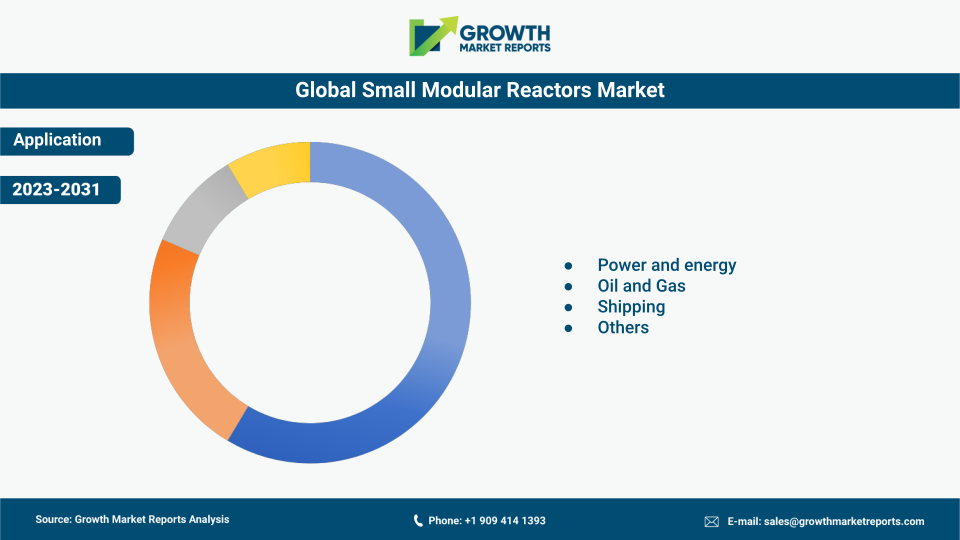
Power and energy, oil and gas, shipping and others are the key applications driving the market growth.
The demand for SMR is growing rapidly in accordance with the growth in the demand for electricity across the globe. Rising population and disposable income of people across the globe are driving the need for electricity, and hence the demand for small modular reactors. Additionally, the small modular reactors are suitable for remote location energy generation and are scalable and flexible in terms of operations.
In addition to market size (in USD Billion), SMR project snapshot, future share of SMR projects, SMT type comparison, Molten salt reactor market outlook, and impact of key regulations is available in final report.
According to this Growth Market Reports report, the market from Small Modular Reactors is likely to register a CAGR of over 30% during period 2019 and 2035, with an anticipated valuation of USD 325.2 Billion in terms of conservative scenario and USD 520.6 billion in terms of high growth scenario by the end of the 2035.
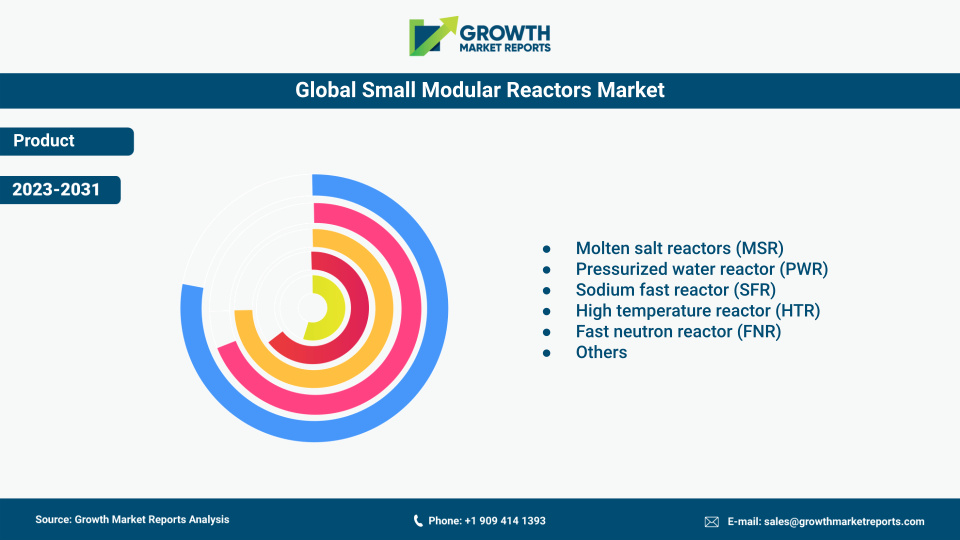
Yes, the report covers types of Small Modular Reactors such as molten salt reactors (MSR), pressurized water reactor (PWR), sodium fast reactor (SFR), high temperature reactor (HTR), fast neutron reactor (FNR), and others
Additional company profiles can be provided on request.