UAE Power Market Research Report 2033

UAE Power Market Research Report 2033

Segments - by Power Generation Source (Thermal, Renewable, Nuclear, Others), by Technology (Conventional, Combined Cycle, Cogeneration, Others), by End-User (Residential, Commercial, Industrial, Utilities)

https://growthmarketreports.com/Raksha
Author : Raksha Sharma
https://growthmarketreports.com/Vaibhav
Fact-checked by : V. Chandola
https://growthmarketreports.com/Shruti
Editor : Shruti Bhat

Upcoming | Report ID :EP-911 | 4.0 Rating | 23 Reviews | 250 Pages | Format : Docx PDF

Report Description


UAE Power Market Outlook

According to our latest research, the global power market size in 2024 stands at USD 1.92 trillion, with the UAE power market contributing a significant share due to its rapid infrastructure expansion and energy diversification initiatives. The global market is witnessing a healthy CAGR of 6.1%, and it is forecasted to reach USD 3.14 trillion by 2033. This robust growth is primarily driven by the increasing adoption of renewable energy sources, substantial investments in grid modernization, and a strong governmental push for sustainable energy solutions. In the UAE, the power sector is evolving rapidly, underpinned by ambitious national strategies aimed at reducing dependence on fossil fuels and fostering a resilient, diversified energy mix.

One of the primary growth factors for the UAE power market is the government’s unwavering commitment to energy diversification. The UAE Vision 2050 and the Dubai Clean Energy Strategy 2050 are pivotal in steering the country towards a sustainable energy future. These policies emphasize increasing the share of renewables and nuclear in the energy mix while reducing greenhouse gas emissions. The introduction of mega projects like the Mohammed bin Rashid Al Maktoum Solar Park and the Barakah Nuclear Power Plant exemplifies the country’s focus on integrating advanced power generation technologies. Such strategic initiatives not only ensure energy security but also position the UAE as a regional leader in clean energy adoption, attracting significant foreign investments and technological collaborations.

Another key driver of the UAE power market’s growth is the surge in industrialization and urbanization. With the country’s population steadily rising and its cities expanding, there is an ever-increasing demand for reliable and efficient power supply. The industrial sector, in particular, is experiencing robust growth, necessitating higher energy consumption to support manufacturing, processing, and other heavy industries. Furthermore, the government’s focus on developing smart cities and digital infrastructure has led to increased investments in modern grid technologies and distributed energy resources. This trend is further amplified by the rise of electric mobility, smart homes, and digital transformation across commercial and residential sectors, all of which are contributing to an escalating demand for power.

Technological advancements and innovation play a crucial role in shaping the UAE power market landscape. The adoption of smart grid solutions, energy storage systems, and digital monitoring tools has significantly improved the efficiency and reliability of power generation and distribution. The integration of artificial intelligence, IoT, and blockchain technologies is enabling predictive maintenance, real-time energy management, and enhanced grid resilience. These innovations not only reduce operational costs but also facilitate the seamless integration of intermittent renewable sources into the grid. As the UAE continues to invest in research and development, the power sector is poised to benefit from further technological breakthroughs, making the market more competitive and sustainable.

Regionally, the UAE power market is characterized by significant contributions from Abu Dhabi and Dubai, which together account for the majority of the country’s installed capacity and energy production. Abu Dhabi, with its substantial investments in nuclear and solar energy, leads in terms of capacity expansion and technological innovation. Dubai, on the other hand, is at the forefront of renewable energy integration and smart grid deployment. Sharjah and the rest of the UAE are also witnessing steady growth, driven by infrastructure development and increased adoption of distributed energy resources. The regional dynamics are further influenced by localized policies, economic activities, and demographic trends, making the UAE power market a dynamic and rapidly evolving landscape.

Global UAE Power Industry Outlook

Power Generation Source Analysis

The UAE power market is segmented by power generation source into thermal, renewable, nuclear, and others, each playing a crucial role in shaping the country’s energy landscape. Thermal power, traditionally the dominant source, continues to hold a significant share due to the abundance of natural gas resources and established infrastructure. However, the government’s strategic focus on reducing carbon emissions and diversifying the energy mix is gradually shifting the balance towards cleaner alternatives. Despite this transition, thermal power remains vital for meeting base load demand and ensuring grid stability, especially during periods of high consumption. The sector is also witnessing investments in cleaner thermal technologies, such as combined cycle and cogeneration, to enhance efficiency and reduce environmental impact.

Renewable energy is emerging as the fastest-growing segment within the UAE power market, driven by ambitious national targets and large-scale solar and wind projects. The country’s geographical advantages, such as high solar irradiance, make it an ideal location for photovoltaic and concentrated solar power installations. The Mohammed bin Rashid Al Maktoum Solar Park, one of the world’s largest, is a testament to the UAE’s commitment to renewable energy. Additionally, wind and waste-to-energy projects are gaining traction, further diversifying the renewable portfolio. Government incentives, favorable regulatory frameworks, and declining technology costs are accelerating the adoption of renewables, positioning the UAE as a regional hub for clean energy innovation.

Nuclear power represents a significant leap towards a low-carbon future for the UAE. The Barakah Nuclear Power Plant, the first of its kind in the Arab world, underscores the country’s dedication to adopting advanced, reliable, and sustainable power generation technologies. Nuclear energy offers the dual benefits of providing a stable, large-scale power supply and significantly reducing greenhouse gas emissions. The operationalization of multiple reactors at Barakah is expected to contribute substantially to the national grid, supporting both residential and industrial demand. The success of the nuclear program also enhances the UAE’s reputation as a pioneer in safe and peaceful nuclear energy deployment in the region.

Other power generation sources, including hydroelectric and distributed energy resources, play a supplementary role in the UAE’s energy landscape. While hydroelectric potential is limited due to the country’s arid climate, investments in battery storage, microgrids, and other distributed technologies are gaining momentum. These sources are particularly valuable for enhancing grid resilience, supporting remote communities, and facilitating the integration of renewables. As the UAE continues to innovate and diversify its energy mix, these alternative sources are expected to play an increasingly important role in ensuring a reliable and sustainable power supply.

Report Scope

Attributes Details
Report Title UAE Power Market Research Report 2033
By Power Generation Source Thermal, Renewable, Nuclear, Others
By Technology Conventional, Combined Cycle, Cogeneration, Others
By End-User Residential, Commercial, Industrial, Utilities
Regions Covered North America, Europe, APAC, Latin America, MEA
Base Year 2024
Historic Data 2018-2023
Forecast Period 2025-2033
Number of Pages 250
Number of Tables & Figures 352
Customization Available Yes, the report can be customized as per your need.

Technology Analysis

The UAE power market is characterized by the adoption of diverse power generation technologies, including conventional, combined cycle, cogeneration, and others. Conventional power generation, primarily based on simple cycle gas turbines and steam turbines, has historically formed the backbone of the country’s power infrastructure. These technologies offer reliability and scalability, making them suitable for meeting large-scale, continuous power demand. However, their relatively lower efficiency and higher emissions have prompted a gradual shift towards more advanced solutions. The government’s focus on sustainability and efficiency is driving investments in upgrading conventional plants with emission control technologies and digital monitoring systems.

Combined cycle technology is rapidly gaining prominence in the UAE power market due to its superior efficiency and lower environmental footprint. By utilizing both gas and steam turbines in a single cycle, combined cycle plants can achieve efficiency levels of up to 60%, significantly higher than conventional plants. This technology is particularly well-suited for the UAE’s natural gas-rich environment, enabling optimal resource utilization and cost savings. The integration of combined cycle plants into the national grid has contributed to a noticeable reduction in carbon emissions and operational costs, aligning with the country’s sustainability goals. Ongoing projects and future expansions are expected to further strengthen the role of combined cycle technology in the UAE’s power sector.

Cogeneration, also known as combined heat and power (CHP), is another key technology segment gaining traction in the UAE. Cogeneration systems simultaneously produce electricity and useful heat, resulting in higher overall efficiency and reduced fuel consumption. This technology is particularly beneficial for industrial and commercial applications, where both power and thermal energy are required. The adoption of cogeneration is being driven by the need to enhance energy efficiency, reduce operational costs, and comply with environmental regulations. Government incentives and supportive policies are encouraging industries to invest in cogeneration systems, contributing to the overall sustainability of the UAE power market.

Other emerging technologies, such as energy storage, smart grids, and digital automation, are playing an increasingly important role in the UAE power market. Energy storage systems, including batteries and thermal storage, are essential for managing the intermittency of renewable sources and ensuring grid stability. Smart grid solutions enable real-time monitoring, predictive maintenance, and efficient energy distribution, enhancing the reliability and resilience of the power network. The deployment of digital automation and advanced analytics is further optimizing operations, reducing downtime, and enabling data-driven decision-making. As the UAE continues to invest in technological innovation, these advanced solutions are expected to drive the next phase of growth and transformation in the power sector.

End-User Analysis

The UAE power market serves a diverse range of end-users, including residential, commercial, industrial, and utilities, each with distinct energy needs and consumption patterns. The residential segment accounts for a significant share of electricity demand, driven by population growth, urbanization, and the proliferation of modern housing developments. The increasing adoption of air conditioning, home appliances, and digital devices is further contributing to rising residential power consumption. Government initiatives promoting energy efficiency and the deployment of smart meters are helping to manage demand and encourage responsible energy use among households.

The commercial sector is another major end-user of power in the UAE, encompassing office buildings, retail centers, hotels, and other service-oriented establishments. The rapid growth of the tourism and hospitality industry, coupled with the expansion of commercial real estate, has led to a substantial increase in electricity consumption. Businesses are increasingly investing in energy-efficient lighting, HVAC systems, and building automation solutions to reduce operational costs and comply with sustainability standards. The adoption of distributed energy resources, such as rooftop solar panels and energy storage systems, is also gaining momentum in the commercial sector, further diversifying the power supply landscape.

Industrial end-users represent a critical segment of the UAE power market, accounting for a significant portion of total electricity consumption. The country’s industrial sector is characterized by energy-intensive activities such as manufacturing, petrochemicals, and metal processing. Reliable and affordable power supply is essential for maintaining productivity and competitiveness in these industries. The government’s focus on industrial diversification and the development of free zones is attracting new investments and driving demand for advanced, efficient power solutions. Industrial users are also increasingly adopting cogeneration and waste-to-energy technologies to optimize energy use and minimize environmental impact.

Utilities, including public and private electricity providers, play a central role in the UAE power market by generating, transmitting, and distributing electricity to end-users. Utilities are at the forefront of adopting advanced grid technologies, integrating renewable and nuclear sources, and ensuring the reliability and security of the power supply. The ongoing modernization of the transmission and distribution infrastructure, coupled with the deployment of smart grid solutions, is enabling utilities to manage growing demand, reduce losses, and enhance customer service. As the UAE continues to pursue its energy transition goals, utilities are expected to play an increasingly strategic role in shaping the future of the power sector.

Opportunities & Threats

Opportunities in the UAE power market are abundant, driven by the country’s ambitious energy diversification strategies and strong government support. The rapid expansion of renewable energy projects, such as large-scale solar and wind farms, presents significant growth prospects for both local and international investors. The transition towards a low-carbon economy is opening up new avenues for technology providers, equipment manufacturers, and service companies specializing in clean energy solutions. Additionally, the integration of advanced digital technologies, such as smart grids, AI, and IoT, is creating opportunities for innovation and efficiency improvements across the power value chain. The growing focus on energy efficiency, demand-side management, and distributed energy resources is further expanding the market for energy services and solutions.

Another major opportunity lies in the development of energy storage and grid modernization projects. As the share of intermittent renewable energy sources increases, there is a growing need for advanced storage solutions to ensure grid stability and reliability. Investments in battery storage, pumped hydro, and other storage technologies are expected to play a pivotal role in supporting the integration of renewables and enhancing overall system resilience. The modernization of the transmission and distribution infrastructure, including the deployment of smart meters and automation systems, is also creating new business opportunities for technology providers and utilities. Furthermore, the UAE’s strategic location and strong trade links position it as a regional hub for energy innovation and export, offering significant long-term growth potential.

Despite the numerous opportunities, the UAE power market faces several threats and challenges that could hinder its growth. One of the primary restrainers is the high capital investment required for the development and deployment of advanced power generation and grid technologies. The integration of renewables, nuclear, and smart grid solutions entails substantial upfront costs, which can be a barrier for smaller players and new entrants. Additionally, the volatility of global energy prices and supply chain disruptions can impact project economics and timelines. Regulatory and policy uncertainties, particularly regarding tariffs, incentives, and environmental standards, also pose risks to market stability and investor confidence. Addressing these challenges will require coordinated efforts from government, industry, and stakeholders to ensure a sustainable and resilient power sector.

Regional Outlook

The regional distribution of the UAE power market is led by Abu Dhabi and Dubai, which together account for over 70% of the country’s total installed capacity and electricity generation. Abu Dhabi, with its strong focus on nuclear and solar energy, has emerged as a leader in capacity expansion and technological innovation. The emirate’s investments in the Barakah Nuclear Power Plant and large-scale solar projects have significantly boosted its power generation capabilities, making it a key contributor to the national grid. In 2024, Abu Dhabi’s power sector is estimated to have a market size of USD 8.6 billion, with a projected CAGR of 5.8% through 2033, driven by ongoing infrastructure development and energy diversification initiatives.

Dubai is at the forefront of renewable energy integration and smart grid deployment, supported by ambitious policies such as the Dubai Clean Energy Strategy 2050. The emirate’s investments in solar power, including the Mohammed bin Rashid Al Maktoum Solar Park, have positioned it as a regional leader in clean energy adoption. Dubai’s power market is estimated to reach USD 6.2 billion in 2024, with a CAGR of 6.5% over the forecast period. The focus on digital transformation, energy efficiency, and distributed energy resources is further enhancing Dubai’s competitiveness and sustainability in the power sector. The emirate’s proactive approach to policy implementation and stakeholder engagement is driving innovation and attracting significant investments from both local and international players.

Sharjah and the rest of the UAE are also experiencing steady growth in the power sector, albeit at a slightly slower pace compared to Abu Dhabi and Dubai. Sharjah’s market size is estimated at USD 2.4 billion in 2024, with a CAGR of 5.2% through 2033. The emirate is focusing on upgrading its power infrastructure, expanding renewable energy capacity, and improving grid reliability. The rest of the UAE, including the Northern Emirates, is witnessing increased adoption of distributed energy resources and investments in grid modernization. Regional cooperation, policy harmonization, and shared infrastructure projects are expected to further enhance the efficiency and resilience of the UAE’s power sector, ensuring balanced and sustainable growth across all emirates.

UAE Power Market Statistics

Competitor Outlook

The competitive landscape of the UAE power market is characterized by the presence of both state-owned and private sector players, each contributing to the sector’s growth and innovation. The market is dominated by large, integrated utilities such as Abu Dhabi National Energy Company (TAQA), Dubai Electricity and Water Authority (DEWA), and Sharjah Electricity, Water, and Gas Authority (SEWA). These entities are responsible for the majority of power generation, transmission, and distribution activities in their respective regions. Their strong financial capabilities, extensive infrastructure, and access to advanced technologies enable them to undertake large-scale projects and drive the country’s energy transition agenda.

In addition to the major utilities, the UAE power market has witnessed the entry of several independent power producers (IPPs) and international energy companies. These players bring in technical expertise, innovation, and investment capital, contributing to the diversification and competitiveness of the market. Strategic partnerships, joint ventures, and public-private collaborations are increasingly common, facilitating the development of renewable energy projects, grid modernization initiatives, and advanced technology deployment. The presence of global technology providers and equipment manufacturers further enhances the market’s dynamism, enabling the adoption of best practices and state-of-the-art solutions.

Competition in the UAE power market is also shaped by the government’s regulatory frameworks and incentive schemes, which encourage innovation, efficiency, and sustainability. The introduction of competitive bidding processes for renewable energy projects has attracted significant interest from both local and international players, driving down costs and accelerating project timelines. The focus on energy efficiency, digital transformation, and customer-centric solutions is prompting utilities and service providers to differentiate themselves through innovative offerings and value-added services. As the market continues to evolve, competition is expected to intensify, leading to greater efficiency, lower costs, and improved service quality for end-users.

Some of the major companies operating in the UAE power market include Abu Dhabi National Energy Company (TAQA), Dubai Electricity and Water Authority (DEWA), Sharjah Electricity, Water, and Gas Authority (SEWA), Emirates Nuclear Energy Corporation (ENEC), and Masdar. TAQA is a leading integrated utility with a diversified portfolio spanning power generation, water desalination, and transmission. DEWA is renowned for its leadership in renewable energy integration and smart grid deployment, while SEWA focuses on providing reliable and affordable power to the Sharjah region. ENEC is responsible for the development and operation of the Barakah Nuclear Power Plant, a landmark project in the UAE’s energy transition. Masdar, a global leader in renewable energy and sustainable urban development, is driving the adoption of clean energy solutions both within the UAE and internationally.

These companies are at the forefront of innovation and sustainability, investing heavily in research and development, digital transformation, and capacity expansion. Their strategic initiatives, partnerships, and investments are shaping the future of the UAE power market, ensuring a resilient, diversified, and sustainable energy landscape for generations to come. As competition intensifies and new players enter the market, the focus on technology, efficiency, and customer satisfaction will continue to drive growth and transformation in the UAE power sector.

Key Players

  • Abu Dhabi National Energy Company (TAQA)
  • Dubai Electricity and Water Authority (DEWA)
  • Abu Dhabi Water and Electricity Authority (ADWEA)
  • Sharjah Electricity, Water and Gas Authority (SEWA)
  • Emirates National Oil Company (ENOC)
  • Emirates Nuclear Energy Corporation (ENEC)
  • Masdar (Abu Dhabi Future Energy Company)
  • Emirates Global Aluminium (EGA)
  • Siemens AG
  • General Electric (GE)
  • Mitsubishi Power
  • ACWA Power
  • Engie
  • ABB Group
  • Hitachi Energy
  • Schneider Electric
  • KEPCO (Korea Electric Power Corporation)
  • EDF (Électricité de France)
  • Enel Group
  • China State Grid Corporation
UAE Power Market Overview

Segments

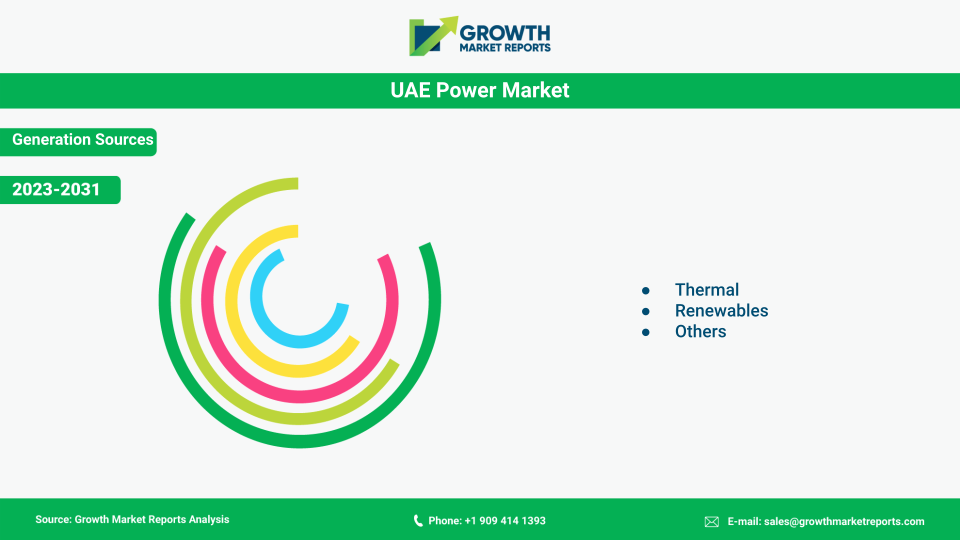
The UAE Power market has been segmented on the basis of

Power Generation Source

  • Thermal
  • Renewable
  • Nuclear
  • Others

Technology

  • Conventional
  • Combined Cycle
  • Cogeneration
  • Others

End-User

  • Residential
  • Commercial
  • Industrial
  • Utilities

Competitive Landscape

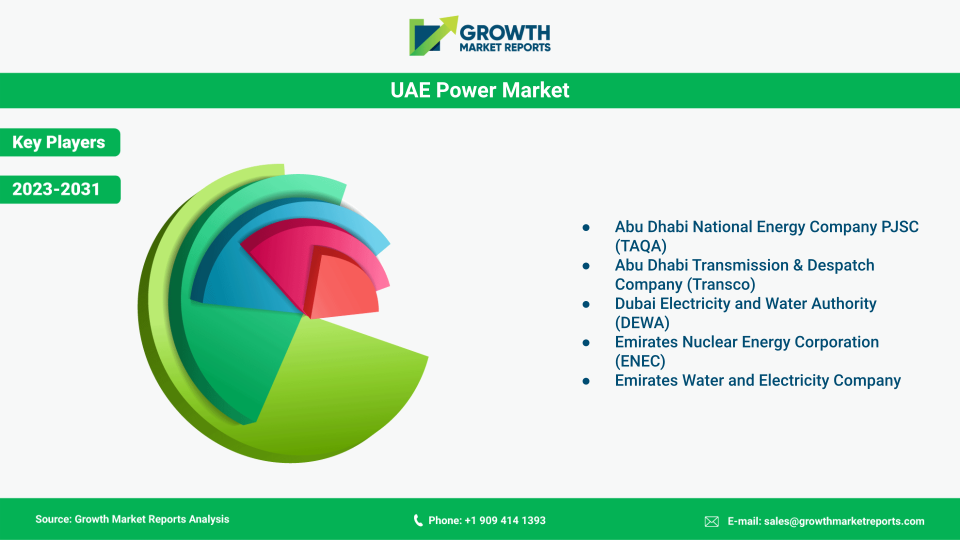
Some of the major companies include Abu Dhabi National Energy Company PJSC (TAQA), Abu Dhabi Transmission & Despatch Company (Transco), Dubai Electricity and Water Authority (DEWA), Emirates Nuclear Energy Corporation (ENEC), and Emirates Water and Electricity Company.

Companies are engaging in partnerships and R&D activities to leverage their market position. Moreover, major industry players are focusing on acquiring small and medium businesses (SMEs) to expand their market share. For instance,

  • In August 2020, the Emirates Nuclear Energy Corporation (ENEC) announced that its subsidiary, Nawah Energy Company, and Abu Dhabi Transmission and Despatch Company (TRANSCO) successfully connected Unit 1 of the Barakah Nuclear Energy Plant to the UAE grid. This allows the plant to send clean electricity to the country.

 UAE Power Market Key Players

Frequently Asked Questions

The UAE Power Market is studied from 2023 - 2031.

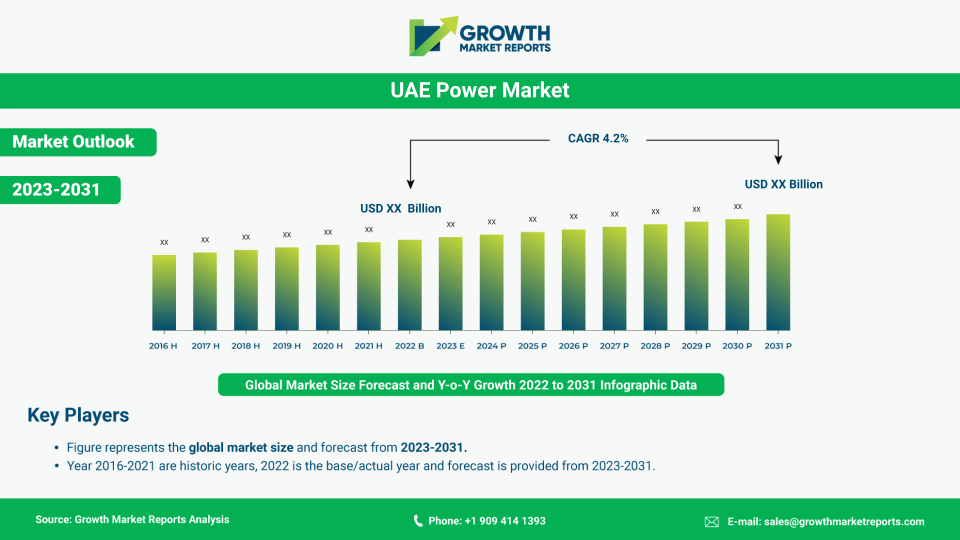
UAE Power Market is growing at a CAGR of 4.2% in forecast period.

The renewables segment is projected to account for a large market share during the forecasted period.

Some of the major companies include Abu Dhabi National Energy Company PJSC (TAQA), Abu Dhabi Transmission & Despatch Company (Transco), Dubai Electricity and Water Authority (DEWA), Emirates Nuclear Energy Corporation (ENEC), and Emirates Water and Electricity Company.

Table Of Content

Chapter 1 Executive Summary
Chapter 2 Assumptions and Acronyms Used
Chapter 3 Research Methodology
Chapter 4 UAE Power Market Overview
   4.1 Introduction
      4.1.1 Market Taxonomy
      4.1.2 Market Definition
      4.1.3 Macro-Economic Factors Impacting the Market Growth
   4.2 UAE Power Market Dynamics
      4.2.1 Market Drivers
      4.2.2 Market Restraints
      4.2.3 Market Opportunity
   4.3 UAE Power Market - Supply Chain Analysis
      4.3.1 List of Key Suppliers
      4.3.2 List of Key Distributors
      4.3.3 List of Key Consumers
   4.4 Key Forces Shaping the UAE Power Market
      4.4.1 Bargaining Power of Suppliers
      4.4.2 Bargaining Power of Buyers
      4.4.3 Threat of Substitution
      4.4.4 Threat of New Entrants
      4.4.5 Competitive Rivalry
   4.5 Global UAE Power Market Size & Forecast, 2023-2032
      4.5.1 UAE Power Market Size and Y-o-Y Growth
      4.5.2 UAE Power Market Absolute $ Opportunity

Chapter 5 Global UAE Power Market Analysis and Forecast By Power Generation Source
   5.1 Introduction
      5.1.1 Key Market Trends & Growth Opportunities By Power Generation Source
      5.1.2 Basis Point Share (BPS) Analysis By Power Generation Source
      5.1.3 Absolute $ Opportunity Assessment By Power Generation Source
   5.2 UAE Power Market Size Forecast By Power Generation Source
      5.2.1 Thermal
      5.2.2 Renewable
      5.2.3 Nuclear
      5.2.4 Others
   5.3 Market Attractiveness Analysis By Power Generation Source

Chapter 6 Global UAE Power Market Analysis and Forecast By Technology
   6.1 Introduction
      6.1.1 Key Market Trends & Growth Opportunities By Technology
      6.1.2 Basis Point Share (BPS) Analysis By Technology
      6.1.3 Absolute $ Opportunity Assessment By Technology
   6.2 UAE Power Market Size Forecast By Technology
      6.2.1 Conventional
      6.2.2 Combined Cycle
      6.2.3 Cogeneration
      6.2.4 Others
   6.3 Market Attractiveness Analysis By Technology

Chapter 7 Global UAE Power Market Analysis and Forecast By End-User
   7.1 Introduction
      7.1.1 Key Market Trends & Growth Opportunities By End-User
      7.1.2 Basis Point Share (BPS) Analysis By End-User
      7.1.3 Absolute $ Opportunity Assessment By End-User
   7.2 UAE Power Market Size Forecast By End-User
      7.2.1 Residential
      7.2.2 Commercial
      7.2.3 Industrial
      7.2.4 Utilities
   7.3 Market Attractiveness Analysis By End-User

Chapter 8 Global UAE Power Market Analysis and Forecast by Region
   8.1 Introduction
      8.1.1 Key Market Trends & Growth Opportunities By Region
      8.1.2 Basis Point Share (BPS) Analysis By Region
      8.1.3 Absolute $ Opportunity Assessment By Region
   8.2 UAE Power Market Size Forecast By Region
      8.2.1 North America
      8.2.2 Europe
      8.2.3 Asia Pacific
      8.2.4 Latin America
      8.2.5 Middle East & Africa (MEA)
   8.3 Market Attractiveness Analysis By Region

Chapter 9 Coronavirus Disease (COVID-19) Impact 
   9.1 Introduction 
   9.2 Current & Future Impact Analysis 
   9.3 Economic Impact Analysis 
   9.4 Government Policies 
   9.5 Investment Scenario

Chapter 10 North America UAE Power Analysis and Forecast
   10.1 Introduction
   10.2 North America UAE Power Market Size Forecast by Country
      10.2.1 U.S.
      10.2.2 Canada
   10.3 Basis Point Share (BPS) Analysis by Country
   10.4 Absolute $ Opportunity Assessment by Country
   10.5 Market Attractiveness Analysis by Country
   10.6 North America UAE Power Market Size Forecast By Power Generation Source
      10.6.1 Thermal
      10.6.2 Renewable
      10.6.3 Nuclear
      10.6.4 Others
   10.7 Basis Point Share (BPS) Analysis By Power Generation Source 
   10.8 Absolute $ Opportunity Assessment By Power Generation Source 
   10.9 Market Attractiveness Analysis By Power Generation Source
   10.10 North America UAE Power Market Size Forecast By Technology
      10.10.1 Conventional
      10.10.2 Combined Cycle
      10.10.3 Cogeneration
      10.10.4 Others
   10.11 Basis Point Share (BPS) Analysis By Technology 
   10.12 Absolute $ Opportunity Assessment By Technology 
   10.13 Market Attractiveness Analysis By Technology
   10.14 North America UAE Power Market Size Forecast By End-User
      10.14.1 Residential
      10.14.2 Commercial
      10.14.3 Industrial
      10.14.4 Utilities
   10.15 Basis Point Share (BPS) Analysis By End-User 
   10.16 Absolute $ Opportunity Assessment By End-User 
   10.17 Market Attractiveness Analysis By End-User

Chapter 11 Europe UAE Power Analysis and Forecast
   11.1 Introduction
   11.2 Europe UAE Power Market Size Forecast by Country
      11.2.1 Germany
      11.2.2 France
      11.2.3 Italy
      11.2.4 U.K.
      11.2.5 Spain
      11.2.6 Russia
      11.2.7 Rest of Europe
   11.3 Basis Point Share (BPS) Analysis by Country
   11.4 Absolute $ Opportunity Assessment by Country
   11.5 Market Attractiveness Analysis by Country
   11.6 Europe UAE Power Market Size Forecast By Power Generation Source
      11.6.1 Thermal
      11.6.2 Renewable
      11.6.3 Nuclear
      11.6.4 Others
   11.7 Basis Point Share (BPS) Analysis By Power Generation Source 
   11.8 Absolute $ Opportunity Assessment By Power Generation Source 
   11.9 Market Attractiveness Analysis By Power Generation Source
   11.10 Europe UAE Power Market Size Forecast By Technology
      11.10.1 Conventional
      11.10.2 Combined Cycle
      11.10.3 Cogeneration
      11.10.4 Others
   11.11 Basis Point Share (BPS) Analysis By Technology 
   11.12 Absolute $ Opportunity Assessment By Technology 
   11.13 Market Attractiveness Analysis By Technology
   11.14 Europe UAE Power Market Size Forecast By End-User
      11.14.1 Residential
      11.14.2 Commercial
      11.14.3 Industrial
      11.14.4 Utilities
   11.15 Basis Point Share (BPS) Analysis By End-User 
   11.16 Absolute $ Opportunity Assessment By End-User 
   11.17 Market Attractiveness Analysis By End-User

Chapter 12 Asia Pacific UAE Power Analysis and Forecast
   12.1 Introduction
   12.2 Asia Pacific UAE Power Market Size Forecast by Country
      12.2.1 China
      12.2.2 Japan
      12.2.3 South Korea
      12.2.4 India
      12.2.5 Australia
      12.2.6 South East Asia (SEA)
      12.2.7 Rest of Asia Pacific (APAC)
   12.3 Basis Point Share (BPS) Analysis by Country
   12.4 Absolute $ Opportunity Assessment by Country
   12.5 Market Attractiveness Analysis by Country
   12.6 Asia Pacific UAE Power Market Size Forecast By Power Generation Source
      12.6.1 Thermal
      12.6.2 Renewable
      12.6.3 Nuclear
      12.6.4 Others
   12.7 Basis Point Share (BPS) Analysis By Power Generation Source 
   12.8 Absolute $ Opportunity Assessment By Power Generation Source 
   12.9 Market Attractiveness Analysis By Power Generation Source
   12.10 Asia Pacific UAE Power Market Size Forecast By Technology
      12.10.1 Conventional
      12.10.2 Combined Cycle
      12.10.3 Cogeneration
      12.10.4 Others
   12.11 Basis Point Share (BPS) Analysis By Technology 
   12.12 Absolute $ Opportunity Assessment By Technology 
   12.13 Market Attractiveness Analysis By Technology
   12.14 Asia Pacific UAE Power Market Size Forecast By End-User
      12.14.1 Residential
      12.14.2 Commercial
      12.14.3 Industrial
      12.14.4 Utilities
   12.15 Basis Point Share (BPS) Analysis By End-User 
   12.16 Absolute $ Opportunity Assessment By End-User 
   12.17 Market Attractiveness Analysis By End-User

Chapter 13 Latin America UAE Power Analysis and Forecast
   13.1 Introduction
   13.2 Latin America UAE Power Market Size Forecast by Country
      13.2.1 Brazil
      13.2.2 Mexico
      13.2.3 Rest of Latin America (LATAM)
   13.3 Basis Point Share (BPS) Analysis by Country
   13.4 Absolute $ Opportunity Assessment by Country
   13.5 Market Attractiveness Analysis by Country
   13.6 Latin America UAE Power Market Size Forecast By Power Generation Source
      13.6.1 Thermal
      13.6.2 Renewable
      13.6.3 Nuclear
      13.6.4 Others
   13.7 Basis Point Share (BPS) Analysis By Power Generation Source 
   13.8 Absolute $ Opportunity Assessment By Power Generation Source 
   13.9 Market Attractiveness Analysis By Power Generation Source
   13.10 Latin America UAE Power Market Size Forecast By Technology
      13.10.1 Conventional
      13.10.2 Combined Cycle
      13.10.3 Cogeneration
      13.10.4 Others
   13.11 Basis Point Share (BPS) Analysis By Technology 
   13.12 Absolute $ Opportunity Assessment By Technology 
   13.13 Market Attractiveness Analysis By Technology
   13.14 Latin America UAE Power Market Size Forecast By End-User
      13.14.1 Residential
      13.14.2 Commercial
      13.14.3 Industrial
      13.14.4 Utilities
   13.15 Basis Point Share (BPS) Analysis By End-User 
   13.16 Absolute $ Opportunity Assessment By End-User 
   13.17 Market Attractiveness Analysis By End-User

Chapter 14 Middle East & Africa (MEA) UAE Power Analysis and Forecast
   14.1 Introduction
   14.2 Middle East & Africa (MEA) UAE Power Market Size Forecast by Country
      14.2.1 Saudi Arabia
      14.2.2 South Africa
      14.2.3 UAE
      14.2.4 Rest of Middle East & Africa (MEA)
   14.3 Basis Point Share (BPS) Analysis by Country
   14.4 Absolute $ Opportunity Assessment by Country
   14.5 Market Attractiveness Analysis by Country
   14.6 Middle East & Africa (MEA) UAE Power Market Size Forecast By Power Generation Source
      14.6.1 Thermal
      14.6.2 Renewable
      14.6.3 Nuclear
      14.6.4 Others
   14.7 Basis Point Share (BPS) Analysis By Power Generation Source 
   14.8 Absolute $ Opportunity Assessment By Power Generation Source 
   14.9 Market Attractiveness Analysis By Power Generation Source
   14.10 Middle East & Africa (MEA) UAE Power Market Size Forecast By Technology
      14.10.1 Conventional
      14.10.2 Combined Cycle
      14.10.3 Cogeneration
      14.10.4 Others
   14.11 Basis Point Share (BPS) Analysis By Technology 
   14.12 Absolute $ Opportunity Assessment By Technology 
   14.13 Market Attractiveness Analysis By Technology
   14.14 Middle East & Africa (MEA) UAE Power Market Size Forecast By End-User
      14.14.1 Residential
      14.14.2 Commercial
      14.14.3 Industrial
      14.14.4 Utilities
   14.15 Basis Point Share (BPS) Analysis By End-User 
   14.16 Absolute $ Opportunity Assessment By End-User 
   14.17 Market Attractiveness Analysis By End-User

Chapter 15 Competition Landscape 
   15.1 UAE Power Market: Competitive Dashboard
   15.2 Global UAE Power Market: Market Share Analysis, 2023
   15.3 Company Profiles (Details – Overview, Financials, Developments, Strategy) 
      15.3.1 Abu Dhabi National Energy Company (TAQA)
Dubai Electricity and Water Authority (DEWA)
Abu Dhabi Water and Electricity Authority (ADWEA)
Sharjah Electricity, Water and Gas Authority (SEWA)
Emirates National Oil Company (ENOC)
Emirates Nuclear Energy Corporation (ENEC)
Masdar (Abu Dhabi Future Energy Company)
Emirates Global Aluminium (EGA)
Siemens AG
General Electric (GE)
Mitsubishi Power
ACWA Power
Engie
ABB Group
Hitachi Energy
Schneider Electric
KEPCO (Korea Electric Power Corporation)
EDF (Électricité de France)
Enel Group
China State Grid Corporation

Methodology

Our Clients

Honda Motor Co. Ltd.
sinopec
FedEx Logistics
Pfizer
The John Holland Group
General Mills
Deloitte
Siemens Healthcare