Smart Watches Market Research Report 2033

Smart Watches Market Research Report 2033

Segments - by Product Type (Extension Smart Watches, Standalone Smart Watches, Hybrid Smart Watches), by Operating System (Android, iOS, Others), by Application (Personal Assistance, Healthcare, Sports, Fitness, Others), by Distribution Channel (Online Stores, Offline Stores), by End-User (Men, Women, Children)

https://growthmarketreports.com/Debadatta
Author : Debadatta Patel
https://growthmarketreports.com/Vaibhav
Fact-checked by : V. Chandola
https://growthmarketreports.com/Shruti
Editor : Shruti Bhat

Upcoming | Report ID :CG-3512 | 4.8 Rating | 75 Reviews | 289 Pages | Format : Docx PDF

Report Description


Smart Watches Market Outlook

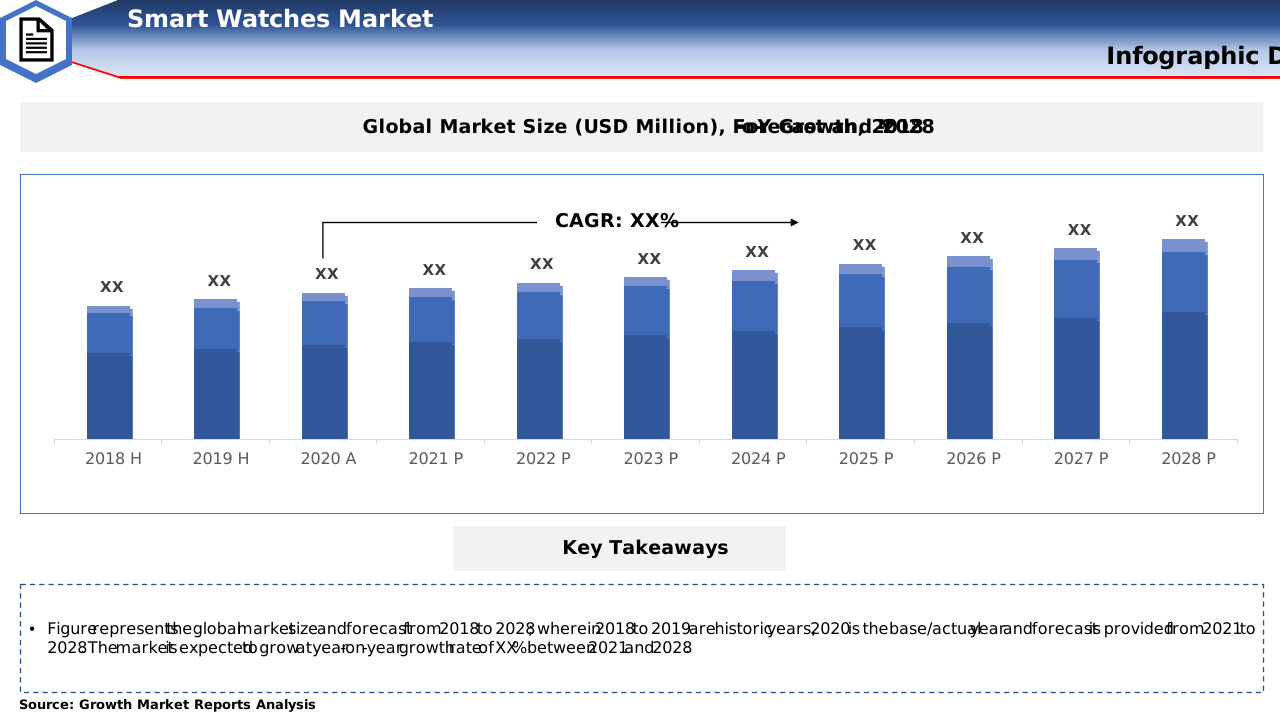
As per our latest research, the global smart watches market size reached USD 44.3 billion in 2024, reflecting robust growth driven by rising consumer adoption and technological innovation. The market is experiencing a strong momentum, registering a CAGR of 13.4% from 2025 to 2033. By the end of 2033, the smart watches market is expected to achieve a value of USD 134.2 billion. This impressive expansion is primarily attributed to increasing health awareness, integration of advanced features, and the proliferation of connected devices, which collectively continue to fuel demand for smart watches across various segments and geographies.

The growth of the smart watches market is significantly propelled by the integration of advanced health monitoring functionalities. Modern smart watches are equipped with sensors capable of tracking heart rate, blood oxygen levels, sleep patterns, and even detecting irregular heart rhythms, such as atrial fibrillation. These health-centric features have transformed smart watches from mere timekeeping accessories to essential personal health companions. The COVID-19 pandemic further accelerated this trend, as consumers became more conscious of their health and sought devices that could provide real-time data and early warnings about potential health issues. The ability to seamlessly sync with smartphones and health apps has also made smart watches indispensable for users seeking holistic wellness solutions and proactive health management.

Another crucial driver for the smart watches market is the rapid pace of technological innovation and product differentiation. Leading manufacturers are consistently introducing new models with enhanced displays, longer battery life, improved water resistance, and expanded app ecosystems. The emergence of standalone smart watches with cellular connectivity enables users to make calls, send messages, and stream music independently of their smartphones, further enhancing their utility. Hybrid smart watches, which combine traditional aesthetics with modern smart features, are also gaining traction among consumers who prefer a classic look without compromising on connectivity. Furthermore, the integration of AI-powered personal assistants, contactless payment options, and compatibility with smart home devices is broadening the appeal of smart watches to a wider audience, including tech-savvy consumers and professionals.

The expansion of the smart watches market is also supported by the increasing penetration of online and offline retail channels. E-commerce platforms have made it easier for consumers to compare features, read reviews, and access a wide variety of smart watch models from global brands. Offline stores, including specialty electronics retailers and brand-exclusive outlets, provide hands-on experiences and personalized customer support, fostering trust and driving sales. The growing availability of affordable smart watch models from emerging brands, particularly in price-sensitive markets, has democratized access to this technology. Strategic partnerships between technology companies and fitness brands, as well as collaborations with fashion houses, are further boosting market visibility and consumer engagement.

The rise of the Open-Source Smartwatch is a noteworthy trend within the smart watches market, offering a new dimension of customization and flexibility for tech enthusiasts. Unlike traditional smart watches that operate on proprietary systems, open-source smart watches allow developers and users to modify and enhance the software to suit their specific needs. This approach fosters a community-driven innovation model, where users can contribute to the development of new features and functionalities, creating a collaborative ecosystem. Open-source platforms are particularly appealing to those who value transparency and control over their devices, as they can tailor the user experience and ensure data privacy according to personal preferences. The availability of open-source smart watches is expanding, with various models catering to different levels of technical expertise, from beginner-friendly options to advanced configurations for experienced developers. As the demand for personalized technology grows, open-source smart watches are poised to capture a niche segment of the market, appealing to consumers who seek a bespoke and adaptable wearable experience.

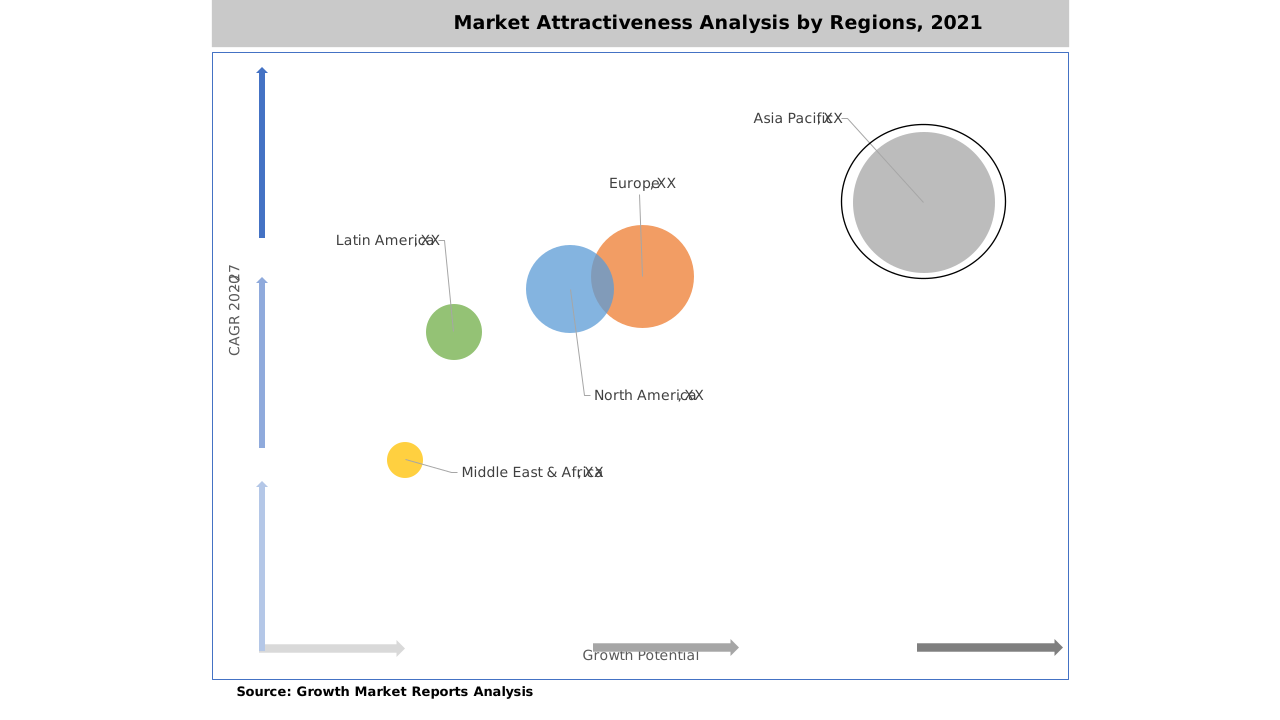
Regionally, the smart watches market exhibits dynamic growth patterns, with Asia Pacific emerging as the fastest-growing region. North America continues to hold the largest market share, owing to high consumer purchasing power and early adoption of wearable technology. Europe follows closely, driven by increasing health consciousness and a strong presence of leading technology brands. In contrast, Latin America and the Middle East & Africa are witnessing gradual adoption, supported by improving internet connectivity and rising disposable incomes. The regional landscape is characterized by diverse consumer preferences, regulatory environments, and distribution strategies, necessitating tailored approaches by market players to capture growth opportunities in each geography.

Global Smart Watches Industry Outlook

Product Type Analysis

The smart watches market is segmented by product type into extension smart watches, standalone smart watches, and hybrid smart watches, each catering to distinct consumer needs and preferences. Extension smart watches are designed to work in tandem with smartphones, offering notifications, call handling, and app integration. These devices remain popular among users who value seamless connectivity and do not require full standalone functionality. The extension category continues to benefit from improvements in Bluetooth technology, battery efficiency, and cross-platform compatibility, making them a preferred choice for first-time buyers and mainstream consumers alike. As smartphone penetration increases globally, the demand for extension smart watches is expected to remain robust, particularly in markets where consumers are already accustomed to mobile-centric lifestyles.

Standalone smart watches represent a rapidly growing sub-segment, driven by advances in cellular technology and the increasing desire for device independence. These smart watches are equipped with SIM card slots or eSIM capabilities, allowing users to make calls, send texts, and access the internet without the need for a paired smartphone. The proliferation of 4G and 5G networks has further enhanced the performance and reliability of standalone smart watches, making them attractive to fitness enthusiasts, outdoor adventurers, and professionals who require uninterrupted connectivity. Manufacturers are also focusing on improving battery life, durability, and app support for standalone models, positioning them as premium offerings within the smart watches market.

Hybrid smart watches blend traditional watch aesthetics with selective smart features, appealing to consumers who prioritize style and simplicity. These devices typically offer basic notifications, activity tracking, and long battery life, while maintaining the classic look of analog watches. Hybrid smart watches have found a niche among users who are hesitant to adopt fully digital wearables but still seek some level of connectivity and health monitoring. The segment has witnessed collaborations between technology companies and established fashion brands, resulting in a diverse range of designs and materials that cater to different tastes and lifestyles. As consumer demand for discreet and elegant wearables grows, hybrid smart watches are expected to capture an increasing share of the market.

The competitive dynamics within each product type segment are shaped by continuous innovation and differentiation strategies. Leading brands are investing heavily in R&D to introduce unique features, such as advanced biometric sensors, customizable watch faces, and integration with third-party apps. Pricing strategies also play a crucial role, with entry-level models targeting budget-conscious consumers and premium variants offering exclusive materials and advanced functionalities. The interplay between product type and consumer demographics is evident, as younger users tend to gravitate towards feature-rich standalone smart watches, while older demographics may prefer the familiarity and simplicity of hybrid models. This segmentation allows manufacturers to address a broad spectrum of consumer needs and maximize market penetration.

Report Scope

Attributes Details
Report Title Smart Watches Market Research Report 2033
By Product Type Extension Smart Watches, Standalone Smart Watches, Hybrid Smart Watches
By Operating System Android, iOS, Others
By Application Personal Assistance, Healthcare, Sports, Fitness, Others
By Distribution Channel Online Stores, Offline Stores
By End-User Men, Women, Children
Regions Covered North America, Europe, APAC, Latin America, MEA
Base Year 2024
Historic Data 2018-2023
Forecast Period 2025-2033
Number of Pages 289
Number of Tables & Figures 263
Customization Available Yes, the report can be customized as per your need.

Operating System Analysis

The operating system (OS) segment of the smart watches market is dominated by Android and iOS, with other proprietary and open-source platforms occupying a smaller share. Android-based smart watches, including devices running Wear OS by Google, offer extensive customization options, a wide range of compatible apps, and seamless integration with Android smartphones. The open nature of the Android ecosystem has encouraged numerous manufacturers to develop smart watches with unique features and designs, fostering innovation and diversity within the market. Additionally, frequent software updates and the growing availability of health and fitness apps have strengthened the appeal of Android smart watches among tech enthusiasts and fitness-conscious users.

iOS-based smart watches, primarily represented by the Apple Watch, command a significant share of the market, particularly in North America and Europe. The Apple Watch is renowned for its deep integration with the iOS ecosystem, offering a seamless user experience for iPhone owners. Features such as Apple Pay, Siri voice assistant, and exclusive health monitoring capabilities have positioned the Apple Watch as a premium offering within the smart watches market. The regular introduction of new models with enhanced performance, display technology, and health features has helped Apple maintain its leadership position. The brand's strong focus on privacy, security, and user data protection further enhances its appeal among discerning consumers.

Other operating systems, including proprietary platforms developed by brands like Samsung (Tizen) and Huawei (HarmonyOS), as well as open-source alternatives, contribute to the diversity of the smart watches market. These platforms often offer unique features tailored to specific hardware, such as improved battery management, custom user interfaces, and exclusive partnerships with app developers. While their market share is relatively smaller compared to Android and iOS, these operating systems cater to niche segments and regional preferences, particularly in Asia Pacific and emerging markets. The ability to support multiple languages, local services, and region-specific apps gives these platforms a competitive edge in their target markets.

The choice of operating system has a significant impact on user experience, app availability, and device compatibility. Consumers increasingly prioritize seamless integration with their existing devices and ecosystems, influencing their purchasing decisions. Manufacturers are responding by enhancing cross-platform compatibility, supporting third-party apps, and offering regular software updates to ensure a consistent and secure user experience. The ongoing evolution of operating systems, driven by advancements in artificial intelligence, machine learning, and cloud connectivity, is expected to further enrich the functionality and versatility of smart watches, driving sustained growth in this segment.

Application Analysis

The application segment of the smart watches market encompasses a wide range of use cases, including personal assistance, healthcare, sports, fitness, and others. Personal assistance features, such as voice-activated virtual assistants, call and message notifications, calendar reminders, and navigation, have become standard offerings in modern smart watches. These functionalities enhance productivity and convenience, enabling users to manage their daily tasks and communications efficiently. The integration of AI-powered assistants, such as Google Assistant and Siri, has further expanded the capabilities of smart watches, allowing users to interact with their devices using natural language commands and access information on the go.

Healthcare applications represent a major growth driver for the smart watches market, as consumers increasingly seek devices that can monitor vital signs, track physical activity, and provide insights into their overall well-being. Advanced smart watches are equipped with sensors that measure heart rate, blood oxygen saturation, ECG, sleep quality, and even stress levels. These health monitoring features have gained prominence amid rising health awareness and the growing prevalence of chronic diseases. Smart watches are also being used in remote patient monitoring, telemedicine, and clinical research, enabling healthcare providers to collect real-time data and deliver personalized care. The ability to share health data securely with medical professionals has further cemented the role of smart watches in the evolving digital health ecosystem.

Sports and fitness applications are integral to the value proposition of smart watches, catering to athletes, fitness enthusiasts, and individuals pursuing active lifestyles. Features such as GPS tracking, step counting, calorie estimation, workout analysis, and goal setting empower users to monitor their performance and progress across various activities, including running, cycling, swimming, and yoga. The integration of coaching and motivational tools, as well as compatibility with popular fitness apps, enhances user engagement and retention. Manufacturers are continually adding new sports modes, improving sensor accuracy, and partnering with fitness brands to deliver tailored experiences for different user segments. This focus on sports and fitness has contributed to the widespread adoption of smart watches among diverse age groups and demographics.

Other applications of smart watches include contactless payments, music streaming, smart home control, and emergency alerts. The versatility of smart watches as multi-functional devices has broadened their appeal, making them indispensable companions for modern lifestyles. As the ecosystem of compatible apps and services continues to expand, smart watches are expected to play an increasingly central role in personal productivity, entertainment, and safety. The ongoing convergence of hardware and software innovation will further unlock new applications and use cases, driving sustained growth in this segment.

Distribution Channel Analysis

The distribution channel segment of the smart watches market is divided into online stores and offline stores, each playing a vital role in shaping consumer access and purchasing behavior. Online stores, including e-commerce platforms, brand websites, and third-party marketplaces, have become the preferred channel for many consumers due to their convenience, extensive product selection, and competitive pricing. The rise of digital marketing, influencer endorsements, and targeted advertising has further accelerated the shift towards online shopping. Consumers benefit from the ability to compare features, read reviews, and access exclusive online deals, making online stores a key driver of smart watch sales, especially among tech-savvy and younger demographics.

Offline stores, comprising electronics retailers, department stores, and brand-exclusive outlets, remain an important channel for consumers who value hands-on experiences and personalized customer service. Physical stores provide opportunities for consumers to try on different models, interact with sales representatives, and receive expert advice on product features and compatibility. The tactile experience and immediate product availability offered by offline stores contribute to higher conversion rates and customer satisfaction. Leading brands are also investing in flagship stores and experiential retail concepts to showcase their latest innovations and strengthen brand loyalty. In emerging markets, offline channels play a crucial role in building trust and educating consumers about the benefits of smart watches.

The interplay between online and offline channels is increasingly characterized by an omnichannel approach, where brands seek to provide a seamless and integrated shopping experience across all touchpoints. Initiatives such as click-and-collect, online-to-offline promotions, and unified customer support are bridging the gap between digital and physical retail. This strategy enables brands to reach a broader audience, capture valuable customer data, and adapt to evolving consumer preferences. The COVID-19 pandemic accelerated the adoption of omnichannel strategies, as retailers sought to balance safety concerns with the need to maintain sales momentum.

Distribution channel dynamics are also influenced by regional factors, such as internet penetration, payment infrastructure, and logistical capabilities. In developed markets, online channels account for a significant share of smart watch sales, while offline stores continue to dominate in regions with limited digital infrastructure. Manufacturers and retailers are adapting their distribution strategies to local market conditions, leveraging partnerships with regional e-commerce platforms and expanding retail footprints in high-growth areas. The ongoing evolution of distribution channels is expected to enhance market accessibility, drive competition, and support the sustained expansion of the smart watches market.

End-User Analysis

The smart watches market serves a diverse end-user base, segmented into men, women, and children, each with unique preferences and requirements. Men's smart watches often emphasize robust designs, larger displays, and advanced functionalities tailored to sports, fitness, and productivity. These models frequently incorporate features such as rugged construction, water resistance, and compatibility with a wide range of apps, appealing to tech-savvy professionals and outdoor enthusiasts. The trend towards customization and personalization is also evident, with options for interchangeable bands, customizable watch faces, and exclusive collaborations with sports and lifestyle brands.

Women's smart watches are increasingly designed with a focus on aesthetics, comfort, and health-centric features. Manufacturers are introducing slimmer profiles, elegant materials, and fashionable color options to cater to female consumers. Health and wellness functionalities, such as menstrual cycle tracking, stress management, and guided breathing exercises, are gaining prominence in women's smart watches. The integration of stylish elements, such as gemstone accents and designer collaborations, is further enhancing the appeal of smart watches among women. The growing participation of women in fitness and sports activities is also driving demand for performance-oriented smart watches with tailored features and motivational tools.

The children's segment represents an emerging growth area within the smart watches market, driven by increasing parental concerns about safety, communication, and activity tracking. Children's smart watches are typically equipped with GPS tracking, SOS alerts, and restricted communication features, allowing parents to monitor their child's location and well-being. Educational apps, interactive games, and fitness tracking functionalities are also integrated to promote healthy habits and learning. The adoption of smart watches among children is supported by collaborations with educational institutions, content providers, and child safety organizations. As digital literacy and technology adoption continue to rise among younger generations, the children's segment is expected to witness sustained growth.

End-user preferences are also shaped by cultural, regional, and socioeconomic factors, influencing product design, marketing strategies, and pricing. Manufacturers are leveraging consumer insights to develop targeted offerings, such as gender-specific health features, age-appropriate content, and regionally relevant designs. The ability to address the diverse needs of men, women, and children is critical for capturing market share and fostering brand loyalty in the highly competitive smart watches market. As consumer expectations continue to evolve, the end-user segment will remain a key focus area for innovation and differentiation.

Opportunities & Threats

The smart watches market presents a multitude of opportunities, particularly in the realm of health and wellness. The integration of advanced health monitoring features, such as ECG, blood pressure monitoring, and sleep analysis, is opening new avenues for collaboration with healthcare providers, insurers, and fitness brands. The growing adoption of wearable devices in clinical research, remote patient monitoring, and chronic disease management is creating opportunities for smart watch manufacturers to develop specialized solutions for healthcare professionals and patients. Additionally, the expansion of smart watch applications into areas such as mental health, stress management, and personalized coaching is expected to drive user engagement and open up new revenue streams. The convergence of artificial intelligence, machine learning, and big data analytics is further enhancing the predictive and diagnostic capabilities of smart watches, positioning them as integral components of the digital health ecosystem.

Another significant opportunity lies in the proliferation of the Internet of Things (IoT) and the growing ecosystem of connected devices. Smart watches are increasingly being integrated with smart home systems, automotive platforms, and enterprise applications, enabling users to control devices, access information, and automate tasks from their wrists. The rise of 5G connectivity, edge computing, and cloud-based services is expected to unlock new use cases and enhance the performance of smart watches. Manufacturers can capitalize on these trends by developing interoperable devices, forging strategic partnerships, and expanding their app ecosystems. The ongoing democratization of technology, driven by affordable smart watch models and expanding distribution channels, is also creating opportunities to tap into underserved markets and new consumer segments.

Despite the promising outlook, the smart watches market faces several threats and restrainers, including concerns about data privacy, security, and device interoperability. The collection and transmission of sensitive health and personal data raise significant privacy issues, necessitating robust security measures and compliance with regulatory standards. Interoperability challenges, stemming from proprietary operating systems and fragmented ecosystems, can limit the seamless integration of smart watches with other devices and platforms. Battery life constraints, high product costs, and the rapid pace of technological obsolescence also pose challenges for manufacturers and consumers. Addressing these threats requires ongoing investment in R&D, collaboration with industry stakeholders, and a proactive approach to regulatory compliance and consumer education.

Regional Outlook

North America continues to dominate the global smart watches market, accounting for approximately USD 17.7 billion in 2024, or nearly 40% of the global market size. The region's leadership is underpinned by high consumer purchasing power, early adoption of wearable technology, and the strong presence of leading brands such as Apple, Fitbit, and Garmin. The United States remains the largest market within North America, driven by robust demand for health and fitness tracking devices, as well as the widespread availability of advanced healthcare infrastructure. The region also benefits from a mature distribution network, strong brand loyalty, and a favorable regulatory environment that supports innovation and data privacy. The North American smart watches market is expected to maintain steady growth, with a projected CAGR of 11.2% through 2033.

The Asia Pacific region is emerging as the fastest-growing market for smart watches, with a market size of USD 13.7 billion in 2024 and a projected CAGR of 16.5% over the forecast period. Rapid urbanization, rising disposable incomes, and increasing health awareness are driving the adoption of smart watches across key markets such as China, India, Japan, and South Korea. The proliferation of affordable smart watch models from local and international brands, coupled with expanding internet penetration and mobile connectivity, is democratizing access to wearable technology. The region's diverse consumer base, dynamic retail landscape, and growing ecosystem of health and fitness apps present significant growth opportunities for manufacturers. Strategic partnerships with local distributors, telecom operators, and fitness brands are further enhancing market penetration and brand visibility in Asia Pacific.

Europe represents a mature and sophisticated market for smart watches, with a market size of USD 9.5 billion in 2024. The region's growth is driven by increasing health consciousness, a strong presence of technology and fashion brands, and supportive regulatory frameworks for data privacy and consumer protection. Key markets such as the United Kingdom, Germany, France, and Italy are witnessing rising adoption of smart watches for health monitoring, sports, and lifestyle applications. The integration of wearable technology with digital health initiatives and insurance programs is further boosting demand in the region. Europe is characterized by a diverse consumer base with varying preferences for design, functionality, and price, necessitating tailored product offerings and marketing strategies. The region is expected to maintain a steady growth trajectory, supported by ongoing innovation and expanding distribution channels.

Smart Watches Market Statistics

Competitor Outlook

The competitive landscape of the smart watches market is characterized by intense rivalry among established technology giants, emerging players, and niche brands. Market leaders such as Apple, Samsung, Fitbit (now part of Google), and Garmin continue to set the pace for innovation, design, and user experience. These companies invest heavily in research and development to introduce new features, enhance device performance, and expand their app ecosystems. The ability to leverage proprietary operating systems, cloud services, and integrated health platforms gives leading brands a significant competitive advantage. In addition to hardware innovation, these companies focus on building strong brand identities, fostering customer loyalty, and establishing robust distribution networks across online and offline channels.

Emerging players and regional brands are also making significant inroads into the smart watches market, particularly in price-sensitive and high-growth regions such as Asia Pacific and Latin America. These companies differentiate themselves through aggressive pricing, localized features, and innovative marketing strategies. Partnerships with telecom operators, fitness brands, and content providers enable emerging players to offer bundled services and value-added features that resonate with local consumers. The entry of fashion and luxury brands into the smart watches market has further intensified competition, as consumers seek devices that combine style, functionality, and brand prestige. The proliferation of open-source and customizable platforms is also enabling smaller players to develop unique offerings and capture niche segments.

The competitive dynamics are further shaped by the rapid pace of technological change, evolving consumer expectations, and the convergence of hardware and software innovation. Companies are increasingly focusing on interoperability, data privacy, and ecosystem integration to differentiate their products and build sustainable competitive advantages. Strategic collaborations, mergers and acquisitions, and investments in artificial intelligence and health analytics are key strategies employed by market participants to strengthen their market positions. The ability to anticipate and respond to emerging trends, such as mental health tracking, remote patient monitoring, and IoT integration, will be critical for success in the highly competitive smart watches market.

Major companies operating in the smart watches market include Apple Inc., Samsung Electronics Co. Ltd., Garmin Ltd., Fitbit (Google LLC), Huawei Technologies Co. Ltd., Fossil Group Inc., Amazfit (Zepp Health), and Suunto (Amer Sports). Apple Inc. remains the undisputed leader, with the Apple Watch commanding a significant share of the premium segment and setting industry benchmarks for design, performance, and health features. Samsung Electronics offers a diverse portfolio of smart watches, leveraging its expertise in display technology and connectivity to appeal to a broad consumer base. Garmin and Fitbit are renowned for their focus on fitness and health tracking, catering to athletes, outdoor enthusiasts, and health-conscious users. Huawei and Amazfit have established strong positions in the Asia Pacific region, offering feature-rich smart watches at competitive prices. Fossil Group and Suunto are known for their stylish designs and specialized functionalities, targeting fashion-conscious and adventure-oriented consumers. These companies continue to drive innovation, expand their product portfolios, and enhance their global reach to capitalize on the growing demand for smart watches.

Key Players

  • Apple Inc.
  • Samsung Electronics Co. Ltd.
  • Garmin Ltd.
  • Fitbit Inc. (now part of Google)
  • Huawei Technologies Co. Ltd.
  • Fossil Group Inc.
  • Xiaomi Corporation
  • Amazfit (Huami Corporation)
  • Suunto (Amer Sports)
  • Mobvoi (TicWatch)
  • Withings
  • Polar Electro Oy
  • Sony Corporation
  • LG Electronics Inc.
  • Casio Computer Co. Ltd.
  • TAG Heuer (LVMH Group)
  • Mobvoi Information Technology Company Limited
  • Noise
  • Realme
  • Timex Group USA, Inc.
Smart Watches Market Overview

Segments

The Smart Watches market has been segmented on the basis of

Product Type

  • Extension Smart Watches
  • Standalone Smart Watches
  • Hybrid Smart Watches

Operating System

  • Android
  • iOS
  • Others

Application

  • Personal Assistance
  • Healthcare
  • Sports
  • Fitness
  • Others

Distribution Channel

  • Online Stores
  • Offline Stores

End-User

  • Men
  • Women
  • Children

Competitive Landscape

Key players competing in the global smart watches market are Google Inc.; Qualcomm Technologies, Inc.; Samsung Electronics Co., Ltd.; Apple Inc.; and Sony Corp. Companies are focusing on investments in R&D sector for advancements in smart watch technologies to fulfil the demand from the market and maintain their competitive position in the market. Companies have been widely engaged in strategic partnership, merger & acquisition, new product launch, and collaborations to boost their market share and acquiring new buyers.

For instance, in September 2021, Apple Inc. launched its Apple Watch 7 along with its line of iPhones. The newly launched watch from Apple is the 8th generation smart watch. The watch is with new design, refined edges, and thinner bezels for 20% more screen area as well as the smart watch came in two sizes 41 mm and 45mm. In August 2021, Samsung Electronics Co., Ltd. announced the launch of its new Galaxy Watch 4 amongst its new product lineup. The newly launched watch is available in two sizes 40mm and 44mm models, with both Bluetooth and LTE variants. It is also integrated with a Bioactive Sensor of Samsung that inform users about health goals by capturing the body composition in real-time. Armor aluminum metal frame designed watch offers high-end functionality and looks for day-to-day tasks and workouts.
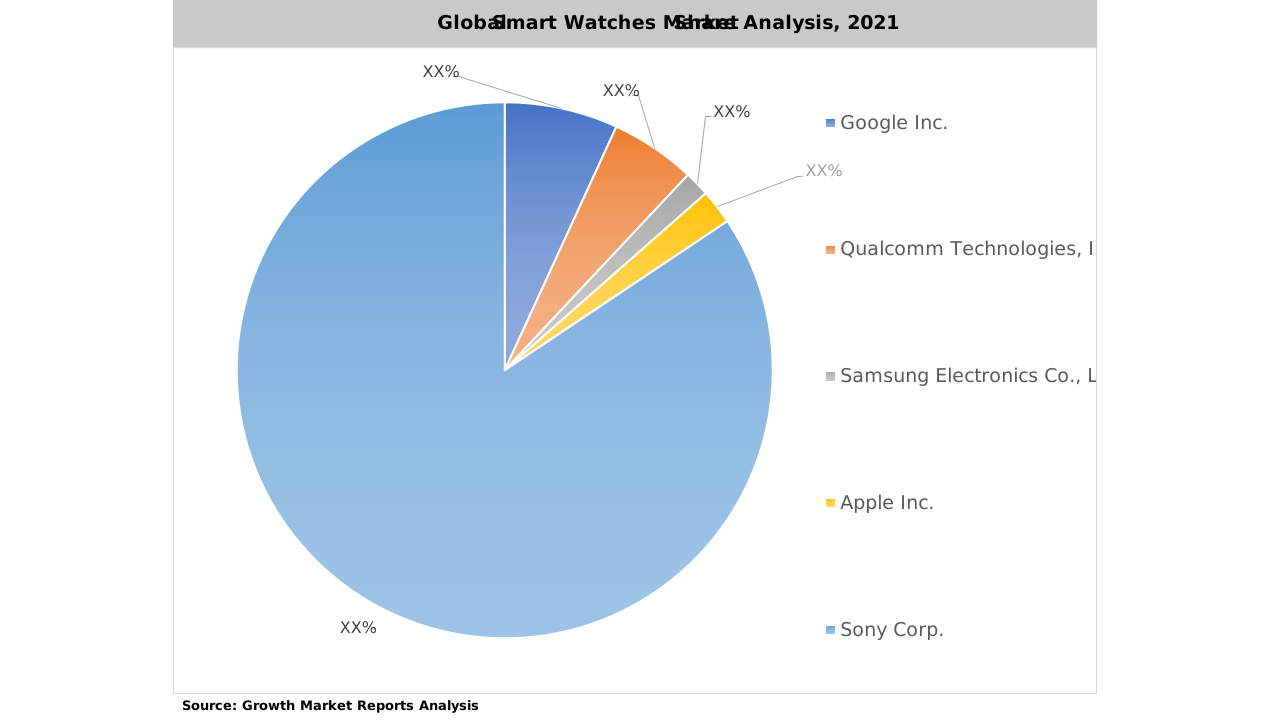

Smart Watches Market by key players

Frequently Asked Questions

Major players include Apple Inc., Samsung Electronics, Garmin, Fitbit (Google), Huawei, Fossil Group, Amazfit, Suunto, Xiaomi, and several others.

Opportunities include expanding health and wellness features, IoT integration, and growth in emerging markets. Challenges involve data privacy, device interoperability, battery life, and rapid technological changes.

Smart watches are designed for men, women, and children, each with tailored features such as robust designs for men, health-centric and stylish options for women, and safety and activity tracking for children.

Smart watches are sold through both online channels (e-commerce platforms, brand websites) and offline channels (electronics retailers, department stores, brand outlets), with an increasing focus on omnichannel strategies.

Smart watches are used for personal assistance, healthcare monitoring, sports and fitness tracking, contactless payments, music streaming, smart home control, and emergency alerts.

Android (including Wear OS) and iOS (Apple Watch) are the dominant operating systems, with other platforms like Tizen and HarmonyOS catering to niche and regional markets.

The market is segmented into extension smart watches (paired with smartphones), standalone smart watches (with cellular connectivity), and hybrid smart watches (combining traditional aesthetics with smart features).

North America holds the largest market share due to high purchasing power and early adoption, while Asia Pacific is the fastest-growing region, driven by urbanization and rising disposable incomes.

Key drivers include rising health awareness, integration of advanced health monitoring features, technological innovation, and the proliferation of connected devices.

As of 2024, the global smart watches market size reached USD 44.3 billion, reflecting strong growth driven by increased consumer adoption and technological advancements.

Table Of Content

Chapter 1 Executive Summary
Chapter 2 Assumptions and Acronyms Used
Chapter 3 Research Methodology
Chapter 4 Smart Watches Market Overview
   4.1 Introduction
      4.1.1 Market Taxonomy
      4.1.2 Market Definition
      4.1.3 Macro-Economic Factors Impacting the Market Growth
   4.2 Smart Watches Market Dynamics
      4.2.1 Market Drivers
      4.2.2 Market Restraints
      4.2.3 Market Opportunity
   4.3 Smart Watches Market - Supply Chain Analysis
      4.3.1 List of Key Suppliers
      4.3.2 List of Key Distributors
      4.3.3 List of Key Consumers
   4.4 Key Forces Shaping the Smart Watches Market
      4.4.1 Bargaining Power of Suppliers
      4.4.2 Bargaining Power of Buyers
      4.4.3 Threat of Substitution
      4.4.4 Threat of New Entrants
      4.4.5 Competitive Rivalry
   4.5 Global Smart Watches Market Size & Forecast, 2023-2032
      4.5.1 Smart Watches Market Size and Y-o-Y Growth
      4.5.2 Smart Watches Market Absolute $ Opportunity

Chapter 5 Global Smart Watches Market Analysis and Forecast By Product Type
   5.1 Introduction
      5.1.1 Key Market Trends & Growth Opportunities By Product Type
      5.1.2 Basis Point Share (BPS) Analysis By Product Type
      5.1.3 Absolute $ Opportunity Assessment By Product Type
   5.2 Smart Watches Market Size Forecast By Product Type
      5.2.1 Extension Smart Watches
      5.2.2 Standalone Smart Watches
      5.2.3 Hybrid Smart Watches
   5.3 Market Attractiveness Analysis By Product Type

Chapter 6 Global Smart Watches Market Analysis and Forecast By Operating System
   6.1 Introduction
      6.1.1 Key Market Trends & Growth Opportunities By Operating System
      6.1.2 Basis Point Share (BPS) Analysis By Operating System
      6.1.3 Absolute $ Opportunity Assessment By Operating System
   6.2 Smart Watches Market Size Forecast By Operating System
      6.2.1 Android
      6.2.2 iOS
      6.2.3 Others
   6.3 Market Attractiveness Analysis By Operating System

Chapter 7 Global Smart Watches Market Analysis and Forecast By Application
   7.1 Introduction
      7.1.1 Key Market Trends & Growth Opportunities By Application
      7.1.2 Basis Point Share (BPS) Analysis By Application
      7.1.3 Absolute $ Opportunity Assessment By Application
   7.2 Smart Watches Market Size Forecast By Application
      7.2.1 Personal Assistance
      7.2.2 Healthcare
      7.2.3 Sports
      7.2.4 Fitness
      7.2.5 Others
   7.3 Market Attractiveness Analysis By Application

Chapter 8 Global Smart Watches Market Analysis and Forecast By Distribution Channel
   8.1 Introduction
      8.1.1 Key Market Trends & Growth Opportunities By Distribution Channel
      8.1.2 Basis Point Share (BPS) Analysis By Distribution Channel
      8.1.3 Absolute $ Opportunity Assessment By Distribution Channel
   8.2 Smart Watches Market Size Forecast By Distribution Channel
      8.2.1 Online Stores
      8.2.2 Offline Stores
   8.3 Market Attractiveness Analysis By Distribution Channel

Chapter 9 Global Smart Watches Market Analysis and Forecast By End-User
   9.1 Introduction
      9.1.1 Key Market Trends & Growth Opportunities By End-User
      9.1.2 Basis Point Share (BPS) Analysis By End-User
      9.1.3 Absolute $ Opportunity Assessment By End-User
   9.2 Smart Watches Market Size Forecast By End-User
      9.2.1 Men
      9.2.2 Women
      9.2.3 Children
   9.3 Market Attractiveness Analysis By End-User

Chapter 10 Global Smart Watches Market Analysis and Forecast by Region
   10.1 Introduction
      10.1.1 Key Market Trends & Growth Opportunities By Region
      10.1.2 Basis Point Share (BPS) Analysis By Region
      10.1.3 Absolute $ Opportunity Assessment By Region
   10.2 Smart Watches Market Size Forecast By Region
      10.2.1 North America
      10.2.2 Europe
      10.2.3 Asia Pacific
      10.2.4 Latin America
      10.2.5 Middle East & Africa (MEA)
   10.3 Market Attractiveness Analysis By Region

Chapter 11 Coronavirus Disease (COVID-19) Impact 
   11.1 Introduction 
   11.2 Current & Future Impact Analysis 
   11.3 Economic Impact Analysis 
   11.4 Government Policies 
   11.5 Investment Scenario

Chapter 12 North America Smart Watches Analysis and Forecast
   12.1 Introduction
   12.2 North America Smart Watches Market Size Forecast by Country
      12.2.1 U.S.
      12.2.2 Canada
   12.3 Basis Point Share (BPS) Analysis by Country
   12.4 Absolute $ Opportunity Assessment by Country
   12.5 Market Attractiveness Analysis by Country
   12.6 North America Smart Watches Market Size Forecast By Product Type
      12.6.1 Extension Smart Watches
      12.6.2 Standalone Smart Watches
      12.6.3 Hybrid Smart Watches
   12.7 Basis Point Share (BPS) Analysis By Product Type 
   12.8 Absolute $ Opportunity Assessment By Product Type 
   12.9 Market Attractiveness Analysis By Product Type
   12.10 North America Smart Watches Market Size Forecast By Operating System
      12.10.1 Android
      12.10.2 iOS
      12.10.3 Others
   12.11 Basis Point Share (BPS) Analysis By Operating System 
   12.12 Absolute $ Opportunity Assessment By Operating System 
   12.13 Market Attractiveness Analysis By Operating System
   12.14 North America Smart Watches Market Size Forecast By Application
      12.14.1 Personal Assistance
      12.14.2 Healthcare
      12.14.3 Sports
      12.14.4 Fitness
      12.14.5 Others
   12.15 Basis Point Share (BPS) Analysis By Application 
   12.16 Absolute $ Opportunity Assessment By Application 
   12.17 Market Attractiveness Analysis By Application
   12.18 North America Smart Watches Market Size Forecast By Distribution Channel
      12.18.1 Online Stores
      12.18.2 Offline Stores
   12.19 Basis Point Share (BPS) Analysis By Distribution Channel 
   12.20 Absolute $ Opportunity Assessment By Distribution Channel 
   12.21 Market Attractiveness Analysis By Distribution Channel
   12.22 North America Smart Watches Market Size Forecast By End-User
      12.22.1 Men
      12.22.2 Women
      12.22.3 Children
   12.23 Basis Point Share (BPS) Analysis By End-User 
   12.24 Absolute $ Opportunity Assessment By End-User 
   12.25 Market Attractiveness Analysis By End-User

Chapter 13 Europe Smart Watches Analysis and Forecast
   13.1 Introduction
   13.2 Europe Smart Watches Market Size Forecast by Country
      13.2.1 Germany
      13.2.2 France
      13.2.3 Italy
      13.2.4 U.K.
      13.2.5 Spain
      13.2.6 Russia
      13.2.7 Rest of Europe
   13.3 Basis Point Share (BPS) Analysis by Country
   13.4 Absolute $ Opportunity Assessment by Country
   13.5 Market Attractiveness Analysis by Country
   13.6 Europe Smart Watches Market Size Forecast By Product Type
      13.6.1 Extension Smart Watches
      13.6.2 Standalone Smart Watches
      13.6.3 Hybrid Smart Watches
   13.7 Basis Point Share (BPS) Analysis By Product Type 
   13.8 Absolute $ Opportunity Assessment By Product Type 
   13.9 Market Attractiveness Analysis By Product Type
   13.10 Europe Smart Watches Market Size Forecast By Operating System
      13.10.1 Android
      13.10.2 iOS
      13.10.3 Others
   13.11 Basis Point Share (BPS) Analysis By Operating System 
   13.12 Absolute $ Opportunity Assessment By Operating System 
   13.13 Market Attractiveness Analysis By Operating System
   13.14 Europe Smart Watches Market Size Forecast By Application
      13.14.1 Personal Assistance
      13.14.2 Healthcare
      13.14.3 Sports
      13.14.4 Fitness
      13.14.5 Others
   13.15 Basis Point Share (BPS) Analysis By Application 
   13.16 Absolute $ Opportunity Assessment By Application 
   13.17 Market Attractiveness Analysis By Application
   13.18 Europe Smart Watches Market Size Forecast By Distribution Channel
      13.18.1 Online Stores
      13.18.2 Offline Stores
   13.19 Basis Point Share (BPS) Analysis By Distribution Channel 
   13.20 Absolute $ Opportunity Assessment By Distribution Channel 
   13.21 Market Attractiveness Analysis By Distribution Channel
   13.22 Europe Smart Watches Market Size Forecast By End-User
      13.22.1 Men
      13.22.2 Women
      13.22.3 Children
   13.23 Basis Point Share (BPS) Analysis By End-User 
   13.24 Absolute $ Opportunity Assessment By End-User 
   13.25 Market Attractiveness Analysis By End-User

Chapter 14 Asia Pacific Smart Watches Analysis and Forecast
   14.1 Introduction
   14.2 Asia Pacific Smart Watches Market Size Forecast by Country
      14.2.1 China
      14.2.2 Japan
      14.2.3 South Korea
      14.2.4 India
      14.2.5 Australia
      14.2.6 South East Asia (SEA)
      14.2.7 Rest of Asia Pacific (APAC)
   14.3 Basis Point Share (BPS) Analysis by Country
   14.4 Absolute $ Opportunity Assessment by Country
   14.5 Market Attractiveness Analysis by Country
   14.6 Asia Pacific Smart Watches Market Size Forecast By Product Type
      14.6.1 Extension Smart Watches
      14.6.2 Standalone Smart Watches
      14.6.3 Hybrid Smart Watches
   14.7 Basis Point Share (BPS) Analysis By Product Type 
   14.8 Absolute $ Opportunity Assessment By Product Type 
   14.9 Market Attractiveness Analysis By Product Type
   14.10 Asia Pacific Smart Watches Market Size Forecast By Operating System
      14.10.1 Android
      14.10.2 iOS
      14.10.3 Others
   14.11 Basis Point Share (BPS) Analysis By Operating System 
   14.12 Absolute $ Opportunity Assessment By Operating System 
   14.13 Market Attractiveness Analysis By Operating System
   14.14 Asia Pacific Smart Watches Market Size Forecast By Application
      14.14.1 Personal Assistance
      14.14.2 Healthcare
      14.14.3 Sports
      14.14.4 Fitness
      14.14.5 Others
   14.15 Basis Point Share (BPS) Analysis By Application 
   14.16 Absolute $ Opportunity Assessment By Application 
   14.17 Market Attractiveness Analysis By Application
   14.18 Asia Pacific Smart Watches Market Size Forecast By Distribution Channel
      14.18.1 Online Stores
      14.18.2 Offline Stores
   14.19 Basis Point Share (BPS) Analysis By Distribution Channel 
   14.20 Absolute $ Opportunity Assessment By Distribution Channel 
   14.21 Market Attractiveness Analysis By Distribution Channel
   14.22 Asia Pacific Smart Watches Market Size Forecast By End-User
      14.22.1 Men
      14.22.2 Women
      14.22.3 Children
   14.23 Basis Point Share (BPS) Analysis By End-User 
   14.24 Absolute $ Opportunity Assessment By End-User 
   14.25 Market Attractiveness Analysis By End-User

Chapter 15 Latin America Smart Watches Analysis and Forecast
   15.1 Introduction
   15.2 Latin America Smart Watches Market Size Forecast by Country
      15.2.1 Brazil
      15.2.2 Mexico
      15.2.3 Rest of Latin America (LATAM)
   15.3 Basis Point Share (BPS) Analysis by Country
   15.4 Absolute $ Opportunity Assessment by Country
   15.5 Market Attractiveness Analysis by Country
   15.6 Latin America Smart Watches Market Size Forecast By Product Type
      15.6.1 Extension Smart Watches
      15.6.2 Standalone Smart Watches
      15.6.3 Hybrid Smart Watches
   15.7 Basis Point Share (BPS) Analysis By Product Type 
   15.8 Absolute $ Opportunity Assessment By Product Type 
   15.9 Market Attractiveness Analysis By Product Type
   15.10 Latin America Smart Watches Market Size Forecast By Operating System
      15.10.1 Android
      15.10.2 iOS
      15.10.3 Others
   15.11 Basis Point Share (BPS) Analysis By Operating System 
   15.12 Absolute $ Opportunity Assessment By Operating System 
   15.13 Market Attractiveness Analysis By Operating System
   15.14 Latin America Smart Watches Market Size Forecast By Application
      15.14.1 Personal Assistance
      15.14.2 Healthcare
      15.14.3 Sports
      15.14.4 Fitness
      15.14.5 Others
   15.15 Basis Point Share (BPS) Analysis By Application 
   15.16 Absolute $ Opportunity Assessment By Application 
   15.17 Market Attractiveness Analysis By Application
   15.18 Latin America Smart Watches Market Size Forecast By Distribution Channel
      15.18.1 Online Stores
      15.18.2 Offline Stores
   15.19 Basis Point Share (BPS) Analysis By Distribution Channel 
   15.20 Absolute $ Opportunity Assessment By Distribution Channel 
   15.21 Market Attractiveness Analysis By Distribution Channel
   15.22 Latin America Smart Watches Market Size Forecast By End-User
      15.22.1 Men
      15.22.2 Women
      15.22.3 Children
   15.23 Basis Point Share (BPS) Analysis By End-User 
   15.24 Absolute $ Opportunity Assessment By End-User 
   15.25 Market Attractiveness Analysis By End-User

Chapter 16 Middle East & Africa (MEA) Smart Watches Analysis and Forecast
   16.1 Introduction
   16.2 Middle East & Africa (MEA) Smart Watches Market Size Forecast by Country
      16.2.1 Saudi Arabia
      16.2.2 South Africa
      16.2.3 UAE
      16.2.4 Rest of Middle East & Africa (MEA)
   16.3 Basis Point Share (BPS) Analysis by Country
   16.4 Absolute $ Opportunity Assessment by Country
   16.5 Market Attractiveness Analysis by Country
   16.6 Middle East & Africa (MEA) Smart Watches Market Size Forecast By Product Type
      16.6.1 Extension Smart Watches
      16.6.2 Standalone Smart Watches
      16.6.3 Hybrid Smart Watches
   16.7 Basis Point Share (BPS) Analysis By Product Type 
   16.8 Absolute $ Opportunity Assessment By Product Type 
   16.9 Market Attractiveness Analysis By Product Type
   16.10 Middle East & Africa (MEA) Smart Watches Market Size Forecast By Operating System
      16.10.1 Android
      16.10.2 iOS
      16.10.3 Others
   16.11 Basis Point Share (BPS) Analysis By Operating System 
   16.12 Absolute $ Opportunity Assessment By Operating System 
   16.13 Market Attractiveness Analysis By Operating System
   16.14 Middle East & Africa (MEA) Smart Watches Market Size Forecast By Application
      16.14.1 Personal Assistance
      16.14.2 Healthcare
      16.14.3 Sports
      16.14.4 Fitness
      16.14.5 Others
   16.15 Basis Point Share (BPS) Analysis By Application 
   16.16 Absolute $ Opportunity Assessment By Application 
   16.17 Market Attractiveness Analysis By Application
   16.18 Middle East & Africa (MEA) Smart Watches Market Size Forecast By Distribution Channel
      16.18.1 Online Stores
      16.18.2 Offline Stores
   16.19 Basis Point Share (BPS) Analysis By Distribution Channel 
   16.20 Absolute $ Opportunity Assessment By Distribution Channel 
   16.21 Market Attractiveness Analysis By Distribution Channel
   16.22 Middle East & Africa (MEA) Smart Watches Market Size Forecast By End-User
      16.22.1 Men
      16.22.2 Women
      16.22.3 Children
   16.23 Basis Point Share (BPS) Analysis By End-User 
   16.24 Absolute $ Opportunity Assessment By End-User 
   16.25 Market Attractiveness Analysis By End-User

Chapter 17 Competition Landscape 
   17.1 Smart Watches Market: Competitive Dashboard
   17.2 Global Smart Watches Market: Market Share Analysis, 2023
   17.3 Company Profiles (Details – Overview, Financials, Developments, Strategy) 
      17.3.1 Apple Inc.
Samsung Electronics Co. Ltd.
Garmin Ltd.
Fitbit Inc. (now part of Google)
Huawei Technologies Co. Ltd.
Fossil Group Inc.
Xiaomi Corporation
Amazfit (Huami Corporation)
Suunto (Amer Sports)
Mobvoi (TicWatch)
Withings
Polar Electro Oy
Sony Corporation
LG Electronics Inc.
Casio Computer Co. Ltd.
TAG Heuer (LVMH Group)
Mobvoi Information Technology Company Limited
Noise
Realme
Timex Group USA, Inc.

Methodology

Our Clients

Nestle SA
Microsoft
The John Holland Group
Pfizer
Siemens Healthcare
Dassault Aviation
FedEx Logistics
Honda Motor Co. Ltd.