Segments - by Product Type (Wall-Mounted Shelving, Freestanding Shelving, Modular Shelving, Adjustable Shelving, Others), by Material (Metal, Wood, Plastic, Glass, Others), by Application (Residential, Commercial, Industrial, Retail, Others), by Distribution Channel (Online Stores, Specialty Stores, Supermarkets/Hypermarkets, Others)
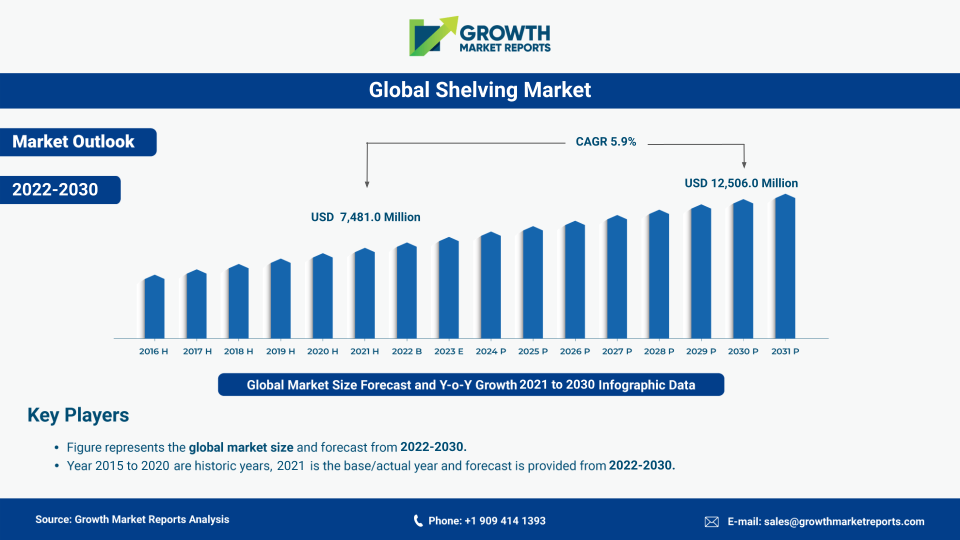
According to our latest research, the global shelving market size reached USD 14.6 billion in 2024, reflecting robust demand across various sectors. The market is expected to expand at a CAGR of 5.3% from 2025 to 2033, with the overall value forecasted to attain USD 23.3 billion by 2033. This growth trajectory is primarily driven by the increasing need for efficient space utilization in residential, commercial, and industrial environments, coupled with evolving consumer preferences for modular and customizable storage solutions.
One of the key growth factors propelling the shelving market is the rapid pace of urbanization and the corresponding rise in compact living spaces. As urban populations swell, especially in emerging economies, there is a heightened demand for innovative storage solutions that maximize limited square footage. Modular and adjustable shelving systems are gaining traction for their versatility and ability to adapt to diverse room layouts. Additionally, the proliferation of e-commerce and the expansion of retail and logistics sectors are fueling the need for efficient inventory management systems, further bolstering the demand for advanced shelving solutions. The trend toward home organization, amplified by social media influences and lifestyle changes during the pandemic, continues to drive consumer investment in residential shelving products.
Technological advancements and material innovation are also pivotal in shaping the shelving market landscape. Manufacturers are leveraging lightweight yet durable materials such as engineered wood, high-strength plastics, and corrosion-resistant metals to develop products that combine aesthetics with functionality. The integration of smart features, such as adjustable heights, modular add-ons, and easy assembly mechanisms, addresses the growing consumer desire for convenience and customization. Sustainability trends are influencing material selection, with an increasing emphasis on eco-friendly and recyclable components, thereby appealing to environmentally conscious consumers and businesses. These factors collectively foster a dynamic environment for product development and market expansion.
Another significant driver is the robust growth in commercial and industrial sectors, where efficient storage and organization directly impact operational efficiency. Retailers, warehouses, and logistics providers are investing in specialized shelving systems to streamline inventory handling and optimize space utilization. The ongoing digital transformation in retail, characterized by omnichannel strategies and the need for rapid order fulfillment, underscores the critical role of advanced shelving solutions. Moreover, the increasing establishment of supermarkets, hypermarkets, and specialty stores in both developed and developing regions is contributing to the sustained demand for diverse shelving types, including wall-mounted, freestanding, and modular units.
From a regional perspective, the Asia Pacific region stands out as the fastest-growing market for shelving products, supported by rapid industrialization, urban infrastructure development, and rising consumer incomes. North America and Europe continue to represent mature markets, characterized by high adoption rates of innovative and premium shelving solutions. Latin America and the Middle East & Africa, while smaller in market share, are witnessing steady growth as retail and commercial infrastructure expands. The global outlook remains positive, with sustained investment in residential, commercial, and industrial construction projects anticipated to drive long-term market growth.
In the realm of residential and commercial interiors, the concept of a Picture Shelf has gained popularity as a stylish and functional addition to modern spaces. These shelves are designed to display artwork, photographs, and decorative items, allowing homeowners and businesses to personalize their environments with ease. The Picture Shelf not only enhances aesthetic appeal but also optimizes wall space, making it a favored choice in urban settings where floor space is limited. As consumers continue to seek ways to express their individual tastes, the demand for versatile and customizable shelving solutions like the Picture Shelf is expected to grow, contributing to the overall expansion of the shelving market.
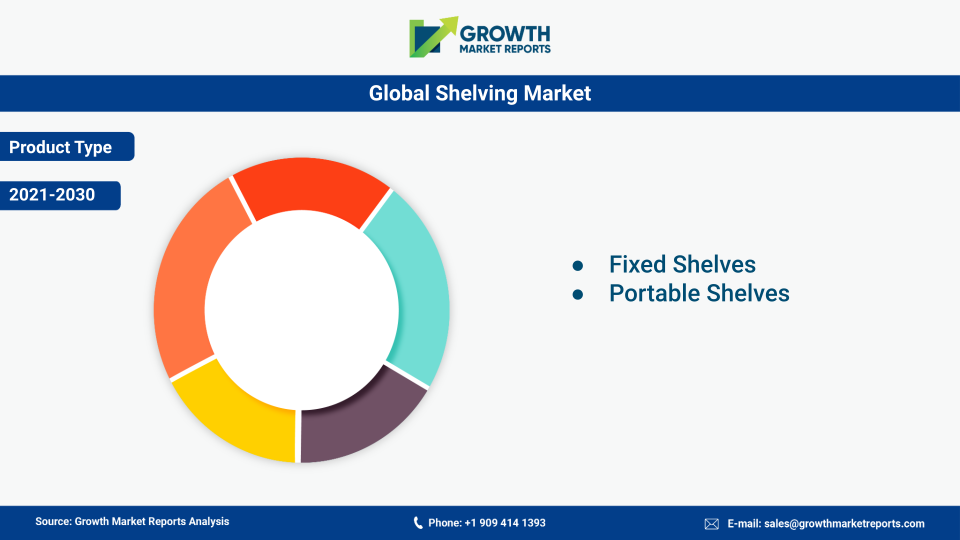
The shelving market is segmented by product type into wall-mounted shelving, freestanding shelving, modular shelving, adjustable shelving, and others. Wall-mounted shelving is highly favored in both residential and commercial settings due to its space-saving design and ability to maximize vertical storage. These units are particularly popular in urban homes, offices, and retail stores where floor space is at a premium. Wall-mounted solutions offer the advantage of easy installation and accessibility, making them a preferred choice for organizing books, decor, and everyday essentials. The growing trend of minimalist and modern interiors has further bolstered the demand for sleek, unobtrusive wall-mounted shelving.
Freestanding shelving represents a significant portion of the market, especially in industrial and retail applications. These units provide flexibility in placement and are ideal for environments where frequent reconfiguration is necessary. Freestanding shelving is commonly used in warehouses, storerooms, and supermarkets, where durability and load-bearing capacity are critical. The ability to move and adjust these units without permanent installation appeals to businesses seeking adaptable storage solutions. Innovations in design, such as mobile shelving with wheels and multi-tiered structures, are enhancing the utility and appeal of this segment.
Modular shelving is experiencing rapid growth, driven by consumer demand for customizable and scalable storage options. Modular systems can be tailored to fit specific spaces and requirements, making them suitable for both residential and commercial use. These products often feature interchangeable components, allowing users to expand or reconfigure their shelving as needs evolve. The modular approach aligns with contemporary lifestyle trends, where flexibility and personalization are highly valued. Manufacturers are responding by offering a wide range of finishes, materials, and accessories to cater to diverse aesthetic and functional preferences.
Adjustable shelving is another dynamic segment, characterized by its adaptability and ease of use. Adjustable units are particularly popular in environments where storage needs frequently change, such as offices, libraries, and retail stores. The ability to modify shelf heights and configurations enables users to accommodate various items, from small accessories to bulky equipment. This versatility makes adjustable shelving a cost-effective solution for businesses and homeowners seeking long-term value. The segment is also benefiting from advancements in user-friendly mechanisms, such as tool-free adjustment systems and ergonomic designs.
The "others" category encompasses specialized shelving products, including corner shelves, floating shelves, and decorative units. These products cater to niche markets and specific design requirements, often serving as statement pieces in interior decor. While smaller in market share, this segment is characterized by high margins and strong demand among consumers seeking unique, aesthetically pleasing storage solutions. The diversity of product types within the shelving market ensures that manufacturers can address a wide range of consumer needs and preferences, supporting overall market growth.
| Attributes | Details |
| Report Title | Shelving Market Research Report 2033 |
| By Product Type | Wall-Mounted Shelving, Freestanding Shelving, Modular Shelving, Adjustable Shelving, Others |
| By Material | Metal, Wood, Plastic, Glass, Others |
| By Application | Residential, Commercial, Industrial, Retail, Others |
| By Distribution Channel | Online Stores, Specialty Stores, Supermarkets/Hypermarkets, Others |
| Regions Covered | North America, Europe, APAC, Latin America, MEA |
| Base Year | 2024 |
| Historic Data | 2018-2023 |
| Forecast Period | 2025-2033 |
| Number of Pages | 260 |
| Number of Tables & Figures | 369 |
| Customization Available | Yes, the report can be customized as per your need. |
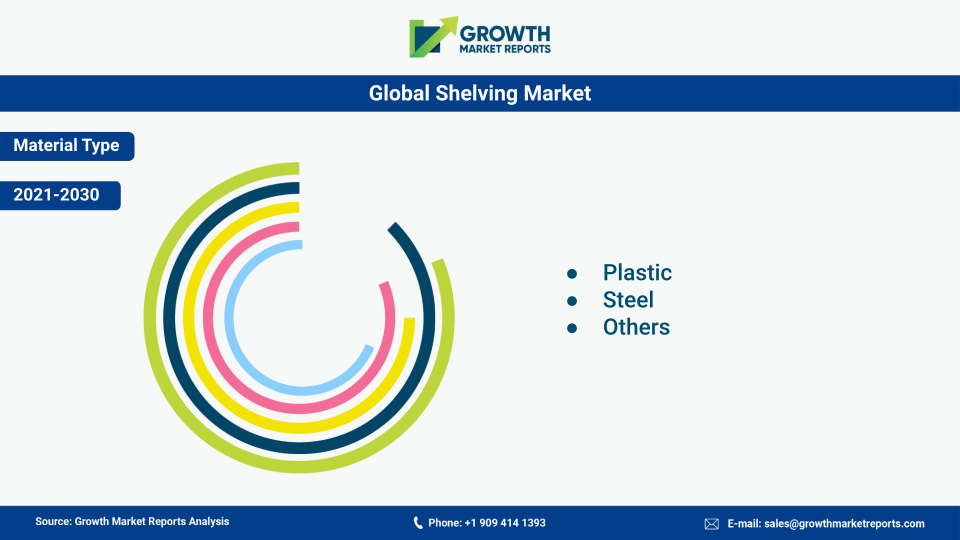
The shelving market is categorized by material into metal, wood, plastic, glass, and others, each offering distinct advantages and catering to different applications. Metal shelving is renowned for its strength, durability, and load-bearing capacity, making it the material of choice for industrial, commercial, and warehouse applications. These units are often constructed from steel or aluminum, with finishes that resist corrosion and wear. Metal shelving is also gaining popularity in modern residential interiors, where industrial aesthetics are in vogue. The segment benefits from ongoing innovations in manufacturing processes, such as powder coating and modular assembly, which enhance both performance and visual appeal.
Wood shelving remains a staple in residential and retail settings, prized for its natural warmth, versatility, and timeless appeal. Products in this category range from solid hardwood units to engineered wood and plywood options, catering to various price points and design preferences. Wood shelving is often chosen for its ability to complement a wide range of interior styles, from traditional to contemporary. Sustainability is a key consideration in this segment, with increasing demand for products made from certified, eco-friendly sources. Manufacturers are responding by incorporating recycled materials and environmentally responsible finishes, aligning with broader green building trends.
Plastic shelving is valued for its lightweight construction, affordability, and resistance to moisture and chemicals. These attributes make plastic shelving ideal for environments such as kitchens, bathrooms, garages, and outdoor spaces, where exposure to humidity and spills is common. The segment is also witnessing growth in commercial applications, particularly in healthcare, food service, and educational institutions. Advances in polymer technology are enabling the production of more robust, aesthetically pleasing plastic shelving units, expanding their appeal beyond traditional utility settings.
Glass shelving occupies a niche segment, primarily targeting high-end residential and retail applications where aesthetics and visual impact are paramount. Glass shelves are often used to display decorative items, merchandise, or collectibles, offering a sleek, modern look that enhances the sense of space and light. While glass is less versatile in terms of load-bearing capacity compared to metal or wood, innovations in tempered and laminated glass are improving safety and durability. The segment appeals to consumers and businesses seeking premium, design-forward storage solutions.
The introduction of the Mobile Shelving System has revolutionized storage solutions across various sectors, offering unparalleled flexibility and efficiency. These systems are particularly beneficial in environments where space optimization is crucial, such as libraries, archives, and warehouses. By allowing shelves to move along tracks, the Mobile Shelving System maximizes storage capacity while minimizing the footprint, making it an ideal choice for businesses looking to enhance their operational efficiency. As industries continue to evolve and adapt to changing demands, the versatility and adaptability of Mobile Shelving Systems are likely to drive their adoption, further fueling the growth of the shelving market.
The "others" material category includes composite materials, bamboo, and hybrid constructions that blend multiple materials for enhanced performance and visual appeal. These products address specific requirements such as sustainability, lightweight design, or unique aesthetics. The diversity of materials available in the shelving market allows manufacturers to cater to a broad spectrum of applications and customer preferences, while ongoing innovation ensures that new solutions continue to emerge.
The shelving market serves a diverse array of applications, segmented into residential, commercial, industrial, retail, and others. Residential shelving accounts for a significant share of the market, driven by trends in home organization, interior design, and the growing popularity of DIY home improvement projects. Consumers are increasingly investing in modular, customizable shelving systems to optimize space in living rooms, bedrooms, kitchens, and closets. The influence of social media and home improvement shows has heightened awareness of the benefits of well-organized spaces, further fueling demand for innovative shelving solutions that blend functionality with style.
Commercial applications encompass offices, hospitality venues, educational institutions, and healthcare facilities, where efficient storage and organization are critical to operational effectiveness. In office settings, shelving is used to store documents, supplies, and equipment, while in hospitality and healthcare, specialized shelving systems support hygiene, accessibility, and workflow optimization. The commercial segment is characterized by a focus on durability, flexibility, and compliance with safety standards. Manufacturers are developing products that address the unique needs of these environments, such as antimicrobial finishes, fire resistance, and modular configurations.
Industrial shelving is indispensable in warehouses, manufacturing facilities, and distribution centers, where the ability to store and access large volumes of materials directly impacts productivity and safety. This segment demands robust, high-capacity shelving systems capable of withstanding heavy loads and frequent use. Innovations such as automated storage and retrieval systems (AS/RS), pallet racking, and mobile shelving are transforming industrial storage, enabling greater efficiency and space utilization. The ongoing expansion of e-commerce and logistics sectors is a major driver of demand for advanced industrial shelving solutions.
Retail shelving plays a critical role in product presentation, inventory management, and customer experience. Shelving systems in supermarkets, hypermarkets, specialty stores, and showrooms are designed to maximize product visibility, facilitate restocking, and enhance store aesthetics. Retailers are increasingly adopting modular and adjustable shelving to accommodate changing product assortments and promotional displays. The rise of experiential retail and omnichannel strategies is prompting investment in innovative shelving solutions that support seamless integration between physical and digital shopping experiences.
The "others" application segment includes specialized uses such as libraries, museums, laboratories, and public spaces. These environments often require custom shelving solutions tailored to unique storage and display requirements. The breadth of applications served by the shelving market underscores its versatility and the critical role that effective storage plays in a wide range of settings.
The shelving market is distributed through a variety of channels, including online stores, specialty stores, supermarkets/hypermarkets, and others. Online stores have emerged as a dominant channel, reflecting the broader shift toward e-commerce and digital retail. Consumers and businesses alike are increasingly turning to online platforms for the convenience of browsing, comparing, and purchasing a wide range of shelving products. Online retailers offer extensive product selections, detailed specifications, and customer reviews, facilitating informed purchasing decisions. The growth of direct-to-consumer brands and the expansion of major e-commerce platforms are further accelerating the shift to online sales.
Specialty stores continue to play a vital role in the shelving market, particularly for customers seeking expert advice, personalized service, and access to premium or custom products. These stores often cater to niche markets, such as high-end residential shelving, commercial office solutions, or specialized industrial storage systems. The in-store experience, including product demonstrations and design consultations, remains a key differentiator for specialty retailers. Many specialty stores are enhancing their value proposition by integrating digital tools, such as virtual design services and online ordering, to complement their brick-and-mortar presence.
Supermarkets and hypermarkets serve as important distribution channels for mass-market shelving products, particularly those targeted at residential consumers. These retailers offer a curated selection of popular shelving units, often at competitive prices, and benefit from high foot traffic and impulse purchases. The convenience of one-stop shopping and the ability to view products in person are significant advantages for consumers. Supermarkets and hypermarkets are also expanding their private label offerings and collaborating with leading brands to offer exclusive products.
The "others" distribution channel encompasses home improvement centers, furniture stores, wholesalers, and direct sales to institutional buyers. Home improvement centers, in particular, are popular destinations for DIY enthusiasts and professionals seeking a wide range of shelving solutions and accessories. Wholesalers and direct sales channels cater primarily to commercial and industrial customers, offering bulk purchasing options and customized solutions. The diversity of distribution channels in the shelving market ensures broad accessibility and supports the needs of various customer segments.
The integration of omnichannel strategies is a notable trend across all distribution channels, with retailers leveraging both online and offline platforms to enhance customer engagement and streamline the purchasing process. This approach enables consumers to research products online, view them in-store, and choose the most convenient fulfillment options, such as home delivery or in-store pickup. The ongoing evolution of distribution channels is expected to drive further growth and innovation in the shelving market.
The shelving market presents significant opportunities for growth, particularly in the areas of product innovation and customization. As consumers and businesses increasingly seek storage solutions tailored to their unique needs and preferences, manufacturers have the opportunity to differentiate their offerings through flexible, modular designs and a wide range of materials and finishes. The integration of smart features, such as adjustable heights, easy assembly, and IoT-enabled inventory management, can further enhance product value and appeal. Sustainability is another key opportunity, with growing demand for eco-friendly materials and manufacturing processes creating new avenues for market expansion. Companies that invest in research and development to create innovative, sustainable, and user-friendly shelving solutions are well positioned to capture market share and drive long-term growth.
Another promising opportunity lies in the continued expansion of e-commerce and the digitalization of retail and logistics operations. The rapid growth of online shopping and the increasing complexity of supply chains are driving demand for advanced shelving systems that support efficient inventory management, order fulfillment, and last-mile delivery. Automated storage and retrieval systems, mobile shelving, and data-driven inventory solutions are areas of particular interest for commercial and industrial customers. The rise of smart homes and connected devices also presents opportunities for manufacturers to develop shelving products that integrate with home automation systems, offering enhanced convenience and functionality for tech-savvy consumers.
Despite these opportunities, the shelving market faces certain restraints and threats that could impact growth. One of the primary challenges is the volatility of raw material prices, particularly for metals and engineered wood products. Fluctuations in material costs can affect profit margins and pricing strategies, making it difficult for manufacturers to maintain competitiveness. Additionally, the market is characterized by intense competition and price sensitivity, especially in the mass-market and commodity segments. The proliferation of low-cost imports and counterfeit products can undermine brand value and erode market share for established players. To mitigate these threats, companies must focus on innovation, quality assurance, and value-added services that differentiate their offerings and build customer loyalty.
The Asia Pacific region leads the global shelving market, accounting for approximately 38% of total market revenue in 2024, or around USD 5.5 billion. This dominance is fueled by rapid urbanization, industrialization, and expanding retail and e-commerce sectors in countries such as China, India, and Southeast Asian nations. The regionÂ’s burgeoning middle class and rising consumer incomes are driving demand for both residential and commercial shelving solutions. Asia Pacific is also the fastest-growing region, with a projected CAGR of 6.1% from 2025 to 2033, supported by substantial investments in infrastructure and a robust construction pipeline.
North America represents a mature but dynamic market, contributing roughly USD 4.2 billion in 2024, or 29% of the global market. The region is characterized by high adoption rates of innovative shelving products, driven by trends in home organization, smart storage, and the digitalization of retail and logistics. The United States remains the largest market within North America, benefiting from strong consumer spending and a well-established commercial sector. Canada and Mexico are also witnessing steady growth, supported by investments in retail infrastructure and industrial development. The regionÂ’s focus on sustainability and premium product offerings continues to shape market trends and consumer preferences.
Europe holds a significant share of the global shelving market, valued at approximately USD 3.8 billion in 2024, or 26% of the total. The market is driven by demand for high-quality, design-forward shelving solutions in both residential and commercial applications. Western European countries such as Germany, the United Kingdom, and France are key contributors, while Eastern Europe is experiencing growth as retail and industrial sectors expand. Latin America and the Middle East & Africa, though smaller in market size, are exhibiting steady growth as urbanization and retail development continue. Combined, these two regions account for the remaining USD 1.1 billion of the global market in 2024, with opportunities for future expansion as infrastructure projects and consumer markets mature.
The global shelving market is highly competitive, characterized by the presence of numerous international, regional, and local players. Market leaders are distinguished by their ability to offer a broad portfolio of products, strong distribution networks, and a commitment to innovation and quality. Companies compete on the basis of product design, material innovation, pricing, and customer service. The growing importance of online sales channels and direct-to-consumer strategies has intensified competition, prompting manufacturers to invest in digital marketing, e-commerce capabilities, and omnichannel retail experiences. Strategic partnerships, mergers, and acquisitions are common as companies seek to expand their market presence and enhance their product offerings.
Innovation is a key differentiator in the shelving market, with leading players investing heavily in research and development to introduce new materials, designs, and features. The integration of smart technologies, such as IoT-enabled inventory management and automated storage systems, is emerging as a major trend, particularly in commercial and industrial applications. Sustainability is also a focal point, with companies developing eco-friendly products and adopting green manufacturing practices to meet evolving consumer expectations and regulatory requirements. Customization and modularity are increasingly important, as customers seek storage solutions that can be tailored to their specific needs and preferences.
The market is also witnessing the entry of new players, particularly in the online segment, where barriers to entry are relatively low. These entrants are leveraging digital platforms to reach a wide audience and offer competitive pricing, challenging established brands to continuously innovate and enhance their value proposition. In response, leading companies are expanding their product lines, investing in brand building, and focusing on customer experience to maintain their competitive edge. The ability to adapt to changing market dynamics and consumer trends will be critical for long-term success in the shelving market.
Major companies operating in the global shelving market include Inter IKEA Systems B.V., The Container Store Group, Inc., Hettich Holding GmbH & Co. oHG, Rubbermaid Commercial Products LLC, and Godrej & Boyce Mfg. Co. Ltd. These industry leaders are known for their extensive product portfolios, strong brand recognition, and global distribution capabilities. IKEA, for instance, is renowned for its affordable, modular shelving systems that cater to a wide range of residential and commercial applications. The Container Store specializes in premium organization solutions and has a strong presence in North America. Hettich is a leading provider of hardware and shelving components, while Rubbermaid is recognized for its durable, high-performance shelving products for commercial and industrial use. Godrej & Boyce has a significant footprint in Asia, offering a diverse range of storage and shelving solutions for various sectors.
In addition to these global players, the market features numerous regional and local manufacturers who cater to specific markets and customer segments. These companies often differentiate themselves through localized product offerings, competitive pricing, and personalized service. The presence of a diverse and dynamic competitive landscape ensures that customers have access to a wide range of shelving solutions, supporting continued growth and innovation in the global shelving market.
The Shelving market has been segmented on the basis of
Trends include modular and customizable designs, eco-friendly materials, smart shelving features, and the integration of omnichannel retail strategies. Opportunities lie in product innovation, sustainability, and the growth of e-commerce.
Key companies include Inter IKEA Systems B.V., The Container Store Group, Hettich Holding, Rubbermaid Commercial Products, Godrej & Boyce, and several regional manufacturers.
Asia Pacific is the fastest-growing and largest region, followed by North America and Europe. Latin America and the Middle East & Africa are also experiencing steady growth.
Shelving products are distributed through online stores, specialty stores, supermarkets/hypermarkets, home improvement centers, and direct sales to businesses.
Shelving products are widely used in residential homes, commercial offices, industrial warehouses, retail stores, and specialized environments like libraries and laboratories.
Shelving systems are made from metal, wood, plastic, glass, and composite materials, each catering to different needs such as durability, aesthetics, or affordability.
The shelving market offers wall-mounted shelving, freestanding shelving, modular shelving, adjustable shelving, and specialized options like corner and floating shelves.
Key growth drivers include urbanization, demand for efficient space utilization, modular and customizable storage solutions, e-commerce expansion, and technological advancements in materials and smart features.
The shelving market is expected to grow at a CAGR of 5.3% from 2025 to 2033, reaching an estimated value of USD 23.3 billion by 2033.
As of 2024, the global shelving market size reached USD 14.6 billion, with strong demand across residential, commercial, and industrial sectors.