Segments - by Product Type (Dialysis Devices, Renal Denervation Devices, Renal Replacement Therapy Devices, Others), by Service Type (Maintenance & Repair, Installation, Training & Education, Upgradation, Others), by End-User (Hospitals, Dialysis Centers, Ambulatory Surgical Centers, Home Care Settings, Others)
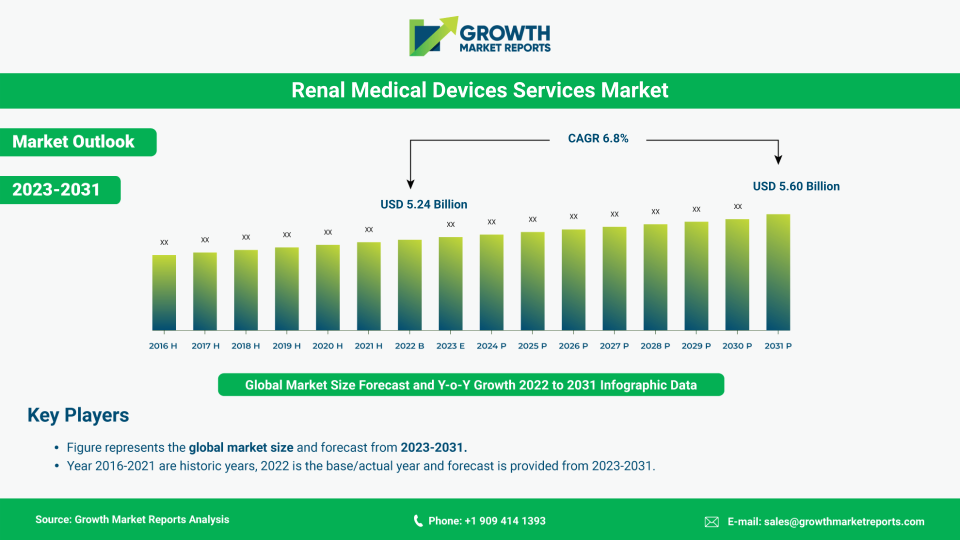
According to our latest research, the global renal medical devices services market size reached USD 8.7 billion in 2024, reflecting the expanding demand for advanced renal care solutions worldwide. The market is projected to grow at a robust CAGR of 7.2% from 2025 to 2033, with the total market value expected to reach approximately USD 16.3 billion by 2033. This impressive growth is driven by the increasing prevalence of chronic kidney diseases, technological advancements in renal care devices, and the growing adoption of value-added service models by healthcare providers.
One of the primary growth factors propelling the renal medical devices services market is the rising global burden of chronic kidney disease (CKD) and end-stage renal disease (ESRD). With over 850 million people worldwide estimated to be affected by kidney diseases, the demand for dialysis devices, renal replacement therapies, and associated services has surged. The aging population, coupled with lifestyle-related risk factors such as diabetes and hypertension, has led to an increase in renal complications, thereby necessitating the deployment of advanced medical devices and comprehensive service offerings. Moreover, the growing awareness about early diagnosis and treatment options has further fueled the adoption of renal medical devices and their associated services across both developed and developing regions.
Technological innovation is another significant driver for the renal medical devices services market. The industry has witnessed rapid advancements in device design, automation, and connectivity, leading to improved patient outcomes and operational efficiency. Innovations such as wearable dialysis devices, remote monitoring systems, and minimally invasive renal denervation devices are transforming the patient care paradigm. These advancements not only enhance patient comfort and safety but also reduce the risk of device malfunction and treatment interruptions. As a result, healthcare providers are increasingly seeking specialized services, including device maintenance, upgradation, and training, to optimize device performance and ensure regulatory compliance. The integration of digital health platforms and telemedicine solutions is further amplifying the demand for comprehensive renal medical devices services.
The shift toward value-based healthcare and the expansion of home-based renal care models are also contributing to market growth. As healthcare systems worldwide strive to optimize costs and improve patient-centric care, there is a growing emphasis on preventive maintenance, timely upgradation, and user education for renal medical devices. Service contracts that cover installation, repair, and continuous training are becoming the norm, particularly in ambulatory and home care settings. The COVID-19 pandemic has accelerated this trend, with more patients and providers opting for decentralized renal therapies and remote device management. Consequently, service providers are expanding their portfolios to offer holistic solutions that encompass device lifecycle management, technical support, and patient training, thereby driving sustained market expansion.
Regionally, North America continues to dominate the renal medical devices services market, accounting for the largest share in 2024, followed closely by Europe and the Asia Pacific. The presence of a well-established healthcare infrastructure, high prevalence of CKD, and early adoption of innovative technologies underpin North America's leadership. However, the Asia Pacific region is expected to witness the fastest growth during the forecast period, driven by rising healthcare investments, increasing incidence of renal diseases, and expanding access to advanced medical devices in countries such as China, India, and Japan. Europe maintains a strong position due to supportive regulatory frameworks and substantial government funding for renal care initiatives. Latin America and the Middle East & Africa are also emerging as promising markets, albeit from a lower base, as awareness and healthcare spending continue to rise.
The product type segment of the renal medical devices services market encompasses dialysis devices, renal denervation devices, renal replacement therapy devices, and other related equipment. Dialysis devices remain the cornerstone of renal care, addressing the needs of millions of patients with chronic kidney failure. These devices, including hemodialysis and peritoneal dialysis systems, are integral to both in-center and home-based therapies. The high frequency of use and critical nature of these devices drive continuous demand for maintenance, repair, and upgradation services. Service providers are increasingly offering tailored solutions, such as predictive maintenance and remote diagnostics, to minimize downtime and ensure uninterrupted patient care. Additionally, the integration of IoT and AI technologies is enabling smarter device management, further enhancing service efficiency and reliability.
Renal denervation devices represent a rapidly growing sub-segment, fueled by their efficacy in treating resistant hypertension and associated renal complications. The adoption of these minimally invasive devices is expanding globally, necessitating specialized installation, calibration, and training services to ensure optimal outcomes. Manufacturers and service providers are collaborating closely to deliver comprehensive support throughout the device lifecycle, from initial setup to ongoing technical assistance. With clinical evidence supporting the long-term benefits of renal denervation, the demand for related services is expected to grow significantly, particularly in regions with high rates of hypertension and cardiovascular diseases.
Renal replacement therapy (RRT) devices encompass a range of advanced systems, including continuous renal replacement therapy (CRRT) machines used in critical care settings. These devices require sophisticated maintenance and regular upgradation to meet stringent regulatory and performance standards. Hospitals and dialysis centers are increasingly entering into multi-year service agreements to ensure the availability and reliability of RRT devices. Service providers are also focusing on staff training and certification programs to enhance device utilization and patient safety. The trend toward personalized medicine and precision therapies is further driving innovation in RRT devices and associated services, creating new opportunities for market players.
The "Others" category includes ancillary equipment such as vascular access devices, monitoring systems, and consumables that support renal therapies. Although these devices may not individually command large market shares, their collective impact on the overall renal medical devices services market is significant. Regular maintenance, timely replacement of consumables, and user education are essential to ensure the safe and effective functioning of these devices. Service providers are leveraging digital platforms to streamline service delivery, track device performance, and manage inventory, thereby enhancing operational efficiency and customer satisfaction.
| Attributes | Details |
| Report Title | Renal Medical Devices Services Market Research Report 2033 |
| By Product Type | Dialysis Devices, Renal Denervation Devices, Renal Replacement Therapy Devices, Others |
| By Service Type | Maintenance & Repair, Installation, Training & Education, Upgradation, Others |
| By End-User | Hospitals, Dialysis Centers, Ambulatory Surgical Centers, Home Care Settings, Others |
| Regions Covered | North America, Europe, APAC, Latin America, MEA |
| Base Year | 2024 |
| Historic Data | 2018-2023 |
| Forecast Period | 2025-2033 |
| Number of Pages | 296 |
| Number of Tables & Figures | 383 |
| Customization Available | Yes, the report can be customized as per your need. |
The renal medical devices services market is segmented by service type into maintenance & repair, installation, training & education, upgradation, and others. Maintenance & repair services constitute the backbone of this segment, as the reliability and performance of renal medical devices are critical to patient outcomes. Regular preventive maintenance, timely repairs, and calibration ensure that devices operate within specified parameters, reducing the risk of treatment interruptions and adverse events. Service providers are increasingly adopting predictive analytics and remote monitoring tools to proactively identify potential issues and schedule maintenance, thereby minimizing device downtime and optimizing resource utilization. The growing complexity of renal devices further underscores the need for specialized technical expertise and rapid response capabilities.
Installation services are essential for the proper setup and configuration of renal medical devices in diverse healthcare settings. The installation process involves site assessment, device assembly, system integration, and initial testing to ensure compliance with manufacturer specifications and regulatory requirements. Service providers work closely with healthcare facilities to customize installation protocols based on space constraints, workflow considerations, and patient volume. The shift toward decentralized care models, including home-based dialysis and ambulatory surgical centers, has amplified the demand for flexible and scalable installation services. Comprehensive post-installation support, including user orientation and troubleshooting, is also a key component of this service offering.
Training & education services play a pivotal role in maximizing the safe and effective use of renal medical devices. With the continuous introduction of new technologies and evolving clinical protocols, healthcare professionals require ongoing training to stay abreast of best practices and regulatory updates. Service providers offer a range of educational programs, including on-site workshops, e-learning modules, and certification courses, tailored to the needs of clinicians, technicians, and patients. Effective training not only enhances device utilization and patient safety but also reduces the risk of operator error and device-related complications. The integration of virtual reality and simulation-based training is further enriching the learning experience and improving knowledge retention.
Upgradation services are gaining traction as healthcare providers seek to leverage the latest advancements in renal medical devices without incurring the high costs of equipment replacement. Upgradation involves hardware modifications, software updates, and the integration of new features to enhance device performance and extend lifespan. Service providers collaborate with device manufacturers to ensure that upgradation activities are aligned with regulatory standards and clinical requirements. The adoption of modular device architectures and cloud-based software platforms is facilitating seamless upgradation, reducing operational disruption and enhancing value for end-users.
The "Others" category includes value-added services such as technical support, compliance management, and asset tracking. These services are increasingly bundled into comprehensive service contracts, enabling healthcare providers to streamline operations, reduce administrative burden, and focus on core patient care activities. The growing emphasis on service quality and customer satisfaction is prompting service providers to invest in digital platforms, customer relationship management (CRM) tools, and performance analytics to deliver superior service experiences and drive long-term loyalty.
The end-user landscape of the renal medical devices services market is diverse, encompassing hospitals, dialysis centers, ambulatory surgical centers, home care settings, and other healthcare facilities. Hospitals remain the primary end-users, accounting for the largest share of service demand due to their extensive patient base, advanced infrastructure, and high device utilization rates. Hospitals rely on comprehensive service agreements to ensure the uninterrupted availability and optimal performance of renal medical devices across intensive care units, nephrology departments, and surgical suites. The complexity of hospital workflows and the need for regulatory compliance drive the demand for specialized installation, maintenance, and training services. Service providers are increasingly offering customized solutions to address the unique needs of large healthcare institutions, including multi-site service coordination and centralized asset management.
Dialysis centers represent a significant and growing end-user segment, particularly in regions with high prevalence of CKD and ESRD. These centers specialize in providing routine dialysis therapies to a large and often high-risk patient population. The high frequency of device use and the critical nature of treatments necessitate robust service support, including preventive maintenance, rapid repairs, and staff training. Many dialysis centers opt for long-term service contracts that cover the full spectrum of device lifecycle management, enabling them to focus on delivering high-quality patient care. The trend toward consolidation and the emergence of large dialysis networks are further driving the demand for standardized and scalable service solutions.
Ambulatory surgical centers (ASCs) are emerging as important end-users in the renal medical devices services market, reflecting the broader shift toward outpatient and minimally invasive procedures. ASCs require flexible and cost-effective service solutions that support efficient device installation, rapid turnaround times, and compliance with stringent safety standards. Service providers are responding by offering modular service packages, remote technical support, and on-demand training to meet the unique needs of ASCs. The growing adoption of renal denervation and other minimally invasive procedures in these settings is expected to drive further growth in this segment.
Home care settings are gaining prominence as an end-user category, driven by the increasing adoption of home-based dialysis and remote patient monitoring solutions. Advances in device miniaturization, connectivity, and user-friendly interfaces are enabling more patients to manage their renal therapies at home, reducing the need for frequent hospital visits and improving quality of life. Service providers are expanding their offerings to include home installation, patient training, telehealth support, and remote device monitoring. These services are critical to ensuring patient safety, adherence to treatment protocols, and timely intervention in case of device issues. The shift toward patient-centric care models and the growing emphasis on healthcare cost containment are expected to drive sustained growth in the home care segment.
The "Others" category includes long-term care facilities, rehabilitation centers, and specialty clinics that utilize renal medical devices as part of comprehensive patient management programs. These facilities often require tailored service solutions that address unique operational challenges, such as limited technical resources and variable patient volumes. Service providers are leveraging digital platforms and mobile service teams to deliver flexible and responsive support to these diverse end-users, enhancing device availability and patient outcomes across the care continuum.
The renal medical devices services market is poised for significant opportunities driven by the rising adoption of digital health technologies and the growing focus on personalized medicine. The integration of artificial intelligence, machine learning, and Internet of Things (IoT) into renal devices and service platforms is revolutionizing device management and patient care. Predictive analytics, remote diagnostics, and real-time performance monitoring are enabling service providers to deliver proactive and preventive maintenance, reducing device downtime and enhancing patient safety. The expansion of telemedicine and remote patient monitoring is also creating new avenues for service delivery, particularly in home care and rural settings. The ongoing shift toward value-based healthcare and outcome-driven reimbursement models is further incentivizing healthcare providers to invest in comprehensive service solutions that optimize device performance, reduce operational costs, and improve patient outcomes.
Another major opportunity lies in the expansion of renal medical devices services in emerging markets, particularly in Asia Pacific, Latin America, and the Middle East & Africa. These regions are experiencing a rapid increase in the prevalence of kidney diseases, coupled with rising healthcare investments and expanding access to advanced medical technologies. Governments and private sector stakeholders are launching initiatives to improve renal care infrastructure, enhance device availability, and promote early diagnosis and treatment. Service providers that can offer scalable, cost-effective, and culturally tailored solutions are well-positioned to capture significant market share in these high-growth regions. Strategic partnerships with local healthcare providers, device manufacturers, and regulatory authorities will be critical to navigating complex market dynamics and achieving sustainable growth.
Despite the promising outlook, the renal medical devices services market faces several restraining factors, chief among them being the high cost of advanced devices and service contracts. The financial burden associated with the acquisition, maintenance, and upgradation of renal medical devices can be prohibitive for smaller healthcare facilities and patients in low-income regions. Reimbursement challenges, budget constraints, and regulatory complexities further compound these issues, limiting market penetration and service adoption. Additionally, the shortage of skilled technical personnel and the need for continuous training pose operational challenges for service providers. Addressing these barriers will require concerted efforts from industry stakeholders, policymakers, and healthcare organizations to develop innovative financing models, streamline regulatory processes, and invest in workforce development.
North America continues to lead the renal medical devices services market, with a market size of USD 3.1 billion in 2024, driven by high disease prevalence, advanced healthcare infrastructure, and early adoption of innovative technologies. The United States accounts for the majority of regional revenue, supported by robust reimbursement frameworks, extensive dialysis networks, and a strong focus on patient-centric care. Canada also contributes significantly, benefiting from government initiatives to improve renal care access and outcomes. The region is characterized by a high degree of market consolidation, with major players offering integrated service solutions across hospitals, dialysis centers, and home care settings. The North American market is expected to maintain steady growth, with a projected CAGR of 6.8% through 2033.
Europe holds the second-largest share of the renal medical devices services market, with a market value of USD 2.4 billion in 2024. The region benefits from supportive regulatory frameworks, substantial government funding, and a strong emphasis on quality standards and patient safety. Key markets such as Germany, France, and the United Kingdom are at the forefront of technological innovation and service adoption, while Eastern European countries are witnessing rapid improvements in renal care infrastructure. The European market is characterized by a diverse end-user base, including public and private healthcare providers, and a growing focus on home-based therapies and remote monitoring solutions. The region is expected to achieve a CAGR of 7.1% during the forecast period.
The Asia Pacific region is emerging as the fastest-growing market for renal medical devices services, with a market size of USD 1.8 billion in 2024 and an anticipated CAGR of 8.5% through 2033. Rapid urbanization, rising incidence of CKD and ESRD, and expanding access to advanced medical devices are driving market growth in countries such as China, India, and Japan. Government initiatives to improve healthcare infrastructure, increase awareness, and subsidize renal therapies are further propelling market expansion. The region presents significant opportunities for service providers to offer scalable, cost-effective, and culturally tailored solutions that address the unique needs of diverse patient populations. Latin America and the Middle East & Africa collectively accounted for USD 1.4 billion in 2024, with both regions poised for steady growth as awareness and healthcare investments continue to rise.
The competitive landscape of the renal medical devices services market is characterized by the presence of several global and regional players, each striving to expand their service portfolios and enhance market share through innovation, strategic partnerships, and geographic expansion. Leading companies are focusing on integrating digital health technologies, predictive analytics, and remote monitoring capabilities into their service offerings to deliver superior value to healthcare providers and patients. The market is witnessing a trend toward consolidation, with larger players acquiring specialized service providers to broaden their reach and capabilities. Competitive differentiation is increasingly based on the quality, reliability, and comprehensiveness of service solutions, as well as the ability to deliver customized, patient-centric care.
Strategic collaborations between device manufacturers and service providers are becoming more prevalent, enabling the development of integrated solutions that cover the entire device lifecycle, from installation and training to maintenance and upgradation. These partnerships are particularly important in addressing the complex needs of large healthcare systems and multi-site organizations. Companies are also investing in workforce development, training programs, and digital platforms to enhance service delivery and customer engagement. The shift toward value-based healthcare is prompting market leaders to focus on outcome-driven service models that align with provider and patient expectations.
In addition to established players, the market is witnessing the entry of new entrants and technology startups offering innovative service models and digital solutions. These companies are leveraging cloud computing, artificial intelligence, and IoT to deliver remote device management, predictive maintenance, and real-time performance analytics. The growing emphasis on home-based care and decentralized service delivery is creating opportunities for nimble, tech-enabled service providers to capture market share, particularly in emerging regions. However, regulatory compliance, data security, and interoperability remain key challenges that require ongoing investment and collaboration.
The major companies operating in the renal medical devices services market include Fresenius Medical Care, Baxter International, B. Braun Melsungen AG, Nipro Corporation, Medtronic, DaVita Inc., Asahi Kasei Corporation, and Nikkiso Co., Ltd. Fresenius Medical Care is a global leader, offering a comprehensive range of dialysis devices, renal therapies, and associated services through an extensive network of clinics and service centers. Baxter International is renowned for its focus on continuous innovation and integrated service solutions, particularly in the home dialysis segment. B. Braun Melsungen AG and Nipro Corporation are recognized for their strong presence in both device manufacturing and service delivery, with a focus on quality and patient safety.
Medtronic is a key player in the renal denervation devices segment, leveraging its expertise in minimally invasive technologies and remote monitoring solutions. DaVita Inc. operates one of the largest networks of dialysis centers globally, offering a wide array of device-related services and patient support programs. Asahi Kasei Corporation and Nikkiso Co., Ltd. are prominent in the Asia Pacific region, with a strong emphasis on innovation, training, and customer service. These companies are continually investing in research and development, digital transformation, and strategic partnerships to maintain their competitive edge and address the evolving needs of the renal medical devices services market.
The Renal Medical Devices Services market has been segmented on the basis of
The major players in the renal medical devices services market include B Braun Melsungen Ag; Baxter International Inc; Boston Scientific Corporation; and Medtronic
Some of these players are using several market strategies such as acquisitions, merger, collaborations, partnerships, capacity expansion, and product launches to enhance their market shares and to generate revenue and raise their production line of the business in the coming years.
Opportunities include expanding digital health and remote monitoring solutions, increasing adoption of personalized medicine, and growing demand in emerging markets such as Asia Pacific, Latin America, and the Middle East & Africa.
Major players include Fresenius Medical Care, Baxter International, B. Braun Melsungen AG, Nipro Corporation, Medtronic, DaVita Inc., Asahi Kasei Corporation, and Nikkiso Co., Ltd.
Key challenges include the high cost of advanced devices and service contracts, reimbursement and regulatory complexities, and a shortage of skilled technical personnel for device maintenance and training.
Technological advancements such as wearable dialysis devices, remote monitoring, IoT integration, AI, and telemedicine are improving patient outcomes, enabling predictive maintenance, and supporting the shift toward home-based and decentralized care.
Main end-users are hospitals, dialysis centers, ambulatory surgical centers, home care settings, and other healthcare facilities like long-term care and rehabilitation centers.
Service types include maintenance & repair, installation, training & education, upgradation, and value-added services such as technical support, compliance management, and asset tracking.
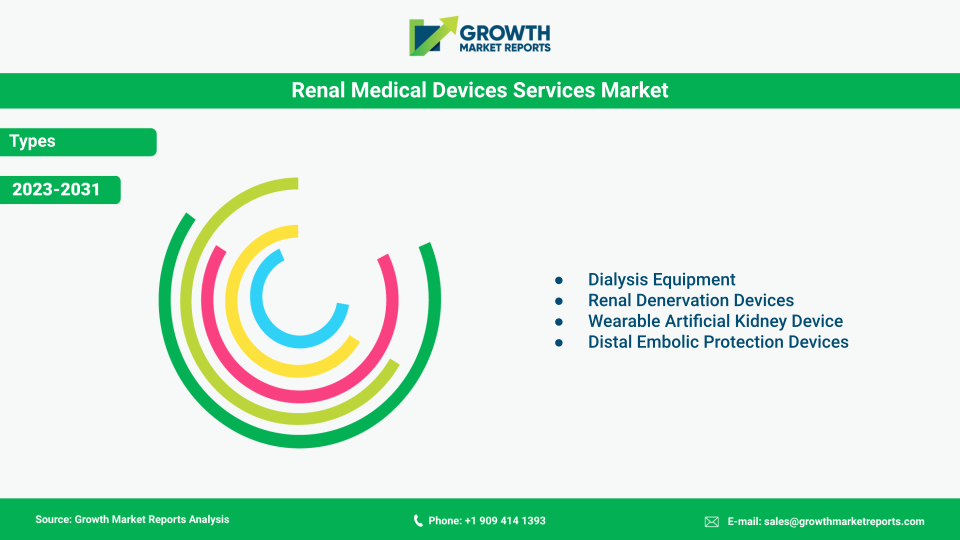
The market includes dialysis devices (such as hemodialysis and peritoneal dialysis systems), renal denervation devices, renal replacement therapy (RRT) devices, and ancillary equipment like vascular access devices and monitoring systems.
North America holds the largest market share, followed by Europe and Asia Pacific. North America's dominance is due to advanced healthcare infrastructure and high CKD prevalence, while Asia Pacific is expected to see the fastest growth due to rising healthcare investments and disease incidence.
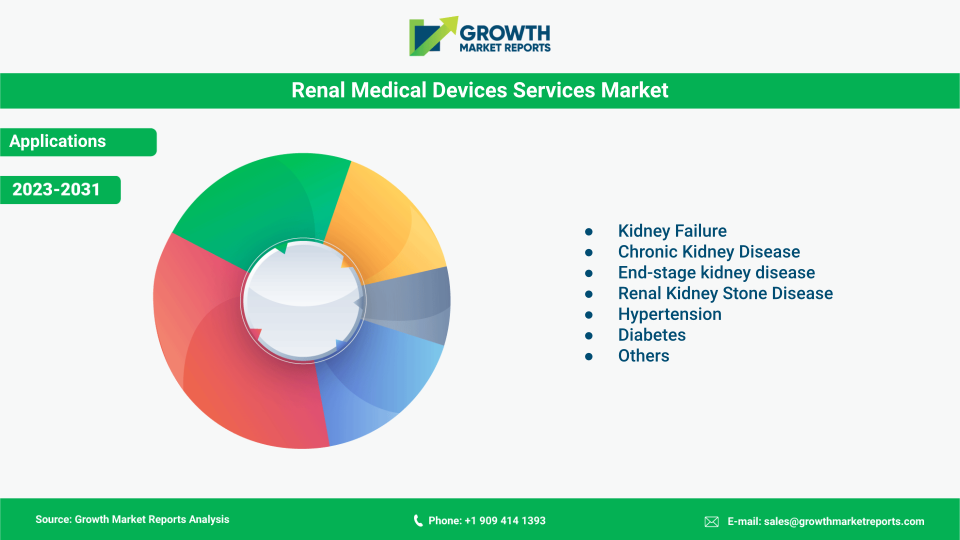
Key growth drivers include the rising prevalence of chronic kidney disease (CKD) and end-stage renal disease (ESRD), technological advancements in renal care devices, an aging population, and the increasing adoption of value-added service models by healthcare providers.
The global renal medical devices services market reached USD 8.7 billion in 2024 and is projected to grow at a CAGR of 7.2% from 2025 to 2033, reaching approximately USD 16.3 billion by 2033.