Ready-Mix Concrete Market Research Report 2033

Ready-Mix Concrete Market Research Report 2033

Segments - by Type (Transit Mixed Concrete, Shrink Mixed Concrete, Central Mixed Concrete), by Application (Residential, Commercial, Infrastructure, Industrial, Others), by End-User (Construction Companies, Contractors, Others)

https://growthmarketreports.com/Raksha
Author : Raksha Sharma
https://growthmarketreports.com/Vaibhav
Fact-checked by : V. Chandola
https://growthmarketreports.com/Rucha
Editor : Rucha Phatak

Upcoming | Report ID :CM-4847 | 4.1 Rating | 74 Reviews | 290 Pages | Format : Docx PDF

Report Description


Ready-Mix Concrete Market Outlook

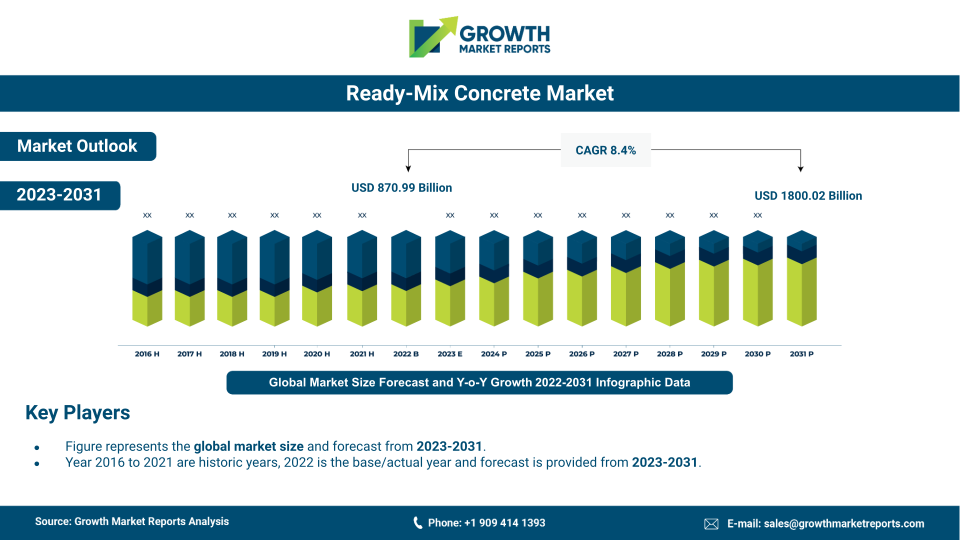
As per our latest research, the global Ready-Mix Concrete market size stood at USD 735.4 billion in 2024, reflecting robust demand across the construction sector worldwide. The market is advancing at a healthy CAGR of 7.1% during the forecast period, with projections indicating the market will reach USD 1,356.6 billion by 2033. The primary growth factor fueling this expansion is the surge in large-scale infrastructure projects, urbanization, and the increasing preference for sustainable and efficient construction solutions.

The Ready-Mix Concrete (RMC) market is witnessing significant momentum due to several key growth drivers. One of the foremost factors is the rapid pace of urbanization, particularly in emerging economies. As urban populations swell, there is an escalating demand for modern housing, commercial spaces, and supporting infrastructure. This urban shift necessitates quick, reliable, and high-quality construction materials, positioning ready-mix concrete as an essential component in meeting these requirements. The convenience and consistency offered by RMC, along with its ability to reduce construction time and labor costs, further solidify its role as the material of choice for both large and small-scale projects.

Another crucial growth catalyst is the global focus on sustainability and environmental regulations in the construction industry. Ready-mix concrete manufacturers are continually innovating to create environmentally friendly formulations, such as incorporating recycled materials and industrial by-products like fly ash and slag. These advancements not only help in reducing the carbon footprint of construction activities but also enhance the durability and performance of the end product. Governments and regulatory bodies are increasingly mandating green building standards, which significantly boosts the adoption of sustainable RMC solutions. This trend is particularly pronounced in developed regions, where stringent regulations are driving the market towards eco-friendly alternatives.

Additionally, the proliferation of infrastructure development projects worldwide is a major factor underpinning the growth of the ready-mix concrete market. Massive investments in transportation networks, energy facilities, water management systems, and smart cities are creating a sustained demand for high-quality concrete. The versatility of RMC, which can be customized for various structural and architectural requirements, makes it indispensable for such projects. Moreover, the integration of advanced technologies in batching and mixing processes is improving product quality, reducing wastage, and streamlining logistics, further propelling market growth.

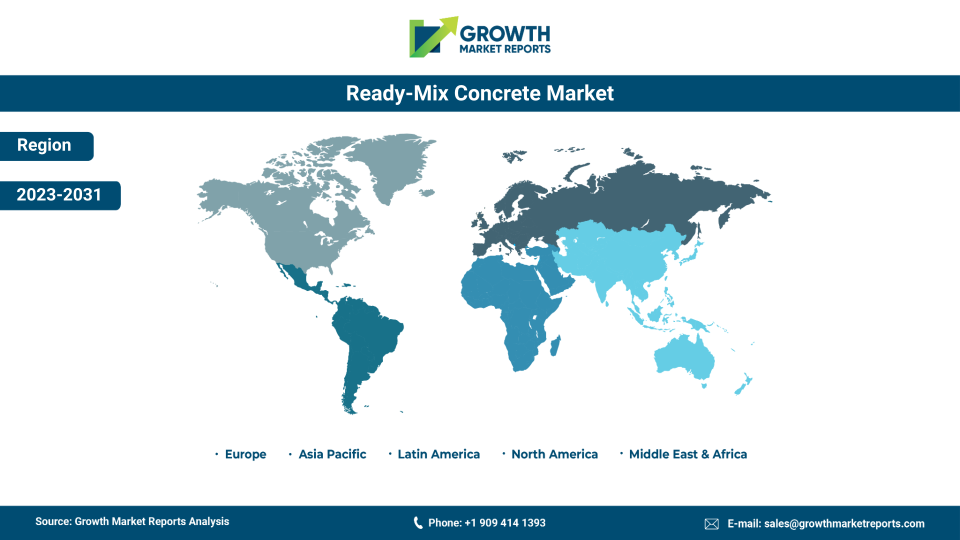
From a regional perspective, Asia Pacific remains the dominant force in the global ready-mix concrete market, accounting for the largest share in 2024. This leadership is attributed to the region's rapid urbanization, burgeoning construction activities, and significant government investments in infrastructure. North America and Europe follow, driven by ongoing renovations, smart city initiatives, and the need for sustainable construction materials. While Latin America and the Middle East & Africa are comparatively smaller markets, they are witnessing accelerating growth rates due to increasing infrastructure projects and rising urban populations. The regional dynamics underscore the global nature of the RMC market, with each geography contributing uniquely to its expansion.

Global Ready-Mix Concrete Industry Outlook

Type Analysis

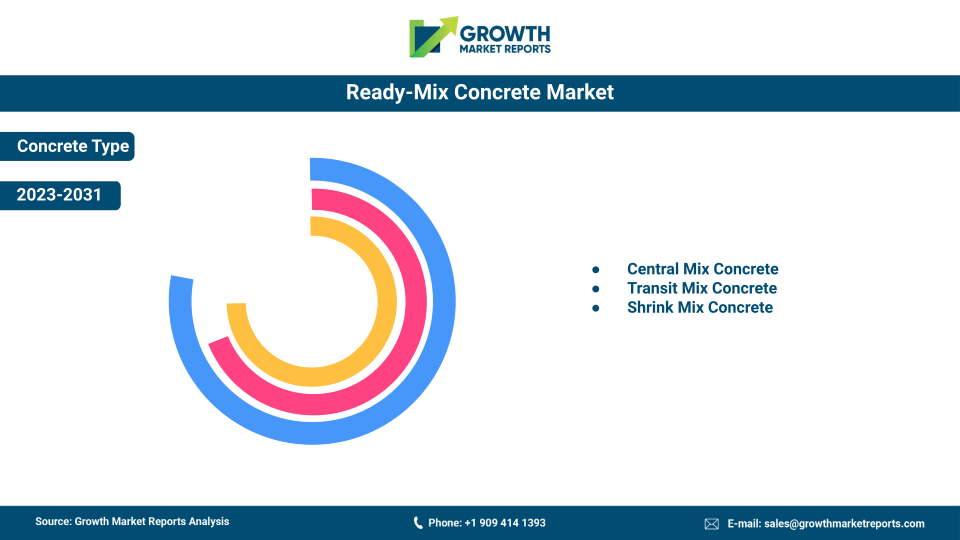
The ready-mix concrete market is segmented by type into Transit Mixed Concrete, Shrink Mixed Concrete, and Central Mixed Concrete, each offering distinct advantages and catering to specific construction needs. Transit mixed concrete, also known as truck-mixed concrete, is the most widely used type, primarily due to its flexibility and ability to deliver fresh concrete directly to construction sites. The mixing occurs en route, ensuring that the concrete remains workable upon arrival. This type is particularly favored for projects where the site is distant from the batching plant or where varying mix requirements are needed on the same day. Its widespread adoption is also supported by the growing number of infrastructure and commercial projects that demand timely and efficient concrete delivery.

Central mixed concrete, on the other hand, is produced in a stationary plant where all ingredients are thoroughly mixed before being loaded into the truck. This process ensures superior homogeneity and quality control, making it ideal for projects with stringent technical specifications. Central mixed concrete is increasingly preferred for large-scale infrastructure developments, such as bridges, tunnels, and high-rise buildings, where consistency and performance are critical. The growing emphasis on quality assurance and the adoption of advanced batching technologies are driving the demand for this segment, especially in developed markets where regulatory standards are more stringent.

Shrink mixed concrete represents a hybrid approach, where partial mixing occurs at the plant, and the final mixing is completed in transit. This method offers a balance between the flexibility of transit mixing and the quality control of central mixing. Shrink mixed concrete is gaining traction in markets where transportation distances are moderate, and there is a need to optimize both time and product quality. The increasing adoption of shrink mixed concrete is also attributed to its ability to minimize wastage and ensure consistent performance across varying site conditions. As construction projects become more complex and geographically dispersed, the demand for shrink mixed concrete is expected to rise steadily.

The ongoing advancements in mixing technology and logistics are further shaping the competitive landscape of the ready-mix concrete market by type. Manufacturers are investing in state-of-the-art batching plants, real-time quality monitoring systems, and efficient fleet management solutions to enhance the reliability and scalability of their offerings. This technological evolution is enabling the production of specialized concrete mixes tailored to specific structural and environmental requirements. As a result, the type segment is poised for continuous innovation and growth, with each sub-segment playing a vital role in addressing the diverse needs of the global construction industry.

Report Scope

Attributes Details
Report Title Ready-Mix Concrete Market Research Report 2033
By Type Transit Mixed Concrete, Shrink Mixed Concrete, Central Mixed Concrete
By Application Residential, Commercial, Infrastructure, Industrial, Others
By End-User Construction Companies, Contractors, Others
Regions Covered North America, Europe, APAC, Latin America, MEA
Countries Covered North America (United States, Canada), Europe (Germany, France, Italy, United Kingdom, Spain, Russia, Rest of Europe), Asia Pacific (China, Japan, South Korea, India, Australia, South East Asia (SEA), Rest of Asia Pacific), Latin America (Mexico, Brazil, Rest of Latin America), Middle East & Africa (Saudi Arabia, South Africa, United Arab Emirates, Rest of Middle East & Africa)
Base Year 2024
Historic Data 2018-2023
Forecast Period 2025-2033
Number of Pages 290
Number of Tables & Figures 277
Customization Available Yes, the report can be customized as per your need.

Application Analysis

The application segment of the ready-mix concrete market is broadly categorized into Residential, Commercial, Infrastructure, Industrial, and Others, reflecting the material’s versatility and widespread utility. The residential sector remains a key driver, fueled by the ongoing demand for new housing, urban redevelopment, and affordable housing initiatives. Ready-mix concrete’s ability to provide consistent quality, reduce construction time, and minimize labor requirements makes it highly attractive for residential builders. Moreover, the trend towards sustainable and energy-efficient homes is prompting the adoption of advanced RMC formulations that enhance thermal performance and durability.

The commercial application segment is experiencing robust growth, underpinned by the expansion of office spaces, retail complexes, hotels, and educational institutions. As businesses and service providers seek to modernize their facilities and cater to evolving consumer preferences, the need for reliable and high-performance construction materials is paramount. Ready-mix concrete, with its customizable properties and rapid deployment capabilities, is increasingly being chosen for such projects. The rise of green building certifications and the emphasis on LEED-compliant structures are further boosting the use of eco-friendly RMC solutions in the commercial segment.

Infrastructure development represents one of the largest and fastest-growing application areas for ready-mix concrete. Governments and private stakeholders worldwide are investing heavily in transportation networks, airports, ports, water treatment plants, and energy facilities. These projects demand concrete solutions that can withstand heavy loads, harsh environmental conditions, and long service lives. Ready-mix concrete’s adaptability, high strength, and resistance to wear and corrosion make it the preferred choice for infrastructure applications. The use of advanced admixtures and high-performance concrete mixes is also on the rise, supporting the construction of complex and durable infrastructure assets.

In the industrial segment, ready-mix concrete is extensively used for the construction of factories, warehouses, distribution centers, and manufacturing plants. The need for robust flooring, foundations, and structural elements in industrial settings necessitates the use of high-quality concrete. The ability to customize mix designs to meet specific load-bearing and chemical resistance requirements is a significant advantage of RMC in this segment. As industrialization accelerates, particularly in emerging markets, the demand for ready-mix concrete in industrial applications is expected to witness sustained growth.

End-User Analysis

The ready-mix concrete market by end-user is segmented into Construction Companies, Contractors, and Others, each playing a pivotal role in the procurement and utilization of RMC. Construction companies represent the largest end-user segment, driven by their involvement in large-scale residential, commercial, and infrastructure projects. These companies often have long-term contracts with RMC suppliers to ensure a steady and reliable supply of high-quality concrete. The trend towards integrated project delivery and design-build models is further strengthening the relationship between construction firms and RMC manufacturers, fostering collaboration and innovation.

Contractors, both general and specialized, constitute another significant end-user group in the ready-mix concrete market. These entities are responsible for executing specific phases or components of construction projects, such as foundations, superstructures, or finishing works. Contractors value the consistency, workability, and timely delivery of RMC, which enables them to meet project deadlines and quality standards. The growing complexity of construction projects and the need for specialized concrete mixes are prompting contractors to partner closely with RMC suppliers, driving demand for customized solutions and value-added services.

The "Others" category encompasses a diverse range of end-users, including government agencies, infrastructure developers, real estate firms, and small-scale builders. Government agencies, in particular, are major consumers of ready-mix concrete for public infrastructure projects, roadworks, and community facilities. The increasing involvement of public-private partnerships (PPPs) in infrastructure development is expanding the end-user base and creating new opportunities for RMC suppliers. Real estate developers and small builders also rely on ready-mix concrete for efficient and cost-effective construction, especially in urban and peri-urban areas.

The end-user segment is characterized by evolving procurement practices and a growing emphasis on quality assurance and sustainability. End-users are increasingly seeking RMC suppliers who can offer not only high-quality products but also technical support, logistics management, and compliance with environmental regulations. The shift towards digital procurement platforms and integrated supply chain solutions is enhancing transparency and efficiency in the market. As competition intensifies, RMC manufacturers are differentiating themselves through service excellence, innovation, and the ability to meet the unique needs of diverse end-user groups.

Opportunities & Threats

The ready-mix concrete market is brimming with opportunities, particularly in the realm of technological innovation and sustainable construction. The integration of digital technologies, such as IoT-enabled batching plants, real-time quality monitoring, and predictive maintenance, is revolutionizing the production and delivery of RMC. These advancements are enhancing operational efficiency, reducing wastage, and enabling manufacturers to offer value-added services to their clients. Moreover, the growing demand for green building materials presents a significant opportunity for RMC suppliers to develop and market eco-friendly formulations that align with global sustainability goals. The adoption of recycled aggregates, low-carbon cement, and supplementary cementitious materials is gaining traction, opening new avenues for growth and differentiation.

Another major opportunity lies in the expansion of infrastructure development in emerging markets. Rapid urbanization, population growth, and rising investments in transportation, energy, and water management projects are driving demand for high-quality construction materials. Governments in Asia Pacific, Latin America, and Africa are launching ambitious infrastructure programs to support economic growth and improve living standards. Ready-mix concrete, with its proven track record and adaptability, is poised to play a central role in these initiatives. RMC manufacturers can capitalize on these opportunities by expanding their production capacities, establishing strategic partnerships, and tailoring their offerings to meet local requirements.

Despite the positive outlook, the ready-mix concrete market faces certain restraints that could hinder its growth trajectory. Volatility in raw material prices, particularly cement, aggregates, and additives, poses a significant challenge for manufacturers. Fluctuations in energy costs and supply chain disruptions can impact production costs and profit margins. Additionally, the highly competitive nature of the market exerts pressure on pricing and profitability. Regulatory hurdles, such as stringent environmental standards and permitting processes, can also delay project timelines and increase compliance costs. To mitigate these threats, RMC suppliers must focus on operational efficiency, supply chain resilience, and proactive risk management.

Regional Outlook

The Asia Pacific region continues to dominate the global ready-mix concrete market, accounting for over 54% of global revenue in 2024, with a market size of approximately USD 397.1 billion. The region’s leadership is underpinned by rapid urbanization, robust economic growth, and massive investments in infrastructure development across countries such as China, India, Japan, and Southeast Asia. China remains the largest single market, driven by government-led initiatives in urban redevelopment, transportation, and energy infrastructure. India is also witnessing exponential growth, fueled by its Smart Cities Mission, affordable housing programs, and industrial corridor projects. The Asia Pacific market is projected to expand at a CAGR of 8.2% through 2033, outpacing other regions due to its dynamic construction landscape and favorable policy environment.

North America represents the second-largest regional market, with a 2024 market size of around USD 140.7 billion. The region’s growth is primarily driven by ongoing investments in infrastructure modernization, urban renewal, and the adoption of sustainable construction practices. The United States leads the market, supported by federal infrastructure spending, highway rehabilitation projects, and the resurgence of the residential and commercial construction sectors. Canada is also experiencing steady growth, particularly in urban centers and resource-rich provinces. The North American market is characterized by a strong focus on quality assurance, technological innovation, and compliance with environmental standards, which are shaping the evolution of RMC products and services.

Europe holds a significant share of the global ready-mix concrete market, with a 2024 value of approximately USD 110.2 billion. The region’s market dynamics are influenced by stringent environmental regulations, the transition towards circular economy models, and the emphasis on energy-efficient buildings. Major markets include Germany, the United Kingdom, France, and Italy, where infrastructure renewal, urban regeneration, and green building initiatives are driving demand. Latin America and the Middle East & Africa, while smaller in size, are witnessing accelerated growth due to rising urbanization, government investments in infrastructure, and the increasing adoption of modern construction materials. Collectively, these regions are expected to contribute significantly to the global market’s expansion over the forecast period.

Ready-Mix Concrete Market Statistics

Competitor Outlook

The global ready-mix concrete market is characterized by intense competition, with a mix of multinational corporations, regional players, and local producers vying for market share. The competitive landscape is shaped by factors such as product quality, pricing, service reliability, and the ability to meet evolving customer requirements. Leading companies are leveraging their extensive production networks, technological expertise, and strong brand reputations to maintain their leadership positions. Strategic mergers and acquisitions, joint ventures, and partnerships are common strategies employed to expand geographic reach, enhance product portfolios, and achieve operational synergies.

Technological innovation is a key differentiator in the ready-mix concrete market, with top players investing heavily in research and development to create advanced formulations, improve batching processes, and enhance logistics management. The adoption of digital platforms, real-time monitoring systems, and fleet tracking solutions is enabling manufacturers to optimize their supply chains, reduce delivery times, and provide superior customer service. Sustainability is another critical focus area, with leading companies developing eco-friendly products, reducing carbon emissions, and promoting the use of recycled materials to align with global environmental goals.

The market also features a significant presence of regional and local players who cater to specific geographic markets and niche segments. These companies often compete on the basis of price, local expertise, and the ability to provide customized solutions. While multinational corporations benefit from economies of scale and advanced technologies, regional players are adept at navigating local regulations, building strong customer relationships, and responding quickly to market changes. The coexistence of large and small players contributes to a vibrant and dynamic competitive environment, fostering innovation and continuous improvement across the industry.

Prominent companies in the global ready-mix concrete market include CEMEX S.A.B. de C.V., LafargeHolcim Ltd., HeidelbergCement AG, CRH plc, and Vicat Group. CEMEX is renowned for its extensive global footprint, innovative product offerings, and commitment to sustainability. LafargeHolcim, now operating as Holcim Group, is a leader in green building solutions, with a strong focus on circular construction and low-carbon materials. HeidelbergCement is recognized for its advanced production technologies and comprehensive range of concrete products. CRH plc leverages its diversified portfolio and strategic acquisitions to expand its market presence, while Vicat Group is known for its high-quality products and customer-centric approach. These companies, along with other regional and local players, are driving the evolution of the ready-mix concrete market through continuous innovation, operational excellence, and a relentless focus on customer satisfaction.

Key Players

  • CEMEX S.A.B. de C.V.
  • LafargeHolcim Ltd.
  • HeidelbergCement AG
  • CRH plc
  • China National Building Material Company Limited (CNBM)
  • Votorantim Cimentos S.A.
  • Buzzi Unicem S.p.A.
  • UltraTech Cement Ltd.
  • Martin Marietta Materials, Inc.
  • Vulcan Materials Company
  • Italcementi Group
  • RMC Readymix (India) (A Division of Prism Johnson Limited)
  • Sika AG
  • Breedon Group plc
  • Barney & Dickenson, Inc.
  • ACC Limited
  • U.S. Concrete, Inc.
  • Holcim Australia
  • Tarmac (A CRH Company)
  • Hanson Limited (HeidelbergCement Group)
Ready-Mix Concrete Market Overview

Segments

The Ready-Mix Concrete market has been segmented on the basis of

Type

  • Transit Mixed Concrete
  • Shrink Mixed Concrete
  • Central Mixed Concrete

Application

  • Residential
  • Commercial
  • Infrastructure
  • Industrial
  • Others

End-User

  • Construction Companies
  • Contractors
  • Others

Competitive Landscape

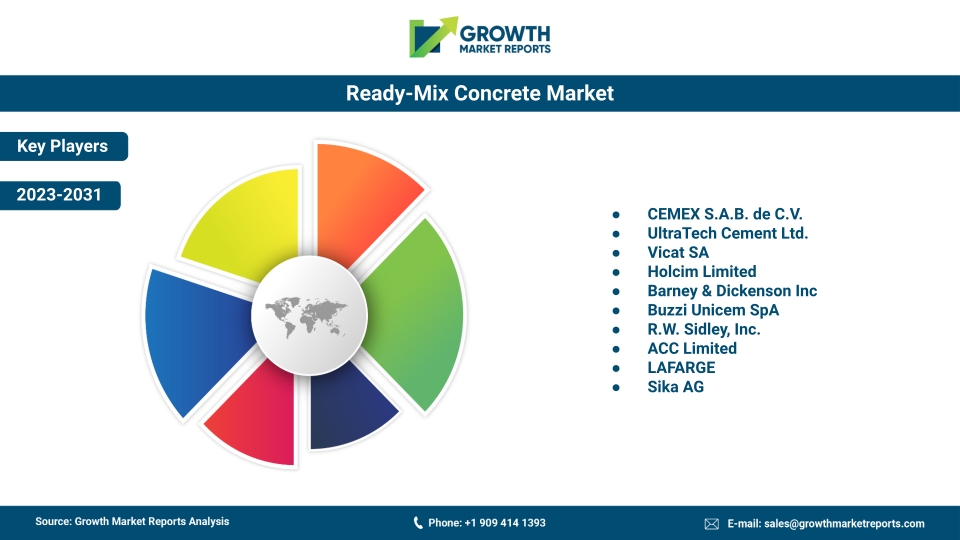
The competitive landscape of the global ready-mix concrete market report provides key insights into the growth strategies and development initiatives implemented by the key players in the market. Key players competing in the ready-mix concrete market are CEMEX S.A.B. de C.V.; UltraTech Cement Ltd.; Vicat SA; Holcim Limited; Barney & Dickenson Inc; Buzzi Unicem SpA; R.W. Sidley, Inc.; ACC Limited; LAFARGE; and Sika AG.

Some of these major companies adopted various business development strategies including mergers, acquisitions, partnerships, collaboration, product launches, and production capacity expansion to expand their consumer base and enhance their market share.

  • On May 9, 2022, a Swiss multinational specialty chemical company Sika AG acquired a US-based company, United Gilsonite Laboratories (UGL) which is a well-recognized manufacturer of products for consumer and DIY waterproofing applications.

  • On September 28, 2021, HeidelbergCement a German multinational building materials company, partners with a US-based leading software investment firm Thoma Bravo and invests in Command Alkon to build the digital ecosystem for the Heavy Building Materials industry.

  • On March 30, 2021, India-based, one of the leading producers of cement and ready-mix concrete in the country launched global concrete “ECOPact” to India to accelerate sustainable and circular construction.

  • On February 16, 2021, a Mexican multinational building materials company, CEMEX, S.A.B. de C.V. announced that its U.S. operations are expanding its strong Texas network with the acquisition of a ready-mix business in San Antonio, TX, as part of its growth initiative. CEMEX acquired the ready-mix assets of Beck Readymix Concrete Co. LTD., including three strategically located ready-mix concrete plants and one portable plant to service the San Antonio metropolitan area and surrounding areas.

Ready Mix Concrete Market Share

Frequently Asked Questions

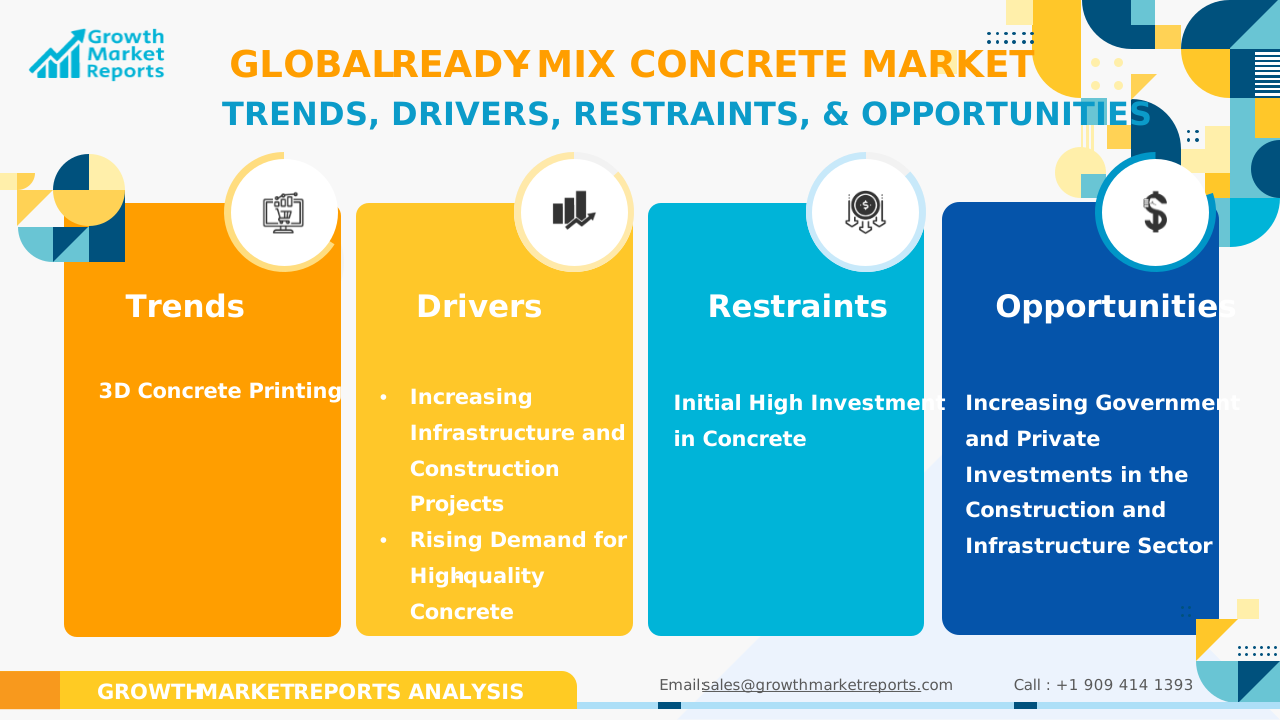
Sustainability is a major trend, with manufacturers incorporating recycled materials, reducing carbon emissions, and developing green building solutions to meet regulatory requirements and market demand.

Prominent players include CEMEX S.A.B. de C.V., LafargeHolcim Ltd. (Holcim Group), HeidelbergCement AG, CRH plc, and Vicat Group.

Challenges include volatility in raw material prices, supply chain disruptions, stringent environmental regulations, and intense market competition affecting pricing and profitability.

Opportunities include technological innovations (like IoT-enabled batching plants), the development of eco-friendly and sustainable concrete formulations, and expansion in emerging markets with large infrastructure projects.

Major end-users include construction companies, contractors, government agencies, infrastructure developers, real estate firms, and small-scale builders.

Ready-mix concrete is widely used in residential, commercial, infrastructure, and industrial construction, as well as for other specialized applications.

The market is segmented into Transit Mixed Concrete (truck-mixed), Central Mixed Concrete (plant-mixed), and Shrink Mixed Concrete (partially plant-mixed, finished in transit), each catering to specific project needs.

Asia Pacific is the leading region, accounting for over 54% of global revenue in 2024, driven by rapid urbanization and significant infrastructure investments in countries like China and India.

Key growth drivers include rapid urbanization, large-scale infrastructure projects, increasing demand for sustainable construction materials, and technological advancements in batching and mixing processes.

As of 2024, the global ready-mix concrete market is valued at USD 735.4 billion, with projections to reach USD 1,356.6 billion by 2033.

Table Of Content

Chapter 1 Executive Summary
Chapter 2 Assumptions and Acronyms Used
Chapter 3 Research Methodology
Chapter 4 Ready-Mix Concrete Market Overview
   4.1 Introduction
      4.1.1 Market Taxonomy
      4.1.2 Market Definition
      4.1.3 Macro-Economic Factors Impacting the Market Growth
   4.2 Ready-Mix Concrete Market Dynamics
      4.2.1 Market Drivers
      4.2.2 Market Restraints
      4.2.3 Market Opportunity
   4.3 Ready-Mix Concrete Market - Supply Chain Analysis
      4.3.1 List of Key Suppliers
      4.3.2 List of Key Distributors
      4.3.3 List of Key Consumers
   4.4 Key Forces Shaping the Ready-Mix Concrete Market
      4.4.1 Bargaining Power of Suppliers
      4.4.2 Bargaining Power of Buyers
      4.4.3 Threat of Substitution
      4.4.4 Threat of New Entrants
      4.4.5 Competitive Rivalry
   4.5 Global Ready-Mix Concrete Market Size & Forecast, 2023-2032
      4.5.1 Ready-Mix Concrete Market Size and Y-o-Y Growth
      4.5.2 Ready-Mix Concrete Market Absolute $ Opportunity

Chapter 5 Global Ready-Mix Concrete Market Analysis and Forecast By Type
   5.1 Introduction
      5.1.1 Key Market Trends & Growth Opportunities By Type
      5.1.2 Basis Point Share (BPS) Analysis By Type
      5.1.3 Absolute $ Opportunity Assessment By Type
   5.2 Ready-Mix Concrete Market Size Forecast By Type
      5.2.1 Transit Mixed Concrete
      5.2.2 Shrink Mixed Concrete
      5.2.3 Central Mixed Concrete
   5.3 Market Attractiveness Analysis By Type

Chapter 6 Global Ready-Mix Concrete Market Analysis and Forecast By Application
   6.1 Introduction
      6.1.1 Key Market Trends & Growth Opportunities By Application
      6.1.2 Basis Point Share (BPS) Analysis By Application
      6.1.3 Absolute $ Opportunity Assessment By Application
   6.2 Ready-Mix Concrete Market Size Forecast By Application
      6.2.1 Residential
      6.2.2 Commercial
      6.2.3 Infrastructure
      6.2.4 Industrial
      6.2.5 Others
   6.3 Market Attractiveness Analysis By Application

Chapter 7 Global Ready-Mix Concrete Market Analysis and Forecast By End-User
   7.1 Introduction
      7.1.1 Key Market Trends & Growth Opportunities By End-User
      7.1.2 Basis Point Share (BPS) Analysis By End-User
      7.1.3 Absolute $ Opportunity Assessment By End-User
   7.2 Ready-Mix Concrete Market Size Forecast By End-User
      7.2.1 Construction Companies
      7.2.2 Contractors
      7.2.3 Others
   7.3 Market Attractiveness Analysis By End-User

Chapter 8 Global Ready-Mix Concrete Market Analysis and Forecast by Region
   8.1 Introduction
      8.1.1 Key Market Trends & Growth Opportunities By Region
      8.1.2 Basis Point Share (BPS) Analysis By Region
      8.1.3 Absolute $ Opportunity Assessment By Region
   8.2 Ready-Mix Concrete Market Size Forecast By Region
      8.2.1 North America
      8.2.2 Europe
      8.2.3 Asia Pacific
      8.2.4 Latin America
      8.2.5 Middle East & Africa (MEA)
   8.3 Market Attractiveness Analysis By Region

Chapter 9 Coronavirus Disease (COVID-19) Impact 
   9.1 Introduction 
   9.2 Current & Future Impact Analysis 
   9.3 Economic Impact Analysis 
   9.4 Government Policies 
   9.5 Investment Scenario

Chapter 10 North America Ready-Mix Concrete Analysis and Forecast
   10.1 Introduction
   10.2 North America Ready-Mix Concrete Market Size Forecast by Country
      10.2.1 U.S.
      10.2.2 Canada
   10.3 Basis Point Share (BPS) Analysis by Country
   10.4 Absolute $ Opportunity Assessment by Country
   10.5 Market Attractiveness Analysis by Country
   10.6 North America Ready-Mix Concrete Market Size Forecast By Type
      10.6.1 Transit Mixed Concrete
      10.6.2 Shrink Mixed Concrete
      10.6.3 Central Mixed Concrete
   10.7 Basis Point Share (BPS) Analysis By Type 
   10.8 Absolute $ Opportunity Assessment By Type 
   10.9 Market Attractiveness Analysis By Type
   10.10 North America Ready-Mix Concrete Market Size Forecast By Application
      10.10.1 Residential
      10.10.2 Commercial
      10.10.3 Infrastructure
      10.10.4 Industrial
      10.10.5 Others
   10.11 Basis Point Share (BPS) Analysis By Application 
   10.12 Absolute $ Opportunity Assessment By Application 
   10.13 Market Attractiveness Analysis By Application
   10.14 North America Ready-Mix Concrete Market Size Forecast By End-User
      10.14.1 Construction Companies
      10.14.2 Contractors
      10.14.3 Others
   10.15 Basis Point Share (BPS) Analysis By End-User 
   10.16 Absolute $ Opportunity Assessment By End-User 
   10.17 Market Attractiveness Analysis By End-User

Chapter 11 Europe Ready-Mix Concrete Analysis and Forecast
   11.1 Introduction
   11.2 Europe Ready-Mix Concrete Market Size Forecast by Country
      11.2.1 Germany
      11.2.2 France
      11.2.3 Italy
      11.2.4 U.K.
      11.2.5 Spain
      11.2.6 Russia
      11.2.7 Rest of Europe
   11.3 Basis Point Share (BPS) Analysis by Country
   11.4 Absolute $ Opportunity Assessment by Country
   11.5 Market Attractiveness Analysis by Country
   11.6 Europe Ready-Mix Concrete Market Size Forecast By Type
      11.6.1 Transit Mixed Concrete
      11.6.2 Shrink Mixed Concrete
      11.6.3 Central Mixed Concrete
   11.7 Basis Point Share (BPS) Analysis By Type 
   11.8 Absolute $ Opportunity Assessment By Type 
   11.9 Market Attractiveness Analysis By Type
   11.10 Europe Ready-Mix Concrete Market Size Forecast By Application
      11.10.1 Residential
      11.10.2 Commercial
      11.10.3 Infrastructure
      11.10.4 Industrial
      11.10.5 Others
   11.11 Basis Point Share (BPS) Analysis By Application 
   11.12 Absolute $ Opportunity Assessment By Application 
   11.13 Market Attractiveness Analysis By Application
   11.14 Europe Ready-Mix Concrete Market Size Forecast By End-User
      11.14.1 Construction Companies
      11.14.2 Contractors
      11.14.3 Others
   11.15 Basis Point Share (BPS) Analysis By End-User 
   11.16 Absolute $ Opportunity Assessment By End-User 
   11.17 Market Attractiveness Analysis By End-User

Chapter 12 Asia Pacific Ready-Mix Concrete Analysis and Forecast
   12.1 Introduction
   12.2 Asia Pacific Ready-Mix Concrete Market Size Forecast by Country
      12.2.1 China
      12.2.2 Japan
      12.2.3 South Korea
      12.2.4 India
      12.2.5 Australia
      12.2.6 South East Asia (SEA)
      12.2.7 Rest of Asia Pacific (APAC)
   12.3 Basis Point Share (BPS) Analysis by Country
   12.4 Absolute $ Opportunity Assessment by Country
   12.5 Market Attractiveness Analysis by Country
   12.6 Asia Pacific Ready-Mix Concrete Market Size Forecast By Type
      12.6.1 Transit Mixed Concrete
      12.6.2 Shrink Mixed Concrete
      12.6.3 Central Mixed Concrete
   12.7 Basis Point Share (BPS) Analysis By Type 
   12.8 Absolute $ Opportunity Assessment By Type 
   12.9 Market Attractiveness Analysis By Type
   12.10 Asia Pacific Ready-Mix Concrete Market Size Forecast By Application
      12.10.1 Residential
      12.10.2 Commercial
      12.10.3 Infrastructure
      12.10.4 Industrial
      12.10.5 Others
   12.11 Basis Point Share (BPS) Analysis By Application 
   12.12 Absolute $ Opportunity Assessment By Application 
   12.13 Market Attractiveness Analysis By Application
   12.14 Asia Pacific Ready-Mix Concrete Market Size Forecast By End-User
      12.14.1 Construction Companies
      12.14.2 Contractors
      12.14.3 Others
   12.15 Basis Point Share (BPS) Analysis By End-User 
   12.16 Absolute $ Opportunity Assessment By End-User 
   12.17 Market Attractiveness Analysis By End-User

Chapter 13 Latin America Ready-Mix Concrete Analysis and Forecast
   13.1 Introduction
   13.2 Latin America Ready-Mix Concrete Market Size Forecast by Country
      13.2.1 Brazil
      13.2.2 Mexico
      13.2.3 Rest of Latin America (LATAM)
   13.3 Basis Point Share (BPS) Analysis by Country
   13.4 Absolute $ Opportunity Assessment by Country
   13.5 Market Attractiveness Analysis by Country
   13.6 Latin America Ready-Mix Concrete Market Size Forecast By Type
      13.6.1 Transit Mixed Concrete
      13.6.2 Shrink Mixed Concrete
      13.6.3 Central Mixed Concrete
   13.7 Basis Point Share (BPS) Analysis By Type 
   13.8 Absolute $ Opportunity Assessment By Type 
   13.9 Market Attractiveness Analysis By Type
   13.10 Latin America Ready-Mix Concrete Market Size Forecast By Application
      13.10.1 Residential
      13.10.2 Commercial
      13.10.3 Infrastructure
      13.10.4 Industrial
      13.10.5 Others
   13.11 Basis Point Share (BPS) Analysis By Application 
   13.12 Absolute $ Opportunity Assessment By Application 
   13.13 Market Attractiveness Analysis By Application
   13.14 Latin America Ready-Mix Concrete Market Size Forecast By End-User
      13.14.1 Construction Companies
      13.14.2 Contractors
      13.14.3 Others
   13.15 Basis Point Share (BPS) Analysis By End-User 
   13.16 Absolute $ Opportunity Assessment By End-User 
   13.17 Market Attractiveness Analysis By End-User

Chapter 14 Middle East & Africa (MEA) Ready-Mix Concrete Analysis and Forecast
   14.1 Introduction
   14.2 Middle East & Africa (MEA) Ready-Mix Concrete Market Size Forecast by Country
      14.2.1 Saudi Arabia
      14.2.2 South Africa
      14.2.3 UAE
      14.2.4 Rest of Middle East & Africa (MEA)
   14.3 Basis Point Share (BPS) Analysis by Country
   14.4 Absolute $ Opportunity Assessment by Country
   14.5 Market Attractiveness Analysis by Country
   14.6 Middle East & Africa (MEA) Ready-Mix Concrete Market Size Forecast By Type
      14.6.1 Transit Mixed Concrete
      14.6.2 Shrink Mixed Concrete
      14.6.3 Central Mixed Concrete
   14.7 Basis Point Share (BPS) Analysis By Type 
   14.8 Absolute $ Opportunity Assessment By Type 
   14.9 Market Attractiveness Analysis By Type
   14.10 Middle East & Africa (MEA) Ready-Mix Concrete Market Size Forecast By Application
      14.10.1 Residential
      14.10.2 Commercial
      14.10.3 Infrastructure
      14.10.4 Industrial
      14.10.5 Others
   14.11 Basis Point Share (BPS) Analysis By Application 
   14.12 Absolute $ Opportunity Assessment By Application 
   14.13 Market Attractiveness Analysis By Application
   14.14 Middle East & Africa (MEA) Ready-Mix Concrete Market Size Forecast By End-User
      14.14.1 Construction Companies
      14.14.2 Contractors
      14.14.3 Others
   14.15 Basis Point Share (BPS) Analysis By End-User 
   14.16 Absolute $ Opportunity Assessment By End-User 
   14.17 Market Attractiveness Analysis By End-User

Chapter 15 Competition Landscape 
   15.1 Ready-Mix Concrete Market: Competitive Dashboard
   15.2 Global Ready-Mix Concrete Market: Market Share Analysis, 2023
   15.3 Company Profiles (Details – Overview, Financials, Developments, Strategy) 
      15.3.1 CEMEX S.A.B. de C.V.
LafargeHolcim Ltd.
HeidelbergCement AG
CRH plc
China National Building Material Company Limited (CNBM)
Votorantim Cimentos S.A.
Buzzi Unicem S.p.A.
UltraTech Cement Ltd.
Martin Marietta Materials, Inc.
Vulcan Materials Company
Italcementi Group
RMC Readymix (India) (A Division of Prism Johnson Limited)
Sika AG
Breedon Group plc
Barney & Dickenson, Inc.
ACC Limited
U.S. Concrete, Inc.
Holcim Australia
Tarmac (A CRH Company)
Hanson Limited (HeidelbergCement Group)

Methodology

Our Clients

Siemens Healthcare
General Electric
The John Holland Group
Microsoft
sinopec
Nestle SA
Dassault Aviation
FedEx Logistics