Segments - by Product Type (Indoor Printed Signage, Outdoor Printed Signage), by Printing Technology (Screen Printing, Inkjet Printing, Sheetfed Printing, Others), by Application (Retail, Commercial, Institutional, Transportation & Logistics, Entertainment, Others), by Material (Paper, Plastic, Metal, Others), by End-User (Retail, BFSI, Healthcare, Transportation, Hospitality, Others)
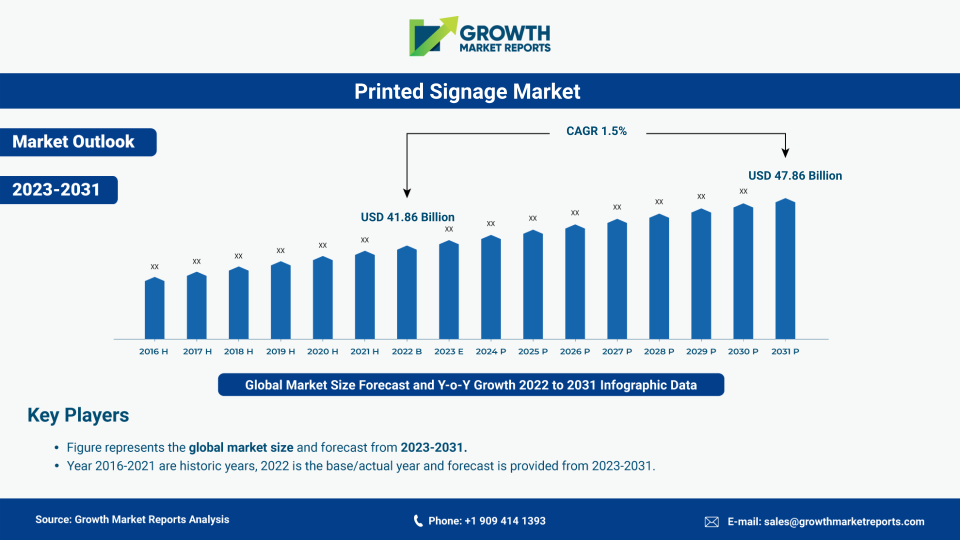
According to our latest research, the global printed signage market size reached USD 41.2 billion in 2024, reflecting a steady demand across diverse industries. The market is projected to grow at a CAGR of 4.1% from 2025 to 2033, with the total value forecasted to reach USD 58.7 billion by 2033. This growth is primarily driven by the increasing need for effective visual communication, especially in retail and commercial sectors, coupled with advancements in printing technologies and expanding applications in emerging economies.
One of the primary growth factors for the printed signage market is the enduring relevance of physical advertising and branding in a digitally dominated era. While digital signage has gained traction, printed signage continues to offer unique advantages such as cost-effectiveness, ease of deployment, and high visibility in both indoor and outdoor environments. Retailers, in particular, rely on printed signage for point-of-sale displays, promotional campaigns, and wayfinding, as it provides immediate impact and reinforces brand identity. The adaptability of printed signage to various formats and materials further enhances its appeal, enabling businesses to create customized solutions that cater to specific marketing objectives and target audiences.
Technological advancements in printing methods have also played a significant role in the market’s expansion. The adoption of high-resolution inkjet and digital printing technologies has revolutionized the quality, speed, and versatility of printed signage production. These innovations allow for vibrant, durable, and weather-resistant signs that meet the rigorous demands of outdoor advertising and high-traffic indoor locations. Additionally, the integration of eco-friendly inks and recyclable materials aligns with the growing emphasis on sustainability, encouraging organizations to invest in printed signage solutions that minimize environmental impact without compromising on quality or effectiveness.
Another crucial driver is the increasing application of printed signage across new and emerging sectors, such as healthcare, transportation, and hospitality. In healthcare, clear and durable signage is essential for wayfinding, patient communication, and compliance with regulatory guidelines. Transportation hubs, including airports and railway stations, utilize printed signage for navigation, safety instructions, and advertising, while the hospitality industry leverages it for branding, event promotion, and guest information. The versatility of printed signage in addressing diverse communication needs, combined with its relatively low production costs, ensures its continued relevance and growth across multiple verticals.
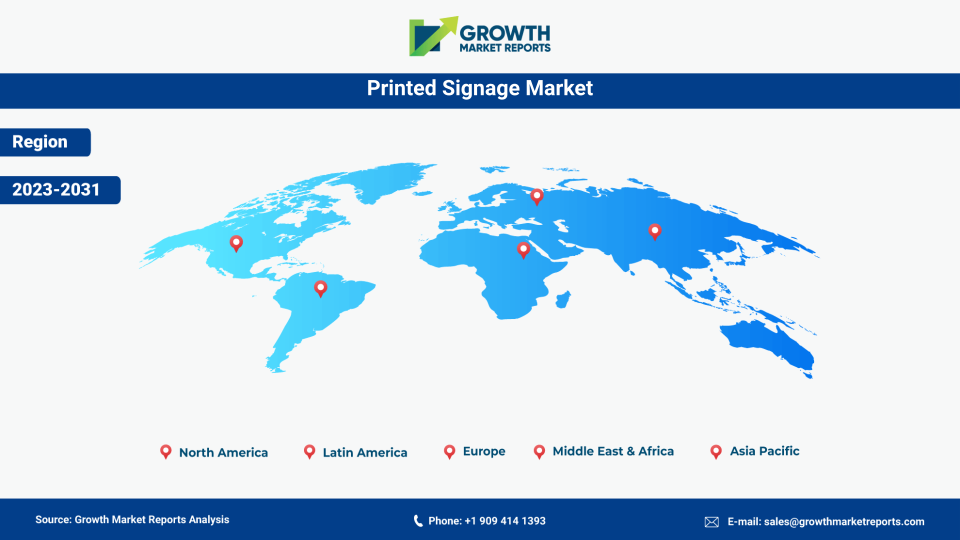
From a regional perspective, the Asia Pacific region dominates the printed signage market, accounting for a significant share due to rapid urbanization, expanding retail infrastructure, and the proliferation of small and medium enterprises. North America and Europe follow closely, driven by technological innovation and a mature advertising landscape. Meanwhile, emerging markets in Latin America and the Middle East & Africa are witnessing accelerated growth, fueled by increasing investments in infrastructure and commercial development. This diverse regional landscape presents ample opportunities for market participants to tailor their offerings to local preferences and regulatory requirements, thereby maximizing growth potential.
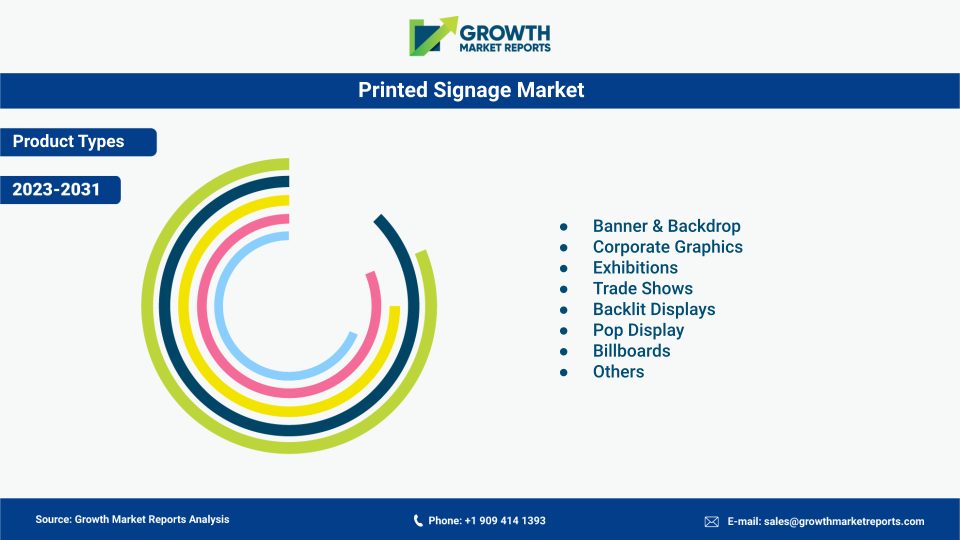
The printed signage market is broadly segmented by product type into indoor and outdoor printed signage. Indoor printed signage remains a cornerstone for businesses seeking to enhance customer experience within controlled environments such as retail stores, shopping malls, offices, and healthcare facilities. This segment benefits from the demand for point-of-purchase displays, informational signs, and branding elements that create a cohesive and visually appealing atmosphere. Indoor signage typically requires high-resolution graphics and precise color reproduction, making it ideal for applications where aesthetics and brand consistency are paramount. The growing trend of experiential retail and immersive in-store marketing campaigns continues to fuel demand for innovative indoor signage solutions.
Outdoor printed signage, on the other hand, is characterized by its durability and ability to withstand harsh weather conditions. This segment includes billboards, banners, building wraps, and transit advertising, all of which are essential for reaching a broad audience in public spaces. Outdoor signage is widely used for large-scale promotional campaigns, public service announcements, and event advertising. The increasing investment in infrastructure projects, urban development, and transportation networks has further propelled the demand for outdoor signage, particularly in emerging economies where public visibility and mass communication are critical for business growth and civic engagement.
The distinction between indoor and outdoor signage also influences material selection, printing technology, and design considerations. While indoor signage prioritizes visual appeal and intricate detailing, outdoor signage emphasizes robustness, UV resistance, and longevity. Manufacturers are continually innovating to develop materials and coatings that enhance the lifespan of outdoor signs without compromising on print quality. This dual focus ensures that both segments remain integral to the overall market, catering to the diverse needs of businesses, institutions, and public sector organizations.
The interplay between indoor and outdoor printed signage often leads to integrated marketing campaigns that leverage both formats for maximum impact. For instance, a retail brand may use eye-catching outdoor banners to attract foot traffic, complemented by engaging indoor displays that guide customers through the store and highlight promotional offers. This holistic approach underscores the importance of a comprehensive signage strategy that addresses multiple touchpoints along the customer journey, thereby driving brand engagement and sales conversion.
| Attributes | Details |
| Report Title | Printed Signage Market Research Report 2033 |
| By Product Type | Indoor Printed Signage, Outdoor Printed Signage |
| By Printing Technology | Screen Printing, Inkjet Printing, Sheetfed Printing, Others |
| By Application | Retail, Commercial, Institutional, Transportation & Logistics, Entertainment, Others |
| By Material | Paper, Plastic, Metal, Others |
| By End-User | Retail, BFSI, Healthcare, Transportation, Hospitality, Others |
| Regions Covered | North America, Europe, APAC, Latin America, MEA |
| Base Year | 2024 |
| Historic Data | 2018-2023 |
| Forecast Period | 2025-2033 |
| Number of Pages | 292 |
| Number of Tables & Figures | 394 |
| Customization Available | Yes, the report can be customized as per your need. |
The printing technology segment of the printed signage market encompasses screen printing, inkjet printing, sheetfed printing, and other emerging technologies. Screen printing has long been a staple for producing high-volume signage due to its reliability, cost-efficiency, and ability to handle a wide range of substrates. This method is particularly favored for outdoor signage, banners, and large-format displays where durability and color vibrancy are essential. However, screen printing faces increasing competition from digital alternatives, especially as businesses seek greater flexibility and faster turnaround times for customized projects.
Inkjet printing has emerged as a transformative technology in the printed signage market, enabling high-resolution, full-color graphics on diverse materials such as paper, vinyl, fabric, and plastic. The versatility of inkjet printers allows for on-demand production, variable data printing, and short-run customization, making it ideal for targeted marketing campaigns and limited-edition signage. The adoption of UV-curable and eco-solvent inks has further enhanced the appeal of inkjet printing, providing superior image quality, fade resistance, and environmental sustainability. As a result, inkjet printing continues to capture a growing share of the market, particularly among small and medium-sized enterprises seeking cost-effective yet impactful signage solutions.
Sheetfed printing, although traditionally associated with commercial printing applications, has found a niche in the signage industry for producing high-quality, medium-run prints with exceptional detail and consistency. This technology is well-suited for applications that demand precision and color accuracy, such as corporate branding materials, event signage, and high-end retail displays. The integration of digital enhancements and automation in sheetfed presses has improved efficiency and reduced waste, making it a viable option for businesses seeking to balance quality and productivity.
Other printing technologies, including dye-sublimation, latex printing, and hybrid systems, are gaining traction as the market evolves. These methods offer unique advantages such as vibrant color reproduction, flexibility in material choice, and compatibility with sustainable substrates. The ongoing innovation in printing technology not only expands the creative possibilities for signage designers but also enables manufacturers to address evolving customer preferences and regulatory requirements. As businesses increasingly prioritize sustainability and customization, the adoption of advanced printing technologies will remain a key driver of growth and differentiation in the printed signage market.
The application segment of the printed signage market is diverse, with retail, commercial, institutional, transportation and logistics, entertainment, and other sectors leveraging signage for a variety of purposes. The retail sector continues to dominate the market, accounting for the largest share due to the critical role of signage in driving foot traffic, promoting offers, and enhancing the in-store experience. Retailers utilize a wide range of printed signage formats, from window displays and floor graphics to shelf talkers and directional signs, to create a dynamic and engaging shopping environment. The ongoing evolution of omnichannel retailing and experiential marketing has further amplified the importance of innovative signage solutions that bridge the gap between physical and digital touchpoints.
Commercial applications of printed signage extend beyond retail to include corporate offices, financial institutions, and service providers. In these settings, signage serves multiple functions, including branding, wayfinding, safety communication, and regulatory compliance. High-quality, professionally designed signs contribute to a positive corporate image and facilitate efficient navigation within large office complexes and public buildings. The demand for customized signage that aligns with corporate branding guidelines and interior design trends is on the rise, driving innovation in design, materials, and printing techniques.
Institutional applications encompass educational facilities, healthcare organizations, government buildings, and non-profit institutions. In these environments, printed signage is essential for wayfinding, information dissemination, and compliance with accessibility standards. Hospitals and clinics, for example, rely on clear and durable signs to guide patients and visitors, communicate health and safety protocols, and reinforce organizational branding. Educational institutions use signage for campus navigation, event promotion, and student engagement, highlighting the versatility and importance of printed signage in the public sector.
The transportation and logistics sector represents a significant growth opportunity for the printed signage market. Airports, train stations, bus terminals, and logistics hubs require robust and highly visible signage to ensure smooth operations, enhance passenger experience, and comply with safety regulations. Printed signs are used for directional guidance, emergency instructions, advertising, and branding, often in high-traffic and challenging environments. The increasing investment in transportation infrastructure, particularly in emerging markets, is expected to drive sustained demand for advanced signage solutions that combine durability, clarity, and visual impact.
Entertainment venues, including theaters, sports arenas, amusement parks, and event spaces, also rely heavily on printed signage for branding, wayfinding, and audience engagement. Creative and visually striking signs contribute to the overall atmosphere and help organizers deliver memorable experiences to attendees. As the entertainment industry continues to recover and expand following global disruptions, the demand for innovative and customizable signage solutions is expected to grow, further diversifying the application landscape of the printed signage market.
Material selection plays a pivotal role in the printed signage market, influencing the durability, aesthetics, and cost-effectiveness of signage solutions. Paper remains a popular choice for indoor applications and short-term promotional campaigns due to its affordability, ease of printing, and recyclability. Paper-based signage is widely used for posters, flyers, banners, and point-of-sale displays, offering a balance between quality and cost for businesses with limited budgets or frequent campaign changes. The ongoing development of coated and specialty papers has further enhanced print quality and durability, expanding the range of applications for paper signage.
Plastic materials, including PVC, acrylic, and polycarbonate, are favored for their durability, versatility, and suitability for both indoor and outdoor applications. Plastic signage offers excellent weather resistance, UV stability, and impact strength, making it ideal for long-term installations and high-traffic environments. The ability to produce lightweight, flexible, and visually appealing signs has contributed to the widespread adoption of plastic materials across retail, transportation, and institutional sectors. Additionally, advancements in sustainable plastics and recycling technologies are addressing environmental concerns and supporting the shift towards greener signage solutions.
Metal signage, typically made from aluminum, stainless steel, or composite materials, is synonymous with durability, longevity, and premium aesthetics. Metal signs are commonly used for outdoor applications, architectural signage, corporate branding, and wayfinding in public spaces. The robustness of metal allows for intricate designs, embossing, and custom finishes, enabling businesses to create distinctive and high-impact signage that withstands harsh environmental conditions. While metal signage tends to be more expensive than paper or plastic alternatives, its superior performance and visual appeal justify the investment for applications where durability and brand image are paramount.
Other materials, such as wood, fabric, and glass, are gaining popularity for niche applications and custom projects. Wood signage offers a natural and rustic look, appealing to businesses seeking to convey authenticity and craftsmanship. Fabric signs, including banners, flags, and backdrops, provide flexibility and portability for events, trade shows, and temporary installations. Glass signage, often used in corporate and hospitality settings, delivers a sleek and modern appearance while allowing for creative lighting and branding effects. The expanding range of material options empowers businesses to select the most suitable substrate for their specific needs, balancing performance, aesthetics, and sustainability considerations.
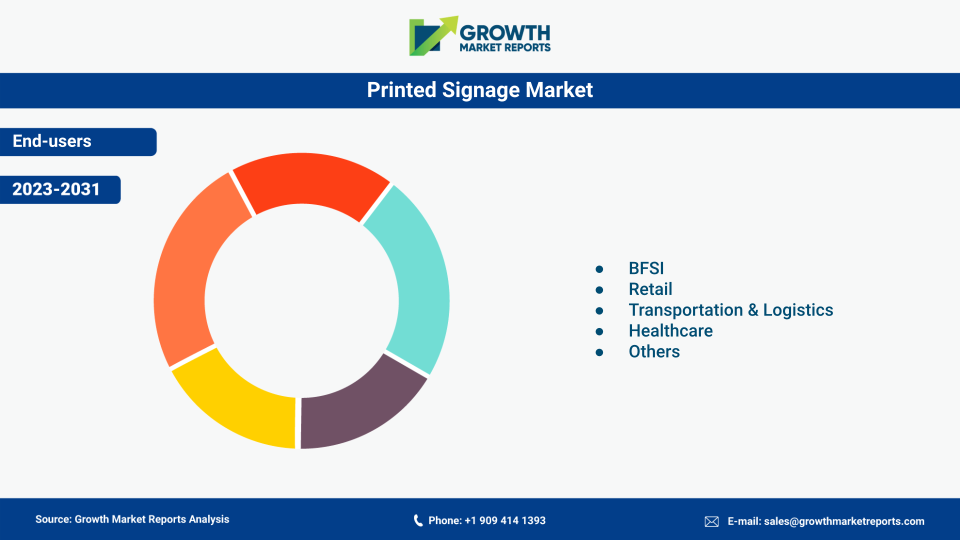
The end-user segment of the printed signage market encompasses a broad spectrum of industries, each with unique requirements and growth drivers. The retail sector stands out as the largest end-user, leveraging printed signage for advertising, brand promotion, and customer engagement. Retailers utilize a diverse array of signage formats, from storefront displays and window graphics to shelf labels and promotional banners, to create a compelling shopping experience and drive sales. The ongoing evolution of retail formats, including the rise of pop-up stores and experiential retail concepts, continues to fuel demand for innovative and customizable signage solutions.
The banking, financial services, and insurance (BFSI) sector relies on printed signage for branch branding, regulatory compliance, and customer communication. Banks and financial institutions use signage to convey important information, promote new services, and enhance the overall customer experience. Security and privacy considerations are paramount in this sector, necessitating signage solutions that combine clarity, professionalism, and durability. The digital transformation of banking services has also led to the integration of printed and digital signage, enabling BFSI organizations to deliver a seamless and consistent brand message across all touchpoints.
Healthcare is another critical end-user segment, where printed signage plays a vital role in wayfinding, patient communication, and regulatory compliance. Hospitals, clinics, and medical offices require clear, durable, and easy-to-read signs to guide patients and visitors, communicate health and safety protocols, and reinforce organizational branding. The unique challenges of healthcare environments, including infection control and accessibility requirements, drive demand for specialized signage materials and designs that meet stringent industry standards.
The transportation and hospitality sectors also represent significant opportunities for the printed signage market. Transportation hubs, including airports, train stations, and bus terminals, rely on signage for navigation, safety instructions, and advertising, often in high-traffic and challenging environments. The hospitality industry, encompassing hotels, resorts, and restaurants, uses signage for branding, guest information, and event promotion, contributing to a positive guest experience and operational efficiency. The increasing investment in infrastructure and tourism development, particularly in emerging markets, is expected to drive sustained demand for advanced signage solutions tailored to the unique needs of these sectors.
The printed signage market presents numerous opportunities for growth and innovation, driven by evolving customer preferences, technological advancements, and expanding applications across diverse industries. One of the most significant opportunities lies in the integration of sustainable materials and eco-friendly printing processes. As businesses and consumers become increasingly conscious of environmental impact, there is growing demand for signage solutions that minimize waste, reduce carbon footprint, and utilize recyclable or biodegradable substrates. Manufacturers that invest in green technologies and develop sustainable product offerings are well-positioned to capture market share and differentiate themselves in a competitive landscape.
Another promising opportunity is the convergence of printed and digital signage, enabling businesses to create integrated, multi-channel marketing campaigns that enhance customer engagement and drive sales. The adoption of QR codes, augmented reality (AR), and near-field communication (NFC) technologies allows printed signage to serve as a gateway to digital experiences, bridging the gap between physical and online environments. This trend is particularly relevant in retail, hospitality, and event marketing, where personalized and interactive signage solutions can deliver measurable results and support data-driven decision-making.
Despite the positive outlook, the printed signage market faces several restraining factors, most notably the increasing adoption of digital signage solutions. Digital displays offer dynamic content, real-time updates, and interactive capabilities that are difficult to replicate with traditional printed signage. As the cost of digital signage continues to decline and businesses seek to enhance agility and responsiveness, the competitive pressure on printed signage is expected to intensify. To remain relevant, printed signage manufacturers must focus on innovation, quality, and value-added services that complement digital offerings and address the evolving needs of customers.
Regionally, the Asia Pacific market leads the global printed signage industry, accounting for approximately 37% of the total market value in 2024, or roughly USD 15.2 billion. The region’s dominance is fueled by rapid urbanization, expanding retail infrastructure, and the proliferation of small and medium enterprises. Countries such as China, India, and Japan are experiencing robust demand for printed signage across retail, transportation, and hospitality sectors, driven by economic growth and increasing consumer spending. The Asia Pacific market is expected to maintain a strong growth trajectory, with a projected CAGR of 4.8% through 2033, outpacing other regions and offering significant opportunities for market participants.
North America represents the second-largest market for printed signage, with a market size of approximately USD 10.1 billion in 2024. The region benefits from a mature advertising industry, advanced printing technologies, and a strong emphasis on branding and customer experience. The United States and Canada are key contributors, with widespread adoption of printed signage in retail, commercial, and institutional applications. While the market is relatively mature, ongoing innovation in materials, printing techniques, and sustainability is expected to drive incremental growth and support the transition towards integrated signage solutions that combine print and digital elements.
Europe holds a significant share of the global printed signage market, with an estimated value of USD 8.5 billion in 2024. The region is characterized by a strong focus on design, quality, and sustainability, with businesses and consumers placing a premium on environmentally responsible signage solutions. Germany, the United Kingdom, and France are leading markets, supported by a vibrant retail sector and ongoing investments in infrastructure and public services. Latin America and the Middle East & Africa are emerging as high-potential regions, albeit from a smaller base, with a combined market value of around USD 7.4 billion in 2024. Growth in these regions is driven by urbanization, infrastructure development, and the expansion of retail and hospitality sectors, presenting new opportunities for market entrants and established players alike.
The printed signage market is highly competitive, characterized by the presence of numerous global and regional players offering a wide range of products and services. The competitive landscape is shaped by factors such as product quality, pricing, innovation, customer service, and the ability to deliver customized solutions that meet the unique needs of diverse end-users. Leading companies invest heavily in research and development to stay ahead of technological trends, enhance printing capabilities, and expand their material portfolios. The shift towards sustainable and eco-friendly signage solutions has also prompted companies to adopt green practices and develop new products that align with evolving customer expectations and regulatory requirements.
Strategic partnerships, mergers, and acquisitions are common in the printed signage market, as companies seek to strengthen their market position, expand their geographic footprint, and access new customer segments. Collaboration with technology providers, material suppliers, and design agencies enables signage manufacturers to offer integrated solutions that combine the best of print and digital technologies. The ability to provide end-to-end services, from design and production to installation and maintenance, is increasingly seen as a key differentiator in a crowded market.
The rise of digital printing technologies has lowered barriers to entry, enabling small and medium-sized enterprises to compete effectively with established players. However, large multinational companies continue to dominate the market, leveraging economies of scale, global distribution networks, and strong brand recognition to maintain their competitive edge. Continuous investment in innovation, quality assurance, and customer support remains critical for sustaining growth and profitability in the face of evolving market dynamics and intensifying competition from digital signage providers.
Major companies operating in the global printed signage market include 3A Composites, Avery Dennison Corporation, Spandex Ltd., Orafol Europe GmbH, and Lintec Corporation. 3A Composites is renowned for its innovative material solutions, catering to both indoor and outdoor signage applications with a focus on sustainability and performance. Avery Dennison Corporation is a global leader in adhesive materials and graphic solutions, offering a comprehensive portfolio of products for retail, transportation, and commercial sectors. Spandex Ltd. specializes in wide-format printing and sign-making materials, serving a diverse customer base across Europe, North America, and Asia Pacific. Orafol Europe GmbH is recognized for its high-quality films, reflective materials, and graphic products, while Lintec Corporation offers advanced adhesive and specialty films for signage and display applications.
These companies are at the forefront of innovation, continuously expanding their product offerings and investing in sustainable practices to address the evolving needs of customers and regulatory bodies. By leveraging advanced technologies, strategic partnerships, and a customer-centric approach, leading players in the printed signage market are well-positioned to capitalize on emerging opportunities and navigate the challenges posed by digital transformation and changing consumer preferences.
The Printed Signage market has been segmented on the basis of
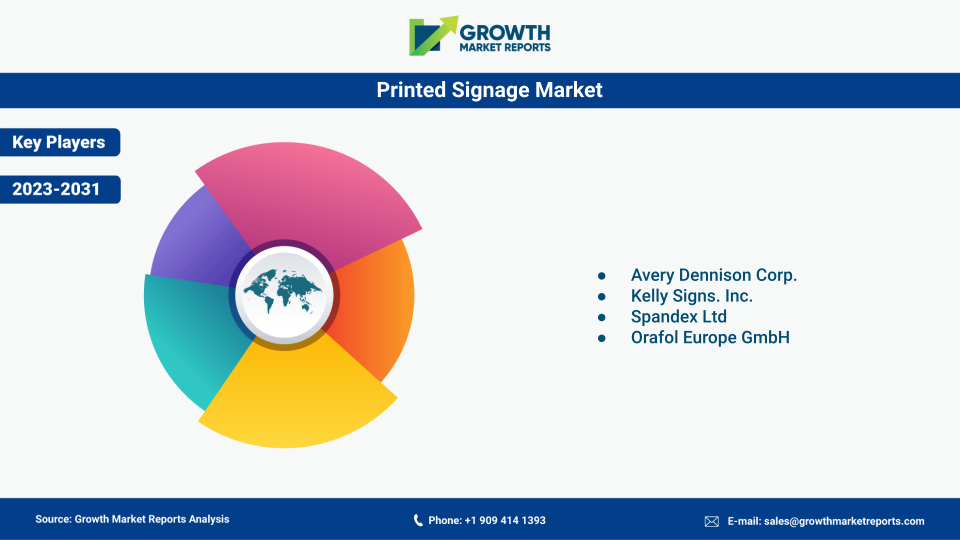
Key players competing in the global printed signage market are Avery Dennison Corp.; Kelly Signs. Inc.; Spandex Ltd; and Orafol Europe GmbH. These players have actively engaged in several market development activities including enterprise collaborations, agreements, mergers & acquisitions, production capacity expansion, new product launches, and partnerships to increase their market share.
Key players include 3A Composites, Avery Dennison Corporation, Spandex Ltd., Orafol Europe GmbH, Lintec Corporation, and others such as DuPont, Mactac LLC, Hexis S.A., and Lamar Advertising Company.
Opportunities include the adoption of sustainable materials and integration with digital technologies (like QR codes and AR). Challenges include competition from digital signage and the need for ongoing innovation and customization.
Retail is the largest end-user, followed by BFSI (banking, financial services, insurance), healthcare, transportation, hospitality, and entertainment, each utilizing signage for branding, wayfinding, compliance, and customer engagement.
Common materials include paper (for affordability and recyclability), plastic (for durability and versatility), metal (for premium, long-lasting signage), and others like wood, fabric, and glass for niche or custom applications.
Screen printing, inkjet printing, and sheetfed printing are the primary technologies. Inkjet printing is gaining popularity due to its high resolution, versatility, and eco-friendly options, while screen printing remains favored for high-volume and durable signage.
The market is segmented into indoor and outdoor printed signage. Indoor signage is used for point-of-purchase displays and branding, while outdoor signage includes billboards, banners, and transit advertising designed for durability and mass communication.
The Asia Pacific region dominates the market, accounting for about 37% of global value in 2024, followed by North America and Europe. Latin America and the Middle East & Africa are emerging as high-growth regions.
Printed signage offers unique advantages such as lower cost, immediate impact, high visibility, and ease of customization, especially for outdoor and point-of-sale applications, while digital signage provides dynamic and interactive content.
Key growth drivers include the enduring relevance of physical advertising, cost-effectiveness, ease of deployment, high visibility, technological advancements in printing, and expanding applications in emerging sectors like healthcare and transportation.
The global printed signage market reached USD 41.2 billion in 2024 and is projected to grow at a CAGR of 4.1% to reach USD 58.7 billion by 2033, driven by demand in retail, commercial sectors, and advancements in printing technologies.