Segments - by Display Type (LCD, LED, OLED, MicroLED, E-Paper, Others), by Application (Consumer Electronics, Automotive, Healthcare, Retail, Industrial, Others), by Panel Size (Small & Medium, Large), by Resolution (HD, Full HD, 4K, 8K, Others), by End-User (Residential, Commercial, Industrial, Others)
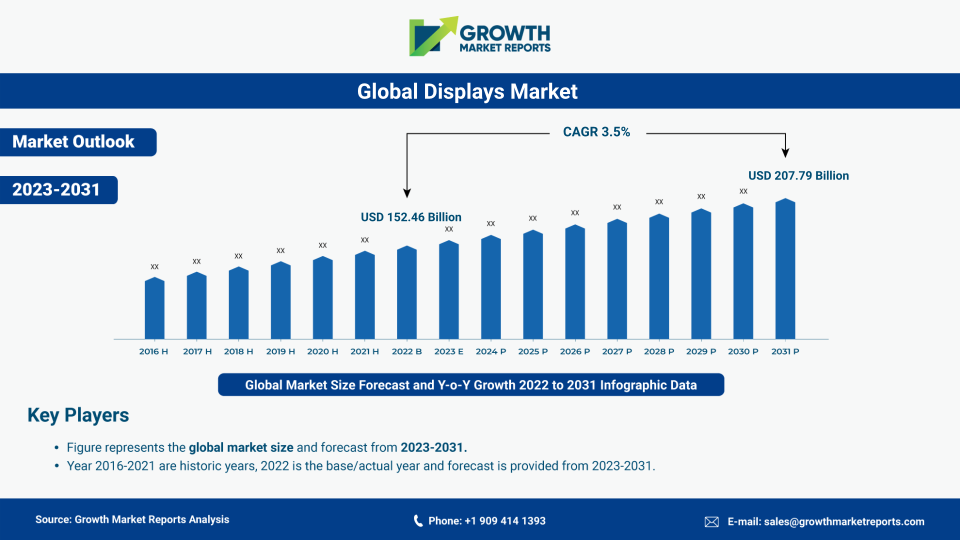
According to our latest research, the global displays market size in 2024 is valued at USD 159.8 billion, and it is poised to expand at a robust CAGR of 6.7% from 2025 to 2033. By the end of this forecast period, the displays market is projected to reach USD 287.2 billion, driven by the escalating adoption of advanced display technologies across diverse industries and the rising demand for high-resolution, energy-efficient, and flexible displays worldwide. The marketÂ’s consistent growth is attributed to technological advancements, consumer preferences shifting towards superior visual experiences, and the proliferation of digital devices in both consumer and professional environments.
A key growth driver for the global displays market is the rapid technological innovation in display technologies, such as OLED, MicroLED, and E-Paper. These advancements are revolutionizing the way displays are integrated into devices by offering enhanced color accuracy, higher brightness, improved energy efficiency, and thinner form factors. The increasing popularity of OLED and MicroLED displays in smartphones, televisions, and wearables is particularly fueling market expansion. Manufacturers are heavily investing in research and development to introduce more flexible, curved, and transparent displays, catering to the evolving needs of both consumers and enterprises. As a result, the adoption of next-generation displays is accelerating, especially in premium product segments and emerging smart device categories.
Another significant factor propelling the displays market is the surging demand for high-resolution and large-format displays in applications such as gaming, digital signage, automotive dashboards, and healthcare imaging systems. The proliferation of 4K and 8K resolution displays is enhancing user experiences by delivering sharper visuals and lifelike image quality, thereby driving replacement cycles and encouraging upgrades across various sectors. The retail industry, in particular, is leveraging advanced displays for interactive kiosks, digital advertising, and immersive customer engagement, contributing to the overall growth of the market. Additionally, the integration of displays in automotive infotainment systems and medical diagnostic equipment is opening new avenues for market players.
The displays market is also benefiting from the global shift towards smart homes, connected devices, and the Internet of Things (IoT). As consumers embrace smart TVs, home automation systems, and wearable devices, the demand for innovative display solutions continues to surge. The increasing penetration of smartphones and tablets in emerging economies is further boosting market growth, as these regions witness a rapid digital transformation. Furthermore, the trend towards remote working and online education, accelerated by recent global events, has increased the need for high-quality monitors and display panels, supporting sustained market expansion.
Flat Panel Display technology has become a cornerstone in the evolution of modern display solutions, offering a sleek and space-efficient alternative to traditional cathode ray tube displays. This technology is characterized by its ability to deliver high-quality visuals with minimal depth, making it ideal for a wide range of applications from consumer electronics to commercial signage. As the demand for thinner and more energy-efficient displays grows, flat panel displays are increasingly being integrated into devices such as televisions, monitors, and digital signage systems. The versatility of flat panel displays, combined with advancements in resolution and color accuracy, is driving their adoption across various sectors, including retail, healthcare, and automotive industries.
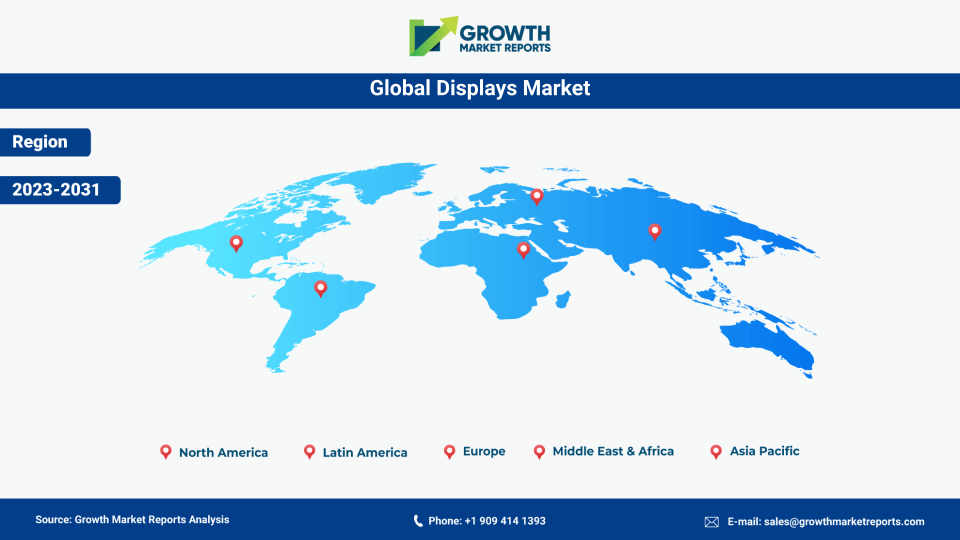
From a regional perspective, Asia Pacific dominates the displays market, accounting for the largest share due to the presence of leading display manufacturers, high consumer electronics production, and robust demand across China, South Korea, and Japan. North America and Europe are also significant contributors, driven by technological adoption and strong demand in automotive, healthcare, and commercial sectors. The Middle East & Africa and Latin America are witnessing steady growth, supported by increasing investments in digital infrastructure and rising consumer awareness. Each region presents unique opportunities and challenges, shaping the competitive dynamics and growth trajectory of the global displays market.
The displays market is segmented by display type into LCD, LED, OLED, MicroLED, E-Paper, and Others, each contributing distinct technological advantages and catering to different end-user requirements. LCD remains the most widely adopted display technology, owing to its cost-effectiveness, reliability, and widespread use in consumer electronics, including televisions, monitors, and laptops. Despite the maturity of LCD technology, ongoing innovations such as quantum dot enhancements and local dimming are helping LCDs maintain a significant market share. However, the market is witnessing a gradual shift towards more advanced technologies as consumers and industries seek higher performance and energy efficiency.
LED displays, particularly those utilizing mini-LED and micro-LED backlighting, are gaining traction for their superior brightness, contrast ratios, and energy efficiency compared to traditional LCDs. These displays are increasingly being adopted in applications such as large-format digital signage, automotive dashboards, and high-end televisions. MicroLED technology, though still in its nascent stage, is anticipated to disrupt the market in the coming years due to its potential for self-emissive displays that offer unparalleled color accuracy, longevity, and design flexibility. Major industry players are investing in scaling up microLED production and addressing manufacturing challenges to tap into the growing demand for premium displays.
OLED displays are witnessing rapid adoption, especially in premium smartphones, televisions, and wearable devices, thanks to their exceptional color reproduction, deep blacks, and thin, flexible form factors. The ability of OLEDs to enable curved and foldable screens is opening new possibilities in device design and user interfaces. E-Paper displays, on the other hand, are carving a niche in applications where readability under sunlight, low power consumption, and lightweight design are critical, such as e-readers, digital signage, and electronic shelf labels. The growing e-book market and the proliferation of smart retail solutions are providing a steady boost to the e-paper segment.
The “Others” category includes emerging display technologies such as quantum dot displays, laser displays, and projection-based solutions. These technologies are gaining attention for specialized applications, including cinema screens, advanced medical imaging, and immersive entertainment experiences. As research and development in display technologies accelerate, the competitive landscape is expected to evolve, with newer display types gradually capturing market share from established technologies. Manufacturers are focusing on balancing performance, cost, and manufacturability to address diverse market needs and sustain long-term growth.
Overall, the display type segment reflects the dynamic and innovation-driven nature of the displays market. As end-users demand more immersive, energy-efficient, and versatile display solutions, the adoption of next-generation technologies such as OLED, MicroLED, and E-Paper is set to rise. This ongoing transition is expected to intensify competition among technology providers and drive further advancements in display performance, durability, and integration capabilities, shaping the future trajectory of the global displays market.
| Attributes | Details |
| Report Title | Displays Market Research Report 2033 |
| By Display Type | LCD, LED, OLED, MicroLED, E-Paper, Others |
| By Application | Consumer Electronics, Automotive, Healthcare, Retail, Industrial, Others |
| By Panel Size | Small & Medium, Large |
| By Resolution | HD, Full HD, 4K, 8K, Others |
| By End-User | Residential, Commercial, Industrial, Others |
| Regions Covered | North America, Europe, APAC, Latin America, MEA |
| Base Year | 2024 |
| Historic Data | 2018-2023 |
| Forecast Period | 2025-2033 |
| Number of Pages | 263 |
| Number of Tables & Figures | 370 |
| Customization Available | Yes, the report can be customized as per your need. |
The applications segment of the displays market encompasses a wide array of industries, including Consumer Electronics, Automotive, Healthcare, Retail, Industrial, and Others, each exhibiting unique demand patterns and growth drivers. Consumer electronics represent the largest application segment, fueled by the ubiquitous use of smartphones, televisions, tablets, laptops, and wearable devices. The continuous pursuit of higher resolution, better color accuracy, and innovative form factors in consumer devices is propelling the adoption of advanced display technologies, particularly OLED and MicroLED. The rapid evolution of gaming monitors, VR headsets, and smart home devices is further expanding the scope of display applications in the consumer electronics sector.
The automotive application segment is experiencing robust growth, driven by the integration of advanced display panels in vehicle infotainment systems, digital instrument clusters, head-up displays, and rear-seat entertainment systems. As the automotive industry shifts towards connected, electric, and autonomous vehicles, the demand for high-resolution, durable, and sunlight-readable displays is rising. Display manufacturers are developing custom solutions tailored to automotive requirements, such as curved and flexible displays, haptic feedback, and augmented reality overlays. The trend towards digital cockpits and seamless human-machine interfaces is expected to sustain strong growth in this segment throughout the forecast period.
In the healthcare sector, displays play a critical role in medical imaging, diagnostics, patient monitoring, and telemedicine solutions. The increasing adoption of high-resolution and color-accurate displays in radiology, surgery, and clinical review applications is enhancing diagnostic accuracy and patient outcomes. The COVID-19 pandemic has accelerated the digital transformation of healthcare, boosting the demand for telehealth platforms and portable medical devices equipped with advanced displays. Innovations in flexible, antimicrobial, and glare-free displays are addressing the unique requirements of healthcare environments, contributing to the steady expansion of this segment.
The retail industry is leveraging digital displays for interactive kiosks, digital signage, electronic shelf labels, and immersive advertising experiences. The shift towards omnichannel retailing and personalized customer engagement is driving investments in high-brightness, durable, and energy-efficient displays. Retailers are adopting large-format and transparent displays to create visually appealing store environments and enhance shopper experiences. The growing adoption of e-paper displays for shelf labeling and inventory management is also supporting market growth in this segment. Industrial applications, meanwhile, demand robust and reliable displays for use in harsh environments, process control systems, and industrial automation solutions.
The “Others” category includes applications in education, transportation, defense, and entertainment, where displays are increasingly being used for collaborative learning, passenger information systems, simulation, and immersive experiences. As digital transformation accelerates across industries, the scope of display applications continues to broaden, presenting new opportunities for market players. The application segment underscores the versatility and critical importance of display technologies in shaping the digital future of diverse sectors worldwide.
The displays market is segmented by panel size into Small & Medium and Large panels, reflecting the wide range of device formats and use cases across industries. Small & medium-sized panels dominate the market in terms of unit shipments, driven by their extensive use in smartphones, tablets, wearables, automotive displays, and portable medical devices. Manufacturers are focusing on enhancing the resolution, brightness, and energy efficiency of small and medium panels to meet the evolving demands of consumers and OEMs. The trend towards bezel-less, foldable, and edge-to-edge displays in mobile devices is spurring innovation in this segment, with flexible OLED and MicroLED panels gaining traction.
The large panel segment, encompassing displays above 32 inches, is witnessing significant growth in applications such as televisions, digital signage, interactive whiteboards, and commercial displays. The increasing popularity of home entertainment systems, 4K and 8K televisions, and large-format monitors is driving demand for high-quality, immersive viewing experiences. In the commercial sector, large panels are being adopted for conference rooms, retail displays, transportation hubs, and public information systems, where visibility, durability, and interactivity are key requirements. Manufacturers are investing in advanced manufacturing processes to produce thinner, lighter, and more energy-efficient large panels, catering to the needs of both residential and commercial customers.
The proliferation of digital signage and interactive displays in public spaces, educational institutions, and corporate environments is further boosting the large panel segment. The integration of touch, gesture, and voice controls is enhancing user engagement and enabling new applications in collaboration, wayfinding, and advertising. As remote work and hybrid learning models gain traction, the demand for large monitors and interactive displays for video conferencing and online education is on the rise. The shift towards smart cities and digital infrastructure is also contributing to the adoption of large-format displays in transportation, government, and healthcare facilities.
Despite the dominance of small and medium panels in terms of volume, the large panel segment accounts for a significant share of market revenue, given the higher average selling prices and value-added features. The ongoing advancements in display technologies, such as quantum dot, OLED, and MicroLED, are enabling the production of large panels with superior image quality, wider color gamuts, and longer lifespans. The competitive landscape in the panel size segment is characterized by continuous innovation, price competition, and strategic partnerships among manufacturers to address diverse market needs.
Overall, the panel size segment reflects the dynamic interplay between consumer preferences, technological innovation, and application-specific requirements. As the displays market evolves, the demand for both small and large panels is expected to remain robust, driven by the expanding adoption of digital devices, smart infrastructure, and immersive experiences across the globe.
Resolution is a critical parameter in the displays market, with segments including HD, Full HD, 4K, 8K, and Others reflecting the ongoing pursuit of sharper, more detailed visual experiences. HD and Full HD displays continue to hold a substantial share of the market, particularly in entry-level and mid-range devices where cost-effectiveness and widespread compatibility are key considerations. These resolutions are prevalent in smartphones, laptops, monitors, and televisions, offering a balance between image quality and affordability. However, the market is witnessing a pronounced shift towards higher resolutions as consumers and industries seek enhanced visual clarity and realism.
4K resolution displays are gaining significant momentum in both consumer and professional applications, driven by the demand for ultra-high-definition content, immersive gaming experiences, and advanced digital signage solutions. The proliferation of 4K televisions, monitors, and projectors is transforming the home entertainment landscape, enabling users to enjoy cinematic visuals and lifelike detail. In the commercial sector, 4K displays are being adopted for advertising, retail, and control room applications, where image precision and scalability are critical. The falling prices of 4K panels and the increasing availability of 4K content are further accelerating the adoption of this segment.
8K resolution represents the cutting edge of display technology, offering four times the pixel density of 4K and delivering unparalleled sharpness, depth, and realism. While 8K displays are currently positioned in the premium segment, their adoption is gradually expanding as content production, broadcasting infrastructure, and device affordability improve. Early adopters in the broadcasting, medical imaging, and design industries are leveraging 8K displays for applications that demand the highest level of visual fidelity. Manufacturers are focusing on overcoming challenges related to content availability, bandwidth requirements, and power consumption to drive broader adoption of 8K displays in the coming years.
The “Others” category includes specialized resolutions such as ultra-wide, curved, and custom aspect ratios tailored for gaming, industrial, and automotive applications. These displays are designed to meet specific user needs, such as enhanced field of view, multitasking capabilities, and compatibility with unique device form factors. The increasing popularity of curved and ultra-wide monitors in gaming and professional environments is contributing to the diversification of the resolution segment.
Overall, the resolution segment underscores the relentless pursuit of visual excellence in the displays market. As content creators, device manufacturers, and consumers demand ever-higher image quality, the transition towards 4K, 8K, and specialized resolutions is expected to accelerate. This trend is driving innovation in panel manufacturing, image processing, and connectivity solutions, shaping the future of display technology and user experiences worldwide.
The end-user segment of the displays market is categorized into Residential, Commercial, Industrial, and Others, each exhibiting distinct demand patterns and growth trajectories. The residential segment is primarily driven by the widespread adoption of display-equipped devices in households, including televisions, smartphones, tablets, laptops, and smart home systems. Consumers are increasingly seeking larger, higher-resolution, and smarter displays to enhance their entertainment, communication, and home automation experiences. The rising trend of home theaters, gaming setups, and connected living spaces is fueling demand for premium displays with advanced features such as HDR, voice control, and seamless integration with IoT devices.
The commercial segment encompasses a broad range of applications, including digital signage, interactive kiosks, conference room displays, hospitality solutions, and retail advertising. Businesses are leveraging advanced displays to enhance customer engagement, streamline operations, and create immersive brand experiences. The adoption of large-format and interactive displays in retail, transportation, education, and healthcare is driving market growth in this segment. The ongoing digital transformation of workplaces, coupled with the rise of hybrid work models, is boosting demand for high-quality monitors, video conferencing systems, and collaborative displays.
The industrial end-user segment is characterized by the need for robust, reliable, and high-performance displays capable of operating in challenging environments. Industrial displays are used in manufacturing plants, control rooms, process automation, transportation systems, and outdoor applications where durability, readability, and resistance to dust, moisture, and temperature fluctuations are critical. Manufacturers are developing specialized displays with features such as rugged enclosures, touch interfaces, and sunlight readability to meet the demanding requirements of industrial users. The increasing adoption of smart manufacturing, industrial IoT, and automation solutions is supporting steady growth in this segment.
The “Others” category includes end-users in sectors such as education, defense, entertainment, and public administration, where displays are used for collaborative learning, simulation, command and control, and public information dissemination. The growing emphasis on digital learning, immersive entertainment, and smart city initiatives is expanding the scope of display applications in these sectors. As digital transformation accelerates across economies, the end-user segment is expected to witness sustained growth, driven by the need for high-quality, versatile, and connected display solutions.
Overall, the end-user segment highlights the pervasive role of displays in modern life, spanning residential, commercial, industrial, and specialized applications. The evolving needs of end-users, coupled with technological advancements and digitalization trends, are shaping the demand for next-generation displays and driving the continued expansion of the global displays market.
The displays market is ripe with opportunities as technological innovation continues to reshape the landscape of visual communication and digital interaction. One of the most significant opportunities lies in the development and commercialization of next-generation display technologies such as MicroLED, Quantum Dot, and Flexible OLED. These technologies promise superior image quality, energy efficiency, and design versatility, enabling manufacturers to create innovative products for emerging applications in wearables, foldable devices, automotive interiors, and smart cities. The growing demand for immersive experiences in gaming, entertainment, and virtual/augmented reality is also opening new avenues for display manufacturers to differentiate their offerings and capture high-value market segments.
Another promising opportunity is the increasing adoption of displays in non-traditional sectors such as healthcare, education, and industrial automation. The integration of advanced displays in medical imaging, telehealth platforms, smart classrooms, and industrial control systems is driving demand for specialized solutions tailored to the unique requirements of these industries. The rise of smart retail, digital signage, and outdoor advertising is further expanding the addressable market for display technologies. Additionally, the ongoing digital transformation of economies, coupled with the proliferation of connected devices and IoT ecosystems, is expected to sustain robust demand for innovative display solutions across diverse end-user segments.
Despite the favorable growth outlook, the displays market faces several restraining factors that could impact its trajectory. One of the primary challenges is the intense price competition and commoditization of mature display technologies such as LCD and standard LED panels. As manufacturers strive to maintain profitability, cost pressures and margin erosion are becoming significant concerns, particularly in the low- and mid-range market segments. Furthermore, the high capital investment required for research, development, and manufacturing of next-generation displays poses a barrier to entry for smaller players and limits the pace of innovation. Supply chain disruptions, fluctuations in raw material prices, and environmental regulations related to display manufacturing are additional factors that could hinder market growth in the coming years.
The Asia Pacific region remains the powerhouse of the global displays market, accounting for the largest share in both production and consumption. In 2024, the Asia Pacific displays market is valued at approximately USD 94.3 billion, driven by the presence of leading display manufacturers in China, South Korea, and Japan. These countries are home to major industry players and benefit from robust electronics manufacturing ecosystems, advanced research and development capabilities, and strong domestic demand. The rapid adoption of smartphones, televisions, and automotive displays in emerging markets such as India and Southeast Asia is further boosting regional growth. Asia Pacific is expected to maintain its leadership position throughout the forecast period, with a projected CAGR of 7.1% from 2025 to 2033.
North America is another significant market, with a 2024 valuation of around USD 31.7 billion. The regionÂ’s growth is fueled by high consumer spending on premium electronics, early adoption of advanced display technologies, and strong demand in sectors such as automotive, healthcare, and commercial signage. The United States, in particular, is a major hub for technological innovation and digital transformation, driving the adoption of 4K and 8K displays, smart home devices, and interactive solutions. Canada and Mexico are also witnessing increasing investments in digital infrastructure and smart city initiatives, supporting steady market expansion.
Europe holds a market value of about USD 25.4 billion in 2024, characterized by strong demand in automotive, industrial, and healthcare applications. The region is witnessing growing investments in smart manufacturing, digital retail, and connected transportation, driving the adoption of advanced display solutions. Germany, the United Kingdom, and France are leading markets within Europe, supported by robust R&D activities and a focus on sustainability and energy efficiency. The Middle East & Africa and Latin America, with market values of USD 5.6 billion and USD 2.8 billion respectively, are emerging as promising markets, thanks to increasing urbanization, rising disposable incomes, and expanding digital ecosystems. These regions are expected to register above-average growth rates as digital transformation initiatives gain momentum and consumer awareness of innovative display technologies increases.
The global displays market is characterized by intense competition, rapid technological advancements, and a dynamic landscape of mergers, acquisitions, and strategic partnerships. Leading players are continually investing in research and development to introduce cutting-edge display technologies, improve manufacturing efficiency, and expand their product portfolios. The competitive landscape is marked by the presence of established industry giants as well as innovative startups, each vying for market share through product differentiation, pricing strategies, and customer-centric solutions. Companies are increasingly focusing on sustainability, energy efficiency, and eco-friendly manufacturing practices to align with evolving regulatory requirements and consumer preferences.
Key competitive strategies in the displays market include vertical integration, global expansion, and collaboration with technology partners, OEMs, and content providers. Major players are leveraging their expertise in materials science, electronics, and software to deliver integrated solutions that address the diverse needs of end-users across consumer, commercial, and industrial sectors. The race to commercialize next-generation display technologies such as MicroLED, Quantum Dot, and Flexible OLED is intensifying, with companies striving to achieve breakthroughs in performance, cost, and scalability. Intellectual property management and patent portfolios are becoming increasingly important as companies seek to protect their innovations and maintain a competitive edge.
The displays market is also witnessing a wave of consolidation, as leading players acquire or form alliances with specialized technology providers to accelerate innovation and expand their capabilities. This trend is particularly evident in the development of advanced manufacturing processes, materials, and equipment required for the production of high-performance displays. The entry of new players, especially from Asia, is intensifying competition and driving down prices, while established players are focusing on premium segments and value-added features to sustain profitability. The ability to anticipate market trends, respond to changing customer needs, and manage complex global supply chains will be critical factors determining long-term success in the displays market.
Some of the major companies operating in the global displays market include Samsung Display Co., Ltd., LG Display Co., Ltd., BOE Technology Group Co., Ltd., AU Optronics Corp., Innolux Corporation, Sharp Corporation, Japan Display Inc., Tianma Microelectronics Co., Ltd., E Ink Holdings Inc., and CSOT (China Star Optoelectronics Technology). Samsung Display and LG Display are pioneers in OLED and flexible display technologies, supplying panels to leading smartphone, television, and automotive manufacturers worldwide. BOE Technology and CSOT are rapidly expanding their global footprint, leveraging advanced manufacturing capabilities and cost competitiveness to capture market share in both LCD and OLED segments.
AU Optronics, Innolux, and Sharp are key players in the LCD and large-format display markets, serving a wide range of consumer, commercial, and industrial applications. Japan Display and Tianma Microelectronics are known for their expertise in small and medium-sized panels, catering to the fast-growing smartphone, tablet, and automotive display markets. E Ink Holdings is a global leader in e-paper display technology, enabling innovative solutions for e-readers, digital signage, and smart retail applications. These companies are at the forefront of technological innovation, driving the evolution of the displays market and shaping the future of visual communication and digital interaction worldwide.
The Displays market has been segmented on the basis of
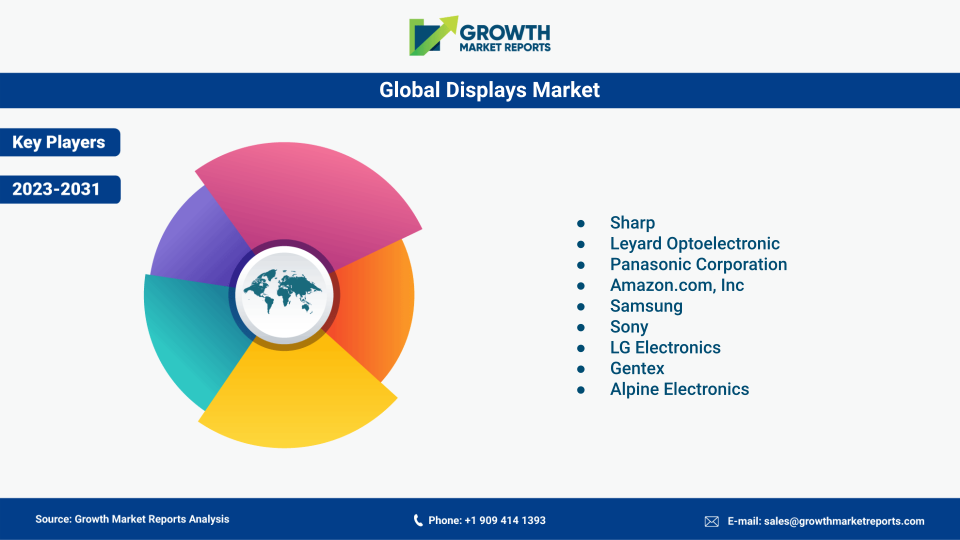
Key players in the display market include Sharp; Leyard Optoelectronic; Panasonic Corporation; Amazon.com, Inc; Samsung; Sony; LG Electronics; Gentex; Alpine Electronics; Sharp Corporation; Manga International Inc.; and Japan Display Inc.
These players are widely engaged in various market development strategies such as collaborations, agreements, mergers & acquisitions, production capacity expansion, new product launches, and partnerships to increase their market share.
Digital transformation is accelerating demand for advanced displays in smart homes, IoT devices, remote work, online education, and smart cities. This trend is expanding the market for high-quality monitors, interactive displays, and connected devices across residential, commercial, and industrial sectors.
Opportunities include the development of next-gen technologies (MicroLED, Quantum Dot, Flexible OLED), expanding applications in healthcare, education, and industrial automation, and growing demand for immersive experiences. Challenges include intense price competition, high R&D costs, supply chain disruptions, and environmental regulations.
Major players include Samsung Display, LG Display, BOE Technology, AU Optronics, Innolux, Sharp, Japan Display Inc., Tianma Microelectronics, E Ink Holdings, and CSOT. These companies lead in various segments such as OLED, LCD, e-paper, and large-format displays.
There is a strong shift towards higher resolutions such as 4K and 8K, especially in TVs, monitors, and digital signage. 4K is becoming mainstream, while 8K is emerging in premium segments and professional applications like medical imaging and broadcasting. Specialized resolutions (ultra-wide, curved) are popular in gaming and industrial uses.
Small & medium panels dominate in terms of unit shipments, used in smartphones, tablets, wearables, and automotive displays. Large panels (above 32 inches) are growing in demand for TVs, digital signage, and commercial displays, driven by the need for immersive viewing and interactive experiences.
The market is segmented into LCD, LED, OLED, MicroLED, E-Paper, and Others (including quantum dot, laser, and projection displays). LCD remains widely used for its cost-effectiveness, while OLED and MicroLED are gaining popularity for premium and flexible applications. E-Paper is preferred for low-power, sunlight-readable uses.
Asia Pacific leads the displays market, accounting for the largest share due to major manufacturers in China, South Korea, and Japan. North America and Europe are also significant markets, driven by high adoption in automotive, healthcare, and commercial sectors. The Middle East & Africa and Latin America are emerging markets with steady growth.
Display technologies are widely used in consumer electronics (smartphones, TVs, tablets, laptops, wearables), automotive (infotainment, digital dashboards), healthcare (medical imaging, patient monitoring), retail (digital signage, electronic shelf labels), industrial automation, education, and entertainment.
Key technologies fueling market growth include OLED, MicroLED, and E-Paper. OLED and MicroLED are particularly popular in smartphones, TVs, and wearables due to their superior color accuracy, brightness, and flexibility. E-Paper is gaining traction in e-readers and digital signage for its low power consumption and readability.
As of 2024, the global displays market is valued at USD 159.8 billion and is expected to reach USD 287.2 billion by 2033, growing at a CAGR of 6.7%. Growth is driven by technological advancements, rising demand for high-resolution and energy-efficient displays, and increased adoption across consumer electronics, automotive, healthcare, and retail sectors.