Segments - by Component (Hardware, Software, Services), by Display Type (Video Walls, Standalone Displays, Kiosks, Menu Boards, Others), by Application (Retail, Hospitality, Transportation, Healthcare, Education, Corporate, Entertainment, Others), by Location (Indoor, Outdoor), by Screen Size (Below 32 Inches, 32–52 Inches, Above 52 Inches)
As per our latest research, the global digital signage market size reached USD 25.1 billion in 2024. The market is projected to expand at a CAGR of 7.2% from 2025 to 2033, reaching a forecasted value of USD 47.1 billion by 2033. The primary growth factor driving this robust expansion is the increasing adoption of digital displays for dynamic advertising and real-time information dissemination across diverse sectors, including retail, transportation, healthcare, and corporate environments.
One of the key growth drivers for the digital signage market is the rapid digital transformation taking place across industries worldwide. Businesses are increasingly leveraging digital signage solutions to enhance customer engagement, streamline communication, and improve brand visibility. The proliferation of high-definition displays, coupled with advancements in content management software, has enabled organizations to deliver more personalized and interactive experiences. Furthermore, the shift towards omnichannel marketing strategies has underscored the importance of integrating digital signage into broader customer engagement frameworks, further fueling market expansion.
Another significant factor contributing to the growth of the digital signage market is the rising demand for energy-efficient and cost-effective display technologies. Innovations in LED and OLED display panels have not only improved visual quality but have also reduced power consumption, making digital signage a more sustainable option for businesses. The declining costs of display hardware, combined with the emergence of cloud-based content management platforms, have lowered the barriers to entry for small and medium-sized enterprises. This democratization of access is fostering widespread adoption of digital signage solutions across both developed and emerging markets.
The integration of artificial intelligence (AI) and analytics into digital signage platforms is also reshaping the market landscape. AI-driven content personalization, audience measurement, and real-time data analytics are enabling organizations to optimize their messaging and maximize return on investment. These technological advancements are particularly beneficial in high-traffic environments such as retail stores, airports, and corporate offices, where targeted messaging can significantly influence consumer behavior. As businesses continue to seek innovative ways to capture audience attention, the demand for intelligent digital signage solutions is expected to surge.
From a regional perspective, Asia Pacific remains the fastest-growing market for digital signage, driven by rapid urbanization, expanding retail infrastructure, and increasing investments in smart city projects. North America, with its mature digital advertising ecosystem and strong presence of leading technology providers, continues to dominate market share. Europe is also witnessing steady growth, supported by digital transformation initiatives across public and private sectors. Meanwhile, Latin America and the Middle East & Africa are emerging as promising markets, propelled by infrastructural development and growing consumer awareness. Collectively, these regional trends underscore the global momentum propelling the digital signage market forward.
The digital signage market is segmented by component into hardware, software, and services, each playing a pivotal role in the overall ecosystem. Hardware forms the backbone of digital signage installations and includes display screens, media players, mounts, and other peripherals. The hardware segment continues to command the largest revenue share, driven by the ongoing demand for advanced display technologies such as 4K and 8K panels, interactive touchscreens, and energy-efficient LED displays. The proliferation of video walls and standalone displays in high-traffic environments such as airports, shopping malls, and stadiums is further bolstering hardware sales. As end-users seek to create immersive visual experiences, the demand for innovative hardware solutions is expected to remain strong throughout the forecast period.
Software is another critical component of the digital signage market, enabling content creation, scheduling, distribution, and management. Content management software (CMS) platforms have evolved significantly, offering features such as cloud-based deployment, AI-driven content personalization, and real-time analytics. These advancements empower organizations to deliver targeted and dynamic content to specific audiences, thereby enhancing engagement and ROI. The software segment is witnessing robust growth as businesses increasingly prioritize flexibility, scalability, and ease of use in their digital signage deployments. Integration capabilities with other enterprise systems, such as customer relationship management (CRM) and point-of-sale (POS) platforms, are further driving software adoption.
The services segment encompasses a wide range of offerings, including installation, maintenance, content development, and consulting. As digital signage deployments become more complex and widespread, the need for specialized services has grown. Service providers play a crucial role in ensuring seamless installation, ongoing technical support, and regular content updates. Managed services, in particular, are gaining traction among organizations looking to outsource the management of their digital signage networks. This trend is especially pronounced among small and medium-sized enterprises that may lack in-house expertise. The increasing reliance on professional services is expected to contribute significantly to market growth in the coming years.
The interplay between hardware, software, and services is critical to the success of digital signage projects. Organizations are increasingly seeking end-to-end solutions that combine cutting-edge hardware, intuitive software, and comprehensive support services. This integrated approach not only streamlines deployment but also ensures optimal performance and longevity of digital signage investments. As the market continues to evolve, vendors are focusing on offering bundled solutions that address the diverse needs of end-users across various industries. This holistic strategy is expected to drive greater customer satisfaction and foster long-term partnerships.
Looking ahead, the component landscape of the digital signage market will continue to be shaped by technological innovation and evolving customer requirements. The emergence of new display technologies, advancements in AI-powered software, and the growing demand for managed services are set to redefine the competitive dynamics of the market. Vendors that can effectively integrate hardware, software, and services into cohesive solutions will be well-positioned to capture a larger share of the growing digital signage market.
| Attributes | Details |
| Report Title | Digital Signage Market Research Report 2033 |
| By Component | Hardware, Software, Services |
| By Display Type | Video Walls, Standalone Displays, Kiosks, Menu Boards, Others |
| By Application | Retail, Hospitality, Transportation, Healthcare, Education, Corporate, Entertainment, Others |
| By Location | Indoor, Outdoor |
| By Screen Size | Below 32 Inches, 32–52 Inches, Above 52 Inches |
| Regions Covered | North America, Europe, APAC, Latin America, MEA |
| Base Year | 2024 |
| Historic Data | 2018-2023 |
| Forecast Period | 2025-2033 |
| Number of Pages | 288 |
| Number of Tables & Figures | 375 |
| Customization Available | Yes, the report can be customized as per your need. |
The digital signage market is segmented by display type into video walls, standalone displays, kiosks, menu boards, and others. Video walls are gaining popularity for their ability to deliver large-scale, high-impact visual experiences in environments such as airports, shopping malls, and sports arenas. These multi-screen installations offer exceptional flexibility in terms of size and configuration, making them ideal for immersive advertising and information dissemination. The growing adoption of ultra-narrow bezel displays and seamless integration technologies is further enhancing the appeal of video walls. As businesses seek to create memorable brand experiences, the demand for advanced video wall solutions is expected to rise steadily.
Standalone displays represent the most widely used form of digital signage, accounting for a significant share of the market. These displays are commonly deployed in retail stores, corporate offices, healthcare facilities, and educational institutions for a variety of applications, including wayfinding, promotional messaging, and real-time information updates. The versatility and cost-effectiveness of standalone displays make them an attractive option for organizations of all sizes. Recent advancements in display resolution, brightness, and energy efficiency are further driving adoption, particularly in environments where space and budget constraints are key considerations.
Kiosks have emerged as a vital component of the digital signage landscape, offering interactive self-service solutions for industries such as retail, hospitality, transportation, and healthcare. Digital kiosks enable customers to access information, place orders, complete transactions, and provide feedback, thereby enhancing convenience and operational efficiency. The integration of touchscreens, payment systems, and biometric authentication has expanded the functionality of kiosks, making them indispensable in modern customer service environments. As businesses continue to prioritize contactless and personalized experiences, the demand for digital kiosks is expected to grow significantly.
Menu boards are particularly prevalent in the food and beverage industry, where they are used to display dynamic menus, promotions, and nutritional information. Digital menu boards offer greater flexibility than traditional static signage, allowing for real-time updates and targeted messaging based on time of day or customer preferences. The ability to integrate menu boards with point-of-sale systems and inventory management platforms further enhances operational efficiency. As quick-service restaurants and cafes embrace digital transformation, the adoption of digital menu boards is set to accelerate.
The "others" category includes a diverse range of display types, such as interactive whiteboards, transparent displays, and projection-based systems. These solutions are often tailored to specific use cases, such as corporate collaboration, museum exhibits, and experiential marketing campaigns. The ongoing innovation in display technologies is expanding the possibilities for creative and impactful digital signage applications. As organizations seek to differentiate themselves in increasingly competitive markets, the demand for unique and customized display solutions is expected to rise.
The digital signage market serves a wide array of applications, with retail emerging as the largest and most dynamic segment. In the retail sector, digital signage is used to attract customers, promote products, deliver personalized offers, and enhance the overall shopping experience. The integration of digital signage with in-store analytics and customer loyalty programs allows retailers to deliver targeted messaging and measure campaign effectiveness in real time. As brick-and-mortar stores compete with e-commerce, the adoption of digital signage is becoming a key differentiator in driving foot traffic and increasing sales.
The hospitality industry is another major adopter of digital signage, utilizing these solutions to improve guest experiences, streamline operations, and enhance brand image. Hotels, resorts, and restaurants deploy digital displays for wayfinding, event schedules, menu boards, and promotional content. The ability to deliver dynamic and contextually relevant information enhances guest satisfaction and operational efficiency. As the hospitality sector rebounds from the impacts of the pandemic, investments in digital transformation, including digital signage, are expected to accelerate.
In the transportation sector, digital signage plays a crucial role in providing real-time information to passengers, such as flight schedules, train arrivals, and traffic updates. Airports, train stations, and bus terminals rely on digital displays to facilitate smooth passenger flow and improve the overall travel experience. The integration of digital signage with IoT and smart transportation systems enables more efficient communication and enhances safety. As urbanization and mobility trends continue to evolve, the demand for digital signage solutions in transportation hubs is set to grow.
Healthcare and education represent significant growth opportunities for the digital signage market. In healthcare settings, digital displays are used for patient communication, wayfinding, staff coordination, and health education. Hospitals and clinics benefit from the ability to deliver timely and accurate information, improving patient outcomes and operational efficiency. In educational institutions, digital signage supports campus communication, event promotion, emergency alerts, and interactive learning experiences. The adoption of digital signage in these sectors is driven by the need for effective communication and enhanced user experiences.
Other applications, including corporate, entertainment, and public spaces, are also witnessing increased adoption of digital signage solutions. In corporate environments, digital displays facilitate internal communication, employee engagement, and visitor management. Entertainment venues use digital signage for ticketing, event promotion, and audience engagement. As organizations across various sectors recognize the value of dynamic visual communication, the application landscape for digital signage continues to expand, driving overall market growth.
The digital signage market is segmented by location into indoor and outdoor installations, each with distinct requirements and growth dynamics. Indoor digital signage dominates the market, accounting for the majority of installations across retail stores, corporate offices, healthcare facilities, educational institutions, and hospitality venues. The controlled environment of indoor spaces allows for the deployment of high-resolution displays and interactive solutions, enabling businesses to deliver engaging and contextually relevant content. The growing emphasis on customer experience and operational efficiency is driving the adoption of indoor digital signage across various industries.
Outdoor digital signage is witnessing rapid growth, fueled by advancements in weatherproof display technologies and increasing investments in smart city infrastructure. Outdoor displays are commonly used for advertising, public information, wayfinding, and event promotion in high-traffic areas such as streets, transportation hubs, sports arenas, and shopping centers. The ability to withstand harsh environmental conditions, including extreme temperatures, humidity, and sunlight, is a key consideration for outdoor installations. As cities invest in digital infrastructure to enhance public services and communication, the demand for robust and durable outdoor digital signage solutions is expected to rise.
The distinction between indoor and outdoor digital signage is blurring, with the emergence of semi-outdoor and hybrid solutions designed to cater to diverse installation environments. These solutions offer enhanced durability, brightness, and connectivity, enabling seamless operation in both indoor and outdoor settings. The flexibility to deploy digital signage in a wide range of locations is expanding the addressable market and unlocking new growth opportunities. As businesses and municipalities seek to maximize the impact of their digital communication strategies, the adoption of versatile and resilient digital signage solutions is set to increase.
The growing focus on safety, security, and accessibility is also shaping the location dynamics of the digital signage market. Solutions equipped with emergency notification capabilities, real-time monitoring, and remote management are gaining traction in both indoor and outdoor environments. The ability to deliver timely and accurate information during critical events enhances public safety and organizational resilience. As regulatory requirements and customer expectations continue to evolve, the demand for compliant and future-ready digital signage solutions is expected to drive further market growth.
Overall, the location segment of the digital signage market is characterized by innovation, adaptability, and a strong emphasis on user experience. Vendors that can offer solutions tailored to the unique requirements of indoor and outdoor environments will be well-positioned to capitalize on the growing demand for digital signage across diverse sectors and geographies.
Screen size is a critical factor influencing the adoption and effectiveness of digital signage solutions. The market is segmented into below 32 inches, 32–52 inches, and above 52 inches displays, each catering to specific use cases and installation environments. Displays below 32 inches are commonly used for applications such as shelf-edge displays, point-of-sale terminals, and small-format kiosks. These compact screens are ideal for delivering targeted messages in confined spaces, such as retail shelves, elevators, and reception areas. The affordability and versatility of small-format displays make them a popular choice for businesses seeking to deploy digital signage on a limited budget.
The 32–52 inches segment represents the most widely adopted screen size range, offering a balance between visibility, impact, and cost. These displays are suitable for a broad range of applications, including menu boards, wayfinding, information displays, and promotional signage. The versatility of mid-sized screens makes them a preferred choice for retail stores, restaurants, corporate offices, and public spaces. Advancements in display resolution, brightness, and energy efficiency are further enhancing the appeal of this segment. As organizations seek to optimize their digital signage deployments for maximum reach and engagement, the demand for 32–52 inch displays is expected to remain strong.
Displays above 52 inches are typically used for large-format applications such as video walls, digital billboards, and interactive kiosks. These high-impact screens are designed to capture attention in high-traffic environments, such as airports, shopping malls, sports arenas, and transportation hubs. The ability to deliver immersive visual experiences and support multi-screen configurations makes large-format displays a valuable asset for brands seeking to make a bold statement. The declining costs of large displays, coupled with improvements in installation and maintenance technologies, are driving increased adoption across various sectors.
The choice of screen size is influenced by factors such as viewing distance, content type, installation environment, and budget constraints. Organizations are increasingly leveraging data and analytics to determine the optimal screen size for specific applications, ensuring maximum visibility and engagement. The growing emphasis on personalized and contextually relevant content is also driving demand for displays that can be tailored to different audience segments and locations. As businesses seek to create more impactful and memorable experiences, the adoption of diverse screen sizes is expected to rise.
Innovation in display technology, including the development of ultra-thin, flexible, and transparent screens, is expanding the possibilities for digital signage applications. These advancements are enabling the deployment of digital signage in unconventional locations and form factors, further broadening the addressable market. As the digital signage ecosystem continues to evolve, the screen size segment will remain a key area of focus for vendors and end-users alike.
The digital signage market presents a wealth of opportunities for innovation, expansion, and value creation. One of the most promising opportunities lies in the integration of artificial intelligence and data analytics into digital signage platforms. By leveraging AI-driven content personalization, audience measurement, and real-time analytics, organizations can deliver more targeted and relevant messaging, thereby enhancing engagement and ROI. The ability to integrate digital signage with other enterprise systems, such as CRM, POS, and IoT platforms, opens up new possibilities for cross-channel marketing and operational efficiency. As businesses seek to differentiate themselves in competitive markets, the demand for intelligent and data-driven digital signage solutions is expected to grow rapidly.
Another significant opportunity is the expansion of digital signage into emerging markets and new application areas. The rapid urbanization and infrastructural development taking place in regions such as Asia Pacific, Latin America, and the Middle East & Africa are creating new demand for digital signage solutions in sectors such as transportation, healthcare, education, and public services. The increasing adoption of smart city initiatives and digital transformation strategies is driving investments in digital infrastructure, including digital signage. Vendors that can offer scalable, cost-effective, and locally relevant solutions will be well-positioned to capture a larger share of these high-growth markets.
Despite the numerous growth opportunities, the digital signage market faces certain restraining factors that could impede its progress. One of the primary challenges is the high initial investment required for hardware, software, and installation, particularly for large-scale deployments. While the total cost of ownership has declined in recent years due to technological advancements, budget constraints remain a concern for small and medium-sized enterprises. Additionally, the complexity of integrating digital signage with existing IT systems and ensuring seamless content management can pose operational challenges. The need for ongoing maintenance, technical support, and content updates further adds to the total cost and complexity. Addressing these challenges will be critical for vendors and end-users seeking to maximize the value of their digital signage investments.
The Asia Pacific region is currently the fastest-growing market for digital signage, with a 2024 market size of approximately USD 7.1 billion. This growth is primarily driven by rapid urbanization, expanding retail and hospitality sectors, and significant investments in smart city projects across countries such as China, Japan, South Korea, and India. The region is expected to maintain a strong CAGR of 8.5% through 2033, outpacing other regions due to the increasing adoption of digital technologies and rising consumer expectations for dynamic and interactive experiences. The proliferation of shopping malls, airports, and public infrastructure projects is creating substantial demand for advanced digital signage solutions.
North America remains the largest regional market, with a 2024 market size of USD 8.9 billion. The region benefits from a mature digital advertising ecosystem, high levels of technological innovation, and the strong presence of leading digital signage solution providers. The United States and Canada are at the forefront of adopting new display technologies, AI-driven content management, and integrated digital marketing strategies. The corporate, retail, and transportation sectors are major contributors to market growth in North America. The region is expected to maintain steady growth, supported by ongoing investments in digital transformation and smart infrastructure.
Europe holds a significant share of the global digital signage market, with a 2024 market size of USD 6.2 billion. The region’s growth is fueled by the widespread adoption of digital signage in retail, transportation, healthcare, and public services. Countries such as the United Kingdom, Germany, France, and Italy are leading the way in digital transformation initiatives, supported by favorable regulatory environments and strong consumer demand for innovative digital experiences. The European market is characterized by a strong emphasis on sustainability, energy efficiency, and compliance with data privacy regulations, which are shaping the adoption of digital signage solutions.
The Latin America and Middle East & Africa regions are emerging as promising markets for digital signage, with a combined 2024 market size of USD 2.9 billion. Growth in these regions is driven by infrastructural development, increasing urbanization, and rising consumer awareness of digital technologies. The hospitality, transportation, and public sector applications are particularly prominent in these regions. As governments and businesses invest in modernizing infrastructure and enhancing public services, the adoption of digital signage is expected to accelerate, creating new opportunities for vendors and solution providers.
The global digital signage market is characterized by intense competition, with a diverse mix of established players, emerging startups, and specialized solution providers. The competitive landscape is shaped by continuous technological innovation, strategic partnerships, and a strong focus on customer-centric solutions. Leading companies are investing heavily in research and development to introduce advanced display technologies, intelligent content management platforms, and integrated service offerings. The ability to deliver end-to-end solutions that combine hardware, software, and services is a key differentiator in the market. As customer requirements become more sophisticated, vendors are increasingly focusing on scalability, flexibility, and ease of integration.
Mergers, acquisitions, and strategic alliances are common strategies employed by market participants to expand their product portfolios, enhance technological capabilities, and strengthen their global presence. Companies are also targeting vertical-specific solutions to address the unique needs of industries such as retail, transportation, healthcare, and education. The growing demand for cloud-based and AI-driven digital signage platforms is prompting vendors to invest in new features and functionalities that enhance user experience and operational efficiency. The competitive landscape is further characterized by the entry of new players offering innovative and cost-effective solutions, intensifying the rivalry among established brands.
Customization and customer support have emerged as critical success factors in the digital signage market. Vendors that can offer tailored solutions, responsive technical support, and comprehensive managed services are well-positioned to build long-term relationships with clients. The ability to address specific customer pain points, such as integration challenges, content management, and maintenance, is increasingly important in winning new business. As the market matures, customer expectations for seamless, reliable, and scalable digital signage solutions are driving vendors to raise the bar in terms of quality and service delivery.
The competitive dynamics of the digital signage market are also influenced by the rapid pace of technological change. Companies that can stay ahead of emerging trends, such as AI integration, IoT connectivity, and immersive display technologies, will have a distinct advantage. The ongoing evolution of digital signage solutions is creating new opportunities for differentiation and value creation, as vendors seek to address the evolving needs of end-users across diverse sectors and geographies.
Some of the major companies operating in the digital signage market include Samsung Electronics Co., Ltd., LG Electronics Inc., NEC Corporation, Sharp Corporation, Sony Corporation, Panasonic Corporation, Planar Systems, Inc., Scala, Inc., Stratacache Inc., and Cisco Systems, Inc.. Samsung and LG are recognized for their leadership in display technology, offering a wide range of high-resolution, energy-efficient screens for both indoor and outdoor applications. NEC and Sharp have established strong positions in the video wall and large-format display segments, while Sony and Panasonic are known for their innovative display solutions and robust hardware offerings.
Planar Systems and Scala are prominent players in the software and content management space, providing advanced platforms for content creation, scheduling, and analytics. Stratacache and Cisco Systems are leading providers of end-to-end digital signage solutions, offering integrated hardware, software, and managed services. These companies have built strong reputations for reliability, scalability, and customer support, making them preferred partners for organizations seeking comprehensive digital signage solutions.
The competitive landscape is further enriched by the presence of numerous regional and niche players that offer specialized solutions tailored to specific industries and use cases. These companies often focus on innovation, flexibility, and cost-effectiveness, enabling them to compete effectively with larger global brands. As the digital signage market continues to grow and evolve, the competition is expected to intensify, driving further innovation and value creation for end-users.
The Digital Signage market has been segmented on the basis of
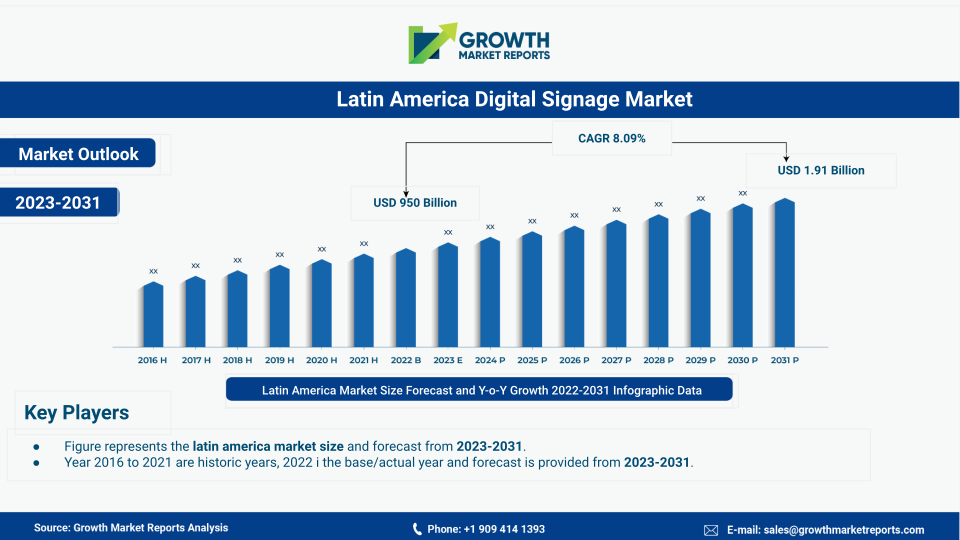
The key players competing in the Latin America digital signage are Panasonic Corporation, SAMSUNG Electronics Co. Ltd.; 3M Corporation; LG Display Co. Ltd.; and Sony Corporation.
In October 2020, Telelogos a software supplier company of media, digital signage, and linked devices, extended its existence in Latin America by initialing an office in Mexico City.
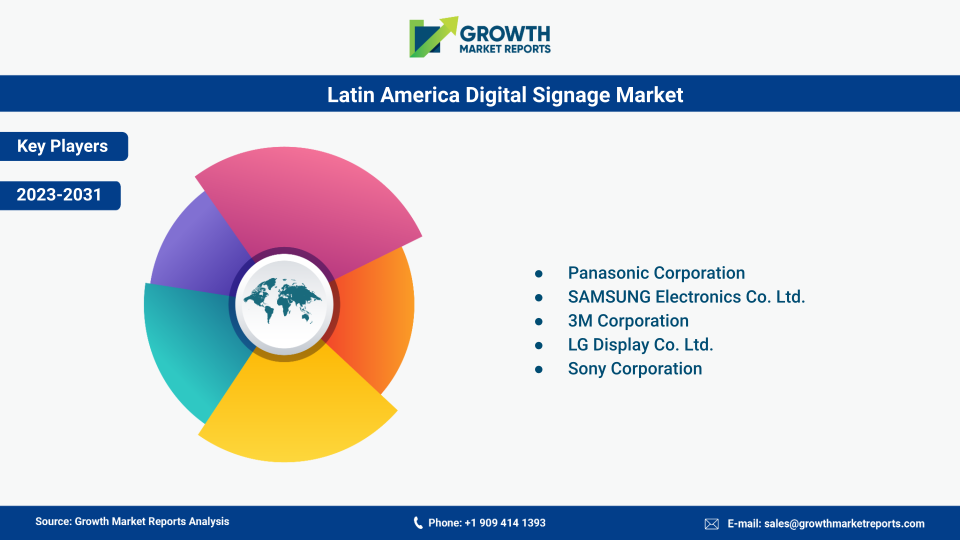
Major companies include Samsung Electronics, LG Electronics, NEC Corporation, Sony, Panasonic, Sharp, Planar Systems, Scala (STRATACACHE), Cisco Systems, and several others.
Challenges include high initial investment costs, integration complexity with existing IT systems, ongoing maintenance needs, and content management requirements.
Screen sizes are segmented into below 32 inches, 32–52 inches, and above 52 inches. The 32–52 inch range is most widely adopted, while large-format displays above 52 inches are used for high-impact applications like video walls and billboards.
Popular display types include video walls, standalone displays, kiosks, menu boards, and specialized solutions like interactive whiteboards and transparent displays.
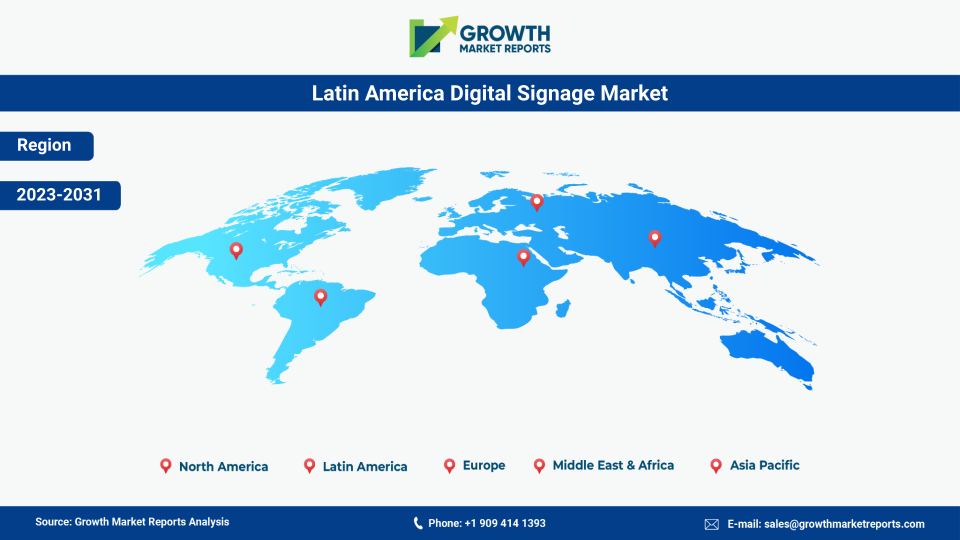
Asia Pacific is the fastest-growing region, while North America holds the largest market share. Europe, Latin America, and the Middle East & Africa are also experiencing significant growth.
AI is enabling content personalization, audience measurement, and real-time analytics, helping organizations optimize messaging, improve engagement, and maximize ROI.
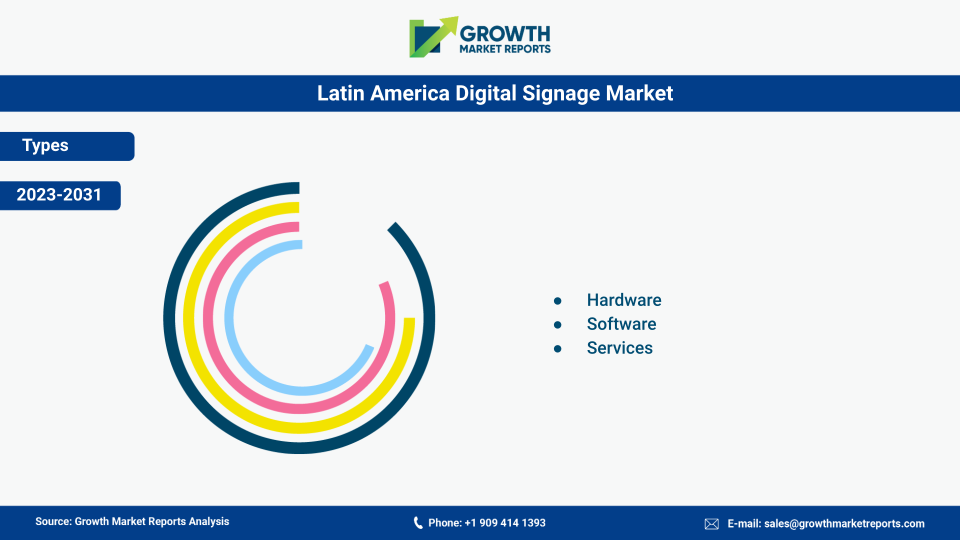
The market is segmented into hardware (displays, media players, mounts), software (content management, analytics), and services (installation, maintenance, content development, consulting).
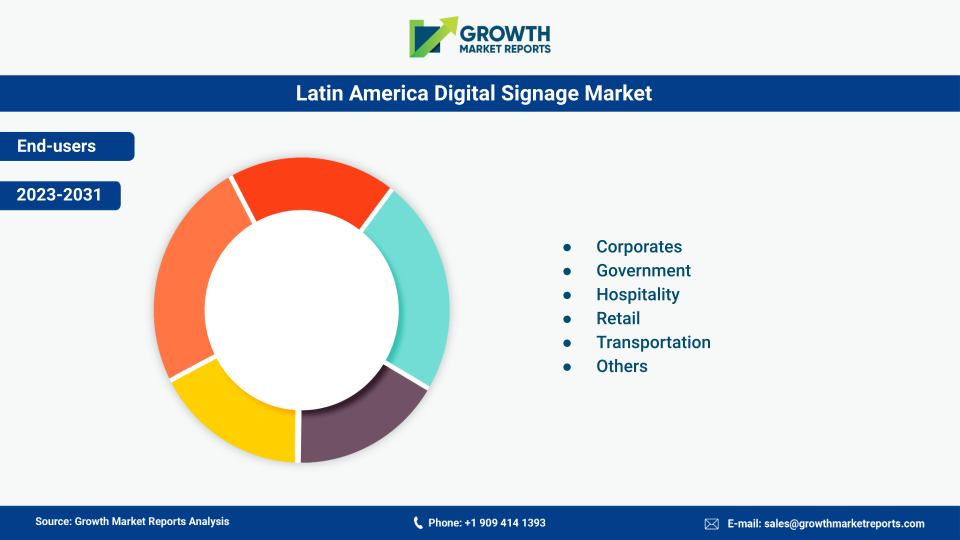
Major industries using digital signage include retail, transportation, healthcare, hospitality, education, corporate, and entertainment sectors.
Key growth drivers include rapid digital transformation across industries, increasing adoption of digital displays for advertising and information, advancements in display and content management technologies, and the integration of AI and analytics.
The global digital signage market reached USD 25.1 billion in 2024 and is projected to grow at a CAGR of 7.2% from 2025 to 2033, reaching USD 47.1 billion by 2033.