Pergolas Market Research Report 2033

Pergolas Market Research Report 2033

Segments - by Product Type (Freestanding Pergolas, Attached Pergolas, Retractable Pergolas, Others), by Material (Wood, Metal, Vinyl, Fiberglass, Others), by Application (Residential, Commercial, Others), by Distribution Channel (Online, Offline)

https://growthmarketreports.com/Raksha
Author : Raksha Sharma
https://growthmarketreports.com/Vaibhav
Fact-checked by : V. Chandola
https://growthmarketreports.com/Rucha
Editor : Rucha Phatak

Upcoming | Report ID :CM-5456 | 4.6 Rating | 62 Reviews | 273 Pages | Format : Docx PDF

Report Description


Pergolas Market Outlook

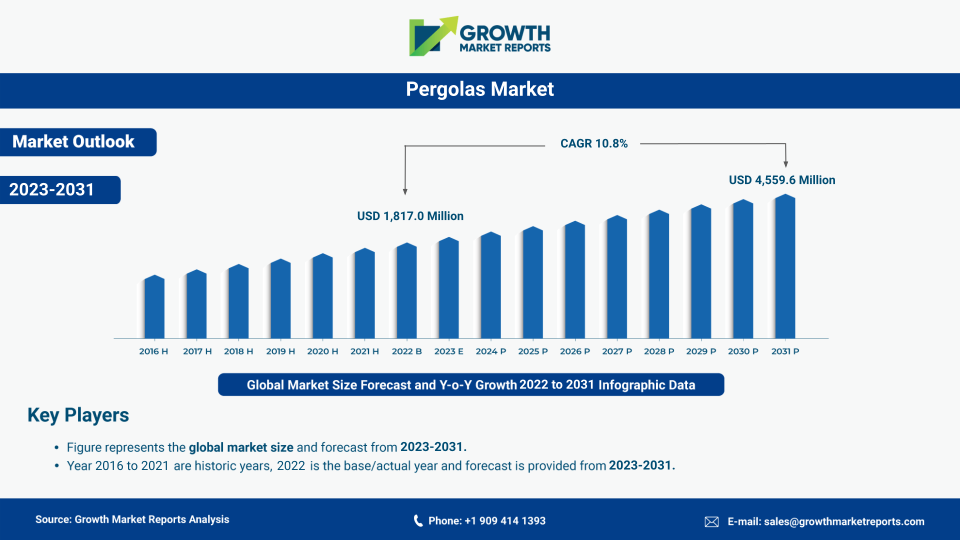
According to our latest research, the global pergolas market size in 2024 stands at USD 2.7 billion, reflecting a robust surge driven by increasing demand for outdoor living enhancements. The market is projected to reach USD 5.1 billion by 2033, expanding at a notable CAGR of 7.2% during the forecast period. This growth is attributed to rising consumer interest in outdoor aesthetics, the increasing popularity of home improvement projects, and the expansion of hospitality and commercial sectors globally.

A significant growth factor in the pergolas market is the rapid urbanization and changing lifestyle preferences, particularly in developed economies. With more individuals seeking to maximize their outdoor spaces for relaxation and entertainment, the demand for pergolas as both functional and decorative structures has seen a sharp increase. The integration of advanced materials and customizable designs has further fueled this trend, enabling homeowners to tailor pergolas to their unique aesthetic and functional requirements. As urban populations continue to grow, the need for private, comfortable outdoor spaces is expected to remain a key driver of market expansion.

Another critical driver is the increasing adoption of pergolas in the commercial sector, especially within the hospitality industry. Hotels, resorts, cafes, and restaurants are investing in high-quality outdoor structures to enhance guest experiences and boost their competitive edge. Pergolas offer versatile solutions for outdoor dining, lounging, and event spaces, which are highly valued in the post-pandemic era where open-air environments are preferred. This commercial uptake is further supported by advancements in retractable and weather-resistant pergola designs, which provide year-round usability and durability, making them attractive investments for business owners.

The surge in e-commerce and digital marketing has also played a pivotal role in the pergolas market's growth. Online platforms have made it easier for consumers to access a wide range of pergola products, compare features, and make informed purchasing decisions. The convenience of online shopping, coupled with virtual design tools and augmented reality applications, allows customers to visualize pergolas in their own spaces before purchasing. This digital transformation not only broadens market reach but also fosters greater customer engagement and satisfaction, further propelling market growth.

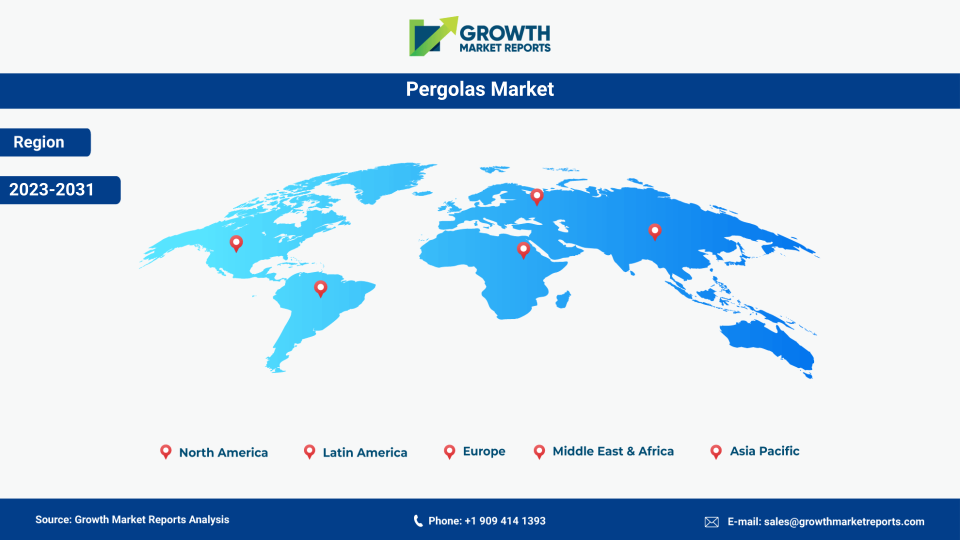
Regionally, North America continues to dominate the pergolas market, accounting for the largest share in 2024, followed closely by Europe and the Asia Pacific. The North American market benefits from a strong culture of outdoor living and home improvement, as well as high disposable incomes. In contrast, the Asia Pacific region is experiencing the fastest growth, driven by rising urbanization, increasing middle-class incomes, and expanding real estate development. Europe maintains a significant share due to its established tradition of garden landscaping and outdoor leisure spaces. Meanwhile, Latin America and the Middle East & Africa are emerging as promising markets, supported by growing tourism and hospitality investments.

Global Pergolas Industry Outlook

Product Type Analysis

The pergolas market is segmented by product type into freestanding pergolas, attached pergolas, retractable pergolas, and others. Freestanding pergolas are experiencing strong demand due to their versatility and ability to be placed virtually anywhere in a yard or garden. These structures are particularly popular among homeowners seeking to create independent outdoor living areas, such as garden lounges or poolside retreats. The flexibility of freestanding pergolas allows for a wide range of design options, making them a favored choice for both residential and commercial customers. As outdoor living trends continue to gain traction, the freestanding segment is expected to maintain its leading position in the market.

Attached pergolas, which are connected to existing structures like homes or buildings, are also witnessing significant adoption. These pergolas are often chosen for their ability to seamlessly extend indoor living spaces into the outdoors, creating a harmonious transition between environments. Attached pergolas are especially popular in urban areas where space constraints make standalone structures less feasible. Their integration with patios, decks, and balconies enhances the usability of limited outdoor spaces, contributing to their growing market share. Technological advancements in mounting systems and weatherproofing materials have further increased the appeal of attached pergolas, making them a practical and attractive option for modern homes and businesses.

Retractable pergolas represent a rapidly growing segment, driven by consumer demand for flexibility and convenience. Featuring adjustable canopies or louvered roofs, retractable pergolas allow users to control sunlight and shade, adapting to changing weather conditions and personal preferences. This functionality is particularly valued in commercial settings such as restaurants and cafes, where maximizing outdoor seating capacity is crucial. The integration of smart automation systems, including remote controls and weather sensors, has further enhanced the user experience, positioning retractable pergolas as a premium offering in the market. As technology continues to evolve, the retractable segment is expected to witness substantial growth over the forecast period.

The "others" category encompasses a variety of specialized pergola designs, including arched, modular, and hybrid structures. These products cater to niche markets and specific architectural styles, offering unique aesthetic and functional benefits. While their market share is comparatively smaller, the demand for customized and innovative pergola solutions is on the rise, particularly among high-end residential and commercial clients. Manufacturers are responding by expanding their product portfolios and offering bespoke design services, further diversifying the market landscape and driving incremental growth in this segment.

Report Scope

Attributes Details
Report Title Pergolas Market Research Report 2033
By Product Type Freestanding Pergolas, Attached Pergolas, Retractable Pergolas, Others
By Material Wood, Metal, Vinyl, Fiberglass, Others
By Application Residential, Commercial, Others
By Distribution Channel Online, Offline
Regions Covered North America, Europe, APAC, Latin America, MEA
Base Year 2024
Historic Data 2018-2023
Forecast Period 2025-2033
Number of Pages 273
Number of Tables & Figures 348
Customization Available Yes, the report can be customized as per your need.

Material Analysis

The choice of material is a crucial factor influencing the durability, aesthetics, and maintenance requirements of pergolas. Wooden pergolas have traditionally dominated the market, prized for their natural beauty, versatility, and ability to blend seamlessly with outdoor landscapes. Popular wood types include cedar, redwood, and pressure-treated pine, each offering distinct advantages in terms of appearance and resistance to weathering. Despite the higher maintenance needs associated with wood, such as periodic sealing and staining, the timeless appeal and customization options continue to drive strong demand for wooden pergolas, especially in residential applications.

Metal pergolas, particularly those made from aluminum and steel, are gaining traction due to their superior strength, longevity, and low maintenance requirements. Aluminum pergolas, in particular, are lightweight, rust-resistant, and available in a wide range of finishes, making them suitable for both modern and traditional settings. Steel pergolas are favored for their robustness and ability to support larger, more elaborate structures. The growing trend toward contemporary outdoor designs has further boosted the popularity of metal pergolas, especially in commercial and urban environments where durability and sleek aesthetics are paramount.

Vinyl pergolas represent a cost-effective and low-maintenance alternative to traditional materials. Made from high-quality PVC, vinyl pergolas are resistant to rot, insect damage, and fading, making them ideal for regions with harsh climates. Their ease of installation and minimal upkeep requirements appeal to budget-conscious homeowners and property managers. While vinyl pergolas may lack the natural charm of wood, advancements in manufacturing have enabled the production of realistic wood-grain textures and a variety of color options, expanding their appeal across different market segments.

Fiberglass pergolas are emerging as a premium choice, offering exceptional durability, lightweight construction, and resistance to environmental factors. Fiberglass is impervious to moisture, insects, and UV radiation, ensuring long-lasting performance with minimal maintenance. These attributes make fiberglass pergolas particularly suitable for coastal regions and commercial applications where exposure to the elements is a concern. Although fiberglass pergolas command a higher price point, their long-term value proposition and design flexibility are attracting a growing customer base, especially among discerning homeowners and upscale commercial establishments.

The "others" category in the material segment includes innovative composites and hybrid materials that combine the best attributes of traditional options. These materials are designed to offer enhanced performance, sustainability, and aesthetic versatility, catering to evolving consumer preferences. As environmental consciousness grows, the demand for eco-friendly and recyclable materials is expected to rise, prompting manufacturers to invest in research and development of sustainable pergola solutions. This ongoing innovation is likely to shape the future landscape of the pergolas market, offering new opportunities for growth and differentiation.

Application Analysis

The pergolas market is broadly segmented by application into residential, commercial, and others. The residential segment accounts for the largest share, driven by the growing popularity of outdoor living spaces and home improvement projects. Homeowners are increasingly investing in pergolas to create functional and aesthetically pleasing areas for relaxation, dining, and entertainment. The trend toward personalized outdoor environments, coupled with rising disposable incomes and favorable housing market conditions, continues to fuel demand in the residential sector. Additionally, the availability of DIY kits and easy-to-install models has made pergolas more accessible to a wider range of consumers, further bolstering market growth.

The commercial segment is witnessing significant growth, particularly in the hospitality, retail, and corporate sectors. Hotels, resorts, restaurants, and cafes are incorporating pergolas into their outdoor spaces to enhance guest experiences, provide shade, and increase seating capacity. Pergolas are also being used in office complexes, shopping centers, and public parks to create inviting communal areas and improve the overall ambiance. The emphasis on wellness, outdoor workspaces, and social distancing in the post-pandemic era has accelerated the adoption of pergolas in commercial settings. Customization options, advanced materials, and integrated lighting and heating solutions are further driving demand in this segment.

The "others" application segment encompasses a diverse range of uses, including educational institutions, healthcare facilities, and recreational centers. Schools and universities are installing pergolas to create shaded outdoor classrooms and gathering spaces, while hospitals and clinics are using them to enhance patient and visitor comfort in outdoor waiting areas. Recreational centers and community parks are leveraging pergolas to provide sheltered seating, picnic areas, and event spaces. The versatility of pergolas, combined with their ability to enhance the functionality and aesthetics of various environments, is contributing to their growing adoption across a wide array of applications.

Distribution Channel Analysis

The distribution landscape for the pergolas market is segmented into online and offline channels, each playing a critical role in shaping consumer access and purchasing behavior. Offline channels, including specialty home improvement stores, garden centers, and building material suppliers, have historically dominated the market. These outlets offer customers the advantage of physical product inspection, expert guidance, and personalized service, which are particularly valuable for high-involvement purchases like pergolas. The presence of established retail networks and partnerships with contractors and landscapers further strengthens the position of offline channels, especially in regions where digital penetration is lower.

Online distribution channels are rapidly gaining traction, driven by the digitalization of retail and changing consumer preferences. E-commerce platforms and manufacturer websites provide customers with convenient access to a wide range of pergola products, detailed specifications, and customer reviews. The ability to compare prices, customize designs, and visualize products using virtual tools has revolutionized the purchasing process, making it easier for consumers to make informed decisions from the comfort of their homes. The COVID-19 pandemic accelerated the shift toward online shopping, and this trend is expected to persist, with online channels capturing an increasing share of the market in the coming years.

Manufacturers and retailers are adopting an omnichannel approach to maximize market reach and enhance customer experience. This strategy involves integrating online and offline channels to offer seamless purchasing journeys, including options for in-store pickup, home delivery, and after-sales support. The use of digital marketing, social media, and influencer partnerships is also helping brands to engage with a broader audience and drive awareness of new products and innovations. As consumer expectations continue to evolve, the ability to offer a cohesive and convenient shopping experience across multiple channels will be a key differentiator in the competitive pergolas market.

The increasing role of online channels is also fostering greater price transparency and competition among manufacturers and retailers. Customers benefit from access to a wider selection of products and the ability to compare offerings from different brands. This heightened competition is driving innovation, improved customer service, and competitive pricing, all of which contribute to overall market growth. However, the importance of offline channels remains significant, particularly for complex or customized projects that require professional consultation and installation services.

Opportunities & Threats

The pergolas market presents a multitude of growth opportunities, particularly in the realm of product innovation and customization. As consumer preferences shift toward personalized outdoor living spaces, manufacturers have the chance to differentiate their offerings through unique designs, advanced materials, and integrated smart features. The growing interest in sustainable and eco-friendly products also opens avenues for the development of pergolas made from recycled or renewable materials, catering to environmentally conscious consumers. Furthermore, the expansion of the hospitality and commercial sectors, especially in emerging markets, provides significant opportunities for market penetration and revenue growth. Strategic partnerships with architects, landscapers, and real estate developers can further enhance market reach and drive adoption across diverse application segments.

Digital transformation and the rise of e-commerce represent another major opportunity for the pergolas market. The increasing use of virtual design tools, augmented reality applications, and online customization platforms enables manufacturers and retailers to engage with customers in new and innovative ways. By leveraging data analytics and customer insights, companies can tailor their marketing strategies, optimize product offerings, and deliver personalized experiences that drive brand loyalty and repeat business. The integration of smart technologies, such as automated shading systems and weather sensors, also offers the potential to capture premium market segments and address evolving consumer needs for convenience, comfort, and energy efficiency.

Despite the positive outlook, the pergolas market faces several restraining factors that could impact growth. One of the primary challenges is the high initial investment required for quality pergola installations, particularly those made from premium materials or featuring advanced automation systems. This cost barrier can deter price-sensitive consumers, especially in developing regions where disposable incomes are lower. Additionally, the market is subject to fluctuations in raw material prices, supply chain disruptions, and regulatory requirements related to construction and outdoor structures. Manufacturers must navigate these challenges by optimizing production processes, managing costs, and ensuring compliance with local building codes and standards to maintain competitiveness and sustain long-term growth.

Regional Outlook

North America leads the global pergolas market, accounting for a market size of USD 1.1 billion in 2024. The region's dominance is fueled by a strong culture of outdoor living, high rates of homeownership, and significant investments in home improvement and landscaping projects. The United States, in particular, represents the largest individual market, supported by favorable economic conditions, a well-established construction industry, and widespread adoption of new trends in outdoor design. Canada also contributes to regional growth, driven by increasing urbanization and a growing emphasis on sustainable outdoor spaces. The North American market is characterized by a high degree of product innovation and a competitive landscape, with both established brands and emerging players vying for market share.

Europe is the second-largest regional market, with a value of USD 800 million in 2024 and a projected CAGR of 6.8% through 2033. The region's rich tradition of garden landscaping, coupled with a strong focus on sustainability and design, underpins steady demand for pergolas. Countries such as the United Kingdom, Germany, France, and Italy are key contributors, benefiting from mature real estate markets and a growing preference for outdoor leisure spaces. The European market is also witnessing increased adoption of innovative materials and smart technologies, as consumers seek to enhance the functionality and energy efficiency of their outdoor environments. Regulatory support for green building practices and urban greening initiatives further bolsters market growth across the region.

The Asia Pacific region is experiencing the fastest growth in the pergolas market, with a market size of USD 500 million in 2024 and an anticipated double-digit CAGR over the forecast period. Rapid urbanization, rising disposable incomes, and expanding middle-class populations are driving demand for outdoor living solutions in countries such as China, India, Australia, and Japan. The region's booming real estate and hospitality sectors, coupled with increasing awareness of outdoor aesthetics and wellness, are creating new opportunities for market expansion. Latin America and the Middle East & Africa, with market sizes of USD 200 million and USD 100 million respectively, are emerging as promising markets, supported by growing tourism, infrastructure development, and investments in commercial and residential construction.

Pergolas Market Statistics

Competitor Outlook

The competitive landscape of the pergolas market is characterized by a mix of established global players, regional manufacturers, and niche specialty firms. Leading companies are focused on product innovation, quality enhancement, and strategic partnerships to maintain their competitive edge. The market is highly fragmented, with numerous players offering a diverse range of products tailored to different customer segments and regional preferences. Intense competition has spurred continuous advancements in materials, design, and technology, resulting in a dynamic and rapidly evolving market environment. Companies are also investing in brand building, digital marketing, and customer service to differentiate themselves and capture a larger share of the market.

Strategic collaborations with architects, landscape designers, and construction firms are becoming increasingly common as companies seek to expand their reach and influence in both residential and commercial segments. These partnerships enable manufacturers to offer comprehensive solutions that integrate pergolas with other outdoor living elements, such as decks, patios, and landscaping features. Customization and personalization are key differentiators, with leading brands offering a wide array of design options, finishes, and accessories to meet the unique needs of their customers. The adoption of sustainable practices and eco-friendly materials is also gaining traction, as companies respond to growing environmental awareness and regulatory pressures.

The rise of e-commerce and digital platforms has intensified competition by lowering barriers to entry and enabling smaller players to reach a global audience. Online marketplaces and manufacturer websites provide customers with access to a vast selection of products, fostering price transparency and informed decision-making. To stay ahead, major players are leveraging digital tools and analytics to optimize their supply chains, enhance customer engagement, and streamline the purchasing process. The integration of smart technologies, such as automated shading systems and remote controls, is further driving differentiation and enabling companies to tap into premium market segments.

Some of the major companies operating in the global pergolas market include Structureworks Fabrication LLC, TEMO Inc., Renaissance Patio Products Inc., The Outdoor GreatRoom Company, Renson Outdoor, Toja Grid, Solisysteme, and Alumawood. Structureworks Fabrication LLC is known for its high-quality custom pergolas and innovative design solutions, catering to both residential and commercial clients. TEMO Inc. specializes in durable, low-maintenance pergolas made from advanced materials, with a strong focus on the North American market. Renaissance Patio Products Inc. offers a wide range of aluminum pergolas with customizable features and integrated lighting options. The Outdoor GreatRoom Company is recognized for its stylish and functional outdoor living products, including pergolas, fire pits, and furniture. Renson Outdoor is a leading European brand, renowned for its premium retractable and louvered pergola systems. Toja Grid has gained popularity for its modular, DIY-friendly pergola kits, appealing to a younger, design-savvy demographic. Solisysteme and Alumawood are also prominent players, offering innovative products and expanding their presence in key international markets. Collectively, these companies are shaping the future of the pergolas market through continuous innovation, customer-centric strategies, and a commitment to quality and sustainability.

Key Players

  • TEMO Sunrooms
  • Renson
  • Cospicon SA
  • Alumil
  • Solisysteme
  • Azenco Group
  • Palmiye Global
  • Gibus
  • ShadeFX
  • Mitjavila
  • KE Outdoor Design
  • Corradi S.p.A.
  • Hunter Douglas
  • Brustor
  • Biossun
  • Retractableawnings.com
  • Sunair Awnings
  • Markilux
  • Schanz Rollladensysteme
  • Aalta Australia
Pergolas Market Overview

Segments

The Pergolas market has been segmented on the basis of

Product Type

  • Freestanding Pergolas
  • Attached Pergolas
  • Retractable Pergolas
  • Others

Material

  • Wood
  • Metal
  • Vinyl
  • Fiberglass
  • Others

Application

  • Residential
  • Commercial
  • Others

Distribution Channel

  • Online
  • Offline

Competitive Landscape

  • Manufacturers operating in the global Pergolas market are Americana Outdoors Inc., Backyard Discovery, Baldwin Pergola, Coolaroo, Gibus SpA, KE USA Inc., Patio King, Inc., Solisysteme, Vita, VOGUE PERGOLAS, and Yardistry.

  • Market players are pursuing strategies such as acquisitions, product launches, collaborations, and geographic expansion to leverage untapped opportunities in the global Pergolas market.
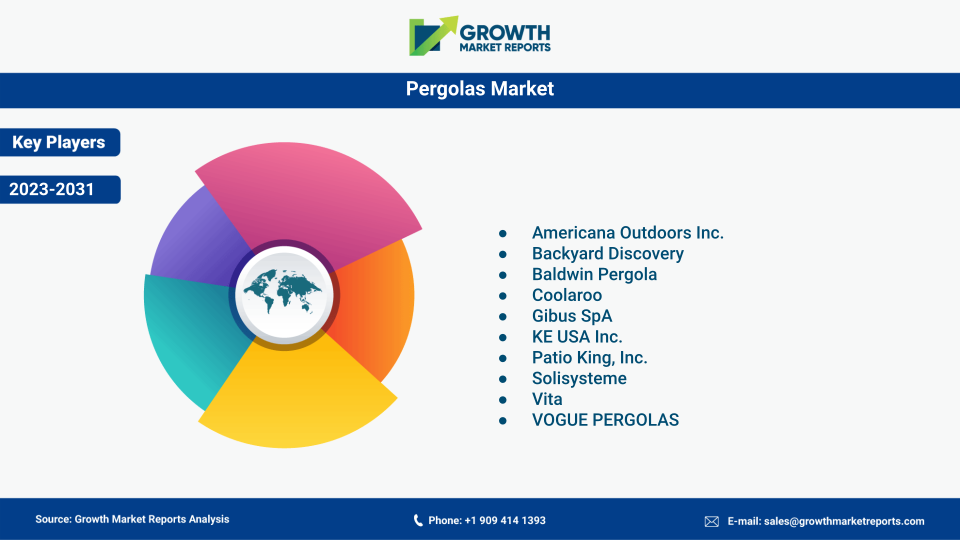

    Pergolas Market Key Players

Frequently Asked Questions

Opportunities include product innovation, eco-friendly materials, and digital transformation. Challenges involve high initial costs, raw material price fluctuations, supply chain issues, and regulatory requirements.

Major players include Structureworks Fabrication LLC, TEMO Inc., Renaissance Patio Products Inc., The Outdoor GreatRoom Company, Renson Outdoor, Toja Grid, Solisysteme, Alumawood, and several others.

Trends include customizable and smart pergola systems, integration of weather-resistant and sustainable materials, digital marketing, virtual design tools, and the adoption of automated shading and lighting solutions.

Pergolas are distributed through both offline channels (home improvement stores, garden centers) and online channels (e-commerce platforms, manufacturer websites). An omnichannel approach is increasingly common to enhance customer experience.

Pergolas are primarily used in residential settings for outdoor living, dining, and entertainment. Commercial applications include hospitality, retail, and public spaces, while other uses span educational, healthcare, and recreational facilities.

Common materials include wood (natural beauty, customizable), metal (durability, low maintenance), vinyl (cost-effective, weather-resistant), fiberglass (premium, lightweight, long-lasting), and innovative composites for enhanced sustainability.

The market is segmented into freestanding pergolas, attached pergolas, retractable pergolas, and other specialized designs such as arched, modular, and hybrid structures.

North America currently dominates the pergolas market, followed by Europe and Asia Pacific. The fastest growth is expected in the Asia Pacific region due to rapid urbanization and rising middle-class incomes.

Key growth drivers include increasing demand for outdoor living enhancements, urbanization, changing lifestyle preferences, the popularity of home improvement projects, and expansion in the hospitality and commercial sectors.

As of 2024, the global pergolas market is valued at USD 2.7 billion and is projected to reach USD 5.1 billion by 2033, growing at a CAGR of 7.2%.

Table Of Content

Chapter 1 Executive Summary
Chapter 2 Assumptions and Acronyms Used
Chapter 3 Research Methodology
Chapter 4 Pergolas Market Overview
   4.1 Introduction
      4.1.1 Market Taxonomy
      4.1.2 Market Definition
      4.1.3 Macro-Economic Factors Impacting the Market Growth
   4.2 Pergolas Market Dynamics
      4.2.1 Market Drivers
      4.2.2 Market Restraints
      4.2.3 Market Opportunity
   4.3 Pergolas Market - Supply Chain Analysis
      4.3.1 List of Key Suppliers
      4.3.2 List of Key Distributors
      4.3.3 List of Key Consumers
   4.4 Key Forces Shaping the Pergolas Market
      4.4.1 Bargaining Power of Suppliers
      4.4.2 Bargaining Power of Buyers
      4.4.3 Threat of Substitution
      4.4.4 Threat of New Entrants
      4.4.5 Competitive Rivalry
   4.5 Global Pergolas Market Size & Forecast, 2023-2032
      4.5.1 Pergolas Market Size and Y-o-Y Growth
      4.5.2 Pergolas Market Absolute $ Opportunity

Chapter 5 Global Pergolas Market Analysis and Forecast By Product Type
   5.1 Introduction
      5.1.1 Key Market Trends & Growth Opportunities By Product Type
      5.1.2 Basis Point Share (BPS) Analysis By Product Type
      5.1.3 Absolute $ Opportunity Assessment By Product Type
   5.2 Pergolas Market Size Forecast By Product Type
      5.2.1 Freestanding Pergolas
      5.2.2 Attached Pergolas
      5.2.3 Retractable Pergolas
      5.2.4 Others
   5.3 Market Attractiveness Analysis By Product Type

Chapter 6 Global Pergolas Market Analysis and Forecast By Material
   6.1 Introduction
      6.1.1 Key Market Trends & Growth Opportunities By Material
      6.1.2 Basis Point Share (BPS) Analysis By Material
      6.1.3 Absolute $ Opportunity Assessment By Material
   6.2 Pergolas Market Size Forecast By Material
      6.2.1 Wood
      6.2.2 Metal
      6.2.3 Vinyl
      6.2.4 Fiberglass
      6.2.5 Others
   6.3 Market Attractiveness Analysis By Material

Chapter 7 Global Pergolas Market Analysis and Forecast By Application
   7.1 Introduction
      7.1.1 Key Market Trends & Growth Opportunities By Application
      7.1.2 Basis Point Share (BPS) Analysis By Application
      7.1.3 Absolute $ Opportunity Assessment By Application
   7.2 Pergolas Market Size Forecast By Application
      7.2.1 Residential
      7.2.2 Commercial
      7.2.3 Others
   7.3 Market Attractiveness Analysis By Application

Chapter 8 Global Pergolas Market Analysis and Forecast By Distribution Channel
   8.1 Introduction
      8.1.1 Key Market Trends & Growth Opportunities By Distribution Channel
      8.1.2 Basis Point Share (BPS) Analysis By Distribution Channel
      8.1.3 Absolute $ Opportunity Assessment By Distribution Channel
   8.2 Pergolas Market Size Forecast By Distribution Channel
      8.2.1 Online
      8.2.2 Offline
   8.3 Market Attractiveness Analysis By Distribution Channel

Chapter 9 Global Pergolas Market Analysis and Forecast by Region
   9.1 Introduction
      9.1.1 Key Market Trends & Growth Opportunities By Region
      9.1.2 Basis Point Share (BPS) Analysis By Region
      9.1.3 Absolute $ Opportunity Assessment By Region
   9.2 Pergolas Market Size Forecast By Region
      9.2.1 North America
      9.2.2 Europe
      9.2.3 Asia Pacific
      9.2.4 Latin America
      9.2.5 Middle East & Africa (MEA)
   9.3 Market Attractiveness Analysis By Region

Chapter 10 Coronavirus Disease (COVID-19) Impact 
   10.1 Introduction 
   10.2 Current & Future Impact Analysis 
   10.3 Economic Impact Analysis 
   10.4 Government Policies 
   10.5 Investment Scenario

Chapter 11 North America Pergolas Analysis and Forecast
   11.1 Introduction
   11.2 North America Pergolas Market Size Forecast by Country
      11.2.1 U.S.
      11.2.2 Canada
   11.3 Basis Point Share (BPS) Analysis by Country
   11.4 Absolute $ Opportunity Assessment by Country
   11.5 Market Attractiveness Analysis by Country
   11.6 North America Pergolas Market Size Forecast By Product Type
      11.6.1 Freestanding Pergolas
      11.6.2 Attached Pergolas
      11.6.3 Retractable Pergolas
      11.6.4 Others
   11.7 Basis Point Share (BPS) Analysis By Product Type 
   11.8 Absolute $ Opportunity Assessment By Product Type 
   11.9 Market Attractiveness Analysis By Product Type
   11.10 North America Pergolas Market Size Forecast By Material
      11.10.1 Wood
      11.10.2 Metal
      11.10.3 Vinyl
      11.10.4 Fiberglass
      11.10.5 Others
   11.11 Basis Point Share (BPS) Analysis By Material 
   11.12 Absolute $ Opportunity Assessment By Material 
   11.13 Market Attractiveness Analysis By Material
   11.14 North America Pergolas Market Size Forecast By Application
      11.14.1 Residential
      11.14.2 Commercial
      11.14.3 Others
   11.15 Basis Point Share (BPS) Analysis By Application 
   11.16 Absolute $ Opportunity Assessment By Application 
   11.17 Market Attractiveness Analysis By Application
   11.18 North America Pergolas Market Size Forecast By Distribution Channel
      11.18.1 Online
      11.18.2 Offline
   11.19 Basis Point Share (BPS) Analysis By Distribution Channel 
   11.20 Absolute $ Opportunity Assessment By Distribution Channel 
   11.21 Market Attractiveness Analysis By Distribution Channel

Chapter 12 Europe Pergolas Analysis and Forecast
   12.1 Introduction
   12.2 Europe Pergolas Market Size Forecast by Country
      12.2.1 Germany
      12.2.2 France
      12.2.3 Italy
      12.2.4 U.K.
      12.2.5 Spain
      12.2.6 Russia
      12.2.7 Rest of Europe
   12.3 Basis Point Share (BPS) Analysis by Country
   12.4 Absolute $ Opportunity Assessment by Country
   12.5 Market Attractiveness Analysis by Country
   12.6 Europe Pergolas Market Size Forecast By Product Type
      12.6.1 Freestanding Pergolas
      12.6.2 Attached Pergolas
      12.6.3 Retractable Pergolas
      12.6.4 Others
   12.7 Basis Point Share (BPS) Analysis By Product Type 
   12.8 Absolute $ Opportunity Assessment By Product Type 
   12.9 Market Attractiveness Analysis By Product Type
   12.10 Europe Pergolas Market Size Forecast By Material
      12.10.1 Wood
      12.10.2 Metal
      12.10.3 Vinyl
      12.10.4 Fiberglass
      12.10.5 Others
   12.11 Basis Point Share (BPS) Analysis By Material 
   12.12 Absolute $ Opportunity Assessment By Material 
   12.13 Market Attractiveness Analysis By Material
   12.14 Europe Pergolas Market Size Forecast By Application
      12.14.1 Residential
      12.14.2 Commercial
      12.14.3 Others
   12.15 Basis Point Share (BPS) Analysis By Application 
   12.16 Absolute $ Opportunity Assessment By Application 
   12.17 Market Attractiveness Analysis By Application
   12.18 Europe Pergolas Market Size Forecast By Distribution Channel
      12.18.1 Online
      12.18.2 Offline
   12.19 Basis Point Share (BPS) Analysis By Distribution Channel 
   12.20 Absolute $ Opportunity Assessment By Distribution Channel 
   12.21 Market Attractiveness Analysis By Distribution Channel

Chapter 13 Asia Pacific Pergolas Analysis and Forecast
   13.1 Introduction
   13.2 Asia Pacific Pergolas Market Size Forecast by Country
      13.2.1 China
      13.2.2 Japan
      13.2.3 South Korea
      13.2.4 India
      13.2.5 Australia
      13.2.6 South East Asia (SEA)
      13.2.7 Rest of Asia Pacific (APAC)
   13.3 Basis Point Share (BPS) Analysis by Country
   13.4 Absolute $ Opportunity Assessment by Country
   13.5 Market Attractiveness Analysis by Country
   13.6 Asia Pacific Pergolas Market Size Forecast By Product Type
      13.6.1 Freestanding Pergolas
      13.6.2 Attached Pergolas
      13.6.3 Retractable Pergolas
      13.6.4 Others
   13.7 Basis Point Share (BPS) Analysis By Product Type 
   13.8 Absolute $ Opportunity Assessment By Product Type 
   13.9 Market Attractiveness Analysis By Product Type
   13.10 Asia Pacific Pergolas Market Size Forecast By Material
      13.10.1 Wood
      13.10.2 Metal
      13.10.3 Vinyl
      13.10.4 Fiberglass
      13.10.5 Others
   13.11 Basis Point Share (BPS) Analysis By Material 
   13.12 Absolute $ Opportunity Assessment By Material 
   13.13 Market Attractiveness Analysis By Material
   13.14 Asia Pacific Pergolas Market Size Forecast By Application
      13.14.1 Residential
      13.14.2 Commercial
      13.14.3 Others
   13.15 Basis Point Share (BPS) Analysis By Application 
   13.16 Absolute $ Opportunity Assessment By Application 
   13.17 Market Attractiveness Analysis By Application
   13.18 Asia Pacific Pergolas Market Size Forecast By Distribution Channel
      13.18.1 Online
      13.18.2 Offline
   13.19 Basis Point Share (BPS) Analysis By Distribution Channel 
   13.20 Absolute $ Opportunity Assessment By Distribution Channel 
   13.21 Market Attractiveness Analysis By Distribution Channel

Chapter 14 Latin America Pergolas Analysis and Forecast
   14.1 Introduction
   14.2 Latin America Pergolas Market Size Forecast by Country
      14.2.1 Brazil
      14.2.2 Mexico
      14.2.3 Rest of Latin America (LATAM)
   14.3 Basis Point Share (BPS) Analysis by Country
   14.4 Absolute $ Opportunity Assessment by Country
   14.5 Market Attractiveness Analysis by Country
   14.6 Latin America Pergolas Market Size Forecast By Product Type
      14.6.1 Freestanding Pergolas
      14.6.2 Attached Pergolas
      14.6.3 Retractable Pergolas
      14.6.4 Others
   14.7 Basis Point Share (BPS) Analysis By Product Type 
   14.8 Absolute $ Opportunity Assessment By Product Type 
   14.9 Market Attractiveness Analysis By Product Type
   14.10 Latin America Pergolas Market Size Forecast By Material
      14.10.1 Wood
      14.10.2 Metal
      14.10.3 Vinyl
      14.10.4 Fiberglass
      14.10.5 Others
   14.11 Basis Point Share (BPS) Analysis By Material 
   14.12 Absolute $ Opportunity Assessment By Material 
   14.13 Market Attractiveness Analysis By Material
   14.14 Latin America Pergolas Market Size Forecast By Application
      14.14.1 Residential
      14.14.2 Commercial
      14.14.3 Others
   14.15 Basis Point Share (BPS) Analysis By Application 
   14.16 Absolute $ Opportunity Assessment By Application 
   14.17 Market Attractiveness Analysis By Application
   14.18 Latin America Pergolas Market Size Forecast By Distribution Channel
      14.18.1 Online
      14.18.2 Offline
   14.19 Basis Point Share (BPS) Analysis By Distribution Channel 
   14.20 Absolute $ Opportunity Assessment By Distribution Channel 
   14.21 Market Attractiveness Analysis By Distribution Channel

Chapter 15 Middle East & Africa (MEA) Pergolas Analysis and Forecast
   15.1 Introduction
   15.2 Middle East & Africa (MEA) Pergolas Market Size Forecast by Country
      15.2.1 Saudi Arabia
      15.2.2 South Africa
      15.2.3 UAE
      15.2.4 Rest of Middle East & Africa (MEA)
   15.3 Basis Point Share (BPS) Analysis by Country
   15.4 Absolute $ Opportunity Assessment by Country
   15.5 Market Attractiveness Analysis by Country
   15.6 Middle East & Africa (MEA) Pergolas Market Size Forecast By Product Type
      15.6.1 Freestanding Pergolas
      15.6.2 Attached Pergolas
      15.6.3 Retractable Pergolas
      15.6.4 Others
   15.7 Basis Point Share (BPS) Analysis By Product Type 
   15.8 Absolute $ Opportunity Assessment By Product Type 
   15.9 Market Attractiveness Analysis By Product Type
   15.10 Middle East & Africa (MEA) Pergolas Market Size Forecast By Material
      15.10.1 Wood
      15.10.2 Metal
      15.10.3 Vinyl
      15.10.4 Fiberglass
      15.10.5 Others
   15.11 Basis Point Share (BPS) Analysis By Material 
   15.12 Absolute $ Opportunity Assessment By Material 
   15.13 Market Attractiveness Analysis By Material
   15.14 Middle East & Africa (MEA) Pergolas Market Size Forecast By Application
      15.14.1 Residential
      15.14.2 Commercial
      15.14.3 Others
   15.15 Basis Point Share (BPS) Analysis By Application 
   15.16 Absolute $ Opportunity Assessment By Application 
   15.17 Market Attractiveness Analysis By Application
   15.18 Middle East & Africa (MEA) Pergolas Market Size Forecast By Distribution Channel
      15.18.1 Online
      15.18.2 Offline
   15.19 Basis Point Share (BPS) Analysis By Distribution Channel 
   15.20 Absolute $ Opportunity Assessment By Distribution Channel 
   15.21 Market Attractiveness Analysis By Distribution Channel

Chapter 16 Competition Landscape 
   16.1 Pergolas Market: Competitive Dashboard
   16.2 Global Pergolas Market: Market Share Analysis, 2023
   16.3 Company Profiles (Details – Overview, Financials, Developments, Strategy) 
      16.3.1 TEMO Sunrooms
Renson
Cospicon SA
Alumil
Solisysteme
Azenco Group
Palmiye Global
Gibus
ShadeFX
Mitjavila
KE Outdoor Design
Corradi S.p.A.
Hunter Douglas
Brustor
Biossun
Retractableawnings.com
Sunair Awnings
Markilux
Schanz Rollladensysteme
Aalta Australia

Methodology

Our Clients

Nestle SA
Honda Motor Co. Ltd.
The John Holland Group
Pfizer
Deloitte
General Mills
Siemens Healthcare
General Electric