Ostomy Drainage Bags Market Research Report 2033

Ostomy Drainage Bags Market Research Report 2033

Segments - by Product Type (Colostomy Bags, Ileostomy Bags, Urostomy Bags, Others), by Usage (Single-use, Reusable), by System Type (One-piece Systems, Two-piece Systems), by End-User (Hospitals, Home Care Settings, Ambulatory Surgical Centers, Others), by Distribution Channel (Online Stores, Pharmacies, Others)

https://growthmarketreports.com/raksha
Author : Raksha Sharma
https://growthmarketreports.com/Vaibhav
Fact-checked by : V. Chandola
https://growthmarketreports.com/Shruti
Editor : Shruti Bhat

Upcoming | Report ID :HC-1233 | 4.2 Rating | 8 Reviews | 282 Pages | Format : Docx PDF

Report Description


Ostomy Drainage Bags Market Outlook

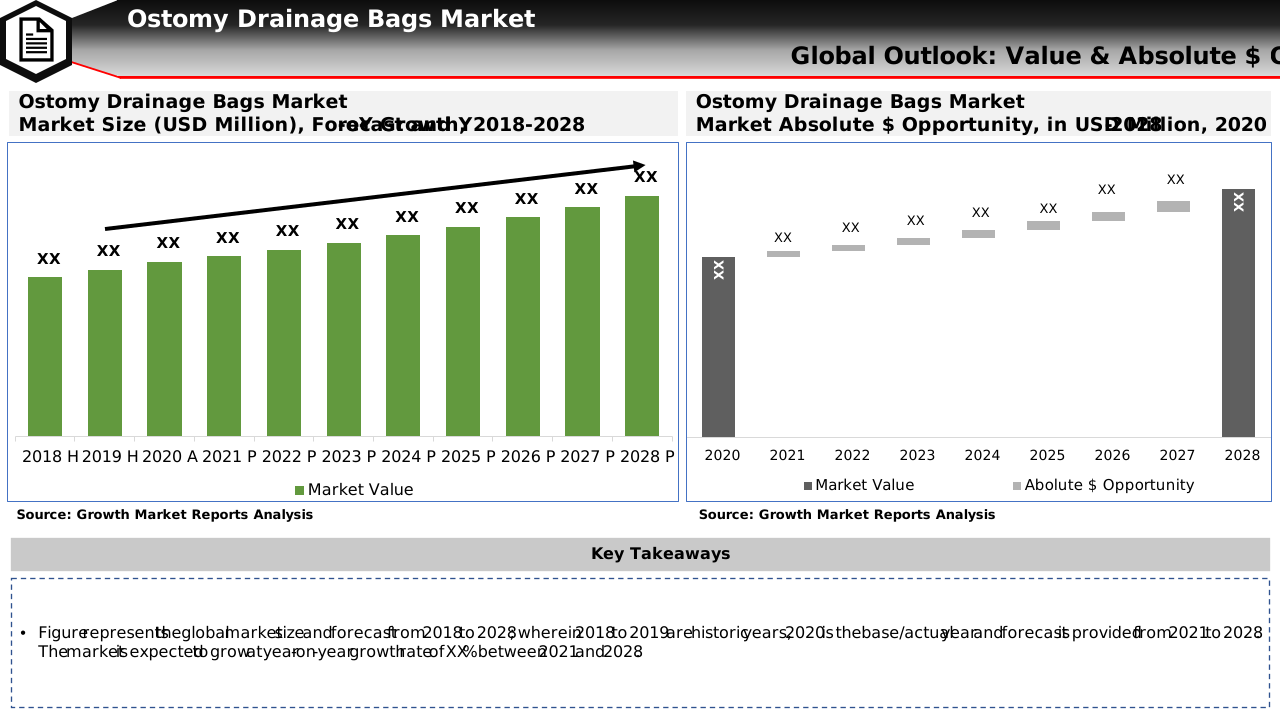
According to our latest research, the global ostomy drainage bags market size reached USD 2.97 billion in 2024, driven by a robust demand in both developed and emerging economies. The market is witnessing a compound annual growth rate (CAGR) of 5.3% and is forecasted to attain a value of USD 4.70 billion by 2033. This growth trajectory is primarily propelled by the increasing global prevalence of colorectal cancer, bladder cancer, and inflammatory bowel diseases, along with a rising geriatric population that is more susceptible to conditions requiring ostomy procedures. As per our comprehensive analysis, technological advancements and heightened awareness regarding ostomy care products are further catalyzing market expansion.

One of the pivotal growth factors for the ostomy drainage bags market is the surge in chronic diseases such as colorectal and bladder cancers, as well as Crohn’s disease and ulcerative colitis. These conditions often necessitate surgical interventions resulting in colostomies, ileostomies, or urostomies, thereby escalating the demand for ostomy drainage bags. The World Health Organization (WHO) and various cancer registries have reported a steady increase in the incidence of these diseases, particularly in aging populations. Additionally, improved survival rates post-surgery have contributed to a larger patient pool requiring long-term ostomy care, further fueling the market’s expansion. Healthcare systems globally are investing in better post-operative care, which includes the provision and reimbursement of quality ostomy products, thus supporting sustained market growth.

Technological innovation is another major driver shaping the ostomy drainage bags market. Manufacturers are increasingly focusing on developing advanced products with features such as odor control, skin-friendliness, leak-proof barriers, and discreet designs. Such innovations not only enhance user comfort and confidence but also play a crucial role in reducing complications like skin irritation and infection. The integration of user-centric designs and materials, along with digital health solutions for remote monitoring and support, is gaining traction. These advancements are especially significant for pediatric and elderly patients, who require products tailored to their unique physiological and lifestyle needs. The growing trend of home healthcare and self-management of ostomies is also fostering the adoption of technologically advanced ostomy drainage bags.

Another critical growth factor is the rising awareness and education about ostomy care, both among healthcare professionals and patients. Various non-profit organizations, advocacy groups, and healthcare providers are actively engaged in destigmatizing ostomy procedures and providing education on the effective management of ostomies. This has led to improved acceptance and adherence to ostomy care regimens, thereby driving market penetration. Furthermore, supportive government policies, favorable reimbursement structures, and the expansion of healthcare infrastructure in emerging markets are making ostomy drainage bags more accessible to a broader population base. Collectively, these factors are ensuring that the ostomy drainage bags market continues to register healthy growth across geographies.

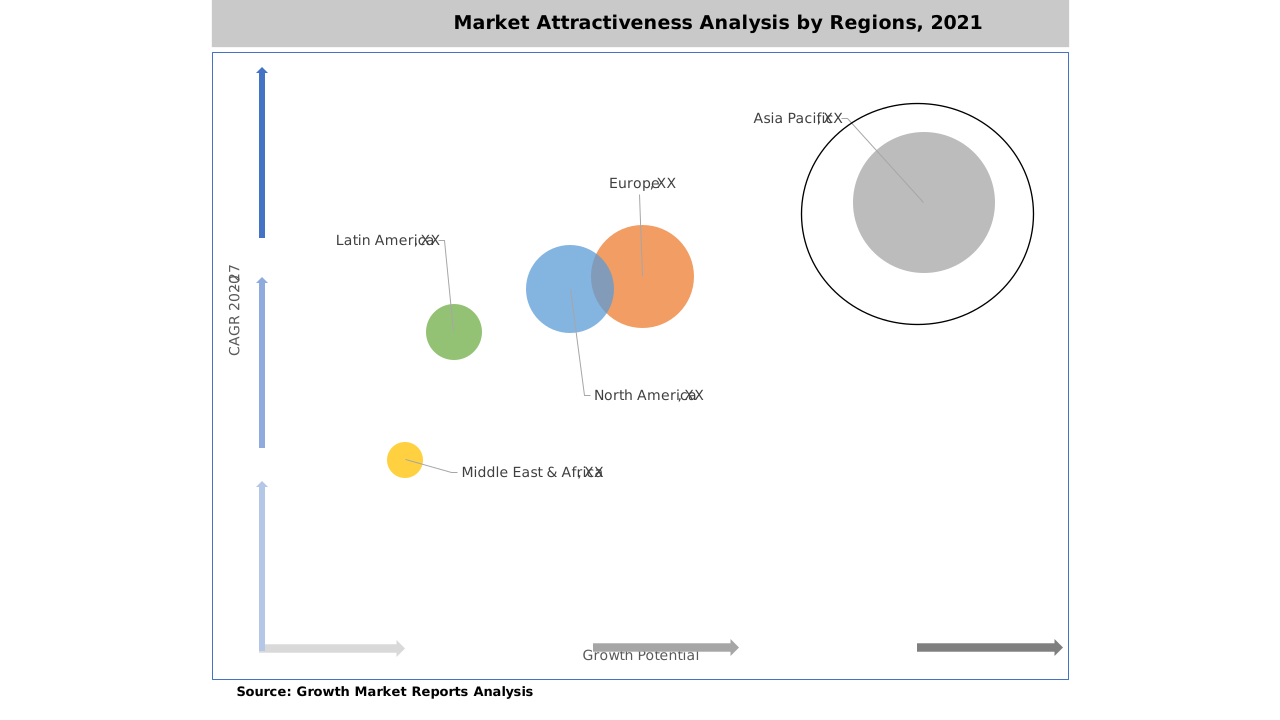
Regionally, North America remains the dominant market, accounting for the largest revenue share in 2024, followed closely by Europe. The Asia Pacific region is emerging as the fastest-growing market, fueled by increasing healthcare expenditure, a rising patient base, and rapid urbanization. Latin America and the Middle East & Africa, while smaller in market size, are experiencing steady growth due to improving healthcare access and greater awareness. Each region exhibits unique dynamics in terms of disease prevalence, healthcare infrastructure, and reimbursement frameworks, which are shaping the overall trajectory of the global ostomy drainage bags market.

Global Ostomy Drainage Bags Industry Outlook

Product Type Analysis

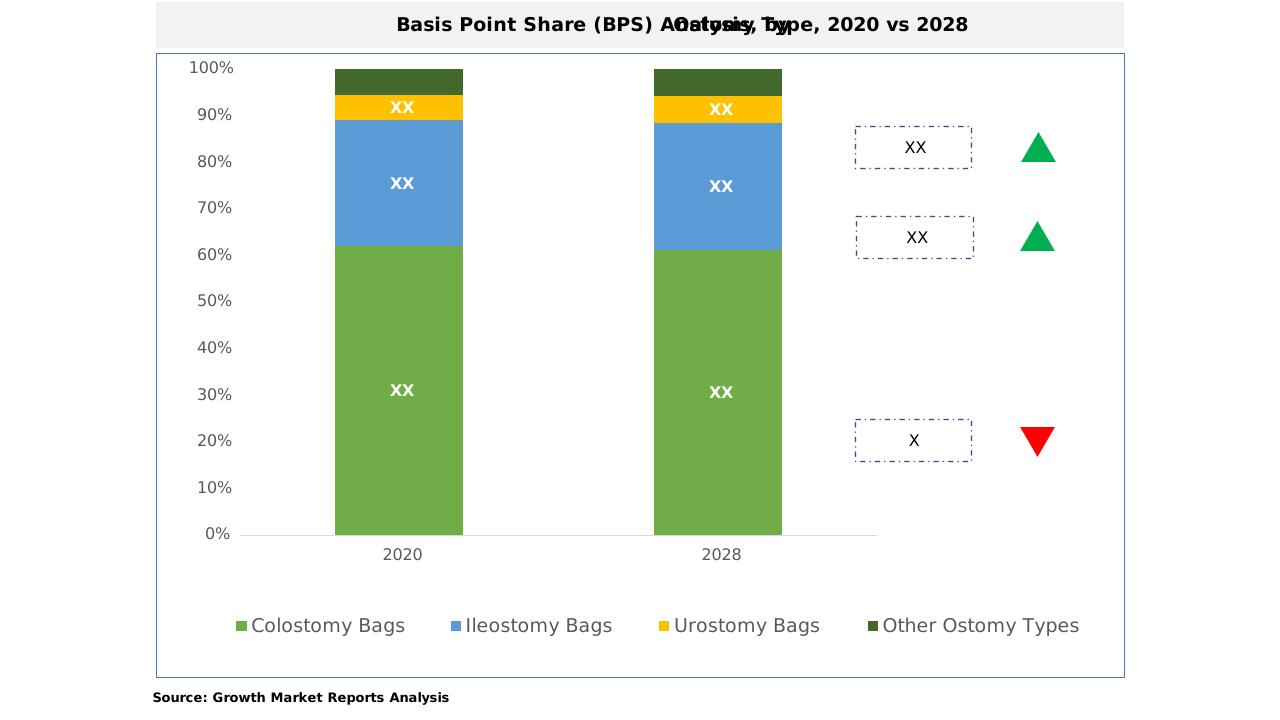
The ostomy drainage bags market is segmented by product type into colostomy bags, ileostomy bags, urostomy bags, and others, each catering to specific surgical and patient needs. Colostomy bags currently dominate the market, owing to the high incidence of colorectal cancer and diverticulitis, which often require colostomy procedures. These bags are designed to collect waste from the colon and are available in various sizes and materials to suit patient preferences and clinical requirements. The demand for colostomy bags is further supported by the rising geriatric population, who are more prone to conditions necessitating colostomies. Manufacturers are focusing on enhancing the comfort, discretion, and skin compatibility of colostomy bags, which is expected to sustain their leading position in the market.

Ileostomy bags represent another significant segment, primarily used for patients who have undergone surgical removal of the ileum or a portion of the small intestine. The prevalence of inflammatory bowel diseases such as Crohn’s disease and ulcerative colitis is a key factor driving the demand for ileostomy bags. These products are specifically engineered to handle more liquid output, necessitating advanced leak-proof and odor-control features. The segment is witnessing increased innovation, with companies introducing bags that are easier to empty, clean, and replace, catering to the active lifestyles of younger patients who are often affected by these conditions. The growing adoption of minimally invasive surgical techniques is also contributing to the increased use of ileostomy bags.

Urostomy bags are designed for patients who have undergone urostomy procedures, typically due to bladder cancer or severe urinary tract dysfunction. This segment is experiencing steady growth as the incidence of bladder cancer continues to rise, particularly among aging populations and individuals with risk factors such as smoking. Urostomy bags require specialized features to manage urinary output, including anti-reflux valves and secure closures to prevent leaks and infections. Technological advancements in materials and design are enhancing the usability and comfort of urostomy bags, making them more appealing to patients and caregivers. The segment is also benefiting from increased awareness and improved access to urological care in emerging markets.

The "others" category in product type encompasses specialized ostomy bags for pediatric patients, high-output situations, and unique anatomical requirements. While this segment represents a smaller share of the overall market, it is characterized by a high degree of customization and innovation. Manufacturers are collaborating with healthcare professionals to develop products that address specific patient needs, such as smaller sizes, hypoallergenic materials, and enhanced flexibility. The demand for pediatric ostomy bags, in particular, is rising as survival rates for congenital conditions improve. Overall, the product type segmentation underscores the diverse and evolving requirements of the global ostomy drainage bags market, with innovation and patient-centric design at the forefront.

Report Scope

Attributes Details
Report Title Ostomy Drainage Bags Market Research Report 2033
By Product Type Colostomy Bags, Ileostomy Bags, Urostomy Bags, Others
By Usage Single-use, Reusable
By System Type One-piece Systems, Two-piece Systems
By End-User Hospitals, Home Care Settings, Ambulatory Surgical Centers, Others
By Distribution Channel Online Stores, Pharmacies, Others
Regions Covered North America, Europe, APAC, Latin America, MEA
Base Year 2024
Historic Data 2018-2023
Forecast Period 2025-2033
Number of Pages 282
Number of Tables & Figures 252
Customization Available Yes, the report can be customized as per your need.

Usage Analysis

The ostomy drainage bags market is bifurcated by usage into single-use and reusable bags, each offering distinct benefits and challenges. Single-use ostomy bags are designed for convenience and hygiene, allowing patients to dispose of the bag after a single use. This segment holds the majority share of the market, as single-use products minimize the risk of infection, are easy to use, and are preferred in hospital and acute care settings. The growing emphasis on infection control and patient safety, particularly in the wake of recent global health crises, has further bolstered the demand for single-use ostomy bags. Additionally, advancements in biodegradable materials are addressing environmental concerns associated with disposables, making single-use options more sustainable and appealing to eco-conscious consumers.

Reusable ostomy bags, on the other hand, are gaining traction among patients seeking cost-effective and environmentally friendly alternatives. These bags are designed to be emptied, cleaned, and reused multiple times, reducing the overall cost burden for long-term ostomy patients. The segment is particularly popular in home care settings and regions with limited healthcare resources, where affordability and sustainability are key considerations. Manufacturers are innovating to enhance the durability, comfort, and ease of maintenance of reusable bags, incorporating features such as antimicrobial linings and odor-resistant materials. Educational initiatives aimed at teaching patients proper cleaning and care techniques are also supporting the adoption of reusable ostomy bags.

The choice between single-use and reusable ostomy bags is influenced by a range of factors, including patient lifestyle, clinical requirements, healthcare provider recommendations, and reimbursement policies. In developed markets with robust healthcare systems, single-use bags are often preferred due to their convenience and comprehensive insurance coverage. In contrast, emerging markets with constrained healthcare budgets and lower insurance penetration tend to favor reusable options. The market is witnessing a gradual shift towards hybrid solutions, where patients use a combination of single-use and reusable bags based on their individual needs and circumstances. This trend is expected to continue, driven by ongoing innovation and patient-centric product development.

From an environmental perspective, the increased focus on sustainability is prompting manufacturers to explore eco-friendly materials and recycling programs for both single-use and reusable ostomy bags. Regulatory bodies are also encouraging the adoption of greener alternatives, which is expected to reshape the competitive landscape in the coming years. Overall, the usage segmentation highlights the dynamic interplay between convenience, cost, and sustainability in the global ostomy drainage bags market, with each segment catering to distinct patient populations and healthcare settings.

System Type Analysis

The ostomy drainage bags market is segmented by system type into one-piece systems and two-piece systems, each offering unique advantages and addressing specific patient needs. One-piece systems integrate the bag and adhesive baseplate into a single unit, providing a compact and discreet solution for ostomy care. This system type is highly favored for its simplicity, ease of application, and reduced profile under clothing, making it ideal for active individuals and those seeking low-maintenance options. The one-piece system is particularly popular in home care and outpatient settings, where patients value convenience and autonomy. The segment is witnessing continuous innovation, with manufacturers introducing products featuring skin-friendly adhesives, enhanced flexibility, and improved moisture management.

Two-piece systems, in contrast, consist of a separate bag and baseplate, allowing users to change the bag without removing the adhesive barrier from the skin. This design offers greater flexibility and customization, enabling patients to select bags of different sizes and styles based on their daily activities and output levels. The two-piece system is especially beneficial for patients with sensitive skin or those requiring frequent bag changes, as it minimizes skin trauma and irritation. Hospitals and long-term care facilities often prefer two-piece systems for their versatility and ability to accommodate complex clinical needs. The segment is also benefiting from advancements in coupling mechanisms, such as click-lock and adhesive-free options, which enhance user confidence and security.

The choice between one-piece and two-piece systems is often dictated by patient lifestyle, stoma type, and healthcare provider recommendations. While one-piece systems are gaining popularity for their convenience and discretion, two-piece systems remain the preferred choice for patients with irregular stomas or those at higher risk of skin complications. Manufacturers are responding to these diverse needs by offering a wide range of system types, with features tailored to different patient demographics and clinical scenarios. Educational initiatives and support programs are also playing a crucial role in helping patients and caregivers make informed decisions about system selection and management.

Recent trends indicate a growing demand for hybrid systems that combine the best features of both one-piece and two-piece designs. These innovative solutions aim to provide the comfort and simplicity of one-piece systems with the flexibility and skin protection of two-piece systems. The integration of smart sensors and digital health technologies into ostomy systems is also emerging as a key trend, enabling real-time monitoring of output and early detection of complications. As the market continues to evolve, system type segmentation will remain a critical factor in shaping product development and patient outcomes in the global ostomy drainage bags market.

End-User Analysis

The end-user segment of the ostomy drainage bags market encompasses hospitals, home care settings, ambulatory surgical centers, and others, each playing a vital role in the adoption and utilization of ostomy care products. Hospitals represent the largest end-user segment, driven by the high volume of ostomy procedures performed in these settings and the need for immediate post-surgical care. Hospitals are equipped with specialized staff and resources to manage complex cases, provide patient education, and ensure proper stoma care, thereby driving the demand for high-quality ostomy drainage bags. The segment is further supported by favorable reimbursement policies and the integration of advanced wound care protocols, which prioritize patient safety and infection control.

Home care settings are emerging as a significant growth area in the ostomy drainage bags market, reflecting the broader shift towards patient-centric and cost-effective healthcare delivery. Advances in product design, coupled with increased patient education and support, have empowered individuals to manage their ostomies independently at home. This trend is particularly pronounced among elderly patients and those with chronic conditions requiring long-term ostomy care. The availability of user-friendly and discreet ostomy bags has enhanced the quality of life for home care patients, reducing the need for frequent hospital visits and lowering overall healthcare costs. Home care is expected to remain a key driver of market growth, especially in regions with aging populations and expanding healthcare infrastructure.

Ambulatory surgical centers (ASCs) are also contributing to the growth of the ostomy drainage bags market, as they offer specialized outpatient services for surgical procedures, including stoma creation and management. ASCs are gaining popularity due to their efficiency, cost-effectiveness, and reduced risk of hospital-acquired infections. The segment is characterized by a high demand for single-use and advanced ostomy bags that ensure optimal patient outcomes and rapid recovery. ASCs often collaborate with manufacturers to provide tailored solutions and educational resources for patients undergoing ostomy procedures. The increasing adoption of minimally invasive surgical techniques in ASCs is further driving the demand for innovative ostomy drainage bags.

The "others" category includes nursing homes, rehabilitation centers, and specialty clinics, which cater to patients with complex or long-term ostomy care needs. These facilities often require customized solutions and comprehensive support services to manage diverse patient populations. The segment is witnessing increased investment in staff training and patient education, aimed at improving stoma care outcomes and reducing complications. Collectively, the end-user segmentation underscores the critical role of healthcare providers and caregivers in shaping the demand for ostomy drainage bags, with each setting presenting unique challenges and opportunities for market participants.

Distribution Channel Analysis

The distribution channel segment in the ostomy drainage bags market comprises online stores, pharmacies, and others, reflecting the evolving purchasing behaviors of patients and healthcare providers. Pharmacies, both retail and hospital-based, remain the primary distribution channel, accounting for the largest share of market sales. Pharmacies offer the advantage of immediate product availability, professional guidance, and the ability to fulfill prescriptions and insurance claims. The presence of trained pharmacists and specialized staff ensures that patients receive the right products and support, which is particularly important for first-time users and those with complex needs. Pharmacies also play a key role in patient education and ongoing care management, reinforcing their position as a trusted distribution channel.

Online stores are rapidly gaining traction as a preferred distribution channel, driven by the growing adoption of e-commerce and digital health platforms. Online sales offer unparalleled convenience, privacy, and access to a wide range of products, making them especially appealing to younger and tech-savvy patients. The COVID-19 pandemic has accelerated the shift towards online purchasing, as patients seek to minimize in-person visits and maintain continuity of care from the comfort of their homes. Leading manufacturers and distributors are investing in user-friendly websites, mobile apps, and telehealth services to enhance the online shopping experience. The online channel is also facilitating greater price transparency, product comparison, and access to educational resources, empowering patients to make informed choices.

The "others" category includes direct sales by manufacturers, specialty medical supply stores, and institutional procurement by hospitals and long-term care facilities. Direct sales channels are particularly important for large healthcare providers and government agencies, which often require bulk purchases and customized solutions. Specialty stores cater to niche markets, offering personalized service and a curated selection of products for patients with unique needs. Institutional procurement is characterized by long-term contracts, volume discounts, and stringent quality standards, making it a critical channel for high-value and innovative ostomy drainage bags. The segment is witnessing increased collaboration between manufacturers, distributors, and healthcare providers to streamline supply chains and improve product availability.

The distribution channel landscape is evolving rapidly, with a growing emphasis on omnichannel strategies that integrate online, offline, and direct sales. Manufacturers are leveraging digital technologies to enhance supply chain efficiency, track inventory, and provide real-time support to patients and healthcare providers. Regulatory frameworks governing the sale and distribution of ostomy products are also evolving, with a focus on ensuring product safety, authenticity, and accessibility. As the market continues to grow, distribution channel segmentation will play a pivotal role in shaping competitive dynamics and patient outcomes in the global ostomy drainage bags market.

Opportunities & Threats

The ostomy drainage bags market is brimming with opportunities driven by technological advancements, expanding healthcare infrastructure, and increasing patient awareness. One of the most promising opportunities lies in the development of next-generation ostomy bags that integrate smart sensors and digital health solutions. These innovations can enable real-time monitoring of stoma output, early detection of complications, and personalized care recommendations, thereby improving patient outcomes and quality of life. The growing trend of home healthcare and self-management is creating a fertile ground for the adoption of such advanced products. Additionally, the expansion of healthcare access in emerging markets presents significant growth potential, as rising incomes and government investments in healthcare are making ostomy care more accessible to larger segments of the population. Manufacturers who can tailor their products and distribution strategies to meet the unique needs of these markets are well-positioned to capitalize on this opportunity.

Another major opportunity for market participants is the increasing focus on sustainability and environmental responsibility. As concerns about medical waste and environmental impact intensify, there is a growing demand for eco-friendly ostomy bags made from biodegradable or recyclable materials. Companies that can demonstrate a commitment to sustainability and social responsibility are likely to gain a competitive edge, particularly among environmentally conscious consumers and healthcare providers. Collaborations with non-profit organizations, patient advocacy groups, and regulatory bodies can further enhance market access and brand reputation. The integration of patient-centric design, sustainability, and digital health solutions represents a powerful combination that can drive long-term growth and differentiation in the ostomy drainage bags market.

Despite the abundant opportunities, the market faces several restraining factors, the most significant of which is the stigma and psychological burden associated with ostomy procedures. Many patients experience anxiety, depression, and social isolation following stoma surgery, which can hinder their willingness to adopt and consistently use ostomy drainage bags. The lack of awareness and education about ostomy care, particularly in low- and middle-income countries, exacerbates these challenges. Limited access to specialized healthcare professionals and support services further compounds the problem, leading to poor adherence and suboptimal outcomes. Addressing these barriers requires a concerted effort from manufacturers, healthcare providers, and advocacy groups to promote education, destigmatize ostomy care, and provide comprehensive support to patients and caregivers.

Regional Outlook

North America continues to lead the global ostomy drainage bags market, with a market size of USD 1.13 billion in 2024, accounting for approximately 38% of global revenues. The region’s dominance is attributed to a high prevalence of colorectal and bladder cancers, advanced healthcare infrastructure, and favorable reimbursement policies. The United States is the primary contributor, driven by robust research and development activities, widespread adoption of advanced ostomy products, and strong support from patient advocacy groups. Canada also plays a significant role, with a well-established healthcare system and growing awareness of ostomy care. The North American market is expected to maintain a steady CAGR of 4.9% over the forecast period, supported by ongoing innovation and an aging population.

Europe is the second-largest regional market, with a value of USD 0.89 billion in 2024, representing around 30% of global revenues. The region benefits from a high standard of healthcare, comprehensive insurance coverage, and a proactive approach to chronic disease management. Countries such as Germany, the United Kingdom, France, and Italy are key markets, characterized by strong demand for both single-use and reusable ostomy bags. The European market is distinguished by a high level of patient education, active involvement of non-profit organizations, and a strong focus on sustainability. The region is projected to achieve a CAGR of 5.1% through 2033, driven by continued investment in healthcare infrastructure and the adoption of innovative ostomy care solutions.

The Asia Pacific region is emerging as the fastest-growing market, with a size of USD 0.62 billion in 2024 and a projected CAGR of 6.6% over the forecast period. The growth is fueled by rising healthcare expenditure, a rapidly expanding patient base, and increasing awareness of ostomy care. Countries such as China, India, Japan, and South Korea are at the forefront of this expansion, supported by government initiatives to improve healthcare access and affordability. The region is witnessing a surge in demand for cost-effective and user-friendly ostomy products, as well as a growing trend towards home healthcare. Latin America and the Middle East & Africa, with market sizes of USD 0.24 billion and USD 0.09 billion respectively in 2024, are also experiencing steady growth, driven by improving healthcare infrastructure and greater awareness. Collectively, these regional dynamics underscore the diverse and evolving nature of the global ostomy drainage bags market.

Ostomy Drainage Bags Market Statistics

Competitor Outlook

The competitive landscape of the ostomy drainage bags market is characterized by the presence of several global and regional players, each vying for market share through innovation, product differentiation, and strategic partnerships. Leading companies are investing heavily in research and development to introduce advanced ostomy care solutions that address unmet patient needs and enhance user experience. The market is witnessing a wave of consolidation, with established players acquiring smaller companies to expand their product portfolios, geographic reach, and technological capabilities. Strategic collaborations with healthcare providers, patient advocacy groups, and regulatory bodies are also common, aimed at improving market access, patient education, and product adoption.

Innovation is a key differentiator in the competitive landscape, with companies focusing on developing products that offer superior comfort, discretion, and skin protection. The integration of digital health technologies, such as smart sensors and remote monitoring, is emerging as a major trend, enabling companies to offer value-added services and personalized care solutions. Sustainability is another area of intense competition, with leading players launching eco-friendly ostomy bags and recycling programs to address environmental concerns and appeal to socially responsible consumers. The ability to offer a comprehensive range of products, including single-use, reusable, one-piece, and two-piece systems, is crucial for capturing a diverse customer base and meeting the evolving needs of patients and healthcare providers.

The market is also characterized by intense price competition, particularly in emerging markets where cost remains a critical factor in purchasing decisions. Companies are leveraging economies of scale, efficient supply chains, and local manufacturing capabilities to offer competitive pricing without compromising on quality. The rise of online distribution channels is further intensifying competition, as patients gain greater access to product information, price comparisons, and customer reviews. Successful companies are those that can balance innovation, quality, affordability, and accessibility, while maintaining strong relationships with key stakeholders across the healthcare ecosystem.

Major companies operating in the global ostomy drainage bags market include Coloplast Corp, Hollister Incorporated, ConvaTec Group PLC, B. Braun Melsungen AG, and Welland Medical Limited. Coloplast is renowned for its extensive range of ostomy care products, innovative designs, and strong focus on patient education and support. Hollister Incorporated is a leading player with a reputation for high-quality, user-friendly ostomy bags and a commitment to sustainability. ConvaTec Group PLC offers a comprehensive portfolio of ostomy care solutions, backed by robust research and development capabilities and a global distribution network. B. Braun Melsungen AG is recognized for its focus on advanced materials, infection control, and patient-centric design, while Welland Medical Limited specializes in customized and niche ostomy products tailored to specific patient needs. These companies, along with several emerging players, are shaping the future of the ostomy drainage bags market through relentless innovation, strategic partnerships, and a deep commitment to improving patient outcomes worldwide.

Key Players

  • Coloplast
  • Hollister Incorporated
  • ConvaTec Group PLC
  • B. Braun Melsungen AG
  • Smith & Nephew plc
  • ALCARE Co., Ltd.
  • Marlen Manufacturing & Development Company
  • Salts Healthcare Ltd.
  • Welland Medical Limited
  • Cymed Ostomy Co.
  • Torbot Group, Inc.
  • Nu-Hope Laboratories, Inc.
  • Flexicare Medical Limited
  • Perma-Type Company, Inc.
  • Dansac A/S
  • 3M Health Care
  • Medline Industries, LP
  • Oakmed Limited
  • TG Eakin Ltd.
  • C.R. Bard, Inc.
Ostomy Drainage Bags Market Overview

Segments

The Ostomy Drainage Bags market has been segmented on the basis of

Product Type

  • Colostomy Bags
  • Ileostomy Bags
  • Urostomy Bags
  • Others

Usage

  • Single-use
  • Reusable

System Type

  • One-piece Systems
  • Two-piece Systems

End-User

  • Hospitals
  • Home Care Settings
  • Ambulatory Surgical Centers
  • Others

Distribution Channel

  • Online Stores
  • Pharmacies
  • Others

Competitive Landscape

Key players competing in the Ostomy Drainage Bags market include Flexicare Medical Ltd, Coloplast, B Braun Melsungen AG, Alcare Co. Ltd, and ConvaTech Inc.

Some of these players are using several market strategies such as mergers, acquisitions, partnerships, collaborations, capacity expansion, and product launches to increase their market shares.
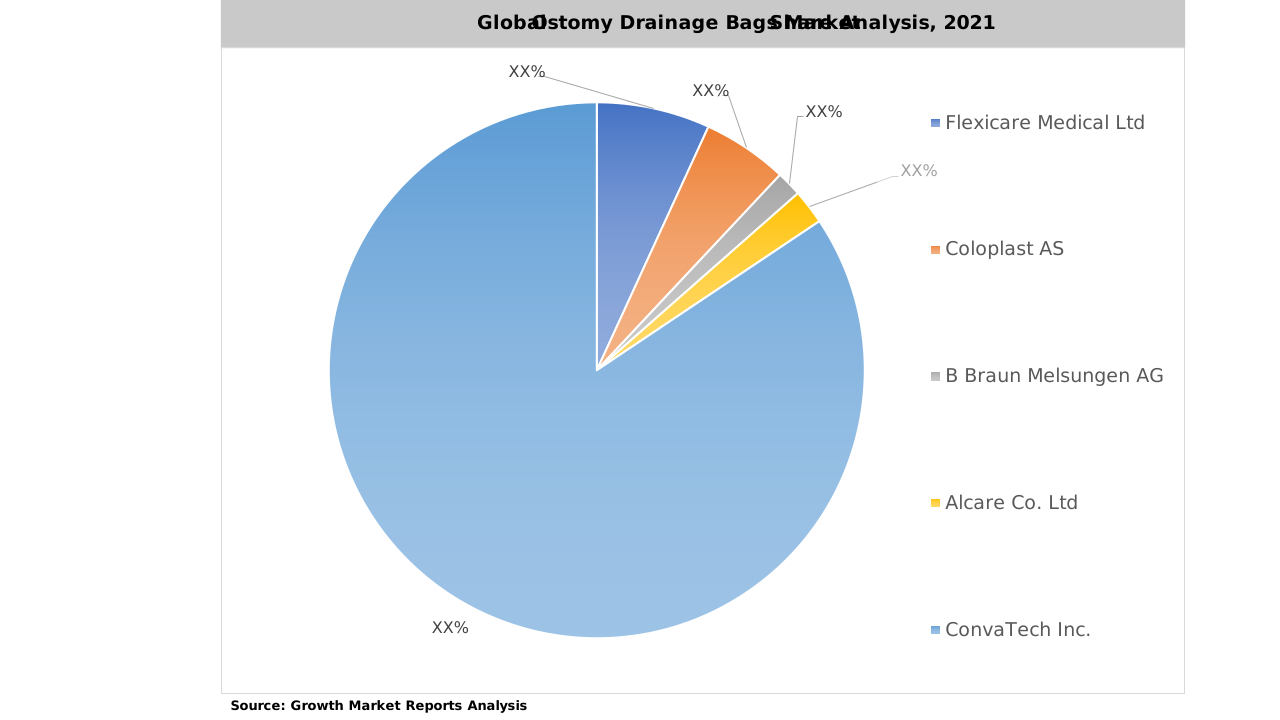
 

Ostomy Drainage Bags Market by key Players

Frequently Asked Questions

Major players include Coloplast Corp, Hollister Incorporated, ConvaTec Group PLC, B. Braun Melsungen AG, Welland Medical Limited, Smith & Nephew plc, ALCARE Co., Ltd., Marlen Manufacturing & Development Company, Salts Healthcare Ltd., and others.

Opportunities include technological advancements (such as smart sensors), expanding healthcare infrastructure in emerging markets, and eco-friendly product development. Challenges include stigma, lack of awareness, and limited access to specialized care in some regions.

Ostomy drainage bags are distributed through pharmacies (retail and hospital), online stores, direct sales by manufacturers, specialty medical supply stores, and institutional procurement by healthcare facilities.

Major end-users include hospitals, home care settings, ambulatory surgical centers, nursing homes, rehabilitation centers, and specialty clinics, each with unique needs and preferences for ostomy care products.

North America holds the largest market share, followed by Europe. The Asia Pacific region is the fastest-growing market, while Latin America and the Middle East & Africa are experiencing steady growth due to improving healthcare access.

The market is divided into one-piece systems, which combine the bag and adhesive baseplate for simplicity and discretion, and two-piece systems, which offer flexibility and are ideal for patients needing frequent bag changes or with sensitive skin.

Single-use ostomy bags are designed for convenience and hygiene, minimizing infection risk and preferred in hospitals, while reusable bags are cost-effective, environmentally friendly, and popular in home care and regions with limited healthcare resources.

Key growth drivers include the rising incidence of colorectal and bladder cancers, inflammatory bowel diseases, an aging population, technological innovation in product design, increased awareness and education, and supportive government policies.

The market is segmented by product type into colostomy bags, ileostomy bags, urostomy bags, and others (including pediatric and specialized bags), each designed for specific surgical and patient needs.

The global ostomy drainage bags market reached USD 2.97 billion in 2024 and is projected to grow at a CAGR of 5.3%, reaching USD 4.70 billion by 2033, driven by increasing chronic disease prevalence, technological advancements, and a rising geriatric population.

Table Of Content

Chapter 1 Executive Summary
Chapter 2 Assumptions and Acronyms Used
Chapter 3 Research Methodology
Chapter 4 Ostomy Drainage Bags Market Overview
   4.1 Introduction
      4.1.1 Market Taxonomy
      4.1.2 Market Definition
      4.1.3 Macro-Economic Factors Impacting the Market Growth
   4.2 Ostomy Drainage Bags Market Dynamics
      4.2.1 Market Drivers
      4.2.2 Market Restraints
      4.2.3 Market Opportunity
   4.3 Ostomy Drainage Bags Market - Supply Chain Analysis
      4.3.1 List of Key Suppliers
      4.3.2 List of Key Distributors
      4.3.3 List of Key Consumers
   4.4 Key Forces Shaping the Ostomy Drainage Bags Market
      4.4.1 Bargaining Power of Suppliers
      4.4.2 Bargaining Power of Buyers
      4.4.3 Threat of Substitution
      4.4.4 Threat of New Entrants
      4.4.5 Competitive Rivalry
   4.5 Global Ostomy Drainage Bags Market Size & Forecast, 2023-2032
      4.5.1 Ostomy Drainage Bags Market Size and Y-o-Y Growth
      4.5.2 Ostomy Drainage Bags Market Absolute $ Opportunity

Chapter 5 Global Ostomy Drainage Bags Market Analysis and Forecast By Product Type
   5.1 Introduction
      5.1.1 Key Market Trends & Growth Opportunities By Product Type
      5.1.2 Basis Point Share (BPS) Analysis By Product Type
      5.1.3 Absolute $ Opportunity Assessment By Product Type
   5.2 Ostomy Drainage Bags Market Size Forecast By Product Type
      5.2.1 Colostomy Bags
      5.2.2 Ileostomy Bags
      5.2.3 Urostomy Bags
      5.2.4 Others
   5.3 Market Attractiveness Analysis By Product Type

Chapter 6 Global Ostomy Drainage Bags Market Analysis and Forecast By Usage
   6.1 Introduction
      6.1.1 Key Market Trends & Growth Opportunities By Usage
      6.1.2 Basis Point Share (BPS) Analysis By Usage
      6.1.3 Absolute $ Opportunity Assessment By Usage
   6.2 Ostomy Drainage Bags Market Size Forecast By Usage
      6.2.1 Single-use
      6.2.2 Reusable
   6.3 Market Attractiveness Analysis By Usage

Chapter 7 Global Ostomy Drainage Bags Market Analysis and Forecast By System Type
   7.1 Introduction
      7.1.1 Key Market Trends & Growth Opportunities By System Type
      7.1.2 Basis Point Share (BPS) Analysis By System Type
      7.1.3 Absolute $ Opportunity Assessment By System Type
   7.2 Ostomy Drainage Bags Market Size Forecast By System Type
      7.2.1 One-piece Systems
      7.2.2 Two-piece Systems
   7.3 Market Attractiveness Analysis By System Type

Chapter 8 Global Ostomy Drainage Bags Market Analysis and Forecast By End-User
   8.1 Introduction
      8.1.1 Key Market Trends & Growth Opportunities By End-User
      8.1.2 Basis Point Share (BPS) Analysis By End-User
      8.1.3 Absolute $ Opportunity Assessment By End-User
   8.2 Ostomy Drainage Bags Market Size Forecast By End-User
      8.2.1 Hospitals
      8.2.2 Home Care Settings
      8.2.3 Ambulatory Surgical Centers
      8.2.4 Others
   8.3 Market Attractiveness Analysis By End-User

Chapter 9 Global Ostomy Drainage Bags Market Analysis and Forecast By Distribution Channel
   9.1 Introduction
      9.1.1 Key Market Trends & Growth Opportunities By Distribution Channel
      9.1.2 Basis Point Share (BPS) Analysis By Distribution Channel
      9.1.3 Absolute $ Opportunity Assessment By Distribution Channel
   9.2 Ostomy Drainage Bags Market Size Forecast By Distribution Channel
      9.2.1 Online Stores
      9.2.2 Pharmacies
      9.2.3 Others
   9.3 Market Attractiveness Analysis By Distribution Channel

Chapter 10 Global Ostomy Drainage Bags Market Analysis and Forecast by Region
   10.1 Introduction
      10.1.1 Key Market Trends & Growth Opportunities By Region
      10.1.2 Basis Point Share (BPS) Analysis By Region
      10.1.3 Absolute $ Opportunity Assessment By Region
   10.2 Ostomy Drainage Bags Market Size Forecast By Region
      10.2.1 North America
      10.2.2 Europe
      10.2.3 Asia Pacific
      10.2.4 Latin America
      10.2.5 Middle East & Africa (MEA)
   10.3 Market Attractiveness Analysis By Region

Chapter 11 Coronavirus Disease (COVID-19) Impact 
   11.1 Introduction 
   11.2 Current & Future Impact Analysis 
   11.3 Economic Impact Analysis 
   11.4 Government Policies 
   11.5 Investment Scenario

Chapter 12 North America Ostomy Drainage Bags Analysis and Forecast
   12.1 Introduction
   12.2 North America Ostomy Drainage Bags Market Size Forecast by Country
      12.2.1 U.S.
      12.2.2 Canada
   12.3 Basis Point Share (BPS) Analysis by Country
   12.4 Absolute $ Opportunity Assessment by Country
   12.5 Market Attractiveness Analysis by Country
   12.6 North America Ostomy Drainage Bags Market Size Forecast By Product Type
      12.6.1 Colostomy Bags
      12.6.2 Ileostomy Bags
      12.6.3 Urostomy Bags
      12.6.4 Others
   12.7 Basis Point Share (BPS) Analysis By Product Type 
   12.8 Absolute $ Opportunity Assessment By Product Type 
   12.9 Market Attractiveness Analysis By Product Type
   12.10 North America Ostomy Drainage Bags Market Size Forecast By Usage
      12.10.1 Single-use
      12.10.2 Reusable
   12.11 Basis Point Share (BPS) Analysis By Usage 
   12.12 Absolute $ Opportunity Assessment By Usage 
   12.13 Market Attractiveness Analysis By Usage
   12.14 North America Ostomy Drainage Bags Market Size Forecast By System Type
      12.14.1 One-piece Systems
      12.14.2 Two-piece Systems
   12.15 Basis Point Share (BPS) Analysis By System Type 
   12.16 Absolute $ Opportunity Assessment By System Type 
   12.17 Market Attractiveness Analysis By System Type
   12.18 North America Ostomy Drainage Bags Market Size Forecast By End-User
      12.18.1 Hospitals
      12.18.2 Home Care Settings
      12.18.3 Ambulatory Surgical Centers
      12.18.4 Others
   12.19 Basis Point Share (BPS) Analysis By End-User 
   12.20 Absolute $ Opportunity Assessment By End-User 
   12.21 Market Attractiveness Analysis By End-User
   12.22 North America Ostomy Drainage Bags Market Size Forecast By Distribution Channel
      12.22.1 Online Stores
      12.22.2 Pharmacies
      12.22.3 Others
   12.23 Basis Point Share (BPS) Analysis By Distribution Channel 
   12.24 Absolute $ Opportunity Assessment By Distribution Channel 
   12.25 Market Attractiveness Analysis By Distribution Channel

Chapter 13 Europe Ostomy Drainage Bags Analysis and Forecast
   13.1 Introduction
   13.2 Europe Ostomy Drainage Bags Market Size Forecast by Country
      13.2.1 Germany
      13.2.2 France
      13.2.3 Italy
      13.2.4 U.K.
      13.2.5 Spain
      13.2.6 Russia
      13.2.7 Rest of Europe
   13.3 Basis Point Share (BPS) Analysis by Country
   13.4 Absolute $ Opportunity Assessment by Country
   13.5 Market Attractiveness Analysis by Country
   13.6 Europe Ostomy Drainage Bags Market Size Forecast By Product Type
      13.6.1 Colostomy Bags
      13.6.2 Ileostomy Bags
      13.6.3 Urostomy Bags
      13.6.4 Others
   13.7 Basis Point Share (BPS) Analysis By Product Type 
   13.8 Absolute $ Opportunity Assessment By Product Type 
   13.9 Market Attractiveness Analysis By Product Type
   13.10 Europe Ostomy Drainage Bags Market Size Forecast By Usage
      13.10.1 Single-use
      13.10.2 Reusable
   13.11 Basis Point Share (BPS) Analysis By Usage 
   13.12 Absolute $ Opportunity Assessment By Usage 
   13.13 Market Attractiveness Analysis By Usage
   13.14 Europe Ostomy Drainage Bags Market Size Forecast By System Type
      13.14.1 One-piece Systems
      13.14.2 Two-piece Systems
   13.15 Basis Point Share (BPS) Analysis By System Type 
   13.16 Absolute $ Opportunity Assessment By System Type 
   13.17 Market Attractiveness Analysis By System Type
   13.18 Europe Ostomy Drainage Bags Market Size Forecast By End-User
      13.18.1 Hospitals
      13.18.2 Home Care Settings
      13.18.3 Ambulatory Surgical Centers
      13.18.4 Others
   13.19 Basis Point Share (BPS) Analysis By End-User 
   13.20 Absolute $ Opportunity Assessment By End-User 
   13.21 Market Attractiveness Analysis By End-User
   13.22 Europe Ostomy Drainage Bags Market Size Forecast By Distribution Channel
      13.22.1 Online Stores
      13.22.2 Pharmacies
      13.22.3 Others
   13.23 Basis Point Share (BPS) Analysis By Distribution Channel 
   13.24 Absolute $ Opportunity Assessment By Distribution Channel 
   13.25 Market Attractiveness Analysis By Distribution Channel

Chapter 14 Asia Pacific Ostomy Drainage Bags Analysis and Forecast
   14.1 Introduction
   14.2 Asia Pacific Ostomy Drainage Bags Market Size Forecast by Country
      14.2.1 China
      14.2.2 Japan
      14.2.3 South Korea
      14.2.4 India
      14.2.5 Australia
      14.2.6 South East Asia (SEA)
      14.2.7 Rest of Asia Pacific (APAC)
   14.3 Basis Point Share (BPS) Analysis by Country
   14.4 Absolute $ Opportunity Assessment by Country
   14.5 Market Attractiveness Analysis by Country
   14.6 Asia Pacific Ostomy Drainage Bags Market Size Forecast By Product Type
      14.6.1 Colostomy Bags
      14.6.2 Ileostomy Bags
      14.6.3 Urostomy Bags
      14.6.4 Others
   14.7 Basis Point Share (BPS) Analysis By Product Type 
   14.8 Absolute $ Opportunity Assessment By Product Type 
   14.9 Market Attractiveness Analysis By Product Type
   14.10 Asia Pacific Ostomy Drainage Bags Market Size Forecast By Usage
      14.10.1 Single-use
      14.10.2 Reusable
   14.11 Basis Point Share (BPS) Analysis By Usage 
   14.12 Absolute $ Opportunity Assessment By Usage 
   14.13 Market Attractiveness Analysis By Usage
   14.14 Asia Pacific Ostomy Drainage Bags Market Size Forecast By System Type
      14.14.1 One-piece Systems
      14.14.2 Two-piece Systems
   14.15 Basis Point Share (BPS) Analysis By System Type 
   14.16 Absolute $ Opportunity Assessment By System Type 
   14.17 Market Attractiveness Analysis By System Type
   14.18 Asia Pacific Ostomy Drainage Bags Market Size Forecast By End-User
      14.18.1 Hospitals
      14.18.2 Home Care Settings
      14.18.3 Ambulatory Surgical Centers
      14.18.4 Others
   14.19 Basis Point Share (BPS) Analysis By End-User 
   14.20 Absolute $ Opportunity Assessment By End-User 
   14.21 Market Attractiveness Analysis By End-User
   14.22 Asia Pacific Ostomy Drainage Bags Market Size Forecast By Distribution Channel
      14.22.1 Online Stores
      14.22.2 Pharmacies
      14.22.3 Others
   14.23 Basis Point Share (BPS) Analysis By Distribution Channel 
   14.24 Absolute $ Opportunity Assessment By Distribution Channel 
   14.25 Market Attractiveness Analysis By Distribution Channel

Chapter 15 Latin America Ostomy Drainage Bags Analysis and Forecast
   15.1 Introduction
   15.2 Latin America Ostomy Drainage Bags Market Size Forecast by Country
      15.2.1 Brazil
      15.2.2 Mexico
      15.2.3 Rest of Latin America (LATAM)
   15.3 Basis Point Share (BPS) Analysis by Country
   15.4 Absolute $ Opportunity Assessment by Country
   15.5 Market Attractiveness Analysis by Country
   15.6 Latin America Ostomy Drainage Bags Market Size Forecast By Product Type
      15.6.1 Colostomy Bags
      15.6.2 Ileostomy Bags
      15.6.3 Urostomy Bags
      15.6.4 Others
   15.7 Basis Point Share (BPS) Analysis By Product Type 
   15.8 Absolute $ Opportunity Assessment By Product Type 
   15.9 Market Attractiveness Analysis By Product Type
   15.10 Latin America Ostomy Drainage Bags Market Size Forecast By Usage
      15.10.1 Single-use
      15.10.2 Reusable
   15.11 Basis Point Share (BPS) Analysis By Usage 
   15.12 Absolute $ Opportunity Assessment By Usage 
   15.13 Market Attractiveness Analysis By Usage
   15.14 Latin America Ostomy Drainage Bags Market Size Forecast By System Type
      15.14.1 One-piece Systems
      15.14.2 Two-piece Systems
   15.15 Basis Point Share (BPS) Analysis By System Type 
   15.16 Absolute $ Opportunity Assessment By System Type 
   15.17 Market Attractiveness Analysis By System Type
   15.18 Latin America Ostomy Drainage Bags Market Size Forecast By End-User
      15.18.1 Hospitals
      15.18.2 Home Care Settings
      15.18.3 Ambulatory Surgical Centers
      15.18.4 Others
   15.19 Basis Point Share (BPS) Analysis By End-User 
   15.20 Absolute $ Opportunity Assessment By End-User 
   15.21 Market Attractiveness Analysis By End-User
   15.22 Latin America Ostomy Drainage Bags Market Size Forecast By Distribution Channel
      15.22.1 Online Stores
      15.22.2 Pharmacies
      15.22.3 Others
   15.23 Basis Point Share (BPS) Analysis By Distribution Channel 
   15.24 Absolute $ Opportunity Assessment By Distribution Channel 
   15.25 Market Attractiveness Analysis By Distribution Channel

Chapter 16 Middle East & Africa (MEA) Ostomy Drainage Bags Analysis and Forecast
   16.1 Introduction
   16.2 Middle East & Africa (MEA) Ostomy Drainage Bags Market Size Forecast by Country
      16.2.1 Saudi Arabia
      16.2.2 South Africa
      16.2.3 UAE
      16.2.4 Rest of Middle East & Africa (MEA)
   16.3 Basis Point Share (BPS) Analysis by Country
   16.4 Absolute $ Opportunity Assessment by Country
   16.5 Market Attractiveness Analysis by Country
   16.6 Middle East & Africa (MEA) Ostomy Drainage Bags Market Size Forecast By Product Type
      16.6.1 Colostomy Bags
      16.6.2 Ileostomy Bags
      16.6.3 Urostomy Bags
      16.6.4 Others
   16.7 Basis Point Share (BPS) Analysis By Product Type 
   16.8 Absolute $ Opportunity Assessment By Product Type 
   16.9 Market Attractiveness Analysis By Product Type
   16.10 Middle East & Africa (MEA) Ostomy Drainage Bags Market Size Forecast By Usage
      16.10.1 Single-use
      16.10.2 Reusable
   16.11 Basis Point Share (BPS) Analysis By Usage 
   16.12 Absolute $ Opportunity Assessment By Usage 
   16.13 Market Attractiveness Analysis By Usage
   16.14 Middle East & Africa (MEA) Ostomy Drainage Bags Market Size Forecast By System Type
      16.14.1 One-piece Systems
      16.14.2 Two-piece Systems
   16.15 Basis Point Share (BPS) Analysis By System Type 
   16.16 Absolute $ Opportunity Assessment By System Type 
   16.17 Market Attractiveness Analysis By System Type
   16.18 Middle East & Africa (MEA) Ostomy Drainage Bags Market Size Forecast By End-User
      16.18.1 Hospitals
      16.18.2 Home Care Settings
      16.18.3 Ambulatory Surgical Centers
      16.18.4 Others
   16.19 Basis Point Share (BPS) Analysis By End-User 
   16.20 Absolute $ Opportunity Assessment By End-User 
   16.21 Market Attractiveness Analysis By End-User
   16.22 Middle East & Africa (MEA) Ostomy Drainage Bags Market Size Forecast By Distribution Channel
      16.22.1 Online Stores
      16.22.2 Pharmacies
      16.22.3 Others
   16.23 Basis Point Share (BPS) Analysis By Distribution Channel 
   16.24 Absolute $ Opportunity Assessment By Distribution Channel 
   16.25 Market Attractiveness Analysis By Distribution Channel

Chapter 17 Competition Landscape 
   17.1 Ostomy Drainage Bags Market: Competitive Dashboard
   17.2 Global Ostomy Drainage Bags Market: Market Share Analysis, 2023
   17.3 Company Profiles (Details – Overview, Financials, Developments, Strategy) 
      17.3.1 Coloplast
Hollister Incorporated
ConvaTec Group PLC
B. Braun Melsungen AG
Smith & Nephew plc
ALCARE Co., Ltd.
Marlen Manufacturing & Development Company
Salts Healthcare Ltd.
Welland Medical Limited
Cymed Ostomy Co.
Torbot Group, Inc.
Nu-Hope Laboratories, Inc.
Flexicare Medical Limited
Perma-Type Company, Inc.
Dansac A/S
3M Health Care
Medline Industries, LP
Oakmed Limited
TG Eakin Ltd.
C.R. Bard, Inc.

Methodology

Our Clients

Honda Motor Co. Ltd.
Pfizer
Siemens Healthcare
Nestle SA
Deloitte
sinopec
Dassault Aviation
Microsoft