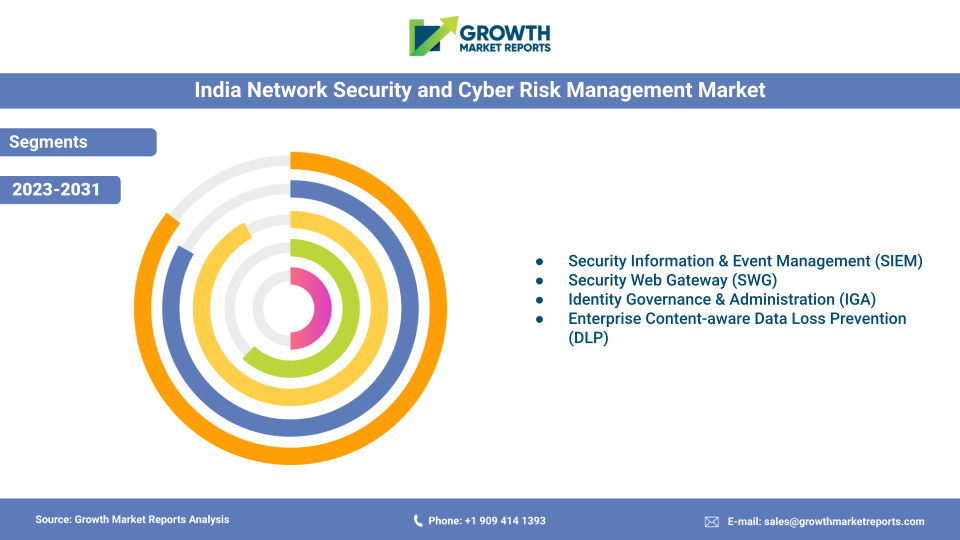
Segments - by Component (Solutions, Services), by Deployment Mode (On-Premises, Cloud), by Organization Size (Small and Medium Enterprises, Large Enterprises), by Application (Threat Intelligence, Risk and Compliance Management, Incident Response, Vulnerability Management, Security Monitoring, Others), by End-User (BFSI, Healthcare, Government, IT and Telecommunications, Retail, Manufacturing, Others)
This report is updated with the latest market data and insights as of June 2026. Base year: 2025 | Forecast period: 2026-2034
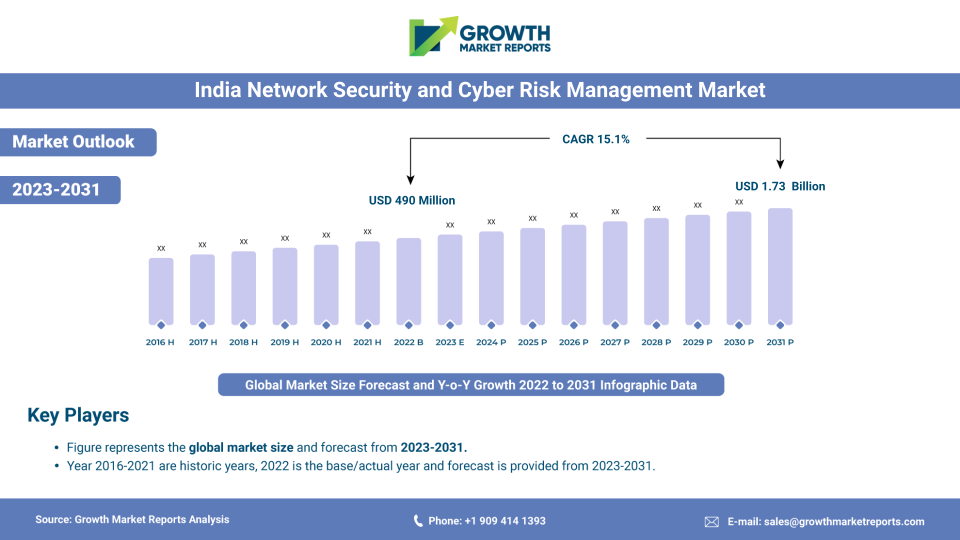
According to our latest research, the global network security and cyber risk management market size in 2025 stands at USD 22.4 billion, reflecting robust growth driven by escalating cyber threats and stringent regulatory requirements. The market is projected to reach USD 68.5 billion by 2034, expanding at a CAGR of 13.2% during the forecast period from 2026 to 2034. This strong growth trajectory is underpinned by accelerating digital transformation initiatives, the proliferation of IoT and connected devices, and the persistent evolution of sophisticated cyberattacks, which are compelling organizations worldwide to invest heavily in advanced network security and comprehensive cyber risk management solutions.
The primary growth driver for the network security and cyber risk management market is the exponential rise in both the frequency and complexity of cyber threats. Organizations across all sectors are witnessing a surge in ransomware, phishing, and advanced persistent threats, which not only compromise sensitive data but also disrupt business operations and damage reputations. The increasing adoption of cloud computing, hybrid work models, and mobile devices has expanded the attack surface, making traditional security approaches insufficient. As a result, businesses are prioritizing the deployment of next-generation security solutions, including AI-powered threat intelligence, real-time vulnerability management, and automated incident response tools. These solutions enable proactive detection and mitigation of risks, thereby ensuring business continuity and regulatory compliance.
Another significant factor contributing to market growth is the evolving global regulatory landscape. Governments and industry bodies are enforcing stricter data protection and cybersecurity regulations, such as the General Data Protection Regulation (GDPR) in Europe, the Cybersecurity Maturity Model Certification (CMMC) in the United States, and similar frameworks in Asia Pacific and other regions. Compliance with these regulations necessitates the implementation of robust network security policy management and cyber risk frameworks, driving demand for comprehensive solutions and services. Organizations are increasingly seeking integrated platforms that offer centralized visibility, automated compliance management, and continuous monitoring to address diverse regulatory requirements efficiently.
Additionally, the rapid digitalization of critical infrastructure sectors such as banking, healthcare, government, and manufacturing is amplifying the need for advanced network security and cyber risk management. The integration of operational technology (OT) with information technology (IT) has introduced new vulnerabilities, making these sectors prime targets for cybercriminals. Investments in cybersecurity are being prioritized to safeguard sensitive financial data, patient information, and national security assets. The emergence of zero-trust architectures, endpoint detection and response (EDR), and security orchestration, automation, and response (SOAR) platforms are further fueling market expansion, as organizations strive to build resilient and adaptive security postures capable of withstanding the threats of 2025 and beyond.
From a regional perspective, North America currently dominates the global market, accounting for approximately 41.5% of total revenue in 2025, followed closely by Europe at 27.0% and Asia Pacific at 21.5%. The presence of leading cybersecurity vendors, high digital adoption rates, and a strong regulatory environment contribute to North America's market leadership. However, Asia Pacific is expected to exhibit the fastest growth over the forecast period, driven by rapid digital transformation, increasing investments in cybersecurity infrastructure, and rising awareness of cyber risks among enterprises and governments. Latin America and the Middle East and Africa are also witnessing steady growth, supported by expanding internet penetration and growing regulatory focus on cybersecurity.
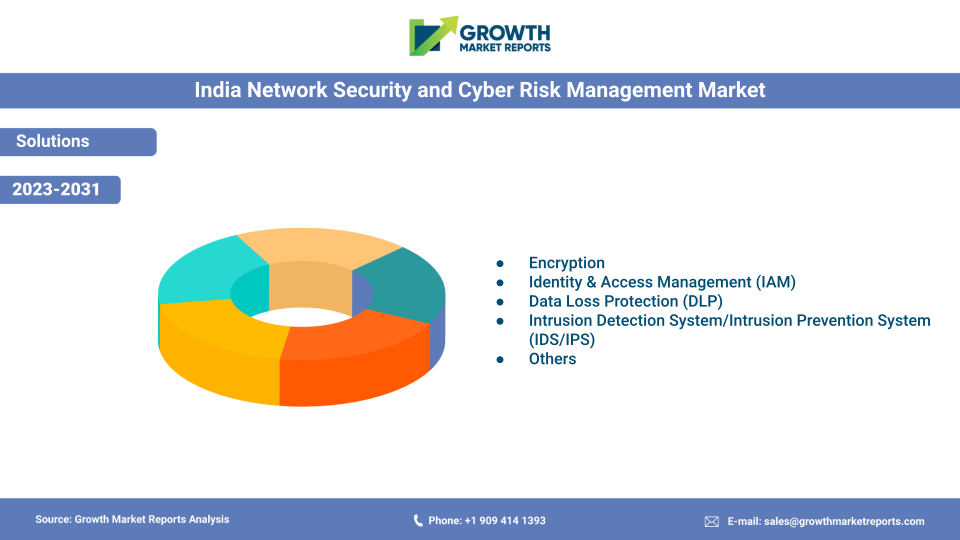
The network security and cyber risk management market is segmented by component into solutions and services, each playing a pivotal role in safeguarding organizational assets. Solutions encompass a wide array of software and hardware offerings such as firewalls, intrusion detection and prevention systems, endpoint security, and unified threat management platforms. These solutions are designed to provide layered protection against evolving cyber threats, offering features like real-time threat intelligence, automated incident response, and advanced analytics. The demand for integrated security platforms that consolidate multiple functionalities into a single interface is rising, as organizations seek to streamline security operations and reduce complexity. Solutions accounted for approximately 62.5% of total market revenue in 2025, and this segment is expected to maintain its majority share through 2034.
Services, on the other hand, include consulting, deployment and integration, training, support, and managed security services. As cyber threats become more sophisticated in 2025, organizations are increasingly turning to specialized service providers for expert guidance and ongoing support. Managed security services, in particular, are gaining traction among enterprises that lack in-house expertise or resources to manage complex security environments. These services offer continuous monitoring, threat hunting, vulnerability assessments, and incident response, enabling organizations to maintain a robust security posture without diverting critical internal resources. The services segment represents roughly 37.5% of 2025 revenue and is growing rapidly as demand for outsourced security capabilities rises globally.
The interplay between solutions and services is crucial for effective cyber risk management. While advanced security solutions provide the technical foundation for threat prevention and detection, professional services ensure that these solutions are optimally configured, regularly updated, and aligned with the organization's unique risk profile. Service providers also assist with integrated risk management for security, helping organizations navigate the complex landscape of data protection laws and industry standards. This integrated approach enhances the overall effectiveness of network security strategies, minimizing the risk of data breaches and operational disruptions.
The component landscape is witnessing continuous innovation, with vendors focusing on the development of AI-driven solutions, cloud-native security tools, and automated security orchestration platforms. The integration of machine learning and generative AI into security solutions is enabling faster threat detection, predictive analytics, and automated response capabilities. Service providers are also expanding their offerings to include incident response planning, cyber risk assessment, and employee training programs, reflecting the growing recognition of human factors in cybersecurity. As organizations increasingly adopt hybrid and multi-cloud environments through the latter half of this decade, the demand for flexible, scalable, and interoperable security solutions and services is expected to surge markedly.
| Attributes | Details |
| Report Title | Network Security and Cyber Risk Management Market Research Report 2034 |
| By Component | Solutions, Services |
| By Deployment Mode | On-Premises, Cloud |
| By Organization Size | Small and Medium Enterprises, Large Enterprises |
| By Application | Threat Intelligence, Risk and Compliance Management, Incident Response, Vulnerability Management, Security Monitoring, Others |
| By End-User | BFSI, Healthcare, Government, IT and Telecommunications, Retail, Manufacturing, Others |
| Regions Covered | North America, Europe, APAC, Latin America, MEA |
| Base Year | 2025 |
| Historic Data | 2019-2024 |
| Forecast Period | 2026-2034 |
| Number of Pages | 256 |
| Number of Tables & Figures | 365 |
| Customization Available | Yes, the report can be customized as per your need. |
Deployment mode is a critical consideration in the network security and cyber risk management market, with organizations choosing between on-premises and cloud-based solutions based on their unique operational requirements and risk appetites. On-premises deployment remains prevalent among large enterprises and highly regulated sectors such as banking, healthcare, and government, where data sovereignty, control, and compliance are paramount. These organizations prefer on-premises solutions to maintain direct oversight of security infrastructure, ensure data privacy, and meet stringent regulatory requirements. However, on-premises deployments often entail higher upfront costs, complex maintenance, and scalability challenges, which can limit their appeal for smaller organizations operating with tighter budgets in 2025.
Cloud deployment is gaining significant momentum across all industry verticals, driven by the widespread adoption of cloud computing, remote and hybrid work, and digital transformation initiatives that have accelerated sharply since 2022. Cloud-based security solutions offer unparalleled scalability, flexibility, and cost-efficiency, allowing organizations to quickly adapt to changing threat landscapes and business needs. These solutions are typically delivered as Software-as-a-Service (SaaS), enabling rapid deployment, automatic updates, and seamless integration with other cloud services. The ability to centralize security management across distributed environments is a key advantage, particularly for organizations with global operations or hybrid workforces that are now the norm rather than the exception.
Hybrid deployment models are also emerging as a popular choice, enabling organizations to leverage the benefits of both on-premises and cloud-based security solutions. Hybrid models provide the flexibility to protect sensitive data and critical workloads on-premises while taking advantage of the scalability and agility of cloud-based services for less sensitive operations. This approach is particularly beneficial for organizations undergoing digital transformation or operating in highly regulated industries, as it allows them to balance security, compliance, and operational efficiency simultaneously.
The shift towards cloud-based and hybrid deployment models is driving innovation in network security architectures throughout 2025. Vendors are focusing on developing cloud-native security solutions that offer real-time threat detection, automated incident response, and seamless integration with cloud platforms such as AWS, Microsoft Azure, and Google Cloud. The adoption of zero-trust security frameworks, which assume that threats can originate from both inside and outside the network, is further accelerating the demand for cloud-delivered security solutions. As organizations continue to embrace digital transformation, the deployment mode landscape is expected to evolve rapidly, with cloud and hybrid models leading the way through 2034.
The network security and cyber risk management market is segmented by organization size into small and medium enterprises (SMEs) and large enterprises, each with distinct security needs and investment capacities. Large enterprises, with their extensive IT infrastructure, complex business operations, and high-value digital assets, represent the largest market segment in 2025. These organizations face a broad spectrum of cyber threats, ranging from targeted attacks by nation-state actors to insider threats and supply chain vulnerabilities. As a result, large enterprises invest heavily in comprehensive security solutions, advanced threat intelligence, and managed security services to protect their assets and ensure business continuity.
Small and medium enterprises (SMEs), while often lacking the resources and expertise of larger organizations, are increasingly recognizing the importance of robust network security and cyber risk management in 2025. SMEs are frequent targets for cybercriminals due to perceived vulnerabilities and limited security budgets. However, the proliferation of affordable, cloud-based security solutions is enabling SMEs to enhance their security posture without significant capital investment. Managed security services, in particular, offer SMEs access to enterprise-grade security capabilities, including continuous monitoring, threat detection, and incident response, on a flexible subscription basis that aligns with constrained operational budgets.
The security needs of SMEs and large enterprises are converging in some areas, particularly as digital transformation accelerates and hybrid work becomes a permanent fixture. Both segments are prioritizing investments in endpoint security, identity and access management, and security awareness training to address the evolving threat landscape. However, the scale and complexity of security deployments differ, with large enterprises favoring integrated, multi-layered security platforms and SMEs opting for modular, easy-to-deploy solutions that require minimal internal expertise.
Vendors are tailoring their offerings to address the unique requirements of each segment. For large enterprises, the focus is on scalability, integration, and advanced analytics, while for SMEs, simplicity, affordability, and ease of use are paramount. The growing availability of flexible pricing models, such as pay-as-you-go and managed services, is further democratizing access to advanced security technologies. Awareness of third-party cyber risk management is also rising across both segments, as supply chain attacks become a leading attack vector. As cyber threats continue to evolve, both SMEs and large enterprises are expected to increase their investments in network security and cyber risk management, driving sustained market growth through 2034.
The application landscape of the network security and cyber risk management market is diverse, encompassing threat intelligence, risk and compliance management, incident response, vulnerability management, security monitoring, and other specialized functions. Threat intelligence solutions are gaining pronounced prominence in 2025 as organizations seek to proactively identify and mitigate emerging threats. These solutions leverage advanced analytics, machine learning, and global threat feeds to provide actionable insights, enabling organizations to anticipate and defend against sophisticated attacks. The integration of threat intelligence with security operations centers (SOCs) is enhancing situational awareness and accelerating response times across enterprise and government environments alike.
Risk and compliance management is another critical application area, driven by the increasing complexity of regulatory requirements and the need to manage cyber risks holistically. Organizations are deploying integrated risk management platforms that automate compliance workflows, monitor regulatory changes, and provide real-time risk assessments. These platforms enable organizations to demonstrate compliance with industry standards such as ISO 27001, PCI DSS, and HIPAA, while minimizing the risk of regulatory penalties and reputational damage. The growing focus on governance, risk, and compliance (GRC) is fueling demand for comprehensive solutions that provide centralized visibility and control. The application of AI-powered cyber risk analytics is particularly transforming how organizations quantify and prioritize risk exposure in real time.
Incident response and vulnerability management are essential components of an effective cyber risk management strategy in 2025. Incident response solutions enable organizations to detect, contain, and remediate security incidents quickly, minimizing the impact of breaches and reducing recovery times. Automated incident response tools, powered by artificial intelligence and machine learning, are streamlining investigation processes and enabling rapid containment of threats. Vulnerability management solutions provide continuous monitoring and assessment of IT assets, identifying and prioritizing vulnerabilities based on risk and business impact. The integration of vulnerability management with patch management and threat intelligence is enhancing the effectiveness of these solutions across complex, hybrid IT environments.
Security monitoring, including real-time network monitoring, log analysis, and anomaly detection, is a foundational capability for organizations seeking to maintain a robust security posture. Security information and event management (SIEM) platforms, combined with advanced analytics and machine learning, are enabling organizations to detect and respond to threats faster and more accurately. Other specialized applications such as data loss prevention (DLP), identity and access management (IAM), and endpoint detection and response (EDR) are also witnessing increased adoption as organizations strive to address specific security challenges and regulatory requirements. The application landscape is expected to continue evolving through 2034, with greater emphasis on automation, integration, and intelligence-driven security across all verticals.
The network security and cyber risk management market serves a diverse array of end-users, including BFSI, healthcare, government, IT and telecommunications, retail, manufacturing, and others. The BFSI sector is the largest end-user in 2025, accounting for a significant share of market revenue due to the critical nature of financial data, high regulatory scrutiny, and the constant threat of cyberattacks. Financial institutions are investing in advanced security solutions to protect customer data, prevent fraud, and ensure compliance with regulations such as the Payment Card Industry Data Security Standard (PCI DSS) and GDPR, while also preparing for emerging threats tied to open banking and digital asset platforms.
The healthcare sector is also a major market segment, driven by the increasing digitization of patient records, the expansion of telemedicine services, and the growing threat of ransomware attacks targeting healthcare providers globally. Healthcare organizations are deploying comprehensive security solutions to safeguard sensitive patient information, ensure regulatory compliance under HIPAA and equivalent frameworks, and protect critical medical infrastructure. The integration of connected medical devices with hospital networks continues to introduce new vulnerabilities, necessitating a holistic approach to network security and risk management that spans clinical and administrative systems.
Government agencies represent another key end-user segment, with national security, public safety, and citizen data protection as top priorities in 2025. Governments are implementing stringent cybersecurity frameworks, investing in advanced threat detection and response capabilities, and collaborating with private sector partners to strengthen national cyber resilience. The increasing frequency of nation-state attacks and cyber espionage campaigns is driving demand for robust network security solutions across government agencies and critical infrastructure sectors, with many governments establishing dedicated cybersecurity agencies and mandating minimum security standards for contractors and vendors.
Other prominent end-users include IT and telecommunications, retail, and manufacturing. The IT and telecommunications sector is at the forefront of digital transformation, requiring advanced security solutions to protect vast networks, data centers, and customer information at scale. Retailers are focusing on securing e-commerce platforms, payment systems, and customer data, while manufacturers are investing in cybersecurity to protect intellectual property, supply chains, and industrial control systems from increasingly targeted attacks. The diverse and specialized needs of these end-users are driving continued innovation and customization in network security and cyber risk management solutions through 2034.
The network security and cyber risk management market offers significant growth opportunities in 2025, particularly in the areas of artificial intelligence, machine learning, and automation. The integration of AI and ML into security solutions is enabling organizations to detect and respond to threats faster and more accurately, reducing the time to contain breaches and minimizing operational disruptions. Automation is streamlining security operations, allowing organizations to manage complex environments with limited resources. The adoption of zero-trust security models, which assume that threats can originate from both inside and outside the network, is creating new opportunities for vendors to deliver innovative solutions that provide continuous verification and adaptive access controls suited to hybrid work environments.
Another major opportunity lies in the expansion of managed security services, particularly for small and medium enterprises (SMEs) that lack in-house expertise and resources. Managed security service providers (MSSPs) offer a range of services, including threat monitoring, incident response, vulnerability management, and compliance support, on a subscription basis. This model enables SMEs to access enterprise-grade security capabilities without significant capital investment, driving market penetration in underserved segments. The growing focus on regulatory compliance is also creating opportunities for vendors to offer integrated risk management platforms that automate compliance workflows and provide real-time visibility into regulatory posture across multiple jurisdictions and industry standards.
Despite these opportunities, the market faces several restraining factors. One of the primary challenges is the shortage of skilled cybersecurity professionals, which is limiting the ability of organizations to effectively manage complex security environments. The rapid evolution of cyber threats, coupled with the increasing sophistication of AI-assisted attack techniques, is making it difficult for organizations to keep pace with emerging risks. Budget constraints, particularly among SMEs, can also hinder the adoption of advanced security solutions. Additionally, the complexity of integrating new security technologies with legacy IT infrastructure can pose significant operational challenges, slowing down deployment timelines and reducing the overall effectiveness of security initiatives. Alert fatigue among security operations teams remains a persistent problem, underscoring the need for smarter, more contextual threat prioritization.
North America leads the global network security and cyber risk management market, accounting for approximately 41.5% of total revenue in 2025, equivalent to roughly USD 9.3 billion. The region's dominance is attributed to the presence of leading cybersecurity vendors, high adoption rates of advanced technologies, and a strong regulatory environment anchored by frameworks including CMMC, NIST, and state-level privacy laws. Organizations in the United States and Canada are prioritizing investments in next-generation security solutions to address the growing threat landscape and comply with stringent data protection regulations. The rapid adoption of cloud computing, IoT, and hybrid work models is further driving demand for comprehensive network security and cyber risk management solutions in the region through 2034.
Europe is the second-largest market, with a market size of approximately USD 6.0 billion in 2025. The region's growth is driven by the enforcement of GDPR and the NIS2 Directive, alongside the increasing frequency of cyberattacks targeting critical infrastructure, financial institutions, and government agencies. Countries such as the United Kingdom, Germany, and France are at the forefront of cybersecurity innovation, investing in advanced threat detection, incident response, and risk management capabilities. The European market is expected to grow at a steady CAGR of 12.8% through 2034, supported by ongoing digital transformation initiatives and increased public and private sector collaboration on cybersecurity resilience.
The Asia Pacific region is poised for the fastest growth, with a market size of approximately USD 4.8 billion in 2025 and a projected CAGR of 15.6% through 2034. Rapid digitalization, expanding internet penetration, and increasing awareness of cyber risks are driving investments in network security and cyber risk management across China, India, Japan, South Korea, and Australia. Governments in the region are implementing national cybersecurity strategies and investing in capacity building to enhance cyber resilience. Latin America and the Middle East and Africa are also witnessing steady growth, with market sizes of approximately USD 1.2 billion and USD 1.0 billion respectively in 2025, supported by expanding digital infrastructure, rising foreign direct investment in technology sectors, and growing regulatory focus on cybersecurity governance.
The network security and cyber risk management market in 2025 is characterized by intense competition, with a mix of global technology giants, specialized cybersecurity vendors, and innovative growth-stage companies vying for market share. The competitive landscape is shaped by rapid technological advancements, evolving customer needs, and the constant emergence of new threat vectors. Leading vendors are investing heavily in research and development to enhance their solution portfolios, incorporating artificial intelligence, machine learning, and automation to deliver more effective and efficient security capabilities. Strategic partnerships, mergers and acquisitions, and collaborations with managed security service providers are common strategies employed by market players to expand their reach and strengthen competitive positions.
Innovation is a key differentiator in the market, with vendors focusing on the development of integrated security platforms that provide centralized visibility, automated threat detection, and real-time incident response. The shift towards cloud-based and hybrid security solutions is driving vendors to offer flexible deployment options and seamless integration with leading cloud platforms. Customer-centricity is also a critical success factor, with vendors offering tailored solutions and services to address the unique needs of different industry verticals and organization sizes. The growing emphasis on regulatory compliance is prompting vendors to enhance their risk and compliance management capabilities, enabling customers to navigate complex regulatory landscapes with greater efficiency and confidence.
The market is witnessing increased collaboration between technology providers, consulting firms, and managed security service providers to deliver end-to-end security solutions. This ecosystem approach enables organizations to leverage best-of-breed technologies and expert services to build resilient security architectures. The rise of cybersecurity marketplaces and open API-driven platforms is further facilitating innovation and interoperability, allowing customers to integrate security solutions from multiple vendors and customize their environments to meet specific requirements. The competitive landscape is expected to remain dynamic through 2034, with new entrants and disruptive technologies continually reshaping market dynamics and customer expectations.
Major companies operating in the network security and cyber risk management market include Cisco Systems, Palo Alto Networks, Fortinet, Check Point Software Technologies, CrowdStrike, IBM Security, Broadcom (Symantec), Trend Micro, Trellix, Sophos, Juniper Networks, Proofpoint, Splunk (now part of Cisco), Rapid7, CyberArk, Tenable, SentinelOne, Okta, F5, and Zscaler. Cisco Systems is renowned for its comprehensive portfolio of network security solutions including firewalls, intrusion prevention systems, and advanced threat intelligence platforms. Palo Alto Networks is a leader in next-generation firewalls, cloud-delivered security, and AI-driven security operations, while Fortinet is known for its integrated security fabric and high-performance appliances. CrowdStrike has emerged as a dominant force in cloud-native endpoint protection and threat intelligence, leveraging its AI-driven Falcon platform to serve enterprises globally.
IBM Security offers a broad range of solutions and services with a strong focus on AI-driven threat detection and incident response, anchored by its QRadar SIEM and X-Force threat intelligence capabilities. Check Point Software Technologies specializes in unified threat management and cloud security, while Trend Micro is recognized for its endpoint security, cloud workload protection, and threat intelligence services. Trellix, formed from the combination of FireEye and McAfee Enterprise, is a leader in extended detection and response (XDR) for both government and enterprise customers. Zscaler is redefining network security with its zero-trust cloud security platform, which has gained rapid adoption as organizations modernize their network architectures. SentinelOne and CyberArk represent the next generation of cybersecurity innovation in autonomous endpoint protection and privileged access management respectively, reflecting the market's ongoing shift toward AI-first, identity-centric security strategies.
The Network Security and Cyber Risk Management market has been segmented on the basis of
Artificial intelligence is fundamentally transforming the market by enabling real-time threat detection at scale, predictive risk analytics, and automated incident response that significantly reduces mean time to detect and contain breaches. AI-powered behavioral analytics identify anomalies that rules-based systems miss, while generative AI is being applied to threat simulation, security policy drafting, and analyst augmentation. Vendors across the competitive landscape are embedding AI and machine learning into their core platforms, and the technology is also being adopted by threat actors, creating an escalating AI-driven arms race that continues to accelerate market investment through 2034.
Organizations face several significant challenges, including a persistent global shortage of skilled cybersecurity professionals that limits effective deployment and management of complex security environments. Budget constraints, especially among SMEs, can restrict investment in advanced tools. Legacy IT infrastructure often complicates integration with modern cloud-native security platforms. The rapid evolution of attack techniques requires continuous updates to defenses. Additionally, navigating a fragmented regulatory landscape across multiple jurisdictions adds compliance complexity, and alert fatigue from high-volume security event streams can reduce operational efficiency.
Leading companies in 2025 include Cisco Systems, Palo Alto Networks, Fortinet, Check Point Software Technologies, CrowdStrike, IBM Security, Broadcom (Symantec), Trend Micro, Trellix, Sophos, Juniper Networks, Proofpoint, Splunk (now part of Cisco), Rapid7, CyberArk, Tenable, SentinelOne, Okta, F5, and Zscaler. These vendors compete on platform breadth, AI-driven capabilities, cloud-native architecture, and the ability to serve diverse organization sizes across multiple industry verticals.
The BFSI sector is the largest end-user due to the critical sensitivity of financial data and heavy regulatory scrutiny under standards like PCI DSS and GDPR. Healthcare is a rapidly growing segment as telemedicine expands and ransomware attacks on hospitals intensify. Government agencies are significant buyers, prioritizing national security and critical infrastructure protection. IT and telecommunications, retail, and manufacturing round out the top end-user verticals, each facing unique threat profiles related to data centers, e-commerce platforms, and industrial control systems respectively.
Core applications include threat intelligence, risk and compliance management, incident response, vulnerability management, and security monitoring. Threat intelligence platforms use AI-driven analytics and global threat feeds to enable proactive defense. Risk and compliance management solutions automate regulatory workflows for frameworks such as ISO 27001, PCI DSS, and HIPAA. Incident response tools powered by automation reduce breach containment times significantly. Vulnerability management provides continuous asset assessment and prioritized patching guidance, while security monitoring leverages SIEM platforms and anomaly detection for real-time situational awareness.
Network security solutions are deployed either on-premises or via the cloud. On-premises deployment remains preferred by large enterprises and heavily regulated sectors such as BFSI and government, where data sovereignty and direct infrastructure control are priorities. Cloud-based deployment, delivered primarily as SaaS, is gaining broader momentum because of its scalability, lower upfront cost, automatic updates, and compatibility with hybrid and remote work environments. Hybrid models that blend both approaches are increasingly common among organizations balancing compliance needs with operational agility.
The market is segmented into two primary components: solutions and services. Solutions include firewalls, intrusion detection and prevention systems, endpoint security platforms, unified threat management tools, and zero-trust network access products. Services encompass managed security services, consulting, deployment and integration, training, and ongoing technical support. Solutions account for roughly 62.5% of 2025 revenue, while services represent approximately 37.5%, with managed security services being one of the fastest-growing service categories.
North America holds the largest market share in 2025 at roughly 41.5% of global revenue, driven by a dense concentration of leading cybersecurity vendors, high digital adoption, and a mature regulatory environment. Europe follows with approximately 27.0% share, supported by GDPR enforcement and active public-private cybersecurity collaboration. Asia Pacific, with around 21.5% share, is expected to record the fastest CAGR of 15.6% through 2034, fueled by rapid digitalization in China, India, Japan, and Australia.
The primary growth drivers include the rising frequency and sophistication of ransomware, phishing, and advanced persistent threats, the accelerating adoption of cloud computing and hybrid work models, the proliferation of IoT and connected devices, and increasingly stringent data protection regulations such as GDPR, CMMC, and regional frameworks across Asia Pacific. The integration of AI and machine learning into security platforms is also a major catalyst, enabling faster, more accurate threat detection and automated incident response.
As of 2025, the global network security and cyber risk management market is valued at approximately USD 22.4 billion. The market is projected to grow at a CAGR of 13.2% from 2026 through 2034, reaching an estimated USD 68.5 billion by 2034, driven by escalating cyber threats, expanding digital infrastructure, and tightening regulatory requirements worldwide.