Segments - by Component (Software, Services), by Deployment Mode (On-Premises, Cloud), by Organization Size (Small and Medium Enterprises, Large Enterprises), by Solution (Antivirus, Firewall, Intrusion Prevention, Endpoint Detection and Response, Encryption, Others), by End-User (BFSI, Healthcare, IT and Telecom, Retail, Government and Defense, Manufacturing, Others)
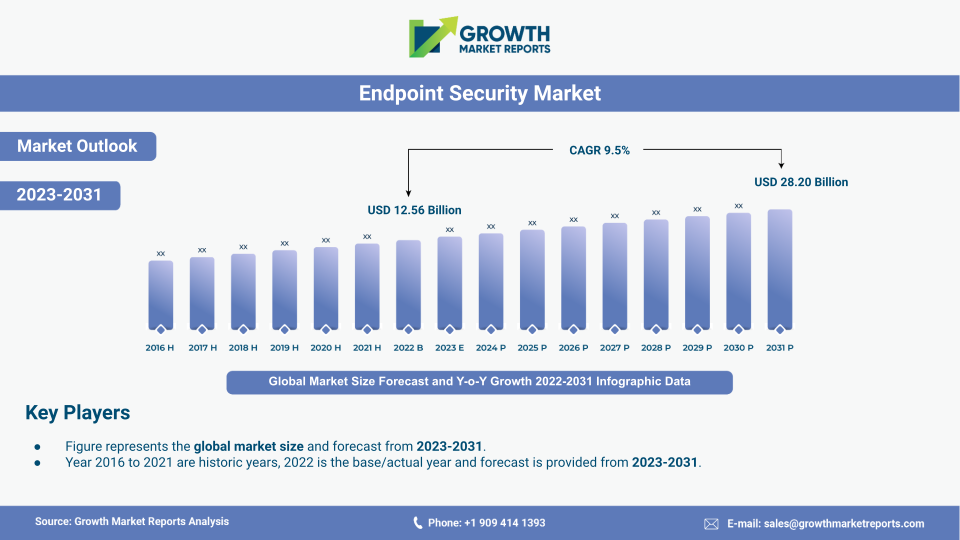
According to our latest research, the global endpoint security market size in 2024 stands at USD 19.7 billion, driven by an escalating wave of sophisticated cyber threats and the proliferation of connected devices across enterprises. The market is projected to exhibit a robust CAGR of 8.9% from 2025 to 2033, reaching a forecasted value of USD 42.3 billion by 2033. This consistent growth is propelled by the increasing adoption of remote work, cloud computing, and the need for advanced security solutions to safeguard endpoints, which remain a critical vulnerability in modern IT infrastructures. As per our latest research, the endpoint security market is witnessing accelerated investments from both public and private sectors to address evolving cyber risks, regulatory compliance, and digital transformation initiatives.
One of the primary growth factors for the endpoint security market is the exponential rise in cyberattacks targeting endpoints, such as laptops, mobile devices, and IoT devices. With organizations embracing hybrid and remote work environments, the attack surface has expanded significantly, making endpoints the favored entry point for cybercriminals. Ransomware, phishing, and zero-day exploits have become more prevalent, prompting enterprises to invest heavily in next-generation endpoint security solutions. These solutions leverage artificial intelligence, machine learning, and behavioral analytics to detect and respond to threats in real time, significantly reducing the risk of data breaches and financial losses. The increasing awareness among organizations about the dire consequences of cyber incidents is further fueling the adoption of comprehensive endpoint security platforms.
Another significant driver is the stringent regulatory landscape governing data privacy and cybersecurity across various industries. Regulations such as GDPR in Europe, CCPA in the United States, and other region-specific mandates require organizations to implement robust security measures to protect sensitive data. Non-compliance can result in hefty fines and reputational damage, compelling businesses to prioritize endpoint security as a core component of their cybersecurity strategy. Additionally, the growing trend of bring-your-own-device (BYOD) policies and the integration of personal devices into corporate networks have heightened the need for advanced endpoint protection. Vendors are responding by offering solutions that provide unified visibility, policy enforcement, and threat intelligence across diverse endpoints, ensuring compliance and data integrity.
Technological advancements in endpoint security solutions are also catalyzing market growth. The emergence of cloud-based security platforms, endpoint detection and response (EDR), and managed security services has transformed how organizations approach endpoint protection. These innovations offer scalability, flexibility, and centralized management, enabling enterprises to adapt to dynamic threat landscapes efficiently. The integration of automation and orchestration capabilities further enhances incident response and remediation, minimizing the dwell time of threats. As digital transformation accelerates across sectors such as BFSI, healthcare, retail, and government, the demand for scalable and intelligent endpoint security solutions is expected to surge, creating lucrative opportunities for market players.
From a regional perspective, North America continues to dominate the endpoint security market, accounting for the largest share in 2024, followed by Europe and Asia Pacific. The region’s leadership is attributed to the early adoption of advanced cybersecurity technologies, the presence of major industry players, and a high incidence of cyberattacks targeting critical infrastructure. Meanwhile, Asia Pacific is emerging as the fastest-growing region, driven by rapid digitalization, increasing investments in IT infrastructure, and rising awareness about cybersecurity risks. Latin America and the Middle East & Africa are also witnessing steady growth, supported by government initiatives to enhance cyber resilience and the expansion of digital services. Each region presents unique challenges and opportunities, shaping the global endpoint security landscape.
The endpoint security market is segmented by component into software and services, each playing a pivotal role in the overall security ecosystem. Software solutions form the backbone of endpoint protection, offering a wide array of functionalities such as antivirus, firewalls, encryption, and advanced threat detection. These solutions are continuously evolving to address the changing threat landscape, incorporating artificial intelligence and machine learning to enhance detection accuracy and reduce false positives. As organizations increasingly adopt digital transformation strategies, the demand for integrated endpoint security software that provides centralized management and real-time threat intelligence is surging. Vendors are focusing on developing modular and scalable software platforms that can be tailored to the unique needs of different industries and organization sizes.
On the other hand, services constitute a significant portion of the endpoint security market, encompassing consulting, deployment, training, and managed security services. As cyber threats become more sophisticated, organizations are seeking expert guidance to design and implement comprehensive endpoint security strategies. Consulting services help businesses assess their security posture, identify vulnerabilities, and develop tailored solutions that align with regulatory requirements and business objectives. Deployment services ensure seamless integration of endpoint security solutions into existing IT environments, minimizing operational disruptions and maximizing return on investment. Training services are equally important, equipping employees with the knowledge and skills to recognize and respond to cyber threats effectively.
Managed security services are gaining traction, especially among small and medium enterprises (SMEs) that lack the resources and expertise to manage endpoint security in-house. These services provide continuous monitoring, threat detection, incident response, and compliance management, allowing organizations to focus on their core business activities. The growing complexity of cyber threats and the shortage of skilled cybersecurity professionals are driving the adoption of managed services, which offer cost-effective and scalable solutions. Vendors are expanding their service portfolios to include proactive threat hunting, vulnerability management, and security analytics, delivering holistic protection to clients across various industries.
The interplay between software and services is critical to the success of endpoint security initiatives. While software provides the foundational tools for threat prevention and detection, services ensure that these tools are effectively deployed, configured, and maintained. Organizations are increasingly opting for bundled offerings that combine software and services, enabling them to achieve comprehensive endpoint protection with minimal operational overhead. The integration of automation and orchestration capabilities within both software and services is further enhancing efficiency and effectiveness, enabling rapid incident response and reducing the time to remediation. As the endpoint security market continues to evolve, the synergy between software and services will remain a key differentiator for vendors.
| Attributes | Details |
| Report Title | Endpoint Security Market Research Report 2033 |
| By Component | Software, Services |
| By Deployment Mode | On-Premises, Cloud |
| By Organization Size | Small and Medium Enterprises, Large Enterprises |
| By Solution | Antivirus, Firewall, Intrusion Prevention, Endpoint Detection and Response, Encryption, Others |
| By End-User | BFSI, Healthcare, IT and Telecom, Retail, Government and Defense, Manufacturing, Others |
| Regions Covered | North America, Europe, APAC, Latin America, MEA |
| Base Year | 2024 |
| Historic Data | 2018-2023 |
| Forecast Period | 2025-2033 |
| Number of Pages | 272 |
| Number of Tables & Figures | 289 |
| Customization Available | Yes, the report can be customized as per your need. |
The deployment mode segment of the endpoint security market is bifurcated into on-premises and cloud-based solutions, each offering distinct advantages and catering to different organizational requirements. On-premises deployment has traditionally been favored by large enterprises and organizations operating in highly regulated industries such as BFSI and government. This approach provides greater control over data, security policies, and compliance, allowing organizations to tailor their endpoint security infrastructure to specific needs. However, on-premises solutions often require significant upfront investments in hardware, software, and skilled personnel, which can be a barrier for small and medium enterprises. Despite these challenges, on-premises deployment remains a viable option for organizations with stringent data sovereignty and privacy requirements.
Cloud-based deployment is rapidly gaining momentum, driven by the need for scalability, flexibility, and cost efficiency. Cloud-based endpoint security solutions offer centralized management, real-time updates, and seamless integration with other cloud services, making them ideal for organizations with distributed workforces and dynamic IT environments. The pay-as-you-go pricing model reduces capital expenditure and enables organizations to scale their security infrastructure in line with business growth. Additionally, cloud-based solutions facilitate rapid deployment and minimize the burden on internal IT teams, allowing organizations to respond quickly to emerging threats. The growing adoption of Software-as-a-Service (SaaS) models is further accelerating the shift towards cloud-based endpoint security.
Hybrid deployment models are also emerging as a popular choice, combining the benefits of on-premises and cloud-based solutions. Organizations can leverage the scalability and agility of the cloud while maintaining control over critical data and applications through on-premises infrastructure. This approach is particularly relevant for enterprises undergoing digital transformation, as it enables them to modernize their security posture without disrupting existing operations. Hybrid models also support seamless integration with legacy systems, ensuring continuity and compatibility across diverse IT environments. Vendors are increasingly offering hybrid solutions that provide unified visibility and management across both on-premises and cloud endpoints.
The choice of deployment mode is influenced by several factors, including regulatory requirements, budget constraints, IT maturity, and the nature of the business. Large enterprises with complex IT environments may prefer on-premises or hybrid solutions to maintain granular control over security policies and data. In contrast, SMEs and organizations with limited IT resources are gravitating towards cloud-based solutions for their ease of deployment and lower total cost of ownership. As the endpoint security market evolves, the demand for flexible deployment options is expected to rise, prompting vendors to offer customizable solutions that cater to the diverse needs of their clients.
The endpoint security market is segmented by organization size into small and medium enterprises (SMEs) and large enterprises, each exhibiting unique security challenges and requirements. Large enterprises typically operate complex IT infrastructures with thousands of endpoints spread across multiple locations and geographies. These organizations face a higher risk of targeted cyberattacks and must comply with stringent regulatory mandates, necessitating advanced endpoint security solutions with robust threat detection, response, and reporting capabilities. Large enterprises often have dedicated cybersecurity teams and significant budgets, enabling them to invest in comprehensive security platforms that integrate seamlessly with other security tools and technologies.
Small and medium enterprises, on the other hand, are increasingly becoming targets for cybercriminals due to perceived vulnerabilities and limited security resources. SMEs often lack dedicated IT and cybersecurity personnel, making them more susceptible to phishing, ransomware, and other endpoint-based attacks. As a result, there is a growing demand for cost-effective, easy-to-deploy endpoint security solutions that provide enterprise-grade protection without the complexity and overhead associated with large-scale deployments. Vendors are responding by offering tailored solutions for SMEs, featuring simplified management consoles, automated threat detection, and managed security services that reduce the burden on internal teams.
The adoption of cloud-based endpoint security solutions is particularly high among SMEs, driven by the need for scalability, flexibility, and affordability. Cloud-based platforms offer centralized management, real-time updates, and seamless integration with existing IT environments, enabling SMEs to enhance their security posture without significant capital investment. Managed security services are also gaining popularity among SMEs, providing continuous monitoring, threat intelligence, and incident response capabilities that would otherwise be out of reach for smaller organizations. The increasing availability of subscription-based pricing models is further lowering the barriers to adoption, enabling SMEs to access advanced security features on a pay-as-you-go basis.
Despite their differences, both large enterprises and SMEs are recognizing the importance of a proactive approach to endpoint security. The rise of remote work, BYOD policies, and cloud adoption has blurred the traditional boundaries of the corporate network, making endpoints the first line of defense against cyber threats. As a result, organizations of all sizes are investing in endpoint security solutions that offer unified visibility, automated threat response, and integration with broader security ecosystems. The convergence of endpoint security with other security domains, such as identity and access management, is further enhancing the ability of organizations to protect their digital assets and ensure business continuity.
The endpoint security market encompasses a diverse range of solutions, including antivirus, firewall, intrusion prevention, endpoint detection and response (EDR), encryption, and others. Antivirus solutions remain a foundational component of endpoint security, providing essential protection against malware, viruses, and other common threats. However, the increasing sophistication of cyberattacks has rendered traditional antivirus solutions insufficient on their own. As a result, organizations are adopting multi-layered security approaches that combine antivirus with advanced threat detection, behavioral analysis, and real-time response capabilities. Vendors are continuously enhancing their antivirus offerings with machine learning and cloud-based intelligence to improve detection rates and reduce the risk of false positives.
Firewalls and intrusion prevention systems play a critical role in safeguarding endpoints from unauthorized access and network-based attacks. Modern firewalls are equipped with deep packet inspection, application awareness, and integrated threat intelligence, enabling organizations to enforce granular security policies and block malicious traffic. Intrusion prevention systems complement firewalls by monitoring network traffic for suspicious activity and automatically blocking potential threats. These solutions are particularly important in environments with high volumes of data and complex network architectures, such as financial institutions, healthcare providers, and government agencies.
Endpoint detection and response (EDR) solutions have emerged as a key growth segment within the endpoint security market. EDR solutions provide continuous monitoring, threat detection, and automated response capabilities, enabling organizations to identify and mitigate advanced threats that evade traditional defenses. EDR platforms leverage artificial intelligence, machine learning, and behavioral analytics to detect anomalies, investigate incidents, and orchestrate remediation actions across endpoints. The ability to provide real-time visibility and actionable insights is driving widespread adoption of EDR solutions, particularly among large enterprises and organizations with high-value assets.
Encryption solutions are gaining prominence as organizations seek to protect sensitive data at rest, in transit, and on endpoints. Encryption ensures that even if an endpoint is compromised, the data remains inaccessible to unauthorized users. Regulatory requirements and the increasing use of mobile devices for business purposes are driving the adoption of endpoint encryption solutions across industries. Other solutions, such as application control, device management, and vulnerability assessment, are also integral to comprehensive endpoint security strategies. Vendors are offering integrated platforms that combine multiple security functions, enabling organizations to achieve holistic protection and streamline management.
The endpoint security market serves a wide range of end-users, including BFSI, healthcare, IT and telecom, retail, government and defense, manufacturing, and others. The BFSI sector is a major adopter of endpoint security solutions due to the sensitive nature of financial data and the high risk of cyberattacks. Financial institutions are subject to stringent regulatory requirements and must implement robust security measures to protect customer information, prevent fraud, and ensure business continuity. Endpoint security solutions in the BFSI sector focus on advanced threat detection, encryption, and compliance management, enabling organizations to safeguard their digital assets and maintain customer trust.
Healthcare organizations are increasingly investing in endpoint security to protect patient data, comply with regulations such as HIPAA, and prevent disruptions to critical medical services. The proliferation of connected medical devices and electronic health records has expanded the attack surface, making endpoints a prime target for cybercriminals. Endpoint security solutions in healthcare emphasize device management, data encryption, and real-time threat detection, enabling organizations to secure patient information and maintain the integrity of healthcare delivery.
The IT and telecom sector is another significant end-user of endpoint security solutions, driven by the need to protect vast networks of endpoints across geographically dispersed locations. Telecom operators and IT service providers face constant threats from cybercriminals seeking to disrupt services, steal intellectual property, and compromise customer data. Endpoint security solutions in this sector focus on scalability, centralized management, and integration with broader security architectures, enabling organizations to defend against both known and unknown threats.
Retail, government and defense, and manufacturing sectors are also witnessing increased adoption of endpoint security solutions. Retailers are investing in endpoint security to protect customer data, prevent point-of-sale (POS) attacks, and comply with payment card industry (PCI) standards. Government and defense organizations prioritize endpoint security to protect sensitive information, ensure national security, and defend against cyber espionage. Manufacturing companies are adopting endpoint security to safeguard intellectual property, secure industrial control systems, and prevent disruptions to production processes. Each end-user segment has unique security requirements, driving demand for tailored solutions that address industry-specific challenges.
The endpoint security market presents a wealth of opportunities for vendors, service providers, and end-users alike. The rapid adoption of digital transformation initiatives across industries is creating new avenues for endpoint security solutions, as organizations seek to protect their expanding digital footprints. The rise of remote work, cloud computing, and the Internet of Things (IoT) is driving demand for scalable, flexible, and intelligent endpoint protection platforms. Vendors that can offer integrated solutions combining endpoint security with identity management, threat intelligence, and security analytics are well-positioned to capture market share. Additionally, the increasing focus on regulatory compliance and data privacy is prompting organizations to invest in advanced security technologies, creating opportunities for innovation and differentiation.
Emerging technologies such as artificial intelligence, machine learning, and automation are transforming the endpoint security landscape, enabling faster and more accurate threat detection, response, and remediation. The integration of these technologies into endpoint security solutions is enhancing efficiency, reducing operational overhead, and enabling organizations to stay ahead of evolving threats. The growing adoption of managed security services is another significant opportunity, particularly among SMEs and organizations with limited internal resources. Service providers that can deliver proactive threat hunting, incident response, and compliance management are poised for growth in this dynamic market. Partnerships, mergers, and acquisitions are also creating opportunities for vendors to expand their capabilities and reach new customer segments.
Despite the numerous opportunities, the endpoint security market faces several restraining factors that could impede growth. The rapidly evolving threat landscape requires continuous innovation and adaptation, placing significant pressure on vendors to stay ahead of cybercriminals. The shortage of skilled cybersecurity professionals is a persistent challenge, limiting the ability of organizations to effectively deploy and manage endpoint security solutions. Additionally, budget constraints, particularly among SMEs, can hinder the adoption of advanced security technologies. The complexity of integrating endpoint security with existing IT infrastructures and the potential for compatibility issues are also barriers to widespread adoption. Vendors must address these challenges by offering user-friendly, cost-effective, and interoperable solutions that meet the diverse needs of their customers.
North America leads the global endpoint security market, accounting for the largest revenue share in 2024 with approximately USD 8.2 billion. The region’s dominance is underpinned by the early adoption of advanced cybersecurity technologies, a high concentration of industry-leading vendors, and a significant incidence of cyberattacks targeting critical infrastructure. The United States, in particular, is a major contributor, driven by stringent regulatory requirements, substantial investments in IT security, and the presence of large enterprises operating across various sectors. Canada is also witnessing robust growth, supported by government initiatives to enhance cyber resilience and the expansion of digital services across industries.
Europe is the second-largest market for endpoint security, with a market size of approximately USD 5.1 billion in 2024. The region’s growth is fueled by the increasing adoption of digital transformation initiatives, rising awareness about cyber risks, and the implementation of comprehensive data protection regulations such as GDPR. Countries such as the United Kingdom, Germany, and France are at the forefront, investing heavily in advanced endpoint security solutions to protect critical infrastructure and ensure compliance with regulatory mandates. The region is expected to witness a steady CAGR of 8.4% through 2033, driven by ongoing investments in cybersecurity and the proliferation of connected devices.
Asia Pacific is emerging as the fastest-growing region in the endpoint security market, with a market size of USD 4.3 billion in 2024 and a projected CAGR of 10.6% from 2025 to 2033. The region’s rapid growth is attributed to the increasing adoption of digital technologies, rising investments in IT infrastructure, and the growing awareness of cybersecurity threats. Countries such as China, India, Japan, and South Korea are at the forefront of this growth, driven by government initiatives to enhance cyber resilience, the expansion of digital services, and the rising incidence of cyberattacks. Latin America and the Middle East & Africa are also witnessing steady growth, supported by the expansion of digital economies and government efforts to strengthen cybersecurity frameworks. The combined market size for these regions is estimated at USD 2.1 billion in 2024, with significant potential for future growth.
The endpoint security market is highly competitive, characterized by the presence of numerous global and regional players vying for market share through innovation, strategic partnerships, and mergers and acquisitions. Leading vendors are focusing on expanding their product portfolios, integrating advanced technologies such as artificial intelligence, machine learning, and automation to enhance threat detection and response capabilities. The competitive landscape is also shaped by the increasing demand for cloud-based and managed security services, prompting vendors to develop flexible and scalable solutions that cater to the evolving needs of organizations of all sizes. Pricing strategies, customer support, and the ability to provide comprehensive, integrated security platforms are key differentiators in this dynamic market.
Innovation remains a critical success factor in the endpoint security market, with vendors investing heavily in research and development to stay ahead of emerging threats. The integration of endpoint security with broader security ecosystems, such as identity and access management, threat intelligence, and security analytics, is becoming increasingly important. Vendors are also focusing on enhancing user experience through intuitive management consoles, automated workflows, and seamless integration with existing IT infrastructures. The shift towards subscription-based pricing models and the growing adoption of managed security services are driving competition, as vendors seek to offer value-added services and build long-term customer relationships.
Strategic partnerships and acquisitions are playing a significant role in shaping the competitive landscape of the endpoint security market. Vendors are collaborating with technology partners, service providers, and channel partners to expand their reach, enhance their capabilities, and deliver integrated solutions to a broader customer base. Mergers and acquisitions are enabling vendors to acquire specialized technologies, enter new markets, and strengthen their competitive position. The ability to adapt to changing customer needs, respond to evolving threats, and deliver innovative solutions will be critical for vendors seeking to maintain and grow their market share in the coming years.
Major companies operating in the global endpoint security market include Symantec (Broadcom), McAfee, Trend Micro, Sophos, CrowdStrike, Kaspersky, Cisco, Microsoft, Check Point Software Technologies, and Palo Alto Networks. Symantec (Broadcom) is renowned for its comprehensive endpoint protection platforms, offering advanced threat intelligence and integrated security management. McAfee and Trend Micro are recognized for their robust antivirus and EDR solutions, catering to organizations of all sizes across various industries. Sophos and CrowdStrike are at the forefront of next-generation endpoint security, leveraging artificial intelligence and cloud-based platforms to deliver real-time threat detection and response.
Kaspersky, Cisco, and Microsoft are also key players, offering a wide range of endpoint security solutions that integrate seamlessly with broader security architectures. Check Point Software Technologies and Palo Alto Networks are known for their innovative firewall and intrusion prevention systems, providing holistic protection against advanced threats. These companies are continuously expanding their product portfolios, investing in research and development, and forging strategic partnerships to strengthen their competitive position. As the endpoint security market continues to evolve, the ability to deliver integrated, scalable, and intelligent security solutions will be critical for success.
The Endpoint Security market has been segmented on the basis of
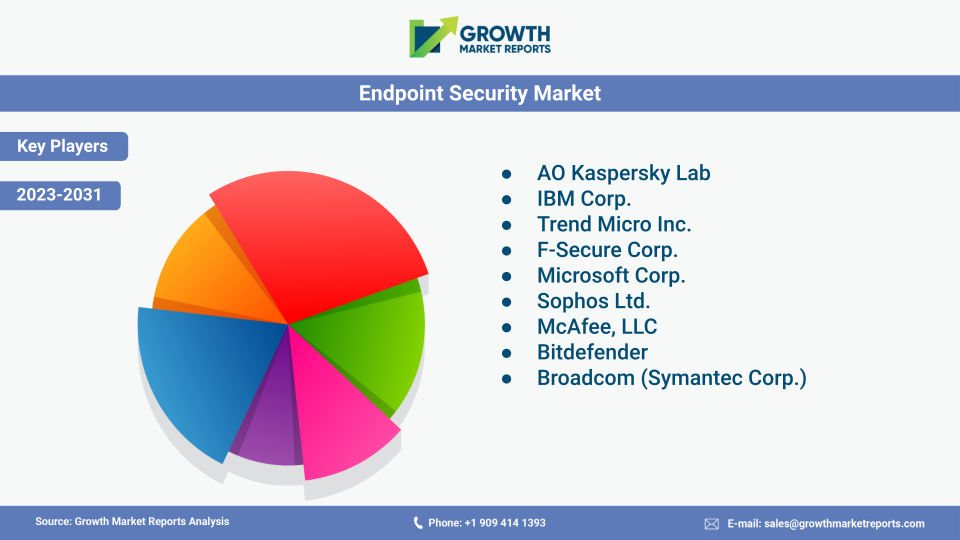
Key players competing in the global endpoint security market share are AO Kaspersky Lab; IBM Corp.; Trend Micro Inc.; F-Secure Corp.; Microsoft Corp.; Sophos Ltd.; McAfee, LLC; Bitdefender; and Broadcom (Symantec Corp.). Companies are focusing on rapid technological advancements in endpoint security solution to maintain their competitive position in the market. Furthermore, companies have been widely engaged in strategic partnership, merger & acquisition, new product launch, and collaborations to boost their market share and acquiring new buyers. For instance,
In May 2019, Microsoft announced a launch of its endpoint manager, which includes both Intune abilities and configuration manager, along with supplementary Microsoft services and products. The endpoint benefits to companies for maintenance of extensive range of devices used among their staff members.
Key end-users include BFSI, healthcare, IT and telecom, retail, government and defense, and manufacturing, each with unique security requirements and compliance needs.
Challenges include the rapidly evolving threat landscape, shortage of skilled cybersecurity professionals, budget constraints, and the complexity of integrating endpoint security with existing IT infrastructures.
Large enterprises require advanced, integrated endpoint security due to complex IT environments and regulatory demands, while SMEs seek cost-effective, easy-to-deploy solutions with managed services due to limited resources.
Endpoint security solutions include antivirus, firewall, intrusion prevention, endpoint detection and response (EDR), encryption, and other advanced threat protection tools.
North America leads the endpoint security market, followed by Europe and Asia Pacific. North America’s dominance is due to early adoption of cybersecurity technologies and a high incidence of cyberattacks.
Major companies in the endpoint security market include Symantec (Broadcom), McAfee, Trend Micro, Sophos, CrowdStrike, Kaspersky, Cisco, Microsoft, Check Point Software Technologies, and Palo Alto Networks.
Endpoint security solutions can be deployed on-premises, in the cloud, or through hybrid models, each offering different advantages in terms of control, scalability, and cost efficiency.
Key growth drivers include the rise in sophisticated cyberattacks, increased adoption of remote work and cloud computing, regulatory compliance requirements, and the need for advanced security solutions to protect endpoints.
The endpoint security market is expected to grow at a CAGR of 8.9% from 2025 to 2033, reaching a forecasted value of USD 42.3 billion by 2033.
As of 2024, the global endpoint security market size is valued at USD 19.7 billion, driven by increasing cyber threats and the proliferation of connected devices.