Mud Tire (MT) Market Report 2025-2034

Mud Tire (MT) Market Report 2025-2034

Segments - by Tire Type (Radial, Bias), by Vehicle Type (Light Trucks, SUVs, Pickup Trucks, Jeeps, Others), by Sales Channel (OEM, Aftermarket), by Application (Off-Road, On-Road)

https://growthmarketreports.com/Raksha
Author : Raksha Sharma
https://growthmarketreports.com/Vaibhav
Fact-checked by : V. Chandola
https://growthmarketreports.com/Shruti
Editor : Shruti Bhat

Last Updated : Jun, 2026 | Report ID :AL-313 | 4.6 Rating | 9 Reviews | 288 Pages | Format : Docx PDF

Report Description

This report is updated with the latest market data and insights as of June 2026. Base year: 2025  |  Forecast period: 2026-2034


Mud Tire (MT) Market Outlook

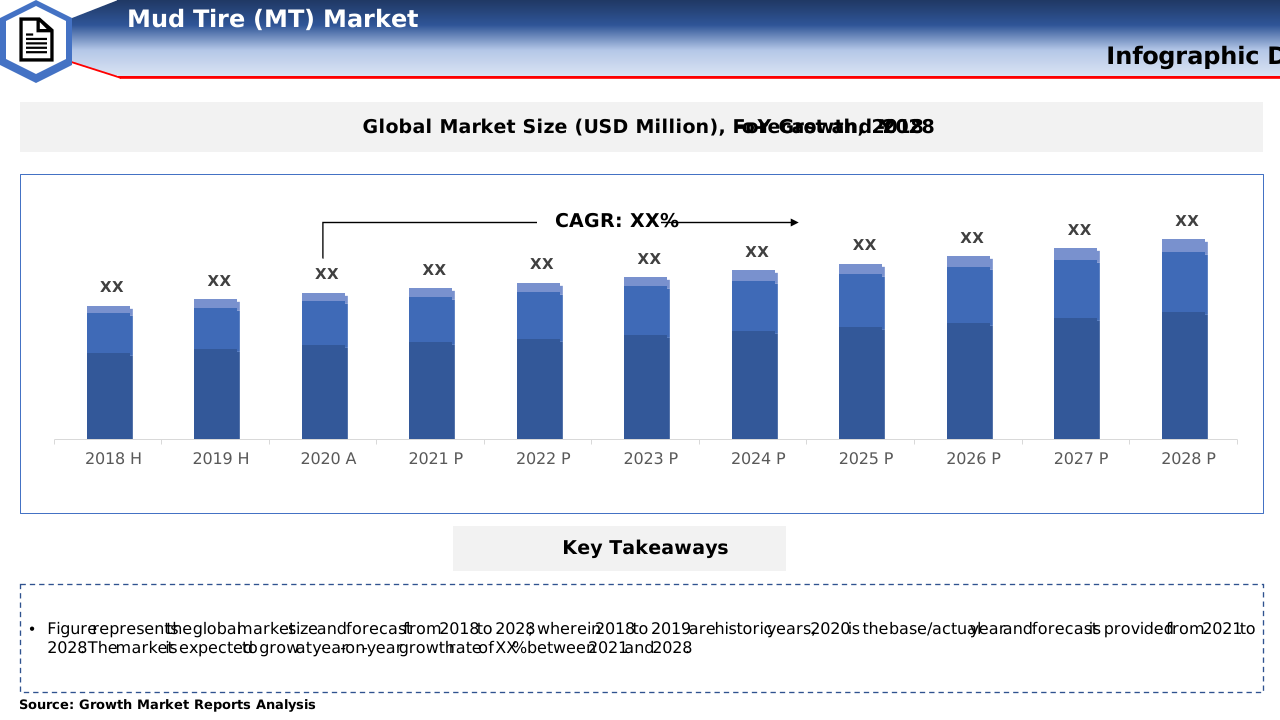
According to our latest research, the global Mud Tire (MT) market size reached USD 8.8 billion in 2025, reflecting robust demand driven by the surge in off-road vehicle adoption and recreational activities worldwide. The market is expected to grow at a CAGR of 6.1% during the forecast period, with the market size projected to reach USD 15.1 billion by 2034. This steady growth trajectory is primarily attributed to increasing consumer preference for adventure sports, expanding automotive aftermarket ecosystems, and technological advancements in tire manufacturing that enhance durability and performance across challenging terrains.

Global Mud Tire (MT) Market Size Forecast 2025-2034, USD Billion

One of the most significant growth factors propelling the Mud Tire (MT) market is the increasing popularity of off-road recreational activities and motorsports. Across North America and Europe, the rise of off-roading clubs, adventure tourism, and motorsport events has fueled a spike in demand for specialized tires capable of handling muddy, uneven, and rugged terrains. The proliferation of 4x4 vehicles, including light trucks, SUVs, and pickup trucks, has further contributed to this uptrend. Consumers are actively seeking tires that offer superior traction, self-cleaning tread patterns, and enhanced sidewall protection, driving manufacturers to innovate and expand their mud tire offerings continuously.

Another crucial factor influencing market expansion is the rapid growth of the automotive aftermarket sector. As more consumers modify and upgrade their vehicles for both aesthetic and functional purposes, demand for high-performance mud tires has surged through 2025. The aftermarket segment is particularly robust in regions with a strong culture of vehicle customization, such as the United States, Australia, and parts of Europe. Technological advancements, including the development of advanced rubber compounds and reinforced tire structures, have made mud tires more durable and versatile, thereby extending their lifecycle and reducing replacement frequency. This has attracted a broader customer base encompassing commercial users and outdoor enthusiasts alike.

The increasing integration of advanced manufacturing technologies and materials has also played a pivotal role in shaping the market through the historical period of 2019 to 2024 and into the 2025 base year. Tire manufacturers are leveraging innovations such as 3D printing for rapid prototyping, silica-infused rubber compounds for improved grip, and computer-aided design (CAD) for optimized tread patterns. These advancements not only improve tire performance but also contribute to sustainability by enhancing fuel efficiency and reducing rolling resistance. Additionally, strategic partnerships between OEMs and tire manufacturers are fostering the development of customized mud tire solutions tailored to specific vehicle models, further stimulating market growth through the 2026-2034 forecast window.

The broader specialty tire landscape provides important context for understanding the mud tire segment. Off-highway tire solutions are engineered with robust materials and innovative technologies to ensure they can handle increased load capacities and abrasive surfaces encountered in construction, mining, and agriculture. As global infrastructure continues to expand, the need for reliable high-performance tires is anticipated to rise in parallel with mud tire demand, reinforcing the investment case across the wider off-road tire industry.

Regionally, North America continues to dominate the Mud Tire (MT) market, accounting for approximately 37.5% of global revenue in 2025, followed by Europe and Asia Pacific. The strong presence of off-road vehicle manufacturers, a well-established aftermarket ecosystem, and a growing culture of outdoor adventure sports are key contributors to North America's market leadership. Europe, with its increasing adoption of SUVs and crossovers, is witnessing steady growth, while Asia Pacific is emerging as a lucrative market due to rapid urbanization, rising disposable incomes, and expanding automotive production. Latin America and the Middle East & Africa are also showing meaningful potential, driven by growing infrastructure development and an increasing number of off-road enthusiasts.

Tire Type Analysis

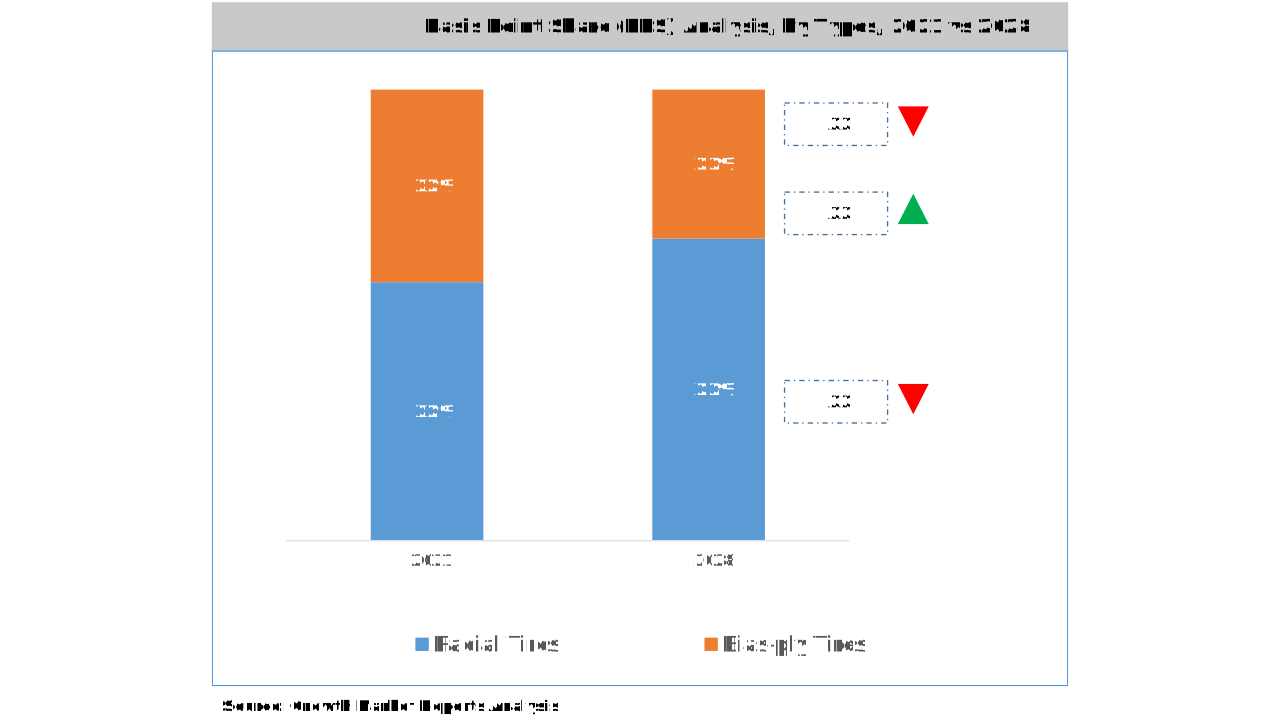
The Tire Type segment in the Mud Tire (MT) market is primarily bifurcated into Radial and Bias tires, each offering distinct advantages and catering to different user preferences. Radial mud tires, known for their superior flexibility, enhanced traction, and longer tread life, have gained significant traction among off-road enthusiasts and commercial users. The radial construction allows for better ground contact, improved ride comfort, and reduced rolling resistance, making them the preferred choice for modern SUVs, light trucks, and pickup trucks. As a result, radial mud tires accounted for approximately 64.5% of global revenue in 2025, and this trend is expected to continue through 2034, supported by ongoing innovations in tire materials and design.

Mud Tire (MT) Market Share by Tire Type 2025

Conversely, bias mud tires remain popular in specific applications where durability and load-bearing capacity are prioritized over ride comfort. Bias-ply construction, characterized by crisscrossing layers of fabric, imparts greater strength to the tire sidewalls, making them ideal for heavy-duty vehicles operating in extremely rugged terrains. This segment is particularly prevalent in regions with challenging off-road conditions, such as agricultural fields, mining sites, and undeveloped rural areas. Despite the growing dominance of radial tires, the bias segment continues to maintain a steady 35.5% demand share, especially in developing regions where cost considerations and ruggedness remain paramount.

Technological advancements have further blurred the lines between radial and bias mud tires, with manufacturers introducing hybrid designs that combine the best features of both constructions. These innovations aim to address evolving consumer demands for tires that offer both durability and comfort, thereby expanding the addressable market. As consumers also explore hybrid all-terrain tire configurations, manufacturers are drawing cross-segment inspiration to improve compound formulations and tread geometry in the mud tire category as well.

Additionally, the increasing focus on sustainability and environmental regulations is prompting tire manufacturers to invest in eco-friendly materials and energy-efficient production processes across both radial and bias segments. Market players are also leveraging digital platforms and advanced analytics to better understand customer preferences and optimize their product offerings. The availability of comprehensive tire performance data, customer reviews, and real-world usage scenarios is enabling manufacturers to refine their designs and introduce targeted marketing campaigns. As a result, the Tire Type segment is witnessing heightened competition, with companies vying to capture market share through product differentiation, quality assurance, and enhanced after-sales support throughout the 2026-2034 forecast period.

Report Scope

Attributes Details
Report Title Mud Tire (MT) Market Research Report 2034
By Tire Type Radial, Bias
By Vehicle Type Light Trucks, SUVs, Pickup Trucks, Jeeps, Others
By Sales Channel OEM, Aftermarket
By Application Off-Road, On-Road
Regions Covered North America, Europe, APAC, Latin America, MEA
Base Year 2025
Historic Data 2019-2024
Forecast Period 2026-2034
Number of Pages 288
Number of Tables & Figures 302
Customization Available Yes, the report can be customized as per your need.

Vehicle Type Analysis

The Vehicle Type segment is a critical determinant of demand patterns within the Mud Tire (MT) market, encompassing categories such as Light Trucks, SUVs, Pickup Trucks, Jeeps, and Others. Light trucks and SUVs collectively represent the largest market share as of 2025, driven by their widespread use in both urban and off-road environments. The growing popularity of these vehicles for recreational activities, family transportation, and commercial purposes has significantly boosted demand for high-performance mud tires. Manufacturers are responding with specialized tire models tailored to the unique requirements of each vehicle type, emphasizing attributes such as load capacity, tread design, and puncture resistance.

Pickup trucks, renowned for their versatility and ruggedness, constitute another major segment within the market. The continued strength of pickup truck sales, particularly in North America and Australia, has created a robust aftermarket for mud tires designed to withstand heavy loads and challenging terrains. These vehicles are frequently used in construction, agriculture, and outdoor adventure activities, necessitating tires that offer exceptional traction, stability, and durability. As a result, tire manufacturers are investing in research and development to introduce products that cater to the specific needs of pickup truck owners, further fueling market expansion through 2034. The growing popularity of utility side-by-side vehicles also intersects with this segment, and buyers exploring UTV tire options are increasingly seeking comparable performance standards to those found in full-size mud tire designs.

Jeeps and other dedicated off-road vehicles, though representing a smaller share in terms of volume, are significant contributors to the mud tire market in terms of value. These vehicles are typically used for specialized applications such as rock crawling, trail riding, and competitive motorsports, where tire performance is paramount. Demand for premium, high-performance mud tires in this segment is characterized by a willingness to invest in advanced features, including reinforced sidewalls, aggressive tread patterns, and self-cleaning capabilities. This has led to the emergence of niche brands and custom tire solutions tailored to the unique preferences of dedicated off-road enthusiasts.

The "Others" category encompasses a diverse range of vehicles, including utility vehicles, all-terrain vehicles (ATVs), and agricultural machinery. While these segments may not individually contribute large volumes, their collective impact on the overall market is noteworthy. The increasing adoption of ATVs for recreational and utility purposes, coupled with the growing use of mud tires in agricultural and construction equipment, is expanding the market's addressable base. Manufacturers are capitalizing on these opportunities by offering a wide array of tire sizes, tread patterns, and performance features to cater to the diverse needs of end-users across both developed and emerging economies.

Sales Channel Analysis

The Sales Channel segment in the Mud Tire (MT) market is divided into OEM (Original Equipment Manufacturer) and Aftermarket channels, each playing a pivotal role in shaping market dynamics. The OEM segment primarily caters to vehicle manufacturers that equip new vehicles with mud tires, ensuring compatibility and performance from the outset. OEM partnerships are particularly significant in regions with high vehicle production volumes, such as North America, Europe, and Asia Pacific. These collaborations enable tire manufacturers to secure long-term contracts, achieve economies of scale, and maintain stringent quality standards throughout the 2026-2034 forecast period.

The aftermarket segment represents a larger share of the mud tire market, driven by the growing trend of vehicle customization and tire replacement. Consumers seeking to upgrade their vehicles for off-road performance, enhance aesthetics, or replace worn-out tires constitute a substantial portion of aftermarket demand. The proliferation of online retail platforms, specialty stores, and authorized dealerships has made it easier for consumers to access a wide range of mud tire options, compare features, and make informed purchasing decisions. This has intensified competition among market players, prompting them to offer value-added services such as installation, maintenance, and warranty support to retain customer loyalty.

The aftermarket channel is also characterized by a high degree of product innovation and differentiation, with manufacturers introducing new tread designs, advanced materials, and enhanced performance features to attract discerning customers. The availability of promotional offers, loyalty programs, and financing options further incentivizes consumers to invest in premium mud tires. Additionally, the increasing adoption of digital marketing strategies and influencer partnerships is amplifying brand visibility and driving sales growth in the aftermarket segment, a trend that accelerated significantly during the 2019-2024 historical review period and shows no sign of slowing.

While the OEM segment remains crucial for establishing brand credibility and securing large-volume contracts, the aftermarket channel offers greater flexibility and responsiveness to changing consumer preferences. Manufacturers are adopting a dual-channel approach, leveraging OEM partnerships for steady revenue streams while capitalizing on aftermarket opportunities for higher margins and brand loyalty. This balanced strategy is expected to drive sustained growth in both segments, ensuring the long-term viability of the mud tire market through 2034.

Application Analysis

The Application segment of the Mud Tire (MT) market is bifurcated into Off-Road and On-Road uses, with off-road applications accounting for the lion's share of market demand in 2025. Off-road applications encompass a wide range of activities, including recreational off-roading, motorsports, agricultural operations, and construction projects. The unique challenges posed by muddy, uneven, and unpredictable terrains necessitate specialized tire designs that offer superior traction, self-cleaning capabilities, and resistance to punctures and abrasions. Manufacturers are continuously innovating to develop tires that meet the rigorous demands of off-road enthusiasts and professionals, incorporating features such as deep tread lugs, reinforced sidewalls, and advanced rubber compounds. Enthusiasts interested in two-wheel off-road performance are similarly turning to specialized solutions, with the dirt bike tire category reflecting parallel trends in tread aggression and compound durability.

On-road applications, while representing a smaller share, are gaining traction as more consumers seek versatile tires that can perform well in both urban and rural environments. The growing popularity of crossover vehicles and SUVs, which are often used for a combination of city driving and weekend adventures, has created demand for hybrid mud tires that balance off-road capability with on-road comfort and safety. These tires are engineered to deliver low noise levels, enhanced fuel efficiency, and improved handling on paved surfaces, without compromising off-road performance. This trend is particularly pronounced in developed markets, where consumers prioritize versatility and convenience in a single tire solution.

The increasing integration of smart technologies and telematics in vehicles is also influencing the application landscape of mud tires. Advanced tire pressure monitoring systems (TPMS), real-time performance analytics, and predictive maintenance tools are enabling users to optimize tire performance and extend lifespan, thereby reducing total cost of ownership. Manufacturers are leveraging these technologies to offer value-added services and differentiate their products in a competitive market environment heading into the 2026-2034 forecast period.

In both off-road and on-road segments, regulatory standards and environmental considerations are shaping product development and marketing strategies. The emphasis on sustainable materials, energy-efficient manufacturing processes, and end-of-life recycling is prompting manufacturers to adopt greener practices and introduce eco-friendly mud tire options. This aligns with broader industry trends toward sustainability and corporate social responsibility, enhancing brand reputation and customer loyalty. The rubber tire industry as a whole is experiencing this sustainability pivot, with raw material sourcing, recycling infrastructure, and bio-based compound development all gaining strategic importance for leading mud tire producers.

Opportunities & Threats

The Mud Tire (MT) market presents a plethora of opportunities for both existing players and new entrants through the 2026-2034 forecast period. The burgeoning popularity of off-road recreational activities, coupled with the increasing adoption of SUVs and pickup trucks, is creating robust demand for high-performance mud tires. Manufacturers can capitalize on this trend by expanding their product portfolios, investing in research and development, and exploring untapped markets in emerging economies across Asia Pacific, Latin America, and the Middle East & Africa. Technological advancements, such as the integration of smart sensors, advanced rubber compounds, and eco-friendly materials, offer avenues for product differentiation and value addition. Strategic collaborations with vehicle manufacturers, aftermarket retailers, and motorsport organizations can further enhance market reach and brand visibility.

Another significant opportunity lies in the growing aftermarket segment, where consumers are increasingly seeking customized and premium tire solutions. The proliferation of e-commerce platforms, digital marketing channels, and influencer partnerships is enabling manufacturers to engage directly with customers, gather real-time feedback, and tailor their offerings to evolving preferences. The rising focus on sustainability and environmental responsibility is also opening new avenues for innovation, with eco-friendly mud tires and energy-efficient manufacturing processes gaining traction among environmentally conscious consumers. By aligning product development and marketing strategies with these emerging trends, market players can secure a competitive edge and drive long-term growth through 2034.

Despite the favorable growth prospects, the Mud Tire (MT) market faces certain restraining factors that could impede expansion. One of the primary challenges is the volatility of raw material prices, particularly natural and synthetic rubber, which can impact production costs and profit margins. Additionally, stringent regulatory standards related to tire safety, environmental impact, and waste management are compelling manufacturers to invest in compliance and sustainability initiatives, thereby increasing operational complexity and costs. The highly competitive nature of the market, characterized by price pressures and frequent product launches, further intensifies pressure on margins and necessitates continuous innovation. Addressing these challenges will require a proactive approach, strategic investments, and close collaboration across the value chain.

Regional Outlook

North America remains the dominant region in the Mud Tire (MT) market, accounting for approximately USD 3.3 billion in market size in 2025. The region's leadership is underpinned by a strong culture of off-road motorsports, a high concentration of SUV and pickup truck owners, and a well-established aftermarket ecosystem. The United States, in particular, is home to numerous off-roading clubs, adventure tourism operators, and vehicle customization shops, all of which contribute to robust demand for mud tires. Canada and Mexico are also witnessing steady growth, supported by expanding automotive production and increasing consumer interest in outdoor activities. North America is projected to grow at a CAGR of approximately 5.8% through 2034, maintaining its leadership position across the forecast horizon.

Mud Tire (MT) Market Regional Share 2025

Europe is the second-largest market, with a market size of approximately USD 2.2 billion in 2025, driven by the rising popularity of SUVs, crossovers, and recreational vehicles. Countries such as Germany, the United Kingdom, and France are at the forefront of this trend, supported by favorable government policies, improved road infrastructure, and a growing culture of adventure tourism. The European market is characterized by a strong emphasis on sustainability, with manufacturers focusing on eco-friendly materials and energy-efficient production processes to meet stringent regulatory standards. The region is expected to grow at a CAGR of 5.8% through 2034, reflecting stable consumer demand and ongoing vehicle fleet modernization.

Asia Pacific is emerging as a high-growth region, with a market size of approximately USD 1.9 billion in 2025 and significant potential for future expansion through 2034. Rapid urbanization, rising disposable incomes, and increasing vehicle ownership are driving demand for mud tires in countries such as China, India, and Australia. The region's diverse terrain, ranging from mountainous landscapes to rural farmlands, creates ample opportunities for off-road vehicle usage and mud tire adoption. Asia Pacific is expected to register the fastest regional CAGR of approximately 7.2% over the 2026-2034 period. Latin America and the Middle East & Africa, though smaller in terms of current market size, are also witnessing increased traction, supported by infrastructure development, expanding automotive sectors, and a growing base of off-road enthusiasts seeking capable tire solutions.

Competitor Outlook

The Mud Tire (MT) market is highly competitive, with a diverse array of global and regional players vying for market share through product innovation, strategic partnerships, and aggressive marketing. Leading companies are investing heavily in research and development to introduce cutting-edge tire technologies, enhance durability, and improve performance across various terrains. The competitive landscape is characterized by frequent product launches, mergers and acquisitions, and collaborations with OEMs and aftermarket retailers to strengthen distribution networks and expand customer reach. Brand reputation, product quality, and after-sales service are critical differentiators in this market, influencing customer loyalty and repeat business across the 2026-2034 forecast period.

Market leaders are also leveraging digital transformation to enhance customer engagement and streamline operations. The adoption of e-commerce platforms, data analytics, and customer relationship management (CRM) tools is enabling companies to gather valuable insights, personalize marketing efforts, and optimize supply chain efficiency. Additionally, sustainability initiatives are gaining prominence, with manufacturers focusing on reducing carbon footprints, recycling end-of-life tires, and developing eco-friendly products. These efforts are not only aligned with tightening regulatory requirements but also resonate with environmentally conscious consumers, further strengthening brand equity among premium buyers.

The market is witnessing a growing trend of strategic alliances between tire manufacturers and vehicle OEMs, aimed at co-developing specialized mud tire solutions for new vehicle models. These partnerships facilitate knowledge sharing, accelerate product development, and ensure seamless integration of tires with vehicle systems. Furthermore, companies are expanding their global footprint through targeted investments in emerging markets, establishing local manufacturing facilities, and customizing products to meet regional preferences and regulatory standards. The competitive dynamics of the mud tire space also intersect with broader performance tire markets, and companies active in racing tire development frequently transfer advanced compound and tread technology into their high-performance mud tire lines. This global-local approach is enabling market players to capture new growth opportunities while mitigating risks associated with economic and geopolitical uncertainties.

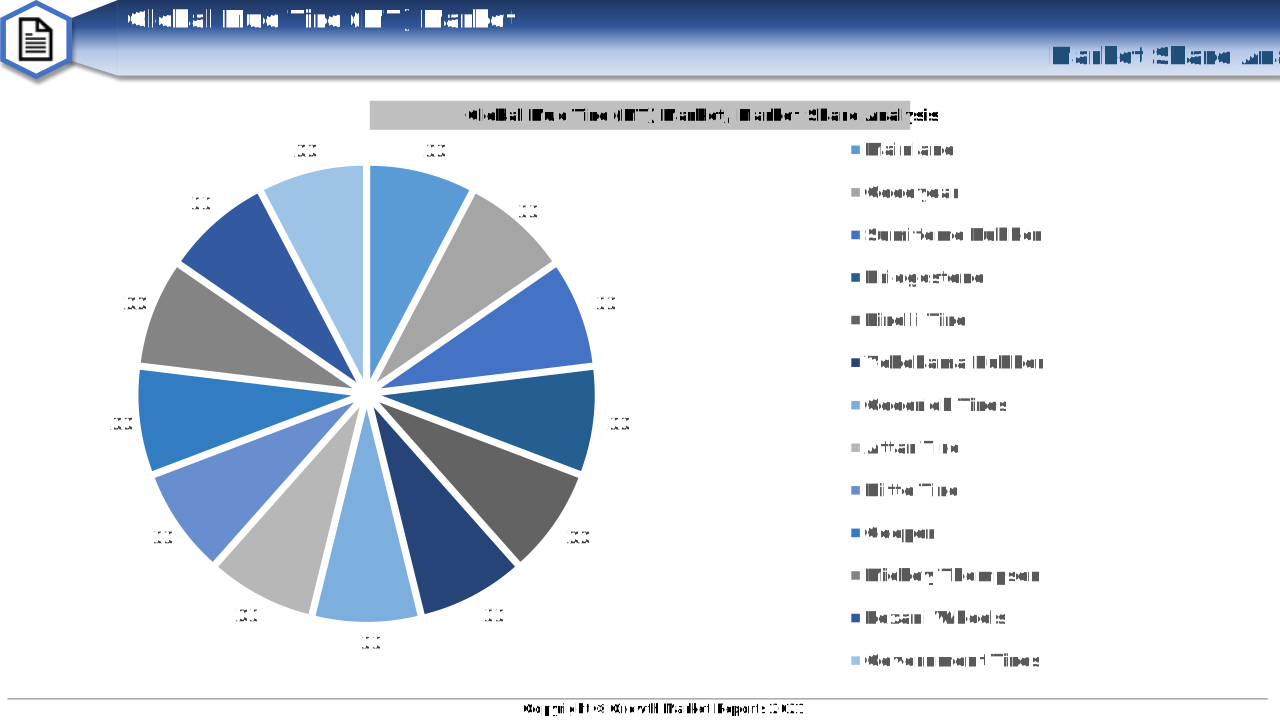
Some of the major players in the Mud Tire (MT) market include BFGoodrich, Goodyear Tire & Rubber Company, Cooper Tire & Rubber Company, Yokohama Rubber Company, Toyo Tire Corporation, Michelin, Bridgestone Corporation, and Nitto Tire. These companies are renowned for their extensive product portfolios, advanced R&D capabilities, and strong distribution networks. BFGoodrich is widely recognized for its high-performance off-road tires, while Goodyear and Michelin have established strong presences in both OEM and aftermarket segments. Bridgestone and Yokohama are known for their innovative tire technologies and commitment to sustainability, while Toyo, Nitto, and Maxxis International cater to niche markets with specialized mud tire offerings that appeal to enthusiasts and professionals alike.

In addition to established players, the market is also witnessing the entry of new and regional brands, particularly in emerging economies. These companies are leveraging cost advantages, local market knowledge, and agile manufacturing processes to capture market share and cater to specific customer segments. As competition intensifies through 2034, the focus on continuous innovation, customer-centricity, and operational excellence will be paramount for sustaining long-term growth and profitability in the dynamic Mud Tire (MT) market.

Key Players

  • Bridgestone Corporation
  • Michelin
  • Goodyear Tire & Rubber Company
  • Continental AG
  • Pirelli & C. S.p.A.
  • Yokohama Rubber Company
  • Toyo Tire Corporation
  • Cooper Tire & Rubber Company
  • Sumitomo Rubber Industries
  • Hankook Tire & Technology
  • Nokian Tyres
  • BFGoodrich
  • Falken Tire
  • Nitto Tire
  • Kumho Tire
  • Maxxis International
  • General Tire
  • Atturo Tire
  • Mickey Thompson Tires & Wheels

Segments

The Mud Tire (MT) market has been segmented on the basis of

Tire Type

  • Radial
  • Bias

Vehicle Type

  • Light Trucks
  • SUVs
  • Pickup Trucks
  • Jeeps
  • Others

Sales Channel

  • OEM
  • Aftermarket

Application

  • Off-Road
  • On-Road

Frequently Asked Questions

Mud tires are primarily used in off-road applications, which account for the majority of market demand. These applications include recreational off-roading, competitive motorsports, agricultural operations, and construction activities. On-road applications represent a smaller but growing segment, driven by consumers seeking versatile tires for crossover SUVs that transition between paved roads and rugged terrains, particularly in developed markets where all-weather versatility is increasingly valued.

Leading players in the global Mud Tire (MT) market include Bridgestone Corporation, Michelin, Goodyear Tire & Rubber Company, Continental AG, Pirelli & C. S.p.A., Yokohama Rubber Company, Toyo Tire Corporation, BFGoodrich, Nitto Tire, Falken Tire, Maxxis International, Hankook Tire & Technology, Cooper Tire & Rubber Company, Mickey Thompson Tires & Wheels, and Atturo Tire, among others. These companies compete through product innovation, OEM partnerships, and expanding digital retail strategies.

Key technological advancements shaping the Mud Tire (MT) market in 2025 include the adoption of silica-infused and advanced synthetic rubber compounds for improved grip and durability, computer-aided design (CAD) for optimized self-cleaning tread patterns, 3D-printed prototyping for faster development cycles, and the integration of smart tire pressure monitoring systems (TPMS). Manufacturers are also investing in eco-friendly vulcanization processes and end-of-life recycling technologies to meet tightening environmental regulations.

The Mud Tire (MT) market is segmented into OEM (Original Equipment Manufacturer) and Aftermarket channels. The aftermarket channel holds the larger share, driven by strong vehicle customization culture, widespread availability through e-commerce and specialty retailers, and growing consumer demand for performance upgrades. The OEM channel remains critical for establishing brand partnerships and securing volume contracts with vehicle manufacturers.

Key growth drivers include rising consumer participation in off-road recreational activities and motorsports, expanding sales of SUVs and pickup trucks globally, growing vehicle customization trends in the aftermarket, and continuous technological advancements in rubber compounds and tread design. Infrastructure development in emerging economies and growing disposable incomes in Asia Pacific are also contributing meaningfully to market expansion through the forecast period.

Mud tires are commonly used on light trucks, SUVs, pickup trucks, Jeeps, and other off-road vehicles including ATVs and utility vehicles. Pickup trucks and SUVs collectively represent the largest segment of demand, particularly in North America and Australia, while Jeeps and dedicated off-road vehicles drive premium mud tire sales in motorsport and trail-riding communities.

The Mud Tire (MT) market is primarily segmented into Radial and Bias tire types. Radial mud tires, which account for approximately 64.5% of market share in 2025, are preferred for their superior flexibility, traction, and longer tread life. Bias mud tires retain a solid 35.5% share, valued for their enhanced sidewall strength and load-bearing capacity in heavy-duty and agricultural applications.

North America dominates the global Mud Tire (MT) market, holding approximately 37.5% of total revenue in 2025, underpinned by a strong off-road culture, high pickup truck and SUV ownership, and a well-developed aftermarket. Europe ranks second at around 24.5%, followed by Asia Pacific at 21.5%, with Latin America and Middle East & Africa representing emerging growth pockets.

The global Mud Tire (MT) market is projected to grow at a CAGR of 6.1% during the forecast period from 2026 to 2034, reaching an estimated USD 15.1 billion by 2034. This growth is supported by sustained consumer interest in off-road activities, expanding SUV and pickup truck sales, and continued product innovation.

According to our latest research, the global Mud Tire (MT) market size reached USD 8.8 billion in 2025, reflecting strong demand fueled by growing off-road vehicle adoption, expanding automotive aftermarkets, and rising interest in adventure recreation worldwide.

Table Of Content

Chapter 1 Executive Summary
Chapter 2 Assumptions and Acronyms Used
Chapter 3 Research Methodology
Chapter 4 Mud Tire (MT) Market Overview
   4.1 Introduction
      4.1.1 Market Taxonomy
      4.1.2 Market Definition
      4.1.3 Macro-Economic Factors Impacting the Market Growth
   4.2 Mud Tire (MT) Market Dynamics
      4.2.1 Market Drivers
      4.2.2 Market Restraints
      4.2.3 Market Opportunity
   4.3 Mud Tire (MT) Market - Supply Chain Analysis
      4.3.1 List of Key Suppliers
      4.3.2 List of Key Distributors
      4.3.3 List of Key Consumers
   4.4 Key Forces Shaping the Mud Tire (MT) Market
      4.4.1 Bargaining Power of Suppliers
      4.4.2 Bargaining Power of Buyers
      4.4.3 Threat of Substitution
      4.4.4 Threat of New Entrants
      4.4.5 Competitive Rivalry
   4.5 Global Mud Tire (MT) Market Size & Forecast, 2023-2032
      4.5.1 Mud Tire (MT) Market Size and Y-o-Y Growth
      4.5.2 Mud Tire (MT) Market Absolute $ Opportunity

Chapter 5 Global Mud Tire (MT) Market Analysis and Forecast By Tire Type
   5.1 Introduction
      5.1.1 Key Market Trends & Growth Opportunities By Tire Type
      5.1.2 Basis Point Share (BPS) Analysis By Tire Type
      5.1.3 Absolute $ Opportunity Assessment By Tire Type
   5.2 Mud Tire (MT) Market Size Forecast By Tire Type
      5.2.1 Radial
      5.2.2 Bias
   5.3 Market Attractiveness Analysis By Tire Type

Chapter 6 Global Mud Tire (MT) Market Analysis and Forecast By Vehicle Type
   6.1 Introduction
      6.1.1 Key Market Trends & Growth Opportunities By Vehicle Type
      6.1.2 Basis Point Share (BPS) Analysis By Vehicle Type
      6.1.3 Absolute $ Opportunity Assessment By Vehicle Type
   6.2 Mud Tire (MT) Market Size Forecast By Vehicle Type
      6.2.1 Light Trucks
      6.2.2 SUVs
      6.2.3 Pickup Trucks
      6.2.4 Jeeps
      6.2.5 Others
   6.3 Market Attractiveness Analysis By Vehicle Type

Chapter 7 Global Mud Tire (MT) Market Analysis and Forecast By Sales Channel
   7.1 Introduction
      7.1.1 Key Market Trends & Growth Opportunities By Sales Channel
      7.1.2 Basis Point Share (BPS) Analysis By Sales Channel
      7.1.3 Absolute $ Opportunity Assessment By Sales Channel
   7.2 Mud Tire (MT) Market Size Forecast By Sales Channel
      7.2.1 OEM
      7.2.2 Aftermarket
   7.3 Market Attractiveness Analysis By Sales Channel

Chapter 8 Global Mud Tire (MT) Market Analysis and Forecast By Application
   8.1 Introduction
      8.1.1 Key Market Trends & Growth Opportunities By Application
      8.1.2 Basis Point Share (BPS) Analysis By Application
      8.1.3 Absolute $ Opportunity Assessment By Application
   8.2 Mud Tire (MT) Market Size Forecast By Application
      8.2.1 Off-Road
      8.2.2 On-Road
   8.3 Market Attractiveness Analysis By Application

Chapter 9 Global Mud Tire (MT) Market Analysis and Forecast by Region
   9.1 Introduction
      9.1.1 Key Market Trends & Growth Opportunities By Region
      9.1.2 Basis Point Share (BPS) Analysis By Region
      9.1.3 Absolute $ Opportunity Assessment By Region
   9.2 Mud Tire (MT) Market Size Forecast By Region
      9.2.1 North America
      9.2.2 Europe
      9.2.3 Asia Pacific
      9.2.4 Latin America
      9.2.5 Middle East & Africa (MEA)
   9.3 Market Attractiveness Analysis By Region

Chapter 10 Coronavirus Disease (COVID-19) Impact 
   10.1 Introduction 
   10.2 Current & Future Impact Analysis 
   10.3 Economic Impact Analysis 
   10.4 Government Policies 
   10.5 Investment Scenario

Chapter 11 North America Mud Tire (MT) Analysis and Forecast
   11.1 Introduction
   11.2 North America Mud Tire (MT) Market Size Forecast by Country
      11.2.1 U.S.
      11.2.2 Canada
   11.3 Basis Point Share (BPS) Analysis by Country
   11.4 Absolute $ Opportunity Assessment by Country
   11.5 Market Attractiveness Analysis by Country
   11.6 North America Mud Tire (MT) Market Size Forecast By Tire Type
      11.6.1 Radial
      11.6.2 Bias
   11.7 Basis Point Share (BPS) Analysis By Tire Type 
   11.8 Absolute $ Opportunity Assessment By Tire Type 
   11.9 Market Attractiveness Analysis By Tire Type
   11.10 North America Mud Tire (MT) Market Size Forecast By Vehicle Type
      11.10.1 Light Trucks
      11.10.2 SUVs
      11.10.3 Pickup Trucks
      11.10.4 Jeeps
      11.10.5 Others
   11.11 Basis Point Share (BPS) Analysis By Vehicle Type 
   11.12 Absolute $ Opportunity Assessment By Vehicle Type 
   11.13 Market Attractiveness Analysis By Vehicle Type
   11.14 North America Mud Tire (MT) Market Size Forecast By Sales Channel
      11.14.1 OEM
      11.14.2 Aftermarket
   11.15 Basis Point Share (BPS) Analysis By Sales Channel 
   11.16 Absolute $ Opportunity Assessment By Sales Channel 
   11.17 Market Attractiveness Analysis By Sales Channel
   11.18 North America Mud Tire (MT) Market Size Forecast By Application
      11.18.1 Off-Road
      11.18.2 On-Road
   11.19 Basis Point Share (BPS) Analysis By Application 
   11.20 Absolute $ Opportunity Assessment By Application 
   11.21 Market Attractiveness Analysis By Application

Chapter 12 Europe Mud Tire (MT) Analysis and Forecast
   12.1 Introduction
   12.2 Europe Mud Tire (MT) Market Size Forecast by Country
      12.2.1 Germany
      12.2.2 France
      12.2.3 Italy
      12.2.4 U.K.
      12.2.5 Spain
      12.2.6 Russia
      12.2.7 Rest of Europe
   12.3 Basis Point Share (BPS) Analysis by Country
   12.4 Absolute $ Opportunity Assessment by Country
   12.5 Market Attractiveness Analysis by Country
   12.6 Europe Mud Tire (MT) Market Size Forecast By Tire Type
      12.6.1 Radial
      12.6.2 Bias
   12.7 Basis Point Share (BPS) Analysis By Tire Type 
   12.8 Absolute $ Opportunity Assessment By Tire Type 
   12.9 Market Attractiveness Analysis By Tire Type
   12.10 Europe Mud Tire (MT) Market Size Forecast By Vehicle Type
      12.10.1 Light Trucks
      12.10.2 SUVs
      12.10.3 Pickup Trucks
      12.10.4 Jeeps
      12.10.5 Others
   12.11 Basis Point Share (BPS) Analysis By Vehicle Type 
   12.12 Absolute $ Opportunity Assessment By Vehicle Type 
   12.13 Market Attractiveness Analysis By Vehicle Type
   12.14 Europe Mud Tire (MT) Market Size Forecast By Sales Channel
      12.14.1 OEM
      12.14.2 Aftermarket
   12.15 Basis Point Share (BPS) Analysis By Sales Channel 
   12.16 Absolute $ Opportunity Assessment By Sales Channel 
   12.17 Market Attractiveness Analysis By Sales Channel
   12.18 Europe Mud Tire (MT) Market Size Forecast By Application
      12.18.1 Off-Road
      12.18.2 On-Road
   12.19 Basis Point Share (BPS) Analysis By Application 
   12.20 Absolute $ Opportunity Assessment By Application 
   12.21 Market Attractiveness Analysis By Application

Chapter 13 Asia Pacific Mud Tire (MT) Analysis and Forecast
   13.1 Introduction
   13.2 Asia Pacific Mud Tire (MT) Market Size Forecast by Country
      13.2.1 China
      13.2.2 Japan
      13.2.3 South Korea
      13.2.4 India
      13.2.5 Australia
      13.2.6 South East Asia (SEA)
      13.2.7 Rest of Asia Pacific (APAC)
   13.3 Basis Point Share (BPS) Analysis by Country
   13.4 Absolute $ Opportunity Assessment by Country
   13.5 Market Attractiveness Analysis by Country
   13.6 Asia Pacific Mud Tire (MT) Market Size Forecast By Tire Type
      13.6.1 Radial
      13.6.2 Bias
   13.7 Basis Point Share (BPS) Analysis By Tire Type 
   13.8 Absolute $ Opportunity Assessment By Tire Type 
   13.9 Market Attractiveness Analysis By Tire Type
   13.10 Asia Pacific Mud Tire (MT) Market Size Forecast By Vehicle Type
      13.10.1 Light Trucks
      13.10.2 SUVs
      13.10.3 Pickup Trucks
      13.10.4 Jeeps
      13.10.5 Others
   13.11 Basis Point Share (BPS) Analysis By Vehicle Type 
   13.12 Absolute $ Opportunity Assessment By Vehicle Type 
   13.13 Market Attractiveness Analysis By Vehicle Type
   13.14 Asia Pacific Mud Tire (MT) Market Size Forecast By Sales Channel
      13.14.1 OEM
      13.14.2 Aftermarket
   13.15 Basis Point Share (BPS) Analysis By Sales Channel 
   13.16 Absolute $ Opportunity Assessment By Sales Channel 
   13.17 Market Attractiveness Analysis By Sales Channel
   13.18 Asia Pacific Mud Tire (MT) Market Size Forecast By Application
      13.18.1 Off-Road
      13.18.2 On-Road
   13.19 Basis Point Share (BPS) Analysis By Application 
   13.20 Absolute $ Opportunity Assessment By Application 
   13.21 Market Attractiveness Analysis By Application

Chapter 14 Latin America Mud Tire (MT) Analysis and Forecast
   14.1 Introduction
   14.2 Latin America Mud Tire (MT) Market Size Forecast by Country
      14.2.1 Brazil
      14.2.2 Mexico
      14.2.3 Rest of Latin America (LATAM)
   14.3 Basis Point Share (BPS) Analysis by Country
   14.4 Absolute $ Opportunity Assessment by Country
   14.5 Market Attractiveness Analysis by Country
   14.6 Latin America Mud Tire (MT) Market Size Forecast By Tire Type
      14.6.1 Radial
      14.6.2 Bias
   14.7 Basis Point Share (BPS) Analysis By Tire Type 
   14.8 Absolute $ Opportunity Assessment By Tire Type 
   14.9 Market Attractiveness Analysis By Tire Type
   14.10 Latin America Mud Tire (MT) Market Size Forecast By Vehicle Type
      14.10.1 Light Trucks
      14.10.2 SUVs
      14.10.3 Pickup Trucks
      14.10.4 Jeeps
      14.10.5 Others
   14.11 Basis Point Share (BPS) Analysis By Vehicle Type 
   14.12 Absolute $ Opportunity Assessment By Vehicle Type 
   14.13 Market Attractiveness Analysis By Vehicle Type
   14.14 Latin America Mud Tire (MT) Market Size Forecast By Sales Channel
      14.14.1 OEM
      14.14.2 Aftermarket
   14.15 Basis Point Share (BPS) Analysis By Sales Channel 
   14.16 Absolute $ Opportunity Assessment By Sales Channel 
   14.17 Market Attractiveness Analysis By Sales Channel
   14.18 Latin America Mud Tire (MT) Market Size Forecast By Application
      14.18.1 Off-Road
      14.18.2 On-Road
   14.19 Basis Point Share (BPS) Analysis By Application 
   14.20 Absolute $ Opportunity Assessment By Application 
   14.21 Market Attractiveness Analysis By Application

Chapter 15 Middle East & Africa (MEA) Mud Tire (MT) Analysis and Forecast
   15.1 Introduction
   15.2 Middle East & Africa (MEA) Mud Tire (MT) Market Size Forecast by Country
      15.2.1 Saudi Arabia
      15.2.2 South Africa
      15.2.3 UAE
      15.2.4 Rest of Middle East & Africa (MEA)
   15.3 Basis Point Share (BPS) Analysis by Country
   15.4 Absolute $ Opportunity Assessment by Country
   15.5 Market Attractiveness Analysis by Country
   15.6 Middle East & Africa (MEA) Mud Tire (MT) Market Size Forecast By Tire Type
      15.6.1 Radial
      15.6.2 Bias
   15.7 Basis Point Share (BPS) Analysis By Tire Type 
   15.8 Absolute $ Opportunity Assessment By Tire Type 
   15.9 Market Attractiveness Analysis By Tire Type
   15.10 Middle East & Africa (MEA) Mud Tire (MT) Market Size Forecast By Vehicle Type
      15.10.1 Light Trucks
      15.10.2 SUVs
      15.10.3 Pickup Trucks
      15.10.4 Jeeps
      15.10.5 Others
   15.11 Basis Point Share (BPS) Analysis By Vehicle Type 
   15.12 Absolute $ Opportunity Assessment By Vehicle Type 
   15.13 Market Attractiveness Analysis By Vehicle Type
   15.14 Middle East & Africa (MEA) Mud Tire (MT) Market Size Forecast By Sales Channel
      15.14.1 OEM
      15.14.2 Aftermarket
   15.15 Basis Point Share (BPS) Analysis By Sales Channel 
   15.16 Absolute $ Opportunity Assessment By Sales Channel 
   15.17 Market Attractiveness Analysis By Sales Channel
   15.18 Middle East & Africa (MEA) Mud Tire (MT) Market Size Forecast By Application
      15.18.1 Off-Road
      15.18.2 On-Road
   15.19 Basis Point Share (BPS) Analysis By Application 
   15.20 Absolute $ Opportunity Assessment By Application 
   15.21 Market Attractiveness Analysis By Application

Chapter 16 Competition Landscape 
   16.1 Mud Tire (MT) Market: Competitive Dashboard
   16.2 Global Mud Tire (MT) Market: Market Share Analysis, 2023
   16.3 Company Profiles (Details – Overview, Financials, Developments, Strategy) 
      16.3.1 Bridgestone Corporation
      16.3.2 Michelin
      16.3.3 Goodyear Tire & Rubber Company
      16.3.4 Continental AG
      16.3.5 Pirelli & C. S.p.A.
      16.3.6 Yokohama Rubber Company
      16.3.7 Toyo Tire Corporation
      16.3.8 Cooper Tire & Rubber Company
      16.3.9 Sumitomo Rubber Industries
      16.3.10 Hankook Tire & Technology
      16.3.11 Nokian Tyres
      16.3.12 BFGoodrich
      16.3.13 Falken Tire
      16.3.14 Nitto Tire
      16.3.15 Kumho Tire
      16.3.16 Maxxis International
      16.3.17 General Tire
      16.3.18 Atturo Tire
      16.3.19 Mickey Thompson Tires & Wheels

Methodology

Our Clients

Deloitte
General Mills
Microsoft
Honda Motor Co. Ltd.
FedEx Logistics
The John Holland Group
Siemens Healthcare
Dassault Aviation