Tire Cords Market Research Report 2033

Tire Cords Market Research Report 2033

Segments - by Material Type (Nylon, Polyester, Rayon, Steel, Aramid, Others), by Tire Type (Radial Tires, Bias Tires), by Vehicle Type (Passenger Cars, Commercial Vehicles, Two-Wheelers, Off-Road Vehicles, Others), by Application (OEM, Replacement)

https://growthmarketreports.com/Raksha
Author : Raksha Sharma
https://growthmarketreports.com/Vaibhav
Fact-checked by : V. Chandola
https://growthmarketreports.com/Shruti
Editor : Shruti Bhat

Upcoming | Report ID :AL-249 | 4.0 Rating | 74 Reviews | 284 Pages | Format : Docx PDF

Report Description


Tire Cords Market Outlook

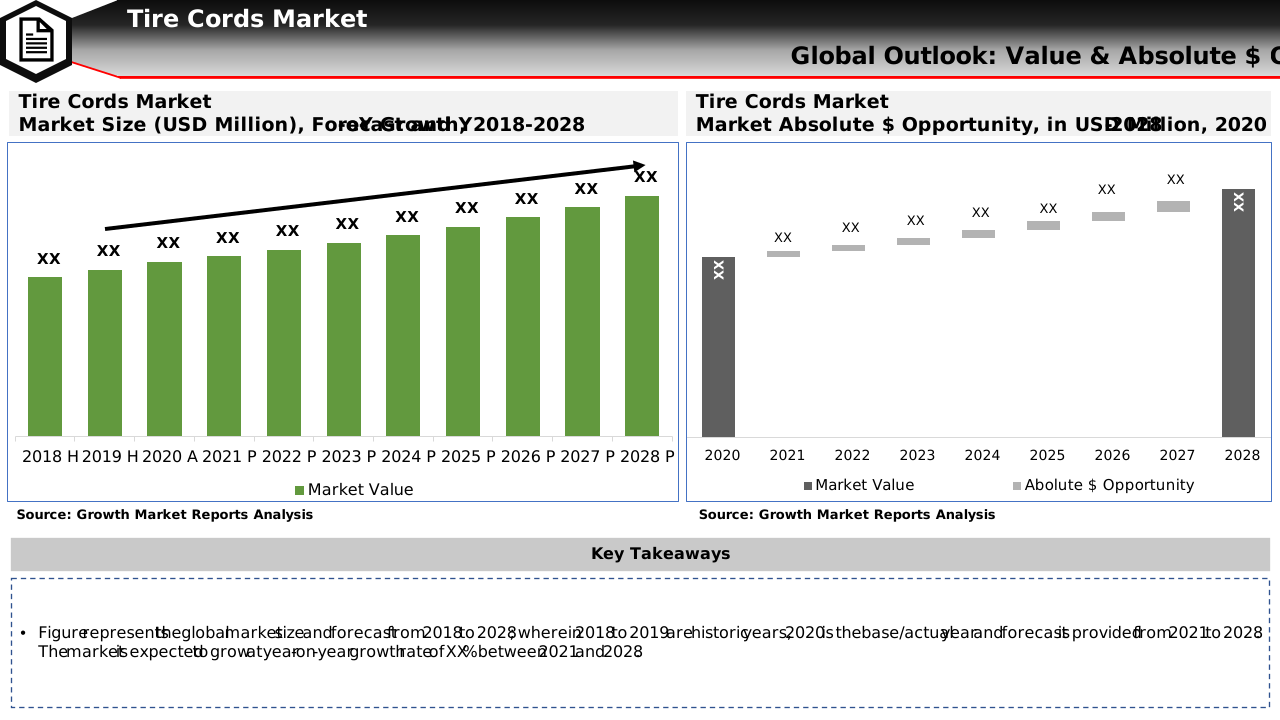
According to our latest research, the global tire cords market size reached USD 5.38 billion in 2024, demonstrating robust growth driven by advancements in automotive technology and increasing vehicle production worldwide. The market is projected to expand at a CAGR of 6.3% from 2025 to 2033, with the total market size expected to reach USD 9.33 billion by 2033. This growth is primarily fueled by rising demand for high-performance tires, increasing adoption of electric vehicles, and the growing emphasis on fuel efficiency and safety standards across the automotive industry.

The tire cords market is witnessing significant momentum due to the continuous evolution of the automotive sector. One of the key growth drivers is the global surge in vehicle production, especially in emerging economies. As automotive manufacturers strive to enhance the durability, strength, and performance of tires, the demand for advanced tire cord materials such as nylon, polyester, steel, and aramid is on the rise. These materials provide the necessary reinforcement to tires, ensuring better load-bearing capacity and improved resistance to wear and tear, which is vital for both passenger and commercial vehicles. Furthermore, the shift towards radial tires, which require high-quality cords for optimal performance, is further propelling market growth.

Another crucial factor contributing to the expansion of the tire cords market is the growing focus on sustainability and eco-friendly manufacturing practices. As environmental regulations become more stringent, tire manufacturers are increasingly adopting sustainable raw materials and innovative production processes. The use of recyclable and bio-based materials in tire cords is gaining traction, driven by consumer demand for green products and the automotive industry’s commitment to reducing its carbon footprint. Additionally, advancements in tire cord technology, such as high-tensile strength fibers and hybrid materials, are enabling manufacturers to develop tires that offer superior performance, longevity, and energy efficiency, thereby supporting market growth.

The replacement tire segment also plays a pivotal role in the tire cords market’s expansion. With the global vehicle parc (vehicles in operation) steadily increasing, the need for tire replacements is rising in parallel. Consumers are becoming more aware of the importance of tire quality and safety, leading to a higher demand for premium replacement tires equipped with advanced cord materials. Moreover, the growing popularity of electric and hybrid vehicles, which often require specialized tires with enhanced characteristics, is creating new opportunities for tire cord manufacturers. The integration of smart tire technologies, such as sensors and real-time monitoring systems, is further boosting the demand for innovative tire cord solutions that can support these advanced functionalities.

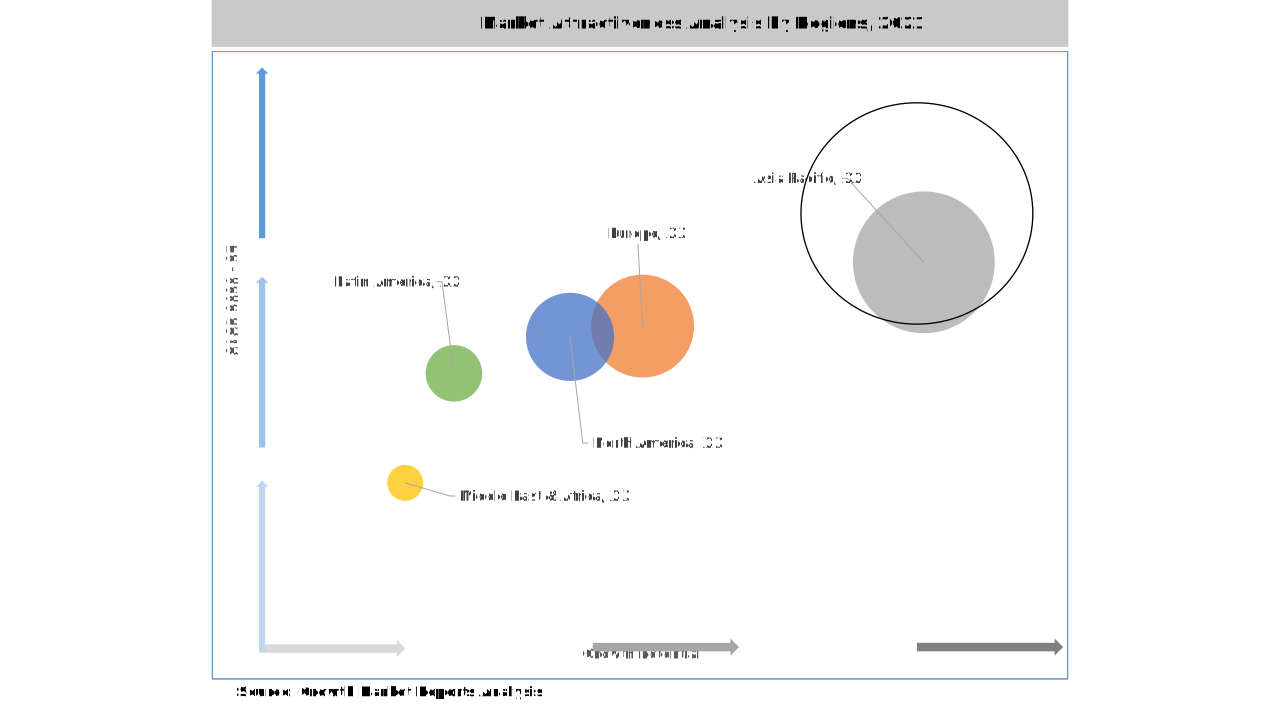
From a regional perspective, Asia Pacific continues to dominate the tire cords market, accounting for the largest share in 2024. This dominance is attributed to the region’s massive automotive manufacturing base, particularly in countries such as China, India, and Japan. The rapid urbanization, rising disposable incomes, and increasing demand for personal mobility are driving vehicle sales and, consequently, the demand for tire cords. North America and Europe also represent significant markets, driven by technological advancements, stringent safety regulations, and the presence of leading automotive OEMs. Meanwhile, Latin America and the Middle East & Africa are witnessing steady growth, supported by infrastructural development and expanding automotive sectors. Overall, regional dynamics play a crucial role in shaping the tire cords market, with Asia Pacific leading the way in terms of both production and consumption.

Global Tire Cords Industry Outlook

Material Type Analysis

The material type segment is a cornerstone of the tire cords market, encompassing a diverse range of materials such as nylon, polyester, rayon, steel, aramid, and others. Nylon tire cords remain one of the most widely used materials due to their exceptional strength, flexibility, and resistance to abrasion. These properties make nylon an ideal choice for both passenger and commercial vehicle tires, particularly in regions with challenging road conditions. The sustained demand for nylon cords is further bolstered by their cost-effectiveness and adaptability to various tire designs, ensuring their continued relevance in the market.

Polyester tire cords have gained substantial traction in recent years, especially in the production of radial tires for passenger vehicles. Polyester offers a balance of strength, durability, and affordability, making it a preferred material for manufacturers aiming to optimize performance without significantly increasing production costs. The growing shift towards radialization in the tire industry has amplified the demand for polyester cords, as they provide excellent dimensional stability and heat resistance, which are critical for high-speed and long-distance driving. Additionally, the recyclability of polyester aligns with the industry’s sustainability goals, further enhancing its appeal.

Steel cords represent a vital segment within the market, primarily used in the reinforcement of radial tires for trucks, buses, and off-road vehicles. The superior tensile strength and fatigue resistance of steel cords enable tires to withstand heavy loads and harsh operating conditions, making them indispensable for commercial and industrial applications. As logistics and transportation sectors expand globally, the demand for steel-reinforced tires continues to rise. Moreover, innovations in steel cord manufacturing, such as the development of ultra-high tensile strength wires and corrosion-resistant coatings, are driving further adoption and market growth.

Aramid and rayon cords, although occupying a smaller share of the market, are witnessing increasing adoption due to their unique properties. Aramid fibers, known for their exceptional strength-to-weight ratio and resistance to heat and chemicals, are increasingly used in high-performance and specialty tires, including those for racing and military vehicles. Rayon cords, on the other hand, offer excellent adhesion to rubber and dimensional stability, making them suitable for specific tire applications. The ongoing research and development in advanced fiber technologies are expected to unlock new opportunities for these materials, catering to the evolving needs of the automotive industry.

Other materials, including hybrid and bio-based fibers, are gradually emerging as viable alternatives in the tire cords market. The integration of multiple materials to create hybrid cords enables manufacturers to combine the best attributes of each component, resulting in tires with enhanced performance characteristics. Additionally, the growing emphasis on sustainability is encouraging the exploration of bio-based and recycled fibers, which hold the potential to reduce the environmental impact of tire manufacturing. As the industry continues to innovate, the material type segment will remain a key driver of growth and differentiation in the tire cords market.

Report Scope

Attributes Details
Report Title Tire Cords Market Research Report 2033
By Material Type Nylon, Polyester, Rayon, Steel, Aramid, Others
By Tire Type Radial Tires, Bias Tires
By Vehicle Type Passenger Cars, Commercial Vehicles, Two-Wheelers, Off-Road Vehicles, Others
By Application OEM, Replacement
Regions Covered North America, Europe, APAC, Latin America, MEA
Base Year 2024
Historic Data 2018-2023
Forecast Period 2025-2033
Number of Pages 284
Number of Tables & Figures 310
Customization Available Yes, the report can be customized as per your need.

Tire Type Analysis

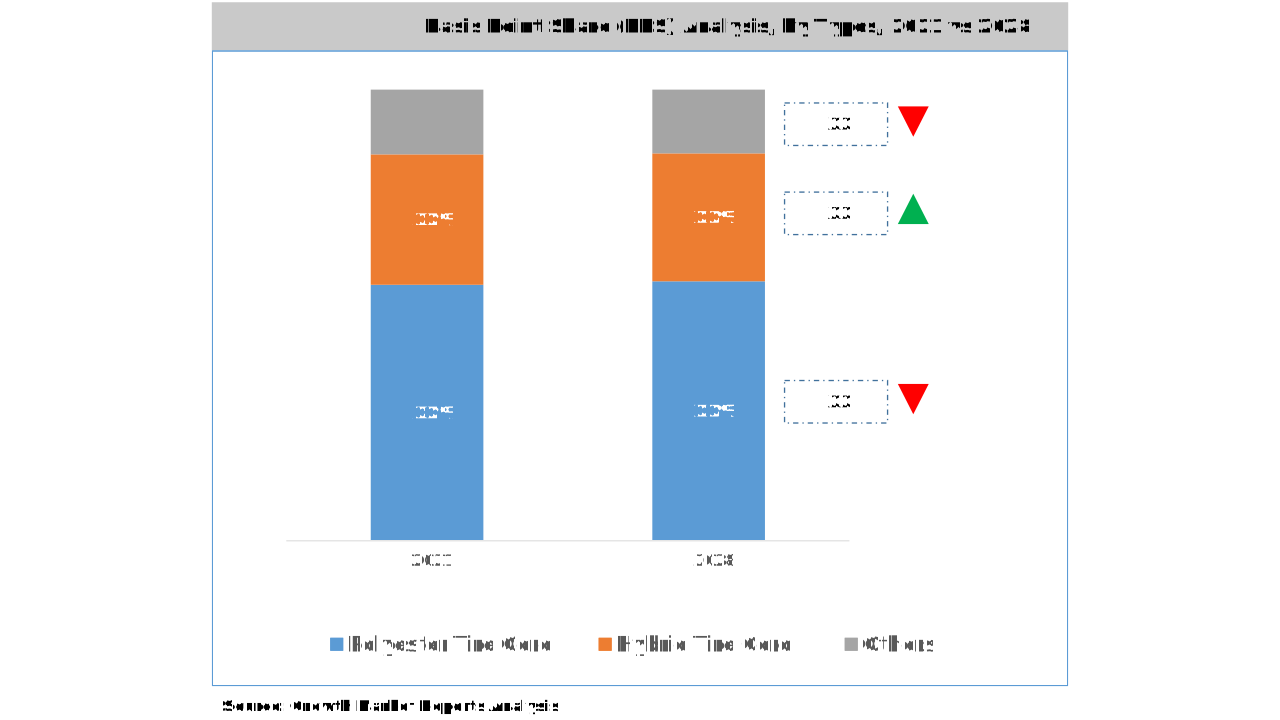
The tire type segment is bifurcated into radial tires and bias tires, each with distinct characteristics and market dynamics. Radial tires have emerged as the dominant segment, accounting for a significant share of the global tire cords market in 2024. This dominance is attributed to the superior performance attributes of radial tires, including enhanced fuel efficiency, improved handling, and longer tread life. Radial tires utilize cords that run perpendicular to the direction of travel, providing greater flexibility and stability. The widespread adoption of radial tires, particularly in passenger cars and commercial vehicles, has driven the demand for high-quality tire cords capable of meeting stringent performance and safety standards.

Bias tires, while representing a smaller portion of the market, continue to hold relevance in specific applications, such as off-road vehicles, agricultural machinery, and certain commercial vehicles. Bias tires are constructed with cords arranged at alternating angles, resulting in a robust and durable structure that can withstand heavy loads and challenging terrains. Although radial tires have largely replaced bias tires in mainstream automotive applications, the latter’s ability to deliver superior traction and resistance to sidewall damage ensures their continued use in niche markets. The demand for bias tire cords is sustained by sectors that prioritize durability and cost-effectiveness over high-speed performance.

The ongoing transition from bias to radial tires is a key trend shaping the tire cords market. Automotive manufacturers and consumers alike are increasingly recognizing the benefits of radial tires, leading to a gradual decline in bias tire production. This shift is particularly evident in developing regions, where infrastructure improvements and rising vehicle ownership are driving the adoption of advanced tire technologies. As a result, tire cord manufacturers are focusing on developing innovative materials and designs tailored to the specific requirements of radial tires, further accelerating market growth.

Technological advancements in tire design and manufacturing are also influencing the tire type segment. The integration of smart tire technologies, such as embedded sensors and real-time monitoring systems, is creating new demands for tire cords that can support these functionalities without compromising structural integrity. Additionally, the rise of electric and autonomous vehicles is prompting the development of specialized tire cords that cater to the unique load, performance, and safety requirements of these next-generation vehicles. As the automotive landscape evolves, the tire type segment will continue to play a pivotal role in shaping the future of the tire cords market.

Sustainability considerations are increasingly impacting the tire type segment, with manufacturers exploring ways to enhance the recyclability and environmental friendliness of both radial and bias tires. The use of eco-friendly materials and production processes is becoming a key differentiator, as consumers and regulators demand greater transparency and accountability from the automotive industry. By prioritizing sustainability, tire cord manufacturers can not only meet regulatory requirements but also capture new market opportunities and strengthen their competitive position.

Vehicle Type Analysis

The vehicle type segment of the tire cords market is categorized into passenger cars, commercial vehicles, two-wheelers, off-road vehicles, and others, each contributing uniquely to market dynamics. Passenger cars represent the largest segment, driven by the rising global demand for personal mobility and the increasing production of sedans, hatchbacks, and SUVs. The proliferation of passenger vehicles, particularly in emerging economies, is directly linked to urbanization, rising disposable incomes, and changing consumer lifestyles. As consumers prioritize safety, comfort, and performance, the demand for high-quality tire cords that enhance tire durability and efficiency is on the rise.

Commercial vehicles, including trucks, buses, and vans, constitute a significant share of the tire cords market. The growth of e-commerce, logistics, and transportation sectors has led to an expansion in commercial vehicle fleets worldwide. These vehicles require tires with superior load-bearing capacity and resistance to wear, making steel and high-tensile synthetic cords indispensable. The increasing adoption of radial tires in commercial vehicles, coupled with stringent safety regulations, is further driving the demand for advanced tire cord materials. Additionally, the shift towards electric and hybrid commercial vehicles is creating new opportunities for tire cord manufacturers to develop specialized products tailored to the unique requirements of these vehicles.

The two-wheelers segment, encompassing motorcycles, scooters, and mopeds, is experiencing steady growth, particularly in Asia Pacific and Latin America. Two-wheelers are a preferred mode of transportation in densely populated urban areas due to their affordability, fuel efficiency, and ease of maneuverability. The demand for durable and high-performance tires in this segment is driving the adoption of advanced cord materials such as nylon and polyester. As safety and quality awareness increases among consumers, manufacturers are focusing on developing innovative tire cord solutions that offer enhanced grip, stability, and longevity.

Off-road vehicles, including agricultural machinery, construction equipment, and ATVs, represent a niche but important segment of the tire cords market. These vehicles operate in challenging environments and require tires with exceptional durability, traction, and resistance to punctures. The use of specialized cord materials, such as aramid and high-strength steel, is critical in ensuring the performance and safety of off-road tires. The expansion of the agriculture and construction sectors, particularly in developing regions, is fueling the demand for off-road vehicles and, consequently, for high-performance tire cords.

Other vehicle types, such as specialty and military vehicles, also contribute to the tire cords market, albeit on a smaller scale. These vehicles often require customized tire solutions with unique performance attributes, driving innovation in cord materials and manufacturing processes. The ongoing development of new vehicle segments, such as electric scooters and autonomous delivery robots, is expected to create additional growth avenues for tire cord manufacturers. By catering to the diverse needs of various vehicle types, the tire cords market can continue to expand and evolve in response to changing industry dynamics.

Application Analysis

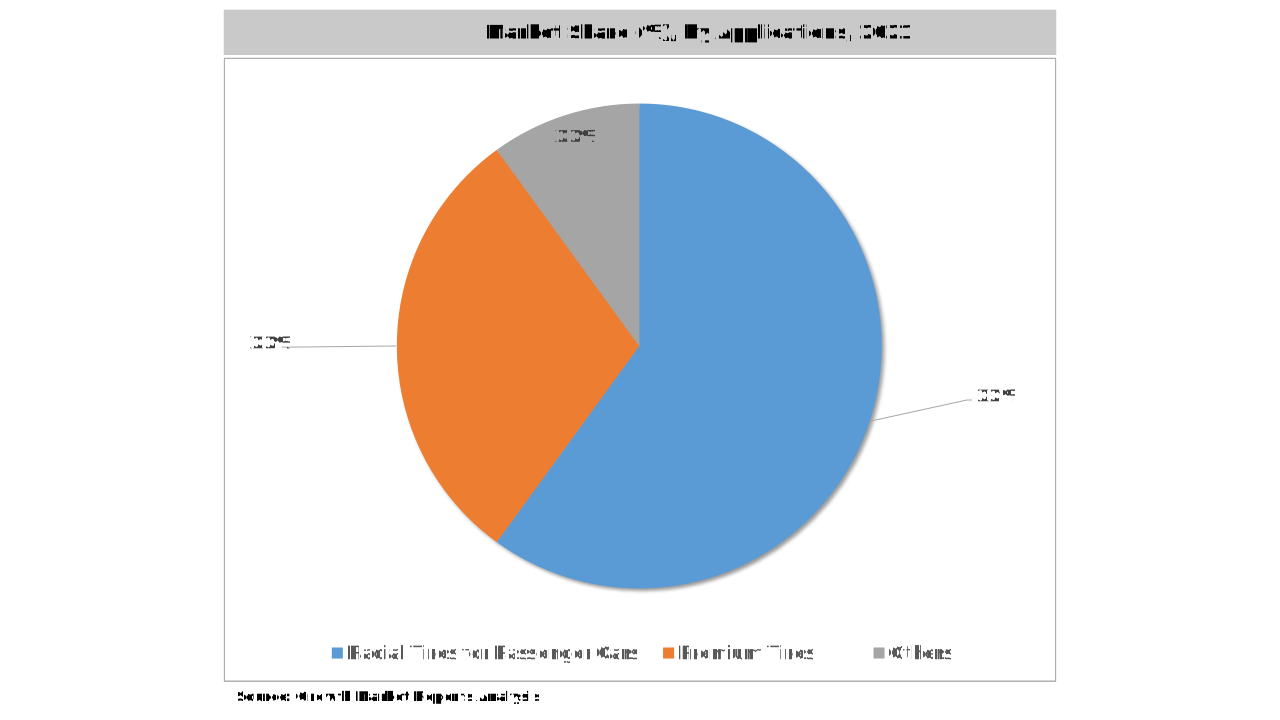
The application segment of the tire cords market is divided into Original Equipment Manufacturer (OEM) and replacement, each playing a distinct role in market growth. The OEM segment is driven by the direct supply of tire cords to automotive manufacturers for use in new vehicle production. As global vehicle production continues to rise, especially in Asia Pacific and North America, the demand for high-quality tire cords from OEMs remains strong. OEMs prioritize tire cords that offer superior performance, durability, and compliance with stringent safety and environmental regulations, prompting manufacturers to invest in advanced materials and technologies.

The replacement segment, also known as the aftermarket, is a critical driver of the tire cords market. With the global vehicle parc expanding, the need for tire replacements is increasing, particularly in regions with aging vehicle fleets. Consumers are becoming more discerning in their tire choices, seeking products that offer enhanced safety, longevity, and fuel efficiency. This shift in consumer preferences is boosting the demand for premium replacement tires equipped with advanced cord materials. Additionally, the rise of e-commerce platforms and digital retail channels is making it easier for consumers to access a wide range of replacement tires, further supporting market growth.

Technological advancements are transforming both OEM and replacement applications, with manufacturers focusing on developing tire cords that can support smart tire functionalities. The integration of sensors, RFID tags, and real-time monitoring systems in tires is creating new requirements for cord materials that can withstand additional stresses while maintaining structural integrity. OEMs, in particular, are collaborating with tire and cord manufacturers to develop innovative solutions that meet the evolving needs of next-generation vehicles, including electric and autonomous models.

Sustainability considerations are increasingly influencing the application segment, with both OEMs and aftermarket players seeking eco-friendly tire solutions. The adoption of recyclable and bio-based cord materials is gaining momentum, driven by regulatory mandates and consumer demand for sustainable products. Manufacturers are also exploring closed-loop recycling systems and green manufacturing processes to minimize environmental impact and enhance brand reputation. By aligning with industry-wide sustainability goals, tire cord suppliers can strengthen their relationships with OEMs and capture new opportunities in the replacement market.

The application segment is also characterized by intense competition and rapid innovation, as manufacturers strive to differentiate their products and capture market share. Strategic partnerships, mergers and acquisitions, and investments in research and development are common strategies employed by key players to enhance their product offerings and expand their global footprint. As the automotive industry continues to evolve, the application segment will remain a focal point for growth and innovation in the tire cords market.

Opportunities & Threats

The tire cords market presents a wealth of opportunities for growth and innovation, driven by the ongoing transformation of the automotive industry. One of the most significant opportunities lies in the development of advanced cord materials that offer superior performance, durability, and sustainability. As automotive manufacturers increasingly prioritize safety, fuel efficiency, and environmental responsibility, there is a growing demand for tire cords that can meet these stringent requirements. The adoption of high-tensile strength fibers, hybrid materials, and bio-based alternatives is expected to unlock new growth avenues for manufacturers, enabling them to differentiate their products and capture a larger share of the market.

Another key opportunity is the integration of smart technologies into tires, such as embedded sensors, RFID tags, and real-time monitoring systems. These innovations are creating new demands for tire cords that can support additional functionalities without compromising structural integrity. Manufacturers that invest in research and development to create smart cord solutions will be well-positioned to capitalize on the growing trend towards connected and autonomous vehicles. Furthermore, the expansion of the electric and hybrid vehicle market presents a unique opportunity for tire cord suppliers to develop specialized products tailored to the unique requirements of these vehicles, such as enhanced load-bearing capacity and reduced rolling resistance.

Despite the numerous opportunities, the tire cords market also faces several restraining factors that could impede growth. One of the primary challenges is the volatility of raw material prices, particularly for synthetic fibers and steel. Fluctuations in the cost of raw materials can significantly impact production costs and profit margins, making it difficult for manufacturers to maintain competitive pricing. Additionally, the increasing stringency of environmental regulations poses a challenge for companies that rely on traditional manufacturing processes and materials. Compliance with these regulations often requires significant investments in new technologies and processes, which can be a barrier for smaller players in the market. By proactively addressing these challenges through innovation and strategic partnerships, companies can mitigate risks and sustain long-term growth.

Regional Outlook

Asia Pacific remains the undisputed leader in the global tire cords market, accounting for more than 52% of the total market share in 2024, with a market value of approximately USD 2.8 billion. The region’s dominance is driven by its expansive automotive manufacturing base, particularly in China, India, and Japan. Rapid urbanization, rising disposable incomes, and increasing vehicle ownership are fueling demand for both passenger and commercial vehicles, thereby boosting the need for high-quality tire cords. Additionally, the presence of leading tire and automotive manufacturers, coupled with favorable government policies and investments in infrastructure, is further accelerating market growth in Asia Pacific.

North America and Europe collectively account for a substantial share of the tire cords market, with North America representing around 21% (USD 1.13 billion) and Europe holding approximately 18% (USD 0.97 billion) of the global market in 2024. The growth in these regions is supported by technological advancements, stringent safety and environmental regulations, and the presence of major automotive OEMs. North America, in particular, is witnessing a steady increase in demand for high-performance and specialty tires, driven by the growth of the electric vehicle market and the adoption of smart tire technologies. Europe’s emphasis on sustainability and eco-friendly manufacturing practices is prompting tire cord manufacturers to invest in innovative materials and green production processes.

Latin America and the Middle East & Africa, while representing smaller shares of the global tire cords market, are experiencing steady growth driven by infrastructural development and expanding automotive sectors. Latin America accounts for approximately 6% (USD 0.32 billion) and the Middle East & Africa holds around 3% (USD 0.16 billion) of the global market in 2024. These regions are benefiting from increasing investments in transportation and logistics, as well as rising demand for commercial and off-road vehicles. As economic conditions improve and automotive production expands, the tire cords market in these regions is expected to grow at a healthy pace, with Latin America projected to register a CAGR of 6.8% from 2025 to 2033.

Tire Cords Market Statistics

Competitor Outlook

The global tire cords market is characterized by intense competition, with a mix of established multinational corporations and regional players vying for market share. The competitive landscape is shaped by factors such as product innovation, technological advancements, strategic partnerships, and mergers and acquisitions. Leading companies are investing heavily in research and development to create advanced tire cord materials that offer superior performance, durability, and sustainability. These investments are aimed at meeting the evolving needs of automotive OEMs and end-users, as well as complying with increasingly stringent safety and environmental regulations.

Product differentiation is a key strategy adopted by major players in the tire cords market. Companies are focusing on developing high-tensile strength fibers, hybrid materials, and eco-friendly alternatives to cater to the diverse requirements of various vehicle types and applications. The ability to offer customized solutions and value-added services is becoming increasingly important, as automotive manufacturers seek partners that can support their innovation and sustainability goals. Additionally, the integration of digital technologies, such as smart tire solutions and real-time monitoring systems, is creating new opportunities for differentiation and competitive advantage.

Strategic collaborations and partnerships are playing a pivotal role in shaping the competitive dynamics of the tire cords market. Leading manufacturers are forming alliances with automotive OEMs, tire producers, and technology providers to accelerate the development and commercialization of next-generation tire cord solutions. These collaborations enable companies to leverage complementary strengths, share resources, and access new markets. Mergers and acquisitions are also common, as companies seek to expand their product portfolios, enhance their technological capabilities, and strengthen their global presence.

Some of the major companies operating in the global tire cords market include Hyosung Corporation, Kolon Industries, SRF Limited, Kordsa Teknik Tekstil, Toray Industries, Teijin Limited, Century Enka, Cordenka GmbH, and Firestone Fibers & Textiles Company. Hyosung Corporation is a global leader in tire cord manufacturing, known for its innovative products and strong focus on sustainability. Kolon Industries and SRF Limited are prominent players with extensive product portfolios and a strong presence in key markets. Kordsa Teknik Tekstil is renowned for its advanced technology and commitment to research and development, while Toray Industries and Teijin Limited are recognized for their expertise in high-performance fibers and materials. Century Enka and Cordenka GmbH specialize in rayon and specialty cords, catering to niche market segments. Firestone Fibers & Textiles Company, a subsidiary of Bridgestone, is a leading supplier of tire cord fabrics to major tire manufacturers worldwide.

These companies are continuously striving to enhance their competitive position through innovation, operational excellence, and customer-centric strategies. By focusing on quality, reliability, and sustainability, they are well-positioned to capitalize on the growing opportunities in the tire cords market and address the challenges posed by evolving industry trends and regulatory requirements.

Key Players

  • Hyosung Corporation
  • Kolon Industries Inc.
  • Kordsa Teknik Tekstil A.S.
  • Teijin Limited
  • Toray Industries Inc.
  • SRF Limited
  • Indorama Ventures Public Company Limited
  • Century Enka Limited
  • Formosa Taffeta Co. Ltd.
  • Firestone Fibers & Textiles Company
  • Milliken & Company
  • Shandong Helon Polytex Chemical Fibre Co. Ltd.
  • Zhejiang Unifull Industrial Fibre Co. Ltd.
  • Cordenka GmbH & Co. KG
  • Jiangsu Xingda Steel Tyre Cord Co. Ltd.
  • Bekaert SA
  • Tokusen Kogyo Co. Ltd.
  • Far Eastern New Century Corporation
  • Nantong Shenma Group Co. Ltd.
  • Hailide New Material Co. Ltd.
Tire Cords Market Overview

Segments

The Tire Cords market has been segmented on the basis of

Material Type

  • Nylon
  • Polyester
  • Rayon
  • Steel
  • Aramid
  • Others

Tire Type

  • Radial Tires
  • Bias Tires

Vehicle Type

  • Passenger Cars
  • Commercial Vehicles
  • Two-Wheelers
  • Off-Road Vehicles
  • Others

Application

  • OEM
  • Replacement

Competitive Landscape

Major players competing in the global tire cords market include Kolon Industries, Oriental Industries, Toray Hybrid Cord, Inc, Bekaert, Century Enka Limited, Cordenka GmbH and Co Kg, Formosa Taffeta Co., Ltd, Hyosung Corporation, Indorama Ventures Public Company Limited, and Xingda International.

The tire cords market is extremely fragmentated by the existence of numerous manufacturers, especially in developing regions. Manufacturers working in the tire cords market are gradually participating in research activities to find new and advanced techniques to develop advanced tire cords. The tire design represent as the main feature which is acting to increase the demand for the products at large scale.
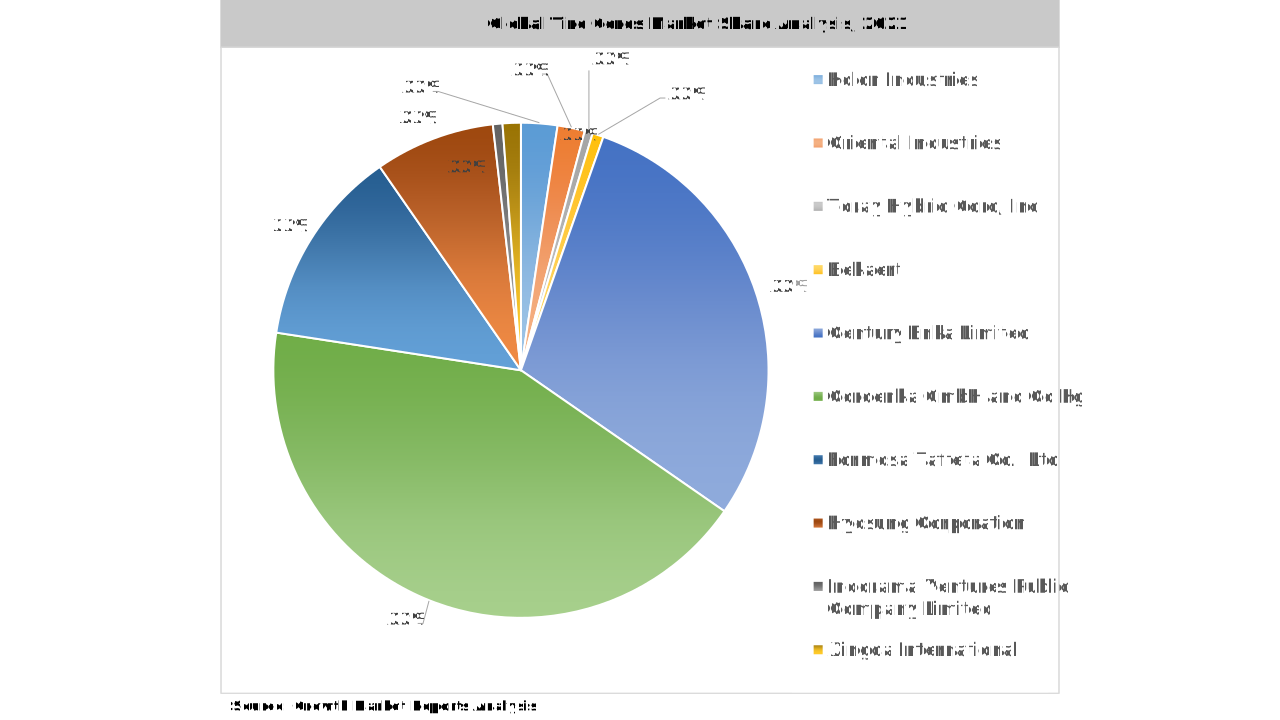

Tire Cords Market By Key Players

Frequently Asked Questions

Major challenges include volatility in raw material prices, compliance with stringent environmental regulations, and the need for continuous innovation to meet evolving automotive and sustainability demands.

Tire cords are used in both Original Equipment Manufacturer (OEM) and replacement (aftermarket) tires, serving a wide range of vehicles including passenger cars, commercial vehicles, two-wheelers, and off-road vehicles.

Key players include Hyosung Corporation, Kolon Industries, SRF Limited, Kordsa Teknik Tekstil, Toray Industries, Teijin Limited, Century Enka, Cordenka GmbH, and Firestone Fibers & Textiles Company, among others.

Sustainability is increasingly important, with manufacturers adopting recyclable and bio-based materials, green production processes, and innovative technologies to reduce environmental impact and meet regulatory requirements.

Asia Pacific leads the tire cords market, accounting for over 52% of the global share in 2024, followed by North America and Europe. Latin America and the Middle East & Africa are experiencing steady growth.

The shift towards radial tires, which offer better fuel efficiency, handling, and tread life, has increased the demand for high-quality tire cords, especially in passenger cars and commercial vehicles.

Key growth drivers include rising vehicle production, increased demand for high-performance and electric vehicle tires, advancements in tire cord technology, and a growing focus on sustainability and eco-friendly manufacturing.

Common materials used in tire cords include nylon, polyester, rayon, steel, aramid, and hybrid or bio-based fibers, each offering unique properties for different tire applications.

The tire cords market is expected to expand at a CAGR of 6.3% from 2025 to 2033, reaching an estimated USD 9.33 billion by 2033.

As of 2024, the global tire cords market size reached USD 5.38 billion, driven by advancements in automotive technology and increasing vehicle production worldwide.

Table Of Content

Chapter 1 Executive Summary
Chapter 2 Assumptions and Acronyms Used
Chapter 3 Research Methodology
Chapter 4 Tire Cords Market Overview
   4.1 Introduction
      4.1.1 Market Taxonomy
      4.1.2 Market Definition
      4.1.3 Macro-Economic Factors Impacting the Market Growth
   4.2 Tire Cords Market Dynamics
      4.2.1 Market Drivers
      4.2.2 Market Restraints
      4.2.3 Market Opportunity
   4.3 Tire Cords Market - Supply Chain Analysis
      4.3.1 List of Key Suppliers
      4.3.2 List of Key Distributors
      4.3.3 List of Key Consumers
   4.4 Key Forces Shaping the Tire Cords Market
      4.4.1 Bargaining Power of Suppliers
      4.4.2 Bargaining Power of Buyers
      4.4.3 Threat of Substitution
      4.4.4 Threat of New Entrants
      4.4.5 Competitive Rivalry
   4.5 Global Tire Cords Market Size & Forecast, 2023-2032
      4.5.1 Tire Cords Market Size and Y-o-Y Growth
      4.5.2 Tire Cords Market Absolute $ Opportunity

Chapter 5 Global Tire Cords Market Analysis and Forecast By Material Type
   5.1 Introduction
      5.1.1 Key Market Trends & Growth Opportunities By Material Type
      5.1.2 Basis Point Share (BPS) Analysis By Material Type
      5.1.3 Absolute $ Opportunity Assessment By Material Type
   5.2 Tire Cords Market Size Forecast By Material Type
      5.2.1 Nylon
      5.2.2 Polyester
      5.2.3 Rayon
      5.2.4 Steel
      5.2.5 Aramid
      5.2.6 Others
   5.3 Market Attractiveness Analysis By Material Type

Chapter 6 Global Tire Cords Market Analysis and Forecast By Tire Type
   6.1 Introduction
      6.1.1 Key Market Trends & Growth Opportunities By Tire Type
      6.1.2 Basis Point Share (BPS) Analysis By Tire Type
      6.1.3 Absolute $ Opportunity Assessment By Tire Type
   6.2 Tire Cords Market Size Forecast By Tire Type
      6.2.1 Radial Tires
      6.2.2 Bias Tires
   6.3 Market Attractiveness Analysis By Tire Type

Chapter 7 Global Tire Cords Market Analysis and Forecast By Vehicle Type
   7.1 Introduction
      7.1.1 Key Market Trends & Growth Opportunities By Vehicle Type
      7.1.2 Basis Point Share (BPS) Analysis By Vehicle Type
      7.1.3 Absolute $ Opportunity Assessment By Vehicle Type
   7.2 Tire Cords Market Size Forecast By Vehicle Type
      7.2.1 Passenger Cars
      7.2.2 Commercial Vehicles
      7.2.3 Two-Wheelers
      7.2.4 Off-Road Vehicles
      7.2.5 Others
   7.3 Market Attractiveness Analysis By Vehicle Type

Chapter 8 Global Tire Cords Market Analysis and Forecast By Application
   8.1 Introduction
      8.1.1 Key Market Trends & Growth Opportunities By Application
      8.1.2 Basis Point Share (BPS) Analysis By Application
      8.1.3 Absolute $ Opportunity Assessment By Application
   8.2 Tire Cords Market Size Forecast By Application
      8.2.1 OEM
      8.2.2 Replacement
   8.3 Market Attractiveness Analysis By Application

Chapter 9 Global Tire Cords Market Analysis and Forecast by Region
   9.1 Introduction
      9.1.1 Key Market Trends & Growth Opportunities By Region
      9.1.2 Basis Point Share (BPS) Analysis By Region
      9.1.3 Absolute $ Opportunity Assessment By Region
   9.2 Tire Cords Market Size Forecast By Region
      9.2.1 North America
      9.2.2 Europe
      9.2.3 Asia Pacific
      9.2.4 Latin America
      9.2.5 Middle East & Africa (MEA)
   9.3 Market Attractiveness Analysis By Region

Chapter 10 Coronavirus Disease (COVID-19) Impact 
   10.1 Introduction 
   10.2 Current & Future Impact Analysis 
   10.3 Economic Impact Analysis 
   10.4 Government Policies 
   10.5 Investment Scenario

Chapter 11 North America Tire Cords Analysis and Forecast
   11.1 Introduction
   11.2 North America Tire Cords Market Size Forecast by Country
      11.2.1 U.S.
      11.2.2 Canada
   11.3 Basis Point Share (BPS) Analysis by Country
   11.4 Absolute $ Opportunity Assessment by Country
   11.5 Market Attractiveness Analysis by Country
   11.6 North America Tire Cords Market Size Forecast By Material Type
      11.6.1 Nylon
      11.6.2 Polyester
      11.6.3 Rayon
      11.6.4 Steel
      11.6.5 Aramid
      11.6.6 Others
   11.7 Basis Point Share (BPS) Analysis By Material Type 
   11.8 Absolute $ Opportunity Assessment By Material Type 
   11.9 Market Attractiveness Analysis By Material Type
   11.10 North America Tire Cords Market Size Forecast By Tire Type
      11.10.1 Radial Tires
      11.10.2 Bias Tires
   11.11 Basis Point Share (BPS) Analysis By Tire Type 
   11.12 Absolute $ Opportunity Assessment By Tire Type 
   11.13 Market Attractiveness Analysis By Tire Type
   11.14 North America Tire Cords Market Size Forecast By Vehicle Type
      11.14.1 Passenger Cars
      11.14.2 Commercial Vehicles
      11.14.3 Two-Wheelers
      11.14.4 Off-Road Vehicles
      11.14.5 Others
   11.15 Basis Point Share (BPS) Analysis By Vehicle Type 
   11.16 Absolute $ Opportunity Assessment By Vehicle Type 
   11.17 Market Attractiveness Analysis By Vehicle Type
   11.18 North America Tire Cords Market Size Forecast By Application
      11.18.1 OEM
      11.18.2 Replacement
   11.19 Basis Point Share (BPS) Analysis By Application 
   11.20 Absolute $ Opportunity Assessment By Application 
   11.21 Market Attractiveness Analysis By Application

Chapter 12 Europe Tire Cords Analysis and Forecast
   12.1 Introduction
   12.2 Europe Tire Cords Market Size Forecast by Country
      12.2.1 Germany
      12.2.2 France
      12.2.3 Italy
      12.2.4 U.K.
      12.2.5 Spain
      12.2.6 Russia
      12.2.7 Rest of Europe
   12.3 Basis Point Share (BPS) Analysis by Country
   12.4 Absolute $ Opportunity Assessment by Country
   12.5 Market Attractiveness Analysis by Country
   12.6 Europe Tire Cords Market Size Forecast By Material Type
      12.6.1 Nylon
      12.6.2 Polyester
      12.6.3 Rayon
      12.6.4 Steel
      12.6.5 Aramid
      12.6.6 Others
   12.7 Basis Point Share (BPS) Analysis By Material Type 
   12.8 Absolute $ Opportunity Assessment By Material Type 
   12.9 Market Attractiveness Analysis By Material Type
   12.10 Europe Tire Cords Market Size Forecast By Tire Type
      12.10.1 Radial Tires
      12.10.2 Bias Tires
   12.11 Basis Point Share (BPS) Analysis By Tire Type 
   12.12 Absolute $ Opportunity Assessment By Tire Type 
   12.13 Market Attractiveness Analysis By Tire Type
   12.14 Europe Tire Cords Market Size Forecast By Vehicle Type
      12.14.1 Passenger Cars
      12.14.2 Commercial Vehicles
      12.14.3 Two-Wheelers
      12.14.4 Off-Road Vehicles
      12.14.5 Others
   12.15 Basis Point Share (BPS) Analysis By Vehicle Type 
   12.16 Absolute $ Opportunity Assessment By Vehicle Type 
   12.17 Market Attractiveness Analysis By Vehicle Type
   12.18 Europe Tire Cords Market Size Forecast By Application
      12.18.1 OEM
      12.18.2 Replacement
   12.19 Basis Point Share (BPS) Analysis By Application 
   12.20 Absolute $ Opportunity Assessment By Application 
   12.21 Market Attractiveness Analysis By Application

Chapter 13 Asia Pacific Tire Cords Analysis and Forecast
   13.1 Introduction
   13.2 Asia Pacific Tire Cords Market Size Forecast by Country
      13.2.1 China
      13.2.2 Japan
      13.2.3 South Korea
      13.2.4 India
      13.2.5 Australia
      13.2.6 South East Asia (SEA)
      13.2.7 Rest of Asia Pacific (APAC)
   13.3 Basis Point Share (BPS) Analysis by Country
   13.4 Absolute $ Opportunity Assessment by Country
   13.5 Market Attractiveness Analysis by Country
   13.6 Asia Pacific Tire Cords Market Size Forecast By Material Type
      13.6.1 Nylon
      13.6.2 Polyester
      13.6.3 Rayon
      13.6.4 Steel
      13.6.5 Aramid
      13.6.6 Others
   13.7 Basis Point Share (BPS) Analysis By Material Type 
   13.8 Absolute $ Opportunity Assessment By Material Type 
   13.9 Market Attractiveness Analysis By Material Type
   13.10 Asia Pacific Tire Cords Market Size Forecast By Tire Type
      13.10.1 Radial Tires
      13.10.2 Bias Tires
   13.11 Basis Point Share (BPS) Analysis By Tire Type 
   13.12 Absolute $ Opportunity Assessment By Tire Type 
   13.13 Market Attractiveness Analysis By Tire Type
   13.14 Asia Pacific Tire Cords Market Size Forecast By Vehicle Type
      13.14.1 Passenger Cars
      13.14.2 Commercial Vehicles
      13.14.3 Two-Wheelers
      13.14.4 Off-Road Vehicles
      13.14.5 Others
   13.15 Basis Point Share (BPS) Analysis By Vehicle Type 
   13.16 Absolute $ Opportunity Assessment By Vehicle Type 
   13.17 Market Attractiveness Analysis By Vehicle Type
   13.18 Asia Pacific Tire Cords Market Size Forecast By Application
      13.18.1 OEM
      13.18.2 Replacement
   13.19 Basis Point Share (BPS) Analysis By Application 
   13.20 Absolute $ Opportunity Assessment By Application 
   13.21 Market Attractiveness Analysis By Application

Chapter 14 Latin America Tire Cords Analysis and Forecast
   14.1 Introduction
   14.2 Latin America Tire Cords Market Size Forecast by Country
      14.2.1 Brazil
      14.2.2 Mexico
      14.2.3 Rest of Latin America (LATAM)
   14.3 Basis Point Share (BPS) Analysis by Country
   14.4 Absolute $ Opportunity Assessment by Country
   14.5 Market Attractiveness Analysis by Country
   14.6 Latin America Tire Cords Market Size Forecast By Material Type
      14.6.1 Nylon
      14.6.2 Polyester
      14.6.3 Rayon
      14.6.4 Steel
      14.6.5 Aramid
      14.6.6 Others
   14.7 Basis Point Share (BPS) Analysis By Material Type 
   14.8 Absolute $ Opportunity Assessment By Material Type 
   14.9 Market Attractiveness Analysis By Material Type
   14.10 Latin America Tire Cords Market Size Forecast By Tire Type
      14.10.1 Radial Tires
      14.10.2 Bias Tires
   14.11 Basis Point Share (BPS) Analysis By Tire Type 
   14.12 Absolute $ Opportunity Assessment By Tire Type 
   14.13 Market Attractiveness Analysis By Tire Type
   14.14 Latin America Tire Cords Market Size Forecast By Vehicle Type
      14.14.1 Passenger Cars
      14.14.2 Commercial Vehicles
      14.14.3 Two-Wheelers
      14.14.4 Off-Road Vehicles
      14.14.5 Others
   14.15 Basis Point Share (BPS) Analysis By Vehicle Type 
   14.16 Absolute $ Opportunity Assessment By Vehicle Type 
   14.17 Market Attractiveness Analysis By Vehicle Type
   14.18 Latin America Tire Cords Market Size Forecast By Application
      14.18.1 OEM
      14.18.2 Replacement
   14.19 Basis Point Share (BPS) Analysis By Application 
   14.20 Absolute $ Opportunity Assessment By Application 
   14.21 Market Attractiveness Analysis By Application

Chapter 15 Middle East & Africa (MEA) Tire Cords Analysis and Forecast
   15.1 Introduction
   15.2 Middle East & Africa (MEA) Tire Cords Market Size Forecast by Country
      15.2.1 Saudi Arabia
      15.2.2 South Africa
      15.2.3 UAE
      15.2.4 Rest of Middle East & Africa (MEA)
   15.3 Basis Point Share (BPS) Analysis by Country
   15.4 Absolute $ Opportunity Assessment by Country
   15.5 Market Attractiveness Analysis by Country
   15.6 Middle East & Africa (MEA) Tire Cords Market Size Forecast By Material Type
      15.6.1 Nylon
      15.6.2 Polyester
      15.6.3 Rayon
      15.6.4 Steel
      15.6.5 Aramid
      15.6.6 Others
   15.7 Basis Point Share (BPS) Analysis By Material Type 
   15.8 Absolute $ Opportunity Assessment By Material Type 
   15.9 Market Attractiveness Analysis By Material Type
   15.10 Middle East & Africa (MEA) Tire Cords Market Size Forecast By Tire Type
      15.10.1 Radial Tires
      15.10.2 Bias Tires
   15.11 Basis Point Share (BPS) Analysis By Tire Type 
   15.12 Absolute $ Opportunity Assessment By Tire Type 
   15.13 Market Attractiveness Analysis By Tire Type
   15.14 Middle East & Africa (MEA) Tire Cords Market Size Forecast By Vehicle Type
      15.14.1 Passenger Cars
      15.14.2 Commercial Vehicles
      15.14.3 Two-Wheelers
      15.14.4 Off-Road Vehicles
      15.14.5 Others
   15.15 Basis Point Share (BPS) Analysis By Vehicle Type 
   15.16 Absolute $ Opportunity Assessment By Vehicle Type 
   15.17 Market Attractiveness Analysis By Vehicle Type
   15.18 Middle East & Africa (MEA) Tire Cords Market Size Forecast By Application
      15.18.1 OEM
      15.18.2 Replacement
   15.19 Basis Point Share (BPS) Analysis By Application 
   15.20 Absolute $ Opportunity Assessment By Application 
   15.21 Market Attractiveness Analysis By Application

Chapter 16 Competition Landscape 
   16.1 Tire Cords Market: Competitive Dashboard
   16.2 Global Tire Cords Market: Market Share Analysis, 2023
   16.3 Company Profiles (Details – Overview, Financials, Developments, Strategy) 
      16.3.1 Hyosung Corporation
Kolon Industries Inc.
Kordsa Teknik Tekstil A.S.
Teijin Limited
Toray Industries Inc.
SRF Limited
Indorama Ventures Public Company Limited
Century Enka Limited
Formosa Taffeta Co. Ltd.
Firestone Fibers & Textiles Company
Milliken & Company
Shandong Helon Polytex Chemical Fibre Co. Ltd.
Zhejiang Unifull Industrial Fibre Co. Ltd.
Cordenka GmbH & Co. KG
Jiangsu Xingda Steel Tyre Cord Co. Ltd.
Bekaert SA
Tokusen Kogyo Co. Ltd.
Far Eastern New Century Corporation
Nantong Shenma Group Co. Ltd.
Hailide New Material Co. Ltd.

Methodology

Our Clients

General Electric
Nestle SA
General Mills
sinopec
Microsoft
Pfizer
Dassault Aviation
The John Holland Group