Two Wheeler Tire Market Research Report 2033

Two Wheeler Tire Market Research Report 2033

Segments - by Tire Type (Tubeless, Tube), by Vehicle Type (Motorcycles, Scooters, Mopeds, Electric Two Wheelers), by Distribution Channel (OEM, Aftermarket), by Tire Size (Up to 14 Inch, 15–18 Inch, Above 18 Inch)

https://growthmarketreports.com/Raksha
Author : Raksha Sharma
https://growthmarketreports.com/Vaibhav
Fact-checked by : V. Chandola
https://growthmarketreports.com/Shruti
Editor : Shruti Bhat

Upcoming | Report ID :AL-629 | 4.0 Rating | 68 Reviews | 275 Pages | Format : Docx PDF

Report Description


Two Wheeler Tire Market Outlook

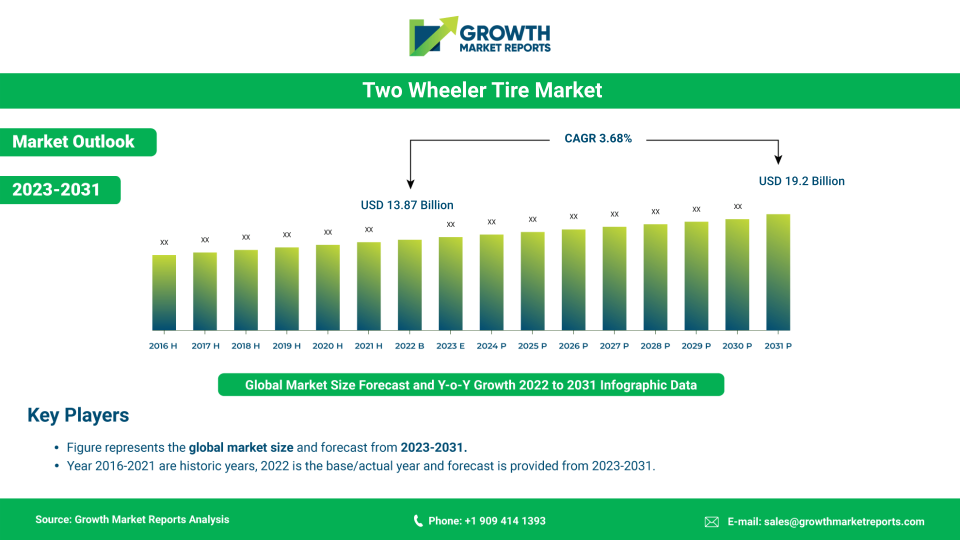
According to our latest research, the global two wheeler tire market size reached USD 17.6 billion in 2024, driven by a robust demand for personal mobility solutions and the expanding adoption of motorcycles, scooters, and electric two-wheelers. The market is projected to grow at a CAGR of 4.8% from 2025 to 2033, reaching a forecasted value of USD 26.8 billion by 2033. This growth is underpinned by rising urbanization, increasing disposable incomes in emerging economies, and the ongoing transition towards electric mobility. As per our latest research, the market is witnessing significant advancements in tire technology, sustainability initiatives, and an evolving distribution landscape, all of which are contributing to the robust outlook for the two wheeler tire market in the coming years.

One of the primary growth factors propelling the two wheeler tire market is the surge in two-wheeler ownership across developing regions, particularly in Asia Pacific. Urban congestion, limited public transportation infrastructure, and the affordability of motorcycles and scooters have made two-wheelers the preferred mode of transport for millions. This trend is further accentuated by the rising number of working professionals and students in metropolitan areas, where two-wheelers offer unmatched convenience and cost-effectiveness. Additionally, the growing penetration of e-commerce and food delivery services has significantly increased the demand for two-wheeler fleets, consequently boosting the replacement tire market. The market is also benefitting from favorable government policies supporting affordable mobility and the increasing availability of financing options for vehicle purchases.

Technological advancements in tire manufacturing are another vital growth driver for the two wheeler tire market. Manufacturers are increasingly focusing on developing advanced tire compounds and tread patterns to enhance safety, fuel efficiency, and ride comfort. The shift towards tubeless tires, which offer better puncture resistance, lower maintenance, and improved performance, is gaining momentum globally. Furthermore, the integration of smart tire technologies, such as embedded sensors for real-time pressure and temperature monitoring, is poised to revolutionize the aftermarket segment. These innovations are not only elevating consumer expectations but also enabling manufacturers to differentiate their offerings in a highly competitive market.

The rapid adoption of electric two-wheelers is reshaping the dynamics of the two wheeler tire market. As governments worldwide intensify efforts to reduce vehicular emissions, the electric vehicle (EV) segment is witnessing exponential growth. Electric two-wheelers, which require specialized tires to accommodate higher torque and different weight distributions, are driving demand for new tire designs and materials. Leading tire manufacturers are investing heavily in research and development to cater to this emerging segment, introducing low rolling resistance and eco-friendly tire options. This shift aligns with the broader industry trend towards sustainability, as consumers and regulatory bodies increasingly prioritize environmentally responsible products.

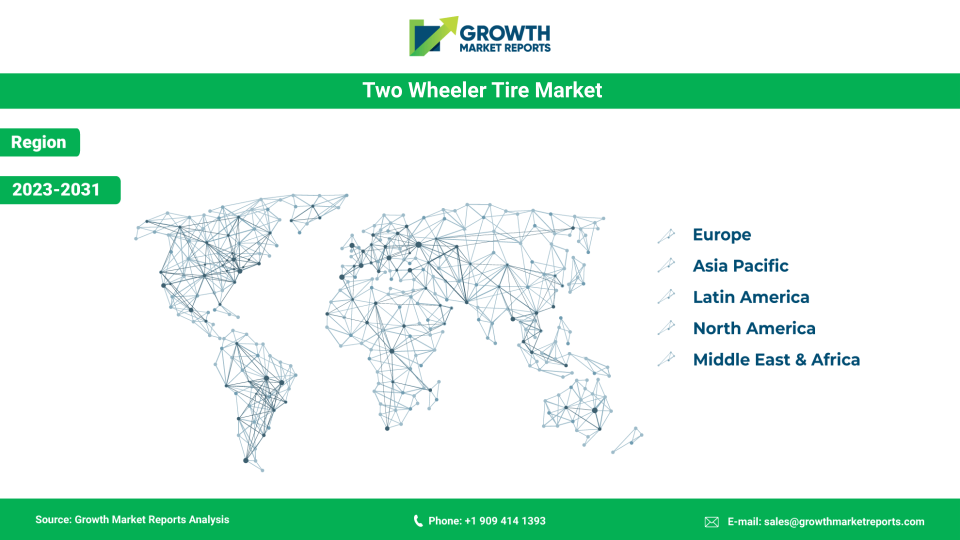
From a regional perspective, Asia Pacific continues to dominate the global two wheeler tire market, accounting for over 68% of the total market share in 2024. This dominance is attributed to the sheer volume of two-wheeler sales in countries like India, China, Indonesia, and Vietnam, where motorcycles and scooters are integral to daily transportation. North America and Europe are witnessing steady growth, fueled by the rising popularity of recreational biking and the expanding electric two-wheeler segment. Meanwhile, Latin America and the Middle East & Africa are emerging as promising markets, supported by improving economic conditions and increasing urbanization. Regional players are leveraging localized manufacturing and distribution strategies to tap into these high-growth markets effectively.

Global Two Wheeler Tire Industry Outlook

Tire Type Analysis

The tire type segment of the two wheeler tire market is primarily divided into tubeless and tube tires, each catering to distinct consumer preferences and vehicle requirements. Tubeless tires have gained tremendous traction in recent years, owing to their superior performance, enhanced safety features, and lower maintenance needs. Unlike traditional tube tires, tubeless variants are less prone to sudden deflation, which significantly reduces the risk of accidents caused by punctures. This advantage is particularly important in urban environments where road conditions can be unpredictable. As a result, manufacturers are increasingly focusing on expanding their tubeless tire portfolios, especially for premium motorcycles and scooters, to meet the evolving demands of safety-conscious consumers.

Tube tires, on the other hand, continue to maintain a strong presence, especially in entry-level motorcycles and rural markets where cost considerations are paramount. These tires are typically more affordable and easier to repair, making them a preferred choice for budget-conscious consumers and fleet operators. Despite the growing popularity of tubeless alternatives, the widespread use of tube tires in older vehicle models and in regions with limited access to advanced tire servicing facilities ensures their sustained demand. Manufacturers are also innovating within this segment by introducing more durable and puncture-resistant tube tires, thereby extending product lifecycles and enhancing value for end-users.

The transition from tube to tubeless tires is being accelerated by regulatory mandates and OEM initiatives aimed at improving vehicle safety standards. Many leading two-wheeler manufacturers now offer tubeless tires as standard equipment on new models, particularly in urban and semi-urban markets. This trend is expected to gain further momentum as consumer awareness about the benefits of tubeless technology continues to rise. Additionally, the aftermarket segment is witnessing increased demand for tubeless tire retrofitting services, providing a lucrative opportunity for tire retailers and service providers to expand their offerings.

Innovation in tire materials and construction techniques is also influencing the competitive dynamics within the tire type segment. The adoption of advanced rubber compounds, reinforced sidewalls, and optimized tread designs is enabling both tubeless and tube tires to deliver improved grip, longevity, and fuel efficiency. These technological advancements are particularly relevant in markets where road conditions and climate variability pose unique challenges to tire performance. As a result, tire manufacturers are investing in localized R&D centers to develop region-specific products that cater to the diverse needs of global consumers.

Report Scope

Attributes Details
Report Title Two Wheeler Tire Market Research Report 2033
By Tire Type Tubeless, Tube
By Vehicle Type Motorcycles, Scooters, Mopeds, Electric Two Wheelers
By Distribution Channel OEM, Aftermarket
By Tire Size Up to 14 Inch, 15–18 Inch, Above 18 Inch
Regions Covered North America, Europe, APAC, Latin America, MEA
Base Year 2024
Historic Data 2018-2023
Forecast Period 2025-2033
Number of Pages 275
Number of Tables & Figures 288
Customization Available Yes, the report can be customized as per your need.

Vehicle Type Analysis

The vehicle type segment in the two wheeler tire market encompasses motorcycles, scooters, mopeds, and electric two wheelers, each with unique tire requirements and market dynamics. Motorcycles represent the largest share of the market, driven by their widespread use for both personal and commercial transportation. The demand for high-performance tires in this segment is fueled by the growing popularity of sports and touring motorcycles, which require enhanced grip, stability, and durability. Manufacturers are responding by developing specialized tire lines tailored to different motorcycle categories, from commuter bikes to high-powered superbikes, ensuring optimal safety and performance across diverse riding conditions.

Scooters form the second-largest segment, particularly in urban areas where their ease of use, fuel efficiency, and compact size make them the vehicle of choice for daily commuting. The tire requirements for scooters differ significantly from those of motorcycles, with a greater emphasis on comfort, maneuverability, and puncture resistance. As a result, tire manufacturers are focusing on developing lightweight, low-rolling-resistance tires that enhance ride quality and extend fuel economy. The rising trend of women and young adults opting for scooters is further expanding the addressable market, prompting OEMs to introduce a broader range of tire sizes and designs tailored to this demographic.

Mopeds, while representing a smaller share of the overall two wheeler tire market, continue to play a crucial role in rural and semi-urban areas where affordability and simplicity are key purchasing criteria. The tire market for mopeds is characterized by high volume but low value, with a focus on basic durability and cost-effectiveness. However, ongoing efforts to improve rural road infrastructure and the increasing availability of better-quality tires are gradually shifting consumer preferences towards more advanced products in this segment. Manufacturers are also exploring partnerships with local distributors to ensure widespread availability and service support for moped tires.

The electric two wheeler segment is emerging as a key growth driver for the overall market, reflecting the global shift towards sustainable mobility solutions. Electric two-wheelers require tires that can handle higher torque and provide optimal energy efficiency, necessitating the development of specialized products. Leading tire manufacturers are investing in research and development to create low-resistance, lightweight tires that enhance the performance of electric vehicles while minimizing environmental impact. As the adoption of electric two-wheelers accelerates, particularly in urban centers, the demand for innovative tire solutions in this segment is expected to witness exponential growth over the forecast period.

Distribution Channel Analysis

The distribution channel segment of the two wheeler tire market is bifurcated into OEM (Original Equipment Manufacturer) and aftermarket channels, each exhibiting distinct growth patterns and strategic imperatives. The OEM segment is closely tied to new vehicle sales, with tire manufacturers supplying directly to two-wheeler assemblers for factory fitment. This channel benefits from long-term supply agreements and the ability to influence consumer preferences through product standardization. The growth of the OEM segment is directly correlated with the expansion of the two-wheeler industry, particularly in emerging markets where new vehicle registrations are rising steadily.

The aftermarket segment, however, dominates the two wheeler tire market in terms of volume, accounting for the majority of tire replacements and upgrades. This channel is characterized by a highly fragmented retail landscape, with a mix of branded outlets, independent dealers, and online platforms catering to diverse consumer needs. The aftermarket is driven by factors such as tire wear-and-tear, changing road conditions, and evolving consumer preferences for enhanced performance and aesthetics. Tire manufacturers are increasingly focusing on strengthening their aftermarket presence through strategic partnerships, exclusive retail formats, and digital marketing initiatives to capture a larger share of replacement sales.

Digital transformation is reshaping the distribution landscape, with e-commerce platforms emerging as a key growth avenue for two wheeler tire sales. Online channels offer consumers the convenience of product comparison, doorstep delivery, and value-added services such as installation and maintenance. This trend is particularly pronounced in urban markets, where tech-savvy consumers are seeking hassle-free purchasing experiences. Tire manufacturers are leveraging digital tools to engage with customers directly, gather real-time feedback, and offer personalized product recommendations, thereby enhancing brand loyalty and market penetration.

Supply chain optimization and efficient inventory management are critical success factors for both OEM and aftermarket channels. Manufacturers are investing in advanced logistics solutions, demand forecasting technologies, and localized warehousing to ensure timely product availability and minimize stockouts. The growing importance of sustainability in supply chain operations is also prompting companies to adopt eco-friendly packaging, optimize transportation routes, and explore circular economy models for tire recycling and disposal. These initiatives are not only improving operational efficiency but also aligning with the broader industry shift towards responsible business practices.

Tire Size Analysis

The tire size segment in the two wheeler tire market is categorized into up to 14 inch, 15–18 inch, and above 18 inch sizes, each catering to specific vehicle types and usage scenarios. Tires up to 14 inches are predominantly used in scooters and mopeds, offering a balance of agility, comfort, and fuel efficiency. This segment is witnessing robust demand in urban markets, where compact vehicles are preferred for navigating congested streets and tight parking spaces. Manufacturers are focusing on developing lightweight, puncture-resistant tires in this size range to meet the needs of daily commuters and delivery service providers.

The 15–18 inch tire segment is primarily associated with motorcycles, including commuter bikes, sports bikes, and touring models. This size category is characterized by higher load-carrying capacity, enhanced stability, and superior grip, making it ideal for both city and highway riding. The rising popularity of mid-range and premium motorcycles is driving demand for technologically advanced tires in this segment, with features such as optimized tread patterns, reinforced sidewalls, and high-performance rubber compounds. Manufacturers are also offering a wider range of customization options, including color variants and tread designs, to cater to the diverse preferences of motorcycle enthusiasts.

Tires above 18 inches are typically used in high-performance and specialty motorcycles, including adventure bikes, cruisers, and off-road vehicles. This segment, while smaller in volume, commands a premium due to the advanced engineering and materials required to deliver exceptional performance under demanding conditions. The growth of adventure tourism, recreational biking, and motorsports is fueling demand for large-diameter tires that offer superior traction, durability, and handling. Manufacturers are investing in research and development to create innovative products that meet the specific needs of this niche segment, including dual-compound treads, self-healing technologies, and smart tire solutions.

The increasing adoption of electric two-wheelers is also influencing tire size preferences, as these vehicles often require specialized tires to accommodate unique weight distributions and torque characteristics. Tire manufacturers are collaborating with electric vehicle OEMs to co-develop products that optimize energy efficiency and range, while ensuring safety and comfort. As the electric two-wheeler market expands, the demand for customized tire sizes and specifications is expected to increase, creating new growth opportunities for industry players.

Opportunities & Threats

The two wheeler tire market presents numerous opportunities for growth and innovation, driven by evolving consumer preferences, technological advancements, and the global transition towards sustainable mobility. The rapid expansion of the electric two-wheeler segment is creating significant demand for specialized tires that cater to the unique requirements of EVs. Manufacturers that invest in research and development to create low-rolling-resistance, lightweight, and eco-friendly tires stand to gain a competitive edge in this fast-growing market. Additionally, the increasing penetration of digital platforms and e-commerce is opening up new channels for tire sales and customer engagement, enabling companies to reach a broader audience and offer value-added services such as doorstep installation and maintenance.

Another key opportunity lies in the adoption of smart tire technologies, such as embedded sensors for real-time monitoring of tire pressure, temperature, and wear. These innovations not only enhance safety and performance but also enable predictive maintenance and fleet management, particularly for commercial and delivery vehicles. The growing emphasis on sustainability is prompting manufacturers to explore the use of recycled materials, bio-based compounds, and circular economy models for tire recycling and disposal. By aligning their product development and supply chain strategies with global sustainability goals, companies can differentiate themselves in a crowded marketplace and appeal to environmentally conscious consumers.

Despite the promising outlook, the two wheeler tire market faces several restraining factors, including volatility in raw material prices, regulatory challenges, and intense competition from low-cost manufacturers. Fluctuations in the prices of natural and synthetic rubber, carbon black, and other key inputs can significantly impact production costs and profit margins. Additionally, stringent regulatory standards related to tire safety, labeling, and environmental impact require ongoing investments in compliance and certification, particularly for companies operating in multiple geographies. The presence of numerous regional and unorganized players in the aftermarket segment intensifies price competition, making it challenging for established brands to maintain market share and profitability.

Regional Outlook

The Asia Pacific region continues to dominate the global two wheeler tire market, accounting for approximately USD 12 billion of the total market size in 2024. This dominance is driven by the sheer volume of two-wheeler sales in countries such as India, China, Indonesia, and Vietnam, where motorcycles and scooters are the primary means of transportation for millions of people. The region's rapid urbanization, rising disposable incomes, and expanding middle class are fueling demand for both new vehicles and replacement tires. Additionally, government initiatives to promote electric mobility and improve road infrastructure are further boosting the market's growth prospects in Asia Pacific.

North America and Europe represent mature but steadily growing markets for two wheeler tires, with a combined market size of around USD 3.8 billion in 2024. The growth in these regions is driven by the rising popularity of recreational biking, the expanding electric two-wheeler segment, and increasing consumer awareness about safety and performance. In North America, the market is projected to grow at a CAGR of 3.7% over the forecast period, supported by favorable regulatory policies and the proliferation of online tire sales platforms. In Europe, stringent safety and environmental standards are prompting manufacturers to invest in advanced tire technologies and sustainable materials.

Latin America and the Middle East & Africa are emerging as promising markets for two wheeler tires, with a combined market size of approximately USD 1.8 billion in 2024. These regions are characterized by improving economic conditions, increasing urbanization, and a growing preference for affordable personal transportation solutions. Local manufacturers are leveraging cost advantages and localized distribution networks to capture a larger share of the market, while global players are exploring strategic partnerships and investments to expand their footprint. The ongoing development of road infrastructure and the rising adoption of electric two-wheelers are expected to drive further growth in these regions over the coming years.

Two Wheeler Tire Market Statistics

Competitor Outlook

The competitive landscape of the two wheeler tire market is highly fragmented, with a mix of global giants, regional leaders, and numerous unorganized players vying for market share. Established international brands leverage their extensive R&D capabilities, technological expertise, and wide distribution networks to maintain a competitive edge. These companies focus on product innovation, quality assurance, and brand positioning to differentiate themselves in a crowded marketplace. Strategic collaborations with OEMs, investments in smart tire technologies, and the development of eco-friendly products are key strategies adopted by leading players to sustain growth and profitability.

Regional and local manufacturers play a crucial role in the aftermarket segment, particularly in emerging markets where price sensitivity and localized service support are critical success factors. These companies often benefit from lower production costs, flexible manufacturing processes, and deep-rooted relationships with local distributors and retailers. However, they face challenges related to quality control, brand recognition, and compliance with evolving regulatory standards. The influx of low-cost imports from countries with favorable trade policies further intensifies competition, putting pressure on margins and compelling companies to continuously innovate and optimize their operations.

Digital transformation is reshaping the competitive dynamics of the two wheeler tire market, with companies investing in e-commerce platforms, data analytics, and direct-to-consumer sales models. Leading players are leveraging digital tools to enhance customer engagement, streamline supply chain operations, and offer personalized product recommendations. The growing importance of sustainability is also prompting companies to invest in green manufacturing practices, recycled materials, and circular economy initiatives, aligning their business strategies with global environmental goals and regulatory requirements.

Some of the major companies operating in the global two wheeler tire market include Michelin, Bridgestone Corporation, Continental AG, MRF Limited, CEAT Limited, TVS Srichakra Limited, Pirelli & C. S.p.A., Apollo Tyres Ltd., JK Tyre & Industries Ltd., and Maxxis International. These companies have established strong brand presence and extensive distribution networks, enabling them to cater to a diverse customer base across multiple regions. Michelin and Bridgestone are known for their technological leadership and focus on premium segments, while MRF, CEAT, and TVS Srichakra dominate the Indian market with a wide range of products tailored to local preferences. Continental and Pirelli have a strong presence in Europe, leveraging their expertise in advanced tire technologies and sustainable materials. Apollo Tyres and JK Tyre are expanding their global footprint through strategic acquisitions and partnerships, while Maxxis International is focusing on innovation and quality to strengthen its position in key markets.

These leading companies are continuously investing in research and development to introduce innovative products that meet the evolving needs of consumers and regulatory bodies. They are also expanding their manufacturing capacities, optimizing supply chain operations, and exploring new distribution channels to capture emerging opportunities in the electric two-wheeler and smart tire segments. By aligning their strategies with global trends and consumer preferences, these companies are well-positioned to capitalize on the robust growth prospects of the two wheeler tire market over the coming years.

Key Players

  • Bridgestone Corporation
  • Michelin
  • Continental AG
  • Pirelli & C. S.p.A.
  • Goodyear Tire & Rubber Company
  • Dunlop Tires
  • CEAT Limited
  • MRF Limited
  • Apollo Tyres Ltd.
  • TVS Srichakra Limited
  • JK Tyre & Industries Ltd.
  • Hankook Tire & Technology Co., Ltd.
  • Sumitomo Rubber Industries, Ltd.
  • Maxxis International
  • Metzeler (a brand of Pirelli)
  • Shinko Tire
  • Kenda Rubber Industrial Company
  • Cheng Shin Rubber (CST Tires)
  • Balkrishna Industries Limited (BKT)
  • PT Gajah Tunggal Tbk
Two Wheeler Tire Market Overview

Segments

The Two Wheeler Tire market has been segmented on the basis of

Tire Type

  • Tubeless
  • Tube

Vehicle Type

  • Motorcycles
  • Scooters
  • Mopeds
  • Electric Two Wheelers

Distribution Channel

  • OEM
  • Aftermarket

Tire Size

  • Up to 14 Inch
  • 15–18 Inch
  • Above 18 Inch

Competitive Landscape

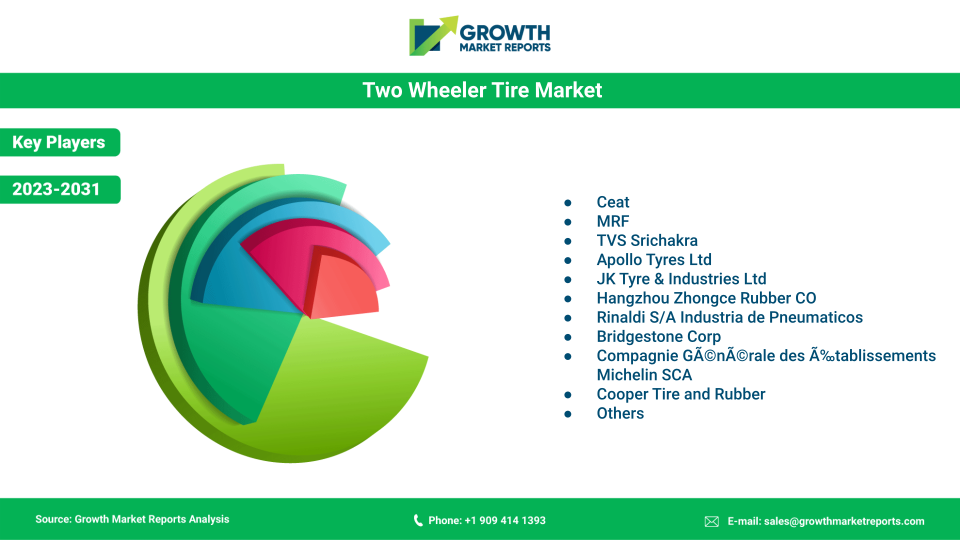
The major players of the market are Ceat, MRF, TVS Srichakra, Apollo Tyres Ltd, JK Tyre & Industries Ltd, Hangzhou Zhongce Rubber CO, Rinaldi S/A Industria de Pneumaticos, Bridgestone Corp, Compagnie Générale des Établissements Michelin SCA, Cooper Tire and Rubber, Hankook Tire, Sumitomo Rubber Industries, Superking Manufacturers (Tyre), Yokohama Rubber.

Major companies operating in global two wheeler tire market are expanding their dealership and distributorship network while expanding their product portfolio to meet the requirements of different driving conditions.
 

Two Wheeler Tire Market Key Players

Frequently Asked Questions

Tire sizes are categorized as up to 14 inch (mainly for scooters and mopeds), 15–18 inch (for motorcycles), and above 18 inch (for high-performance bikes). Each size segment caters to specific vehicle types and usage scenarios, influencing demand and product development.

Key challenges include volatility in raw material prices, regulatory compliance, intense competition from low-cost manufacturers, and the need for ongoing innovation to meet evolving safety and environmental standards.

Major players include Michelin, Bridgestone Corporation, Continental AG, MRF Limited, CEAT Limited, TVS Srichakra Limited, Pirelli & C. S.p.A., Apollo Tyres Ltd., JK Tyre & Industries Ltd., and Maxxis International.

Advancements include the development of advanced tire compounds, smart tire technologies with embedded sensors, and eco-friendly materials, all aimed at improving safety, performance, and sustainability.

Two wheeler tires are distributed through OEM (Original Equipment Manufacturer) channels for new vehicles and the aftermarket for replacements and upgrades. The aftermarket dominates in terms of volume, with growing online sales.

The rapid adoption of electric two-wheelers is driving demand for specialized tires that handle higher torque and unique weight distributions, leading manufacturers to develop low rolling resistance and eco-friendly tire options.

The two main types of two wheeler tires are tubeless and tube tires. Tubeless tires are gaining popularity for their safety and low maintenance, while tube tires remain common in entry-level motorcycles and rural markets.

Asia Pacific dominates the global two wheeler tire market, accounting for over 68% of the total market share in 2024, led by high sales in India, China, Indonesia, and Vietnam.

The two wheeler tire market is expected to grow at a CAGR of 4.8% from 2025 to 2033, reaching a forecasted value of USD 26.8 billion by 2033.

As of 2024, the global two wheeler tire market size reached USD 17.6 billion, driven by increasing demand for personal mobility and the adoption of motorcycles, scooters, and electric two-wheelers.

Table Of Content

Chapter 1 Executive Summary
Chapter 2 Assumptions and Acronyms Used
Chapter 3 Research Methodology
Chapter 4 Two Wheeler Tire Market Overview
   4.1 Introduction
      4.1.1 Market Taxonomy
      4.1.2 Market Definition
      4.1.3 Macro-Economic Factors Impacting the Market Growth
   4.2 Two Wheeler Tire Market Dynamics
      4.2.1 Market Drivers
      4.2.2 Market Restraints
      4.2.3 Market Opportunity
   4.3 Two Wheeler Tire Market - Supply Chain Analysis
      4.3.1 List of Key Suppliers
      4.3.2 List of Key Distributors
      4.3.3 List of Key Consumers
   4.4 Key Forces Shaping the Two Wheeler Tire Market
      4.4.1 Bargaining Power of Suppliers
      4.4.2 Bargaining Power of Buyers
      4.4.3 Threat of Substitution
      4.4.4 Threat of New Entrants
      4.4.5 Competitive Rivalry
   4.5 Global Two Wheeler Tire Market Size & Forecast, 2023-2032
      4.5.1 Two Wheeler Tire Market Size and Y-o-Y Growth
      4.5.2 Two Wheeler Tire Market Absolute $ Opportunity

Chapter 5 Global Two Wheeler Tire Market Analysis and Forecast By Tire Type
   5.1 Introduction
      5.1.1 Key Market Trends & Growth Opportunities By Tire Type
      5.1.2 Basis Point Share (BPS) Analysis By Tire Type
      5.1.3 Absolute $ Opportunity Assessment By Tire Type
   5.2 Two Wheeler Tire Market Size Forecast By Tire Type
      5.2.1 Tubeless
      5.2.2 Tube
   5.3 Market Attractiveness Analysis By Tire Type

Chapter 6 Global Two Wheeler Tire Market Analysis and Forecast By Vehicle Type
   6.1 Introduction
      6.1.1 Key Market Trends & Growth Opportunities By Vehicle Type
      6.1.2 Basis Point Share (BPS) Analysis By Vehicle Type
      6.1.3 Absolute $ Opportunity Assessment By Vehicle Type
   6.2 Two Wheeler Tire Market Size Forecast By Vehicle Type
      6.2.1 Motorcycles
      6.2.2 Scooters
      6.2.3 Mopeds
      6.2.4 Electric Two Wheelers
   6.3 Market Attractiveness Analysis By Vehicle Type

Chapter 7 Global Two Wheeler Tire Market Analysis and Forecast By Distribution Channel
   7.1 Introduction
      7.1.1 Key Market Trends & Growth Opportunities By Distribution Channel
      7.1.2 Basis Point Share (BPS) Analysis By Distribution Channel
      7.1.3 Absolute $ Opportunity Assessment By Distribution Channel
   7.2 Two Wheeler Tire Market Size Forecast By Distribution Channel
      7.2.1 OEM
      7.2.2 Aftermarket
   7.3 Market Attractiveness Analysis By Distribution Channel

Chapter 8 Global Two Wheeler Tire Market Analysis and Forecast By Tire Size
   8.1 Introduction
      8.1.1 Key Market Trends & Growth Opportunities By Tire Size
      8.1.2 Basis Point Share (BPS) Analysis By Tire Size
      8.1.3 Absolute $ Opportunity Assessment By Tire Size
   8.2 Two Wheeler Tire Market Size Forecast By Tire Size
      8.2.1 Up to 14 Inch
      8.2.2 15–18 Inch
      8.2.3 Above 18 Inch
   8.3 Market Attractiveness Analysis By Tire Size

Chapter 9 Global Two Wheeler Tire Market Analysis and Forecast by Region
   9.1 Introduction
      9.1.1 Key Market Trends & Growth Opportunities By Region
      9.1.2 Basis Point Share (BPS) Analysis By Region
      9.1.3 Absolute $ Opportunity Assessment By Region
   9.2 Two Wheeler Tire Market Size Forecast By Region
      9.2.1 North America
      9.2.2 Europe
      9.2.3 Asia Pacific
      9.2.4 Latin America
      9.2.5 Middle East & Africa (MEA)
   9.3 Market Attractiveness Analysis By Region

Chapter 10 Coronavirus Disease (COVID-19) Impact 
   10.1 Introduction 
   10.2 Current & Future Impact Analysis 
   10.3 Economic Impact Analysis 
   10.4 Government Policies 
   10.5 Investment Scenario

Chapter 11 North America Two Wheeler Tire Analysis and Forecast
   11.1 Introduction
   11.2 North America Two Wheeler Tire Market Size Forecast by Country
      11.2.1 U.S.
      11.2.2 Canada
   11.3 Basis Point Share (BPS) Analysis by Country
   11.4 Absolute $ Opportunity Assessment by Country
   11.5 Market Attractiveness Analysis by Country
   11.6 North America Two Wheeler Tire Market Size Forecast By Tire Type
      11.6.1 Tubeless
      11.6.2 Tube
   11.7 Basis Point Share (BPS) Analysis By Tire Type 
   11.8 Absolute $ Opportunity Assessment By Tire Type 
   11.9 Market Attractiveness Analysis By Tire Type
   11.10 North America Two Wheeler Tire Market Size Forecast By Vehicle Type
      11.10.1 Motorcycles
      11.10.2 Scooters
      11.10.3 Mopeds
      11.10.4 Electric Two Wheelers
   11.11 Basis Point Share (BPS) Analysis By Vehicle Type 
   11.12 Absolute $ Opportunity Assessment By Vehicle Type 
   11.13 Market Attractiveness Analysis By Vehicle Type
   11.14 North America Two Wheeler Tire Market Size Forecast By Distribution Channel
      11.14.1 OEM
      11.14.2 Aftermarket
   11.15 Basis Point Share (BPS) Analysis By Distribution Channel 
   11.16 Absolute $ Opportunity Assessment By Distribution Channel 
   11.17 Market Attractiveness Analysis By Distribution Channel
   11.18 North America Two Wheeler Tire Market Size Forecast By Tire Size
      11.18.1 Up to 14 Inch
      11.18.2 15–18 Inch
      11.18.3 Above 18 Inch
   11.19 Basis Point Share (BPS) Analysis By Tire Size 
   11.20 Absolute $ Opportunity Assessment By Tire Size 
   11.21 Market Attractiveness Analysis By Tire Size

Chapter 12 Europe Two Wheeler Tire Analysis and Forecast
   12.1 Introduction
   12.2 Europe Two Wheeler Tire Market Size Forecast by Country
      12.2.1 Germany
      12.2.2 France
      12.2.3 Italy
      12.2.4 U.K.
      12.2.5 Spain
      12.2.6 Russia
      12.2.7 Rest of Europe
   12.3 Basis Point Share (BPS) Analysis by Country
   12.4 Absolute $ Opportunity Assessment by Country
   12.5 Market Attractiveness Analysis by Country
   12.6 Europe Two Wheeler Tire Market Size Forecast By Tire Type
      12.6.1 Tubeless
      12.6.2 Tube
   12.7 Basis Point Share (BPS) Analysis By Tire Type 
   12.8 Absolute $ Opportunity Assessment By Tire Type 
   12.9 Market Attractiveness Analysis By Tire Type
   12.10 Europe Two Wheeler Tire Market Size Forecast By Vehicle Type
      12.10.1 Motorcycles
      12.10.2 Scooters
      12.10.3 Mopeds
      12.10.4 Electric Two Wheelers
   12.11 Basis Point Share (BPS) Analysis By Vehicle Type 
   12.12 Absolute $ Opportunity Assessment By Vehicle Type 
   12.13 Market Attractiveness Analysis By Vehicle Type
   12.14 Europe Two Wheeler Tire Market Size Forecast By Distribution Channel
      12.14.1 OEM
      12.14.2 Aftermarket
   12.15 Basis Point Share (BPS) Analysis By Distribution Channel 
   12.16 Absolute $ Opportunity Assessment By Distribution Channel 
   12.17 Market Attractiveness Analysis By Distribution Channel
   12.18 Europe Two Wheeler Tire Market Size Forecast By Tire Size
      12.18.1 Up to 14 Inch
      12.18.2 15–18 Inch
      12.18.3 Above 18 Inch
   12.19 Basis Point Share (BPS) Analysis By Tire Size 
   12.20 Absolute $ Opportunity Assessment By Tire Size 
   12.21 Market Attractiveness Analysis By Tire Size

Chapter 13 Asia Pacific Two Wheeler Tire Analysis and Forecast
   13.1 Introduction
   13.2 Asia Pacific Two Wheeler Tire Market Size Forecast by Country
      13.2.1 China
      13.2.2 Japan
      13.2.3 South Korea
      13.2.4 India
      13.2.5 Australia
      13.2.6 South East Asia (SEA)
      13.2.7 Rest of Asia Pacific (APAC)
   13.3 Basis Point Share (BPS) Analysis by Country
   13.4 Absolute $ Opportunity Assessment by Country
   13.5 Market Attractiveness Analysis by Country
   13.6 Asia Pacific Two Wheeler Tire Market Size Forecast By Tire Type
      13.6.1 Tubeless
      13.6.2 Tube
   13.7 Basis Point Share (BPS) Analysis By Tire Type 
   13.8 Absolute $ Opportunity Assessment By Tire Type 
   13.9 Market Attractiveness Analysis By Tire Type
   13.10 Asia Pacific Two Wheeler Tire Market Size Forecast By Vehicle Type
      13.10.1 Motorcycles
      13.10.2 Scooters
      13.10.3 Mopeds
      13.10.4 Electric Two Wheelers
   13.11 Basis Point Share (BPS) Analysis By Vehicle Type 
   13.12 Absolute $ Opportunity Assessment By Vehicle Type 
   13.13 Market Attractiveness Analysis By Vehicle Type
   13.14 Asia Pacific Two Wheeler Tire Market Size Forecast By Distribution Channel
      13.14.1 OEM
      13.14.2 Aftermarket
   13.15 Basis Point Share (BPS) Analysis By Distribution Channel 
   13.16 Absolute $ Opportunity Assessment By Distribution Channel 
   13.17 Market Attractiveness Analysis By Distribution Channel
   13.18 Asia Pacific Two Wheeler Tire Market Size Forecast By Tire Size
      13.18.1 Up to 14 Inch
      13.18.2 15–18 Inch
      13.18.3 Above 18 Inch
   13.19 Basis Point Share (BPS) Analysis By Tire Size 
   13.20 Absolute $ Opportunity Assessment By Tire Size 
   13.21 Market Attractiveness Analysis By Tire Size

Chapter 14 Latin America Two Wheeler Tire Analysis and Forecast
   14.1 Introduction
   14.2 Latin America Two Wheeler Tire Market Size Forecast by Country
      14.2.1 Brazil
      14.2.2 Mexico
      14.2.3 Rest of Latin America (LATAM)
   14.3 Basis Point Share (BPS) Analysis by Country
   14.4 Absolute $ Opportunity Assessment by Country
   14.5 Market Attractiveness Analysis by Country
   14.6 Latin America Two Wheeler Tire Market Size Forecast By Tire Type
      14.6.1 Tubeless
      14.6.2 Tube
   14.7 Basis Point Share (BPS) Analysis By Tire Type 
   14.8 Absolute $ Opportunity Assessment By Tire Type 
   14.9 Market Attractiveness Analysis By Tire Type
   14.10 Latin America Two Wheeler Tire Market Size Forecast By Vehicle Type
      14.10.1 Motorcycles
      14.10.2 Scooters
      14.10.3 Mopeds
      14.10.4 Electric Two Wheelers
   14.11 Basis Point Share (BPS) Analysis By Vehicle Type 
   14.12 Absolute $ Opportunity Assessment By Vehicle Type 
   14.13 Market Attractiveness Analysis By Vehicle Type
   14.14 Latin America Two Wheeler Tire Market Size Forecast By Distribution Channel
      14.14.1 OEM
      14.14.2 Aftermarket
   14.15 Basis Point Share (BPS) Analysis By Distribution Channel 
   14.16 Absolute $ Opportunity Assessment By Distribution Channel 
   14.17 Market Attractiveness Analysis By Distribution Channel
   14.18 Latin America Two Wheeler Tire Market Size Forecast By Tire Size
      14.18.1 Up to 14 Inch
      14.18.2 15–18 Inch
      14.18.3 Above 18 Inch
   14.19 Basis Point Share (BPS) Analysis By Tire Size 
   14.20 Absolute $ Opportunity Assessment By Tire Size 
   14.21 Market Attractiveness Analysis By Tire Size

Chapter 15 Middle East & Africa (MEA) Two Wheeler Tire Analysis and Forecast
   15.1 Introduction
   15.2 Middle East & Africa (MEA) Two Wheeler Tire Market Size Forecast by Country
      15.2.1 Saudi Arabia
      15.2.2 South Africa
      15.2.3 UAE
      15.2.4 Rest of Middle East & Africa (MEA)
   15.3 Basis Point Share (BPS) Analysis by Country
   15.4 Absolute $ Opportunity Assessment by Country
   15.5 Market Attractiveness Analysis by Country
   15.6 Middle East & Africa (MEA) Two Wheeler Tire Market Size Forecast By Tire Type
      15.6.1 Tubeless
      15.6.2 Tube
   15.7 Basis Point Share (BPS) Analysis By Tire Type 
   15.8 Absolute $ Opportunity Assessment By Tire Type 
   15.9 Market Attractiveness Analysis By Tire Type
   15.10 Middle East & Africa (MEA) Two Wheeler Tire Market Size Forecast By Vehicle Type
      15.10.1 Motorcycles
      15.10.2 Scooters
      15.10.3 Mopeds
      15.10.4 Electric Two Wheelers
   15.11 Basis Point Share (BPS) Analysis By Vehicle Type 
   15.12 Absolute $ Opportunity Assessment By Vehicle Type 
   15.13 Market Attractiveness Analysis By Vehicle Type
   15.14 Middle East & Africa (MEA) Two Wheeler Tire Market Size Forecast By Distribution Channel
      15.14.1 OEM
      15.14.2 Aftermarket
   15.15 Basis Point Share (BPS) Analysis By Distribution Channel 
   15.16 Absolute $ Opportunity Assessment By Distribution Channel 
   15.17 Market Attractiveness Analysis By Distribution Channel
   15.18 Middle East & Africa (MEA) Two Wheeler Tire Market Size Forecast By Tire Size
      15.18.1 Up to 14 Inch
      15.18.2 15–18 Inch
      15.18.3 Above 18 Inch
   15.19 Basis Point Share (BPS) Analysis By Tire Size 
   15.20 Absolute $ Opportunity Assessment By Tire Size 
   15.21 Market Attractiveness Analysis By Tire Size

Chapter 16 Competition Landscape 
   16.1 Two Wheeler Tire Market: Competitive Dashboard
   16.2 Global Two Wheeler Tire Market: Market Share Analysis, 2023
   16.3 Company Profiles (Details – Overview, Financials, Developments, Strategy) 
      16.3.1 Bridgestone Corporation
Michelin
Continental AG
Pirelli & C. S.p.A.
Goodyear Tire & Rubber Company
Dunlop Tires
CEAT Limited
MRF Limited
Apollo Tyres Ltd.
TVS Srichakra Limited
JK Tyre & Industries Ltd.
Hankook Tire & Technology Co., Ltd.
Sumitomo Rubber Industries, Ltd.
Maxxis International
Metzeler (a brand of Pirelli)
Shinko Tire
Kenda Rubber Industrial Company
Cheng Shin Rubber (CST Tires)
Balkrishna Industries Limited (BKT)
PT Gajah Tunggal Tbk

Methodology

Our Clients

Dassault Aviation
The John Holland Group
FedEx Logistics
Microsoft
sinopec
General Mills
Deloitte
General Electric