Military and Commercial Parachutes Market Research Report 2033

Military and Commercial Parachutes Market Research Report 2033

Segments - by Type (Round Parachutes, Ram-Air Parachutes, Square Parachutes, Others), by Application (Military, Cargo, Personnel, Sporting, Commercial), by Material (Nylon, Silk, Kevlar, Others), by End-User (Defense, Aviation, Adventure Sports, Others), by Distribution Channel (Direct Sales, Distributors, Online Retail)

https://growthmarketreports.com/Raksha
Author : Raksha Sharma
https://growthmarketreports.com/Vaibhav
Fact-checked by : V. Chandola
https://growthmarketreports.com/Shruti
Editor : Shruti Bhat

Upcoming | Report ID :AD-2896 | 4.8 Rating | 77 Reviews | 263 Pages | Format : Docx PDF

Report Description


Military and Commercial Parachutes Market Outlook

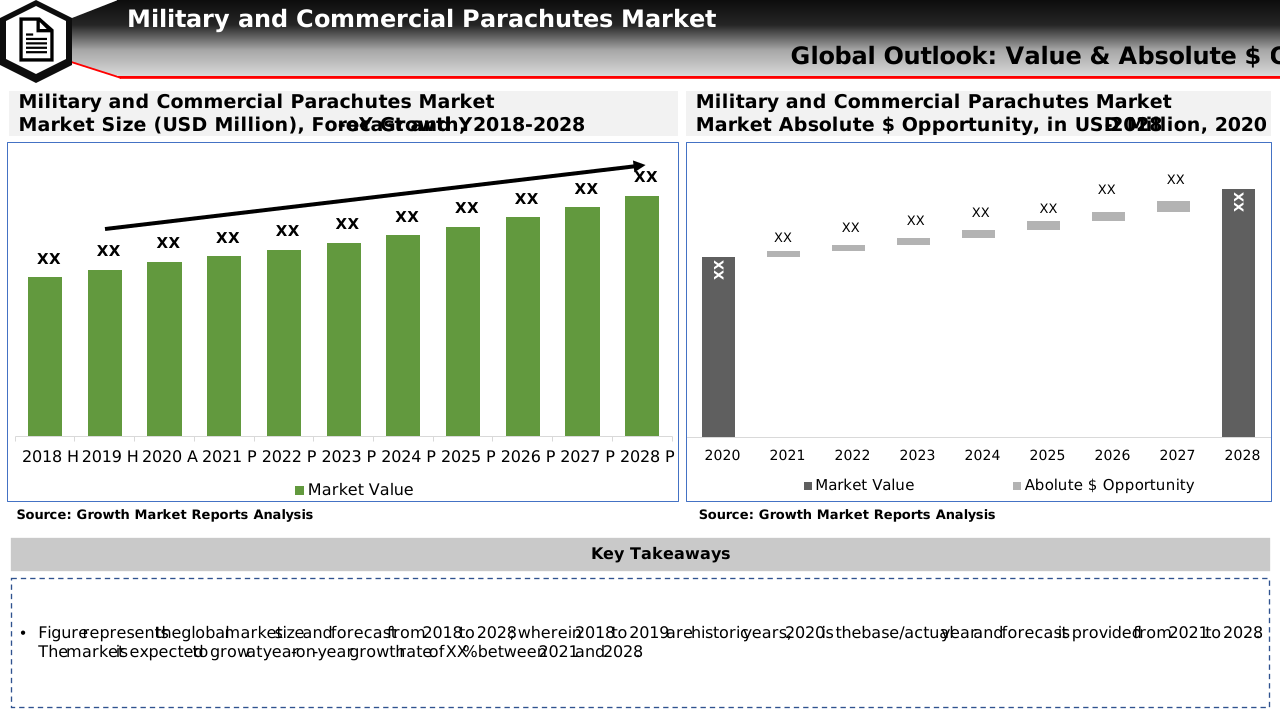
According to our latest research, the global military and commercial parachutes market size reached USD 1.42 billion in 2024, reflecting robust demand across defense, aviation, and recreational sectors. The market is projected to grow at a CAGR of 5.7% from 2025 to 2033, reaching an estimated USD 2.36 billion by 2033. This growth is primarily driven by increased defense spending, expanding adventure sports activities, and technological advancements in parachute materials and design.

The growth trajectory of the military and commercial parachutes market is significantly influenced by the rising defense modernization programs worldwide. Numerous countries are investing heavily in upgrading their airborne capabilities, which includes the procurement of advanced personnel and cargo parachutes. These investments are motivated by the need to enhance rapid deployment, search and rescue missions, and special operations. Additionally, the increasing frequency of joint military exercises and humanitarian missions necessitates reliable and high-performance parachute systems. The integration of innovative materials such as Kevlar and advanced nylon composites has further improved the durability and safety of parachutes, making them more attractive to military end-users. As a result, the defense sector continues to be a dominant force in propelling market growth.

Another critical growth factor for the military and commercial parachutes market is the burgeoning popularity of adventure sports and recreational activities. The global adventure tourism industry has witnessed substantial growth, with skydiving, paragliding, and related sporting events gaining immense traction, particularly among millennials and young adults. This surge in demand for sporting parachutes has led to increased investments in product innovation, focusing on enhancing safety, user experience, and performance. Furthermore, the proliferation of parachuting schools and clubs, especially in emerging economies, has created new opportunities for commercial parachute manufacturers. The ease of access to online retail channels has also contributed to market expansion by making parachuting equipment more accessible to a broader consumer base.

The commercial sector is also experiencing a boost due to the rising use of parachutes for cargo delivery, especially in remote and inaccessible regions. Humanitarian organizations, e-commerce giants, and logistics companies are leveraging parachute-based airdrop systems to deliver essential supplies, medical aid, and goods efficiently. This trend is particularly evident in disaster relief operations, where rapid and precise delivery is crucial. The ongoing advancements in autonomous aerial delivery systems and the integration of GPS-guided parachutes are expected to further augment the adoption of parachutes in commercial logistics. Collectively, these factors are fostering a dynamic and competitive landscape within the global military and commercial parachutes market.

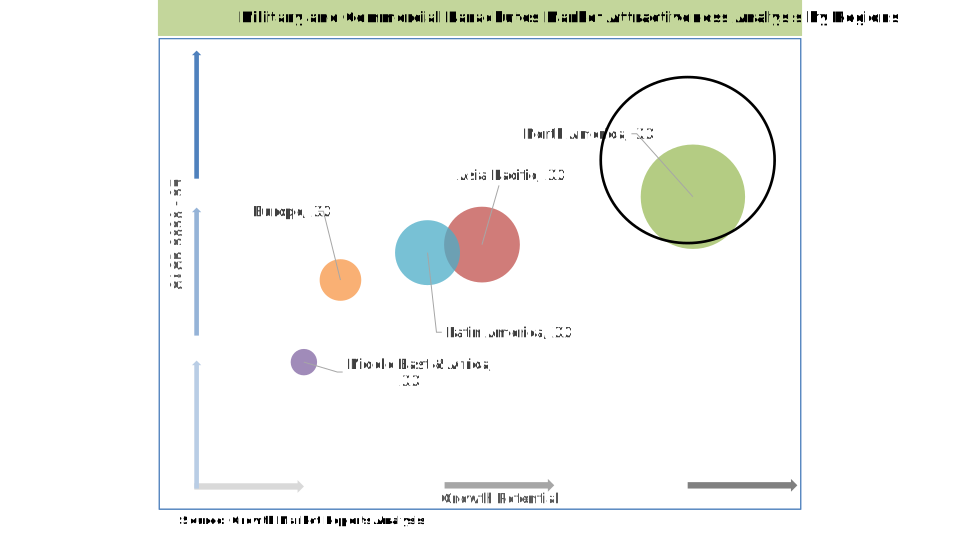
From a regional perspective, North America currently leads the market due to its substantial defense budget, strong presence of key manufacturers, and thriving adventure sports industry. Europe follows closely, driven by robust military modernization initiatives and a growing interest in recreational parachuting. The Asia Pacific region is emerging as a significant growth engine, propelled by increasing defense expenditures, expanding tourism, and rising investments in aviation infrastructure. Meanwhile, Latin America and the Middle East & Africa are gradually catching up, supported by economic development and growing awareness of adventure sports. Each region presents unique growth opportunities and challenges, shaping the overall trajectory of the global military and commercial parachutes market.

Global Military and Commercial Parachutes Industry Outlook

Type Analysis

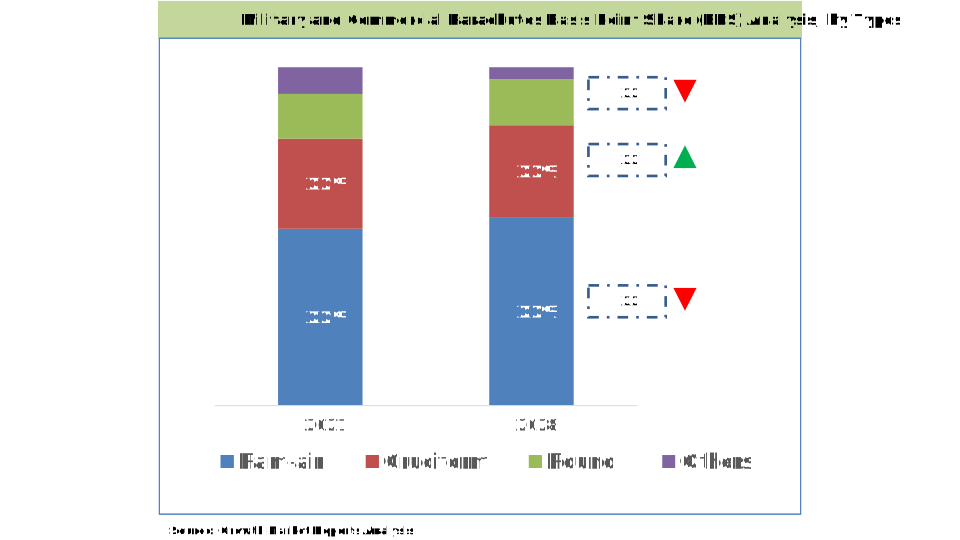
The military and commercial parachutes market is segmented by type into round parachutes, ram-air parachutes, square parachutes, and others. Round parachutes, traditionally used in military and cargo applications, are valued for their stability and ease of deployment. Despite being an older technology, they remain integral to mass troop drops and supply missions due to their reliability and cost-effectiveness. However, their limited maneuverability and slower descent rates have prompted the military to gradually shift toward more advanced designs. In commercial applications, round parachutes are still preferred in training and recreational settings for their simplicity and safety, making them an essential segment within the market.

Ram-air parachutes represent a significant technological advancement, featuring a rectangular shape and multiple air cells that provide superior control, maneuverability, and glide performance. These parachutes are widely used in both military and sporting applications, particularly for precision airdrops and skydiving. Their ability to steer and control descent rates has made them the preferred choice for special operations forces and professional skydivers. The demand for ram-air parachutes is expected to witness steady growth, driven by the increasing emphasis on precision and safety in both military and recreational sectors. Moreover, ongoing innovations in ram-air design, such as lightweight materials and improved aerodynamic profiles, are further enhancing their market appeal.

Square parachutes, though less common than round and ram-air types, are gaining traction in specific commercial and sporting applications. Their design offers a balance between stability and maneuverability, making them suitable for tandem jumps, student training, and certain cargo drops. Square parachutes are also being adopted in adventure sports due to their predictable deployment characteristics and user-friendly handling. As manufacturers continue to refine square parachute designs, incorporating advanced fabrics and safety mechanisms, this segment is poised for incremental growth, particularly in the commercial and sporting arenas.

The "others" category includes specialized parachutes such as steerable cargo parachutes, drogue chutes, and emergency ejection parachutes. These variants cater to niche applications within defense, aviation, and space exploration. For example, drogue chutes are crucial in decelerating high-speed vehicles and spacecraft during re-entry. The increasing complexity of military and aerospace missions is driving demand for these specialized parachutes, prompting manufacturers to invest in research and development to address unique operational requirements. As the scope of parachute applications continues to expand, the "others" segment will remain an important contributor to overall market growth.

Report Scope

Attributes Details
Report Title Military and Commercial Parachutes Market Research Report 2033
By Type Round Parachutes, Ram-Air Parachutes, Square Parachutes, Others
By Application Military, Cargo, Personnel, Sporting, Commercial
By Material Nylon, Silk, Kevlar, Others
By End-User Defense, Aviation, Adventure Sports, Others
By Distribution Channel Direct Sales, Distributors, Online Retail
Regions Covered North America, Europe, APAC, Latin America, MEA
Base Year 2024
Historic Data 2018-2023
Forecast Period 2025-2033
Number of Pages 263
Number of Tables & Figures 324
Customization Available Yes, the report can be customized as per your need.

Application Analysis

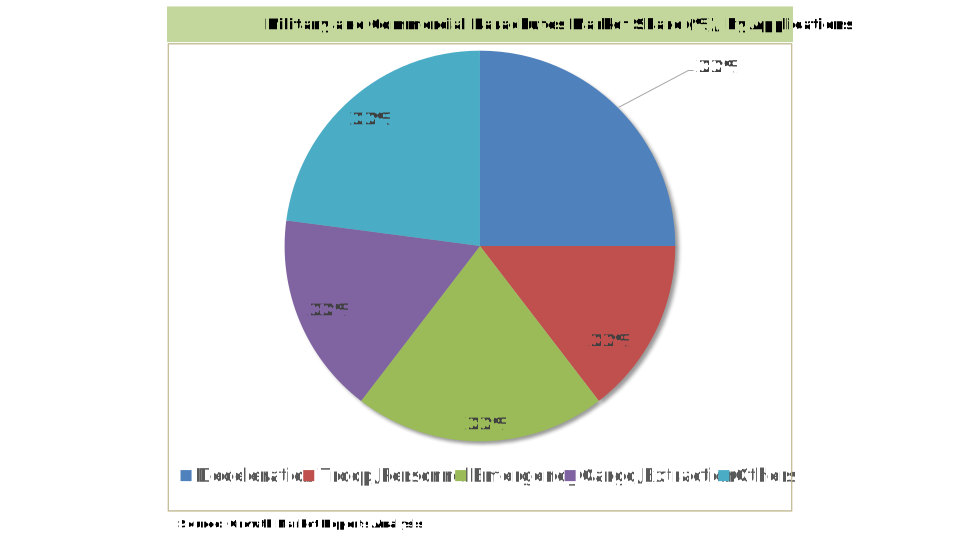
The application segment of the military and commercial parachutes market encompasses military, cargo, personnel, sporting, and commercial uses. The military application dominates the market, accounting for the largest share due to the persistent need for airborne troop deployment, equipment drops, and special operations. Modern military strategies increasingly rely on rapid and flexible force projection, which necessitates advanced parachute systems for personnel and cargo. The continued evolution of military tactics, such as airdrop resupply and precision insertion, is fueling sustained investment in parachute technology, ensuring that the military segment remains a primary driver of market growth.

Cargo parachute applications are witnessing significant growth, particularly in humanitarian aid, disaster relief, and commercial logistics. The ability to deliver supplies to remote or inaccessible areas via airdrop has become invaluable in crisis situations. Humanitarian organizations and defense agencies are leveraging cargo parachutes for the swift and efficient distribution of food, medicine, and essential goods. Furthermore, advancements in guided parachute systems, such as GPS-enabled airdrops, are enhancing delivery accuracy and operational efficiency. As global logistics networks expand and the need for rapid response increases, the demand for cargo parachutes is expected to rise steadily.

Personnel parachutes form a critical segment, encompassing systems used by military paratroopers, recreational skydivers, and emergency responders. The increasing frequency of airborne training exercises, coupled with the growing popularity of skydiving as a sport, is driving demand for high-performance and reliable personnel parachutes. Manufacturers are focusing on improving safety features, deployment mechanisms, and user comfort to cater to both professional and amateur users. The integration of advanced materials and aerodynamic designs is further enhancing the performance and appeal of personnel parachutes, making this segment a key contributor to overall market growth.

Sporting applications are experiencing a surge in demand, fueled by the rising interest in adventure sports and outdoor recreational activities. Skydiving, BASE jumping, and paragliding are gaining popularity worldwide, particularly among younger demographics. This trend is supported by the proliferation of adventure tourism destinations, parachuting clubs, and training schools. Manufacturers are responding by developing specialized sporting parachutes that prioritize safety, reliability, and user experience. The sporting segment is expected to maintain strong growth momentum as adventure tourism continues to expand globally.

Commercial applications, including advertising, aerial photography, and promotional events, represent a growing niche within the parachutes market. Companies are increasingly utilizing parachutes for innovative marketing campaigns and unique visual displays. Additionally, the use of parachutes in scientific research, such as atmospheric studies and payload recovery, is expanding the scope of commercial applications. As businesses seek creative ways to engage audiences and gather data, the commercial segment is likely to witness continued growth and diversification.

Material Analysis

The material segment of the military and commercial parachutes market includes nylon, silk, Kevlar, and others. Nylon is the most widely used material, prized for its exceptional strength, durability, and resistance to environmental factors. It offers a favorable balance between weight and performance, making it ideal for both military and commercial parachutes. The widespread adoption of nylon is further supported by its cost-effectiveness and ease of manufacturing. As manufacturers continue to innovate with advanced nylon composites, the material's dominance in the market is expected to persist, particularly in applications demanding high reliability and safety.

Silk, once the primary material for parachute fabrication, has largely been supplanted by synthetic alternatives due to its higher cost and limited availability. However, silk remains relevant in certain specialized applications, such as historical reenactments, vintage aircraft operations, and luxury sporting equipment. Its natural properties, including high tensile strength and smooth texture, make it suitable for niche markets where authenticity and tradition are valued. While the overall market share of silk is relatively small, it continues to play a role in specific segments where synthetic materials may not be preferred.

Kevlar, a high-performance aramid fiber, is gaining traction in the parachutes market due to its superior strength-to-weight ratio and exceptional resistance to abrasion, heat, and chemicals. Kevlar parachutes are particularly valued in military and aerospace applications, where performance and safety are paramount. The material's ability to withstand extreme conditions and its lightweight nature make it ideal for high-altitude jumps, rapid deployment systems, and emergency ejection parachutes. As defense and aerospace missions become more demanding, the adoption of Kevlar and similar advanced materials is expected to increase, driving innovation and differentiation in the market.

The "others" category includes a range of emerging materials such as ultra-high molecular weight polyethylene (UHMWPE), carbon fiber composites, and hybrid fabrics. These materials are being explored to further enhance the performance, durability, and safety of parachute systems. Manufacturers are investing in research and development to identify new materials that offer improved properties, such as reduced weight, increased tear resistance, and enhanced environmental compatibility. As the market evolves, the adoption of innovative materials is likely to accelerate, creating new opportunities for differentiation and growth within the military and commercial parachutes market.

End-User Analysis

The military and commercial parachutes market is segmented by end-user into defense, aviation, adventure sports, and others. The defense sector is the largest end-user, driven by continuous investments in airborne capabilities, personnel training, and operational readiness. Military organizations worldwide rely on parachute systems for a variety of missions, including troop deployment, equipment delivery, and special operations. The ongoing modernization of defense forces, coupled with the need for rapid response and mobility, is sustaining strong demand for advanced parachute systems. As geopolitical tensions and security challenges persist, the defense end-user segment is expected to maintain its leadership position in the market.

Aviation is another key end-user segment, encompassing both military and civilian applications. In the military domain, parachutes are essential for pilot ejection systems, cargo drops, and search and rescue operations. In the commercial aviation sector, parachutes are used for aerial delivery, emergency systems, and training purposes. The growth of the aviation industry, particularly in emerging markets, is creating new opportunities for parachute manufacturers to cater to diverse operational requirements. The integration of advanced materials and smart technologies is further enhancing the safety and reliability of parachute systems in aviation applications.

Adventure sports represent a rapidly growing end-user segment, fueled by the increasing popularity of skydiving, paragliding, BASE jumping, and related activities. The expansion of adventure tourism, the proliferation of training schools, and the rising disposable incomes of consumers are driving demand for high-quality sporting parachutes. Manufacturers are focusing on developing products that offer enhanced safety, ease of use, and superior performance to cater to both novice and experienced users. The adventure sports segment is expected to witness robust growth as more individuals seek thrilling and immersive outdoor experiences.

The "others" category includes end-users such as scientific research organizations, humanitarian agencies, and commercial enterprises engaged in advertising and promotional activities. These users leverage parachute systems for a variety of purposes, including atmospheric research, payload recovery, and creative marketing campaigns. The diversification of parachute applications beyond traditional military and sporting uses is expanding the addressable market and creating new avenues for growth. As organizations continue to explore innovative ways to utilize parachute technology, the "others" segment is likely to gain prominence within the overall market landscape.

Distribution Channel Analysis

The distribution channel segment in the military and commercial parachutes market comprises direct sales, distributors, and online retail. Direct sales remain the most prevalent channel, particularly for large-scale defense and aviation contracts. Governments and military organizations typically engage directly with manufacturers to procure customized parachute systems that meet stringent operational requirements. The direct sales model allows for close collaboration, technical support, and after-sales service, ensuring that end-users receive tailored solutions and ongoing maintenance. This channel is expected to retain its dominance, especially in the defense and aviation segments where quality and reliability are paramount.

Distributors play a crucial role in expanding market reach, particularly in regions where manufacturers may not have a direct presence. Distributors facilitate the flow of products to commercial, sporting, and smaller defense customers, offering a range of brands and product options. They provide value-added services such as product training, maintenance, and technical support, helping to bridge the gap between manufacturers and end-users. The distributor channel is particularly important in emerging markets, where local expertise and established networks can drive market penetration and growth.

Online retail is emerging as a significant distribution channel, driven by the growing adoption of e-commerce platforms and digital marketing strategies. Online channels offer convenience, wider product selection, and competitive pricing, making parachuting equipment more accessible to individual consumers, sporting clubs, and smaller commercial enterprises. The rise of online reviews, product comparisons, and direct-to-consumer sales models is transforming the way parachutes are marketed and sold. Manufacturers are increasingly investing in user-friendly websites, digital content, and targeted advertising to capture the attention of tech-savvy buyers. The online retail segment is expected to witness strong growth, particularly in the adventure sports and recreational markets.

As the market continues to evolve, the interplay between direct sales, distributors, and online retail will shape the competitive dynamics and customer experience. Manufacturers are adopting omnichannel strategies to optimize their distribution networks, enhance customer engagement, and respond to changing market trends. The ability to offer seamless purchasing experiences, timely delivery, and reliable after-sales support will be critical success factors in the increasingly competitive military and commercial parachutes market.

Opportunities & Threats

The military and commercial parachutes market presents a range of lucrative opportunities for manufacturers, suppliers, and service providers. One of the most significant opportunities lies in the ongoing modernization of defense forces and the increasing adoption of advanced parachute systems. Governments worldwide are prioritizing investments in airborne capabilities, creating sustained demand for high-performance personnel and cargo parachutes. The integration of smart technologies, such as GPS guidance, autonomous deployment, and real-time monitoring, is opening new avenues for product innovation and differentiation. Manufacturers that can deliver cutting-edge solutions tailored to evolving military requirements are well-positioned to capitalize on these opportunities and secure long-term contracts.

Another major opportunity is the rapid growth of the adventure sports and recreational segments. The rising popularity of skydiving, paragliding, and related activities is driving demand for safe, reliable, and user-friendly parachute systems. The expansion of adventure tourism, the proliferation of training schools, and the growing accessibility of online retail channels are creating new markets for sporting parachutes. Manufacturers can leverage digital marketing, influencer partnerships, and experiential events to engage with younger demographics and build brand loyalty. Additionally, the increasing use of parachutes in commercial applications, such as aerial delivery and advertising, is expanding the addressable market and creating opportunities for diversification.

Despite these opportunities, the military and commercial parachutes market faces several restraining factors and threats. One of the primary challenges is the stringent regulatory environment governing parachute manufacturing, testing, and certification. Compliance with international safety standards, military specifications, and aviation regulations can be complex and costly, particularly for smaller manufacturers. Additionally, the market is characterized by intense competition, with established players and new entrants vying for market share. Price pressures, fluctuations in raw material costs, and evolving customer preferences further complicate the competitive landscape. To succeed, companies must invest in research and development, maintain rigorous quality control, and adapt to changing market dynamics.

Regional Outlook

North America remains the largest regional market for military and commercial parachutes, accounting for approximately 38% of the global market share in 2024, or roughly USD 540 million. This dominance is underpinned by the United States' substantial defense budget, ongoing military modernization programs, and a vibrant adventure sports industry. The presence of leading manufacturers and a well-established aerospace sector further contribute to the region's leadership. The U.S. military's focus on rapid deployment and special operations continues to drive demand for advanced parachute systems, while the popularity of recreational parachuting and skydiving supports growth in the commercial segment.

Europe is the second-largest market, with a market size of approximately USD 400 million in 2024. The region is characterized by robust defense investments, particularly among NATO member states, and a growing interest in adventure sports and recreational parachuting. Countries such as France, Germany, and the United Kingdom are investing in airborne capabilities and personnel training, creating sustained demand for military parachutes. The European adventure tourism industry is also expanding, fueled by rising disposable incomes and increased participation in outdoor activities. The market in Europe is expected to grow at a steady CAGR of 5.2% over the forecast period, supported by ongoing innovation and product development.

The Asia Pacific region is emerging as a significant growth engine, with a market size of around USD 320 million in 2024 and a projected CAGR of 6.4% through 2033. Rapid economic development, rising defense expenditures, and expanding aviation infrastructure are driving market growth in countries such as China, India, and Australia. The region's burgeoning adventure tourism industry, coupled with increasing investments in defense modernization, is creating new opportunities for parachute manufacturers. Latin America and the Middle East & Africa, though smaller in market size, are experiencing gradual growth as economic development, defense spending, and awareness of adventure sports increase. Collectively, these regional trends are shaping the global military and commercial parachutes market, creating a dynamic and competitive landscape.

Military and Commercial Parachutes Market Statistics

Competitor Outlook

The military and commercial parachutes market is highly competitive, with a diverse mix of established players, niche specialists, and emerging entrants vying for market share. The competitive landscape is characterized by continuous innovation, rigorous quality standards, and a strong focus on customer relationships. Leading manufacturers invest heavily in research and development to enhance product performance, safety, and reliability, while also exploring new materials and technologies. Strategic collaborations, mergers and acquisitions, and long-term contracts with defense and aviation customers are common strategies employed to strengthen market positions and expand global reach.

Key players in the market differentiate themselves through a combination of technical expertise, product customization, and comprehensive after-sales support. Companies that can deliver tailored solutions to meet specific military, commercial, and sporting requirements are better positioned to secure long-term partnerships and repeat business. The ability to adapt quickly to changing customer needs, regulatory requirements, and market trends is a critical success factor. Additionally, manufacturers are increasingly leveraging digital platforms, e-commerce channels, and targeted marketing campaigns to engage with new customer segments and build brand recognition.

The market also features a vibrant ecosystem of suppliers, distributors, and service providers that support manufacturers in areas such as material sourcing, component fabrication, and product testing. Collaboration within the supply chain is essential to ensure timely delivery, consistent quality, and compliance with international standards. As the market continues to evolve, companies are exploring opportunities to integrate smart technologies, such as sensors, GPS guidance, and real-time data analytics, into parachute systems to enhance performance and operational efficiency.

Some of the major companies operating in the military and commercial parachutes market include Airborne Systems, Zodiac Aerospace (Safran), Mills Manufacturing, Butler Parachute Systems, FXC Corporation, Parachute Systems, Spekon, and CIMSA Ingeniería de Sistemas. Airborne Systems is renowned for its innovative military parachute solutions and extensive global footprint, while Zodiac Aerospace (now part of Safran) offers a comprehensive range of defense and aviation parachute systems. Mills Manufacturing specializes in high-quality military parachutes, serving U.S. and international defense customers. Butler Parachute Systems is recognized for its expertise in custom parachute solutions for aviation and emergency applications. FXC Corporation and Parachute Systems are known for their focus on sporting and commercial parachutes, catering to the growing adventure tourism market. SPEKON and CIMSA Ingeniería de Sistemas are leading players in the European market, offering advanced solutions for military and civilian applications. These companies are at the forefront of innovation, quality, and customer service, shaping the future of the global military and commercial parachutes market.

Key Players

  • Airborne Systems
  • Mills Manufacturing Corporation
  • Zodiac Aerospace (Safran)
  • Aerodyne Research, LLC
  • Parachute Systems
  • FXC Corporation
  • Butler Parachute Systems
  • CIMSA Ingeniería de Sistemas S.A.
  • Spekon GmbH
  • Ballenger International, LLC
  • Performance Designs, Inc.
  • MARS a.s.
  • Atair Aerospace
  • Precision Aerodynamics, Inc.
  • Parachute Industry Association (PIA)
  • Strong Enterprises
  • Aviorex S.r.l.
  • Sky Parachutes
  • Parachute Solutions
  • Fruity Chutes, Inc.
Military and Commercial Parachutes Market Overview

Segments

The Military and Commercial Parachutes market has been segmented on the basis of

Type

  • Round Parachutes
  • Ram-Air Parachutes
  • Square Parachutes
  • Others

Application

  • Military
  • Cargo
  • Personnel
  • Sporting
  • Commercial

Material

  • Nylon
  • Silk
  • Kevlar
  • Others

End-User

  • Defense
  • Aviation
  • Adventure Sports
  • Others

Distribution Channel

  • Direct Sales
  • Distributors
  • Online Retail

Competitive Landscape

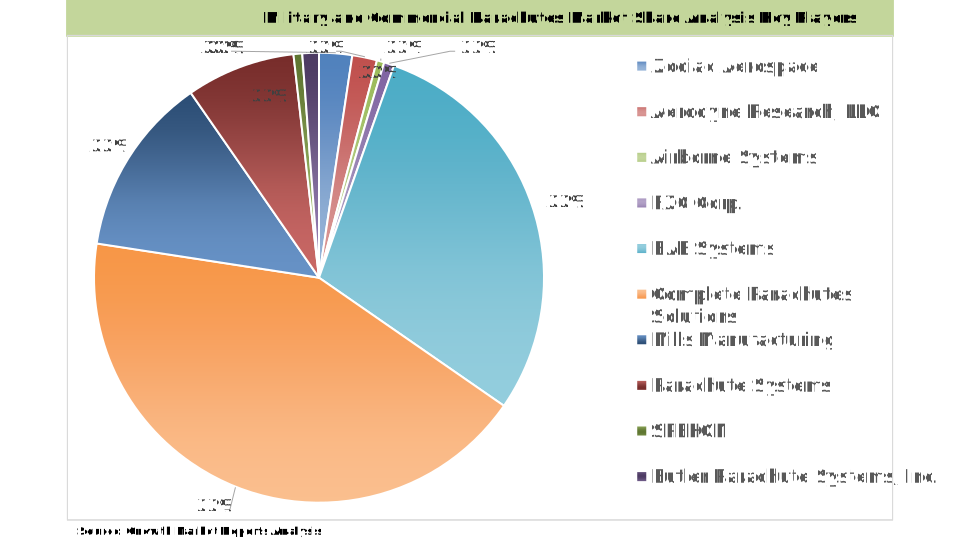
Key players competing in the global military and commercial parachutes market are Zodiac Aerospace; Aerodyne Research, LLC; Airborne Systems; FXC Corp.; BAE Systems; Complete Parachutes Solutions; Mills Manufacturing; Parachute Systems; SPEKON; and Butler Parachute Systems, Inc. Some of these players are actively engaged in various market development strategies such as capacity expansion, new product launches, acquisition, partnership, collaboration, and mergers to increase their market share.

For instance, in 2018, the US Marine Corps announced Airborne Systems a contract for upgraded multi-mission parachute systems. It assisted the company in growing its customer base and build trust in the quality of the product and safety features.

In 2019, the US government approved Mills Manufacturing a 10-year, USD 249 million contract to manufacture T-11 parachutes

Military and Commercial Parachutes Market

Frequently Asked Questions

Major companies include Airborne Systems, Zodiac Aerospace (Safran), Mills Manufacturing, Butler Parachute Systems, FXC Corporation, Parachute Systems, Spekon, and CIMSA Ingeniería de Sistemas.

Parachutes are used for military operations, cargo delivery, personnel deployment, sporting activities (like skydiving and paragliding), and commercial uses such as advertising and aerial photography.

North America holds the largest market share, followed by Europe and the Asia Pacific region. Latin America and the Middle East & Africa are experiencing gradual growth.

Parachutes are distributed through direct sales (mainly for defense and aviation contracts), distributors (for commercial and sporting customers), and online retail channels (increasingly popular for individual and recreational buyers).

Major end-users include defense organizations, aviation sectors, adventure sports enthusiasts, and other entities such as humanitarian agencies and research organizations.

Nylon is the most widely used material due to its strength and durability. Other materials include silk (for niche applications), Kevlar (for high-performance needs), and emerging materials like UHMWPE and carbon fiber composites.

The market is segmented into round parachutes, ram-air parachutes, square parachutes, and specialized types such as steerable cargo parachutes and drogue chutes.

Key growth drivers include increased defense spending, rising popularity of adventure sports, technological advancements in parachute materials and design, and expanding use in cargo delivery and humanitarian missions.

The market is expected to grow at a CAGR of 5.7% from 2025 to 2033, reaching an estimated USD 2.36 billion by 2033.

As of 2024, the global military and commercial parachutes market size reached USD 1.42 billion, with strong demand from defense, aviation, and recreational sectors.

Table Of Content

Chapter 1 Executive Summary
Chapter 2 Assumptions and Acronyms Used
Chapter 3 Research Methodology
Chapter 4 Military and Commercial Parachutes Market Overview
   4.1 Introduction
      4.1.1 Market Taxonomy
      4.1.2 Market Definition
      4.1.3 Macro-Economic Factors Impacting the Market Growth
   4.2 Military and Commercial Parachutes Market Dynamics
      4.2.1 Market Drivers
      4.2.2 Market Restraints
      4.2.3 Market Opportunity
   4.3 Military and Commercial Parachutes Market - Supply Chain Analysis
      4.3.1 List of Key Suppliers
      4.3.2 List of Key Distributors
      4.3.3 List of Key Consumers
   4.4 Key Forces Shaping the Military and Commercial Parachutes Market
      4.4.1 Bargaining Power of Suppliers
      4.4.2 Bargaining Power of Buyers
      4.4.3 Threat of Substitution
      4.4.4 Threat of New Entrants
      4.4.5 Competitive Rivalry
   4.5 Global Military and Commercial Parachutes Market Size & Forecast, 2023-2032
      4.5.1 Military and Commercial Parachutes Market Size and Y-o-Y Growth
      4.5.2 Military and Commercial Parachutes Market Absolute $ Opportunity

Chapter 5 Global Military and Commercial Parachutes Market Analysis and Forecast By Type
   5.1 Introduction
      5.1.1 Key Market Trends & Growth Opportunities By Type
      5.1.2 Basis Point Share (BPS) Analysis By Type
      5.1.3 Absolute $ Opportunity Assessment By Type
   5.2 Military and Commercial Parachutes Market Size Forecast By Type
      5.2.1 Round Parachutes
      5.2.2 Ram-Air Parachutes
      5.2.3 Square Parachutes
      5.2.4 Others
   5.3 Market Attractiveness Analysis By Type

Chapter 6 Global Military and Commercial Parachutes Market Analysis and Forecast By Application
   6.1 Introduction
      6.1.1 Key Market Trends & Growth Opportunities By Application
      6.1.2 Basis Point Share (BPS) Analysis By Application
      6.1.3 Absolute $ Opportunity Assessment By Application
   6.2 Military and Commercial Parachutes Market Size Forecast By Application
      6.2.1 Military
      6.2.2 Cargo
      6.2.3 Personnel
      6.2.4 Sporting
      6.2.5 Commercial
   6.3 Market Attractiveness Analysis By Application

Chapter 7 Global Military and Commercial Parachutes Market Analysis and Forecast By Material
   7.1 Introduction
      7.1.1 Key Market Trends & Growth Opportunities By Material
      7.1.2 Basis Point Share (BPS) Analysis By Material
      7.1.3 Absolute $ Opportunity Assessment By Material
   7.2 Military and Commercial Parachutes Market Size Forecast By Material
      7.2.1 Nylon
      7.2.2 Silk
      7.2.3 Kevlar
      7.2.4 Others
   7.3 Market Attractiveness Analysis By Material

Chapter 8 Global Military and Commercial Parachutes Market Analysis and Forecast By End-User
   8.1 Introduction
      8.1.1 Key Market Trends & Growth Opportunities By End-User
      8.1.2 Basis Point Share (BPS) Analysis By End-User
      8.1.3 Absolute $ Opportunity Assessment By End-User
   8.2 Military and Commercial Parachutes Market Size Forecast By End-User
      8.2.1 Defense
      8.2.2 Aviation
      8.2.3 Adventure Sports
      8.2.4 Others
   8.3 Market Attractiveness Analysis By End-User

Chapter 9 Global Military and Commercial Parachutes Market Analysis and Forecast By Distribution Channel
   9.1 Introduction
      9.1.1 Key Market Trends & Growth Opportunities By Distribution Channel
      9.1.2 Basis Point Share (BPS) Analysis By Distribution Channel
      9.1.3 Absolute $ Opportunity Assessment By Distribution Channel
   9.2 Military and Commercial Parachutes Market Size Forecast By Distribution Channel
      9.2.1 Direct Sales
      9.2.2 Distributors
      9.2.3 Online Retail
   9.3 Market Attractiveness Analysis By Distribution Channel

Chapter 10 Global Military and Commercial Parachutes Market Analysis and Forecast by Region
   10.1 Introduction
      10.1.1 Key Market Trends & Growth Opportunities By Region
      10.1.2 Basis Point Share (BPS) Analysis By Region
      10.1.3 Absolute $ Opportunity Assessment By Region
   10.2 Military and Commercial Parachutes Market Size Forecast By Region
      10.2.1 North America
      10.2.2 Europe
      10.2.3 Asia Pacific
      10.2.4 Latin America
      10.2.5 Middle East & Africa (MEA)
   10.3 Market Attractiveness Analysis By Region

Chapter 11 Coronavirus Disease (COVID-19) Impact 
   11.1 Introduction 
   11.2 Current & Future Impact Analysis 
   11.3 Economic Impact Analysis 
   11.4 Government Policies 
   11.5 Investment Scenario

Chapter 12 North America Military and Commercial Parachutes Analysis and Forecast
   12.1 Introduction
   12.2 North America Military and Commercial Parachutes Market Size Forecast by Country
      12.2.1 U.S.
      12.2.2 Canada
   12.3 Basis Point Share (BPS) Analysis by Country
   12.4 Absolute $ Opportunity Assessment by Country
   12.5 Market Attractiveness Analysis by Country
   12.6 North America Military and Commercial Parachutes Market Size Forecast By Type
      12.6.1 Round Parachutes
      12.6.2 Ram-Air Parachutes
      12.6.3 Square Parachutes
      12.6.4 Others
   12.7 Basis Point Share (BPS) Analysis By Type 
   12.8 Absolute $ Opportunity Assessment By Type 
   12.9 Market Attractiveness Analysis By Type
   12.10 North America Military and Commercial Parachutes Market Size Forecast By Application
      12.10.1 Military
      12.10.2 Cargo
      12.10.3 Personnel
      12.10.4 Sporting
      12.10.5 Commercial
   12.11 Basis Point Share (BPS) Analysis By Application 
   12.12 Absolute $ Opportunity Assessment By Application 
   12.13 Market Attractiveness Analysis By Application
   12.14 North America Military and Commercial Parachutes Market Size Forecast By Material
      12.14.1 Nylon
      12.14.2 Silk
      12.14.3 Kevlar
      12.14.4 Others
   12.15 Basis Point Share (BPS) Analysis By Material 
   12.16 Absolute $ Opportunity Assessment By Material 
   12.17 Market Attractiveness Analysis By Material
   12.18 North America Military and Commercial Parachutes Market Size Forecast By End-User
      12.18.1 Defense
      12.18.2 Aviation
      12.18.3 Adventure Sports
      12.18.4 Others
   12.19 Basis Point Share (BPS) Analysis By End-User 
   12.20 Absolute $ Opportunity Assessment By End-User 
   12.21 Market Attractiveness Analysis By End-User
   12.22 North America Military and Commercial Parachutes Market Size Forecast By Distribution Channel
      12.22.1 Direct Sales
      12.22.2 Distributors
      12.22.3 Online Retail
   12.23 Basis Point Share (BPS) Analysis By Distribution Channel 
   12.24 Absolute $ Opportunity Assessment By Distribution Channel 
   12.25 Market Attractiveness Analysis By Distribution Channel

Chapter 13 Europe Military and Commercial Parachutes Analysis and Forecast
   13.1 Introduction
   13.2 Europe Military and Commercial Parachutes Market Size Forecast by Country
      13.2.1 Germany
      13.2.2 France
      13.2.3 Italy
      13.2.4 U.K.
      13.2.5 Spain
      13.2.6 Russia
      13.2.7 Rest of Europe
   13.3 Basis Point Share (BPS) Analysis by Country
   13.4 Absolute $ Opportunity Assessment by Country
   13.5 Market Attractiveness Analysis by Country
   13.6 Europe Military and Commercial Parachutes Market Size Forecast By Type
      13.6.1 Round Parachutes
      13.6.2 Ram-Air Parachutes
      13.6.3 Square Parachutes
      13.6.4 Others
   13.7 Basis Point Share (BPS) Analysis By Type 
   13.8 Absolute $ Opportunity Assessment By Type 
   13.9 Market Attractiveness Analysis By Type
   13.10 Europe Military and Commercial Parachutes Market Size Forecast By Application
      13.10.1 Military
      13.10.2 Cargo
      13.10.3 Personnel
      13.10.4 Sporting
      13.10.5 Commercial
   13.11 Basis Point Share (BPS) Analysis By Application 
   13.12 Absolute $ Opportunity Assessment By Application 
   13.13 Market Attractiveness Analysis By Application
   13.14 Europe Military and Commercial Parachutes Market Size Forecast By Material
      13.14.1 Nylon
      13.14.2 Silk
      13.14.3 Kevlar
      13.14.4 Others
   13.15 Basis Point Share (BPS) Analysis By Material 
   13.16 Absolute $ Opportunity Assessment By Material 
   13.17 Market Attractiveness Analysis By Material
   13.18 Europe Military and Commercial Parachutes Market Size Forecast By End-User
      13.18.1 Defense
      13.18.2 Aviation
      13.18.3 Adventure Sports
      13.18.4 Others
   13.19 Basis Point Share (BPS) Analysis By End-User 
   13.20 Absolute $ Opportunity Assessment By End-User 
   13.21 Market Attractiveness Analysis By End-User
   13.22 Europe Military and Commercial Parachutes Market Size Forecast By Distribution Channel
      13.22.1 Direct Sales
      13.22.2 Distributors
      13.22.3 Online Retail
   13.23 Basis Point Share (BPS) Analysis By Distribution Channel 
   13.24 Absolute $ Opportunity Assessment By Distribution Channel 
   13.25 Market Attractiveness Analysis By Distribution Channel

Chapter 14 Asia Pacific Military and Commercial Parachutes Analysis and Forecast
   14.1 Introduction
   14.2 Asia Pacific Military and Commercial Parachutes Market Size Forecast by Country
      14.2.1 China
      14.2.2 Japan
      14.2.3 South Korea
      14.2.4 India
      14.2.5 Australia
      14.2.6 South East Asia (SEA)
      14.2.7 Rest of Asia Pacific (APAC)
   14.3 Basis Point Share (BPS) Analysis by Country
   14.4 Absolute $ Opportunity Assessment by Country
   14.5 Market Attractiveness Analysis by Country
   14.6 Asia Pacific Military and Commercial Parachutes Market Size Forecast By Type
      14.6.1 Round Parachutes
      14.6.2 Ram-Air Parachutes
      14.6.3 Square Parachutes
      14.6.4 Others
   14.7 Basis Point Share (BPS) Analysis By Type 
   14.8 Absolute $ Opportunity Assessment By Type 
   14.9 Market Attractiveness Analysis By Type
   14.10 Asia Pacific Military and Commercial Parachutes Market Size Forecast By Application
      14.10.1 Military
      14.10.2 Cargo
      14.10.3 Personnel
      14.10.4 Sporting
      14.10.5 Commercial
   14.11 Basis Point Share (BPS) Analysis By Application 
   14.12 Absolute $ Opportunity Assessment By Application 
   14.13 Market Attractiveness Analysis By Application
   14.14 Asia Pacific Military and Commercial Parachutes Market Size Forecast By Material
      14.14.1 Nylon
      14.14.2 Silk
      14.14.3 Kevlar
      14.14.4 Others
   14.15 Basis Point Share (BPS) Analysis By Material 
   14.16 Absolute $ Opportunity Assessment By Material 
   14.17 Market Attractiveness Analysis By Material
   14.18 Asia Pacific Military and Commercial Parachutes Market Size Forecast By End-User
      14.18.1 Defense
      14.18.2 Aviation
      14.18.3 Adventure Sports
      14.18.4 Others
   14.19 Basis Point Share (BPS) Analysis By End-User 
   14.20 Absolute $ Opportunity Assessment By End-User 
   14.21 Market Attractiveness Analysis By End-User
   14.22 Asia Pacific Military and Commercial Parachutes Market Size Forecast By Distribution Channel
      14.22.1 Direct Sales
      14.22.2 Distributors
      14.22.3 Online Retail
   14.23 Basis Point Share (BPS) Analysis By Distribution Channel 
   14.24 Absolute $ Opportunity Assessment By Distribution Channel 
   14.25 Market Attractiveness Analysis By Distribution Channel

Chapter 15 Latin America Military and Commercial Parachutes Analysis and Forecast
   15.1 Introduction
   15.2 Latin America Military and Commercial Parachutes Market Size Forecast by Country
      15.2.1 Brazil
      15.2.2 Mexico
      15.2.3 Rest of Latin America (LATAM)
   15.3 Basis Point Share (BPS) Analysis by Country
   15.4 Absolute $ Opportunity Assessment by Country
   15.5 Market Attractiveness Analysis by Country
   15.6 Latin America Military and Commercial Parachutes Market Size Forecast By Type
      15.6.1 Round Parachutes
      15.6.2 Ram-Air Parachutes
      15.6.3 Square Parachutes
      15.6.4 Others
   15.7 Basis Point Share (BPS) Analysis By Type 
   15.8 Absolute $ Opportunity Assessment By Type 
   15.9 Market Attractiveness Analysis By Type
   15.10 Latin America Military and Commercial Parachutes Market Size Forecast By Application
      15.10.1 Military
      15.10.2 Cargo
      15.10.3 Personnel
      15.10.4 Sporting
      15.10.5 Commercial
   15.11 Basis Point Share (BPS) Analysis By Application 
   15.12 Absolute $ Opportunity Assessment By Application 
   15.13 Market Attractiveness Analysis By Application
   15.14 Latin America Military and Commercial Parachutes Market Size Forecast By Material
      15.14.1 Nylon
      15.14.2 Silk
      15.14.3 Kevlar
      15.14.4 Others
   15.15 Basis Point Share (BPS) Analysis By Material 
   15.16 Absolute $ Opportunity Assessment By Material 
   15.17 Market Attractiveness Analysis By Material
   15.18 Latin America Military and Commercial Parachutes Market Size Forecast By End-User
      15.18.1 Defense
      15.18.2 Aviation
      15.18.3 Adventure Sports
      15.18.4 Others
   15.19 Basis Point Share (BPS) Analysis By End-User 
   15.20 Absolute $ Opportunity Assessment By End-User 
   15.21 Market Attractiveness Analysis By End-User
   15.22 Latin America Military and Commercial Parachutes Market Size Forecast By Distribution Channel
      15.22.1 Direct Sales
      15.22.2 Distributors
      15.22.3 Online Retail
   15.23 Basis Point Share (BPS) Analysis By Distribution Channel 
   15.24 Absolute $ Opportunity Assessment By Distribution Channel 
   15.25 Market Attractiveness Analysis By Distribution Channel

Chapter 16 Middle East & Africa (MEA) Military and Commercial Parachutes Analysis and Forecast
   16.1 Introduction
   16.2 Middle East & Africa (MEA) Military and Commercial Parachutes Market Size Forecast by Country
      16.2.1 Saudi Arabia
      16.2.2 South Africa
      16.2.3 UAE
      16.2.4 Rest of Middle East & Africa (MEA)
   16.3 Basis Point Share (BPS) Analysis by Country
   16.4 Absolute $ Opportunity Assessment by Country
   16.5 Market Attractiveness Analysis by Country
   16.6 Middle East & Africa (MEA) Military and Commercial Parachutes Market Size Forecast By Type
      16.6.1 Round Parachutes
      16.6.2 Ram-Air Parachutes
      16.6.3 Square Parachutes
      16.6.4 Others
   16.7 Basis Point Share (BPS) Analysis By Type 
   16.8 Absolute $ Opportunity Assessment By Type 
   16.9 Market Attractiveness Analysis By Type
   16.10 Middle East & Africa (MEA) Military and Commercial Parachutes Market Size Forecast By Application
      16.10.1 Military
      16.10.2 Cargo
      16.10.3 Personnel
      16.10.4 Sporting
      16.10.5 Commercial
   16.11 Basis Point Share (BPS) Analysis By Application 
   16.12 Absolute $ Opportunity Assessment By Application 
   16.13 Market Attractiveness Analysis By Application
   16.14 Middle East & Africa (MEA) Military and Commercial Parachutes Market Size Forecast By Material
      16.14.1 Nylon
      16.14.2 Silk
      16.14.3 Kevlar
      16.14.4 Others
   16.15 Basis Point Share (BPS) Analysis By Material 
   16.16 Absolute $ Opportunity Assessment By Material 
   16.17 Market Attractiveness Analysis By Material
   16.18 Middle East & Africa (MEA) Military and Commercial Parachutes Market Size Forecast By End-User
      16.18.1 Defense
      16.18.2 Aviation
      16.18.3 Adventure Sports
      16.18.4 Others
   16.19 Basis Point Share (BPS) Analysis By End-User 
   16.20 Absolute $ Opportunity Assessment By End-User 
   16.21 Market Attractiveness Analysis By End-User
   16.22 Middle East & Africa (MEA) Military and Commercial Parachutes Market Size Forecast By Distribution Channel
      16.22.1 Direct Sales
      16.22.2 Distributors
      16.22.3 Online Retail
   16.23 Basis Point Share (BPS) Analysis By Distribution Channel 
   16.24 Absolute $ Opportunity Assessment By Distribution Channel 
   16.25 Market Attractiveness Analysis By Distribution Channel

Chapter 17 Competition Landscape 
   17.1 Military and Commercial Parachutes Market: Competitive Dashboard
   17.2 Global Military and Commercial Parachutes Market: Market Share Analysis, 2023
   17.3 Company Profiles (Details – Overview, Financials, Developments, Strategy) 
      17.3.1 Airborne Systems
Mills Manufacturing Corporation
Zodiac Aerospace (Safran)
Aerodyne Research, LLC
Parachute Systems
FXC Corporation
Butler Parachute Systems
CIMSA Ingeniería de Sistemas S.A.
Spekon GmbH
Ballenger International, LLC
Performance Designs, Inc.
MARS a.s.
Atair Aerospace
Precision Aerodynamics, Inc.
Parachute Industry Association (PIA)
Strong Enterprises
Aviorex S.r.l.
Sky Parachutes
Parachute Solutions
Fruity Chutes, Inc.

Methodology

Our Clients

sinopec
The John Holland Group
Microsoft
Dassault Aviation
Pfizer
General Electric
Deloitte
Siemens Healthcare