Lined Tanks Market Research Report 2033

Lined Tanks Market Research Report 2033

Segments - by Material Type (Rubber Lined Tanks, FRP Lined Tanks, PTFE Lined Tanks, Glass Lined Tanks, Others), by Tank Type (Vertical Tanks, Horizontal Tanks, Cylindrical Tanks, Rectangular Tanks, Others), by End-Use Industry (Chemical, Water & Wastewater Treatment, Food & Beverage, Pharmaceuticals, Oil & Gas, Others)

https://growthmarketreports.com/Raksha
Author : Raksha Sharma
https://growthmarketreports.com/Vaibhav
Fact-checked by : V. Chandola
https://growthmarketreports.com/Shruti
Editor : Shruti Bhat

Upcoming | Report ID :MC-5079 | 4.4 Rating | 14 Reviews | 251 Pages | Format : Docx PDF

Report Description


Lined Tanks Market Outlook

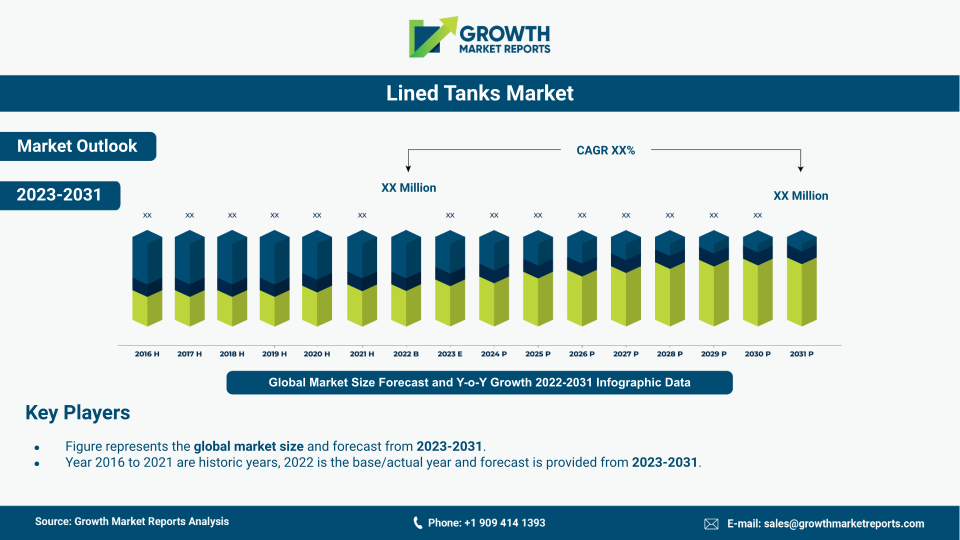
According to our latest research, the global lined tanks market size in 2024 stands at USD 7.1 billion, with a robust compound annual growth rate (CAGR) of 6.3% projected from 2025 to 2033. By the end of 2033, the market is forecasted to reach approximately USD 12.2 billion, driven by increasing demand for corrosion-resistant storage solutions across a diverse range of industries. The market’s growth is primarily attributed to the rising focus on sustainability, stringent environmental regulations, and the expanding applications of lined tanks in sectors such as chemicals, water and wastewater treatment, and pharmaceuticals.

One of the primary growth factors fueling the lined tanks market is the escalating need for safe and durable storage solutions in the chemical industry. Chemicals, especially corrosive and hazardous substances, require specialized containment to prevent leaks, contamination, and environmental hazards. Lined tanks, with their advanced lining materials such as rubber, FRP (Fiber Reinforced Plastic), PTFE (Polytetrafluoroethylene), and glass, offer exceptional resistance to a wide spectrum of chemicals. This has led to increased adoption among chemical manufacturers and processors seeking to ensure compliance with safety standards and minimize operational risks. The ongoing expansion of chemical production capacities in emerging economies, particularly in Asia Pacific, further amplifies market demand.

Another significant driver for the lined tanks market is the growing emphasis on water and wastewater treatment infrastructure worldwide. With rising concerns about water scarcity, pollution, and environmental sustainability, governments and private entities are investing heavily in water treatment facilities. Lined tanks play a crucial role in these facilities by providing reliable storage for treated water, chemicals, and effluents. Their ability to withstand corrosive environments and prevent leakage ensures operational efficiency and regulatory compliance. Additionally, advancements in lining technologies, such as improved adhesion, enhanced chemical resistance, and longer service life, are propelling the replacement of aging infrastructure with modern lined tanks.

The food and beverage and pharmaceutical industries are also contributing to the growth trajectory of the lined tanks market. These industries require strict hygiene standards and contamination-free storage environments for raw materials, intermediates, and finished products. Lined tanks, especially those with glass and PTFE linings, are preferred for their inertness, ease of cleaning, and resistance to microbial growth. The increasing demand for processed foods, beverages, and pharmaceutical products, coupled with stringent quality regulations, is driving investments in advanced storage solutions. The trend towards automation and industrial digitization further supports the adoption of lined tanks equipped with monitoring and control systems.

Regionally, Asia Pacific dominates the lined tanks market, accounting for the largest share in 2024, followed by North America and Europe. The rapid industrialization, urbanization, and infrastructure development in countries such as China, India, and Southeast Asia are key contributors to this dominance. The presence of a vast chemical manufacturing base, expanding water treatment projects, and growing investments in food processing facilities underpin the region’s leadership. North America and Europe, while mature markets, continue to witness steady growth due to ongoing upgrades in industrial infrastructure, stringent environmental regulations, and the adoption of advanced materials. Meanwhile, Latin America and the Middle East & Africa are emerging as promising markets, driven by investments in oil and gas, mining, and water management sectors.

Global Lined Tanks Industry Outlook

Material Type Analysis

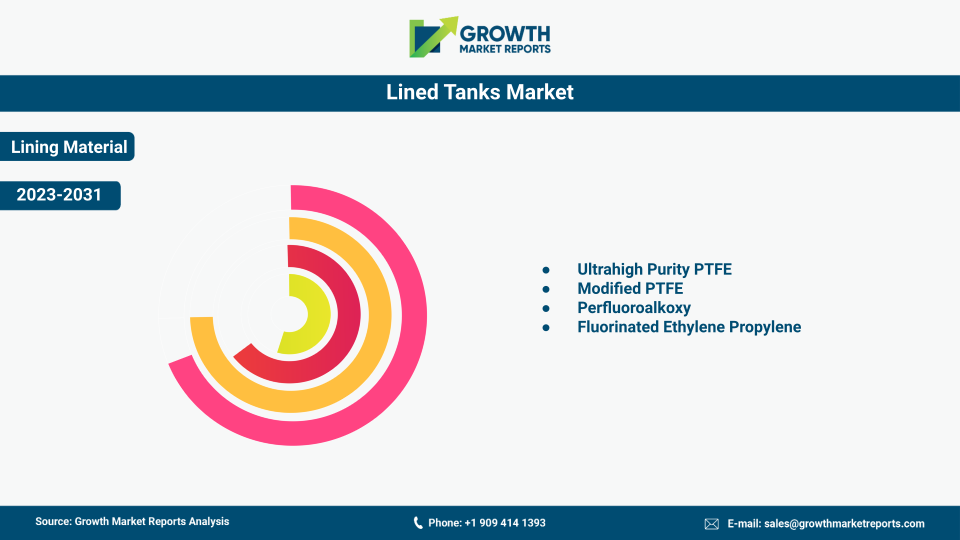
The lined tanks market is segmented by material type into rubber lined tanks, FRP lined tanks, PTFE lined tanks, glass lined tanks, and others. Rubber lined tanks are widely used in the chemical and water treatment industries due to their excellent resistance to acids, alkalis, and abrasive chemicals. The flexibility of rubber linings allows them to absorb mechanical impact and accommodate minor structural movements, making them suitable for dynamic industrial environments. The demand for rubber lined tanks is particularly strong in regions with a high concentration of chemical manufacturing plants, where the need for reliable and cost-effective corrosion protection is paramount. However, regular maintenance is essential to ensure the longevity of rubber linings, as they are susceptible to wear and tear over time.

FRP lined tanks have gained significant traction owing to their lightweight nature, high strength-to-weight ratio, and superior resistance to a wide range of chemicals. These tanks are increasingly favored in applications where weight reduction and ease of installation are critical, such as remote industrial sites and elevated storage platforms. The versatility of FRP linings allows customization to meet specific chemical compatibility requirements, contributing to their growing adoption across multiple end-use industries. Additionally, advancements in composite material technology have enhanced the durability and performance of FRP lined tanks, further boosting market growth in this segment.

PTFE lined tanks are recognized for their exceptional resistance to virtually all chemicals, including highly aggressive acids and solvents. The non-stick and non-reactive properties of PTFE make these tanks ideal for storing ultra-pure chemicals and pharmaceuticals, where product purity and contamination prevention are critical. The demand for PTFE lined tanks is being driven by the pharmaceutical, semiconductor, and specialty chemical industries, which require stringent control over storage conditions. Although PTFE lined tanks are associated with higher upfront costs, their long service life and minimal maintenance requirements make them a cost-effective solution in the long run.

Glass lined tanks are predominantly used in the pharmaceutical, food and beverage, and fine chemicals industries, where hygiene, purity, and corrosion resistance are essential. The smooth, non-porous surface of glass linings prevents the absorption of contaminants and facilitates easy cleaning, making these tanks suitable for applications with strict sanitary requirements. The inertness of glass also ensures compatibility with a broad range of chemicals, including acids, alkalis, and solvents. However, glass lined tanks require careful handling during installation and operation to prevent damage to the lining. The "others" category includes specialized linings such as ceramic, epoxy, and polyethylene, which cater to niche applications with unique performance requirements.

Report Scope

Attributes Details
Report Title Lined Tanks Market Research Report 2033
By Material Type Rubber Lined Tanks, FRP Lined Tanks, PTFE Lined Tanks, Glass Lined Tanks, Others
By Tank Type Vertical Tanks, Horizontal Tanks, Cylindrical Tanks, Rectangular Tanks, Others
By End-Use Industry Chemical, Water & Wastewater Treatment, Food & Beverage, Pharmaceuticals, Oil & Gas, Others
Regions Covered North America, Europe, APAC, Latin America, MEA
Base Year 2024
Historic Data 2018-2023
Forecast Period 2025-2033
Number of Pages 251
Number of Tables & Figures 258
Customization Available Yes, the report can be customized as per your need.

Tank Type Analysis

The lined tanks market is segmented by tank type into vertical tanks, horizontal tanks, cylindrical tanks, rectangular tanks, and others. Vertical tanks are the most commonly used configuration, particularly in industries where space optimization and ease of maintenance are critical. Their upright design allows for efficient use of floor space and facilitates gravity-assisted discharge of contents. Vertical lined tanks are widely deployed in chemical processing, water treatment, and food and beverage industries, where large volumes of liquids or chemicals need to be stored safely. The structural integrity of vertical tanks, combined with advanced lining materials, ensures long-term durability and resistance to corrosion.

Horizontal tanks are preferred in applications where height restrictions or specific installation requirements exist, such as under-deck storage or mobile tankers. The horizontal orientation allows for easy access and inspection, making these tanks suitable for oil and gas, transportation, and certain chemical storage applications. Horizontal lined tanks are often custom-designed to meet the unique needs of end-users, including specific volume capacities and lining material compatibility. The flexibility in design and installation has contributed to the steady growth of this segment, particularly in regions with established oil and gas infrastructure.

Cylindrical tanks, which encompass both vertical and horizontal configurations, are valued for their structural efficiency and uniform stress distribution. The cylindrical shape reduces the risk of weak points and facilitates even pressure distribution, making these tanks ideal for high-pressure and high-temperature applications. Cylindrical lined tanks are extensively used in chemical processing, pharmaceuticals, and food and beverage industries, where consistent performance and safety are paramount. The availability of various lining materials further enhances the versatility of cylindrical tanks, enabling their use in a wide range of industrial processes.

Rectangular tanks are typically used in applications where space constraints or specific process requirements dictate the need for a non-cylindrical shape. These tanks are commonly found in water treatment plants, electroplating facilities, and certain chemical processing applications. The flat surfaces of rectangular tanks can pose challenges in terms of stress distribution and lining integrity, necessitating careful design and installation to prevent leaks and premature wear. Advances in lining technologies and tank fabrication methods have improved the performance and reliability of rectangular lined tanks, expanding their adoption in niche markets. The "others" category includes specialized tank shapes and configurations designed for unique industrial requirements.

End-Use Industry Analysis

The lined tanks market serves a diverse range of end-use industries, including chemicals, water and wastewater treatment, food and beverage, pharmaceuticals, oil and gas, and others. The chemical industry is the largest consumer of lined tanks, accounting for a significant share of global demand. The need for safe storage and handling of corrosive, hazardous, and reactive chemicals drives the adoption of advanced lining materials and tank designs. Chemical manufacturers prioritize lined tanks for their ability to prevent leaks, contamination, and environmental hazards, ensuring compliance with stringent safety and regulatory standards. The ongoing expansion of chemical production capacities, particularly in Asia Pacific, is a key growth driver for this segment.

The water and wastewater treatment industry represents another major end-use segment, fueled by increasing investments in infrastructure development and environmental sustainability. Lined tanks are essential components of water treatment plants, providing secure storage for chemicals, treated water, and effluents. The durability and corrosion resistance of lined tanks ensure reliable operation in harsh and corrosive environments, reducing maintenance costs and minimizing downtime. Governments and private entities worldwide are prioritizing the modernization of water and wastewater treatment facilities, further boosting demand for advanced storage solutions.

In the food and beverage industry, lined tanks are indispensable for maintaining hygiene, product quality, and regulatory compliance. The storage of raw materials, intermediate products, and finished goods requires tanks that are easy to clean, resistant to microbial growth, and inert to food ingredients. Glass and PTFE lined tanks are particularly favored in this sector for their smooth surfaces and non-reactive properties. The rising demand for processed foods, beverages, and dairy products, coupled with increasing consumer awareness of food safety, is driving investments in modern storage infrastructure.

The pharmaceutical industry relies on lined tanks for the storage of active pharmaceutical ingredients (APIs), solvents, and finished products. The stringent quality and purity requirements of pharmaceutical manufacturing necessitate the use of tanks with inert and contamination-resistant linings. PTFE and glass lined tanks are commonly used in this sector, ensuring product integrity and compliance with Good Manufacturing Practices (GMP). The global expansion of pharmaceutical manufacturing, driven by increasing healthcare demand and the growth of the biotechnology sector, is supporting the adoption of advanced lined tank solutions.

The oil and gas industry also contributes to the lined tanks market, particularly for the storage of corrosive fluids, chemicals, and wastewater generated during exploration and production activities. Lined tanks provide a cost-effective and reliable solution for managing aggressive media and ensuring environmental protection. The "others" category includes industries such as mining, pulp and paper, and power generation, where lined tanks are used for specialized storage and processing applications.

Opportunities & Threats

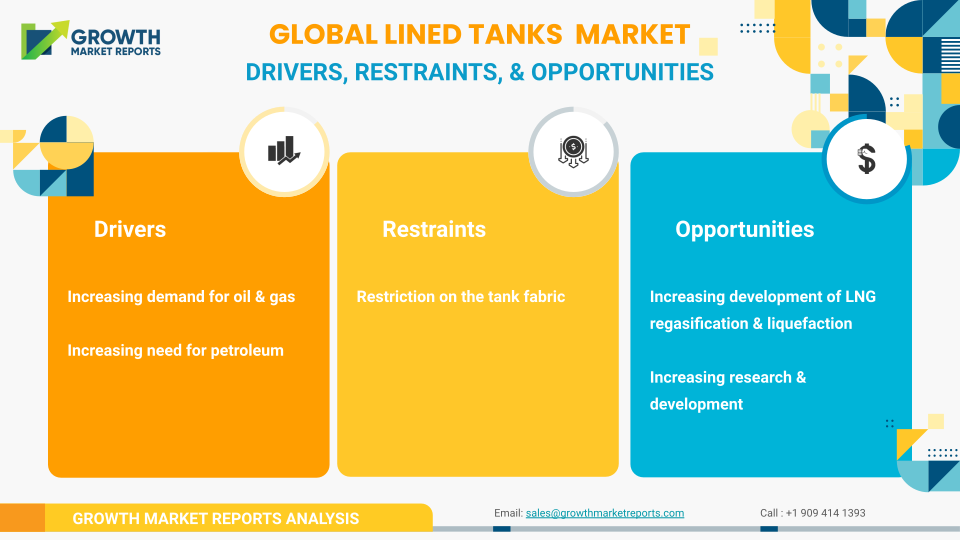
The lined tanks market presents numerous opportunities for growth, particularly in emerging economies experiencing rapid industrialization and urbanization. The ongoing expansion of chemical manufacturing, water treatment infrastructure, and food processing facilities in Asia Pacific, Latin America, and the Middle East & Africa is expected to drive substantial demand for advanced storage solutions. Technological advancements in lining materials, such as the development of high-performance composites and nanotechnology-enhanced coatings, offer opportunities for manufacturers to differentiate their products and capture new market segments. The increasing focus on sustainability and environmental protection is also creating opportunities for lined tank solutions that minimize leaks, reduce maintenance, and extend service life, thereby supporting the transition to greener and more efficient industrial operations.

Another significant opportunity lies in the integration of digital technologies and automation into lined tank systems. The adoption of smart sensors, remote monitoring, and predictive maintenance solutions can enhance the operational efficiency, safety, and reliability of lined tanks. These innovations enable real-time monitoring of tank conditions, early detection of leaks or corrosion, and optimized maintenance schedules, reducing operational risks and costs. As industries increasingly embrace Industry 4.0 principles, the demand for digitally enabled lined tanks is expected to rise, offering new revenue streams for manufacturers and solution providers. Additionally, the growing trend towards modular and prefabricated tank systems presents opportunities for rapid deployment and customization, catering to the evolving needs of end-users.

Despite the positive outlook, the lined tanks market faces certain restraints that could hinder growth. One of the primary challenges is the high initial cost associated with advanced lining materials and tank fabrication, particularly for PTFE and glass lined tanks. These costs can be a barrier for small and medium-sized enterprises (SMEs) and industries operating on tight budgets. Furthermore, the complexity of installation, maintenance, and repair of lined tanks requires specialized expertise, which may not be readily available in all regions. Market participants must address these challenges by offering cost-effective solutions, comprehensive support services, and training programs to ensure widespread adoption and customer satisfaction.

Regional Outlook

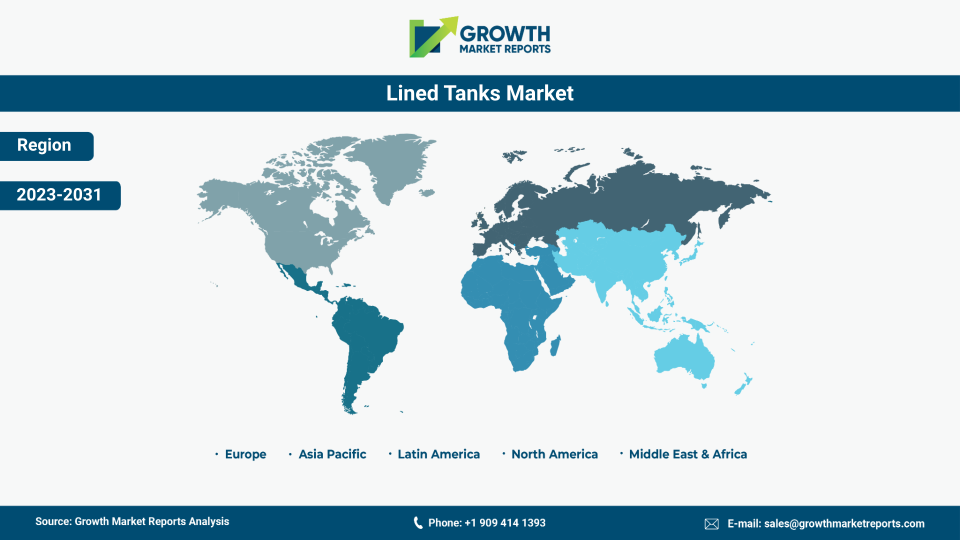
The Asia Pacific region leads the global lined tanks market, with a market size of USD 2.8 billion in 2024, accounting for nearly 40% of the total market share. The region’s dominance is attributed to rapid industrialization, urbanization, and infrastructure development in countries such as China, India, Japan, and South Korea. The expansion of chemical manufacturing, water treatment facilities, and food processing industries in Asia Pacific drives robust demand for lined tanks with advanced corrosion resistance and durability. Government initiatives to improve water management, environmental protection, and industrial safety further support market growth. The CAGR for Asia Pacific is projected at 7.1% from 2025 to 2033, outpacing other regions due to sustained investments in industrial infrastructure.

North America follows as the second-largest market, with a market size of USD 1.9 billion in 2024. The region benefits from a mature industrial base, stringent environmental regulations, and ongoing upgrades in chemical, water treatment, and pharmaceutical infrastructure. The adoption of advanced lining materials and smart tank technologies is particularly prominent in the United States and Canada, where industries prioritize operational efficiency and regulatory compliance. The presence of leading manufacturers and solution providers further strengthens the region’s position in the global lined tanks market. North America is expected to maintain steady growth, supported by investments in modernization and sustainability initiatives.

Europe holds a significant share of the lined tanks market, with a market size of USD 1.5 billion in 2024. The region is characterized by a strong focus on environmental sustainability, circular economy principles, and the adoption of advanced materials in industrial applications. Key markets include Germany, the United Kingdom, France, and Italy, where chemical, pharmaceutical, and water treatment industries drive demand for lined tanks. Latin America and the Middle East & Africa, with market sizes of USD 0.6 billion and USD 0.3 billion respectively, are emerging as high-growth regions due to increasing investments in mining, oil and gas, and water management projects. These regions offer significant opportunities for market expansion, particularly as local industries upgrade their storage infrastructure to meet global standards.

Lined Tanks Market Statistics

Competitor Outlook

The lined tanks market is characterized by a highly competitive landscape, with the presence of both global and regional players offering a wide range of products and solutions. Leading manufacturers focus on innovation, product differentiation, and strategic partnerships to strengthen their market position and expand their customer base. The market is witnessing increased investment in research and development to enhance the performance, durability, and sustainability of lining materials. Companies are also prioritizing the integration of digital technologies, such as IoT-enabled monitoring and predictive maintenance, to offer value-added solutions and improve customer satisfaction. The competitive environment is further intensified by the entry of new players and the expansion of established companies into emerging markets.

Strategic collaborations, mergers and acquisitions, and joint ventures are common strategies adopted by key players to consolidate their market presence and tap into new growth opportunities. Manufacturers are increasingly focusing on customization and modularization to meet the specific requirements of diverse end-use industries. The ability to offer comprehensive support services, including installation, maintenance, and technical training, is becoming a key differentiator in the market. Companies are also investing in sustainable manufacturing practices and eco-friendly lining materials to align with global environmental trends and regulatory requirements.

The market is marked by a high degree of technological innovation, with ongoing developments in composite materials, nanotechnology, and smart tank systems. Leading players are leveraging these advancements to introduce lined tanks with enhanced chemical resistance, longer service life, and reduced maintenance needs. The adoption of advanced manufacturing techniques, such as automated welding and precision fabrication, is enabling the production of high-quality lined tanks with consistent performance. The ability to offer integrated solutions, combining tank fabrication, lining application, and digital monitoring, is increasingly valued by end-users seeking turnkey solutions.

Some of the major companies operating in the lined tanks market include Pfaudler Group, Poly Processing Company, Edlon (A Division of CPI), Abtrex Industries, Inc., Tarsco (A TF Warren Company), and Superior Tank Co., Inc. Pfaudler Group is renowned for its expertise in glass lined tanks and systems, serving the pharmaceutical and chemical industries with high-purity storage solutions. Poly Processing Company specializes in polyethylene and composite lined tanks, catering to water treatment and chemical storage applications. Edlon, a division of CPI, is a leader in PTFE and fluoropolymer lined tanks, offering solutions for ultra-pure and corrosive storage needs.

Abtrex Industries, Inc. is recognized for its comprehensive range of rubber, FRP, and specialty lined tanks, serving diverse industries such as mining, power generation, and food processing. Tarsco, a TF Warren Company, provides turnkey storage tank solutions, including design, fabrication, and lining services for the oil and gas, petrochemical, and water sectors. Superior Tank Co., Inc. focuses on bolted and welded steel tanks with advanced lining options, supporting applications in water storage, fire protection, and industrial processes. These companies are at the forefront of innovation, quality, and customer service, driving the evolution of the lined tanks market and setting industry benchmarks.

In summary, the lined tanks market is poised for significant growth over the forecast period, driven by increasing demand for corrosion-resistant storage solutions, technological advancements, and expanding applications across key end-use industries. The competitive landscape is dynamic, with leading players leveraging innovation, strategic partnerships, and customer-centric solutions to capture emerging opportunities and address evolving market needs.

Key Players

  • CST Industries
  • ZCL Composites
  • Tank Connection
  • Caldwell Tanks
  • Permastore
  • Superior Tank Co., Inc.
  • Snyder Industries
  • Containment Solutions, Inc.
  • DN Tanks
  • Tarsco Bolted Tank
  • Fisher Tank Company
  • UIG Tanks
  • Schumann Tank
  • Hendic BV
  • Pittsburg Tank & Tower Group
  • BUWATEC
  • Center Enamel
  • AGI (Ag Growth International)
  • Sunnik Holdings
  • Wolf Tanks
Lined Tanks Market Overview

Segments

The Lined Tanks market has been segmented on the basis of

Material Type

  • Rubber Lined Tanks
  • FRP Lined Tanks
  • PTFE Lined Tanks
  • Glass Lined Tanks
  • Others

Tank Type

  • Vertical Tanks
  • Horizontal Tanks
  • Cylindrical Tanks
  • Rectangular Tanks
  • Others

End-Use Industry

  • Chemical
  • Water & Wastewater Treatment
  • Food & Beverage
  • Pharmaceuticals
  • Oil & Gas
  • Others

Competitive Landscape

Key players competing in the global lined tanks market are TMI Coatings, Inc; Thermo Fisher Scientific Inc.; The Chemours Company; Praxair S.T. Technology, Inc.; Pfaudler; Moon Fabricating Corporation; G.C. Zarnas & Co., Inc.; Flexi-Liner; Electro Chemical Engineering & Manufacturing Co; CG Thermal; and AmTech Tank Lining & Repair

These players engage in strategies including mergers, product launches, collaboration, partnerships, acquisitions, and production expansion to expand their consumer base worldwide.

  • In February 2023, Pfaudler acquires Mixel France SAS, a French company that specializes in the design and manufacture of a standard and tailor-made system for industrial processes.
  • In March 2020, Praxair S.T. Technology, Inc signed an agreement with Siemens to strengthen their continuous relationship. This new agreement covers the coating services across all Siemens products.
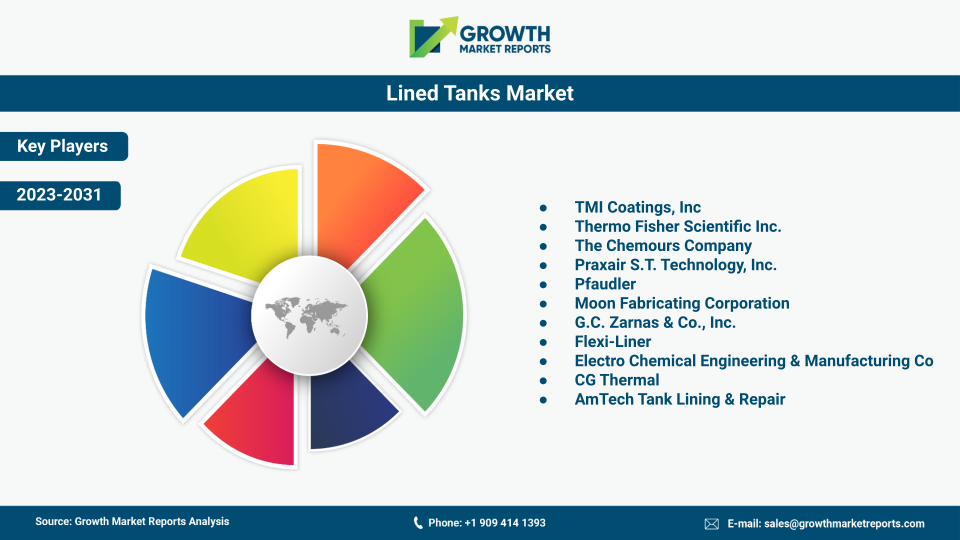

Lined Tanks Market Key Players

Frequently Asked Questions

Major companies in the lined tanks market include Pfaudler Group, Poly Processing Company, Edlon (A Division of CPI), Abtrex Industries, Tarsco (A TF Warren Company), and Superior Tank Co., Inc.

Technological trends include advancements in lining materials, integration of digital technologies like IoT-enabled monitoring, predictive maintenance, and the adoption of modular and prefabricated tank systems.

The main types of lined tanks by configuration are vertical tanks, horizontal tanks, cylindrical tanks, rectangular tanks, and other specialized shapes.

PTFE lined tanks offer exceptional resistance to aggressive chemicals and are ideal for ultra-pure chemical storage, while glass lined tanks provide high hygiene, easy cleaning, and resistance to microbial growth, making them suitable for pharmaceuticals and food industries.

Asia Pacific dominates the lined tanks market due to rapid industrialization, urbanization, and significant investments in chemical manufacturing, water treatment, and food processing industries.

The chemical industry requires lined tanks for safe and durable storage of corrosive and hazardous substances, ensuring compliance with safety standards and minimizing environmental risks.

Key lining materials for tanks include rubber, FRP (Fiber Reinforced Plastic), PTFE (Polytetrafluoroethylene), glass, and specialized linings like ceramic, epoxy, and polyethylene.

The main end-use industries for lined tanks include chemicals, water and wastewater treatment, food and beverage, pharmaceuticals, oil and gas, and others such as mining and power generation.

The lined tanks market is expected to grow at a compound annual growth rate (CAGR) of 6.3% from 2025 to 2033.

As of 2024, the global lined tanks market size is valued at USD 7.1 billion.

Table Of Content

Chapter 1 Executive Summary
Chapter 2 Assumptions and Acronyms Used
Chapter 3 Research Methodology
Chapter 4 Lined Tanks Market Overview
   4.1 Introduction
      4.1.1 Market Taxonomy
      4.1.2 Market Definition
      4.1.3 Macro-Economic Factors Impacting the Market Growth
   4.2 Lined Tanks Market Dynamics
      4.2.1 Market Drivers
      4.2.2 Market Restraints
      4.2.3 Market Opportunity
   4.3 Lined Tanks Market - Supply Chain Analysis
      4.3.1 List of Key Suppliers
      4.3.2 List of Key Distributors
      4.3.3 List of Key Consumers
   4.4 Key Forces Shaping the Lined Tanks Market
      4.4.1 Bargaining Power of Suppliers
      4.4.2 Bargaining Power of Buyers
      4.4.3 Threat of Substitution
      4.4.4 Threat of New Entrants
      4.4.5 Competitive Rivalry
   4.5 Global Lined Tanks Market Size & Forecast, 2023-2032
      4.5.1 Lined Tanks Market Size and Y-o-Y Growth
      4.5.2 Lined Tanks Market Absolute $ Opportunity

Chapter 5 Global Lined Tanks Market Analysis and Forecast By Material Type
   5.1 Introduction
      5.1.1 Key Market Trends & Growth Opportunities By Material Type
      5.1.2 Basis Point Share (BPS) Analysis By Material Type
      5.1.3 Absolute $ Opportunity Assessment By Material Type
   5.2 Lined Tanks Market Size Forecast By Material Type
      5.2.1 Rubber Lined Tanks
      5.2.2 FRP Lined Tanks
      5.2.3 PTFE Lined Tanks
      5.2.4 Glass Lined Tanks
      5.2.5 Others
   5.3 Market Attractiveness Analysis By Material Type

Chapter 6 Global Lined Tanks Market Analysis and Forecast By Tank Type
   6.1 Introduction
      6.1.1 Key Market Trends & Growth Opportunities By Tank Type
      6.1.2 Basis Point Share (BPS) Analysis By Tank Type
      6.1.3 Absolute $ Opportunity Assessment By Tank Type
   6.2 Lined Tanks Market Size Forecast By Tank Type
      6.2.1 Vertical Tanks
      6.2.2 Horizontal Tanks
      6.2.3 Cylindrical Tanks
      6.2.4 Rectangular Tanks
      6.2.5 Others
   6.3 Market Attractiveness Analysis By Tank Type

Chapter 7 Global Lined Tanks Market Analysis and Forecast By End-Use Industry
   7.1 Introduction
      7.1.1 Key Market Trends & Growth Opportunities By End-Use Industry
      7.1.2 Basis Point Share (BPS) Analysis By End-Use Industry
      7.1.3 Absolute $ Opportunity Assessment By End-Use Industry
   7.2 Lined Tanks Market Size Forecast By End-Use Industry
      7.2.1 Chemical
      7.2.2 Water & Wastewater Treatment
      7.2.3 Food & Beverage
      7.2.4 Pharmaceuticals
      7.2.5 Oil & Gas
      7.2.6 Others
   7.3 Market Attractiveness Analysis By End-Use Industry

Chapter 8 Global Lined Tanks Market Analysis and Forecast by Region
   8.1 Introduction
      8.1.1 Key Market Trends & Growth Opportunities By Region
      8.1.2 Basis Point Share (BPS) Analysis By Region
      8.1.3 Absolute $ Opportunity Assessment By Region
   8.2 Lined Tanks Market Size Forecast By Region
      8.2.1 North America
      8.2.2 Europe
      8.2.3 Asia Pacific
      8.2.4 Latin America
      8.2.5 Middle East & Africa (MEA)
   8.3 Market Attractiveness Analysis By Region

Chapter 9 Coronavirus Disease (COVID-19) Impact 
   9.1 Introduction 
   9.2 Current & Future Impact Analysis 
   9.3 Economic Impact Analysis 
   9.4 Government Policies 
   9.5 Investment Scenario

Chapter 10 North America Lined Tanks Analysis and Forecast
   10.1 Introduction
   10.2 North America Lined Tanks Market Size Forecast by Country
      10.2.1 U.S.
      10.2.2 Canada
   10.3 Basis Point Share (BPS) Analysis by Country
   10.4 Absolute $ Opportunity Assessment by Country
   10.5 Market Attractiveness Analysis by Country
   10.6 North America Lined Tanks Market Size Forecast By Material Type
      10.6.1 Rubber Lined Tanks
      10.6.2 FRP Lined Tanks
      10.6.3 PTFE Lined Tanks
      10.6.4 Glass Lined Tanks
      10.6.5 Others
   10.7 Basis Point Share (BPS) Analysis By Material Type 
   10.8 Absolute $ Opportunity Assessment By Material Type 
   10.9 Market Attractiveness Analysis By Material Type
   10.10 North America Lined Tanks Market Size Forecast By Tank Type
      10.10.1 Vertical Tanks
      10.10.2 Horizontal Tanks
      10.10.3 Cylindrical Tanks
      10.10.4 Rectangular Tanks
      10.10.5 Others
   10.11 Basis Point Share (BPS) Analysis By Tank Type 
   10.12 Absolute $ Opportunity Assessment By Tank Type 
   10.13 Market Attractiveness Analysis By Tank Type
   10.14 North America Lined Tanks Market Size Forecast By End-Use Industry
      10.14.1 Chemical
      10.14.2 Water & Wastewater Treatment
      10.14.3 Food & Beverage
      10.14.4 Pharmaceuticals
      10.14.5 Oil & Gas
      10.14.6 Others
   10.15 Basis Point Share (BPS) Analysis By End-Use Industry 
   10.16 Absolute $ Opportunity Assessment By End-Use Industry 
   10.17 Market Attractiveness Analysis By End-Use Industry

Chapter 11 Europe Lined Tanks Analysis and Forecast
   11.1 Introduction
   11.2 Europe Lined Tanks Market Size Forecast by Country
      11.2.1 Germany
      11.2.2 France
      11.2.3 Italy
      11.2.4 U.K.
      11.2.5 Spain
      11.2.6 Russia
      11.2.7 Rest of Europe
   11.3 Basis Point Share (BPS) Analysis by Country
   11.4 Absolute $ Opportunity Assessment by Country
   11.5 Market Attractiveness Analysis by Country
   11.6 Europe Lined Tanks Market Size Forecast By Material Type
      11.6.1 Rubber Lined Tanks
      11.6.2 FRP Lined Tanks
      11.6.3 PTFE Lined Tanks
      11.6.4 Glass Lined Tanks
      11.6.5 Others
   11.7 Basis Point Share (BPS) Analysis By Material Type 
   11.8 Absolute $ Opportunity Assessment By Material Type 
   11.9 Market Attractiveness Analysis By Material Type
   11.10 Europe Lined Tanks Market Size Forecast By Tank Type
      11.10.1 Vertical Tanks
      11.10.2 Horizontal Tanks
      11.10.3 Cylindrical Tanks
      11.10.4 Rectangular Tanks
      11.10.5 Others
   11.11 Basis Point Share (BPS) Analysis By Tank Type 
   11.12 Absolute $ Opportunity Assessment By Tank Type 
   11.13 Market Attractiveness Analysis By Tank Type
   11.14 Europe Lined Tanks Market Size Forecast By End-Use Industry
      11.14.1 Chemical
      11.14.2 Water & Wastewater Treatment
      11.14.3 Food & Beverage
      11.14.4 Pharmaceuticals
      11.14.5 Oil & Gas
      11.14.6 Others
   11.15 Basis Point Share (BPS) Analysis By End-Use Industry 
   11.16 Absolute $ Opportunity Assessment By End-Use Industry 
   11.17 Market Attractiveness Analysis By End-Use Industry

Chapter 12 Asia Pacific Lined Tanks Analysis and Forecast
   12.1 Introduction
   12.2 Asia Pacific Lined Tanks Market Size Forecast by Country
      12.2.1 China
      12.2.2 Japan
      12.2.3 South Korea
      12.2.4 India
      12.2.5 Australia
      12.2.6 South East Asia (SEA)
      12.2.7 Rest of Asia Pacific (APAC)
   12.3 Basis Point Share (BPS) Analysis by Country
   12.4 Absolute $ Opportunity Assessment by Country
   12.5 Market Attractiveness Analysis by Country
   12.6 Asia Pacific Lined Tanks Market Size Forecast By Material Type
      12.6.1 Rubber Lined Tanks
      12.6.2 FRP Lined Tanks
      12.6.3 PTFE Lined Tanks
      12.6.4 Glass Lined Tanks
      12.6.5 Others
   12.7 Basis Point Share (BPS) Analysis By Material Type 
   12.8 Absolute $ Opportunity Assessment By Material Type 
   12.9 Market Attractiveness Analysis By Material Type
   12.10 Asia Pacific Lined Tanks Market Size Forecast By Tank Type
      12.10.1 Vertical Tanks
      12.10.2 Horizontal Tanks
      12.10.3 Cylindrical Tanks
      12.10.4 Rectangular Tanks
      12.10.5 Others
   12.11 Basis Point Share (BPS) Analysis By Tank Type 
   12.12 Absolute $ Opportunity Assessment By Tank Type 
   12.13 Market Attractiveness Analysis By Tank Type
   12.14 Asia Pacific Lined Tanks Market Size Forecast By End-Use Industry
      12.14.1 Chemical
      12.14.2 Water & Wastewater Treatment
      12.14.3 Food & Beverage
      12.14.4 Pharmaceuticals
      12.14.5 Oil & Gas
      12.14.6 Others
   12.15 Basis Point Share (BPS) Analysis By End-Use Industry 
   12.16 Absolute $ Opportunity Assessment By End-Use Industry 
   12.17 Market Attractiveness Analysis By End-Use Industry

Chapter 13 Latin America Lined Tanks Analysis and Forecast
   13.1 Introduction
   13.2 Latin America Lined Tanks Market Size Forecast by Country
      13.2.1 Brazil
      13.2.2 Mexico
      13.2.3 Rest of Latin America (LATAM)
   13.3 Basis Point Share (BPS) Analysis by Country
   13.4 Absolute $ Opportunity Assessment by Country
   13.5 Market Attractiveness Analysis by Country
   13.6 Latin America Lined Tanks Market Size Forecast By Material Type
      13.6.1 Rubber Lined Tanks
      13.6.2 FRP Lined Tanks
      13.6.3 PTFE Lined Tanks
      13.6.4 Glass Lined Tanks
      13.6.5 Others
   13.7 Basis Point Share (BPS) Analysis By Material Type 
   13.8 Absolute $ Opportunity Assessment By Material Type 
   13.9 Market Attractiveness Analysis By Material Type
   13.10 Latin America Lined Tanks Market Size Forecast By Tank Type
      13.10.1 Vertical Tanks
      13.10.2 Horizontal Tanks
      13.10.3 Cylindrical Tanks
      13.10.4 Rectangular Tanks
      13.10.5 Others
   13.11 Basis Point Share (BPS) Analysis By Tank Type 
   13.12 Absolute $ Opportunity Assessment By Tank Type 
   13.13 Market Attractiveness Analysis By Tank Type
   13.14 Latin America Lined Tanks Market Size Forecast By End-Use Industry
      13.14.1 Chemical
      13.14.2 Water & Wastewater Treatment
      13.14.3 Food & Beverage
      13.14.4 Pharmaceuticals
      13.14.5 Oil & Gas
      13.14.6 Others
   13.15 Basis Point Share (BPS) Analysis By End-Use Industry 
   13.16 Absolute $ Opportunity Assessment By End-Use Industry 
   13.17 Market Attractiveness Analysis By End-Use Industry

Chapter 14 Middle East & Africa (MEA) Lined Tanks Analysis and Forecast
   14.1 Introduction
   14.2 Middle East & Africa (MEA) Lined Tanks Market Size Forecast by Country
      14.2.1 Saudi Arabia
      14.2.2 South Africa
      14.2.3 UAE
      14.2.4 Rest of Middle East & Africa (MEA)
   14.3 Basis Point Share (BPS) Analysis by Country
   14.4 Absolute $ Opportunity Assessment by Country
   14.5 Market Attractiveness Analysis by Country
   14.6 Middle East & Africa (MEA) Lined Tanks Market Size Forecast By Material Type
      14.6.1 Rubber Lined Tanks
      14.6.2 FRP Lined Tanks
      14.6.3 PTFE Lined Tanks
      14.6.4 Glass Lined Tanks
      14.6.5 Others
   14.7 Basis Point Share (BPS) Analysis By Material Type 
   14.8 Absolute $ Opportunity Assessment By Material Type 
   14.9 Market Attractiveness Analysis By Material Type
   14.10 Middle East & Africa (MEA) Lined Tanks Market Size Forecast By Tank Type
      14.10.1 Vertical Tanks
      14.10.2 Horizontal Tanks
      14.10.3 Cylindrical Tanks
      14.10.4 Rectangular Tanks
      14.10.5 Others
   14.11 Basis Point Share (BPS) Analysis By Tank Type 
   14.12 Absolute $ Opportunity Assessment By Tank Type 
   14.13 Market Attractiveness Analysis By Tank Type
   14.14 Middle East & Africa (MEA) Lined Tanks Market Size Forecast By End-Use Industry
      14.14.1 Chemical
      14.14.2 Water & Wastewater Treatment
      14.14.3 Food & Beverage
      14.14.4 Pharmaceuticals
      14.14.5 Oil & Gas
      14.14.6 Others
   14.15 Basis Point Share (BPS) Analysis By End-Use Industry 
   14.16 Absolute $ Opportunity Assessment By End-Use Industry 
   14.17 Market Attractiveness Analysis By End-Use Industry

Chapter 15 Competition Landscape 
   15.1 Lined Tanks Market: Competitive Dashboard
   15.2 Global Lined Tanks Market: Market Share Analysis, 2023
   15.3 Company Profiles (Details – Overview, Financials, Developments, Strategy) 
      15.3.1 CST Industries
ZCL Composites
Tank Connection
Caldwell Tanks
Permastore
Superior Tank Co., Inc.
Snyder Industries
Containment Solutions, Inc.
DN Tanks
Tarsco Bolted Tank
Fisher Tank Company
UIG Tanks
Schumann Tank
Hendic BV
Pittsburg Tank & Tower Group
BUWATEC
Center Enamel
AGI (Ag Growth International)
Sunnik Holdings
Wolf Tanks

Methodology

Our Clients

Dassault Aviation
FedEx Logistics
Siemens Healthcare
Deloitte
General Electric
Honda Motor Co. Ltd.
The John Holland Group
sinopec