Internet of Everything Market Research Report 2033

Internet of Everything Market Research Report 2033

Segments - by Component (Hardware, Software, Services), by Application (Smart Cities, Industrial Automation, Healthcare, Retail, Transportation & Logistics, Energy & Utilities, Others), by Connectivity Technology (Wi-Fi, Bluetooth, ZigBee, Cellular, Others), by End-User (Consumer, Business, Government)

https://growthmarketreports.com/Raksha
Author : Raksha Sharma
https://growthmarketreports.com/Vaibhav
Fact-checked by : V. Chandola
https://growthmarketreports.com/Shruti
Editor : Shruti Bhat

Upcoming | Report ID :ICT-SE-534 | 4.9 Rating | 28 Reviews | 276 Pages | Format : Docx PDF

Report Description


Internet of Everything Market Outlook

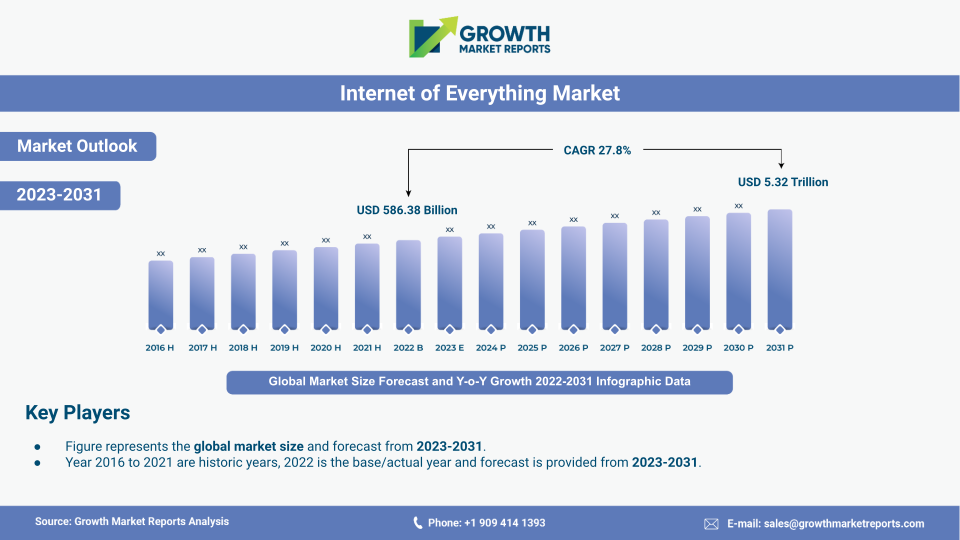
As per our latest research, the global Internet of Everything (IoE) market size reached USD 1.52 trillion in 2024, reflecting rapid adoption across sectors. The market is expected to expand at a robust CAGR of 14.7% from 2025 to 2033, projecting a value of USD 4.19 trillion by 2033. This impressive growth is primarily driven by the convergence of advanced connectivity technologies, increasing digital transformation initiatives, and the proliferation of connected devices across industries.

One of the most significant growth factors for the Internet of Everything market is the exponential increase in connected devices and sensors. With the rise of smart homes, industrial IoT, healthcare wearables, and connected vehicles, the number of devices generating, transmitting, and analyzing data is at an all-time high. This surge is fueled by advancements in sensor technology, reduced hardware costs, and the widespread adoption of cloud computing and edge processing. Enterprises and governments are harnessing these connected endpoints to drive automation, improve decision-making, and enable new business models, further accelerating the marketÂ’s expansion.

Another critical driver is the global push towards digital transformation and smart infrastructure. Governments and private organizations are investing heavily in smart city initiatives, intelligent transportation systems, and energy-efficient utilities, all of which rely on the interconnectedness provided by IoE. These initiatives leverage real-time data analytics, AI, and machine learning to optimize urban planning, reduce operational costs, and enhance citizen services. The integration of IoE in healthcare is also noteworthy, as it enables remote monitoring, telemedicine, and personalized patient care, leading to improved health outcomes and operational efficiencies.

The evolution of connectivity technologies such as 5G, Wi-Fi 6, and low-power wide-area networks (LPWAN) is further catalyzing the growth of the Internet of Everything market. These technologies offer higher bandwidth, lower latency, and greater reliability, making them ideal for supporting massive numbers of interconnected devices across diverse environments. As a result, industries like manufacturing, logistics, and retail are increasingly deploying IoE solutions to streamline operations, enhance supply chain visibility, and deliver personalized customer experiences. The ongoing advancements in cybersecurity and data privacy are also bolstering market confidence, encouraging broader adoption across regulated sectors.

The Consumer Internet of Things (IoT) is playing a pivotal role in the broader Internet of Everything ecosystem by transforming everyday life through smart, connected devices. From smart thermostats and voice-activated assistants to wearable fitness trackers and connected appliances, consumer IoT is enhancing convenience, efficiency, and personalization in homes and personal spaces. This segment is witnessing rapid growth due to increasing consumer demand for seamless integration of technology into daily routines. As the cost of sensors and connectivity continues to decrease, more consumers are adopting IoT solutions, driving innovation and competition among technology providers. The integration of AI and machine learning into consumer IoT devices is further enhancing their capabilities, enabling more intuitive and adaptive user experiences.

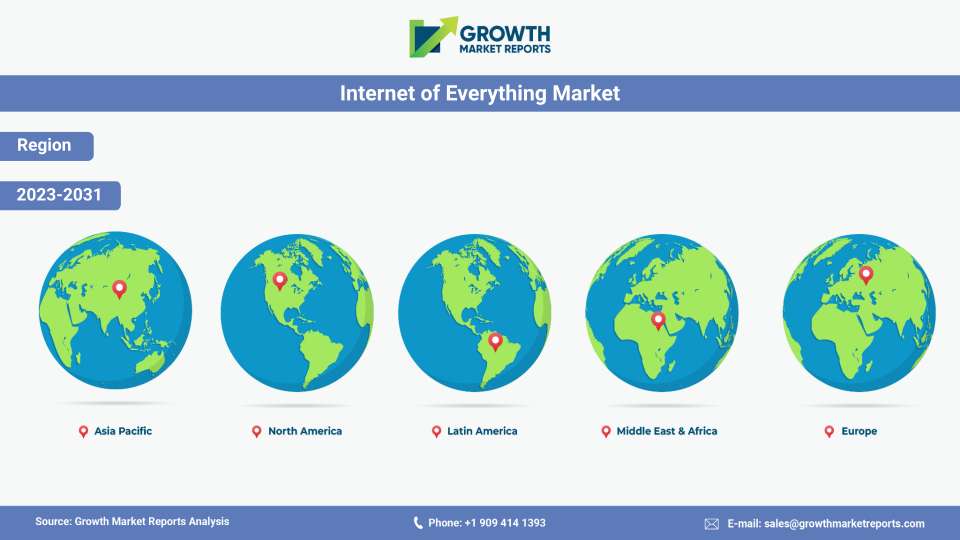
Regionally, North America remains at the forefront of IoE adoption, driven by significant investments in smart infrastructure, early adoption of advanced technologies, and a robust ecosystem of technology providers. However, Asia Pacific is rapidly emerging as a key growth engine, fueled by urbanization, industrialization, and government-led digital initiatives in countries like China, India, and Japan. Europe continues to make strides in smart city projects and industrial automation, while the Middle East and Africa are witnessing increased uptake in sectors such as energy and utilities. Latin America, although at a nascent stage, is showing promising growth potential with rising investments in digital transformation.

Global Internet of Everything Industry Outlook

Component Analysis

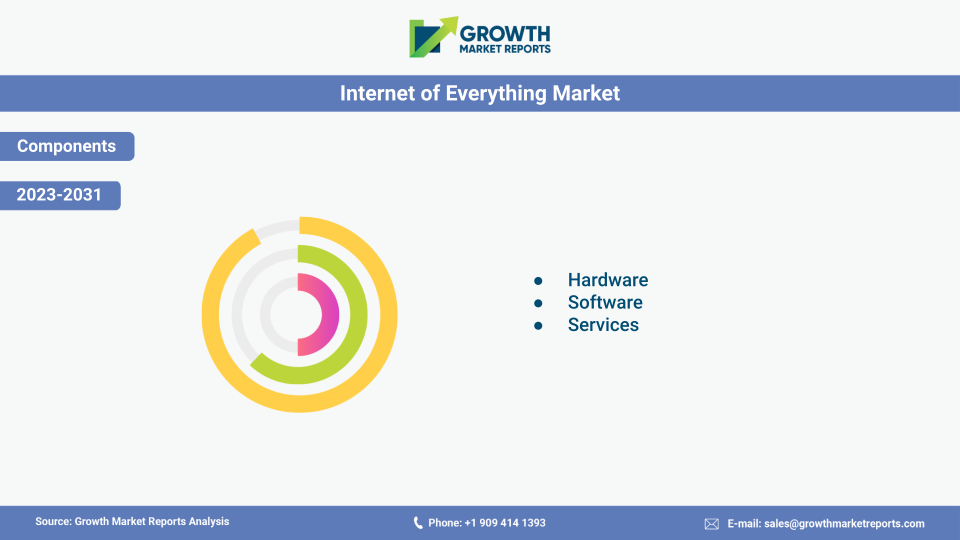
The Internet of Everything market is segmented by component into hardware, software, and services, each playing a pivotal role in the ecosystemÂ’s expansion. Hardware remains the foundational pillar, encompassing sensors, actuators, gateways, and networking devices that enable the seamless collection and transmission of data. The demand for advanced and cost-effective hardware solutions is growing, particularly as enterprises seek to deploy large-scale IoE networks across geographically dispersed assets. Innovations in chipsets, miniaturization, and energy efficiency are further enhancing hardware capabilities, making it possible to connect a broader range of devices, from industrial machinery to consumer wearables.

Software is emerging as the intelligence layer of the IoE market, providing the analytical and management capabilities needed to derive actionable insights from vast streams of data. IoE software platforms encompass device management, data analytics, security, and application enablement, allowing organizations to monitor, control, and optimize their connected environments. The growing adoption of artificial intelligence and machine learning is amplifying the value of IoE software, enabling predictive maintenance, anomaly detection, and real-time decision-making. As the complexity of IoE deployments increases, the demand for scalable, interoperable, and secure software solutions continues to rise.

Services constitute a critical enabler for successful IoE implementation, covering consulting, integration, support, and managed services. Organizations often require specialized expertise to design, deploy, and maintain complex IoE networks, particularly when integrating legacy systems with new technologies. Service providers are increasingly offering end-to-end solutions, from strategy development to ongoing optimization, helping clients maximize their return on investment. The trend towards “as-a-service” models is gaining traction, allowing enterprises to access IoE capabilities on a subscription basis, reduce upfront costs, and scale deployments as needed.

The interplay between hardware, software, and services is creating a synergistic effect, driving innovation and expanding the addressable market for IoE solutions. Vendors are forming strategic partnerships to deliver integrated offerings that address industry-specific requirements, such as smart manufacturing, connected healthcare, and intelligent transportation. As organizations prioritize end-to-end security, interoperability, and scalability, the demand for comprehensive solutions spanning all three components is expected to intensify, shaping the competitive landscape and influencing market growth trajectories.

Report Scope

Attributes Details
Report Title Internet of Everything Market Research Report 2033
By Component Hardware, Software, Services
By Application Smart Cities, Industrial Automation, Healthcare, Retail, Transportation & Logistics, Energy & Utilities, Others
By Connectivity Technology Wi-Fi, Bluetooth, ZigBee, Cellular, Others
By End-User Consumer, Business, Government
Regions Covered North America, Europe, APAC, Latin America, MEA
Base Year 2024
Historic Data 2018-2023
Forecast Period 2025-2033
Number of Pages 276
Number of Tables & Figures 316
Customization Available Yes, the report can be customized as per your need.

Application Analysis

The Internet of Everything market spans a diverse array of applications, with smart cities emerging as one of the most prominent segments. Municipalities worldwide are deploying IoE solutions to enhance urban mobility, improve energy management, and deliver citizen-centric services. Smart traffic management systems, intelligent lighting, waste management, and public safety applications are transforming city operations, reducing costs, and improving quality of life. The integration of IoE in urban planning is enabling real-time monitoring and dynamic resource allocation, making cities more sustainable, resilient, and responsive to residentsÂ’ needs.

Industrial automation is another key application area, where IoE is revolutionizing manufacturing, supply chain, and asset management. Connected sensors and devices enable real-time monitoring of equipment, predictive maintenance, and remote diagnostics, minimizing downtime and optimizing productivity. The adoption of digital twins, advanced robotics, and machine learning algorithms is further accelerating the shift towards smart factories, where data-driven insights drive continuous improvement and operational excellence. As manufacturers embrace Industry 4.0 principles, the role of IoE in achieving greater efficiency, flexibility, and safety becomes increasingly central.

Healthcare is experiencing a paradigm shift with the integration of IoE technologies, enabling remote patient monitoring, telemedicine, and personalized care delivery. Wearable devices, connected medical equipment, and health information systems are facilitating real-time data exchange between patients, providers, and payers, improving clinical outcomes and operational efficiency. IoE is also supporting population health management, chronic disease monitoring, and emergency response, addressing key challenges in accessibility, affordability, and quality of care. As regulatory frameworks evolve to support digital health, the adoption of IoE in healthcare is expected to accelerate further.

Retail, transportation and logistics, energy and utilities, and other sectors are also leveraging IoE to drive innovation and competitive advantage. In retail, IoE enables personalized shopping experiences, inventory optimization, and seamless omnichannel integration. The transportation and logistics sector is benefiting from connected fleets, real-time tracking, and smart supply chain solutions that enhance efficiency and customer satisfaction. In energy and utilities, IoE is powering smart grids, demand response, and predictive maintenance, contributing to sustainability and operational reliability. The versatility of IoE applications underscores its transformative potential across virtually every industry.

Connectivity Technology Analysis

Connectivity technologies form the backbone of the Internet of Everything market, enabling the seamless exchange of data across diverse devices and environments. Wi-Fi remains a dominant technology, particularly in indoor and enterprise settings where high bandwidth and reliability are essential. The evolution towards Wi-Fi 6 and beyond is delivering greater capacity, reduced latency, and improved energy efficiency, supporting the growing density of connected devices in homes, offices, and public spaces. Wi-FiÂ’s widespread availability and cost-effectiveness make it a preferred choice for a wide range of IoE deployments.

Bluetooth and ZigBee are widely adopted for short-range, low-power connectivity, particularly in consumer electronics, smart home devices, and industrial automation. Bluetooth Low Energy (BLE) is enabling a new generation of wearables, health monitors, and asset tracking solutions, while ZigBee is favored for its mesh networking capabilities and scalability in smart lighting and building automation. These technologies are instrumental in enabling seamless interoperability between devices, supporting flexible and scalable IoE architectures.

Cellular technologies, including 4G LTE and the rapidly expanding 5G networks, are transforming the IoE landscape by providing ubiquitous, high-speed, and low-latency connectivity. 5GÂ’s enhanced capabilities are unlocking new use cases such as autonomous vehicles, remote surgery, and massive IoT deployments, where reliability and real-time responsiveness are paramount. The rollout of private 5G networks in industrial and enterprise settings is further accelerating the adoption of IoE, enabling secure and dedicated connectivity for mission-critical applications.

Other connectivity options, such as Low-Power Wide-Area Networks (LPWAN), LoRaWAN, and NB-IoT, are gaining traction for applications requiring long-range, low-bandwidth, and low-power consumption. These technologies are ideal for smart agriculture, environmental monitoring, and asset tracking, where devices may be deployed in remote or hard-to-reach locations. The growing diversity of connectivity technologies is enabling organizations to select the most appropriate solutions for their specific use cases, driving innovation and expanding the reach of IoE.

End-User Analysis

The Internet of Everything market serves a broad spectrum of end-users, with the consumer segment representing a significant share. The proliferation of smart home devices, wearables, connected vehicles, and personal health monitors is transforming the way individuals interact with their environments. Consumers are increasingly embracing IoE-enabled solutions for convenience, security, and personalized experiences, driving demand for interoperable and user-friendly products. The integration of voice assistants, home automation systems, and connected entertainment platforms is further enhancing the value proposition for consumers.

Businesses across industries are leveraging IoE to drive operational efficiency, innovation, and competitive differentiation. Enterprises are deploying IoE solutions for asset tracking, predictive maintenance, energy management, and customer engagement, enabling data-driven decision-making and process optimization. The adoption of IoE is particularly pronounced in manufacturing, logistics, retail, and healthcare, where real-time visibility and automation are critical to business success. As organizations prioritize digital transformation, the demand for scalable, secure, and industry-specific IoE solutions is expected to grow.

Government and public sector entities are increasingly adopting IoE to enhance public safety, urban planning, and citizen services. Smart city initiatives, intelligent transportation systems, and connected infrastructure projects are leveraging IoE to improve traffic management, reduce energy consumption, and enhance emergency response capabilities. Governments are also utilizing IoE for environmental monitoring, disaster management, and public health surveillance, addressing key societal challenges and improving quality of life for citizens. The alignment of IoE with public policy objectives is driving sustained investment and adoption in this segment.

The interplay between consumer, business, and government end-users is creating a dynamic and rapidly evolving IoE ecosystem. Vendors are tailoring their offerings to address the unique needs and challenges of each segment, from user experience and interoperability in the consumer market to scalability, security, and regulatory compliance in enterprise and government deployments. As the boundaries between these segments continue to blur, the potential for cross-sector collaboration and innovation is expected to drive further growth and transformation in the IoE market.

Opportunities & Threats

The Internet of Everything market presents significant opportunities for innovation, value creation, and economic growth. The convergence of IoE with emerging technologies such as artificial intelligence, blockchain, and edge computing is unlocking new business models and use cases. Enterprises are exploring opportunities to monetize data, deliver personalized services, and create new revenue streams through connected products and platforms. The rise of smart cities, autonomous vehicles, and digital health is generating demand for integrated, end-to-end IoE solutions that address complex, multi-stakeholder environments. As organizations seek to differentiate themselves in an increasingly competitive landscape, the ability to harness the full potential of IoE is becoming a key source of competitive advantage.

Another major opportunity lies in the democratization of IoE through open standards, interoperability, and ecosystem collaboration. Industry alliances and consortia are working to develop common frameworks and protocols that enable seamless integration across devices, networks, and platforms. This collaborative approach is reducing barriers to entry, accelerating innovation, and fostering a vibrant ecosystem of solution providers, developers, and end-users. The growth of “as-a-service” models and low-code/no-code platforms is making IoE accessible to organizations of all sizes, enabling rapid prototyping, deployment, and scaling of connected solutions. These trends are expected to drive widespread adoption and unlock new value across industries and geographies.

Despite the vast opportunities, the Internet of Everything market faces several restraining factors, with security and privacy concerns at the forefront. The proliferation of connected devices and the exponential growth of data increase the attack surface for cyber threats, raising concerns about data breaches, unauthorized access, and system vulnerabilities. Regulatory compliance, data sovereignty, and ethical considerations are adding complexity to IoE deployments, particularly in highly regulated sectors such as healthcare and finance. Addressing these challenges requires a multi-layered approach to security, robust governance frameworks, and ongoing investment in threat detection and mitigation capabilities. Failure to adequately address these risks could hinder market growth and erode stakeholder trust.

Regional Outlook

North America continues to lead the global Internet of Everything market, accounting for the largest share with a market size of USD 520 billion in 2024. This dominance is attributed to the regionÂ’s advanced technology infrastructure, early adoption of IoE solutions, and a strong ecosystem of technology providers and innovators. The United States, in particular, is at the forefront of smart city initiatives, industrial automation, and connected healthcare, driving sustained investment and innovation. Canada is also making significant strides in IoE adoption, particularly in energy, utilities, and public safety applications. The regionÂ’s focus on cybersecurity, regulatory compliance, and interoperability is further supporting market growth and confidence.

Asia Pacific is emerging as the fastest-growing region in the Internet of Everything market, with a projected CAGR of 17.2% from 2025 to 2033. The regionÂ’s market size reached USD 420 billion in 2024, driven by rapid urbanization, industrialization, and government-led digital transformation initiatives in countries such as China, India, Japan, and South Korea. Smart city projects, intelligent transportation systems, and industrial automation are key growth drivers, supported by significant investments in 5G infrastructure and IoE research and development. The regionÂ’s large and diverse population, coupled with rising consumer demand for connected devices, is creating a fertile environment for IoE innovation and adoption.

Europe holds a significant share of the global IoE market, with a market size of USD 340 billion in 2024. The region is characterized by strong regulatory frameworks, a focus on sustainability, and a collaborative approach to innovation. European countries are investing in smart mobility, energy-efficient buildings, and digital health, leveraging IoE to address societal challenges and improve quality of life. The Middle East and Africa, with a combined market size of USD 150 billion in 2024, are witnessing increased adoption in sectors such as energy, utilities, and transportation, supported by government initiatives and infrastructure investments. Latin America, although at an earlier stage of adoption, is showing promising growth potential, particularly in urban mobility, agriculture, and public safety.

Internet of Everything Market Statistics

Competitor Outlook

The competitive landscape of the Internet of Everything market is characterized by intense innovation, strategic partnerships, and a diverse array of players ranging from global technology giants to specialized solution providers. Leading companies are investing heavily in research and development, mergers and acquisitions, and ecosystem partnerships to expand their product portfolios, enhance capabilities, and strengthen market presence. The market is witnessing the emergence of integrated, end-to-end solutions that combine hardware, software, and services, addressing the complex and evolving needs of enterprise, government, and consumer customers. The ability to deliver secure, scalable, and interoperable solutions is becoming a key differentiator in the competitive landscape.

Major technology vendors are leveraging their expertise in cloud computing, artificial intelligence, and connectivity to offer comprehensive IoE platforms that enable seamless device integration, data analytics, and application development. These platforms are designed to support a wide range of use cases, from smart cities and industrial automation to healthcare and retail, providing customers with the flexibility and scalability needed to drive digital transformation. Strategic alliances with telecom operators, device manufacturers, and industry consortia are further enhancing the value proposition of leading vendors, enabling them to address industry-specific requirements and accelerate time-to-market.

The market is also witnessing the rise of innovative startups and niche players that are addressing specific challenges and opportunities within the IoE ecosystem. These companies are developing cutting-edge solutions in areas such as edge computing, cybersecurity, device management, and data monetization, contributing to the vibrancy and dynamism of the market. Collaboration between established players and startups is fostering a culture of innovation, enabling the rapid development and deployment of new solutions that address emerging customer needs and market trends.

Among the major companies shaping the Internet of Everything market are Cisco Systems, IBM Corporation, Siemens AG, Microsoft Corporation, Intel Corporation, Huawei Technologies, and Oracle Corporation. Cisco Systems is a pioneer in IoE, offering a comprehensive portfolio of networking, security, and analytics solutions that support large-scale deployments across industries. IBM Corporation leverages its expertise in AI, cloud, and IoT to deliver intelligent IoE solutions for smart cities, healthcare, and industrial automation. Siemens AG is a leader in industrial automation and smart infrastructure, providing integrated solutions for manufacturing, energy, and transportation. Microsoft Corporation offers cloud-based IoE platforms that enable seamless device integration, data analytics, and application development.

Intel Corporation is at the forefront of IoE hardware innovation, developing advanced chipsets and edge computing solutions that power connected devices and enable real-time data processing. Huawei Technologies is a major player in connectivity and smart city solutions, leveraging its expertise in 5G, cloud, and AI to drive IoE adoption in Asia Pacific and beyond. Oracle Corporation provides robust IoE platforms and analytics solutions that support digital transformation across industries. These companies, along with a growing ecosystem of partners and innovators, are driving the evolution of the Internet of Everything market, shaping its future trajectory and unlocking new opportunities for value creation.

Key Players

  • Cisco Systems, Inc.
  • IBM Corporation
  • Intel Corporation
  • Microsoft Corporation
  • Oracle Corporation
  • SAP SE
  • Amazon Web Services, Inc.
  • Google LLC
  • Apple Inc.
  • Siemens AG
  • General Electric Company
  • Huawei Technologies Co., Ltd.
  • AT&T Inc.
  • Samsung Electronics Co., Ltd.
  • Bosch Group
  • Honeywell International Inc.
  • Dell Technologies Inc.
  • Qualcomm Incorporated
  • Schneider Electric SE
  • Hitachi, Ltd.
Internet of Everything Market Overview

Segments

The Internet of Everything market has been segmented on the basis of

Component

  • Hardware
  • Software
  • Services

Application

  • Smart Cities
  • Industrial Automation
  • Healthcare
  • Retail
  • Transportation & Logistics
  • Energy & Utilities
  • Others

Connectivity Technology

  • Wi-Fi
  • Bluetooth
  • ZigBee
  • Cellular
  • Others

End-User

  • Consumer
  • Business
  • Government

Competitive Landscape

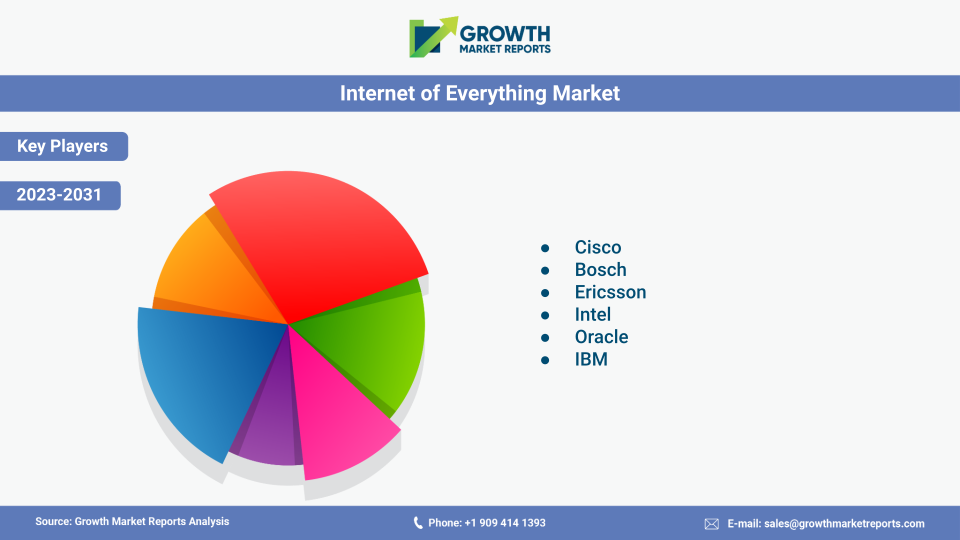
Some of the key players in the Internet of everything market are Cisco, Bosch, Ericsson, Intel, Oracle, and IBM.

Companies are engaging in creative business strategies to improve their market presence. Investment in the technological advancement is one of the growth strategies adopted by major industry players in the market.

Internet of Everything Market Key Players

Frequently Asked Questions

Yes, the Internet of Everything Market Research Report 2033 can be customized according to specific client requirements.

Major players include Cisco Systems, IBM Corporation, Siemens AG, Microsoft Corporation, Intel Corporation, Huawei Technologies, Oracle Corporation, SAP SE, Amazon Web Services, Google LLC, Apple Inc., and others.

Opportunities include integration with AI, blockchain, and edge computing, as well as new business models and 'as-a-service' offerings. Key challenges are cybersecurity, data privacy, regulatory compliance, and interoperability.

The main end-users are consumers (smart homes, wearables), businesses (manufacturing, logistics, retail), and governments (smart cities, public safety, urban planning).

Crucial connectivity technologies include Wi-Fi (especially Wi-Fi 6), Bluetooth, ZigBee, cellular networks (4G LTE, 5G), and Low-Power Wide-Area Networks (LPWAN) such as LoRaWAN and NB-IoT.

Key applications include smart cities, industrial automation, healthcare, retail, transportation & logistics, and energy & utilities. Each sector leverages IoE for improved efficiency, automation, and data-driven decision-making.

The IoE market is segmented into hardware (sensors, gateways, networking devices), software (analytics, device management, security), and services (consulting, integration, managed services).

North America leads the IoE market, followed by Asia Pacific as the fastest-growing region, and Europe with significant investments in smart cities and automation. The Middle East, Africa, and Latin America are also showing strong growth potential.

Major growth drivers include the proliferation of connected devices, advancements in connectivity technologies (such as 5G and Wi-Fi 6), digital transformation initiatives, and increased adoption across industries like smart cities, healthcare, and industrial automation.

The global Internet of Everything (IoE) market reached USD 1.52 trillion in 2024 and is projected to grow at a CAGR of 14.7% from 2025 to 2033, reaching USD 4.19 trillion by 2033.

Table Of Content

Chapter 1 Executive Summary
Chapter 2 Assumptions and Acronyms Used
Chapter 3 Research Methodology
Chapter 4 Internet of Everything Market Overview
   4.1 Introduction
      4.1.1 Market Taxonomy
      4.1.2 Market Definition
      4.1.3 Macro-Economic Factors Impacting the Market Growth
   4.2 Internet of Everything Market Dynamics
      4.2.1 Market Drivers
      4.2.2 Market Restraints
      4.2.3 Market Opportunity
   4.3 Internet of Everything Market - Supply Chain Analysis
      4.3.1 List of Key Suppliers
      4.3.2 List of Key Distributors
      4.3.3 List of Key Consumers
   4.4 Key Forces Shaping the Internet of Everything Market
      4.4.1 Bargaining Power of Suppliers
      4.4.2 Bargaining Power of Buyers
      4.4.3 Threat of Substitution
      4.4.4 Threat of New Entrants
      4.4.5 Competitive Rivalry
   4.5 Global Internet of Everything Market Size & Forecast, 2023-2032
      4.5.1 Internet of Everything Market Size and Y-o-Y Growth
      4.5.2 Internet of Everything Market Absolute $ Opportunity

Chapter 5 Global Internet of Everything Market Analysis and Forecast By Component
   5.1 Introduction
      5.1.1 Key Market Trends & Growth Opportunities By Component
      5.1.2 Basis Point Share (BPS) Analysis By Component
      5.1.3 Absolute $ Opportunity Assessment By Component
   5.2 Internet of Everything Market Size Forecast By Component
      5.2.1 Hardware
      5.2.2 Software
      5.2.3 Services
   5.3 Market Attractiveness Analysis By Component

Chapter 6 Global Internet of Everything Market Analysis and Forecast By Application
   6.1 Introduction
      6.1.1 Key Market Trends & Growth Opportunities By Application
      6.1.2 Basis Point Share (BPS) Analysis By Application
      6.1.3 Absolute $ Opportunity Assessment By Application
   6.2 Internet of Everything Market Size Forecast By Application
      6.2.1 Smart Cities
      6.2.2 Industrial Automation
      6.2.3 Healthcare
      6.2.4 Retail
      6.2.5 Transportation & Logistics
      6.2.6 Energy & Utilities
      6.2.7 Others
   6.3 Market Attractiveness Analysis By Application

Chapter 7 Global Internet of Everything Market Analysis and Forecast By Connectivity Technology
   7.1 Introduction
      7.1.1 Key Market Trends & Growth Opportunities By Connectivity Technology
      7.1.2 Basis Point Share (BPS) Analysis By Connectivity Technology
      7.1.3 Absolute $ Opportunity Assessment By Connectivity Technology
   7.2 Internet of Everything Market Size Forecast By Connectivity Technology
      7.2.1 Wi-Fi
      7.2.2 Bluetooth
      7.2.3 ZigBee
      7.2.4 Cellular
      7.2.5 Others
   7.3 Market Attractiveness Analysis By Connectivity Technology

Chapter 8 Global Internet of Everything Market Analysis and Forecast By End-User
   8.1 Introduction
      8.1.1 Key Market Trends & Growth Opportunities By End-User
      8.1.2 Basis Point Share (BPS) Analysis By End-User
      8.1.3 Absolute $ Opportunity Assessment By End-User
   8.2 Internet of Everything Market Size Forecast By End-User
      8.2.1 Consumer
      8.2.2 Business
      8.2.3 Government
   8.3 Market Attractiveness Analysis By End-User

Chapter 9 Global Internet of Everything Market Analysis and Forecast by Region
   9.1 Introduction
      9.1.1 Key Market Trends & Growth Opportunities By Region
      9.1.2 Basis Point Share (BPS) Analysis By Region
      9.1.3 Absolute $ Opportunity Assessment By Region
   9.2 Internet of Everything Market Size Forecast By Region
      9.2.1 North America
      9.2.2 Europe
      9.2.3 Asia Pacific
      9.2.4 Latin America
      9.2.5 Middle East & Africa (MEA)
   9.3 Market Attractiveness Analysis By Region

Chapter 10 Coronavirus Disease (COVID-19) Impact 
   10.1 Introduction 
   10.2 Current & Future Impact Analysis 
   10.3 Economic Impact Analysis 
   10.4 Government Policies 
   10.5 Investment Scenario

Chapter 11 North America Internet of Everything Analysis and Forecast
   11.1 Introduction
   11.2 North America Internet of Everything Market Size Forecast by Country
      11.2.1 U.S.
      11.2.2 Canada
   11.3 Basis Point Share (BPS) Analysis by Country
   11.4 Absolute $ Opportunity Assessment by Country
   11.5 Market Attractiveness Analysis by Country
   11.6 North America Internet of Everything Market Size Forecast By Component
      11.6.1 Hardware
      11.6.2 Software
      11.6.3 Services
   11.7 Basis Point Share (BPS) Analysis By Component 
   11.8 Absolute $ Opportunity Assessment By Component 
   11.9 Market Attractiveness Analysis By Component
   11.10 North America Internet of Everything Market Size Forecast By Application
      11.10.1 Smart Cities
      11.10.2 Industrial Automation
      11.10.3 Healthcare
      11.10.4 Retail
      11.10.5 Transportation & Logistics
      11.10.6 Energy & Utilities
      11.10.7 Others
   11.11 Basis Point Share (BPS) Analysis By Application 
   11.12 Absolute $ Opportunity Assessment By Application 
   11.13 Market Attractiveness Analysis By Application
   11.14 North America Internet of Everything Market Size Forecast By Connectivity Technology
      11.14.1 Wi-Fi
      11.14.2 Bluetooth
      11.14.3 ZigBee
      11.14.4 Cellular
      11.14.5 Others
   11.15 Basis Point Share (BPS) Analysis By Connectivity Technology 
   11.16 Absolute $ Opportunity Assessment By Connectivity Technology 
   11.17 Market Attractiveness Analysis By Connectivity Technology
   11.18 North America Internet of Everything Market Size Forecast By End-User
      11.18.1 Consumer
      11.18.2 Business
      11.18.3 Government
   11.19 Basis Point Share (BPS) Analysis By End-User 
   11.20 Absolute $ Opportunity Assessment By End-User 
   11.21 Market Attractiveness Analysis By End-User

Chapter 12 Europe Internet of Everything Analysis and Forecast
   12.1 Introduction
   12.2 Europe Internet of Everything Market Size Forecast by Country
      12.2.1 Germany
      12.2.2 France
      12.2.3 Italy
      12.2.4 U.K.
      12.2.5 Spain
      12.2.6 Russia
      12.2.7 Rest of Europe
   12.3 Basis Point Share (BPS) Analysis by Country
   12.4 Absolute $ Opportunity Assessment by Country
   12.5 Market Attractiveness Analysis by Country
   12.6 Europe Internet of Everything Market Size Forecast By Component
      12.6.1 Hardware
      12.6.2 Software
      12.6.3 Services
   12.7 Basis Point Share (BPS) Analysis By Component 
   12.8 Absolute $ Opportunity Assessment By Component 
   12.9 Market Attractiveness Analysis By Component
   12.10 Europe Internet of Everything Market Size Forecast By Application
      12.10.1 Smart Cities
      12.10.2 Industrial Automation
      12.10.3 Healthcare
      12.10.4 Retail
      12.10.5 Transportation & Logistics
      12.10.6 Energy & Utilities
      12.10.7 Others
   12.11 Basis Point Share (BPS) Analysis By Application 
   12.12 Absolute $ Opportunity Assessment By Application 
   12.13 Market Attractiveness Analysis By Application
   12.14 Europe Internet of Everything Market Size Forecast By Connectivity Technology
      12.14.1 Wi-Fi
      12.14.2 Bluetooth
      12.14.3 ZigBee
      12.14.4 Cellular
      12.14.5 Others
   12.15 Basis Point Share (BPS) Analysis By Connectivity Technology 
   12.16 Absolute $ Opportunity Assessment By Connectivity Technology 
   12.17 Market Attractiveness Analysis By Connectivity Technology
   12.18 Europe Internet of Everything Market Size Forecast By End-User
      12.18.1 Consumer
      12.18.2 Business
      12.18.3 Government
   12.19 Basis Point Share (BPS) Analysis By End-User 
   12.20 Absolute $ Opportunity Assessment By End-User 
   12.21 Market Attractiveness Analysis By End-User

Chapter 13 Asia Pacific Internet of Everything Analysis and Forecast
   13.1 Introduction
   13.2 Asia Pacific Internet of Everything Market Size Forecast by Country
      13.2.1 China
      13.2.2 Japan
      13.2.3 South Korea
      13.2.4 India
      13.2.5 Australia
      13.2.6 South East Asia (SEA)
      13.2.7 Rest of Asia Pacific (APAC)
   13.3 Basis Point Share (BPS) Analysis by Country
   13.4 Absolute $ Opportunity Assessment by Country
   13.5 Market Attractiveness Analysis by Country
   13.6 Asia Pacific Internet of Everything Market Size Forecast By Component
      13.6.1 Hardware
      13.6.2 Software
      13.6.3 Services
   13.7 Basis Point Share (BPS) Analysis By Component 
   13.8 Absolute $ Opportunity Assessment By Component 
   13.9 Market Attractiveness Analysis By Component
   13.10 Asia Pacific Internet of Everything Market Size Forecast By Application
      13.10.1 Smart Cities
      13.10.2 Industrial Automation
      13.10.3 Healthcare
      13.10.4 Retail
      13.10.5 Transportation & Logistics
      13.10.6 Energy & Utilities
      13.10.7 Others
   13.11 Basis Point Share (BPS) Analysis By Application 
   13.12 Absolute $ Opportunity Assessment By Application 
   13.13 Market Attractiveness Analysis By Application
   13.14 Asia Pacific Internet of Everything Market Size Forecast By Connectivity Technology
      13.14.1 Wi-Fi
      13.14.2 Bluetooth
      13.14.3 ZigBee
      13.14.4 Cellular
      13.14.5 Others
   13.15 Basis Point Share (BPS) Analysis By Connectivity Technology 
   13.16 Absolute $ Opportunity Assessment By Connectivity Technology 
   13.17 Market Attractiveness Analysis By Connectivity Technology
   13.18 Asia Pacific Internet of Everything Market Size Forecast By End-User
      13.18.1 Consumer
      13.18.2 Business
      13.18.3 Government
   13.19 Basis Point Share (BPS) Analysis By End-User 
   13.20 Absolute $ Opportunity Assessment By End-User 
   13.21 Market Attractiveness Analysis By End-User

Chapter 14 Latin America Internet of Everything Analysis and Forecast
   14.1 Introduction
   14.2 Latin America Internet of Everything Market Size Forecast by Country
      14.2.1 Brazil
      14.2.2 Mexico
      14.2.3 Rest of Latin America (LATAM)
   14.3 Basis Point Share (BPS) Analysis by Country
   14.4 Absolute $ Opportunity Assessment by Country
   14.5 Market Attractiveness Analysis by Country
   14.6 Latin America Internet of Everything Market Size Forecast By Component
      14.6.1 Hardware
      14.6.2 Software
      14.6.3 Services
   14.7 Basis Point Share (BPS) Analysis By Component 
   14.8 Absolute $ Opportunity Assessment By Component 
   14.9 Market Attractiveness Analysis By Component
   14.10 Latin America Internet of Everything Market Size Forecast By Application
      14.10.1 Smart Cities
      14.10.2 Industrial Automation
      14.10.3 Healthcare
      14.10.4 Retail
      14.10.5 Transportation & Logistics
      14.10.6 Energy & Utilities
      14.10.7 Others
   14.11 Basis Point Share (BPS) Analysis By Application 
   14.12 Absolute $ Opportunity Assessment By Application 
   14.13 Market Attractiveness Analysis By Application
   14.14 Latin America Internet of Everything Market Size Forecast By Connectivity Technology
      14.14.1 Wi-Fi
      14.14.2 Bluetooth
      14.14.3 ZigBee
      14.14.4 Cellular
      14.14.5 Others
   14.15 Basis Point Share (BPS) Analysis By Connectivity Technology 
   14.16 Absolute $ Opportunity Assessment By Connectivity Technology 
   14.17 Market Attractiveness Analysis By Connectivity Technology
   14.18 Latin America Internet of Everything Market Size Forecast By End-User
      14.18.1 Consumer
      14.18.2 Business
      14.18.3 Government
   14.19 Basis Point Share (BPS) Analysis By End-User 
   14.20 Absolute $ Opportunity Assessment By End-User 
   14.21 Market Attractiveness Analysis By End-User

Chapter 15 Middle East & Africa (MEA) Internet of Everything Analysis and Forecast
   15.1 Introduction
   15.2 Middle East & Africa (MEA) Internet of Everything Market Size Forecast by Country
      15.2.1 Saudi Arabia
      15.2.2 South Africa
      15.2.3 UAE
      15.2.4 Rest of Middle East & Africa (MEA)
   15.3 Basis Point Share (BPS) Analysis by Country
   15.4 Absolute $ Opportunity Assessment by Country
   15.5 Market Attractiveness Analysis by Country
   15.6 Middle East & Africa (MEA) Internet of Everything Market Size Forecast By Component
      15.6.1 Hardware
      15.6.2 Software
      15.6.3 Services
   15.7 Basis Point Share (BPS) Analysis By Component 
   15.8 Absolute $ Opportunity Assessment By Component 
   15.9 Market Attractiveness Analysis By Component
   15.10 Middle East & Africa (MEA) Internet of Everything Market Size Forecast By Application
      15.10.1 Smart Cities
      15.10.2 Industrial Automation
      15.10.3 Healthcare
      15.10.4 Retail
      15.10.5 Transportation & Logistics
      15.10.6 Energy & Utilities
      15.10.7 Others
   15.11 Basis Point Share (BPS) Analysis By Application 
   15.12 Absolute $ Opportunity Assessment By Application 
   15.13 Market Attractiveness Analysis By Application
   15.14 Middle East & Africa (MEA) Internet of Everything Market Size Forecast By Connectivity Technology
      15.14.1 Wi-Fi
      15.14.2 Bluetooth
      15.14.3 ZigBee
      15.14.4 Cellular
      15.14.5 Others
   15.15 Basis Point Share (BPS) Analysis By Connectivity Technology 
   15.16 Absolute $ Opportunity Assessment By Connectivity Technology 
   15.17 Market Attractiveness Analysis By Connectivity Technology
   15.18 Middle East & Africa (MEA) Internet of Everything Market Size Forecast By End-User
      15.18.1 Consumer
      15.18.2 Business
      15.18.3 Government
   15.19 Basis Point Share (BPS) Analysis By End-User 
   15.20 Absolute $ Opportunity Assessment By End-User 
   15.21 Market Attractiveness Analysis By End-User

Chapter 16 Competition Landscape 
   16.1 Internet of Everything Market: Competitive Dashboard
   16.2 Global Internet of Everything Market: Market Share Analysis, 2023
   16.3 Company Profiles (Details – Overview, Financials, Developments, Strategy) 
      16.3.1 Cisco Systems, Inc.
IBM Corporation
Intel Corporation
Microsoft Corporation
Oracle Corporation
SAP SE
Amazon Web Services, Inc.
Google LLC
Apple Inc.
Siemens AG
General Electric Company
Huawei Technologies Co., Ltd.
AT&T Inc.
Samsung Electronics Co., Ltd.
Bosch Group
Honeywell International Inc.
Dell Technologies Inc.
Qualcomm Incorporated
Schneider Electric SE
Hitachi, Ltd.

Methodology

Our Clients

Nestle SA
FedEx Logistics
Deloitte
General Mills
Honda Motor Co. Ltd.
Microsoft
Pfizer
Dassault Aviation