Segments - by Technology (Intelligent Transportation Systems, Smart Traffic Management, Communication Systems, Monitoring Systems, Others), by Component (Hardware, Software, Services), by Deployment (On-Premises, Cloud), by Application (Traffic Management, Toll Management, Communication, Monitoring, Others)
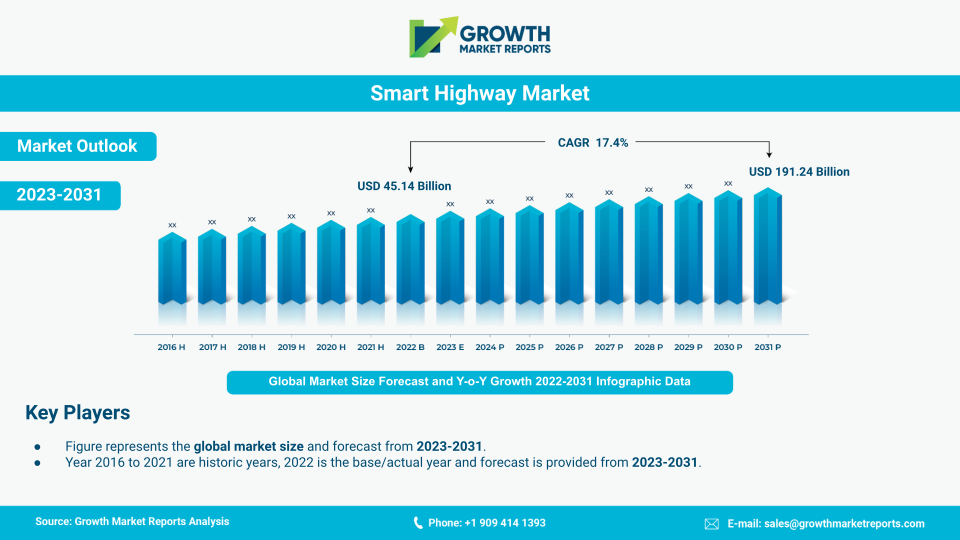
As per our latest research, the global smart highway market size reached USD 38.7 billion in 2024, driven by the rapid adoption of intelligent transportation solutions and the urgent need for efficient traffic management systems worldwide. The market is projected to grow at a robust CAGR of 17.2% from 2025 to 2033, reaching an estimated USD 126.8 billion by 2033. This significant expansion is primarily fueled by increasing urbanization, the proliferation of connected vehicles, and rising investments in infrastructure modernization across both developed and emerging economies.
One of the primary growth factors for the smart highway market is the escalating demand for enhanced road safety and congestion mitigation. As urban populations swell and vehicle numbers surge, traditional road systems are proving inadequate in managing the complexities of modern traffic. Smart highways, equipped with intelligent transportation systems (ITS), offer real-time monitoring, automated incident detection, and adaptive traffic control, which collectively reduce accident rates and improve commuter experiences. Governments across the globe are prioritizing smart infrastructure investments to tackle these challenges, with public-private partnerships further accelerating the deployment of advanced highway technologies.
Another critical driver is the integration of cutting-edge communication technologies, such as 5G, IoT, and vehicle-to-everything (V2X) networks, into highway infrastructure. These technologies enable seamless data exchange between vehicles, roadside units, and central control systems, facilitating predictive maintenance, dynamic tolling, and efficient emergency response. The synergy of cloud computing and artificial intelligence allows for real-time analytics, empowering authorities to make data-driven decisions and optimize traffic flow. As the automotive industry continues its transition towards autonomous and connected vehicles, the foundational role of smart highways in supporting these innovations becomes increasingly evident.
Sustainability and environmental concerns are also shaping the trajectory of the smart highway market. Governments and organizations are adopting eco-friendly solutions, such as energy-efficient lighting, solar-powered roadways, and pollution monitoring systems, to minimize the ecological footprint of transportation networks. Smart highways contribute to reduced fuel consumption and emissions by minimizing idling and congestion, aligning with global carbon reduction goals. This focus on sustainable mobility is further bolstered by regulatory mandates and incentives, prompting stakeholders to invest in green infrastructure and next-generation traffic management solutions.
From a regional perspective, North America and Europe are at the forefront of smart highway adoption, owing to their advanced technological ecosystems and substantial government funding. However, the Asia Pacific region is witnessing the fastest growth, propelled by rapid urbanization, large-scale infrastructure projects, and supportive government policies. Countries like China, Japan, and India are investing heavily in smart transportation initiatives to address urban mobility challenges and enhance economic competitiveness. Meanwhile, the Middle East and Latin America are gradually embracing smart highway solutions, driven by the need to modernize aging infrastructure and support burgeoning urban populations.
The technology segment of the smart highway market encompasses intelligent transportation systems (ITS), smart traffic management, communication systems, monitoring systems, and other emerging innovations. Intelligent transportation systems represent the backbone of modern smart highways, integrating sensors, cameras, and advanced analytics to monitor traffic patterns, detect incidents, and optimize signal timings. These systems are instrumental in reducing congestion, improving travel times, and enhancing road safety. The widespread adoption of ITS is further supported by advancements in machine learning and big data analytics, which enable predictive modeling and proactive traffic management.
Smart traffic management technologies are gaining traction as cities grapple with rising vehicle densities and the need for seamless mobility. These solutions leverage adaptive signal control, dynamic lane management, and real-time routing to alleviate bottlenecks and minimize delays. The integration of AI-driven algorithms allows for the continuous analysis of traffic data, enabling authorities to respond swiftly to changing conditions. As urban centers continue to expand, the demand for scalable and interoperable traffic management solutions is expected to surge, driving significant growth within this technology segment.
Communication systems form a critical pillar of the smart highway ecosystem, facilitating reliable data exchange between vehicles, infrastructure, and central command centers. The deployment of V2X (vehicle-to-everything) technologies, coupled with the rollout of 5G networks, is revolutionizing the way information is transmitted and processed on highways. These systems support applications such as real-time navigation, emergency notifications, and connected vehicle services, enhancing both safety and efficiency. As the automotive industry moves towards fully autonomous vehicles, robust communication infrastructures will become indispensable for the seamless operation of smart highways.
Monitoring systems play a vital role in ensuring the operational integrity of smart highways. These systems employ a diverse array of sensors, cameras, and IoT devices to track vehicle movements, monitor environmental conditions, and detect anomalies such as accidents or road damage. The integration of cloud-based analytics platforms allows for the aggregation and analysis of vast data streams, enabling predictive maintenance and rapid incident response. Continuous innovation in sensor technology and data analytics is expected to drive further advancements in monitoring capabilities, solidifying their importance within the smart highway market.
Other emerging technologies, such as solar-powered roadways, wireless charging lanes, and smart lighting systems, are also making inroads into the smart highway landscape. These innovations not only enhance the functionality of highways but also contribute to sustainability goals by reducing energy consumption and supporting the adoption of electric vehicles. As research and development efforts intensify, the technology segment is poised for significant evolution, with new solutions continually reshaping the future of smart transportation.
| Attributes | Details |
| Report Title | Smart Highway Market Research Report 2033 |
| By Technology | Intelligent Transportation Systems, Smart Traffic Management, Communication Systems, Monitoring Systems, Others |
| By Component | Hardware, Software, Services |
| By Deployment | On-Premises, Cloud |
| By Application | Traffic Management, Toll Management, Communication, Monitoring, Others |
| Regions Covered | North America, Europe, APAC, Latin America, MEA |
| Countries Covered | North America (United States, Canada), Europe (Germany, France, Italy, United Kingdom, Spain, Russia, Rest of Europe), Asia Pacific (China, Japan, South Korea, India, Australia, South East Asia (SEA), Rest of Asia Pacific), Latin America (Mexico, Brazil, Rest of Latin America), Middle East & Africa (Saudi Arabia, South Africa, United Arab Emirates, Rest of Middle East & Africa) |
| Base Year | 2024 |
| Historic Data | 2018-2023 |
| Forecast Period | 2025-2033 |
| Number of Pages | 291 |
| Number of Tables & Figures | 373 |
| Customization Available | Yes, the report can be customized as per your need. |
The component segment of the smart highway market is categorized into hardware, software, and services, each playing a distinct yet complementary role in the deployment and operation of intelligent transportation solutions. Hardware forms the physical backbone of smart highways, comprising sensors, cameras, controllers, communication devices, and display panels. These components are responsible for data collection, real-time monitoring, and the execution of automated control functions. The growing emphasis on infrastructure modernization and safety enhancements is driving substantial investments in advanced hardware solutions, particularly those that support high-resolution imaging, long-range detection, and robust connectivity.
Software is the intelligence layer that enables the processing, analysis, and visualization of data collected by hardware devices. Advanced software platforms leverage artificial intelligence, machine learning, and big data analytics to deliver actionable insights, optimize traffic management strategies, and support predictive maintenance. The increasing complexity of urban mobility networks necessitates sophisticated software solutions that can integrate data from diverse sources and provide real-time decision support. As smart highway projects scale in size and scope, the demand for customizable, interoperable, and secure software platforms is expected to grow exponentially.
Services encompass a wide range of activities, including consulting, system integration, maintenance, and support. The successful implementation of smart highway solutions requires specialized expertise in areas such as network design, cybersecurity, and regulatory compliance. Service providers play a crucial role in ensuring the seamless integration of hardware and software components, as well as the ongoing operation and optimization of smart highway systems. The shift towards outcome-based service models, such as managed services and software-as-a-service (SaaS), is gaining momentum, offering clients greater flexibility, scalability, and cost-effectiveness.
The interplay between hardware, software, and services is central to the success of smart highway initiatives. Hardware advancements enable the collection of richer data, while software innovations unlock new capabilities for analysis and control. Meanwhile, services ensure that these technologies are deployed efficiently and maintained at peak performance. As the smart highway market matures, the boundaries between these components are becoming increasingly blurred, with integrated solutions offering end-to-end functionality and seamless user experiences.
The ongoing evolution of the component landscape is also influenced by emerging trends such as edge computing, cloud integration, and cybersecurity. Edge devices are enabling real-time data processing at the source, reducing latency and improving responsiveness, while cloud platforms facilitate centralized management and analytics. At the same time, the proliferation of connected devices is heightening the importance of robust cybersecurity measures to protect against data breaches and system disruptions. The component segment is thus characterized by continuous innovation and convergence, with stakeholders striving to deliver holistic and future-proof smart highway solutions.
Deployment models in the smart highway market are primarily classified into on-premises and cloud-based solutions, each offering unique advantages and challenges. On-premises deployment involves the installation and operation of smart highway systems within the physical infrastructure of transportation agencies or municipalities. This model provides greater control over data security, system customization, and compliance with local regulations. It is particularly favored in regions with stringent data privacy laws or where critical infrastructure must remain isolated from external networks. However, on-premises solutions often entail higher upfront capital expenditures and require ongoing maintenance and technical expertise.
Cloud-based deployment is rapidly gaining traction as organizations seek scalable, flexible, and cost-effective alternatives to traditional on-premises systems. Cloud solutions enable the centralized management of smart highway assets, real-time data processing, and seamless integration with third-party applications. The adoption of cloud platforms is further supported by advancements in cybersecurity, data encryption, and multi-tenant architectures, which address concerns related to data privacy and system integrity. Cloud deployment also facilitates rapid innovation and the rollout of new features, as updates and enhancements can be delivered remotely without disrupting operations.
The choice between on-premises and cloud deployment is often influenced by factors such as organizational size, regulatory requirements, and the complexity of existing infrastructure. Large metropolitan areas with legacy systems may prefer on-premises solutions to ensure compatibility and control, while smaller cities and emerging economies are increasingly embracing cloud-based models to minimize costs and accelerate implementation. Hybrid deployment models, which combine the strengths of both approaches, are also emerging as a viable option, allowing organizations to balance security, scalability, and operational efficiency.
The proliferation of IoT devices, edge computing, and 5G connectivity is further shaping the deployment landscape of the smart highway market. Edge computing enables the processing of data closer to the source, reducing latency and enhancing the responsiveness of critical applications such as incident detection and emergency response. Cloud platforms, on the other hand, provide the computational power and storage necessary for large-scale analytics, machine learning, and system optimization. The integration of edge and cloud technologies is expected to drive the next wave of innovation in smart highway deployment, enabling more intelligent, adaptive, and resilient transportation networks.
As the smart highway market continues to evolve, deployment strategies will need to adapt to changing technological, regulatory, and operational requirements. Stakeholders must carefully assess their unique needs and constraints to select the most appropriate deployment model, while also investing in the necessary skills, partnerships, and infrastructure to support long-term success. The ongoing convergence of on-premises, cloud, and edge technologies promises to deliver unprecedented levels of agility, efficiency, and value to smart highway projects worldwide.
The application segment of the smart highway market is diverse, encompassing traffic management, toll management, communication, monitoring, and other specialized functions. Traffic management is the most prominent application, leveraging intelligent systems to optimize signal timings, manage congestion, and ensure the smooth flow of vehicles. These solutions utilize real-time data from sensors, cameras, and connected vehicles to dynamically adjust traffic signals, reroute vehicles in response to incidents, and provide timely information to drivers. The adoption of advanced traffic management applications is critical for reducing travel times, minimizing emissions, and enhancing overall road safety.
Toll management is another key application area, driven by the need for efficient revenue collection and congestion pricing. Smart tolling systems utilize technologies such as RFID, ANPR (automatic number plate recognition), and electronic payment platforms to automate toll collection, reduce bottlenecks, and improve user convenience. These systems can be integrated with broader transportation networks to enable dynamic pricing, incentivize off-peak travel, and support multimodal mobility solutions. The growing adoption of cashless and contactless payment methods is further fueling the demand for intelligent toll management applications.
Communication applications play a vital role in enabling vehicle-to-infrastructure (V2I) and vehicle-to-vehicle (V2V) interactions, which are essential for the safe and efficient operation of smart highways. These systems facilitate the exchange of real-time information on road conditions, traffic incidents, and weather alerts, empowering drivers to make informed decisions and avoid hazards. The integration of communication applications with navigation systems, mobile apps, and digital signage enhances situational awareness and improves the overall travel experience. As connected and autonomous vehicles become more prevalent, the importance of robust communication infrastructures will continue to grow.
Monitoring applications are focused on ensuring the operational integrity and safety of smart highways. These solutions employ a wide array of sensors, cameras, and analytics tools to monitor traffic flow, detect incidents, and assess infrastructure health. Monitoring applications enable authorities to respond swiftly to emergencies, conduct predictive maintenance, and optimize resource allocation. The increasing sophistication of monitoring technologies, including AI-powered video analytics and environmental sensors, is expanding the scope and capabilities of these applications, making them indispensable components of modern smart highway systems.
Other specialized applications, such as emergency response coordination, environmental monitoring, and smart lighting, are also gaining prominence within the smart highway market. These solutions address specific challenges related to safety, sustainability, and energy efficiency, further enhancing the value proposition of smart highways. As the market continues to mature, the application segment is expected to witness ongoing innovation, with new use cases and functionalities emerging to meet the evolving needs of transportation agencies, commuters, and society at large.
The smart highway market is brimming with opportunities, particularly as governments and private sector players ramp up investments in intelligent transportation infrastructure. The ongoing digital transformation of the transportation sector, coupled with the proliferation of connected vehicles and IoT devices, is creating new avenues for innovation and value creation. Opportunities abound in areas such as predictive analytics, autonomous vehicle integration, and sustainable mobility solutions. The growing emphasis on smart cities and urban mobility is also driving demand for integrated transportation ecosystems, where smart highways serve as critical enablers of seamless, multimodal travel experiences. Companies that can deliver scalable, interoperable, and secure solutions are well-positioned to capitalize on these trends and capture significant market share.
Another major opportunity lies in the adoption of emerging technologies such as 5G, edge computing, and artificial intelligence. These innovations are unlocking new capabilities for real-time data processing, advanced analytics, and adaptive system control, enabling transportation agencies to respond more effectively to dynamic traffic conditions and unforeseen events. The integration of renewable energy sources, such as solar-powered roadways and energy-efficient lighting, presents additional opportunities for enhancing the sustainability and resilience of smart highway infrastructure. As regulatory frameworks evolve and funding mechanisms become more accessible, the stage is set for accelerated growth and widespread adoption of smart highway solutions across both developed and emerging markets.
Despite these opportunities, the smart highway market faces several restraining factors that could impede growth. Chief among these are the high initial capital investments required for the deployment of advanced hardware, software, and communication systems. Budget constraints, particularly in developing economies, can limit the scope and scale of smart highway projects. Additionally, the complexity of integrating new technologies with existing infrastructure, coupled with concerns around data privacy, cybersecurity, and interoperability, poses significant challenges for stakeholders. Addressing these barriers will require collaborative efforts, innovative financing models, and ongoing investments in research and development to ensure the long-term viability and success of smart highway initiatives.
The regional analysis of the smart highway market reveals distinct trends and growth trajectories across different geographies. North America remains a dominant force, accounting for approximately USD 13.2 billion of the global market in 2024. The region’s leadership is underpinned by robust government funding, advanced technological infrastructure, and a strong focus on road safety and sustainability. The United States, in particular, is home to several large-scale smart highway projects, driven by federal and state-level initiatives aimed at modernizing transportation networks and supporting the adoption of connected and autonomous vehicles. Canada is also making significant strides, with investments in intelligent transportation systems and cross-border mobility solutions.
Europe follows closely, with a market size of around USD 10.6 billion in 2024, reflecting the region’s commitment to sustainable mobility and smart city development. Countries such as Germany, the United Kingdom, France, and the Netherlands are at the forefront of smart highway deployment, leveraging advanced ITS, dynamic tolling, and eco-friendly infrastructure solutions. The European Union’s emphasis on carbon reduction and digital transformation is driving investments in next-generation transportation technologies, with a projected CAGR of 16.5% through 2033. Collaborative initiatives, such as the European ITS Directive and cross-border pilot projects, are further accelerating the adoption of smart highway solutions across the continent.
The Asia Pacific region is experiencing the fastest growth, with a market size of USD 9.8 billion in 2024 and a projected CAGR exceeding 19% over the forecast period. Rapid urbanization, population growth, and government-led infrastructure programs are fueling demand for intelligent transportation systems and smart highway technologies. China, Japan, South Korea, and India are leading the charge, investing heavily in smart city initiatives and next-generation mobility solutions. The region’s diverse landscape presents both challenges and opportunities, with varying levels of technological maturity and regulatory readiness. Meanwhile, the Middle East & Africa and Latin America are gradually emerging as promising markets, supported by efforts to modernize aging infrastructure, improve road safety, and enhance economic competitiveness.
The competitive landscape of the smart highway market is characterized by intense rivalry among global technology giants, specialized solution providers, and innovative startups. The market’s rapid growth and evolving technological requirements have spurred a wave of mergers, acquisitions, and strategic partnerships, as companies seek to expand their product portfolios, enhance their technological capabilities, and strengthen their geographic presence. Leading players are investing heavily in research and development to stay ahead of the curve, focusing on areas such as AI-driven analytics, edge computing, and cybersecurity. The ability to deliver end-to-end, integrated solutions is increasingly becoming a key differentiator, as customers demand seamless interoperability and holistic value propositions.
Collaboration between public and private sector stakeholders is also shaping the competitive dynamics of the smart highway market. Governments are partnering with technology providers, infrastructure developers, and automotive manufacturers to pilot and scale smart highway projects. These collaborations are driving innovation, reducing deployment risks, and accelerating the adoption of advanced transportation solutions. At the same time, the entry of new players, particularly in the software and services segments, is intensifying competition and driving down costs. The emergence of open standards and platforms is further democratizing access to smart highway technologies, enabling smaller players to compete effectively alongside established incumbents.
Major companies in the smart highway market include Siemens AG, Cisco Systems, Kapsch TrafficCom, IBM Corporation, Alcatel-Lucent Enterprise, Schneider Electric, Huawei Technologies, Indra Sistemas, and Atkins (a member of the SNC-Lavalin Group). Siemens AG is recognized for its comprehensive portfolio of intelligent transportation systems, including advanced traffic management, tolling, and communication solutions. Cisco Systems is a leader in network infrastructure and cybersecurity, providing the backbone for connected highway ecosystems. Kapsch TrafficCom specializes in tolling and traffic management systems, with a strong presence in both developed and emerging markets. IBM Corporation leverages its expertise in AI, analytics, and cloud computing to deliver innovative smart highway solutions.
Alcatel-Lucent Enterprise and Schneider Electric are prominent players in communication and energy management systems, respectively, offering integrated solutions for efficient and sustainable highway operations. Huawei Technologies is making significant inroads in the Asia Pacific region, providing end-to-end smart transportation solutions powered by 5G and IoT technologies. Indra Sistemas and Atkins are recognized for their expertise in system integration, consulting, and project management, supporting large-scale smart highway deployments worldwide. These companies are continuously innovating and expanding their offerings to address the evolving needs of customers and stay competitive in a rapidly changing market.
The future of the smart highway market will be shaped by ongoing technological advancements, regulatory developments, and shifting customer expectations. Companies that can anticipate these trends, invest in innovation, and forge strategic partnerships will be well-positioned to capture new opportunities and drive the next phase of growth in this dynamic and rapidly evolving industry.
The Smart Highway market has been segmented on the basis of
Key players competing in the smart highway market include Cisco Systems Inc., Siemens AG, IBM Corporation, Schneider Electric SE, and Xerox Corporation.
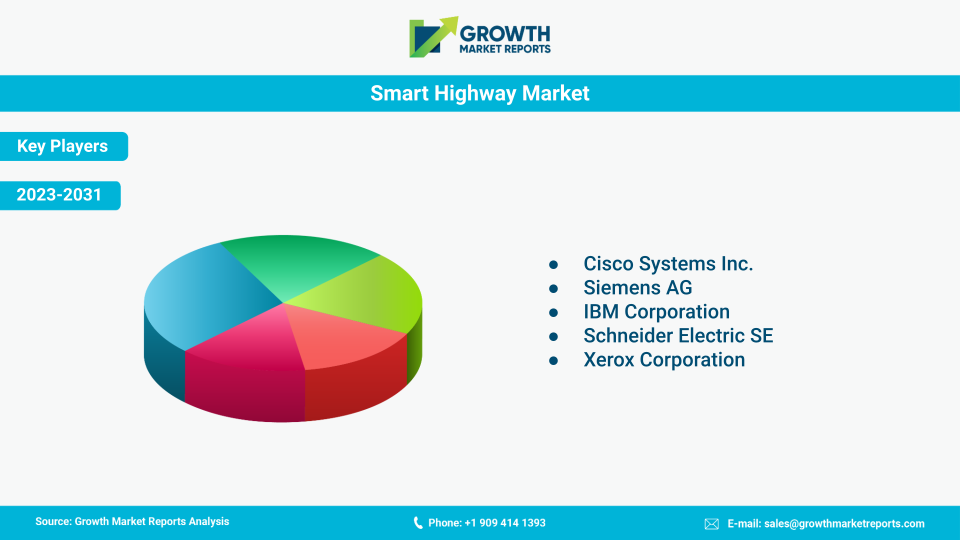
Major players include Siemens AG, Cisco Systems, Kapsch TrafficCom, IBM Corporation, Alcatel-Lucent Enterprise, Schneider Electric, Huawei Technologies, Indra Sistemas, and Atkins (SNC-Lavalin Group).
Opportunities include the integration of predictive analytics, autonomous vehicles, and sustainable mobility solutions. Challenges involve high initial capital costs, integration with existing infrastructure, data privacy, cybersecurity, and interoperability.
Key applications include traffic management, toll management, communication (V2V and V2I), monitoring (traffic flow, incidents, infrastructure health), emergency response coordination, environmental monitoring, and smart lighting.
Smart highway systems can be deployed on-premises or via cloud-based solutions. Hybrid models that combine both approaches are also emerging to balance security, scalability, and operational efficiency.
The main components are hardware (sensors, cameras, controllers), software (AI, machine learning, analytics platforms), and services (consulting, system integration, maintenance, and support).
Smart highways support sustainability by incorporating energy-efficient lighting, solar-powered roadways, and pollution monitoring systems, which help reduce fuel consumption, emissions, and align with global carbon reduction targets.
Smart highway systems utilize intelligent transportation systems (ITS), smart traffic management, advanced communication systems (including V2X and 5G), monitoring systems with sensors and cameras, and emerging innovations like solar-powered roadways and wireless charging lanes.
North America and Europe are leading in smart highway adoption due to advanced technology and government funding. However, the Asia Pacific region is experiencing the fastest growth, driven by rapid urbanization and large-scale infrastructure projects.
Key drivers include increasing urbanization, the proliferation of connected vehicles, rising investments in infrastructure modernization, demand for improved road safety, congestion mitigation, and the integration of advanced technologies like 5G, IoT, and AI.
The global smart highway market reached USD 38.7 billion in 2024 and is projected to grow at a CAGR of 17.2% from 2025 to 2033, reaching approximately USD 126.8 billion by 2033.