Interactive Display Market Research Report 2033

Interactive Display Market Research Report 2033

Segments - by Product Type (Interactive Whiteboards, Interactive Flat Panel Displays, Interactive Kiosks, Interactive Tables, Others), by Technology (LCD, LED, OLED, Others), by Panel Size (Up to 65”, 66”–75”, 76”–85”, Above 85”), by Application (Education, Corporate, Retail, Healthcare, Hospitality, Transportation, Others), by End-User (Education, Corporate, Retail, Healthcare, Government, Others)

https://growthmarketreports.com/Raksha
Author : Raksha Sharma
https://growthmarketreports.com/Vaibhav
Fact-checked by : V. Chandola
https://growthmarketreports.com/Shruti
Editor : Shruti Bhat

Upcoming | Report ID :ICT-SE-304 | 4.3 Rating | 87 Reviews | 274 Pages | Format : Docx PDF

Report Description


Interactive Display Market Outlook

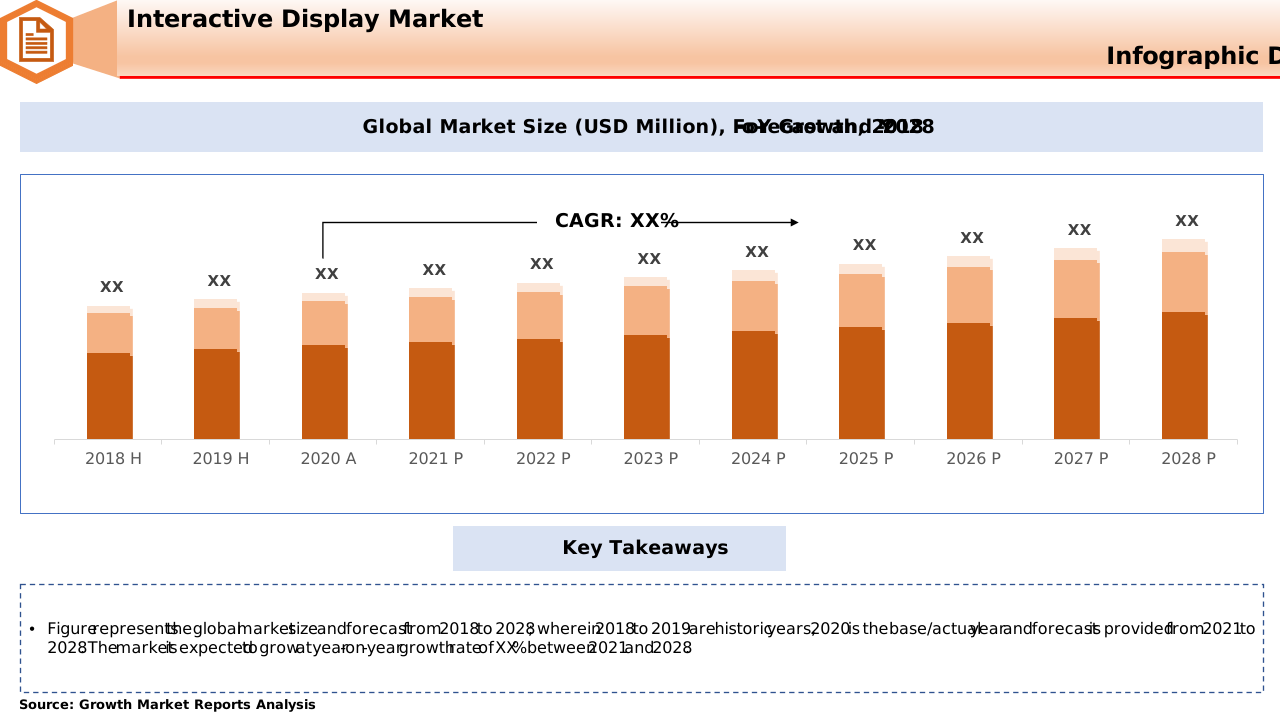
According to our latest research, the global Interactive Display market size reached USD 14.8 billion in 2024, demonstrating robust expansion across multiple sectors. The Interactive Display market is expected to grow at a CAGR of 8.7% from 2025 to 2033, with the market forecasted to reach USD 31.1 billion by 2033. This growth is propelled by rapid technological advancements, increasing adoption in education and corporate environments, and the rising demand for engaging digital solutions across retail and healthcare sectors. The Interactive Display market continues to benefit from the convergence of touch technology, digital content, and collaborative tools, providing immersive experiences that drive productivity and engagement.

A primary growth factor for the Interactive Display market is the accelerating digital transformation in educational institutions and corporate enterprises. Schools and universities are increasingly deploying interactive whiteboards and flat panel displays to enhance learning outcomes, foster collaboration, and create dynamic, participatory classroom environments. Corporate offices are adopting these solutions for boardrooms, training centers, and collaborative workspaces, leveraging real-time data sharing and interactive presentations to boost productivity. The pandemic-induced shift to hybrid and remote learning and working models has further fueled demand for Interactive Displays, as organizations seek reliable, user-friendly, and scalable solutions for seamless communication and knowledge sharing. The integration of cloud-based platforms and advanced software applications with Interactive Displays is also enhancing their functionality, making them indispensable tools for modern education and business.

Another significant driver is the proliferation of Interactive Displays in the retail and healthcare sectors, where customer engagement and patient experience are paramount. Retailers are utilizing interactive kiosks and tables to offer personalized shopping experiences, streamline checkout processes, and deliver targeted promotions. These displays enable retailers to gather valuable customer insights and adapt to changing consumer preferences. In healthcare, Interactive Displays are transforming patient care by facilitating real-time information sharing, patient education, and telemedicine consultations. Hospitals and clinics are increasingly investing in interactive solutions to improve workflow efficiency, enhance patient engagement, and support collaborative decision-making among medical professionals. The versatility and adaptability of Interactive Displays make them suitable for a wide range of applications, further broadening their market appeal.

Technological advancements in display technologies, such as LCD, LED, and OLED, are also playing a pivotal role in market expansion. These innovations are driving improvements in display resolution, touch sensitivity, energy efficiency, and durability. Manufacturers are introducing larger panel sizes and ultra-high-definition displays that cater to the evolving needs of end-users. The integration of artificial intelligence, gesture recognition, and multi-touch capabilities is enhancing the interactivity and user experience of these displays. Additionally, the declining cost of display panels and the availability of customizable solutions are making Interactive Displays more accessible to small and medium-sized enterprises, further accelerating market penetration. As competition intensifies, vendors are focusing on product differentiation and strategic partnerships to capture a larger share of the Interactive Display market.

Regionally, Asia Pacific is emerging as the fastest-growing market for Interactive Displays, driven by rapid urbanization, increasing investments in smart classrooms, and government initiatives to modernize educational infrastructure. North America remains a significant market, supported by high technology adoption rates and strong demand from corporate and healthcare sectors. Europe is witnessing steady growth, fueled by digital transformation initiatives and the expansion of smart retail and hospitality environments. The Middle East & Africa and Latin America are also experiencing rising adoption, particularly in the education and government sectors. These regional trends highlight the global appeal and diverse application landscape of the Interactive Display market, setting the stage for sustained growth through 2033.

Global Interactive Display  Industry Outlook

Product Type Analysis

The Interactive Display market is segmented by product type into Interactive Whiteboards, Interactive Flat Panel Displays, Interactive Kiosks, Interactive Tables, and Others. Interactive Whiteboards have long been the backbone of digital classrooms and training centers, facilitating collaborative learning and interactive teaching methods. Their ease of integration with educational software and cloud-based platforms makes them a preferred choice for schools and universities aiming to enhance student engagement. However, as technology evolves, there is a noticeable shift towards Interactive Flat Panel Displays, which offer superior image quality, multi-touch capabilities, and seamless connectivity with a variety of devices. These displays are gaining traction not only in education but also in corporate environments, where they are used for presentations, brainstorming sessions, and video conferencing.

Interactive Kiosks are another rapidly growing segment, particularly in retail, hospitality, and transportation sectors. These kiosks provide self-service options for customers, enabling them to access information, make purchases, and interact with digital content in public spaces. The adoption of interactive kiosks is being driven by the need for contactless solutions, personalized customer experiences, and efficient service delivery. Retailers are leveraging kiosks for product catalogs, wayfinding, and loyalty program management, while airports and hotels use them for check-in, ticketing, and concierge services. The versatility of interactive kiosks and their ability to streamline operations are key factors contributing to their rising adoption.

Interactive Tables are finding increasing application in collaborative environments such as libraries, museums, and innovation labs. These tables enable multiple users to interact simultaneously with digital content, making them ideal for group activities, workshops, and interactive exhibitions. The integration of advanced touch technology, gesture recognition, and augmented reality features is enhancing the functionality and appeal of interactive tables. Businesses are also exploring the use of interactive tables for customer engagement at trade shows, product launches, and experiential marketing events. As the demand for immersive and participatory experiences grows, the interactive table segment is expected to witness significant growth.

The "Others" category includes emerging products such as interactive video walls and digital signage, which are gaining popularity in large venues, entertainment centers, and smart cities. These solutions offer high-impact visual communication and can be customized for various applications, from advertising to public information displays. The ability to integrate with IoT devices, analytics platforms, and content management systems is expanding the potential use cases for these products. As organizations seek to create engaging and data-driven environments, the demand for innovative interactive display solutions in this segment is likely to increase.

Report Scope

Attributes Details
Report Title Interactive Display Market Research Report 2033
By Product Type Interactive Whiteboards, Interactive Flat Panel Displays, Interactive Kiosks, Interactive Tables, Others
By Technology LCD, LED, OLED, Others
By Panel Size Up to 65”, 66”–75”, 76”–85”, Above 85”
By Application Education, Corporate, Retail, Healthcare, Hospitality, Transportation, Others
By End-User Education, Corporate, Retail, Healthcare, Government, Others
Regions Covered North America, Europe, APAC, Latin America, MEA
Base Year 2024
Historic Data 2018-2023
Forecast Period 2025-2033
Number of Pages 274
Number of Tables & Figures 354
Customization Available Yes, the report can be customized as per your need.

Technology Analysis

The Interactive Display market is segmented by technology into LCD, LED, OLED, and Others. LCD technology has traditionally dominated the market due to its cost-effectiveness, widespread availability, and reliable performance. LCD Interactive Displays are widely used in classrooms, meeting rooms, and public information kiosks, offering a balance between image quality and affordability. However, as user expectations evolve and demand for higher resolution and vibrant colors increases, LED technology is gaining ground. LED Interactive Displays provide superior brightness, energy efficiency, and longer lifespan, making them ideal for high-traffic environments such as retail stores, airports, and conference centers.

OLED technology represents the cutting edge of interactive display innovation, offering unparalleled color accuracy, contrast ratios, and ultra-thin form factors. OLED Interactive Displays are being adopted in premium applications where image quality and aesthetics are paramount, such as executive boardrooms, high-end retail stores, and luxury hotels. The flexibility of OLED panels also enables the development of curved and foldable displays, opening up new possibilities for creative installations and immersive experiences. While OLED displays are currently more expensive than LCD and LED counterparts, ongoing research and development efforts are expected to drive down costs and expand their market share over the forecast period.

The "Others" segment encompasses emerging display technologies such as e-paper, micro-LED, and quantum dot displays. These technologies offer unique advantages, including ultra-low power consumption, enhanced durability, and superior outdoor visibility. E-paper displays are particularly well-suited for applications requiring constant information updates, such as digital signage in transportation hubs and public spaces. Micro-LED and quantum dot displays are being explored for their potential to deliver even higher brightness levels, color accuracy, and energy efficiency. As the Interactive Display market becomes increasingly competitive, manufacturers are investing in research and development to differentiate their products through technological innovation.

The competitive landscape in display technology is driving rapid advancements and price reductions, making high-quality Interactive Displays more accessible to a broader range of end-users. The integration of advanced touch sensors, haptic feedback, and AI-driven features is further enhancing the interactivity and user experience of these displays. As organizations prioritize digital transformation and user engagement, the choice of display technology will remain a critical factor influencing purchasing decisions in the Interactive Display market.

Panel Size Analysis

Panel size is a crucial consideration in the Interactive Display market, with segments including Up to 65”, 66”–75”, 76”–85”, and Above 85”. Displays up to 65 inches are popular in small to medium-sized classrooms, meeting rooms, and retail environments where space constraints and budget considerations are paramount. These displays offer a compact form factor without compromising on interactivity or image quality, making them ideal for collaborative workspaces and interactive kiosks. The affordability and ease of installation of smaller panels are driving their widespread adoption, particularly among small and medium enterprises and educational institutions with limited resources.

The 66”–75” segment represents a sweet spot for many organizations seeking a balance between screen real estate and cost. These panels are well-suited for medium to large classrooms, boardrooms, and conference centers, providing ample space for interactive content, multi-user collaboration, and high-impact presentations. The growing trend towards blended and hybrid learning models in education, as well as the increasing emphasis on digital collaboration in corporate settings, is fueling demand for displays in this size range. Manufacturers are responding by offering a variety of feature-rich models with advanced touch capabilities, wireless connectivity, and integrated software solutions.

Displays in the 76”–85” range are gaining popularity in environments that require large-format visual communication, such as lecture halls, auditoriums, and exhibition spaces. These panels offer immersive viewing experiences and support simultaneous interaction by multiple users, making them ideal for group activities, training sessions, and public presentations. The adoption of larger displays is being driven by advancements in display technology, which have made it possible to deliver high-resolution images and responsive touch performance at scale. Organizations are increasingly investing in large-format Interactive Displays to create engaging and collaborative environments that foster creativity and innovation.

Above 85” displays represent the high end of the Interactive Display market, catering to specialized applications in command centers, digital signage, and large-scale events. These ultra-large panels are designed to deliver maximum impact and visibility, supporting complex data visualization, real-time collaboration, and interactive wayfinding. The integration of advanced features such as 4K/8K resolution, multi-touch support, and remote management capabilities is enhancing the value proposition of these displays. While the initial investment in ultra-large Interactive Displays can be significant, the long-term benefits in terms of user engagement, operational efficiency, and brand visibility are driving adoption among forward-thinking organizations.

Application Analysis

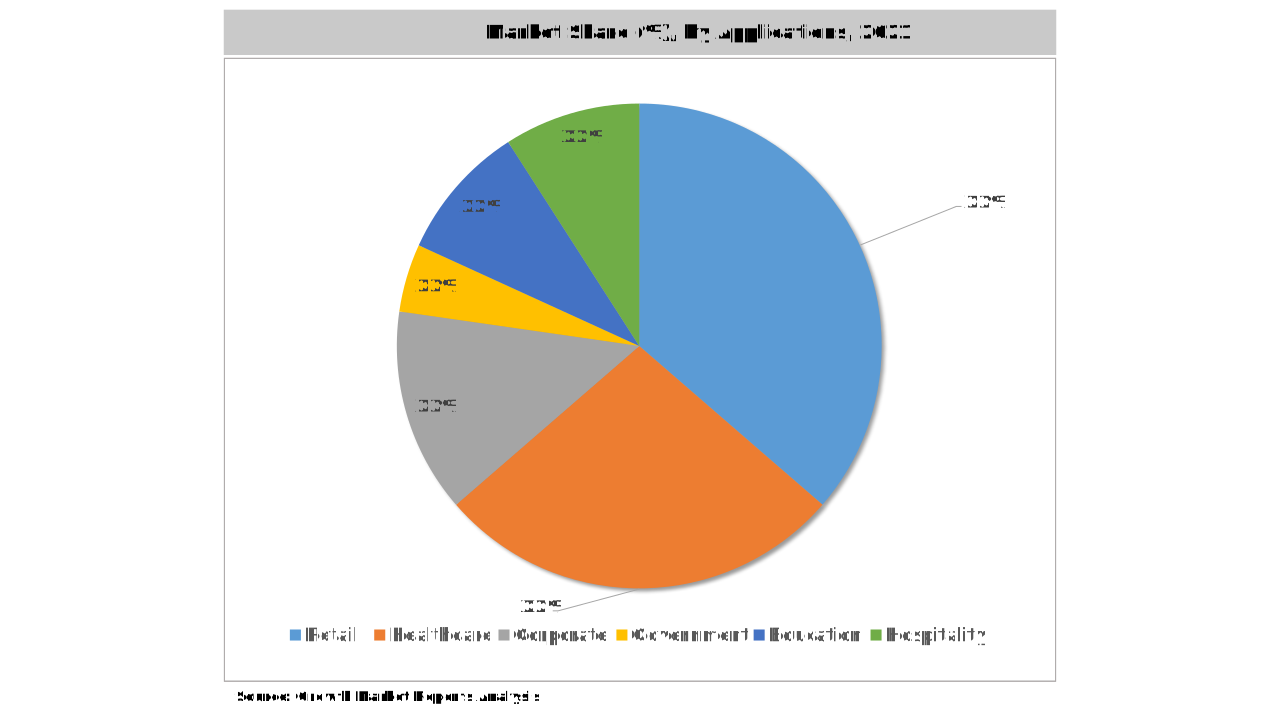
The Interactive Display market serves a diverse range of applications, including Education, Corporate, Retail, Healthcare, Hospitality, Transportation, and Others. In the education sector, Interactive Displays are revolutionizing teaching and learning by enabling dynamic content delivery, real-time feedback, and collaborative problem-solving. Schools and universities are leveraging these technologies to support blended learning, distance education, and inclusive classrooms that cater to different learning styles. The integration of educational software, cloud-based platforms, and assessment tools is further enhancing the effectiveness of Interactive Displays in improving student engagement and academic performance.

Corporate environments are another major application area for Interactive Displays, where they are used to facilitate meetings, presentations, brainstorming sessions, and remote collaboration. Businesses are investing in interactive solutions to enhance communication, streamline decision-making, and drive innovation. The adoption of Interactive Displays in corporate settings is being driven by the need for agile workspaces, digital transformation initiatives, and the growing prevalence of hybrid work models. Advanced features such as wireless connectivity, multi-device integration, and AI-powered collaboration tools are making Interactive Displays indispensable for modern enterprises.

In the retail sector, Interactive Displays are transforming the customer experience by enabling personalized engagement, product discovery, and seamless transactions. Retailers are deploying interactive kiosks, tables, and digital signage to provide product information, recommendations, and promotional offers tailored to individual preferences. The ability to collect and analyze customer data in real-time is helping retailers optimize store layouts, inventory management, and marketing strategies. As competition intensifies in the retail industry, the adoption of Interactive Displays is becoming a key differentiator for brands seeking to attract and retain customers.

Healthcare organizations are increasingly adopting Interactive Displays to improve patient care, streamline workflows, and enhance communication among medical professionals. These displays are being used for patient education, telemedicine consultations, digital signage, and interactive wayfinding in hospitals and clinics. The integration of electronic health records, diagnostic imaging, and collaborative decision-making tools is enabling healthcare providers to deliver more efficient and personalized care. As the healthcare industry continues to embrace digital transformation, the demand for Interactive Displays is expected to grow steadily.

The hospitality and transportation sectors are also witnessing rising adoption of Interactive Displays, driven by the need to enhance guest experiences and improve operational efficiency. Hotels are using interactive kiosks for check-in, concierge services, and event management, while airports and transit stations are deploying digital signage for wayfinding, real-time information, and advertising. These applications are helping organizations deliver seamless, engaging, and personalized experiences to travelers and guests, further expanding the market for Interactive Displays.

End-User Analysis

The Interactive Display market is segmented by end-user into Education, Corporate, Retail, Healthcare, Government, and Others. The education sector remains the largest end-user, accounting for a significant share of global Interactive Display deployments. Schools, colleges, and universities are investing in interactive whiteboards, flat panel displays, and collaborative learning tools to create engaging and inclusive learning environments. Government initiatives to modernize educational infrastructure and promote digital literacy are further accelerating adoption in this segment. The focus on STEM education, personalized learning, and teacher professional development is also driving demand for advanced interactive solutions.

The corporate sector is rapidly emerging as a key end-user, with organizations across industries adopting Interactive Displays to support agile work environments, remote collaboration, and digital transformation initiatives. Businesses are leveraging these technologies to enhance team productivity, improve communication, and drive innovation. The integration of cloud-based collaboration platforms, video conferencing tools, and business analytics is making Interactive Displays essential for modern workplaces. As the nature of work continues to evolve, the corporate segment is expected to witness sustained growth in demand for interactive solutions.

Retailers are using Interactive Displays to create immersive shopping experiences, streamline operations, and gather valuable customer insights. The ability to deliver personalized content, facilitate self-service transactions, and support omnichannel strategies is making Interactive Displays a critical tool for retail success. The growing adoption of digital signage, interactive kiosks, and smart shelves is transforming the way retailers engage with customers and manage their stores. As consumer expectations continue to rise, the retail segment is poised for significant growth in Interactive Display adoption.

Healthcare providers are increasingly recognizing the benefits of Interactive Displays in improving patient engagement, care coordination, and operational efficiency. Hospitals, clinics, and medical offices are deploying these solutions for patient education, digital signage, and collaborative care planning. The integration of Interactive Displays with electronic health records, telemedicine platforms, and diagnostic tools is enhancing the quality and accessibility of healthcare services. As the industry continues to digitize, the healthcare segment is expected to be a major driver of market growth.

Government agencies and public sector organizations are also investing in Interactive Displays to support digital transformation, enhance public communication, and improve service delivery. Applications include interactive information kiosks, digital signage in public spaces, and collaborative workspaces for government employees. The focus on smart city initiatives, citizen engagement, and efficient service delivery is driving adoption in this segment. As governments worldwide continue to modernize their operations, the demand for Interactive Displays is expected to rise.

Opportunities & Threats

The Interactive Display market presents a host of opportunities for growth and innovation, driven by the ongoing digital transformation across industries. The increasing adoption of hybrid learning and working models is creating new demand for interactive solutions that enable seamless collaboration and communication. The integration of artificial intelligence, machine learning, and IoT capabilities is opening up new possibilities for personalized and data-driven experiences. Emerging applications in smart cities, digital signage, and experiential marketing are expanding the addressable market for Interactive Displays. Vendors have the opportunity to differentiate their offerings by focusing on user experience, customization, and interoperability with existing IT infrastructure. Strategic partnerships with software providers, content creators, and system integrators can further enhance the value proposition of Interactive Displays and drive market expansion.

Another major opportunity lies in the untapped potential of emerging markets, particularly in Asia Pacific, Latin America, and the Middle East & Africa. Rapid urbanization, rising disposable incomes, and government investments in education and digital infrastructure are creating favorable conditions for market growth in these regions. Localized product development, competitive pricing strategies, and targeted marketing campaigns can help vendors capture market share in these high-growth areas. The increasing focus on sustainability and energy efficiency is also driving demand for eco-friendly Interactive Displays, creating opportunities for manufacturers to innovate and differentiate their products. As digital transformation accelerates globally, the Interactive Display market is well-positioned to capitalize on these emerging trends and opportunities.

Despite the positive outlook, the Interactive Display market faces several restraining factors that could impact growth. High initial investment costs, particularly for large-format and advanced technology displays, can be a barrier to adoption for small and medium-sized enterprises and educational institutions with limited budgets. The complexity of integrating Interactive Displays with existing IT infrastructure and legacy systems can also pose challenges for organizations. Concerns around data privacy, cybersecurity, and user training may further hinder widespread adoption. To overcome these challenges, vendors need to focus on offering cost-effective solutions, providing comprehensive support services, and ensuring seamless interoperability with other digital tools and platforms.

Regional Outlook

The Asia Pacific region is currently the fastest-growing market for Interactive Displays, accounting for USD 5.2 billion of the global market in 2024. This region is expected to maintain a robust CAGR of 10.2% through 2033, driven by large-scale investments in educational technology, rapid urbanization, and government initiatives aimed at modernizing public infrastructure. Countries such as China, India, Japan, and South Korea are leading the adoption of Interactive Displays in schools, universities, corporate offices, and public spaces. The proliferation of smart classrooms, digital learning platforms, and e-governance projects is fueling demand for interactive solutions across the region. Local manufacturers and international vendors are competing to capture market share by offering innovative, affordable, and localized products tailored to the unique needs of Asian consumers.

North America remains a significant market for Interactive Displays, with a market size of USD 4.1 billion in 2024. The region is characterized by high technology adoption rates, advanced digital infrastructure, and strong demand from the education, corporate, and healthcare sectors. The United States and Canada are at the forefront of digital transformation, with widespread deployment of Interactive Displays in schools, universities, businesses, and healthcare facilities. The emphasis on collaborative work environments, hybrid learning models, and patient-centered care is driving sustained demand for interactive solutions. North America is expected to maintain steady growth through 2033, supported by ongoing innovation, strategic partnerships, and a strong ecosystem of technology providers.

Europe is also a key market for Interactive Displays, with a market size of USD 3.3 billion in 2024 and steady growth projected over the forecast period. The region is witnessing increased adoption in the education, corporate, retail, and hospitality sectors, driven by digital transformation initiatives and the expansion of smart city projects. Countries such as the United Kingdom, Germany, France, and the Nordic nations are leading the way in deploying interactive solutions to enhance learning, communication, and customer engagement. The focus on sustainability, energy efficiency, and accessibility is shaping product development and adoption trends in the European market. As organizations across the region continue to invest in digital infrastructure, the demand for Interactive Displays is expected to grow steadily.

Interactive Display  Market Statistics

Competitor Outlook

The competitive landscape of the Interactive Display market is dynamic and highly fragmented, with a mix of global technology giants, specialized display manufacturers, and innovative startups vying for market share. Leading companies are investing heavily in research and development to introduce cutting-edge products with advanced features such as 4K/8K resolution, AI-powered collaboration tools, and seamless integration with cloud-based platforms. Strategic partnerships, mergers and acquisitions, and product portfolio expansions are common strategies employed by market players to strengthen their market position and expand their global footprint. The focus on user experience, customization, and interoperability is driving product differentiation and fostering intense competition in the market.

Innovation remains a key differentiator for companies operating in the Interactive Display market. Vendors are continuously enhancing the functionality, design, and performance of their products to meet the evolving needs of end-users across different industries. The integration of advanced touch technology, gesture recognition, voice control, and haptic feedback is transforming the way users interact with digital content. Companies are also exploring new business models, such as subscription-based software offerings and managed services, to create recurring revenue streams and deepen customer relationships. The ability to offer comprehensive solutions that combine hardware, software, and services is becoming increasingly important in the competitive landscape.

Regional players are also making significant inroads in the Interactive Display market by offering cost-effective and localized solutions tailored to the specific needs of their markets. These companies are leveraging their understanding of local customer preferences, regulatory requirements, and distribution networks to capture market share from global competitors. The rise of e-commerce and digital marketing is enabling smaller vendors to reach a wider audience and compete on a more level playing field. As the market continues to evolve, collaboration between hardware manufacturers, software developers, and system integrators will be critical to delivering end-to-end solutions that address the complex needs of modern organizations.

Major companies operating in the Interactive Display market include Samsung Electronics, LG Display, Sharp Corporation, Panasonic Corporation, BenQ Corporation, ViewSonic Corporation, SMART Technologies, Promethean World, Elo Touch Solutions, and Planar Systems. Samsung Electronics and LG Display are renowned for their leadership in display technology, offering a comprehensive range of Interactive Displays for education, corporate, and retail applications. Sharp Corporation and Panasonic Corporation are known for their high-quality, large-format displays and innovative touch solutions. BenQ Corporation and ViewSonic Corporation specialize in interactive flat panel displays and educational technology solutions, while SMART Technologies and Promethean World are pioneers in interactive whiteboard and collaborative learning solutions. Elo Touch Solutions and Planar Systems focus on interactive kiosks, digital signage, and specialized touch display applications for retail, healthcare, and public spaces.

These companies are continuously expanding their product portfolios, investing in R&D, and forming strategic alliances to stay ahead in the competitive landscape. For example, Samsung and LG have launched next-generation Interactive Displays with advanced features such as multi-user collaboration, wireless connectivity, and AI-powered analytics. SMART Technologies and Promethean World are focusing on software-driven solutions that enhance the learning experience and support teacher professional development. BenQ and ViewSonic are targeting the education and corporate sectors with affordable, feature-rich displays that offer seamless integration with popular collaboration platforms. As competition intensifies, the ability to deliver innovative, reliable, and user-friendly Interactive Display solutions will be key to sustaining growth and capturing market share in this dynamic industry.

Key Players

  • Samsung Electronics
  • LG Display
  • NEC Corporation
  • Sharp Corporation
  • BenQ Corporation
  • ViewSonic Corporation
  • Panasonic Corporation
  • Sony Corporation
  • Planar Systems
  • Elo Touch Solutions
  • Promethean World
  • SMART Technologies
  • Hitachi Ltd.
  • Christie Digital Systems
  • Newline Interactive
  • Boxlight Corporation
  • Cisco Systems
  • Google LLC
  • Dell Technologies
  • Microsoft Corporation
Interactive Display  Market Overview

Segments

The Interactive Display market has been segmented on the basis of

Product Type

  • Interactive Whiteboards
  • Interactive Flat Panel Displays
  • Interactive Kiosks
  • Interactive Tables
  • Others

Technology

  • LCD
  • LED
  • OLED
  • Others

Panel Size

  • Up to 65”
  • 66”–75”
  • 76”–85”
  • Above 85”

Application

  • Education
  • Corporate
  • Retail
  • Healthcare
  • Hospitality
  • Transportation
  • Others

End-User

  • Education
  • Corporate
  • Retail
  • Healthcare
  • Government
  • Others

Competitive Landscape

Major players competing in the global interactive display market include Significant plaers in the intelligent showcase market incorporate Samsung Electronics, LG Display, NEC Corporation, Panasonic Corporation, Leyard Optoelectronic, Sharp, Elo Touch Solution, Crystal Display Systems, ViewSonic, and Horizon Display.

Companies are engaging in partnerships, collaborations, and expanding their product offerings to expand their market share.

In September 2020, ViewSonic presented introduced TD2455 24-inch screen. The product can be utilized in classrooms and corporate spaces. It has an induced stylus pen that lets the individual draw or write on the screen.
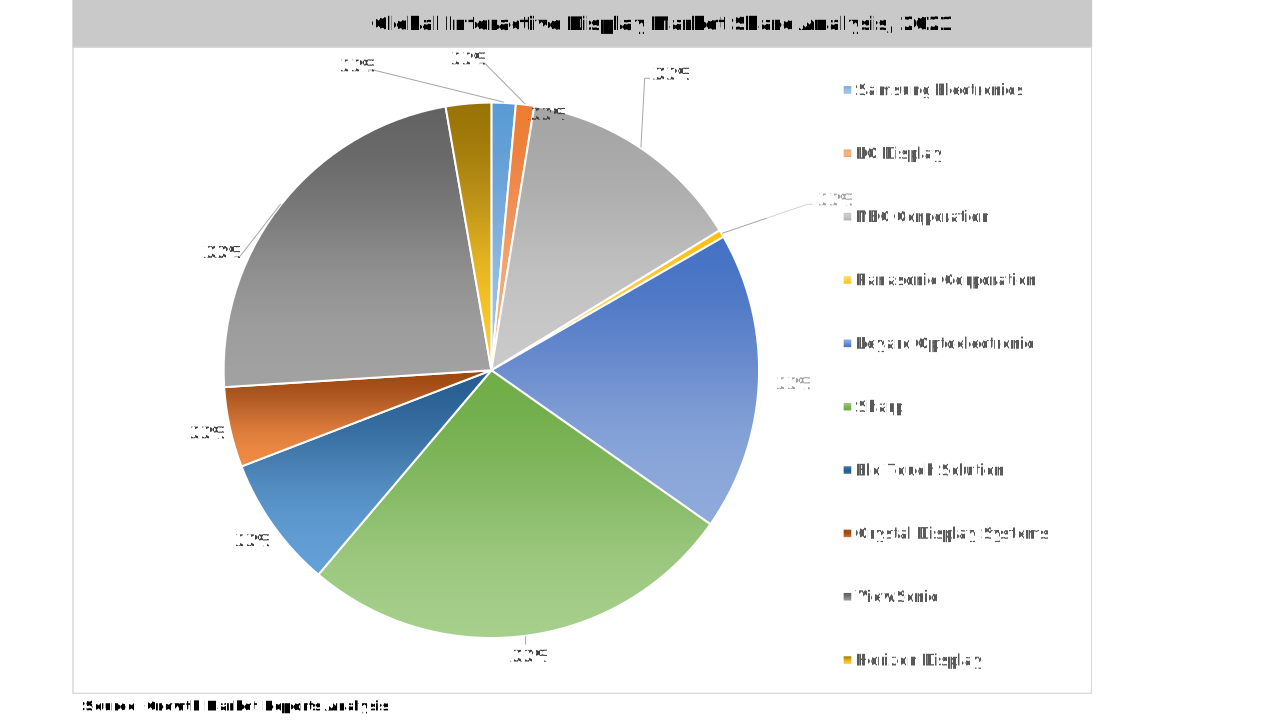

Interactive Display Market By Key Players

Frequently Asked Questions

Advancements in display resolution, touch sensitivity, AI integration, gesture recognition, and multi-touch capabilities are enhancing user experience and expanding the range of applications for Interactive Displays.

Challenges include high initial investment costs, integration with existing IT infrastructure, concerns about data privacy and cybersecurity, and the need for user training.

Interactive Displays are widely used in education for dynamic learning, in corporate settings for meetings and collaboration, in retail for customer engagement, in healthcare for patient care and information sharing, and in hospitality and transportation for guest services and wayfinding.

Major companies include Samsung Electronics, LG Display, Sharp Corporation, Panasonic Corporation, BenQ Corporation, ViewSonic Corporation, SMART Technologies, Promethean World, Elo Touch Solutions, and Planar Systems.

Asia Pacific is the fastest-growing region, followed by North America and Europe. Latin America and the Middle East & Africa are also experiencing rising adoption, especially in education and government sectors.

Interactive Displays utilize LCD, LED, OLED, and emerging technologies such as e-paper, micro-LED, and quantum dot displays.

The market offers Interactive Whiteboards, Interactive Flat Panel Displays, Interactive Kiosks, Interactive Tables, and emerging solutions like interactive video walls and digital signage.

Key sectors driving demand include education, corporate, retail, healthcare, hospitality, and transportation, with education and corporate environments being the primary adopters.

The Interactive Display market is expected to grow at a CAGR of 8.7% from 2025 to 2033, reaching an estimated USD 31.1 billion by 2033.

As of 2024, the global Interactive Display market size reached USD 14.8 billion, with strong growth across various sectors.

Table Of Content

Chapter 1 Executive Summary
Chapter 2 Assumptions and Acronyms Used
Chapter 3 Research Methodology
Chapter 4 Interactive Display  Market Overview
   4.1 Introduction
      4.1.1 Market Taxonomy
      4.1.2 Market Definition
      4.1.3 Macro-Economic Factors Impacting the Market Growth
   4.2 Interactive Display  Market Dynamics
      4.2.1 Market Drivers
      4.2.2 Market Restraints
      4.2.3 Market Opportunity
   4.3 Interactive Display  Market - Supply Chain Analysis
      4.3.1 List of Key Suppliers
      4.3.2 List of Key Distributors
      4.3.3 List of Key Consumers
   4.4 Key Forces Shaping the Interactive Display  Market
      4.4.1 Bargaining Power of Suppliers
      4.4.2 Bargaining Power of Buyers
      4.4.3 Threat of Substitution
      4.4.4 Threat of New Entrants
      4.4.5 Competitive Rivalry
   4.5 Global Interactive Display  Market Size & Forecast, 2023-2032
      4.5.1 Interactive Display  Market Size and Y-o-Y Growth
      4.5.2 Interactive Display  Market Absolute $ Opportunity

Chapter 5 Global Interactive Display  Market Analysis and Forecast By Product Type
   5.1 Introduction
      5.1.1 Key Market Trends & Growth Opportunities By Product Type
      5.1.2 Basis Point Share (BPS) Analysis By Product Type
      5.1.3 Absolute $ Opportunity Assessment By Product Type
   5.2 Interactive Display  Market Size Forecast By Product Type
      5.2.1 Interactive Whiteboards
      5.2.2 Interactive Flat Panel Displays
      5.2.3 Interactive Kiosks
      5.2.4 Interactive Tables
      5.2.5 Others
   5.3 Market Attractiveness Analysis By Product Type

Chapter 6 Global Interactive Display  Market Analysis and Forecast By Technology
   6.1 Introduction
      6.1.1 Key Market Trends & Growth Opportunities By Technology
      6.1.2 Basis Point Share (BPS) Analysis By Technology
      6.1.3 Absolute $ Opportunity Assessment By Technology
   6.2 Interactive Display  Market Size Forecast By Technology
      6.2.1 LCD
      6.2.2 LED
      6.2.3 OLED
      6.2.4 Others
   6.3 Market Attractiveness Analysis By Technology

Chapter 7 Global Interactive Display  Market Analysis and Forecast By Panel Size
   7.1 Introduction
      7.1.1 Key Market Trends & Growth Opportunities By Panel Size
      7.1.2 Basis Point Share (BPS) Analysis By Panel Size
      7.1.3 Absolute $ Opportunity Assessment By Panel Size
   7.2 Interactive Display  Market Size Forecast By Panel Size
      7.2.1 Up to 65”
      7.2.2 66”–75”
      7.2.3 76”–85”
      7.2.4 Above 85”
   7.3 Market Attractiveness Analysis By Panel Size

Chapter 8 Global Interactive Display  Market Analysis and Forecast By Application
   8.1 Introduction
      8.1.1 Key Market Trends & Growth Opportunities By Application
      8.1.2 Basis Point Share (BPS) Analysis By Application
      8.1.3 Absolute $ Opportunity Assessment By Application
   8.2 Interactive Display  Market Size Forecast By Application
      8.2.1 Education
      8.2.2 Corporate
      8.2.3 Retail
      8.2.4 Healthcare
      8.2.5 Hospitality
      8.2.6 Transportation
      8.2.7 Others
   8.3 Market Attractiveness Analysis By Application

Chapter 9 Global Interactive Display  Market Analysis and Forecast By End-User
   9.1 Introduction
      9.1.1 Key Market Trends & Growth Opportunities By End-User
      9.1.2 Basis Point Share (BPS) Analysis By End-User
      9.1.3 Absolute $ Opportunity Assessment By End-User
   9.2 Interactive Display  Market Size Forecast By End-User
      9.2.1 Education
      9.2.2 Corporate
      9.2.3 Retail
      9.2.4 Healthcare
      9.2.5 Government
      9.2.6 Others
   9.3 Market Attractiveness Analysis By End-User

Chapter 10 Global Interactive Display  Market Analysis and Forecast by Region
   10.1 Introduction
      10.1.1 Key Market Trends & Growth Opportunities By Region
      10.1.2 Basis Point Share (BPS) Analysis By Region
      10.1.3 Absolute $ Opportunity Assessment By Region
   10.2 Interactive Display  Market Size Forecast By Region
      10.2.1 North America
      10.2.2 Europe
      10.2.3 Asia Pacific
      10.2.4 Latin America
      10.2.5 Middle East & Africa (MEA)
   10.3 Market Attractiveness Analysis By Region

Chapter 11 Coronavirus Disease (COVID-19) Impact 
   11.1 Introduction 
   11.2 Current & Future Impact Analysis 
   11.3 Economic Impact Analysis 
   11.4 Government Policies 
   11.5 Investment Scenario

Chapter 12 North America Interactive Display  Analysis and Forecast
   12.1 Introduction
   12.2 North America Interactive Display  Market Size Forecast by Country
      12.2.1 U.S.
      12.2.2 Canada
   12.3 Basis Point Share (BPS) Analysis by Country
   12.4 Absolute $ Opportunity Assessment by Country
   12.5 Market Attractiveness Analysis by Country
   12.6 North America Interactive Display  Market Size Forecast By Product Type
      12.6.1 Interactive Whiteboards
      12.6.2 Interactive Flat Panel Displays
      12.6.3 Interactive Kiosks
      12.6.4 Interactive Tables
      12.6.5 Others
   12.7 Basis Point Share (BPS) Analysis By Product Type 
   12.8 Absolute $ Opportunity Assessment By Product Type 
   12.9 Market Attractiveness Analysis By Product Type
   12.10 North America Interactive Display  Market Size Forecast By Technology
      12.10.1 LCD
      12.10.2 LED
      12.10.3 OLED
      12.10.4 Others
   12.11 Basis Point Share (BPS) Analysis By Technology 
   12.12 Absolute $ Opportunity Assessment By Technology 
   12.13 Market Attractiveness Analysis By Technology
   12.14 North America Interactive Display  Market Size Forecast By Panel Size
      12.14.1 Up to 65”
      12.14.2 66”–75”
      12.14.3 76”–85”
      12.14.4 Above 85”
   12.15 Basis Point Share (BPS) Analysis By Panel Size 
   12.16 Absolute $ Opportunity Assessment By Panel Size 
   12.17 Market Attractiveness Analysis By Panel Size
   12.18 North America Interactive Display  Market Size Forecast By Application
      12.18.1 Education
      12.18.2 Corporate
      12.18.3 Retail
      12.18.4 Healthcare
      12.18.5 Hospitality
      12.18.6 Transportation
      12.18.7 Others
   12.19 Basis Point Share (BPS) Analysis By Application 
   12.20 Absolute $ Opportunity Assessment By Application 
   12.21 Market Attractiveness Analysis By Application
   12.22 North America Interactive Display  Market Size Forecast By End-User
      12.22.1 Education
      12.22.2 Corporate
      12.22.3 Retail
      12.22.4 Healthcare
      12.22.5 Government
      12.22.6 Others
   12.23 Basis Point Share (BPS) Analysis By End-User 
   12.24 Absolute $ Opportunity Assessment By End-User 
   12.25 Market Attractiveness Analysis By End-User

Chapter 13 Europe Interactive Display  Analysis and Forecast
   13.1 Introduction
   13.2 Europe Interactive Display  Market Size Forecast by Country
      13.2.1 Germany
      13.2.2 France
      13.2.3 Italy
      13.2.4 U.K.
      13.2.5 Spain
      13.2.6 Russia
      13.2.7 Rest of Europe
   13.3 Basis Point Share (BPS) Analysis by Country
   13.4 Absolute $ Opportunity Assessment by Country
   13.5 Market Attractiveness Analysis by Country
   13.6 Europe Interactive Display  Market Size Forecast By Product Type
      13.6.1 Interactive Whiteboards
      13.6.2 Interactive Flat Panel Displays
      13.6.3 Interactive Kiosks
      13.6.4 Interactive Tables
      13.6.5 Others
   13.7 Basis Point Share (BPS) Analysis By Product Type 
   13.8 Absolute $ Opportunity Assessment By Product Type 
   13.9 Market Attractiveness Analysis By Product Type
   13.10 Europe Interactive Display  Market Size Forecast By Technology
      13.10.1 LCD
      13.10.2 LED
      13.10.3 OLED
      13.10.4 Others
   13.11 Basis Point Share (BPS) Analysis By Technology 
   13.12 Absolute $ Opportunity Assessment By Technology 
   13.13 Market Attractiveness Analysis By Technology
   13.14 Europe Interactive Display  Market Size Forecast By Panel Size
      13.14.1 Up to 65”
      13.14.2 66”–75”
      13.14.3 76”–85”
      13.14.4 Above 85”
   13.15 Basis Point Share (BPS) Analysis By Panel Size 
   13.16 Absolute $ Opportunity Assessment By Panel Size 
   13.17 Market Attractiveness Analysis By Panel Size
   13.18 Europe Interactive Display  Market Size Forecast By Application
      13.18.1 Education
      13.18.2 Corporate
      13.18.3 Retail
      13.18.4 Healthcare
      13.18.5 Hospitality
      13.18.6 Transportation
      13.18.7 Others
   13.19 Basis Point Share (BPS) Analysis By Application 
   13.20 Absolute $ Opportunity Assessment By Application 
   13.21 Market Attractiveness Analysis By Application
   13.22 Europe Interactive Display  Market Size Forecast By End-User
      13.22.1 Education
      13.22.2 Corporate
      13.22.3 Retail
      13.22.4 Healthcare
      13.22.5 Government
      13.22.6 Others
   13.23 Basis Point Share (BPS) Analysis By End-User 
   13.24 Absolute $ Opportunity Assessment By End-User 
   13.25 Market Attractiveness Analysis By End-User

Chapter 14 Asia Pacific Interactive Display  Analysis and Forecast
   14.1 Introduction
   14.2 Asia Pacific Interactive Display  Market Size Forecast by Country
      14.2.1 China
      14.2.2 Japan
      14.2.3 South Korea
      14.2.4 India
      14.2.5 Australia
      14.2.6 South East Asia (SEA)
      14.2.7 Rest of Asia Pacific (APAC)
   14.3 Basis Point Share (BPS) Analysis by Country
   14.4 Absolute $ Opportunity Assessment by Country
   14.5 Market Attractiveness Analysis by Country
   14.6 Asia Pacific Interactive Display  Market Size Forecast By Product Type
      14.6.1 Interactive Whiteboards
      14.6.2 Interactive Flat Panel Displays
      14.6.3 Interactive Kiosks
      14.6.4 Interactive Tables
      14.6.5 Others
   14.7 Basis Point Share (BPS) Analysis By Product Type 
   14.8 Absolute $ Opportunity Assessment By Product Type 
   14.9 Market Attractiveness Analysis By Product Type
   14.10 Asia Pacific Interactive Display  Market Size Forecast By Technology
      14.10.1 LCD
      14.10.2 LED
      14.10.3 OLED
      14.10.4 Others
   14.11 Basis Point Share (BPS) Analysis By Technology 
   14.12 Absolute $ Opportunity Assessment By Technology 
   14.13 Market Attractiveness Analysis By Technology
   14.14 Asia Pacific Interactive Display  Market Size Forecast By Panel Size
      14.14.1 Up to 65”
      14.14.2 66”–75”
      14.14.3 76”–85”
      14.14.4 Above 85”
   14.15 Basis Point Share (BPS) Analysis By Panel Size 
   14.16 Absolute $ Opportunity Assessment By Panel Size 
   14.17 Market Attractiveness Analysis By Panel Size
   14.18 Asia Pacific Interactive Display  Market Size Forecast By Application
      14.18.1 Education
      14.18.2 Corporate
      14.18.3 Retail
      14.18.4 Healthcare
      14.18.5 Hospitality
      14.18.6 Transportation
      14.18.7 Others
   14.19 Basis Point Share (BPS) Analysis By Application 
   14.20 Absolute $ Opportunity Assessment By Application 
   14.21 Market Attractiveness Analysis By Application
   14.22 Asia Pacific Interactive Display  Market Size Forecast By End-User
      14.22.1 Education
      14.22.2 Corporate
      14.22.3 Retail
      14.22.4 Healthcare
      14.22.5 Government
      14.22.6 Others
   14.23 Basis Point Share (BPS) Analysis By End-User 
   14.24 Absolute $ Opportunity Assessment By End-User 
   14.25 Market Attractiveness Analysis By End-User

Chapter 15 Latin America Interactive Display  Analysis and Forecast
   15.1 Introduction
   15.2 Latin America Interactive Display  Market Size Forecast by Country
      15.2.1 Brazil
      15.2.2 Mexico
      15.2.3 Rest of Latin America (LATAM)
   15.3 Basis Point Share (BPS) Analysis by Country
   15.4 Absolute $ Opportunity Assessment by Country
   15.5 Market Attractiveness Analysis by Country
   15.6 Latin America Interactive Display  Market Size Forecast By Product Type
      15.6.1 Interactive Whiteboards
      15.6.2 Interactive Flat Panel Displays
      15.6.3 Interactive Kiosks
      15.6.4 Interactive Tables
      15.6.5 Others
   15.7 Basis Point Share (BPS) Analysis By Product Type 
   15.8 Absolute $ Opportunity Assessment By Product Type 
   15.9 Market Attractiveness Analysis By Product Type
   15.10 Latin America Interactive Display  Market Size Forecast By Technology
      15.10.1 LCD
      15.10.2 LED
      15.10.3 OLED
      15.10.4 Others
   15.11 Basis Point Share (BPS) Analysis By Technology 
   15.12 Absolute $ Opportunity Assessment By Technology 
   15.13 Market Attractiveness Analysis By Technology
   15.14 Latin America Interactive Display  Market Size Forecast By Panel Size
      15.14.1 Up to 65”
      15.14.2 66”–75”
      15.14.3 76”–85”
      15.14.4 Above 85”
   15.15 Basis Point Share (BPS) Analysis By Panel Size 
   15.16 Absolute $ Opportunity Assessment By Panel Size 
   15.17 Market Attractiveness Analysis By Panel Size
   15.18 Latin America Interactive Display  Market Size Forecast By Application
      15.18.1 Education
      15.18.2 Corporate
      15.18.3 Retail
      15.18.4 Healthcare
      15.18.5 Hospitality
      15.18.6 Transportation
      15.18.7 Others
   15.19 Basis Point Share (BPS) Analysis By Application 
   15.20 Absolute $ Opportunity Assessment By Application 
   15.21 Market Attractiveness Analysis By Application
   15.22 Latin America Interactive Display  Market Size Forecast By End-User
      15.22.1 Education
      15.22.2 Corporate
      15.22.3 Retail
      15.22.4 Healthcare
      15.22.5 Government
      15.22.6 Others
   15.23 Basis Point Share (BPS) Analysis By End-User 
   15.24 Absolute $ Opportunity Assessment By End-User 
   15.25 Market Attractiveness Analysis By End-User

Chapter 16 Middle East & Africa (MEA) Interactive Display  Analysis and Forecast
   16.1 Introduction
   16.2 Middle East & Africa (MEA) Interactive Display  Market Size Forecast by Country
      16.2.1 Saudi Arabia
      16.2.2 South Africa
      16.2.3 UAE
      16.2.4 Rest of Middle East & Africa (MEA)
   16.3 Basis Point Share (BPS) Analysis by Country
   16.4 Absolute $ Opportunity Assessment by Country
   16.5 Market Attractiveness Analysis by Country
   16.6 Middle East & Africa (MEA) Interactive Display  Market Size Forecast By Product Type
      16.6.1 Interactive Whiteboards
      16.6.2 Interactive Flat Panel Displays
      16.6.3 Interactive Kiosks
      16.6.4 Interactive Tables
      16.6.5 Others
   16.7 Basis Point Share (BPS) Analysis By Product Type 
   16.8 Absolute $ Opportunity Assessment By Product Type 
   16.9 Market Attractiveness Analysis By Product Type
   16.10 Middle East & Africa (MEA) Interactive Display  Market Size Forecast By Technology
      16.10.1 LCD
      16.10.2 LED
      16.10.3 OLED
      16.10.4 Others
   16.11 Basis Point Share (BPS) Analysis By Technology 
   16.12 Absolute $ Opportunity Assessment By Technology 
   16.13 Market Attractiveness Analysis By Technology
   16.14 Middle East & Africa (MEA) Interactive Display  Market Size Forecast By Panel Size
      16.14.1 Up to 65”
      16.14.2 66”–75”
      16.14.3 76”–85”
      16.14.4 Above 85”
   16.15 Basis Point Share (BPS) Analysis By Panel Size 
   16.16 Absolute $ Opportunity Assessment By Panel Size 
   16.17 Market Attractiveness Analysis By Panel Size
   16.18 Middle East & Africa (MEA) Interactive Display  Market Size Forecast By Application
      16.18.1 Education
      16.18.2 Corporate
      16.18.3 Retail
      16.18.4 Healthcare
      16.18.5 Hospitality
      16.18.6 Transportation
      16.18.7 Others
   16.19 Basis Point Share (BPS) Analysis By Application 
   16.20 Absolute $ Opportunity Assessment By Application 
   16.21 Market Attractiveness Analysis By Application
   16.22 Middle East & Africa (MEA) Interactive Display  Market Size Forecast By End-User
      16.22.1 Education
      16.22.2 Corporate
      16.22.3 Retail
      16.22.4 Healthcare
      16.22.5 Government
      16.22.6 Others
   16.23 Basis Point Share (BPS) Analysis By End-User 
   16.24 Absolute $ Opportunity Assessment By End-User 
   16.25 Market Attractiveness Analysis By End-User

Chapter 17 Competition Landscape 
   17.1 Interactive Display  Market: Competitive Dashboard
   17.2 Global Interactive Display  Market: Market Share Analysis, 2023
   17.3 Company Profiles (Details – Overview, Financials, Developments, Strategy) 
      17.3.1 Samsung Electronics
LG Display
NEC Corporation
Sharp Corporation
BenQ Corporation
ViewSonic Corporation
Panasonic Corporation
Sony Corporation
Planar Systems
Elo Touch Solutions
Promethean World
SMART Technologies
Hitachi Ltd.
Christie Digital Systems
Newline Interactive
Boxlight Corporation
Cisco Systems
Google LLC
Dell Technologies
Microsoft Corporation

Methodology

Our Clients

Honda Motor Co. Ltd.
sinopec
Nestle SA
Deloitte
Siemens Healthcare
Pfizer
Microsoft
FedEx Logistics